Nejat Society
  • Home
  • Articles
  • Media
    • Cartoons
    • NewsPics
    • Photo Gallery
    • Videos
  • Publications
    • Books
    • Nejat NewsLetter
    • Pars Brief
  • About Us
  • Contact us
  • Editions
    • عربي
    • فارسی
    • Shqip
Nejat Society
Nejat Society
  • Home
  • Articles
  • Media
    • Cartoons
    • NewsPics
    • Photo Gallery
    • Videos
  • Publications
    • Books
    • Nejat NewsLetter
    • Pars Brief
  • About Us
  • Contact us
  • Editions
    • عربي
    • فارسی
    • Shqip
© 2003 - 2024 NEJAT Society. nejatngo.org
Albania

Albania: What would a de-radicalization program for the Mojahedin Khalq involve

In spite of American promises, no de-radicalisation programme is in place to deal with over 2500 members of the Mojahedin Khalq terrorist group who have relocated to Tirana from Iraq. The MEK has a long history of violent and criminal activity. This has not stopped now they are in Tirana. Unless the Albanian government introduces its own programme, it must accept responsibility for the consequences of allowing this terrorist group to continue unchecked.

What would de-radicalisation involve? Firstly, we need to understand how the person became radicalised in the first place. This knowledge will allow us to help them. A fundamental principle is that they were not radicalised by logic but by a manipulative process which is in part mental and part emotional. For this reason, they cannot simply be sat down and argued out of their beliefs with counter-narratives.

A brief overview of the process of radicalisation for any group – far-right extremists, Islamists and cults – starts with deceptive recruitment. The group uses a ‘recruiting script’ (which we recognise as the ideology) to first entice or ‘hook’ the recruit’s interest. Whether this is done in person or online, the recruiter will be an expert manipulative persuader – think hard sales.

Once drawn into the group’s sphere of influence by their engagement with the ‘ideology’, the person is covertly subjected to a range of psychologically manipulative mechanisms. These are intended initially to throw them off balance and trigger an infatuated, even altruistic response to the group and its beliefs. It is important to remember that as long as the recruit remains unaware of this psychological manipulation they will have complete faith in the ideology and the leader who proselytises it. They sincerely believe they are part of a righteous movement and their companions are worthwhile and trustworthy people.

As the recruit becomes more committed to the group, they are deliberately separated from external references and influences, such as work and studies, until they become dependent on the group for all their needs and opinions. A fundamental aim of radicalisation is to separate the recruit from their family and friends (even when they are also involved) since these are the people whose emotional ties can pull them away.

As dependency is being achieved, the recruit’s emotional responses begin to be trained, not by logic or argument but through fear. The outside world is depicted as dangerous, alien and worthless. This fear is described by experts as a ‘cultic phobia’. The recruit is afraid of what might happen if they leave the group and go back to normal life. Also to prevent this happening, the recruit and his group are made to feel they are superior to outsiders because they are the ‘true believers’.

Even though every group’s externally declared belief system or ideology is different, once the recruit has succumbed to the process of mind control, the ideology changes and becomes ‘whatever the leader wants’. All further indoctrination and manipulation is designed to make the recruit obedient to this one requirement.

When we talk about radicalisation, we tend to focus on how the process creates a violent extremist. Of course, violent extremist and terrorist groups de-sensitise their followers to horror. They will ensure they have no social, moral or religious barriers to committing any act, whether violent or criminal or self-harming.

But such groups also exert control over every other aspect of their members’ lives, including sex and relationships. Daesh, for example, uses both marriage and sex slaves to reward and motivate its fighters. It also kills with impunity anybody trying to exit the group.

Indoctrination therefore is often based on the idiosyncrasies of the leader.

Surprisingly, even though his group is committed to violent regime change, Massoud Rajavi’s primary concern was to have all his MEK followers love and worship him. Perhaps less surprisingly he also wanted all the women to be sexually available for him.

He achieved this by introducing obligatory celibacy starting with forced divorces and removal of all the children. He reinforced this regime through strict gender apartheid. He coerced elective hysterectomies among the leading women members as a demonstration of their ‘devotion to the cause’. The outward reasoning being that women who reject marriage and children will be more committed. The real reason was so that Rajavi could sleep with these women without fear of pregnancies.

To prevent people enjoying sexual responses and emotions, he introduced a compulsory confessional process. This requires every member to give a daily report about their sexual thoughts, reactions and even dreams. Anything confessed is denounced as a betrayal of the leader and is punished. But not confessing anything is also punished. Members often invent reports which they hope will lead to less harsh punishment.

The significance of this unnatural focus on sex and enforced celibacy is the effect on its victims. One MEK member has already been convicted in Tirana for the attempted rape of an 11-year-old boy. We should know if this is a one-off aberration or an indication of deeper problems among the members. An effective de-radicalisation programme would need to take these issues into account.

In essence, the key to successful de-radicalisation is to help individuals reconnect with their authentic self and emotions.

For the MEK, immediate short-term steps would include:

·        Separate ordinary members from leaders and controllers – remove all forms of organisational supervision.

·        Create small independent living groups responsible for their own domestic affairs – cooking, cleaning and shopping.

·        Encourage families to get in contact.

·        Introduce external sources of information in an informal way.

·        Offer paid work opportunities which are age and ability appropriate.

·        Introduce medical and psychological support workers.

One problem is the age of the MEK members. Many are too old to imagine starting independent life away from the group. In this respect, contact with their families would provide reassurance that an alternative lifestyle is possible.

In the longer term, the involvement of former members – who understand what it’s like inside the group and can talk to current members about their situation and how change is possible – has already proven to be helpful.

By Anne and Massoud Khodabandeh,
October 17, 2016 0 comments
FacebookTwitterPinterestWhatsappTelegramSkypeEmail
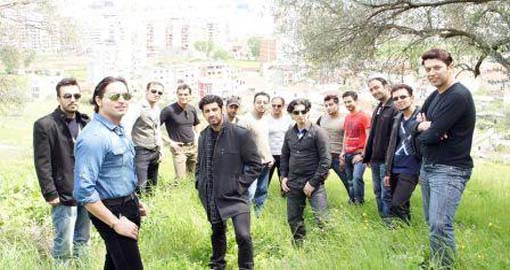
Former members of the MEK

Over a hundred MEK members left the group in Tirana

Neda-ye Haghighat reports that over one hundred of the MEK who arrived in Albania have separated from the group.

In an effort to control these desertions, the MEK has promised to pay the defectors and look after them separately from the main body of MEK members in return for their silence.

As long as they do not speak out about their experiences in the MEK as other former members have, the MEK will accommodate them. However, the number of such defectors is growing almost daily and it is clear that the MEK is slowly falling apart.

Iraninterlink Weekly Digest,

October 16, 2016 0 comments
FacebookTwitterPinterestWhatsappTelegramSkypeEmail
Iran Interlink Weekly Digest

Iran Interlink Weekly Digest – 165

++ Neda-ye Haghighat reports that over one hundred of the MEK who arrived in Albania have separated from the group. In an effort to control these desertions, the MEK has promised to pay the defectors and look after them separately from the main body of MEK members in return for their silence. As long as they do not speak out about their experiences in the MEK as other former members have, the MEK will accommodate them. However, the number of such defectors is growing almost daily and it is clear that the MEK is slowly falling apart.

++ Each year the MEK takes a different approach to marking Ashura, the most significant event in the Shia religious calendar. This approach depends on who the MEK’s current paymasters are. This year, because the MEK wants to fit in with Saudi demands, Ashura has been practically ignored.

In English:

++ Anne and Massoud Khodabandeh wrote ‘Albanian citizens fearful of radicalised Mojahedin Khalq neighbours deserve more information. The article highlights the fact that no de-radicalisation programme has been created to deal with the over 2500 radicalised MEK members who are now living in apartments in a suburban neighbourhood. The government of Albania has not communicated with its citizens about this. It has also neglected to warn the neighbouring families about the potential danger of sexual deviancy among the MEK due to the particular form of radicalisation which they undergo. The article was published in Albanian in Gazeta Impact.

++ Iran Interlink reported ‘Albania: Radicalised MEK member convicted for attempted rape of 11-year-old boy. After befriending a local family, last March MEK member Mousa Jaberifard sexually assaulted their young son. He was sentenced to four years in prison and will serve two years. While acknowledging that nobody knows yet whether this was a one-off event or an indication of deeper problems of sexual deviancy among the entire MEK population, the article concluded “Even though the group arrived in Albania under the auspices of the UNHCR, there is no programme to de-radicalise members of the group. This means that even if they separate from the MEK, the members remain radicalised and can still pose a threat.”

++ Mazda Parsi’s article for Nejat Bloggers ‘Flow of speaking and writing fees to the Mojahedin Khalq paid sponsors’ highlights the irresponsibility of the MEK’s paid sponsors who merely repeat the MEK’s own propaganda. “’Always well-financed with laundered funds from hazy sources (including Saddam Hussein, and more recently the Saudis and the U.S. among others), for years the MEK spread money around like honey in Washington, Paris and other power centers,’ writes Farid Khavari of the InvestmentWatchBlog. [Patrick] Kennedy tries to convince the audience that the MKO relocation in Europe as a step forward to have ‘closer contact with European governments and the world community, where they can tell their stories and continue their activism in favor of regime change in Tehran.’ He seems to be so manipulated by the group’s propaganda and money that he cannot understand that the notorious MKO cult will never be that viable force to bring regime change except with military intervention of the West. ‘Iranians would never vote for this government, and it could only be installed by U.S. military action,’ Farid Khavari writes.”

++ Nejat Society reported that Mr Shahab Forouzandeh left the Rajavi cult after he arrived in Albania. His family had tried on numerous occasions to meet with him in Camp Ashraf and Camp Liberty, but they were denied this right by the MEK leaders. Since arriving in Albania, tens of members have deserted the group and stepped into the free world reports say.

October 14, 2016

October 16, 2016 0 comments
FacebookTwitterPinterestWhatsappTelegramSkypeEmail
Former members of the MEK

Pictorial – Shahab Forouzandeh left MEK Cult in Tirana

Shahab’s family several times traveled to Iraq to visit their beloved son, however the MKO Cult leaders denied to let them meet Shahab.

The Forouzandeh family staged rally in front of MKO Camp Ashraf along with other family members, yet the Cult leaders deprived them of their certain right which was to be able to meet their family members taken as hostages in MKO Camps.

After years of efforts by the US, UNAMI as well as the Iraqi government the Mujahedin-e Khalq removed from Iraq and took refuge in Albania.

In Albania tens of MKO members have left the group and stepped the free world, reports say.

MKO member defect the Cult in Albania

October 15, 2016 0 comments
FacebookTwitterPinterestWhatsappTelegramSkypeEmail
Members of the MEK

Albania: Radicalized MEK member convicted for attempted rape of 11-year-old boy

An Iranian man, Mousa Jaberifard, was sentenced to three years in prison by the Court of Tirana, Albania after being convicted for the offense of sexual harassment and attempted rape of a minor. He was arrested in March this year after the parents of an 11-year-old boy called the police.

Jaberifard arrived in Albania in 2014 as one of the Mojahedin Khalq members from Iraq. A local family became friends with him. The family’s 11-year-old son told police that after going to the market with Jaberifard to buy bread, they arrived back at his apartment where Jaberifard undressed and tried to have sex with him. After many attempts, the boy managed to escape and inform his family who immediately called the police.
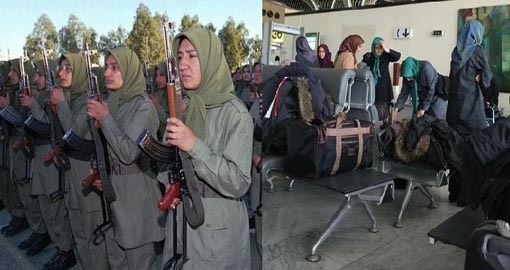
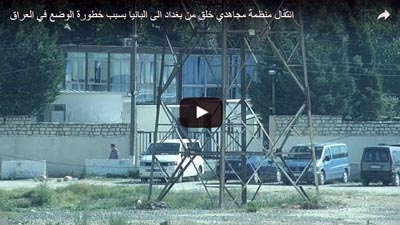
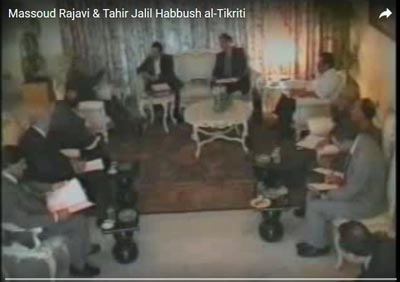
Jaberifard is one of over 2500 radicalised Mojahedin Khalq members who have arrived in Albania since 2013. Iran-Interlink warned last week:

“For the local citizens, mystery surrounds their arrival and their lifestyle. Should these secretive and covert neighbours be treated with suspicion or kindness? At a local level, the first thing neighbouring families need to be aware of is that among all MEK members, sexual relations have been banned for over 25 years. This means there are no marriages or children or young people in the organisation. More troubling are the obligatory confessional meetings in which members are required to admit any sexual thoughts or feelings and be punished for them. With this emphasis on sexual matters, it is not known how such people may react when they come in contact with ordinary people and their children.”

Even though the group arrived in Albania under the auspices of the UNHCR, there is no programme to deradicalise members of the group. This means that even if they separate from the MEK, the members remain radicalised and can still pose a threat.

October 13, 2016 0 comments
FacebookTwitterPinterestWhatsappTelegramSkypeEmail
Albania

Albanian citizens fearful of radicalised Mojahedin Khalq neighbours deserve more information

When the MEK were finally expelled from Iraq in August 2016, the Iraqi Foreign Ministry voiced its “deep satisfaction” with the relocation of the MEK in Albania. International efforts to solve the crisis were met with “outstanding success,” a statement read.

Deep satisfaction’ is an understatement. Since 2003, the MEK – known asSaddam’s Private Army – has been linked to the insurrectionists which included former Saddamists and Al Qaida in Iraq and later Daesh whom the MEK called ‘revolutionary brothers’. In 2009 serious efforts began to expel the group. The MEK refused to cooperate, issuing credible mass suicide threats against any interference. In 2011, the government of Iraq signed a Memorandum of Understanding with the UN to facilitate this effort. The MEK still refused to cooperate.

Neither was it straightforward to relocate an entire terrorist group. In 2013 Romania refused to take them. Instead, a $9m deal was struck by the US with the government of Albania to take an initial 210. In March 2013, the Obama Administration urged the MEK leadership to “accept the government of Albania’s humanitarian offer immediately, and urges the residents of Camp [Liberty] to resume participation in resettlement interviews to ensure that individuals avail themselves of safe and secure relocation opportunities outside Iraq”. The MEK rejected the offer. The transfer process slowed and often stalled over the next three years.

It was only over the summer of 2016 when it became clear that Daesh and the Saddamists would be flushed out of Mosul and Daesh’s dream of establishing its abhorrent Caliphate in Iraq had been crushed, that the MEK finally accepted to leave. By this time the MEK had sustained 200 deaths and even more injuries as their camp was repeatedly attacked by enemies. For sure the Iraqis had good reason to be glad to see the back of them.

Now in Albania many questions surround the arrival of the MEK. Since 2013, when the government announced publicly that 210 MEK would be accepted in the country, there has been no official communication with the citizenry about the numbers or the purpose of this influx, even though the government’s resettlement package has reached $20m. With upward of 2500 terrorists now located in Tirana, what does this mean for Albania and Albanians? What is the missing backstory and where lies a credible explanation for the MEK’s deviant behaviour?

The first thing we can state is that there is no programme in Albania to de-radicalisethese people. They were transferred as an intact group and there are no plans to disband them. Although international law forbids the UN from granting asylum to terrorists or even to a political group, this is what apparently has happened here.

Evidence that this group is not going to be de-radicalised is not difficult to obtain. Some members when interviewed have already said they only intend to stay in Albania “until the Iranian regime is toppled”. Journalists would only then need to ask why the members are denied any form of family life – marriage and children are banned in the MEK – to elicit the answer ‘so we can focus fully on our struggle’. It is an overt admission that they are not about to abandon their activities as a terrorist group. They are not willing to submit to de-radicalisation.

But how do we know they are radicalised at all? What threat, if any, do these people pose to Albanian society?

For the local citizens, mystery surrounds their arrival and their lifestyle. Should these secretive and covert neighbours be treated with suspicion or kindness? At a local level, the first thing neighbouring families need to be aware of is that among all MEK members, sexual relations have been banned for over 25 years. This means there are no marriages or children or young people in the organisation. More troubling are the obligatory confessional meetings in which members are required to admit any sexual thoughts or feelings and be punished for them. With this emphasis on sexual matters, it is not known how such people may react when they come in contact with ordinary people and their children.

Local people will notice that the behaviour, body language and appearance of the MEK are not normal. They will intuitively understand that there is something deviant in these people but will not, without further knowledge, have the means to explain it.

In short it is the result of radicalisation. This is a process of ongoing brainwashing which suppresses the authentic self and emotions and replaces them with the zealous ideological mindset of terrorists.

These people dress, walk and hold themselves differently. Their utilitarian, beggar-like clothes are easily identifiable as thinly disguised uniforms. They do not readily engage with outsiders. Most of them remain isolated behind closed doors and curtains. Those who do come outside are the trusted members who have been successfully re-charged with fresh ideological zeal. They come outside for specific missions such as buying mobile phones, not for enjoyment or leisure. More senior members, travelling covertly in vehicles, will be involved in other more secretive and troubling activities.

In public, the MEK may appear friendly and confident, condescending even, since they feel themselves superior to outsiders. However, because they are very much focused on their own self-preservation and that of their group, this means they cannot engage on a more personal level or talk about everyday issues and will become agitated if pressed beyond their capacity and knowledge.

As a result of radicalisation they have a black and white world view, operate with a very narrow range of emotions and are reluctant to question or be questioned. They display a phobic response to the outside world. Indeed, the MEK do not have an ‘outside’ to which they want to return. Their whole lives revolve around obedience to their group and its leaders.

Radicalisation makes them obedient to orders. The MEK know themselves as ‘living martyrs’ which means they accept death at any time if ordered by their leaders to kill or perform a suicide mission.

What the Albanian authorities are dealing with is not only radicalised combatants but combatants who have been fully trained in terrorism and security tactics by Saddam Hussein’s Republican Guard and Mokhabarat (secret services). They may be old and some may be sick, but they remain programmed to obey orders and are prepared to die or kill for their beliefs. They are trained to dissemble. They can operate easily using two or three false identities. (Complicated by the fact many arrived in Albania using false identities.) They can set people up, obscure their tracks and hide in plain sight. Transferring these people from Iraq to Albania is the equivalent of moving terrorists from Syria to Europe. The challenges posed by these facts cannot be ignored or minimised.

So, if the MEK are not going to be disbanded and de-radicalised, what will they be doing in Albania?

The MEK has a long history of terrorist activity, and its belief system is rooted in violence, but the MEK’s modern role is not military. While in Iraq, the group fulfilled vital facilitating functions for Saddam Hussein, mostly in Europe, doing what he couldn’t do under international sanctions: selling oil under the UN oil-for-food programme; procuring weapons and military equipment; purchasing chemical components for WMDs; money laundry; people trafficking; intimidation and murder of opponents; and undertaking public relations work in the West, including corrupting politicians.

It is anticipated that the MEK will perform a similar facilitating function in Albania, but this time serving modern terrorist groups like Daesh and smaller groups. (The MEK is in part funded by Saudi Arabia.) Albania’s location and historic problems with organised crime and corruption still render the country vulnerable to exploitation by groups like the MEK. It is known that over the past three years, the MEK have already developed relations with criminal gangs and corrupt government officials.

The danger lies in the MEK’s sophisticated capacity to propagandise and deceive political and public opinion, while at the same time performing outrageously damaging activities for the host country. Not only are the MEK fully trained by Saddam’s Intelligence service, but radicalisation means they have no moral, social or religious boundaries whatsoever. For them, all criminal activity is justified by their ideological belief that they can and must do anything for their cause.

Just as the MEK hosted Al Qaida and other insurgents in Iraq, the group is now fully placed to act as a hideout and training provider for the jihadis and terrorists who currently threaten the security of the whole Middle East.

If Albania fails to de-radicalise these people, the consequences could be severe. It is up to the Albanian people to demand a satisfactory explanation from their government. Is this really the humanitarian mission that Albania signed up for?

By Anne and Massoud Khodabandeh

October 10, 2016 0 comments
FacebookTwitterPinterestWhatsappTelegramSkypeEmail
Former members of the MEK

MKO member defect the Cult in Albania

Mr. Shahab Forouzandeh left the Cult of Rajavi in Tirana, Albania.

Shahab’s family several times traveled to Iraq to visit their beloved son, however the MKO Cult leaders denied to let them meet Shahab.

The Forouzandeh family staged rally in front of MKO Camp Ashraf along with other family members, yet the Cult leaders deprived them of their certain right which was to be able to meet their family members taken as hostages in MKO Camps.

After years of efforts by the US, UNAMI as well as the Iraqi government the Mujahedin-e Khalq removed from Iraq and took refuge in Albania.

In Albania tens of MKO members have left the group and stepped the free world, reports say. 

October 9, 2016 0 comments
FacebookTwitterPinterestWhatsappTelegramSkypeEmail
Iran Interlink Weekly Digest

Iran Interlink Weekly Digest – 164

++ MEK internal critic Iraj Mesdaghi is known as a prolific internet ranter. In the midst of his outpourings this week, he published pictures which he claims show Massoud Khodabandeh talking with somebody and using obscene language. Mesdaghi claims that Khodabandeh, the MEK and the Iranian government have all collaborated to work against him. Khodabandeh answered, saying that although he would not usually engage with such rants it has been necessary to apply an analytic response in this case. He says the accusations are clearly fabricated since he never met with any such person and would never use such bad language. What is relevant is that Mesdaghi’s situation is rendered pretty sad by this. Whether he faked the images and speech himself or it was fed to him by the MEK or others, it is clearly exploiting his known weaknesses in order to discredit him and thus undermine the evidence and documents he brings to the 1988 prison executions investigation. Mesdaghi was part of this event and exposing him now as a liar and cheat brings discredit to his evidence. As the Persian proverb says, he is throwing a mouse into the stew (Ash) of other cooks.

++ In Iran the Association of Graduates of Sharif University published a booklet of former graduates. Maryam Rajavi’s picture is there too. There have been mixed reactions, with people asking, ‘was this deliberate?’ Many reminded us of the time that the MEK would place ads for shampoo in Iranian newspapers using Massoud Rajavi’s picture, or place an announcement in the small ads with a picture of Maryam Rajavi saying, ‘we are waiting for you my beloveds’. It is more likely, however, that this has happened because nobody knows her. The younger generations have no idea who she is. For them she is just an old woman, past retirement age who used to go to their university.

++ Muharram has started and it is nearly Ashura. Every year the MEK changes its mind as to whether it should mark the event or ignore it depending on their circumstances. This time they are trying to create an anti-Shia image of themselves to suit what the Saudis need. Commentators point out that Saddam was anti-Iranian, the Saudis are anti-Shia and Israel is anti-both of them. But interestingly, the MEK – claiming to be both Iranian and Shia – manage to have kept their place among them and mark Ashura as well.

++ A book has been published in Iran called ‘My life with the Mojahedin’. It is written by a former MEK member who had originally been a POW. He describes how the MEK made him suffer until he submitted to going with them rather than remain in Saddam’s prison. After escaping the MEK after 2003 he took refuge with the American army before getting to Germany. He has now returned home to Iran and to his family.

In English:

++ IRNA – “Iran took the complaints of families of victims of terrorist operations carried by Mujahedeen Khalq Organization to the United Nations Human Rights Council in Geneva. During the 33rd session of the Human Rights Council, the Association for Defending Victims of Terrorism (ADVT) called for the realization of human rights of victims of terrorism. ADVT said that cultural campaign must be initiated to uproot terrorism in the world.”

++ A report by the Congressional Research Service, headed by Kenneth Katzman, and titled ‘Iran: Politics, Persian Gulf Security, and U.S. Policy’ devotes a page at the end to describing the MEK. In spite of strange contradictions which are probably a result of energetic ‘copy and paste’ and too little ‘read and edit’, the passage makes interesting reading.

October 07, 2016

October 9, 2016 0 comments
FacebookTwitterPinterestWhatsappTelegramSkypeEmail
Mujahedin Khalq; A proxy force

Flow of speaking and writing fees to the MKO’s paid sponsors

Speaking is not cheap and neither is writing, particularly if you have to speak or write on behalf of a formerly designated terrorist group that fails to enjoy any popular base. That’s why, the speakers at the rallies of the Mujahedin Khalq receive up to 25000 $ for a ten-minute speech. They are paid to say what the group has dictated to them regardless of the genuineness of what they are told to write or say. Every now and then, certain politicians are paid to write pieces in certain media to express their support for the group. The Hill is usually one of the main bases for the MKO-paid propaganda in the US media.

Certain paid sponsors of the MKO have made big pockets with the MKO money. Former Rep. Patrick Kennedy (D-RI) is an ardent advocate of the MKO who has been on the group’s payroll for the speeches and the articles on behalf of the group.

He so passionately showed off his empathy in one of the group’s rallies, “One of the greatest moments was when my uncle, President [John F.] Kennedy, stood in Berlin and uttered the immortal words ‘Ich bin ein Berliner,’. Today, I’m honored to repeat my uncle’s words, by saying [translated from Farsi] ‘I am an Iranian,’ ‘I am an Ashrafi.”

Following the above mentioned rally in August 2011, Ali Gharib and Zaid Jilani of Think Progress reported that Patrick Kennedy (D-RI) told them he was paid $25,000 to speak at a rally to remove a controversial Iranian exiled opposition group from the U.S. terrorist rolls after previously not saying if he was paid.

However, Think Progress correspondents who published a comprehensive report on the event noted the fact that Kennedy wouldn’t tell Foreign Policy’s Josh Rogin whether or not he was paid to speak at the rally to remove the Mujahedeen-e Khalq (MEK) from the State Department list of foreign terror organizations. But asked by Think Progress, Kennedy replied that he had been paid $25,000 and that he wouldn’t accept the money if he didn’t believe in the cause. Kennedy was part of the huge campaign to delist the MKO in 2012.

Supposing that Kennedy does believe in the cause of the MKO, it is worth to ask him what the group’s cause is. As Kennedy and his comrades claim, the MKO spouses a democratic and secular Iran. But, they do not define that how they want to bring about democracy in Iran using the MKO.

Definitely, democracy takes evolution of grassroots. The seeds for any changes in any society must be sowed by its people and the Iranian people themselves are practicing democracy in their everyday life. Iranians are sure that the democratic society they look for does not exist in the MKO. Whenever you seek opinion of the people about the MKO you hear nothing but resentment and treachery.

 Josh Rogin’s account on the MKO’s rally in Foreign Policy well indicates the unpopularity of the MKO among Iranian diaspora. “In a crowd made up of people who were mostly of Middle Eastern origin, a group of African-American attendees wearing MEK gear stood out”, He describes the MKO’s rented crowd.

Think Progress also describes Kennedy’s audience, “Speaking before a large crowd outside the State Department that included attendees bused-in from afar on all-expenses-paid trips, Kennedy cited one such attack — in April, which reportedly killed 34 Ashraf residents — as having spurred his support for the group.”

Following the resettlement of the MKO in Albania, the group’s propaganda made efforts to use an idiotic fallacy calling the relocation as a victory! Eventually, paid writers of the group repeated the same misjudgment in their writings.

“Always well-financed with laundered funds from hazy sources (including Saddam Hussein, and more recently the Saudis and the U.S. among others), for years the MEK spread money around like honey in Washington, Paris and other power centers,” writes Farid Khavari of the InvestmentWatchBlog.

Kennedy tries to convince the audience that the MKO relocation in Europe as a step forward to have “closer contact with European governments and the world community, where they can tell their stories and continue their activism in favor of regime change in Tehran.” He seems to be so manipulated by the group’s propaganda and money that he cannot understand that the notorious MKO cult will never be that viable force to bring regime change except with military intervention of the West. “Iranians would never vote for this government, and it could only be installed by U.S. military action,” Farid Khavari writes.

The paid advocacy campaign for the MKO should notice Farid’s clear advice: “This regime [established by the MKO] would be a worse threat to the region including Iraq, Saudi Arabia and Israel. It would also spark a civil war making Iran the next Syria.”

“The MEK owes its perceived legitimacy to the ignorance, innocent or not, of politicians and respected leaders in the free world.  Let us hope their purchase of influence over U.S. policy does not lead to perpetual war”, he warns paid politicians.

Moreover, MKO is absolutely a cult-like group with an undeniable history of violence and human rights violation. It is considered a destructive cult of personality around the Rajavis. The “closer” it is to the European citizens, the more they are exposed to the threat of the destructive Cult of Rajavi.

By Mazda Parsi

October 8, 2016 0 comments
FacebookTwitterPinterestWhatsappTelegramSkypeEmail
Congressional Research Service building
Mujahedin Khalq Organization

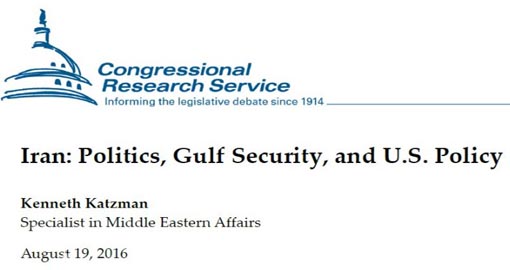
Iran: Politics, Persian Gulf Security, and US Policy; Congressional Research Service

Iran: Politics, (Persian) Gulf Security, and U.S. Policy

Extract:

Opposition Group: People’s Mojahedin Organization of Iran (MEK, PMOI)

The best-known exiled opposition group is the Mojahedin-e-Khalq Organization (MEK), also known as the People’s Mojahedin Organization of Iran (PMOI). Secular and left-leaning, it was formed in the 1960s to try to overthrow the Shah of Iran and has been characterized by U.S. reports as attempting to blend several ideologies, including Marxism, feminism, and Islam, although the organization denies that it ever advocated Marxism. It allied with pro-Khomeini forces during the Islamic revolution and, according to State Department reports, supported the November 1979 takeover of the U.S. Embassy in Tehran. The group was driven into exile after it unsuccessfully rose up against the Khomeini regime in September 1981. It has been led for decades by spouses Maryam and Massoud Rajavi but in 2011 Ms. Zohreh Akhyani was elected as MEK Secretary-General. Maryam Rajavi is based in France but the whereabouts of Massoud Rajavi are unknown.

The State Department designated the PMOI as an FTO in October 1997—during the presidency of the relatively moderate Mohammad Khatemi. The NCR was named as an alias of the PMOI in October 1999, and in August 2003, the Department of the Treasury ordered the groups’ offices in the United States closed. State Department reports on international terrorism for the years until 2011 asserted that the members of the organization were responsible for: the alleged killing of seven American military personnel and contract advisers to the former Shah during 1973-1976; bombings at U.S. government facilities in Tehran in 1972 as a protest of the visit to Iran of then-President Richard Nixon; and bombings of U.S. corporate offices in Iran to protest the visit of then Secretary of State Kissinger.

The reports also listed as terrorism several attacks by the group against regime targets (including 1981 bombings that killed high ranking officials), attacks on Iranian government facilities, and attacks on Iranian security officials. However, the reports did not assert that any of these attacks purposely targeted civilians. The group’s alliance with Saddam Hussein’s regime in contributed to the designation, even though Saddam was a U.S. ally during 1980-90.

The PMOI challenged the FTO listing in the U.S. court system and, in June 2012, the Appeals Court gave the State Department until October 1, 2012, to decide on the FTO designation, without prescribing an outcome. On September 28, 2012, maintaining there had not been confirmed acts of PMOI terrorism for more than a decade and that it had cooperated on the Camp Ashraf issue (below), the group was removed from the FTO list as well as from the designation as a terrorism supporter under Executive Order 13224. However, State Department officials, in a background briefing that day, said “We do not see the [PMOI] as a viable or democratic opposition movement…. “

The NCR-I reopened its offices in Washington, DC, in April 2013. The State Department has been meeting with the MEK since its removal from the FTO list, including in Iraq.

Camp Ashraf Issue

The de-listing of the group has not resolved the situation of PMOI members in Iraq. U.S. forces attacked PMOI military installations in Iraq during Operation Iraqi Freedom (March 2003) and negotiated a ceasefire with PMOI elements in Iraq, according to which the approximately 3,400 PMOI members consolidated at Camp Ashraf, near the border with Iran. Its weaponry was placed in storage, guarded first by U.S. and now by Iraqi personnel. In July 2004, the United States granted the Ashraf detainees “protected persons” status under the 4th Geneva Convention, although that designation lapsed when Iraq resumed full sovereignty in June 2004. The Iraqi government’s pledges to adhere to all international obligations with respect to the PMOI in Iraq has come into question on several occasions: on July 28, 2009, Iraq used force to overcome resident resistance to setting up a police post in the camp, killing 13 n residents of the camp. On April 8, 2011, Iraq Security Forces killed 36 Ashraf residents; the State Department issued a statement attributing the deaths to the actions of Iraq and its military.

In December 2011, the Iraqi government and the United Nations agreed to relocate Ashraf residents to the former U.S. military base Camp Liberty, near Baghdad’s main airport. The relocation was completed by September 17, 2012, leaving a residual group of 101 PMOI persons at Ashraf. The group asserted that conditions at Liberty are poor and the facility is unsafe. On February 9, 2013, the camp was attacked by rockets, killing eight PMOI members; the Shiite militia group Kata’ib Hezbollah (KAH) claimed responsibility. A rocket attack on the camp took place on June 15, 2013. On September 1, 2013, 52 of the residual Ashraf residents were killed by gunmen that appeared to have assistance from Iraqi forces. Seven went missing. All survivors of the attack were moved to Camp Liberty, and Ashraf has been taken over by Iran-backed Shiite militias. An October 29, 2015, rocket attack on the Camp killed 24 residents and a rocket attack on July 4, 2016, did not kill any residents, but wounded some. The FY2016 National Defense Authorization Act (P.L. 114-92) calls for “prompt and appropriate steps” to promote the protection of Camp residents.

Since 2011, the U.N. High Commission for Refugees (UNHCR) has sought to resettle PMOI members outside Iraq. About 600 have been resettled so far: 450 to Albania; 95 to Germany; 95 to Italy; 15 to Norway; and 2 to Finland. The United States reportedly might resettle 100 or more, but the U.S. requirement that those resettled disavow the group has apparently held up implementation of that program. About 200 have returned to Iran; a few of them reportedly have been imprisoned and/or mistreated.

[…]

Kenneth Katzman
Specialist in Middle Eastern Affairs
August 19, 2016
Congressional Research Service
7-5700
www.crs.gov
RL32048

October 6, 2016 0 comments
FacebookTwitterPinterestWhatsappTelegramSkypeEmail
Newer Posts
Older Posts

Recent Posts

  • Fourteen years after US delisting, MKO terror cult’s political rebranding collides with its violent legacy

    September 30, 2026
  • How Did Maryam Rajavi Become All-Powerful in the MEK?

    September 29, 2026
  • Soraya Abdollahi’s Letter to International Human Rights Bodies

    September 28, 2026
  • How Did Maryam Rajavi Become All-Powerful in the MEK?

    September 27, 2026
  • Yazdan Teimorian’s Family:  We Are so Heart-Broken!

    September 23, 2026
  • Facebook
  • Twitter
  • Instagram
  • Youtube

© 2003 - 2025 NEJAT Society . All Rights Reserved. NejatNGO.org


Back To Top
Nejat Society
  • Home
  • Articles
  • Media
    • Cartoons
    • NewsPics
    • Photo Gallery
    • Videos
  • Publications
    • Books
    • Nejat NewsLetter
    • Pars Brief
  • About Us
  • Contact us
  • Editions
    • عربي
    • فارسی
    • Shqip