Nejat Society
  • Home
  • Articles
  • Media
    • Cartoons
    • NewsPics
    • Photo Gallery
    • Videos
  • Publications
    • Books
    • Nejat NewsLetter
    • Pars Brief
  • About Us
  • Contact us
  • Editions
    • عربي
    • فارسی
    • Shqip
Nejat Society
Nejat Society
  • Home
  • Articles
  • Media
    • Cartoons
    • NewsPics
    • Photo Gallery
    • Videos
  • Publications
    • Books
    • Nejat NewsLetter
    • Pars Brief
  • About Us
  • Contact us
  • Editions
    • عربي
    • فارسی
    • Shqip
© 2003 - 2024 NEJAT Society. nejatngo.org
Mujahedin Khalq Organization as a terrorist group

Is Saudi Arabia really seeking regime change in Iran?

Just as the Iranian judiciary was preparing to put those who stormed the Saudi Embassy in Tehran earlier this year on trial, former Saudi intelligence chief and diplomat Prince Turki al-Faisal Al Saud appeared to step up the campaign against Iran by appearing at the July 9 annual conference of the exiled Iranian opposition group Mujahedeen-e-Khalq (MEK) in Paris.

Iran has listed the MEK as a terrorist organization since the 1980s, blaming it for the deaths of over 12,000 Iranians, including civilians, politicians — and in recent years — nuclear scientists. The MEK notably fought on the side of former Iraqi dictator Saddam Hussein during the Iran-Iraq War (1980-88), and also later helped Saddam suppress an uprising by Iraqi Shiites and Kurds.

At his 30-minute speech in Paris, Faisal expressed admiration for the “people of Iran,” while lambasting the Islamic Republic and particularly its late founder Ayatollah Ruhollah Khomeini. Indeed, he accused Khomeini of trying to “export” the Islamic Revolution.

Iran’s Foreign Ministry spared no time in reacting to Faisal’s appearance at the MEK gathering, not to mention his remarks. What seemed to have infuriated the Iranians the most was that he repeated the crowd’s chants — in Arabic — of the popular Arab Spring slogan “The people want the fall of the regime.”

One anonymous source at the Iranian Foreign Ministry told the Tehran Times on July 10 that Faisal’s statements showed Saudi Arabia’s “stupidity, indecency and political frustration.” Other Iranian officials have referred to the former Saudi spy chief’s remarks as further proof of Riyadh’s “support for terrorism.”

In an interview with Fars News Agency on July 10, Hossein Amir-Abdollahian, who until recently served as deputy foreign minister for Arab and African affairs, said that he had previously told the Saudis that “it is impossible to use terrorists as a tool to make the region insecure and at the same time expect calm within the kingdom.”

Al-Monitor asked Seyed Mohammad Houshisadat, a professor of political science at Tehran University and visiting researcher at the Center for Scientific Research and Middle East Strategic Studies, whether Faisal was voicing his own views or Riyadh’s official stance.

Houshisadat said, “Prince Faisal is an influential figure from the conservative branch of the Saudi ruling family. He was the director of the General Intelligence Directorate for 23 years and served as ambassador to the United Kingdom and the United States. His role and key positions leave no doubt that those remarks are Saudi Arabia’s official line. Therefore Iranian authorities and the Islamic Revolutionary Guard Corps see his speech in the framework of the kingdom’s policy vis-a-vis Iran.”

Houshisadat added, “The Saudis have been seeking to topple the Islamic Republic since 1979; they backed Saddam Hussein in the war with Iran despite having grave ideological differences with him. Their relationship with the MEK dates back to the 1980s. However, the events over the past two years and the increased Iranian influence in the Middle East prompted them to drop the ambiguity and pursue the policy of regime change in Iran with more transparency.”

When asked about the recent remark by Ali Younesi, the presidential aide for ethnic and religious minorities affairs, that Riyadh is making the same mistake Saddam made when he used the MEK in his war against Iran, Houshisadat replied, “The Saudis are trying to revive threats … by activating several opposition groups, including the MEK, or Kurdish militants in Iraq’s semi-autonomous Kurdistan Region and Baluch militants in Pakistan’s Baluchistan province. In the long run, this policy will backfire — as it did for Saddam Hussein — but for the time being, the MEK has turned into Saudi Arabia’s instrument to bash Iran.”

Al-Monitor also discussed Faisal’s appearance in Paris with Beirut-based Iranian political analyst Mohammad Sadeq al-Husseini. He said he believes “Riyadh has significantly shifted its regional policy by increasing hostility toward Tehran and growing friendly ties with Israel.” In this vein, Husseini told Al-Monitor, “Prince Faisal’s statement is the official declaration of a previously hidden agenda.”

Al-Monitor also asked Houshisadat what Tehran’s response might be to Faisal’s call for regime change in Iran. He said, “There are two camps in Iran: One promotes direct confrontation with Saudi Arabia and the second camp favors dialogue. Iranian policymakers have always sought to de-escalate tensions and negotiate with Saudi Arabia. Considering that fact, Tehran will not confront Riyadh directly because it knows only too well that the region cannot stand another war — this time between its two powerhouses. Besides that, the current world order would not support an all-out war that would endanger Western financial and political investments in the Middle East and divide it along two hostile lines.“

Husseini, who is one of the founders of the popular Arabic news channel Al-Mayadeen, similarly dismissed the possibility of war between the Kingdom of Saudi Arabia and the Islamic Republic of Iran. However, he told Al-Monitor, “The United States and Israel are encouraging Saudi Arabia — and in fact would support it — if Riyadh launched a war against Iran.”

He added, “But Tehran is not walking into that trap and instead responds to the Israelis, the Americans and the Saudis on the ground in Syria and Iraq.” In this vein, Husseini predicted that “in the coming months, we will witness an escalation of regional violence and tensions related to Saudi Arabia’s aggressive attitude. Saudi Arabia is … using any means to put pressure on Iran.” However, he said that he doubts such a policy will achieve its desired results.

Most of all, Amir-Abdollahian perhaps expressed the most ominous concern, saying, “Saudi Arabia’s strategic mistake to employ terrorists will eventually cause irreversible losses not only to the kingdom but to all of us.”

Fereshteh Sadeghi, Al Monitor,

July 31, 2016 0 comments
FacebookTwitterPinterestWhatsappTelegramSkypeEmail
Iran Interlink Weekly Digest

Iran Interlink Weekly Digest – 154

++ This last week marked the anniversary of the Forough-e Javidan (Eternal Light) or Mersad operation. Many memories have been written from both sides – from Iran and former MEK members. But the theme of all of them is that after so many years it is now obvious that the MEK is not a military or even an ideological force. It is a purely mercenary force which has now ended up in the hands of the Saudis. The members are the victims and the leader is getting the money. The titles of many articles follow the theme ‘Yesterday Saddam, Today Salman’. Ebrhaim Khodabandeh was interviewed on national Iranian television as a witness to the operation. He explains how “Rajavi begged Saddam to delay agreeing the UN brokered ceasefire in July 1988 for a few days. Rajavi then deployed a cohort of unaware and untrained civilians, many of whom he had quickly brought from Europe and North America, and allowed them to be massacred in the operation. Later on we found out that he his real objective was not to defeat the Iranian army but to lose a few thousand people so he could call them martyrs. Rajavi pointed out repeatedly in later years that the blood of these martyrs was to be the insurance policy guaranteeing the future of the MEK (he means himself) for decades to come.

++ Several articles refer to the beheading of a 12 year-old boy in Syria by terrorists, whom the Americans now say they will no longer support. However, these are the same terrorists who frequently meet with the MEK in Paris. To date, the MEK have not disowned these terrorists as their close allies in Syria.

++ Leading MEK member Mohammad Mohaddessin was interviewed by Saudi Arabia’s Al Arabiya media outlet this week. However, this only added to the existing controversy over Massoud Rajavi’s assumed death. Commentators point out that that unlike normal MEK interviews which are prepared in advance with written questions and answers, Mohaddessin was unprepared. This in itself indicates that he was told to do the interview rather than the MEK seeking out publicity for its own agenda. Behzad Alishahi in the Netherlands has initiated a series of articles – the first was this week – which will unpick the gaffes of Al Arabiya and the MEK one by one. Alishahi says this is worth doing because after decades we are beginning to see some of the truths they are being forced to admit regarding their relations with Saudi Arabia and their activities in Iraq and Syria and elsewhere.

In English:

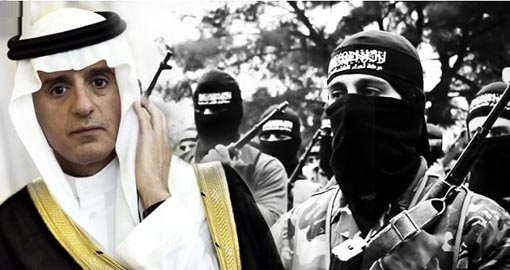
++ The Tehran Times reported the aggressive war of words between Saudi Arabia and Iran after the Saudi Foreign Minister Adel al-Jubeir had accused Tehran of expansionist policies and “harboring” terrorism during a lecture on terrorism organized by the Belgian Ministry of Foreign Affairs in Brussels and hosted by Egmont Research Center. Iranian Foreign Ministry spokesman Bahram Qasemi rejected this as “absurd, unfounded, and repetitious.” The article mentioned Prince Turki al Faisal’s attendance at the MEK annual rally to celebrate armed struggle “where he pledged backing and wished for the collapse of Iran. For years, the group has committed acts of terrorism against Iran and the Saudi link simply means they have been feeding them financially.”

++ Fars News Agency says that a terrorist attack could happen in Iran and blames France and Saudi Arabia for backing or turning a blind eye to the sources of such terrorism. The MEK annual rally in France is evidence of this complicity as it links Saudi Wahhabism, the MEK and Paris.

++ Iran Interlink translated part of an interesting article by former MEK member Reza Sadeghi Jabali. He gives a clear description of the Rajavis’ reaction to the horrific 9/11 attack and links long-term Saudi support for the MEK under Saddam Hussein and in the present with the current threat of global terrorism.

++ Mazda Parsi in Nejat Society quotes highly respected American journalists Ali Gharib, Barbara Slavin and Robert Macey in his analytical article about Saudi-MEK relations. He posits that neither side benefit from the association. Each writer points to the cultic nature of the MEK and its failure to garner any support among Iranians as well as its failure to actually do anything for the past two and a half decades. Gharib links this with the Saudis’ failure to confront Iran in Syria, Yemen and Iraq and says the choice of the MEK as partners is self-defeating.

++  Dalga Khatinoglu, Baku, Azerbaijan interviewed Nathalie Goulet, vice chair of the Foreign Affairs Committee of the French Senate for Trend News. Goulet said that Iran and Saudi Arabia must learn to bear with each other and use dialogue to resolve their differences. “The most challenging issue is to restore trust and get rid of irrational fears or feeling of superiority between Iran and Saudi. The world security needs both KSA and Iran,” she said. Goulet cited Islamic State as a common enemy for all countries involved in counter-terrorism. Commenting on Prince Turki’s involvement with the MEK, Goulet said “we always encourage the countries in the region to establish closer relationship for more enduring regional peace. The recent gathering of exiled Iranian terrorist group in France known as MKO and presence of some Saudi figures hopefully shall not be interpreted as position of current administration of KSA”…

“Anyone involved in the regional policy knows that MKO has no foot print inside Iran and have in fact acted as mercenaries against Iranians during the Iran-Iraq War. Even if you dislike the Iranian regime, supporting the MKO will not help to get a new regime. No one in Iran will support MKO as it betrayed this country by supporting Iraq during a terrible war,” Goulet said. She added that supporting MKO will just bring more solidarity among Iranian people and will create more misunderstanding between the two nations. “It is a big waste of time and money,” she added.

29 July 2016

July 31, 2016 0 comments
FacebookTwitterPinterestWhatsappTelegramSkypeEmail
Mujahedin Khalq Organization as a terrorist group

Kuwait’s political elite slam Saudi Arabia’s support for MKO

Many of the elite, intellectuals, academics, and political figures of Kuwait strongly criticized Saudi Arabia for supporting anti-Iran terrorist Mojahedin-e Khalq Organization’s (MKO).

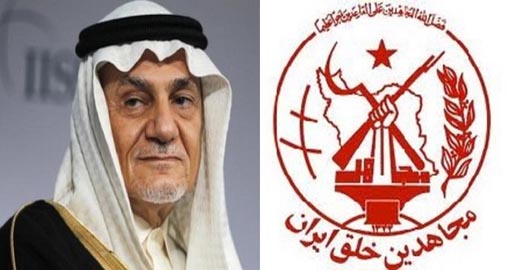
Reacting to Saudi Arabia’s former spy chief Turki al-Faisal’s participation in the MKO gathering and his support for the most hated terrorist group among the Iranians, many of Kuwait’s political elite strongly denounced Saudis’ measure and their failed policies.
When Saudi Arabia supports Iranian armed formations, how you can object Iran’s support for armed groups opposing the Riyadh regime, wrote Abdul-Hamid Dashti, a Kuwaiti Member of Parliament who is also a member of the UN Human Rights Council on his twitter page on Monday.

Dashti went on to say that I wonder how Saudis, who do not have democratic elections and freedom, want it for other nations.

Yasser Al-Saleh, a Kuwaiti university professor also said on that Turki al-Faisal’s attendance in the gathering of the Mujahedin Khalq Organization (MKO) in Paris is highly detested by the Iranian people.

In his twitter page, Nasser Al Abdouli, head of the Institute for Persian Gulf Studies and Development also wrote S. Arabia that funds Iranian opposition conference, should firstly try to resolve their problems and not to waste their money.

In response to Saudi Arabia’s recent unwise action, Dr. Esam Al-Kazemi also said that Saudis support Maryam Rajavi as ringleader of MKO, while Saudi’s women are not even allowed to get driving licenses and drive in this country!

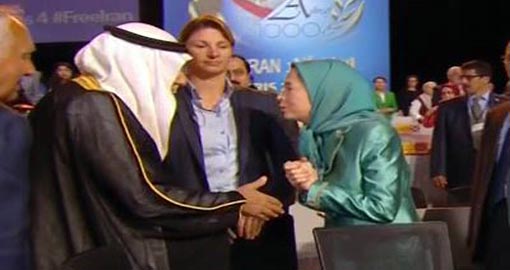
On Saturday, Turki al-Faisal, Saudi Arabia’s former spy chief, attended a meeting of the MKO terrorists in Paris, reaffirming Riyadh’s commitment to supporting the anti-Iran group and vowing support for efforts to remove the Islamic Republic.

The MKO is the most hated terrorist group among the Iranians because of its dark history of assassinations and bombings and for siding with the former Iraqi dictator, Saddam Hussein, in his eight-year war against Iran in the 1980s.

The Iran Project

July 28, 2016 0 comments
FacebookTwitterPinterestWhatsappTelegramSkypeEmail
Mujahedin Khalq Organization as a terrorist group

Saudi raises ante in hostility with Iran by attending terrorist gathering

Saudi Arabia’s former spy chief has attended an annual meeting of a terrorist group highly detested in Iran, raising the stakes in the kingdom’s confrontational ways with the Islamic Republic.

Prince Turki al-Faisal’s 30-minute address to the gathering of the Mujahedin Khalq Organization (MKO) in Paris on Saturday showed that a tie-up between the outfit and Takfiri groups might be in the making with the help of the Saudis.

Iranian officials and political observers said Sunday the development pointed to likely Riyadh plans to resuscitate the moribund group and link it with the Takfiris in order to coordinate attacks on Iran.

The MKO is the most hated terrorist group by the Iranians because of its history of assassinations and bombings and for siding with former Iraqi dictator Saddam Hussein in his eight-year war on Iran in the 1980s.

Faisal’s overt pronouncement of support for the terrorist group marks a turning point in Saudi Arabia’s hostility with Iran and the kingdom’s lack of concern about the sensitivities of the Iranians.

Under the new Saudi rulers, Riyadh has adopted an aggressive policy toward Iran and its allies which are helping Iraq and Syria fight a menacing Takfiri militancy. 

Takfirism, which is the trademark of many terrorist groups operating in the region, is largely influenced by Wahhabism, the radical ideology dominating Saudi Arabia and freely preached by Saudi clerics.

‘Political idiocy’

The Paris fiasco is the latest in a litany of recent diplomatic missteps by Saudi Arabia, including its scandalous pressure on the UN to remove Riyadh from a list of children’s rights violators. 

Reacting to Prince Turki’s participation at the MKO gathering, an Iranian Foreign Ministry official said the kingdom is using terrorists as "a tool to advance its objectives against Muslim countries."

"It was not unlikely from the godfather of Taliban and al-Qaeda as well as the partner of the Zionists to display its desperation with a new instance of obscenity and political idiocy through participation at the gathering of bankrupt mercenary terrorists," the official said.

"The desperation of the Saudis and their resort to registered terrorists in this showdown indicates that for them, as they have shown in Iraq, Syria and Yemen, terrorism and terrorists are a tool to advance their objectives against Muslim countries in the region," he added.

Saudi autocracy and promise of freedom

In his speech, Faisal pledged to stand by the MKO in what he described as the terrorist outfit’s efforts against the Iranian establishment.

Faisal, who currently chairs the Board of the King Faisal Center for Research and Islamic Studies, also made outrageous remarks against Iran’s revolutionary leaders.

He described MKO terrorists as a hope for “freeing Iran of oppression.”

The terrorist group, which has built a cult-like following, is known for brutal elimination of its own members over dissent. It also keeps tight tabs on social media where Internet and cellphones are nonexistent among its inner circles.   

Saudi Arabia, meanwhile, has a dismal record for human rights abuses where dissent is not tolerated. Shia Muslims are a regular target of crackdown and discrimination and women’s rights in the kingdom are among the most restricted in the world.

The current crisis in diplomatic ties came after Iran condemned Saudi execution of Sheikh Nimr al-Nimr, a respected Shia cleric and an outspoken government critic, along with 47 people on a single day in January.

Several international rights groups, including Amnesty International, lashed out at Saudi Arabia for its "surging" and "arbitrary" use of the death penalty and routinely putting people to death for their views.

Praise of defunct terrorist leaders

In his speech, the Saudi prince referred to the notorious terror group’s current head Maryam Rajavi, who was in the audience, as “Mrs. Maryam Rajavi and your late husband Massoud Rajavi.”

The former MKO leader has made no public appearance since 2003, raising speculations that he might be dead even though the terrorist outfit does not confirm that.

The MKO has carried out numerous terrorist attacks against Iranian civilians and government officials over the past three decades. Out of the nearly 17,000 Iranians killed in terrorist attacks since the victory of Iran’s Islamic Revolution, about 12,000 have fallen victim to MKO’s acts of terror.

Washington and the European Union have removed the MKO from their list of terrorist organizations and the group currently enjoys freedom of movement and activity in the US and Europe, including regular meetings with American and European politicians.

What we know about Prince Turki and Saudi Arabia

Under Faisal, Saudi intelligence created al-Qaeda in Afghanistan jointly with US and Pakistani spy agencies. He has acknowledged meeting al-Qaeda leader Osama bin Laden and Taliban leader Mullah Omar.

In 2002, Prince Turki was named in a multibillion-dollar lawsuit by the families of September 11 victims. A court affidavit filed in 2015 claimed that convicted al-Qaeda plotter Zacarias Moussaoui served as a courier between bin Laden and Faisal.

Saudi Arabia is widely believed to have been providing funds and weapons to militants fighting to topple the Syrian and Iraqi governments.

Under the pretext of fighting Iranian influence, the kingdom has also been waging a destructive war on Yemen which has claimed thousands of innocent lives so far.

July 28, 2016 0 comments
FacebookTwitterPinterestWhatsappTelegramSkypeEmail
Nejat Publications

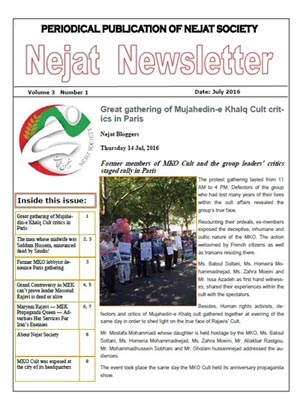
Nejat NewsLetter NO.38

Inside this issue:

  1. Great gathering of Mujahedin-e Khalq Cult critics in Paris
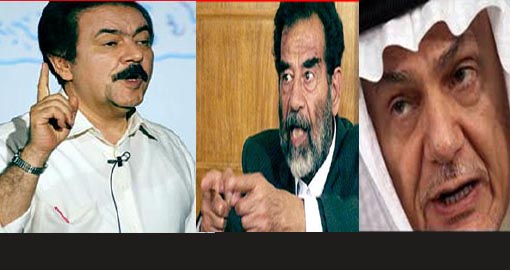
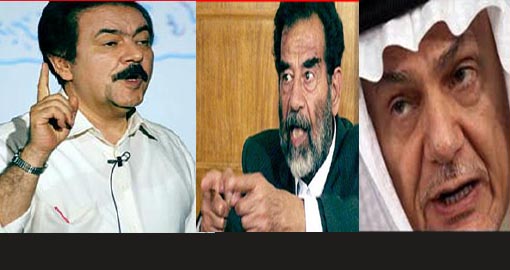
  2. The man whose midwife was Saddam Hussein, announced dead by Saudis!
  3. Former MKO lobbyist denounce Paris gathering
  4. Grand Controversy as MEK can’t prove leader Massoud Rajavi is dead or alive
  5. Maryam Rajavi — MEK Propaganda Queen — Advertises Her Services For Iran’s Enemies
  6. MKO Cult was exposed at the city of its headquarters

Download Nejat NewsLetter ISSUE NO.38

July 27, 2016 0 comments
FacebookTwitterPinterestWhatsappTelegramSkypeEmail
Iran

Any Time, Any Place: Paris, Riyadh Behind Any Possible Terror Attack in Iran

Terrorist attacks and threats come so thick and fast these days that even security forces admit they can no longer cope with the situation all the time.

Any Time, Any Place: Paris, Riyadh Behind Any Possible Terror Attack in IranTEHRAN (FNA)- Terrorist attacks and threats come so thick and fast these days that even security forces admit they can no longer cope with the situation all the time.

Consider this:

-Blast injures 12, kills suspected bomber in Germany’s Ansbach

-Huge fire breaks out near NATO base in Turkey

-Refugee wielding machete kills 1, injures 2 in Reutlingen, Germany

-Munich gunman planned attack for year, left manifesto

-ISIL claims Afghanistan explosion that killed 80

-12 killed in Baghdad suicide blast

All these grim news headlines appeared in just one day or two, meaning, we must now accept terrorism as an any-time, any-place occurrence. We must also accept that although Iranian security forces have dismantled tens of terrorist cells only in the last two months, it could happen here in Iran too. After all, terrorists don’t act alone and terror loves company.

It’s also a nightmare scenario for those in charge of national security affairs in Iran. They might not know which city or town might come under attack, but they damn well know where it will come from and who is behind it: France and Saudi Arabia. And they have perfect evidence to substantiate.

Here, Deputy Chief of Staff of Armed Forces Brigadier General Massoud Jazzayeri has blasted Paris and Riyadh for their support for the Mojahedin-e Khalq Organization (MKO, also known as MEK, PMOI and NCR), saying they will account for any possible terror attack in Iran.

In his words, “(France’s) hosting of Monafeqin (the hypocrites as the MKO members are called in Iran) grouplet as one of the most dangerous and criminal terrorist groups in the world and the presence of Western and Arab figures at their meeting shows these countries’ support for terrorism.”

He referred to the participation of former Saudi General Intelligence Directorate Chief Turki al-Faisal in MKO’s annual gathering in Paris earlier this month and said his call for terror attacks against Iran is a serious matter that cannot be overlooked; the finger of accusation will be pointed at Riyadh and Paris in case Iran comes under direct terror attack.

The Iranian commander couldn’t be more accurate:

-The MKO has assassinated over 17,000 Iranians in the past four decades. The death cult also killed many Americans and Europeans prior to the 1979 Islamic Revolution. They killed before, they can kill again. It’s not a matter of if but when.

-The Paris meeting with some Western officials and former Saudi intelligence chief in attendance means there is a clear link between Saudi Wahhabism, the MKO and Paris. It marks a stain on the French government’s record and constitutes a blatant act of intervention in Iran’s internal affairs. Simply put, it shows the French and the Saudis support the terror group and they have a momentum on their own.

-Terrorism shocks, bewilders and frightens everyone. Those who try to categorise it as good and bad are only fooling themselves. These double standards makes it even harder for those trying to fight it. The self-serving policy fuels international and homegrown terrorism, contentious issues (immigration, Islamophobia, racism), confusion and distress, political and diplomatic instability, disintegration, mass migration, economic volatility and deep divisions, rocking an increasingly rattled and divided world community.

-All this comes against the backdrop of an ongoing effort by security forces to foil any possible terror plot in Iran. However, no one can guarantee the safety of every one at any time. So far they have been astonishingly successful in defusing tens of Saudi-sponsored terrorist plots that were aimed at rocking Tehran and other major cities across the country.

Yet, the very fact that tens of the captured terrorists have acnowledged Saudi suppor and Israeli training entitles Iran to file lawsuits at international courts.

The newly accepted FATF rules by Iran entitle the country to file a request to receive all information, including the financial transactions of the terrorist groups from France, Saudi Arabia, the US and others irrespective of their lableing as a terrorist or opposition group in those countries.

The very fact that such threats and concerns exist in Iran and elsewhere in the world is the reason why Iranian security officials and commanders are trying their best to wake up all those complacent counterparts in Paris and Riyadh from their winter sleep – before something terrible happens..

Lest there be any doubt, those who flirt with internationally-recognised terrorist groups are on the wrong path. They need to take a serious look in the mirror, respond to their own particular problems, and take a tough line on terrorism. Any terror attack on Iran coming from their proxies won’t bode well. It won’t go down well. It will change the world and it’s not a good thing. All sorts of outcomes are possible.­

July 27, 2016 0 comments
FacebookTwitterPinterestWhatsappTelegramSkypeEmail
Massoud Rajavi

Rajavi: from celebrating 9/11 to serving the government which supported the tragic attack

[Iran Interlink has translated part of the testimonial article of Mr.  Reza Sadeghi Jabali, ex-high ranking member of the Mojahedin Khalq Organisation as one example of many about the close relation between the Mojahedin Khalq and Saudi Arabia and terrorist acts.]

The horrifying murderous attack on innocent people on September 11, 2001 shocked people across the globe. Ordinary people were quick to show their solidarity with the victims and their families. Unfortunately, I know of two individuals who were not only not unhappy about this tragedy but went as far as calling this barbaric act a “Sacred Operation” and who ordered their cult members to start preparing for celebration and distributing sweets and candies. These individuals were Massoud and Maryam Rajavi.
In 2001, the day before 9/11, all members of the Mojahedin Khlaq (MEK, MKO, PMOI, Rajavi cult…) were brought to a military base in the west of Baghdad called Bagherzadeh. Long sessions of cultic indoctrination were being carried out, engaging people in what can only be described as forced brainwashing under the military rule of Saddam Hussein. On September 11, in the middle of one of these sessions, Rajavi announced a few minutes’ break and uncharacteristically left the stage. He returned after a while and announced that the session was postponed and that now was the time for celebration and enjoyment.

After this, the scenes of the airplanes smashing into the towers began to be broadcast on the widescreens in the hall over and over again. Each time they were shown, the leaders would stand up, cheer, clap and shout slogans and each time they would look toward the section commanders to ensure they and their people also stand up and join the celebrations. And they would, because they knew the consequences of not obeying.  Rajavi, standing on the stage, was more excited than anyone else. After a while he ordered people to stop and listen. He then said (his exact words): “Praise Islam. Praise Islam. Imagine, if this is what Reactionary Islam can achieve, then what a day it will be when Revolutionary Islam steps up to the scene”.

Maryam Rajavi started talking right after him and said: “You have once more disappointed the leader Massoud. This operation should have been carried out by you and should have been a lesson from you to the Americans and the world”.

After that a video of 10 suicide missions carried out by Palestinians against Israel was broadcast. The suicide missions were all from before this Al Qaida suicide operation. The video showed every suicide operative reading his testimony before death, accompanied by relevant propaganda. Both Rajavis stood up at the end of each one and clapped and praised them to the full.

After that Massoud Rajavi said: “This [9/11] is, of course, the product of a right wing Islamic Ideology which has brought down the Americans and the west and especially the Imperialists who are now shaking and afraid. Imagine the day that the Fedayeen and Mojahidin of Maryam, who have passed the stages of Ideological Revolution, decide to engage directly. And that day is not far away and is the divine responsibility of the Mojahedin, and we know that the regime (Iranian Regime) is only an excuse.  Our historical and our real purpose in being Mojahedin is the destruction of Imperialism, especially the head of the snake, American Imperialism”.

Today the Wahhabi regime of Saudi Arabia has been directly implicated by the 28 pages of American report (recently unclassified). It clearly indicates direct Saudis involvement in 9/11. We have also witnessed the unusual presence of Saudi’s retired chief spy Prince Turki al Faisal in Maryam Rajavi’s annual show in Paris and more than that, his controversial announcement of the death of Massoud Rajavi for the first time which cannot be interpreted as anything other than the overt stamp of ownership by the new benefactor of the cult (i.e. Saudi Arabia after Saddam).

Putting these things together, I can now clearly see why the Rajavis were so enthusiastic and celebrative about 9/11 when it happened. The logical truth is now clear to everyone. The Saudi regime supported and provided all the backing necessary for this terrorist attack – it is not by accident that 15 of the suicide terrorists were citizens of Saudi Arabia and 4 were living there. And I would add that it is not beyond imagination that the name of Rajavi will also come out in investigations into the 9/11 tragedy. It is clear now that the relations between Rajavi and the Saudi regime go back a long time. It is clear now that this relation was becoming closer and closer after 9/11. Evidence reveals frequent information gathering by Mojahedin Khalq operatives from sensitive places in various cities in the United States and subsequent handing over to Saudi handlers.  This information gathering and passing to Saudi and Iraqi intelligence officers of course has always been part of the responsibilities of the Mojahedin Khalq and we as members have known this from a long time ago. I will write another article based on my own first hand witness testimony about these relations in future.

We should keep in mind that Rajavi’s Mojahedin were the first of the Mojahedin who in 1981 started suicide bombing, resulting in the death of a 14-year-old girl (Gohar Adabawaz). And this continued as recently as 2003 in Paris when self-immolation was ordered among the Mojahedin’s supporters – resulting in the deaths and disability of several – after Maryam Rajavi was arrested and detained by the French anti-terrorist police.

I would like to emphasise to all governments and security forces, especially in France, that there is no such thing as “Good Terrorists” and that the age of dividing terrorists into good and bad is passed. Rajavi and his cult are more criminal than all of them. You should consider the influence which the first so-called “sacred suicide operation of the Mojahedin Khalq” – as Rajavi calls it – had on the ideology and the thoughts and deeds of the Wahhabi suicide bombers decades after that.  You should remember that the recent terrorist attacks in Europe and US and especially the ones in Paris were directly influenced by the past suicide bombings and self-immolations of Rajavi’s Mojahedin. And this is exactly why he was broadcasting the Palestinian suicide videos over and over again for us directly after 9/11, referring to them as the examples and inspirations of our Mojahed brothers in other countries…

Reza Sadeghi Jabali,Peyvand-e Rahaee, Paris

July 27, 2016 0 comments
FacebookTwitterPinterestWhatsappTelegramSkypeEmail
Iran

Tehran calls S. Arabia ‘founding father of Daesh, al Qaeda’

Reacting to a recent barrage of anti-Iranian remarks by Saudi Foreign Minister Adel al-Jubeir, the Iranian Foreign Ministry on Saturday lambasted the Saudi kingdom, calling it “the founding father of Daesh and al Qaedeh.”
During a lecture on terrorism organized by the Belgian Ministry of Foreign Affairs in Brussels and hosted by Egmont Research Center, Saudi Foreign Minister Adel al-Jubeir had accused Tehran of expansionist policies and “harboring” terrorism.

The acid comments were rejected by Iranian Foreign Ministry spokesman Bahram Qasemi as “absurd, unfounded, and repetitious.”

“Adel al-Jubeir, who is these days desperately obsessed with smudging the footprints of the interventions of Saudi officials in numerous terrorist attacks over the past decades, thinks can deflect the public opinion of the world from endless disgraces of his country as the founding father of Daesh and al Qaeda through propaganda,” Qassemi stated in a statement carried by the official website of the Iranian Foreign Ministry.

Iran and Saudi Arabia have been supporting opposing sides in regional developments in the Middle East region, particularly in Syria.

Saudi Arabia claims Tehran launches proxy wars in the Middle East to widen its sphere of influence.

Ironically, al-Jubeir’s comments come days after Washington published 28 pages of a congressional report on the September 11 terrorist attacks, part of which had hinted at the Saudi government’s involvement in the attack

“While in the United States, some of the September 11 hijackers were in contact with, and received support or assistance from, individuals who may be connected to the Saudi Government,” reads part of the report released on July 15, according to Press TV.

Referring to the report, Qasemi pointed out, “Of course this is understandable that the Saudi foreign minister has been through tough days just before the confidential September 11 report and await even tougher days ahead.”

“There is no doubt that the consequences of such important information about the resources of a country which shelters terrorism will not escape the public opinion of the world and of nations which fell victim to terrorism after the September 11,” the spokesman remarked.

Key here is that Saudis’ regional mudslinging runs counter to what they do in practice.

On July 9, Prince Turki al-Faisal, Saudi Arabia’s former spy chief, attended an annual meeting of the MKO terrorist group in Paris where he pledged backing and wished for the collapse of Iran.

For years, the group has committed acts of terrorism against Iran and the Saudi link simply means they have been feeding them financially.

Hossein Mousavian, the former Iranian diplomat and current researcher at Princeton University, wrote an article on July 21 in the Huffington Post saying “Riyadh’s now open alliance with the MEK only solidifies its position as the sponsor of yet another extremist group…”

Also, in his recent article published in the Guardian, Mousavian said, “It has long been evident to the global community that Saudi Arabia is a benefactors of Islamist militant groups, including likely the group that evolved into ISIS.”

To support his stance, the Iranian diplomat quoted U.S. Secretary of State Hillary Clinton as having stated at the Brookings Institution last year that, “Much of the extremism in the world today is the direct result of policies and funding undertaken by the Saudi government and individuals.”

Likewise, last year German Vice Chancellor Sigmar Gabriel called on Saudi Arabia to stop financing Wahhabis.

“We have to make clear to the Saudis that the time of looking away is over,” Gabriel had told Bild am Sonntag newspaper.

The German official added, “Wahhabi mosques all over the world are financed by Saudi Arabia. Many Islamists who are a threat to public safety come from these communities in Germany.”

With this background, it seems Saudis are pulling the wool over outsiders’ eyes, accusing others of backing terrorism cunningly to avoid being accused of terrorism!

July 26, 2016 0 comments
FacebookTwitterPinterestWhatsappTelegramSkypeEmail
Mujahedin Khalq Organization's Propaganda System

Supporting the MKO is big waste of time and money

Saudis, Iran must resume dialogue; MKO a big imposture

Supporting the MKO is big waste of time and money,vice chair of the Foreign Affairs Committee of the French Senate said.

Tehran and Riyadh have to make effort to bear each other and restart a dialogue, Nathalie Goulet, vice chair of the Foreign Affairs Committee of the French Senate told Trend.

Recently, the long-escalated relations between Tehran and Riyadh worsened after participating of Prince Turki al-Faisal, Saudi former intelligence chief, in Mujahedin-e Khalq Organization’s (MKO) annual meeting in the Le Bourget, near Paris on July 9.

MKO is considered a terrorist group by Iran because of its history of assassinations and bombings against Iranian authorities and for siding with former Iraqi dictator Saddam Hussein during the eight-year Iran-Iraq war in the 1980s, which resulted in about a million casualties from the Iranian side.

“The most challenging issue is to restore trust and get rid of irrational fears or feeling of superiority between Iran and Saudi. The world security needs both KSA and Iran,” Goulet said.

Saudi Arabia’s important role in Middle East peace

Goulet said that the Kingdom of Saudi Arabia (KSA) was known as a major oil producing country in the world and stayed out of the limelight before the Gulf War.

“When Saddam Hussein targeted Saudi Arabia in retaliation to the US offensive, the Kingdom was alarmed that it needed better defensive measures. The regional events after the new millennium encouraged the Kingdom to take on a more active role in the region. The economic power of the country grew steadily and helped the Kingdom to establish itself as one of the major players in the region,” the senator said.

She added that with the current administration in Saudi Arabia and their desire to play a more constructive role in regional peace and stability, France welcomes such efforts.

“France and the Kingdom remain good partners in fighting terrorism worldwide and are determined to uproot this global disease. Of course we do have other partners in the region, sharing the same goal and we will work hard to create a stronger and stable consensus to speed up the counter terrorism efforts,” said Goulet.

Riyad is a member of US-led coalition in fight against Islamic State (IS) terrorist group and Iran also helps Iraq and Syria to battle against this group separately.

Goulet said that France welcomes the true efforts of KSA to control financing of terrorism, however, it’s obvious that restoring peace and security in the Middle East will not come overnight.

She added that as the guardian of the two holy mosques in Mecca and Medina, KSA has to play a major role in fighting Islamic extremism.

“I had the chance and the privilege to meet HRH Muhammed Bin Salman and Foreign Minister Al Jaiber in Paris. I fully trust their will to be successful in their vision of KSA 2030. Our standards are really far from KSA’s rules and regulation. More cooperation will help a lot to achieve the goals,” she said.

Supporting MKO – waste of time and energy

Coming to MKO’s meeting in France and participating of a former top Saudi official there, Goulet said that “we always encourage the countries in the region to establish closer relationship for more enduring regional peace. The recent gathering of exiled Iranian terrorist group in France known as MKO and presence of some Saudi figures hopefully shall not be interpreted as position of current administration of KSA”.

Members of the MKO fled to Iraq in 1986, where they enjoyed the support of former Iraqi dictator Saddam Hussein, and set up Camp Ashraf near the Iranian border in Diyala.

The group has carried out numerous terrorist acts against Iranian civilians and government officials. The terror organization is also known to have cooperated with Saddam in suppressing the 1991 uprisings in southern Iraq and the massacre of Iraqi Kurds in the north.

Goulet said that the MKO is a big imposture and tries to appear as a solution for a replacement of Iranian regime.

“Anyone involved in the regional policy knows that MKO has no foot print inside Iran and have in fact acted as mercenaries against Iranians during the Iran-Iraq War. Even if you dislike the Iranian regime, supporting the MKO will not help to get a new regime. No one in Iran will support MKO as it betrayed this country by supporting Iraq during a terrible war," Goulet said.

She added that supporting MKO will just bring more solidarity among Iranian people and will create more misunderstanding between the two nations. “It is big waste of time and money,” she added.

By Dalga Khatinoglu / Trend.az  / Baku, Azerbaijan

July 26, 2016 0 comments
FacebookTwitterPinterestWhatsappTelegramSkypeEmail
Mujahedin Khalq Organization as a terrorist group

Saudi-MKO Alliance, a Political Idiocy

Prince Turki al-Faisal’s hostile remarks against Tehran in the annual gathering of the Mujahedin Khalq Organization and his promises to stand by the MKO seems to be a total failure for both sides of the alliance.

The Saudi policies aimed at destabilizing its rival Islamic Republic –as a powerful neighbor and an influential country in the Muslim world—sounds to have formed new stances that are now overt rather than covert. Prince Turkie who presumably have been authorized by his peers in the Saudi regime cheers up the MKO-gathered audience by saying, “I, too, want the downfall of the regime.”

But, this plain sponsorship for the destructive cult of Rajavi with a dark history of violence and human rights abuse will not work. As the New York-based journalist on U.S. foreign policy, Ali Gharib writes, “If Saudi Arabia is on a quest to paint itself as a responsible actor in the region, the kingdom took a big step backward over the weekend.”[1]

It’s truly “a big step backward” and as Barbara Slavin Acting Director of the Future of Iran Initiative at the Atlantic Council in Washington, asserts in her article on Turkie Feisal’s support for the MKO, “mixing with the MEK is a recipe for disaster and a distraction from the region’s and the world’s real enemy – the group that calls itself the Islamic State.”[2]

Slavin confirms rumors about Saudis’ long-standing support for the MKO, “It’s entirely possible that the Saudis have funded the MEK for years.” [3] So, In case of Turkie and other rich Arab figures MKO’s speaking fees do not create the motivation to take such hostile stances against the Islamic Republic. “The Sunni Gulf states—flush with petrodollars and bearing sectarian grudges against Shiite Iran in a regional battle for hegemonic primacy—have long been suspected as a source of funding for MEK’s lavish spending, but no reliable reports have definitively established where the group gets its cash,” writes Ali Gharib. “Al-Faisal’s public move in support of the group certainly provides one more piece of evidence to link Gulf States to MEK’s financing.”[4]

He explains, “Although MEK is famous for lavishing money on its supporters—paying as much as $50,000 for a short speech and investing in politicians through campaign contributions—al-Faisal, as a member of Saudi Arabia’s super-rich royal family, probably scoffs at the sort of cash MEK offers. Instead, al-Faisal attended for obvious reasons: to put a thumb in Iran’s eye.”[ 5]

Actually, Saudi’s financial and spiritual support for the MKO is already a failed investment because the MKO is notoriously known to Iranians and many others in the international community. “Contrary to the MEK’s claims, there is nothing democratic about this cultist organization, which requires its members to divorce their spouses or remain celibate and engage in Maoist-style struggle sessions of self-humiliation”, Slavin warns. “Those that manage to escape often require long periods of de-programming.” [6]

And this is Ali Gharib’s account about the MKO’s situation among all Iranians in general: “Let’s be blunt: MEK is neither a viable agent for regime change in Iran nor the “government-in-exile” the group pretends to be. They enjoy almost no support among Iranians at home or abroad. Exiled royalists hate them for their terror war against the Shah’s regime and their part in the Islamic Revolution. Inside the country, they are reviled across the political spectrum for siding with Saddam Hussein—and fighting against Iranians—in the Iran-Iraq war.” [7]

The MKO has carried out numerous terrorist attacks against Iranian civilians and government officials over the past three decades. Out of the nearly 17,000 Iranians killed in terrorist attacks since the Islamic Revolution, about 12,000 have fallen victim to MKO’s bombings, mortar attacks and other violent acts.

Robert Macey of the Intercept cites from an Iranian scholar Ariane Tabatabai of Georgetown University _who describes the MKO as “cult-like dissident group”_ what the Iranians feel about the MKO.  “If the current government is not Iranians’ first choice for a government, the MEK is not even their last — and for good reason,” tells Ariane Tabatabai to Robert Macey. “Today, the MEK is viewed negatively by most Iranians, who would prefer to maintain the status quo than rush to the arms of what they consider a corrupt, criminal cult.” [8]

Saudi transformation from a sponsor of Syrian rebels particularly ISIS to a state sponsor of the terrorist cult of Rajavi indicates the failure of previous proxy wars and a new endeavor to confron Iran. However, the new choice is not reliable at all. The common enmity for Iran does makes an absolutely idiot alliance.

As a matter of fact, ISIS is losing ground in Syria and Iraq and eventually Saudi Arabia is largely losing the capacities to use terrorist groups against its rival. Thus, the kingdom is beating the dead horse of “the late Massoud Rajavi”.

Mazda Parsi

References:

[1]Gharib, Ali, Saudi Supports Anti-Iran MEK Fanatics Mujahedin Khalq Organization as a terror group,     Lobelog, July16, 2016

[2] Slavin, Barbara, Saudi Backing of Iranian Exile Group Inflames Mideast Conflicts, Voice of America

July 11th, 2016

[3] ibid

[4] Gharib, Ali, Saudi Supports Anti-Iran MEK Fanatics Mujahedin Khalq Organization as a terror group,     Lobelog, July16, 2016

[5] ibid

[6] Slavin, Barbara, Saudi Backing of Iranian Exile Group Inflames Mideast Conflicts, Voice of America

July 11th, 2016

[7] Gharib, Ali, Saudi Supports Anti-Iran MEK Fanatics Mujahedin Khalq Organization as a terror group,     Lobelog, July16, 2016

[8]Mackey, Robert, Newt Gingrich Pals Around With Terrorists Saddam Hussein Once Armed, the Intercept, July 11, 2016

July 25, 2016 0 comments
FacebookTwitterPinterestWhatsappTelegramSkypeEmail
Newer Posts
Older Posts

Recent Posts

  • Fourteen years after US delisting, MKO terror cult’s political rebranding collides with its violent legacy

    September 30, 2026
  • How Did Maryam Rajavi Become All-Powerful in the MEK?

    September 29, 2026
  • Soraya Abdollahi’s Letter to International Human Rights Bodies

    September 28, 2026
  • How Did Maryam Rajavi Become All-Powerful in the MEK?

    September 27, 2026
  • Yazdan Teimorian’s Family:  We Are so Heart-Broken!

    September 23, 2026
  • Facebook
  • Twitter
  • Instagram
  • Youtube

© 2003 - 2025 NEJAT Society . All Rights Reserved. NejatNGO.org


Back To Top
Nejat Society
  • Home
  • Articles
  • Media
    • Cartoons
    • NewsPics
    • Photo Gallery
    • Videos
  • Publications
    • Books
    • Nejat NewsLetter
    • Pars Brief
  • About Us
  • Contact us
  • Editions
    • عربي
    • فارسی
    • Shqip