Nejat Society
  • Home
  • Articles
  • Media
    • Cartoons
    • NewsPics
    • Photo Gallery
    • Videos
  • Publications
    • Books
    • Nejat NewsLetter
    • Pars Brief
  • About Us
  • Contact us
  • Editions
    • عربي
    • فارسی
    • Shqip
Nejat Society
Nejat Society
  • Home
  • Articles
  • Media
    • Cartoons
    • NewsPics
    • Photo Gallery
    • Videos
  • Publications
    • Books
    • Nejat NewsLetter
    • Pars Brief
  • About Us
  • Contact us
  • Editions
    • عربي
    • فارسی
    • Shqip
© 2003 - 2024 NEJAT Society. nejatngo.org
Former members of the MEK

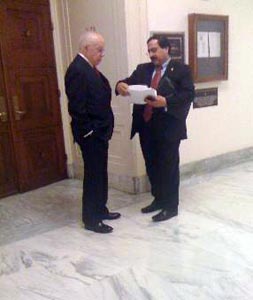
Masoud Banisadr:Living and Escaping a Terrorist Cult

In this edition of The Interview, Fair Observer talks to Masoud Banisadr, a former member of Mujahedeen-e-Khalq.

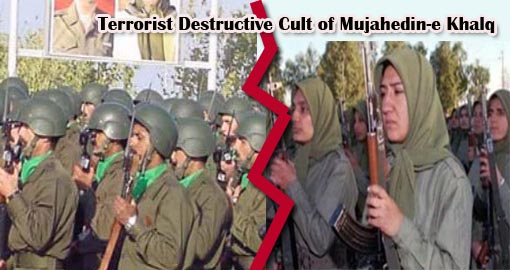
In 1965, Mujahedeen-e-Khalq (MeK) was established in Iran in opposition to US imperialism. Espousing a blend of Marxism and Islam, the group helped bring about the Iranian Revolution of 1979. However, after breaking with the revolutionary government, MeK embarked on a terrorism campaign and was forced into exile, losing followers in Iran after its support for Saddam Hussein in the Iran-Iraq War.

MeK was designated as a terrorist organization by the US State Department until 2012. The Iranian government estimates that MeK activity has claimed some 12,000 Iranian lives over the last three decades.

Operating from exile, the organization had all the trappings of a cult. Attracting young, idealistic Muslims with slogans of Islamic justice and social freedom, it disrupted familial and social ties, forcing members to divorce their spouses and abandon relatives, making them dependent on the group through isolation, misinformation and manipulation.

Masoud Banisadr, a cousin of former Iranian President Abolhassan Banisadr, joined MeK while studying in Britain and served in its political wing for nearly 20 years. Finally leaving the group in 1996, he now writes about the dangers of cult ideology and the appeal of extremism. His books include Masoud: Memoirs of an Iranian Rebel and Destructive and Terrorist Cults: A New Kind of Slavery.

In this edition of The Interview, Fair Observer talks to Masoud Banisadr about what first attracted him to the MeK and what eventually forced him to escape.

Anna Pivovarchuk: How was MeK different from other political organizations? What is your definition of a cult, and how does it fit into that image?

Masoud Banisadr: Cults resemble slavery more than they do political parties, which are idea-based. Cults, on the contrary, are leader- and behavior-based. They claim to have an ideology that is useful for recruitment, to use it as a mind manipulation tool and to glue followers to each other. But when you look at them closely, you will see that they have taken shape around a leader and a code of behavior dictated by that leader.

Cult dogmas are shaped around behavior. For example, for a cult member, it is more important how he looks than how he thinks. In MeK, you could say I don’t believe in this or that principal of Islam, and nobody cared much. But if you behaved differently, if you didn’t follow or have enough loyalty toward the leader, you couldn’t stay in MeK for a second—same as al-Qaeda, same as Daesh [Islamic State]. In all of these organizations, you can see that what is important is survival of the group and absolute loyalty and obedience toward the leader.

The other main difference is that a cult is a way of life, and as slavery there is no way out of it till you die. When you are a member of a cult, it is the whole of you. Your motherhood and sisterhood is defined by being member of a cult. Your work is defined by being a member of a cult.

Pivovarchuk: So what makes people join a cult in the first place? Are there some common reasons?

Banisadr: I think people are recruited by cults rather than joining them freely. However, some people might be more vulnerable than others to fall in the trap of cults due to three main reasons.

The first is personal: I might have a problem of belonging, identity or not having a sense of purpose in life. These days, many young people lack a sense of belonging. Family ties are not as strong as before. Religion is not as important as before. Even nationality is not as relevant as before. This lack of feeling of belonging might attract them toward gangs, cults or groups of any sort to feed that longing. Imagine a young Muslim on the street who has nothing: Suddenly, when he joins a group like al-Qaeda or Daesh, he becomes a warrior, a martyr, a great hero. It’s a great change. People either love you or hate you, but at least you are not insignificant anymore.

The second is the cause: ideological, political, or philosophical, mainly as a means to seek justice. If you feel or see injustice and discrimination against yourself or against your community or religion, you feel you have to do something. Many young Muslims feel injustice against Palestinians in Israel, or they see the rise of Islamophobia in Western countries and feel they have to do something against it. Cults feed on injustice and claim they can offer people a way to seek justice. Cults also give an illusion of a sense of honor and a way for an ordinary normal person to feel that he/she can have an honorable life and that if one dies for the cause, they will be remembered as a martyr or a hero.

And the third reason might be that you have been born into a cult. Your parents have been followers of a cult, and as a result you have been raised in the cult.

Pivovarchuk: You talk about the personality of a cult leader being very important. You have to get people to buy into your narrative. How is that achieved?

Banisadr: After being recruited comes their mind manipulation. Although they have recruited you, using some sort of doctrine, or cause, forcing you to accept that if you join their cult you will become a better person. Still, they have to change you into a committed or, if I may say, blind follower or a “zealot” member. And here comes mind manipulation that I have divided in three intertwined stages.

The first stage is rational trickery and influence techniques that change your belief system. For example, if you are attached to the family, through some rational trickery, through some influence techniques, they can persuade you that your new family are the cult members rather than your parents or your siblings. They persuade you to fight for them—[as] the only way that you can seek justice for yourself or your community. Then using some influence techniques they will force you to do something to affiliate yourself with the group. They might start with small requests and then build on those small steps and gradually pull you deeper and deeper into their swamp.

The next stage is of “mind control”—control of environment and control of behavior. Because at this stage you are divided between who you were and who you are going to be, your feelings, your personality will force you to go back toward who you were.

I was born the year when the first democratically elected prime minister of Iran, Mohammad Mosaddegh was violently overthrown by a CIA coup. It affected my generation and the later ones deeply.

To overcome the effect of your old feelings, cult leaders have to isolate you from the society and your past life; this will be done through control of environment. There is an Iranian expression that says, “Whoever leaves your eyes will eventually leave your heart.” By stopping you from having any contact with your parents and friends, gradually cults can stop you remembering your feelings toward your loved ones.

They can change your personality gradually by changing your behavior. For example, if you look at the people who became followers of Daesh or al-Qaeda, you can immediately see a change of appearances and behavior. For example, they grow a beard, or they grow or cut their hair, their clothes change, and also their behavior will change—in extreme form of it, used by Daesh. You have seen in the media that they have asked a British-born person to behead another person, or even destroy shrine of a Muslim saint. By doing that, Daesh will force that person to stand against his old personality by an extreme change of behavior. It is also a way of dehumanizing the outsiders and isolating a new follower not only from the society, but also from history, tradition, ethic and culture of his previous being.

Pivovarchuk: How important is this isolation from family and friends in altering someone’s idea of yourself? In your personal experience, what have you been told to do or asked to do?

Banisadr: When you say that I am a person, what does it mean? I am a person because of my set of beliefs, because of my principles, because of the way I think, because of the things that I enjoy, because of my relation to my family, my relation to parents, siblings, wife, children and so on. If you lose them one by one, then eventually you become an “unperson.” Nobody.

For example, I was in the last year of my PhD. But the way that MeK educated me, I was feeling ashamed of being a PhD student, not proud of it. Why? Because they were telling me that while I was studying and wanted to become a doctor, followers of the group were in prison under torture during the shah’s time. So instead of fighting, instead of sacrificing my life for the people, selfishly, I was studying. So instead of being proud of who I was, I was ashamed of it.

I was even ashamed of my family, because of my family name—because of my cousin, who was the president of Iran.

This is the new you—this new personality of yours. You change into a nobody, and you define yourself according to your cult personality. What is your rank in the cult? What is the relationship between you and the leader of the cult? How have you behaved in the cult? How successful have you been in the pursuit of the cult’s objectives?

I am calling it slavery because you change into an “unperson.” Your relationship with everybody else is defined via your relationship with the cult leader. Because whatever you do, you are not gaining anything for yourself and even your family and your society but for the cult leader. Like slaves whose existence was defined through their relationship to the master, and the fruit of their life was going to the master.

In MeK, we were not even allowed to think of our children and their wellbeing. The logic behind it was that while children in Iran are suffering, you wouldn’t dare let yourself think about your own children. As with slavery, you are a parent, but you are not a parent. You are a supervisor of your children, a person responsible for educating a child so he can change into another follower/slave of the leader/master. You have to teach your children: instead of loving you, love the leader. Instead of remembering grandparents, remember those who have sacrificed their life for the cult.

In slavery, at least in your dreams, in your desires, you are free. You can desire freedom because you can see that you are a slave. In your dream, you can remember your old life. Your country, your family. But in cults you can’t. Because through brainwashing, they have changed you into your own jailer. You even don’t dream of freedom as you are educated to think that you are freest person on earth.

Pivovarchuk: In your book, you say that you underwent a transformation from a “liberal middle-class semi-intellectual” to a zealot ready to die for the leader. It shows that those who join cults are not stupid or naïve, but that it’s a complicated psychological process. What caused this transformation that you talk about?

Banisadr: For me personally, I guess I have to go back to three slogans of the Iranian Revolution: independence, freedom and Islamic Republic.

I was born the year when the first democratically elected prime minister of Iran, Mohammad Mosaddegh was violently overthrown by a CIA coup. It affected my generation and the later ones deeply. We wanted independence because we used to feel that our country was ruled by Americans—not physically, but we knew that the shah was a puppet of the US. So independence was very important to us.

The first thing to understand is what attracts young Muslims to these groups. I believe it is injustice—injustice against Muslims in different countries. It is very important we recognize this.

The second one was freedom, which was opposite of the dictatorship, and the censorship of shah’s regime. We understood political freedom more than any other freedom, probably because of the lack of it. So when we talked about freedom, we meant political freedom rather than liberalism as it is in the West, where it is mostly about personal freedom. During the shah’s regime, we almost had all personal freedom enjoyed by the Western youth, but there was a total lack of political freedom.

The third one was the Islamic Republic, which was mainly about social justice promised in Islam. We felt that people were divided between the superrich and super-poor, and if you were part of the system you could have everything. What attracted me among many other young people to the revolution were these three ideas, these slogans.

After the revolution, because I was in the UK, I couldn’t see for myself what was going on in Iran. I couldn’t judge for myself. The only source of information we had about what is going on in Iran was MeK papers. Even Western media, because they were against the Islamic Revolution and the new government in Iran, were feeding us with the same kind of news—all negative ones. So we felt that our country was even more unjust than before. What happened to freedom and Islamic justice?

MeK was even telling us that sooner or later, this new government would become the puppet of the United States. That because they cannot run the country, they will need the help of foreigners and will invite Americans and British. As you can see, for us it looked like everything was ruined and lost.

Pivovarchuk: What made you change your mind? What was the catalyst for you leaving the MeK?

Banisadr: As I mentioned before, cults—I believe all cults—have one weakness. They can change you, they can change your set of beliefs and everything, they can change your behavior, your appearance and so on. But they are unable to change one very important thing: They are unable to wipe out your memories. There are some fantasy stories where people have been brainwashed and have lost their memories and have found completely new personalities. That is fiction.

If you do not think about your feelings toward your past life, friends and families, your feeling toward them is still alive—though it is passive, paralyzed or asleep.

Anything can make it active. A smell reminds you of your childhood. A flower, a color or kindness from a stranger. Walking in the streets, seeing somebody who looks like your mother. Seeing love between a parent and children in the street. For the majority of followers of groups like MeK, Daesh and al-Qaeda that have been isolated (both psychologically and physically) from society and normal life, it is more difficult to save themselves because their feelings toward their loved ones cannot be triggered and remembered.

But for a person like me, who had to travel to different countries to represent the group politically at the United Nations in Europe and the United States, the situation was different, because I could see other ordinary people.

The first thing that forced me to remember ordinary kindness was when I was traveling from France to the United States. I was so tired that I slept on the airplane, from the beginning almost to the end. When I woke up, there was an old lady sitting beside me, and I found out that she kept for me whatever was given out in the plane. It was a very natural, ordinary kindness, but it affected me greatly to understand ordinary life, ordinary human behavior, because in the cult you will categorize ordinary people just above animals. They dehumanize outsiders, so followers are ready to do anything for the cult. As you have noticed, followers of Daesh are ready to behead other human beings without any remorse or doubt.

In MeK, if you were called ordinary, it meant that they had called you a dog or a pig. To be ordinary is worse than any other swear words. And suddenly, I was facing the beauty of being ordinary. Beauty through love, through understanding, through simple empathy and compassion.

And the second thing that saved me was seeing my daughter and old friends in the UK. Remembering my love for my daughter. My family and friends.

And also after that, I was lucky because of my back problem I had to be hospitalized. And because the group was so busy with the different political meetings that Maryam Rajavi [wife of Masoud Rajavi and co-leader of MEK] had in London, they forgot about me. So for almost a month, or three weeks, I was in the hospital without having any kind of connection to the group.

In the hospital I could see other people. I remember there was a guy beside me who had an accident and his hands were in plaster. I used to give him lunch and I even helped him to shave. And he showed me kindness as well. These kinds of things suddenly force you to remember who you were and who you truly are: a human being.

Remembering feelings suddenly forced me to wake up from a very, very bad dream. Although I can admit that still I could not understand what was happening or what had happened. I could not understand the political deception; I could not understand the hypocrisy of the group. But I could understand and I could see who I was. I could see my old personality, I could see my old feelings, and I think this was the trigger that helped me leave the group.

Pivovarchuk: How long would you say it took you to process all that had happened to you?

Banisadr: Very long. They say you can leave a cult, but it takes a long time for the cult to leave you. Because it infiltrated your mind, your heart, your philosophy, your way of thinking, and it’s very difficult to get rid of it.

I think for a year I couldn’t understand it as a cult. I couldn’t understand the procedure as brainwashing or mind manipulation. After I started writing my memoirs—gradually, because I was remembering stage by stage what had happened—I think it was in the last chapter of the book that I finally felt that it was a cult and I had been brainwashed.

Pivovarchuk: How did this realization make you feel?

Banisadr: It was great and horrible at the same time.  If you find a very close friend has robbed you, it hurts; if you find him violating your trust and dignity and deceiving you for years, it hurts much more. Then imagine finding out a guy who you thought of as a saint and the holiest person on earth has been just a charlatan wanting to make you his slave through manipulating your mind—robbing not only your wealth, health and happiness, but your individuality, personality and humanity. Then you will understand what I felt.

After that comes realization of nothingness, loneliness and powerlessness. You feel you are free to do anything you like, but you are neither who you were before the cult, nor a follower of the cult.

So you ask yourself, who am I? If I am going to buy clothes for myself, what should I buy? What kind of food do I enjoy? Suddenly making any decision became huge. Impossible. I used to get help from my daughter. Ask her to choose for me, to buy clothes.

What do you consider as honor, and what are you proud of? What are your political or philosophical beliefs? And how do you run your daily life and make a new relation? All these are very big questions.

When people look at you, they see a grown man. But I can say that somehow you are a newborn child without the support of parents. There is no solid wall to lean on. You are really vulnerable, and there is nobody to tell you what has happened to you and how should you find your way.

Suddenly you’re coming out of a cult penniless—the things that I knew were obsolete. For example, I went to a job interview, and they asked me, “What do you know?” I answered: mathematics, chemical engineering, programming and so on. The guy asked me, “Okay, very good, nice great, what kind of programming do you know?” I started saying, “Fortran, Assembly, basic language…” And he looked at me: “Where are you from?”

Suddenly I realized that I knew nothing. I even didn’t have common sense of ordinary people. I had lost it. If you wanted to talk with me about music or movies, or the kind of programs I like on TV, I didn’t have a clue what to say. So what kind of connection and communication could I have with you?

After that you will face another big problem: how to get rid of the cult in your mind. How to change your behavior. How to change your way of thinking, your worldview from a black-and-white into a colorful one. How to see bad and good beside each other. How to get rid of the cult’s way of thinking, what they have forced you to believe and accept as reality. All this will take a lot of time.

Pivovarchuk: Ironically, what they tried to isolate you from—your family, your children—has become something that brought you back to normality. As you said, you can’t destroy memory, so there’s this hope that people can find their way back.

Banisadr: I think so. And this is my advice to parents of all those children who have been recruited by cults: show them love. Instead of arguing and discussing political, religious or philosophical issues, give them love. Let them remember the kind of relationship, the kind of emotion that they had with you. The kind of feelings that existed between you. In this way, they can remember who they were, and in this way they can find a way to get rid of cultic manipulation and become somebody again.

Pivovarchuk: It’s interesting that you mentioned that, because obviously there’s been a lot of attention given to Islamic extremism and groups like al-Qaeda, al-Shabab, ISIS. How do we stop people from joining? Where does this battle for their hearts and minds begin?

Banisadr: The first thing to understand is what attracts young Muslims to these groups. I believe it is injustice—injustice against Muslims in different countries. It is very important we recognize this. For politicians and the media to recognize it—accept that yes, there is injustice against, for example, Palestinians in Israel. There are double-standards toward Israel. We understand this, we accept this. This acceptance is very important.

Then we have to separate the religion of Islam and Muslims from these groups. Calling them Islamic or Muslim is a horrible thing to do. Why? Because we are enabling them to recruit from a 1.6 billion population pool. If you call them Muslim, you will create sympathy, shared ideas and religion between them and these 1.6 billion Muslims. Even these Muslims might see them as their own children—they might see them as their fellow Muslims in need of help and support.

So it’s a very big mistake, which unfortunately many mass media and some politicians make and in a way will help these groups to recruit even more. By calling these terrorist groups Muslim and using Islamic State instead of Daesh, first they enable these groups to recruit more. At the same time, they advocate Islamophobia among non-Muslims in society, and finally alienate ordinary Muslims from the rest of the society.

Therefore, Muslims in the West think of themselves more as Muslim than, for example, as British. Even if the media want to talk about ideology of these groups, they should use the name of their ideology—Wahhabism or Takfiri—and not Islam. The same thing they do when they want to talk about other groups such as David Koresh’s or Jim Jones’s cults, or when they talk about the Moonies.

Second, we have to educate young people about Islam as a religion of peace and tolerance, and at the same time, we have to educate them about cult and mind manipulation—to immunize them against mind manipulation of the cults. To teach them how people can be manipulated, how people can be influenced, be tricked by rational manners. How they can be brainwashed.

Finally, we have to show them a way out of the cult. Instead of criminalizing them, which will stop them coming back. We should realize that followers of a cult are victims as well—a victim of mind manipulation and not a criminal. If we help them and show them kindness and education, they can change into an antidote of cults and terrorism. It is very important for those who have left Daesh and al-Qaeda to say what they have witnessed and educate other people not to fall in the trap of cults.

By criminalizing them, by putting them in prison, we change them into heroes of the next generation of terrorist cults. By executing them, we make them into martyrs.

Pivovarchuk: Can Iran and the US work together against Daesh successfully?

Banisadr: To get rid of Daesh and al-Qaeda in the Middle East, to find a long-lasting peace and stability in the region, America and Iran have to talk and work with each other. But can they? True, every week in the Friday prayer, Iranians chant “Death to America,” but what they mean is “Death to those Americans who tried to destroy our country and still want to do so.”

After all, while no American has ever been killed by any Iranian (except those killed by MeK), but on the opposite side. The CIA overthrew the first democratically-elected prime minster of Iran; America established and supported the shah’s dictatorship; supported Saddam Hussein’s war and his chemical attacks against Iran. During aggression of Saddam against Iran, Americans even shot down Iran Air Flight 655, an Iran Air civilian passenger flight from Tehran to Dubai in 1988, killing all 290 passengers, without any proper apology.

And now some warmongering American politicians are supporting MeK, who have been the lobbying force behind the sanctions against Iran and are lobbying Western countries to attack the country, praying for the destruction of Iran so they might become its new rulers. They are mostly hated in Iran, and I believe this will add to why Iranians don’t trust Americans.

As long as America doesn’t review its foreign policy, realizing who its friends and who its enemies are, and the Western media doesn’t stop this propaganda against Iran based on its love for Saudi petrol dollars, we will hardly see any improvement in Iran-US relations. And, unfortunately, we have to witness growth of Saudi-backed Wahhabi terrorist groups and more instability and suffering in the region.

By Anna Pivovarchuk and Masoud Banisadr , Fair Observer.com

January 11, 2016 0 comments
FacebookTwitterPinterestWhatsappTelegramSkypeEmail
Nejat Publications

Pars Brief – Issue No. 90

Inside This Issue:

  1. Iraqi militia takes credit for rocket attack targeting Iranian dissident camp
  2. UNHCR Update on the situation of Camp Liberty residents
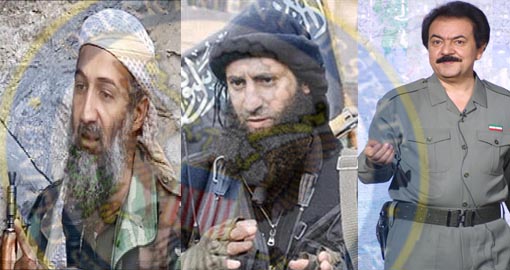
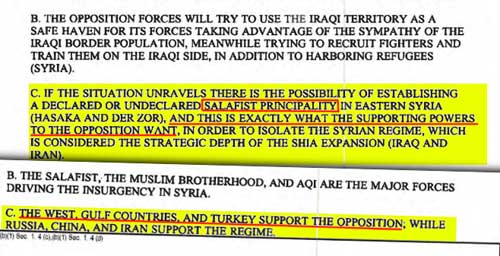
  3. US War in Syria, Iraq Part of Bigger Plan Aimed Against Iran and Beyond
  4. Beware of Exiles and Their Promises

Download Pars Brief No. 90

January 10, 2016 0 comments
FacebookTwitterPinterestWhatsappTelegramSkypeEmail
Albania

26 more Camp Liberty residents moved to Albania

At the end of the last year another group of 26 people relocated in Tirana, Peyvan-e Rahayee Website reported.

The group relocated at December 26, 2015. The delay to release the names was due to the Christmas holidays.

Based on the UNHCR statement of December14 by the end of 2015, more than 1,100 residents were due to be relocated to a third country. This represents more than a third of the residents registered by UNHCR.

Albania has housed more than three-quarters of those transferred.

Based on the statement some 1900 people have remained in Camp Liberty by now.

Stating the significantly heightened security risks for the residents, the UNHCR emphasized on the need for the relocation of all Temporary Transit Location residents and called on all States to cooperate on the issue.

Names of those recently transferred are as follows:

  1. Mojtaba Akhgar
  2. Babak Arjmandi
  3. Asaad Akbari
  4. Morteza Akbarinasab
  5. Ali Asghar Torabi
  6. Sedigheh Hassanzadeh
  7. Naser Khoshkad
  8. Behrouz Sohrabi
  9. Khalil Shabaz
  10. Sorayya Sheikh zadeh
  11. Mehran Sabouhi
  12. Mehdi Abdolrahimi
  13. Abdolmalek Alavi
  14. Manijeh Aliyarzadeh
  15. Mirhafez Isapour
  16. Azizollah Gholamizadeh
  17. Mohammadreza Ghasemzadeh
  18. Yousof Kiya Fotouhi
  19. Fazlollah Mahmoudi
  20. Shohreh Maadanchi
  21. Mohammadjavad Musavi
  22. Farideh Nemati
  23. Mohamamd Nurali
  24. Mohammadhasan Nayyeri
  25. Ghader Veysi
  26. Mashallah Hemmati
January 10, 2016 0 comments
FacebookTwitterPinterestWhatsappTelegramSkypeEmail
UN High Commissioner for Refugees

Open Letter from a mother to the UNHCR

To the High Commissioner of the UNHCR

I am Mahnaz Akafian, the mother of Mohammad Ali Sasani, who was a prisoner of war in Iraq but he is now prisoner in MKO in Iraq.

I have not had any news from my son for 28 years. Some time ago I went to Ashraf Camp and more recently I went to Liberty Camp in Iraq to find him. Unfortunately, I did not get any result. I do not know if humans have different rights. I ask you a question as a human rights representative. If a person is in prison and is condemned to death, do they have the rights to have contact with and see their family members? We ask from the MKO that we see our children. Even if we are guilty of all the sins they accuse us of, why shouldn’t we be allowed us to see our children? So many fathers and mothers were not allowed to see their children and they died. With this weak body of mine I ask, let us meet our son!

Kind regards,

Mahnaz Akafian, a mother

7 January 2016CC:

The head office of the International Committee of the Red Cross – Geneva

ICRC office in Baghdad

Mahnaz Akafian, Peyvande-rahaee,

January 9, 2016 0 comments
FacebookTwitterPinterestWhatsappTelegramSkypeEmail
Iran Interlink Weekly Digest

Iran Interlink Weekly Digest – 128

++ The families have been busy writing to various organisations to get help, in particular the UNHCR. They complain that in both Iraq and Albania, the local UNHCR officials are under the control of Massoud Rajavi and playing into his hands, whether by denying visits in Iraq or by refusing to accept the people in Albania as individuals. The UNHCR office in Tirana sends them back to the MEK telling them “they are your lawyers”. This has made it extremely difficult for people to get out of Iraq or to leave the MEK once in Albania.

On this issue of the families, irandidban website has a short comment titled ‘Iran is obliged to help the families of the people stranded in Camp Liberty’. The article says that families who visit Iraq from Iran must naturally be given consular support by their country. In the same way, families who visit or campaign from other countries must be supported by those other countries – which includes the families in London like the Mohammad Rahimi father and son. The concept that the MEK is labelling every family that wants to visit their loved one as an agent of the Iranian regime is the most ridiculous thing and is irrelevant to the task of the families. Their task is concerned with basic human rights which are not related to or affected by anyone’s allegiances or job in any way. The UNHCR should follow the law and not be intimidated by the MEK’s phobias and threats which are all just words.

++ This week people have continued writing about the pitiful situation of Ebrahim Mohammad Rahimi and his son who want to talk to the wife and mother, but are denied by Maryam Rajavi and the MEK.

++ The reaction to Rajavi’s silence over the execution of Sheikh Nimr Baqr al-Nimr in Saudi Arabia was to compare this with the MEK’s very overblown and public weeping and commiserations following the death of Zahran Alloush, the leader of Jaish al-Islam. Many writers talk about the mercenary relation between Massoud Rajavi and the Saudis going back to the time of Saddam Hussein, with some articles accompanied by documents and pictures of Rajavi travelling to Riyadh to collect his money. They remind us that the Saudi owned al Arabiyah TV replaced Baghdad TV to broadcast the MEK’s propaganda and interviews with Maryam Rajavi, etc. Some articles position the MEK as sitting somewhere between Saudi Arabia and Israel. Among them Dr Mohammad Sahimi, a prominent lecturer from the US, wrote an article expanding on the significance of Sheikh al-Nimr within the history between Iran and Saudi Arabia. In this analysis he includes a section discussing the Iranian opposition outside Iran. In this he says the most shameful are those who call themselves Iranian but who, at this time, take the side of the Saudis. Those who work for al Arabiyah or other media outlets may have an excuse because it is their job. But those who take backhanders and don’t openly claim any relation are truly despicable.

++ Farsi comments have gone to town over the Christmas activities of Maryam Rajavi. She has gone to a church in Paris and instead of joining the ceremony has positioned herself at the head of all the priests, attendants and congregation and pretended to pray. This has been ridiculed as the dirtiest kind of self-promotion. An article by Zahra Moini from the Iran Women’s Association reminds us of Edvard Termador, an Armenian Christian, who while inside the MEK was forced to denounce his faith and announce he has become a Muslim. At the same time, the MEK would parade him around the Christian churches in Baghdad to pretend they have Christians among them as well. Moini reminds us of Termador’s testimony as well as others that the only other Christian in the MEK, a man called Phillip, was killed when he protested and refused to give up his religion and tried to run away. Zahra has attached documents showing how Edvard Termador managed to contact the Pope who then arranged safe transit for him out of Ramardi camp – where he was hiding from the MEK – to Europe.

In English:

++ Emma Ashford in The American Conservative writes that ‘Exiles bend Washington’s ear—and drag us into conflict’ using Ahmed Chalabi as an example of exiles who want to influence American foreign policy for their own agenda. “Policymakers in Washington are not blameless in this. A recent invitation by Congress to the Mujahedeen-e-Khalq (MEK), an Iranian opposition group, to testify before the House Subcommittee on Terrorism on issues relating to Iran and ISIS highlights how little scrutiny such groups sometimes face. Though certainly a vocal opponent of the regime in Tehran, MEK was only removed by the State Department from the list of foreign terrorist organizations in 2012, after heavily lobbying Congress. The group is communist and is often described as a cult. It is so extreme and so unrepresentative of the Iranian opposition in general that other regional experts testifying before Congress refused to appear on the same panel.”

++ Mazda Parsi writing in Nejat Bloggers explains that cult members like those in the MEK are deliberately made terrified of leaving their group. Parsi says the way to rescue such people is to first remove them from under the hegemony of the cult leaders. In Iraq, the UNHCR must cooperate with the families of Camp Liberty residents to open the gates and allow them to leave and get help.

++ Nejat Society reports on what is happening inside the MEK‘s closed camp in Albania. Since the relocation of hundreds of people from Iraq, defections have increased dramatically. One defector, using the pseudonym Mehdi Tofiqi, describes panic among the leaders and a subsequent tightening of control over everyone. He says that contrary to conditions in Camp Ashraf where all the members were in one place, Rajavi now tries to isolate people in small groups in dormitories where the windows are covered in newspaper to prevent people looking in, or out. Female commanders have been sent from Paris to reinvigorate the brainwashing sessions. In addition, spies are distributed throughout the population to report on any signs of dissent.

++ The letter of one mother to the High Commissioner of the UNHCR makes a very simple and logical point: “I am Mahnaz Akafian, the mother of Mohammad Ali Sasani, who was a prisoner of war in Iraq but he is now prisoner in MKO in Iraq. I have not had any news from my son for 28 years. Some time ago I went to Ashraf Camp and more recently I went to Liberty Camp in Iraq to find him. Unfortunately, I did not get any result. I do not know if humans have different rights. I ask you a question as a human rights representative. If a person is in prison and is condemned to death, do they have the rights to have contact with and see their family members? We ask from the MKO that we see our children. Even if we are guilty of all the sins they accuse us of, why shouldn’t we be allowed us to see our children? So many fathers and mothers were not allowed to see their children and they died. With this weak body of mine I ask, let us meet our son! Kind regards, Mahnaz Akafian, a mother, 7 January 2016.”

January 9, 2016 0 comments
FacebookTwitterPinterestWhatsappTelegramSkypeEmail
Albania

What’s going on in the MKO camp in Albania?

Following the relocation of hundreds of the MKO members from Iraq to Albania, defecting from the group has increased. A defector of the group is publishing reports on the situation of the group’s base in Albania; the reports are published under the pseudonym “Mehdi Tofiqi”. According to his reports, leaders of the cult of Rajavi awfully panic the decline of their establishment. Therefore, supervision and control over members have become stricter. Here’s an extract of Tofiqi’s account of what is going on in the MKO base in Tirana, Albania:

The leadership of the MKO tries to change the list that is prepared by the UNHCR. They make efforts to list the names of those who should be relocated under their own control and supervision.

They want the relocation process to be gradual and under their control. Their meticulously prepared list includes fifteen people who should be supervised by a Rajavi’s henchman. Besides, the leadership has sent thugs like Javad Khorasan and Farzaneh Meidanshahi to Albania to control the collapsing structure of the group, here.

The main camp in Tirana is located near a highway. The building‘s façade is made of glass. It is called “Camp 49”. The group’s officials have made an eating place in the building which opens to a Police Station – the Albanian police controls our arrival and exit. The Albanian government have also placed a guarding team in front of the camp because they do not trust the group authorities. The cult-like organizational meetings are held in this building too.

Despite Rajavi’s insistence on concentration of the group forces in a single base like camp Ashraf and Camp Liberty, here in Tirana, he has taken a new policy; he prevents the accumulation of members. Particularly, recently relocated ones are kept in small rooms. The windows of the building are covered by newspapers because they want to prevent members from seeing the outside world…

Teams of female commandants come to Tirana from Auver sur d’Oise, Paris to hold brainwashing sessions regularly. The dispatched teams of Maryam Rajavi have two main goals. First, to hold meetings where films of the so-called ideological revolution and speeches of Massoud Rajavi are shown repeatedly in order to stop the deep depression of members and the increasing process of defection.

The second goal of the authorities in Albania is to send their spies to penetrate among defected members. The spies provide daily reports on the conditions of the defectors’ lives in Albania. The reports are then sent to the authorities in order that they can plan new agenda to impose more pressure on defectors…

January 6, 2016 0 comments
FacebookTwitterPinterestWhatsappTelegramSkypeEmail
The cult of Rajavi

How to end the Cult of Rajavi

Terrified people who are restricted in a cult-like system do not want to be free, they want to be protected. Cult leaders keep people in the state of terror so they cannot think of freedom, even they may give their freedom to the cult leaders willingly. They won’t realize the necessity of freedom unless they are aided from the outside world.

The Mujahedin Khalq Organization (the MKO/the Cult of Rajavi) is a destructive cult according to the criteria suggested by the prominent cult expert, Margaret Thaler Singer.

The first criterion comes from the group’s use of a specific set of mind control tactics. The MKO leaders use various tactics to brainwash their rank and file. Members are forced to report their thoughts and their dreams. They have to attend daily self-criticism meetings where they are under severe peer pressure. They are totally barred from family and friends.

A destructive cult is an authoritarian in its power structure. Although the Rajavis chant slogans of democracy and freedom, they keep their followers under a restrict totalitarian hierarchy. Everyone in the cult of Rajavi supervised by his superior comrades. Celibacy is obligatory. Forced labor is scheduled for all members. Protesting against the system or the leaders results in solitary confinement, torture or even death.

However, the charismatic, determined, and dominating portrait that the leaders show keeps the focus of love, devotion and allegiance on them. That’s why after the arrest of Rajavi by the French Police in June 2003, several members of the cult set themselves on fire.

Thus, it is absolutely vital to help and facilitate the release of the members who are still taken as hostages in the Cult of Rajavi. Most of the group members will eventually walk away from the totalitarian system, but this may take place after decades of exploitation and personality destruction. So-, it is vitally important to stop the cult-like dominance of the Rajavis.

Today, families of the MKO members try their best to help their children leave the cult system. They travel to Baghdad, Iraq to urge the authorities of Camp Liberty to have contact with their loved ones. They write letters to international human rights bodies. They visit certain officials who are in charge of the group’s relocation from Iraq. However, the authorities of the Cult of Rajavi obstruct all efforts made by the families who want to express their unconditional love to their loved ones in the cult. The authorities of the UNHCR should work to make the least rupture in the tall walls of the Rajavi- made castle. They should cooperate with the families to help their children liberate themselves from the bars of Rajavi’s prison, otherwise there is no end for the tragedy of lost lives of abused individuals.

By Mazda Parsi

January 5, 2016 0 comments
FacebookTwitterPinterestWhatsappTelegramSkypeEmail
Former members of the MEK

Pictorial- Member of the MKO Central Council defected the group

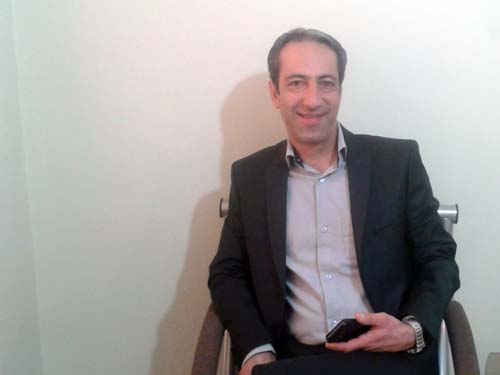
Ms. Fereshteh Khalaj Hedayati; member of the so called central Council of MKO noticed her separation from the Cult after 30 years of membership in the group. She declared his defection publishing a statement on her Facebook page, titled: ”Don’t be Silent”

member of the MKO Central Council defected the group

January 5, 2016 0 comments
FacebookTwitterPinterestWhatsappTelegramSkypeEmail
Former members of the MEK

Pictorial- MKO defectors meet official of the Albanian Embassy

On December18, 2015 members of Women Association visited an Albanian official in the country’s Embassy in Berlin.

Members of Women Association described their bitter experiences of their long-time imprisonment in the Mujahedin Khalq Organization (the MKO). They also recounted how they were released from the group.

Then, they raised the following issues to enlighten the Albanian authority:

Warning on the presence and activities of the cult of Rajavi (the MKO) in the Albanian territory considering their true nature as a sect.
Concern of families whose loved ones are taken as hostages in the group; they have not had the least information on the situation of their loved ones for many years; and even after their relocation to Europe, the leadership of the group continues this inhumane policy…..

Women Association Meet Official of the Albanian Embassy

January 5, 2016 0 comments
FacebookTwitterPinterestWhatsappTelegramSkypeEmail
Mujahedin Khalq Organization members' families

My mother divorced her husband during the MEK Ideological revolution

The long-time MEK supporter Ebrahim Mohammad Rahimi is dying of brain cancer in a London hospital. His son Sepher Mohammad Rahimi also in London wants to contact his mother, who is in Iraq. The MEK’s response is swearing and defamation – saying Ebrahim has covertly worked for the Iranian regime for many years.

This week, Sepher wrote to the UNHCR and the ICRC refuting the MEK’s statements.

He added, “during the ideological revolution inside the MEK, my mother divorced her husband. That has nothing to do with me. Why is she refusing to speak with me, her child? Neither I nor my father have ever said a single word against the MEK. Please arrange contact with her before he dies.”

Ebrahim Mohammad Rahimi spent many years with the MEK. He eventually managed to escape the camp in Iraq by taking refuge in the American run TIPF for four years before getting back to London. During the internal revolution of the MEK, Rahimi sent his son, Sepher, live with his grandparents in Iran. Sepher has now returned to London where his father is terminally ill in hospital. Sepher’s mother is still with the MEK and Rahimi and his son have tried to make contact with her before he dies. They have now begun asking MEK lobbyists for help since the MEK leaders only reacted by calling them “agents of the Iranian regime”.

January 3, 2016 0 comments
FacebookTwitterPinterestWhatsappTelegramSkypeEmail
Newer Posts
Older Posts

Recent Posts

  • A Criterion for Proving the Violent Nature of the MEK

    December 31, 2025
  • Rebranding, too Difficult for the MEK

    December 27, 2025
  • The black box of the torture camps of the MEK

    December 24, 2025
  • Pregnancy was taboo in the MEK

    December 22, 2025
  • MEPs who lack awareness about the MEK’s nature

    December 20, 2025
  • Facebook
  • Twitter
  • Instagram
  • Youtube

© 2003 - 2025 NEJAT Society . All Rights Reserved. NejatNGO.org


Back To Top
Nejat Society
  • Home
  • Articles
  • Media
    • Cartoons
    • NewsPics
    • Photo Gallery
    • Videos
  • Publications
    • Books
    • Nejat NewsLetter
    • Pars Brief
  • About Us
  • Contact us
  • Editions
    • عربي
    • فارسی
    • Shqip