Nejat Society
  • Home
  • Articles
  • Media
    • Cartoons
    • NewsPics
    • Photo Gallery
    • Videos
  • Publications
    • Books
    • Nejat NewsLetter
    • Pars Brief
  • About Us
  • Contact us
  • Editions
    • عربي
    • فارسی
    • Shqip
Nejat Society
Nejat Society
  • Home
  • Articles
  • Media
    • Cartoons
    • NewsPics
    • Photo Gallery
    • Videos
  • Publications
    • Books
    • Nejat NewsLetter
    • Pars Brief
  • About Us
  • Contact us
  • Editions
    • عربي
    • فارسی
    • Shqip
© 2003 - 2024 NEJAT Society. nejatngo.org
Camp Liberty

Militia Says Group Was Warned to Leave Iraq as Soon as Possible

Iraqi Militia Attacks MeK Camp, Killing 26

Yesterday’s attack on the Mujahedin-e Khalq (MeK) base at Camp Liberty, a strike which killed 26 people, has been claimed by the al-Mukhtar Army, a Shi’ite militia active in the ongoing war against ISIS. The group says they’d warned the MeK to leave Iraq as soon as possible, and promised more attacks if they don’t.

The Camp Liberty base has been wildly controversial in Iraq, as the MeK, primarily an Iranian opposition faction, was an ally of the Saddam Hussein government ousted in the 2003 US invasion. At the time, the MeK was still listed as a terrorist organization in the US, but the group was left in the camp irrespective of this, pending some eventual resettlement that never came.

The MeK’s status as a Saddam ally, and it’s continued hostility toward the Iranian government, a close ally of the current Iraqi government, has made it a common target for Shi’ite factions in the country, and militias like the al-Mukhtar Army are given increasingly free reign with the growing ISIS war.

Though the militia was quite clear about having carried out the attack themselves, the MeK issued a statement blaming the Iranian government for the attack. The US issued a statement condemning the attack and vowed to support the relocation of the MeK to some other place.

by Jason Ditz,

October 31, 2015 0 comments
FacebookTwitterPinterestWhatsappTelegramSkypeEmail
Camp Liberty

Iraqi militia takes credit for rocket attack targeting Iranian dissident camp

Iraqi militia have threatened more attacks following a rocket barrage that killed at least 26 people at an opposition camp near Baghdad. UN chief Ban Ki-moon has condemned the attack.

Camp Hurriya (Liberty), a former US military base, has housed members of the People’s Mujahedeen Organisation of Iran (PMOI) since 2012, a group that had fought alongside Saddam Hussein’s forces in the Iran-Iraq war in the 1980s.

On Thursday at least 15 rockets crashed in and around the camp near Baghdad’s international airport killing more than two dozen people.

Iraqi joint operations command spokesman Yahya Rasool said investigation is underway and that two Iraqi soldiers were wounded in the attack. An abandoned truck mounted with rocket tubes had been recovered in Bakriya, north of the camp, he said.

"The people behind this attack are terrorist criminals who want to destabilize the country," Yasol told Reuters news agency, without specifying any group or nation.

Shiite militia warns of further attacks

A Shiite Muslim militia in Iraq has claimed responsibility for the attack – the deadliest in years – that targets the Iranian opposition.

"We warned the members of this terrorist organization to leave Iraq as soon as possible … If they don’t do so, there will be more similar attacks," al-Mukhtar Army commander Wathiq al-Battat was quoted as saying by Iran’s Fars news agency.

The PMOI stands accused by rights groups of taking part in the brutal suppression of a 1991 Shiite uprising against Saddam Hussein, making it widely reviled by members of Iraq’s own Shiite Arab majority, which came to power after the US-led Iraq invasion in 2003.

EU, UN, US line up to condemn attack

UN chief Ban Ki-moon "condemns the attack… on Camp Hurriya, near the Baghdad International Airport, which left at least 26 residents dead and many more wounded," the general secretary’s office said Friday in a statement.

"This is a most deplorable act, and I am greatly concerned at the harm that has been inflicted on those living at Camp Liberty.” the UN’s High Commissioner for Refugees Antonio Guterres said. "Every effort must continue to be made for the injured and to identify and bring to account those responsible."

US Secretary of State John Kerry said efforts to relocate the members – in the works for years – should be accelerated.

"No matter the circumstances, on this point we remain absolute: the United States remains committed to assisting the UN High Commissioner for Refugees in the relocation of all Camp Hurriya residents to a permanent and safe location outside of Iraq," Kerry said in a statement.

“It is crucial that the Iraqi government fully investigate the incident and immediately step up security at the camp in line with its duty of protection of the camp residents under the December 2011 agreement with the United Nations,” the EU’s external affairs office said in a statement.

PMOI had been delisted as a ‘terror organization’

Until a few years ago, PMOI — also known by its Farsi name Mujahideen-e-Khalq Organization (MKO) — was listed as a terrorist organization by both the US and the European Union.

Shahin Gobadi, a PMOI spokesman, accused "agents of the clerical (Iranian) regime inside the government of Iraq" of launching the attack and also placed responsibility on the Iraqi government and the United Nations.

The group, which critics have described as a cult, enjoys a well-connected network of former and current officials who advocate on its behalf.

Following an intensive lobbying campaign, it succeeded in being removed from the US and EU terror lists.

But around 3,000 remaining dissidents at Camp Hurriya are still waiting to be relocated to other countries.

October 31, 2015 0 comments
FacebookTwitterPinterestWhatsappTelegramSkypeEmail
Massoud Rajavi

Rajavi Ideology – ‘shed blood for publicity’

Massoud and Maryam Rajavi are personally responsible for the deaths of 25 residents along with several Iraqi soldiers during a katyusha attack aimed at Camp Liberty yesterday. Maryam Rajavi’s only response has been to say ‘we warned you repeatedly this would happen’.

 In the context of real events in Iraq this sounds more like a wish than a warning. What Rajavi does not reveal is that, in spite of fears of exactly the kind of attack she has repeatedly looked forward to, she and her husband have consistently refused to allow the MEK members to leave Iraq and take refuge in third countries. Since 2003, successive Iraqi governments have ruled the MEK’s presence in Iraq unconstitutional and have worked with the United Nations, the International Committee of the Red Cross, Iraq’s ministry of human rights and the Iranian embassy in Iraq to find a safe and peaceful way to remove all the MEK from Iraq. With the principle of non-refoulement accepted by all other parties as the basis of this programme, only the MEK leaders refused to cooperate.

Even when the resident’s families and even the MEK’s own lobbyists in the West like Rudi Giuliani, John Bolton, Brian Binley and Struan Stevenson, have tried to rescue the individuals trapped in the MEK camps in Iraq, the Rajavis have time and time again refused to let them go or to let them be helped. Even though many individuals who managed to escape the camps have made their way to safety in Europe. Even though millions of refugees fleeing Syria and Iraq have made their way to Europe. Even though the UN negotiated a safe haven in Albania to which it is slowly but surely transferring the remaining residents of Camp Liberty. If Rajavi had allowed these people to leave five years ago, these tragic deaths would not have occurred.

The MEK has many enemies in Iraq. As part of Saddam Hussein’s repressive apparatus and known as ‘Saddam’s Private Army’, the Rajavis and their MEK are responsible for the deaths of over 25,000 Iraqi citizens. In this context we may never discover who launched yesterday’s or any previous attacks on the MEK in Iraq. What we can state with absolute certainty, however, is that the Rajavis caused these deaths because in spite of giving ‘repeated warnings’ they refused to allow these vulnerable individuals to be taken to safety. They deliberately left them in harms way.

It should now be clear to everyone that the reason behind Massoud Rajavi’s insistence on keeping people in Iraqi is not because these aging and sick people are involved in a struggle against Iran. It is because of the ideology which he created after being released from prison in 1979 and began acting as the MEK’s spokesman. This ideology is simply expressed as ‘kill for publicity’. From 30th June 1981, the Eternal Light operation in 1988, the self-immolations in Europe in 2004 and the repeated attacks on Camps Ashraf and Liberty in Iraq, in all these cases Rajavi has caused deaths in order for an MEK spokesman to have a media interview and cry victim. The result is simply the continued survival of the MEK brand. The cost is counted in the lives of people who could easily be helped. These are not martyrs to a cause, they are victims of Rajavi’s vanity. Camp Liberty is nothing more than a blood bank waiting to be spent by Rajavi.

October 31, 2015 0 comments
FacebookTwitterPinterestWhatsappTelegramSkypeEmail
Camp Liberty

Wathiq al-Battat (Mukhtar Army) claimed responsibility for rocket attacks

At least 20 members of the terrorist Mujahedin-e Khalq Organization (MKO) have reportedly been killed in an incident during which a barrage of rockets was fired at their camp in the Iraqi capital, Baghdad.

Iraqi police confirmed that at least 15 rockets had slammed into Camp Hurriyet (Camp Liberty) near Baghdad International Airport on Thursday night, AFP reported.

“Fifteen rockets were fired from Bakriya around and on the edge of Camp Liberty,” the Baghdad Operations Command said.

 This is while the terrorist group has reportedly said that 23 of its members were killed and that two dozen others were wounded in the attack. The group also claimed that some 80 rockets had rained down on the camp.

 Three Iraqi soldiers guarding the camp were also killed and at least 16 others wounded during the rocket attack, according to Iraqi police.

In an interview with Fars news agency on Friday, Wathiq al-Battat, the leader of Iraq-based Mukhtar Army, claimed responsibility for the rocket attacks.

In December 2011, the United Nations (UN) and Baghdad agreed to relocate some 3,000 MKO members from Camp Ashraf, now known as Camp New Iraq, to Camp Hurriyet, a former US military base.

The last group of the MKO terrorists was evicted by the Iraqi government in September 2013 and relocated to Camp Hurriyet to await potential relocation to third countries.

The MKO is listed as a terrorist organization by much of the international community and has committed numerous terrorist acts against Iranians and Iraqis.

 In 1986, the terrorist group’s members fled Iran for Iraq, where they received now-executed Iraqi dictator Saddam Hussein’s support and set up Camp Ashraf near the Iranian border.

October 31, 2015 0 comments
FacebookTwitterPinterestWhatsappTelegramSkypeEmail
Camp Liberty

Rockets near Baghdad airport kill soldiers, Iranian refugees MEK

A barrage of rockets slammed late Thursday into a former military base near the Baghdad International Airport that houses an Iranian refugee group, killing three Iraqi soldiers, officials said. The Iranian exiles said at least 20 of their people died in the attack.

Iraqi police said 16 rockets hit Camp Liberty, a former U.S. base that now houses the exiled Iranian opposition group known as the Mujahedeen-e-Khalq. They said at least 16 soldiers guarding the camp were also wounded while the Iranian group, known as MEK, said dozens of Iranian refugees were wounded as well.

No one immediately claimed responsibility for the attack.

The statement from Mujahedeen-e-Khalq said that “due to darkness of the night, the exact number of dead and wounded has not been established.”

Police said that there may be casualties among the exiled group, but noted they did not report them to the local authorities so they could not determine how many civilians were hit in the attack. The MEK statement on casualty figures could not be independently verified because of the late hour of the attack and the camp’s inaccessibility to media.

A police official added that the rockets landed far enough from the airport that they did not disrupt commercial traffic. A hospital official confirmed the casualty figures. Both officials spoke on condition of anonymity because they were not authorized to speak to the media.

This was not the first attack since Camp Liberty became home to the Iranian group, which is strongly opposed to Iran’s clerical regime. Last year, the Islamic State group was said to have fired rockets near to Baghdad International Airport as it attempted to destabilize the capital.

Members of the Mujahedeen-e-Khalq were welcomed into Iraq by Saddam Hussein in the 1980s during the brutal war with neighboring Iran. Their fortunes turned sharply with the Iraqi dictator’s toppling in the 2003 U.S.-led invasion.

Iraq’s current Shiite-led Iraqi government, which has strengthened ties with Tehran, considers their presence in the country illegal.

The group regularly reports worsening health conditions within their isolated camp and accuses the Iraqi government of neglect and human rights abuses.

VIVIAN SALAMA,

Associated Press writer Murtada Faraj contributed to this report from Baghdad.

October 31, 2015 0 comments
FacebookTwitterPinterestWhatsappTelegramSkypeEmail
Massoud Rajavi

Massoud Rajavi dead or alive? Who cares?

While members of the Mujahedin Khalq Organization (the MKO) are undergoing unstable days of striving in a declining cult-like dissident group, US senators, paid by the MKO lobbies, wonder where the leader of the cult, Massoud Rajavi is.

In an October7th, hearing before the US Senate committee on Armed Forces titled” Iranian Influence in Iraq and the case of Camp Liberty”, senator Joseph Manchin (D-W) asked of Massoud Rajavi’s whereabouts. Prominent MKO lobbyist, retired Colonel Wesley Martin pretended to be informed about the proper answer. He claimed that Rajavi was wounded in an attack and he’s in France now.

It seems that Colonel Martin as the MKO lobbyist and his partner in the hearing Senator Manchin are reading the dialogue of a script written by the MKO propaganda. True or not, should it be important to know about Rajavi’s whereabouts in order to aid Liberty residents taking refuge in the United States?

At the end of this dialogue, Colonel Martin concludes that Maryam Rajavi is the leader now, the front “person that is with all the activities, all the events.”

Critics of the Cult of Rajavi including former members, suggest that this is a new tactic of the MKO’s lobby to launch a propaganda in the US Congress in order to whitewash the whereabout of Massoud Rajavi. The MKO’s propaganda might be seeking to maintain the sacred figure they have always portrayed for Massoud Rajavi, according to critics, because after the US invasion of Iraq in 2003 and the coincident disappearance of Massoud Rajavi, many criticized him for leaving his members in danger and escaping to save his own life.

Moreover, whether Massoud Rajavi is dead or alive is definitely critical to two main groups not to the lobbyist or lawmakers.

The first group who absolutely want to know about Rajavi’s whereabouts are victims of the terrorist acts of the MKO. Thousands of Iranian families are victims of the MKO’s blind mortar attacks, bombings and assassinations, as well as Iraqi Shiites and Kurds whose uprising was suppressed by the MKO – as Saddam’s Private Army – in 1991.

The second group includes members of the Cult of Rajavi who lost years of their lives, isolated from the free world, under the manipulative cult-like system of the group or who are still taken as hostages in the cult. Families of the MKO hostages also suffer the cruelty of the MKO leaders, particularly Massoud Rajavi who first created the system of abusive and torturing of its members in the cult.

Victims of Massoud Rajavi await his “appearance” because he should be brought to justice for the atrocities he committed against his own followers, and civilians in Iran and Iraq.

There have been numerous accounts about Massoud Rajavi’s destiny. But what is very significant about him is that he disappeared just in the most critical situation. He disappeared after the US invasion but the most iconic event at that time was the arrest of Maryam Rajavi by French Police and the fall of Saddam Hussein as the main financial and military supporter of the group. The Survival of the MKO has been crucially based on its propaganda. Question and answer about Massoud Rajavi’s destiny seems to be part of the propaganda of a collapsed organization.

Mazda Parsi

October 29, 2015 0 comments
FacebookTwitterPinterestWhatsappTelegramSkypeEmail
Mujahedin Khalq Organization as a terrorist group

General Report of the 2nd Int’l Congress on 17,000 Iranian Terror Victims

The opening ceremony for the 2nd International Congress on 17000 Iranian Terror Victims featuring the Iranian President Hassan Rouhani and a number of high administrative officials was held on August 31, 2015.

Attended by 400 families of Iranian victims of terror, 300 professors, researchers and students from universities around the country, 27 foreign experts on terrorism, and 17 ambassadors of foreign countries in Tehran, the conference started with recitation of verses of Holy Quran and then the Iran’s national anthem was played.

Seyed Mohammad-Javad Hasheminejad began to address the audience calling on the government and the judicial system to bring justice to the families of terror martyrs. “Terrorism is inherently deceptive and in need of justifying violence with fraudulent slogans. The important factor is that the mainstream media devalues the obscenity of terrorism to the level of a political rivalry.” “17000 people from different ethnicities and religions have fallen victim to the acts of terrorism in Iran.”

Unveiling the book “Timeline of Terrorist Incidents in Iran” by President Rouhani

The “Timeline of Terrorist Incidents in Iran” was unveiled by President Rouhani, Hojjat al-Islam Shahidi, vice president and head of Martyrs and Veterans Affairs Foundation, and Seyed Mohammad-Javad Hasheminejad. The book features all the terrorist incidents occurred from the victory of Islamic Revolution on February 11, 1979, up to the March 19, 1980. The multi-volume book is the first book in Iran which compiled the terrorist attacks since Islamic Revolution.

President Hassan then proceeded to address the audience on terrorism, saying that supporters of terrorism will be affected by the same phenomenon one day. He underlined that terrorism will remain as long as there is no universal determination and will to fight against the issue. Pointing to the ugly face of terror, Rouhani said the issue is unfortunately happening in people’s lives since past and has taken a new form in the modern world and politics.

Andre Vltchek, the Russian-born philosopher, filmmaker and investigative journalist, was the next speaker who delivered his speech on the Western-backed terrorism, saying European countries and the US are spreading terrorism all over the world because of their interest and imperialist essence. After the revolution Iran was suffering from sanctions, from blockades and finally from the sponsored terrorisms. Terrorism sponsored by the west, in which as was mentioned by your honorable president 17000 people vanished. The west is constantly talking about terrorism. It is defending its actions against independent countries all over the world based on its fear of terrorism. But in fact it is spreading terrorism all over the world because of its interest and its imperialist essence.

Hamed Zamani, Iranian pop singer, then performed his new bilingual single titled “Iran victim of terror.” The poem written by Ali-Mohammad Mo’addab was the second pop song of the popular singer. He performed his last single on terrorism titled “Able’s blood” in the first National Congress on 17000 Iranian Terror Victims.

The Owj Cultural Organization’s choral group sang a bilingual poem written by Ali Golbaharan. The English translation of the poem is as follows:

In my country, in this land of honor, / Seventeen thousand dead fallen.

Seventeen thousand victims of terror! / The whole world silent to such an error!

You keep silent to their deaths why? / Where is that world you claimed to revive?

Say something! Where’s your safe world gone? / Your dreamed home, how about that one?

Here’s a helpless innocent child / Lips with a frozen smile

In the burst of the missile / Never foe to none / With a tensed mom.

Here, a teacher on way to school / Bulleted by firing squad

There, a winged dove in blood red / Flies no more, sings never

Seventeen thousand innocent bodies / All at once snipped

Seventeen thousand with no weapon / Victims of terror, dead fallen

Sheikh Ali Halawi, Lebanese prominent cleric, was the next speaker who addressed the audience at the opening ceremony of the 2nd International Congress on 17000 Iranian Terror Victims. Referring to more than 3 decades of Israelis efforts to deal with Iran, Halawi said, the Islamic Republic of Iran is the first victim of terrorism in the world. He added that the Israeli regime is arming and training and providing material support for all the anti-Iran terrorist groups.

Ali-Akbar Ghelich performed another bilingual song titled “a piece of truth.” It was the third song being performed on the first day of the conference on the issue of terrorism and terror victims.

Deputy speaker of Parliament Mohammad Hassan Aboutorabi-Fard was the last speaker of the opening ceremony of the 2nd International Congress on 17000 Iranian Terror Victims. He said the Islamic Republic of Iran is opposed to any kinds of violence and terror throughout the world and Iran has always called for global security and fight against any forms of terrorism in the international arena. Increased violence in the region is because of providing support for the Zionist cancerous tumor.

Families of Terror Victims Appreciated

The opening ceremony of the conference proceeded with the appreciation of some families of Iranian victims of terrorism. The appreciation ceremony was done with the presence of Hojjat al-Islam Aboutorabi Fard, first vice speaker of Iran’s Parliament, Rahim Ahmadi-Roshan, father of the last assassinated nuclear scientist Mostafa Ahmadi-Roshan, Mansoureh Karami, widow of martyr Masoud Ali-Mohammadi, and Seyed Mohammad-Javad Hasheminejad. Families of martyrs Jamshid Danayi-Far, Abbas Goudarzi, Zeinab Kamayi, Mahmoud and Alireza Abiz, Fereshteh Bakhishi and veterans Tariq Dahimavi, Seyed Nour Khoda Mousavi, Nozhat Shaban Azad, Alireza Bonyani and Beit Salem were honored and appreciated in this part.

The 2nd International Congress on 17,000 Victims of Terrorism concluded its mission by issuing a closing statement. The statement read by Shorheh Pirani, widow of martyr Darioush Rezaeinejad, reads in part:

In these turbulent times when the wheels of violence and terrorism are kept moving by the treacherous demons of colonialism and imperialism on the one hand and irrational extremists on the other hand, the security of the region is compromised and people’s life is put in danger; the innocent souls are slaughtered and holy places are set ablaze with the face of this part of the world being covered with blood. Fighting terrorism and revealing the true face of those behind the scene who orchestrate the terrorist forces is in fact paying tribute to the human life, peace and a world free of violence and terrorism. From this perspective, the Second International Congress of 17000 Victims of Terrorism has been organized to help obtain these lofty objectives.

The wound inflicted by the terrorism on Iranians is still fresh and open. Terrorism continues to claim its victims from Iran, while the judiciary bodies pretending to be the arbiter of international community have turned a deaf ear to the plights of these people, unable to pursue a lawsuit against them.

The fact that none of the terrorist groups should receive special treatment or labeled as good or bad for the sake of transient political interests necessitates that the authorities in charge of international organizations such as the Red Cross and UNHCR disassociate themselves from this group, thereby refusing to approve such deviant trends with these relationships.

The families of terrorism martyrs proclaim that their persistence on investigating this case does not stem from a sense of revenge, but rather their responsibility as human beings to help construct a world in which no father is martyred in front of his children’s eyes, no child is slaughtered in the arms of his/her mother and no human is victimized innocently and indiscriminately.

First Scientific Session

With the start of the scientific panels of the conference at 14:30 on August 31, professor Simbar, the scientific secretary of the Congress, introduced the activities of the Scientific Committee and invited the speakers to join the panel.

The first speaker in this session was Dr. Arsalan Ghorbani, President of Iranian International Studies Association, who presented his paper, “The evolution of terrorism in international relations with a focus on Iran.” He initially considered terrorism as a new concept in the international relations which has been defined and redefined and gained global attention over time. He added that some countries use terrorism to achieve their purposes and accordingly the concept of terrorism faced a transition in the era of globalization.

Sayed Khatab, professor of Politics and International Relations at the University of Monash, was the next speaker presenting his paper, “Terrorism and its Impact on Society”. He believed that the root causes of terrorism are the unsolved problems in the Middle East. “Islam is not a violent religion and does not condone violence because it tries to hinder young people to go to kill themselves,” he said. “For instance, Islam forbids anyone to go to Jihad without the approval of his parents, even if the Jihad is a just war.”

Director of the Geopolitics and International Relations Department of Manipal University Professor Madhav Nalapat was the third speaker who talked about Wahhabi terrorism. “Some countries believe that terrorism is something that can be used and can be useful to them and they forget that terrorism is something that it may be useful in the short run, but in the medium and long run it will kill them as well.” “Daesh is using bullets, ammunition in the hundreds of millions of dollars. All these are coming from somewhere. Where is the money coming from? Where are the bullets coming from? Where are the heavy weapons coming from? None of them are made by Daesh. They are being used by Daesh,” Nalapat said, adding that it is very important for every country that says it is fighting a war on terrorism to identify whose money is funding money, whose weapons are giving power to Daesh, because those who are doing this are committing sin against humanity. He went on to accentuate the role Iran played in the fight against ISIS, and said, “the people of Iran have been fighting Daesh in a brave way. As a scholar who studies these things, I am very convinced that if Iran had not been helping in Syria by now Daesh would have been in Damascus and could have been possibly in Baghdad but for the fact that Iran and the brave Iranian people have given very strong support to Syria and Iraq against this grave danger of Daesh.” “Iran is an indispensible partner in the war against global Wahhabism in the war against Wahhabi terror,” he continued. “Iran is indispensible now as Russia was indispensible in the 20th Century.” “So again I repeat, I’ve come here because you are an indispensible partner in this terrible conflict we are fighting with a terrible enemy, the cancer of Wahhabi terrorism.”

The fourth speaker was Jahanshah Shokri, who presented his paper, “Investigating the causes of UN Human Rights Council’s ineffectiveness in defending Iranian terror victims.” Co-authored by Hossein Shokri and Mojtaba Abbasi, his paper was awarded third place winner of the best papers. “The right of veto of the permanent members of the UN Security Council discredits the reports of the UNSC.” “Choosing the rapporteurs is another problem which is most cases happens with political purposes.”

 The fifth and the last speaker of the first scientific session was Dr. Mohsen Saghira who said, our legal inaction and indifference to terrorist activities inside our borders make our international reaction to these activities ineffective. Initially, we should demand justice and file lawsuit against the terrorist groups who reside in other countries.

The event concluded with a half-an-hour question-and-answer session and the speakers answered the audience’s questions regarding their presentations.

 Second Scientific Session

 The second scientific session began at 5 in the evening and lasted for 2 hours.

 Hossein Jahan-tigh was the first speaker who presented his paper on the terrorism in Sistan and Baluchistan province. Referring to the history of terrorism in the Sistan and Baluchistan province, he said Jihadi terrorism has a deep root in the south-eastern province.

 Research Fellow at the New Delhi-based Institute for Defense Studies and Analyses (IDSA) Dr. Meena Singh Roy then presented her speech on the ISIS and its growing menace. She added that both Iran and India are facing the threat of Daesh, though the dimensions are different. “When we look at Iran, I think because Iran’s border with Afghanistan and Iraq, the challenges are much more serious.”

Sheikh Zuhair Osman, Lebanese cleric and a member of the Lebanese Islamic Action Front, was the third speaker where he threw light on the Israeli violations of human rights against the people of Lebanon saying, “the US has been providing the Zionist regime with the most modern fighter planes and they are taking off from the regional countries’ airports.” “Since the victory of Islamic Revolution, Imam Khomeini said the Islamic Revolution belongs to all the oppressed people in the world and supports right (haqq) against wrong (batil) and which batil is greater than the Zionist regime.

The fourth speaker of the session was Dr. Syed Hussain Shaheed Soherwordi, Associate Professor at the University of Peshawar. He said the Americans have made mistakes against Iran, including terrorism and putting sanctions on the country. Starting his presentation with two “very big mistakes” of the US in the region, he said, “The first mistake was overthrow of Mossadegh’s democratic regime in 1953. And the second one was non-acceptance of Iran’s Islamic Revolution.” He continued, “For the last so many years, Middle East has not been pacified. Americans have failed to keep Middle East peaceful, because they have selected wrong friends like Saudi Arabia.”

The second scientific session drew to a close with a question-and-answer session and the speakers answered the questions raised by the audience.

 The scientific sessions of the Congress dragged on for the second day at the Shahid Beheshti University International Conference Center. The opening ceremony of the scientific sessions featuring Deputy Majlis Speaker for International Affairs Dr. Hossein Sheikholeslam held early in the morning on September 1, 2015.

 Sheikholeslam said that terror, oppression and crimes have never made good in annihilating the Islamic Revolution and Palestine. He added that the oppressed nations’ resistance made the Muslim nations resist against terror. Terrorism has been a barbaric tool throughout history that the oppressed parties have always used to threaten the oppressed.

 Dr. Hassan Hossein-Zadeh was the next speaker who talked about the possibility of the extradition of MKO members to Iran according to the extradition in international law. “Iran has the right to demand members of MKO from other countries and international organizations as they have committed crimes in Iran.” MKO’s extradition to Iran is an inevitable task and the group’s betrayals and crimes are to such a level that Iran must take all necessary measures to deal with the group.

 Dr. Hossein-Zadeh’s speech was followed by three more presentations by Soraya Sepahpour Ulrich, Dr. Franklin Lamb, and Dr. Shahbaz Mohseni.

 Presenting her paper “Sanctions: Unidentified Terrorism,” Iranian-born American independent researcher and political commentator Soraya Sepahpour Ulrich said the United Nations Security Council sponsored terrorism against Iran by putting sanctions on the country. “In 2004 a very high level UN panel which defined terrorism as ‘any action intended to kill or seriously harm civilians or non-combatants, with the purpose of intimidating a population or compelling action by a government or international organization.’” “Despite of this finding, the United Nations Security Council passed a resolution and sponsored terrorism against Iran, which were the sanctions,” she pointed out. She added that why is it that the propaganda has been so successful regarding sanction terrorism that even the victims failed to realize that they are victims of terror? “Well two things: one is ownership of language, the narrative and the other is the media.”

Dr. Franklin Lamb, Beirut-based American International lawyer, proceeded to deliver his speech at the scientific session, saying that the terrorist MKO group is working with the Zionists and the Republicans and others doing Public Relations. He emphasized that the terrorist MKO group wants to influence congressional vote for Iran’s nuclear deal. “They will fail with that and the nuclear file is going to be closed, although they are going to be main stream in America and France.” “We have a war on terrorism, we’re against terrorism but we support terrorism,” he added. “That’s true we do have a war on terrorism. We’ve got 122 definitions of terrorism just in the American Justice Department. We have 27 terrorist lists.” Author of Syria’s Endangered Heritage An International Responsibility to Protect and Preserve went on to mention the threat that Daesh is posing against Iran’s national security, adding that Daesh is now fomenting a Sacrum Bellum in the region between Sunnis and Shiites.

 The opening of the scientific sessions closed with a presentation by Dr. Shahbaz Mohseni, Dean of the Saqqez branch of the Islamic Azad University. He said that the differences between religions have been the root cause of the ongoing schism. “Though strengthening the unity is not a tactic but a strategy, there are some weaknesses in this aspect which should be identified and then manage the challenges.”

Summarizing the presentations of the session, the scientific secretary of the Congress announced the end of the session and emphasized that the sessions will be continued in four separate conference halls after a 20-minute break.

After the break time the participants were divided into four scientific sessions from 11:00 and extended until 1:00 pm.

The first session titled “Islamic Revolutionary Discourse and Creation of Terrorism against it at National, Regional and International levels” was co-chaired by Dr. Gholamali Pashazadeh, Dr. Abbas Panahi, and Dr. Bahman Zeinali.

At the first session, 7 presentations were made by the following panelists:

1. Francoise Philippe, president of the Non-Governmental Organization PEACE,

2. Ali Azizi, student of fifth grade seminary,

3. Finian Cunningham, Irish journalist and writer,

4. Ghorbanali Saboktakin Rizi, professor of Sociology at Kharazmi University,

5. Mohamed al-Rousan, Jordanian politician,

6. Kianoush Nazari,

7. Hojjat al-Islam Hussain al-Khashen, Lebanese writer and scholar.

Co-chaired by Dr. Eisa Kiani and Dr. Shahbaz Mohseni, the second scientific panel was titled “State-sponsored Terrorism against Islamic Republic of Iran,” where the following 7 panelists presented their speeches:

1. Tony Gosling, British Investigative Journalist,

2. Dr. Seyed Hadi Zarqani, Ferdowsi University of Mashhad board of trustees’ member,

3. Dr. Talal Atrissi, Dean of the Lebanese University’s School of Literature, Humanities & Social Sciences,

 4. Dr. Gholamreza Karimi, Associate Professor of International Relations at the University of Kharazmi,

5. Dr. Bilveer Singh, Associate Professor at the Department of Political Science, National University of Singapore,

6. Dr. Abdoreza Bye, board member of Islamic Azad University,

7. Dr. Behrouz Abdolvand, associate fellow at the German Council on Foreign Relations and lecturer at the Freie Universität Berlin.

The third scientific panel, co-chaired by Dr. Gholam-ali Zavar-zadeh and Dr. Jahanshah Shokri, was titled “International regimes and dealing with anti-Islamic Republic of Iran terrorism,” where the following 4 panelists delivered their speeches:

1. Seyed Nasser Badisar, PhD student in Public Law,

2. Dr. Hamid Olhouie Nazari, PhD in Public Law,

3. Dr. Hossei Fakhr, member of Tabriz University board of trustees,

4. Dr. Samad Zahiri, Payam Nour University board of trustees’ member.

The fourth and the final panel was titled, “Islamic Republic of Iran within the context of Takfiri terrorism in the region.” Dr. Gholamhosein Jahan-Tigh, Dr. Ibrahim Abbasi, and Dr. Mohammad Taghavi were the co-chairs of the panel, where the following 7 Iranian and foreign researches delivered their speeches:

1. Dr. Mohammad-Ali Bakhshi, Malek Ashtar University board of trustees’ member,

2. Dr. Haytham Mouzahem, Director of Beirut Center for Middle East Studies,

3. Dr. Hossein-Ali Sa’adi, Associate Professor of theology and law at Imam Sadiq University,

4. Eric Denécé, Director and founder of the French Centre for Intelligence Studies,

5. Abdolkarim Saleki, Masters of Political Science,

6. Sheikh Maher Mez’her, fellow member at the Muslim Scholars’ Gathering in Lebanon,

7. Dr. Mohammad-Sadiq Jamshidi-Rad, Associate Professor at Payame Nour University,

Following the scientific panel discussing on terrorism issues, the closing ceremony of the scientific sessions of the 2nd International Congress 17000 Iranian Terror Victims was held.

Expressing his gratitude to all the researchers and academics who contributed to this scientific forum, Seyed Mohammad-Javad Hasheminejad said the scourge of terrorism will not be contained without scientific analysis. He added that the purpose behind holding this scientific session was to link the academics to the executive body of the country. We hope to have been of assistance in creating this auspicious link.

Mahdieh Shadmani, author of the first place paper, presented her paper, “Terrorism in Western, North-Western Iran; case study: terrorist acts of PKK and PJAK in Iran,” co-authored by Professor Ali Adami, Professor of International Relations at the Allameh Tabatab’a’i University.

Former member of Iraq’s State of Law Coalition Seyed Mahmoud al-Mayali then took the podium and talked about Imam Khomeini’s viewpoint on the Islamic unity. “Imam Khomeini’s strategy for promotion of unity among Muslims was based on some factors the most important of which is identifying the root causes of schism,” he added that there are two causes for schism in the Muslim Ummah: 1. External, which is the global arrogance and its allies who are trying to disrupt the Muslims’ unity. 2. Internal, which the Muslims are promoting schism.

Best Papers Awards

The scientific sessions of 2nd International Congress on 17000 Iranian Terror Victims drew to a close with giving prizes for best papers and featured papers in terms of innovation.

The top 10 papers of Iranian authors were as follows:

1. Terrorism in Western, North-Western Iran; Case Study: Terrorist Acts of PKK and PJAK in Iran by Professor Ali Adami and Mahdieh Shadmani,

2. Condemnation of Political Figures in Iranian and International Regulations by Amin Kiani,

3. Investigating the Causes of UN Human Rights Council’s Ineffectiveness in Defending Iranian Terror Victims by Hossein Shokri and Mojtaba Abbasi,

4. Analysis of Terrorism in Sistan and Baluchistan by Dr. Hossein Jahan-Tigh, Akbar Khajeh and Zahra Jahan-Tigh,

5. Preventing the Birth of Social Terrorism in Iran by Ali Azizi,

6. Analyzing the Compliance of ISIS Activities with Terrorism Indicators with an Emphasis on Iran’s National Security by Abdolkarim Saleki and Mahsa Ghanbarian,

7. Cyber-Terrorism and the Difficulty of Finding its Roots by Hadi Imani, Alireza Rahimi and Mohammad Mehraban,

8. Investigating the Possibility of MKO Members’ Extradition to Iran by Dr. Hassan Hossein-Zadeh,

9. Reviewing the Possibility of International Law in the Fight against Cyber-Terrorism by Seyed Mohsen Tolou and Seyed Mohsen Masoudi,

10. Reasons behind Formation and Continuation of Terrorism after Revolution with an Emphasis on the Identifying Factors of Islamic Revolution by Mohammad Taghi Amrollahi,

Five papers were also awarded as the featured papers in terms of innovation on the subject:

1. Jurisprudential Analysis of Similarities and Difference between Terrorist Activities and Suicide Operations by Dr. Hossein-Ali Sa’di and Mohammadi-Javad Agha-Bagheri

2. The Importance of Oral History in Documenting the Terrorism in Iran vby Dr. Abolfazl Hassan-Abadi

 3. Studying the Hollywood’s Cultural Terrorism against Islamic republic by Kianoush Nazari

4. Studying the Role of Hamoun Provincial Channel in the Creation, Maintenance and Development of Security in Zahedan by Gholamreza Ebrahimi

5. Reviewing the New Bioterrorism Methods Based on Genetic Weapons by Sajad Najafi

Three papers presented by foreign authors were also awarded as the best foreign papers:

1. Iran’s Challenges in the Fight against Terrorism in Middle East by Dr. Hossein Ahmad Dakhil,

2. Zionist Terrorism against Iran with an Emphasis on Nuclear Program by Dr. Jasim al-Torfi,

3. The US and the Threat of Terrorism in Southeast Asia – Lessons for Iran’s National Security Policy by Dr. Bilveer Singh.

October 29, 2015 0 comments
FacebookTwitterPinterestWhatsappTelegramSkypeEmail
Mujahedin Khalq; A proxy force

US War in Syria, Iraq Part of Bigger Plan Aimed Against Iran and Beyond

The Syrian conflict is not an isolated crisis but a part of the US’ bigger plan aimed at Iran and beyond, Toni Cartalucci explains, pointing out that it is the Fortune 500 companies, centered on Wall Street and London, which are dragging the MENA region into chaos.

Western political analysts regard the "balkanization" of Syria as the only option to "solve" the ongoing Syrian crisis; indeed, weakened and fragmented Syria is considered a potential foothold to target Iran and other players in the region, Bangkok-based geopolitical researcher Tony Cartalucci underscores.

 It is naïve to believe that Washington’s proposals for a "political transition" or the partitioning of Syria will lead to peace and stability in the Middle East.

"It will not be the end of regional conflict, but rather the end of just the beginning. The successful destruction of Syria will portend war with Iran and beyond," Cartalucci stresses in his recent article for New Eastern Outlook.

 The geopolitical researcher called attention to the Brookings Institution’s analysis paper written in 2009 by a group of US scholars, including Michael O’Hanlon, co-director of the Center for 21st Century Security and Intelligence at the Brookings Institution and Kenneth M. Pollack, a prominent former CIA intelligence analyst.

 "In this signed and dated criminal conspiracy, methods for covertly overthrowing the Iranian government with US-backed mobs augmented with armed militants, the use of US listed foreign terrorist organizations to wage a proxy war against Iran, the provocation of open war with Iran, and the use of Israel to unilaterally attack Iran first, before bringing America inevitably into the war shortly after, are all described in great detail throughout the 156 page report," Cartalucci underscored.

The researcher pointed to the fact that US policy-makers had no scruples about removing the infamous terrorist organization Mujahedin-e Khalq (MEK) from the US State Department’s foreign terrorist organization list in 2012 in order to use it in Washington’s covert war against Iran.

 The ongoing conflict in Syria is just a part of a bigger game.

"Clearly the problem is larger than Syria, and even larger than the geopolitical chaos the US has created arcing over the MENA region," Cartalucci stressed, adding that the ongoing strife is fuelled by big-finance, big-defense, big-telecom and other representatives of global corporatocracy.

 It is the Fortune 500, centered on Wall Street and London, who are adding fuel to the fire in the Middle East, he noted.

In light of this, Moscow’s efforts to "solve Syria" have acquired a new meaning.

In fact, Russia has upset Washington’s plans and shifted the balance of power in the MENA region as a whole.

 "Russia’s decision to defend the sovereign government of Syria and assist in the elimination of Syria’s enemies within its borders, as well as the warding off of its enemies beyond them is the most immediate course of action to ‘solve Syria.’ Inviting Iran and even China to take part in a larger campaign to secure Syria’s borders and assisting in the restoration of order within the country is a concrete next step. Expanding this coalition to cover Iraq next will create a geopolitical ‘no-meddling-zone’ the West will find itself outside of," the geopolitical researcher elaborated.

 By its decision to step in in Syria Moscow has clearly demonstrated Russia’s commitment to the concept of a multi-polar world. And a multi-polar world means a distribution of global power, global responsibility and wealth, he stressed.

 "Solving Syria truly, means solving the problem presented to us by the prevailing unipolar order itself. It is not a battle simply for Syria and its allies to fight within the borders of Syria, but a battle for all who oppose unipolar global hegemony to fight. Maybe not with bullets, bombs, and missiles, but a fight nonetheless," Cartalucci concluded.

IZAKOVIC, Rumormillnews.com

October 28, 2015 0 comments
FacebookTwitterPinterestWhatsappTelegramSkypeEmail
Mujahedin Khalq Organization members' families

My brother is now one step away to freedom

Majid Rajabi Shahrestani immigrated to Turkey in 2001, seeking better employment and more comfortable life. Unfortunately, in Turkey he was trapped by the Rajavis’ agents. They fraudulently promised him to solve his legal problems and help him get residency of a European country but instead sent him to Iraq, Camp Ashraf.  

Within the MKO cult affairs, Majid was manipulated and brainwashed to obey the Cult leaders. As soon as Majid’s family realized that he was in Camp Ashraf, they sent several letters and traveled to the insecure country of Iraq and Camp Ashraf to meet him or even get a news. Though their efforts has been fruitless till now, they have not forget Majid. Rajabi family are determined to liberate their beloved son from the clutches of the Rajavis’ Cult. 

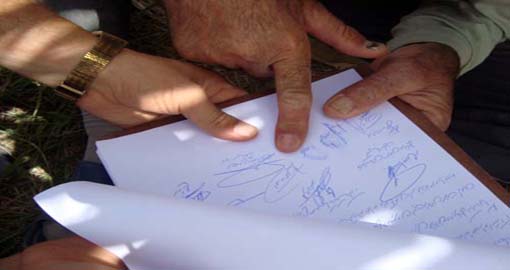
Majid has recently been transferred to Albania. Mr. Samad Rajabi; Majid’s brother during his visit to Nejat Society office – Gilan branch, said:” we are very happy now that we heard about Majid’s transfer to Albania. He is now one step away from getting completely released from the MKO Cult. Our family asks the international human rights bodies to help us release our beloved Majid and other hostages of the Rajavis’ cult …”

Mr. Samad Rajabi also wrote a letter to his brother; Majid in order to be published on Nejat Society Website, in the hope it may be seen by his brother.

October 27, 2015 0 comments
FacebookTwitterPinterestWhatsappTelegramSkypeEmail
Albania

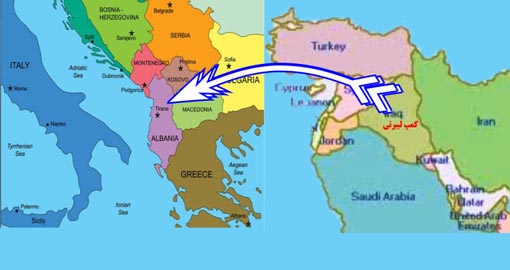
Camp Liberty residents transfer to Albania resumed

After a week-halt on the relocation process, it was resumed on October 21st.

37 more TTL residents transferred to Albania in two groups, Peyvand-e rahayee Website reported.

The Mujahedin-e Khalq Cult leaders stopped the transfers under the pretext of Tasua & Ashura rituals and ceremonies of October 22nd (annual of the so called Maryam Rajavi’s election as the president–elect of Iran by NCR headed by Massoud Rajavi).

However the UNHCR representatives and Iraqi government and USA officials who are tasked with managing and supervising the relocation process denied the pretexts and required the moves to be resumed.

Names of the transferred persons are as follows; some names may be aliases.

  1. Farank Abkhezr
  2. Mohammd Ali Agahi
  3. Shahrzad Ehsani
  4. Gholam Asadi
  5. Maryam Afsay
  6. Fatemeh Jaafari Hatam
  7. Abulghasem Habibpur
  8. Zohreh Hasanzadeh
  9. Sahar Hasanzadeh Gargari
  10. Fatemeh Khavari
  11. Mohammad Khodabandeh
  12. Elaheh Dalvand
  13. Mohammad dehghan Gurabi
  14. Mansour Rahimi
  15. Mahshid Rostami
  16. Tahereh Zaranji
  17. Ahmad Zaman Khanpur
  18. Isa Sabzi chi
  19. Zahra Suresrafil
  20. Ghorban Arab
  21. Leila Onsori
  22. Manouchehr Gholampur
  23. Sedigheh Ghabeli
  24. Farzaneh Kordbacheh
  25. Zahra Kohandel
  26. Zahra Gonjeshki
  27. Reza Lagheyd
  28. Alam Mamadzadeh Gargari
  29. Nasim Mamadzadeh Gargari
  30. Behnaz Mojalal
  31. Mah Legha Maryam Dadi
  32. Shahim Moghadam
  33. Maryam Malek
  34. Zahra Mirseyedi Amiran
  35. Shahram Naseri
  36. Ali Asghar Nuri
  37. Ashraf Hadi
October 26, 2015 0 comments
FacebookTwitterPinterestWhatsappTelegramSkypeEmail
Newer Posts
Older Posts

Recent Posts

  • A Criterion for Proving the Violent Nature of the MEK

    December 31, 2025
  • Rebranding, too Difficult for the MEK

    December 27, 2025
  • The black box of the torture camps of the MEK

    December 24, 2025
  • Pregnancy was taboo in the MEK

    December 22, 2025
  • MEPs who lack awareness about the MEK’s nature

    December 20, 2025
  • Facebook
  • Twitter
  • Instagram
  • Youtube

© 2003 - 2025 NEJAT Society . All Rights Reserved. NejatNGO.org


Back To Top
Nejat Society
  • Home
  • Articles
  • Media
    • Cartoons
    • NewsPics
    • Photo Gallery
    • Videos
  • Publications
    • Books
    • Nejat NewsLetter
    • Pars Brief
  • About Us
  • Contact us
  • Editions
    • عربي
    • فارسی
    • Shqip