Nejat Society
  • Home
  • Articles
  • Media
    • Cartoons
    • NewsPics
    • Photo Gallery
    • Videos
  • Publications
    • Books
    • Nejat NewsLetter
    • Pars Brief
  • About Us
  • Contact us
  • Editions
    • عربي
    • فارسی
    • Shqip
Nejat Society
Nejat Society
  • Home
  • Articles
  • Media
    • Cartoons
    • NewsPics
    • Photo Gallery
    • Videos
  • Publications
    • Books
    • Nejat NewsLetter
    • Pars Brief
  • About Us
  • Contact us
  • Editions
    • عربي
    • فارسی
    • Shqip
© 2003 - 2024 NEJAT Society. nejatngo.org
Mujahedin Khalq; A proxy force

The MKO frustrated by the Nuke deal, look to Congress and Israel

As the international community welcomes the historic deal reached between Iran and the world powers, there are some groups who oppose any deal with Iran. These groups include Israel and its advocates in Washington and its proxy force, the Mujahedin Khalq Organization.

The above mentioned groups form a complicated network that has so far tried hard to derail diplomacy between Iran and the West. They aided each other vigorously in order to launch war against Iran instead of reaching a peaceful solution for the Iranian nuclear issue. Fortunately their campaign did not succeed.

By the way, after the nuclear deal is reached, the MKO propaganda website reluctantly publishes the news under the neutral title “there is a deal in Vienna”. The short news of the nuclear deal put on the MKO’s propaganda website, is undermined by a tricky question in the subtitle: “What happens next?”. 

The biased report answers the question by magnifying the part of the US Congress in working out of any deal with Iran.

Having allied themselves with the warmongers of the US Congress, the Mujahedin Khalq have invested on their vote to reject the nuclear deal with Iran: “Both houses of Congress now have 60 days to review the deal and hold hearings. While that is going on, the president cannot wave sanctions against Iran on his own authority.

“If Congress does vote to reject the deal, the president most likely would veto that measure. Two third of each house (67 votes in Senate and 290 votes in the House) could then vote to override the veto. If that override fails, the president can seal the deal and lift those sanctions.”

However, The MKO is definitely disappointed by what President Obama called a "comprehensive long-term deal".  Obama has promised that he will veto any legislation that prevents the successful implementation of the deal. Thus, the MKO’s lobbying campaign in the Congress has to spend large amounts of money to override the veto.

 The controversial reaction of the MKO propaganda machine towards the N deal was followed by the so-called statement of the group leader Maryam Rajavi. In the statement, she blames the West for “many shortcomings and unwarranted concessions” to the Iranian government and for not being decisive enough to stop Iranian nuclear program while she claims that the deal represents “a reluctant retreat” by the Iranian leader!

Maryam Rajavi’s fallacious argument continues. This is another example of her fallacy: “The nuclear program that projected the power of the velayat-e faqih regime for the past quarter century is now a source of the mullahs’ weakness and impasse”!

She does not explain that if the nuclear program is “a source of weakness and impasse” for the Islamic Republic, so how come that the nuclear deal is “a reluctant retreat” for it?

Puzzled by its current declining instable situation in Iraq and the likely rapprochement of the West and Iran, the MKO has no way out except tying its survival to the US warmonger like John Bolton and The Israeli Prime Minister Netanyahu as both see the deal disastrous for themselves. Netanyahou called the historic deal between Iran and the West a “historic mistake” while the majority of the world confirm that the deal is the start of a path to the international peace.  

By Mazda Parsi

July 20, 2015 0 comments
FacebookTwitterPinterestWhatsappTelegramSkypeEmail
Mujahedin Khalq; A proxy force

U.S., Iran share complex past

“When Mossadegh and Persia started basic reforms, we became alarmed. We united with the British to destroy him; we succeeded; and ever since, our name has not been an honored one in the Middle East” — U.S. Supreme Court Justice William O. Douglas, November 1965

Much hope resides in Iran and the United States over the success of the nuclear accord just concluded. Tehran and Washington now face the difficult task of persuading domestic critics that the agreement is just, balanced and in their best interests.

Now more than ever, it is important to put the difficult history between the two countries in perspective — first by looking at the period of trust and goodwill that existed between them, and then by examining the genesis of the deep distrust that has soured the relationship for so long.

Before the First World War, Iran considered the United States a neutral international power willing to support its independence against the great power rivalry of Britain and Russia over its territory. The spirit of friendship began with the first formal act of diplomatic engagement and recognition between the two countries in 1850, leading to the exchange of diplomatic representatives in 1883.

This cordial understanding continued into the Constitutional Revolution era of 1905-11, as Iranians struggled to maintain their fledgling democracy and newly created Majlis, or parliament, from the occupying powers — Britain and Russia.

The positive reputation of the United States was due in large part to the actions of individual Americans who lived and worked in Iran. Two, for example — W. Morgan Shuster (1911) and Arthur C. Millspaugh (1922-27) — helped stabilize Iran’s finances during tumultuous times. Others, such as Howard C. Baskerville, a 26-year-old teacher who died in Tabriz in 1909 defending the Iranian constitution, and Samuel M. Jordan, founder of what is now Alborz High School in Tehran, are esteemed in Iran for their bravery and humanitarian deeds.

Washington’s policy of non-intervention in Iran’s domestic affairs fostered trust that endured until the Second World War. And when the Soviet Union failed to honor the Tripartite Agreement and remove troops from Iranian territory at the end of the war, President Harry Truman threatened to send troops to Iran if the Soviets failed to withdraw. They were removed in May 1946.

Cold War tensions, Iran’s strategic

location and the growing importance of oil contributed to the increased involvement of the United States in the affairs of the Middle East in the post-war years.

The beginning of anti-Americanism can be traced to the U.S.-engineered coup d’etat of 1953. The coup has set in motion decades of mistrust and suspicion. Barack Obama became the first sitting U.S. president to acknowledge the coup during a major speech in Cairo in June 2009.

Obama said, “For many years, Iran has defined itself in part by its opposition to my country, and there is in fact a tumultuous history between us. In the middle of the Cold War, the United States played a role in the overthrow of a democratically elected Iranian government. … Rather than remain trapped in the past, I’ve made it clear to Iran’s leaders and people that my country is prepared to move forward… .”

However, the United States played more than “a role.” In August 2013, the CIA formally admitted it was involved in the planning and execution of Operation Ajax, the overthrow of Iran’s democratically elected government, headed by Prime Minister Mohammad Mossadegh.

Based on personal friendships with individual Americans and a history of cooperation, Mossadegh turned to Washington in 1951 to mediate in the face of British hostility and sanctions. Despite official handshakes and reassurances, Mossadegh was betrayed. In 1953, the United States carried out a policy of regime change and reinstalled the shah on the Peacock Throne — and the United States and Iran have been isolated from one another ever since.

America’s unwavering support for the repressive Pahlavi regime undermined Iran’s incipient democracy and political development. Opposition was brutally put down by the shah’s secret police, the Savak — an intelligence service trained by the CIA and Israel’s Mossad.

The traumatic memory of 1953 lingers in the Iranian psyche and was fueled by continued American meddling in Iran’s affairs. Although the United States reaped its share of Iran’s oil wealth and strengthened its strategic military presence in the Middle East, its uncritical support of the shah’s regime set off a bitter anti-Western, anti-American revolution in 1978-79, leading to the reinvention of Iran as an Islamic republic.

In the hostage crisis, which began months after the revolution, Iranian students stormed the American embassy, taking 52 Americans hostage for 444 days. The crisis heightened the hostility and mistrust on both sides. While it exposed the extensive spying and involvement of Washington in Iran’s affairs, it humiliated the United States.

Subsequent American policies of military threats, financing of opposition groups, economic sanctions, diplomatic isolation and containment have fueled the distrust. Many in Iran’s leadership, including Supreme Leader Ayatollah Ali Khamenei, firmly believe that the United States and its regional allies, particularly Israel and Saudi Arabia, are intent on destroying the Islamic republic and would delight in regime change.

Iran’s conviction that Washington’s strategic goal was regime change was reinforced by U.S. support for Saddam Hussein in the Iraq-Iran war of 1980-88. It is widely believed in Iran that Iraq would not have invaded Iran without Washington’s approval. In exchange for U.S. diplomatic recognition, vital intelligence and Saudi financing, Washington encouraged Saddam to attack Iran. He did so in September 1980, launching a war that lasted eight brutal years with America’s support.

Washington removed the Iraqi regime from the State Department’s Sponsors of Terrorism list in 1982, facilitating Iraq’s purchase of arms from the United States and the international market. That same year, Israel invaded Lebanon. Washington supported both aggressive acts.

By the late 1980s, the U.S. military had become directly involved in the war. On July 3, 1988, a civilian airliner, while flying over Iranian territorial waters, was shot down by the USS Vincennes, a guided missile cruiser, killing 290 civilians. An apology was never given — instead, the Vincennes crew were awarded Combat Action Ribbons.

During confrontations in the Persian Gulf, the U.S. Navy destroyed Iran’s Sassan and Sirri oil platforms in 1988, with the loss of many lives and several ships.

These overt acts of aggression convinced Iran’s leaders of their vulnerability and contributed to the buildup of their military and defense systems.

 Washington’s efforts to destabilize the Iranian government have been ongoing. In 1996 and again in 2006, Congress authorized millions of dollars to aid groups opposed to the Iranian government. One such group, the Mujahedin-e-Khalq was put on the U.S. State Department foreign terrorist list in 1977. The MEK moved its operation to Iraq and allied itself with Saddam Hussein in the war against Iran. The group assisted Saddam in his bloody crackdown of the Iraqi Shia Muslims and Kurds. It is widely believed in Iran that the MEK, trained and armed by Israel’s Mossad, assassinated four Iranian nuclear scientists since 2010. Seen as a vehicle for regime change, the U.S. Congress voted to remove the MEK from the U.S. Foreign Terrorist Organization list in September 2012.

Iran has made a number of attempts to normalize relations with the United States, merely to be rebuffed. President Hashimi Rafsanjani (1989-97), a moderate and pragmatist, advocated rapprochement with the West upon taking office, particularly with the United States. He was dealt a severe setback in 1991 when, after successfully managing the release of the last Western hostage in Lebanon, Terry Anderson, Washington reneged on its promise to respond in kind.

His reform-minded successor, Mohammad Khatami, called for a “dialogue among civilizations,” which led to diplomatic meetings and cooperative measures. The spirit of cooperation accelerated after the Sept. 11, 2001, attack on the United States. The two countries found common foes in al-Qaeda and the Taliban. When the Taliban was routed with Iran’s help, Tehran supported Washington’s preferred leader, Hamid Karzai, as president of Afghanistan. Building on their cooperation, secret talks began in Geneva, and the prospect of a new relationship developed.

In January 2002, Iranians were shocked when President George W. Bush, instead of acknowledging Iran’s cooperation in the anti-terror war, included it among the “axis of evil” countries in his State of the Union address.

Iran tried again with a grand bargain for peace in 2003. In a proposal to Washington, Tehran offered to end material support for militant groups in the Middle East and to accept full transparency in its nuclear program. In exchange, the United States should end economic sanctions, recognize Iran’s legitimate security interests and guarantee it access to peaceful nuclear technology. The Bush administration ignored the proposal.

Washington’s denial of Iran’s right to peaceful enrichment under the Non-Proliferation Treaty adds to Iranian suspicions. Iran’s leaders see the hand of Israel in the West’s intransigence and its intense focus on Iran’s nuclear program. They wonder why it has been singled out and denied its right to peaceful enrichment as a signatory to the NPT. Tehran sees a double standard in the fact that while it has no nuclear bombs, the Western nuclear powers and non-signatories to the NPT such as Pakistan, India, Israel and North Korea, all armed with nuclear weapons, can do whatever they want.

To avoid future pitfalls and to further its interests in the region, U.S.-Iran policy should be de-linked from the influences of Israeli Zionism and Saudi Salafism in the United States and in the Middle East. History evinces that the United States has experienced positive results when it has recognized their common interests and cooperated with Iran.

In a major speech in September 2013, Ayatollah Khamenei seemed to want a change. He signaled the end of his ban on direct talks with the United States, giving the new policy a label “heroic flexibility.” In his diplomatic overtures to Tehran, President Obama has revealed his audacity to hope for a different relationship based on mutual respect.

The nuclear negotiations and accord may have set the stage for a more realistic policy that recognizes that no other country in the Middle East has more in common with the United States than Iran, and the important role Iran can play as a regional partner rather than a foe. It may be that with Obama’s diplomatic outreach to Tehran the spirit of cooperation and respect can be reignited and the U.S. name can once again be honored in Iran and the Middle East.

By M. Reza Behnam,  The Register-Guard

July 20, 2015 0 comments
FacebookTwitterPinterestWhatsappTelegramSkypeEmail
Iran Interlink Weekly Digest

Iran Interlink Weekly Digest – 105

++ Three days after the nuclear agreement and the MEK has still made no comment. Instead, the cult is busy translating every comment and article published which swears at President Obama and publishing them on its own websites. The Farsi Commentariat, whether for the agreement or against it, all agree that the biggest loser has been the MEK. For twelve years since 2003, the MEK’s job has been to act as a tool to disrupt or prevent any nuclear agreement. Now whatever happens next, they are redundant. Obviously, they were banking on war with Iran and that has gone out of the window as well. Some have interpreted their silence as Massoud Rajavi having had a heart attack!

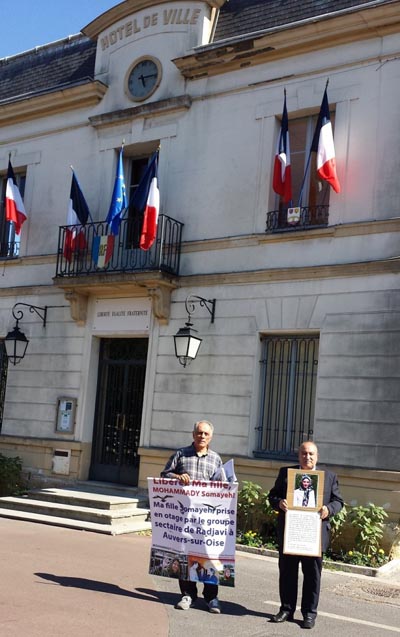
++ Mostafa Mohammadi and Ghorban Ali Hossein Nejad went to Auvers-sur-Oise and picketed outside the town hall and distributed leaflets around town. The following day travelled to Auvers-sur-Oise again for a meeting when their car was rammed by the MEK’s so-called security patrol. Mohammadi and his daughter were slightly injured, but Hossein Nejad was more seriously injured after being beaten by the MEK in the street. They were all rescued by the local police and taken to the police station where they each registered a complaint. Ironically the Rajavis issued a statement claiming they had been arrested and deported from the area. In order to expose the fallacy of this the two fathers published the documents from the police showing what really happened. Hossein Nejad added, “How can we be “deported” from the area when we don’t live there? You say I was afraid. Of course I was. Why would I be afraid of you if you weren’t beating me up? You are showing yourselves by this action.” Interestingly, the MEK is adding to its legal file with the French Judiciary every day by doing these things, until it has come to the attention of the government. French authorities are now raising the issue that ‘how can we have this going on in France? This is not Iraq nor the era of Saddam Hussein.’

In English:

++ Mazda Parsi of Nejat Bloggers writes about the MEK’s futile efforts derail to the nuclear agreement. “For the past weeks, the propaganda arm of the Mujahedin Khalq Organization (the MKO) has resorted to every means to derail the nuclear negotiations between Iran and the world powers. The MKO is not alone in its crisis mongering policy. It is widely supported by American Neo-cons, Israel and Saudi Arabia. The MKO’s consensus with enemies of the Iranian nation and government is mainly seen in its regime change policy which is the dream of Israel, American warmongers and even Saudi Arabia. Their ultimate ambition is Bombing Iran.”

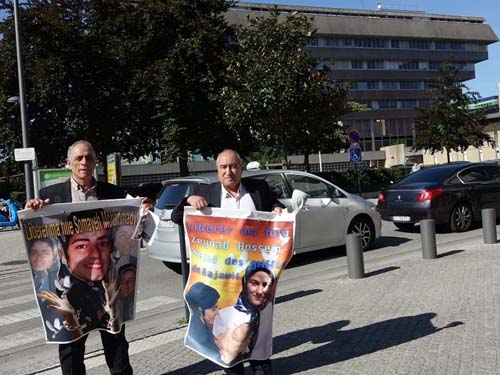
++ Under the title ‘Let’s stand up together and free our children from Rajavi and the MEK’, Iran Interlink has published a video of the activities two fathers have undertaken to highlight their long struggle to free their daughters from the MEK. The film shows their recent visit to Auvers-sur-Oise to picket and leaflet the local citizens and tourists informing them of the MEK’s illegal hold on their children.

++ On Monday 6th July, 2015 members of Iran-Zanan [Women’s] Association met Ms Julia Klöckner; the German politician and member of the Christian Democratic Union of Germany or CDU. Ms Batul Soltani and Ms Homeyra Mohammadnejad from Iran-Zanan Association met Ms Klockner in the “Landtag” building. During the meeting Iran-Zanan Association talked about the expansion of the MEK in European countries, the cultic manipulation techniques used to brainwash members, the MEK’s efforts to establish and expand bases in Albania and the cult’s techniques for deceptively recruiting individuals living in refugee camps. They also mentioned the ruthless efforts of the MKO cult towards the disassociated members in order to silence them and prevent them from exposing the cult. Finally Iran-Zanan Association referred to the group leader Maryam Rajavi’s intrinsic belief in armed struggle.”

 July 17, 2015

July 20, 2015 0 comments
FacebookTwitterPinterestWhatsappTelegramSkypeEmail
The cult of Rajavi

Iran-Zanan representatives meet Christian Democratic Union member

On Monday 6th July, 2015 members of Iran-Zanan [Women’s] Association met Ms. Julia Klöckner; the German politician and member of the Christian Democratic Union of Germany or CDU.

Ms. Batul Soltani and Ms. Homeyra Mohammadnejad from Iran-Zanan association met Ms. Klockner in the “Landtag” building.

Iran-Zanan representatives cautioned on the expansion of the MKO Cult in the European countries. As former members of the MKO cult who experienced the manipulation techniques of the group, they called on the European states to bound the activities of the destructive cult of Mujahdin-e- Khalq members on their soil and prevent the group’s cultic practices. They also asked the countries to help former members of the Cult.  

Representatives of the Iran-Zanan Association warned on the group’s efforts to establish and expand bases in Albania which would be completely under the control of the MO Cult leaders, spending huge amounts of money. They notified that they have informed the Albanian officials at the countries’ embassy in Germany.

They defined the cult-like techniques of the group in tricking individuals living in refugee camps into joining the group.

Iran-Zanan representatives also mentioned some manipulative techniques of the MKO Cult such as systematic self-immolations under the order of cult leaders, having no access to the outside world:” The members have no access to radio, TV and newspapers other than what is fed them”, having no family relationships and refuting the dissatisfied members to leave the cult.

They also mentioned the inhumane efforts of the MKO cult towards the disassociated members in order to silence them and prevent them from exposing the cult.

The Iran-Zanan association also referred to the group leader’s intrinsic belief in armed struggle.

July 16, 2015 0 comments
FacebookTwitterPinterestWhatsappTelegramSkypeEmail
Mujahedin Khalq Organization members' families

Suffering fathers of MKO hostages to denounce the Cult

On Monday, July10th Mr. Mustafa Mohammadi former activist and sympathizer of the Mujahedin Khalq Organization and Mr. Ghorbanali Hossein Nezhad former high-ranking member and interpreter of the group, went to Auver Sur d’Oise in the suburb of Paris where the European base of the MKO is located. Both men have daughters taken as hostages by the MKO leaders in Camp Liberty, Iraq.

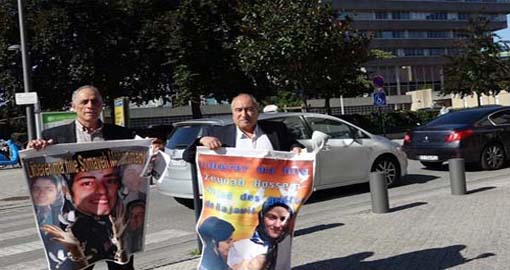
Mr. Mohammadi and Mr. Hossein Nezhad tried to inform citizens of Auver Sur d’Oise about the violent, cult-like nature of the MKO. They distributed flyers, brochure, images and CDs to help the citizens get to know about the cult that has kidnapped their daughters, Somayeh Mohammadi and Zeinab Hossein Nezhad.

They described how the MKO trapped their girls in to the cult. Somayeh was a Canadian citizen before she was recruited by the MKO and Zeinab was recruited in France.

Citizens of Auver Sur d’Oise welcomed the two suffering fathers. They offered sympathy to them. Some of them had witnessed Mr. Mohammadi and his other daughter being beaten by the MKO henchmen a few weeks earlier in Auver Sur d’Oise near the MKO headquarters. They praised him for his courage and resistance.

Mr. Mohamamdi and Hossein Nezhad called on other families – whose beloved ones were sent to the MKO’s military Camps in Iraq – to join their action and to support their judiciary and international efforts to release their loved ones.

The two fathers said:” we have no appeal from the Cult of Rajavi except letting our children leave the mental and physical bars of the cult.” This is definitely a  human, moral and legal demand.

Suffering fathers of MKO hostages to denounce the Cult

July 15, 2015 0 comments
FacebookTwitterPinterestWhatsappTelegramSkypeEmail
Mujahedin Khalq; A proxy force

McCain Seeks to Protect US-Backed Terrorists From Other US-Backed Terrorists?

It seems only yesterday we were writing up Senator John McCain on RPI’s Neocon Watch — oh wait, it was only yesterday!

The Senator never disappoints and he is back at it again. Today, Senator McCain makes Neocon Watch for his letter to John Kerry expressing concerns that one US-supported terrorist group may soon be threatening another US-protected terrorist group.

It seems the anti-Iran radicals known as the Mojahedin-e-Khalq (MeK) have been holed up in "Camp Liberty" in Iraq under US protection, but another group of anti-Iran radicals known as "ISIS" may soon have MeK on the run. And the US, of course, is supposed to do something about it.

The Mojahedin-e-Khalq (MeK) is a bizarre group, an Islamist-Marxist cult that carried out numerous terrorist operations inside Iran (while allied with Saddam Hussein). They even carried out terrorist operations against US citizens. Nevertheless, Seymour Hersh found out that the US was secretly training MeK fighters on US soil while they were on the terrorist list.

However, Senator McCain, along with most of the neoconservatives, have long been defenders of the terrorist MeK because their terrorism is largely confined to Iranian soil. It is not terrorism when a group kills civilians who happen to live in a designated "evil" country like Iran. The MeK also has a habit of delivering counterfeit "evidence" of Iranian nuclear activity to eagerly awaiting neocons and their compliant media.

But McCain is worried about them. Today he wrote to John Kerry to demand that they be protected by the US. He wrote:

As you are aware, due to the increasingly dangerous threat of the Islamic State of Iraq and Syria (ISIS), the resettlement process has stalled, and many fear that the people at Camp Liberty could be at grave risk if the security situation in Iraq, and especially in Baghdad, continues to deteriorate. For this reason, the Administration must move more quickly to find safe, permanent, and secure locations for Camp Liberty residents outside Iraq.

Well McCain should know all about ISIS and dangerous Islamist radicals in the area. He made at least one controversial (and illegal) visit to Syria, where he met with radical Islamists who were said to have been involved in "selling" journalist Steven Sotloff to ISIS for apparent beheading.

This is McCain’s world, this is the interventionists’ world, this is the neocon world. It is a world where terrorists are freedom fighters if they are sufficiently brutal against those the neocons want to see killed. It is a world where one can support and oppose terrorists at the same time. As Orwell wrote of Doublethink in 1984, neocons like McCain have "the power of holding two contradictory beliefs in one’s mind simultaneously, and accepting both of them."

Ronpaulinstitute/Neoconwatch,October 22, 2014

Suffering fathers of MKO hostages to denounce the Cult

July 14, 2015 0 comments
FacebookTwitterPinterestWhatsappTelegramSkypeEmail
Mujahedin Khalq Organization members' families

Let’s stand up together and free our children from Rajavi and the MEK

The struggle to free their loved ones from the clutches of the terrorist Mojahedin Khalq cult has been brought to Europe as two fathers visit Auvers-sur-Oise near Paris, home to the MEK leader Maryam Rajavi.

Over three decades the cult leader Rajavi has banned MEK members from contacting their families for fear of divided loyalties and absconding. But the families have refused to give up on their children. Since 2003, hundreds of families undertook the difficult and dangerous journey to Iraq to find their loved ones. Mostafa Mohammadi travelled from Canada on several occasions to find his daughter Somayeh and bring her home. With no success there, he has now brought the demands of the families to the gates of the MEK’s Headquarters in France.

Somayeh Mohammadi has been held hostage by the MEK for over two decades in Iraq. After years of futile protest outside the camp, her father came to France to petition the MEK leader for her release. On the advice of his lawyer Mostafa visited the base in Auvers-sur-Oise with his other daughter Hooriyeh along with the lawyer to deliver a last formal request to Maryam Rajavi before launching legal proceedings against her. The MEK response was to send out around twenty thugs to beat up all three of the petitioners, including the French lawyer. Police intervened and Mostafa was hospitalised overnight.

After recovering from his injuries Mostafa again visited Auvers-sur-Oise on Friday 10th July to publicise his plight. This time he was accompanied by another father whose daughter is also being held captive in Iraq. Ghorban Ali Hossein Nejad joined Mostafa outside the Town Hall at Auvers-sur-Oise to hand out leaflets to local people and tourists. Ghorban Ali as well as other critics had previously been subjected to attacks by the MEK for speaking out against the group in France.

After sending out the message ‘Let’s stand up together and free our children’, other families are now lined up to join them for further activities over the busy summer season.

One of the mayor’s electoral pledges was to rid the small tourist town – where Vincent Van Gogh painted some of his most famous works – of the incongruous presence of the terrorist group. Her election was a clear indication that the townsfolk wanted some action to be taken to remove the MEK from their town. Unfortunately this has not happened and the MEK still continue their activities from inside their de facto enclave beyond the reach of the French authorities even though the cult is currently under investigation for terrorist offences.

July 14, 2015 0 comments
FacebookTwitterPinterestWhatsappTelegramSkypeEmail
Mujahedin Khalq Organization members' families

Fathers of two MKO hostages to denounce the cult

On Monday, July10th Mr. Mustafa Mohammadi former activist and sympathizer of the Mujahedin Khalq Organization and Mr. Ghorbanali Hossein Nezhad former high-ranking member and interpreter of the group, went to Auver Sur d’Oise in the suburb of Paris where the European base of the MKO is located. Both men have daughters taken as hostages by the MKO leaders in Camp Liberty, Iraq.

Mr. Mohammadi and Mr. Hossein Nezhad tried to inform citizens of Auver Sur d’Oise about the violent, cult-like nature of the MKO. They distributed flyers, brochure, images and CDs to help the citizens get to know about the cult that has kidnapped their daughters, Somayeh Mohammadi and Zeinab Hossein Nezhad.

They described how the MKO trapped their girls in to the cult. Somayeh was a Canadian citizen before she was recruited by the MKO and Zeinab was recruited in France.

Citizens of Auver Sur d’Oise welcomed the two suffering fathers. They offered sympathy to them. Some of them had witnessed Mr. Mohammadi and his other daughter being beaten by the MKO henchmen a few weeks earlier in Auver Sur d’Oise near the MKO headquarters. They praised him for his courage and resistance.

Mr. Mohamamdi and Hossein Nezhad called on other families – whose beloved ones were sent to the MKO’s military Camps in Iraq – to join their action and to support their judiciary and international efforts to release their loved ones.

The two fathers said:” we have no appeal from the Cult of Rajavi except letting our children leave the mental and physical bars of the cult.” This is definitely a  human, moral and legal demand.

July 13, 2015 0 comments
FacebookTwitterPinterestWhatsappTelegramSkypeEmail
Iran Interlink Weekly Digest

Iran Interlink Weekly Digest – 104

++ Hatem Estanboli writing for Palestinian newspaper Al Manar comments about Villepinte. He says “this is an example of low level propaganda typical of the Israeli. Less than 10% attending the rally were Iranian. This is smoke and mirrors to disguise reality.”

++ In Tehran, analyst Dr Mohammad Sadegh Kushki was interviewed. In it he is asked about the MEK. He described the history of the cult and how they changed, explaining that their belief system and belief in violence forced them to become like this. The interview is titled ‘In the beginning they chose armed struggle to defeat Imperialism’.

++ In an apparent panic, the MEK bringing many members onto its TV to talk against their families. This involves the loved ones of families who are actively seeking to make contact with these members and rescue them. In response the MEK get them to hysterically swear at and denounce their families. These families ask “is this supposed to make us go away? We can see they are forced.” Commentators ask ‘where are the human rights organisations to protect these people who are obviously hostages and who are being forced to denounce their own families?’ Some comment, ‘are we not human unless we are attached to the nuclear issue? Otherwise our human rights don’t matter?’

In English:

++ As attention has focused on the progress of the P5+1 nuclear negotiations with Iran, two articles in English have identified the role of the MEK in the all-out attempt to prevent an agreement.

Anti War.com published an article by Mohammad Sahimi titled ‘Demonizing Iran To Prevent the Nuclear Agreement’. He says “A forth way of demonizing Iran is by claiming that Iran is similar to the Islamic State and “1000 times worse” and “bigger.” …In advancing this narrative, Netanyahu has been helped by the Mujahedin-e Khalgh Organization (MEK, also known as MKO) and its lobby in the United States. The MEK is an Iranian armed opposition cult that sided with Saddam Hussein during the Iran-Iraq war of the 1980s, and acted as his internal security forces against his regime’s opponents. Up until September 2011 it was on the State Department’s list of foreign terrorist organization. The MEK leader Maryam Rajavi has made the same claims as Netanyahu’s, calling the Islamic Republic the IS’ “Godfather.” She even testified via satellite before a congressional subcommittee, repeating the same nonsense.

“Parallel to Israel, and perhaps even coordinated with it, the MEK lobbyists in the United States have been making the same type of claims, advocating that the US should help the MEK to topple the regime in Tehran, even though the cult is universally despised in Iran. Ken Blackwell, former Ohio secretary of state and a fellow at the conservative Family Research Council, Clare Lopez, a former CA operative and senior Vice President at CSP, and Raymond Tanter, a cofounder of the defunct Iran Policy Committee that advocated military confrontation with Iran, have been advocating this narrative.”

In Tehran, Fars News reported that member of the parliament’s National Security and Foreign Policy Commission Javad Jahangirzadeh cautioned against the MEK’s efforts to prevent a deal. He said the MEK had “paid cash to Cal Thomas, the columnist of the Washington Times newspaper to write an article to allege that Iran cannot be trusted for striking a final agreement with the world powers. Thomas wrote in his recent article in Washington Times that Iran has always maintained that it is seeking nuclear power for peaceful purposes; “if that were true, there would be no need for negotiations, how do you negotiate with someone who has lied from the start and is told in the Quran that lying to infidels is permissible in pursuit of the Islamic goals?””

 July 10, 2015

July 12, 2015 0 comments
FacebookTwitterPinterestWhatsappTelegramSkypeEmail
Mujahedin Khalq; A proxy force

Israel, Saudi, Neo-cons and the MKO mad with the N talks

For the past weeks, the propaganda arm of the Mujahedin Khalq Organization (the MKO) has resorted to every means to derail the nuclear negotiations between Iran and the world powers. The MKO is not alone in its crisis mongering policy. It is widely supported by American Neo-cons, Israel and Saudi Arabia.
The MKO’s consensus with enemies of the Iranian nation and government is mainly seen in its regime change policy which is the dream of Israel, American warmongers and even Saudi Arabia. Their ultimate ambition is Bombing Iran.
  Senator Tom Cotton (R-AK), an MEK supporter, has claimed that bombing of Iran’s nuclear facilities can be done easily in only “a few days.” Cotton has also called on the President not to cooperate with Iran because “it has blood of hundreds of Americans on its hands,” whereas it was in fact the MEK that assassinated American advisers in Iran in the 1970s, according to Muhammad Sahimi of the Antiwar.com. [1]
Earlier in May 2015, the GlobeMoslims reported that Mojahedin-e Khalq voiced readiness to help Saudi Arabia in Yemen. “MKO Leader Maryam Rajavi in a meeting with Saudi Ambassador to Paris Mohammad Al Sheikh said that the grouplet is willing to cooperate with Riyadh to carry out its attacks against the Yemeni nation,” the report revealed. [2]
  Including the tools Israel uses to demonize Iran to prevent the  likely nuclear agreement, Muhammad Sahimi suggests, ”A forth way of demonizing Iran is by claiming that Iran is similar to the Islamic State and “1000 times worse” and “bigger.” He clarifies that making this absurd claim has been Israeli Prime Minister Benjamin Netanyahu’s way of preventing the nuclear agreement. “This is while Iran has been fighting the IS in Iraq, and in fact many experts believe that only Iran can defeat the IS, “he adds. “At the same time, Israel has been working with Jabhat al-Nusra, the al-Qaeda branch in Syria, in an attempt to defeat the Iran-backed regime of President Bashar al-Assad.” [3]
  Sahimi introduces the MO as “an Iranian armed opposition cult that sided with Saddam Hussein during the Iran-Iraq war of the 1980s, and acted as his internal security forces against his regime’s opponents”.   Thus, it seems quiet natural that the MKO helps anyone who is in line with its ambitions, just like the way it aided Saddam Hussein against its own countrymen during the eight years of Iran-Iraq war.
“In advancing this narrative, Netanyahu has been helped by the Mujahedin-e Khalgh Organization (MEK, also known as MKO) and its lobby in the United States,” writes Sahimi.  He refers to the harmony between the both edges of the Iranians’ enemy: “The MEK leader Maryam Rajavi has made the same claims as Netanyahu’s, calling the Islamic Republic the IS’ “Godfather”.  She even testified via satellite before a congressional subcommittee, repeating the same nonsense.” [4]
About the MKO propaganda machine, Muhammad Sahimi explains, “Parallel to Israel, and perhaps even coordinated with it, the MEK lobbyists in the United States have been making the same type of claims, advocating that the US should help the MEK to topple the regime in Tehran, even though the cult is universally despised in Iran”. 5]
While the nuclear talks are reaching the final compromise sooner or later, the MKO harder beats on the war drums to flatter its sponsors.
Mazda Parsi
Sources:
[1] Sahimi, Muhammad, Demonizing Iran To Prevent the Nuclear Agreement, Antiwar.com ,  July 05 2015
[2] GlobeMoslims, Mojahedin-e Khalq Voices Readiness to Help Saudi Arabia in Yemen , 28 May 2015
[3] Sahimi, Muhammad, Demonizing Iran To Prevent the Nuclear Agreement, Antiwar.com ,  July 05 2015
[4] ibid
[5] ibid
 

July 11, 2015 0 comments
FacebookTwitterPinterestWhatsappTelegramSkypeEmail
Newer Posts
Older Posts

Recent Posts

  • A Criterion for Proving the Violent Nature of the MEK

    December 31, 2025
  • Rebranding, too Difficult for the MEK

    December 27, 2025
  • The black box of the torture camps of the MEK

    December 24, 2025
  • Pregnancy was taboo in the MEK

    December 22, 2025
  • MEPs who lack awareness about the MEK’s nature

    December 20, 2025
  • Facebook
  • Twitter
  • Instagram
  • Youtube

© 2003 - 2025 NEJAT Society . All Rights Reserved. NejatNGO.org


Back To Top
Nejat Society
  • Home
  • Articles
  • Media
    • Cartoons
    • NewsPics
    • Photo Gallery
    • Videos
  • Publications
    • Books
    • Nejat NewsLetter
    • Pars Brief
  • About Us
  • Contact us
  • Editions
    • عربي
    • فارسی
    • Shqip