Nejat Society
  • Home
  • Articles
  • Media
    • Cartoons
    • NewsPics
    • Photo Gallery
    • Videos
  • Publications
    • Books
    • Nejat NewsLetter
    • Pars Brief
  • About Us
  • Contact us
  • Editions
    • عربي
    • فارسی
    • Shqip
Nejat Society
Nejat Society
  • Home
  • Articles
  • Media
    • Cartoons
    • NewsPics
    • Photo Gallery
    • Videos
  • Publications
    • Books
    • Nejat NewsLetter
    • Pars Brief
  • About Us
  • Contact us
  • Editions
    • عربي
    • فارسی
    • Shqip
© 2003 - 2024 NEJAT Society. nejatngo.org
Iran Interlink Weekly Digest

Iran Interlink Weekly Digest – 103

++ Tehran hosted an International Conference on Terrorism this week with the theme ’Terrorism – from the Mojahedin Khalq to Daesh’. One of the panel was Abu Aref, representative of the Islamic Supreme Council of Iraq Party whose head is Al Hakim. Aref gave a documented talk on the activities of Daesh and the MEK in Iraq. He said the basis of both phenomenon lies in the use of ideological belief to justify their actions. Another member of panel, Ebrahim Khodabandeh, argued that both entities come from the same root. Both believe they are superior and that they are the reference point for everyone and everything else. They accept no guide but themselves. This is why they are able to do whatever they like and according to this belief, there is no law to stop them. Khodabandeh gave the example of the MEK which, over forty years, changed from anti-Imperialist to pro-America, from anti-Israel to pro-Israel.

++ In the same conference an interview with Ebrahim Khodabandeh was published by IRNA. In it he explains how the MEK have become the tool to wreck the nuclear issue. He says that when MOSSAD approached Iranian monarchists to reveal its intelligence on Iran’s nuclear programme in 2003, they refused to play a part saying they could not do that against their own country. But when they then went to Rajavi, he accepted to be the Iranian voice of MOSSAD. The problem was that MOSSAD only wanted to use the MEK once and had no intention of the group coming out every year with false information which both America and Israel were then forced to reject. The MEK have ruined the game.

++ This week Mohammad Sahimi a known historian and analyst published a Farsi article in Western media titled ‘A Comparison of Two Points of View – Non-Violent Opposition and Violent Opposition’. In it he challenges Iranians who call for regime change but disingenuously do not explain how this is to come about. He says that ironically their main activity is to attack and criticise the non-violent opposition in the West which at least have some roots and some audience in Iran. Sahimi refers to the MEK as typical of this type of regime change pundit, but his criticism spreads to other groups, Farsi media and personalities. All of them, he points out, live in the West. He challenges them to come clean and say that they want America to bomb Iran. But he explains “When I talk with them about armed struggle only some say they want America to bomb Iran. Others say Iranians themselves have to take up arms and destroy the Islamic Republic. But when I ask any of these people ‘why are you in London then? They say, ‘oh you want us to get killed in Iran by the ayatollahs!’ as though it’s my fault that they are pro-armed struggle. When they say no to America bombing Iran they are either lying or the other conclusion we have to draw is that they believe the non-violent opposition should take up arms to fight on their behalf.”

++ A documentary made by Morteza Ghaderi, called ‘The Seven Unforgivable Sins’ has been broadcast in Iran. Based on the concept that all religions have a number of unforgivable sins, the programme shows how the MEK have committed all seven sins to the maximum. Documents reveal the MEK’s relation with Saddam Hussein, the murder of its own members and allying itself with Israel as examples.

++ Irandidban and other Farsi sources have published a document from Wikkileaks. A 2011 letter from the Intelligence service of Saudi Arabia to the then foreign minister, Saud Al Faisal refers to a pro-Baath politician in Iraq trying to mediate on behalf of the MEK in an effort to make a meeting between the Saudi foreign minister and Maryam Rajavi. The Intelligence service letter is the reply to that mediation. It rejects the proposal for two reasons. One is that “the MEK are hated in Iran and have no popular support”. Second, “the MEK has been infiltrated to the highest levels by Iran’s Intelligence services, hence such a meeting cannot be beneficial to us”.

In English:

++ Nejat Bloggers published Ebrahim Khodabandeh’s brief on the MEK, Inside Out. In it he briefly reviews the MEK’s history and concludes that “The organization has absolutely no popular support in Iran since it committed the most public act of betrayal; cooperating with the enemy at war against the homeland. The MEK leaders are aware of this fact more than anyone else. At the present time the organization is striving to find an alternative for the deposed Saddam Hussein, this time in the west, since it has lost its hope to gain any backing inside Iran. They are making contact with all and any enemies of Iran, including terrorist entities such as ISIL. The MEK is currently re-creating its Iraqi terrorist bases in Albania with property and facilities it has purchased close to Tirana. The Iraqis have always considered them as the worst heritage left by Saddam Hussein for their country and have tried to expel them from their country since the fall of the dictator. The MEK participated in suppressing Iraqis in the past and have caused many national security difficulties for the nation at the present time.”

++ Press TV reported on a speech by Ayatollah Khamenei used the anniversary of the MEK’s terrorist attack on the headquarters of the Islamic Republic Party (IRP), in which tens of Iranian officials, including then Head of Supreme Judicial Council Ayatollah Mohammad Beheshti, were killed, to warn Iranians of the dangers of American support for regime change. ““Those who want to cover up the evil enmity of the US and some of its followers through media and propaganda ploys are in fact betraying the nation and state,” the Leader said. “The Iranian nation should, through awareness of the extent of the enemy’s hostility, be prepared to confront and counter [its plots] in the soft war arena, such as in cultural, political and social spheres,” the Leader said.

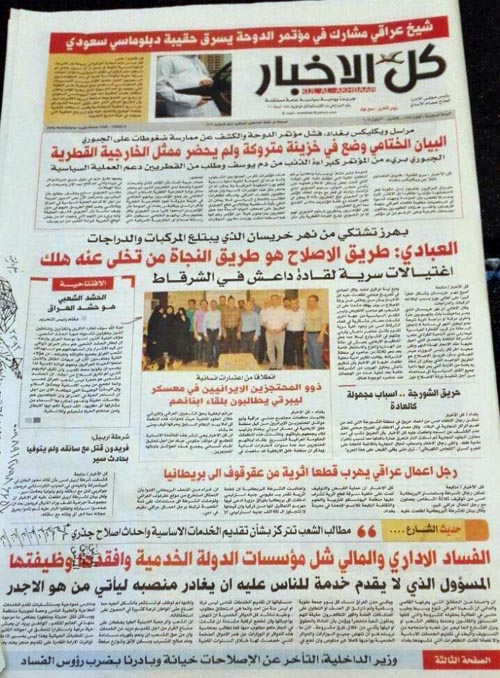
++ Nejat Bloggers reports that defections from the MEK are increasing. In Iraq, in three months four residents of Camp Liberty managed to escape the camp and were taken to Hotel Mohajer in Baghdad. The MEK prevents members from meeting their families in a bid to prevent defection. Despite this around 17 have escaped the camp in the last year. In Albania over 120 members have left the group. This has caused the MEK leaders to hold the latest arrivals in Tirana “in quarantine”, according to ex-member website reports.

++ Former MEK member Masoud Bani Sadr spoke at a meeting in London on the subject ‘Cults, Racism, Doublespeak and the Search for Justice’ in support of the Jeremiah Duggan campaign.

++ Daniel Larison, writing for The American Conservative, slams Senator John McCain for his “long record of backing unsavory and vicious people that happen to support regime change or that share his hostility to certain other governments… McCain doesn’t discriminate when it comes to choosing allies of convenience in pursuing unwise and reckless goals, so it was probably just a matter of time before he started associating with the MEK.”

++ Mazda Parsi in Nejat Bloggers reviews the revealing article by Dutch journalist Judit Neurink. Iraqi newspaper Assabah Aljadeed cites sources in Paris who claim that the MEK’s plans to create a terrorist camp in Albania are leading to a political storm in Tirana. “The Albanian government fears that the camp will turn into something like Camp Ashraf in Iraq, which was previously the base for military training, planning and preparation for military operations in Iran and abroad,” the Assabah Al Jadeed reported. Croatian writer, N. Babic of Alter Mainstream Info.com has looked at the numbers of MEK leaving Iraq and asks where they are. He “cites from the British Daily Telegraph that on December 30, 2013 published the news of an agreement between the US administration and Romanian authorities to relocate the 3000 Liberty residents to the Romanian city Craiova on the border with Bulgaria. The news was leaked from the conversation of two employees of the Romanian Foreign Ministry, who said that “the United States and the Romanian government are negotiating on the deployment of 3,000 members of the” former “terrorist organization Mojahedin-e Khalq (MEK) on the territory of Romania… Is it possible that between 1 000- 2000 militants MEK finally arrived in Romania, as the government in Bucharest totally dependent on Washington and seldom dared to oppose the then request?’’ Babic asks.”

July 3, 2015

July 4, 2015 0 comments
FacebookTwitterPinterestWhatsappTelegramSkypeEmail
Mujahedin Khalq; A proxy force

The WINEP Letter and the Bipartisan Fallacy

For the past week, a letter from a varied group of policy experts has been making the rounds, mostly as a case against doing a deal with Iran. More particularly, many of these experts have been opposed to doing this deal currently being hashed out in Vienna. The exact contours of the deal are unknown, but the broad strokes have been apparent since an April “framework” laid out the parameters for many of the larger issues. The letter, which was organized and released by the pro-Israel think tank Washington Institute for Near East Policy (WINEP), got a big write-up in The New York Times:
 

Five former members of President Obama’s inner circle of Iran advisers have written an open letter expressing concern that a pending accord to stem Iran’s nuclear program “may fall short of meeting the administration’s own standard of a ‘good’ agreement”…
 
For the White House, the letter may raise the level of political risk in seeking approval of any final agreement. A judgment from Mr. Obama’s own former advisers that the final accord falls short would provide ammunition for Republican critics who have already said they will try to kill it when it is submitted to Congress for review.
 
The Times coverage and the letter, in turn, attracted some gleeful pick up among neoconservative hawks, not least Commentary, The Weekly Standard, and The Wall Street Journal‘s editorial page, which remarked: “Doubts about President Obama’s Iran diplomacy are deepening, and some of the gravest misgivings are coming from his former top officials.”
 
Enter Robert Einhorn, formerly a non-proliferation adviser in Obama’s State Department and a signatory to the WINEP letter. When the coverage started pouring in with the obvious framing, he complained that the letter’s intent was being distorted. Einhorn, along with another signatory who curiously spoke only anonymously, told Foreign Policy‘s John Hudson that the missive wasn’t intended to state a loss of faith in the Obama administration’s ability to negotiate a deal: “That’s not at all what the statement was about.” Then, in a post on the website of the Brookings Institution where he is a Senior Fellow, Einhorn lamented the interpretation of the letter as “an indication that those former officials had broken ranks with the administration and lost confidence in its ability and determination to achieve a sound agreement.” He went on: “As a signer of the group’s statement and a former member of the Obama administration’s Iran negotiating team, I believe such an interpretation of the statement is unfounded and distorts the statement’s significance.”
 
I admire Einhorn’s work. His level-headed analyses of Iran negotiations have been valuable resources for anyone dealing with the issue. But I can’t help but note that his apparent discomfort with the interpretation of the WINEP letter stems from his own naiveté. Surely he knows the players involved in the letter and he should have anticipated how hawkish commentators would interpret it. The records of many of the letter’s signatories all but ensured that critics would seize upon it as an admonishment of Barack Obama’s Iran diplomacy.
 
Opponents of Diplomacy
 
Einhorn wrote at Brookings that the WINEP group “included [those] who have serious reservations about some of the decisions taken by the administration in the negotiations and who fear that U.S. negotiators may make unwarranted concessions in their eagerness to finalize a deal.” He added, “Participants in the Washington Institute’s study group want the negotiations to succeed.” The first assertion is a gross understatement; the second is patently untrue.
 
One need only point to Joseph Lieberman, the former senator from Connecticut, on this second score. I recently wrote about how hard it was to take seriously any advice on Iran policy from a group that included Lieberman. Lieberman has nominally supported negotiations with Iran but in tandem with policies that would make the talks virtually meaningless. In fact, if Lieberman had had his way, talks would’ve been over long ago, and we probably would have already attacked Iran. As far back as 2008, Lieberman was joking—yes, joking, as if this were a laughing matter—about the “appeal” of bombing Iran. In a 2010 speech to the Council on Foreign Relations that re-purposed many of the talking points Lieberman had used to push for the invasion of Iraq, he spoke of a six-month deadline—six months! in 2010!—for Iran to roll back its nuclear program before the U.S. had to seriously consider a military strike.
 
Lieberman’s been at it since then, too. In 2012, he said that a military strike could cause Iran’s nuclear program to “be delayed for enough years that we may hope and pray that there will be a regime change.” And that is the central point of Lieberman’s advocacy: he wants a U.S. policy of regime change. Just this month, he participated by video in a confab of the Mojahedin-e Khalq (MEK), the ex-terrorist Iranian opposition group that relentlessly pushes for regime change.
 
“Inevitably,” Lieberman addressed the MEK members directly, “as individuals you may ask yourself: Is it possible that we can bring about a change of regime in Iran? And I want to say to you that it is. I’m confident that it is and it will happen.” The US, he said, “should be working closely with your resistance group.” The event was even the subject of a “sponsored report“—whatever that means—from The Washington Times that helpfully categorized Lieberman’s statements as “American support for regime change and the Iranian opposition.” Any group that includes Joe Lieberman, in other words, should be seen for what it is: decidedly unserious about negotiations with the Iranian regime.
 
Other members of the WINEP group should raise eyebrows—many of them scholars at WINEP itself. Take for example Dennis Ross and David Makovsky, who have respectively worked for and advised the Obama administration on Middle East policy. In 2012, they too wanted to put an ultimatum to Iran: to deal or face a military attack. Again, if President Obama had taken their advice, we would have already gone to war. Another WINEP signatory to the letter was Patrick Clawson, also a hawkish scholar who has long favored a policy of regime change.
 
Then there’s the head of WINEP, its executive director Robert Satloff, who in 2013 leveled a criticism at the then-recent Geneva interim deal with Iran that patently distorted its terms (upon learning of the errors, The New Republic, which published the piece, went on to update it without acknowledging the corrections). Satloff’s attack hinged on media coverage of the deal that characterized it as a “freeze” of Iran’s nuclear progress; he and I went back and forth about the characterization on Twitter. I was quite surprised, then, to see that he signed on to the new WINEP letter, which urged the administration to “extend the existing Joint Plan of Action”—the official name of the Geneva interim accord—”while negotiations continue. This will freeze Iran’s nuclear activity and international sanctions at current levels” [emphasis added].
 
One might be forgiven for doubting that such characters are serious about diplomacy with Iran. They have pushed for awful policies and sometimes by means of disingenuous criticisms, and their letter is organized under the aegis of a think-tank like WINEP, which was founded as a spin-off of the American Israel Public Affairs Committee (AIPAC). Even if they nominally support the notion of getting a deal rather than going to war, their past utterances, if adopted, would’ve dragged us into war long ago. That doesn’t mean all the experts on the letter come from this school, but surely enough of them do that participating in it should have raised alarms for those who support a genuine compromise and nuclear deal.
 
Bipartisan Support for a Deal?
 
Einhorn, in his blog post, lauded the bipartisan nature of the WINEP group. “The significance of the statement is that this diverse, bipartisan group was able to come together on a number of reasonable and achievable recommendations for concluding an agreement that would serve U.S. interests,” he wrote. That’s all fine and well, but one can hardly be surprised that signing on to a letter with a bunch of harsh critics of the Obama administration’s Iran policy that includes several neoconservative hawks would not be seen as, well, a hawkish criticism of the Obama administration’s Iran policy.
 
The WINEP letter even includes a fine-print disclaimer: “This statement reflects the broad consensus of the group; not every member of the group endorses every judgment or recommendation.” That should give the signatories significant wiggle room; I expect the perpetual critics of Obama’s Iran policy, like Satloff and Lieberman, will object to whatever deal comes down even if it meets the WINEP letter’s conditions, whereas its supporters, like Einhorn, will find themselves supporting a deal even if the circumstances described in the letter are not all perfectly adhered to. Maybe I’m wrong, but one can’t deny the malleability of the positions held over time by the Obama administration critics on the letter.
 
I don’t doubt Einhorn’s noble goals and his own takeaway from the letter, but bipartisanship in this case seems overrated. I stand by my earlier assessment that partisanship could be helpful to the Obama administration in getting a deal. That’s because the main threat to a nuclear accord, from the American side, isn’t from the pundit class (whom, again, Obama has thankfully ignored). Rather, it comes from Congress. And the hawks in Congress—which is to say, mostly Republicans, and nearly all of them—aren’t going to come around, no matter what the WINEP letter says and who signs it.
 
On the Hill itself, the bipartisanship is likely not to come from supporters of a deal, but rather its detractors. Pro-Israel hawks among the Democrats will either break with the administration or with its implacable Republican critics. Take, for example, the embattled Sen. Robert Menendez (D-NJ: he’s introduced legislation, which could’ve derailed talks if passed, alongside Sen. Mark Kirk (R-IL), who opposes any talks and has compared negotiations repeatedly to Nazi appeasement. Menendez’s posturing is indicative of the prevailing bipartisanship in Washington, which hews closely to the line set forth by the hawkish AIPAC. And AIPAC’s demands for the deal, as Einhorn himself seemed to suggest to Foreign Policy, are designed in such a way so as to render any reasonable deal unacceptable.
 
That was the one small stroke of genius in the compromise struck that allowed the Obama administration to reluctantly endorse a bill giving Congress a review of the Iran deal. Importantly, the “poison pills” were stripped out of the bill, but more importantly it ultimately set the threshold for Congress to reject a deal at a veto-proof majority. That means if the administration can keep one-third-plus-one of either chamber in line, the deal will stand. Republicans won’t have to come around—and they almost definitely won’t—and there’s even enough wiggle room that they can peel off a few of the Democrats who stick to the AIPAC line. Pundit bipartisanship is lovely, but let’s be realistic about its limits in the actual corridors of power.
 
Photo: Robert Satloff of WINEP
 
About the Author: Ali Gharib is a New York-based journalist on U.S. foreign policy with a focus on the Middle East and Central Asia. His work has appeared at Inter Press Service, where he was the Deputy Washington Bureau Chief; the Buffalo Beast; Huffington Post; Mondoweiss; Right Web; and Alternet. He holds a Master’s degree in Philosophy and Public Policy from the London School of Economics and Political Science. A proud Iranian-American and fluent Farsi speaker, Ali was born in California and raised in D.C.

July 4, 2015 0 comments
FacebookTwitterPinterestWhatsappTelegramSkypeEmail
Iran

Leader Urges Plans on Crime Prevention in Iran

Supreme Leader of the Islamic Revolution Ayatollah Seyed Ali Khamenei called on the Iranian organizations, the Judiciary in particular, to devise plans for crime prevention.

Crime prevention is one of the major and sensitive responsibilities of the Judiciary, Ayatollah Khamenei said in a meeting with the Judiciary chief and authorities, held in Tehran on Sunday evening.

The Leader also called for an “organized effort” by all responsible organizations to prevent crime in the country, noting that without such plans, “crimes cofntinue to increase and escalate and the macromanagement of them will not be possible.”

Ayatollah Khamenei further highlighted the significance of an “independent” Judiciary system that would not come under the influence of others.

One of the main factors of the Judiciary’s independence is “might”, the Leader explained. The “rule of law” and “absolute health” were the other elements behind the Judiciary’s independence the Leader highlighted.

“Any corruption in the Judiciary system will pave the way for bigger corruptions in the society,” Imam Khamenei warned.

The meeting was held on the occasion of the Judiciary Day (the 7th day of the Iranian month of Tir), commemorating Ayatollah Mohammad Beheshti and scores of other senior Iranian officials martyred in a terrorist attack back in 1981.

On June 28, 1981, members of the terrorist Mujahedin-e Khalq Organization (MKO) blew up the headquarters of the Islamic Republic Party in Tehran, killing 72 ranking officials, including Ayatollah Beheshti, the first head of the Supreme Judicial Council of Iran after victory of the Islamic Revolution.

July 2, 2015 0 comments
FacebookTwitterPinterestWhatsappTelegramSkypeEmail
Mujahedin Khalq Organization as a terrorist group

European Countries and fear of the threat of the MKO

The relocation of members of the Mujahedin Khalq Organization (the MKO) from Iraq to Albania has raised concerns among European countries, particularly the Balkans that are already faced with various crisis in their region.

As the residents of the temporary Transit Location, Camp Liberty are transferred to Tirana, the risk of using the new base as a camp of preparation for fighting against the Islamic republic is increasing day after day.

Joudith Nourink Dutch journalist and the correspondent of Kurdish Website RUDAW reports that the MKO has bought land and properties in Albanian capital. She refers to Iraqi newspaper Assabah Aljadeed citing sources in Paris who claim that the alleged plans are leading to a political storm in Tirana.

"The Albanian government fears that the camp will turn into something like Camp Ashraf in Iraq, which was previously the base for military training, planning and preparation for military operations in Iran and abroad," the Assabah Al Jadeed reported.

The threat of the MKO resettlement in Albania is then investigated by a Croatian writer, N.Babic of Alter Mainstream Info.com. He has a different point of view on the issue. His concerns about the controversial American backed terrorists of the MKO may not seem likely but it is realistic. The Croatian writer’s focus is mostly on the number of the Liberty residents mentioned in Portal of Iraqi Kurds RUDAW.

Nourink states in the report that Camp Liberty is home of about 1000 members of Mujahedin Khalq.  Considering the aforementioned number, Babic points to another report published in December 2013 according to which 3000 MKO militants were supposed to be transferred to Romania. The writer wonders where the 2000 missing members of the group are.

The Croatian website cites from the British Daily Telegraph that on December 30, 2013 published the news of an agreement between the US administration and Romanian authorities to relocate the 3000 Liberty residents to the Romanian city Craiova on the border with Bulgaria. 

The news was leaked from the conversation of two employees of the Romanian Foreign Ministry, who said that "the United States and the Romanian government are negotiating on the deployment of 3,000 members of the" former "terrorist organization Mojahedin-e Khalq (MEK) on the territory of Romania."

”Is it possible that between 1 000- 2000 militants MEK finally arrived in Romania, as the government in Bucharest totally dependent on Washington and seldom dared to oppose the then request?’’ Babic asks.

Since December 2013, when the contents of the conversation of the two Romanian diplomats were revealed, various scenarios that would make this group a "guest" for the Romanian government began to appear. Thus, regarding the consequences of the US support for Syrian, Iraqi and Afghan terrorist groups, the Croatian author warns about the presence of another US backed terrorist group in Balkan territory. He suggests, “This group is the ideal force to get closer to Moldova and Ukraine, two countries where Washington has implemented and carried out a policy of "controlled chaos".”

His warning gets sharper when he asserts,” It is clear that the MEK is not a pacifist organization, or opposition groups, and the evidence of this are numerous… Mujahidin-e-Khalq are all militant armed groups, like Al Nusra Front, or some other branch of Al Qaeda.” 

He is concerned about their “future neighbors” because the arrival of these former fighters in Albania as a key factor of stability in the Balkans poses a serious threat to security. “The crisis in Greece, the situation in Macedonia, tensions in Kosovo and Bosnia and Herzegovina, Montenegro, the polarization of the population that mimics the entry into NATO, while the other half is against it, are the reasons why this group would have to be away from the Western Balkans,” he explains.

He thinks that the MKO’s presence in their neighborhood should be closely monitored because of “many reasons” referring to the MKO’s history of terror and violence and its share in the crisis in Iraq and even Yemen. He investigates, “If until now the militants group Mujahedin-e Khalq were undesirable in Iran, Iraq, and many other Western countries, the question is why it now needs to be placed in Albania and where the "missing" two-thirds of the militants who were found at Camp Liberty near Baghdad in late 2013?”

By Mazda Parsi

Reference:

Babic, N., The remains of the "former" terrorist group Mujahedin-e Khalq-coming into Albania – where the 2013 2,000 of their militants "disappeared"? , Alter Mainstream Info.com, June 24, 2015

July 2, 2015 0 comments
FacebookTwitterPinterestWhatsappTelegramSkypeEmail
Mujahedin Khalq; A proxy force

McCain Is the MEK’s Newest Fan

John McCain continues his long tradition of embracing horrible foreign groups:

The gathering, led by the a controversial, albeit influential Iranian exile organization — the National Council of Resistance of Iran — featured speeches and appearances by dozens of current and former officials from the U.S., Europe and the Middle East, all of whom joined in the call for Iran’s Shiite Islamist government to be overthrown.

Among the more high-profile was Sen. John McCain, Arizona Republican and chairman of the Senate Armed Services Committee, who told the massive crowd in a pre-recorded video message that “the Iranian regime [is] the true epicenter of Islamic extremism in the world.”

The organization mentioned here is the political umbrella group dominated by the Mujahedin-e Khalq (MEK), the “former” terrorist group that is still a totalitarian cult. It’s not surprising that McCain has joined the embarrassingly large number of American politicians, former officials, and retired officers that associate with and advocate for this group. He frequently endorses dubious and disreputable groups when they happen to share his dangerous foreign policy goals. Nonetheless, it is worth noting that there are now many more current members of Congress openly embracing the MEK. That’s a dangerous development, and it could have a pernicious effect on U.S. policy-making in the future.

McCain has a long record of backing unsavory and vicious people that happen to support regime change or that share his hostility to certain other governments. He was a cheerleader for the KLA during the Kosovo intervention, he was a fan of the rebellion in Libya from the start despite the presence of jihadists in their ranks, and he has been one of the most outspoken advocates of sending weapons to rebels in Syria on the pretense that they were “moderates.” In addition to misjudging the “moderate” rebels, McCain has been a leading advocate for a policy that has sent weapons into Syria when they have been seized by Jabhat al-Nusra or ISIS. Those are just the most obvious examples of McCain’s terrible judgment. McCain doesn’t discriminate when it comes to choosing allies of convenience in pursuing unwise and reckless goals, so it was probably just a matter of time before he started associating with the MEK.

By Daniel Larison 

July 1, 2015 0 comments
FacebookTwitterPinterestWhatsappTelegramSkypeEmail
Former members of the MEK

Mr. Gholami; MKO former member reunited his family after 25 years!

Mr. Karim Gholami joined the Mujahedin-e Khalq group in 1987 when he was just 16 years old. Within the organization he was not satisfied with the ideology and doctrines of the group.

During the Chelcheraq Operation he injured severely and forced to use wheelchair for about 24 years.

Within the MKO Cult he lost the track of his family since any relationship and any form of contact with the family members is forbidden in the Cult.

Finally in 2009 Karim managed to leave the Cult. He declared his defection from the group on January 2011.

In January 2015, the family of former MKO member Karim Gholami found him again after 25 years. The family recognized Karim from his writing on the internet along with his picture. He had published this to find his family. It worked and they are all now reunited, Iraninterlink reported.

June 30, 2015 0 comments
FacebookTwitterPinterestWhatsappTelegramSkypeEmail
Terrorist groups and the MEK

Ebrahim Khodabande: Daesh, MKO fed by same sources

A former member of terrorist group Mojahedin-e Khalq Organization (MKO) said on Monday financial sponsors of both terrorist groups, the MKO and Daesh are the same.

Ebrahim Khodabandeh said that if the Iranian people had not resisted to the MKO, which receives its financial support from the same source as Daesh, and the Iranian intelligence officers and security forces were not mighty enough, Iran’s western provinces were the scene of similar events what happened in Syria and Iraq.

Speaking in a panel discussion titled ‘From the MKO to Daesh’ at Iran Press and Cultural Institute, the former MKO member said that such clans as the two brainwash their supporters and destroy their sound reasoning capability.

He said that the other similarity between the MKO and Daesh is that they both take advantage of religious beliefs of the people aimed at securing their horrendous hegemony.

Meanwhile, Khodamabdeh ridiculed the terrorist MKO group’s anti-imperialist slogans and that they were the one and only one such group in Iran, accusing the Islamic Republic that it will eventually roll to the Imperialists camp.

‘The heads of the terrorist MKO groupe in Paris hold meetings with the most brutal branches of imperialists, ignoring all their initial anti-imperialist slogans,’ he said.

He said that the similarity of MKO and Daesh in this regard is that the latter publicized Shiaphobia to attract the fanatic Sunni people and then they control their minds and isolate them.

June 30, 2015 0 comments
FacebookTwitterPinterestWhatsappTelegramSkypeEmail
Former members of the MEK

Defection from Mujahedin-e Khalq is increasing

A growing number of MKO members are leaving the Cult despite the group efforts to hold them in.

Neday-e Haqiqat Website reported the defection of 4 Camp Liberty residents during the last three months.

According to the report the individuals managed to escape the cult and resided at Mohajer Hotel, Iraq.

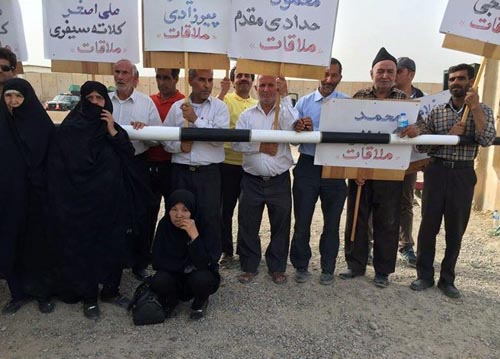
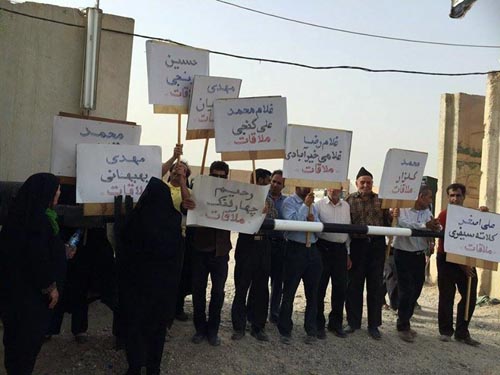
The MKO ringleaders have prevented members of the group from meeting their relatives in a bid to prevent their defection.

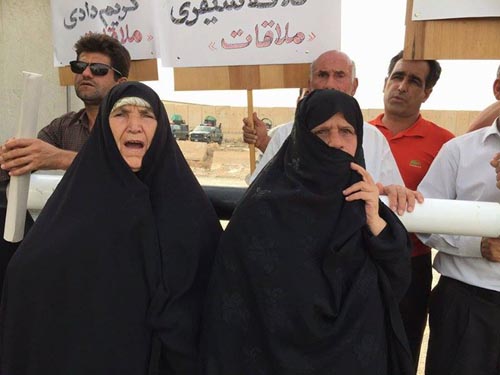
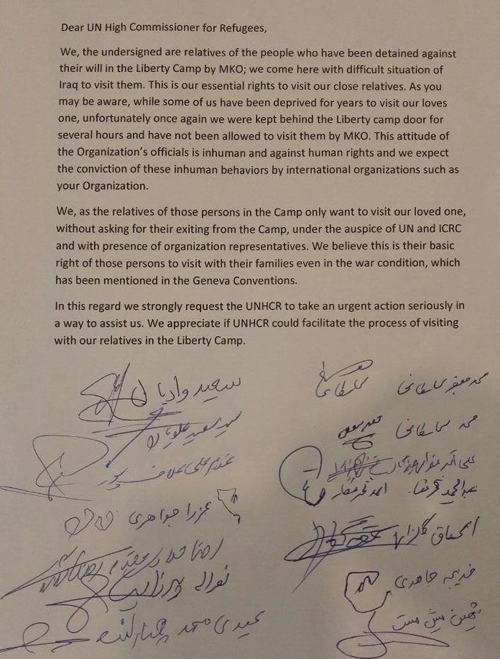
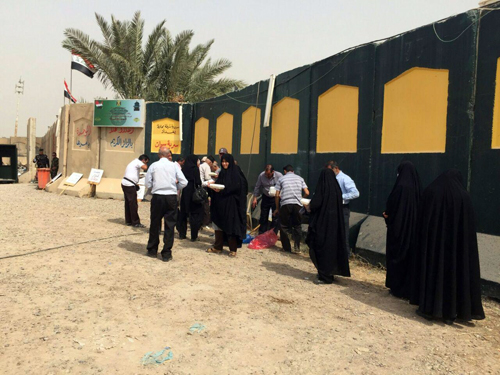
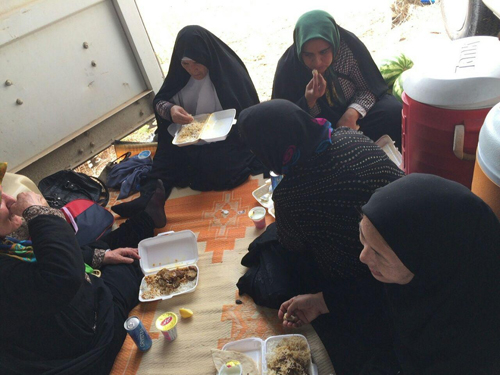
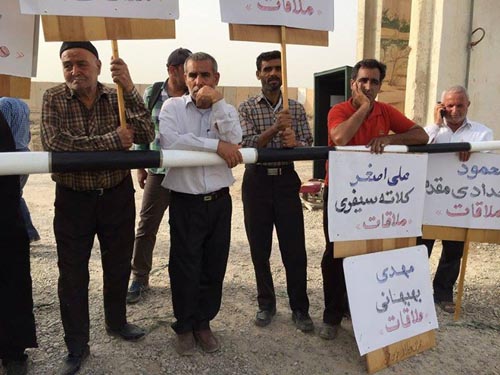
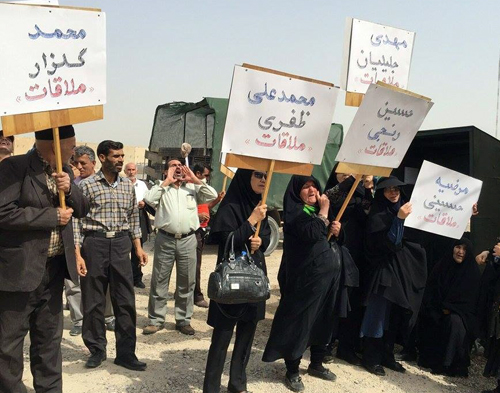
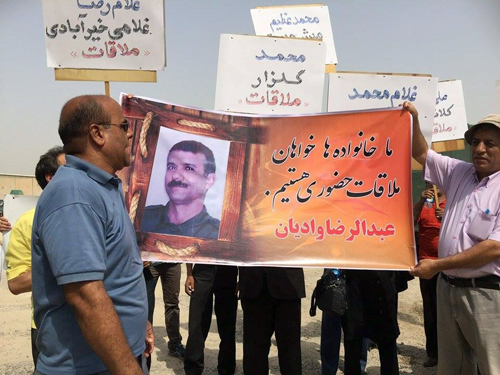
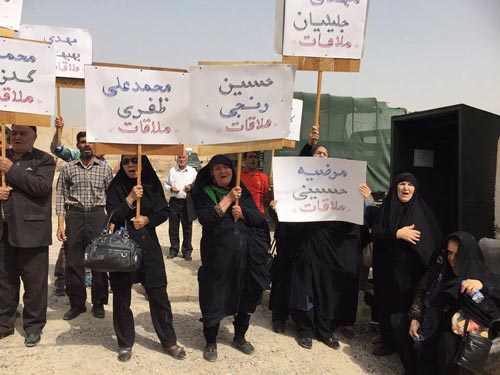
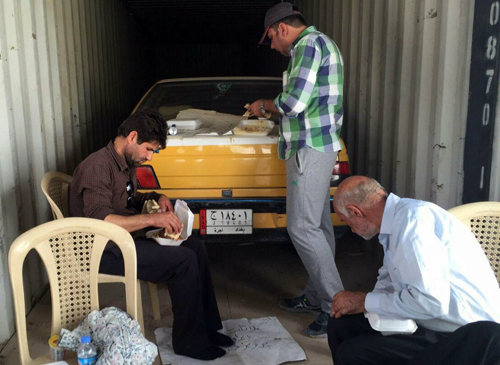
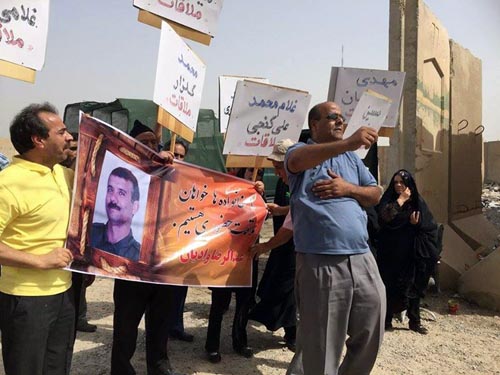
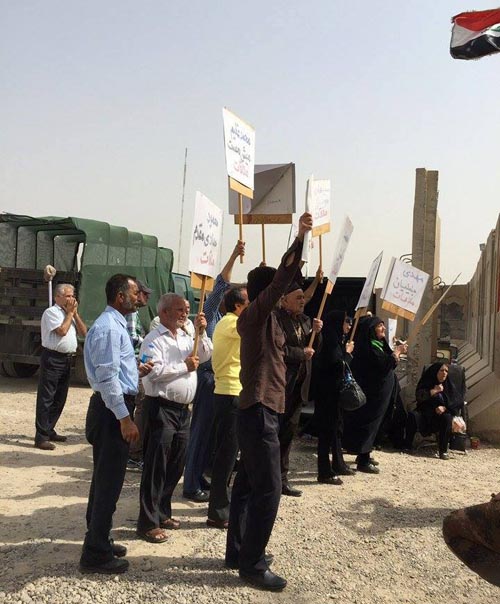
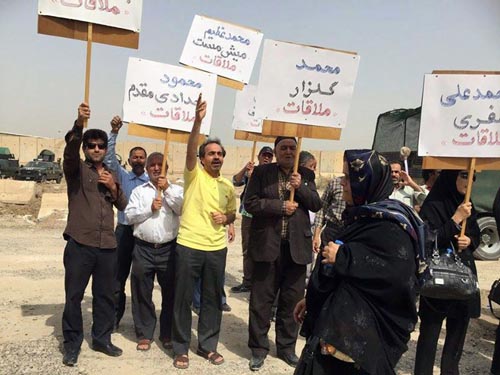
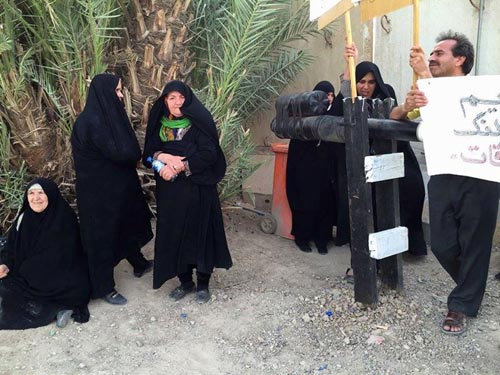
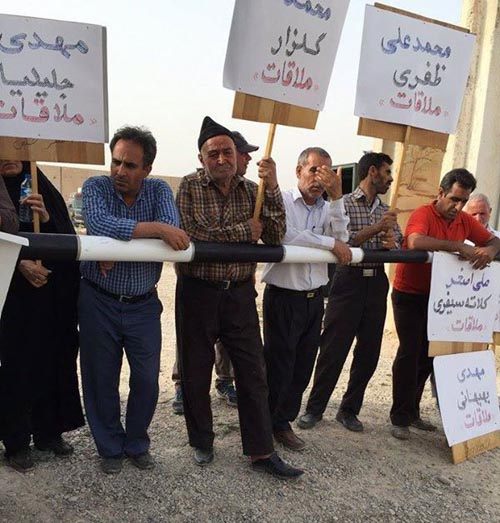
Several family members of Camp Liberty residents have established a permanent picket in front of the Camp entrance since June. The families told Iraq’s Minister of Human Rights they would be satisfied even to see their loved ones at a distance of 10 metres and then they will leave. The Minister did intervene on their behalf and the MKO have again rejected it, Sahar Family Foundation reported.

Despite the group leader’s efforts to keep members behind the bars of the Cult, about 17 Camp Liberty residents could liberate themselves during last year.

Besides, in Albania about 120 members parted away with the group. The increased number of defections in Albania has caused the MKO leaders to hold the last group of transferees “in quarantine “, according to ex-members website reports.

June 29, 2015 0 comments
FacebookTwitterPinterestWhatsappTelegramSkypeEmail
Iran Interlink Weekly Digest

Iran Interlink Weekly Digest – 102

++ Two weeks after the Villepinte event the Farsi Commentariat is still writing about it. The common theme is that Israel has paid for this in order to put an Iranian face on their anti-Iran agenda. But, as each year passes it becomes clearer and clearer it’s a waste of money, and Israel could spend the money better elsewhere.

++ After being hospitalised by MEK thugs in Auvers-sur-Oise, many people have written in support of Mostafa Mohammadi and have criticised the French government for allowing this to happen. Mostafa has written a letter directed at Rajavi saying “My lawyer, who accompanied me, suggested I come to make a last request before taking legal action. He explained this is a legal procedure to give the person one last chance to respond. That was your response. You beat up me, my daughter Hooriyeh and the lawyer for no apparent reason. This shows your true face. Somayeh Mohammadi’s mother, Mahboubeh Hamzeh Mohammadi has written an open letter to her daughter saying “I know this will never reach her because they won’t allow it, but I had to write it”. The letter is titled, ‘Dear Somayeh, they beat Hooriyeh nearly to death and your father is paying the price of love with his life’.

++ This week, the family of former MEK member Karim Gholami found him again after 25 years. The family recognised Karim from his writing on the internet along with his picture. He had published this to find his family. It worked and they are all now reunited.

++ Massoud Rajavi’s response to the discovery of 170 corpses of Iranian divers from the 1980-88 war who had been handcuffed and buried alive, was revealing. Commenting on special ceremony in Iran to bury them as martyrs because they were buried alive, Rajavi ridiculed it and called it the Carnival of Bones. Many people commented that “he wants to make hatred, as though the people of Iran don’t hate him enough already”. Nader Naderi published his recollections of the time this happened – it was an operation called Karbala 4. Naderi was there and says that at that time Rajavi was at the forefront of the situation and had been working against Iran’s forces for Saddam Hussein giving intelligence which led to the defeat of Iran in this operation. He was complicit in this mass murder and that these 170 divers were buried alive. It is not, therefore, surprising that this is his reaction.

++ Ghorban Ali Hossein Nejad published an open letter titled, ‘A word with the critics of Rajavi’. Ghorban Ali names every one of the internal critics of Rajavi and the MEK who has recently spoken out – Iraj Mesdaghi, Karim Ghassim, Mohammad Reza Rowhani, Esmail Vafa Yaghmai and Mohammad Jafaari aka Hamneshin Bahar. He says, “I know you, and you know me, and it is mind boggling for me why you don’t react to what happened to Mostafa Mohamamdi and his daughter. This happened right before your eyes but you don’t react. Why criticise Rajavi at all in that case.”

In English:

++ Press TV – Citing Western support for the terrorist Mojahedin Khalq organisation, Iran “rejected the anti-Iran accusations in the annual global terrorism report by the US Department of State, censuring Washington for adopting a double-standard approach in dealing with the issue of terrorism. Iranian Foreign Ministry Spokeswoman Marzieh Afkham said a politically-motivated stance on terrorism further complicates the issue. “The growing and complicated scourge of terrorism is rooted in applying double standards and a political approach toward this evil and inhumane phenomenon,” Afkham said.”

++ Nejat Bloggers reported that a large number of former MEK members staged a picket in Paris at the same time as Villepinte to bring to the attention of French public opinion the actions of the cult in their country. “They declared their support for about 2000 people who are kept as hostages by the group in Camp Liberty, Iraq. They offered sympathy to families of Liberty residents who are picketing in front of the camp but have no access to their loved ones imprisoned in the camp. As former members of the cult of Rajavi stated in their slogans, the Villepinte masquerade of the NCR/MKO elements has just one goal: maintaining the group victims in Iraqi critical situation in order to prevent the cult from collapse.”

++ Nejat Society, Albania – Siavosh Rastar, nickname Nader Afshar, spent 14 years with the MKO from 2001 to 2015. He was in Camp Ashraf and Camp Liberty, Iraq before his relocation to Tirana, Albania. He announced his defection from the MEK in a statement protesting Massoud Rajavi’s undemocratic approach towards the group members and their families. “In my idea, the only thing that never exists in Massoud Rajavi’s organization is freedom of speech and thought. In brief, absolute suppression and dictatorship rule it, “Rastar writes. If anyone criticizes Massoud Rajavi, he would be treated violently in various sessions held for this aim…” Rastar was denied life-saving medicine in Iraq by the MEK and was transferred to Albania to die. Once there he asked the UNHCR for help to escape the MEK. Even then the MEK continued to harass him. “They put pressure on my family. They called my wife and claimed that I got married and have children in Albania, they also told her that I am drug-addicted,’’ he writes.

++ Nejat Society Paris – Nader Keshtkar spoke about his disassociation from the MKO during an interview at the defectors’ rally in Paris to protest the MKO’s propaganda show in Villepinte, on June 13th. “I attended this action, together with my friends in order to officially state my separation from the MKO. Now that I am in the free world, liberated from the prejudiced ideas, dogmatism and Machiavellian thoughts of the MKO, I feel relieved,” he said. He continued, “The ambitions, treasonous activities and lack of courage of Massoud Rajavi prevented him from reviewing his strategic mistakes and that led him and the MKO to turn into the operative agent of Israel and Saudi Arabia.”

++ An article by Dutch journalist Judit Neurink based in Erbil and published in Rudaw warns of the MEK plans to build a new terrorist training camp in Tirana, Albania to which it will eventually transfer up to 2000 residents currently based in Camp Liberty near Baghdad. Quoting Massoud Khodabandeh the article said, “The MKO will make a new enclave there that is outside the law, where they will be rearmed and invite people in for training”. Part of the deal arranged by Clinton was the removal of MKO from the US list of terrorist organisations. Now, with politics changing after the nuclear deal between Iran and the US, the MKO is scrambling to find new friends, according to Khodabandeh. He said there have been reports that the MKO even offered the Saudis to help fight against the Shiites in Yemen. Khodabandeh said that while various routes to Turkey, Syria and Iraq are under scrutiny, “terrorist commanders from any mercenary group can slip beneath the radar and seek training and logistical support in Tirana… What better location to establish a clandestine terrorist training camp than in Albania? It is in Europe, but not in the EU and therefore not so open to scrutiny by the international community. It is a Muslim country but is also notorious for corruption and mafia-like gangs,” he said. “The message is [that] the MKO have branched out and are open to do business with any terrorist group.”

++ Daniel Larison’s article in The American Conservative criticised ‘The Washington Times’ Pro-MEK Propaganda’. Pointing out that the MEK has no support in any Iranian community, Larison said not only had “many current and former American politicians, officials, and retired military officers disgraced themselves with their cheerleading for the totalitarian cult but The Washington Times has now reproduced the speeches the MEK’s American supporters gave in a special “regime change” report, which also includes the remarks made by the cult’s leader, Maryam Rajavi. The remarks, he said, “went from the merely ridiculous … to the truly delusional… It should go without saying that anyone that participated in the MEK’s latest rally should never be taken seriously on any issue relating to Iran… If this were any other organization with a similar history of terrorism and collusion with Saddam Hussein, it is unlikely any of these people would be caught dead at such a gathering, but because it seeks regime change in Iran these hawks are only too glad to lend their support.”

++ Iran Interlink summarised two Arabic articles published by Iraqi newspaper Alsabah Aljadid which reveal the Mojahedin Khalq’s support for Daesh with which it finds common cause in attacking Iran. And the MEK’s plans to replace its former terrorist training camps in Iraq with a new camp in Albania. This base would be open to any terrorist group for military training and planning and preparation for terrorist operations in Iran and abroad according to what is required.

June 26 2015

June 29, 2015 0 comments
FacebookTwitterPinterestWhatsappTelegramSkypeEmail
Mujahedin Khalq Organization as a terrorist group

MKO violence toward a father’s legal request to meet his daughter

Mostafa Mohammadi has been trying to meet with his long lost daughter Somayeh for many years now. He has travelled to Iraq on several occasions only to be turned away by the cruel cult which holds his daughter hostage. Now Mostafa has taken his cause right to the door of the cult’s headquarters in France.

On Friday 12 June 2015, Mostafa visited Maryam Rajavi’s residence in Auvers sur Oise, the terrorist cult’s secretive enclave just outside Paris. He was accompanied by his other daughter Hooriyeh. Mostafa had been advised by his lawyer, who accompanied them on the visit, to make one last legally documented request directly to the leader of the group which is holding Somayeh. Only then, the lawyer advised, should Mostafa could go ahead with a legal complaint against Maryam Rajavi in France where she resides.

The Mojahedin-e Khalq (MEK) reaction was shocking. Instead of answering the door and listening to the legal request, and answering either negatively or in the affirmative, the cult leader Maryam Rajavi simply sent out a gang of thugs to beat him up along with Hooriyeh and the lawyer.

Although police intervened to prevent more serious injury an ambulance was called and Mostafa was hospitalised overnight.

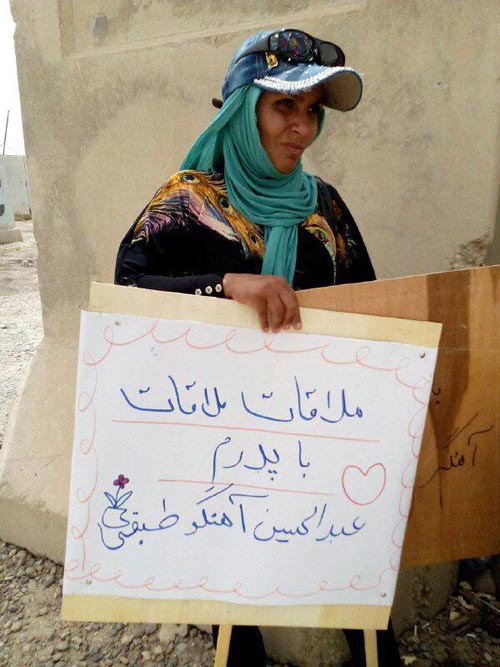
MKO violence toward a fathers legal request to meet his daughter

June 29, 2015 0 comments
FacebookTwitterPinterestWhatsappTelegramSkypeEmail
Newer Posts
Older Posts

Recent Posts

  • The black box of the torture camps of the MEK

    December 24, 2025
  • Pregnancy was taboo in the MEK

    December 22, 2025
  • MEPs who lack awareness about the MEK’s nature

    December 20, 2025
  • Why did Massoud Rajavi enforce divorces in the MEK?

    December 15, 2025
  • Massoud Rajavi and widespread sexual abuse of female members

    December 10, 2025
  • Facebook
  • Twitter
  • Instagram
  • Youtube

© 2003 - 2025 NEJAT Society . All Rights Reserved. NejatNGO.org


Back To Top
Nejat Society
  • Home
  • Articles
  • Media
    • Cartoons
    • NewsPics
    • Photo Gallery
    • Videos
  • Publications
    • Books
    • Nejat NewsLetter
    • Pars Brief
  • About Us
  • Contact us
  • Editions
    • عربي
    • فارسی
    • Shqip