Nejat Society
  • Home
  • Articles
  • Media
    • Cartoons
    • NewsPics
    • Photo Gallery
    • Videos
  • Publications
    • Books
    • Nejat NewsLetter
    • Pars Brief
  • About Us
  • Contact us
  • Editions
    • عربي
    • فارسی
    • Shqip
Nejat Society
Nejat Society
  • Home
  • Articles
  • Media
    • Cartoons
    • NewsPics
    • Photo Gallery
    • Videos
  • Publications
    • Books
    • Nejat NewsLetter
    • Pars Brief
  • About Us
  • Contact us
  • Editions
    • عربي
    • فارسی
    • Shqip
© 2003 - 2024 NEJAT Society. nejatngo.org
Former members of the MEK

Pictorial – Mr. Dashtestani met MKO hostages’ families

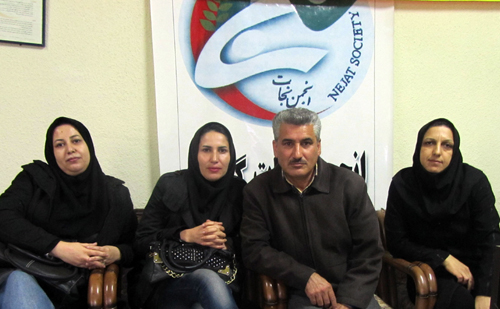
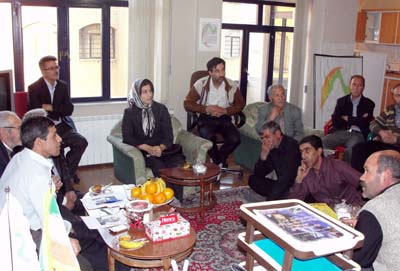
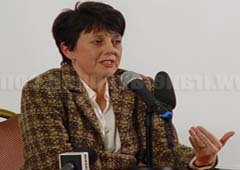
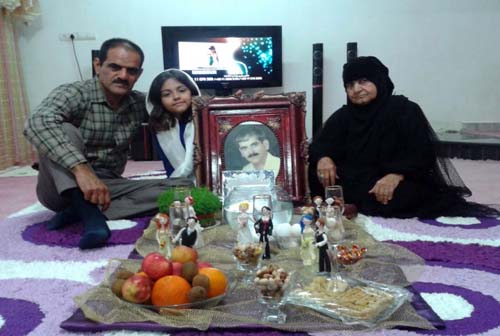
Mr. Dashtestani ;ex-member of the destructive cult of MKO who is now a member of NejatNGO Fars Province visited the families of MKO hostages of West Azarbayjan  at the NejatNGO office.

He clarified the ways the families could help their beloved ones release themselves from the pawns of the cult.
Mr. Dashtestani met MKO hostages' families

April 16, 2015 0 comments
FacebookTwitterPinterestWhatsappTelegramSkypeEmail
The cult of Rajavi

Disputes in the NCRI escalate to a higher extent

Recently I have received many letters and messages from members and supporters of the Mojahedin-e Khalq Organization (MKO) and the National Council of Resistance (NCR), in particular from France, Iraq and Albania. These communiations indicate that the long running disputes between the members and the officials inside the Council have escalated to an even greater extent so that this has become the main concern of the leaders.
Apparently when Iraj Mesdaghi issued his first report about the unrealistic policies of the NCRI and directly questioned the cult leader Massoud Rajavi, and consequently Abdol Karim Qasim and Mohammad Reza Rouhani, two prominent members of the NCR, resigned as a sign of protest and revealed many facts about the internal affairs of the Council, and Iraj Mesdaqi wrote his second report on the anniversary of the first one, and then the argument of Esmail Yaghmai with the organization erupted over financial scandals, an unusual atmosphere was created inside the NCR. This resulted in several sessions being held one after another over a short time, even though no session had been held for a long period.

The question “where is Massoud Rajavi?” continuously asked by the members and supporters has really taken the breath of the leaders. Of course the officials have no response to give but to insult and accuse the person asking such a question. The members of the NCR openly say that this a typical trick used by Cult leaders to sanctify themselves.

After all this, the authorities of the NCRI instructed the members to denounce their former colleagues; those who left the Council and criticized its internal undemocratic relations. As a result, articles in this regard were published by the likes of Mansur Qadarkhah and Parviz Khazai and others. But the majority refused to take part and did not accept to betray their old friends and repeat the MKO’s fabricated lies about them. Of course they had their own excuses. Some put it this way, that it would be better that they keep their contact with them in order to keep the way back to the NCR open for them. Some explained that they have family relationships and old friendship so they would be ashamed to turn against them. Some of course being under pressure by the MKO leaders did write something without mentioning any names just to comply with their demands.

Reports indicate that the NCR members openly bring their disputes for discussion to the sessions and complain about the lack of the minimum of democratic rights when decisions are made. The articles that the members write for the websites and publications are edited by NCR officials before being published and sometimes their contents are totally altered.

The NCR members argue that although the MKO members have accepted a super military discipline and they must accept orders without question, this obviously should not be the case for the NCRI members.

The present members of the NCRI discuss the term “national” in the National Council of Resistance and say that this means that the Council must contain all tendencies of the Iranian people, but in reality it only represents the MKO and its policies and ideas and only obeys the instructions of Massoud Rajavi. The same argument is put for the MKO satellite television program which is called “National TV” but only reflects the ideas of the Rajavi cult.

They also argue that the term “council” means that all decisions must be taken collectively after adequate discussion; otherwise it has no difference from the Mojahedin-e Khalq Organization. They say that from the beginning it was accepted that the policies of the Council be criticized and opposed by the members, but now anyone doing so is accused of being at the disposal of the Iranian regime. This trick is constantly used to silence the discontented members, though the critics continue with their disputes. In many Western countries the members and supporters of the NCR talk about these issues openly and bluntly.

One other matter the members claim is that in recent years many members left the NCRI but no one was recruited, and all those proposed to become members were opposed by the MKO leaders who hold hegemony over the Council. They ask firstly, why they do not allow more dignitaries and organizations to become members and secondly, why the opinions of the present members, when they are not in agreement with the MKO policies, are immediately ruled out and suppressed.

We can deduct from the letters and messages received from within the NCRI, that we must expect more dispatches from the Council in the near future which will reveal more facts about the undemocratic internal relations of the NCRI.

Iran interlink,

April 15, 2015 0 comments
FacebookTwitterPinterestWhatsappTelegramSkypeEmail
Mujahedin Khalq Organization's Propaganda System

Open Letter to Nancy Pelosi: Don’t allow the MEK to hijack your name

Dear Ms Pelosi,

Following the long awaited announcement in Lausanne on the Iran nuclear agreement, your strong opposition to Senator Corker’s legislation has been welcomed by peaceable Iranians and Americans who, like you, support President Obama’s push to resolve the nuclear issue through diplomatic means.

It will come as some surprise to you therefore, that a group of Iranian war-mongering regime change proponents, the terrorist Mojahedin Khalq (MEK), claim to have your support.

In an astounding act of hubris, the MEK has not only appropriated your good name and attached it to a stance which is in contradiction to what you have always stated, but the group has also apparently fooled many of your opponents in Congress whose presence in this event has also been misrepresented as specific support for the MEK.

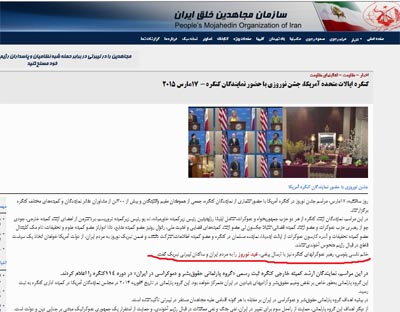
The MEK’s website Iran News Online reported as a news item a celebration held in Congress on March 17 to mark the Iranian New Year or Norouz. According to this news item, the event was attended by several advocates and lobbyists of the MEK – those named include Ileana Ros-Lehtinen, Ted Poe and Jackson Lee, all of whom advocate the MEK’s regime change stance. As well as around 300 Congressional staff, many, but not all, of the attendees have been Neoconservatives whose anti-diplomacy stance is overtly expressed by people like John Bolton who so recently exhorted America to ‘bomb Iran’.

This is not company in which we would expect to find your name, let alone your endorsement. Yet, the duplicity and deceit and treachery of the Mojahedin is so bold as to allow them to do exactly this.

In this reporting of the event in Iran News Online – written in Farsi, not in English – the MEK have quoted a letter purported to have been written by yourself especially for the event on the occasion of the Iranian New Year. This letter states simply that you “congratulate the people of Iran on their New Year”.

This of course is a natural and commendable expression of support. But the context in which this letter is used makes it appear as though you are in agreement with the other participants. The event was attended by Sona Samsami, a long-term MEK member who represents the MEK’s front organization the National Council of Resistance of Iran (NCRI) in the United States. This group promotes itself as the agent of violent regime change in Iran – even though it has no support among Iranians and no capacity to undertake any such activity.

The MEK have misreported and manipulated this event so that it looks as though it has been held specifically to promote the MEK and its regime change agenda. I am sure that most of the attendees had no such awareness or intention.

Screenshot from MEK site

But this is not all. The MEK’s public site Mojahedin.org actually puts words into your mouth as though you were at the event and reports that Nancy Pelosi “Congratulates the people of Iran and the residents of Camp Liberty”. This, of course, is preposterous. These residents, the old and sick remnants of the MEK’s army, are awaiting expulsion from Camp Liberty and Iraq because of the MEK’s thirty year history of terrorism and treachery in that country. The UN mandate is to find them third countries to be transferred to for their safety. (Unfortunately this process has stalled because the MEK leader Massoud Rajavi refuses to cooperate and is holding the residents incommunicado inside Camp Liberty without any access to their families or the outside world. And in addition, most countries shun the MEK as a terrorist outfit and are very reluctant to accept them even as individual refugees.)

The report also quotes you from 2007 when you mentioned the situation of these Iranians in Iraq and said ‘something must be done about them’ in a way to sound as though you supported the MEK. But it is simply amazing that the MEK could think anybody except their own brainwashed members would believe you support such a group except on humanitarian grounds, in which case your support would take a very different form.

Screen shot from MEK site

I write to you as an expert on the MEK who has been campaigning for over a decade to help free the residents of Camp Ashraf and Camp Liberty, and to expose the lies and deceit of the MEK’s leaders Massoud and Maryam Rajavi. I would urge you to investigate the matter of your name and reputation being hijacked by this group. But further, I would urge you also to alert your colleagues in Congress – including those who are your political opponents – to the duplicitous methods of this group. The MEK’s unchallenged interference in the political process of America is not only very much against your country’s national interests, it is a slap in the face of those peaceful Iranians and Americans who, like yourself and President Obama have invested so much time and energy into allowing diplomacy to work.

About Anne Khodabandeh (Singleton):

 Middle East Strategy Consultants,

 http://www.mesconsult.com

 Autor of “Saddam’s Private Army” and “The life of Camp Ashraf”

 http://www.camp-ashraf.com

April 15, 2015 0 comments
FacebookTwitterPinterestWhatsappTelegramSkypeEmail
Former members of the MEK

Pictorial- Mr. Mansour Shaabani wishes to back to his homeland

Mr. Jahangir Shaabani whose brother; Mansour- transferred to Albania from Camp Liberty visited Nejat society Gilan Branch.

Mr. Mansour Shaabani was prisoner of Iran- Iraq War. Then the MKO Cult mercenaries tricked him into joining the group. From then on he has been far from his family and homeland.

Mansour’s brother – Mr. Jahangir Shaabani says:” during the last years we several times traveled to Iraq to visit our brother. However not only didn’t we succeed to visit Mansour, but also the Cult leaders insulted and offended us. “

Anyway, fortunately on March 2014 my brother transferred to Albania and could contact us. Mansour was so excited and happily said that he was calling us from Tirana far from the cultish severe controls and bars. He said that he missed us a lot and wished to visit us as soon as possible.

Now we are regularly have contact. We are trying to pave the way for his repatriation.

Mr. Mansour Shaabani wishes to back to his homeland

April 14, 2015 0 comments
FacebookTwitterPinterestWhatsappTelegramSkypeEmail
Mujahedin Khalq; A proxy force

Concerns of False Prophets after Nuclear Deal

Constructive negotiations between Iran and the six world powers finally resulted in an agreement on Wednesday March 31 despite deep concern expressed by Israel, US hardliners, and the enemy of their enemy, the Mujahedin Khalq Organization (the MKO/ MEK).

Such a common stance between the MKO, Zionists, and American hardliners is justified by the long record of cooperation amongst these three parties whose reactions to the nuclear deal shared on main term: Concern.

Why the alliance between Zionist regime, war mongers and the MKO is so deep?

 At the first place that’s money that ”talks”. A large number of US Congressmen and former high profiles are paid big amounts of money by the MKO to back up the group in the US government.  Former US ambassador to at the UN, John Bolton has been a vocal cheerleader of the MKO. “He has been consistently misrepresenting a totalitarian cult as a “democratic” Iranian opposition group,” according to Daniel Larison of the American Conservative. “When Bolton or someone else with this record talks about “vigorous American support for Iran’s opposition,” we can be fairly sure that he means that the U.S. should be backing the MEK in its quest for seizing power in Iran.” [1]

While the nuclear negotiations between the U.S. and Iran was in its crucial phase, the New York Times published an op-ed by John Bolton titled “To Stop Iran’s Bomb, Bomb Iran.”[2] As it is widely reported, Bolton has received enormous amounts of money just for speaking on behalf the MKO and is seeking to overthrow the Islamic Republic.

Jon Schwarz of The Intercept who analyzed former UN ambassador’s “factual errors” in his Op-ed, asserted,” Bolton did not respond to questions about how much he has been paid by the MEK. However, the Financial Times reported in 2011 that speakers such as Bolton received from $20,000 to $100,000 per speech, with four-speech packages being “common.” [3]

“This confirms Bolton’s extremely poor judgment and underscores how truly crazy his overall argument for war with Iran is. It also reminds us how oblivious Iran hawks such as Bolton are to the political realities inside Iran,” Daniel Larison suggests. [4]

Furthermore, John Bolton is a senior fellow at the neoconservative American Enterprise Institute and the chairman of the Gatestone Institute, a right-wing "pro-Israel" activist group that has been accused of fomenting anti-Muslim sentiment. He is a steadfast supporter of the right-wing Israeli government of Prime Minister Benjamin Netanyahu. Exactly like the MKO and its Israeli ally Netanyahou, he is a vocal opponent of President Obama’s diplomatic approach regarding Iran.

  About the MKO-Israeli alliance it is worth mentioning that terrorist attacks against the Iranian nuclear scientists that ended in with the death of five of them was actually done in collaboration with a team of MKO operatives who were all trained by Mossad Intelligence Service. “Deadly attacks on Iranian nuclear scientists are being carried out by an Iranian dissident group that is financed, trained and armed by Israel’s secret service, “NBC News cited from U.S. officials. [5]

John Bolton is hardly alone in his Zionist-MKO stance against Islamic Republic. Democrat Senator Robert Menendez has been another voiced figure in the mainstream media for his anti-diplomacy, pro-MKO and pro-Israel stances. New Jersey Sen. Bob Menendez is among those who back congressional quest to vote for more sanctions against Iran. He shares his foreign policy ideas with republicans. Why?

“Menendez received more campaign contributions from the MEK and its allies than any other member of Congress,” write Ali Gharib of the Nation. Gharib describes Menendez’s efforts to derail diplomacy with Iran:

 “The constant efforts, in cahoots with Republicans, to constrain the Obama administration’s diplomacy with Iran, for instance, have divided Democrats bitterly. In January of 2014, Menendez, along with rapacious anti-Iran Senator Mark Kirk (Ill.), introduced a new sanctions bill backed by the powerful anti-diplomacy American Israel Public Affairs Committee (AIPAC). Critics said the bill would kill the interim agreement struck by Iran and world powers—the framework that just today bore fruit as negotiations toward a comprehensive pact advanced—leading to widespread opposition among the Democratic Senate leadership. When liberal grassroots groups rallied enough Democrats to sustain a promised presidential veto, the bill failed to come to a vote.

“This year, Menendez introduced another sanctions measure with Kirk, but it too has so far stalled without the necessary Democratic support. He also sponsored a bill with Republican Foreign Relations Chair Bob Corker to empower Congress to vote on any deal with Iran—earning another veto threat from Obama. And working with Republicans came back to bite Menendez when Majority Leader Mitch McConnell couldn’t restrain his partisan impulses and sought to bring the bill to a quick vote; even Menendez himself had to object.”[6]

As Jim Lobe declared in Loblog, “Sen. Robert Menendez (D-NJ) was the top congressional recipient of “pro-Israel” campaign funding in the 2012 election cycle, the last time he ran for office, according to the Center for Responsive Politics.”

Lobe quotes from the recent investigated article of Ali Gharib and Eli Clifton in The Intercept that” Menendez has been also a top recipient of campaign funding from donors with ties to the Mojahedin-e Khalq (MeK), the cultish group that was until recently included on the State Department’s terrorism list.” [7]

Menendez accepted more than $25,000 from donors with ties to the MEK, making him the largest recipient from 2012, when the MeK was delisted that September, to the present. That’s not much compared to the well over $300,000 Menendez received from pro-Israel groups during the 2012 election cycle, but it was more than twice what was provided to the next biggest recipients, Sen. John McCain (R-AZ) and Rep. Dana Rohrabacher (R-CA). [8]

It might be crystal clear now, why the three groups oppose any deal with the Iranian Government. Once the historical statement of agreement was published by the EU high representative and Iranian Foreign Minister, the disappointed opponents of the deal particularly the MKO launched its propaganda to convince its limited audience that a deal with Iran is bad in any case.

The MKO and its American and Israeli supporters are false prophets.  They all have “an interest in creating a panic about Iran’s nuclear capabilities”.

Mazda Parsi

Sources:

[1]Larison, Daniel, Bolton and the MEK, the American Conservative, March 27, 2015

[2]Bolton, John, To Stop Iran’s Bomb, Bomb Iran, The New York Times, March 26, 2015

[3] Schwarz, Jon, The Factual Errors in John Bolton’s “Bomb Iran!” Op-Ed in the New York Times — and Why You Should Care, The Intercept, April 4, 2015

[4] Larison, Daniel, Bolton and the MEK, the American Conservative, March 27, 2015

[5] Engel, Richard & Windrem, Robert, Israel teams with terror group to kill Iran’s nuclear scientists, U.S. officials tell NBC News, NBC News, February 9, 2015

[6] Gharib, Ali, Good Riddance to Bob Menendez?, The Nation, April 06 2015  

[7] Lobe, Jim, Sen. Menendez Top Recipient of MEK-Related Campaign Funding, Lobelog, February 27, 2015

[8]Gharib, Ali & Clifton, Eli, Long March of the Yellow Jackets: How a One-Time Terrorist Group Prevailed on Capitol Hill, The Intercept, February 26, 2015

April 13, 2015 0 comments
FacebookTwitterPinterestWhatsappTelegramSkypeEmail
Mujahedin Khalq; A proxy force

When Debating Iran’s Nuclear Program, Sort Fact from Fiction

American policy makers have made it a point, expressed consistently over time, to emphasize that intelligence estimates do not, in and of themselves, constitute policy decisions, and are useful only in so far as they inform policy makers who then make the actual decisions. The logic of this argument allows for the notion of detached decision-making on the part of the policy makers, and includes a built-in premise that the estimates they use are constructed in such a manner as to allow for a wide range of policy options. This model of decision-making works well on paper, and within the realm of academic theory, but in the harsh reality of post-9/11 America, where overhyped information is further exaggerated through a relentless 24-hour news cycle that encourages simplicity to the point of intellectual dishonesty, it is hard to imagine a scenario where such a pattern of informed, deliberate decision-making has, or could, occur.
This is especially true with regard to Iran’s alleged nuclear weapons program, an issue that has been projected front and center to the American public as a result of the ongoing debate over the viability of the recently concluded nuclear framework agreement. The technical aspects of that agreement will be the subject of intense negotiations scheduled to take place through June 30, when a final accord is expected to be reached. The details of any such accord will provide the grist for expert analysis by those equipped to engage in such. For the most part, the American public is not. However, the role of the American public is critical in determining the level of political support generated for any nuclear agreement with Iran, especially given the contentious debate ongoing between Congress and the White House over this issue. While the technical minutia of nuclear enrichment and the means to effectively monitor such may elude most Americans, the concerns over a nuclear-armed Iran do not. A meaningful debate and dialogue over Iran’s nuclear program is essential in a democracy such as the United States, but it is likewise essential that any such discussion be done responsibly, and be based upon facts, not fiction.

America’s decade-long experience in the post-9/11 Middle East has conditioned the American public, and by extension the American body politic, to embrace hyperbole and sensationalism over fact and nuance. In doing so, decisions are being made which do not reflect reality, and as such not only fail to rectify the situation at hand, but more often than not, exacerbate it. America’s experience with Iran stands as a clear case in point, where analysts have failed to accurately depict the true nature of Iran’s military capability, among other issues, and policy makers have, as a result, failed to formulate policies which deal with the issues arising from decades of American-Iranian animosity fueled by post-9/11 emotions, which continue to run high to this day. Getting it wrong on Iran has become an American institution, one which may have far-reaching detrimental consequences.

The level of analytic deficiency which is present in the current American assessment of Iran mirrors the now-disgraced work of the neo-conservative “Team B,” created to second-guess CIA estimates of Soviet military power in the late 1970′s. The CIA Director at the time, George H. W. Bush, noted that the work of “Team B” “…lends itself for purposes other than estimative accuracy.” This is perhaps the most sympathetic spin one could attach to the present-day analysis and assessments conducted by the US Government regarding both Iran’s military threat (defined in terms of nuclear weapons and ballistic missile capability), and system of government (described as moving a blend of theocratic-military dictatorship). One is loath to ascribe a too-rosy characteristic to either Iranian military capability or its system of government. However, the present American assessment is so poorly supported by fact-based analysis that it borders on the dangerously ridiculous.

The United States has, for the past decade, labeled Iran as a nation pursuing nuclear weapons capability. This conclusion is based upon internal intelligence estimates, as well as the work of the International Atomic Energy Agency (IAEA), mandated by the United Nations Security Council to monitor Iran’s nuclear activities. The US intelligence estimates are inconclusive and contentious, thereby placing an even greater emphasis on the conclusions and analysis of the IAEA on ascertaining Iran’s nuclear ambition. Much of the work of the IAEA to date has centered on Iran’s effort to enrich uranium, a program Iran says is for peaceful nuclear energy, and the IAEA says might have application in a yet-to-be-discovered nuclear weapons program. From a technical standpoint, Iran’s enrichment program represents an analytical black hole, where nothing can be discerned that would permit a finding that would certify Iran as a nation pursuing nuclear weapons. As such, one is left disassembling a complex web of conspiracy theories put forward by the IAEA and its supporters as fact, and yet still remain largely unsubstantiated.

The IAEA derives its concerns over “Possible military dimensions” of Iran’s nuclear program not from any new intelligence information or data collected by its personnel inside Iran, but rather a re-packaging of data the IAEA had previously considered too questionable in terms of its veracity for use in formulating official positions. The majority of this data is directly linked to a laptop computer, or more precisely, the contents of a laptop computer, presented to the IAEA by the United States back in 2005, and said to contain material sourced from inside Iran which related to ongoing Iranian efforts to develop a nuclear weapon. The laptop computer itself was not of Iranian origin, but rather served as the vehicle for which the United States had assembled a significant body of fragmentary data, most, if not all, of which was sourced to an Iranian opposition group — the Mujahedin-e Khalq, or MEK — which has a mixed record with regard to its past reporting on Iran’s nuclear program.

It was the MEK which disclosed Iran’s nuclear enrichment program at Natanz back in 2002, resulting in the IAEA’s ongoing investigations in Iran today. But subsequent reports from the MEK about secret nuclear weapons facilities located on sensitive military installations had proven to be wrong. Most of the data on the laptop computer was not in the form of original documentation, but rather text documents prepared by the CIA from undisclosed sources. And the actual documentation that was contained on the laptop turned out to be questionable in nature, either showing obvious signs of alteration, or inconsistent in format from legitimate Iranian documents of a similar nature.

To overcome the obvious deficiencies associated with the laptop documentation, the United States took the lead in assembling intelligence information from its own sources and those of other nations, and used this new data to repackage the laptop material in a manner which made it impossible for the IAEA to share the material with Iran in an effort to compel cooperation. Iran had been able to provide strong refutation of the limited amount of data the IAEA had initially been allowed to share from the laptop computer, significantly watering down the impact of the allegations made. With the new intelligence material packaged in a manner which precluded any sharing of information with Iran, the IAEA demanded Iranian cooperation, most of which went beyond Iran’s obligations under the NPT and its existing safeguards agreements. Iran’s refusal to cooperate with what it calls “baseless” allegations lies at the center of the case the IAEA is currently making regarding “possible military dimensions” to Iran’s nuclear program.

In addition to the issues created by a process which requires Iran to prove a negative (i.e., making an assertion void of demonstrable fact, then demanding that Iran prove the assertion false), there are two additional problems which dilute information used by the IAEA to bolster its case about “possible military dimensions” to the Iranian program. The first is the timeliness of the information being used. Most of the data is sourced to the 2004 timeframe. As the IAEA itself notes, the passage of time makes verification of this data increasingly difficult, even if Iran were to provide the level of cooperation being demanded by the IAEA. The other issue lies in the actual nature of the allegations themselves. Most of these allegations fail a certain logic test, such as those which claim an Iranian program to develop neutron initiators for a military weapon, without explaining why the nuclear material which would be required to conduct such experiments continues to be fully accounted for, or why no physical evidence of such experiments (such as trace elements of nuclear residue) has been detected by the sensitive inspection means used by the IAEA.

Allegations about a nuclear weapons design capable of producing a weapon that could be delivered by a ballistic missile likewise fail the logic test, since nowhere in the cited documentation in the possession of the IAEA is there any mention of a nuclear warhead or nuclear weapons design, but rather what is claimed to be ballistic missile re-entry vehicle design specifications. References to high precision detonators fired simultaneously likewise raise questions, since they refer to a highly-classified nuclear weapons design technique which was used on certain US-designed nuclear weapons in the past. The technical skill and experience required to produce such a weapon in Iran today requires one to accept, by way of example, the Wright Brothers to be exploring modern jet-propulsion fighters even before they conducted their first powered flight at Kitty Hawk.

Other alleged tests and studies can either be similarly explained away as illogical, or associated with the legitimate military needs of Iran in light of its current security situation. In this, the IAEA approach to investigating Iran’s nuclear programs bears an eerie resemblance to another UN-led investigation of a covert nuclear weapons program. In the 1990′s the United Nations Special Commission, or UNSCOM, was tasked by the Security Council with overseeing the destruction, removal or rendering harmless of Iraq’s chemical, biological, nuclear and long-range ballistic missile capabilities. The nuclear aspect of this work was done in concert with the IAEA. By 1992, it was acknowledged by all parties that the major infrastructure associated with Iraq’s former nuclear program, including all nuclear material, had been accounted for and/or disposed of. One of the unresolved issues was that of technical knowledge of the scientists and technicians who had formerly worked on the Iraqi nuclear weapons program.

A major concern within UNSCOM and the IAEA was that Iraq was grouping this knowledge under the guise of national reconstruction programs so that the involved personnel might be able to continue their nuclear weapons-related work in secret. Organization charts, drawn from a combination of intelligence sources (primarily from Israel and the United States) and in-house analysis by both UNSCOM and the IAEA, were created, populated with scientists and technicians, who were then assigned various covert research and manufacturing tasks, all part of what was assessed as a “known effort” by Iraq to reconstitute its nuclear program. In the aftermath of the 2003 US-led invasion and occupation of Iraq, this was all shown to be false — Iraq was not reconstituting a nuclear capability, and all of the scientists and technicians were, as Iraq claimed, working for the cause of national reconstruction.

The IAEA today seems to not have learned from the past. It has built a conspiracy theory about nuclear weapons research and development around the person of Mohsen Fakhrizadeh, a scientist and University lecturer, and his alleged role in the development of a “nuclear trigger” for an Iranian nuclear bomb. Mr. Fakhrizadeh has been named as one of the persons whom the United Nations has placed economic and travel sanctions on because of his work with Iran’s nuclear program, and Iran’s ongoing refusal to allow him to be interviewed by the IAEA. The IAEA analysis is based upon claims, derived from Israeli and western intelligence sources, that Mr. Fakhrizadeh was involved with an institute, the Physics Research Center, which in the 1990′s received several items, such as vacuum equipment, magnets, a balancing machine, and a mass spectrometer, which were dual-use in nature, meaning they had legitimate peaceful applications as well as being capable of being used in nuclear weapons-related activities. The IAEA assesses, again based upon the conclusions of western and Israeli intelligence reports, that Mr. Fakhrizadeh transferred the equipment, personnel and nuclear weapons mission previously associated (through analysis, not fact) with the Physics Research Center with him when he assumed his current role as the head of the “Advanced Technology Development and Deployment Department.” The IAEA has in its possession a document, part of a larger trove of similar documents of questionable provenance, which states that Mr. Fakhrizadeh serves in the role of department head at the present time.

The document the IAEA is relying on, however, has been demonstrated to be a forgery. The information contained within the document, purporting to show Mr. Fakhrizadeh as a department head, and providing names and organizational references for a dozen other entities the IAEA has affiliated with an Iranian nuclear weapons program, is at odds with known facts, and is internally contradictory. Iran has provided documents to the IAEA which demonstrate that Mr. Fakhrizadeh’s work with the Physics Research Center was entirely peaceful in nature, a claim the IAEA has certified as accurate. The IAEA likewise does not contest that the material acquired by the Physics Research Center was procured and used for peaceful purposes. It also acknowledges that the document which links Mr. Fakhrizadeh to the work of the “Advanced Technology and Deployment Department” has serious credibility issues, and that Mr. Fakhrizadeh’s role in any such organization has probably been misrepresented.

The IAEA claims that it needs to interview Mr. Fakhrizadeh in order to “corroborate” its findings. Iran, however, refuses to permit such an interview on the grounds that it has nothing to do with Iran’s obligations under its nuclear safeguards agreement with the IAEA, and that it would legitimize a process which allowed forged documents to serve as a basis for probing into legitimate Iranian national security matters which fall outside the purview of the IAEA’s mandate. Thus, Mr. Fakhrizadeh’s name remains on the list of Iranians being sanctioned by the United Nations, and the document which serves to legitimize the IAEA’s interest in Mr. Fakhrizadeh, although exposed as fraudulent, continues to serve as the basis for one of the IAEA’s “unresolved issues,” thereby continuing the saga of an Iranian “nuclear trigger” which does not exist, breathing life into conspiracy theories about an Iranian nuclear weapons program which has been manufactured by western and Israeli intelligence services from thin air.

The intellectually dishonest approach witnessed in the IAEA investigation of Iran’s nuclear program, clearly demonstrated in the Fakhrizadeh case, has not stopped the United States from endorsing the IAEA’s findings, flawed as they are, and expanding upon them. The lack of integrity displayed in the consistent misrepresentation of Iran’s nuclear capabilities by the United States is not an isolated incident. Indeed, the flawed assessment in regard to Iran’s nuclear weapons ambitions is directly tied into similarly flawed analysis put forward by the United States on Iran’s ballistic missile capabilities.

The Iranian missile silos have been a reality for more than a decade. Far from representing cutting-edge technology, the Iranian missile silos are reflective of the reality that Iran’s first- and second-generation Shahab missiles are inaccurate systems, possessing a circular-error-probability (CEP) of more than one kilometer (this means that a missile will land within one kilometer of its designated impact point.) The one ton warhead of the Shahab-A missile is capable of causing considerable damage, equivalent to a 2,000-pound bomb dropped by the US Air Force. The lethal radius of a 2,000 bomb is measured in terms of “probability of injury,” or PI, with 225-275 meters producing a 10% PI rate, and 500 meters for a .1% PI. This isn’t bad when one is guiding a 2,000-pound bomb onto its target using satellite guidance or laser designation, in which case the CEP is close to zero. But for a system such as the Shahab-A missile, its inaccuracy reduces its viability as a strategic weapon of any significance, unless measures are undertaken to increase its chance of hitting its intended target.

In this, the Iranians have taken a page out of the Iraqi ballistic missile book. In 1989-1990, the Iraqis built what were known as “fixed launch facilities” in western Iraq, where a cluster of six-ten missile erector-launcher arms were installed on fixed concrete pads. These sites were oriented toward Israel, and were intended to deliver a salvo of missiles to designated targets, such as the Kirya military headquarters, the Dimona nuclear plant, and several Israeli airbases. The belief was that, despite the inherent inaccuracy of the modified SCUD missiles used by Iraq, the overlapping CEPs produced by a salvo of missiles would result in at least one hitting its intended target. The fixed launcher concept was flawed, however, in that the missiles would be exposed while being fueled, armed and prepared for launch, and any presence of missiles at the sites would serve as a warning that an attack was imminent, thereby prompting a preemptive strike. Although built, Iraq never used its fixed-arm launchers during the Gulf War, instead launching the totality of its missiles from mobile launchers.

The use by Iran of missile silos eliminates many of the drawbacks of the fixed arm launchers, while retaining the overlapping CEP concept of salvo firing. Furthermore, the Iranian missiles use what is known as “storable fuel,” which means that, unlike the Iraqi missiles which had to be fueled up shortly prior to launch, the Iranian missiles are fueled and ready to launch on short notice, thereby reducing reaction time. But the missile silos in Iran are merely a cosmetic change when it comes to addressing the issue of missile vulnerability. These are not facilities designed to withstand a near-miss by a 150 kiloton nuclear warhead, as was the case with American and Soviet missile silos constructed during the Cold War, but rather to remove the missiles from the surface, protecting them from shrapnel and debris generated by a near miss from conventional ordnance. The covers of the silos, consisting of reinforced concrete and metal structures which slide apart prior to launch, are less than a meter thick. A single B-52 bomber, equipped with a dozen 2,000-pound satellite guided bombs, each programmed to hit a single silo, could take out an entire Iranian missile silo base. If subjected to a coordinated American pre-emptive strike, it is unlikely Iran would be able to fire more than a handful of silo-based missiles, if any.

The Shahab-3C, however, is a different missile altogether. Equipped with a more modern, tri-conic warhead, the Shahab-3C has improved on the accuracy of the Shahab-A, having a CEP of around 200 meters. The new warhead design, however, has resulted in the reduction of the payload carried from 1,000 kilograms to around 700 kilograms. To compensate for this reduced size, the Iranians have configured the Sahab-3C to carry cluster warheads capable of delivery hundreds of small bomblets to its target. The improved accuracy, combined with the use of cluster munitions, makes the Shahab-3C an ideal weapons system for single weapon-single target allocation. This allows the Iranians to deploy the Shahab-3C as a mobile missile, capable of independent firing, while still possessing confidence that the intended target will be struck. The mobile Shahab-3C represents by far the greatest threat to any potential adversary of Iran. And yet, for all of its capabilities, the Shahab-3C remains a system capable of delivering the explosive power comparable to a single airstrike conducted by an American fighter-bomber in either Iraq or Afghanistan, and with far less accuracy.

Contrary to US intelligence estimates which state otherwise, the Shahab missile, whether carrying a one-ton conventional warhead, or a 700 kilogram cluster bomb, is not a nuclear-capable delivery system, even if Iran had a nuclear weapons program, which it does not. It is a system capable of disrupting or interdicting non-hardened, fixed position targets such as a building complex or airfield. It is not capable of destroying a hardened target, and is virtually useless against mobile targets. From a military perspective, the Shahab-3 is of marginal value, and as such represents a marginal threat. From perspective of a targeted civilian population, however, the value of the Shahab increases exponentially. It is here that one finds the true nature of the threat posed by the Shahab, which has nothing to do with its true military impact, and everything to do with its potential psychological impact. The New York Times has referred to the Shahab-3 as “one of Iran’s deadliest weapons, standing 56 feet tall.” It underscores this meaningless threat assessment with an observation that, “in parades, Iran has draped them with banners reading, ‘Wipe Israel off the map.’” The military relevance of such banners mirrors that of the signs that were posted along the parade grounds of the Iraqi missile force headquarters in the 1990′s in the wake of its complete destruction by US air power during the Gulf War, which read “It was enough to make Israel cry” — meaningless, in every sense of the word.

Speculation continues to run rampant in the western media about Iranian intent and capability with regard to nuclear weapons. American media outlets are not the only ones guilty of unsubstantiated hyperbole. Germany’s Der Spiegel magazine published a few years back a story which provided details about an alleged nuclear reactor in Syria that was bombed by Israel, and the connections between this reactor and a secret Iranian nuclear weapons program. The account appeared quite credible, but for the most part was fueled by well-placed leaks from unnamed diplomatic and intelligence sources opposed to Iran’s nuclear program that were impossible to independently verify. There is a fine line between investigative journalism, which seeks to inform the public, and information warfare, which seeks to shape public opinion. It is incumbent upon the consumer of media-based information to discern between the two, especially given the consequences of allowing fiction-based perceptions to influence policy formulation and implementation.

It is essential that any analysis of the Iranian nuclear program proceed from a foundation derived from fact, not speculation. Using this approach, most of the more sensational media reports about an Iranian nuclear weapons program fail on a critical point of substance, that being the issue of accounting of the total quantity of nuclear material in Iran. This “material balance” is the single most important factor when considering Iran’s compliance with its obligations under the NPT. The principle task of the NPT safeguards inspections program which Iran, as a signatory member, is required to submit to, is to prevent the diversion of nuclear material away from permitted nuclear activities to prohibited military programs.

While there has been considerable disagreement between Iran and the IAEA over technical aspects of implementation of nuclear safeguards inspections inside Iran, there emerges one incontrovertible fact: the IAEA has been able to fully account for the totality of Iran’s declarable nuclear material. There has been no meaningful diversion of nuclear material, and any diversions which occurred in the past have been fully accounted for. Simply put, void of any significant diversion of material from Iran’s safeguarded nuclear stocks, and lacking any evidence of Iranian acquisition of undeclared nuclear material, either through procurement abroad or covert indigenous production, there can be no nuclear weapon, no matter how heated the rhetoric from Israel or Congressional Republicans becomes.

A favorite mantra of those opposed to any nuclear deal with Iran is that Iran cannot be trusted to abide by any accord it enters into. It is true that Iran has, in the past, carried out undeclared diversions of its safeguarded nuclear material. Between 1998 and 2002 Iran used 1.9 kilograms of imported uranium hexafluoride stocks to test centrifuges. Iran had originally declared that this material had leaked from its containers. However, when pressed by the IAEA, Iran acknowledged the illicit test, as well as the subsequent production of a small amount of uranium enriched to 1.2 percent. Iran also used 50 kilograms of natural uranium metal, a safeguarded material, in uranium enrichment experiments using lasers. This resulted in a small amount of uranium being produced which was enriched to 3 percent. While these actions were declarable, and Iran’s failure to do so represented a de-facto violation of its safeguards agreement with the IAEA, the material produced by Iran was so small as to be insignificant in terms of any nuclear weapons activity, and was in fact consistent with Iran’s declared intention to enrich uranium to levels of no more than 3.5 percent to be used as nuclear fuel.

There were other failures on the part of Iran to declare nuclear-related activities involving the production of safeguarded material. An abortive Iranian effort to extract between .5 and 1.5 grams of polonium through bismuth irradiation in 1991 had been declared to the IAEA, even though some in the West questioned Iran’s stated need for polonium (Iran claimed it was for use in a nuclear battery used in space applications). Iran had also extracted 2 milligrams of plutonium from irradiated uranium. While Iran claimed this plutonium was for medical purposes (a contention the small amount of material involved would support), it still represented a declarable activity that Iran had failed to comply with.

These examples of Iran’s failure to comply with its safeguards agreements have been cited by many who condemn Iran for alleged “ongoing violations” of the NPT. However, the IAEA’s legal advisor has noted that there cannot be a violation of the NPT unless it can be demonstrated that there has been a diversion of safeguarded material which cannot be accounted for, or which is related to proscribed activity. Since the IAEA continues to certify that the totality of Iran’s safeguarded nuclear material is fully accounted for, it is difficult to meaningfully sustain any contention that Iran is either in violation of the NPT, or is involved in any covert nuclear weapons program.

It is on this point that most, if not all, media stories speculating about the existence of a covert Iranian nuclear weapons program fall short of making their case. The aforementioned Der Spiegel article quotes western intelligence sources which claim that in the aftermath of this attack Iran demanded that Syria return large quantities of uranium that were intended for use in this reactor. But since the IAEA can account for all of Iran’s uranium stocks, and there is no evidence of any undeclared Iranian uranium stockpile, the question must be asked as to what uranium these sources are referring to. Other media sources speak of an Iranian “cold” test of a nuclear device, using natural uranium to test the viability of a weapons design. But there can have been no “cold” test without diversion of natural uranium, all of which is accounted for. Likewise, every speculative account of an Iranian “breakout” scenario requires the diversion of large quantities of uranium feedstock which, if derived from safeguarded stocks, would be detected immediately by the IAEA, making moot any notion of a “covert” activity.

The bottom line is that the IAEA’s continued ability to account for Iran’s safeguarded nuclear materials remains the best deterrent against any Iranian nuclear weapons program. Iran and the international community still have a long way to go before they will be able to reach any accommodation which provides Iran with the nuclear enrichment capabilities it desires while operating within an expanded framework of safeguards the IAEA and the West require. The nuclear framework agreement recently concluded between Iran and the United States, Britain, France, Russia, China and Germany goes a long way toward achieving this, but the devil is in the details, and those details need to be hammered out by June 30.

The IAEA and the rest of the world have both a duty and a right to be concerned about Iran’s nuclear program, given Tehran’s historical lack of transparency on the matter. However, any concerns over a near-term nuclear weapons capability manifesting itself in Iran are unfounded so long as the IAEA can maintain its full accounting over Iran’s safeguarded nuclear material, something it has consistently been able to do since 2003, and the capabilities to continue to do so are only increased under the terms set out by the nuclear framework agreement. And yet there continues to be a great deal of talk about so-called “break-out” scenarios that ascribe periods of two months to a year for any Iranian nuclear weapons program reaching fruition, despite the lack of any verifiable information concerning the existence of such a program. Perception creates its own reality, and the ongoing effort by those opposed to Iran’s nuclear program to shape public opinion through a concerted program of media-based information warfare has succeeded in planting the seeds of doubt in the minds of many who follow this issue. Having gone down that path once before with regard to the issue of Iraq and weapons of mass destruction, it is imperative that, on the issue of Iran and its nuclear program, the consumers of media-based information ensure that in forming their respective perceptions they are able to sort fact from fiction. The consequences of getting it wrong can be dire.

April 11, 2015 0 comments
FacebookTwitterPinterestWhatsappTelegramSkypeEmail
Mujahedin Khalq; A proxy force

Rudy Giuliani Supports a Mujahedin Group With a Hammer-and-Sickle Logo Because He’s Been Paid To

A few weeks ago, Rudy Giuliani told attendees at an exclusive private dinner for GOP fatcats, “I do not believe that the president loves America.” Subsequently, a ridiculous debate ensued on the blogosphere about whether President Obama does in fact love America. Although the president hasn’t addressed this “issue,” one thing is clear: Rudy Giuliani might not.
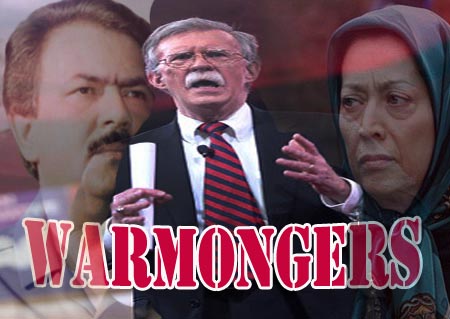
How else could one explain Giuliani’s support for a cultish Iranian opposition group that was formerly on the U.S. State Department’s list of Foreign Terrorist Organizations (FTO) and has been implicated in the assassinations of six Americans? On Wednesday, Giuliani appeared on Fox & Friends, where he announced that he’s traveling to Berlin this weekend to meet with the Mujahedeen e-Khalq (MEK), which he says “could replace the Iranian government.”

Since as far back as 2010, Giuliani — America’s supposedly “tough on terrorism” mayor — has been one of the most recognizable faces on an impressive roster of U.S. politicians and bureaucrats who, for lucrative fees, have been lobbying on the behalf of MEK, also known as the People’s Mujahedeen of Iran.

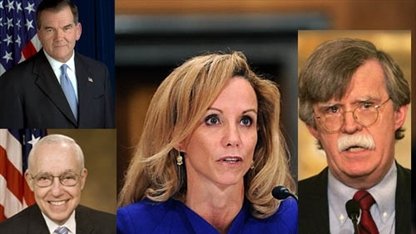
In December 2010, Giuliani, along with three former Bush administration officials — Attorney General Michael Mukasey, Homeland Security secretary Tom Ridge, and Homeland Security adviser Fran Townsend — spoke at a forum hosted by MEK in Paris where the exiled MEK leadership is based. The Washington Post reported at the time that the four Republicans decried the group’s designation as a terrorist organization by the State Department, and criticized Obama’s policy on Iran. MEK was delisted by the State Department in September 2012 after 15 years on the FTO list.

MEK has also enlisted the help of high-profile Democrats such as former Vermont governor Howard Dean and former Pennsylvania governor Ed Rendell, both of which have served as chair of the Democratic National Committee. Others who’ve lobbied for MEK include two former CIA directors, a former FBI director, a former National Security Adviser, and a top State Department counterterrorism official. According to The New York Times, compensation for these speakers, including Giuliani, ranged from $10,000 to $50,000 per speech.

Up until its delisting in 2012, MEK could not pay these lobbyists directly, lest those lobbyists run blatantly afoul of federal law, which prohibits material support for terrorism and terrorist organizations. Instead, they were paid by supporters of MEK, whose shadowy sources of funding are dubious just the same.

Furthermore, as Glenn Greenwald noted six months before MEK’s delisting, under the Supreme Court’s free speech-limiting 2010 ruling in Holder v. Humanitarian Law, “To advocate on behalf of a designated Terrorist group constitutes the felony of ‘providing material support’ if that advocacy is coordinated with the group.” That means that up until MEK’s removal from the FTO list in September 2012, Giuliani and others who spoke on behalf of MEK could have been charged with a felony for “providing material support” for terrorism, which can carry a prison sentence of up to 15 years.

MEK was founded by Massoud Rajavi in 1965 as an opposition group to the U.S.-backed Shah Reza Pahlavi. Quite mysteriously, Rajavi has not been seen in public since 2003, though he is said to be in hiding. However, it’s not entirely clear that he’s still alive. His wife Maryam Rajavi now runs MEK.

During the reign of the shah, MEK engaged in numerous attacks on Americans. These include the botched kidnapping attempt of a U.S. ambassador to Iran; the botched assassination attempt of a U.S. brigadier general in 1972; the assassination of a U.S. lieutenant colonel in 1973; the assassinations of a colonel and lieutenant colonel; and the assassination of three U.S. contractors in 1976. MEK has also been suspected in a slew of attacks inside Iran.

Although Iran’s regime changed in 1979 from a U.S.-friendly dictatorship to an anti-U.S. one in the form of the Islamic Republic that remains today, MEK’s status as an opposition group has not. It fiercely opposed Ayatollah Khomeini and was in turn attacked for it, prompting the group’s leadership to flee to France while most of the other members sought safe-haven next door in Saddam Hussein’s Iraq — Iran’s nemesis at the

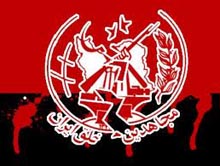
This is MEK’s logo:

time — where many of them remain at Camp Ashraf and Camp Liberty.

The group was founded on Marxist principles, though it says it has renounced both Marxism and terrorism. Doing so has no doubt made the group more palatable for major American political figures such as Giuliani. But there are also indications that the group is a veritable cult. Former Bush Justice Department attorney and RAND analyst Jeremiah Goulka has visited Iraq to investigate MEK, and a study conducted by him and three other analysts drew some troubling conclusions about MEK’s treatment of its own members. Goulka shared some of those findings in a guest op-ed for Salon in 2012:

“I studied the MEK in depth and over a period of many months for the U.S. military. I visited Camp Ashraf, the MEK facility 40 miles north of Baghdad, and interviewed MEK members, former MEK members, and dozens of military and civilian officials. Along with almost all of my interviewees and Human Rights Watch, I concluded that the MEK is a cult. It employs many common cult practices: mandated celibacy and divorce, thought control, sleep deprivation, and forced labor. It segregates men from women, separates families and friends – who must seek permission just to converse – and even tells family members back home that the members are dead.”

According to the aforementioned Human Rights Watch report, some of MEK’s abuses against its own members include,

“Human rights abuses carried out by MKO leaders against dissident members ranged from prolonged incommunicado and solitary confinement to beatings, verbal and psychological abuse, coerced confessions, threats of execution, and torture that in two cases led to death.”

Giuliani has said MEK is “our only hope” for change in Iran, but there is no reason to believe MEK is a viable threat to overthrow the regime. Furthermore, coups d’état rarely yield smooth transitions, especially in the Middle East and North Africa as the last several years have made abundantly clear. [..] The country is nevertheless stable, and it’s highly unlikely that this would remain so in the event of sudden and drastic regime change in a country of nearly 80 million. Additionally, it’s not clear that an MEK-run Iran would be an improvement over the current government.

At the time of its delisting from the U.S. FTO list, one senior State Department officials nonetheless expressed grave misgivings about MEK:

“We do not see the MEK as a viable opposition movement…. We have no evidence or confidence the MEK could promote the democratic values we would like to see in Iran.… We continue to have serious concerns about abuses the group has committed to its  own members.”

Yet this is the group that Rudy Giuliani thinks is the best chance to bring about democratic change in Iran. And he thinks this despite a mountain of evidence to the contrary that would give him and those others pause were it not for the simple fact that they are being paid handsomely to do so.

By Michael Luciano , The Daily Banter

April 10, 2015 0 comments
FacebookTwitterPinterestWhatsappTelegramSkypeEmail
Former members of the MEK

Pictorial – New Year eve with my family; after 23 years!

Mr. Rostam Albuqobeish celebrates the New Year near his family after 23 year. He thanks God for his release from the notorious MKO Cult.

He says:” I couldn’t imagine to experience a new year with my family members. I thank God for such a happiness.”

New Year eve with my family; after 23 years!

April 9, 2015 0 comments
FacebookTwitterPinterestWhatsappTelegramSkypeEmail
Mujahedin Khalq; A proxy force

Bolton and the MEK

Re-reading part of John Bolton’s op-ed calling for war with Iran, I noticed something that I had overlooked the first time:

An attack need not destroy all of Iran’s nuclear infrastructure, but by breaking key links in the nuclear-fuel cycle, it could set back its program by three to five years. The United States could do a thorough job of destruction, but Israel alone can do what’s necessary. Such action should be combined with vigorous American support for Iran’s opposition, aimed at regime change in Tehran [bold mine-DL].

Peter Beinart objects to Bolton’s op-ed in part because Bolton, who was a leading advocate for the invasion of Iraq, pays no attention to the possible negative consequences of a war with Iran. That’s a fair point. Hawks frequently ignore or minimize the costs and risks of the military action they’re urging the government to take, they exaggerate the efficacy of hard power to “solve” problems, and they often fail to anticipate or plan for unintended consequences of the wars they support. These are all good reasons to view any hawkish argument for war very skeptically, especially when it comes from someone with such an appalling track record. There is another reason to view anything Bolton has to say about Iran in particular with great suspicion.

Bolton is hardly the only former official, retired officer, or ex-politician to do this, but for the last several years he has been a vocal cheerleader of the Mujahideen-e Khalq cult (and “former” terrorist group) and its political organization. He has been consistently misrepresenting a totalitarian cult as a “democratic” Iranian opposition group. When Bolton or someone else with this record talks about “vigorous American support for Iran’s opposition,” we can be fairly sure that he means that the U.S. should be backing the MEK in its quest for seizing power in Iran.

This confirms Bolton’s extremely poor judgment and underscores how truly crazy his overall argument for war with Iran is. It also reminds us how oblivious Iran hawks such as Bolton are to the political realities inside Iran. Once again we have a hawkish demand for U.S. support for an exile group that has absolutely no support in its own country in order to achieve regime change. Indeed, the group that Bolton has been helping to promote is widely loathed in Iran for good reason and has no credibility at all with the domestic political opposition. It is Bolton’s embrace of the MEK as much as anything else that ought to discredit his views on Iran policy.

By Daniel Larison

April 8, 2015 0 comments
FacebookTwitterPinterestWhatsappTelegramSkypeEmail
Mujahedin Khalq; A proxy force

John Bolton and the nuclear terrorists

Many bloggers have noted John Bolton’s instantly-notorious editorial demanding war with Iran. Most commentators have neglected to mention one key fact: Bolton himself is linked to terrorism — including nuclear terrorism.

Bolton has received very hefty fees for speaking on behalf of a group called the MEK, which seeks the overthrow of the present government of Iran, and which is widely credited with carrying out assassinations within that country.

Until recently, the United States kept the MEK on the official list of terrorist organizations. From a 2012 U.S. News & World Report story:

As recently as 2007, a State Department report warned that the M.E.K., retains "the capacity and will" to attack "Europe, the Middle East, the United States, Canada, and beyond."

The M.E.K., which calls for an overthrow of the Iranian government and is considered by many Iranians to be a cult, once fought for Saddam Hussein and in the 1970s was responsible for bombings, attempted plane hijackings, and political assassinations. It was listed as a foreign terrorist organization in 1997.

At one time, the MEK considered itself to be Marxist. That fact makes Bolton’s association with the group seem particularly cute.

One of the lobbyists working on behalf of the MEK was Victoria Toensing, who played a role in the Monica Lewenski affair, and who later told lies about Valerie Plame Wilson. Toensing says that the MEK has "reformed its violent past." Those murdered scientists might disagree, if they could speak.

(I wonder how Toensing would react to someone who said that Hamas was no longer a terrorist organization…?)

But the MEK is only one part of the story. The Intercept helps us zoom out for a wider view.

In his call for war with Iran, Bolton said that, during the Reagan years, Pakistan was allowe3d to develop the bomb only because the United States was "inattentive." That’s a particularly droll phrase to use.

Rather than being “inattentive,” the Reagan administration – in which Bolton served – proactively helped Pakistan violate U.S. law and purchase key material for its nuclear weapons in the United States. Reagan also falsely certified to Congress that Pakistan did not have nuclear weapons so that the U.S. could continue sending the country hundreds of millions of dollars in aid each year. When a Defense Department intelligence analyst complained, the George H.W. Bush administration – in which Bolton also served – fired the analyst and stripped him of his security clearances. The analyst, whose life was ruined, discovered that the specific officials involved in his firing included Scooter Libby and Stephen Hadley – both then working for Secretary of Defense Dick Cheney and both, of course, key ideological allies of John Bolton.

The Intercept’s story is good, but does not go far enough.

It should be recalled the the so-called "father of Pakistan’s nuclear bomb,’ A. Q. Khan, tried to sell nuclear technology to Libya and North Korea. From a 2010 L.A. Times review of a book on nuclear terrorism…

Much of this perilous state of affairs can be traced to the villainous deeds of Abdul Qadeer Khan. A.Q. Khan, as he is known, is the self-described father of Pakistan’s nuclear bomb and the self-confessed mastermind of a criminal network that seemingly sold nuclear weapons technology like it was aluminum siding. The proof: Nearly every nation that has tried to build or obtain a nuclear device in the last 30 years has relied on Khan’s black market enterprise.

For years, government officials downplayed or ignored Khan’s illicit trade as industrial spying, or violations of export control laws, rather than as nuclear espionage on behalf of a foreign power. Security breaches were repeatedly concealed lest they jeopardize other diplomatic priorities or corporate profit margins. It is a terrifying tale, not least because the failure to prosecute or imprison most of Khan’s associates means the world’s most dangerous business may still be thriving.

Other books have sketched Khan’s story, but Albright mines previously unavailable documents, and he interviews key players for new details. He chronicles how Khan stole classified blueprints from a European consortium to jumpstart Pakistan’s uranium enrichment program in the mid-1970s and then did what no Western scientist considered remotely possible – he built an atomic bomb in Pakistan by secretly buying and assembling component parts from abroad.

In the 1980s, Khan again broke new ground: He began selling complete nuclear factories and the know-how to construct bombs, something only governments had done before.

That’s what John Bolton’s pals helped to unleash on the world. And now this guy thinks that he has the moral standing to call for war against Iran.

The CIA whistleblower referenced by The Intercept was Richard Barlow. Sy Hersh wrote about him in 1992, in the New Yorker…

Barlow, now thirty-eight years old, was hired by the C.I.A. in 1985 and quickly became one of the agency’s top experts on Pakistan’s nuclear program. In 1987, he was dismayed to learn, at first hand, that State Department and agency officials were engaged in what he concluded was a pattern of lying to and misleading Congress about Pakistan’s nuclear-purchasing activities. He resigned a year later, after senior agency officials attempted to bar him from working on Pakistan.

And just what was John Bolton doing in the Reagan administration at this time?

During the Reagan and George H. W. Bush administrations, he worked in several positions within the State Department, the Justice Department and the U.S. Agency for International Development (USAID). He was a "protege" of conservative North Carolina Senator Jesse Helms.

USAID has strong ties to CIA. I think that we may fairly posit that Bolton was one of the State Department officials whose actions alarmed Barlow.

The origin of the Pakistani bomb is a disturbing and hideously under-discussed tale. Joseph Trento reveals a fair amount of the story in Prelude to Terror, a book discussed in several previous Cannonfire posts. Greg Palast has also done some fine work in this area.

The Pakistani bomb was really the Saudi bomb, since Saudi Arabia arranged for much of the financing. Both the funds and the necessary nuclear materials were channeled through a secret organization called The Safari Club.

Prince Turki bin Faisal, the head of Saudi intelligence from 1977 to 2001, revealed the existence of this group during a 2002 speech in Georgetown:

And now I will go back to the secret that I promised to tell you. In 1976, after the Watergate matters took place here, your intelligence community was literally tied up by Congress. It could not do anything. It could not send spies, it could not write reports, and it could not pay money. In order to compensate for that, a group of countries got together in the hope of fighting Communism and established what was called the Safari Club. The Safari Club included France, Egypt, Saudi Arabia, Morocco, and Iran. The principal aim of this club was that we would share information with each other in countering Soviet influence worldwide, and especially in Africa.

Turki here offers a skewed reading of what went on during the 1970s. The CIA did send out spies throughout this period, and those operatives got up to all sorts of spooky mischief. That said, it is true that the hardest of the hardliners no longer ruled the roost at CIA during the Carter years.

That’s why reactionary intel professionals in various countries set up their own alternative networks. The main one — though not, I believe, the only one — was the Safari Club.

One of the key operatives within this little club was Ed Wilson. Although younger readers may not recognize that name, Wilson used to be infamous as the "rogue" CIA operative who turned terrorist. That’s a huge story which we may get into in another post.

Right now, let’s return to Trento’s book:

    The same leadership that promulgated the Safari Club-the Saudi royals-also strongly funded and supported the Islamic Development Bank…. It was through the bank’s scientific and economic development efforts that huge amounts were funneled into Pakistan, which ended up in the hands of A.Q. Khan and his now-infamous nuclear bomb-building syndicate.

During the war against the Soviets in Afghanistan, this network sent a massive amount of money to Pakistan, because the ISI (Pakistan’s CIA) handled much of the funding for the jihadis. (As you know, the anti-Soviet fighters included a promising fellow named Osama Bin Laden).

But Pakistan also dipped into this treasure trove for its own purposes. India had a bomb, and now Pakistan wanted one. The Saudis wanted to pay for it. To make the Saudis and the Pakistanis happy, the United States was willing to countenance the creation of the Islamic world’s first nuke.

As noted above, A.Q. Khan later shopped the technology around to various "rogue" states. Some even claim that he tried to give a small nuke to Al Qaeda.

Did the U.S. know about Khan’s activities? Of course.

A senior source in the British government, who asks not to be named, confirms that Khan ran the network and that parts for the nuclear-weapons program came from the United States. Khan’s daughter, attending school in England, was being tutored, and at the ends of faxes dealing with logistics for her education, Khan would sometimes write, in his own hand, items he needed for the nuclear program.

So that’s the tale of the Pakistani bomb, a baby which the Reagan administration State Department helped to midwive — at a time when John Bolton was an important official in that administration.

If this background briefing seems ancient or abstruse to you — well, all I can say is this: The tale of how the Pakistani bomb came into existence will suddenly seem very interesting to you on the day when CNN describes the blinding flash of light that evaporated thousands of people.

If and when that terrible day comes, don’t rely on the mainstream media to tell you the full story of how nuclear technology spread in that part of the world. I imagine that our journalists will spew a lot of hooey about Iran. You won’t hear much about A.Q. Khan and Pakistan.

And you certainly won’t hear anything about John Bolton.

Cannonfire.blogspot.com

April 8, 2015 0 comments
FacebookTwitterPinterestWhatsappTelegramSkypeEmail
Newer Posts
Older Posts

Recent Posts

  • How the MEK tried to sell a stage stunt as grassroots support?

    October 4, 2026
  • Why Mike Pompeo’s Embrace of the MEK Ignores Its Lack of Popular Base

    October 3, 2026
  • Fourteen years after US delisting, MKO terror cult’s political rebranding collides with its violent legacy

    September 30, 2026
  • How Did Maryam Rajavi Become All-Powerful in the MEK?

    September 29, 2026
  • Soraya Abdollahi’s Letter to International Human Rights Bodies

    September 28, 2026
  • Facebook
  • Twitter
  • Instagram
  • Youtube

© 2003 - 2025 NEJAT Society . All Rights Reserved. NejatNGO.org


Back To Top
Nejat Society
  • Home
  • Articles
  • Media
    • Cartoons
    • NewsPics
    • Photo Gallery
    • Videos
  • Publications
    • Books
    • Nejat NewsLetter
    • Pars Brief
  • About Us
  • Contact us
  • Editions
    • عربي
    • فارسی
    • Shqip