
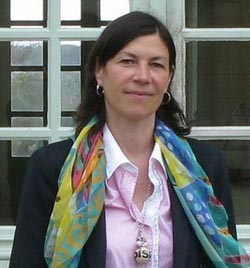
Madame Isabelle Mézière,Maire d’Auvers sur Oise
We, as members of the Iranian community in France , congratulate you on your victory in the municipal elections. As you pointed out in your campaign, the former mayor, Jean Pierre Becquet, politicized Auvers by supporting the Rajavi cult. The support he gave to this sect had drawn the beautiful town of Auvers into unwanted politicization in favour of a political group expelled from Iran and, more recently, Iraq. This resulted in neglect of the public interest and freedom of speech.
As you demand, freedom of speech must return to the people of Auvers and groupings associated with the sect’s dictatorship should disappear, and the hidden social policies of recent years must be reported!
In recent years, the constant presence of the forces of the People’s Mojahedin Organization (MEK, MKO, NCRI, PMOI) in Auvers sur Oise and the relentless support of the former mayor for the terrorist group, has degraded the social esteem of this great city, transforming it into one couple’s totalitarian fortress.
As you probably know, Auvers sur Oise serves as the main base for the Rajavis, leaders of the MEK. This group was on the international list of terrorist organizations until 2011. Most members of this group were transferred to the base at Auvers sur Oise from Iraq. Your city really needs you to restore freedom of speech and depoliticize the role of mayor in order to better integrate social and economic development.
Madam Mayor,
Madam Mayor,
The Mojahedin Khalq under the totalitarian leadership of Rajavi is not a political group. During the last thirty years, and with the support of Saddam Hussein, this organization has murdered over 17,000 Iranians under the pretext of wishfully anticipating the overthrow of the ruling system of Iran. This group sowed terror and fear within Iranian society. Before the 1979 revolution, the same organization murdered seven U.S. military advisers on Iranian territory in the name of supporting the movement of the Palestinian people. Thus, the MEK is a great pioneer in the history of the provocation of anger between the American and Iranian nations.
The MEK has been removed from national blacklists in order to encourage a radical change in its ideology and its practices. But the violent, terrorist nature of this organization has remained intact and it has simply changed its outward showcase. This group is still seen as a hopeless, draconian, sectarian and secret organization by all Iranian communities abroad.
MEK officials have repeatedly attempted to disrupt rallies held by Iranian dissidents, using threats to stifle any voices that oppose the terrorist proclamations by the leaders of this group. These manoeuvres demonstrate that the MEK cannot tolerate any opposition and has no concept of democracy and freedom of speech. Several ex-combatants of this organization have already denounced the persecution they suffered at the hands of agents of the MEK from Auvers sur Oise.
While preparations made for the evacuation of the Mojahedin from Iraq are progressing this year, Rajavi is trying to transfer MEK members from the MEK’s former main camp (Ashraf), to Europe. That is, members of the MEK who received military training and have lived for years under the ideological influence of armed struggle (Jihad). These men and women have participated in various terrorist operations (bombing, targeted and non-targeted attacks). Rajavi has spent his whole life training and building a destructive military group, and for the same reason, will not abandon his terrorist aims and will try to re-group his scattered jihadist forces in Germany, Albania and elsewhere!
Rajavi proposes to transform the region of Val d’Oise, and in particular the town of Auvers, into a safe place for his Mojaheds (Jihadist fighters). Several gangs of smugglers and human traffickers have been mobilized to bring Rajavi’s top level commanders from Iraq to France under the name of “refugees” and “anti-clerical regime activists”. If this group is formed and strengthened in France, we expect the threats and blackmail from the Rajavis to continue because this politico-religious cult has always made use of these doctrinal practices. With the collapse of Camp Ashraf in Iraq, Rajavi strongly believes that a new camp should be built, ideally in France and Auvers sur Oise!
We regret to see some Western politicians on the speakers panels of gatherings and meetings of the Rajavis; although most of these persons have confessed to reporters that their presence is motivated by money (between $25,000 and $160,000 for each to speak and take a photo alongside Maryam Rajavi). Mr. Jean-Pierre Becquet also attended such meetings. Unfortunately, the former mayor has never offered a single convincing argument concerning his true motivation for the huge support he offered to this foreign terrorist sect on French territory.
Madam Mayor,
As you know, it is from Auvers sur Oise that the ideological leaders of the MEK plan and organise its various terrorist operations against Iranian interests inside and outside of Iran. The arrest and imprisonment of Maryam Rajavi on June 17, 2003, came about for this reason.
She is a liar and the manipulative leader of a group that exploits the authentic humanitarian feelings of European people in order to prevent any change in the situation of the Iranian people. All political and international organizations can confirm that the leaders of the MEK have no popular support in Iran and they are completely rejected by the Iranian nation.
We would be proud to have the opportunity to meet with you and show you documents that may better clarify the true nature of the MEK.
A copy of this letter is sent to :
Ministry of Foreign Affairs of France
French Ministry of Justice
President of the French Senate
French President and members of the National Assembly
French Ministry of the Interior
24 April 2014
Ariya Iran,Paris,
Translated by Iran Interlink
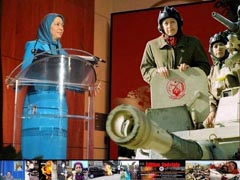
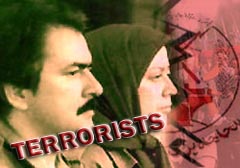 Organization. While U.S. denied Abutalebi a visa, citing his connection to the 1979 hostage crisis and Iran eventually rejected a U.S. decision to deny a visa for its newly appointed ambassador to the United Nations, the MKO tries to whitewash its anti Imperialism background in a bid to obtain more support among its American friends.
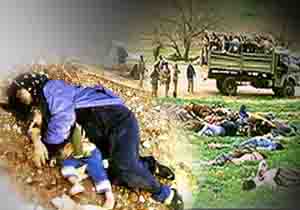 also after Saddam at the hands of US-led Western governments who are more concerned with access to the regional oil resources and with perceived strategic interests other than human welfare and also by extremist groups taking over parts of the country . Although the government of Iraq is trying hard to stabilize the country it still has problem confronting terrorists.
 reported Aden News website citing from its sources in London.
 order.