Nejat Society
  • Home
  • Articles
  • Media
    • Cartoons
    • NewsPics
    • Photo Gallery
    • Videos
  • Publications
    • Books
    • Nejat NewsLetter
    • Pars Brief
  • About Us
  • Contact us
  • Editions
    • عربي
    • فارسی
    • Shqip
Nejat Society
Nejat Society
  • Home
  • Articles
  • Media
    • Cartoons
    • NewsPics
    • Photo Gallery
    • Videos
  • Publications
    • Books
    • Nejat NewsLetter
    • Pars Brief
  • About Us
  • Contact us
  • Editions
    • عربي
    • فارسی
    • Shqip
© 2003 - 2024 NEJAT Society. nejatngo.org
Kurds Massacre
Mujahedin Khalq Organization as a terrorist group

New evidence on massacre of Kurds by the MEK forces

During his era (1979-2003), former Iraqi dictator Saddam Hussein suppressed virtually every major ethnic and religious group in his country. No one was safe from his reach: Sunni dissidents, Shiites in the south, Kurds in the north, and a wide range of smaller minorities, such as the Yazidis and Turkmen, were all targets of his wrath at various times.

Through patronage, bribery, and special privileges, Saddam Hussein built a loyal base and established solid networks of informers throughout the country to monitor anyone who might criticize his rule or seek to overthrow him. One of the groups loyal to Saddam Hussein was the Mujahedin-e-Khalq (MEK), which served as Saddam’s private army, and whose leader, Massoud Rajavi, had proved his loyalty to them in numerous meetings with Saddam and other Iraqi officials, in return for large-scale financial and military support, the MEK performed spying and military operations. The films of the meetings which were released after Saddam’s fall.

Saddam Hussein repeatedly engaged in open military attacks against his own people, and the MEK assisted him in suppressing the Hur Arab uprising in southern Iraq in March-April 1991 and in full-scale attacks on Kurdish rebel forces in the north of the country.

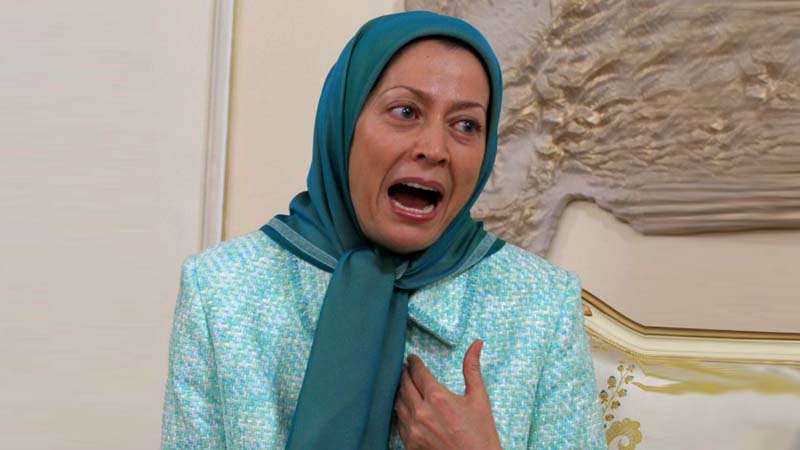
However, MEK officials vehemently deny any involvement in the crimes against Shiites and Kurds, claiming that they were attacked by joint Kurdish-Iranian forces and that the MEK did not even defend itself. The RAND Corporation report of the US Department of Defense reinforces the claims of on the MEK’s complicity with Saddam based on various press reports. These reports quote Maryam Rajavi as encouraging MEK members to “take the Kurds under your tanks and save your bullets for the Iranian Revolutionary Guard Corps.”

According to Rand, Saddam Hussein awarded Massoud Rajavi the Rafideen Medal – a first-class medal of honor in the Iraqi army – after suppressing the Kurdish and Shiite uprisings. “Whatever the truth of the matter, many Iraqis believe that the MEK committed acts of violence against Shiites and Kurds on behalf of Saddam,” according to RAND report.

A Human Rights Watch report published in June 1992 also confirms the role of the MEK in eyewitness accounts. According to the report quoting an eyewitness, “85 or 90 percent of the population crossed the mountain road. They had to cross a river near Tuz that cars cannot cross. The river is 20 to 25 meters wide. They chose this route because the Iraqis controlled the bridge and the Kefri road, and the main road was controlled by the MEK [an Iranian opposition group that supported forces loyal to Iraq]. Several children drowned while crossing the river.”

However, the testimonies of former MEK members who witnessed the MEK’s involvement in the Kurds genocide are more credible than any other testimony. Many former MEK members have written about their observations.

The most recent testimonies about the role of the MEK in the massacre of Iraqi Kurdish civilians are contained in the memoirs of Amir Yaghmaei, a former child soldier of the MEK. Although Amir Yaghmaei was a young child who had just been separated from his parents and smuggled to Europe at the time of the suppression of the Iraqi Kurdish and Shiite uprising, he makes an interesting reference to the issue of the Kurds genocide in a part of his memoirs that relates to the time of the US invasion of Iraq and the fall of Saddam Hussein in 2003.

In the fifty-sixth episode in the Iraqi deserts after the US invasion of Iraq in 2003, before the MEK leaders signed a peace and disarmament agreement with the US army. In this part of his memoirs, he writes:
“They said that the Kurdish forces supporting the Islamic Republic, the “Yekiti” group, were approaching us… The news of the Kurds’ approach was enough to throw the atmosphere of the base into chaos. Faces were blurred; whispers rose. The organization had a dark history with the Kurds, especially since the first Persian Gulf War. At that time, they had clashed with the Kurdish forces and many of them, even civilians, had been killed. The organization always said that the Kurds were to blame; they were the ones who collaborated with the IRGC and attacked first.”

But Amir Yaghmaei, like many other members of the MEK who either participated in the operation or met first-hand witnesses to the Kurds suppression operation, continues: “But I had spoken to witnesses from within the organization itself. They said that the attack was not just a defense. When the fighting began, the organization did not stop at just defending its positions. They also entered Kurdish villages, attacked with tanks and artillery, and destroyed houses.”
“One said that they leveled a house with direct tank fire. Another personally confessed to me that he himself had run over a fleeing Kurd with a tank. These tragedies later caused an international reaction, and now the organization did not want to start another crisis with the Kurds.”

After the agreement was signed between the MEK leaders and the US army, the Americans interrogated each and every resident of Camp Ashraf. They, who had good relations with the Iraqi Kurds and their leaders, including Jalal Talabani, sought information during interrogations about the role of the MEK in suppressing Kurds.

According to the Iranian Center for Documents, citing a defected member, “The information from the American forces was accurate. It seemed that they had extracted [the information] from the interrogation of their teammates and they knew that in a clash between a team from the organization and the Kurds, a person named “Mohammad Reza Mohaddes” had commanded the killing of six Kurds, and the name of the person who opened fire on them and killed them was “Nosrat,” and the interrogator had downloaded their photos from the computer.”

Mazda Parsi

September 23, 2025 0 comments
FacebookTwitterPinterestWhatsappTelegramSkypeEmail
Mujahedin Khalq Organization

From Misjudged Intelligence to Endless Wars: A Call to Reassess US Strategy

If Washington intends to reduce the likelihood of open-ended commitments, it must reform how it evaluates threats, validates information, and calibrates the use of force.

For more than two decades, the United States has engaged in a series of military operations far from its borders. These interventions have generated mixed strategic outcomes, imposed significant fiscal burdens, and contributed to persistent instability in several regions. A recurring feature of this pattern is the elevation of partial, politicized, or externally sourced intelligence to the status of policy driver. If Washington intends to reduce the likelihood of open-ended commitments, it must reform how it evaluates threats, validates information, and calibrates the use of force.

How questionable intelligence becomes policy

In the early 2000s, the Iraq case demonstrated how quickly contestable claims can become conventional wisdom. Exiled opposition figures—most prominently Ahmed Chalabi—advanced a narrative of imminent danger centered on weapons of mass destruction. Those assertions informed high-level debate and public messaging. After the invasion, the Iraq Survey Group concluded there were no active stockpiles of WMD. The central premise that had justified war did not stand when tested. The policy correction arrived only after the commitment was made and costs were sunk.

A similar dynamic can surface when exile organizations steer attention in other theaters. In the case of Iran, the Mujahedin-e Khalq (MEK) publicized details of undeclared nuclear facilities, prompting inspections and diplomacy. The point is not to dismiss every disclosure; rather, it is to note that actors with regime-change incentives can be accurate on a fact while simultaneously advancing escalation. Outsourcing threat assessment to such actors increases the risk that selective truths are translated into strategic overreach.

Strategic, fiscal, and societal costs

Interventions justified on weak or disputed premises tend to produce ambiguous objectives and expanding mission sets. Strategically, they can entangle the United States in state-building tasks for which there is limited local legitimacy and insufficient allied burden-sharing. Ambiguity about end-states invites incremental escalations designed to “buy time,” even as political conditions deteriorate.

The fiscal effects are substantial. Expenditures associated with expeditionary operations do not end when combat ends; they continue through veteran care, equipment recapitalization, and interest on wartime borrowing. Opportunity costs compound the problem. Resources allocated to sustain distant missions are resources unavailable for modernizing infrastructure, strengthening public health, or improving educational outcomes.

There are societal costs that are less visible in budget documents. Repeated deployments impose strain on service members and families. Public confidence erodes when official justifications are later revised or withdrawn. Credibility—often cited as a reason to act—can be damaged by acting on claims that do not withstand scrutiny.

The role of media and oversight

A resilient policy process relies on institutional “speed bumps”: adversarial analysis within the intelligence community, rigorous congressional oversight, and journalistic scrutiny that distinguishes between assertion and evidence. When the policy timetable compresses and dissenting views are relegated to annexes, the probability of error rises.
Several reforms are straightforward. Intelligence products that inform potential uses of force should state confidence levels and key gaps up front. Red-team reviews should test core assumptions and explore disconfirming evidence. Where classified material shapes debate, unclassified summaries should be produced to permit informed public discussion without compromising sources and methods. In parallel, Congress should restore regular order on war powers and insist on clearly defined objectives, metrics, and reporting.

Case evidence: Iraq’s WMD narrative and Iran’s nuclear file

The Iraq WMD narrative moved from allegation to orthodoxy with unusual speed. Post-invasion findings did not validate the pre-war premise, yet the conflict—and its regional effects—could not simply be unwound. The lesson is not that intelligence is unnecessary; it is that confidence must be earned, not assumed.
In Iran’s nuclear file, disclosures regarding facilities at Natanz and Arak catalyzed inspections and negotiations. That sequence shows the value of verifiable facts and formal channels. It also demonstrates the danger of allowing externally driven narratives to leapfrog verification and dictate strategy. Facts may recommend engagement, monitoring, and diplomacy; they do not in themselves mandate coercion or promise favorable political outcomes. Intelligence should inform policy; it should not substitute for it.

A framework for restraint

Restraint is a strategic method, not an abdication. A practical framework would include four elements.

First, raise the evidentiary bar. Claims with the potential to move the United States closer to the use of force should meet heightened standards: multiple independent sources, explicit confidence statements, and adversarial testing. Assertions originating from actors with regime-change agendas should trigger automatic skepticism.

Second, prioritize diplomacy and burden-sharing. Where facts are disputed and escalation pathways are short, verification and dialogue should precede coercive steps. When coercive tools are used, they should be nested within clear political aims, realistic timelines, and allied participation.

Third, legislate limits and accountability. Any authorization for the use of military force should include sunsets, defined objectives, and regular reporting. If missions expand or conditions change materially, mandates should be revisited rather than allowed to drift.

Fourth, price the long term. Decision-makers should see the full lifecycle cost of operations—immediate outlays, long-term obligations, and financing costs—alongside domestic trade-offs. Transparent pricing improves choices and aligns policy with public consent.

Why this matters now

Large-scale occupations have receded, but the risk of miscalculation has not. Limited strikes, proxy engagements, special operations, and cyber activity each carry escalation potential. The information environment is faster and noisier than it was two decades ago, making it easier for motivated actors to inject claims that align with prevailing anxieties. Process discipline—asking what is known, what is assumed, and what the exit looks like—reduces the likelihood of avoidable error. It does not preclude necessary action; it ensures that action serves defined ends.

There is also a credibility dimension. Partners and adversaries alike track whether Washington binds the use of force to evidence and strategy or to momentum and rhetoric. A posture that privileges verification and diplomacy while maintaining capable deterrent power is more likely to produce durable outcomes than one that equates resolve with speed.

Conclusion

Strength is not the number of fronts on which the United States can fight simultaneously. It is the capacity to decide when force is necessary and when it is not. The experience of Iraq’s absent WMD and the externally driven narratives surrounding Iran’s nuclear program argue for a higher threshold before military options are placed on the table. By elevating evidentiary standards, empowering oversight, and privileging diplomacy and burden-sharing, Washington can protect American lives and resources while offering partners a steadier basis for cooperation. Endless wars are not inevitable. They are the foreseeable result of choices about evidence, incentives, and oversight—choices that can be improved.

Jenny Williams – Modern Diplomacy 
Jenny Williams is an independent American journalist and writer focusing on foreign policy, human rights and conflict. She aims to bring clarity to complex security debates and to foreground the domestic consequences of overseas engagement. Contact: jennywilliams9696[at]gmail.com | Twitter: @Jenny9Williams

September 22, 2025 0 comments
FacebookTwitterPinterestWhatsappTelegramSkypeEmail
Bob Menendez
Mujahedin Khalq; A proxy force

Regular News on the MEK’s Corrupt Advocates

Frequent news on corrupt American politicians who have been ardent advocates of the Mujahedin-e Khalq (MEK) once more came to Bob Menendez, after John Bolton and Rudy Giuliani’s disgraces.

Nadine Menendez, the wife of the convicted former US senator Bob Menendez, was sentenced to 4.5 years in prison for selling the powerful New Jersey politician’s influence in exchange for bribes of cash, gold bars and a luxury car, the Guardian reported.

Bob Menendez, 71, is serving an 11-year sentence after his conviction last year on charges of taking bribes, extortion, and acting as an agent of the Egyptian government.

In January 2025, Menendez was found guilty on 16 counts, including bribery, corruption, and conspiracy to act as a foreign agent, after receiving more than $500,000 in cash, $100,000 in gold bars, and a Mercedes-Benz.

In June,  Menendez arrived at a federal prison to begin serving an 11-year sentence for accepting bribes of gold and cash and acting as an agent of Egypt.

Menendez was also a top recipient of campaign contributions from donors with ties to the MEK. He met Maryam Rajavi and continued to address MEK rallies to promote it as a government-in-exile. He did not hesitate to state that he was a friend to the formerly designated terrorist group with cultlike attitudes called under the names of National Council of Resistance.

This is while the 2004 FBI report details the MEK’s engagement in “a complex international money laundering operation that uses accounts in Turkey, Germany, France, Belgium, Norway, Sweden, Jordan, and the United Arab Emirates.” This report also revealed “a complex fraud scheme involving children and social benefits” which is related to the group’s exploitation of the social assistance of children of Mujahed parents who had smuggled from Iraq to Europe and North America in the early 1990s.

Following Menedez’s trial, in March 2024, the Intercept reported that an analysis of the donor rolls shows that about 15 percent of the people who gave money to Menendez — including Moeinimanesh and Afshari — are linked to an Iranian exile group called the MEK.

According to the Intercept, Moeinimanesh, the chair of OIAC –Organization of Iranian American Communities, a front group for the MEK– who contributed $2,500, was one of a dozen Iranian Americans with links to the MEK or its affiliates that donated Menendez.

Afshari gave $1,000. “Giving money to people I think are nice is not illegal,” Afshari told The Intercept, of his contributions to Menendez’s legal fund. In total, MEK-affiliated individuals made up approximately 5 percent of the total funds raised, over $20,000, the Intercept assessed.

However, Menedez is not the only corrupt supporter of the Cult of Rajavi. In August, the FBI raided the home of John Bolton, President Donald Trump’s former national security advisor. The search was part of an investigation into whether Bolton illegally shared or possessed classified information. And, in December 2023, a federal jury in Washington, D.C., ordered that the former New York City mayor, Rudy Giuliani, pay $148 million to two Georgia election workers whom, as determined by the judge in the case, Giuliani had defamed by claiming they had helped steal the election from Donald Trump. Bolton and Giuliani are among the most out-spoken supporters of Maryam Rajavi. They have so far received six-digit sums of money from the MEK multi-million-dollar lobbying campaign.

It seems that those who admit to advocate the MEK, are either naïve or corrupt. The list of MEK’s ardent supporters who are under investigation, trial or convicted as criminal is getting longer. This indicates that corrupt politicians are proper targets for MEK agents to buy their support in exchange for hefty sums.

By Mazda Parsi

September 15, 2025 0 comments
FacebookTwitterPinterestWhatsappTelegramSkypeEmail
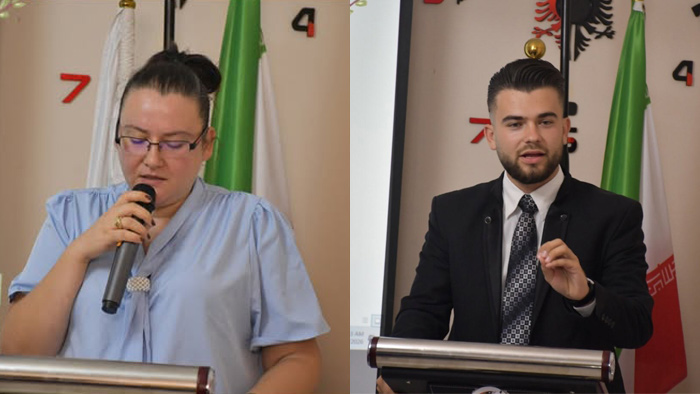
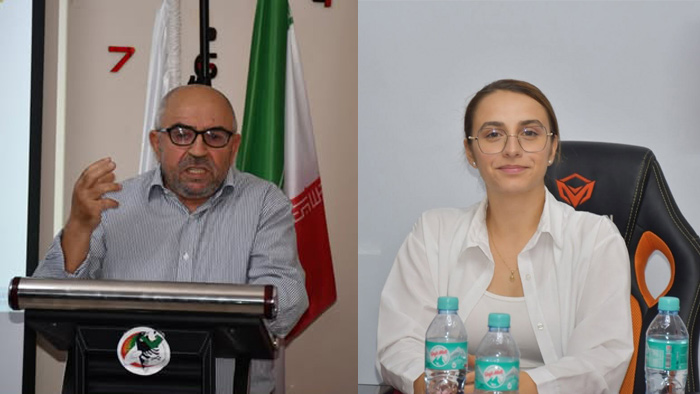
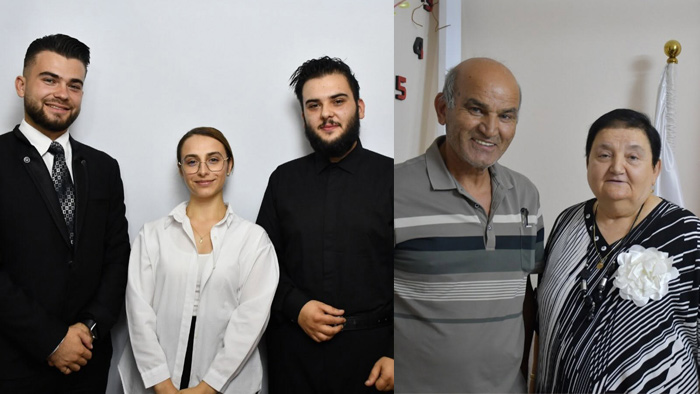
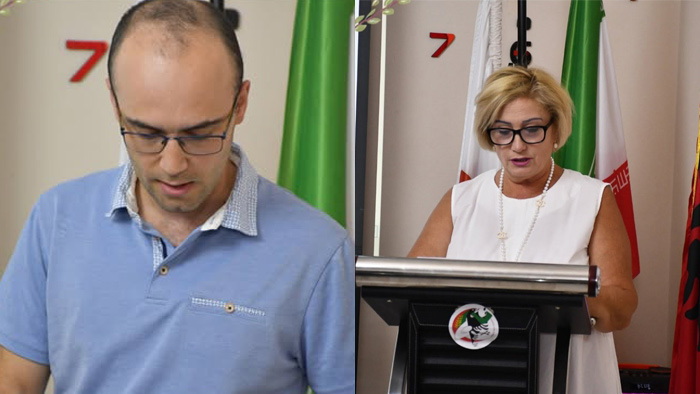
Albanian Pride rally held by Nejat Albania members in Tirana
Former members of the MEK

Albanian Dignity rally held in Tirana

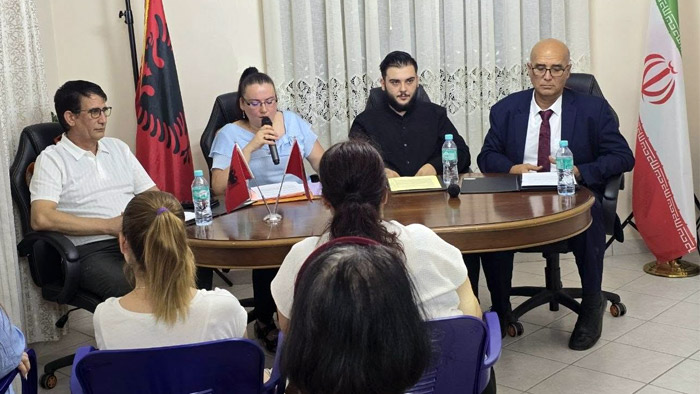
In the central square of Tirana, the “Albanian Dignity” rally was held with wide participation of citizens. This action was a response to the insults of the leaders of the Rajavi sect and a support for Iranian mothers who are expecting their children.
Nejat Society Albania emphasized that the voice of families never dies, and no wall can divide the love between relatives.

On Friday, September 12, 2025, the Nejat Society Albania organized a grand social gathering in the central square of the city of Tehran under the title “Albanian Dignity”.

Albanian Pride rally held by Nejat Albania members in Tirana

Albanian Pride rally held by Nejat Albania members in Tirana

In this activity, which was accompanied by the distribution of brochures and friendly conversations, citizens participated with great enthusiasm and showed once again that the voice of justice never dies.

This symbolic action was a clear response to the years of oppression and crimes of the People’s Mujahedin organization against the Iranian people; especially to the mothers who wait with a sad heart to see their children, spending their days and nights with longing and pain.

Albanian Pride rally held by Nejat Albania members in Tirana

Albanian Pride rally held by Nejat Albania members in Tirana

These mothers are a symbol of resistance and love, and their call for justice will never be forgotten by history.
The leaders of this organization have recently, with insulting and inappropriate words, called Albanians “poor”; but this people, with dignity and pride, stood firm in the face of this insult and showed that no humiliation can harm the pride of Albanians.

Nejat Society Albania throughout the world and the path of reunification of fathers, mothers and children in the Manza camp becomes closer.

We believe that no wall can divide the love between families and their relatives.

September 15, 2025 0 comments
FacebookTwitterPinterestWhatsappTelegramSkypeEmail
Maryam Rajavi
Maryam Rajavi

Maryam Rajavi’s Ten-Point Plan and Internal Practices

As members of the Mujahedin-Khalq (MEK) are reportedly subjected to forced religious rituals, forced hijab, forced dress code, forced celibacy, forced labor, forced self-criticism and gender separation, available evidence suggests that Maryam Rajavi does not fulfill the points of her ten-point plan within her organization.

Numerous reports from former members, human rights organizations, and investigative journalists detail a highly authoritarian and cult-like environment within the MEK, directly contradicting the democratic and human rights principles espoused in Rajavi’s public agenda.

The following are examples of the contradiction between Maryam Rajavi’s ten-point plan and what is actually being done within the MEK, extracted from non-Iranian sources. Therefore, the documents – which are included at the end of the article

– do not provide any evidence that Rajavi is implementing the provisions of his ten-month plan within his organization.

–Former members have consistently described mandatory participation in ideological sessions, self-criticism rituals, and adherence to strict dress codes, including forced hijab for women, even outside of Iran.

–The policy of forced celibacy, implemented by the MEK leader Massoud Rajavi in the late 1980’s and continued under Maryam Rajavi’s leadership, requires members to divorce their spouses and abstain from sexual relations, ostensibly to focus solely on the “revolution”.

Based on Massoud Rajavi’s doctrine, “revolution” refers to “ideological revolution” which is a cult jargon in the MEK that requires members to dedicate their entire being to the cause of the group.

–Gender segregation is also widely reported within MEK camp and facilities, further contradicting any claims of gender equality or individual freedom.

In a quite brief review, it is detected that the above-mentioned practices stand in stark contrast to the principles of freedom of religion, freedom of choice, and gender equality outlined in Maryam Rajavi’s ten-point plan, which advocates for a democratic, secular and non-nuclear Iran.

Mazda Parsi

Sources:
1.Human Rights Watch. “No Exit: Human Rights Abuses inside the MKO”
1.RAND Corporation. “The Mujahedin-e Khalq in Iraq: A policy conundrum.”
3.Goulka, Jeremiah, et al. “The Mujahedin-e Khalq (MEK)”
4.Iran Human Rights Documentation Center. “Cult of Personality: The MEK’s abuses of Its Own Members.”
5.Maryam Rajavi. “Maryam Rajavi’s Ten-Point Plan for Future Iran.

September 9, 2025 0 comments
FacebookTwitterPinterestWhatsappTelegramSkypeEmail
Michael Rubin
Mujahedin Khalq Organization's Propaganda System

Michael Rubin: the MEK seek to deny or silence discussion about their inconsistency

The prominent American journalist and former Pentagon official, Michael Rubin asserts that, the Mujahedin-e Khalq (MEK) and its umbrella National Council of Resistance of Iran (NCRI) seek to deny or silence discussion about the inconsistency in their activities rather than explaining about it.

In reply to the MEK’s representative, Ali Safavi’s letter to Middle East Forum’s editor, Rubin writes, “Organizations that prioritize ad hominem invective over dispassionate debate, do so because they understand they cannot win with facts”.

Ali Safavi claims that Rubin persists in amplifying the narratives of the Iranian government against the MEK by criticizing the group in his articles including the one he published on July 7, 2025 commentary in the Middle East Forum Observer (“Iran’s Mojahedin-e Khalq Organization Is Now Irrelevant. Will It Disband?”).

Admitting the responsibility of what he wrote Rubin said, “Mr. Safavi is correct that I have criticized the Mujahedin-e Khalq on several occasions based on its history, behavior, and opacity.” However, Rubin properly notified that rather than acknowledge its choices the MEK, often deflects with ad hominem attacks.

“If the Mojahedin-e Khalq and its various proxies have nothing to hide, they should welcome transparency rather than criticize it,” he added.

As the director of policy analysis of the Middle East Forum, since 2023 to present, Rubin declares that “The Middle East Forum would welcome the opportunity to have a public, unscripted interview with Maryam Rajavi, president-elect of the National Council of Resistance of Iran, to discuss the organization’s past and address the many concerns that the group continues to sidestep”.

Michael Rubin (born 1971) is a senior fellow at the American Enterprise Institute (AEI). He previously worked as an official at the Pentagon, where he dealt with issues relating to the Middle East, and as political adviser to the Coalition Provisional Authority. He has written several articles criticizing the MEK, its leaders and its front organizations like NCR.

September 8, 2025 0 comments
FacebookTwitterPinterestWhatsappTelegramSkypeEmail
Albania Police
Albania

MEK, a complex security challenge for Albania

The Mujahedin-e Khalq (MEK) is currently under criminal investigation in Albania for suspected cybercrime, inciting war, and other offenses, according to Balkan Insight. This comes after Albanian authorities conducted a raid on their Ashraf 3 camp in Manza, Durrës, on June 20, 2023.

The investigation, led by Albania’s Special Structure against Organized Crime and Corruption (SPAK), centers on allegations including “provocation of war,” “unlawful interception of computer data,” “interference with computer data,” “interference with computer systems,” and “misuse of devices”. These offenses are suspected to have been committed within the framework of an “organized criminal group”.

During the raid, police seized approximately 150 devices, including computers, laptops, and USBs. Albanian authorities state that the raid was conducted lawfully and that the MEK had committed to refraining from political activities when they were resettled in Albania between 2013 and 2016.

Beyond the recent raid, the MEK has faced other accusations and investigations. In March 2021, Facebook accused the MEK of running a “troll farm” from their Albanian base, leading to the closure of over 300. There have also been reports of former MEK members alleging restrictive practices within the camp, including limited contact with family and strict internal rules. Thus, the group’s presence and alleged activities pose several risks to Albanian national security, primarily due to its long-standing conflict with Iran and the resulting retaliatory actions by Iran against Albania. The MEK’s danger to Albanian national security stems from several factors:

Iranian Retaliation and cyberattacks

Albania’s decision to host approximately 2,500 MEK members between 2013 and 2016, resettled from Iraq, has made it a target for Iran. The Iranian government views Albania’s accommodation of the MEK, which presents itself as a future government-in-exile and allegedly carries out cyberattacks against Iran, as a hostile act. This has led to a significant escalation in cyberwarfare, with Iran launching damaging cyberattacks against Albania’s critical digital infrastructure.
For instance, on September 7, 2022, Albanian Prime Minister Edi Rama publicly attributed a series of cyberattacks to the Islamic Republic of Iran, leading Albania to terminate diplomatic relations with Tehran. These attacks were believed to be retaliation for Albania sheltering the MEK.

Strain on Albanian Resources and International Relations

Hosting a controversial opposition group like the MEK places a significant burden on Albania’s security apparatus and diplomatic relations. The ongoing threat of Iranian retaliation necessitates increased cybersecurity measures, intelligence gathering, and law enforcement efforts, diverting resources that could be used elsewhere. The situation also requires Albania to seek continuous support from allies like the U.S. and NATO in the cybersecurity realm.

MEK’s Cult-like Behavior and National Security Implications

The concern that the MEK’s cult-like behavior poses a threat to Albanian national security is a significant aspect of the ongoing debate. Critics and former members describe the MEK as having a rigid hierarchical structure, demanding absolute loyalty from its members, and isolating them from external influences. This isolation and control over members’ lives could make them vulnerable to exploitation or manipulation, potentially leading to actions that are not in Albania’s best interest.
The potential for a group operating outside the full oversight of Albanian law, with its own internal rules and command structure, raises concerns about sovereignty and the rule of law. Moreover, if the MEK were to engage in activities that provoke international incidents or internal unrest, Albania’s national security could be directly jeopardized.

MEK’s unauthorized activities in Albania

Regarding the MEK’s violent background, Albanian authorities have specifically investigated allegations of unauthorized political activities, financial irregularities, and the use of their Albanian base, Ashraf 3, for cyber operations targeting Iran, which could be seen as a violation of Albania’s neutrality and sovereignty.
SPAK has been actively involved in these investigations, conducting raids and seizing assets as part of their inquiries into alleged money laundering and terrorist financing. The Albanian government stated that the June-2023 operation was based on suspicions of the MEK using Albanian territory for activities that violate the country’s laws and international agreements, specifically mentioning cyberattacks against foreign states and the unauthorized use of their compound for political and security operations. These investigations are ongoing and involve allegations of money laundering, tax evasion, and the misuse of their humanitarian status.
The Albanian government’s actions suggest a growing concern that the MEK’s presence and activities are not merely a humanitarian issue but a complex security challenge requiring robust legal and investigative measures.

Mazda Parsi

September 3, 2025 0 comments
FacebookTwitterPinterestWhatsappTelegramSkypeEmail
Nejat Newsletter no.127
Nejat Publications

Nejat Newsletter No.128

INSIDE THIS ISSUE
1. Butterfly Gallery, an exhibition run by Nejat Society Albania
In light and warmth of art and sound and thoughts, Nejat Society Albania organized the “Butterfly” exhibition – a gallery of photographs and caricatures that speak aloud. Placed carefully in every corner of the hall, these artistic works narrate the history and the life of Mujahedin-e Khalq (MEK).

2. How much did Maryam Rajavi pay you?
Rudy Giuliani says he is “honored” to do interviews all day about Maryam Rajavi Maryam Rajavi the leader of the Mujahedin-e Khalq (MEK) hosted former New York mayor Rudy Giuliani together with some other retired politicians in Rome, Italy

3. Families of Iranian victims of terrorism protest Italian support for MKO
The families of Iranian victims of terrorism have issued an open letter to Italy’s judiciary
and top lawmakers, condemning the reception given to the ringleader of the Mojahedin e Khalq Organization (MKO) during her visit to Rome on July 30.

4. The West’s ‘democratic alternative’ tortured my sister to madness
Masoumeh Chaheh was 24 when she showed up at her family’s door in southern Tehran – bruised, scratched, and dishevelled. She couldn’t form coherent sentences about where she had
been the past few years. “We were all shocked. We kept asking her what had happened…

5. Sexual abuse in the MEK
Cult leaders use a wide range of deceptive tactics to exert sexual and psychological control
over their female followers. They often exploit women’s vulnerabilities and create an environment of dependency and fear.

6. The darkest night for an MEK child soldier
Amir Yaghmai, former child soldier of the Mujahedin-e Khalq recounts of one of his most traumatic memoirs of his involvement with the MEK which he considers as “one of the most painful and deepest scars” in his life. That was the night that MEK’s top commanders tortured him and his mother because he had asked to leave the group.

7. About Nejat Society
To view the pdf file click here

September 3, 2025 0 comments
FacebookTwitterPinterestWhatsappTelegramSkypeEmail
The Albania police takes control of the MEK Camp Ashraf 3
Albania

Iranian Opposition Group’s Stay in Albania Turns Sour

Albania’s hosting of an exiled Iranian opposition group was never likely to be easy. Now it’s under criminal investigation.
Between 2013 and 2016, Albania welcomed around 2,500 members of an exiled Iranian opposition group, resettled from Iraq after coming under attack from pro-Iranian groups in the wake of dictator Saddam Hussein’s fall.

Albania says that, under the deal, Mujahedin-e-Khalq [People’s Mujahedin of Iran], or MEK, committed to refrain from political activities.

A decade or so later, however, MEK finds itself under investigation on suspicion of cybercrime and inciting war.

Experts say it is hardly surprising, and reflects a failure on the part of Albanian authorities to monitor the activities of a group vehemently opposed to the Islamist regime in Iran.

“Probably the Albanian authorities were well aware about the dangers involving the decision to welcome [MEK], so it is clearly a failure that they were not kept under monitoring in order to prevent security breaches,” said international relations expert Endri Tafani.

Fatjon Gjinaj and Eni Ferhati – balkaninsight

September 2, 2025 0 comments
FacebookTwitterPinterestWhatsappTelegramSkypeEmail
MEK members around Durres hospital
Albania

The Trace of Maryam Rajavi in an Internal Tragedy of the MEK

The Trace of Maryam Rajavi in an Internal Tragedy of the MEK / What Do the MEK Do with Their Corpses?

Rokna Political Desk: Informed sources have reported that two women from the Mujahedin-e Khalq Organization (MEK) were observed making multiple suspicious visits to the General Hospital of Durrës, Albania, which serves as a facility for storing corpses.

According to Rokna, the Ashraf 3 terrorist camp in Albania has recently faced a deeply concerning situation, linked to the bodies of members who had been hospitalized due to old age, various illnesses, and even suicide. These corpses have now become a burden for the organization.

Mysterious Movements Around the Hospital
Reliable sources have revealed that two female members of the MEK have on several occasions made suspicious movements through the back entrance of the General Hospital of Durrës, Albania — the very location where corpses are kept.

Reports indicate that these visits were carried out secretly to remain hidden from public view. However, these activities have fueled speculation regarding several recent deaths among the elderly and sick members of the organization.

The morgue at the Durrës hospital is exactly where these women were seen, and it appears these movements were intended to manage the consequences of the deaths of frail members of the group.

Appalling Conditions of Sick and Elderly Members
Multiple reports have highlighted the critical situation inside the MEK organization. According to these accounts, under the direct orders of the group’s leaders, especially Maryam Qajar Azdanlou (Rajavi), elderly and sick members are kept in extremely poor conditions and are strictly prohibited from leaving the camp.

These individuals, most of whom are advanced in age and suffering from serious illnesses, are not only deprived of basic medical care but also endure unbearable physical and psychological pressures.

At the same time, attempts by members to separate from the organization or to obtain proper medical care face strict prohibitions.

Bitter Testimonies from Former Members
One former member of the organization stated explicitly in an interview: “The MEK leaders deliberately abandon sick and discontented members in horrific conditions in order to prevent them from disclosing confidential information. The death of these people does not matter to the organization’s leaders. In fact, at times, such deaths are even exploited as tools for propaganda and victimhood.”

The Need for Human Rights Intervention
Numerous warnings have repeatedly been issued by different circles that Rajavi’s organization, through severe restrictions and mind control, has effectively taken its members hostage, depriving them of their most basic human rights.

Rokna

August 30, 2025 0 comments
FacebookTwitterPinterestWhatsappTelegramSkypeEmail
Newer Posts
Older Posts

Recent Posts

  • The black box of the torture camps of the MEK

    December 24, 2025
  • Pregnancy was taboo in the MEK

    December 22, 2025
  • MEPs who lack awareness about the MEK’s nature

    December 20, 2025
  • Why did Massoud Rajavi enforce divorces in the MEK?

    December 15, 2025
  • Massoud Rajavi and widespread sexual abuse of female members

    December 10, 2025
  • Facebook
  • Twitter
  • Instagram
  • Youtube

© 2003 - 2025 NEJAT Society . All Rights Reserved. NejatNGO.org


Back To Top
Nejat Society
  • Home
  • Articles
  • Media
    • Cartoons
    • NewsPics
    • Photo Gallery
    • Videos
  • Publications
    • Books
    • Nejat NewsLetter
    • Pars Brief
  • About Us
  • Contact us
  • Editions
    • عربي
    • فارسی
    • Shqip