Nejat Society
  • Home
  • Articles
  • Media
    • Cartoons
    • NewsPics
    • Photo Gallery
    • Videos
  • Publications
    • Books
    • Nejat NewsLetter
    • Pars Brief
  • About Us
  • Contact us
  • Editions
    • عربي
    • فارسی
    • Shqip
Nejat Society
Nejat Society
  • Home
  • Articles
  • Media
    • Cartoons
    • NewsPics
    • Photo Gallery
    • Videos
  • Publications
    • Books
    • Nejat NewsLetter
    • Pars Brief
  • About Us
  • Contact us
  • Editions
    • عربي
    • فارسی
    • Shqip
© 2003 - 2024 NEJAT Society. nejatngo.org
Taha Hosseini; the MEK former member
Former members of the MEK

Taha Hosseini former member of the MEK recounts his experience

“Entry to Ashraf is free, exit is forbidden. You will stay here until you die.”
Fahimeh Arvani, the 6th defendant in the trial of the leaders of the Mujahedin-e Khalq (MEK) told Taha Hosseini when he asked her to return his ID documents to him because he wanted to leave the group.

Taha Hosseini is a former member of the MEK. He is one of the thousands of people that the MEK lured into the organization through deception and fraud. He is one of those who fell into the trap of the MEK’s kidnappers in Turkey while he had traveled there to find a job.

The MEK recruiters told Taha that they have a large factory in Iraq which only recruited Iranians. A female MEK recruiter in Turkey told him, “The wages they give you here are very low. Turks have no mercy on Iranians. We recruit labor in Turkey.

We have a very large factory in Iraq. Only Iranians work in Iraq. We do not hire non-Iranians. We had people work in our factory in Iraq for a year, after a year they said they want to go to Europe, they went to Europe with a lot of money and now they live there and help their families financially.”

Taha was convinced to move to Iraq to work in the so-called factory. He gave his passport to them. Eventually, he was taken to Iraq where he was faced with the MEK’s military camp in Iraqi dessert. He was shocked to see people with military uniforms. There was nothing like a factory.

Two women with khaki military uniforms and red scarves welcomed him. One of them introduced herself and said, “I’m Fereshteh, the army’s reception officer, and my deputy is Marzieh.” Taha asked her, “What is the army doing in your factory!?”

Fereshteh Yeganeh, the high-ranking member of the MEK who is the 42nd defendant in the trial of the leaders of the group, replied, “Which factory? Here is Camp Ashraf, the place of war with the regime [Islamic Republic of Iran]!”

In response to Taha’s complaints he shouted, “Camp Ashraf is a battlefield, give whatever documents you have to Sister Marzieh, we will give them back to you later if you need them.” Thus, they confiscated his passport, ID card, and birth certificate.

Taha Hosseini was then given a military uniform to wear. Although he did not want to be a member of the MEK, he had no way out. In the reception unit he got to know some other guys who had been recruited in other countries under the fake job promise.

He was under military and cult-like pressure for four years with no access to the outside world. He was suppressed by the group leaders when ever he asked to contact his family.

In a meeting that Taha asked Fahimeh to let him leave the camp, she said, “Don’t even think about running away! If you run away from Camp Ashraf, Iraqi forces will arrest you and say you are a spy and execute you. Erase the thought of escape from your mind! You have entered into our organization, do whatever we tell you!”

Taha Hosseini could manage to escape the group only after the collapse of Saddam when the US army disarmed the MEK in 2003 and supervised Camp Ashraf for a while.

In 2004, Taha returned to his hometown, Arak in the central province of Iran. He got married and had children. He is now a welder and happy with his life.

“Rajavi and his gang have no humanitarian feelings.” Taha Hosseini says. “Rajavi has trained a bunch of crooks and fraudsters in his own school. They deceive people and ruin their lives. I hope no young person falls into Rajavi’s trap.”


October 20, 2025 0 comments
FacebookTwitterPinterestWhatsappTelegramSkypeEmail
Camp Ashraf 3 in Albania
Members of the MEK

Why was the status of Ashraf 3 residents not renewed?

How the leaders of the Mujahedin-e Khalq (MEK) bypassed the UNHCR since their departure from Iraq
More than ten years have passed since the transfer of the first group of members of the MEK from Iraq to Albania. During this period, a large number of members of the organization have managed to free themselves from its physical and psychological bars and step into the free world. However, more than two thousand members of the organization still live inside a base called Ashraf 3, in northern Albania, near the small village of Manz. There could be various reasons for these people staying in an authoritarian organization with cult-like practices, the most important of which is their identity status.

Ray Torabi, a former member of the MEK, shared some facts about the identity status of residents of the MEK headquarters in Albania on his X social media account. He is a former child soldier of the MEK, and left the organization in 2017 after spending 18 years of his adolescence and youth in the group.

Torabi, who has so far made significant revelations about the violent and cult-like nature of the MEK, writes about the obstruction created by MEK leaders regarding the legal status of its members upon their arrival in Albania.

“The MEK bought many Albanian politicians with a lot of money,” Torabi says. “Also, the initial agreement, according to which all MEK members were transferred to Albania, made it very easy for the authorities to control, imprison, and pressure members.”

He went on to explain the initial agreement between the MEK and the US and Albanian governments to transfer members to Albania:

“That agreement made it very easy for the MEK to control its members because it gave the cult full responsibility for its members. Another important point is the legal status of MEK members in Albania. Members do not have a permanent legal status. A few years ago, the government issued an ID card with a temporary status to each member, but its expiration date has passed and MEK officials did not allow it to be renewed. Therefore, the members’ departure from the camp is not permitted because they do not have valid documents.”

complementing Ray Torabi’s explanations, we can mention the statements of Hamid Atabay, another former member of the MEK. Atabay, who spent 29 years of his life trapped in the MEK’s prisons, spoke about his experiences during his membership inside the group, in a recent interview. In part of his testimonies, he discussed the conditions of the MEK members when they left Iraq and were transferred to Albania.

The former member of the MEK, who was captured by the MEK as a prisoner of war during the Iran-Iraq War in his youth, recalls that in 2013, during the transfer to Albania, MEK officials presented a document to the ranks and, in an emergency, under pressure and trick, coerced them to sign it.

According to this document, each member of the MEK declares that he is fully satisfied with his membership in the group and is determined to remain in it and that he has no request for cooperation in obtaining asylum from international organizations such as the United Nations High Commissioner for Refugees (UNHCR).

This document was actually submitted by the MEK to HCR. Thus, many MEK members who decided to leave the group after it was relocated in European soil faced a major obstacle resulting from signing that document, according to which the commissioner would not provide them with any assistance in obtaining legal status.

Based on Hamid Atabay’s testimonies, whenever a member of the organization sought legal asylum in Albania, his signature on the aforementioned document was shown to him as a legal obstacle.

Therefore, the individuals who have so far managed to escape the mental and physical bars of the MEK –there are many of them – have been able to overcome countless mental, physical and legal obstacles. Escaping a military and authoritarian cult that has used all its might to preserve its forces is an extremely great and admirable achievement.

Mazda Parsi

October 15, 2025 0 comments
FacebookTwitterPinterestWhatsappTelegramSkypeEmail
MEK trial
Iran

Report on the 40th court session of the MEK’s trial

The 40th court session examining the charges against 104 members of the Mujahedin-e Khalq (MEK) as well as the organization’s nature as a legal entity, was held on October 7th, in branch 11 of the Criminal Court of Tehran Province, presided over by Judge Amir Reza Dehghani.

In this court, the plaintiffs’ lawyer said: The scale of the crimes committed by members of the organization cannot be described in a few documents, whether it is the young people who fell into the trap of the MEK or the parents who lost their children as a result of the MEK’s terror acts.

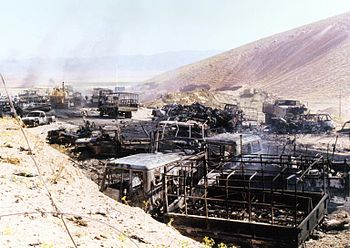
Maddah continued, “One of the crimes they committed was Operation Chelcheragh, a military operation carried out by members of the MEK on June 18, 1988.”

He said, “The goal of this operation was to capture the border city of Mehran, 100 kilometers from Ilam. After capturing the city of Mehran, members of the group looted the city, killed more than 8,000 Iranians, and took 1,500 people as hostage.
The lawyer said that the MEK calls its force as National Liberation Army. “Which liberation army in the world would storm a hospital and assassinate people from two-year-old children to young people, men and women?” he added. “A liberation army is supported by the people based on international law, while the MEK assassinated ordinary people.”

According to Maddah, intimidating, killing civilians, having illegitimate goals, lack of public support, and violence and resorting to force are among the most important definitions of terrorism in international law.

He said, “Liberation organizations in international law have special characteristics that distinguish them from terrorist groups. These organizations usually move towards their goals by observing the rules of war and international law and use legitimate means to achieve their goals, not by war crimes such as shooting and executing innocent people.”

The plaintiffs’ lawyer added, “The liberation armies are internationally recognized and supported by international institutions. In contrast, the MEK was recognized as a terrorist group in many countries, including the United States and Europe.”

Maddah notified that the MEK’s army stole a large amount of military equipment and tools that were to be used against the Iraqi Baath regime, in Operation Chelcheragh. The group even mentioned this issue in its newspaper, Mujahed.

“Since this action was a widespread act against national security and territorial integrity, the crime can be an example of corruption on earth,” he suggested. “Also, since they used weapons against people and created fear and insecurity, this crime can also be an example of war.”

The lawyer, on behalf of his clients asked the judge to take action to attribute the crimes of corruption on earth and war to all the leaders of the MEK who are among the defendants in the case and to issue sentences for them commensurate with these crimes.

A number of former members of the MEK including Ali Ekrami and Iraj Salehi also attended the 40th court in order to testify about what they witnessed in Chelcheragh.

Families of victims of Operation Chelcheragh took the stand and asked the court to bring MEK leaders to justice. The son of Asad Soltani, the sister of Salem Alipour and the brother of Mohammadi demanded revenge for the blood of their beloved ones who were killed on June 18, 1988 in the Mehran-Dehloran region.

At the end of the hearing, the judge announced that the next hearing would be held on October 21.

October 11, 2025 0 comments
FacebookTwitterPinterestWhatsappTelegramSkypeEmail
MEK on the FTO list
Mujahedin Khalq Organization as a terrorist group

October 8 1997, MEK’s designation as an FTO

Twenty-eight years from today, the US Department of State designated the MEK as a Foreign Terrorist Organization.
On October 8, 1997, the US Department of State designated the Mujahedin-e Khalq (MEK), also known by the aliases Mujahedin Khalq Organization (MKO) and National Council of Resistance of Iran (NCRI), as a Foreign Terrorist Organization (FTO) under Section 219 of the Immigration and Nationality Act (INA).

At the time, the US government stated that the designation was part of a broader US government effort to combat terrorism by restricting support for violent activities and pressuring violent groups to cease their involvement in terrorism.

In response, the MEK claims that the Bill Clinton administration’s designation of the group as a an FTO was influenced by a desire to improve relations with Tehran during the presidency of Mohammad Khatami. However, American reports have emphasized that the group has a history of violent acts, including the murder of American citizens in Iran in the 1970s and an attempt to attack Iran’s mission to the United Nations in 1992.

Despite the MEK’s terrorist record of killing Iranian citizens and officials in the 1960s, the April 1992 attacks on 13 Iranian embassies and missions, including the Iranian mission in New York, were perhaps the closest in time and space to violate American laws on their territory. In these simultaneous attacks on Iranian government embassies and missions in ten different countries, MEK operatives used a variety of weapons, took hostages, and beat ambassadors and embassy staff, leading to the arrest of a number of MEK members.

The MEK was later delisted in September 2012. The official reason given for the delisting was a change in circumstances, including the group’s renunciation of violence and its cooperation in transferring its members from Iraq to Albania.

However, the extensive, multimillion-dollar lobbying efforts of the MEK and its supporters have been specifically documented in documents and reports as leverage to delist the MEK. The U.S. government stated at the time that the official justification for delisting the MEK focused on the group’s “behavior change” and “strategic considerations,” but concerns about the group’s cult-like nature and human rights abuses against its internal members, both before and after delisting, have been widely documented by various organizations and government reports.

The RAND Corporation, which published a document on the MEK specifically for the U.S. Department of Defense, and the Library of Congress have highlighted concerns about the MEK’s authoritarian leadership, the isolation of its members, and their psychological manipulation in separate reports.

The “strategic considerations” of the United States and its other Western partners may imbrace the famous proverb: “The enemy of my enemy is my friend.” But the historical record of the crimes of the MEK over the years since the 1960s is undeniable.

To verify the “change in behavior” of the MEK, the message attributed to the MEK’s leader Massoud Rajavi that was published by the group’s website, on December 24, 2024, is clear enough. Expressing his joy after the fall of Bashar al-Assad’s regime in Syria, he made the following request to the United States: “We do not ask for help from America. It is enough for it to return the weapons of the Liberation Army that it took from us.”

It is obvious that, Rajavi, following Golani’s path, is determined to continue using violence to achieve power in Iran. Historically, he has not refrained from any violent act against his fellow countrymen every time he has had access to arms and the borders of Iran. Whether or not the name of the MEK is on the list of terrorist groups, based on alleged strategic considerations and behavior change, the substantive truth of the MEK cannot be concealed.

By Mazda Parsi

October 8, 2025 0 comments
FacebookTwitterPinterestWhatsappTelegramSkypeEmail
Maryam Rajavi
Maryam Rajavi

Maryam Rajavi’s Ten-Point Plan Violates Iran’s Territorial Integrity

Maryam Rajavi’s ten-point plan has faced a lot of criticism, along with the lack of acceptance of the Mujahedin-e Khalq (MEK) among the opposition to the Iranian government. This criticism has mainly focused on the impossibility of this plan, the lack of credibility of the MEK as a democratic institution, and the historical context of the organization.

Most critics believe that despite the modern and pro-democracy appearance of the aforementioned plan, the implementation of this plan by the MEK is in contradiction with the MEK’s history and its authoritarian internal structure. However, in this article, we will discuss one of the provisions of the plan that is subject to criticism in itself: the seventh article of Maryam Rajavi’s ten-point plan for the future of Iran.

The seventh article of the so-called plan indicates a disregard for Iranian national and territorial integrity due to its stance on minorities’ autonomy. This is a complex issue with different interpretations.

Minorities’ autonomy or separatism

While the plan advocates for the self-governance of ethnic minorities including Kurds, within a so-called democratic framework, its implications for national integrity are debated among analysts and researchers.
“self-governance” within the context that Maryam Rajavi claims, refers to administrative and cultural autonomy. She claims that “Iran’s national unity and territorial integrity” would be the framework of such autonomy.

However, critics view any form of significant autonomy for ethnic minorities as a potential precursor to separatism, regardless of the claimed intentions, especially given the historical context of ethnic tensions in Iran.

History of cooperation between the MEK and the separatists

The MEK’s background indicates that its political wing, National Council of Resistance has a historical alliance with Kurdistan Democratic Party (KDP) which is an armed leftist separatist movement of Kurds in Iran. This have been considered as opportunistic and driven by shared opposition to the Iranian government. The KDP itself has historically sought greater autonomy for Kurds within Iran.

Besides, the MEK sympathizes with Jaysh al-Adl, a Sunni Islamist and separatist militia in Sistan and Baluchestan province. Although there is no credible evidence of cooperation between the two groups, the MEK media not only has not condemned the terrorist attacks of the group, but has always reported them with bias in favor of Jaysh al-Adl.

Documents were also recently published showing that the National Council of Resistance Office in the United States (NCRIUS) has provided financial aid to the Tahririyah Talab group of the Struggle for the Liberation of Ahwaz. According to this document, Alireza Jafarzadeh, the deputy representative of the National Council of Resistance in the United States, has provided $350,000 in financial assistance to Saeed Hamidan, the leader of the Struggle for the Liberation of Ahwaz, in order to “support” him and his so-called “liberation” movement.

In its efforts to destabilize the Iranian government, leaders of the MEK not only ignore national and territorial integrity but also, they try to synergize with separatist groups in order to seek power in Iran.

The nature of such alliance can be strategic, focusing on immediate shared goals against a common enemy but it has not succeeded in over four decades. It just definitely marks the very characteristic of the MEK as an opportunistic hypocrite group.

Mazda Parsi

October 5, 2025 0 comments
FacebookTwitterPinterestWhatsappTelegramSkypeEmail
Nejat Newsletter no.129
Nejat Publications

Nejat Newsletter No.129

INSIDE THIS ISSUE
1- Albanian Dignity rally held in Tirana
In the central square of Tirana, the “Albanian Dignity” rally was held with wide participation of citizens. This action was a response to the insults of the leaders of the Rajavi cult and a support for Iranian mothers who are expecting their children

2- Maryam Rajavi’s Ten-Point Plan and Internal Practices
As members of the MEK are reportedly subjected to forced religious rituals, forced hijab,
forced dress code, forced celibacy, forced labor, forced self-criticism and gender separation, available evidence suggests that Maryam Rajavi does not fulfill her ten-point plan within her organization.

3- From Misjudged Intelligence to Endless Wars: A Call to Reassess US Strategy
If Washington intends to reduce the likelihood of open-ended commitments, it must reform how it evaluates threats, validates information, and calibrates the use of force.
For more than two decades, the United States has engaged in a series of military operations far from its borders. These interventions have generated mixed strategic outcomes, …

4- MEK Rally Participation: Incentives and Recruitment of Vulnerable Population
The presence of black American protesters at Mujahedin-e Khalq (MEK) demonstrations outside the UN assembly building is the most recent show-off of the group’s so-called public support.
The Afro-Americans have been photographed by the journalists outside the 80th session of the UN’s General Assembly on September 23, 2025 in New York City.

5- MEK, a complex security challenge for Albania
The Mujahedin-e Khalq (MEK) is currently under criminal investigation in Albania for suspected cybercrime, inciting war, and other offenses, according to Balkan Insight. This comes after Albanian authorities conducted a raid on their Ashraf 3 camp in Manza, Durrës, on June 20, 2023.

6- Michael Rubin: the MEK seek to deny or silence discussion about their inconsistency
The prominent American journalist and former Pentagon official, Michael Rubin asserts that, the Mujahedin-e Khalq (MEK) and its umbrella National Council of Resistance of Iran (NCRI) seek to deny or silence discussion about the inconsistency in their activities rather than explaining about it.

7- About Nejat Society

To view the pdf file click here

October 4, 2025 0 comments
FacebookTwitterPinterestWhatsappTelegramSkypeEmail
Rajavi and Saddam
Mujahedin Khalq as an Opposition Group

Collaboration with Saddam: A Criminal Record That Rajavi Denies

The MEK leaders deny their cooperation with Saddam Hussein primarily because such an association significantly undermines their legitimacy and popular support, particularly within Iran, where they are widely viewed as traitors for siding with an enemy during the Iran-Iraq War.

This denial is a strategic effort to rehabilitate their image and present themselves as a legitimate opposition force for a democratic Iran.

The MEK’s cooperation with Saddam Hussein involved receiving arms, cash and a miliary base in Iraq called Camp Ashraf, from which they launched attacks against Iran during the Iran-Iraq War.
They also assisted Saddam Hussein in suppressing Kurdish and Shia uprisings in Iraq in 1991, although the MEK vehemently denies it.

This historical alignment with a hostile foreign power during a devastating conflict led to their deep unpopularity inside Iran.

By denying this cooperation, the MEK leaders aim to distance themselves from these controversial actions and present a more palatable image to international audiences and potential supporters.

Documents on MEK’s alliance with Saddam Hussein

The primary documents and testimonies confirming the cooperation between the Mujahedin-e Khalq (MEK) and Saddam Hussein include reports from the United States Department of State, declassifies intelligence documents, and testimonies from former MEK members and Iraqi officials.

Key evidence points to the MEK’s relocation to Iraq in the 1980s, their receipt of financial and military support from the Iraqi regime, and their participation in military operations alongside Iraqi forces, particularly during Iran-Iraq War and the suppression of the 1991 Iraqi uprisings.

A Specific document includes the “country Reports on Terrorism” published annually by the US State Department, which have historically detailed the MEK’s presence and activities in Iraq under Saddam Hussein’s Patronage.

Additionally declassifies intelligence assessments from various Western governments, though not always publicly available in their entirety, have corroborated these alliances.

Testimonies from former high-ranking MEK members, such as those collected by human rights organizations and independent researchers have also provided firsthand accounts of the MEK’s operational and logistical integration with Saddam’s regime.

Furthermore, statements from former Iraqi officials post-2003 have shed light on the extent of this cooperation, including the provision of arms, training, and intelligence sharing.

In the most recent court session examining the charges against 104 members of MEK as well as the organization’s nature as a legal entity, held on September 23rd, six former members of the group named Samad Eskandari, Hadi Shabani, Fathollah Eskandari, Kamand Ali Azizi, Doost Mohammad Farahi, and Foad Basri testifies about the MEK cooperation with Iraqi Baa’th regime during the Iran-Iraq War.

The impact of alliance with Saddam on Rajavi’s political career

The immediate impact of alliance with Saddam Hussein on the political career of Massoud and Maryam Rajavi was perceived as positive because they were successful in achieving some strategic goals as an armed opposition force.

Conversely, the long-term implications were detrimental, especially as Saddam’s regime was increasingly considered as invader to Iran and as an offensive regime that abused human rights of minorities, used chemical weapons against civilians.
Any leader including the Rajavis, closely associated with Saddam have been faced criticism and political fallout as his international standing deteriorated and finally his regime collapsed.

Sources:
1. Country Reports on Terrorism, US department of State
2. Reports of Human Rights Watch on the MEK, Human Rights Watch

October 1, 2025 0 comments
FacebookTwitterPinterestWhatsappTelegramSkypeEmail
MEK trial
Iran

Report on the 39th court session of the MEK’s trial

The 39th court session examining the charges against 104 members of the Mujahedin-e Khalq (MEK) as well as the organization’s nature as a legal entity, was held on September 23rd, in branch 11 of the Criminal Court of Tehran Province, presided over by Judge Amir Reza Dehghani.

At the beginning of the hearing, the judge asked the plaintiffs’ lawyer to take the stand and make his statement. Massoud Maddah said: The endless killing of children, men, women, young and old, and civilians is just a small part of the brutal crimes committed by mercenaries who were deceived by the leaders of this terrorist group. If we examine the history of the last few hundred years of Iran, we have never had mercenaries fighting for a foreign enemy and against the Iranian people, committing all kinds of brutal crimes and taking pride in these crimes, and worse, calling these crimes liberation and freedom-seeking.

Maddah reminded: The MKO had three types of cooperation with the Iraqi Baath regime during the 8-year imposed war on Iran. Military cooperation, espionage and intelligence cooperation, and supervision in the killing of the Iranian people. One of the separated members of this group, who is also mentioned on page 249 of the indictment, states that in explaining the world, Massoud Rajavi named Saddam and the sheikhdoms of the region as dictators and reactionaries of the region and called them aggressors, but when he issued a joint statement with Tariq Aziz [Saddam Hussein’s Minister], the analysis and theory changed. This was an example of Massoud Rajavi’s contradictory behavior.

The lawyer stated that numerous documents indicate that Massoud Rajavi had effective cooperation with the Iraqi Baath regime; while he considered this regime as reactionary and dictatorial. “This shows that this person’s entire behavior is deception, deceit, and contradiction,” he added.

Maddah told the court: The MEK claim to be liberating while they have killed, imprisoned, tortured, bombed, and even murdered two-year-old and one-year-old and eight-month-old children in Iran. Are they liberators or a terrorist group? In international law, the characteristics of a liberation movement or army include the independence of the country, the support of the people, and targeting legitimate targets. Not entering a house, martyring a two-year-old child, and then killing his parents. Liberation movements and armies observe international law and the rules of war.

He asked the court to refer the case to an international law expert, so that the issue can be clarified clearly.

Fathollah Eskandari former member of the MEK took the stand as an informed person. In Rajavi’s prison and organization, torture, inhumane killings, and severe mental and physical pressure were applied,” he told the court. “Many members were subjected to severe pressure.”

Eskandari said: “I worked in the repair shop of the MEK’s camp. Whenever we begged them to leave the group, it was as if they were giving us a choice between death and joining them: either get killed or leave!”

Samad Eskandari, another defector of the MEK who appeared at the stand told the court: On various occasions and in collective meetings, we heard Massoud Rajavi, the leader of the MEK, confess many times that he had received all the war equipment, tanks, cannons and other military equipment from the Iraqi army. In numerous joint meetings with Saddam Hussein, Rajavi convinced him to donate military equipment and financial aids.
“The MEK acted as the fifth column of the Iraqi army in operations against the Iranian forces and were in fact at his disposal like a special unit of Saddam’s army,” stated Samad Eskandari.

Hadi Shabani was also a defector of the Cult of Rajavi who spoke at the court. He recounted the MEK operation called Chelcheragh that was logistically sponsored by Iraqi army. “Because Iranian scouts were aware of us, we worked at night and stayed in the trenches that belonged to the Iraqi forces during the day,” he recalled. “The Iraqi army had given us these trenches.”

He added: By the night of the operation, we had two Russian 130 cannons and two 122 cannons, two of which were in the hands of the organization’s women and the other two were in the hands of our own forces. After Rajavi announced the operation, we were unable to fire much, because the cannons were both old and did not function well, and they went out of range very quickly. The important point is that in this operation, as the organization itself advertises and can be seen in their films, there was a lot of fire, while we ourselves knew that we did not have Katyushas or anything else. We only had four cannons. Of course, we later said that we didn’t have all these cannons and Katyushas because we hadn’t received the necessary training yet. Then they announced that these forces were the Iraqi army who had come to support us to carry out the operation, which they announced near morning had entered Mehran territory.

Then, Doost Mohammad Farhi, a defected member of the MEK, appeared on the stand as a witness and swore to tell the truth in court. He explained about Chelcheragh operation: I was also an infantryman in Operation Chelcheragh. During this operation, we were in the Mehran region for 2 days. The organization brought tanks to the Iranian border and left them at the border, and captured a number of personnel carriers and tanks inside Iran. All of these operations were with the help of Baathist forces. Baathist forces provided support from a distance. We also handed over the captured tanks to Baathist forces.

The next session of the court will be held on October 7th, 2025.

September 29, 2025 0 comments
FacebookTwitterPinterestWhatsappTelegramSkypeEmail
MEK Rally Participation: Incentives and Recruitment of Vulnerable Population
Mujahedin Khalq Organization's Propaganda System

MEK Rally Participation: Incentives and Recruitment of Vulnerable Population

The presence of black American protesters at Mujahedin-e Khalq (MEK) demonstrations outside the UN assembly building is the most recent show-off of the group’s so-called public support.

The Afro-Americans have been photographed by the journalists outside the 80th session of the UN’s General Assembly (UNGA) on September 23, 2025 in New York City. They are often bused to locations like New York City. Their presence is primarily attributed to financial incentives and recruitment through intermediaries.

Reports indicate that individuals, often from economically disadvantaged backgrounds, are offered payment, food, and transportation to attend these rallies, sometimes without full awareness of the MEK’s background or agenda. Recruitment offers may target vulnerable populations, leveraging their need for income.

The MEK, with a complex history of terrorist activities, cult-like nature and extremism including a period on the list of Foreign Terrorist Organizations (from 1997 to 2012), has been known to employ various tactics to bolster its public image and demonstrate support.

Similar tactics are used by the MEK recruiters in Europe. People from various backgrounds, including Ukrainian and Syrian refugees and Asian university students are bused in to Paris, Berlin or Brussels in exchange for a sandwich, bus tour and a one-night stay in a hostel.

These tactics include organizing large-scale events and rallies, often relying on paid participants to create an impression of widespread backing.
The MEK’s ability to mobilize these groups stems from its significant financial resources which are derived from various sources including state sponsors like Saddam Hussein and eventually the group’s investments on the donated money.

The group’s strategy involves presenting a diverse appearance at its rallies to counter criticism of its limited internal support and to project an image of broad international backing for its agenda.

Mazda Parsi

September 28, 2025 0 comments
FacebookTwitterPinterestWhatsappTelegramSkypeEmail
MEK - Inside and outside view
Mujahedin Khalq Organization's Propaganda System

Clear Difference Between Ashraf Residents and MEK Protesters

The clearly perceived difference between members of the Mujahedin-e Khalq (MEK) in their headquarters in Albania and their alleged supporters in the streets of western cities, is originated from varying contexts of public presentation and individual autonomy.

In the MEK’s camp called Ashraf 3, located near the village Manez, Albania, female members are coerced to wear uniforms and hijab, and male members are supposed to wear uniforms, long-sleeved shirts and pants. This disciplined appearance, reflects the MEK’s structured environment and its severe emphasis on collective identity. Moreover, in his recent message, the group’s disappeared leader, Massoud Rajavi evidently declared that Mujahed women (female members of the MEK) do not remove their hijab because he does not want to make the Iranian leaders happy!

Conversely, supporters of the MEK participating the group’s demonstrations in Western cities like Brussels or New York are typically individuals who may or may not be full-time MEK members.

Also, a large part of them are sympathizers who are kept related to the group by a family member who is an official member at Ashraf 3.

The appearance of public protesters is more likely to reflect personal choices, local cultural norms, and the diverse demographics of rented crowds, who are bussed from all over Europe or the United States to show up as Iranian diaspora. The Afro-Americans in the MEK’s recent rally outside the 80th session of the UN’s General Assembly (UNGA) on September 23, 2025 in New York City, are examples of rented protesters.

The so-called supporters of the MEK who wave the flags of the group’s logo and wear the yellow vests with the printed portraits of Massoud and Maryam Rajavi on them, are mobilized by the group’s front groups like OIAC (Organization of Iranian American Communities). The MEK leaders aim to present a mainstream and relatable image to Western audiences, which involves adopting contemporary Western attire rather that a cult-like uniform look associated with the MEK’s internal structure.

As a matter of fact, The MEK’s internal structure does not engage in free choice of clothing and appearance. MEK male members are not even free to choose diverse styling options for their mustache and beard. Only mustache is allowed for them.

This distinction between the appearance of MEK protesters and Ashraf residents highlights the strategic efforts of the MEK and its affiliates to project different images depending on the audience and setting.

Images of Ashraf 3 fosters a sense of internal burden while public demonstrations abroad prioritize to show off as a democratic movement that opposes both theocracy and monarchy. This is clear hypocrisy.

Mazda Parsi

September 24, 2025 0 comments
FacebookTwitterPinterestWhatsappTelegramSkypeEmail
Newer Posts
Older Posts

Recent Posts

  • The black box of the torture camps of the MEK

    December 24, 2025
  • Pregnancy was taboo in the MEK

    December 22, 2025
  • MEPs who lack awareness about the MEK’s nature

    December 20, 2025
  • Why did Massoud Rajavi enforce divorces in the MEK?

    December 15, 2025
  • Massoud Rajavi and widespread sexual abuse of female members

    December 10, 2025
  • Facebook
  • Twitter
  • Instagram
  • Youtube

© 2003 - 2025 NEJAT Society . All Rights Reserved. NejatNGO.org


Back To Top
Nejat Society
  • Home
  • Articles
  • Media
    • Cartoons
    • NewsPics
    • Photo Gallery
    • Videos
  • Publications
    • Books
    • Nejat NewsLetter
    • Pars Brief
  • About Us
  • Contact us
  • Editions
    • عربي
    • فارسی
    • Shqip