Nejat Society
  • Home
  • Articles
  • Media
    • Cartoons
    • NewsPics
    • Photo Gallery
    • Videos
  • Publications
    • Books
    • Nejat NewsLetter
    • Pars Brief
  • About Us
  • Contact us
  • Editions
    • عربي
    • فارسی
    • Shqip
Nejat Society
Nejat Society
  • Home
  • Articles
  • Media
    • Cartoons
    • NewsPics
    • Photo Gallery
    • Videos
  • Publications
    • Books
    • Nejat NewsLetter
    • Pars Brief
  • About Us
  • Contact us
  • Editions
    • عربي
    • فارسی
    • Shqip
© 2003 - 2024 NEJAT Society. nejatngo.org
Albania

MKO high-rankings in Albania to keep relocated members under surveillance

Another 11 MKO members set foot in Albania

Another 11 members of the anti-Iran terrorist Mujahedin-e Khalq Organization (MKO) have been transferred to Albania from Iraq.

Informed sources at the UN office in the Iraqi capital, Baghdad, said the group, comprised of 10 women and a man, had resided in Camp Liberty in Iraq before being transferred to Albania. 

Meanwhile, three leaders of the terrorist organization have also arrived in the European country from France to keep relocated members under closer surveillance. 

The MKO is listed as a terrorist organization by much of the international community and has committed numerous terrorist acts against Iranians and Iraqis.

The group fled Iran in 1986 for Iraq, where it received the support of Iraq’s executed dictator Saddam Hussein and set up Camp Ashraf near the Iranian border.

Out of the nearly 17,000 Iranians killed in terrorist attacks since the victory of the 1979 Islamic Revolution, 12,000 have fallen victim to the acts of terror carried out by the MKO. The group also sided with Saddam during Iraq’s eight-year war on the Islamic Republic.

In December 2011, the United Nations and Baghdad agreed to relocate some 3,000 MKO members from Camp New Iraq, formerly known as Camp Ashraf, to the former US-held Camp Liberty.

The last group of the MKO terrorists was evicted by the Iraqi government on September 11, 2013 to join the other members of the terrorist group at Camp Liberty and await potential relocation to other countries.

Last March, then Albanian Prime Minister Sali Berisha announced in a statement that the Albanian government is ready to accommodate 210 members of the MKO group in Tirana.

Nearly 160 MKO terrorists had been previously granted asylum by the Albanian government.
March 25, 2014 0 comments
FacebookTwitterPinterestWhatsappTelegramSkypeEmail
Nejat Publications

Pars Brief – Issue No. 78

Inside this Issue:

  1. Obama pushes Israel to stop assassinations of Iran nuclear scientists – report
  2. John Kerry Gets Pressed To Grant Asylum To Former Terrorist Group Mojahedin Khalq
  3. Iraq urges UN to speed up relocation of MKO terrorists
  4. Iran can demand extradition of MKO members: Iraqi min.
  5. Mojahedin Khalq threatens French group protesting their presence in France
  6. UNHCR thanks Italy for welcoming Iranian refugees
  7. Manufacturing a Narrative for War – Gareth Porter on Reality Asserts Itself (2/3)

Download Pars Brief – Issue No. 78

March 20, 2014 0 comments
FacebookTwitterPinterestWhatsappTelegramSkypeEmail
Mujahedin Khalq; A proxy force

Manufacturing a Narrative for War – Gareth Porter on Reality Asserts Itself (2/3)

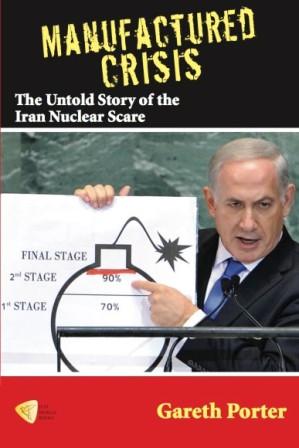
Mr. Porter tells Paul Jay about his new book “Manufactured Crisis: The Untold Story of the Iran Nuclear Scare”

Bio

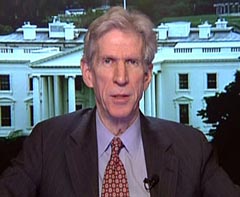
Gareth Porter is a historian and investigative journalist on US foreign and military policy analyst. He writes Manufacturing a Narrative for War – Gareth Porter on Reality Asserts Itself (2/3)regularly for Inter Press Service on US policy towards Iraq and Iran. Author of five books, the latest of which is Manufactured Crisis: The Untold Story of the Iran Nuclear Scare.

Transcript

PAUL JAY, SENIOR EDITOR, TRNN: Welcome back to The Real News Network. I’m Paul Jay in Baltimore. And this is Reality Asserts Itself with our guest, Gareth Porter, who joins us in the studio.

Thanks for joining us, Gareth.

GARETH PORTER, INVESTIGATIVE JOURNALIST: Thanks again.

JAY: So, one more time, Gareth is a historian, an investigative journalist. He covers U.S. and foreign and military policy. His most recent book is Manufactured Crisis: The Untold Story of the Iran Nuclear Scare.

So, in the first part we talked a bit about Gareth’s background, but we got up to the point where it was clearly the policy of the American neocons, of Israel—and I think we now know the Saudis were very much on board—from the late 1990s, at least, if not before, regime change in Iran was the big foreign policy objective. We talked about the Project for the New American Century, which kind of laid this all out fairly clearly, a document created by neocons towards the end of the Clinton administration. As the weapons of mass destruction narrative helped Bush and Cheney invade Iraq, they needed a narrative for an attack eventually on Iran. And that begins what Gareth picks up in his new book.

So thanks, Gareth.

So they needed to manufacture a whole narrative that would justify war. So how do they go about doing that?

PORTER: They went about doing it first of all by establishing John Bolton, who was the primary policymaker on WMD for the Bush administration, was—.

JAY: Who helped manufacture the whole Iraq narrative.

PORTER: He was the person who was coordinating this on the American side with Israel, working very closely with them, clearly. And his first move was to make sure that the IAEA would not be able to allow Iran to get by without being accused of having a nuclear weapons program, and he didn’t believe that would be possible unless some special moves were made.

JAY: Okay. Just a little bit of context. In 1968, under the Shah, Iran signs the NPA, the non-proliferation agreement, and agrees not to proliferate nuclear weapons technology and not to build weapons. Just for a little piece of context, it’s around—not that much later than that, but certainly Israel does not sign the agreement and, as we now all know, has many nuclear weapons—I think, what, it’s at least 200, if not more. So does India and Pakistan develop nuclear technology. Pakistan, and probably India, but certainly Pakistan directly with American assistance developed nuclear technology, do not sign the NPA. And I’ll repeat it again, but we’re going to pick up the story now: not any real evidence that Iran has ever violated the NPA, even though people keep suggesting they are.

Alright. Pick it up.

PORTER: So what Bolton was concerned about was that the IAEA’s handling of the Iran file was too easy on Iran. He was demanding actual evidence, actual proof that Iran had a covert nuclear weapons program. And, in fact, in 2003, the IAEA published a report, in November ’03, that said, you know, Iran had not reported all of its experiments using nuclear material during the previous years, but that it did not have any evidence that Iran had in fact done this in order to carry out a nuclear weapons program. There was no evidence of that.

So the Bush administration people were apoplectic about that, and particularly John Bolton. And so he was determined to move that file out of the IAEA into the UN Security Council. He talks about this in his memoirs, that he would make sure that Mohamed ElBaradei, the director-general of the IAEA at that point, would not be able to frustrate the strategy that they had in mind, which was to build a case that Iran was in fact a would-be nuclear power, to use that as a basis for, as you have pointed out, the military option against Iran, which it was understood in the inner core of the Bush administration that they might have to use military force as Iran got closer and closer to what they said was a bomb. And that, of course, was the Israeli position as well at that point. So that was the initial phase of this.

And around the same time, the Israelis then had a brilliant idea, which was that in the absence of any proof that they could come forward with to show that Iran was, you know, trying to get nuclear weapons, they would create a file of documents, a cache of documents, which would be attributed to a covert nuclear weapons program on the part of the Iranians. They would give it to the Mojahedin-e-Khalq, the terrorist organization, so-called—not just so-called, but listed as a terrorist organization, with good reasons, by the State Department and other European countries. And then that would be passed on to Western intelligence, ultimately to be used to make the public case by the United States [crosstalk]

JAY: How do we know that the documents the MEK handed over came from Israel?

PORTER: Well, that’s what I’m getting to, because that’s the major revelation in my book. I learned this from a former senior foreign office official in Germany named Karsten Voigt. He was in charge of coordination of German-U.S. relations and had been since 1997, until he retired in 2010. He was the only person who had held that position all that time. And I interviewed him in March 2013. (7:01) He told me that in November 2004, after Colin Powell had made a public statement basically invoking this information from these documents without mentioning them specifically, and talked about Iran trying to mate a missile with a weapon, the BND, the German intelligence service, got in touch with him, and they were quite alarmed about this, because, they said, we know all about these documents; they came from one of our sources, who was somebody that we didn’t really trust; we knew he was a Mojahedin-e-Khalq member. (7:46) And therefore they did not think that this source was trustworthy. And so now they find Colin Powell invoking this information, looking like he was trying to build a case for war against Iran.

And, of course, only two years earlier the same thing had happened on Iraq. The BND had a source, now known as Curveball, who had made up these stories about mobile bioweapons labs that Colin Powell had then used in the UN speech. So they were afraid that the Bush administration was going to do the same thing on Iran that it’d done on Iraq. And so they were alarmed. And they were going to him because he was the U.S. guy in the foreign office. They told him about this, and he understood from this that they wanted him to do something to warn the Americans.

JAY: What year are we in?

PORTER: November 2004. So a few days after that meeting with the BND people, senior members of the BND, this guy, Carson Voigt, went to The Wall Street Journal and told them—he was quoted as saying, in The Wall Street Journal, the United States and Europe should not make their policy on the basis of these documents; they were brought in by a dissident group, an Iranian dissident group. That’s all that—that’s the way it was printed in The Wall Street Journal. So he was doing his part to try to warn the Americans.

But, of course, we know that the BND had warned the CIA, George Tenet, two years earlier about Curveball and he didn’t do anything about it. So it’s clear that the CIA knew about this as well, they knew this came from the MEK, and they weren’t going to do anything about it either.

JAY: What is the attitude towards all this of the American intelligence agencies? ‘Cause it’s not too much later, in 2007, their national security estimates come out and clearly say there is no weapons program. There may have been something before ’73, which the Iranians, I believe, deny, but the American intelligence agencies concluded that there was something pre-’73.

PORTER: Two thousand three, yes.

JAY: Yeah.

PORTER: Two thousand three.

JAY: I’m sorry. But nothing now. So they seem to have discounted this material.

PORTER: Well, here’s what actually happened. I mean, I’ve gotten the full story about that 2007 national intelligence estimate from Thomas Fingar, who was in charge of it and who I interviewed last year when he was in the U.K.—I happened to be there as well at the same time. And Fingar told me that, in fact, although the people doing the estimate were committed to members of Congress, senior people in Congress, who they promised this estimate to, they said they were going to reevaluate Iran’s nuclear intentions, and very thoroughly. They weren’t going to depend on previous estimates. They weren’t going to even pay any attention to previous assessments. They were going to start afresh and evaluate on the basis of whatever information they could find, carefully evaluate and analyze the intentions of Iran. They didn’t do it. He said, six months after they had started, when they did a first draft, they had essentially reaffirmed the previous judgments of the intelligence community, which had said Iran does have, in fact, a nuclear weapons program. They did in 2001. Two thousand five, again they reaffirmed that there was an Iranian nuclear weapons program. So they didn’t do what they had set out to do.

JAY: Which is telling Bush–Cheney what they wanted to hear.

PORTER: Well, in a sense I think they had become captive to this narrative that they had internalized in the intelligence community.

But there’s another factor here, which relates precisely to the previous theme that we’d been talking about, and that is that I ask specifically to Fingar: what about the laptop documents, this set of documents which had been used to show that Iran had a secret nuclear weapons program? He said, well, yes, I mean, this was a very significant part of our thinking, because before those documents, there had been some ambiguity about the Iranian nuclear intentions with those documents that was clearer. So they obviously took them seriously. They believe they’re authentic. And they were relying on them in large part in making their judgments.

So this is an NIE that is seriously flawed. It’s based on false information. It’s based on false analysis of [crosstalk]

JAY: This is ’07?

PORTER: The ’07.

JAY: Well, when does the estimate come—when is the estimate when they say there is no weapons program?

PORTER: Well, they were saying that there was a weapons program in 2003, 2001 to 2003, in this 2007 estimate. But then they said they found—and this is what changed things—they found information—they obviously cracked somebody’s computer, although they’re not—they never said that. They cracked some computers in Tehran, and they were able to get a rather angry statement by somebody who had been involved in doing research related to nuclear weapons, saying, we’ve been shut down, I can’t do this anymore, and they were upset about it. And so that, apparently, was the basis for the people doing the NIE to say, we can now confirm that there was a nuclear weapons program from 2001 to 2003.

But that’s not the whole story. And what I show in my book is that the evidence that there was an actual nuclear weapons program, rather than independent work by a few people or, you know, possibly, you know, one or two people doing experiments or whatever, we don’t know what they did. I couldn’t find out from him, you know, what kind of evidence—I don’t think they knew anything about what was actually done. So the evidence of an actual nuclear program, even 2001 to 2003, is extremely weak.

JAY: Okay. But let’s—whether there was or wasn’t, the ’07 intelligence estimate concludes that there isn’t now.

PORTER: There was not then, that there was not then. That’s precisely right.

JAY: Yeah, which took a lot of the wind out of the Cheney–Bush sails heading towards war with Iran.

PORTER: But until they found that evidence, they were still saying that there is a nuclear weapons program today. As of mid 2007, they were still saying it on that first draft. But they changed it after they got the new evidence.

JAY: But coming out and saying that was—flew in the face—

PORTER: That’s right.

JAY: —of the whole official narrative and everything Bush and Cheney wanted.

PORTER: My point is that they came very close—

JAY: I get it.

PORTER: —to reaffirming that there was still a nuclear weapons program in mid 2007.

JAY: Based on this MEK stuff.

PORTER: Right. Right.

JAY: But then they must discount the MEK stuff, then.

PORTER: But they didn’t. They didn’t discount it.

JAY: No, but when they finally come out—.

PORTER: No, they didn’t discount it, they still didn’t discount it, because it was about 2001 to 2003.

JAY: Oh, the MEK stuff was about the earlier period.

PORTER: Yes.

JAY: At any rate, the NIE does come out in ’07, and it certainly takes the steam away from what—if Cheney was heading towards war with Iran, which a lot of people think that’s what he wanted. And in the next part of our interview, I guess, we will get into all this, because it seemed pretty clear they wanted this war and didn’t get it. And my question will be: why? And that’s what we’re going to pick up on the next segment of our series of interviews on Reality Asserts Itself on The Real News Network.

End

DISCLAIMER: Please note that transcripts for The Real News Network are typed from a recording of the program. TRNN cannot guarantee their complete accuracy.

The Real News,

March 19, 2014 0 comments
FacebookTwitterPinterestWhatsappTelegramSkypeEmail
Mujahedin Khalq; A proxy force

Israel Provided IAEA with Fake Documents on Iran’s Nuclear Program

Iran Review’s Exclusive Interview with Gareth Porter

The controversy surrounding Iran’s nuclear program in the recent decade has been the subject of millions of statements, thousands of news stories and articles, hundreds of speeches and interviews and tens of books and films. One of the most brilliant, revealing and educative books about Iran’s standoff with the West over its civilian nuclear program has been recently published by the prominent American investigative journalist Gareth Porter.

Gareth Porter is a leading American journalist, historian, anti-war activist and correspondent of the Vietnam War. Porter’s writings have appeared on such publications as The Nation, Inter Press Service, The Huffington Post, Truthout, Al-Jazeera, Press TV, Antiwar.com and Common Dreams. Porter is the 2012 winner of Martha Gellhorn Prize for Journalism, which is awarded annually to a journalist who exposes media propaganda.

Gareth Porter has recently published a book titled “Manufactured Crisis: The Untold Story of the Iran Nuclear Scare” which discloses the unseen and masked truths behind the decade-long standoff over Iran’s nuclear program. In this book, Porter endeavors to reveal the destructive role Israel has played in the exacerbation of Iran’s relations with the West over the former’s nuclear activities. Porter maintains that Iran’s nuclear program is completely legal and regularly inspected, abused by the United States and Israel as a pretext for pressuring Iran.

The former U.S. ambassador to Saudi Arabia Charles W. Freeman is one of many high-ranking diplomats and academicians who have praised Porter’s book. He writes, “Want to understand why a peaceful U.S. modus vivendi with Iran has been so elusive?  Read this exceptionally timely, gripping account of the Iranian nuclear program and the diplomacy surrounding it! Porter meticulously documents both Iranian misjudgments and American and Israeli diplomatic overreach based on willful self-deception and political, bureaucratic, and budget-motivated cherry-picking of intelligence to support unfounded preconceptions.”

On the publication of Gareth Porter’s vital book on Iran’s nuclear program by the Just World Books publications, Iran Review has conducted an exclusive interview with the American journalist and has asked him some questions on the important aspects of Iran’s nuclear program and its ongoing disputes with the West, which seem to be solved gradually during the course of talks between Iran and the P5+1 (five permanent members of the UN Security Council plus Germany.)

Gareth Porter believes that although the U.S. President Barack Obama regularly talks of all options being on the table in dealing with Iran’s nuclear program, his government does not have a clear understanding of what these options are: “under Bush, at least in the early period, there was an overt understanding between Israel and the top policymakers in the Bush administration that they would follow a joint strategy which was aimed at regime change, but that’s not the case with Obama. His policy is much more ambiguous and less distinct. I think he wants to resolve the issue, but he is still under the pressure from the Israeli lobby which restricts his freedom of action. He and his senior advisors are under the influence of a false narrative for so long that I don’t think they understand what the real options are.”

What follows is the text of Iran Review’s interview with Mr. Porter.

Q: Your recently published book on the controversy surrounding Iran’s nuclear program is titled “Manufactured Crisis,” and as you may admit, Iran’s nuclear program was set in motion in 1950s by the then U.S. President Dwight Eisenhower as part of the Atoms for Peace project for helping Iran meet its growing energy demands. However, following the Islamic Revolution in 1979, the Americans stopped their nuclear cooperation with Iran, and since early 1990s, began intensively pressuring Iran to abandon its nuclear program, while there hasn’t ever been any evidence showing Iran’s diversion to militarization of its nuclear activities. Why do you think the U.S. changed its attitude toward Iran’s nuclear program while they were the ones who started it? Was it a matter of alliance with the United States and compliance with its Middle East policies?

A: I think there are a couple of factors that are combined to influence and shape the U.S. decision-making about the Iranian nuclear program. The first factor is of course that the United States had a foreign policy by 1981-82 to support Saddam Hussein’s war against Iran. It was secretly helping to arm Saddam Hussein and supporting him in various ways. They clearly had a stake in trying to prevent Iran from prevailing in that war and I was told by the former National Security Council staff and specialists on Iran at that time under the Reagan administration that the policy was largely influenced by the 8-year war between Iran and Iraq. I think behind that, of course, there is a much more fundamental element and policy on the part of the United States of hostility toward the Islamic Revolution in Iran as a challenge to the U.S. power prestige in the Middle East, and I would also say that importantly, because of a what I would call a dirty war taking place in Lebanon in the mid-1980s where the CIA was carrying out covert operations, and at the same time, that there were Shiite militias working against the U.S. forces and CIA personnel, in particular in the Beirut area, the CIA lost a significant number of personnel in that dirty war; first there were a group killed in the bombings of the U.S. Embassy and the others were kidnapped and tortured to death. That undoubtedly created a very strong desire on the part of the U.S. national security state to get back and take advantage of the war against Iran, so I think that played a role in the U.S. policy in that period.

Q: So, do you also think that the pressures being put on Iran over its nuclear activities is part of a U.S. strategy to prevent Iran from becoming a regional superpower through acquiring a nuclear capability?

A: I’m not exactly sure how you are using the term nuclear capability. I assume you mean becoming a superpower by having a nuclear program. Is that what you mean?

Q: Well, I actually mean acquiring nuclear capability will be a deterrent for Iran and it might dissipate Israel’s nuclear monopoly in the Middle East even though we know Iran’s nuclear program is solely aimed at peaceful purposes.

A: That’s a very much complicated problem to disentangle exactly what the strategic calculations are with regards to the relationship between Iran’s nuclear program and Israel’s obviously possessing 300 or so nuclear weapons, and how that plays out. I don’t really think that the United States policy has been based on very finely calculated vision of how things would be in the future. As I point out in the book, the Bush administration’s policy toward Iran was one of a regime change. They really wanted to overthrow the Islamic regime, just as the previous U.S. administrations had wanted to do, going back to the Reagan administration. They believed that they had to use force, and there was no doubt about it, and I think the initial calculation of the Bush administration, which really began in 2002 and 2003, as I point out in the “Manufactured Crisis” was that the United States would be able to use the accusation of an Iranian covert nuclear weapons program as a basis for justifying a military attack on Iran to change the regime. That obviously didn’t play out as they expected. For one thing, the Bush policy changed from regime change to pressure through sanctions. But I think that was also one of their miscalculations.

I think the Obama administration policy, when it came to power in 2009 was really that they didn’t have a clear strategy toward Iran but was leaning much more toward sanctions as its primary policy rather than diplomacy as it was publicly claiming, especially at the time of the presidential elections. So, generally I think the U.S. policy has been geared to very broad, and in the case of Bush administration, militaristic objectives rather than a very carefully calculated assessment of the region.

Q: You talked about George W. Bush’s policy on Iran. Do you think that his war threats were really credible and serious as he constantly made statements on all options being on the table? He couldn’t ever realize his war threats. Did he really mean what he said that he intended to attack Iran?

A: Well, I don’t think the problem was so much George W. Bush as it was his group of neo-conservative advisors and high officials, specifically the Vice President Dick Cheney and his senior Middle East advisor David Wurmser, as well as John Bolton, the then under-secretary of state in charge of policy toward Iran and the main administration’s policymaker on Iran as well as weapons of mass destruction; we know that Bolton cooperated with the Israeli government closely. He traveled to Israel frequently; he met in some cases with the Mossad chief in 2003, which were not approved by the State Department, and the circumstantial evidence strongly indicate that the manufactured crisis was really planned by Bolton in conjunction with the Israelis. They together mapped out a plan that they expected to lay the groundwork for what they believed would be ultimately the military option on Iran. So, I think we are talking about a plan for striking Iran that was planned by the Israelis and their strongest supporters and allies in the Bush administration.

Q: In your recent book, you imply that the IAEA has been somehow deceived by the reports provided to it by the Western governments, which usually came out from Israel, that there has been a military dimension to Iran’s nuclear program prior to 2003. This is while the IAEA inspectors traveled to Iran and investigated the country’s nuclear facilities in the past decade tens of times. Why is it that the IAEA has been influenced by the Israeli claims while it couldn’t present any evidence to substantiate the claims?

A: The answer to the question is that the safeguards department of the IAEA was led by two individuals during that crucial period when the events took place, who were extremely anti-Iran and pro-Israel, worked closely with the Israelis and were happy to take intelligence from the Mossad and were working hand in glove with the Bush administration and Israel. They were [Pierre] Goldschmidt and [Olli] Heinonen; the two directors of the safeguards department of the IAEA at that period; Goldschmidt from 2003 to 2005 and then Heinonen from 2005 to 2011, and in both cases, it’s clear that they were both much at odds with the view of the Director General of the IAEA Mohamed ElBaradei and other high officials of the IAEA.

In fact, I recently had an interview with the former senior official of the agency who further elaborated on those differences and pointed out that outside the safeguards department, senior officials were not at all convinced by these documents, including the laptop documents which the IAEA called the alleged studies, and the green salt papers, believing that they were probably fabricated, and they suspected Israel all long as the logical candidate. So I think that we have to differentiate within the IAEA between the leadership of the safeguards department who were working closely with the United States and Israel on one hand, and the other senior officials of the agency including of course ElBaradei himself, who were extremely skeptical of that document. I think that the interesting questions is, why ElBaradei thought that he could not prevent particularly since 2008 onward from publishing a series of reports that leaned very strongly toward the U.S.-Israeli position, which other senior IAEA officials including ElBaradei didn’t agree with. I think that the answer is that the IAEA was under very great pressures by the United States and the Europeans, including enormous pressures on ElBaradei to make compromises with regards to their decisions.

Q: Right. I read in Peter Jenkins’ analysis of your book that Israel has fabricated certain documents, including the information said to have been retrieved from a laptop computer in Iran in 2004, as you mentioned earlier, and the fabricated, fake data helped keep Iran’s nuclear controversy alive. Would you please elaborate more on Israel’s involvement in providing the U.S. and the IAEA with the false and groundless data and how they complicated Iran’s nuclear dossier?

A: Well, I think that evidence that Israel was fabricating these documents that the IAEA received in 2005 as well as later documents turned over to the IAEA directly by Israel in 2008 and 2009, according to Mohamed ElBaradei, is very strong, and there are several indicators that it was an Israeli job. One is that we know the Mujahedin-e-Khalq turned these documents over to German intelligence; that’s where they came from. A former German intelligence official gave me a detailed account of that in an interview I did with him last year for my book. So, that’s the first indication that it was an Israeli job, because the MEK, we know, has been used by Israel to provide the intelligence they didn’t want to be known as coming from Israel on more than one occasion. And of course the MEK has let its name to testimony to support the Israeli point of view on accusations of Iranian terrorism, specifically in the case of the Buenos Aires bombing of the AMIA community center in 1994. That’s one indicator.

The second indicator is that we know the Israelis had a program in Mossad to influence the foreign governments and news media on Iran and that office sometimes basically claimed that there were documents that come from inside Iran that they would share with the governments and the press. So they had a special office for operations against Iran. So, I’m quite convinced that Israel was behind these documents.

Q: Many of the sanctions which were imposed on Iran following the publication of the National Intelligence Estimate reports in 2007 that cleared Iran of all the accusations that it’s intending to produce nuclear weapons were hinged on the basis of allegations made by the Israelis like their claims about Iran’s nuclear tests in the Parchin military site. The Americans and the Europeans were frightened and took action to avert the perceived Iranian threat by imposing new rounds of sanctions again and again. However, it’s now clear that the claims were baseless and unfounded. How is Israel going to be held accountable over the prices it imposed on Iran, the United States and Europe by complicating their relationships?

A: I don’t understand why you would expect Israel to be held accountable. There’s no indication that any of the major powers have any intention to hold Israel accountable. I don’t think that’s an issue. I don’t think that’s going to be a realistic possibility.

Q: Are you trying to impart this message in your book that following the collapse of the Soviet Union, the U.S. military-industrial complex needed a new threat and enemy to fight against, and that also Israel was in dire need of an existential threat to deflect attention from its felonies in the Occupied Territories and its brutalities against the Palestinian people and keep up with its project of colonial settlements on the Palestinian lands? Has Iran’s nuclear program served as a pretext for the United States and Israel to further their national interests?

A: Yes, that’s one of the themes of my book. Both the United States national security establishment or the national security state and successive governments, both Labor and Likud in Israel, have found citing the alleged threat of an Iranian nuclear weapon as useful both for domestic politics in the case of Israel, and for essentially making sure that the national security organizations, particularly the CIA and Pentagon continue to get adequate funding after the collapse of the Soviet Union. I have documents on both cases, and some links that is one of the reasons I think this crisis ultimately arose and I’m suggesting that this is the only and necessarily the main reason it’s possible that this couldn’t happen even when the Soviet Union existed.

Q: What do you think about the approach taken by IAEA toward Iran following the stepping down of Mohamed El-Baradei and the beginning of Yukiya Amano’s term? Is it true that Amano has been enormously under the influence of the United States and has failed to provide impartial and unbiased reports on Iran’s nuclear activities?

A: Well, Amano clearly is much more willing to cooperate with the United States than ElBaradei was. I think ElBaradei bowed to some significant extent to the U.S. pressure, allowing the safeguards department to have a sway in determining what would be the IAEA reports in 2008 and particularly in 2009, but Amano clearly has an understanding of the basis on which the United States supported Amano to become the successor to ElBaradei in 2009. This is well-documented in the diplomatic cables released by Wikileaks and we know for sure that Amano has an understanding of the U.S. support strategy when he was about to become the successor to ElBaradei.

Q: What’s your viewpoint regarding the importance of the Geneva interim accord on Iran’s nuclear program and the new round of talks in Vienna for a final, comprehensive agreement between Iran and the six world powers? Do you think that these talks can pave the way for the complete solution of the nuclear standoff and the removal of the unjust economic sanctions?

A: I would be plausibly surprised if that happens. I have to say that I feel overall somehow pessimistic about the possibility for reaching an agreement, but I hope I’m wrong. The reason I’m pessimistic is that I see so many indications that the Obama administration’s senior officials during the course of the negotiations are still very much under the influence of the false narrative that I deconstruct in my book, and I think that is undoubtedly leading the United States toward adopting a much harder line in the negotiations than it would otherwise be the case, and I’m just afraid that there’s not going to be a breakdown in the talks and it’s inevitable.

Q: Having in mind what you just said, do you believe that President Obama is striding on the same path of George W. Bush and following a policy of regime change in Iran under the influence of AIPAC and other Israeli advocacy groups?

A: No, this administration is not the same as the Bush administration with regards to its relationship with Israel and the Israeli lobby. As I said before, under Bush, at least in the early period, there was an overt understanding between Israel and the top policymakers in the Bush administration that they would follow a joint strategy which was aimed at regime change, but that’s not the case with Obama. His policy is much more ambiguous and less distinct. I think he wants to resolve the issue, but he is still under the pressure from the Israeli lobby which restricts his freedom of action. He and his senior advisors are under the influence of a false narrative for so long that I don’t think they understand what the real options are. I think they are under the illusion that they don’t have the freedom to reach an agreement with Iran without risking the United States security and I think they are under a false impression over several issues.

Q: I just want to ask you a final question. What do you think about the impact of the economic sanctions imposed against Iran? Do you think that the sanctions have a legal warranty and justifiability?

A: No way, I don’t believe the sanctions are justified. The entire intention of my book is to show that the U.S. policy in accusing Iran is unjustified and this simply misrepresents the actual history of the interaction between the United States and Iran’s nuclear program. So, there’s no justification to the sanctions.

Key Words: Israel, IAEA, Fake Documents Iran’s Nuclear Program, U.S. President, Middle East Policies, George W. Bush, Barack Obama, Mohamed El-Baradei, Yukiya Amano, Geneva Interim Accord, AIPAC, Porter

By Kourosh Ziabari

March 18, 2014 0 comments
FacebookTwitterPinterestWhatsappTelegramSkypeEmail
Albania

A group of 11 Camp Liberty residents arrived in Tirana

Another group of MKO members residing at Camp Liberty as a temporary transit location transferred to Albania late last week, reported by Nimnegah Website.

Based on the reports the main building of the Cult of Rajavi in Tirana is under the strict control of high ranking members of the cult and in the main base they have installed closed circuit cameras. Just as in the Liberty Camp, members do not have access to the outside world in Tirana.

The group of 11 Camp Liberty residents who transferred to Albania comprised of 10 women and a man, Nimnegah reported as saying.

MKO leaders prevent any news to come out from those transferred to Albania. The cult elements in Tirana threatened the dispatched members not to give any information about the newly arrived.

Tirana has offered to house some 210 members of the MKO in Albania.

March 17, 2014 0 comments
FacebookTwitterPinterestWhatsappTelegramSkypeEmail
Mujahedin Khalq; A proxy force

No doubt on MKO-Israel collusion to kill Iranian Scientists

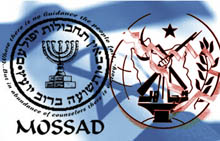
A few weeks ago the Iranian President Hassan Rouhani slammed the West for assassinating Iranian nuclear scientists in a bid to halt Iran’s process of development and progress although Western powers "all know that nuclear science in Iran follows a peaceful path". Almost at the same time Russia Today revealed that the Obama Administration is pressuring Israel to stop carrying out assassinations of top nuclear scientists in Iran where Mujahedin Khalq Organization has been Mossad’s proxy force to execute the killings.
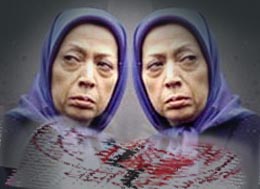
struggle against Islamic Republic. Therefore, the group had to be more cautious in its collaboration with the enemies of the Iranian government.

The MKO-Israel alliance apparently began in 2002 when the group allegedly revealed the Israeli intelligence material on the Iranian nuclear program. Gareth Porter the American journalist and historian, has been investigating the Iranian nuclear case for the best part of a decade. Porter revealed in an interview last year with Former senior German foreign office official Karsten Voigt for his newly-published book on the Iranian Nuclear issue " Manufactured Crisis " that senior officials of the German intelligence agency BND had told him in November 2004 that " the BND had gotten the entire collection of documents from a member of the Mujahedin-e-Khalq (MEK) who had been one of their sources, and that they did not consider the source to be reliable."[1]

Both Israel and the MKO have seen advantage in dramatizing the Iranian threat and in demonizing Iranian government. Thus the MKO has turned in to a tactical clandestine ally for Israel that already had its own strategic ally the United States. The triple alliance of the MKO, Israel, and America to run their political interests has ended with fabricating documents about what they call "Iranian nuclear weapon program". Therefore, their assessments do not seem to be rational, objective, and reliable. That is definitely why the US has refused to share with Iran the documentary evidence on which those allegations have been based – the documents handed to German officials by the MKO but originally provided by Israel.

"The MEK, considered by the United States and European states as a terrorist organization, had been used by Saddam Hussein’s regime to support the war against Iran and by Israel to issue intelligence and propaganda that Mossad did not want attributed to it," Porter writes.[2]

Mossad –MKO link has had more disastrous consequences for Iranian nation. At least five Iranian nuclear scientists have been assassinated since 2007, with men on motorcycles sticking magnetically attachable bombs to their victims’ cars. As Russia Today puts, "No Israeli national has ever been arrested in collusion with the targeted assassination program, which is reportedly intended to thwart advances in Iran’s nuclear program and dissuade Iran’s best and brightest from working in the sphere."[] So who is the Israeli arm in Iran?

Russia Today suggests that an NBC News report in 2012 concluded that "deadly attacks on Iranian nuclear scientists are being carried out by an Iranian dissident group that is financed, trained and armed by Israel’s secret service."[3] As a matter of fact, the most violent background of terror belongs to the MKO as an Iranian dissident group. The NBC report cited two senior Obama administration officials as confirming that Mojahedin-e-Khalq (MEK) is behind the killings, though the officials denied the US played any role in the program. [4]

The MEK has denied colluding with Israel, though Israeli officials have confirmed links between MEK and Israeli intelligence. In  January 2012, after the killing of a fourth Iranian scientist, Mustafe Ahmadi Roshan, Richard Silverstein the American  Jewish blogger and journalist revealed, " A confidential source who is a former Israeli cabinet minister and senior IDF officer, confirms today’s murder was the work of the Mossad and MEK, as have been a number of previous operations I’ve reported ."[5]

Today Israeli sources completely admit their role in killing Iranian scientists. President Barack Obama is pressuring Israel to stop carrying out assassinations of top nuclear scientists in Iran as the Islamic Republic continues its negotiations with world powers over its uranium enrichment program, according to a book written by sources close to Israeli Intelligence.

Apart from pressure from Washington that Israel give up the assassination program, the co-author of the book says," Mossad itself viewed the campaign as too dangerous to continue."[6]

It sounds that the MKO’s expiration date for Israel is coming soon.

Mazda parsi

References:

[1]Porter,Gareth, US Blocks Release of Iran Nuke Papers  , Consortiumnews.com,March2, 2014

[2]ibid

[3] Russia Today, Obama pushes Israel to stop assassinations of Iran nuclear scientists – report,March2, 2014

[4]ibid

[5] Silverstein, Richard, Israeli Source: Assassination of Iranian Nuclear Scientist Joint Mossad-MEK Operation, Tikun Olam, January 13, 2012

[6] Russia Today, Obama pushes Israel to stop assassinations of Iran nuclear scientists – report,March2, 2014

March 16, 2014 0 comments
FacebookTwitterPinterestWhatsappTelegramSkypeEmail
Mujahedin Khalq; A proxy force

Kerry Gets Pressed To Grant Asylum To Former Terrorist Group Mojahedin Khalq

Kerry Gets Pressed To Grant Asylum To Former Terrorist Group Mojahedin Khalq

WASHINGTON — In what has become an all-too-familiar sight on Capitol Hill, at least a half-dozen members of the exiled Iranian group Mujahedin-e Khalq, or MEK, arrived at Thursday’s hearing of the House Foreign Affairs Committee, all dressed in their trademark yellow shirts.

For most of the past 15 years, the group had been designated as a terrorist organization by the U.S. government. But in September 2012, as the U.S. prepared to pull troops out of Iraq, then-Secretary of State Hillary Clinton revoked the terrorist designation, part of a diplomatic effort to persuade MEK leadership to begin moving their 3,000-plus members out of Iraq. Ever since the American pullout, the MEK has found itself under threat from Iraqis who vividly recall its decade-long alliance with Saddam Hussein.

MEK members attended Thursday’s hearing to advance a bold proposition: that the thousands of their adherents still living in Iraq should be granted asylum and moved to the United States.

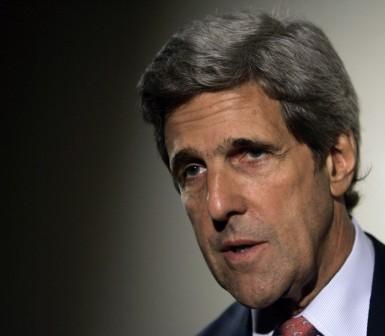
Rep. Dana Rohrabacher (R-Calif.) emerged Thursday as the most vocal proponent of this plan, which was also championed at the hearing by Reps. Ted Poe (R-Texas) and Ileana Ros-Lehtinen (R-Fla.). Rohrabacher aimed his questions at the only witness testifying that day, Secretary of State John Kerry.

“I’ve introduced legislation, H.R. 3707, which would grant asylum to these people in Camp Ashraf, who are obviously in danger,” Rohrabacher said. “Is the administration supporting this concept?”

Kerry sidestepped the question in his typically diplomatic way. “There’s one solution to the problem [of the MEK], and that is that we need to relocate those folks,” he said.

“Can’t we relocate them here? Why not?” Rohrabacher shot back.

“That’s one of the things we’re looking at,” Kerry replied.

Kerry went on to describe a new position he had created within the State Department, that of senior advisor for Mujahedin-e Khalq resettlement. In October of last year, he appointed Jonathan Winer, a longtime Kerry adviser and an expert in international law, to the position.

Rohrabacher’s bill is co-sponsored by many of the same lawmakers who initially backed delisting the MEK from the terrorist roll. As of Thursday, there were 46 co-sponsors.

But administration officials privately suggest that Rohrabacher’s bill, and any other efforts to grant asylum to the MEK in the United States, face nearly insurmountable odds.

“It’s one thing to unfreeze their assets [by removing the terrorist designation], but asylum is a whole different ballgame,” an administration official said, speaking on background to The Huffington Post. To illustrate how limited U.S. asylum policy is in practice, the official noted that out of the more than 135,000 applications received from individuals fleeing Syria’s bloody civil war, only 31 were admitted in the last fiscal year.

“The policy concern with asylum is what kind of precedent that might set for the future. By those standards, the MEK isn’t looking very good,” said the official.

So far, Winer has managed to secure visas from the Albanian government for more than two dozen MEK members.

Other than that, however, it’s been an uphill climb to convince other countries to accept MEK members, due to their cult-like characteristics and near-religious devotion to the Paris-based Maryam Rajavi and her husband, Massoud Rajavi. Under the Rajavis, MEK members have instituted forced celibacy, mandatory divorce and gender segregation, according to a 2009 report from the nonpartisan Rand Corporation. The MEK is also still widely viewed as a militant organization with a “cultic focus on suicide,” wrote the Rand authors, despite the group’s having formally renounced violence in 2003.

But long odds don’t mean the MEK won’t keep trying to gain asylum in the United States. No longer restricted by the terrorist designation, they are now free to spend their millions of dollars — the source of which remains murky — without fear of Treasury Department scrutiny. In 2013, they opened a formal office in a high-rent building on Pennsylvania Avenue and set about expanding their already large cadre of prominent Washington lobbyists.

Around Washington, the MEK is known for having spent millions of dollars on a highly visible advocacy campaign to help secure their delisting as a terrorist organization. To plead their case, the group hired dozens of former administration officials turned government affairs consultants, including Andrew Card, onetime chief of staff to President George W. Bush, and James Jones, former national security advisor to President Barack Obama.

By Christina Wilkie,

March 15, 2014 0 comments
FacebookTwitterPinterestWhatsappTelegramSkypeEmail
The cult of Rajavi

MKO threatens French group protesting their presence in France

A French group which warns against violent cults recently faced the dangers of the Mujaheedin-e Khalq Organization, an antiMKO threatens French group protesting their presence in FranceIranian terrorist group whose leadership is based just outside of Paris. Association PEACE bravely held a demonstration in the MKO’s hometown, and was quickly confronted by the routine violence of their members.
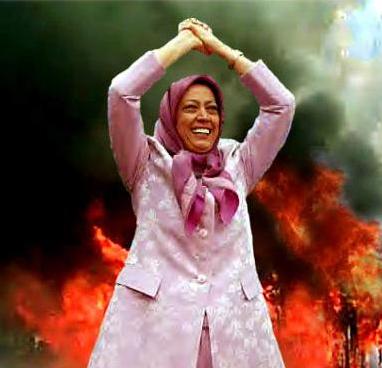
Association PEACE studies cults and warns people to prevent further indoctrinations and more ruined lives. Considering that the MKO is composed of Iranian citizens who fought alongside Iraq in the Iran-Iraq War, many are painfully aware of their violent history. But Association PEACE says many French people are kept in the dark. Despite the mass graves recently uncovered at the MKO’s Camp Ashraf in Iraq, their massacre of Iraqi Kurds for Saddam Hussein and the assassination of Iranian citizens and leaders, the MKO still has friends in high places. Those friends do not include any Iranian citizens, but they do include France’s political elite.

Fact Corner

The anti-Iran terrorist group the M-K-O has tried for years to whitewash its bloody and treacherous past, and they have even been removed from the terrorist list of the European Union and the United States. But when they were confronted with a demonstration against their presence in France, members of the group resorted to their usual violent tactics.

Ramin Mazaheri,

March 15, 2014 0 comments
FacebookTwitterPinterestWhatsappTelegramSkypeEmail
Iran Interlink Weekly Digest

Iran Interlink Weekly Digest – 44

++ An outpouring of detestation followed a declaration by the notorious MEK stooge Mansour Ghadarkhah of his intention make a film titled ‘The Birth of Terror’ to “put Maliki in his place”. Several years ago, Ghadarkhah moved from Germany to the US under MEK patronage as his reputation had become so dirty in Europe that his activities for them were severely constrained. Ghadarkhah’s proposed film was soon denounced as a propaganda exercise against former members of the MEK. He had previously worked with the MEK in Germany to clandestinely film Ali Akbar Rastgou, a vocal critic of the MEK, and label him as an agent of the IRI in Germany to put this out on Youtube. Rastgou began legal proceedings and Ghadarkhah immediately retracted the film. This is just one example from his many years of creating websites and spreading disinformation against MEK critics in Germany. Accordingly, Ghadarkhah’s request for finance along with his bank details was seen as nothing more than money laundry for the MEK.

Facing this overwhelming reaction by Iranians outside of Iran, with tens of articles exposing his past activities, this week Ghadarkhah wrote an ignominious article, published on MEK websites, swearing directly at anyone who has criticised his actions. He goes to the extent that he calls them all the ‘worms from the guts of the mullahs’. Over thirty people who knew him better than most have commented about him and Rajavi. Iran Fanous says how disgusting are he and the MEK that they use such contemptible language. Amir Movasaghi from Aawa Association asks ‘are those wriggling in the shit of Massoud Rajavi the worms, or us who said no to Saddam even in Abu Ghraib prison?’ A more lengthy article was written by one of the recently escaped survivors who is currently in Europe and writes regularly for Iran Interlink under the pseudonym Ahmad M K. In a direct, open letter to Ghadarkhah, he challenges every point made with a series of searing fact based criticisms and demands that Ghadarkhah explain himself. Nader Naderi submitted a short note on his weblog to expose the fact that part of Mansour Ghadarkhah’s writing is an exact copy of a piece by NCRI member Manuchehr Hezarkhani, written in 2011 swearing against Dr Hedayat Matin Daftary who had previously left NCRI. Naderi points out, “It is plain to see that you haven’t even written this yourself, and whoever did has simply plagiarised an old text.”

++ Among Iraqi newspaper articles translated by Sahar into Farsi, Araq al Qanun has an article which quotes Ghorban Ali Hossien Nejad, Massoud Rajavi’s main Arabic translator now living in Paris, describing Zafer al Ani (a former MP) as the go-between for corruption between the MEK and whoever they can find to work with.

++ Website Al Haghaegh has translated the November 2004 Los Angeles police report concerning the MEK. Along with references to the MEK in US State Department reports and comments by US officials about the MEK, the article simply states, “This is what we are dealing with and what some Americans are supporting and lobbying for”.

++ In an interview with Ashraf News agency, Bushra Nawaf al-Rimahi, who is Iraq’s Parliamentary candidate for the Sadeqoun faction, described the MEK as “the Israeli base in Iraq” and claimed, ”Saudi Arabia and Israel use the Mojahedin Khalq Organization to threaten Iraq’s security and to destabilize the country”. Describing their presence in Iraq as illegal and not conducive to the national interest he said, “The Mojahedin Khalq are actively crisis mongering and making sedition among different political parties in collusion with Mossad officers”, adding that the MEK enjoys the support of some Iraqi politicians from the Iraqia List and the Islamic Party.

++ The Eastern Azerbaijan branch of Nejat Association published its letter to Nouri al Maliki supporting the message of a previous open letter signed by 52 former MEK members and families in Europe and America, which urges Maliki to intervene to push aside Massoud Rajavi and his wife as the main problem to solving the crisis of Camp Liberty and asks for the gates of the camp to be opened. Many individual families have written similarly asking for help.

++ The MEK advertised on its websites that an unknown group called the Association of Believers in God have chosen Maryam Rajavi as their Woman of the Year for 2013. This has become a joke for many people who have pointed out the most ridiculous aspect of this is the list of losing candidates which included Sonya Ghandi and Michelle Obama, and their like. Paid adverts are one thing, they say, but Rajavi’s ego has apparently become so inflated that she now needs to position herself above all others.

++ This week an MEK lobbyist held a fundraising (money laundry) event in California. Paid speaker Patrick Kennedy is quoted saying, “If you want to see the bright future of Iran under the rule of the Mojahedin Khalq just look at Ashraf camp now”. Bahar Irani has ridiculed Rajavi’s lobbyists saying, “No matter how much money they get, they don’t even spend ten minutes reading the news. If they had they would have seen that the sham city of Ashraf has since collapsed and nothing remains but wild dogs and concrete. Having said that, how little they think of their listeners’ intelligence to compare a collapsed camp with a country. No wonder the MEK’s own supporters never listen to their TV or read their sites.”

++ Reza Akhlaghi from Foreign Policy Association held a discussion with Gareth Porter following publication of his book, Manufactured Crisis: The Untold History of the Iranian Nuclear Scare. Asked why he wrote the book Porter explained, “Because I had come to realize that the news media account of the issue had been terribly misleading… The real trigger for my beginning to think along those lines was the discovery of evidence that the crucial evidence in the official and media account had been falsified.” The source of this falsified account was the MEK and behind them Israel. Porter continued, “Karsten Voigt provided the most crucial revelation in my book – that the documents that had been described in the news media as having come from the purloined computer of a scientist participating on a covert Iranian nuclear weapons research program, were in fact given to the BND, the German intelligence agency, by the MEK, and that the BND had concluded that the MEK source was “doubtful”.” These documents were given to the MEK by Mossad and Porter concludes “The complete story of those documents in the book, however, includes the evidence I found in my investigation that they were fabricated by Israel in order to advance a strategy of provoking a military confrontation between the United States and Iran”.”

++ Iran’s Justice Minister Mostafa Pour-Mohammadi said that individual terrorist MEK members should be handed over to Iran to be put on trial for their crimes against the Iranian nation, which include “killing thousands of our citizens, damage to Iranian public property and helping our enemies… In order to restore the rights of the Iranian nation and enforce justice, these traitors must be punished”, Pour-Mohammadi said. Criticising lack of progress by UNAMI in removing the MEK from his country, Iraqi Minister of Justice Hassan al-Shammari had said on March 3rd that Iraq would be sympathetic to a request by Tehran to extradite named MEK members. Pour-Mohammadi said, “The handover of the criminal traitors (MEK agents) to Iran does not need a request, but if the Iraqi justice minister has made such a suggestion, we will again lodge an official request to turn them over to our tribunals”.

++ Nejat Association reports that the MEK have joined with a Sunni terrorist group that seeks to kill Shiites. A Sunni group named Talaye Jaish Muhammad (Vanguards Army of Muhammad) confirmed the MEK’s membership in its establishment. The group issued a statement on March 3rd to declare that it is seeking to kill Shiites. Talaye Jaish Muhammad called on all Sunni organizations in Arab and Islamic countries in Asia, North Africa and Syria to form a large army and to support armed Sunni insurgents in Iraq and Lebanon. According to reliable sources Talaye Jaish Muhammad have recruited members in different regions in the world including Iraq, Pakistan, Afghanistan, Syria, Lebanon and the Mojahedin Khalq Organization.

++ Mazda Parsi from Nejat Bloggers writes about “Women’s rights according to Maryam Rajavi”. After detailing the gender specific oppression and sexual abuses endured by women in the MEK, and praising those who have spoken out after their escape, Parsi concludes that as long as the cult member is “mentally and physically imprisoned by the leaders, every order by the cult leader may sound normal and sometimes necessary, but as soon as they find the least opportunity to break through into light and a normal life, they find out the agonies and abuses they have suffered.”

++ Ramin Mazaheri reporting from Press TV said that a French group, which warns against violent cults, “recently faced the dangers of the Mojahedin Khalq an anti-Iranian terrorist group whose leadership is based just outside of Paris. Association PEACE bravely held a demonstration in the MEK’s hometown, and was quickly confronted by the routine violence of their members”. According to Mazaheri, Association PEACE studies cults and warns people so as to prevent further indoctrination and more ruined lives. Although many are painfully aware of the MEK’s violent history says Association PEACE, many French people are kept in the dark. Despite the mass graves recently uncovered at the MEK’s Camp Ashraf in Iraq, their massacre of Iraqi Kurds for Saddam Hussein and the assassination of Iranian citizens and leaders, the MEK still has friends in high places. Those friends do not include any Iranian citizens, but they do include France’s political elite.

++ Reporting on a hearing of the House Foreign Affairs Committee, Christina Wilkie writes in Huffington Post, “All dressed in their trademark yellow shirts… MEK members attended Thursday’s hearing to advance a bold proposition: that the thousands of their adherents still living in Iraq should be granted asylum and moved to the United States… Rep. Dana Rohrabacher (R-Calif.) emerged Thursday as the most vocal proponent of this plan, which was also championed at the hearing by Reps. Ted Poe (R-Texas) and Ileana Ros-Lehtinen (R-Fla.). Rohrabacher aimed his questions at the only witness testifying that day, Secretary of State John Kerry.” Sidestepping the question whether the survivors of Camp Ashraf would be given refuge in America, “Kerry went on to describe a new position he had created within the State Department, that of senior advisor for Mujahedin-e Khalq resettlement. In October of last year, he appointed Jonathan Winer, a longtime Kerry adviser and an expert in international law, to the position.

14 March 2014

March 15, 2014 0 comments
FacebookTwitterPinterestWhatsappTelegramSkypeEmail
Iraqi Authorities' stance on the MEK

Saudi Arabia and Israel use MKO to destabilize Iraq

Saudi Arabia and Israel use MKO to destabilize Iraq, said a member of Iraq Sadeqoun fraction.

According to Fars News Agency Bushra Nawaf al-Rimahi Member of the Sadeqoun faction who is also Iraq’s Parliamentry candidate said :”Saudi Arabia and Israel use Mujahedin Khalq Organization to threat Iraq security and destabilize the country.

In an interview with Ashraf News agency Al-Rimahi Declared:” the MKO is the Israeli base in Iraq and presence of the group’s elements in Iraq is not in accordance with the political interests of the country rather some foreign countries use it to hinder the political progress of the country.

The Iraqi Parliamentry candidate said: Mujahedin Khalq are actively crisis mongering and making sedition among different political parties in collusion with Musad officers.

Al-Rumahi reiterated: the group’s presence in Iraqi soil is not in accordance with the countries’ interests especially because the group allied with Saddam regime and killed Iraqi people . There are evidences of their cooperation with Saudi Arabia as well as Zionist Regime . With regard to the group’s continuous interference in Iraq’s internal affairs their presence in the country is illegal and the group members are not eligible to legally entitle to the refugee Status.

Member of Iraq’s Sadeqoun faction said the group enjoys the support of some Iraqi politicians from Iraqia List and the Islamic Party.

Nejat Society reported from Fars News Agency

March 13, 2014 0 comments
FacebookTwitterPinterestWhatsappTelegramSkypeEmail
Newer Posts
Older Posts

Recent Posts

  • The Tragic Impact of MEK Isolation on Yazdan Teimorian and His Family

    October 5, 2026
  • How the MEK tried to sell a stage stunt as grassroots support?

    October 4, 2026
  • Why Mike Pompeo’s Embrace of the MEK Ignores Its Lack of Popular Base

    October 3, 2026
  • Fourteen years after US delisting, MKO terror cult’s political rebranding collides with its violent legacy

    September 30, 2026
  • How Did Maryam Rajavi Become All-Powerful in the MEK?

    September 29, 2026
  • Facebook
  • Twitter
  • Instagram
  • Youtube

© 2003 - 2025 NEJAT Society . All Rights Reserved. NejatNGO.org


Back To Top
Nejat Society
  • Home
  • Articles
  • Media
    • Cartoons
    • NewsPics
    • Photo Gallery
    • Videos
  • Publications
    • Books
    • Nejat NewsLetter
    • Pars Brief
  • About Us
  • Contact us
  • Editions
    • عربي
    • فارسی
    • Shqip