
[As a result of Iraqi Government efforts throughout Iraq to push back insurgents, Wathiq al-Batat commander of the al-Mukhtar Army militia was among those arrested. Batat has claimed responsibility for three mortar attacks on the MEK residents of Camp Liberty. It is still not know who the assailants of Camp Ashraf were on 1st September.]
The Iraqi police on Thursday arrested a militia leader whose group claimed responsibility for a mortar bomb attack near a border post in Saudi Arabia in November, police sources said.
Wathiq al-Batat, commander of Iraq’s al-Mukhtar Army militia, was arrested at a check point in northeastern Baghdad, the source told KUNA.
Batat is a former leader of Iraq’s better known Kata’ib Hezbollah militia. (end) aha.tg KUNA 021543 Jan 14NNNN
Kuwait News Agency,
——-
Iraq starts sweeping operation in Anbar
Iraqi security forces and local tribesmen have started a sweeping operation against militants linked to the al-Qaeda terrorist group in the western province of Anbar.
Gunmen from the Albu Assaf and Albu Ali tribes have entered the city of Ramadi to help security forces clear the city of militants.
Reports said al-Qaeda-linked militants controlled parts of the city of Fallujah.
Witnesses noted that armed militants have set up checkpoints in central and south Fallujah, and were patrolling streets of the flashpoint city’s east — chanting slogans in support of al-Qaeda and the so-called Islamic State of Iraq and the Levant (ISIL).
Some reports also suggested that a major militant leader, Hassan Abu Dagdash, has been killed in clashes with Iraqi forces.
On Wednesday, militants and government forces clashed in Ramadi, with militants burning four police stations.
In Fallujah, militants torched some police stations and freed more than 100 prisoners.
Anbar Province has been gripped by deadly violence since Monday after Iraqi police and army forces dismantled an anti-government protest camp in Ramadi, which had become a breeding ground for the pro-al-Qaeda militants.
Forty-four members of the Iraqi parliament announced their resignation after the removal of the protest camp, calling for “the withdrawal of the army from the cities and the release of MP Ahmed al-Alwani”.
Alwani was arrested on December 28, 2013. His brother, five guards and a member of security forces were killed in the clashes that were sparked during his arrest. The MP backs the anti-government demonstrators.
24 All News,
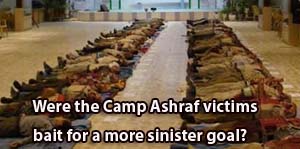 At that time, the MEK announced that 52 of its members had been killed. They published photographs of the victims along with their biographies and claimed that Iran had given the order to attack the camp and that Iraq had carried it out. Both governments denied any involvement and no evidence has been offered to contradict this. Weeks later Iraq announced that the death toll was 53, not 52 as previously claimed by the MEK. The revised figure was due to the fact that the 53rd victim had had his face so badly burned that it took a while to identify him as one of the MEK and not one of the attackers and to discover his true identity. Following this revelation the MEK published a documentary about the 53 in which a picture of Massoud Dalili was shown along with a sample of his handwriting in which he declares that he will never surrender to the enemy, the Iranian regime. In this documentary the MEK refer to them as martyrs.
 the historic agreement reached by Iran and the West in Geneva. And, once that bill is passed, it provides automatic U.S military backing for Israel if its Prime Minister Benjamin Netanyahu decides to attack Iran.
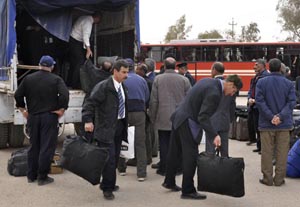 “UNHCR urgently reiterates the need to find solutions for the camp’s residents, and is appealing to countries to act urgently on 1,400 cases from Camp Hurriya that have already been submitted for relocation,” said the UN’s refugee agency in a press release.
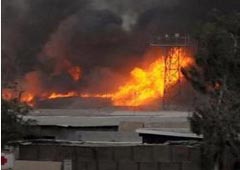 ambush for the terrorist MEK until they leave Iraq. In a separate interview with the Associated Press, al-Battat said, “It is time for the people of the MEK to leave Iraq. We have demanded that the government kick the group out of the country, but the Iraqi government did not respond positively to our demand”.