Nejat Society
  • Home
  • Articles
  • Media
    • Cartoons
    • NewsPics
    • Photo Gallery
    • Videos
  • Publications
    • Books
    • Nejat NewsLetter
    • Pars Brief
  • About Us
  • Contact us
  • Editions
    • عربي
    • فارسی
    • Shqip
Nejat Society
Nejat Society
  • Home
  • Articles
  • Media
    • Cartoons
    • NewsPics
    • Photo Gallery
    • Videos
  • Publications
    • Books
    • Nejat NewsLetter
    • Pars Brief
  • About Us
  • Contact us
  • Editions
    • عربي
    • فارسی
    • Shqip
© 2003 - 2024 NEJAT Society. nejatngo.org
Mujahedin Khalq Organization as a terrorist group

Iranian terror victim describes how he lost his hands

The terrorist organization of Mujahedin Khalq or MKO. The notorious group is responsible for killing thousands of Iranian civilians and officials after the victory of the Islamic revolution in 1979. During the imposed Iraq-Iran war, the terrorist group had close links with former Iraqi dictator, Saddam Hussein. They were also involved in the bloody repression of Shia Muslims in southern Iraq in 1991 and the massacre of Iraqi Kurds. One of the last cases of their violence is assassination of the Iranian nuclear scientists. It’s a couple of months that Basij Organization has been holding meetings with the families of the terror victims in Iran.

In third such meetings, the representatives of Basij Organization together with journalists went to visit one of the victims of terror, Alireza Dastbaaz. The kind old man has also lost one of his sons during the imposed war against Iran. Mr. Dastbaaz told us about the day when a member of the terrorist group, MKO, shot and injured a civilian in his neighborhood. Mr. Dastbaaz who was sitting in his store ran to help people. He managed to catch the terrorist, but the man took out a hand grenade and ….

The neighbors appreciate Mr. Dastbaaz’ courage and say although he knew the terrorist was armed, he attacked him to save the lives of dozens of others at the scene.

Since the victory of the Islamic revolution , more than 17,000 people, many of whom civilians, have been killed at the hands of the MKO in different acts of terrorism including bombings in public places, and targeted killings. The United States has removed the name of the anti-Iran terrorist group, MKO from its list of foreign terrorist organizations.

Ehsan Keivani,

September 14, 2013 0 comments
FacebookTwitterPinterestWhatsappTelegramSkypeEmail
UN

UN envoy in Iraq urges countries to accept Iranian dissidents

UN envoy in Iraq urges countries to accept Iranian dissidents

The killing of dozens of members of an Iranian dissident group that the Iraqi government wants out of the country should be ‘‘a wake-up call’’ to the international community, the acting U.N. envoy to Iraq said Friday as he pressed countries to do more to find them homes abroad.

Members of the Mujahedeen-e-Khalq, which is strongly opposed to Iran’s clerical regime, were welcomed into Iraq by Saddam Hussein in the 1980s during the brutal war with neighboring Iran.

Their fortunes turned sharply with the Iraqi dictator’s toppling in the 2003 U.S.-led invasion. Iraq’s current Shiite-led Iraqi government, which has strengthened ties with Tehran, considers their presence in the country illegal.

A disputed Sept. 1 shooting at their longtime home in Camp Ashraf killed 52 MEK members — roughly half of the camp’s remaining population.

The dissidents accuse Iraqi security forces of carrying out the killings. Baghdad denies involvement, with officials saying an internal dispute was to blame. It has promised to carry out an investigation.

United Nations representatives traveled to the camp a day after the killing. Although the U.N. has not determined who was responsible, acting U.N. envoy Gyorgy Busztin said the bloodshed highlights the need to protect the residents.

‘‘What has happened at Camp Ashraf on the first of September is a game changer. It should be a wake-up call to all countries who are in a position to help to come forward,’’ he told The Associated Press. ‘‘Resettlement is the ultimate guarantee of their security.’’

The U.N. this week helped facilitate the transfer of the last 42 Camp Ashraf residents to a different camp near Baghdad airport where more than 2,800 of their comrades are staying. That compound is meant to provide temporary shelter while the U.N. works to resettle them abroad.

Busztin said the Baghdad camp, a former U.S. military base known as Camp Liberty, should offer them better security than Camp Ashraf, which is 95 kilometers (60 miles) northeast of Baghdad. It is also physically closer to U.N. offices in the Iraqi capital, making it easier to monitor, he said.

The MEK carried out a series of bombings and assassinations inside Iran in the 1980s and fought alongside Iraqi forces in the 1980-88 Iran-Iraq war. It says it renounced violence in 2001.

The U.S. considered the MEK a terrorist group until last year. Leaving Camp Ashraf was a key factor in reversing that designation.

Busztin urged U.N. member states to do more to relocate the residents safely abroad.

The Baghdad camp where MEK members are now all staying has itself been hit by deadly rocket attacks claimed by Iranian-backed Shiite militants.

‘‘These are human beings. Whatever the government of Iraq says about their past, these are people in need of protection, and we take that very seriously,’’ Busztin said.

The resettlement process has moved slowly because the U.N. is struggling to find countries willing to take them. U.N. officials also say that many residents have been uncooperative with the process, complicating the relocation effort.

A total of 210 residents have left to other countries so far, according to figures provided by the U.N. refugee agency.

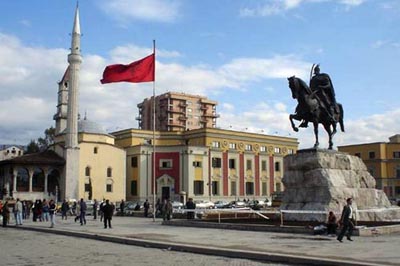
Most of them went to Albania, which has offered to take 210 in total. Germany has said it would accept about 100. A small number of residents have been resettled elsewhere.

Seven former Camp Ashraf members are unaccounted for following this month’s violence, according to the MEK. The group claims they are being held by Iraqi forces and will soon be turned over to Iran against their will.

Iraqi Human Rights Minister Mohammed Shiyaa al-Sudani and Georges Bakoos, who oversees the MEK issue for the Iraqi government, both denied Friday that the seven said to be missing are in Iraqi custody.

Busztin, the U.N. official, had no information on their whereabouts.

The U.N. refugee agency expressed concern for the seven reported missing, saying in a statement that they are all known to be asylum-seekers. It called on the Iraqi government to find them and ensure their safety, as well as prevent them from being returned to Iran against their will.

As for the rest of the exiles, Busztin said it is difficult to say how soon they could be resettled.

‘‘I’m optimistic more countries will come forward and the numbers in the camps will be gradually reduced. But for the length of the process, I cannot give you a reasonable estimate,’’ he said. ‘‘What we request from the government of Iraq is to extend them adequate protection until the last one leaves,’’ he added.

__

Associated Press writer Qassim Abdul-Zahra contributed to this report.

By ADAM SCHRECK

September 14, 2013 0 comments
FacebookTwitterPinterestWhatsappTelegramSkypeEmail
USA

US welcomes relocation of remaining Ashraf residents

Relocation of Remaining Individuals from Camp Ashraf to Camp Hurriya in Iraq

Press Statement

Jen PsakiUS welcomes relocation of remaining Ashraf residents

Department Spokesperson, Office of the Spokesperson

Washington, DC

September 11, 2013

The United States welcomes today’s safe arrival at Camp Hurriya of the remaining 42 individuals from the Mujahedin-e-Khalq (MEK) who had been residing at Camp Ashraf. These individuals were survivors of the horrific attack that took place on September 1 at Camp Ashraf, and we appreciate their cooperation with the United Nations Assistance Mission for Iraq (UNAMI) in this relocation effort. We also appreciate the assistance of the Government of Iraq in facilitating this relocation.

The United States reiterates its condemnation of the September 1 attack and insists that the perpetrators of that barbarous act be brought to justice. We also continue to be deeply concerned about the seven individuals who remain missing from the attack and urge that all steps be taken to locate these individuals.

UNAMI made extraordinary efforts to implement a plan to safely and peacefully move the remaining residents at Camp Ashraf, and we appreciate and support those efforts. We urge all parties to continue to implement all remaining obligations of that plan. In particular, we call on the Government of Iraq to move expeditiously to enhance security structures within Camp Hurriya. It is the responsibility of the Government of Iraq to take all possible measures to ensure the safety and security of the residents at Camp Hurriya in accordance with the December 25, 2011 Memorandum of Understanding between UNAMI and the Government of Iraq.

We further call on the Government of Iraq to ensure the safekeeping of the property that remains at Camp Ashraf, as agreed pursuant to the UNAMI relocation plan. We also call upon the members and leaders of the MEK to actively participate in the UNHCR-led resettlement process. The United States stands firmly behind UNAMI efforts to resolve this matter and to act with urgency to find locations for the safe, secure, and permanent relocation of Camp Hurriya residents outside Iraq.

September 14, 2013 0 comments
FacebookTwitterPinterestWhatsappTelegramSkypeEmail
Iran

Iran praises Iraq efforts to close Camp Ashraf

Iranian Foreign Ministry has expressed gratitude to Iraqi government for its sincere efforts to close the original residence of the terrorist Mujahedin-e Khalq Organization (MKO) in Iraq’s eastern province of Diyala.

In a statement released on Thursday, the ministry stated that Tehran had on occasions warned the UN Special Representative for Iraq Martin Kobler about the continued presence of the MKO members at the camp — situated about 120 kilometers (74 miles) west of the border with Iran — as well as their mischief and adventurism.

The statement also underlined Iran’s support for efforts made by the UN and Iraqi government for rapid expulsion of the MKO members from Camp Liberty in western Baghdad, calling on the countries supporting the terrorist group to stop their financial and political backing.

On September 1, over 70 MKO members, including top commanders, were killed in an attack inside the terrorist group’s notorious camp in Iraq’s eastern province of Diyala. There were around 100 MKO members in the camp at the time.

The attack came at the hands of a group of Iraqi people and the relatives of those martyred by the terrorists when they had joined forces with executed Iraqi dictator, Saddam Hussein, in 1991 to crush an uprising by Iraqi Shias.

The Iraqis who stormed the terror camp further demanded the immediate expulsion of all MKO terrorists from their country.

The last group of MKO terrorists at Camp Ashraf, now called Camp New Iraq, was evicted by the Iraqi government on Wednesday to join other members of the terrorist group in the former US-held Camp Liberty, now called Camp Hurriya, near Baghdad International Airport where they are awaiting relocation to other countries.

The MKO fled to Iraq in 1986, where it enjoyed the support of Iraq’s executed dictator, Saddam Hussein, and set up its camp near the Iranian border.

The group is also known to have cooperated with Saddam Hussein in suppressing the 1991 uprisings in southern Iraq and carrying out the massacre of Iraqi Kurds.

The MKO has carried out numerous acts of violence against Iranian civilians and government officials.

September 14, 2013 0 comments
FacebookTwitterPinterestWhatsappTelegramSkypeEmail
MEK Camp Ashraf

UN announces transfer of remaining Iranian exiles Camp Ashraf

12 September 2013 – A United Nations official in Iraq today announced the successful relocation of the last group of Camp Ashraf residents to a camp near the Baghdad area, pending their resettlement outside the country.

“The process, concluded today, has come a long way since its launch in February 2012, with the Government and the residents both abiding by the agreement between the UN and the Government of Iraq on the transfer of Camp Ashraf residents to the temporary transit location of Camp Hurriya,” said the Deputy Special Representative of the Secretary-General for Iraq, Gyorgy Busztin.

Camp Ashraf was comprised of Iranian exiles, many of them members of a group known as the People’s Mojahedeen of Iran.

More than 3,000 residents have been relocated to Camp Hurriya, previously known as Camp Liberty, while the Office of the UN High Commissioner for Refugees (UNHCR) carries out a process to determine their refugee status, and resettle them outside of the country, in line with an agreement signed in December 2011 between the UN and the Iraqi Government.

Camp Ashraf has been attacked several times, making relocation a priority for the UN Assistance Mission for Iraq (UNAMI). The latest attack, which took place earlier this month, killed and injured numerous camp residents.

“The tragic events of 1st September, when 52 residents lost their lives in a terrorist attack, while seven others are still unaccounted for, was a sombre reminder of the necessity to conclude the final phase of the relocation process without further delay,” Mr. Busztin said.

“Resettlement outside Iraq is now the priority, and it is urgent that countries ready to host the residents come forward to accept them, providing them a safe future outside Iraq.”

Mr. Busztin also called on the Iraqi Government to abide by its commitment to ensure maximum safety and security for Camp Hurriya residents until all of them leave the country.

September 14, 2013 0 comments
FacebookTwitterPinterestWhatsappTelegramSkypeEmail
The cult of Rajavi

Self-Annihilation, an Ideological Drift in MKO

MKO cultivates homicidal tendencies with an emphasis on suicidal ones

Showing a disposition towards violence is known to be the supporting one among many fundamental pillars of Mujahedin Khalq Organization (MKO, MEK, PMOI, NCR, NLA). In fact, violence and death is a working strategy, either killing others or committing self-annihilation. The group’s early booklets explicitly chart the worldview as a basic ideological mentality which is repeatedly referred to in group’s ideological instructions. The members are encouraged to either kill or be killed, and in contrast to the mainstream of similar opposition groups, MKO does not seem the least concerned for the safety of its members that frame the main upholders of its structure.

MKO cultivates homicidal tendencies with an emphasis on suicidal ones in a struggle to counter its adversaries and exclusively invest on the tactics that highly risk the lives of the insiders. Whenever MKO plots to make a stand against some adversary to advance with a heavy hand, the first priority is an aggressive militarism. However, it recoils to typical forms of self-destruction and self-slaughter when some bottleneck blocks its advance. The most common forms recorded are self-immolation and using members as human shields.

Being a product of Rajavi’s own mind-set, the use of unconventional terrorist and violent tactics are what Rajavi concludes his organization has the potentiality to carry out to achieve certain goals. Thus, the member of such organization can easily sacrifice his life when he receives the order. The recruited members are taught from the very beginning to make no distinction between killing others and being killed when they receive an order for an operation. Just in the same way that operators exploit the vulnerability of the victims, they themselves are being made victims.

Before the US invasion against Iraq and when threats were nearing the action, Rajavi was sensitive on two things; defending Ashraf against external threats including closing the camp and expulsion from Iraq and second, adopting an appropriate means to defend Ashraf and resist. He specifically reiterated that Ashraf had to be defended tooth and nail. But the premise developed into more objective form of defense when Saddam collapsed and the suggestion of human shield to protect Ashraf as the beating heart of the organization turned to be a serious option on Rajavi’s table.

In one of his messages to Mozhgan (Parsai), a ranking commanding member in Ashraf, Rajavi recapitulated that the members had to stay, die and bury in Ashraf but never succumb to the threats of being moved. It was a question of resisting or dying if the Iraqis ever decided to transfer members from Ashraf to another location. The human shield was one of the opted options; mass suicides could effectively frustrate any effort that aimed at dismantling the integrity of Ashraf. It included any other threat like forced entry of American or coalition forces to temporarily close or deactivate the camp. The first orders were using non-firing weapons; needless to say that the organization actually made no resistance against the American forces and succeeded to take the control and hegemony of the camp in its own hands. The question of suicide operations and human shield were all directed at safeguarding the entity of the organization and its hierarchical order; it was the red line that could not be crossed and all members had to preserve.

On occasion, MKO has issued statements warning the outbreak of human tragedy in the case of any attack against the camp. The statements conveyed a different meaning for the insiders; they implied that the real human tragedy happens when members began to display their self-annihilation potentialities for defending Ashraf. The transfer of the control of Camp Ashraf to Iraqi forces since 2008 and the Iraqi government’s determination to make a decisive decision about the residents of Ashraf enraged the group’s leaders and soon MKO propaganda machine initiated an intensive campaign against the Iraqi government. MKO’s first reaction was arranging a series of suicidal operations. On July 29, 2009 there was a report of deadly clashes between hundreds of Iraqi police forces and the members of MKO residing in Camp Ashraf that left 11 members dead and scores injured from the both side. While the reasons for the clash was said to be unclear at first, few knew that it was a pre-organized self-destruction plan by a number of Rajavi’s devotees to provoke Iraqi forces to trigger the clash that was well videotaped and broadcasted by the organization itself. The clash, however, was not the last but the beginning.

At least through the past three years and since the implementation of decision by the Iraqi government to relocate members from Camp Ashraf, MKO has proved to be determined to preserve the insiders as human shields to construct a secure bulwark against a national and global decisiveness. And through a few clashes, leaving many casualties from the both sides, with the Iraqi forces who had the responsibility of controlling Camp Ashraf, MKO proved it really means what it says. The recent clash that broke out on September 1, is known to be the most tragic one and a real demonstration of a terrorist cult’s potentiality of causing a human tragedy. 52 out of the 100 remaining members of MKO have been killed in Camp Ashraf.

The bloodshed is condemned but the responsibility is mainly on MKO’s leaders. The provoked clashes never stop unless practical measures are adopted to rescue members from the instilled cult mentality of self-sacrifice and dying for the cause of organization. Nearing the end of its life in Iraq, what MKO needs at the present to fuel its propaganda machine for a full move is sacrifice and multitude of martyrs. Where else can MKO leaders find a better slaughter house than Camp Ashraf or Liberty to make as high as about 3000 martyrs? To condemn this and that and to put all responsibility on the Iraqi authorities, grappling with the intensified wave of internal terrorism, provide no solution. The only way to stop similar human tragedies is a global decisiveness to help MKO members to survive and recover from the cult’s mentality.

 By Sattar Orangi, September 11, 2013

http://www.officialwire.com/news/self-annihilation-an-ideological-drift-in-mko/?utm_source=rss&utm_medium=rss&utm_campaign=self-annihilation-an-ideological-drift-in-mko

September 12, 2013 0 comments
FacebookTwitterPinterestWhatsappTelegramSkypeEmail
The cult of Rajavi

Prepare for more mystery deaths of MEK members

Since yesterday the MEK propaganda machine and its related resources have been on overdrive to claim that Prepare for more mystery deaths of MEK membersthe seven people who the MEK claim are missing from Camp Ashraf are in the custody of the Iraqis. Before this they had been on overdrive to claim that the 1st September attack on Camp Ashraf had been carried out by the government of Iraq. Both allegations have been repeatedly dismissed as completely unfounded by Iraq, but this has not silenced the MEK’s propaganda machine.

There is strong evidence that the aim of the attack on Camp Ashraf was to capture or kill Massoud Rajavi on the understanding he has been in hiding there. If that is the case, then the seven missing people, who have been identified as Rajavi’s close inner circle, have been part of a pre-planned manoeuvre to rescue him in the event of such an attack. The other members have been there to resist any incursion to allow Rajavi and his protectors time to run away.

Apparently inside the MEK there is currently an internal indoctrination message which compares the dead in this situation to the circumstances when Prophet Mohammad moved from Mecca to Medina and used Imam Ali who slept in his place as a decoy so that when they came to kill him they found Ali there instead. If this scenario is right then after Rajavi has saved his own skin from Ashraf, the last thing he wants is to be in the presence these seven known people. But he can’t let them go either because of the information they carry. The untenable MEK claim that these seven missing people were in Baghdad and have now been transferred by helicopter by the Prime Minister’s office to the south of Iraq indicates that there is some kind of plan behind it – governments do not work like this. The strongest possibility is that these seven people will be eliminated and the government of Iraq will be blamed. This is a typical MEK ploy to disguise the mysterious deaths of unwanted people, something they have done frequently.

In this case it is entirely possible that following this build up, these seven are discovered dead in the next few days, perhaps handcuffed and executed as the others were.

Certainly, for a man who basically can’t stop talking, the silence from Rajavi since the attack on Camp Ashraf makes it all the more likely that he is on the run and heading for a safe residence out of the country.

September 12, 2013 0 comments
FacebookTwitterPinterestWhatsappTelegramSkypeEmail
The cult of Rajavi

Source: Mojahedin Khalq Comrades Killed Fellows at Camp

An Iraqi source revealed that a large number of victims in a recent attack on the camp of the terrorist Mojahedin-e Khalq Organization (MKO) were killed by their own colleagues, namely members of the terrorist group.

Mojahedin Khalq Comrades Killed Fellows at Camp

A well-informed Iraqi source, which spoke on the condition of anonymity, told Tasnim on Wednesday that the released video of recent clashes in the MKO’s training camp reveal that “most of the dead were actually killed by their own fellows at the camp.”

The terrorist group said that dozens of its members died in a raid on September 1 and blamed the Iraqi security forces for the deaths. Iraqi officials, however, strongly denied the allegations, and said that a preliminary investigation suggested they died as a result of infighting among camp residents.

“In the released video of the recent clashes in Camp Ashraf, footages of the victims of the group showed that most of them had been killed execution style,” the source added.

“Given its track record in liquidating certain members, MKO took advantage of the incident for more bloodshed and killed its members for propaganda purposes and to play the victim,” the source said.Mojahedin Khalq Comrades Killed Fellows at Camp

On September 1, 52 MKO terrorists, including some top commanders, were killed in clashes in MKO’s Camp Ashraf in Iraq’s eastern Diyala province.

The MKO is considered a terrorist group since it has been behind many cases of bombings and assassinations against the Iranian officials and people.

The group also fought alongside the regime of former Iraqi dictator Saddam Hussein during the 8-year Iraqi-imposed war on Iran in 1980s.

Download Mojahedin Khalq Comrades Killed Fellows at Camp

September 12, 2013 0 comments
FacebookTwitterPinterestWhatsappTelegramSkypeEmail
MEK Camp Ashraf

Iranian exiles leave disputed Camp Ashraf in Iraq

KHALIS, Iraq — The transfer marks the end of a years-long effort by Iraqi authorities to evict members of the Mujahedeen-e-Khalq dissident group from Camp Ashraf, an isolated Saddam Hussein-era compound that the group was extremely reluctant to leave.Iranian exiles leave disputed Camp Ashraf in Iraq

The MEK is staunchly opposed to Iran’s clerical regime, and thousands of its members were granted sanctuary inside Iraq by Saddam. It carried out a series of bombings and assassinations inside Iran in the 1980s and fought alongside Iraqi forces in the 1980-88 Iran-Iraq war.

Its fortunes inside Iraq turned sharply with Saddam’s ouster following the 2003 U.S.-led invasion. Iraq’s current Shiite-led government, which has been bolstering ties with neighboring Shiite powerhouse Iran, considers the group’s presence inside Iraq illegal and wants its followers out of the country.

Most of the residents of Camp Ashraf, where members of the group had lived for decades, reluctantly moved to a former U.S. military base near Baghdad airport last year. A core of about 100 MEK followers had stayed behind to protect and sell off the group’s remaining property.

A shooting on Sept. 1 left 52 of those residents dead. Another seven people are missing, according to the MEK. The group blames Iraqi security forces loyal to Prime Minister Nouri al-Maliki for the killings. Iraqi officials deny involvement and say an internal dispute is to blame.

United Nations officials visited the camp shortly after the shooting and condemned the bloodshed, but they have not reported any findings as to who was responsible.

Maj. Gen. Jamil al-Shimmari, the police chief of Diyala province, where the camp is located, and the mayor of the nearby town of Khalis, Oday al-Khadran, told The Associated Press that a convoy carrying the residents and their belongings left the camp Wednesday evening.

"This took a lot of patience. We dealt with them according to the law," al-Shimmari said. None of the Iraqi officials reported any incidents of violence during the transfer.

The residents were searched by Iraqi forces before departing and were allowed to visit the graves of loved ones who are buried at a cemetery inside the compound, al-Shimmari said. The residents initially refused to leave, but were eventually persuaded after representatives from the U.N. intervened, he added.

Authorities have prevented journalists from getting near the camp since the shooting this month.

A spokeswoman for the U.N. in Iraq, Eliana Nabaa, earlier in the day described the transfer process as "ongoing." She could not be reached for further comment after Iraqi officials confirmed the transfer had begun.

Representatives for the for MEK’s parent organization, the Paris-based National Council of Resistance of Iran, later confirmed the departure.

Mohammed Mohaddessin, chairman of the NCRI’s foreign affairs committee, said in an interview that the council’s president-elect, Maryam Rajavi, urged the remaining residents to leave over the past few days.

By QASSIM ABDUL-ZAHRA and ADAM SCHRECK,

September 12, 2013 0 comments
FacebookTwitterPinterestWhatsappTelegramSkypeEmail
Iraq

Iraq dismisses MKO’s new allegations as baseless

Iranian exiles claim Iraq plans to deport 7 members to Iran, a charge Baghdad denies

An Iranian dissident group whose camp in Iraq was the scene of a disputed outbreak of violence last week claimed Tuesday that Iraqi authorities plan to hand over seven allegedly detained members to Iran. Baghdad denies having any such plans.

The latest dispute comes as Iraqi officials prepare to relocate the remaining residents of Camp Ashraf, about 95 kilometers (60 miles) northeast of the Iraqi capital. The compound has long been a source of irritation to the Iraqi authorities, who want it closed and its current and former residents moved out of the country altogether.

A total of 52 members of the Mujahedeen-e-Khalq were killed in a shooting at the Saddam Hussein-era compound on Sept. 1. The group, which opposes Iran’s clerical regime and was labeled a terrorist organization by the U.S. until last year, blamed Iraqi security forces for the killings. Iraqi officials have said an internal dispute erupted inside the camp.

A team from the United Nations mission to Iraq visited the camp after the killings and confirmed the number of fatalities, but it has not released further findings into what happened or ascribed blame for the deaths.

About 100 MEK members had been living at the camp before the killings. The U.N. refugee agency says 42 remain.

A spokesman for the MEK’s parent organization, the Paris-based National Council of Resistance of Iran, alleged that the seven people he said were “taken hostage” at the time of the killings are being held by Iraqi forces near Baghdad airport and will be transferred to Iran in the coming days. MEK members fear they will be persecuted if returned to the Islamic Republic.

“The government of Iraq has made no announcement about arresting these individuals and wants to return them to Iran surreptitiously at the first convenient opportunity without making any noise and raising attention,” Shahin Gobadi charged.

He said he knew this via sources within Iran’s “clerical regime,” but he did not identify them, expressing concerns about security. He said he did not know why those seven were abducted while dozens were killed and others survived.

Ali al-Moussawi, the spokesman for Iraqi Prime Minister Nouri al-Maliki, said he had no information about any missing residents. He denied there are any plans by Iraq to forcibly send former Camp Ashraf residents to Iran, and he pressed for help in resettling them safely abroad.

“These new allegations are baseless. The Iraqi government calls on all countries to accept them,” he said.

Maj. Gen. Jamil al-Shimmari, the police chief of Diyala province, where the camp is located, said no Ashraf residents have been transferred out since the shooting.

The U.N. on Saturday said Iraqi authorities plan to relocate the surviving Camp Ashraf residents to a former U.S. military base near Baghdad airport where more than 2,800 former camp residents are staying. That facility, known as Camp Liberty, is meant to be a temporary way station while the U.N. works to resettle the exiles abroad.

The move would likely mark the end of the MEK’s presence at Camp Ashraf, which the group has been extremely reluctant to leave.

The MEK carried out a series of bombings and assassinations inside Iran in the 1980s and fought alongside Iraqi forces in the 1980-88 Iran-Iraq war. Saddam granted several thousands of its members sanctuary inside Iraq, and they turned Camp Ashraf into a self-contained, isolated community.

The MEK’s continued presence inside Iraq long has irritated Iraq’s postwar leadership, which has worked to bolster ties with neighboring Shiite powerhouse Iran. The government is highly suspicious of those linked to the former regime.

The group says it renounced violence in 2001. Camp Ashraf residents were disarmed by U.S. troops after the invasion.

Efforts to relocate the exiles abroad have moved slowly. The U.N. has struggled to find countries to accept them, and officials have cited a lack of cooperation by some of the exiles. They do not want to return to Iran because they fear persecution there.

A total of 198 former residents of the two camps have been resettled abroad so far, most to Albania.

___

Associated Press writer Qassim Abdul-Zahra contributed to this report.

By ADAM SCHRECK

September 11, 2013 0 comments
FacebookTwitterPinterestWhatsappTelegramSkypeEmail
Newer Posts
Older Posts

Recent Posts

  • Rebranding, too Difficult for the MEK

    December 27, 2025
  • The black box of the torture camps of the MEK

    December 24, 2025
  • Pregnancy was taboo in the MEK

    December 22, 2025
  • MEPs who lack awareness about the MEK’s nature

    December 20, 2025
  • Why did Massoud Rajavi enforce divorces in the MEK?

    December 15, 2025
  • Facebook
  • Twitter
  • Instagram
  • Youtube

© 2003 - 2025 NEJAT Society . All Rights Reserved. NejatNGO.org


Back To Top
Nejat Society
  • Home
  • Articles
  • Media
    • Cartoons
    • NewsPics
    • Photo Gallery
    • Videos
  • Publications
    • Books
    • Nejat NewsLetter
    • Pars Brief
  • About Us
  • Contact us
  • Editions
    • عربي
    • فارسی
    • Shqip