Nejat Society
  • Home
  • Articles
  • Media
    • Cartoons
    • NewsPics
    • Photo Gallery
    • Videos
  • Publications
    • Books
    • Nejat NewsLetter
    • Pars Brief
  • About Us
  • Contact us
  • Editions
    • عربي
    • فارسی
    • Shqip
Nejat Society
Nejat Society
  • Home
  • Articles
  • Media
    • Cartoons
    • NewsPics
    • Photo Gallery
    • Videos
  • Publications
    • Books
    • Nejat NewsLetter
    • Pars Brief
  • About Us
  • Contact us
  • Editions
    • عربي
    • فارسی
    • Shqip
© 2003 - 2024 NEJAT Society. nejatngo.org
Zaynab Malakouti khah
Mujahedin Khalq Organization

UNESCO researcher: MEK does not have widespread public backing in Iran

While the Mujahedin-e Khalq (MEK) claims that its so-called “resistance units” are active all over Iran to push the overthrow of the Iranian government, independent researchers and journalists have always stated that the group lacks public support in Iran.

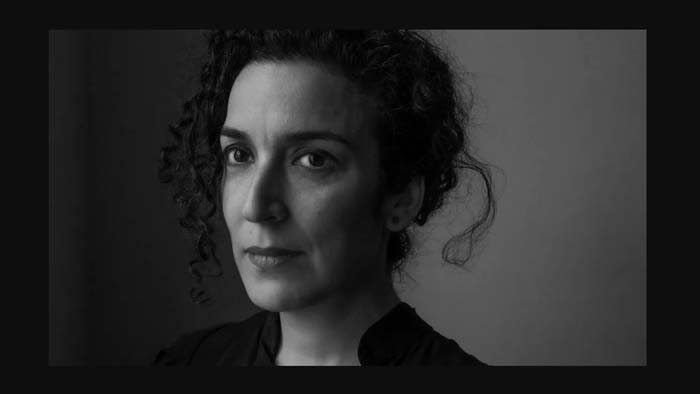
Zaynab Malakouti Khah is an Iranian researchers at UNESCO Chair for Human Rights, Peace and Democracy of Shahid Beheshti University. She graduated from Iran in 2012 with a First-Class in Law and obtained an LLM in International Human Rights Law at the University of Reading, UK. She has published several articles and a book on human rights, international law, Counter-Terrorism and Counter-Terrorism Financing.

In September 2018, her article titled “Iran: Sponsoring or Combating Terrorism?” was published by Studies in Conflict and Terrorism journal. In a part of the article under the subtitle “Iran as a victim of terrorist attacks”, the author presents a fairly comprehensive and independent outlook on the MEK. The following is that part proceeded by its references:

Iran as a victim of terrorist attacks
Dissident nationalist terrorism

Following the Islamic Revolution of 1979, various groups opposed Ayatollah Khomeini. The leading opposition group was the Mojahedin-e-Khalq (MEK), with a background in Marxist and Islamist interpretations. The MEK survived the test of time and developed into the most disciplined armed organization opposing the Islamic Republic.23 The MEK was established in 1965 in opposition to the Shah and the United States. It targeted U.S. civilians and military personnel, supporting the U.S. embassy hostage-taking in Tehran.24 Following the 1979 Revolution, although the MEK first endorsed Ayatollah Khomeini, they later attempted to overthrow the government but failed and fled to Paris and then Iraq.25 Members of MEK sought refuge in Camp Ashraf near the Iran–Iraq border and were financially and militarily supported by the regime of Saddam Hussein, the former leader of Iraq. From 1980 to 2003 (when MEK’s weapons were confiscated by the U.S. intervention mission in Iraq),26 they carried out several terrorist attacks in both Iran and on Iranian interests in other countries.27 Selected attacks by the MEK included the bombing of the Islamic Republic Party Headquarters (1981), which led to the death of approximately seventy high-ranking officials; attacks on diplomats (1987 and 1994); an explosion in the Imam Reza Mausoleum (1989); attacks on thirteen Iranian embassies around the world (1992); the Presidential Palace; the Defense Ministry and military bases (2000);and a motor attack on the Supreme Court and other governmental buildings (2001).28

In retaliation, the MEK’s members were executed in prison,29 the total execution toll is difficult to estimate[..]. The MEK had been designated as a terrorist group by the United States,33 United Kingdom,34 and European Union (EU). However, it was removed from their blacklists in 2012, 2008, and 2009, respectively, due to the curtailment of terrorist activities.35 Iran condemned the delisting of the MEK and highlighted the Western double standards on terrorism.36 The Supreme Leader, Ali Khamenei, condemned the U.S. methods of separating “good” and “bad” terrorists, asserting that this “shows terrorism is bad if terrorists are not America’s servants, but if terrorists become America’s servants, then they are not bad.”37 The supporters of the MEK still believe that the organization is capable of replacing the current regime,38 and it continues to have some powerful Western supporters.39 Regardless of the U.S. and the Western support for the MEK, 40 as a group that carried out terrorist activities, it does not have widespread public backing in Iran. They have killed dozens of civilians, and a Human Rights Watch report indicates violations of human rights inside the organization, ranging from detention of its members who wish to leave the organization to torture. 41

References:
23. Ervand Abrahamian, The Iranian Mojahedin (New Haven, CT: Yale University Press,1989), 1.
24. Ibid., 126.
25. Ibid., 216–219.
26. Andrew T. H. Tan, The Politics of Terrorism (London: Routledge, 2006), 187.
27. Abrahamian, The Iranian Mojahedin, 221; Saeed Hakimiha, “siyasat-i Jinayi Iran darQibal-i Mubarizih ba Tirurism,” Majalih-i siyasat-i Difayi 19, no. 76 (2011): 77; Anthony H. Cordesman and Adam G. Seitz, Iranian Weapons of Mass Destruction: The Birth of a Regional Nuclear Arms Race? (Washington, DC: Centre for Strategic and International Studies, 2009), 326–327.
28. Jeremiah Goulka et al., eds., The Mujahedin-e-Khalq in Iraq: A Policy Conundrum (Santa Monica, CA: RAND Corporation, 2009), 80–89.
29 Amnesty International Organisation, “Iran: Violation of Human Rights 1987–1990.” https://www.amnesty.org/download/Documents/200000/mde130211990e (accessed 12 September 217).
30 Reza Afshari, Human Rights in Iran: The Abuse of Cultural Relativism (Philadelphia: University Pennsylvania Press, 2001), 114.
31 Ibid., 48–57.
32 Amnesty International Organisation, “Iran: Violation of Human Rights 1987–1990.”
33 People’s Mojahedin Organization of Iran v. Department of State and Colin L. Powell, Secretary of State, 01-1465; 01-1476; United States Court of Appeals for the District of Columbia Circuit, 9 May 2003; National Council of Resistance of Iran v. Department of State and Colin L. Powell, Secretary of State, No. 01-1480; United States Court of Appeals for the District of Columbia Circuit, 9 July 2004.
34 Terrorism Act 2000 (Proscribed Organisations) (Amendment) order 2—1 SI 2001/1261, and Secretary of State for the Home Department v. Lord Alton of Liverpool and Others [2008] EWCA Civ 443, United Kingdom: Court of Appeal (England and Wales), 7 May 2008.
35 In 2012, the MEK was delisted from the U.S. terrorist list due to the confirmed absence of terrorist activities by the group. U.S. Department of State, “Delisting of the Mujahedin-e Khalq,” Department of State, 28 September 2012. www.state.gov/j/ct/ris/other/des/266607.htm (accessed 9 July 2017). Britain’s Court of Appeal ordered the government to revoke the terrorist designation, because from 2001 no military activity had been carried out by the MEK. (Secretary of State for the Home Department v Lord Alton of Liverpool [2008] EWCA Civ 443). There followed the Terrorism Act 2000 (Proscribed Organisations) (Amendment) Order 2008, SI 2008\ 1645. In 2009, the EU removed the MEK from the terror list because of the lack of two conditions for being a terrorist group, including “serious and reliable evidence or clue” (Article 1(4) of the Common Position 2001/931/CFSP), and “committing, or attempting to commit, practicing in or facilitating the commission of any act of terrorism” (Article 2(3) of the Regulation 2580/2001).
36 “Iran Condemns US for Double Standards Over MEK Terror De-Listing,” The Guardian, 29 September 2012. https://www.theguardian.com/world/2012/sep/29/iran-condemns-us-mek-terror-delisting (accessed 12 September 2017).
37 Gawdat Bahgat, “United States-Iranian Relations: The Terrorism Challenge,” Parameters 38, no. 4 (2008): 102.
38 Keith Crane, Rollie Lal, and Jeffrey Martini, Iran’s Political Demographic and Economic Vulnerabilities (Santa Monica, CA: RAND Corporation, 2008), 28.
39 See: R (Lord Carlile) v Secretary of State for the Home Department [2014] UKSC 60.
40 People Mojahedin Organisation of Iran, “Grand Gathering of the Iranian Opposition in Paris,” 30 June 2018, http://english.mojahedin.org/i/grand-gathering-the-iranian-opposition-paris-2018 (accessed 1 July 2018).
41. Human Rights Watch, “No Exit: Human Rights Abuses Inside the Mojahedin-e Khalq Camps,” Human Right Watch, 2005. https://www.hrw.org/legacy/backgrounder/mena/iran0505/iran0505.pdf (accessed 13 July 2017); and “U.S. Terrorism Report: MEK and Jundallah,” Iran Primer, 23 August 2011. http://iranprimer.usip.org/blog/2011/aug/23/us-terrorism-report-mek-and-jundallah (accessed 11 August 2017)

November 1, 2023 0 comments
FacebookTwitterPinterestWhatsappTelegramSkypeEmail
Nejat Newsletter no.107
Nejat Publications

Nejat Newsletter No.107

Inside this issue:

– Conference of the Albanian Nejat Society in Tirana
On Sunday, October 15, 2023, a conference was held by Albanian Nejat Society in the conference hall of the Hotel Mondial, Tirana,to try to connect the members trapped in the Mojahedin-e Khalq
Organization (MEK..

– Grown up in the MEK, my therapists shed tears for me

Nejat Newsletter no.107

Nejat Newsletter no.107The stories of children of the Mujahedin-e Khalq (MEK) can be documented as evidence of the existence of abusive practices and maltreatment in the group. All children of Mujahed parents are more or less survivors of traumatic experiences.

– In response to the MEK claims
As it was expected, Nejat Society Albania was slandered by the propaganda machine of the Mujahedin-e Khalq (MEK). The group accuses Nejat activists of being the agents of the Iranian government in Albania. A few weeks ago, the group published an announcement against Nejat Society’s members in Albania.

– Collapse of Zamani’s family
A family of four was collapsed immediately after they joined the MEK. Ali Asghar Zamani, his wife and their two children were recruited by the MEK agents, in 2003.

– Why MEK is considered ungrateful group for Albania?
MEK came to Albania as part of a promised dream, to be away from their country, Iran and the Iranian regime.

– Dr. Alfred Ebrahimi to visit Nejat Society office in Tirana.
Dr. Alfred Ebrahimi, a psychiatrist and deputy of Lija penitentiary, attended the villa of Nejat Society in Tirana and met with members of this office. In this meeting, he conveyed the congratulatory message of the Head of the Penitentiary to members of Nejat Society Albania and thanked for the bilateral cooperation in line with the

– Naime Gjongecaj visited the representative office of the Nejat Society
At the invitation of the Nejat Society Albania, Ms. Naime Gjongecaj, a politician and activist of human rights and women’s rights, as well as a candidate for parliamentary representation from the
Democratic Party, on

– Ray Torabi: People of Iran should hate the MEK more!
Mohammad Reza (Ray) Torabi, a former child soldier of the People’s Mujahedin Organization (PMOI/MEK), once again spoke about his distressing experiences of captivity in this cult to inform Iranian people.

– MEK goes from terrorist list to Canadian politicians’ best buddy
Canada’s political establishment has become close to a group it once banned as a terrorist organization. Reports that the violent cult MEK may set up shop here reflects s country’s conflictual relations with Iran

– MEK misled MEPs
A report by the European Parliament has said that the Mojahedin-e Khalq (MEK) terrorist organization has committed many non-transparent actions in dealing with the members of the European parliament

– CEO of Nejat Society express gratitude to the authorities of the Albanian government
Ebrahim Khodabandeh, CEO of Nejat Society, expressed his appreciation and gratitude to the Albanian government officials in various separate letters addressed to a number of Albanian government authorities, which were delivered to each office in writing

To view the pdf file click here

October 31, 2023 0 comments
FacebookTwitterPinterestWhatsappTelegramSkypeEmail
Brother of Hassan Shaabanpour
The cult of Rajavi

Family of the MEK hostage assure him of their love

The website of the Mujahedin Khalq has published an article allegedly written by Hassan Shabanpour. As it is usual in the MEK propaganda system, the so-called writer of the article has condemned his family as agents of the Iranian government. Following the publication of such a letter, Hassan’s brother, KaramAli Shabanpour sent a video message to Nejat Society to denounce the tricks used by the MEK leaders in order to maintain their members in their camp.

Hassan Shaabanpour was a soldier fighting for Iran during the Iran-Iraq war when in 1988 was taken as a war prisoner by Iraqi forces. He was then kidnapped from Iraq POW camps by the MEK recruiters. Since then, he has been taken as a hostages in the MEK.

His father QanbarAli and his five siblings have made efforts during over 3 decades to visit or contact Hassan. When the MEK was located in Camp Ashraf, Iraq, the Shabanpours traveled to Iraq several times but the MEK commanders did not allow them to visit Hassan. “In response to our demands to visit our beloved brother, they threw rocks at us,” his brother says.

The family of Hassan Shabanpour kept on taking actions to find a way to contact Hassan. They have so far published several open letters to the Albanian authorities and to international human rights officials asking for aid to release their loved son from the MEK. That is why they have become a special target of the MEK’s hostility against families.

“According to what I know about my brother, the article has nothing to do with him,” says KaramAli in the video message. “Considering the organizational pressures and the unavailability of outside news, I doubt that he knows about the issues of the day. Rajavi’s mercenaries are trying to insert an article in their websites in the name of my brother. They use it as a chain on his feet, so that he does not think of leaving the organization someday. Using these tricks and deceptions, they are trying to prevent him from leaving.”

He continues, “As his brother and as the representative of his family, I declare our love and support for Hassan. The nonsense the MEK propaganda says does not prevent us from claiming our right and from loving our brother.”

October 30, 2023 0 comments
FacebookTwitterPinterestWhatsappTelegramSkypeEmail
Atefeh Sebdani
The cult of Rajavi

Grown up in the MEK, my therapists shed tears for me

The stories of children of the Mujahedin-e Khalq (MEK) can be documented as evidence of the existence of abusive practices and maltreatment in the group. All children of Mujahed parents are more or less survivors of traumatic experiences. However, not all of them find the courage to recount their sufferings after leaving the cult-dominated atmosphere. The most recently published account is that of Atefeh Sebdani whose traumatic childhood has even moved her therapists.

The story of Atefeh is so touching that her therapists could not help displaying compassion what is not so normal during the healing process. “How could she help me when she did not know which trauma she should work on?” Atefeh asked in an interview with the Iranian researcher Farah Shilandri.

Atefeh Sebdani published her autobiography, “My hand in mine” a few months ago in Sweden where she and her two brothers were smuggled by the MEK agents over three decades ago. Together with seven hundred children of the MEK, they had been separated from their parents and trafficked to Europe and North America under the order of Massoud Rajavi, leader of the MEK cult.
“The more I wrote, the calmer I got,” she told Shilandri. “But I also want to point out that there are many people who secretly contact me who are either defectors of the MEK, or are the children separated from their parents by the group, and they say that they are happy that someone has the courage to talk about this and in my opinion, this is a very important issue that should be raised. Many do not dare to speak out loud about this.”

As a survivor of the Cult of Rajavi, she clarifies why it is so difficult to dare to speak out, “I would like to point out is that we, the children of Mujahedin, have lost everything a person can lose, we have nothing more to lose. To the extent that we were not only deprived of our parents, but also erased our identity from our minds. They even planned our feelings, thoughts and beliefs. At first, it was difficult for me to understand this situation. Finding myself and finding my values was not easy for me, who had learned to deny myself, my character and my values.”

When Atefeh was 19, she left the foster parents who were members of the MEK and had imposed all types of child abuse against her, her two younger brothers and two other foster kids who were also children of Mujahed parents – a girl and a boy, the boy was later recruited as child soldier and sent to the MEK’s camp in Iraq, where he was killed. The killing of Hamid was one of the last traumatic events for the teenager, Atefeh.

To answer Shilandri about how her experience with therapists were, she says, “I have gone to different psychologists, but to no avail. I don’t want to raise myself up. But the fact is that my experiences and problems were so complex that psychologists did not know how to treat them. I visited for the first time for two phobias. But I did not get any results. The second time was after my foster brother was killed (as I said before, he and his sister lived in that house with us). My foster brother went to Camp Ashraf and joined the MEK, but he was killed during the Iraqi attacks on Camp Ashraf in 2011.”

According to Atefeh, the Mujahedin and the family who were in charge of her and her siblings were very happy and proud of his death which they called martyrdom. “But his death hit me hard,” she says. “This is why I went to the psychologist again on the recommendation of my colleagues. For two years, I went to counseling and psychoanalysis sessions every other week. I would talk, and the psychologist would just cry.”

Atefeh suggests that her book is like a statement to her that indicates that she stands by her belief. She believes that someone should write about what happened to children who have been victims of the Cult of Rajavi. “I consider it my responsibility to write and express the truth,” she says.

October 28, 2023 0 comments
FacebookTwitterPinterestWhatsappTelegramSkypeEmail
Ali Asghar Zamani
Former members of the MEK

The collapse of Ali Asghar Zamani’s family, the outcome of joining the MEK

A family of four was collapsed immediately after they joined the Mujahedin-e Khalq (MEK). Ali Asghar Zamani, his wife and their two children were recruited by the MEK agents, in 2003.
The Zamanis did not have any idea that they were going to Iraq to the military Camp Ashraf. The MEK agents had promised them immigration to Europe to build a happy life there. But, for years their destination was the isolated camp in Iraqi deserts where the family fell apart.

Ali and his wife were forced to divorce. His initial resistance against this order did not work. His wife was finally separated from him. There is no married member in the MEK.

Their 17-year-old son was coerced to wear military uniform and their little daughter was taken back to Iran. Since then, they could hardly ever see each other. “During the twenty years of membership in the MEK, I could see my son four or five times, from long distance,” he recounts.

The group leaders wanted to hand the little girl to human traffickers to take her to Iran, but Ali refused. The leaders told him that he should scarify his daughter for the group cause. He promised them to get his daughter to Iran by his own and then turn back to Iraq.

After he left his daughter to his mother in Iran, he got back to Iraq, this time to save his son but it was not a simple process. He was not allowed to visit his son. In the MEK, family relationship was forbidden; leaving the group was considered treason. Breaking these rules would lead to punishment. “They didn’t show my son to me, and if I happened to see him, I would be under commanders’ control; we couldn’t talk or contact each other,” he writes in his official announcement for leaving the group. “Because any kind of family contact was considered against the organization’s ruling.”

However, Ali succeeded to talk to his son after the group was relocated to Camp Liberty, near Baghdad airport. Ali got sick but his son could manage to visit the UN officials in the camp. He was aided to leave the MEK and to immigrate to Europe.
The father got stuck in the MEK for about a decade more. He was not able to leave the group until last month. “As a dissident member, I was jailed in a room when the Albanian Police raided Ashraf 3 two months ago,” he writes. “When the Albanian police came to the camp for inspection, they locked me in the proper room where I was living. Two members watched over me so that I could not go to the police and ask for asylum.”

Finally, he could ditch his commanders on a day that they had come to Tirana to do some errands. He escaped the group and surrendered himself to Police. He was welcome. He joined Nejat Society Albania that aided him get back to free world.
“The life in the MEK was full of suffering; we were under constant suppression in the MEK,” he says. “I could not meet or call my children in all those 20 years but since I left the group I can talk to my son and his family every night.”

Ali Asghar Zamani had a family of four before their involvement in the MEK. Today each member of the family is in a separate place. His wife in in Ashraf 3. His son is in a European country. His daughter is in Iran, and he is looking for a new life in Tirana, Albania.

October 24, 2023 0 comments
FacebookTwitterPinterestWhatsappTelegramSkypeEmail
Maryam Rajavi
Maryam Rajavi

3 decades of life presidency, the prove for Rajavi’s undemocratic ruling

Nearly three decades have passed since the appointment of Maryam Rajavi as the president on 30 Mehr 1372, she is still in power and carries the title of “elected president for the era of transfer of power and sovereignty to the people of Iran”. A title that cannot last for three continuous decades in any democratic structure.

As we know, words such as “election” or “elected”, like many other valuable words, have been emptied of their meaning by the Cult of Rajavi. No democratically elected president in the history of democracy has been able to hold office for thirty years, or rather for life, unless the power structure is a dictatorship.

The remarkable coincidence in the appointment of Maryam Rajavi to the presidency for life was that Almost at the same time, members of the Mujahedin-e Khalq (MEK), were subjected to the most severe repressions and organized tortures at Camp Ashraf, Iraq. Massive interrogations, torture, solitary confinement and even the murder of members took place in Camp Ashraf prisons in the early 1990s.

In addition to the above-mentioned honors, the resume of Maryam Rajavi, the president of the so-called National Council of Resistance, during all these years, is a ten-point plan full of contradictions and deception, in which the right to choose for clothing, to choose for religion and freedom of expression and many other democratic rights are claimed to be fulfilled by her in case that she come to power in Iran.

The beginning of Maryam Rajavi’s presidency coincided with the height of the “Pot” meetings –in which dissident members were suppressed under peer pressure, interrogation and isolation. This type of ruling has continued until today in Ashraf 3, in Albania.

Today, the only achievement of Maryam Rajavi, after years of wearing a democratic title, is that about two thousand members of her group are forced to work under the command of the queen like worker bees on the outskirts of a village in Albania, while they are not allowed to leave their hive without organizational control.

And of course, another democratic achievement that can be considered for Maryam Rajavi is a concept called “resistance units”, which is summarized in images of groups of two or three people with their faces covered and being in secluded areas with a photo or a slogan of Mrs. president of whom they probably don’t even know the name correctly. In exchange for receiving a sum of money, members of resistance units are ready to set fire to the buildings in the urban areas in order to display another symbol of the democracy desired by Masoud and Maryam Rajavi.

By Mazda Parsi

October 23, 2023 0 comments
FacebookTwitterPinterestWhatsappTelegramSkypeEmail
MEK Prisons
The cult of Rajavi

Eskan Prison of the MEK

Camp Ashraf was considered the physical container of Rajavi’s cult of personality, in Iraq. The enclosed place, which was several hectares in size, was actually a prison by itself because, despite the walls, barbed wire, guard towers and strict protection, the passage was strictly controlled; contact and communication with people outside the camp, even if they are members’ families, were completely cut off –the situation is still the same in Camp Ashraf 3, in Albania.

But all this does not mean that inside the camp there was no space as a prison; There were several different spaces for imprisonment and torture, the most famous of which was known as the Eskan Prison due to its complicated history.

Although only the ruins of Eskan Prison remain today, there are undeniable evidence and narratives of the lived experience of the former members of the Mujahedin-e Khalq (MEK) in the solitary cells of this prison. They will be discussed in this series of notes. First, a brief explanation about the place and its physical space is provided:

Eskan was actually a building in the southeast of Camp Ashraf that had been built in the early 1980s for the residence of married members of the MEK during the weekends. After a week of non-stop organizational work, the men and women of the Cult of Rajavi went to the accommodation units with their spouses and children on Thursday evening and enjoyed the family center until Saturday morning. A park and a school were built in the area too, out of nearly 4 decades of presence of the MEK in Iraq, they used the place in a moral way only for the few first years.
Since 1989 and after the fatal defeat of the MEK in Operation Forough Javidan and Masoud Rajavi’s order regarding the forced divorce of married members and the permanent celibacy of unmarried members, Eskan was practically out of use. Not long after, Masoud Rajavi ordered the departure of MEK children in 1990, and more than 800 children were separated from their parents and trafficked to Western countries. In this way, Camp Ashraf was cleared of the most insignificant family elements and Eskan lost its meaning.

With the beginning of the 90s and the beginning of the wave of kidnappings by the MEK operatives in Iran’s neighboring countries, Eskan became a reception place for the initial organizing of members who had been deceived by the MEK recruiters in Turkey, the UAE and Pakistan with the promise of work and immigration to Europe. There was also another wave of recruitment of teenagers who had been smuggled to Europe and America a few years ago and now were trafficked to Iraq again as child soldiers to join the so-called liberation army of the group.

Mohammadreza Mobin
, a former member of the MEK, was present there in the early days when Eskan turned into a prison. His account is as follows:
“In 1996, this area was called reception of the liberation army. This area was divided into two separate parts, known as upper and lower reception. I was in lower reception. A few months later, the militias [child soldiers] were also deceived from the West. Masoud Rajavi’s son, Mohammad, was among them. But at night, they were taken to another part, which seemed to be the upper reception. The first six months of 2016 were among the most inflammatory days of reception. Almost a large number of us had come from Iran. We were from all ethnicities. Almost in July or August of the same year, the organization took all the militias to the army, and the reception process, for those who came after us, ended very soon, and this issue brought many contradictions to us, including the fact that the MEK leaders did not trust us, who had come from Iran. This was discrimination.

They gradually took us to the upper reception and the lower reception was emptied. In less than two or three weeks, the conflicts between us and the officials of the group escalated. All these contradictions led to the imprisonment of most of those who protested discrimination.

I persistently asked for an explanation about the existing discrimination, but they did not give any answer. So, I asked to leave the group or at least to have a phone call with my family. But no attention was paid. It was the beginning of October when at night, after three days of hunger strike and stay in the hospital, they put me in a Land Cruiser and transferred me to the lower reception area. Everything had changed there. They had built an inspection gate on the way with guardians who had covered their faces.”

Hamid Dehdar Hassani, also a former member of the MEK, writes about his bitter experience of being imprisoned in Eskan. He describes the place:

The former Eskan had been turned into a warehouse and prison. Previously, it was a set of appartments with mostly 4 rooms with a bathroom, a toilet and a room as a kitchen that they had built for couples in the organization, where they settled every Thursday to Friday evening until 1988. But from 1988 onwards, with the start of the internal ideological revolution issues and divorce issues, Eskan was closed and turned into warehouses or prisons. I was imprisoned in one of the rooms of these apartments where the other three rooms had been locked.

In next sections, we will discuss the stories of former members of the Cult of Rajavi from imprisonment and torture in Eskan.

October 22, 2023 0 comments
FacebookTwitterPinterestWhatsappTelegramSkypeEmail
Gholarmreza Shekari
Former members of the MEK

The release of Gholamreza Shekari from the refugee camp in Albania

Nejat Society Albania is pleased to announce that Gholamreza Shekari, who was detained in the Albanian refugee camp in Karrec last year, was released unconditionally today, October 21st , 2023

Shekari, together with three other ex-members of the Mujahedin-e Khalq MEK) were asked by the Albanian authorities to either accept the voluntary departure from Albania or wait for assignment in the refugee camp. They refused to accept to leave the Albanian territory.
Ali Hajari was released earlier in this regard but two others, Hassan Shahbaz, Mehdi Soleimani are still detained in the camp.

Nejat Society Albania is grateful to Albanian authorities for their prompt cooperation, as well as the respected lawyer of the Society, Mr. Ervin Grabova, who made many efforts during this period.

We are looking forward to the unconditional release of Shahbaz and Soleimani.

Nejat Society – Tirana

October 21, 2023 0 comments
FacebookTwitterPinterestWhatsappTelegramSkypeEmail
Brickela Sullolari
Mujahedin Khalq Organization's Propaganda System

In response to the MEK claims against Nejat Society Albania members

As it was expected, Nejat Society Albania was slandered by the propaganda machine of the Mujahedin-e Khalq (MEK). The group accuses Nejat activists of being the agents of the Iranian government in Albania. A few weeks ago, the group published an announcement against Nejat Society’s members in Albania. Nejat Society Albania has been established by former members of the MEK and a number of Albanian citizens who have been gathered together for a humanitarian cause: freedom of MEK hostages and the reunion of families of hostages with their loved ones at Ashraf 3.

Brikella Sullolari is one of the Albanian citizens of Nejat Society who has published her response to the MEK’s disinformation letter about Nejat Society Albania:

As it has become known, the MEK organization has made an official response to the former mujahedin and the association Nejat Albania. But the question arises,
reaction towards whom and for what?

The letter made public by that organization is an unprecedented behavior

what is a reaction for their sins hidden from the eyes of Albanian institutions, but not hidden from the minds of those members or former members.
In that letter it was written that the ex-mujahedin are traitors, while the MEK organization itself set up a trap for these members to whom it belonged promised a life of western standards and it turned out to be fatal and in undeniable conditions.

MEK members are without the right to freedom and the right to live!
Your former members have betrayed the traitors! They believed in freedom!
They trusted life and themselves.

Maybe not everyone could compromise with some money for silence, in order not to make public the suffering you have caused yourself your members.
Nejat Albania highlighted and I remind those people that the world has color and that one should live the only life, short or long! BE evidence only from God and not from the Rajavi family addressed to the former mujahedin and the association Nejat Albania. But the question arises, reaction towards whom and for what?

The letter made public by that organization is an unprecedented behavior what is a reaction for their sins hidden from the eyes of Albanian institutions, but not hidden from the minds of those members or former members.

In that letter it was written that the ex-mujahedin are traitors, while the MEK organization itself set up a trap for these members to whom it belonged promised a life of western standards and it turned out to be fatal and in undeniable conditions.

MEK members are without the right to freedom and the right to life!
Your former members have betrayed the traitors! They believed in freedom!
They trusted life and themselves.

Maybe not everyone could compromise with some money for silence, in order not to make public the sufferings that you yourself have caused to your members.
Nejat Albania highlighted and I remind those people that the world has colors and that one should live the only life, short or long! Test life only from God and not from the Rajavi family.

Brickela Sullolari – Social network management sector of Nejat Society Albania

October 18, 2023 0 comments
FacebookTwitterPinterestWhatsappTelegramSkypeEmail
Conference of the Albanian Nejat Society in Tirana
Former members of the MEK

Conference of the Albanian Nejat Society in Tirana

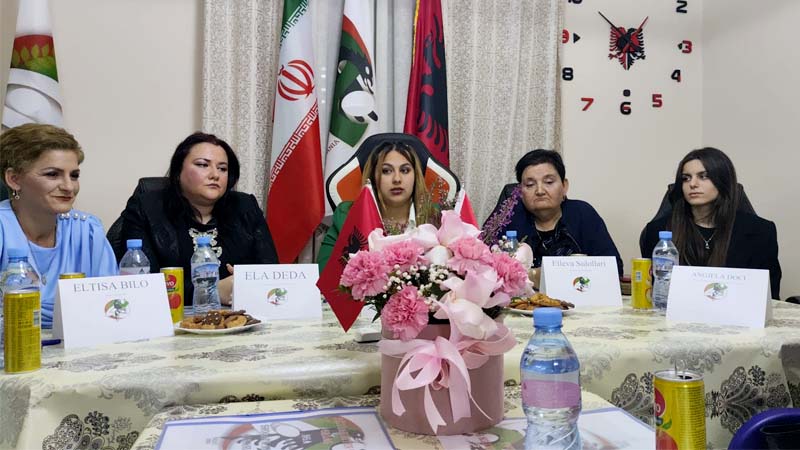
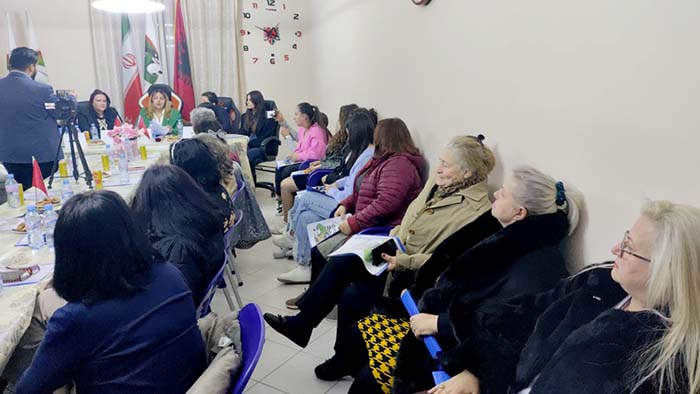
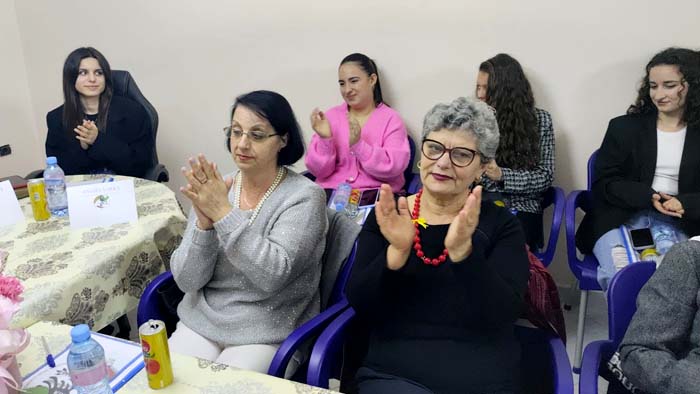
On Sunday, October 15, 2023, a conference was held by Albanian Nejat Society in the conference hall of the Hotel Mondial, Tirana, to try to connect the members trapped in the Mojahedin-e Khalq Organization (MEK, MKO) with the outside world and bring the voice of their waiting families to the people and statesmen of Albania.

Conference of the Albanian Nejat Society in Tirana

ٍErisa Rahimi

Mrs. Erisa Rahimi, who was responsible for the translation and management of this conference, first introduced the conference panel members and explained the purpose of the conference to the participants.

Human rights activist Ms. Naime Gjongecaj, Mrs. Kela Solulari, Mr. Ali Zamani, Mr. Mohammad Reza Sediq, Mr. Mostafa Beheshti, and Mr. Musa Jaberifar from the members of the Nejat Society of Albania, and Mr. Aldo Solulari, the media manager of the Nejat Society, were present in the conference panel, as well as Ms. Soraya Abdollahi, who was connected online from Iran, delivered speeches.

Conference of the Albanian Nejat Society in Tirana

Ms. Naimeh Gjongecaj, a human rights activist

First, a video footage of the gathering of families in front of the International Red Cross in Tehran and also the Turkish Embassy, which protects the interests of Albania, was shown. In this conference, Ms. Naimeh Gjongecaj, a human rights activist, who chaired the conference, gave a speech. She emphasized that all the mothers in Albania should be the voice of the families in Iran and asked the attendees at the conference that everyone should do everything to make the voices of the mothers heard.

Mrs. Erisa Rahimi said something about Ali Asghar Zamani’s escape from the MEK camp and asked him to explain more and describe how he escaped. In his speech, Mr. Zamani gave explanations about the organization’s tricks and the way members were deceived and his family was abused by the MEK, and then he talked about leaving his seven-year-old daughter in Iran and being away from her for several years, and pointed out that by escaping he was born again. He expressed his happiness of being in the free world and at the end of his speech he thanked the Albanian government and especially the Albanian police for their help and support.

Conference of the Albanian Nejat Society in Tirana

Conference of the Albanian Nejat Society in Tirana

Mostafa Beheshti was the third speaker of this conference. In his speech, he talked about the fact that the MEK prevented him from communicating with his mother, and he talked about his mother’s death, and he talked about the last words of his mother on her sick bed, which impressed everyone present.

The next speech was by Musa Jaberifar. Mr. Jaberifar said that he spent 13 years of the best period of his life for the Iranian people, but the MEK deceived him and abused him and forced him to cut ties with his family. He said: “I know that it is hard for any listener to believe this, but this is the truth, in the MEK, we did not have the right to communicate with the family, even in the form of sending letters. Even if we remembered our parents and sisters and brothers, we would be impeached. The MEK considers the family as its enemy, and every member of this organization is forced to believe this.”

Mohammadreza Sediq was the other speaker of this meeting. He welcomed and thanked the guests of this conference in Albanian language. In his speech, which impressed the audience, Mr. Sediq said: “My mother came to Iraq and waited for days at the gate of Camp Ashraf, but the MEK did not inform me that my mother was waiting at the gate of the camp. The officials of the organization threw stones and pieces of irons at the families and called them mercenaries of the Iranian government. While the fathers and mothers who were behind the gate of Camp Ashraf were all elderly. The MEK had a hysterical hostility towards families and they said that the family is the enemy of the MEK and they distance members from the war with the regime in Iran. I always had one dream and that was to return to my homeland Iran one day and kiss the hands of my parents. But unfortunately, I faced the death of my mother and now if I return to Iran, instead of kissing my mother’s hand, I have to kiss my mother’s gravestone. Some of you are mothers and you understand well the separation of mother from child. But Rajavi brought these calamities to us.”

Another speaker was Kela Solulari. Mrs. Solulari expressed her happiness at the union of Iranians and Albanian families and people. He considered the Albanian Nejat Society as a platform for the release of members and the meeting of families and said that we should be the voice of families and members trapped in Albania. He said that we should not fail in this direction and we should do our best.

Conference of the Albanian Nejat Society in Tirana

Aldo Solulari, media media manager of Nejat Society

Aldo Solulari, media manager of Nejat Society, was the last speaker of this panel. Mr. Solulari mentioned the Albanian Nejat Society as the only hope for the release of the trapped members of the MEK to make the voices of the families heard.
After the conference panel members finished their speeches, Mrs. Erisa Rahimi introduced Soraya Abdollahi to the conference audience. Ms. Abdollahi impressed all the participants in the conference with her words and visual communication. He talked about his many years of trying to meet her only son, Amir Aslan Hassanzadeh, and talked about the MEK’s obstruction to communicate with her son. Ms. Abdullahi asked the young people present at the conference not to be deceived by the MEK and considered this organization a threat to the national security of Albania. She asked all the audience, especially the mothers who participated in the conference, to be the voice of expectant mothers in Iran and open the way to meet the captive children by referring to the Albanian government.

Conference of the Albanian Nejat Society in Tirana

At the end of Ms. Abdollahi’s speech, Mrs. Erisa Rahimi asked all the participants of this conference to sign the final statement of the conference to support the release of the members trapped in the MEK and to give access to the families in Iran to their loved ones. All participants expressed their solidarity by signing the final statement of the conference.

At the end of the conference, a celebration was held for the escape of Ali Asghar Zamani at the Hotel Mondal restaurant by the members of the Albanian Nejat Society for all the participants of the conference. The cultural and publicity department of the Nejat Society of Albania will soon show the films of this conference and the celebration of Ali Zamani’s freedom.

October 16, 2023 0 comments
FacebookTwitterPinterestWhatsappTelegramSkypeEmail
Newer Posts
Older Posts

Recent Posts

  • A Criterion for Proving the Violent Nature of the MEK

    December 31, 2025
  • Rebranding, too Difficult for the MEK

    December 27, 2025
  • The black box of the torture camps of the MEK

    December 24, 2025
  • Pregnancy was taboo in the MEK

    December 22, 2025
  • MEPs who lack awareness about the MEK’s nature

    December 20, 2025
  • Facebook
  • Twitter
  • Instagram
  • Youtube

© 2003 - 2025 NEJAT Society . All Rights Reserved. NejatNGO.org


Back To Top
Nejat Society
  • Home
  • Articles
  • Media
    • Cartoons
    • NewsPics
    • Photo Gallery
    • Videos
  • Publications
    • Books
    • Nejat NewsLetter
    • Pars Brief
  • About Us
  • Contact us
  • Editions
    • عربي
    • فارسی
    • Shqip