Nejat Society
  • Home
  • Articles
  • Media
    • Cartoons
    • NewsPics
    • Photo Gallery
    • Videos
  • Publications
    • Books
    • Nejat NewsLetter
    • Pars Brief
  • About Us
  • Contact us
  • Editions
    • عربي
    • فارسی
    • Shqip
Nejat Society
Nejat Society
  • Home
  • Articles
  • Media
    • Cartoons
    • NewsPics
    • Photo Gallery
    • Videos
  • Publications
    • Books
    • Nejat NewsLetter
    • Pars Brief
  • About Us
  • Contact us
  • Editions
    • عربي
    • فارسی
    • Shqip
© 2003 - 2024 NEJAT Society. nejatngo.org
UN

UN Iraq rep urges exile cooperation

The United Nations envoy to Iraq said Wednesday that residents of an Iranian dissident camp are denied freedom of movement by the exile group, and that efforts to relocate them outside Iraq are being stymied in part by lack of coopeAP Interview: UN Iraq rep urges exile cooperationration from the residents themselves.

Martin Kobler made the comments in an interview with The Associated Press in Baghdad as he prepares to leave the country at the end of his term. The U.N. has been involved in relocating members of the Mujahedeen-e-Khalq dissident group to a camp on the outskirts of the Iraqi capital while it works to resettle them abroad.

The MEK is the militant wing of a Paris-based Iranian opposition movement known as the National Council of Resistance of Iran that opposes Iran’s clerical regime and has carried out assassinations and bombings there. They fear persecution if sent back to Iran.

About 3,100 MEK members live in Camp Liberty, a former U.S. military base near Baghdad airport. The Iraqi government wants the group’s members out of the country. So do Iranian-backed Shiite militants, who have claimed responsibility for deadly rocket strikes on the camp.

Kobler acknowledged that a major problem in resettling camp residents is a shortage of countries willing to accept them. He repeated his call for U.N. member states, including the U.S., to do more.

"We do not have enough recipient countries. … There is also reluctance from the side of the Liberty residents to cooperate with the UNHCR," he said, referring to the U.N. refugee agency.

Albania has agreed to take 210 camp residents, but only 71 have made the move so far. Germany has also offered to take 100 residents.

Kobler also cited concerns about what he called "human rights abuses inside Camp Liberty done by the MEK themselves."

Residents are not free to move between different sections of the camp without approval, and some are denied Internet and mobile phone access by MEK officials, he said. Medical treatment outside is also often blocked by the group, he alleged.

"There are, of course, MEK residents who probably would like to disassociate themselves from the MEK," he said. "Everybody who wants to go out of the camp … should have the chance to do so."

The NCRI, the MEK’s affiliated Paris-based group, has repeatedly criticized Kobler. He retains the backing of U.N. Secretary-General Ban Ki-moon, and was recently appointed the U.N. envoy and head of the U.N. peacekeeping mission in Congo.

NCRI spokesman Shahin Gobadi dismissed Kobler’s comments as baseless and intended to "cover up the failure to provide minimum security provisions" at the camp.

"The only purpose they serve is they set the stage for more attacks," he said, insisting that residents cooperate with the U.N. Gobadi also charged that "Kobler has never been an impartial person and does not represent the values of the U.N."

Iraq gave foreign diplomats as well as journalists from AP and Iraq’s state-run TV a rare glimpse of the camp in September. Diplomats on the tour described conditions as acceptable.

The MEK fought alongside Saddam Hussein’s forces in the 1980-88 Iran-Iraq war, and several thousand of its members were given sanctuary at a facility known as Camp Ashraf near the Iranian border. The MEK renounced violence in 2001 and was removed from the U.S. terrorism list last year.

Iraq’s Shiite-led government, which has close ties to Iran, considers the MEK a terrorist group. Iraqi security forces launched two deadly raids since 2009 on Camp Ashraf, and in 2012 most residents were moved to Camp Liberty, which is meant to be a temporary way station.

Ali al-Moussawi, a spokesman for Iraqi Prime Minister Nouri al-Maliki, said Baghdad also has concerns that MEK leaders are preventing residents from leaving.

"There is intimidation being practiced by some MEK leaders against their fellow people," al-Moussawi said. "Some MEK members are willing to leave the country, but they are being threatened by a minority preventing them."

The exiles say their new home is unsafe, and they want to return to Camp Ashraf. Several residents were killed in a Feb. 9 rocket strike on the camp, and two others died in a similar attack this month.

In another development Wednesday, Iraqi electoral officials said the Kurdish-backed al-Taakhi list won the largest single bloc of seats in provincial elections in the restive northern province of Ninevah. It claimed 11 of 39 provincial council seats up for grabs.

Ninevah borders Iraq’s largely autonomous Kurdish region and has a sizable Kurdish minority. Many of the remaining seats went to Arab parties, with Iraqi parliament speaker Osama al-Nujaifi’s Sunni Arab-backed United bloc coming in second, with eight seats.

Residents in Ninevah and neighboring Anbar province voted last week in local elections that were delayed due to security concerns.

Also Wednesday, Iraqi authorities said two policemen were killed in a bomb blast in the Ninevah provincial capital Mosul. Four others died in an explosion in a small cafe in Baghdad’s Dora neighborhood, They spoke on condition of anonymity because they weren’t authorized to release the information to journalists.

__

Associated Press writer Qassim Abdul-Zahra contributed reporting.

By ADAM SCHRECK

June 27, 2013 0 comments
FacebookTwitterPinterestWhatsappTelegramSkypeEmail
Human Rights Abuse in the MEK

There is no justice and freedom in MKO cult

“Despite their pro-freedom, justice and equality gestures, MKO gangleaders have no faith in such principals and discriminate against the members who are from different religions and ethnics,” A defected MKO member was quoted as saying by Islamic Republic News Agency (IRNA).

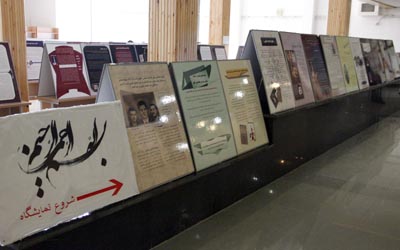
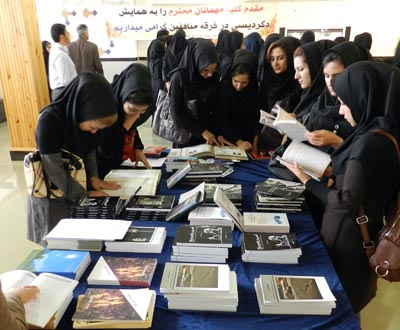
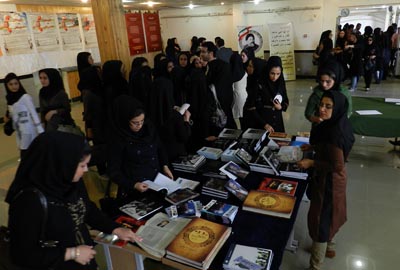
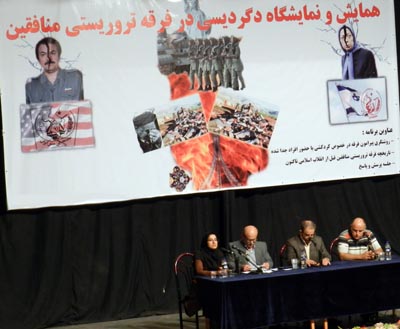
According to Habilian Association, the ex-MKO member was invited to give a speech in a gathering in Sanandaj City of Kurdistan province. She said in a part of her speech: “The MKO cult doesn’t believe in any religions or ethnics. They believe their cult must be uniform and apart from any religious or ethnic views.”

She continued: “I was a member of the group as a Sunni Kurd but I wasn’t allowed to express my beliefs.”

The former member of the terrorist group also reiterated: “MKO members were always told they all had to think the same and all the views must be united and no one should express their beliefs.”

She also pointed out how she was recruited in the group and said: “I had planned to go abroad to continue my studies but unfortunately, I was kidnapped by the MKO and found myself in the middle of Camp Ashraf.”

According to her, she was totally unaware of MKO cult’s activities. She had illegally entered the Turkish soil along with her uncle and her brother with the purpose of going to Italy. In Turkey, she was arrested at the airport by the Police because of her spurious passport.

She continued: “I was unaware of all these and as I trusted my uncle, I couldn’t understand I was going to be trapped in the MKO. I had no idea my uncle was a member of the terrorist group.

She further explained the process of her recruitment and said: “I was released 24 hours later and understood the MKO had arranged my release. After I was released, I was taken to the railway station where I was told we were leaving for Italy. After hours of waiting, some women in military costumes took me over. Days after, I insisted on asking our geographical position and it was when I understood I was at Camp Ahraf. I complained but they didn’t care. I asked for my brother and my uncle but they said they had no idea who and where they were.

She also referred to the psychological torture she had to bear at Camp Ahraf and said: “the tortures were so heavy for me that I suffered from two months of absolute Alzheimer and couldn’t remember anything from my past.”

She also pointed out her complaints and her disaffection regarding to activities in the cult and said: “I was replied: you can get in here with free will, but departure is forbidden in the group.

She said she was unaware of her family for a long time and continued: “Six months after I was brought to Camp Ashraf, I saw my brother. After the Americans invaded Iraq, my brother escaped the cult and joined them. The Americans had promised him to help return me from the Camp.”

At the end, she said: “After my frequent complaints of my life in Camp Ashraf, they finally called my mother and told her to come and take my dead body. My mother came to Iraq and found my brother and started her efforts to take me out of the Camp Ashraf. Her efforts finally led to my freedom and when the Americans asked the cult, they couldn’t disagree with letting me go.”

June 27, 2013 0 comments
FacebookTwitterPinterestWhatsappTelegramSkypeEmail
Camp Liberty

Camp Liberty residents’ questions go unanswered

News from inside Camp Liberty – base of the Mojahedin-e Khalq (MEK) in Iraq – indicates that the cult leader Massoud Rajavi was seriously relying on the Iranian presidential elections turning into a fiasco. The cult’s Camp Liberty residents’ questions go unansweredleaders had prepared the grounds for an escalation of public unrest and had told the members trapped in the camp that the cult had a bright future, hence discouraging them from fleeing the camp.

When Iran named the Iranian New Year, beginning in March, to be a ‘political epic’, one MEK official told a gathering of the members with ridicule that, “They should beware not to have a political disaster during the elections never mind an epic”.

With reference to the sayings of Massoud Rajavi, one of the MEK officials said, “We lost our chance in the past election in 2009, if we lose our chance this time the overthrow of the regime will not be possible for another 8 years”. Apparently the cult had sent some sabotage teams into Iran who were arrested before they could do anything.

In his internal analysis Rajavi had calculated that when Rafsanjani and Mashai were among those who put themselves forward as presidential candidates, the regime would be in an awkward position. Whether they are qualified according to the Guardians’ Council or not, according to Rajavi the result would be turmoil and disorder. He therefore believed the situation would be ripe for the MEK to add to the difficulties of the Islamic Republic and he could carry out his own goals.

After a calm and hassle-free election with a big voter turnout – which all media and political sources agreed was the case, except of course Rajavi who claimed insistently that nobody participated and people shouted slogans – and after the ‘most-unlikely-candidate-to-win’ according to Rajavi actually won the election, questions were raised amongst the MEK members to which the cult officials had no answer. Although they had created the grounds for these queries in the first place, they could only, as it is customary inside the cult, accuse those raising questions of repeating the regime’s nonsense.

The other matter which raised many questions inside the MEK is the recent resignation of two prominent members of the National Council of Resistance (NCR, the MEK’s western style front group), Mr Karim Ghasim and Mr Mohammad Reza Rohani, and the consequent revelations by two other members, Ismael Vafa Yaghmai and Iraj Mesdaghi. The cult leaders briefed the members by claiming that Ghasim and Rohani were supposed to have been fired six months ago but the Council had deferred it to an appropriate time before they eventually got rid of them. This is quite the opposite to the Council’s public statement that emphasized how shocked they were to learn that the two had resigned and blamed it on infiltration by the Iranian regime into the NCR.

The Rajavi cult is also trying to link the replacement of Mr Martin Kobler, the Special Representative of the UN General Secretary to Iraq, to their hostile efforts against him and show it as a victory gained by them. The truth is that Mr Kobler’s mission in Iraq came to an end and he has now been appointed to a new mission in the Congo and of course the policy of the UN will not change just because one Special Representative has moved on and another has been appointed. It should be noted that Mr Kobler will certainly thoroughly brief his successor about the cultic behavior of the MEK.

The other news is that cult officials inside Camp Liberty try to pretend that those who were sent to Albania did not wish to go and they had to force them to do so. They do this to discourage people from volunteering to leave the camp so that the leaders can pre-select the people they choose to allow to go.

June 26, 2013 0 comments
FacebookTwitterPinterestWhatsappTelegramSkypeEmail
Former members of the MEK

Ex-MKO members recount ordeals at Camp Ashraf

The MKO – listed as a terrorist organization by much of the international community – fled Iran in 1986 to Iraq, where it received the support of Iraq’s executed dictator Saddam Hussein, and set up its camp near the Iranian border.”

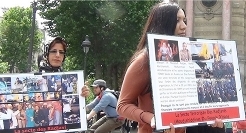
“What I saw and endured at the MKO’s Camp Ashraf is opposite of what they say here in Europe. There is no freedom for women. They cannot talk to men, wear make-up and are even forced to have abortions… I wanted to leave there for a long time and finally escaped,” said Nasrin Ebrahimi, a former MKO member, in the French capital, Paris.

The MKO – listed as a terrorist organization by much of the international community – fled Iran in 1986 to Iraq, where it received the support of Iraq’s executed dictator Saddam Hussein, and set up its camp near the Iranian border.

The Iraqi government later transferred MKO terrorists from Camp New Iraq, formerly known as Camp Ashraf, to Camp Liberty, located at the north of Baghdad. They are currently being relocated to other countries such as Albania.

The group is notorious for carrying out numerous acts of terror against Iranian civilians and officials and the massacre of Iraqi Kurds in the country’s north under Saddam.

Edward Termado, another former member, said, “We did not have [access to] internet, we did not have [access to] news, news was under their control. When I came out [of Camp], I did not know what a mobile is… in 2001.”

He added that the MKO leaders “do not understand democracy… they are dictators, and I call her [an MKO leader Maryam Rajavi] small dictator.”

Jahangir Shadanlou, a social worker for former MKO members, said executed Iraqi dictator Saddam Hussein paid the terrorist group USD 30 million dollars a month to attack and spy on Iran.

“They made a lot of foreign investments with this money. The MKO is a group of Fifth columnists, which has spied and fought against the Iranian people in hopes that one day foreign powers would reward them by putting them in charge of Iran,” Shadanlou added.

In the past few years, MKO and its sympathizers have invested considerable financial resources to bring high-profile speakers to rallies and gatherings in the United States and Europe to back the terrorist group.

In 2012, the US Treasury Department investigated former Pennsylvania Governor Edward Rendell for receiving USD 150,000 or 160,000 from the MKO in return for his speeches in favor of the group.

Rendell was among a group of former US officials who accepted money to deliver speeches calling for the removal of the MKO from the State Department’s list of Foreign Terrorist Organizations.

The group included former FBI Director Louis Freeh; two former CIA directors James Woolsey and Porter Goss; former attorney general Michael B. Mukasey; President George W. Bush’s first homeland security secretary Tom Ridge and President Obama’s first national security adviser Gen. James L. Jones as well as prominent Republicans, including Rudolph W. Giuliani, the former New York City mayor, and Democrats like Howard Dean, a former governor of Vermont.

According to a report by New York Times, these officials received fees of USD 10,000 to USD 50,000 for speeches on behalf of the Iranian group.

The MKO was taken off the State Department’s blacklist on September 28, 2012.

Download Ex-MKO members recount ordeals at Camp Ashraf

June 26, 2013 0 comments
FacebookTwitterPinterestWhatsappTelegramSkypeEmail
UN High Commissioner for Refugees

UNHCR welcomes Albanian offer to Hurriya residents

UNHCR chief welcomes Albanian offer of humanitarian admission for 200 residents of Camp Hurriya, Iraq

The UN High Commissioner for Refugees, António Guterres, on Monday welcomed an offer by the Albanian Government to grant humanitarian admission for 210 residents from Camp Hurriya in Iraq to Albania.

The camp has seen a recent deterioration of the security situation of its residents, with a mortar attack on the camp on February 9th killing eight and wounding dozens, with subsequent threats made against the residents.

Guterres expressed gratitude to the Albanian government saying “This generous offer is a demonstration of international solidarity and burden sharing for a vulnerable population”. He strongly encouraged other”countries to follow Albania’s lead and offer solutions for the camp residents that enable them to relocate outside of Iraq”.

He said “The residents of Camp Hurriya urgently need solutions to relocate out of Iraq”. And he expressed the hope that they”welcome the offer and cooperate to ensure the departure of this important number of people”.

Camp Hurriya, also known as Camp Liberty, has over 3000 residents.

Donn Bobb, United Nations,Duration:  58″,.unmultimedia.org/radio/

To Listen to the audio file click here

Download UNHCR welcomes Albanian offer to Hurriya residents

June 26, 2013 0 comments
FacebookTwitterPinterestWhatsappTelegramSkypeEmail
Camp Liberty

A Third Window to Freedom

Martin Kobler, the UN Special Representative for the Secretary-General and head of the UN Assistance Mission in Iraq (UNAMI), welcomed the relocation of a third group of MKO members residing in Camp Liberty near A Third Window to FreedomBaghdad airport to Albania. The latest transferred group of 27 makes it a total of 71 out of the 210 offered to be accepted by Albania.

“A total of 71 men and women now have safely arrived in Albania and have benefited from the Government of Albania’s offer to accept 210 of the Camp’s residents,” said Martin Kobler.

Some 3,000 residents, most of them members of a group known as the People’s Mojahedeen of Iran, are temporarily housed in a transit facility called Camp Liberty, also known as Camp Hurriya, while the Office of the UN High Commissioner for Refugees (UNHCR) carries out a process to determine their refugee status.

Mr. Kobler said in addition to Albania, Germany has offered to relocate some 100 residents. The departure of the group from Iraq is in accordance with the memorandum of understanding of 25 December 2011, which foresees the relocation of the residents to third countries.

“I once again thank both countries’ governments for their generosity and call on other Member States to receive residents as well,” the UN envoy said.

The relocation comes just days after two people were reportedly killed and dozens injured in a mortar attack to the camp. “Last week’s tragic events have once again shown how important it is to relocate the residents to third countries as quickly as possible,” Mr. Kobler noted.

When Albanian Prime Minister, Sali Berisha, made the humanitarian offer to take about 210 members of MKO, many began to consider it a promising sign that could be the beginning of an end to the residents’ sufferings and the beginning to promote cooperation of other countries and to pave the way to take more refugees. The offer was at first rejected by the group’s leaders and the group’s propaganda machine kept lashing Mr. Kobler and condemning him for pressing relocation of residents:

“Kobler misused the humanitarian act of the Albanian government in accepting 210 of the residents for his own propaganda purposes in order to avoid the urgent security crisis and to divert attention from his own destructive role in forcefully evicting the residents and transferring them from Ashraf to the Liberty killing field”

The US Secretary of State, John Kerry, has made remarks concerning the outright refusal of MKO to accept the offer of resettlement in Albania saying:

“We had worked out an arrangement with the Albanians to take about 250 people, but then the people in the camp themselves declined to go. So we’re trapped in a kind of round robin.”

June 25, 2013 0 comments
FacebookTwitterPinterestWhatsappTelegramSkypeEmail
UN

UN envoy welcomes relocation of Iranian exiles

The top United Nations official in Iraq today[22 June 2013 ] welcomed the relocation to Albania of 27 residents from an exile camp near western Baghdad.

UN envoy welcomes relocation of dozens of Iranian exiles to Albania

“A total of 71 men and women now have safely arrived in Albania and have benefited from the Government of Albania’s offer to accept 210 of the Camp’s residents,” said the UN Special Representative for the Secretary-General and head of the UN Assistance Mission in Iraq (UNAMI), Martin Kobler.

Some 3,000 residents, most of them members of a group known as the People’s Mojahedeen of Iran, are temporarily housed in a transit facility called Camp Liberty – also know as Camp Hurriya – while the Office of the UN High Commissioner for Refugees (UNHCR) carries out a process to determine their refugee status.

Mr. Kobler said in addition to Albania, Germany has offered to relocate some 100 residents. The departure of the group from Iraq is in accordance with the memorandum of understanding of 25 December 2011, which foresees the relocation of the residents to third countries.

“I once again thank both countries’ governments for their generosity and call on other Member States to receive residents as well,” the UN envoy said.

The relocation comes just days after two people were reportedly killed and dozens injured in a mortar attack to the camp.

“Last week’s tragic events have once again shown how important it is to relocate the residents to third countries as quickly as possible,” Mr. Kobler noted.

The camp had previously been attacked in February while most of the residents were sleeping. The attack resulted in six deaths and various injuries.

June 25, 2013 0 comments
FacebookTwitterPinterestWhatsappTelegramSkypeEmail
Albania

US strongly supports Martin Kober’s efforts,

27 Camp Hurriya Residents Depart For Albania

Press Statement

Jen Psaki

Spokesperson, Office of the Spokesperson

Washington, DC

June 24, 2013

On June 19 and June 21, two groups of Camp Hurriya residents, 27 in total, were permanently relocated to Albania. This was the third of a series of movements planned under the terms of a generous humanitarian offer by the Government of Albania to accept 210 individuals from Camp Hurriya. The United States thanks Albania for its compassion in this humanitarian endeavor. So far, 71 individuals have relocated to Albania as part of this agreement, and we look forward to additional individuals relocating as soon as possible.

The United States strongly supports the work of the Office of the United Nations High Commissioner for Refugees (UNHCR), the United Nations Assistance Mission in Iraq (UNAMI), and the tireless efforts of the UN Special Representative of the Secretary General Martin Kobler to relocate remaining camp residents outside Iraq. We urge the Mujahedin-e Khalq leadership, and all responsible parties, to ensure full cooperation with the UNHCR relocation process so that future movements occur as expeditiously as possible.

The relocation of Camp Hurriya residents outside of Iraq is a humanitarian mission and vital to their safety and security. The United States renews its call on the Government of Iraq to help ensure the security of the camp in accordance with its December 25, 2011 Memorandum of Understanding with the United Nations. This is a matter of extreme urgency given ongoing threats to the camp. We further renew our call on the Government of Iraq to investigate and bring to justice the terrorists responsible for the June 15 rocket attack against the camp.

June 25, 2013 0 comments
FacebookTwitterPinterestWhatsappTelegramSkypeEmail
Mujahedin Khalq Organization's Propaganda System

Exiled Iranian opposition group in Paris for talks

The National Council of Resistance of Iran, an exiled coalition of Iranian opposition groups, will hold a conference near Paris on Saturday, with international figures including former New York mayor Rudy Giuliani expected to speak.

The National Council of Resistance of Iran (NCRI), an exiled coalition of Iranian opposition groups, was due to meet in the northern Paris suburb of Villepinte on Saturday for the 10th annual Conference for Democratic Change in Iran.

Major international figures including former New York mayor Rudy Giuliani, former US ambassador to the United Nations John Bolton and outspoken Republican politician Newt Gingrich were scheduled to speak at the event.

The NCRI, which includes such groups as the People’s Mujahideen of Iran, appeared on the US list of designated terrorist organisations until last year.

Once the vanguard of resistance to Iran’s shah, the movement has been in exile for three decades. While the NCRI presents itself as a legitimate opposition group, critics say it’s an out-of-touch expatriate lobbying organisation with a lot of money but with little relevance to Iran’s problems. It has also come under fire for having proved useful to the West in the past and for telling politicians what they want to hear.

In the days leading up to Saturday’s conference, event organisers draped T-shirts printed with the faces of Maryam Rajavi, head of the NCRI since 1993, and her husband Massoud, founder of the People’s Mujahideen of Iran, over chairs set up in a vast hangar in Villepinte.

"Iranians from all over the world will be here to support change in Iran, the overthrow of the regime … The resistance wants a pluralistic, secular state," NCRI spokesperson Afchine Alavi told FRANCE 24.

From terror group to opposition movement

During the 1970s, the Mujahideen led the fight against Iran’s shah but swiftly turned against the religious rulers who replaced him. A bloody struggle ensued, followed by decades in exile.

In 1986, Massoud set up the National Liberation army in Iraq. Money and weapons flooded in to support then-Iraqi president Saddam Hussein’s US-backed struggle against Iran. But as the Iraqi dictator fell afoul of Washington, and the West’s relations with Tehran thawed, the Mujahideen found itself on the US and Europe’s list of terrorist organisations.

Maryam spent years making friends in high places, offering the West information on Iran’s nuclear programme. By 2012 the organisation was back in from the cold.

“A new era has begun… for the resistance in Iran and abroad,” Maryam Rajavi said.

But while the NCRI may be able put on a good show outside its homeland, many of the group’s detractors feel that the Rajavis and their followers have ceased to matter to the situation in Iran.

By Alexander TURNBULL / Christopher MOORE (video)

June 23, 2013 0 comments
FacebookTwitterPinterestWhatsappTelegramSkypeEmail
Former members of the MEK

Ex-MKO members recount woes at Iraq camp

Every year the anti-Iranian terrorist group, Mujaheedin-e Khalq Organization, or MKO, holds a rally in a Parisian suburb to try and present itself as a normal political party.

Some Western politicians appear and are paid a hundred thousand dollars or more. Tens of thousands of people attend, but look closely and you’ll see that few in the crowd are actually Iranians.

The day before the group’s rally this year, former MKO members held a press event, which was attended by just one other journalist. The lack of media interest reflects how Europe chooses to ignore the indisputable human rights violations of a group described by former members as a horrific cult.

Even US intelligence admits that the group’s leaders, the Rajavi family has created a cult of personality worthy of Joseph Stalin. From the mass graves recently found at their former camp in Iraq to the total control forced on their few members, the signs of totalitarianism are unmistakable.

Iranians find it hard to believe that anyone could support the MKO, for reasons which anyone should easily understand: the MKO fought alongside ex Iraqi president Saddam Hussein during the Iran-Iraq War; Saddam paid the MKO to massacre thousands of Iraqi Kurds; the terrorist group assassinated Iran’s second president, dozens of political figures and are suspected in the recent assassinations of nuclear scientists.

Last year the US and Canada joined the EU in removing the MKO from their list of terrorist groups. Iranians were shocked by the decision, as was anyone who favors peace in the Middle East.

Despite the MKO’s staggering delusions of grandeur, the appalling testimonies of former members and the undeniable fact of their continued violence, the West is actually increasing its support for the terrorist group. Now the questions are, “Why” and “When will this all end?”.

Ramin Mazaheri,

June 23, 2013 0 comments
FacebookTwitterPinterestWhatsappTelegramSkypeEmail
Newer Posts
Older Posts

Recent Posts

  • National Pride of Iranians: Reject the Rajavis and their Patrons

    July 22, 2026
  • Italian legislators fooled by MEK’s polished presentations

    July 18, 2026
  • The Rhetorical Style and Polemical Language of the MEK

    July 15, 2026
  • Death of Lindsey Graham, notorious hardliner against Iran

    July 13, 2026
  • Nejat Society Albania’s 2026 Peace Delegation

    July 11, 2026
  • Facebook
  • Twitter
  • Instagram
  • Youtube

© 2003 - 2025 NEJAT Society . All Rights Reserved. NejatNGO.org


Back To Top
Nejat Society
  • Home
  • Articles
  • Media
    • Cartoons
    • NewsPics
    • Photo Gallery
    • Videos
  • Publications
    • Books
    • Nejat NewsLetter
    • Pars Brief
  • About Us
  • Contact us
  • Editions
    • عربي
    • فارسی
    • Shqip