
Mujahedin Khalq leaders are resisting the transfer of the Marxist-Islamist group’s members to other countries. But Iraq’s government tires of protecting them.
The State Department’s decade-long effort to find a new home for a controversial Iranian opposition group has
 |
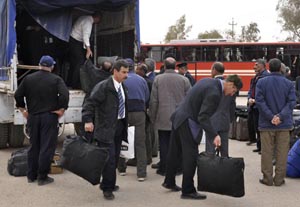
| Members of the Iranian opposition group Mujahedin Khalq in a street in Tirana, Albania. The exiles have been moved to Albania from a camp in Iraq as part of a relocation process. (Hektor Pustina / Associated Press / May 17, 2013) |
ground to a near halt only days after the announcement that the exiles had begun moving from Iraq to permanent homes in Europe.
Fourteen members of the Mujahedin Khalq militant group, or MEK, were flown from the outskirts of Baghdad to Albania on May 15, in what was expected to be the first step in the departure of 3,100 members of the group that has long opposed the government of clerics in Tehran and is also at odds with the government of Iraq.
But a State Department official told Congress on Wednesday that the group’s leadership was not cooperating in the departures, despite the risks to the members’ lives in Iraq.
Beth Jones, acting assistant secretary of state for Near East Affairs, told a House foreign Affairs subcommittee Wednesday that although U.S. officials have worked hard to persuade the group’s leadership to cooperate in the departures, "very few have been allowed to move." She appealed for cooperation.
The Marxist-Islamist group, described by some critics as a cult, moved from Iran to Iraq in the early 1980s, and fought with Saddam Hussein against Iran’s Islamist government during the Iran-Iraq war. The current Iraqi government views the group with suspicion, and U.S. and United Nations officials have been trying to resettle them abroad since 2003.
But though the group’s leadership signed an agreement with the U.N. and Iraq last year to abandon their longtime base, Camp Ashraf, in Diyali province, the leadership seems reluctant to move the group’s members from Iraq. They apparently prefer to remain and continue their effort to overthrow the Iranian government, diplomats say.
The group’s leadership, based in Paris, is apparently refusing to allow their tightly controlled subordinates to cooperate with the U.N. screening required before resettlement can be arranged.
After refusing for years to leave Camp Ashraf, most of the residents began leaving in September for a temporary base. About 100 members, determined not to give up their fight and convinced that world powers have betrayed them, remain.
American and U.N. officials believe the group needs to leave Iraq as soon as possible because of hostility from several Iraqi groups and the limited patience of the Iraqi government, which is protecting it.
In February, eight group members were killed in a rocket attack on the temporary base, which is called Camp Hurriyah. There has been speculation that the attackers were Shiite militants with Iranian backing.
Mujahedin Khalq leaders say they don’t want the group resettled in small numbers in many countries, but instead moved as a single group to new homes in the United States or Europe.
Only about 200 people were slated to go to Albania. U.S. and U.N. officials say that because of lingering concern about the tendencies of a militant group that was on the U.S. list of terrorist groups from 1997 to 2012, no country will take all of them.
The group, which also calls itself the National Council of Resistance of Iran, didn’t respond to messages left with its office in Washington.
By Paul Richter, Los Angeles Times
May 24, 2013,
paul.richter@latimes.com
http://www.latimes.com/news/nationworld/world/middleeast/la-fg-iran-militants-20130525,0,3610225.story
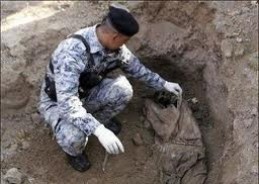 kilometers West of the Iranian border.
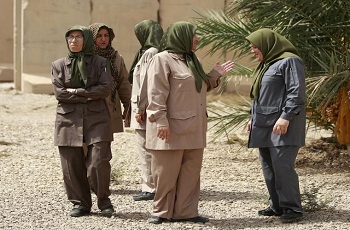 members are located, indicates that unrest and discontentment is growing fast among the residents and that some, against the direct instruction of the cult, openly express their desire to go to a third country. However many people are afraid to approach the international observers because the cult has ideologically banned all contact with outsiders, which it has labeled as ‘crossing the red line’.
 Iraqi Territory. The fourteen arrived in Albania late Wednesday, reported the Associated Press. [1]
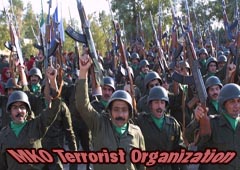 PMOI and NCRI) in Albania will threaten the country’s national security, an Iranian legislator warned on Sunday.
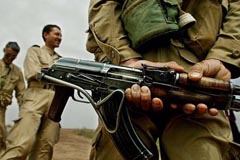 time in June.
 1980s and the U.S.-led ousting of the regime of Saddam Hussein.