
THE US has rejected calls for Iranian exiles housed in a camp near Baghdad that came under mortar and rocket attack to be sent back to their former base near the Iranian border.
The death toll from Saturday’s assault on Camp Liberty, which houses about 3000 members of the opposition People’s Mujahedeen of Iran (MEK), has risen to seven, the group said.
Iraqi authorities are now investigating who was behind the attack, but the MEK and its supporters have called for the group to be allowed to return to their old base dating back to the 1980s – Camp Ashraf near the Iranian border.
"The answer for the individuals at (Camp Liberty) is not to relocate back to Ashraf, in our view," State Department spokeswoman Victoria Nuland said.
"The only peaceful and durable solution for these individuals is resettlement outside Iraq, and that should continue to be the focus of everybody involved in this effort."
The camp residents were reluctantly and finally moved from Camp Ashraf last year, on Iraq’s insistence, as part of deal negotiated via the United Nations.
They are now in the process of being resettled, and it is understood the United States and several European countries have agreed to take them in.
Nuland said the United States has still not made any decisions on whether to accept any of the residents.
"We are now in the process of evaluating some of the referrals that UNHCR has sent our way, and we’re strongly, as I said, encouraging others to do the same," Nuland said.
The MEK was founded in the 1960s to oppose the shah of Iran and took up arms against Iran’s clerical rulers after the 1979 Islamic revolution that ousted the shah.
The group says it has now laid down its arms and is working to overthrow the Islamic regime in Tehran by peaceful means.
Britain struck the group off its terror list in June 2008, followed by the European Union in 2009 and the United States in September.
MKO needs flow of fresh blood to sustain its structure and accomplishment of its causes
Hardly may you encounter an organization struggling for a political, social, or any other cause to be highly 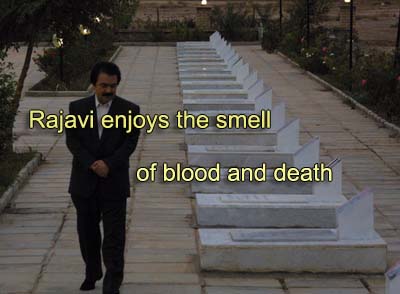 dependent on the blood of its devoted members, calling them martyrs. The terrorist cult of Mojahedin Khalq (aka. MKO, MEK, PMOI, NCR, NLA) is just one among a handful. And what is the necessity of such ever-growing dependence? The reason is simple; MKO needs flow of fresh blood to sustain its structure; it needs more and more martyrs to keep the whole enterprise going; it is a necessary means for the accomplishment of its causes, survival, and keeping its impressive propaganda machine going. As a vindication of its rightness in its struggle path, the group has always boasted about the counts of its members killed, injured and disabled as well as imprisoned members who are believed to substantiate its hegemonic legitimacy over all other opposition groups antagonizing the Iranian regime.
Blood, shed from its own members or those in opposite front, builds the cornerstone of MKO. The Rajavis, the husband-wife leaders of the group, are of the opinion that the rightness of any ideology is maintained by the number of its casualties and martyrs; included in their political and ideological framework, the life and death of man is so simple an issue like drinking water. Ask any defected member and they would promptly enumerate plain examples of the glorification of violence and death-seeking attitude within the organization, an experience that can better than any other theoretical sources of ideology lead you to fathom why the organization delights in victimization of its own members. And open a MKO-run webpage and you will see highlighted reports of Maryam Rajavi’s attending some ceremony to pay homage to the victims of some incident or glorification of the casualties of a certain attack or clash.
Due to the internal demand for constant indoctrination, the MKO cannot hold back from advertising its martyrs, better to say people who die for Rajavi. In fact, MKO longs and prays for a frequent bloody raid and aggression by any outsider against its insiders and in many cases, plots instigation of violent reaction. For instance, once in Camp Ashraf, before residents’ relocation to Temporary Transit Location TTL, the residents had the strict order to provoke a bloody clash since the group needed fresh blood and a few martyrs and wounded people to feed its new round of propaganda against the Iraqi government to maintain its gripe on the camp. As a result, at least twice in 2011 insiders provoked harsh clashes that led to many casualties from the both sides. MKO uncompromisingly refused to cooperate in transferring the insiders to TTL and the Special Representative of the Secretary-General for Iraq, Martin Kobler, had repeatedly expressed his concern about the possible eruption of violent clashes between the sides.
MKO’s settlement in TTL has totally gone against its expectation as the group never expected such indefinite prolongation of being kept in limbo. As the group was sinking into a political oblivion and there was an increasing number of members demanding to defect and there were instances of escapes, new blood was an urgent necessity. Just on February 9, rockets hit TTL leading 7 to their death and leaving many more injured. The media coverage presume MKO has received an awful shock and busy mourning for the killed, condemning the attacks and accusing this and that for committing what they call an appalling human tragedy. But in the heart the leaders are jubilant and behind the closed doors they are celebrating the bloody incident; they wish and hope the injuries hasten the injured to their death to make more martyrs.
The attacks carried out by any party have provided excellent excuses for MKO to display an exhibition of martyrs long victimized within the cult themselves. They could be free people like those escaped or defected and MKO is not uninterested to make all residents martyrs to demonize the Iraqi and Iranian governments as well as securing a much more extended period of stay in Iraq with all needed sympathy directed in its own favor. The world should be concerned about any plotted violence from the side of terrorist MKO that threatens the life of the insiders. The only words instilled into them are those that connote death and violence. They need to hear murmurs of love and life.
Attack on Camp Liberty Unveils Deep Differences between MKO, Western Lobbyists
The recent rocket attack on Camp Liberty – the transient settlement facility of the terrorist Mojahedin-e Khalq 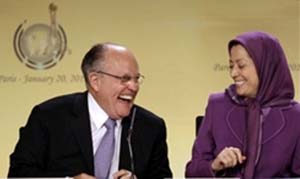 Organization in Iraq – unveiled the deep differences between the terrorist group and its American and European lobbyists.
According to a report by Didehban center, pro-MKO lobbyists, who are mostly retired European and American politicians, have recently concluded that the criminal activities of the MKO (also known as the MEK, PMOI and NCR) will definitely prove costly for them.
They have recently increased their criticism about the "irresponsible" remarks of MKO’s ringleader, Maryam Rajavi, and the negative impacts of her remarks.
These lobbyists have realized that MKO ringleaders want to massacre the group’s members as they see such bloodshed as the only way to guarantee their longer stay in Iraq, while their lobbyists such as former New York mayor Rudy Giuliani have asked for the transfer of the MKO members to the US, said the Didehban report.
In Washington on Saturday, at a convention of Iranian-Americans, Giuliani called on the United States to take in the camp residents.
"These people can all be removed within hours," Giuliani said. "Planes can be sent immediately. They can be here within a day. We have done far more difficult things than that. It’s only about 3,000 people."
The report came after some media reports alleged that Katyusha rockets fired on the Camp Liberty have killed five members of the MKO. About 40 members of the terrorist group were reportedly wounded in Saturday’s attack, along with three Iraqi policemen, said the reports.
Meantime, a senior Iraqi lawmaker said that the recent rocket attack on Camp Liberty was a move to convince Iraq to allow the MKO to return to Camp Ashraf, but such actions are futile the grouplet’s return to its main training camp is impossible.
"Attack on the MKO aimed to rally the support of the international community’s public opinion for the MKO’s return to the Diyala province and Camp Ashraf," Abdullah al-Naeli said on Wednesday.
"But returning the MKO’s members to their previous position is not possible, specially given the fact that Diyala residents spent much efforts to expel them from their province," Naeli was quoted by Ashraf News as saying.
The Iraqi lawmaker added that the Baghdad government is seriously investigating the attack to find out the realities.
France expressed support over transferring members of the Mojahedin-e Khalq Organization outside Iraq, underlining its readiness to take part in coordination with the UN High Commissioner for Refugees (UNHCR).
Iranian Fars news agency quoted French Foreign Ministry Spokesman Philippe Lalliot as saying that his country supports the UN plan to move the MKO to a third country.
Head of an Iraqi human rights group had said that Iraq seeks to try in absentia the members of the Mojahedin-e Khalq Organization (MKO, also known as the MEK, NCR and PMOI) in Iraq.
He said the people of Tuz Khurmato, who are victims of the MKO and the trial is going to be held in their city, expressed happiness and satisfaction over the issue.
A senior Iraqi lawmaker said that the recent rocket attack on the terrorist Mojahedin-e Khalq Organization  transient settlement in Camp Liberty was a move to convince Iraq to allow the MKO to return to Camp Ashraf, but such actions are futile the group’s return to its main training camp is impossible.
"Attack on the MKO aimed to rally the support of the international community’s public opinion for the MKO’s return to the Diyala province and Camp Ashraf," Abdullah al-Naeli said on Wednesday.
"But returning the MKO’s members to their previous position is not possible, specially given the fact that Diyala residents spent much efforts to expel them from their province," Naeli was quoted by Ashraf News as saying.
The Iraqi lawmaker added that the Baghdad government is seriously investigating the attack to find out the realities.
Some media reports alleged that Katyusha rockets fired on the Camp Liberty, the transient settlement facility of the MKO (also known as the MEK, PMOI and NCR) in Iraq, have killed five members of the MKO. About 40 members of the terrorist group were reportedly wounded in Saturday’s attack, along with three Iraqi policemen.
Speaking to reporters here in Tehran on Tuesday, Iran’s Foreign Ministry Spokesman Ramin Mehman-Parast said that the move is part of the MKO’s efforts to portray itself as an oppressed community in a bid to postpone its expulsion from Iraq’s soil.
Mehman-Parast also called on the UN and Iraqi officials to rapidly implement the agreements on the expulsion of the MKO from Iraq.
Also on Tuesday, Iran’s Ambassador to Baghdad Hassan Danayeefar said that the attack is part of the MKO’s efforts to return to Camp Ashraf.
Iran has nothing to do with the recent rocket attack on Camp Liberty, the transient settlement facility of the anti-Iran terrorist Mojahedin-e Khalq Organization (MKO also known as the MEK, PMOI and NCR) in Iraq, an Iranian spokesman said.
Media reports alleged that Katyusha rockets fired on the Camp Liberty near Baghdad have killed five members of the MKO. About 40 members of the terrorist group were reportedly wounded in Saturday’s attack, along with three Iraqi policemen.
Speaking to reporters here in Tehran today, Foreign Ministry Spokesman Ramin Mehman-Parast said that the attack was carried out inside Iraqi soil and "Iran has nothing to do with it".
He said that the move is part of the MKO’s efforts to portray itself as an oppressed community in a bid to postpone its expulsion from Iraq’s soil.
Mehman-Parast also called on the UN and Iraqi officials to rapidly implement the agreements on the expulsion of the MKO from Iraq.
The group, founded in the 1960s, blended elements of Islamism and Stalinism and participated in the overthrow of the US-backed Shah of Iran in 1979. Ahead of the revolution, the MKO conducted attacks and assassinations against both Iranian and Western targets.
The group started assassination of the citizens and officials after the revolution in a bid to take control of the newly-established Islamic Republic. It killed several of Iran’s new leaders in the early years after the revolution, including the then President, Mohammad Ali Rajayee, Prime Minister, Mohammad Javad Bahonar and the Judiciary Chief, Mohammad Hossein Beheshti who were killed in bomb attacks by MKO members in 1981.
The group fled to Iraq in 1986, where it was protected by Saddam Hussein and where it helped the Iraqi dictator suppress Shiite and Kurd uprisings in the country.
The terrorist group joined Saddam’s army during the Iraqi imposed war on Iran (1980-1988) and helped Saddam and killed thousands of Iranian civilians and soldiers during the US-backed Iraqi imposed war on Iran.
Since the 2003 US invasion of Iraq, the group, which now adheres to a pro-free-market philosophy, has been strongly backed by neo-conservatives in the United States, who argued for the MKO to be taken off the US terror list.
The US formally removed the MKO from its list of terror organizations in early September, one week after Secretary of State Hillary Clinton sent the US Congress a classified communication about the move. The decision made by Clinton enabled the group to have its assets under US jurisdiction unfrozen and do business with American entities, the State Department said in a statement at the time.
In September 2012, the last groups of the MKO terrorists left Camp Ashraf, their main training center in Iraq’s Diyala province. They have been transferred to Camp Liberty which lies Northeast of the Baghdad International Airport.
Six people were killed and more than 50 were wounded on Saturday when several dozen mortar shells fell on a refugee camp for members of an Iranian opposition group, according to an Iraqi police official.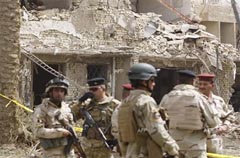
The camp, on the site of a former American military base near the Baghdad airport known as Camp Liberty, is home to about 3,400 Iranian exiles who are members of Mujahedeen Khalq, or M.E.K., a militant organization. It was removed from the State Department’s terrorist list in September after years of intensive lobbying from prominent American politicians and former military officers, who viewed the group as a legitimate democratic alternative to the Iranian government.
In an e-mail sent to news media outlets in Iraq, the military wing of Hezbollah in Iraq, a militant organization believed to have connections to the main Lebanese group and to Iran, claimed responsibility for the attack and warned that others would follow.
Although Hezbollah in Iraq was active during the American military presence there, attacks by the group died down after the Americans left, and its leaders said they would lay down arms and join the political process. But in an ominous sign that a recent spate of deadly sectarian conflicts in Iraq might escalate, the group announced at a recent news conference that it was establishing a militia to fight Sunni groups that had been attacking Shiites. Camp Liberty is meant to be a temporary residence for the Iranian refugees while the United Nations works to find host countries for them. In a statement issued from Geneva, the United Nations high commissioner for refugees, António Guterres, called the attack “a despicable act of violence” and said the residents of the camp were asylum seekers entitled to international protection.
In a statement, the M.E.K. accused the Iranian government and Iraqi forces of being behind the attack, and said the Iraqi government had recently removed the blast walls surrounding the camp, leaving the refugees unsafe. The group said that more than 100 had been injured in the shelling and that its demands to return to its previous location in Iraq, Camp Ashraf, had been ignored.
“The residents and their representatives have warned about a massacre by the Iranian regime and the Iraqi forces,” the statement said, “and demanded several times from the secretary general of the United Nations and U.S. officials to return to Camp Ashraf, where concrete buildings and shelters are available.”
Ali al-Moussawi, an Iraqi government spokesman, denied that Baghdad was involved, saying the accusation from the M.E.K. “is not the first time when they blame us for everything.”
The United Nations demanded that the Iraqi government open an investigation, saying in a statement that Martin Kobler, the United Nations special representative for Iraq, “called on the Iraqi authorities to immediately ensure medical care for the wounded.”
The M.E.K. had long resisted leaving Camp Ashraf, on land that had been set aside by Saddam Hussein, the toppled Iraqi dictator, and did so only because the United States made it a condition of dropping the group’s terrorist designation. An American official said in August that the M.E.K. had been using Camp Ashraf for paramilitary training.
The group carried out bombings in Iran in the 1970s against the shah’s government and later against the Islamic government, causing the death of several Americans, but by most accounts it has not engaged in terrorism in recent years. But Iraq’s current government, a close ally of Iran, views the M.E.K. as a terrorist group and wants it out of the country.
By YASIR GHAZI
Expressing disapprobation of the terrorist Mujahedin-e Khalq group’s presence in Iraq, head of the Iraqi 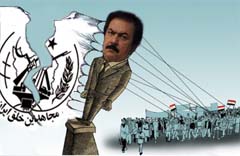 parliamentary committee on martyrs and political prisoners said that, if compelled, they would extradite MKO members to Iran.
“The United Nations should expedite the process of their expulsion from Iraq,” Muhammad al-Hindawi said, as quoted by FNA, Habilian Association reported.
“One day we may be forced to hand the MKO elements over to the government of Iran,” he said, adding that nobody in Iraq thinks about aggression against MKO members held in the country, but they have to leave Iraqi soil.
The Iraqi MP finally concluded that the government of Iraq is not responsible for the lives of these people, as it has not granted them political asylum.
Earlier this week, the temporary home of some 3000 MKO members came under mortar attack, leaving 6 dead and dozens injured.
In an e-mail sent to news media outlets in Iraq, the military wing of Hezbollah in Iraq, claimed responsibility for the attack and warned that others would follow, NY times reported.
Any attack against MKO is either in the behest of MKO or an act on behalf of MKO
Reportedly, the military wing of Hezbollah in Iraq, a militant organization active during the American military 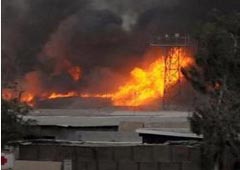 presence, has claimed responsibility for the mortar attacks on Camp Liberty that left a count casualty of nearly 60 on both sides, the Iraqi guards and the residing MKO members. In a statement, as it was expected, MKO accused the Iranian and Iraqi regimes to be not only the responsible but behind the attacks. But the chief responsible for the attacks and the inflicted casualties is MKO itself with Massoud Rajavi at the head.
Regardless of all these accusations and who the real directors of the attacks might be, MKO is the side that best benefits from the bloodshed. In fact, the leaders are not at all looking for the responsible to accuse; whoever they are, they have served MKO in the best way to deserve its thanks. It makes no difference for Rajavi who is sacrificed from which side; the emphasis is on the applied brutality to claim victims. And for MKO, the more victims the better.
The suffering, enslaved insiders of MKO have always been the front-line victims and their families, pressing effortlessly to rescue them, have repeatedly declared that Iraq is not a safe place for their children and relatives to stay. From the within the insiders are, physically and psychologically, under relentless pressure of a totalitarian cult, and from without, there are an ever-increasing likelihood of violent reaction from Iraqi people looking for any opportunity to strike at MKO in revenge for its flagrant collaboration with Saddam against the Iraqi people.
The Committee for the Defense of Iraqi victims of the terrorist MKO has reportedly filed more than 280 complaints against the group in German, Spanish and Turkish courts of law. The chairman of the committee Nafee Issa has asserted that lawyers have filed complaints on behalf of Iraqi victims particularly by farmers living in Diyala province whose crop lands have been occupied by the group to be walled and to establish the cult bastion called Ashraf. In fact, it was a legal demand by the Iraqi government and the local people, to whom the lands belong, to close the camp and return the lands to their real owners. Naturally, MKO as the occupier was reluctant to return what it had seized mostly because its erected utopia was known to be both its ideological and military bastion.
The group, however, was forced to leave Camp Ashraf and the residents were transferred to Camp Liberty near Baghdad. The group is well aware of the fact that relocation from Ashraf is equal to permanent expulsion from Iraq sooner or later. From the very day the first group of members arrived at Liberty, the leaders began a widespread campaign to stop the process of relocation. Now they are nagging, urging and plotting to be returned to Ashraf. And the recent mortar attack has provided the golden opportunity the leaders were looking for. In a statement after the incident, MKO accused the Iranian government and Iraqi forces of being behind the attack, and blasted the Iraqi government for its recent decision of removing the blast walls surrounding the Camp Liberty and, of course, repeated the necessity of being returned to Ashraf:
“The residents and their representatives have warned about a massacre by the Iranian regime and the Iraqi forces, and demanded several times from the secretary general of the United Nations and U.S. officials to return to Camp Ashraf, where concrete buildings and shelters are available.”
What is done cannot be undone but any similar operation for any claimed legal and just reason is either in the behest of MKO or an act on behalf of MKO. The safety of the residents, despite being known as the members of a despised terrorist cult, has to be guaranteed until they are resettled to third countries.
The High Commissioner for Refugees, António Guterres expresses his shock about this  morning’s mortar attack on Camp Liberty in Iraq that reportedly killed six and wounded dozens.
"I strongly condemn this attack," Mr. Guterres said, noting that the residents of Camp Liberty are asylum seekers undergoing the refugee status determination process and thus entitled to international protection. "This is a despicable act of violence."
"I call on the Iraqi Government to do everything it can to guarantee security to the residents," he said. "The perpetrators must be found and brought to justice without delay," he said.
The High Commissioner also calls on all countries to help find urgent solutions for the Camp Liberty residents.
Mr. Guterres expresses his deep condolences to the families of the victims.