Nejat Society
  • Home
  • Articles
  • Media
    • Cartoons
    • NewsPics
    • Photo Gallery
    • Videos
  • Publications
    • Books
    • Nejat NewsLetter
    • Pars Brief
  • About Us
  • Contact us
  • Editions
    • عربي
    • فارسی
    • Shqip
Nejat Society
Nejat Society
  • Home
  • Articles
  • Media
    • Cartoons
    • NewsPics
    • Photo Gallery
    • Videos
  • Publications
    • Books
    • Nejat NewsLetter
    • Pars Brief
  • About Us
  • Contact us
  • Editions
    • عربي
    • فارسی
    • Shqip
© 2003 - 2024 NEJAT Society. nejatngo.org
The MEK Expulsion from Iraq

Ashraf will be fully evacuated in seven days

Baghdad has given a 7-day ultimatum to the anti-Iran terrorist Mojahedin-e Khalq Organization (MKO, also known as the MEK, NCR and PMOI) to fully evacuate Camp Ashraf, a senior Iraqi official stated on Wednesday.

"The complete evacuation of Ashraf Camp and transfer of MKO’s remaining members from there will begin next week," Iraqi Government Spokesman Ali al-Dabbaq told FNA in Baghdad on Wednesday.

Earlier this month, Tehran’s Ambassador to Baghdad Hassan Danayeefar had underlined that Iraqi officials have promised Tehran that they would expel the MKO members from their country very soon.

In September 2012, the last groups of the MKO terrorists left Camp Ashraf, their main training center in Iraq. They have been transferred to Camp Liberty which lies Northeast of the Baghdad International Airport.

Camp Liberty is a transient settlement facility and a last station for the MKO in Iraq.

Speaking to FNA about the latest status of the terrorist organization in Iraq, Danayeefar said, "These people are filling forms of the UN High Commissioner for Refugees (UNHCR) and we are waiting to see them leave Iraq’s soil as soon as possible."

"We have been assured that the move (expulsion) will start soon," the Iranian diplomat said.

Before an overture by the EU, the MKO was on the European Union’s list of terrorist organizations subject to an EU-wide assets freeze. Yet, the MKO puppet leader, Maryam Rajavi, who has residency in France, regularly visited Brussels and despite the ban enjoyed full freedom in Europe.

The MKO is behind a slew of assassinations and bombings inside Iran, a number of EU parliamentarians said in a recent letter in which they slammed a British court decision to remove the MKO from the British terror list. The EU officials also added that the group has no public support within Iran because of their role in helping Saddam Hussein in the Iraqi imposed war on Iran (1980-1988).

Many of the MKO members abandoned the terrorist organization while most of those still remaining in the grouplet are said to be willing to quit but are under pressure and torture not to do so.

A May 2005 Human Rights Watch report accused the MKO of running prison camps in Iraq and committing human rights violations.

According to the Human Rights Watch report, the outlawed group puts defectors under torture and jail terms.

The group, founded in the 1960s, blended elements of Islamism and Stalinism and participated in the overthrow of the US-backed Shah of Iran in 1979. Ahead of the revolution, the MKO conducted attacks and assassinations against both Iranian and Western targets.

The group started assassination of the citizens and officials after the revolution in a bid to take control of the newly established Islamic Republic. It killed several of Iran’s new leaders in the early years after the revolution, including the then President, Mohammad Ali Rajayee, Prime Minister, Mohammad Javad Bahonar and the Judiciary Chief, Mohammad Hossein Beheshti who were killed in bomb attacks by MKO members in 1981.

The group fled to Iraq in 1986, where it was protected by Saddam Hussein and where it helped the Iraqi dictator suppress Shiite and Kurd uprisings in the country.

The terrorist group joined Saddam’s army during the Iraqi imposed war on Iran (1980-1988) and helped Saddam and killed thousands of Iranian civilians and soldiers during the US-backed Iraqi imposed war on Iran.

Since the 2003 US invasion of Iraq, the group, which now adheres to a pro-free-market philosophy, has been strongly backed by neo-conservatives in the United States, who argued for the MKO to be taken off the US terror list.

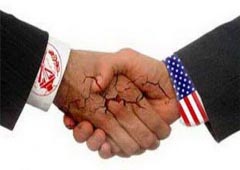
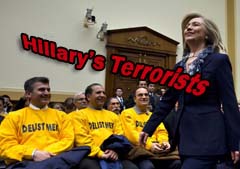
The US formally removed the MKO from its list of terror organizations in early September, one week after Secretary of State Hillary Clinton sent the US Congress a classified communication about the move. The decision made by Secretary of State Hillary Clinton enabled the group to have its assets under US jurisdiction unfrozen and do business with American entities, the State Department said in a statement at the time.

November 15, 2012 0 comments
FacebookTwitterPinterestWhatsappTelegramSkypeEmail
The cult of Rajavi

Exhibition on the cult of Rajavi in Shiraz University campus

Islamic Society of Shiraz University held an exhibition on the Mujahedin Khalq Organization (MKO) in Fajr hall of the campus from November 4th until November 13th.
The exhibition included films, banners, posters and articles on the substance of the cult, its violent past and its current approach in today world as well as Q&A meetings with defectors of the cult and university professors.

The event was welcomed by students and scholars. Former members of the MKO were constantly present in the gallery hall to discus students’ questions. Visitors were eager to know who the mujahedin Khalq were, how the members were fist recruited by the group and what motivated them to leave the group. Trying to reveal cult-like nature of the cult and its threat against the international community, they described how they were victims of a full-scale manipulative system under the order of Massoud and Maryam Rajavi.

Ebrahim Khodabandeh was one of the cult defectors who was received at Shiraz University to enlighten the minds of students who rarely had any idea of the MKO. He described cult-like techniques Rajavi uses to manipulate his members in order to achieve power in Iran.
As experts believe that the threat of cults is a crucial issue in the world today, the objective of the organizers of the exhibition was to illuminate the minds of their audience about the danger posed to the victims of Rajavi’s destructive cult and the risk of involvement of any ordinary person with mind-control cults including the MKO.

November 14, 2012 0 comments
FacebookTwitterPinterestWhatsappTelegramSkypeEmail
The cult of Rajavi

French Senator writes book to denounce the MKO

A member of French Senate has written a book on the Mujahedin Khalq (People’s Mujahedin of Iran/PMOI) earlier this year. Senator Nathalie Goulet of Orne published the book "PMOI: a cult in heart of the Republic" to warn her comrades in French Assembly and Senate about the threat of the cult of Mujahedin.
She writes of the MKO’s violent background and its devotion to armed struggle and terrorism, noting that the group has never published a statement or confession letter to officially denounce violence.
Revealing facts on cult-like practices of the group, she warns that a full-scale cult exists in the heart of Republic of France. She describes the MKO’s efforts in her working place, French Senate and Assembly:
"…in December 2011, a petition was being circulated in French parliament. It was signed by 74 senators and 282 members of the Assembly. It demanded support for the People’s Mujahedin Organization of Iran and its leader Maryam Rajavi, as well as guarantee for international protection of camp Ashraf in Iraq.
” As I know, a large number of these representatives think that they are supporting democracy in Iran by embracing the PMOI. However, I should emphasize that the signatories know almost nothing about the history of the PMOI. So I found it useful to notify the history of the group which is Marxist Islamist"
The author refers to the MKO’s treasonous cooperation with former Iraqi dictator Saddam Hussein against Iranian people and Iraqi Kurds and Shiits and notices the lack of support for the group among Iranian community. She poses questions to those French officials and governmental bodies who are involved with the cult of Rajavi:
"How can a group which has had no base in its county since long time, suggest analysis and advice on the current situation of the country?
Can you count on any party or organization that claims to be democratic?"
Ms. Goulet concludes: "Regarding the past of the PMOI, it’s hard to believe that such a group that still suffers all symptoms and problems of a totalitarian cult of personality, violent activities, hidden financial resources, lie, threat, accusation and destruction of civilians under the pretext of enlightening, has turned into a democratic organization!"

November 13, 2012 0 comments
FacebookTwitterPinterestWhatsappTelegramSkypeEmail
Former members of the MEK

Majid Mohammadi speaks of cult-like practices at TTL

Nejat Society Mazandaran Office interviews Mr. Majid Mohammadi, former member of the Mujahedin Khalq Organization.Mr. Mohammadi left Camp Liberty (Temporary Transit Location) in May 2012.

Nejat Society, Mazandaran Office: Mr. Mohammadi, what did you and your colleagues think of camp Liberty (TTL) before you moved there?

Majid Mohammadi: as you know, Camp Ashraf was an isolated, restricted place where members were under a 24-hour controlling system. When the idea of moving to Liberty was proposed, the majority of guys thought that they would finally go to another place in which they would not be limited and controlled and they would be able to have access to the outside world.
In our private talks, we said that we would ultimately find a way to leave Iraq. Some of the members, who did not want to return to Iran, were happy because they thought that Liberty would open the way to go abroad.
But, we didn’t know that Rajavis intended to build another Ashraf in Liberty.

– What do you mean by building another Ashraf?

– I mean that the organizational control and cult-like practices exercised by the Rajavis, at Camp Liberty was worse than those applied at Camp Ashraf. MKO leaders knew that Liberty is not like Ashraf. It’s not an isolated, closed location with no access to the outside world so they enhanced the organizational control in Liberty to prevent defection and eventually the collapse of the cult.

From the beginning of our arrival at TTL, one of the criminal commanders of the MKO, named Abbas Davari, who had been previously sent there, started holding meetings for members. He said:”The difference between Liberty and Ashraf is that the former was completely under our control, no one was able to interfere in the organization relations but here at Liberty we are dependent on the outside world and Iraqi forces. We should work hard to maintain this Camp and chang it to another Ashraf.”
In order to assure those who realized what “loosing Ashraf” meant, he said, ”It is right, Liberty is a temporary Camp but you should know that Ashraf has been reproduced .We never
leave Iraq.”

At Camp Liberty, they could not fill members’ schedules with forced labor so they held numerous mind control meetings. We attended various manipulation meetings for over 12 hours a day.

– Mr. Mohammadi, speaking of your full-time schedule in Liberty, what was your daily routine?

– From early in the morning (at prayer time) until late at night, we were planned to labor. The cult authorities made us do futile works. For example, they had us move the sand in the camp under the pretext of building streets. Our daily routine was to move the sand to places the authorities said, but as the space was limited, when the task was done, they would find faults with us. they said,” Your female superior doesn’t approve your work” or” you should follow the plan that sisters used”, etc. Once again members had to move the sand to another place, thus our working time was full.
Regarding meetings, I said, twelve hours a day. Our daily routine was to eat breakfast and then to carry the sand until 10:30 am. Then we had a break and we had a meeting until noon.
After lunch, the meetings continued until sunset when we had a break to drink tea. Then we used to go playing sports, however, there wasn’t any possibility for playing games. After dinner time, again we had to attend meetings until midnight.

– How long did you stay at Liberty? How was the condition and facilities there?

– Liberty was a marshy land near our port. It had been known as Saddam Hussein’s hunting ground. After American invasion, the land was dried and filled with sand by US forces and their base was built there. Considering MKO expulsion from Iraq, the camp was allocated to the group as a temporary transit location following the agreement signed between UN representatives and Iraqi government.
A part of this region, about 500 square-meters, in the heart of Iraqi units was allocated to settle MKO forces.
Iraqi police has six stations inside the base.The camp contains 7 parts and each port is divided to 4 blocks. Residents live in Conexes, each conex is resided by 7 people. it is worth to mention that, according to arrangements made by UNHCR supervisor, each conex was due to be allocated to two people but the cult leaders placed 7 people in every conex in order to prevent private meetings and to control members more strictly. The other conexes were used for mind control meetings such as Current Operation and Weekly Cleansing and also for commandants.
Based on the agreement signed by Iraqi government and UN authorities, each Conex should be equipped with TV, air conditioner, telephone etc. until the two residents are granted asylum and leave the camp. But the cult leaders confiscated all Telephones.
The Televisions had no antenna. We were just allowed to watch the MKO channel in the eating place at specific times.
In order to impose more pressure and more limitation, they did not allow us to use the facilities left by American troops. For example, we were not permitted to use the gym which was highly equipped. This was their excuse: ”If we open the gym, members want to build their body, and this is definitely for their desire to have wife and a normal life. So, suggesting the idea of using the fitting center is kind of opportunistic act.” The authorities even did not let us use the exercise mats of US soldiers.”They have the smell of life, they shouldn’t be used”, they said.

– Did the mind control System work the way it worked at Ashraf?

– Yes, exactly. The transfer of members from Ashraf to the new place which is called Temporary Transit Location has changed members’ spirit. The cult leaders have to increase their control over members so that they can maintain the cult-like relations and structure. They hold long-time meetings, gather all members together. They seriously fear members talking to each other in order to prevent members from communicating with their peers; they have divided that 500 – Square-meter place in to smaller areas using bags of sand. The 7-people conexes are divided to two units and each unit is supervised by a high-ranking member to extend their 24-hour control over members.
The camp authorities are severely afraid of members’ gathering in a place. Members are not allowed to gather in the eating place at the same time. Each unit has to attend special ceremonies under the supervision of its own commander who tells them where to sit and when to leave the hall.
On the other hand, they claim that the pressure imposed at Liberty is actually originated in the war we have against Iran. They say,” we are in the battle.”
They try to manipulate members so as they cannot think anything else and ultimately come to different conclusions and decisions.

– What did the MKO leaders think of leaving Iraq?

– As a whole, they suggested that they would not leave Iraq whether at Ashraf or Liberty.
As an obvious contradiction, they told high-ranking members that they would turn TTL into another Ashraf arguing that the Arab Spring would bring change to Iraq too and this way the situation would turn in favor of their cult. But, for low-ranking members, they had another argument.
They told them to be patient until the problem for leaving Iraq would be solved.”If you don’t want to stay with us, be our guest for some time until a solution is found to your problem but don’t give up and don’t go to Iran,” they told us.

Another thing that I should mention about pressure at Liberty is that Rajavi’s nonstop printed and audio messages were the actual troubles for members.
He tries to convince forces not to give up, to stay there. This way, the commandants could more easily suppress the members.
In his last message, he offered four options to the members:

First: if you announce your defection, we deliver you to Iraqis and they will consequently hand you to Iran where you will be tried and executed.
(it is worth to know that before offering such an option, we had attended numerous meetings in which we were told that we would be tortured and executed in Iran so everyone was terrified of going to Iran. After our minds was manipulated ,this option was suggested.)
Second: if you have a good family in Europe, they can follow your case to take you there. (Practically such a solution was impossible for the majority of members who had no one in Europe.)
Third: stay a Mujahed and leave your fate to the Organization.
And after some time he suggested the forth option:
“Stay with the MKO as a guest”. The result of all these options was to stay in the cult and to get depressed in their dirty practices.
In all his messages, Rajavi considered return to Iran as treason. He had made a taboo out of this option.

– Mr. Mohammadi, what’s your idea about the fate of members who are currently imprisoned at Liberty?

– In my opinion, the MKO case in Liberty is just the same as its case in Ashraf. Members should again be staying in suspense for a long time. Although, they have been delisted by European Union since three years ago, not even a member could manage to leave Iraq.
In addition, the cult authorities do not want the members to leave the cult establishment and Iraq. Indeed, the Rajavis are the obstacle against MKO expulsion. I believe that Rajavi doesn’t hesitate to make a thousand people die in order to prolong his stay in Iraq.

– What’s your suggestion to help them leave Iraq as soon as possible?

– As the presence of families at Camp Ashraf had awakened the members for escaping the cult, their presence at Camp Liberty will also be helpful regarding the fact that Liberty is much smaller than Ashraf in size and suppression is much stronger there. Families can play a key role n liberating their loved ones.
Families can assure their children that they are able to make the right decision for their fate demanding UN representative visit their beloveds.

– Thank you for the time you gave Nejat Society. And last question, what do you do now?

– I’m a construction worker and I will soon get married being impressed by Maryam [Rajavi]’s ideological revolution!

November 12, 2012 0 comments
FacebookTwitterPinterestWhatsappTelegramSkypeEmail
Mujahedin Khalq Organization as a terrorist group

Post Delisting, What Are the Mojahedin-e Khalq Up to Now?

Freed from the pretended constraints of being listed as a terrorist entity in the USA, the Mojahedin-e Khalq (MEK) has stepped up its financial and money laundering activities in Western countries. The MEK have launched a ‘basij’ (all-out campaign) in their financial section. Firstly, all members and supporters have been instructed to make supervised contact with their family inside or outside Iran to try to get money from them (a tactic exposed by Al Jazeera’s Cult of the Chameleon documentary in 2007.)
In the ‘charity’ street collections in Western countries (called mali-ejtemai), the theme is Camp Liberty. The public is approached and the camp in Iraq is described as a refugee camp whose inhabitants have no access to food or medicine. The public are told that around 1000 women, mostly mothers, must be urgently transferred with their children to Europe. The money donated will be used to rescue the women and children first before then rescuing the men. (Of course, since enforced celibacy was imposed in 1989 there are no children in the MEK.) Sometimes the donor is told of cases in which refugees have been killed or maimed because of the lack of law and order in Iraq. Conveniently ignoring the fact that the MEK are confined to the camp by their own leaders.
It is no secret that the MEK have been funded for years via these bogus charities as large checks and even thousands in cash have been handed over to street collectors from mystery donors. An unusually high proportion of these donors are solicitors. MEK insiders have always known that this money is coming from other benefactors.
In addition to these activities, the MEK have also tasked as many of their supporters in the West who are able to do so to open a company or create spurious associations or societies claiming to support Iranian refugees or promote Iranian culture, etc. The aim of these groups is to target charities and local councils to get money under false pretenses. Again there is an element of money laundering as this is just one more way for MEK paymasters to dive under the radar to fund the terrorist group.
A more sinister activity is the expansion of information gathering and recruitment practices among the Iranian communities. Concerned Iranians in Europe who contacted me directly report that the MEK have opened two Persian language schools in London and Paris which they say is to target the children of Iranian refugees. Through such deceptive activities the MEK gathers lists of names and addresses to demonstrate support, and also to claim that these Iranians are making financial donations. The deeper purpose is to deceptively recruit new members and also — now that the campaign to be delisted has ended — to keep the supporters busy with new activities. It must not be forgotten that as a cult, the MEK thrives on the unpaid ‘slave’ labor of its followers.
Significantly, Massoud Rajavi, the beneficiary of all the MEK’s wealth, has for three decades kept his financial dealings in the hands of only a few trusted individuals. In the atmosphere of defections and disturbing questioning which currently govern internal relations in the MEK, the unexpected death of one of Rajavi’s key financial personnel in the West sparks deep suspicions among experts in the MEK. This is compounded when we discover that another accidental death has taken place in Paris of one of Maryam Rajavi’s inner circle. (After some high ranking defectors exposed the cult nature of the MEK, Massoud Rajavi declared that such defections would never be allowed to happen again).
In Iraq, the situation has scarcely changed for the members except they have changed location to a UN temporary transit camp Liberty — a move which both the Government of Iraq and UNAMI had worked for to improve their conditions. Camp Ashraf itself is finished, closed, gone, although just under 100 MEK remain there, confined to Section 209 by the Iraqi army which is now in charge of the territory. Rajavi has declared they will not move until enough money is paid — basically the last bit of ransom he can extract from the camp.
There continue on a weekly basis to be a small number of individuals who escape Liberty, either during the UNHCR interview process or by other means, and renounce any further involvement with the MEK. Last week two men escaped, each had spent over 20 years with the MEK (one being a former POW from the Iran-Iraq war). They describe a desperate situation inside Liberty as it is being recreated in the image of Ashraf. All the cult aspects are there — isolation, indoctrination, manipulation, fear, punishments, etc — in addition, barriers are built to separate the bungalows (ironically, the stretchers originally demanded for medical use are being used to move earth to build dykes). ‘Visas’ are issued to people if they need to move between separated locations. The Iraqis are not allowed inside the camp and again have no jurisdiction there. The MEK use every opportunity to try to provoke hostility in the Iraqis by throwing stones and swearing at them, and now the UN and other neutral bodies are suffering provocation as the MEK swear at them and insult them, too.
Although the MEK’s advocates and lobbyists crassly claim that Liberty is no better than a "concentration camp" — a description which seriously riles the German born UNAMI chief Martin Kobler — the situation is not easy for the residents, but not for the reasons they state. There is no shortage of food or water or medicine — let us remind ourselves this is a camp created by and supervised by the UN. In a country where a 24 hour electricity and water supply are not guaranteed to normal citizens, the MEK enjoy both these facilities. What is not being said is that Massoud Rajavi has decreed that the residents must work for these ‘privileges.’ Inside Camp Liberty anyone who needs medicine or has other requirements must work for it, that is, they must submit and do as they are told or else they will be punished by having medicine, etc refused or withheld. Again, the MEK don’t let the Iraqis approach the people inside the camp to ascertain their welfare or needs.
Since the beginning of 2012 a disturbingly disproportionate number of residents have died because Rajavi has year on year denied them proper or timely medical treatment.
Rajavi’s veteran translator Ghorban Ali Hossein Nejad escaped Camp Liberty two months ago. He is now in Baghdad and has exposed the relationship between Rajavi and the Saddam regime. He is also helping UN, EU, U.S. and Iraqi officials by exposing the lies which the MEK are telling them. He has two daughters, one in Iran and one still in Camp Liberty. Neither he nor anyone else has been able to contact his daughter in Liberty without the presence of MEK minders. (He reports that while he was inside the MEK, he had not seen his daughter anyway for twenty years due to the enforced separation of families and friends.) Instead, the MEK brought her on their television channel to swear at him and her sister, claiming they are agents of the Iranian regime. Given the sensitivity of the information being passed to the officials it is possible her life is in danger. (MEK experts have observed that ‘accidents’ happen to dissidents in Iraq and Europe on a fairly regular basis.)
In spite of rumors that Massoud Rajavi is dead, he is very much alive and keeping tight control over his cult on a daily basis. High ranking escapees say they have seen him in the leadership compound in Camp Ashraf until very recently. According to deserters, Rajavi frequently communicates his indoctrination and messages via audio — no visuals. But it is clear he has not been stationed in Iraq since the U.S. army handed over responsibility for the MEK in 2009. Instead, based on unconfirmed reports, I belief he moves between safe houses in Jordan associated with Saddam’s family and loyal Baathists, without the express permission of the Jordanian government. From his hideout, Rajavi issues his orders. He has told the people in Iraq they should only agree to talk to members of the UN or ICRC on condition that Camp Liberty is designated as a refugee camp (it is actually a UN temporary transit camp). Rajavi has said ‘if we work on it we can be accepted to move to Europe collectively, but if not we will ever leave Iraq.’
Rajavi has told everyone that ‘the Americans will back us to the end because they need us’. However, Rajavi also said to every member that armed struggle is an unchangeable part of the MEK ideology and every Mojahed’s belief system and that this, and the logo, will never change. (In other words, don’t be worried or concerned by our external propaganda, inside we will never change).
As though to prove this point, the Iraqi authorities report that the MEK are desperate to have greater connections with al Qaeda and Saddamists in Iraq and beyond. The MEK especially want new connections, since their main backer was convicted of terrorism charges and escaped Iraq. The MEK leaders are demanding greater freedom of movement to come and go and to bring people into the camp. But then the Iraqis knew all about their former connections with these groups while they were protected by the U.S., and this was why they curtailed their activities after 2009. It remains to be seen whether the delisting of this known terrorist group in the USA will have the necessary reach to reverse for its backers what appears to be the rapid and inevitable demise of the group as its members are being rescued by humanitarian agencies.

Massoud Khodabandeh

November 10, 2012 0 comments
FacebookTwitterPinterestWhatsappTelegramSkypeEmail
Mujahedin Khalq Organization as a terrorist group

Q&A: what is the MEK and why did the US call it a terrorist organisation?

The MEK cut a ‘swath of terror’ in the Middle East, but leaders have worked hard to convince the west they are peaceful now

Why did the US designate the MEK a terrorist organisation in 1997?
The MEK’s supporters say it was banned as a move by the Clinton administration to appease the what is the MEK and why did the US call it a terrorist organisation?Iranian government. The US state department, which decides which groups to include on the list of designated terrorist organisations, points to a long and bloody history.

The MEK ran a bombing campaign inside Iran against the Shah’s regime the 1970s. The targets were sometimes American, including the US information office, Pepsi Cola, PanAm and General Motors. The group routinely denounced Zionism and "racist Israel", and called for "death to America".

A state department report in 1992 identified the MEK as responsible for the killing of six Americans in Iran during the 1970s. They included three military officers and three men working for Rockwell International, a conglomerate specialising in aerospace including weapons, who were murdered in retaliation for the arrest of MEK members over the killings of the US military officers.

The MEK was an enthusiastic supporter of the seizure of the US embassy in Tehran following the Iranian revolution. It called the eventual release of the American hostages a "surrender".

After falling out with Iran’s new rulers, led by Ayatollah Khomeini, the MEK launched a bomb campaign against the Islamic government. In 1981, it attacked the headquarters of the Islamic Republic Party, killing 74 senior officials including the party leader and 27 members of parliament. A few months later it bombed a meeting of Iran’s national security council, killing Iran’s president and the prime minister.

The state department described the MEK as cutting a "swath of terror" across the country in the following years and of "violent attacks in Iran that victimise civilians".

"Since 1981 the [MEK] have claimed responsibility for murdering thousands of Iranians they describe as agents of the regime," the report said.

The bombings continued into the 1990s including one at [Ayatollah]Khomeini’s tomb and against oil refineries.

Who supported the MEK?
After the MEK leadership fell out with the Islamic regime it fled first to Paris. France expelled the MEK leader, Masud Rajavi, in 1986. The group then ran into the arms of Iran’s enemy, the Iraqi dictator, Saddam Hussein. Iraq helped arm the MEK’s thousands of fighters with artillery, guns and tanks and housed them in three camps near Baghdad and along the border with Iran. Baghdad also supplied money.

The MEK’s armed wing, the National Liberation Army (NLA), conducted raids into Iran during the last stages of the Iran-Iraq war. It also became a tool of Saddam Hussein’s campaign of internal oppression.

"The NLA’s last major offensive reportedly was conducted against Iraqi Kurds in 1991 when it joined Saddam Hussein’s brutal repression of the Kurdish rebellion," the state department report said.

The last major act of violence committed by the MEK in the west was in 1992 when it stormed Iranian diplomatic missions in the US, Britain, Canada, Germany, France and Switzerland. The assault was in response to an Iranian air force bombing raid on an MEK base in Iraq.

Wouldn’t the killing of Americans, calls for the destruction of Israel and supporting Saddam Hussein be enough to scare off any American politician from ever supporting the MEK?
The US invasion of Iraq in 2003 changed everything for the MEK. Its fighters at Camp Ashraf, near the Iranian border, and other sites near Baghdad were disarmed by the Americans. The MEK leadership moved swiftly to distance itself from Saddam Hussein, emphasising its opposition to the Islamic government in Tehran and casting its supporters as selfless and long suffering supporters of freedom and democracy. From then on the MEK reinvented itself in American eyes.

Until the 1990s it was known as the People’s Holy Warriors of Iran, but that’s not the kind of name to win support in the west these days so it tweaked the name.

Two decades ago, the state department identified the MEK as running what it called "a determined lobbying effort among western parliamentarians".

"To conduct its propaganda campaign the group has established offices through western Europe, the United States, Canada, Australia and the Middle East," it said. "Through such efforts, the (MEK) attempt to transform western opprobrium for the government of Iran into expressions of support for themselves".

The MEK leadership has played on opposition to the present Iranian leadership, which is in part bound up with concerns among US politicians over Tehran’s nuclear programme and fears for Israel’s security, to bury its past by portraying itself as a democratic and popular alternative to the Islamic regime.

"Exploiting western opprobrium of the behaviour of the current government of Iran, the (MEK) posit themselves as the alternative. To achieve that goal, they claim they have the support of a majority of Iranians. This claim is much disputed by academics and other specialists on Iran, who assert that in fact the MEK have little support among Iranians," it said.

The state department report quotes an American journalist as saying of the MEK: "They hope to transform their public image in America from terrorists to freedom fighters".

It appears to have been largely successful in that. Few of the MEK’s American backers appear to know the detail of its past, particularly the scale of its killing and the depth of its hostility to the US and Israel. Instead it described as a loyal and useful ally. Supporters say that it was the MEK that first provided the US with information about Iran’s nuclear programme.

Has the MEK changed?
It has certainly abandoned violence, at least for now. But that is in part because it was forcibly disarmed by the US army in Iraq. It also recognises that since 9/11, bombing attacks by a mostly Muslim organisation are not likely to win it friends in the west.

In exile, the MEK leadership established the National Council of Resistance which has evolved into what the group calls a parliament in exile.

But the MEK is far from democratic. It is autocratically run by a husband and wife, Masud and Maryam Rajavi, who the state department say have "fostered a cult of personality".

In its 1992 report on the MEK, the state department said the group’s leadership "never practices democracy within their organisation".

"Many Iranians who have dealt with MEK members assert that the [MEK] suppress dissent, often with force, and do not tolerate different viewpoints. The [MEK’s] credibility is also undermined by the fact that they deny or distort sections of their history, such as the use of violence or opposition to Zionism. It is difficult to accept at face value promises of future conduct when an organisation fails to acknowledge its past," the report said.

So what is the likelihood of the MEK being unbanned?
As part of their campaign, the MEK’s supporters have won a federal court order requiring the state department to make a decision on whether the group should remain on the designated terrorist list by October 1.

Some pro-MEK activists have interpreted that as a foregone conclusion that the state department will have to delist the organisation. They have been bolstered by its unbanning in Europe.

The MEK’s well financed and organised lobbying campaign has placed enormous pressure on the state department to delist the group. But the state department has warned the MEKthat its status will in part be decided over whether it obeys a demand to leave its main camp in Iraq. Its refusal, so far, to move remaining supporters from Camp Ashraf – where it used to train its paramilitary fighters – to a former US military base near Baghdad is said by the state department to be a significant obstacle to delisting the group.

The MEK has moved 2,000 of the 3,200 people who were living in Camp Ashraf but refuses to shift the rest. The MEK has portrayed the issue as a humanitarian one to its sympathisers in Washington, saying that all that remains in Camp Ashraf are families and that conditions in the Baghdad camp are inadequate. They say it is effectively a prison – even going so far as to call it a concentration camp – and alleged they will be vulnerable to violence from the Iraqi government and forces.

Some US officials say that those refusing to leave shows that the MEK has not really abandoned its past.

By Chris McGreal in Washington

November 8, 2012 0 comments
FacebookTwitterPinterestWhatsappTelegramSkypeEmail
Mujahedin Khalq; A proxy force

Former US Official: I wish MEK Died out in ‎‏1980‏‎’s

Former deputy director of the US State Department’s Middle East Intelligence Office believes the U.S. ‎scratched off Mujahedin-e Khalq organization from the FTO list to pressure Iran over its Former deputy director of the US State Department’s Middle East Intelligence Officenuclear ‎program.‎

‎“The MEK has a rather unsavory history of opposing the release of the US hostages in January ‎‏1981‏‎, ‎terrorism in Iran, a long period when much of it was a mercenary brigade in Saddam’s Army, and, of ‎course, its cult-like and bizarre internal politics that have involved some insider human rights ‎violations,” Wayne White told Habilian.‎

‎“That’s why, if someone wants to place the list game with it, it probably should be on the list, not off of ‎it,” he added.‎

Asked if MEK poses a threat to U.S. national security, White said, “they are intensely pesky, have tons ‎of (typically naive) supporters, and if they chose to act against the US they have assets.”‎

‎“Since plenty of silly Americans comprise their only major source of support (and probably funding), I ‎doubt they would want to bite the hands that feed them,” Wayne White, now a scholar at the Middle ‎East Institute of Columbia institute, further added.‎

He finally said, “I personally just wish they had died out by the late ‎‏1980‏‎’s after their defeat in Iran & ‎were barely a memory.”‎

November 8, 2012 0 comments
FacebookTwitterPinterestWhatsappTelegramSkypeEmail
Mujahedin Khalq; A proxy force

Russian Institute: US Main Supporter of Extremist Groups in Region

Director General of the Institute for Foreign Policy Research and Initiatives in Moscow Veronika Krasheninnikova criticized the United States’ open and rude support for extremist groups in theRussian Institute: US Main Supporter of Extremist Groups in Region region, including the anti-Iran terrorist Mojahedin-e Khalq Organization (MKO, also known as the MEK, NCR and P1I).

Krasheninnikova said that, unsatisfied in "crippling" Iran with sanctions, the US looks to be set for active operations in Iran, and already has a terrorist organization in mind: a group called Mojahedin-e Khalq, which in the near future could become the Persian equivalent of the so-called Free Syrian Army.

She went on to say, on September 21, US Secretary of State Hillary Rodham Clinton passed Public Notice 8050, delisting the MKO from the State Department’s Specially Designated Global Terrorist list, effective on September 28.

The director general of the institute said that MKO is an anti-Iran terrorist organization in exile that advocates the overthrow of the Islamic Republic of Iran. Since its inception in 1965 in Iran, the group conducted assassinations of US military personnel and civilians working in Iran in the 1970s, jubilantly supported the takeover of the US embassy in Tehran in 1979 and opposed the release of American personnel, calling for their execution instead, fought against the Islamic Republic together with Saddam Hussein during the Iraq-Iran War (1980-1988) and set up headquarters in Iraq at Camp Ashraff.

She added that, in recent years, according to various sources including NBC, the MKO teamed up with the Israeli secret service to kill Iranian nuclear scientists, adding NBC reported that US officials confirmed that "the Obama administration is aware of the assassination campaign but has no direct involvement".

She said that, in 1994, the State Department sent a damning 41-page report to Congress on why the MKO is a terrorist organization; that designation was enacted in 1997. The report concluded, "It is no coincidence that the only government in the world that supports the MKO politically and financially is the totalitarian regime of Saddam Hussein."

The report said that, the MKO’s mission to overthrow Iran’s leadership has not changed since, but the US agenda has, in a vertiginous about-face, Washington became the powerful protector of the MKO.

She said that, over the past few years, a formidable fundraising operation and campaign to delist MKO from the Specially Designated Global Terrorist register was carried out by the US.

Krasheninnikova added that, when speaking about terrorist groups, one might think of MKO as a ragtag bunch of cutthroats in shreds and tatters, confined to an unsanitary tent city, but the truth is nothing of the sort.

She said that, well-versed in American political mores, the MKO’s leadership says the group is "pro-democracy". However, even the New York Times disagrees, in the middle of the 2011 delisting campaign; it described MKO as "a repressive cult despised by most Iranians and Iraqis".

The director general of the institute went on to say that, totalitarian cult is indeed the most frequent label applied to the MKO by people who come in contact with the group, adding that American support for MKO is not limited to military protection, for instance, Seymour Hersh, in his New Yorker piece "Our Men in Iran?" revealed that beginning in 2005, MKO fighters were trained in Nevada by the Joint Special Operations Command (JSOC).

She said that as General Shelton said at a conference in February 2011, "When you look at what the MKO stands for, when they are antinuclear, separation of church and state, individual rights, MKO is obviously in the way that the US wants Iran to go. … By placing the MKO on the FTO (Foreign Terrorist Organizations) list, we have weakened the support of the best organized anti-Iran group."

She added, in an interview with Germany’s WDR TV back in 2005, ex-CIA operative Ray McGovern explained the logic, "Why the US cooperates with organizations like the MKO, I think, is because that they are local, and because they are ready to work for us."

McGovern said that, "Previously, we considered them a terrorist organization, and they exactly are, but they are now our terrorists and we now don’t hesitate to send them into Iran …. for the usual secret service activities including attacking sensors, in order to supervise the Iranian nuclear program, mark targets for air attacks, and perhaps establishing secret camps to control the military locations in Iran."

Krasheninnikova explained that, Karen Kwiatkowski, formerly with the Department of Defense, makes a long story short for WDR TV, "MKO is ready to do things over which we would be ashamed, and over which we try to keep silent. But for such tasks we’ll use them."

Director General of the Institute for Foreign Policy Research and Initiatives concluded that, now is the time for Russia and the world community to take active political measures preventing the United States from launching another proxy war in the Middle East. This time, unlike in Syria, the world should not ignore the march to war, and must take steps to prevent it from happening again.

The MKO, founded in the 1960s, blended elements of Islamism and Stalinism and participated in the overthrow of the US-backed Shah of Iran in 1979. Ahead of the revolution, the MKO conducted attacks and assassinations against both Iranian and Western targets.

The group started assassination of the citizens and officials after the revolution in a bid to take control of the newly established Islamic Republic. It killed several of Iran’s new leaders in the early years after the revolution, including the then President, Mohammad Ali Rajayee, Prime Minister, Mohammad Javad Bahonar and the Judiciary Chief, Mohammad Hossein Beheshti who were killed in bomb attacks by MKO members in 1981.

The group fled to Iraq in 1986, where it was protected by Saddam Hussein and where it helped the Iraqi dictator suppress Shiite and Kurd uprisings in the country.

The terrorist group joined Saddam’s army during the Iraqi imposed war on Iran (1980-1988) and helped Saddam and killed thousands of Iranian civilians and soldiers during the US-backed Iraqi imposed war on Iran.

Since the 2003 US invasion of Iraq, the group, which now adheres to a pro-free-market philosophy, has been strongly backed by neo-conservatives in the United States, who argued for the MKO to be taken off the US terror list.

The US formally removed the MKO from its list of terror organizations in early September, one week after Secretary of State Hillary Clinton sent the US Congress a classified communication about the move. The decision made by Secretary of State Hillary Clinton enabled the group to have its assets under US jurisdiction unfrozen and do business with American entities, the State Department said in a statement at the time.

November 7, 2012 0 comments
FacebookTwitterPinterestWhatsappTelegramSkypeEmail
Mujahedin Khalq; A proxy force

US move to delist MKO terrible in every respect: Ex-US top official

A former American official says the removal of the Mujahedin-e Khalq Organization (MKO) from the US’s blacklist of terrorist organizations was a “terrible move [by Washington] in all respects.”
Wilkerson, who served as the chief of staff to former US Secretary of State Colin Powell,
“I think [the delisting of the MKO] was a terrible move in all respects, … terrible move in the way the Iranians perceived it, and a terrible move because it basically acknowledged a terrorist group is now not a terrorist group anymore, and they clearly certainly still are,” Lawrence Wilkerson said in an interview with the Real News Network.

Wilkerson, who served as the chief of staff to former US Secretary of State Colin Powell, stressed that despite the US measure to remove the group from its blacklist, the MKO is “still a terrorist group.”

On September 28, Washington formally removed the MKO from its list of terror organizations one week after US Secretary of State Hillary Clinton sent the US Congress a classified communication about the move.

The MKO is responsible for numerous acts of terror and violence against Iranian civilians and officials.

In September, Iranian Judiciary Chief Ayatollah Sadeq Amoli Larijani said the terrorist group was responsible for the murder of over 17,000 Iranians.

The group also cooperated with the executed Iraqi dictator Saddam in the massacres of Iraqi Kurds and in suppressing the 1991 uprisings in southern Iraq.

November 7, 2012 0 comments
FacebookTwitterPinterestWhatsappTelegramSkypeEmail
Mujahedin Khalq; A proxy force

MKO’s position in the policies against Iran

As Noam Chomsky has stressed, “the escalation to attack undefended civilian targets is just a ‎classic illustration of terrorism” and “the United States happens to be the only state in the world ‎that has been condemned by the World Court for international terrorism”.‎

Supporting a resistance, legal or illegal, against any outside threat or invasion is one thing, but ‎backing and organizing a terrorist army for imperious purposes and political interests is a ‎different thing. Why has the US government, which denounces other governments’ involvement ‎with terrorism, been supporting MKO (Mojahedin Khalq Organization) and removed it from its ‎list of the designated FTO? How the US chooses to use the group’s violent and terroristic ‎capacity, especially when it still has a historical falling out with Washington and has won ‎nobody’s trust because America and capitalism have historically been the organization’s primary ‎enemies?‎

Possibly, it’s because MKO is regarded an enemy of the current Iranian regime and can be ‎utilized in the most horrific and possible way of foreign intervention, that is, to wage wars ‎against those who oppose the US. Many believe that the US is using the MKO to disrupt Iran’s ‎nuclear program and it is quite possible, however, that the MKO is also being used to set the ‎stage for, or even to effect, the regime change. Although at the first look it sounds so simplistic, ‎but it is an undeniable fact that the US cannot overlook MKO as a possible political lever of ‎pressure against Iranian regime whatever the consequences might be.‎

What the US policy makers have been inattentive to in their decision makings against the Iranian ‎regime is the people themselves. Any wrong step further deepens the already wide gap between ‎the two countries, as the imposed sanctions has so far proved ineffective to change a national ‎perspective on the opponents and oppositions. In relation to MKO, its delisting doesn’t help the ‎US to recreate a different image of the group within Iran; in contrast, the move has negative ‎ramifications since MKO is long despised inside Iran. Paul Pillar, a former top CIA analyst who ‎served as the National Intelligence Officer for the Near East and South Asia asserts that: ‎‎“Delisting will be seen not only by the Iranian regime, but also by most Iranian citizens, as a ‎hostile act by the United States. The MEK has almost no popular support within Iran, where it is ‎despised as a group of traitors, especially given its history of joining forces with Saddam Hussein ‎during the Iran-Iraq War.”‎

Regardless of the unwritten agreements about the West’s manipulation of the group’s ‎potentialities, MKO leaders insist to take its delisting to be a victory over the US in a legal and ‎universal battle that proves rightness and veracity of its historical, organizational, ideological and ‎political positions. The claim implicitly suggests that the group desists to be used by the US in ‎any plan against Iran. However, neither the US covert support for MKO since at least ‎‏2008‏‎ nor ‎the group’s renunciation of its role as a possible proxy have authenticated a behind the curtain ‎plot in any form against Iranian regime.‎

The time is not still ripe for either to speak up of what they have up their sleeves and there is no ‎evidence of reckoning on MKO in any options against Iran. But one thing is for certain at the ‎moment; MKO fiercely embraces, circulates and glorifies the terrorist deeds and operations of ‎Syrian insurgents who are disturbing the country to end Assad’s rule. If the US plans to draw a ‎pattern seen repeated in Libya and most recently in Syria, that is to say, arm, train and support ‎terrorist insurgents in pursuit of regime change, that is a second fatal mistake. It is so naïve to ‎think that a group of armed terrorists deployed against Iran can possibly change a nation’s ‎perspective even if they are wrangling over internal problems.‎

By N. Morgan

November 7, 2012 0 comments
FacebookTwitterPinterestWhatsappTelegramSkypeEmail
Newer Posts
Older Posts

Recent Posts

  • A Criterion for Proving the Violent Nature of the MEK

    December 31, 2025
  • Rebranding, too Difficult for the MEK

    December 27, 2025
  • The black box of the torture camps of the MEK

    December 24, 2025
  • Pregnancy was taboo in the MEK

    December 22, 2025
  • MEPs who lack awareness about the MEK’s nature

    December 20, 2025
  • Facebook
  • Twitter
  • Instagram
  • Youtube

© 2003 - 2025 NEJAT Society . All Rights Reserved. NejatNGO.org


Back To Top
Nejat Society
  • Home
  • Articles
  • Media
    • Cartoons
    • NewsPics
    • Photo Gallery
    • Videos
  • Publications
    • Books
    • Nejat NewsLetter
    • Pars Brief
  • About Us
  • Contact us
  • Editions
    • عربي
    • فارسی
    • Shqip