Camp Ashraf after evacuation
MKO members set all documents and photos on fire before their departure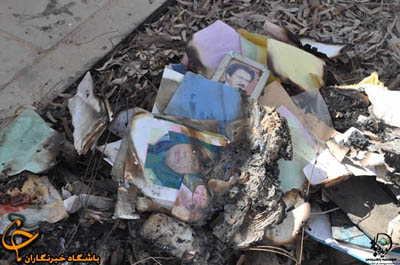
Camp Ashraf after evacuation
MKO members set all documents and photos on fire before their departure
Dissident members to revenge the group leaders 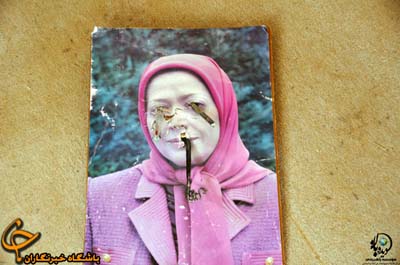
In the new P.R. show of the Mujahedin Khalq Organization(the MKO), the self- appointed president of the National Council of Resistance ,Maryam Rajavi on Wednesday 5 December, 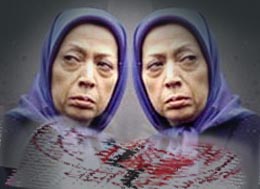 launched a campaign to have France and the European Union grant it the same recognition they have accord to the Syrian coalition battling to overthrow Bashar al-Asad, AFP reported.[1]
AFP quotes from Rajavi as saying that “The West’s biggest error has been to ignore the key movement for change in Iran,” referring to her so-called “resistance” which is the political arm of the cult-like Mujahedin khalq group.
The wife of the disappeared leader of the MKO, addressed a group of 10 French deputies at France’s National Assembly. France government has no official contact with the group, although the MKO’s propaganda base is located in the suburb of Paris.
Rajavi claim that “only solution in Iran is a change of regime by the Iranian people”. She asked France and the European countries to “remove obstacles on the path of the resistance" and to support ”a democratic change in Iran.” This way, she introduces her cult as the alternative of the Iranian government. During the meeting, former US congressman, Patrick Kennedy –definitely well funded by the MKO’s propaganda – told the conference that Maryam Rajavi “seeks to bring democracy and human rights to her country,” reported Reuters.[2]
Maryam Rajavi to bring democracy and human rights?!
Actually, the "cult of Rajavi" is described by the State Department as “fundamentally undemocratic “and “not a viable alternative to the current government of Iran”.[3]
“Internally the Mujahedin run their organization autocratically, suppressing dissent and eschewing tolerance of differing viewpoints,” the DOS report said.
Massoud Rajavi, the disappeared ideological leader of the MKO ” has fostered a cult of personality around himself,” according to the DOS report.[4]
As AFP reports, the MKO seeks Syrian style recognition. France as the Western power to recognize Syria’s opposition coalition as the sole representative of the Syrian people. [5]
One thing is sure! The MKO does not represent the Iranian people. Rajavi suggests “a change of regime by the Iranian people “. What does she mean by the “Iranian people” who would support her “resistance”?
Jeremiah Goulka, is an American expert on the MKO. He is one of the authors of the famous RAND report on the group. Goulka explains how the MKO lost its support among Iranian public: "Once upon a time, the MEK did enjoy some measure of popular support in Iran. But after getting shoved aside by Ayatollah Ruhollah Khomeini’s party after the 1979 Iranian Revolution, the MEK spent the next two decades launching terrorist attacks against the new regime and its military, harming bystanders in several instances. The MEK joined sides with Saddam Hussein in the Iran-Iraq War (1980-1988), moving to camps in Iraq in 1986 and fighting against Iranian conscripts. Frustrated that Saddam failed to install it in power in Tehran by the end of the war, the MEK attempted its own invasion of Iran (using more of Saddam Hussein’s military munificence), resulting in the death of thousands of its members. These acts destroyed the MEK’s credibility among Iranians. Trapped in the Iraqi desert, the group’s leaders transformed the MEK into a cult after the failed invasion—engaging in such practices as mandated divorce and celibacy, sleep deprivation, public shaming, separation of families, and information control—and continued its terrorist attacks in Iran. “[6]
Jason Rezaian a Foreign Policy correspondent who has a ten- year experience of traveling to Iran and writing about it for a mostly American audience points out how the MKO leaders are detached from the reality of the Iranian society,” for many people in Iran, though, especially those who remember the early years after the 1979 revolution, the MEK has come to represent an evil much more toxic that the American view of the Taliban and Al-Qaeda”, he writes.[7]
The deep antipathy among the Iranian population against the MKO has even led many of previous sympathizers of the group to hide or deny their past links with it. Being extremely unpopular in Iran, the MKO’s dream for regime change in Iran can never be peaceful as its leaders claim. “The MEK may deny wanting violent regime change, but the only conceivable way it would become the next government in Tehran would be at the head of a US invasion force,” Jeremia Goulka suggests.[8]
The words of Maryam Rajavi addressing French deputies are helpful to testify how much the MKO leaders are mastered in their puffed-up propaganda campaign. The world community should know that they are never “representatives” of Iranian people but definitely enemies of them.
By Mazda Parsi
References:
[1] AFP, Iranian opposition seeks Syria-Style recognition, December 5, 2012
[2] Reuters, Iranian dissidents and French lawmakers urge new policy on Iran, December 5, 2012
[3] Engel, Richard Windrom, Robert, Israel trams with terror group to kill Iran’s nuclear scientists, US officials tell NBC News, NBC News, February 9, 2012
[4]ibid
[5] AFP, Iranian opposition seeks Syria-style recognition, December 5, 2012
[6]Goulka, Jeremiah, The cult of MEK, The American Prospect, July18, 2012
[7]Rezaian, Jason, Washington’s dangerous (and deluded) support for the MEK, Foreign Policy, March1, 2011
[8]Goulka, Jeremia, The cult of MEK, The American Prospect, July18, 2012
The transformation of MKO to a pseudo-religious cult occurred through a lengthy process
For sure, as many experts on the subject believe, there are certain similarities between cults and 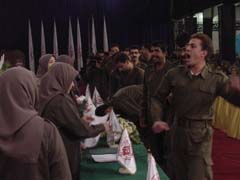 terrorist groups in the way each uses sophisticated psychological techniques to indoctrinate their devoted members. As a matter of fact, there exists a high potentiality in a terrorist group to actually change into a dangerous cult as it possesses cult features, because any group that challenges adopted norms that advocates moving against the current for sure it avails backdrop of a cult. In the same way, any cult has the potential to be a terrorist group. in the case of MKO it is not an exception.
But still there is a question to put that how and when it happened that MKO transformed from a Marxist-oriented political group with a fundamental ideology of advocating armed warfare to what is today known as a total cult of personality. Speculations fueled by a considerable bulk of studies as well as assertions by detached and former MKO members center on the fact that it was not an overnight transformation but a plot that hatched gradually through some lengthy process of guilefully outlined stages. Ali Akbar Rastgoo, an ex-member, firmly believes that MKO had some cult-like features even from the beginning but due to some reasons, they did not break the surface:
The transformation of MKO to a dangerous pseudo-religious cult occurred through a lengthy process. It has to be pointed out that it was a potentiality existing from the very beginning in the organization’s Islamic-Marxist eclectic ideology. If it failed to be manifested in those first years of its formation, it was because it was impossible to build up the current relations at that time. [1]
There are more than enough evidences to prove that Massoud Rajavi had a personal ambition of establishing a cult of personality after a complete failure in armed warfare and facing an overall political stalemate that led his group into total isolation from the masses. Even before the initiation of the military phase and declaring armed struggle against the regime in 1980, some eminent political figures well acquainted with MKO envisaged it would turn into a cult sooner or later. And Rajavi needed some information before taking the first step. Ali Ferasati, an ex-member, discloses that in 1984 while in Paris, Rajavi ordered the information bureau of umbrella groups and associations to do comprehensive studies about the structure of cults in the West:
In 1984, the information bureau of associations was asked to conduct a study into the Western religious cults. The reason was said to be since the imperialists were pushing policies ahead through religious cults, the organization needed to find out what the cults were doing and under what mechanism. … At the time I got to the bottom that Massoud [Rajavi] was aware of the fact that the organization was getting disintegrated and thus, he wanted to see how the western cults operated so he could follow their model. [2]
It may seem hard to believe that the first seeds of MKO’s transition to a cult of personality were sown in the heart of the Western democratic and free soil following the shocking initiation of a heretic inter-organizational revolution within MKO. In fact, before MKO relocation to Iraq to execute cultic relations in Camp Ashraf as its main cult bastion, the cult thought had passed beyond its embryo stage at Auvers-Sur-Oise in Paris. The four-year settlement of MKO in France and a great accumulation of members made them engaged in a routine bureaucracy that caused a staff crisis. Many other factors such as daily-life problems, lack of a clear strategy in 1981 to 1985, critical detachment and separation of members and lack of motivation as a result of long residence in France, attractions of life and beauties of European countries all and all caused the organization suffer acute crises. Besides, Rajavi was receiving formal messages and invitations from Saddam Hussein for a complete transfer of the organization to Iraq. The group had been caught in a difficult dilemma since Iraq was at war with Iran and Saddam was the most hated man in the eyes of Iranian. As a matter of fact, move to Iraq was equal to involving in an unforgivable conspiracy against a nation for whom the group had promised freedom and democracy.
Knowing the problem and hearing murmurs of protest from the ranking members against his goals and plans, Massoud Rajavi came to a conclusion to make a basic change in the already adopted conventional model of the Leadership Council for steering his group. On the other hand, the very existence of the Leadership Council had to be dissolved as it was an obstacle and threat to his authoritative leadership and he needed a plan to dissolve it. To find a way around all these problems and to pave the way to break any probable resistance, it required a very wise, deep plan which should also support a kind of revolutionary move. Besides, Rajavi was already embroiled in the scandal of having intimate and amorous relations with his office secretary, Maryam Qajar Azodanlu, the wife of Mehdi Abrishamchi at the time. The relation uncovered, it could cause a serious crash against the structure of the group that claimed to highly value moral principles in its campaign.
References:
1. Ra’isi and et al. Ravand-e Jodaee (originally in Persian) “The process of separation”. 1979. Samadie publication. p.164.
2. Massoud Jabani; Ravanshenasi Khoshunat va Terror (originally in Persian) “A psychology of aggression and terror” , Khavaran publication. p.127.
MKO leaders are making more mistakes by holding onto cult practices inside
There is always another chance for those who make mistakes, even serious ones, but the fatal 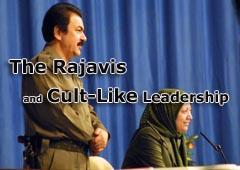 one to make is to avoid admitting them. Of the recent expressions which best describes the terrorist MKO is the one stated by Alan Berger, a Boston Globe editorial writer expert on foreign policy and security issues. In his article entitled Iranian exiles and international blunders, he points to his last year’s interview with MKO’s leader, Maryam Rajavi, and the group’s members he talked to and concluded that “People caught up in a blood feud are not inclined to dwell on their past errors”. As a matter of fact, MKO has been pursuing a never-ending and long lasted vendetta against the Islamic Republic regime for many bloods the group’s own past errors themselves have been the main cause to shed. And MKO laid the cornerstone of all errors when it concluded the inevitability and necessity of initiating armed struggle and violent acts in 1981, a rebellion which was supposed to speed up the collapse of the regime just for a change of power rather than for the accomplishment of democratic and civil causes.
But did MKO ever admit the fatal error the leaders made? Never. Just after a year of engaging in a massive terrorist bloodshed and killing hundreds of personalities and innocent civilians, in an analysis of the year-long armed struggle, Rajavi made another mistake by openly admitting that armed struggle was the spirit of the organization without which it failed to survive: “In essence, we owe our existence and survival before anything to the widespread armed combat of the Iranian Mojahedin-e Khalq Organization”.
Despite MKO is removed from the US terror list, today most of parliamentarians and politicians, with whom Maryam Rajavi attempts to show is in alliance with, are aware of the terrorist nature and record of her group. And of course, the group’s leaders never stop emphasizing the strategy of terror and violence whenever grabbing at a chance. The number of casualties and those killed in the course of a pseudo-democratic struggle have never been important for MKO and its leaders since their natures are not familiar with humane passion and mercy. What is important for them is achieving cultic goals with the Rajavis at the lead, human beings are just tools.
Being a devotee of Masoud Rajavi as well as being his wife, Maryam Qajar Azdanlou, was sent from Iraq to France in 1993 as an elected future transitional President to undertake her tactical and organizational mission of filling the gap of a political campaign out of the cult. But in none of her messages delivered to the military branch based in Iraq she ceased to emphasize that “everything at the end is bomb, bullet and gun”. However, her first task there has been to advertise a different side of the mother terrorist group, to demonstrate a pro-democratic alias on struggle that outwardly outweighs disadvantages of engaging in terrorist acts in order to take advantage of the European support. But in fact, she is still the very devoted member faithful to the principles of the mother group.
It is deceit that makes hypocrisy what it is and Maryam Rajavi has proved to be a real prototype. The West and the group’s advocates there are deceived by her democratic manners and maneuvers and, of course, her extravagance. The errors of MKO are beyond any calculation atop of which stand its rampant terrorist deeds and crimes following committing the fatal error of advocating an armed struggle policy to regain a lost struggle. Thus, greatly hailing a philosophy of “ends justify the means”, violence became the opt means to achieve no democratic and human cause but the power. Expelled from Iran as a rebellious group, it vowed as an archenemy of Iranian people and has so far swum against the current. In fact, the serious errors have been its ideological drift and political misconduct that led it afield of a conventional political group and the world came to develop an idea of recognizing it not only a terrorist group but also a highly destructive cult evolving its own mind control techniques and sharing common properties with other dangerous cults. Still MKO leaders dismiss to admit the grave errors that could halt deflection of a group that could continue on a democratic, non-violent path. And still they are making more mistakes by holding onto cultic practices inside but portraying a democratic organization outside.
Rosa Kaviani,
Camp Ashraf Torture Room [the photo is taken after Camp evacuation]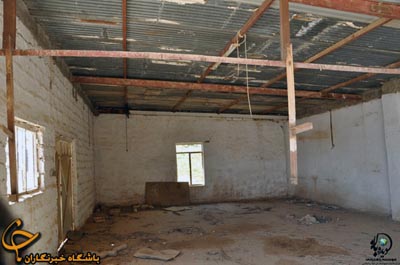
Each Clothes rope is divided and named for individuals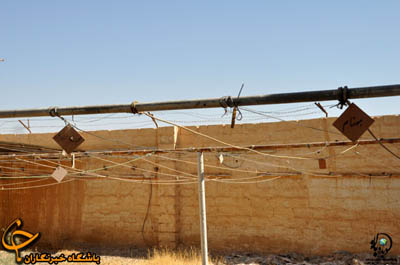
Mujahedin Khalq bad history hinders the processes of its members’ resettlement, ISNA quoted Le Soir Newspaper.
Le Soir, the French language Belgian Newspaper in a report wrote that the Belgium has informed the UN secretary General on the countries’ decision to accept 200 members of the MKO on the condition of their detachment from political activities.
However the foreign Ministers of Belgium, Netherlands, Sweden, Denmark and Finland ; during a meeting held two weeks ago have decided not to grant asylum to the members of MKO based on the current provisions.
Le Soir also urged the United States to make more effort to move MKO members from Iraq and locate places for their resettlement in US.
Translated by Nejat Society
No Comments
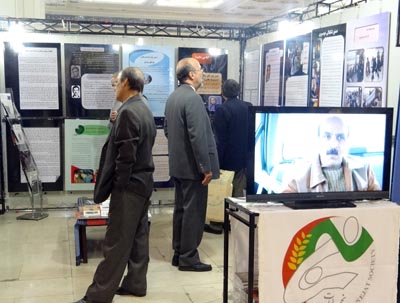
The 19th International Exhibition of the Press and News Agencies took place at Tehran’s Imam Khomeini Mosalla (Grand Prayers Ground) from October 28 to November 3, 2012.
The Nejat Society representatives introduced the Society’s objectives presenting photos, brochures and publications to the visitors. They emphasized that their main goal is to help families contact their beloved ones who are captured in cult-like camp Ashraf in Iraq.