Nejat Society
  • Home
  • Articles
  • Media
    • Cartoons
    • NewsPics
    • Photo Gallery
    • Videos
  • Publications
    • Books
    • Nejat NewsLetter
    • Pars Brief
  • About Us
  • Contact us
  • Editions
    • عربي
    • فارسی
    • Shqip
Nejat Society
Nejat Society
  • Home
  • Articles
  • Media
    • Cartoons
    • NewsPics
    • Photo Gallery
    • Videos
  • Publications
    • Books
    • Nejat NewsLetter
    • Pars Brief
  • About Us
  • Contact us
  • Editions
    • عربي
    • فارسی
    • Shqip
© 2003 - 2024 NEJAT Society. nejatngo.org
Mujahedin Khalq; A proxy force

MKO Served Moscow during the Cold War

•Islamist-Marxist terrorist group that seeks to topple the Iranian regime
•Served Moscow as a source of information on Iran during the Cold War
•By the late 1980s, created a 10,000-strong fighting force in Iraq to aid Saddam Hussein

Mujahedin-e-Khalq, or MEK (a.k.a. Iranian Mujahedin Khalq, or IMK, and Mujahedin al-Khalq Organization, or MKO) is an Islamic-Marxist sect that has been trying to topple Iran’s governing regime since 1981. (It is most commonly known by the acronym MEK.) MEK was classified as a terrorist organization by President Bill Clinton in 1997, and five years later the European Union followed suit.
MKO Served Moscow during the Cold War
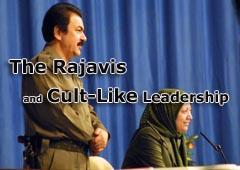
MEK is led by the husband-and-wife team of Massoud Rajavi and Maryam Rajavi. Massoud Rajavi heads the organization’s military forces. Experts say that MEK has increasingly come to resemble a personality cult that is devoted to Mr. Rajavi’s secular interpretation of the Koran and is prone to sudden, dramatic ideological shifts. Mr. Rajavi was last known to be living in Iraq, but his current whereabouts are unknown. His wife Maryam, who hopes to become President of Iran someday, is MEK’s principal leader. Born in 1953 to an upper-middle-class Iranian family, she joined MEK as a student in Tehran in the early 1970s. After relocating with the group to Paris in 1981, she was elected its joint leader and later became deputy commander-in-chief of its armed wing.

MEK has a network of sympathizers in Europe, the United States, and Canada. The group’s political arm, the National Council of Resistance of Iran, maintains offices in several capitals, including Washington, DC. MEK’s membership has dwindled since about 2001, and the organization is currently believed to have some 10,000 members in its ranks; one-third to one-half of these are fighters.

MEK, whose name means “People’s Combatants,” was established in 1965 after a split in a Marxist-Leninist movement that had waged a guerrilla action in northern Iran. Its founders were college-educated Iranian leftists opposed to the country’s pro-Western ruler, Shah Mohammad Reza Pahlavi. Its ideology emerged as a mix of Islam and Marxism, with influence as well from the Iranian religious sociologist Ali Shariati, who advocated an “Islam without a clergy.” With KGB help, MEK engaged in a campaign against the Shah and sent cadres to Cuba, East Germany, South Yemen, and Palestinian camps in Lebanon to train as guerrillas.

Vladimir Kuzishkin, a former KGB head in Tehran, reveals in his memoirs that MEK became a major source of information on Iran for Moscow. It also helped Moscow in its efforts to thwart U.S. influence in Iran. In 1970 and 1971, MEK murdered five American military technicians working with the Iranian army. An MEK team tried to kidnap U.S. Ambassador Douglas MacArthur III in Tehran. The attempt failed and the MEK leader, Massoud Rajavi, was given a death sentence, later commuted thanks to a plea to the Shah from Soviet President Nikolai Podgorny.

During Iran’s 1978-79 turmoil, MEK played an active role in helping Ayatollah Khomeini come to power. Its squads burned cinemas, restaurants, hotels and bookshops, and they murdered policemen. After Ayatollah Khomeini took control of the government, MEK worked to radicalize the regime, supporting the seizure of the U.S. Embassy in Tehran. Yet within a year, MEK — now led by Massoud Rajavi, who had been released from prison during the revolution — decided that the Ayatollah Khomeini regime was not revolutionary enough and had to be toppled; there ensued a terrorist operation against the regime, and it continues to this day. In 1981, MEK was driven from its bases on the Iran-Iraq border and resettled in Paris, where it began supporting Iraq in its eight-year war against Ayatollah Khomeini’s Iran. In 1986, MEK moved its headquarters to camps in Iraq near the Iran border.

By 1988, MEK had created in Iraq a 10,000-strong fighting force that helped Saddam Hussein in his genocidal campaign against the Kurds, and would also help him crush the Iraqi Shiites in the south in 1991. MEK maintained a reciprocal relationship with Saddam, whose regime was the main source of MEK’s financial support. (Saddam also provided MEK with bases, weapons, and protection.) To raise additional funds, MEK used front organizations such as the Muslim Iranian Student’s Society to collect money from expatriate Iranians and others. MEK also organized an asylum seekers’ campaign – sending 40,000 Iranians to Europe in exchange for their “voluntary contributions” of up to $10,000 apiece.

New MEK recruits.. traditionally have been indoctrinated and prevented from developing normal relationships outside the organization. Their children are not permitted to attend school, but must be educated at home.

During the Iraq War in 2003, U.S. forces cracked down on MEK’s bases in Iraq, and in June of that year French authorities raided an MEK compound outside Paris and arrested 160 people, including Maryam Rajavi. These authorities accused MEK of conspiring to finance and carry out acts of terrorism from the organization’s French base. All the suspects, including Rajavi, were subsequently released.

Acts of violence linked to MEK over the years include:

• The series of mortar attacks and hit-and-run raids during 2000 and 2001 against Iranian government buildings; one of these killed Iran’s chief of staff.

• The 2000 mortar attack on President Mohammad Khatami’s palace in Tehran

• The February 2000 “Operation Great Bahman,” during which MEK launched 12 attacks against Iran

• The 1999 assassination of the deputy chief of Iran’s armed forces general staff, Ali Sayyad Shirazi

• The 1998 assassination of the director of Iran’s prison system, Asadollah Lajevardi

• The 1992 near-simultaneous attacks on Iranian embassies and institutions in 13 countries

• Assistance to Saddam Hussein’s suppression of the 1991 Iraqi Shiite and Kurdish uprisings

• The 1981 bombing of the offices of the Islamic Republic Party and of Premier Mohammad-Javad Bahonar, which killed some 70 high-ranking Iranian officials, including President Mohammad-Ali Rajaei and Bahonar

• Support for the 1979 takeover of the U.S. Embassy in Tehran by Iranian revolutionaries

• The 1970s killings of U.S. military personnel and civilians working on defense projects in Tehran

DiscoverTheNetwork.org

October 17, 2012 0 comments
FacebookTwitterPinterestWhatsappTelegramSkypeEmail
Mujahedin Khalq Organization's Propaganda System

When Will MKO Swing into Action?

Even after being removed from the blacklist MKO has not actually got any job done

In one of the famous fables of the storyteller, Aesop, it goes: “A very deep and frightening sound began emanating from Mount Ida (the birthplace of Zeus). The earth commenced to tremble and shake — and huge boulders flew off the mountain top into the sky.

It seemed as if the mountain was about to give birth.”

“The population was terrified and ran for shelter — trembling in fear.”

“The sky blackened and the thunderous sound from the sacred mountain became even worse. Finally, an earthquake more violent than any ever-before it, set everything in motion — and in one terrifying moment, the mountain’s peak split wide open!”

“The people all got down on their knees and began to pray. Some fainted from fear. Others couldn’t take their eyes off the mountain — wondering how this terror would end.”

“Suddenly the roaring, the shaking, and the shocks just stopped. The whole Aegean region went silent.”

“Then, slowly, and with hardly a whisper of sound… out of the huge cleft in the mountain peak there slowly emerged… a tiny little mouse.”

A flashback to the decade-long campaign by Mojahedin Khalq Organization MKO/MEK/PMOI to be removed from the global terrorist lists, and particularly after the controversial POAC’s judgment to be removed from the EU blacklist, had convinced many misinformed that the world was neglecting and depriving itself of the great dormant potentiality in a pro-democratic organization! In fact, the political life of MKO especially after Massoud Rajavi’s retreat to hideout to let his phoenix of democracy, Maryam Rajavi, to hold sway a democratic tactic after a long frantic phase of terrorism, heavily depended on propaganda ploys. And it was following a rather long propaganda doldrums that the UK court ruling granted the organization‘s propaganda machine a recovering opportunity.

It started all with celebrating the court ruling along with Maryam Rajavi who in turn began extravagant performances of welcoming the decision and sending messages of congratulations. The scenario continued with repetitive, lengthy TV shows and analysis programs with a variety of analysts who suddenly turned to be experts in law and judiciary affairs. Practically, nothing great came out of the big drum they were beating.

And the greatest and final victory was achieved only a few weeks ago when the Department of Stale removed MKO from the global FTO. Then, what? A look at the group’s own TV and websites reveals nothing but jubilant drumming of being removed, celebrations and congratulations and welcoming of delisting by this and that dignitary and party. Just like many similar politicians and parties, regardless of their political weight and influence to cause any change, who promise big things and who bellow and roar but who don’t actually get the job done. Out of the all these brouhahas, lobbying activities and million dollar expenses many expected to see a single or tiny portion of countless promises for restoration of democracy and human rights, as the group claimed, fulfilled. The more we have waited the less we have seen a pup mouse emerging, let alone a tiny little mouse!

By N. Morgan

October 15, 2012 0 comments
FacebookTwitterPinterestWhatsappTelegramSkypeEmail
Iran

US delisting terrorist MKO ‘shameful’

An Iranian lawmaker has condemned as “shameful” Washington’s decision to remove the Mujahedin-e Khalq Organization (MKO) from the US State Department’s list of terrorist organizations.

Fatemeh Alia, a member of National Security and Foreign Policy Committee of Iran Majlis (parliament), said Saturday that the US delisting the terrorist cell was no surprise to Iran.

On September 28, Washington formally removed the MKO from its list of terror organizations one week after US Secretary of State Hillary Clinton sent the US Congress a classified communication about the move.

The Iranian lawmaker stated that the MKO receives orders from the US intelligence agency, CIA, Israel’s intelligence agency, Mossad, as well as the British intelligence agency, MI6, to carry out terrorist operations.

Members of the MKO, who had murdered over 17,000 Iranians since the 1979 Islamic Revolution in Iran, fled to Iraq in the 1980s, where they had the support of former Iraqi dictator Saddam Hussein and set up Camp Ashraf in the eastern province of Diyala near the Iranian border.

The terrorist group has carried out countless terrorist acts against Iraqi civilians.

Iran has repeatedly called on the Iraqi government to expel the MKO, but the US has been putting pressure on Baghdad to resist the calls.

October 14, 2012 0 comments
FacebookTwitterPinterestWhatsappTelegramSkypeEmail
MEK Camp Ashraf

100 more MEK moved out of Camp Ashraf

On Thursday morning, 11th October, just after midnight, one hundred MEK were taken from Camp Ashraf and transferred to Camp Liberty. The group comprised 92 men and 8 women.

On the afternoon of the previous day MEK combatants had launched an unprovoked attack on the families who are waiting outside the camp to find news of their loved ones. The MEK used catapults and slingshots to launch rocks and stones at the defenseless families, injuring some. Iraqi security forces intervened to protect them and pushed the MEK back inside the camp.

After the successful transfer of 100 more MEK to Camp Liberty, the Chief of Police of Diyala Province told reporters that tens of MEK still remain in Camp Ashraf and will be transferred as soon as is possible. He said that the people of Diyala Province want the MEK problem to be cleared up and the camp closed, emphasising that the MEK is a terrorist group and should be removed from the country.

Over the past few days many other Iraqi officials have spoken on this issue to emphasise that the Americans should take their favoured group out of the country. They stressed that Iraq cannot accept America’s terrorists to remain as guests indefinitely and be in a position to help the insurgency and interfere in the internal affairs of the country.

October 14, 2012 0 comments
FacebookTwitterPinterestWhatsappTelegramSkypeEmail
Mujahedin Khalq; A proxy force

Pakistani Media: US Training MKO Members in Afghanistan

The Pakistani media disclosed that the US is training around 2,000 members of the terrorist Mojahedin-e Khalq Organization (MKO, also known as the MEK, NCR and PMOI) in special military camps in Afghanistan.

The Karachi-based Urdu daily ‘Ummat’ reported that US authorities have setup a training camp for people of MKO in city of Heart in Afghanistan.

According to the report, under the plan about 2,000 foreigners, mostly from Iranian origin are being training at ‘Shindand’ airbase in Heart bordering Iran.

The daily said, the plan to train the MKO people for destruction and violence inside Iran was suggested by Israel and the trained activists may launch their terrorist activities in Iran by next year.

The daily reported that under the deal with the MKO, US has removed sanctions against the key figures of the group including restrictions on their bank accounts and travel abroad.

The daily said, some of the members of the family of former king of Iran also have contact with MKO and they also wanted to station at an Iran’s neighboring country but could not achieve the goal.

The daily added, the former royal family members had secretly visited Afghanistan with the assistance of Sardar Abdul Wali, the son in law of Former King Zaher Shah in 2007 but soon after under the Iranian pressure, they escaped from Afghanistan.

The MKO is behind a slew of assassinations and bombings inside Iran, a number of European Union (EU) parliamentarians said in a recent letter in which they slammed a British court decision to remove the MKO from the British terror list. The EU officials also added that the group has no public support within Iran because of their role in helping Saddam Hussein in the Iraqi imposed war on Iran (1980-1988).

Many of the MKO members abandoned the terrorist organization while most of those still remaining in the camp are said to be willing to quit but are under pressure and torture not to do so.

A May 2005 Human Rights Watch report accused the MKO of running prison camps in Iraq and committing human rights violations.

According to the Human Rights Watch report, the outlawed group puts defectors under torture and jail terms.

The group, founded in the 1960s, blended elements of Islamism and Stalinism and participated in the overthrow of the US-backed Shah of Iran in 1979. Ahead of the revolution, the MKO conducted attacks and assassinations against both Iranian and Western targets.

Leaders of the group have been fighting to shed its terrorist tag after a series of bloody anti-Western attacks in the 1970s, and nearly 33 years of violent struggle against the Islamic Republic of Iran.

The group started assassination of the citizens and officials after the revolution in a bid to take control of the newly established Islamic Republic. It killed several of Iran’s new leaders in the early years after the revolution, including the then President, Mohammad Ali Rajayee, Prime Minister, Mohammad Javad Bahonar and the Judiciary Chief, Mohammad Hossein Beheshti who were killed in bomb attacks by MKO members in 1981.

The group fled to Iraq in 1986, where it was protected by Saddam Hussein and where it helped the Iraqi dictator suppress Shiite and Kurd uprisings in the country.

The terrorist group joined Saddam’s army during the Iraqi imposed war on Iran (1980-1988) and helped Saddam and killed thousands of Iranian civilians and soldiers during the US-backed Iraqi imposed war on Iran.

Since the 2003 US invasion of Iraq, the group, which now adheres to a pro-free-market philosophy, has been strongly backed by neo-conservatives in the United States, who argued for the MKO to be taken off the US terror list.

In recent years, MKO ringleaders have been lobbying governments around the world in the hope of acknowledgement as a legitimate opposition group.

The MKO spent huge sums of money over years lobbying for removal from the US terror list, holding rallies in European capitals and elsewhere that featured luminaries like former Homeland Security Secretary Tom Ridge from the administration of George W. Bush. Former House Speaker and presidential candidate Newt Gingrich was among those recently welcomed by the MKO to Paris.

The UK initiative, however, prompted the European Union to establish relations with the exiled organization now based in Paris. The European Court of First Instance threw its weight behind the MKO in December and annulled its previous decision to freeze its funds.

Late in September 2012, the US State Department removed the MKO from its list of foreign terrorist organizations. The decision made by Secretary of State Hillary Clinton enabled the group to have its assets under US jurisdiction unfrozen and do business with American entities.

October 14, 2012 0 comments
FacebookTwitterPinterestWhatsappTelegramSkypeEmail
MEK Camp Ashraf

MKO burning documents at Camp Ashraf

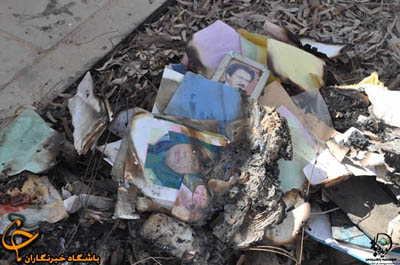
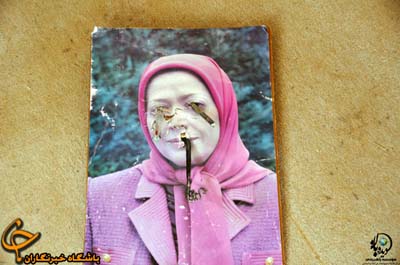
The Dideban Strategic Institute says the remaining members of the Mojahadin Khalq MKO burning documents at Camp AshrafOrganization in Camp Ashraf are destroying documents related to the group’s terrorist activities.
According to a person who has staged a sit-in in front of the camp, the smell of burnt papers has been filling the air over the last nights which shows a huge amount of papers are being burnt out, the institute said in a report.

These people are also selling the property to customers at a discount of 40 percent, the institute’s correspondent in Iraq says.

The properties were given to the terrorist group during the Saddam regime as a reward for their mercenary acts.

The last big batch of the MKO left Camp Ashraf in northeast Iraq and arrived at Camp Liberty on Baghdad’s outskirts on September 16.

The MKO have carried out assassinations and bombings in Iran. Several thousand of its members were given sanctuary in Iraq by Saddam Hussein.

Camp Liberty was designed as a compromise way-station for the UN to speed the MKO members out of Iraq.

On September 28, the U.S. State Department formally removed the MKO from its official list of terrorist organizations, a move which prompted angry response from Iran.

The U.S. made the decision under the claim that the group has renounced violence.

Iranian Majlis speaker Ali Larijani recently said that the MKO is an accomplice in the assassination of Iranian nuclear scientists. He also said the decision showed that Washington is paying lip service to the campaign against terrorism.

In a commentary published in the Tehran Times on October 8, the former Iranian Ambassador to Iraq Hassan Kazemi Qomi said that the United States’ decision will have no impact on the public perception of the group as a notorious terrorist entity.

He stated that the move was a carbon copy of what the European Union did several years ago. He also said it is a clear example of the double standards the U.S. government applies in dealing with the issue of terrorism.

October 14, 2012 0 comments
FacebookTwitterPinterestWhatsappTelegramSkypeEmail
Mujahedin Khalq; A proxy force

Leading US Officials Support MEK Terrorists with Impunity

Michael Ratner Report: Supreme Court finds Telecoms won’t be prosecuted for illegal wiretapping

Bio

Michael Ratner is President Emeritus of the Center for Constitutional Rights (CCR) in New York and Chair of the European Center for Constitutional and Human Rights in Berlin. He is currently a legal adviser to Wikileaks and Julian Assange. He and CCR brought the first case challenging the Guantanamo detentions and continue in their efforts to close Guantanamo. He taught at Yale Law School, and Columbia Law School, and was President of the National Lawyers Guild. His current books include”Hell No: Your Right to Dissent in the Twenty-First Century America,”and “ Who Killed Che? How the CIA Got Away With Murder.” NOTE: Mr. Ratner speaks on his own behalf and not for any organization with which he is affiliated.

Transcript

PAUL JAY, SENIOR EDITOR, TRNN: Welcome to The Real News Network, and welcome to this week’s edition of The Ratner Report with Michael Ratner. Michael is president emeritus at the Center for Constitutional Rights in New York. He’s chair of the European Center for Constitutional and Human Rights in Berlin. He’s also a board member of The Real News Network. Thanks for joining us again, Michael.

MICHAEL RATNER, PRESIDENT EMERITUS, CENTER FOR CONSTITUTIONAL RIGHTS: Paul, it’s always good to be with The Real News.

JAY: So what do you got this week?

RATNER: This week I’ve just been outraged by a couple of things, mostly around the impunity of our own government, of the United States government, for clear crimes that its officials, former officials have committed, as well as some corporate crime.

And the big two cases that came down—or, really, the two situations that came down were first with the MEK, which is a former Iranian group living in Iraq that had been listed on a U.S. terrorist list. That means that you couldn’t support that group in any way in the United States. They’ve listed the MEK as a terrorist group. It had been involved in the Iranian Revolution, had a falling out with Khomeini’s people, eventually fled to Iraq, became close to Saddam Hussein.

But it’s not really the nature of the group I want to talk about; it’s the nature of what happened. It’s listed on a U.S. terrorist list. What that means is you can’t give any aid to that group, you can’t take anything from that group, you can’t cooperate with that group. You can’t even teach it the principles of the Geneva Convention, which is a case we lost on in the United States Supreme Court Humanitarian Law Project. So you’re completely prohibited from having any transactions with that group, because it’s considered a terrorist group.

So what happens over the last couple of years: a number of former officials from the United States took money—they claim they didn’t know it was directly from the group, etc.—but through essentially what I think were fronts for the MEK. And they took a lot of money. Former governor Ed Rendell of Pennsylvania took somewhere between $150,000 and $160,000; the former head of the FBI, freeh, took money; former heads of the CIA took money; all to do public speaking in which they talked about how MEK should not be listed as a terrorist group. But the point is they took the money at a time when it was listed as a terrorist group, which is a serious felony in the United States.

And so then what happens? There’s an investigation, supposedly, of their taking money from this terrorist group. But in fact, of course, what are they going to do? Prosecute a bunch of CIA former heads? Prosecute the former head of the FBI? Prosecute a former governor?

JAY: And Mayor Giuliani and others.

RATNER: Right. It’s just a long list.

So what do they do last week? They denied—Hillary Clinton, the State Department, says, well, we’re going to de-list—take it off the terrorist list and no longer treat the MEK as a terrorist organization. Now, there may be a lot of complicated political reasons why they did that, having to do with both the politics in Iraq, their own politics about Iran, etc., but in any case, this group of people who all took money—which I believe came indirectly through the MEK—were lobbying to take it off the terrorist list. And what did they do? They’re not going to prosecute any of these people who took money indirectly or directly, however it came, from the MEK.

And what’s outrageous about that is that they took this money at a time it was a terrorist group listing. Whenever we think of that listing, it was illegal at the time that money was taken—you couldn’t take it from the MEK. And what you have to contrast is what happens with clients of my own or others who had any communication, anything with groups that the U.S. doesn’t like that are on the terrorist list.

JAY: Yeah. I mean, some of the people that get charged do charitable contributions to charities that have some kind of connection to Hamas or Hezbollah, and that’s enough to get you convicted.

RATNER: That’s one of the best examples, Paul. The Holy Land Foundation, they were the biggest Muslim charity in the United States. They gave money to a number of groups in Gaza and other places that the UN gave money to and you couldn’t even argue were necessarily connected with Hamas.

They tried Holy Land Foundation. And, of course, the heads of the Holy Land Foundation are now serving decades—decades in prison. The foundation has been wiped out. There’s a case—Hamas on the terrorist list, supposedly indirect contributions to Hamas for humanitarian aid, let’s say—this is blankets and hospitals and things like that—and yet these people go to jail. Yet when our own former officials close to the Bush administration, close to the Democrats, close to the Republicans do the same thing with a terrorist organization that now the U.S. has a use for, those people are given, basically, complete impunity and the organization is taken off the terrorist list.

JAY: Has the Justice Department given any explanation for why these cases aren’t being pursued? I mean, we know the politics of why they’re not, but there needs to be some official reason here.

RATNER: So far there isn’t. I mean, they might still be technically under investigation, but they’re not going to go anywhere. I mean, the argument’ll probably be that, well, we don’t think there’s enough evidence that people knew that the money came from the MEK or whatever else, or now that it’s off the terrorist list we don’t feel that there’s much purpose served by a prosecution. But that’s just wrong. I mean, that’s just completely wrong. I mean, but that may be their explanation.

But it does highlight that what officials in the United States do, or former officials do, is essentially given impunity. And, of course, we’ve talked about it before. That’s been the case with regard to the torture program that was carried on under the Bush administration. The Obama administration has given them, you know, a complete case—complete impunity. And the second—.

JAY: Yeah, I was going to ask: what do you make of this decision of the Supreme Court?

RATNER: Well, it’s a decision in a manner of speaking. The second big case that comes up is this question of warrantless wiretapping, warrantless electronic surveillance. And that’s going after American citizens’ communications, whether it’s by phone or email or Twittering or whatever else that are not public, you know, direct Tweets or email messages, going after them without a court-ordered warrant that’s required under our constitution.

And I got to give you a minute of history on that. After 9/11 the president, on his own, secretly decided that he was going to authorize the warrantless wiretapping of American citizens by the National Security Agency, the NSA. But, of course, without the cooperation of [incompr.] communications companies, AT&T and others, they can’t do that. So, secretly, unbeknown to the courts, unbeknown to anyone, they went to these telecommunications companies and said to them, we want you to warrantlessly wiretap various people, organizations, etc. They put these machines on—and we actually have evidence about that—a machine on, you know, the back end of one of their big servers that would just look at all this email.

It got discovered. It got exposed. James Risen of The New York Times exposed it. And it was a completely massively illegal program. In fact, former vice president Gore said that Bush ought to be impeached for this program.

So then what happens? Then what hapens: Congress gets in the act, and they decide two things. First of all—first of all Congress decides they’re going to allow this wiretapping to go on, and basically legalize it in a piece of legislation. And in addition to legalizing it, they’re going to say that those corporations, those communications corporations, Verizon and the like, that went along with it, we’re going to give them retroactive immunity from lawsuits that could be brought by people who were wiretapped. And there are millions, maybe billions of dollars’ worth of lawsuits.

So that legislation comes up. It comes up when Obama, our now current president, was a senator. When he was senator, he says, well, I’m going to veto that—I’m not going to veto; I’m going to vote against that immunity for the telecoms. In other words, I’m not going to say that the telecoms are immune, but I’m going to agree that they can be sued and let the courts decide. Of course, what then happens: Obama gets nominated to be president of the United States, Senate vote comes up when he’s still senator, he changes his mind, if you want to call it that, or he makes what I can say a political vote because he wants to be seen as strong on national security, etc., and he votes along with the majority of the Senate to give impunity or immunity to the telecoms. And that’s the statute.

Then what happens? Then the Electronic Frontier Foundation, the ACLU sue these telecoms, and they sue on the grounds that that law is unconstitutional. How can you give retroactive immunity for something that these people knew was illegal when they did it, and now you’re saying as a legislative matter, you know, that’s the end of it? Isn’t this a court question of whether they should have immunity or not?

And, of course, here’s what happens. They go to the court, they go to the district court, the lowest court. They go to the middle court, court of appeals. The court held that there is immunity for those telecoms, that the statute is upheld. And then this last week they go to the Supreme Court, and the Supreme Court says, we’re not going to review the case; we’re going to agree with the lower court that the telecoms, Verizon and the like, are immune from lawsuits for what was clearly an illegal set of wiretapping.

So there you have it. You can’t sue the telecoms. You already have a situation you can’t sue the government, although there’s some litigation still going on on that. So you have immunity for both the government officials, as well as the telecoms, who were engaged in a massive violation of the law, warrantless wiretapping.

So we have the MEK on one hand and the U.S. officials, former officials who took money from the MEK, at least indirectly, if not directly, and then you have the telecoms as well being given immunity. So you have—.

JAY: Now, where are we at on that question of warrantless wiretapping?

RATNER: We’re not in good shape, Paul. We basically have a statute that allows the president, sometimes through this secret court, sometimes on their own, to engage in warrantless wiretapping of American citizens. It was, of course, always allowed for people overseas who are not citizens, and that’s a given that that’s what they do. You lose that. But right now I would say that, you know, our communications in the United States are completely unprotected by what should have been our constitution.

JAY: Thanks for joining us, Michael.

RATNER: Thanks for having me again, Paul.

JAY: And thank you for joining us on The Real News Network. And don’t forget there’s a”Donate”button over there. If you don’t click on it, we can’t do this.

Michael Ratner, The real news
Download Leading US Officials Support MEK Terrorists with Impunity

October 14, 2012 0 comments
FacebookTwitterPinterestWhatsappTelegramSkypeEmail
UN

Open letter of SFF to the UN Secretary General

Sahar Family Foundation has written an open letter to Mr Ban Ki Moon, the UN Secretary General, and has sent the copies to the international media and the appropriate authorities.

The text of the letter is as follows:

Mr Ban Ki Moon,UN Secretary General
UN Secretary General
With Regards

As the Mojahedin-e Khalq Organization (MKO) has eventually left Ashraf garrison and moved to Liberty transit camp, and the process of UN asylum registration has begun,

As the name of the MKO had been removed from the list of foreign terrorist organizations (FTO) in the US, Europe and Britain, and as Western countries no longer regard the MKO as a terrorist entity,

And as the suffering families of the members are still waiting in Iraq after almost three years to visit their loved ones and have not only not received any positive answer but have been insulted and accused and even harassed by the MKO elements,

We as the representative of the families of the members of the MKO in Iraq urge you to use your international capacity and:

Arrange for the meeting of the families with their loved ones in order to end their sufferings.

The news received from Camp Liberty indicates that the cultic relationships and standards are still imposed at their most intense. The members are told that they are bound to stay in Iraq and no one is allowed to leave. The members are also frightened about what the consequences would be if they leave the organization or seek to visit their families. The phobia of ‘extradition to Iran and facing torture and execution’ is systematically cultivated in the minds of the members.
The MKO authorities have clearly told the members that the National Liberation Army (Saddam Hussein’s private army of Rajavi) is the MKO’s sole capital investment and will never, under any circumstances, be given up. The leaders have emphasized that arms and weapons are not detachable from the MKO’s struggle.

As the obstacle of the FTO list has been removed and access by UN officials to the MKO members is much easier in Camp Liberty, there is no excuse for not arranging family meetings for the members. The families are eager to independently make sure about the physical and mental wellbeing of their loved ones.

The MKO is claiming that the members have chosen their destiny willingly and knowingly and that they have no desire to visit their families. There are many documents however which prove these individuals are systemically mind manipulated and their willpower has been psychologically robbed from them.

UN officials have the capacity to arrange these meetings without the interference of the MKO authorities. The same thing has been arranged in other parts of the world in the past. This excuse that the MKO leaders do not cooperate can no longer be acceptable and it is the duty of the UN officials to demand that the MKO leaders give the members their most basic human rights. If the leaders are refusing to do so, it is surely right for the UN to announce it publicly and not just in private meetings.

We wish to thank you in advance on behalf of the families.

Sahar Family Foundation
Baghdad, October 10, 2012

Copies to:
Mr Martin Kobler and the UNAMI
Iraqi ministry of human rights
ICRC in Iraq
US Ambassador to Iraq
International and Iraqi media

October 13, 2012 0 comments
FacebookTwitterPinterestWhatsappTelegramSkypeEmail
Mujahedin Khalq Organization

A strategic analysis for the MeK status

Hereinafter, what the MeK puts on agenda is stimulating West to increase economic pressure and set off an all-out political war against Iran. This is the reason behind the group’s campaign in the US in favor of Mitt Romney or their effort to trace the companies who deal with Iran or some European countries’ trading with this country in order to put them under pressure to cut off these exchanges.

The MeK removal from the US list of Foreign Terrorist Organizations has determinant role in future direction of the group.

The US motivations for delisting of the MeK and providing conditions for this terrorist group to conduct free political – commercial activities is a topic that should be investigated separately, but, to put briefly, one can say that the US has placed them at the beginning of a path that if proceeds as it is designed, then America can employ them in feuding over Iran.

The MeK strategy shift

As the consequence of getting out of the terrorist list, The MeK needs to shift its strategy for confronting the Islamic Republic and pursue this goal with a different program and mechanism.

The fact is that the strategy of "fall through armed struggle", which the MeK past three decades has persuaded it through tactics of large operations, urban warfare and terror, alignment with Saddam in the war against Iran, and even triggering a military invasion by the US and the Zionist Regime to Iran, is totally defeated and will never find a chance to reoccur. Public emergence of Masood Rajavi (something that sooner or later will happen) and likely congratulations on his gang’s delisting, really is official announcement of this failure.

Then what happens?

Hereinafter, what the MeK puts on agenda is stimulating West to increase economic pressure and set off an all-out political war against Iran. This is the reason behind the group’s campaign in the US in favor of Mitt Romney or their effort to trace the companies who deal with Iran or some European countries’ trading with this country in order to put them under pressure to cut off these exchanges.

Effort to put "immediate Regime Change" on the US agenda and shifting policy from investment on domestic opponents toward the opposition abroad is among the changes in the MeK strategy. overall viewing, one can account that this shift will approximate the MeK to western countries. But the gap is much larger than it looks.

In this regard, we should notice that the US and European countries are focused on Iran’s internal developments and managing it to their benefits and so- called gradual decay from within; this means complete elimination of the opposition abroad.

About the opposition abroad, Rajavi probably offer suggestions concerning alliance and coalition with Iranian opposition groups that merely could lead to theoretical arguments and reactions, because, given the MeK’s ideology and record, It is unlikely that they be willing to attend in Joint meetings and negotiate with the others.

It is very important issue that the MeK are suffered from inversion of thinking and view. The most effects of this inversion are represented in their analysis of situation inside Iran and of Iranian people, the capabilities of Iranian government, their own organizational capabilities, and their misunderstanding of Western policy. Of course, the MeK’s leadership neither is able to understand this fact, nor he would accept it. So, he draws his gang on a Path of no return.

October 13, 2012 0 comments
FacebookTwitterPinterestWhatsappTelegramSkypeEmail
Mujahedin Khalq Organization as a terrorist group

Families of Iranian Victims of Terrorism Condemn US Delisting of MKO

Families of the Iranian victims of terrorism in a statement on Wednesday condemned the removal of the Mojahedin-e Khalq Organization (MKO, also known as the MEK, NCR and PMOI) from the US list of terrorist group.

The statement, read at the end of a rally staged in front of the Swiss Embassy in Tehran (which hosts the US interests section in Iran) today, described the move "as s blatant violation of human rights and naked support for terrorism".

The statement recalled the terrorist nature of the MKO, and underlined that the West’s support for the terrorist cult "annuls all the claims raised by the western government about war on terrorism".

The also urged that MKO ringleaders must be tried at international tribunals and receive punishment for their savage crimes.

Late in September 2012, the US State Department removed the MKO from its list of foreign terrorist organizations. The decision made by Secretary of State Hillary Clinton enabled the group to have its assets under US jurisdiction unfrozen and do business with American entities, the State Department said in a statement at the time.

Iran’s first reaction came on Saturday when the Iranian Foreign Ministry in a statement condemned the US move and said it displayed Washington’s double standard policies.

The statement rapped Washington for applying double standards in dealing with terrorism, reminding that the terrorist MKO is responsible for the deaths of thousands of Iranian civilians.

The delisting of MKO was "a violation of America’s legal and international obligations" that could threaten US interests. The decision "will bring US responsibility for past, present and future terrorist operations by this group," the statement said.

Before an overture by the EU, the MKO was on the European Union’s list of terrorist organizations subject to an EU-wide assets freeze. Yet, the MKO puppet leader, Maryam Rajavi, who has residency in France, regularly visited Brussels and despite the ban enjoyed full freedom in Europe.

The MKO is behind a slew of assassinations and bombings inside Iran, a number of EU parliamentarians said in a recent letter in which they slammed a British court decision to remove the MKO from the British terror list. The EU officials also added that the group has no public support within Iran because of their role in helping Saddam Hussein in the Iraqi imposed war on Iran (1980-1988).

Many of the MKO members abandoned the terrorist organization while most of those still remaining in the camp are said to be willing to quit but are under pressure and torture not to do so.

A May 2005 Human Rights Watch report accused the MKO of running prison camps in Iraq and committing human rights violations.

According to the Human Rights Watch report, the outlawed group puts defectors under torture and jail terms.

The group, founded in the 1960s, blended elements of Islamism and Stalinism and participated in the overthrow of the US-backed Shah of Iran in 1979. Ahead of the revolution, the MKO conducted attacks and assassinations against both Iranian and Western targets.

Leaders of the group have been fighting to shed its terrorist tag after a series of bloody anti-Western attacks in the 1970s, and nearly 33 years of violent struggle against the Islamic Republic of Iran.

The group started assassination of the citizens and officials after the revolution in a bid to take control of the newly established Islamic Republic. It killed several of Iran’s new leaders in the early years after the revolution, including the then President, Mohammad Ali Rajayee, Prime Minister, Mohammad Javad Bahonar and the Judiciary Chief, Mohammad Hossein Beheshti who were killed in bomb attacks by MKO members in 1981.

The group fled to Iraq in 1986, where it was protected by Saddam Hussein and where it helped the Iraqi dictator suppress Shiite and Kurd uprisings in the country.

The terrorist group joined Saddam’s army during the Iraqi imposed war on Iran (1980-1988) and helped Saddam and killed thousands of Iranian civilians and soldiers during the US-backed Iraqi imposed war on Iran.

Since the 2003 US invasion of Iraq, the group, which now adheres to a pro-free-market philosophy, has been strongly backed by neo-conservatives in the United States, who argued for the MKO to be taken off the US terror list.

In recent years, MKO ringleaders have been lobbying governments around the world in the hope of acknowledgement as a legitimate opposition group.

The MKO spent huge sums of money over years lobbying for removal from the US terror list, holding rallies in European capitals and elsewhere that featured luminaries like former Homeland Security Secretary Tom Ridge from the administration of George W. Bush. Former House Speaker and presidential candidate Newt Gingrich was among those recently welcomed by the MKO to Paris.

The UK initiative, however, prompted the European Union to establish relations with the exiled organization now based in Paris. The European Court of First Instance threw its weight behind the MKO in December and annulled its previous decision to freeze its funds.

The senior Ayatollah added that by delisting MKO, they want to convey this message that they have stood up against the Islamic Revolution and the whole world knows today that the US is the command center in the fight against the Islamic Revolution.

The MKO is responsible for carrying out numerous acts of terror and violence against Iranian officials and civilians as well as the people of Iraq.

The US formally removed the MKO from its list of terror organizations last Friday; one week after Secretary of State Hillary Clinton sent the US Congress a classified communication about the move.

October 13, 2012 0 comments
FacebookTwitterPinterestWhatsappTelegramSkypeEmail
Newer Posts
Older Posts

Recent Posts

  • A Criterion for Proving the Violent Nature of the MEK

    December 31, 2025
  • Rebranding, too Difficult for the MEK

    December 27, 2025
  • The black box of the torture camps of the MEK

    December 24, 2025
  • Pregnancy was taboo in the MEK

    December 22, 2025
  • MEPs who lack awareness about the MEK’s nature

    December 20, 2025
  • Facebook
  • Twitter
  • Instagram
  • Youtube

© 2003 - 2025 NEJAT Society . All Rights Reserved. NejatNGO.org


Back To Top
Nejat Society
  • Home
  • Articles
  • Media
    • Cartoons
    • NewsPics
    • Photo Gallery
    • Videos
  • Publications
    • Books
    • Nejat NewsLetter
    • Pars Brief
  • About Us
  • Contact us
  • Editions
    • عربي
    • فارسی
    • Shqip