
Islamic Society of Shiraz University held an exhibition on the Mujahedin Khalq Organization (MKO) in Fajr hall of the campus from November 4th until November 13th.
The exhibition included films, banners, posters and articles on the substance of the cult, its violent past and its current approach in today world as well as Q&A meetings with defectors of the cult and university professors.
The event was welcomed by students and scholars. Former members of the MKO were constantly present in the gallery hall to discus students’ questions.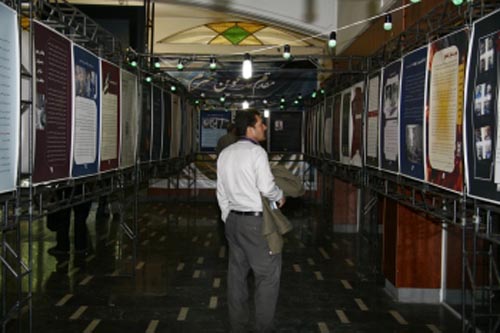
Iraqi Prime Minister Nouri al-Maliki reiterated that Baghdad’s decision to expel the terrorist Mojahedin-e Khalq Organization (MKO, also known as the MEK, NCR and PMOI) from Iraqi soil is "definite and irrevocable". 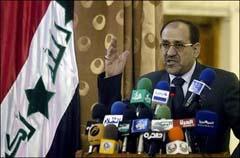
Maliki stressed that Iraq is determined to expel the terrorist group from its soil, and reiterated, "The decision is irrevocable."
He said the MKO which backed terrorist groups in Diyala province showed that its presence inside Iraq’s territory sparks extremism and terrorist operations.
Al-Maliki expressed the hope that the MKO’s exit from Iraq and their accommodation in a third country would step up the UN’s efforts to close the case of the notorious group in Iraq.
In September 2012, the last groups of the MKO terrorists left Camp Ashraf, their main training center in Iraq’s Diyala province. They have been transferred to Camp Liberty which lies Northeast of the Baghdad International Airport.
Camp Liberty is a transient settlement facility and a last station for the MKO in Iraq.
The MKO is behind a slew of assassinations and bombings inside Iran, a number of EU parliamentarians said in a recent letter in which they slammed a British court decision to remove the MKO from the British terror list. The EU officials also added that the group has no public support within Iran because of their role in helping Saddam Hussein in the Iraqi imposed war on Iran (1980-1988).
Many of the MKO members abandoned the terrorist organization while most of those still remaining in the grouplet are said to be willing to quit but are under pressure and torture not to do so.
A May 2005 Human Rights Watch report accused the MKO of running prison camps in Iraq and committing human rights violations.
According to the Human Rights Watch report, the outlawed group puts defectors under torture and jail terms.
The group, founded in the 1960s, blended elements of Islamism and Stalinism and participated in the overthrow of the US-backed Shah of Iran in 1979. Ahead of the revolution, the MKO conducted attacks and assassinations against both Iranian and Western targets.
The group started assassination of the citizens and officials after the revolution in a bid to take control of the newly established Islamic Republic. It killed several of Iran’s new leaders in the early years after the revolution, including the then President, Mohammad Ali Rajayee, Prime Minister, Mohammad Javad Bahonar and the Judiciary Chief, Mohammad Hossein Beheshti who were killed in bomb attacks by MKO members in 1981.
The group fled to Iraq in 1986, where it was protected by Saddam Hussein and where it helped the Iraqi dictator suppress Shiite and Kurd uprisings in the country.
The terrorist group joined Saddam’s army during the Iraqi imposed war on Iran (1980-1988) and helped Saddam and killed thousands of Iranian civilians and soldiers during the US-backed Iraqi imposed war on Iran.
Since the 2003 US invasion of Iraq, the group, which now adheres to a pro-free-market philosophy, has been strongly backed by neo-conservatives in the United States, who argued for the MKO to be taken off the US terror list.
The US formally removed the MKO from its list of terror organizations in early September, one week after Secretary of State Hillary Clinton sent the US Congress a classified communication about the move. The decision made by Clinton enabled the group to have its assets under US jurisdiction unfrozen and do business with American entities, the State Department said in a statement at the time.
Open letter to the Chairperson and Members of the French Parliament
Greetings,
On Wednesday 5 December, 2012 the PMOI/MEK related websites reported that in her speech in one of the halls at the French Parliament building, Maryam Rajavi demanded that France and the EU support what she called “the Iranian Resistance” similar to what has been done with regards to Syria. “Rajavi emphasized that French Government which has played a decisive role in recognizing the Syrian resistance, must also take up the initiative for a new policy in EU” and “wants Paris and EU to recognize (what she called) “the Iranian resistance” for the regime change in Iran.”
We, the writers of this letter, are from Iran Pen Association in Europe that consists of defectors from the Iranian group PMOI/MEK. Our activities include Human Rights promotion and helping Iranian refugees. The majority of us have each spent more than twenty years inside the Rajavi’s cult in Iraq and each one of us has abundant experience and knowledge of the PMOI/MEK leadership (Masoud and Maryam Rajavi), its cult nature, terrorist activities and its rule of terror, deceit and humiliation inside the Organization. Despite the lobbying policy of the PMOI/MEK in the West and its efforts to spend enormous sums of money to buy western politicians’ support on one hand, and despite its policy of character assassination of whomever Iranian or non-Iranian that opposes this cult, on the other; we are ready to shed in-depth light for you into all the deceitful ways and functions of PMOI/MEK. We warn against any alliance with this anti democratic cult and bring your attention to the following key factors:
– Basically, PMOI/MEK and its cover named National Council of Resistance of Iran (NCRI), have no legitimate stance and presence amongst Iranian opposition organizations and personalities. The leftist groups and parties, Nationalists, Monarchists, the national-religious groups, Unity of Republicans and secular forces acknowledge the PMOI/MEK as a totalitarian cult. It is also much noteworthy that Rajavi’s cult has no support in the Iranian society, a fact shown clearly during the widespread and huge demonstrations of the Iranian people that were staged against the controversial presidential election of Ahmadinejad’s first term. Rajavi’s treacherous role as Sadam Hussain’s fifth column during Iraq’s war against Iran is very much detested by Iranians and his recent efforts to buy support and gain aids from some Western politicians is widely seen as his new attempts to offer mercenary services.
– In a recent analytical book by the French Senator Ms. Nathalie Goulet, titled “ the PMOI: a cult in the heart of France” (L’OMPI: au Coeur de la Republique); she begins by warning the French senators and members of the French Parliament about this cult. While objecting at suspicious relations of some French figures with the PMOI, Senator Goulet questions these figures and French Government: “How is that an organization having all the characteristics of a cut in France, is recognized as a political organization or party?” and that “In the light of democratic values, is any group which claims that is against a dictatorship can be recognized as a democratic organization or party?” The Senator concludes: “With regards to the PMOI background it is hard to believe that an organization which still suffers from all the pains and illnesses of a totalitarian group has changed into a democratic organization. Illnesses such as personality cult, terrorist activities, hidden financial resources, utilizing lies, deceit, threats to discredit the characters of the citizens.”
– Iranian and non-Iranian writers and researchers have so far published numerous revealing books and articles about the dark and hideous aspects of Rajavi’s cult. The Human Rights Watch report and RAND’s analysis have described some shocking facts about the suppression of the members and cadres of PMOI in its various garrisons in Iraq.
– Rajavi’s “divine” personality cult and his totalitarian and absolute rule are extremely dangerous for any society in the 21st century. He uses any immoral and inhuman means in order to get to power. When the widespread demonstration of the “Green Movement” swept Iranian cities, in a message to his followers at Camp Ashraf, Rajavi said that if the Green Movement succeeded and the reformists were to come to power in Iran; then the PMOI armed forces would topple such a reformist government, using the “model” of Lenin’s armed uprising against the Kerensky Government in Russia and grasping the power. Furthermore, Rajavi’s continuous enmity against all the Iranian figures and parties (inside and outside Iran) that oppose the Islamic Republic regime is yet another undeniable sign of Rajavis’ totalitarian doctrine and attitude. Therefore; when Maryam Rajavi compares her totalitarian cult with the pluralist and widespread Syrian Coalition against Bashar Assad, she yet again utilizes gross deceit and lies to cover up her organization’s hideous nature.
– In order to realize just how corrupt the PMOI leadership is, you should know that for more than 40 years Masoud Rajavi has been the absolute and unquestionable leader of this cult and he states that he is only accountable to God. At the same time for nearly 20 years Maryam Rajavi has been named as the “president” of Iran by Rajavi’s cover up entity, the NCRI. Her almost 20 year “presidency” reminds one of long life dictatorial presidents in the Middle East such as Saddam Hussain of Iraq, Gadhafi of Libya, Hosni Mubarak of Egypt, Ben Ali of Tunisia, Hafez and Bashar Assad of Syria.
The truth and reality is that due to the religious-cult nature of the PMOI/MEK, any support given to it by French politicians will have far more disastrous implications than USA’s backing of Osama Bin Laden in Afghanistan during the Russian invasion of that country. Therefore, we believe that if the West in general and France in particular want to be on the side of the Iranian people and their desire for freedom and democracy, then the western politicians should really distance themselves from PMOI/MEK which is based upon a religious and totalitarian cult. We, as the direct victims of this cult; object to any warn against any support for PMOI.
Yours sincerely ,
Iran Pen Association, Germany
The Secretary-General of the United Nations, Ban Ki-moon, confirmed that the ouster of the Mojahedin-e Khalq Organization (MEK) from Iraq is an Iraqi issue, stressing at the same time 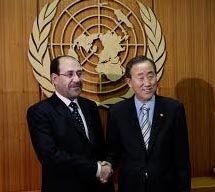 that the United Nations will exert every effort to close this file.
In a joint press conference with Prime Minister Nuri al-Maliki in Baghdad, Ban Ki-moon praised the Iraqi government’s handling of the members of the MEK organization during their transfer to the new camp, pointing out that the United Nations puts great importance on helping Iraq to end this issue.
For his part, Prime Minister Nuri al-Maliki, said that the MEK organization’s ouster is irreversible. He added that "the existence of this organization has contributed to the growth of extremism and terrorism through its support for some terrorist groups in Diyala province."
The Prime Minister expressed his hope that the UN accelerate efforts to close the file of the MEK organization with their resettlement in a third country.
Some 50 persons, allegedly affiliated to the Mojahedin Khalq Organization (MKO), attacked the Iranian Embassy in Copenhagen, Denmark, on Saturday, ISNA quoted Ahmad Bakhshayesh,  Member of Iran Majlis National Security and Foreign Policy Committee, as saying.
Bakhshayesh indicted the MKO of organizing the attack under the support from Israel.
Window glasses of the building have been broken and mottos have been written on its walls, Bakhshayesh said.
"Israel has just started a game of attacking Iranian embassies in different countries in response to its defeat in Gaza war and the presence of Khalid Mashaal after 25 years in Gaza," he said.
On Nov.28, a group of assailants entered the yard of Iran’s embassy in Berlin and sprayed color on its walls. Berlin’s police said about 30 individuals were involved in the incident.
According to Germany’s Foreign Minister Guido Westerwelle, a number of the assailants have been arrested and would be put on trial.
Trend, Azerbaijan, Baku
A renowned political analyst and a former U.S. Marine veteran during Vietnam War describes the Mujahedin-e Khalq organization (MKO, a.k.a. MEK and PMOI) as an “Israeli front organization.” 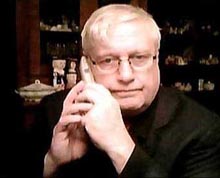
“It is my belief that they cannot be rehabilitated to the point of being an honest player in the region as they are directly supplied, paid and motivated by intelligence agencies,” said Gordon Duff on Saturday in an interview with Habilian Association, adding that he is very familiar with MEK ops against Iran and their “long partnership with the Mossad, MI-6 and the CIA.”
Earlier in February, two anonymous “senior U.S. officials” confirmed to NBC news that Israel’s Mossad armed, funded and trained MEK terrorists.
In a parallel report in April, The New Yorker’s Seymour Hersh published a piece titled “Our Men In Iran?” suggesting that the U.S. military forces “conducted training, beginning in 2005, for members of the Mujahideen-e-Khalq” at a secret government site in Nevada.
Hersh noted that the MEK’s ties with Western intelligence agencies “deepened after the fall of the Iraqi regime in 2003.”
Inside this Issue:
- U.N. chief appeals for countries to take MKO members
- Intl. reporters visit Camp Ashraf for the first time
- Former US Official: I wish MEK Died out in 1980’s
- The next pro-MEK lobbying effort is about to begin
- Q&A: what is the MEK and why did the US call it a terrorist organisation?
- Iranian terrorist group now freedom fighters, in U.S. eyes
Download Pars Brief – Issue No.69
Download Pars Brief – Issue No.69
A representative of the Shiite Sadr Movement at the Iraqi parliament called on the terrorist 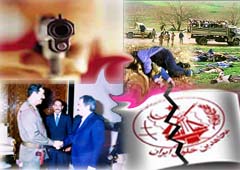 Mojahedin-e Khalq Organization (MKO, also known as the MEK, NCR and PMOI) to pay ransom for the massacres and crimes it has committed against the Iraqi people during Saddam’s era.
Iqbal al-Qarabi, the representative of al-Ahrar parliamentary faction affiliated to the Sadr Movement, said over 380 cases have been opened by the residents of al-Khalis region in the Diyali province against the MKO, and once these cases go through litigation, the MKO should pay ransom for them.
He called on the Iraqi judiciary system to start the judicial processing for these cases at the earliest and issue fair verdicts for them.
In September 2012, the last groups of the MKO terrorists left Camp Ashraf, their main training center in Iraq’s Diyali province. They have been transferred to Camp Liberty which lies Northeast of the Baghdad International Airport.
Camp Liberty is a transient settlement facility and a last station for the MKO in Iraq.
The MKO is behind a slew of assassinations and bombings inside Iran, a number of EU parliamentarians said in a recent letter in which they slammed a British court decision to remove the MKO from the British terror list. The EU officials also added that the group has no public support within Iran because of their role in helping Saddam Hussein in the Iraqi imposed war on Iran (1980-1988).
Many of the MKO members abandoned the terrorist organization while most of those still remaining in the grouplet are said to be willing to quit but are under pressure and torture not to do so.
A May 2005 Human Rights Watch report accused the MKO of running prison camps in Iraq and committing human rights violations.
According to the Human Rights Watch report, the outlawed group puts defectors under torture and jail terms.
The group, founded in the 1960s, blended elements of Islamism and Stalinism and participated in the overthrow of the US-backed Shah of Iran in 1979. Ahead of the revolution, the MKO conducted attacks and assassinations against both Iranian and Western targets.
The group started assassination of the citizens and officials after the revolution in a bid to take control of the newly established Islamic Republic. It killed several of Iran’s new leaders in the early years after the revolution, including the then President, Mohammad Ali Rajayee, Prime Minister, Mohammad Javad Bahonar and the Judiciary Chief, Mohammad Hossein Beheshti who were killed in bomb attacks by MKO members in 1981.
The group fled to Iraq in 1986, where it was protected by Saddam Hussein and where it helped the Iraqi dictator suppress Shiite and Kurd uprisings in the country.
The terrorist group joined Saddam’s army during the Iraqi imposed war on Iran (1980-1988) and helped Saddam and killed thousands of Iranian civilians and soldiers during the US-backed Iraqi imposed war on Iran.
Since the 2003 US invasion of Iraq, the group, which now adheres to a pro-free-market philosophy, has been strongly backed by neo-conservatives in the United States, who argued for the MKO to be taken off the US terror list.
The US formally removed the MKO from its list of terror organizations in early September, one week after Secretary of State Hillary Clinton sent the US Congress a classified communication about the move. The decision made by Clinton enabled the group to have its assets under US jurisdiction unfrozen and do business with American entities, the State Department said in a statement at the time.
Families of the Iranian victims of terrorism condemned the French lawmakers for allowing the  leader of the notorious terrorist Mojahedin-e Khalq Organization (MKO, also known as the MEK, NCR and PMOI) Maryam Rajavi to take part in their session at the parliament.
The Habilian Association, a human rights group formed of the families of 17,000 Iranian terror victims, sent a letter of protest to the French Parliament, reiterating that the MKO is a group with dictatorial structure which is at odds with democracy.
"The MKO not only is undemocratic, but also has a complete autocratic structure which is at war with manifestations of democracy. The blast in Islamic Republic Party on June 27, 1981 is a clear example in this regard," the letter wrote. 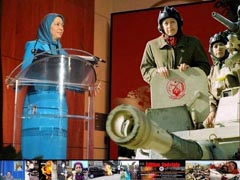
The Habilian Association referred to the MKO terrorist attacks which have claimed the lives of 12,000 Iranians so far, including the murder and assassination of dozens of parliament members, and asked whether such a group which has never expressed regret over its terrorist operations in the past can introduce itself as a supporter of democracy?
French lawmakers invited Rajavi last Wednesday in a move to give credibility to the terrorist group.
Speaking to the members of a French parliamentary committee on Iran, Rajavi hailed the western sanctions imposed against Iran over the country’s civilian nuclear program, and claimed, "International sanctions are positive steps. But they will only be effective if the West changes its policy vis-à-vis the resistance."
The MKO is behind a slew of assassinations and bombings inside Iran, a number of EU parliamentarians said in a recent letter in which they slammed a British court decision to remove the MKO from the British terror list. The EU officials also added that the group has no public support within Iran because of their role in helping Saddam Hussein in the Iraqi imposed war on Iran (1980-1988).
Many of the MKO members abandoned the terrorist organization while most of those still remaining in the grouplet are said to be willing to quit but are under pressure and torture not to do so.
A Human Rights Watch report accused the MKO of running prison camps in Iraq and committing human rights violations.
According to the Human Rights Watch report, the outlawed group puts defectors under torture and jail terms.
The group, founded in the 1960s, blended elements of Islamism and Stalinism and participated in the overthrow of the US-backed Shah of Iran in 1979. Ahead of the revolution, the MKO conducted attacks and assassinations against both Iranian and Western targets.
The group started assassination of the citizens and officials after the revolution in a bid to take control of the newly established Islamic Republic. It killed several of Iran’s new leaders in the early years after the revolution, including the then President, Mohammad Ali Rajayee, Prime Minister, Mohammad Javad Bahonar and the Judiciary Chief, Mohammad Hossein Beheshti who were killed in bomb attacks by MKO members in 1981.
The group fled to Iraq in 1986, where it was protected by Saddam Hussein and where it helped the Iraqi dictator suppress Shiite and Kurd uprisings in the country.
The terrorist group joined Saddam’s army during the Iraqi imposed war on Iran (1980-1988) and helped Saddam and killed thousands of Iranian civilians and soldiers during the US-backed Iraqi imposed war on Iran.
Since the 2003 US invasion of Iraq, the group, which now adheres to a pro-free-market philosophy, has been strongly backed by neo-conservatives in the United States, who argued for the MKO to be taken off the US terror list.
The US formally removed the MKO from its list of terror organizations in early September, one week after Secretary of State Hillary Clinton sent the US Congress a classified communication about the move. The decision made by Clinton enabled the group to have its assets under US jurisdiction unfrozen and do business with American entities, the State Department said in a statement at the time.
A company considered a subset of the British Foreign Office has purchased the movable property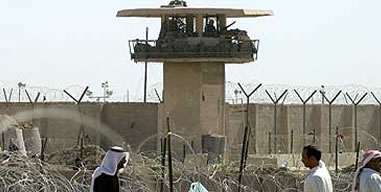 of Camp Ashraf and plans to buy the former home of the anti-Iranian Mujahedin-e Khalq Organization (MKO) in Iraq.
A British company bought the movable property of Camp Ashraf, located in the eastern Iraqi province of Diyala near the Iranian border, worth $25 million. It also offered the Iraqi government $500 million for the camp, Afkar News reported.
The company has declared that 60 percent of the proceeds of the transaction will be given to MKO terrorists.
The MKO, which is responsible for the deaths of 17,000 Iranians since the 1979 Islamic Revolution, fled to neighboring Iraq in the 1980s. The group received military training from former Iraqi dictator Saddam Hussein and set up its camp near the Iranian border.
The group also cooperated with Saddam in the massacres of Iraqi Kurds and in suppressing the 1991 uprisings in southern Iraq.
About 3,100 MKO members have been transferred in the form of seven groups from Camp New Iraq, formerly known as Camp Ashraf and situated about 120 kilometers (74 miles) west of the border with Iran, to Camp Liberty.