Nejat Society
  • Home
  • Articles
  • Media
    • Cartoons
    • NewsPics
    • Photo Gallery
    • Videos
  • Publications
    • Books
    • Nejat NewsLetter
    • Pars Brief
  • About Us
  • Contact us
  • Editions
    • عربي
    • فارسی
    • Shqip
Nejat Society
Nejat Society
  • Home
  • Articles
  • Media
    • Cartoons
    • NewsPics
    • Photo Gallery
    • Videos
  • Publications
    • Books
    • Nejat NewsLetter
    • Pars Brief
  • About Us
  • Contact us
  • Editions
    • عربي
    • فارسی
    • Shqip
© 2003 - 2024 NEJAT Society. nejatngo.org
Auver-sur-Oise

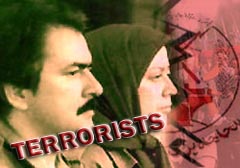
Rajavis’ Cult and the Risk of Terrorism in France

In the neighborhood of Islamic Radicals in Northern Paris, a large area of French territory is under the unofficial mandate of the Mujahedin Khalq Organization. About one month ago, few Rajavis’ Cult and the Risk of Terrorism in Francepeople could imagine that members of Muslim Rap band would bomb a Jewish super market, just a few kilometers further.

Besides, a radical Muslim, Muhammad Marah, from Toulouse, cruelly murdered a Jewish Rabi and his two children. Since last month, French news agencies have several times reported of the arrest of terrorist radicals in cities including Niece, Marseille, Toulouse, Paris and Strasbourg – according to the reports, arrested suspects are mostly France-born youngsters who have joined terrorist networks, or Christians who have converted to Salafi Islam. In other words, the origin of this terrorism pattern is undefined stemming from a spontaneous generation.

Some believe that such phenomenon is the outcome of Arabic Spring and Anarchistic tendencies running in Northern and Central Africa. Some others think of ancient reasons that are found in families and their not-so-adapted cultures. Anyway, today French people are facing the increasing threat of internal terrorism of terrorists who see themselves as Muslims like Ben Laden and their belief is very similar to that of religious people of Saudi Arabia, Qatar and Al-Qaida.

But Salafis, whether related to Al-Qaida or Saudi- are not the only violent group in France. Mujahedin Khalq also consider themselves true Muslims and real opposition against Iranian government. They have the very volatile potential and motivation, according to those who lived with them. They have been living in large region in the North of Paris, running large scale propaganda to influence French community and personalities.

Iranians see the cult of Rajavi (the MKO) much more radical than Salafis of France and Europe. A look at the MKO activities indicates dangers threating European society’s particularly French Society.

In 1965 the main core of the MKO was formed by a number of religious people who advocated armed struggle against Mohammad Reza Pahlavi, America and Israel. Their major operations were the killing of 6 American citizens in which Massoud Rajavi, currently disappeared leader of the group, was direct instructor and theoricain of terror teams!

The group’s first terrorist acts were launched in the 1970’s eventually; a large majority of members and leaders of the cult were arrested. Founders and central members of the group were executed and Massoud Rajavi, the only survivor of core members, was sentenced to long-life imprisonment.

According to the recently-published memoirs of Parviz Sabeti, a high-ranking official of Shah’s Savak (Shah’s security and intelligence Service), Rajavi’s death sentence was abated to life imprisonment because of Sabeti’s interference, not because of his brother’s efforts in Europe. Sabeti reveals that Massoud’s brother Kazem Rajavi was Savak’s spy in Switzerland and directly in connection with him, he was working for shah’s Intelligence and Security organization. In the book, he reveals that Massoud Rajavi betrayed founders and central members of the group and he widely cooperated with Savak when he was imprisoned so his punishment was reduced.

A few years later, Massoud Raajvi, Mehdi Abrishamchi [ex-husband of Maryam Rajavi] and other leaders of the group who are now living in Ouver Sur d’Oise, Paris, were released following the Iranian people’s Revolution[in 1978].

The group found a new success thanks to huge waves of the revolution. It started organizing itself in Tehran and other cities of Iran ….

To be continued

By Mohammad Alavi,Translated by Nejat Society

October 23, 2012 0 comments
FacebookTwitterPinterestWhatsappTelegramSkypeEmail
Mujahedin Khalq; A proxy force

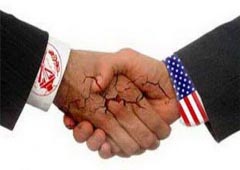
Palling Around With Terrorists: Obama Administration Embraces MEK

Four years after Sarah Palin famously accused then-candidate Barack Obama of “palling round with terrorists,” it can be said truthfully. Last Friday, news leaked that the U.S. State Department is going to remove the Iranian terrorist group Mujahedeen-e-Khalq (MEK) from its list of foreign terrorist organizations.

MEK’s ideology is a mixture of Islam and Marxism with cult-like practices. The group once called itself “the People’s Holy Warriors of Iran.” They supported the Islamic revolution in Iran and later allied with the Iraqi dictator Saddam Hussein. During the 1970s MEK conducted numerous

The Bush administration cited MEK as a reason to invade Iraq

attacks on American officials, including an attempted assassination of the U.S. ambassador in Tehran. Six Americans were killed. It has been listed as a terrorist organization since 1997. The MEK fought in the Iran-Iraq War, made use of chemical weapons, and brutally put down Iraqi Kurdish people in the early 1990s. The Bush administration cited Saddam’s support of MEK as a reason to invade Iraq, and the group was forcibly disarmed by the U.S. Army. In recent years, the MEK is believed to be involved in a wave of terrorist attacks against Iranian nuclear scientists.

The Obama administration’s decision was made with bipartisan support. MEK has many prominent U.S. political figures on its payroll, including Howard Dean, Rudy Giuliani, Wesley Clark, Bill Richardson, former Homeland Security Secretary Tom Ridge, former Attorney General Michael Mukasey, former FBI Director Louis Freeh, former U.N. Ambassador John Bolton, former National Security Advisers Frances Townsend and General James L. Jones, and former Pennsylvania Governor Ed Rendell.

Note to all U.S. Attorneys: Everyone associated with MEK can be charged with providing material support for terrorism, a federal crime under the USA PATRIOT Act (18 U.S.C. §2339A and §2339B) punishable by 15 years in prison.

Now that the United States has de-listed the MEK as an international terrorist group, our government can overtly fund them to conduct terrorist attacks on Iran. According to some reports, MEK has received covert U.S. and Israeli assistance for years.

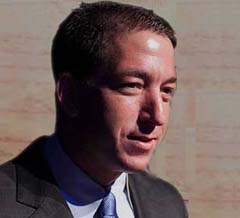
Glenn Greenwald:

[W]ith the MEK, we have a group that, at least according to some reports, appears to have intensified its terrorism, and yet they are removed from the list. Why? Because now they are aligned against the prime enemy of the US and Israel – and working closely with those two nations – and are therefore, magically, no longer “terrorists.”

Posted by Richard Warnick , Oneutah.org

October 22, 2012 0 comments
FacebookTwitterPinterestWhatsappTelegramSkypeEmail
Iraq

Anti-Terror Conference to be held in Baghdad

President Mahmoud Ahmadinejad is to attend the second international conference on global fight against terrorism in the Iraqi capital.
The conference is scheduled to be held in Baghdad in late October attended by countries including Iran, Iraq, Pakistan and Afghanistan.
During his stay in Baghdad, the Iranian chief executive will hold talks with senior Iraqi officials, including President Jalal Talabani and Prime Minister Nuri Al-Maliki, Fars News Agency reported on Saturday.
The first International Conference on the Global Fight Against Terrorism was held in Tehran in late June. Senior officials from at least 60 countries and representatives from several international organizations including the UN attended the two-day meeting.
Iran, having suffered a long record of the killing of its officials in bombings and other acts of terror, mostly carried out by the terrorist Mujahedin Khalq Organization (MKO) regards itself a victim of terrorism.
Out of the 17,000 Iranians killed in terrorist attacks since the victory of the Islamic Revolution in 1979, some 12,000 of them have fallen victim to MKO terrorism.
Members of the MKO fled to Iraq in the 1980s, where they had the support of former Iraqi dictator Saddam Hussein and set up Camp Ashraf in the eastern province of Diyala near the Iranian border.
On September 28, the US formally removed the MKO from its list of terror organizations one week after Secretary of State Hillary Clinton sent the US Congress a classified communication about the move.
Following the delisting, Foreign Ministry said in statement that Tehran strongly condemns Washington’s irresponsible move, which is against the international and legal commitments of the US.
The Islamic Republic holds the US government responsible for the terrorist acts carried out by the MKO in the past, present and the future, the statement added.
The Foreign Ministry also stated that the United States has expressed official support for the terrorist cell with this move, which also proves that Washington follows no logic in its actions.
The European Union also removed the MKO from its list of terrorist organizations in 2009.

Iran Daily

October 22, 2012 0 comments
FacebookTwitterPinterestWhatsappTelegramSkypeEmail
Mujahedin Khalq; A proxy force

War with Iran started five years ago

Syria’s mortar attack that killed civilians inside Turkey will prove to be the final domino to fall in a coordinated effort to take down both Syria and Iran. It is part of a not-so covert war started more than five years ago following the invasion of Iraq and the occupation of Afghanistan.

A wider and far more deadly war is now coming into view as Iran gears up for an inevitable attack and the U.S. and its partners escalate proxy wars inside Iran and Syria and fan the flames of conflict in northern Africa.

The global elite and their corporate and bankster partners are determined to force on Iran the fate suffered by Iraq – more than a million killed and its civilian infrastructure decimated – and implement the globalist plan of balkanization and order out of chaos realized through never-ending sectarian and religious violence.

Evidence of the covert and not so covert war against Iran and other enemies in the Middle East abounds, as we note below:

“As a global-macro analyst, I am frequently asked if war with Iran will come and, if so, when,” writes Jim Rickards, a Wall Street economist and investment banker, wrote in February.

“My answer is that the war has already begun. It’s not a shooting war – yet. What the U.S. and Israel are now waging with Iran is what experts call unrestricted warfare. This is warfare that consists of sabotage, assassination, special operations, psychological operations, attacks on critical infrastructure, cyber warfare and – the most recent addition to the arsenal – financial warfare.”

A concerted effort aimed at undermining Iran began in earnest following the Iranian revolution in 1979, but escalated considerably during the Bush years and continues under Obama.

• The United States has spent millions funding militant ethnic separatist groups to cripple Iran. The CIA has worked closely with Kurds, Azeris, Ahwazi Arabs, and the Baluchis. “The latest attacks inside Iran fall in line with US efforts to supply and train Iran’s ethnic minorities to destabilize the Iranian regime,” Fred Burton, a former US state department counter-terrorism agent, admitted.

The support includes funding Jundallah, a Sunni and Baluchi group with links to al-Qaeda.

“The operations are controversial because they involve dealing with movements that resort to terrorist methods in pursuit of their grievances against the Iranian regime,” the Telegraph reported in February, 2007, during the Bush administration.

• In 2008, a story by journalist Seymour Hersh appearing in the July 7, 2008 issue of The New Yorker reported U.S. covert action plans against Iran involved extensive activity by the CIA, DIA and Special Forces.

• Israel’s Mossad and MEK have collaborated on terror attacks inside Iran and have worked together on assassinating Iran’s nuclear scientists. The MEK, short for Mujahideen e-Khalq, a violent Iranian militant group, is listed by the State Department as a terrorist organization, although Bush-era neocons have worked to change this designation. MEK claims it has killed 40,000 Iranians who support the government. The CIA has trained the group at a little-known base in Nevada.

• The war waged inside Iran continues under Obama. In April, Iran arrested a group of Israel-backed mercenary terrorists. In November, officials in the U.S. admitted the CIA is active inside Iran and stealth drones have made hundreds of trips into Iran, according to the Washinton Post.

• Israel has hinted it was behind a devastating explosion at a military base near Iran’s capital of Tehran in November. According to blogger Richard Silverstein, an Israeli source with extensive senior political and military experience provided an exclusive report that the explosion that killed 40 people was the work of the Mossad in collaboration with the MEK.

• The United States and the European Union have engaged in coordinated economic warfare against Iran and its national currency, the rial. “Iran’s rial plunged against the U.S. dollar in open-market trade on Monday, taking its loss in value over the past week to more than a quarter in further evidence that Western sanctions are shattering the economy,” Reuters reported last week. The Iranian currency has experienced considerable devaluation since banking sanctions were placed on the country.

• Syria and its Shiite ruling elite are also under attack. The New York Times and the establishment media admit that the Free Syria Army is a CIA proxy paramilitary group. In August, “President Barack Obama signed a secret order authorizing the CIA to aid Syrian rebels in attempting to overthrow Bashar Al-Assad. However, the order stopped short of allowing the CIA to provide lethal weapons,” Paul Joseph Watson writes for Infowars.com.

• A massacre in Houla, Syria, in May was the work of the FSA, according to eye witnesses. Despite evidence to the contrary, the establishment media continued to report the massacre was the work of Assad’s military. The FSA and its al-Qaeda affiliates stand accused of other war crimes and atrocities, activity routinely covered up or dismissed by the corporate media.

• In September, we reported on Turkey’s efforts to support the FSA and allow it to conduct military operations from its territory. Turkey is now poised to expand the war against its neighbor following the death of five civilians inside Turkey from a Syrian mortar attack.

“Turkey’s Parliament approved a motion Thursday that authorizes further military action against Syria,” the New York Times reports. The attack and Turkey’s response will be used by the United States and NATO to impose a no-fly zone over Syria similar to the one established in Libya.

The United States expressed “outrage” at the deadly shelling of a Turkish border village from inside Syria, according to the Christian Science Monitor, and Secretary of State Hillary Clinton, NATO Secretary General Anders Fogh Rasmussen and United Nations Secretary-General Ban Ki-moon strongly condemned the attack on the border where the FSA is allowed to operate with impunity under the direction of the CIA and the Pentagon.

by Jacque Fresco , Hang the Bankers

October 22, 2012 0 comments
FacebookTwitterPinterestWhatsappTelegramSkypeEmail
Former members of the MEK

MKO member escape Camp Liberty

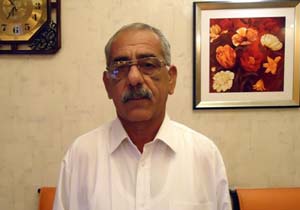
Another member of Mujahedin Khalq Organization, named Mr Hooshang Mirza Ghorbani, escaped Camp Liberty (Temporary Transit Location) and surrendered himself to Iraqi Police.
Mr Hooshang Mirza Ghorbani, escaped Camp Liberty
While, the MKO leaders claim that members consider the delisting of the group from US Foreign Terrorist Organization list as a great victory and dissident member will again trust the group, practically the removal of the MKO from the black list has no impact on members’ defection. Most of the members will run away as soon as they find the opportunity.

It is worth notifying that regarding the increasing process of defection from the MKO, the group leaders have highly enhanced security and guarding supervision in order to prevent escapees.

October 22, 2012 0 comments
FacebookTwitterPinterestWhatsappTelegramSkypeEmail
Former members of the MEK

Gathering in front of US embassy

On Friday October19,2012  members  of associations founded by former members of Mujahedin e Khalq Organization including Ariya Iran,Yaran Iran and Faryare Azadi  Association in accompany with Iranian residents of France, demonstrated in front of US embassy in Paris to announce their  protest  against MKO removal  from Terrorist groups .

Gathering in front of US embassy

October 21, 2012 0 comments
FacebookTwitterPinterestWhatsappTelegramSkypeEmail
Nejat Publications

Nejat NewsLetter NO.37

Inside This Issue: 

  • Americans terror delisting the Mojahedin Khalq is a cynical sham
  • By Delisting the MEK, the Obama Administration is Taking the Moral and Strategic Bankruptcy of America’s Iran Policy to a New Low
  • What’s new at Camp Liberty in Baghdad?
  • Families from Kermanshah and Lorestan enter camp Ashraf, Iraq
  • Hamed Moradi escape Camp Liberty

Download Nejat NewsLetter ISSUE NO.37

October 20, 2012 0 comments
FacebookTwitterPinterestWhatsappTelegramSkypeEmail
Mujahedin Khalq; A proxy force

MKO: Cult-like terrorist Organization, listed or delisted

The decision of the US State Department to remove the Mujahedin Khalq Organization (MKO) from its list of foreign terrorist organizations created an atmosphere of ambivalence particularly in MKO: Cult-like terrorist Organization, listed or delistedthe West. Public opinion in the West may face contradictory ideas regarding the decision. On the one hand well-paid supporters of the group view the decision as “correct” but “overdue” ,on the other hand, there are experts and journalists and of course Iranians who view it as an evidence of American double standards and hypocrisy.

Regardless what people –pros or cons –may think of the apparent reality: a group is no more considered “terrorist”, the true substance of the MKO as well as many other cult-like groups does not change. In the world of “legal” or “illegal”, “bad” or “good”, “terrorist” and “freedom fighters”, conventions never tell the truth.

Even in the Press Release of the spokesperson’s office of the DOS, you may see the ambivalence in the published decision:”With today’s actions, the Department does not overlook or forget the MEK’s past acts of terrorism, including its involvement in the listing of US citizens and an attack on US soil in 1992. The Department also has serious concerns about the MEK as an organization, particularly with regard to allegations of abuse committed against its own members.”[1]

While the DOS says”Yes” to the MKO, there is a “No” in the background informing its decision. It seems that the US government is not able to fully commit to that “Yes”. This was also implied in comments of a US official who spoke to Barbara Slavin and Laura Rozen of Al-Monitor on condition of anonymity. They wrote in their piece titled” Iran Group MEK’s Delisting Does not Signal US Approval, ”The US official added that taking the MEK off the terrorist list would not connote US government approval. Responsible for the deaths of half a dozen Americans in the 1970’s and for killing hundreds of Iranians after 1979, the MEK is widely regarded as a cult that demands that its followers stay celibate and obey the commands of Mariam Rajavi, the wife of MEK leader Massoud Rajavi, whose whereabouts are unknown.”[2]

Another US official assured Elise Labott who first published the news of delisting on CNN, that US government is concerned about the group’s bad reputation. “While they represent themselves as a legitimate democratic group worthy of support, there is universal belief in the administration that they are a cult”, the official told CNN.”A delisting is a sign of support or amnesia on our part as to what they have done and it does not mean we have suddenly changed our mind about their current behavior. We don’t forget who they were and we don’t think they are now who they claim to be, which is alternative to the current regime.”[3]

One of the authors of the famous RAND report on the MKO, published in 2009, is Christina Wilkie who is also a Huffington Post correspondent. She has a different analysis on the group delisting. As she has widely investigated on the MKO and as she says she’s been reporting on the group for the Huffington Post, she has been threatened by members of the group and her email was hacked by them. However, she believes that the DOS’s “decision was a good one.” She makes it clear that she believes the MKO is a “militant cult of personality” and she doesn’t trust them but Clinton delisted them because she “understands that they’re a dangerous cult, and that all the other potential outcomes of the 30-year standoff between the MEK and the outside world would have likely been much, much worse.”[4]

Wilkie thinks that on top the list of risky MKO functions was mass suicide and to stop such a tragedy,” Clinton only had one major bargaining chip. In exchange for leaving Camp Ashraf, the secretary agreed to delist the group from the U.S. list of Foreign Terrorist Organizations,” this way she saved the lives of “ thousands of brainwashed MEK foot soldiers”.[5]

At least Wilkie admitts that the State Department officials feel some ambivalence about the terrorist substance of the cult of Rajavi: ”But the question facing secretary Clinton wasn’t whether the MEK could be trusted,” she writes. “Or even if the MEK’s members were still dangerous. Privately, US officials don’t pretend to know the answer to either one.”[6]

It seems that no pretext can ultimately enclose the dual approach of the US administration. In a Mint Press article, the author Martin Michaels describes the terror listing or delisting of Foreign Terrorist Organization as paradoxical. He refers to US administration’s decision to classify Wikileaks as the enemy of the State comparing the decision to that of delisting the MKO. He concludes, “The Selective branding of Wikileaks, the MEK or other organizations align with the interests of the US while the MEK may share some of the same goals, namely, regime change in Iran, the labeling indicates an underlying desire to justify alliances in the name of security.”[7]

By Mazda Parsi

References:

[1] US Department of State, Delisting of the Mujahedin-e-Khalq, Office of Spokesperson, September 28, 2012
[2]Slavin, Barbara & Rozen, Laura, Iran Group MEK’s Delisting Doesn’t Signal US Approval, Al Monitor, Septemeber2, 2012
[3] Labott, Elise, Clinton to remove Iranian exile group from terror list, CNN, September 21, 2012
[4]Wilkie, Christina, MEK is Bad News, But Delisting Them Was A Good Decision, the Huffington Post, October 1, 2012
[5]ibid
[6]ibid
[7]Michaels, Martin, Wikileaks And The MEK: The Paradoxical Labeling Of Foreign Terrorist Organizations, Mint Press News, October 1, 2012

October 20, 2012 0 comments
FacebookTwitterPinterestWhatsappTelegramSkypeEmail
Mujahedin Khalq; A proxy force

A New Version of the US Policy

The US follows a new version of policy by delisting the convicted murderers of Americans

Some believe that the lobbying effort by current and former US officials led to the removal of the A New Version of the US PolicyMojahedin Khalq Organization MKO/MEK/PMOI from the State Department FTO. Others say it was a result of huge sums of spent money and another party affirms it was a decision by the US State Department in order to clear legal obstacles in the way of overtly arming and funding the terrorists in pursuit of a proxy war with Iran. Covert support for the blacklisted MKO has been ongoing since long under the Bush administration, and as Seymour Hersh’s “Preparing the Battlefield,” reported, MKO had been considered a possible proxy armed and financed to wage war inside Iran:

“The M.E.K. has been on the State Department’s terrorist list for more than a decade, yet in recent years the group has received arms and intelligence, directly or indirectly, from the United States. Some of the newly authorized covert funds, the Pentagon consultant told me, may well end up in M.E.K. coffers. “The new task force will work with the M.E.K. The Administration is desperate for results.” He added, “The M.E.K. has no C.P.A. auditing the books, and its leaders are thought to have been lining their pockets for years. If people only knew what the M.E.K. is getting, and how much is going to its bank accounts—and yet it is almost useless for the purposes the Administration intends.”

Granting that all these reasons are somehow justifiable to remove MKO from the FTO blacklist, the main question raised is why was the group ever put on the list? Maybe many Americans are unaware of the fact that MKO was initially formed as an anti-American militant group chanting anti-imperialist slogans and focusing all its might to fight and terminate any US-led economic and military enterprise in Iran at any price, even by murdering or sabotage activities.

According to the recorded facts on which the State Department relied to blacklist MKO, regardless of carrying out decades of brutal terrorist attacks, assassinations, and espionage against the Iranian government and its people, the group had targeted a number of Americans inside Iran including the attempted assassination of USAF Brigadier General Harold Price, the successful assassination of Lieutenant Colonel Louis Lee Hawkins, the double assassinations of Colonel Paul Shaffer and Lieutenant Colonel Jack Turner, and the successful ambush and killing of American Rockwell International employees William Cottrell, Donald Smith, and Robert Krongard as well as attempted kidnapping of US Ambassador Douglas MacArthur II.

The Iranian people need no justification for the US- made decision to delist MKO as they still and forever despise its ring-leaders as traitors and terrorists. But how the US can present any justification for the duplicity of unleashing the murderers of its own citizens while they were serving their country in another land is another question for the Secretary of the State to answer. Is it a new kind of policy to differentiate between American citizens? American people still remember, if the current and former officials have forgotten, that at the time an American military operation was attempted to put an end to the hostage crisis and to rescue the Americans held at the US Embassy in Tehran. Noteworthy, the hostage crisis was also intensified by the very same members of MKO who played their role to aggravate the situation to turn it into a real crisis. In its new version of policy, the US lets the killers and terrorists, according to released factsheets, free as a humanitarian bid!

If that is how Washington insiders care for the nation, and if interfere in other countries is a priority over internal and national interests, then, in whom should American people trust for national security and protection?

October 18, 2012 0 comments
FacebookTwitterPinterestWhatsappTelegramSkypeEmail
Mujahedin Khalq; A proxy force

MEK: When terrorism becomes respectable

Department of State Public Notice ‎‏8050‏‎ dated September ‎‏21‏‎, ‎‏2012‏‎, reads thus:‎

In the matter of the designation of Mujahadin-e Khalq, also known as MEK, also known as ‎Mujahadin-e Khalq Organization, also known as MKO, also known as Muslim Iranian Students’ ‎Society, also known as National Council of Resistance, also known as NCR, also known as ‎Organization of the People’s Holy Warriors of Iran, also known as the National Liberation Army ‎of Iran, also known as NLA, also known as National Council of Resistance of Iran, also known ‎as NCRI, also known as Sazeman-e Mujahadin-e Khalq-e Iran, as a Specially Designated Global ‎Terrorist Pursuant to Section ‎‏1‏‎[b] of Executive Order ‎‏13224‏‎, as amended. Acting under the ‎authority of Section ‎‏1‏‎[b] of Executive Order ‎‏13224‏‎ of September ‎‏23‏‎, ‎‏2001‏‎, as amended ]"the ‎Order’] I hereby revoke the designation of the entity known as the Mujahadin-e Khalq, and its ‎aliases, as a Specially Designated Global Terrorist pursuant to Section ‎‏1‏‎[b] of the Order. This ‎action takes effect September ‎‏28‏‎, ‎‏2012‏‎.
‎
Hillary Rodham Clinton,Secretary of State

With this stroke of the pen, as it were, the United States removed from its global terrorist list an ‎organization—Mujahedin-e Khalq [MEK]—that had been listed since ‎‏1997‏‎. A shadowy outfit, ‎MEK’s delisting was the result of a full-court press by a bipartisan group of policy influentials, ‎including General Hugh Shelton, former chairman of the joint Chiefs of Staff; Lee Hamilton, ‎former congressman from Indiana; Bill Richardson, former governor of New Mexico; General ‎Wesley Clark, former supreme commander of NATO; and Louis Freeh and Michael Hayden, ‎former directors of the FBI and CIA, respectively.

In a speech at a conference in February ‎‏2011‏‎, Governor Richardson urged that MEK should be ‎removed from the terrorist list : "This is a movement that doesn’t want any money. This is a ‎movement that doesn’t want weapons," Richardson declared. "This is a movement that just wants ‎to be allowed to roam, to do your democratic thing." Equally opaquely, General Shelton said at ‎the same event: "When you look at what the MEK stands for, when they are antinuclear, ‎separation of church and state, individual rights, MEK is obviously the way Iran needs to go."

‎On one level, the ostensible reason for the United States’ delisting is that the Iraq-based MEK is ‎a force in exile dedicated to removing the current regime in Tehran. As General Shelton added, ‎‎"By placing the MEK on the FTO [Foreign Terrorist Organizations] list we have weakened the ‎support of the best organized internal resistance group to the most terrorist-oriented anti-Western ‎world, anti-democratic regime in the region." In the zero-sum game of U.S.-Iran relations, there ‎appears to be, then, a certain logic to the move. It is illuminating, however, to take a closer look ‎at this movement, through the eyes of some individuals lesser known than the heavyweight list ‎that supports their cause, but who might just be in a position to know more about it. These would ‎include Ray McGovern, an ex-CIA operative, who said of the MEK: "Why the U.S. cooperates ‎with organizations like the Mujahedin, I think, is because that they are local, and because they are ‎ready to work for us. Previously, we considered them a terrorist organization. And they exactly ‎are. But they are now our terrorists and we now don’t hesitate to send them into Iran….for the ‎usual secret service activities: attacking sensors, in order to supervise the Iranian nuclear program, ‎mark targets for air attacks, and perhaps establishing secret camps to control the military locations ‎in Iran. And also a little sabotage."

Or, from Karen Kwiatkowski, formerly with the Department of Defense: "MEK is ready to do ‎things over which we would be ashamed, and over which we try to keep silent. But for such ‎tasks we’ll use them." (For both these quotes, see "US Government’s Secret Plans for Iran," by ‎Markus Schmidt, John Goetz, WDR TV, Germany, February ‎‏3‏‎, ‎‏2005‏‎).

And what exactly are these "tasks"? According to the State Department’s original statement ‎designating MEK as a terrorist organization (in ‎‏1997‏‎, when the Clinton administration was trying ‎to engage Iran), MEK instigated a bombing campaign, including an attack against the head office ‎of the Islamic Republic Party and the Prime Minister’s office, which killed some ‎‏70‏‎ high-ranking ‎Iranian officials, including Chief Justice Ayatollah Mohammad Beheshti, President Mohammad-‎Ali Rajaei, and Prime Minister Mohammad-Javad Bahonar. In addition, MEK assassinations ‎range in date and targets from U.S. military personnel and civilians in the ‎‏1970‏s (hence the ‎original terrorist listing) to, almost certainly, the killing of at least five leading Iranian nuclear ‎scientists in recent months.

Complementing the lethal violence of the MEK is the organization’s bizarre internal dynamic. ‎Elizabeth Rubin of The New York Times visited its Camp Ashraf headquarters in Iraq in ‎‏2003‏‎, ‎and, in the course of the drumbeat of support for de-listing, posted an article in the Times on ‎August ‎‏13‏‎, ‎‏2011‏‎, "An Iranian Cult and its American Friends." Herein she describes a—"cult" is ‎the only appropriate term—headed by a woman named Maryam Rajavi and her husband, ‎Massoud. What she relates is eerily reminiscent of the doomed Jim Jones cult in Guyana in the ‎‏1970‏s—"a fictional world of female worker bees…staring ahead as if they were working at a ‎factory in Maoist China….Friendships and all emotional relationships are forbidden. From the ‎time they are toddlers, boys and girls are not allowed to speak to each other. Each day at Camp ‎Ashraf you had to report your dreams and thoughts….After my visit, I met and spoke to men ‎and women who had escaped from the group’s clutches. Many had to be reprogrammed. They ‎recounted how people were locked up if they disagreed with the leadership or tried to escape; ‎some were even killed."

So far, this is only a Jim Jones situation—which is bad enough—in that the tragedy affected only ‎the cult’s members. But, as Rubin also reports:‎

During the Iran-Iraq war in the ‎‏1980‏s, the group served as Saddam Hussein’s own private militia ‎opposing the theocratic government in Tehran. For two decades, he gave the group money, ‎weapons, jeeps and military bases along the border with Iran. In return, the Rajavis pledged their ‎fealty.

In ‎‏1991‏‎, when Mr. Hussein crushed a Shiite uprising in the south and attempted to carry out a ‎genocide against the Kurds in the north, the Rajavis and their army joined his forces in mowing ‎down fleeing Kurds. Ms. Rajavi told her disciples ‘Take the Kurds under your tanks, and save ‎your bullets for the Iranian Revolutionary Guards.’ Many followers escaped in disgust.‎

Rubin concludes: "MEK is not only irrelevant to the cause of Iran’s democratic activists, but a ‎totalitarian cult that will come back to haunt us."

All of which begs the pressing question: Why the policy reversal? And why now? There are at ‎least three reasons, from the pragmatic to the venal. First, MEK’s presence in Iraq has been a ‎growing source of tension between the host country’s Shia government and the United States. As ‎a ‎‏2009‏‎ Rand Corporation report ("The Mujahedin-e Khalq in Iraq: A Policy Conundrum") says:‎

From the early weeks of Operation Iraqi Freedom [OIF] until January ‎‏2009‏‎, coalition forces ‎detained and provided security for members of the MEK, an exiled Iranian dissident cult group ‎living in Iraq. From the outset of OIF, the MEK was designate d a hostile force, largely because ‎of its history of cooperation with Saddam Hussein’s military in the Iran-Iraq war and its alleged ‎involvement in his suppression of the Shia and Kurdish uprisings that followed the Gulf War of ‎‏1991‏‎.‎

The Rand report goes on:‎

The coalition’s decision to provide security for a foreign terrorist organization was very ‎controversial because it placed the United States in the position of protecting a group that it had ‎labeled a terrorist organization. Among many resulting complications, this policy conundrum has ‎made the United States vulnerable to charges of hypocrisy in the war on terrorism.‎

The Nour Al- Maliki government in Iraq, therefore, wanted the MEK out; but only by offering ‎the prospect of de-listing could the Obama administration persuade its rogue protectee to leave ‎Ashraf peacefully, as it has now done, to be processed for resettlement by the UN High ‎Commissioner for Refugees.

Second, the dance with the MEK is a commentary on our lack of engagement with Iran, despite ‎early promises for such by President Obama. According to a blog posting of September ‎‏24‏‎, ‎‏2012‏‎, ‎by Leila Kashefi, a Washington-based Iranian-American human rights activist: "It has been ‎incredible to watch members of a designated terror group walk the halls of Congressional office ‎buildings, mingling with Hill staffers and representatives. ‘The only Iranians we see are the ‎MEK’, said one staffer."

Third—and this is the least salubrious factor in the de-listing—despite General Shelton’s ‎protestations to the contrary, the MEK both wants and gets money, and uses it strategically. ‎How exactly the group receives its support is a murky, perhaps impenetrable question. A report ‎by the UK daily, The Guardian ("Iranian exiles, DC lobbyists and the campaign to delist the ‎MEK," September ‎‏21‏‎ ‎‏2012‏‎) attributes this to "a formidable fundraising operation and campaign ‎to transform the MEK’s image led by more than ‎‏20‏‎ Iranian-American organizations across the ‎US. These groups and their leaders have spent millions of dollars on donations to members of ‎Congress, paying Washington lobby groups and hiring influential politicians and officials, ‎including two former CIA directors as speakers." As the Financial Times summed up in a recent ‎editorial (Mujahedin mistake," September ‎‏25‏‎, ‎‏2012‏‎) "MEK has found the best friends money can ‎buy". (As a footnote, it goes without saying that neither of these press organs is typically ‎amicably disposed toward the Iranian regime.)

‎Others have been skeptical about the role of expatriate groups—citing their characteristic ‎frugality! Another, perhaps fanciful, explanation has been the largesse of Saddam Hussein ‎toward MEK in the ‎‏1990‏s, and shrewd stewardship of his funding. Or perhaps the multiple ‎aliases—self describing as "freedom fighters" or "democracy" activists—have diversified the ‎funding options. Whatever the nature of the money trail, according to the Guardian report, ‎‎"Several prominent former officials have acknowledged being paid significant amounts of money ‎to speak about the MEK. The former Pennsylvania governor, Ed Rendell, has accepted more than ‎‏$150,000‏‎ in speaking fees at events in support of unbanning the MEK." (Others who have ‎accepted fees include Howard Dean, former governor of Vermont, and Rudy Giuliani, former ‎mayor of New York City. See, for example, "Iranian group’s big-money push to get off US ‎terrorist list," Christian Science Monitor, August ‎‏8‏‎, ‎‏2011‏‎.) Nor do these friends in court appear ‎overly concerned with a process of background checking: For Representative Dana Rohrabacher, ‎‎"If they want to contribute to me because I believe strongly in human rights and stand up in cases ‎like this, that’s fine. I don’t check their credentials." [Guardian]

Finally, what are the consequences of the step to delist the MEK? In practical terms, the ‎liberation will enable the MEK to lobby the U.S. Congress for support in the same way as the ‎Iraq Liberation Act of ‎‏1998‏‎ allowed the Iraqi National Congress led by the exiled Ahmad ‎Chalabi to do so—a monumental policy error that led to the invasion of Iraq in ‎‏2003‏‎. In this ‎regard, history, as we know all too well, has a habit of repeating itself. Some ‎‏30‏‎-odd years ago, ‎we saw the mujahedin of another state as "allies" in a cosmic struggle. Welcome to the ‎Afghanistan of the Taliban, three decades on. It is the old adage "the enemy of my enemy is my ‎friend" taken to absurd extreme.

Lest there are doubts about the adverse ethical as well as policy consequences, consider the ‎response from the National Iranian American Council [NAIC], an organization opposed to the ‎current regime, dated September ‎‏21‏‎, ‎‏2012‏‎:‎

The NAIC deplores the decision to remove the MEK from the U.S. list of foreign terrorist ‎organizations. This decision opens the door for Congressional funding of the MEK to conduct ‎terrorist attacks in Iran, makes war with Iran far more likely, and will seriously damage Iran’s ‎peaceful pro-democracy movement as well as America’s standing among ordinary Iranians. The ‎biggest winner today is the Iranian regime, which has claimed for a long time that the U.S. is out ‎to destroy Iran and is the enemy of the Iranian people.‎

All in all, a sad saga—one of taking the moral low ground in pursuit of dubious policy objectives. ‎Let us give the last word to the Financial Timeseditorial, which sums it up rather well:‎

‎"The US government’s decision to take Mujahedin-e Khalq, the exiled Iranian organization, off ‎its list of terrorist groups is a vivid example of the influence of money and lobbying in ‎Washington. At worst it highlights the analytical fog that clouds many US policy heavyweights’ ‎view of Iran."‎

By David C. Speedie , Carnegie Council

October 18, 2012 0 comments
FacebookTwitterPinterestWhatsappTelegramSkypeEmail
Newer Posts
Older Posts

Recent Posts

  • A Criterion for Proving the Violent Nature of the MEK

    December 31, 2025
  • Rebranding, too Difficult for the MEK

    December 27, 2025
  • The black box of the torture camps of the MEK

    December 24, 2025
  • Pregnancy was taboo in the MEK

    December 22, 2025
  • MEPs who lack awareness about the MEK’s nature

    December 20, 2025
  • Facebook
  • Twitter
  • Instagram
  • Youtube

© 2003 - 2025 NEJAT Society . All Rights Reserved. NejatNGO.org


Back To Top
Nejat Society
  • Home
  • Articles
  • Media
    • Cartoons
    • NewsPics
    • Photo Gallery
    • Videos
  • Publications
    • Books
    • Nejat NewsLetter
    • Pars Brief
  • About Us
  • Contact us
  • Editions
    • عربي
    • فارسی
    • Shqip