Nejat Society
  • Home
  • Articles
  • Media
    • Cartoons
    • NewsPics
    • Photo Gallery
    • Videos
  • Publications
    • Books
    • Nejat NewsLetter
    • Pars Brief
  • About Us
  • Contact us
  • Editions
    • عربي
    • فارسی
    • Shqip
Nejat Society
Nejat Society
  • Home
  • Articles
  • Media
    • Cartoons
    • NewsPics
    • Photo Gallery
    • Videos
  • Publications
    • Books
    • Nejat NewsLetter
    • Pars Brief
  • About Us
  • Contact us
  • Editions
    • عربي
    • فارسی
    • Shqip
© 2003 - 2024 NEJAT Society. nejatngo.org
Mujahedin Khalq; A proxy force

Former US Official: I wish MEK Died out in ‎‏1980‏‎’s

Former deputy director of the US State Department’s Middle East Intelligence Office believes the U.S. ‎scratched off Mujahedin-e Khalq organization from the FTO list to pressure Iran over its Former deputy director of the US State Department’s Middle East Intelligence Officenuclear ‎program.‎

‎“The MEK has a rather unsavory history of opposing the release of the US hostages in January ‎‏1981‏‎, ‎terrorism in Iran, a long period when much of it was a mercenary brigade in Saddam’s Army, and, of ‎course, its cult-like and bizarre internal politics that have involved some insider human rights ‎violations,” Wayne White told Habilian.‎

‎“That’s why, if someone wants to place the list game with it, it probably should be on the list, not off of ‎it,” he added.‎

Asked if MEK poses a threat to U.S. national security, White said, “they are intensely pesky, have tons ‎of (typically naive) supporters, and if they chose to act against the US they have assets.”‎

‎“Since plenty of silly Americans comprise their only major source of support (and probably funding), I ‎doubt they would want to bite the hands that feed them,” Wayne White, now a scholar at the Middle ‎East Institute of Columbia institute, further added.‎

He finally said, “I personally just wish they had died out by the late ‎‏1980‏‎’s after their defeat in Iran & ‎were barely a memory.”‎

November 8, 2012 0 comments
FacebookTwitterPinterestWhatsappTelegramSkypeEmail
Mujahedin Khalq; A proxy force

Russian Institute: US Main Supporter of Extremist Groups in Region

Director General of the Institute for Foreign Policy Research and Initiatives in Moscow Veronika Krasheninnikova criticized the United States’ open and rude support for extremist groups in theRussian Institute: US Main Supporter of Extremist Groups in Region region, including the anti-Iran terrorist Mojahedin-e Khalq Organization (MKO, also known as the MEK, NCR and P1I).

Krasheninnikova said that, unsatisfied in "crippling" Iran with sanctions, the US looks to be set for active operations in Iran, and already has a terrorist organization in mind: a group called Mojahedin-e Khalq, which in the near future could become the Persian equivalent of the so-called Free Syrian Army.

She went on to say, on September 21, US Secretary of State Hillary Rodham Clinton passed Public Notice 8050, delisting the MKO from the State Department’s Specially Designated Global Terrorist list, effective on September 28.

The director general of the institute said that MKO is an anti-Iran terrorist organization in exile that advocates the overthrow of the Islamic Republic of Iran. Since its inception in 1965 in Iran, the group conducted assassinations of US military personnel and civilians working in Iran in the 1970s, jubilantly supported the takeover of the US embassy in Tehran in 1979 and opposed the release of American personnel, calling for their execution instead, fought against the Islamic Republic together with Saddam Hussein during the Iraq-Iran War (1980-1988) and set up headquarters in Iraq at Camp Ashraff.

She added that, in recent years, according to various sources including NBC, the MKO teamed up with the Israeli secret service to kill Iranian nuclear scientists, adding NBC reported that US officials confirmed that "the Obama administration is aware of the assassination campaign but has no direct involvement".

She said that, in 1994, the State Department sent a damning 41-page report to Congress on why the MKO is a terrorist organization; that designation was enacted in 1997. The report concluded, "It is no coincidence that the only government in the world that supports the MKO politically and financially is the totalitarian regime of Saddam Hussein."

The report said that, the MKO’s mission to overthrow Iran’s leadership has not changed since, but the US agenda has, in a vertiginous about-face, Washington became the powerful protector of the MKO.

She said that, over the past few years, a formidable fundraising operation and campaign to delist MKO from the Specially Designated Global Terrorist register was carried out by the US.

Krasheninnikova added that, when speaking about terrorist groups, one might think of MKO as a ragtag bunch of cutthroats in shreds and tatters, confined to an unsanitary tent city, but the truth is nothing of the sort.

She said that, well-versed in American political mores, the MKO’s leadership says the group is "pro-democracy". However, even the New York Times disagrees, in the middle of the 2011 delisting campaign; it described MKO as "a repressive cult despised by most Iranians and Iraqis".

The director general of the institute went on to say that, totalitarian cult is indeed the most frequent label applied to the MKO by people who come in contact with the group, adding that American support for MKO is not limited to military protection, for instance, Seymour Hersh, in his New Yorker piece "Our Men in Iran?" revealed that beginning in 2005, MKO fighters were trained in Nevada by the Joint Special Operations Command (JSOC).

She said that as General Shelton said at a conference in February 2011, "When you look at what the MKO stands for, when they are antinuclear, separation of church and state, individual rights, MKO is obviously in the way that the US wants Iran to go. … By placing the MKO on the FTO (Foreign Terrorist Organizations) list, we have weakened the support of the best organized anti-Iran group."

She added, in an interview with Germany’s WDR TV back in 2005, ex-CIA operative Ray McGovern explained the logic, "Why the US cooperates with organizations like the MKO, I think, is because that they are local, and because they are ready to work for us."

McGovern said that, "Previously, we considered them a terrorist organization, and they exactly are, but they are now our terrorists and we now don’t hesitate to send them into Iran …. for the usual secret service activities including attacking sensors, in order to supervise the Iranian nuclear program, mark targets for air attacks, and perhaps establishing secret camps to control the military locations in Iran."

Krasheninnikova explained that, Karen Kwiatkowski, formerly with the Department of Defense, makes a long story short for WDR TV, "MKO is ready to do things over which we would be ashamed, and over which we try to keep silent. But for such tasks we’ll use them."

Director General of the Institute for Foreign Policy Research and Initiatives concluded that, now is the time for Russia and the world community to take active political measures preventing the United States from launching another proxy war in the Middle East. This time, unlike in Syria, the world should not ignore the march to war, and must take steps to prevent it from happening again.

The MKO, founded in the 1960s, blended elements of Islamism and Stalinism and participated in the overthrow of the US-backed Shah of Iran in 1979. Ahead of the revolution, the MKO conducted attacks and assassinations against both Iranian and Western targets.

The group started assassination of the citizens and officials after the revolution in a bid to take control of the newly established Islamic Republic. It killed several of Iran’s new leaders in the early years after the revolution, including the then President, Mohammad Ali Rajayee, Prime Minister, Mohammad Javad Bahonar and the Judiciary Chief, Mohammad Hossein Beheshti who were killed in bomb attacks by MKO members in 1981.

The group fled to Iraq in 1986, where it was protected by Saddam Hussein and where it helped the Iraqi dictator suppress Shiite and Kurd uprisings in the country.

The terrorist group joined Saddam’s army during the Iraqi imposed war on Iran (1980-1988) and helped Saddam and killed thousands of Iranian civilians and soldiers during the US-backed Iraqi imposed war on Iran.

Since the 2003 US invasion of Iraq, the group, which now adheres to a pro-free-market philosophy, has been strongly backed by neo-conservatives in the United States, who argued for the MKO to be taken off the US terror list.

The US formally removed the MKO from its list of terror organizations in early September, one week after Secretary of State Hillary Clinton sent the US Congress a classified communication about the move. The decision made by Secretary of State Hillary Clinton enabled the group to have its assets under US jurisdiction unfrozen and do business with American entities, the State Department said in a statement at the time.

November 7, 2012 0 comments
FacebookTwitterPinterestWhatsappTelegramSkypeEmail
Mujahedin Khalq; A proxy force

US move to delist MKO terrible in every respect: Ex-US top official

A former American official says the removal of the Mujahedin-e Khalq Organization (MKO) from the US’s blacklist of terrorist organizations was a “terrible move [by Washington] in all respects.”
Wilkerson, who served as the chief of staff to former US Secretary of State Colin Powell,
“I think [the delisting of the MKO] was a terrible move in all respects, … terrible move in the way the Iranians perceived it, and a terrible move because it basically acknowledged a terrorist group is now not a terrorist group anymore, and they clearly certainly still are,” Lawrence Wilkerson said in an interview with the Real News Network.

Wilkerson, who served as the chief of staff to former US Secretary of State Colin Powell, stressed that despite the US measure to remove the group from its blacklist, the MKO is “still a terrorist group.”

On September 28, Washington formally removed the MKO from its list of terror organizations one week after US Secretary of State Hillary Clinton sent the US Congress a classified communication about the move.

The MKO is responsible for numerous acts of terror and violence against Iranian civilians and officials.

In September, Iranian Judiciary Chief Ayatollah Sadeq Amoli Larijani said the terrorist group was responsible for the murder of over 17,000 Iranians.

The group also cooperated with the executed Iraqi dictator Saddam in the massacres of Iraqi Kurds and in suppressing the 1991 uprisings in southern Iraq.

November 7, 2012 0 comments
FacebookTwitterPinterestWhatsappTelegramSkypeEmail
Mujahedin Khalq; A proxy force

MKO’s position in the policies against Iran

As Noam Chomsky has stressed, “the escalation to attack undefended civilian targets is just a ‎classic illustration of terrorism” and “the United States happens to be the only state in the world ‎that has been condemned by the World Court for international terrorism”.‎

Supporting a resistance, legal or illegal, against any outside threat or invasion is one thing, but ‎backing and organizing a terrorist army for imperious purposes and political interests is a ‎different thing. Why has the US government, which denounces other governments’ involvement ‎with terrorism, been supporting MKO (Mojahedin Khalq Organization) and removed it from its ‎list of the designated FTO? How the US chooses to use the group’s violent and terroristic ‎capacity, especially when it still has a historical falling out with Washington and has won ‎nobody’s trust because America and capitalism have historically been the organization’s primary ‎enemies?‎

Possibly, it’s because MKO is regarded an enemy of the current Iranian regime and can be ‎utilized in the most horrific and possible way of foreign intervention, that is, to wage wars ‎against those who oppose the US. Many believe that the US is using the MKO to disrupt Iran’s ‎nuclear program and it is quite possible, however, that the MKO is also being used to set the ‎stage for, or even to effect, the regime change. Although at the first look it sounds so simplistic, ‎but it is an undeniable fact that the US cannot overlook MKO as a possible political lever of ‎pressure against Iranian regime whatever the consequences might be.‎

What the US policy makers have been inattentive to in their decision makings against the Iranian ‎regime is the people themselves. Any wrong step further deepens the already wide gap between ‎the two countries, as the imposed sanctions has so far proved ineffective to change a national ‎perspective on the opponents and oppositions. In relation to MKO, its delisting doesn’t help the ‎US to recreate a different image of the group within Iran; in contrast, the move has negative ‎ramifications since MKO is long despised inside Iran. Paul Pillar, a former top CIA analyst who ‎served as the National Intelligence Officer for the Near East and South Asia asserts that: ‎‎“Delisting will be seen not only by the Iranian regime, but also by most Iranian citizens, as a ‎hostile act by the United States. The MEK has almost no popular support within Iran, where it is ‎despised as a group of traitors, especially given its history of joining forces with Saddam Hussein ‎during the Iran-Iraq War.”‎

Regardless of the unwritten agreements about the West’s manipulation of the group’s ‎potentialities, MKO leaders insist to take its delisting to be a victory over the US in a legal and ‎universal battle that proves rightness and veracity of its historical, organizational, ideological and ‎political positions. The claim implicitly suggests that the group desists to be used by the US in ‎any plan against Iran. However, neither the US covert support for MKO since at least ‎‏2008‏‎ nor ‎the group’s renunciation of its role as a possible proxy have authenticated a behind the curtain ‎plot in any form against Iranian regime.‎

The time is not still ripe for either to speak up of what they have up their sleeves and there is no ‎evidence of reckoning on MKO in any options against Iran. But one thing is for certain at the ‎moment; MKO fiercely embraces, circulates and glorifies the terrorist deeds and operations of ‎Syrian insurgents who are disturbing the country to end Assad’s rule. If the US plans to draw a ‎pattern seen repeated in Libya and most recently in Syria, that is to say, arm, train and support ‎terrorist insurgents in pursuit of regime change, that is a second fatal mistake. It is so naïve to ‎think that a group of armed terrorists deployed against Iran can possibly change a nation’s ‎perspective even if they are wrangling over internal problems.‎

By N. Morgan

November 7, 2012 0 comments
FacebookTwitterPinterestWhatsappTelegramSkypeEmail
Human Rights Abuse in the MEK

Will the victims of MKO Cult be forgotten?

Notes on removing the name of the Mojahedin-e Khalq (MEK) from the US State Department’s list of foreign terrorist organizations (FTO)

The US State Department has recently come to the conclusion that the MEK is no longer a terrorist organization. The reason given is that the group has apparently not committed any terrorist act for more than a decade and has seemingly abandoned the use of violence to reach its political goals. The question this raises is, according to the US administration and the US judicial system, how many years are needed to consider the crimes of a terrorist group whitewashed? Certainly in a different international political situation with different interests, conditions would have differed. No doubt the US government would not adopt the same policy towards Al-Qaeda and would consider them terrorists for good.

But despite the claims made by the State Department, the leader of the group Massoud Rajavi has said again in the past week that armed struggle will never be removed from the ideology and strategy of the MEK, and the group has never even in theory distanced its thoughts from using violence. As far as the Iranian people are concerned they consider the group as terrorists and traitors and do not care what the US thinks about them. Removing the name of the MEK from the FTO does not give the group any credit in public opinion; on the contrary it discredits the list and brings discredit to the US administration and the State Department.

There is no doubt that the Rajavi cult has committed widespread acts of terrorism and claimed the lives of many civilians. The group also co-operated with the invading enemy and killed the defenders of Iran’s borders. This is the clearest betrayal of the nation according to any standards. The organization has also taken part in suppressing the Iraqi people along with the Iraqi dictator Saddam Hussein, and more importantly the cult has violated the most basic rights of its own members and subjected them to mind manipulation.

The victims of the group are the people of Iran, the people of Iraq, and the very members of the cult. The families of these victims have a common demand. That justice should be served on the totalitarian leader of the cult in an international criminal court.

Although the State Department has tried to whitewash the criminal past of the group and its leader, the report admits that the basic human rights of the followers are systematically violated. It is understandable that the list of FTO is modified according to the US international interests, but it is worth bearing in mind that trying to give credit to the most hatred group in Iran’s history and working hard to save it from being demolished does not help restore the image of the US government in the eyes of the Iranian people who have always witnessed a hostile attitude.

(The last paragraph has been petitioned on the WHITE HOUSE for signatures – please go to the link below and sign it)

https://petitions.whitehouse.gov/petition/will-mek-victims-be-forgotten
/jR2RRqPC?utm_source=wh.gov&utm_medium=shorturl&utm_campaign=shorturl

November 6, 2012 0 comments
FacebookTwitterPinterestWhatsappTelegramSkypeEmail
Mujahedin Khalq Organization as a terrorist group

Wilkerson: Delisting Mojahedin Khalq a terrible move by US

Obama’s or Romney’s Foreign Policy: Does it Matter Who Wins ?

Larry Wilkerson: All US administrations have similar foreign policy, but the neo-con group around Bush/Cheney was more dangerous and many of the same characters are advising Romney

Bio

Lawrence Wilkerson is a retired United States Army soldier and former chief of staff to United States Secretary of State Colin Powell. Wilkerson is an adjunct professor at the College of William & Mary where he teaches courses on US national security. He also instructs a senior seminar in the Honors Department at the George Washington University entitled "National Security Decision Making."

Transcript

PAUL JAY, SENIOR EDITOR, TRNN: Welcome to The Real News Network. I’m Paul Jay in Baltimore.

A lot of people have suggested that the Obama foreign policy is not that much different than Bush term two’s foreign policy, that Bush term one, invasion of Iraq, was somewhat of an aberration, and in fact it really doesn’t make that much difference who’s president, because you get the Pentagon, you have the military-industrial-security complex, a whole whack of foreign-policy professionals, and the presidents kind of go along with their opinion. So does it really matter whether it’s President Obama, a President Romney, when it comes to the next four years and U.S. foreign policy?

Now joining us to talk about all of this is Lawrence Wilkerson. Larry is a retired colonel. He was the former chief of staff to U.S. Secretary of State Colin Powell. He’s currently an adjunct professor of government at the College of William & Mary. He’s a regular contributor to The Real News Network. Thanks for joining us.

COL. LAWRENCE WILKERSON, FMR. CHIEF OF STAFF TO COLIN POWELL: Thanks for having me, Paul.

JAY: So does it matter whether it’s Obama or Romney? We haven’t seen a heck of a lot of difference, I think, between Obama and Bush term two, as I said.

WILKERSON: There was a marvellous consistency to U.S. security and foreign policy over the period from, say, 1947 to the present, aberration being George W. Bush in 2001. But to say as I’ve said before—and you know this, Paul—that there would be no difference, really, in terms of that policy, regardless of who’s elected, has begun to take on a new tone and tint, if you will, of late.

And there are basically two reasons for that. One is the fact that I don’t know what Mitt Romney thinks. I simply do not know what he thinks, because he said everything from A to Z from the primaries to now, the general election. And while that’s explicable in terms of the extremism in the Republican Party and what one has to do to cater to that extremism in the primaries in order to get to the general election, it’s not entirely explicable. I really do not know where Mitt Romney stands.

Then the second issue is the people he’s arrayed around him. Many of these people are the neoconservatives, like John Bolton, for example, whom I have seen before. And I see them singing off essentially the same sheet of music they sang from in 2002 and early 2003 when they essentially took an inexperienced president and marched him into war with Iraq—one of the most disastrous decisions the U.S. has made in the post-World War II era. So I see these same people around him, and I see an inexperienced man in terms of security and foreign policy, and I see them being able to manipulate him much the same way these neoconservatives—indeed, many of them the same people—manipulated George W. Bush.

So I have to revise my views about whether or not I believe Barack Obama, now with four years of experience, or Mitt Romney would be the same, roughly, with regard to foreign and security policy. I do think Barack Obama would probably promise a better decision-maker in that regard.

JAY: Now, it’s not to say that Barack Obama hasn’t carried on and even extended some of Bush’s policies, his drone attacks and other such things if anything are setting all new precedents for the kind of behavior that the U.S. does abroad. Doesn’t that concern you?

WILKERSON: It does. And I think you put your finger on what is the most concerning aspect of his security policy overseas, and that is the drone attacks. We are creating far more terrorists, potentially, in the future than we are killing with those drone attacks, not to mention the fact that we were crossing whole chasms of international law, even of domestic law, as we do this and do it rather cavalierly.

But the other aspects of his security policy domestically bother me too, everything from the Patriot Act to the FISA Amendments Act to the national security letters, to his unprecedented prosecution of whistleblowers. All of that bothers me. But when it comes to Mitt Romney, I don’t see a relaxation of any of those things. Indeed, from his rhetoric [inaud.] is an even more ardent pursuer of those things.

JAY: So you’re not a great admirer of President Obama’s foreign policy, but your point is you think Romney and the kind of people around him would be significantly worse.

WILKERSON: There are people who are—as I understand it, they range the gamut. Now, there’s a gentleman who is president of Washington College over in Chesterton, Maryland, and he was the second director of policy planning for Colin Powell when I was there. So I know Mitchell Reiss quite well. Mitchell is a moderate in the sense that he takes the middle road, usually, in U.S. national security and foreign policy. But Mitchell was an advocate for the delisting of the MEK, the Mujahedin-e-Khalq, the terrorist group—still a terrorist group, in my mind—from Iran. So you take someone like Mitchell Reiss, who normally is a person with whom I find a great deal of agreement with regard to security and foreign policy, and here he is advocating for the delisting of the MEK, which I think was a terrible move in all respects, because terrible move in the way the Iranians perceived it, and a terrible move because it basically acknowledged a terrorist group is now not a terrorist group anymore, and they clearly certainly still are.

So, I mean, you actually see people like that who you would normally cheer being in an administration, who’ve taken on a tone and tint that’s very different from what I consider to be sound and rational national security policy.

JAY: And to what extent do you think people like Karl Rove, even Cheney, Kyl, some of the—Senator Kyl—some of those people that were very much part of that foreign-policy cabal, how much are they going to have to say if there’s a Romney administration?

WILKERSON: I don’t know, Paul. That—I’m concerned about that, as I said before. But my biggest concern stems from at least I don’t—my lack of knowledge. I simply don’t know who’s going to influence Mitt Romney, because I don’t know who Mitt Romney is.

I think you’ve heard me say this before. I was searching for a Republican candidate for whom I could vote. I would vote for Mitt Romney at the drop of a hat, and therefore feel good about my political party’s candidate once again, if I thought I knew where he stood and I had a reasonable approximation of that stand being [roughly congruent]. I don’t even know where Mitt Romney stands, so how can I make a decision to vote for Mitt Romney? I can’t.

JAY: Alright. Thanks for joining us, Larry.

WILKERSON: Thanks for having me, Paul.

JAY: And thank you for joining us on The Real News Network.

End

The Real News,

November 6, 2012 0 comments
FacebookTwitterPinterestWhatsappTelegramSkypeEmail
Mujahedin Khalq; A proxy force

Apparent Hypocrisy in War on Terror

The sponsor of terrorists by US shows hypocrisy in the war on terror has reached its heights

The diplomatic crisis created between Iran and the United States following the collapse of Pahlavi’s regime in Iran intensified even further after the takeover of the American Embassy in Tehran by a number of radical Iranian students in opposition to the US’s hostile policies, and the presence of the ousted Pahlavi’s monarch there seemingly allowed for cancer treatment. The incident was the hottest focus of the global media for 444 days, from 4 November 1979 to 20 January 1981. The incident, however, granted many opportunists to fish in troubled waters and intensify the crisis.

As many truly say and the evidences verify, Mojahedin Khalq Organization MKO/MEK/PMOI/NCR played no key role in the occupation of the US embassy in Tehran, but it is true to say that the group played a role to aggravate the situation to turn it into a real crisis. At the time, the organization showed no open antagonism against the newly established regime and tried to highlight a coalition with it to inoculate an extreme anti-imperialism and anti-American vision in the Islamic state and among the public. The US State Department’s Report of 1994 explicitly discloses facts on the group’s role in the crisis and strong opposition to the release of the hostages; “As part of that struggle, they assassinated at least six American citizens, supported the takeover of the U.S. embassy, and opposed the release of American hostages”.

The embassy takeover ended diplomatic relations between Washington and Tehran, a rift that persists to this day. But America’s explicit deal and affiliation with the ones who fanned the hostility and aggravated the situation has offered a new sacrifice to an already born double standard which is referred to as the cancer at the heart of Western foreign policy. Although hypocrisy in the age of the war on terror and confronting terrorism fails to be a new subject to touch on, but it seems that it has reached its heights and most have lost their trust in those who chant it. There are more than enough written and spoken proofs to prove, the latest of which is delisting of MKO from the State Department’s FTO. As Edward Herman further explains:

The most recent display of the terrorism double standard is the State Department’s September 2012 removal of the Iranian opposition group, the Mujahedin e-Khalq (MEK), from its list of designated terrorist organizations. The MEK worked earlier on behalf of Saddam Hussein and sometimes killed Americans, and reportedly has collaborated with the Israelis in assassinating Iranian scientists, but with the escalated U.S.-Israel low-level warfare against Iran, MEK can be moved into a new, more positive “freedom fighter” category. This has other amusing features. For one thing, MEK has very large amounts of money that it has spent in organizing protests and lobbying in Europe and the United States, the funding suspected to come from the freedom-loving Saudis and other governments hostile to Iran. Even while on the terrorist list, MEK was able to organize, propagandize and lobby in the United States and elsewhere in the West. It has also paid large sums to U.S. notables like Howard Dean, Tom Ridge, Rudy Giuliani, Newt Gingrich and Ed Rendell to write and speak on their behalf. No prosecutions are in prospect for “material aid” to terrorists in this case.

The latest evidence is a grisly video showing killing of Syrian soldiers in an execution-style at a checkpoint by “Free Syrian Army” (FSA) terrorists. The ruthless deed is believed to be only the tip of the iceberg of the killings and other similar slaughters by these foreign backed terrorists, whom MKO enthusiastically acclaim and support and who the US plans to make an example for MKO to follow. Let’s now imagine what the reaction of the supporters of these terrorists would have been if the killers had been Syrian forces. Although hard to believe but it is the truth that today the nightmare of the institutionalized double standard and hypocrisy hunts the communities far beyond the terrorists themselves.

November 6, 2012 0 comments
FacebookTwitterPinterestWhatsappTelegramSkypeEmail
Mujahedin Khalq 's Function

MeK Efforts to chain members in Liberty

Based on information obtained, the MeK leadership is seeking to Stop and disturb UNHCR’s individual interview with the walled members in Camp Liberty.MeK Efforts to chain members in Liberty

Maryam Rajavi has told camp administrators that "even if one desperate goes out, all the organization’s efforts and political measures at outside would be foiled."

Remnants of Rajavi simultaneously have put two steps on agenda in order to inhibit detachment of members:

* Enlightening members that any interview invitation should be subjected to declaration of Liberty as a refugee camp that, as they allege, would be the only way to obtain mass asylum

* Resuming lobbying efforts in the US to pressure the UNHCR and haggle with the American side in order to declare Liberty as a refugee camp

According to the MeK leadership, declaration of Liberty as a refugee camp would provide their long-term presence in Iraq and they would have a chance to discourage the UNHCR officials in perusing file of transfer the group members out of this country.

If such an assumption realized, members, who become tools for developing this trick hoping to obtain mass asylum, will be told that the UNHCR due to political obstacles is not doing its job.

An important point here is Rajavi’s gang sensitivity about defectors and those who get able to leave the camp at this point. That the MeK treat them as disturbers of political actions of group abroad, especially in case of the US, is an alarm indicating that the group leaders will not suffice only to these tricks, but with the continued separation of members, they will increase pressure on protesters who demand breakaway; on the other hand, leaders of the MeK in every possible way with all kinds of excuses will struggle to limit powers of the UNHCR in order to avoid legal interference in the determination of members.

So, in these circumstances, any of those who manage to get out of the hellish organization of Mujahedeen, more than ever before, should embark on enlightenment and should inform the world of the MeK.

November 6, 2012 0 comments
FacebookTwitterPinterestWhatsappTelegramSkypeEmail
Human Rights Abuse in the MEK

Rajavi cult victim set himself alight in Camp Liberty

As preparations get underway to deport all Mojahedin Khalq (MKO, MEK), one Rajavi cult victim set himself alight in Camp Liberty

According to a security official in charge of the protection of Camp Liberty near Baghdad, a Rajavi cult victim set himself alight in Camp Libertyveteran member of the Mojahedin Khalq terrorist organisation (known as the Rajavi cult) set fire to himself at dawn this morning.

The official reported that a man named Shahram Mohseni set fire to himself in protest at dawn today (Sunday), adding that although Mohseni suffered serious burns to his legs and back it had been possible to save his life.

Officials at Camp Liberty report that many MEK members are suffering from mental illness because of the pressures they have been under for the past three decades.

During a visit to Camp Ashraf which was the former base of the MEK, Iraq’s National Security Advisor, Faleh al-Fayad, said that all members of this organisation will be deported and found alternative locations over the next few weeks in coordination with the UN mission in Baghdad.

He emphasised that irrelevant to what the Americans have announced by removing them from their terrorism list, the Government of Iraq continues to regard the MEK as a terrorist and criminal organisation.

Fayad said that the MEK were condemned by the Iraqi people because of their participation in the suppression of the uprising in 1991 in the suppression of the Kurdish uprising in the north of Iraq under the command of Saddam Hussein’s regime.

November 6, 2012 0 comments
FacebookTwitterPinterestWhatsappTelegramSkypeEmail
The MEK Expulsion from Iraq

Baghdad Vows to Expel MKO from Iraq

Tehran’s Ambassador to Baghdad Hassan Danayeefar said that Iraqi official have pledged to expel the members of the terrorist Mojahedin-e Khalq Organization (MKO, also known as the MEK, NCR and PMOI) from their country. Baghdad Vows to Expel MKO from Iraq

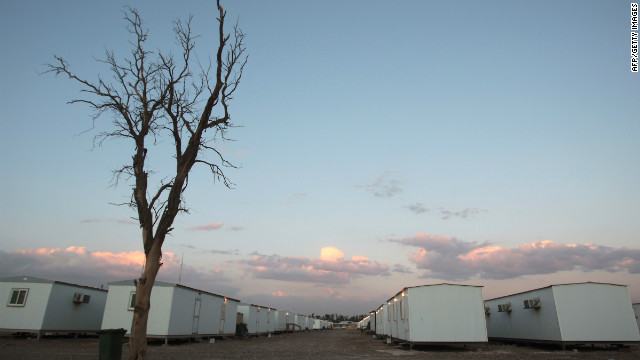
In September 2012, the last group of the MKO terrorists left Camp Ashraf, their main training center in Iraq. They have been transferred to Camp Liberty which lies Northeast of the Baghdad International Airport.

Camp Liberty is a transient settlement facility and a last station for the MKO in Iraq.

Speaking to FNA about the latest status of the terrorist organization in Iraq, Danayeefar said, "These people are filling forms of the UN High Commissioner for Refugees (UNHCR) and we are waiting to see them leave Iraq’s soil as soon as possible."

"We have been assured that the move (expulsion) will start soon," the Iranian diplomat said.

Before an overture by the EU, the MKO was on the European Union’s list of terrorist organizations subject to an EU-wide assets freeze. Yet, the MKO puppet leader, Maryam Rajavi, who has residency in France, regularly visited Brussels and despite the ban enjoyed full freedom in Europe.

The MKO is behind a slew of assassinations and bombings inside Iran, a number of EU parliamentarians said in a recent letter in which they slammed a British court decision to remove the MKO from the British terror list. The EU officials also added that the group has no public support within Iran because of their role in helping Saddam Hussein in the Iraqi imposed war on Iran (1980-1988).

Many of the MKO members abandoned the terrorist organization while most of those still remaining in the grouplet are said to be willing to quit but are under pressure and torture not to do so.

A May 2005 Human Rights Watch report accused the MKO of running prison camps in Iraq and committing human rights violations.

According to the Human Rights Watch report, the outlawed group puts defectors under torture and jail terms.

The group, founded in the 1960s, blended elements of Islamism and Stalinism and participated in the overthrow of the US-backed Shah of Iran in 1979. Ahead of the revolution, the MKO conducted attacks and assassinations against both Iranian and Western targets.

The group started assassination of the citizens and officials after the revolution in a bid to take control of the newly established Islamic Republic. It killed several of Iran’s new leaders in the early years after the revolution, including the then President, Mohammad Ali Rajayee, Prime Minister, Mohammad Javad Bahonar and the Judiciary Chief, Mohammad Hossein Beheshti who were killed in bomb attacks by MKO members in 1981.

The group fled to Iraq in 1986, where it was protected by Saddam Hussein and where it helped the Iraqi dictator suppress Shiite and Kurd uprisings in the country.

The terrorist group joined Saddam’s army during the Iraqi imposed war on Iran (1980-1988) and helped Saddam and killed thousands of Iranian civilians and soldiers during the US-backed Iraqi imposed war on Iran.

Since the 2003 US invasion of Iraq, the group, which now adheres to a pro-free-market philosophy, has been strongly backed by neo-conservatives in the United States, who argued for the MKO to be taken off the US terror list.

The US formally removed the MKO from its list of terror organizations in early September, one week after Secretary of State Hillary Clinton sent the US Congress a classified communication about the move. The decision made by Secretary of State Hillary Clinton enabled the group to have its assets under US jurisdiction unfrozen and do business with American entities, the State Department said in a statement at the time.

November 5, 2012 0 comments
FacebookTwitterPinterestWhatsappTelegramSkypeEmail
Newer Posts
Older Posts

Recent Posts

  • Is Rudy Giuliani so naïve to support MEK terrorists?

    July 27, 2026
  • National Pride of Iranians: Reject the Rajavis and their Patrons

    July 22, 2026
  • Italian legislators fooled by MEK’s polished presentations

    July 18, 2026
  • The Rhetorical Style and Polemical Language of the MEK

    July 15, 2026
  • Death of Lindsey Graham, notorious hardliner against Iran

    July 13, 2026
  • Facebook
  • Twitter
  • Instagram
  • Youtube

© 2003 - 2025 NEJAT Society . All Rights Reserved. NejatNGO.org


Back To Top
Nejat Society
  • Home
  • Articles
  • Media
    • Cartoons
    • NewsPics
    • Photo Gallery
    • Videos
  • Publications
    • Books
    • Nejat NewsLetter
    • Pars Brief
  • About Us
  • Contact us
  • Editions
    • عربي
    • فارسی
    • Shqip