Nejat Society
  • Home
  • Articles
  • Media
    • Cartoons
    • NewsPics
    • Photo Gallery
    • Videos
  • Publications
    • Books
    • Nejat NewsLetter
    • Pars Brief
  • About Us
  • Contact us
  • Editions
    • عربي
    • فارسی
    • Shqip
Nejat Society
Nejat Society
  • Home
  • Articles
  • Media
    • Cartoons
    • NewsPics
    • Photo Gallery
    • Videos
  • Publications
    • Books
    • Nejat NewsLetter
    • Pars Brief
  • About Us
  • Contact us
  • Editions
    • عربي
    • فارسی
    • Shqip
© 2003 - 2024 NEJAT Society. nejatngo.org
Mujahedin Khalq; A proxy force

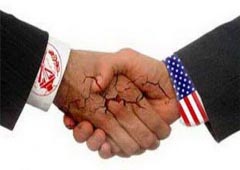
Five Points About Removal Of MeK From US Terror Blacklist

The recent announcement by the United States Department of State about removing the notorious Mujahedin-e Khalq (MeK) Organization from its blacklist of terrorist organizations on September 28, 2012, has been followed by many analytical accounts. They ranged from many media analyses provided by the Western and Iranian experts who were opposed to the decision, to admiring accounts by former American politicians. The proponents of the move among former US politicians were mostly those whose palms had been greased by the MeK through accepting hefty financial contributions from the organization. They had, therefore, organized extensive campaigns and lobbies across the United States in order to take the name of the organization out of the list of terrorist organizations.

Iran
This article does not actually mean to put renewed emphasis on this grave mistake which has been committed by the US government. It is already too late and the United States has provided the group with considerable maneuvering room. (A secondary point here: given the behavior of the Canadian Prime Minister Stephen Harper and its government in the past years, especially in the past few months, it is almost certain that Ottawa will soon remove the MeK from its list of terrorist organizations in order not to lag behind the United States and the European countries in this regard!)

This paper only means to remind Western politicians of a few characteristics of this terrorist organization as defined by firsthand Western sources. Let’s hope that this would help the Americans to realize that delisting the MeK is not just a simple delisting of an organization from the long list of 52 organizations designated as terrorist entities by the US Department of State. This delisting, however, will have consequences and implications which may prove to be quite different from what they may seem at a first glance.

1. The issue of weird and cult-like conduct of the leaders of this organization and their bizarre treatment of other members has been acknowledged by many Western sources. A special case was a report released by RAND (Research and Development) Corporation in 2009, entitled “The Mujahedin-e Khalq in Iraq: A Policy Conundrum,” (1) in which a special part had been dedicated to “Cultic Characteristics of the MeK.” Under that title, the report says, “… [MeK’s] subsequent exile undermined its optimism and openness. In France, Masoud Rajavi dramatically changed the nature of the organization. In 1985, he announced that Maryam Azodanlu, the wife of his close associate Mehdi Abrishamchi and the younger sister of a senior MeK member, would assume the position of MeK co-leader. Rajavi divorced his second wife, the daughter of former Iranian president, Abol-Hasan Banisadr, Rajavi’s ally, and announced that Maryam would divorce her husband and marry him. These actions would advance a new “ideological revolution.”

The Rajavis claimed that their new revolution was meant to highlight the equality of women, an idea that the IRI [Islamic Republic of Iran] found threatening. Although the MeK did promote women to leadership positions, which constituted a reversal of tradition in Iranian society, the marriage and the subsequent aggrandizement of Masoud Rajavi’s leadership role marked the beginning of an organizational transformation into a cult of personality. Initial changes included increased mandated study, enforced communal living arrangements, and imposed supervision of the group’s membership in exile throughout Europe.”

Elsewhere in the same document, it says, “After the MeK moved to Iraq in 1986, the Rajavis created the NLA [National Liberation Army], which included nearly the entire MeK contingent in Iraq, and they used its militaristic structure to consolidate their control.

Following the failure of Operation Eternal Light, the Rajavis initiated a series of policy changes that continued the transformation of the increasingly insular organization into a cult. While rarely admitting total failure, Rajavi implied in his speeches that the operation had not achieved its goals due to insufficient devotion to the overthrow of the IRI among the MeK rank and file, who were instead distracted by sexual interests as a result of their coeducational housing. To enforce a new “military” discipline, rank-and-file members were instructed not just to move into gender-segregated housing but also to divorce their spouses, maintain complete celibacy, and even cut off communication with friends and family, both within and beyond MeK compounds. Love for the Rajavis was to replace love for spouses and family. In addition, the Rajavis used funding provided by Saddam to construct self-sufficient camps that included schools, medical clinics, training centers, and prisons (often called “reeducation centers”) so that the population had little need for contact with the society beyond its walls.”

Three years after the RAND report was released, that behavior still continues within the ranks of the organization. Many examples of it can be found in the weblogs run by ex-members who have succeeded to escape the clutches of this organization. The authors of the RAND report have also noted in the conclusion part of their report that, “MeK leaders and supporters … allege that former MeK members and critics of the MeK are either Iranian agents or their dupes. However, interviews with US military and civilian officials, information voluntarily furnished by former MeK members at the ARC, and visits to Camp Ashraf suggest that these denials are not credible.”

2. The MeK is also no favorite with major human rights organizations. A great number of documents on frequent instances of human rights violations within the ranks of this cultic organization can be found here: Human Rights Watch, No Exit: Human Rights Abuses inside the MKO Camps, New York, May 2005.

3. The United States, put the MeK, or as better known in Iran as ‘Monafeqin (hypocrites)’, on its list of terrorist organizations in 1997 and delisted them in 2012. The Council of Europe also listed the MeK as a terrorist organization in 2001 and delisted it in 2009. Britain, likewise, put the MeK on its terror list in 2001 and delisted it in 2008. Such periods of being “listed” and “delisted” have been seldom repeated for any other terrorist organization. Many such organizations have stayed on the terrors lists of the United States, the UK, or the European Union for many long years. It would be very ridiculous to assume that this development followed a decision by members of this group to really give up terrorism, regret their past deeds and try to go for more democratic approaches. Therefore no other explanation for this measure may occur to an analyst, except for the direct role of political decisions and expediencies, topped by the decision to use the MeK as a means of exerting pressure on Iran. The independent observers have, as such, considered this issue as a proof to the fact that the United States’ judiciary is not a truly independent power.

4. Last year, the UN special rapporteur on human rights for Iran, Ahmed Shaheed, submitted his first report to the UN Human Rights Council in which had had pointed to 17,000 names given to him by an Iranian nongovernmental organization in writing as the names of those killed in terrorist operations by the MeK. The Iranian nation will never forget two facts about this group. The first fact is countless cases of blind assassinations carried out by MeK members in early post-revolution years which were mostly carried out by members of this group in desolate streets and places and targeted people who were only suspected of being connected in some way to the nascent establishment of the Islamic Republic. They included many shoemakers, workers, bakers, teachers and civil servants. The second fact is their unbridled cooperation with the former Iraqi dictator Saddam Hussein during his imposed war against Iran. Without a doubt, it will be impossible for the Iranian nation, regardless of their political tendencies for or against the Islamic establishment, to imagine that the United States does not consider this group as a terrorist group anymore.

5. From 2003 onward and after this terrorist group lost its support from Saddam, its members lived in limbo at Camp Ashraf. The internal cult-like rules of the organization considered escaping to Iran by its members as a great treachery which was punishable by death. However, since 2005, many of them have returned to Iran voluntarily and through mediation of the International Committee of the Red Cross (ICRC). Perhaps, removing the MeK from the US Department of State’s list of terrorist organizations will make it possible for its members to interact more freely with the ICRC, or return to their families in Iran with more ease. In that case and if the MeK actually decided to stop its overt activities as well as covert terrorist operations against Iran and accept a more democratic structure in order not to be listed as a terrorist organization again, it would perhaps die in a few years. The reason is that the MeK owes its identity to its strange, clichéd, cultic, and inflexible rules and any kind of compromise in that regard will totally change its identity. There is a Persian proverb which says that “at times a remedy works just the opposite of what it is intended to do.”

By Mahmoud Reza Golshanpazhooh Executive Editor of Iran Review , Eurasia Review

Notes:

(1) http://www.rand.org/pubs/monographs/MG871.html

October 6, 2012 0 comments
FacebookTwitterPinterestWhatsappTelegramSkypeEmail
Mujahedin Khalq; A proxy force

MEK;On Thursday They Were Terrorists; On Friday They Weren’t

As of last Friday, the Mujahedeen-e-Khalq (MEK), a formerly violent Iranian opposition group once allied with Saddam Hussein, no longer appears on the State Department’s list of "foreign terrorist organizations" (FTOs). The delisting comes after years of lobbying, assisted by prominent political figures, and legal wrangling, culminating in an appeals court ruling ordering Secretary of State Hillary Clinton to act on the MEK’s petition by Monday. Clinton’s decision probably means the MEK’s supporters, who include former Attorney General Michael Mukasey, former New York Mayor Rudy Giuliani, and former Pennsylvania Gov. Ed Rendell, do not need to worry about being charged with providing "material support" to an FTO by helping the group shed that label. On Thursday They Were Terrorists; On Friday They Weren'tTheoretically, however, they could still be prosecuted if it can be shown that they "coordinated" their advocacy with the MEK prior to Friday.

Over at Popehat, Los Angeles attorney Ken White, a former federal prosecutor, recalls that in 1999 he helped convict a man "for helping terrorists who now aren’t terrorists." The defendant helped MEK members "secure legal residence in the United States through various forms of fraud, including fraudulent asylum applications." In addition to immigration fraud, his actions qualified as providing material support to an FTO—possibly the first conviction under that provision, White says. Looking back, he is ambivalent about his role in the case, recognizing the political considerations that determine which groups count as FTOs:

The six people the MEK killed in the 1970s are still dead. They were dead when the State Department designated the MEK as a foreign terrorist organization and they have been dead all the years since and they won’t get any less dead when the State Department removes the MEK from its FTO list. The MEK is the organization that once allied with Saddam Hussein; that historical fact hasn’t changed, although its political significance has. No — what has changed is the MEK’s political power and influence and the attitude of our government towards it.

More generally, White says, the MEK’s delisting shows how arbitrary the contours of the War on Terror are:

The scope of the War on Terror — the very identity of the Terror we fight — is a subjective matter in the discretion of the government. The compelling need the government cites to do whatever it wants is itself defined by the government.

The definition of the enemy then determines not only who can be charged with violating the ban on material support but who can be subject to warrantless surveillance, indefinite detention, and summary execution by drone. But don’t worry: The Obama administration is providing all the process it believes is due.

By Jacob Sullum,Reason Magazine

October 6, 2012 0 comments
FacebookTwitterPinterestWhatsappTelegramSkypeEmail
USA

US urges Europe to help in resettlement of ex-camp Ashraf residents

Ambassador Daniel Fried, special advisor to US Secretary of State on Camp Ashraf in Iraq, is on a tour of Europe to discuss about developments concerning the Iranian opposition group Ambassador Daniel Fried, special advisor to US Secretary of State on Camp Ashraf in IraqMujahedin-e Khalq (MeK), and the continuing dialogue with EU countries on permanent resettlement solutions for Camp Ashraf’s former residents.

During his visit to Brussels, Fried will meet with officials in the European Commission and European Parliament. Speaking at a news conference at the US embassy in Brussels Wednesdy, Fried said the US has sought to support the peaceful relocation of the residents of Camp Ashraf, first from Camp Ashraf to Camp Hurriyet (Liberty) and subsequently out of Iraq. "Our purpose are humanitarian and not connected with any political motives of the MeK organisation," he stressed.

Last week, the US government decided to remove MeK from its list of foreign terrorist organisations.

"We made that decision because our review of MeK’s history, and in particular absence of any confirmed acts of terrorism by the MeK for more than a decade. We did not develop amnesia for MeK’s past actions inside Iraq. MeK has a bad history inside Iraq. It has a bad history with the US dating back to the 1970’s. We have not forgotten that," said the US diplomat. "But now the attention of the US and its partners will turn to resettlement. That is why I have come to Europe this week," he said.

Fried attended a meeting of the UNHCR in Geneva on Tuesday which was devoted to the issue. A number of European countries attended the meeting. The UNHCR asked to step up and help in an extraordinary basis the resettlement of the MeK members, he said. A number of countries indicated they were willing to do so, he noted but declined to name those countries. "The Iraqi government was represented at a senior level and we applause the fact that the Iraqi government approached the matter in such a constructive spirit. They too made clear that they want to see resettlement of the people in a peaceful manner outside Iraq," Fried said. "Both the US and European countries have started a process of reviewing individuals at Camp Hurriye. There has been some progress. We have been in touch with countries outside Europe. But it is true that a great many residents at Camp Hurriye were formally residing in Europe. They have long standing ties to Europe," he said.

The US official noted that Camp Ashraf has been effectively closed and that over 3000 people have moved peacefully to Camp Hurriye near the Baghdad international airport. He explained that 200 people remain in Camp Ashraf with agreement of the Iraqi government. One hundred people were supposed to leave by end of September and the other 100 will leave pending settlement of issues such as properties. The UNHCR is interviewing them one by one and making refugee status determination, he said. "Our purpose is humanitarian and not a political act," he stressed as well as the US State Department continues to have "serious concern about the MeK as an organisation."

Asked if the MEK can play some kind of a political role in the future to resolve the Iranian crisis, he replied "they think they have a role but the United States does not think so."

Meanwhile, the Paris-based leader of MeK, Maryam Rajavi, is expected to speak at the European Parliament in Brussels today afternoon.

October 4, 2012 0 comments
FacebookTwitterPinterestWhatsappTelegramSkypeEmail
Mujahedin Khalq; A proxy force

The next pro-MEK lobbying effort is about to begin

‎The completely false claim that the MEK represents the legitimate Iranian opposition was one of the ‎principal reasons many of these advocates gave for removing the group from the list of The next pro-MEK lobbying effort is about to beginforeign ‎terrorist organizations.

No one could have ever seen this coming:‎

Members of Congress and supporters of the People’s Mujahedin of Iran (MEK) are to press the ‎Obama administration to recognise it as the “legitimate opposition” to the Iranian government after ‎the group is removed from the US list of banned terrorist organisations in the coming days. ‎

Of course, this has been what many of the MEK’s American advocates have been calling for all along. ‎The completely false claim that the MEK represents the legitimate Iranian opposition was one of the ‎principal reasons many of these advocates gave for removing the group from the list of foreign ‎terrorist organizations. It’s absurd that any informed person could seriously believe an Islamo-Marxist ‎totalitarian cult represents a legitimate, much less democratic, alternative to the current Iranian ‎regime. This is the falsehood that many of the group’s advocates promote.‎

The reinvention of the MEK as a “democratic” political organization just demonstrates how ‎meaningless that label can be. It’s a reminder of how willing some Iran hawks are to work with any ‎group, no matter how disreputable, if it shares their hostility to the Iranian government. Anyone who ‎supports aligning the U.S. with this group is admitting that he isn’t interested in a more democratic Iran ‎or the success of the Iranian opposition. Now that the group will be removed from the list, the ‎supporters it has cultivated in Congress and elsewhere will be able to agitate on its behalf much more ‎freely, and its lobbying efforts will presumably increase. The coordinated campaign to remove the ‎MEK from the FTO list was a disgrace, and the sequel promises to be even more obnoxious.‎

By Daniel Larison

October 4, 2012 0 comments
FacebookTwitterPinterestWhatsappTelegramSkypeEmail
Mujahedin Khalq; A proxy force

Removing Radical MEK Group from Terrorist List a Cynical Decision

Take a large dollop of Washington influence buying, a portion of hypocrisy and a dash of duplicity. Stir them in the cauldron of a presidential campaign and heat them with national security rhetoric. That’s the recipe that produced what looks like one of the most cynical decisions in current American policy.

No, I do not mean the debate over the US debt. I am talking about a more arcane matter — the removal of an Iranian opposition movement from the State Department’s list of Foreign Terrorist Organizations (FTO).

A few facts may be helpful, since most Americans know little or nothing about this curious decision. Even the numerous members of Congress and high ranking former US officials who backed it showed an apparent disregard for the facts.

The MEK, or Mujahedeen Khalq, was founded by Iranian students in the 1960s as a radical group that combined some of the worst aspects of Marxism and Islamic fanaticism, plus violent anti-Americanism. After helping to overthrow the Shah, they fought a bloody struggle with the Ayatollahs who seized power and murdered a number of them in terrorist explosions.

Expelled from their country, they eventually accepted the hospitality of Saddam Hussein, Iran’s aggressive neighbor who armed and used them against Iran. Most Iranians saw that as an act of treachery and still despise the MEK even more than they do their own government.

The Mujahadeen ran their camp in Iraq as tightly as a North Korean gulag. Couples were forced to divorce. Children were sent abroad. Sex was forbidden. It was, in effect, an extremist cult, devoted to its leaders

The State Department put the MEK on the Foreign Terrorist Organization list in 1997 because of their involvement in acts of terrorism including hostage taking and killing of several Americans.

In one of the slickest and most effective PR campaigns Washington has seen in years, the MEK has hired high-priced Washington lobbying firms, funnelled money through speech contracts and literally bought its removal from the terrorist list.

The list of supporters they recruited includes former US four-star generals, intelligence chiefs, governors and political heavyweights, according to a special investigation by the Christian Science Monitor.

The Monitor reported: “Many of these high-ranking US officials – who represent the full political spectrum — have been paid tens of thousands of dollars to speak in support of the MEK.”

They included General Peter Pace, former chairman of the Joint Chiefs of Staff, former New York Mayor Rudy Giuliani and former US Homeland security chief Tom Ridge. For a more complete list of those who spoke at pro-MEK conferences and rallies, see the full Monitor story. Not all of them took the money, but all of them drank the MEK Kool-Aid in the belief that delisting them was good for America — or in the case of some such as Harvard Professor Alan Dershowitz, apparently also good for Israel.

The Monitor noted, “They rarely mention the MEK’s violent anti-American past, and portray the group not as terrorists but as freedom fighters with “values just like us,” as democrats-in-waiting ready to serve as a vanguard of regime change in Iran. Some acknowledge that they knew little about the group before they were invited to speak and were coached by MEK supporters.”

The MEK even corralled a few journalists, including Carl Bernstein of Watergate fame, who took $12,000 to speak at a Waldorf Astoria meeting of MEK supporters, but explained later to ProPublica, “I was not there as an advocate.” Another prominent journalist who should have known better was syndicated columnist Clarence Page who spoke at a large MEK rally in Paris. After that was reported by ProPublica, he said he would reimburse the $20,000, and was reprimanded by the Chicago Tribune for violating its ethic code.

The concept of the terrorist list is highly political and riddled with hypocrisy. As pointed out by Foreign Policy Magazine, “some groups are designated for the right reasons (terrorism) and others are not labelled, despite clearly meeting the statute’s requirements.

For example, Saddam Hussein was put on the terrorist list when he was allied with Moscow in the 1960s, taken off in the 1980s when Washington wanted to him help him attack Iran, and put back on again later when the US wanted to attack Iraq. And in each instance, this was the same Saddam, a brutal Iraqi leader with a horrible human rights and war crimes record.

The MEK declares that it has been out of the terrorism business for almost a decade, but there is no reason to believe it. NBC News reported in February that the MEK has been assassinating Iranian nuclear scientists in broad daylight. There are numerous reports of collaboration between the MEK and Israel’s secret services. “The enemy of my enemy is my friend,” as the old saying goes.

Although it is a federal felony to give aid, direct or indirect, to an organization on the Foreign Terrorist List, Seymour Hersh of The New Yorker reports that the US Joint Special Operations Command conducted training of members of the MEK in Nevada from 2005 until sometime before President Obama took office. It was done secretly of course.

This would not be the first time the United States has made a mistake in the name of national security. Arming so-called Islamic freedom fighters to fight against the Soviets in Afghanistan was a spectacular example of chickens that eventually came home to roost. Helping the MEK is small stuff by comparison. The group has almost no support inside Iran, and not much outside.

That’s a good thing. God only knows what kind of Iran they would create if they could actually take over the country.

By Tom Fenton,GlobalPost

October 4, 2012 0 comments
FacebookTwitterPinterestWhatsappTelegramSkypeEmail
Mujahedin Khalq; A proxy force

Iranian terrorist group now freedom fighters, in U.S. eyes

Hillary Clinton announces anti-Tehran group People’s Mujahedeen of Iran is no longer on State Department’s list of terror organizations
Iranian terrorist group now freedom fighters, in U.S. eyes
In Washington, it seems, the difference between a terrorist and a freedom fighter is a multimillion-dollar public relations campaign.

Last week, Secretary of State Hillary Clinton announced that the anti-Tehran group People’s Mujahedeen of Iran (MEK) will no longer be designated a terrorist group after having been placed on the American list 15 years ago for killing U.S. servicemen.

The administration’s change of heart comes after the MEK said it renounced violence in 2003 and recently got the backing of a U.S. Federal Court, which said it has seen no evidence the group is still involved in terrorist activities.

But Clinton’s decision, in part a response to the court’s finding, also comes after a multimillion-dollar campaign on behalf of MEK that has seen a long list of former senior officials and current members of Congress paid lavish fees to make speeches or appearances at MEK functions promoting an end to its terrorist status.

Among those who have been paid to speak on behalf of the MEK’s cause are former New York mayor Rudy Giuliani, former U.S. attorney-general Michael Mukasey, former White House chief of staff Andrew Card, and former U.S. home-land security chief Tom Ridge.

Among those from the U.S. military who have put in appearances are former chair-man of the Joint Chiefs Peter Pace, former Supreme Allied Commander in Europe Wesley Clark, and President Barack Obama’s former national security adviser James Jones.

Former Central Intelligence Agency chiefs James Woolsey, Porter Goss and Michael Hayden have also been paid to speak on MEK platforms.

This, along with unresolved questions about whether MEK has indeed renounced violence – and if so, how recently? – raises the spectre that the Obama administration may be so keen to back Iranian groups opposed to the Tehran regime of Supreme Leader Ayatollah Ali Khamenei that it is not looking too carefully at their credentials or records.

Still fresh in Washington memories is the part Ahmed Chalabi played in feeding false or distorted information about his Iraqi homeland to the receptive audience within the administration of President George W. Bush. As the United States found out after the 2003 invasion of Iraq, there weren’t any weapons of mass destruction, and the invading troops were not welcomed as liberators.

It seems unlikely that the Obama administration would fall for the same kind of blarney from the somewhat sinister husband-and-wife team of Massoud and Maryam Rajavi, who, if several U.S. government reports are to be believed, run MEK as a personality cult complete with brainwashing, brutal internal discipline, and the indoctrination of children.

If Obama is not about to be stampeded into war with Iran by Israeli Prime Minister Benjamin Netanyahu – with the aim of stopping the Tehran regime acquiring the ability to make nuclear weapons – he is unlikely to be impressed by the Rajavis.

Indeed, the history and record of the MEK is so tainted that taking it off the list of terrorist groups will likely do the reputation of the Obama administration no good among the main-stream reformist movement in Iran.

MEK was founded in 1965 by a group of university students as a Marxist Muslim opposition to the Shah of Iran.

Its first terrorist attacks were in 1971, and MEK made special targets of Americans, who were instrumental in keeping the Shah in power.

In 1973, U.S. army Col. Louis Lee Hawkins was shot and killed outside his home in Tehran. In 1975, two U.S. air force officers were killed in an attack on their car. And in 1976, three employees of Rockwell Inter-national were also shot and killed.

MEK joined enthusiastically in the 1979 revolution that ousted the Shah and brought the Islamic Republic to power. The group actively sup-ported the takeover of the U.S. embassy after the coup and the keeping of American diplomats as hostages.

But MEK quickly fell out with the new leader, Ayatollah Khomeini, and killed several of his senior officials in bomb attacks.

In 1986, MEK moved its headquarters to Iraq, where it came under the patronage of Saddam Hussein, fighting for him in his war against Iran and playing a lead role in his murderous campaigns against the Iraqi Kurds.

About 3,000 of the remaining MEK members in Iraq are now in a former American camp outside Baghdad awaiting placement in third countries.

MEK’s attempts to rehabilitate its image started in 2002, when it says it gave the U.S. and its allies the first information about Iran’s nuclear development program.

However, New Yorker magazine journalist Seymour Hersh says that the then-head of the United Nations’ nuclear watch-dog, the International Atomic Energy Agency, Mohamed ElBaradei, told him that the information about Iran’s nuclear program came from the Israeli government and was only channelled through MEK. Much of the evidence of MEK’s continued involvement in violence is circumstantial at best, but one persistent story is that the group’s operatives are working for the Israeli intelligence agency Mossad inside Iran.

In particular, there are many claims that the five Iranian nuclear scientists assassinated since 2007 and the destruction of a missile research centre were operations conducted by MEK for Mossad.

By Jonathan Manthorpe

October 4, 2012 0 comments
FacebookTwitterPinterestWhatsappTelegramSkypeEmail
Mujahedin Khalq; A proxy force

Powerful DC figures enlisted in Iranian group’s bid to get removed from US terrorist list

The US State Department is running up against a court-imposed deadline to make a decision on whether to remove the Mujahadin-e Khalq or MEK from the US terrorist list.

In a statement, the National Council of Resistance of Iran called the expected delisting a “victory for justice and the rule of law.”

The MEK carried out bombings and assassinations in the 1970s that targeted and killed US citizens and military members, according to the State Department. In the ‘80s, the group killed dozens of Iranian officials and its members fought with Saddam Hussein during the Iran-Iraq war. Attacks continued during the 1990s and after the US invasion of Iraq, the US detained thousands of MEK members at Camp Ashraf. In 2001, the group says it renounced violence.
..
To read more of Justin Elliot’s reporting on the MEK’s lobbying efforts click here

By Free Speech Radio News
Download Powerful DC figures enlisted in Iranian group’s bid to get removed from US terrorist list

October 3, 2012 0 comments
FacebookTwitterPinterestWhatsappTelegramSkypeEmail
The cult of Rajavi

The MEK Is Bad News, But Delisting Them Was A Good Decision

Members of the Iranian dissident group known as the Mujahedin e-Khalq, or MEK, really don’t like me. I don’t trust them, either. I’ve been reporting on the MEK for the Huffington Post since last The MEK Is Bad News, But Delisting Them Was A Good Decisionsummer, and members of the group have threatened my house and hacked my email.

Still, I believe the State Department’s decision Friday to remove the MEK from the list of Foreign Terrorist Organizations was a good one.

Like many people who’ve researched how the MEK actually works, I don’t believe that they’re freedom fighters in exile as they claim to be. Nor do I believe their values are democratic, as they claim they are.

I believe the MEK is a militant cult of personality, whose leaders, Maryam and Massoud Rajavi, figured out in the 1980’s that they could survive by doing mercenary work on behalf of governments that hate Iran. Saddam Hussein was their first patron, and he granted them land in Iraq to build a walled, military compound, Camp Ashraf, where until a few months ago, more than 3,000 members lived.

There, they would wake up every day and worship images of Maryam Rajavi before commencing with the day’s Army base-type tasks. The MEK claims to subsist on foreign contributions, but that’s only partly true.

In America, their well-paid U.S. advocates, men like former Pennsylvania Gov. Ed Rendell and former New York City mayor Rudy Giuliani, wax on about how the MEK renounced violence a decade ago and just needs U.S. backing in order to topple the Iranian regime and seize power. I’ve watched these guys earn $40,000 for an eight-minute speech.

But the debate over whether or not the MEK is a terrorist group doesn’t matter. It never really did. After dozens of conversations and background briefings over the past year, I don’t believe Secretary of State Hillary Clinton decided to delist the MEK how and when she did because the secretary suddenly changed her mind on the question of whether or not they are terrorists.

I think the reason the MEK was delisted on Friday is, more importantly, because Clinton understands that they’re a dangerous cult, and that all the other potential outcomes of the 30-year standoff between the MEK and the outside world would have likely been much, much worse.

Near the top of that list was mass suicide, a possibility that kept more than a few U.S. diplomats up at night. After that, it was that the MEK’s leaders would deliberately provoke a confrontation with Iraqi security forces, many of whom would be happy to avenge the ethnic cleansing raids MEK soldiers carried out for Hussein back in the day. In France, where Maryam Rajavi lives, officials considered the unwelcome possibility of public self-immolations — a tactic the MEK has used there before.

Truth is, most of the world doesn’t really care what happens to the 3,200 people who used to live at Camp Ashraf.

But Secretary Clinton cares, despite years of daily MEK protests outside her office on C Street, N.W., where I’ve watched the same dozen or so people, all dressed in identical Maryam Rajavi t-shirts, banging drums and accusing Clinton of violating human rights, breaking international law, and callously leaving them to die at the hands of Iraqi soldiers.

Ironically, while they cursed the secretary from the sidewalk, inside the State Department, Clinton and her aides were quietly working on a plan to save thousands of brainwashed MEK foot soldiers in Camp Ashraf from their own leaders and from the Iraqi military.

The only way to do this is to split the 3,200 into small groups and transfer them out of Iraq a few at a time, as refugees. This being a cult, however, the leaders initially refused to let anyone leave Ashraf unless they all left as a group. But as one former U.S. diplomat said to me, "What the hell kind of country is going to agree to take in 3,000 militant cult members?"

Clinton only had one major bargaining chip. In exchange for leaving Camp Ashraf, the secretary agreed to delist the group from the U.S. list of Foreign Terrorist Organizations, which she officially did on Friday. That afternoon, State Department officials presented us reporters with three reasons they said the decision was merited. None of the official reasons holds up to scrutiny, but the eventual outcome, the delisting, does.

Therein lies the difference between politics and diplomacy. The "reasons" given here didn’t win anybody over. They were more of a gesture meant to placate people like me, who have reported what everyone at the State Department already accepts, namely, that the MEK is dangerous and untrustworthy and capable of future violence.

But the question facing Secretary Clinton wasn’t whether the MEK could be trusted. Or even if the MEK’s members were still dangerous. Privately, U.S. officials don’t pretend to know the answer to either one.

The question at the heart of the MEK decision was whether Clinton would be willing to quietly save 3,200 lives. She was.

I may not trust the MEK or their tactics, but the year-long negotiation that culminated on Friday represents a bright point for U.S. diplomacy and humanitarianism.

By Christina Wilkie

October 3, 2012 0 comments
FacebookTwitterPinterestWhatsappTelegramSkypeEmail
Mujahedin Khalq; A proxy force

NY Times: MKO bribed US politicians to get off terror list

The anti-Iranian Mujahedin-e Khalq Organization (MKO) paid immense bribes to top American politicians to gain their support for delisting the group from the US terror watch list, a New York Times report says.

According to the NY Times report, former CIA and FBI officials as well as retired generals and well-known members of both political parties in the US were among those supporting the terror group.

The revelation comes as US State Secretary Hillary Clinton on September 21 sent the Congress a classified communication about delisting the MKO from the US terror watch list.

This comes as the group has been responsible for the deaths of thousands of Iranian civilians and officials.

The terror group has also been involved in the suppression of Iraqi Kurds and assisted former Iraqi dictator Saddam Hussein.

Furthermore, the group had for the last 15 years been formally described by the US State Department as a "foreign terrorist organization.”

The Bush administration had claimed that one of its reasons for attacking Iraq in 2003 was Saddam Hussein’s support of "international terrorism," for which he mentioned Iraq’s "sheltering" of the MKO as a major example.

Nonetheless, conservative politicians in the US seek to portray the MKO terror group as a Democratic option for Iran’s future, the report noted.

Two officials, who spoke on the condition of anonymity in advance of an official announcement, said that Clinton’s decision to drop the group’s terror label was partly based on the group’s recent cooperation in moving more than 3,000 of its members from its longtime Iraq location, Camp Ashraf.

The MKO fled to Iraq in 1986, where it enjoyed the support of Iraq’s executed dictator Saddam Hussein, and set up its Camp Ashraf near the Iranian border.

On Sunday a final convoy of 680 MKO members from Camp Ashraf arrived at the former site of Camp Liberty, located near the Baghdad airport.

The NY Times article reaffirms that the support of prominent American politicians for the MKO organization will undoubtedly play a role in the de-listing of the MKO organization as a terrorist group.

The long list of high-ranking US politicians supporting the MKO includes: former CIA Directors, R. James Woolsey and Porter J. Goss; former FBI director Louis J. Freeh; former US President George W. Bush’s homeland security secretary, Tom Ridge; Attorney General, Michael B. Mukasey; and President Barack Obama’s first national security adviser, Gen. James L. Jones.

Many of MKO’s American supporters, yet not all, are said to have received fees of up to 15,000 to 30,000 USD to give speeches to the group, in addition to travel expenses to attend MKO rallies in Paris.

The former Democratic governor of Pennsylvania, Edward G. Rendell, admitted in March that he had received a total of 150,000 to 160,000 USD.

According to an American official, for the time being, about 100 of the group’s members are expected to stay at Camp Ashraf, with permission of the Iraqi government to oversee the group’s property there.

In the meantime, MKO members at the Camp Liberty site are being interviewed by United Nations officials who have granted refugee status to several hundred of them and are now looking for countries that are ready to accept them.

October 2, 2012 0 comments
FacebookTwitterPinterestWhatsappTelegramSkypeEmail
Iran

Iran says it can prosecute U.S.

The Iranian judiciary said Monday that by removing a group from its list of terrorist organizations, the United States opens itself up to lawsuits.

A judiciary spokesman said the U.S. Department of State violated international standards by removing the Mojahedin-e Khalq Organization from the list of terrorist organizations that can be legally prosecuted, the Iranian state-run Fars News Agency reported Monday.

The MKO was taken off the list Friday, having its assets under U.S. jurisdiction unfrozen and allowed to do business with American entities, a State Department statement said.

Tehran claims the MKO is behind numerous assassinations and bombings within the country because of its alleged role in helping Iraq in its 1980-1988 war with Iran, the news agency said.

The de-listing was called a "violation of America’s legal and international obligations" that "will bring U.S. responsibility for past, present and future terrorist operations by this group," a statement from the Iranian Foreign Ministry said Saturday.

October 2, 2012 0 comments
FacebookTwitterPinterestWhatsappTelegramSkypeEmail
Newer Posts
Older Posts

Recent Posts

  • Is Rudy Giuliani so naïve to support MEK terrorists?

    July 27, 2026
  • National Pride of Iranians: Reject the Rajavis and their Patrons

    July 22, 2026
  • Italian legislators fooled by MEK’s polished presentations

    July 18, 2026
  • The Rhetorical Style and Polemical Language of the MEK

    July 15, 2026
  • Death of Lindsey Graham, notorious hardliner against Iran

    July 13, 2026
  • Facebook
  • Twitter
  • Instagram
  • Youtube

© 2003 - 2025 NEJAT Society . All Rights Reserved. NejatNGO.org


Back To Top
Nejat Society
  • Home
  • Articles
  • Media
    • Cartoons
    • NewsPics
    • Photo Gallery
    • Videos
  • Publications
    • Books
    • Nejat NewsLetter
    • Pars Brief
  • About Us
  • Contact us
  • Editions
    • عربي
    • فارسی
    • Shqip