Nejat Society
  • Home
  • Articles
  • Media
    • Cartoons
    • NewsPics
    • Photo Gallery
    • Videos
  • Publications
    • Books
    • Nejat NewsLetter
    • Pars Brief
  • About Us
  • Contact us
  • Editions
    • عربي
    • فارسی
    • Shqip
Nejat Society
Nejat Society
  • Home
  • Articles
  • Media
    • Cartoons
    • NewsPics
    • Photo Gallery
    • Videos
  • Publications
    • Books
    • Nejat NewsLetter
    • Pars Brief
  • About Us
  • Contact us
  • Editions
    • عربي
    • فارسی
    • Shqip
© 2003 - 2024 NEJAT Society. nejatngo.org
USA

U.S. welcomes safe transfer of the remaining residents of Ashraf

Camp Ashraf

Press Statement
Victoria Nuland
Department Spokesperson, Office of the Spokesperson
Washington, DC

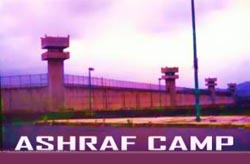
Today, the seventh convoy of approximately 680 Camp Ashraf residents arrived safely at Camp Hurriya. This convoy represents the last major relocation of residents from former Camp Ashraf to Camp Hurriya and marks a significant milestone in efforts to achieve a sustainable humanitarian solution to this issue. Over the coming weeks, the small group temporarily remaining at former Camp Ashraf will address residual issues and then also move to Camp Hurriya.

The United States appreciates the efforts of the Government of Iraq to accommodate both security and humanitarian concerns throughout this process, including the peaceful and orderly closure of former Camp Ashraf and relocation of its residents to Camp Hurriya. We count on Iraq’s continued adherence to the December 25, 2011 Memorandum of Understanding (MOU) with the United Nations that provides a path for the safe relocation of former Ashraf residents out of Iraq.

We welcome the cooperation by the former Ashraf residents in this relocation and look forward to their continued participation in the process set forth in the MOU. Additionally, we are grateful for the work of the United Nations Assistance Mission in Iraq and United Nations High Commissioner for Refugees, whose personnel have achieved much under challenging circumstances.

The United States will continue to support those efforts and, working with the United Nations and our partners in the international community, turn our attention to supporting the permanent relocation of the residents from Iraq.

September 18, 2012 0 comments
FacebookTwitterPinterestWhatsappTelegramSkypeEmail
The MEK Expulsion from Iraq

Last group of MKO terrorists relocated

The Iraqi government has announced the relocation of MKO terrorist group members. The relocation comes according to an agreement signed between Iraq and the UN to evacuate the camp and hand it over to the Iraqi authorities.

The Iraqi government has announced that 680 members of the terrorist Mujahedin-e Khalq Organization (MKO) have been moved from their original residence in the eastern province of Diyala to a new camp near the Iraqi capital of Baghdad.

Diyala provincial officials said the seventh group of the MKO terrorists was transferred from Camp New Iraq, formerly known as Camp Ashraf situated about 120 kilometers west of the border with Iran.

The sixth convoy of about 400 residents of Camp Ashraf was moved to another camp on August 29.

Diyala’s Police Chief stated that the remaining 168 MKO members will be relocated very soon, he further added that the MKO members who are in Iraqi wanted list for committing Humanitarian crimes against civilians will be rechecked in their new camp in Baghdad.

The spokesperson of Diyala’s headquarter said that the relocation of the MKO members has been implemented according to an agreement between the Iraqi government and the UN and under the supervision of the UN representatives in Iraq.

The MKO members fled to Iraq in 1986, where they enjoyed the support of Iraq’s executed dictator Saddam Hussein, and set up their camp near the Iranian border.

The group is also known to have cooperated with Saddam Hussein in suppressing the 1991 uprisings in southern Iraq and carrying out the massacre of Iraqi Kurds.

The MKO has carried out numerous acts of violence against Iranian civilians and government officials.
Download Last group of MKO terrorists relocated

September 17, 2012 0 comments
FacebookTwitterPinterestWhatsappTelegramSkypeEmail
Iran

Iran files complaints against MKO leaders

Iran’s Ambassador to Iraq Hassan Danaeifard says Tehran has filed lawsuits with Iraqi courts against the leaders of the terrorist Mujahedin-e Khalq Organization (MKO). Iran files complaints against MKO leaders in Iraq

More than 145 complaints have been filed in Iraq against the MKO terrorist group and they all must be dealt with in the courts, Danaeifard said on Saturday.

He added that the MKO had been residing in Camp Ashraf for 27 years and used the base to carry out terrorist attacks and kill nearly 12000 innocent Iranian people.

“Many legal complaints have been filed against the MKO within Iraq as well,” the Iranian ambassador added.

“The MKO members along with the forces of [former Iraqi dictator] Saddam [Hussein] massacred the Iraqi people and now the victims’ families want their complaints addressed,” Danaeifard said.

The MKO fled to Iraq in 1986, where it enjoyed the support of Iraq’s executed dictator Saddam Hussein, and set up its camp near the Iranian border.

In December 2011, the United Nations and Baghdad agreed to relocate some 3,000 MKO members from Camp New Iraq, formerly known as Camp Ashraf, in Diyala Province to Camp Liberty, a former US military base near Baghdad International Airport.

The group is also known to have cooperated with Saddam in suppressing the 1991 uprisings in southern Iraq and carrying out the massacre of Iraqi Kurds.

The MKO has carried out numerous acts of violence against Iranian civilians and government officials.

September 17, 2012 0 comments
FacebookTwitterPinterestWhatsappTelegramSkypeEmail
The MEK Expulsion from Iraq

Iraq to expel MKO members from its soil

Iraq to expel MKO member expell MKO members from Iraqi territory
Iraq to expel MKO members from its soil

September 17, 2012 0 comments
FacebookTwitterPinterestWhatsappTelegramSkypeEmail
Mujahedin Khalq; A proxy force

MEK using boldfaced names in bid to get off terror list

Among the foreign countries and overseas organizations that hire people to advocate for them in ‎Washington, D.C., one doesn’t expect to find a group that’s listed on the U.S. government’s ‎rosterMEK using boldfaced names in bid to get off terror list of foreign terrorists. But the Mujahedin e-Khalq — a cult-like Iranian group whose killing ‎of U.S. officials landed it on the terrorist list in ‎‏1997‏‎ — has been paying hundreds of thousands ‎of dollars to a high-profile team of former Members of Congress, political notables and ex-‎administration officials as part of its push to get itself removed from that very list.‎

Indeed, over the past two years, boldface names such as former New York Mayor Rudy Giuliani, ‎former Attorney General Michael Mukasey, former Democratic National Committee Chairman ‎Howard Dean and retired Gen. James Jones, who was President Barack Obama’s first national ‎security adviser, have been paid as much as ‎‏$30,000‏‎ a speech to praise the MEK as a democratic ‎opponent of the regime in Tehran. Convinced of the group’s current commitment to human ‎rights, these and other luminaries rarely mention its assassinations of U.S. military advisers before ‎the ‎‏1979‏‎ Islamic revolution in Iran and its alliance with Iraqi dictator Saddam Hussein against ‎Tehran afterward.‎

‎“There is one organization and one alone that stands for immediate democratic change in Iran, ‎and that is the MEK,” Mukasey told a Paris rally a year ago. Others who have spoken in support ‎of the group at events in Washington, Brussels, London and Berlin are Andrew Card, who was ‎President George W. Bush’s chief of staff for five years; Anita McBride, a chief of staff to first ‎lady Laura Bush; former State Department Director of Policy Planning Mitchell Reiss and former ‎Homeland Security Secretary Tom Ridge.‎

‎“We’re familiar with that passage ‘life, liberty and the pursuit of happiness,’” Ridge said at a ‎Washington event last July. “That is what the MEK stands for.”‎

It is illegal to provide direct assistance to terrorist groups. But those making speeches on behalf ‎of the MEK are booked and paid by speakers’ bureaus, which in turn are paid by MEK ‎supporters in the United States, who get their money from sources outside the United States.‎

The group enjoys support from Republicans and Democrats in the United States, and from Israel ‎and Saudi Arabia. Some critics of the MEK have compared the group’s lobbying effort to the ‎campaign for legitimacy by Ahmed Chalabi, an Iraqi Shiite who won the support of the Bush ‎administration and many in Congress as the leader of the democratic opposition to Hussein. ‎Chalabi helped spread what turned out to be false stories of the dictator’s nuclear weapons ‎program, which Bush used to justify the ‎‏2003‏‎ invasion of Iraq.‎

The MEK’s removal from the terrorist list would give the group greater legitimacy and permit its ‎members to raise funds openly in the United States after years of legally questionable fundraising ‎by supporters and front groups. And the two-year lobbying campaign may be bearing fruit. Last ‎month, the Obama administration took the first preliminary steps, behind the scenes, toward ‎delisting the MEK. The State Department is said to favor the move on the condition that the ‎group — which says it has renounced violence — evacuates a base in Iraq that it once used for ‎cross-border raids into Iran. Secretary of State Hillary Rodham Clinton is expected to make a ‎decision after the last of some ‎‏3,400‏‎ residents of the base, called Camp Ashraf, relocate to a new ‎transit camp at Baghdad’s main airport.‎

But experts on Iran warn that doing what the MEK wants could have serious repercussions. ‎Delisting the group would anger the FBI, which says the MEK was planning terrorist attacks ‎long after its stated renunciation of violence. Indeed, many Iran experts believe the recent spate ‎of assassinations of Iranian nuclear scientists was carried out by MEK operatives working for ‎Israel. Delisting would also complicate negotiations over Iran’s nuclear program among six major ‎powers and Tehran, which also regards the MEK as a terrorist organization. [..]

A History of Violence

The Mujahedin e-Khalq (in English, the People’s Holy Warriors) was founded in ‎‏1963‏‎ in Iran, ‎mixing Islam with communist ideology and calling for the violent overthrow of the country’s ‎pro-American leader, Shah Mohammed Reza Pahlavi. From ‎‏1973‏‎ to ‎‏1978‏‎, the group claimed ‎responsibility for the killings of six U.S. military advisers and an American oil executive in the ‎country. The group also played a major role in the infamous November ‎‏1979‏‎ seizure of the ‎American Embassy in Tehran, repeatedly calling for the execution of the hostages during the ‎subsequent ‎‏14‏‎-month ordeal.‎

But after the revolution, the group fell out with Iranian spiritual leader Ayatollah Ruhollah ‎Khomeini. In ‎‏1981‏‎, Khomeini banned the group, which fled to Iraq. The MEK then formed an ‎alliance with Hussein, who provided the group with weapons and a military base at Camp ‎Ashraf, north of Baghdad.‎

From there, the MEK staged deadly raids across the border during the ‎‏1980-1988‏‎ Iraq-Iran war, ‎claiming credit for killing hundreds of Iranians, as well as a series of violent attacks on Iranian ‎diplomats overseas. In one MEK bombing, Iran’s current supreme leader, Ayatollah Ali ‎Khamenei, permanently lost the use of his right arm. Hussein also used MEK forces to help crush ‎the Iraqi Kurdish uprising after the ‎‏1991‏‎ Persian Gulf War.‎

When U.S. forces invaded and occupied Iraq in ‎‏2003‏‎, Camp Ashraf came under their control. ‎The MEK’s Paris-based leaders, Massoud and Maryam Rajavi, who had renounced violence in ‎‏2001‏‎, ordered their followers in Iraq to surrender their weapons. But a ‎‏2004‏‎ FBI report said ‎wiretaps of MEK members in Los Angeles, Paris and Berlin determined that “the MEK is ‎currently actively involved in planning and executing acts of terrorism.”‎

Former MEK members have described the group as a cult that promotes unquestioning obedience ‎to the Rajavis. They say the group demands celibacy, takes away members’ children and ‎pressures couples to divorce so they can devote their lives to the MEK. In ‎‏2003‏‎, several members ‎of the group self-immolated to protest the arrest of the Rajavis, who were quickly released. A ‎‏2009‏‎ report prepared by the RAND Corp. for the Pentagon said “nearly ‎‏70‏‎ percent of the MEK ‎population at Camp Ashraf have been recruited through deception and kept there against their ‎will.”‎

The group earned some notoriety in ‎‏2005‏‎ when it claimed credit for tipping off the United States ‎about Iran’s uranium enrichment activities at Natanz. But Iran experts say Israel, which has close ‎ties with the MEK, was the source of that information and used the group to disclose it. The ‎group’s purported role in uncovering part of Iran’s nuclear program and its public embrace of ‎secular democracy have earned it friends in Washington, particularly among neoconservatives ‎and security figures.‎

Those who have given paid speeches calling for the delisting of the MEK include former CIA ‎chiefs James Woolsey, Porter Goss and Michael Hayden, former U.N. ambassador John Bolton, ‎former FBI Director Louis Freeh, former Marine Commandant James Conway, and two former ‎chairmen of the Joint Chiefs of Staff, Peter Pace and Hugh Shelton. “The current Iranian regime ‎does not need to be modified, does not need to be changed. It does not need to do anything but ‎be replaced. And it needs to be replaced by the resistance movement led by the MEK,” Shelton ‎told the Paris rally.‎

The MEK’s lobbying campaign has also attracted a growing number of senior Democratic ‎figures. In addition to Dean, paid speakers include Lee Hamilton, a former Democratic ‎Representative from Indiana and former co-chairman of the Sept. ‎‏11‏‎ commission, former ‎Pennsylvania Gov. Ed Rendell and former Energy Secretary Bill Richardson.‎

The campaign has already won bipartisan support in Congress. Backers of the MEK’s efforts ‎include both House Foreign Affairs Chairwoman Ileana Ros-Lehtinen (R-Fla.) and Bob Filner ‎‎(D-Calif.), the ranking member of the House Veterans’ Affairs Committee. “I know the MEK ‎supports a secular, democratic, non-nuclear Iran,” Filner told a BBC interviewer in April. “We ‎should be helping them in every way we can.”‎

Decision Looming

The State Department says any decision by Clinton on delisting the MEK now depends on the ‎willingness of Camp Ashraf’s remaining residents to depart. The United States is working with ‎the United Nations to resettle them in third countries. But around ‎‏1,200‏‎ MEK members at the ‎camp are resisting departure out of fear they’ll be returned to Iran.‎

‎Diplomats say a decision by Clinton to take the MEK off the list would not go down well in ‎Tehran. Iranian officials often accuse western governments of hypocrisy for sheltering MEK ‎members while condemning Iran’s support for Hezbollah and Hamas. A decision to delist might ‎cause Iran to harden its position on its nuclear program at the next round of negotiations with the ‎United States and five other world powers, which are pressing Iran to give up its stockpile of ‎‏20‏‎ ‎percent enriched uranium in return for lifting an embargo on civilian airline parts. Iran is ‎demanding a lifting of all sanctions in return for giving up the stockpile.‎

Karim Pakravan, an Iranian-born economist at DePaul University, notes that the MEK has ‎managed to portray itself to Congress as a legitimate Iranian opposition group “by an effective ‎campaign of propaganda and thinly disguised bribes to marquee political names on both sides of ‎the aisle.” Writing in an online forum on Iran, Pakravan says delisting would allow the MEK “to ‎use its massive foreign-financed war chest to try to crush all the other Iranian voices in the ‎United States and establish itself as THE democratic alternative to the Islamic Republic of Iran ‎in the eyes of a corrupt and naïve U.S. Congress. Such an outcome would be indeed a tragedy ‎for the democratic forces in Iran.” U.S. officials say Clinton will make her decision no more than ‎‏60‏‎ days after the last person is out of Camp Ashraf. But while a decision to keep the group on ‎the terrorist list is still possible, the secretary’s linking of her decision to the camp’s evacuation ‎makes it unlikely she will decide against delisting if the relocation is successful. The European ‎Union and Britain have delisted the MEK in recent years.‎

By Jonathan Broder ,CQ Roll Call Staff

September 16, 2012 0 comments
FacebookTwitterPinterestWhatsappTelegramSkypeEmail
Hassan Dai

Judge puts Terror goup lobbyist Hassan Daieoleslam on notice

Statement on Lawsuit Against Hassan Daieoleslam

Neo Cons, Mojahedin Khalq fail to Silence the Moderate Middle

Friday, September 14, 2012
By: NIAC Press Release

The court ruling yesterday in NIAC’s lawsuit against Seyyed Hassan Daieoleslam granted NIAC victory on its central demand, while falling short on other objectives.

NIAC brought the lawsuit against Daieoleslam in 2008 in response to his slander and defamation against the organization and its co-founder, Trita Parsi. Our objective with the lawsuit was two-fold.

First, to challenge Daieoleslam’s false accusations that NIAC lobbied for the Iranian government in court and force the defendant to prove his case or concede.

On this crucial issue, NIAC prevailed. Once in front of the court, Daieoleslam had the opportunity to make his case for the truth. Instead, he changed his tune and did not seek to argue that his accusations were correct and truthful. Instead he essentially abandoned the truth and instead argued that NIAC could not prove that he knew what he was saying was false, i,e malicious. By that, he conceded this very essential point and is on notice that what he is saying is false and therefore would be acting with malice if he continues to make the same false, baseless and defamatory allegations.

The defendant’s shift is understandable mindful of the fact that after reviewing thousands of NIAC emails and documents, he could not point to a single shred of evidence indicating that NIAC served as a lobby for the government in Iran.

The judge points to this as well in his ruling, writing that “Nothing in this opinion should be construed as a finding that defendant’s articles were true. Defendant did not move for summary judgment on that ground.”

The second objective with the lawsuit was to change the nature of the political culture in the Iranian-American community, away from the slander, defamation and character assassination campaigns favored by some, and towards a more open and truthful discourse. Our hope was that by challenging the maliciousness and defamation, the culture would shift in a democratic direction.

On this point, our efforts fell short. The standard was for us to prove that Daieoleslam acted with malice, that is, not just that he was not speaking the truth, but that he knew he wasn’t speaking the truth.

While we believe the evidence clearly showed that Daieoleslam knew he was lying, based on his systematic disregard for truth, neglect of readily available information that contradicted his conspiracy theories, declaration that he aimed to “destroy NIAC” in order to “bring down Obama,” as well as his support for the Mujahedin-e Khalq terrorist organization, the Judge felt this didn’t meet his standard and denied us the opportunity to take Daieoleslam in front of a jury and help democratize the political culture in the Iranian-American community.

While we regret that such a milestone could not be achieved for the Iranian-American community, we are content that in the court of law he could not and did not defend his false accusations.

In regards to cost-sharing of the expense of the discovery, we disagree with the court’s ruling and retain the option to challenge and appeal the decision.

These past four years have been challenging and burdensome. NIAC is a small organization, with a small budget and a small legal team. Our only card was that we knew – and we proved – that truth was on our side. Daieoleslam, on the other hand, had the support of a broad network of well-funded pro-war figures. He was represented by Sidley Austin, one of the largest law firms in the world and the main counsel on his legal team was President George W. Bush’s lawyer in the White House.

But precisely because he didn’t have truth on his side, Daieoleslam tried to shift the focus of the court away from the central charge and instead overwhelm NIAC with legal expenses by filing an endless stream of motions.

The order of the judge also puts Daieoleslam on notice. While he claimed not to have known that what he was writing was false, he no longer can hide behind that excuse going forward. He is on notice and will pay the consequences of further defamation.

In the past ten years, NIAC has helped transform the Iranian-American community from being politically apathetic and vulnerable to becoming dynamic and in ownership of their own destiny. We have helped the community stand up against the voices of war, stand up for their rights in face of discrimination, and stand up for the values that make America strong. NIAC will continue to serve the interest of the Iranian-American community, particularly at this moment when the risk of war is increasing, repression in Iran is intensifying and the suffering of the Iranian people is reaching intolerable levels.

September 16, 2012 0 comments
FacebookTwitterPinterestWhatsappTelegramSkypeEmail
MEK Camp Ashraf

The remaining MKO members moved from Camp Ashraf

Iraqi sources say 680 members of the terrorist Mujahedin-e Khalq Organization (MKO) have been moved from their original residence in the eastern province of Diyala to a new camp near the Iraqi capital of Baghdad. 680 MKO members moved from Camp Ashraf to new camp in Iraq

Diyala provincial officials said the seventh group of the MKO terrorists was transferred from Camp New Iraq, formerly known as Camp Ashraf and situated about 120 kilometers (74 miles) west of the border with Iran, to Camp Liberty on Saturday.

The sixth convoy of about 400 residents of Camp Ashraf was moved to Camp Liberty on August 29.

The MKO fled to Iraq in 1986, where it enjoyed the support of Iraq’s executed dictator Saddam Hussein, and set up its camp near the Iranian border.

The group is also known to have cooperated with Saddam Hussein in suppressing the 1991 uprisings in southern Iraq and carrying out the massacre of Iraqi Kurds.

The MKO has carried out numerous acts of violence against Iranian civilians and government officials.

September 16, 2012 0 comments
FacebookTwitterPinterestWhatsappTelegramSkypeEmail
Mujahedin Khalq Organization as a terrorist group

Terror In The Name Of Democracy: Terrorism Continues

From the initiation of MKO’s armed warfare in mid-1981 until the end of the same year, the death toll of its terrorist operations rose to 338

A Point to Underline

An overlooked point increasing the complexity of the terrorist bombing on August 30 is that majority of the authorities having a role in undertaking investigations into the case and seeking prosecution of the elements have become the victims of terrorism themselves. Just after the explosion, the presidential council comprising Hojjat-al-Islam Rafsanjani and the Chief Justice Abdolkarim Moussavi Ardebili appointed the Prosecutor General Ayatollah Rabbani Amlashi to investigate the case. A few days later, he announced the result; the terrorist perpetrator had been identified to be Massooud Keshmiri. An assassination attempt was conducted on Ayatollah Amlashi by MKO and although he escaped the death, he was later assassinated by another violent group.

Ayatollah Ali Qodussi and Asaddullah Lajevardi were other involved authorities that were targeted by MKO. Ayatollah Ali Qodussi, the attorney general, was leading an investigation into the explosion at prime minister’s office. Just 6 days after the explosion, on 5 September, an incendiary bomb blasted at his office that led to his death. Asaddullah Lajevardi, a former director of Tehran’s Evin prison and public prosecutor, was assassinated at a time when he had been retired. But he was targeted by MKO because he was suggesting and engaged in a struggle to reopen the case of MKO’s bombing atrocities

A Brief Report of MKO’s terrorist Operations in 1981

From the initiation of MKO’s armed warfare in mid-1981 until the end of the same year, the death toll of its terrorist operations rose to 338 according to its own published reports. The operations can be classified under three categories: 1. Bomb attacks against official and public targets and assassinations of authorities, 2. Orchestrating violent and riotous demonstrations, 3. Targeting civilians. The followings are a record of MKO’s major and significant terrorist and violent activities within a 6 month span.

1. Bomb attacks against official and public targets and assassinations of authorities

June 1981: Bomb blast at Qom railway station left more than 50 casualties with 7 killed.

June 1981: A bomb was blasted in an attempt to assassinate Ayatollah Khamenei, Tehran’s leader of Friday Prayer at the time.

June 28, 1981: Bomb explosion at IRP headquarters killed nearly 74 high-ranking officials including Ayatollah Beheshti, the leader.

July 6, 1981: Assassination of chief prosecutor in Gilan Northern province.

August 30, 1981: Bomb explosion at prime minister’ office, killed the new president, Ali Rajai, and his Prime Minister, Mohammad Javad Bahonar.

August 1981: Assassination of Hassan Ayat, a member of Assembly of Experts for Constitution and a Member of Parliament.

September 1981: Bomb explosion at the central building of the Prosecutor General of the Revolution killed Ayatollah Ali Qodussi

September 1981: Suicide attack targeted Ayatollah Seyyed Asadollah Madani, a senior cleric, in Tabriz.

A suicide attack targeted seyyed Abdolkarim Hashemi Nejad, IRP leader, in Khorasan province.

October 1981: A bomb blast on Nassir Khusrow Street in Tehran crashed down a hotel and many houses and shops and many civilians were killed.

A bomb explosion on Khayyam Avenue in Tehran killed 20 residents and left many injured.

November 1981: MKO detonated a bomb on Vali Asr Avenue in front of the Quds department store leading 4 people to their death.

On November 24 two bombs exploded at Tehran’s Railway Station killing three.

December 1981: A suicide attack targeted Ayatollah Abdul-Hussein Dastgheib, a senior cleric in Shiraz and a number of other civilians.

2. Orchestrating violent and riotous demonstrations

June 20 1981: MKO demonstrators set cars on fire and attacked civilians in downtown Tehran. At least 30 were reported killed and 200 injured from the sides of the demonstrators. Similar demonstrations were reported from other Iranian cities.

August and September 1981:

– 30 Mhjahedin demonstrators set tires on fire in Gurgan St. in Tehran.

– 25 Mhjahedin demonstrators set tires and a bus on fire and threw hand-grenades in Tehran-No St. in Tehran

– Around 80 Mhjahedin demonstrators set tires on fire, threw Molotov and fired guns in Kamali St. in Tehran

– Around 70 Mhjahedin demonstrators set two buses on fire and threw hand-grenades that left 10 casualties in Vali-Asr St. in Tehran

– 60 Mhjahedin demonstrators disturbed the order and killed two civilians in Azarbayjan St. in Tehran

– Around 60 Mhjahedin demonstrators threw Molotov at the banks and stores and exchanged fire guns in a clash with guards in Behnudi St. in Tehran

– Around 40 Mhjahedin demonstrators set tires on fire and threw Molotov in Sina St. in Tehran

– Around 40 Mhjahedin demonstrators fired guns at people and police forces in Behnudi St. in Tehran

– Around 100 Mhjahedin demonstrators set two buses and some tires on fire and threw Molotov at a gas station in Vali-Asr St. in Tehran

– 12 Mhjahedin demonstrators threw Molotov at a greengrocer in Behnudi St. in Tehran

– 27 September: Many armed Mhjahedin demonstrators set a few buses on fire and machine-gunned civilians killing and injuring them in downtown Tehran.

3. Targeting civilians

The civilians who were targets of MKO’s terrorist atrocities were of a variety of classes; teachers, merchants, drivers, workers and the like. Majority of them were targeted and attacked on charges of being a supporter of the Islamic Republic, having beard, and resisting against the perpetrators’ demands.

September 15, 2012 0 comments
FacebookTwitterPinterestWhatsappTelegramSkypeEmail
Mujahedin Khalq Organization as a terrorist group

48 Years After Formation of MKO

MKO lacks the least political support among the Iranian people and opposition

This September, Mojahedin Khalq Organization (MKO, MEK, PMOI, NCR, NLA) commemorates 48th anniversary of its formation. Now on the list of designated terrorist organizations, there is no denying that it shares many characteristics and similar terrorist and violent tactics employed by any of the same groups and entities on the list. However, hardly any of other terrorist groups can be identified even close to it in utilizing tactics in pursuit of overall strategies that have oftentimes changed in degree and frequency; a make-believe shift from an absolute violent to a presumably pro-democracy group, an opportunistic and ambivalent shift from the ultra-left to ultra-right, and turning into an enthusiastic pro-imperialist after being initially and inherently recognized an ardent anti-imperialist.

As an opposition lasting for nearly half a century in Iranian temporary history, MKO is known to have had the most destructive impact on other campaigning freedom-seeking and ideological groups. In contrast to genuine sincerity and righteous causes of the early founders of the organization, as many believe, the subsequent unsavory assumption of power as the leader by Massoud Rajavi actually led the organization to a different path of deviation that so far has challenged it. It does not mean that the early founders like Muhammad Hanifnejad were totally free from mistakes and errors in decision makings that were somehow a natural impact of other active political, ideological and mainly Marxist groups’ activities, but Rajavi’s persistence to walk on a more tortuous path of mistakes led many to doubt the honesty and veracity of the early founders in their claimed campaign.

Benefiting a wide range of public support for its ideological and religious believes MKO was holding at the beginning, it did not take long, only a decade later, for the group to be totally divested of majority of its publically reputed figures who were superseded by pro-leftists. In fact, MKO has failed to remain an un-diverted group and has often been realigning itself with leftist ideologies and has undergone a thorough change both in its membership make up and political interaction with the world outside. Now nearly after five decades of its formation, MKO is facing strong opposition from a variety of other opposition groups that are drawing firm lines of demarcation between genuine and sham ideological, political and strategic policies practiced by MKO and themselves. Here are some examples of these oppositions’ perception of MKO.

– A front of opposition believes that the formation of MKO was engineered by under-the-curtain hands to carry through imperialist, freemason and capitalist ends and to confront genuine Islamic movements. Based on questionable, historical analyses and evidences, this front argues that the formation of MKO followed a tactic of forming a trend at the expense of Islamic movements but at the service of imperialism interests.

– There are others who are of the opinion that MKO was principally a devoted Islamic group but the strong impact of Marxist movements on Iranian campaigning intelligentsia at the time impelled the leaders to nest fallacies in reasoning to make impetuous decisions. These seriously made miscalculations are known to be the root of the consequent organizational and eclectic deviations lasted so far.

– Another group believes that surviving intellectuals of the early Mojahedin like Taqi Shahram and Bahram Aram, who had concealed their Marxist inclination as they joined the organization, were the subset to lead the organization to a full derailment. They are said to have established close collaboration with SAVAK, Pahlavi’s Intelligence Agency, and CIA to deflect the organization from its main path by open declaration of conversion to Marxism when the top leaders were arrested and executed.

– A fourth group observes that transformation of MKO into a deviated terrorist cult is the result of Massoud Rajavi’s hegemonic and ideological leadership. Rajavi’s plotted ideological revolution was in itself a result of the organization’s failures during 1981-1985 and a process that turned to be the major cause behind all deviations and failures of organization.

– The end of the bipolar order is generally associated with the collapse of the USSR that had its great impact on revolutionary Marxism. As a result, majority of left-oriented groups building their struggle on revolutionary and violent underground militarism encountered shocking failed strategies. The claiming revolutionary MKO was not an exception; compelled to undergo a change, MKO is presumed a pro-democratic, non-violent group with no actual reformation of its old infrastructure.

– And a last group of commentators conclude that MKO is considered a good case for historical studies concerning idealist, revolutionary and militant groups turning into non-democratic cults acting under a pro-democratic guise.

Frankly speaking, no campaigning group can be found in Iranian contemporary history so controversial as MKO. The group’s blind assassinations and bloody terrorist operations under a false flag of freedom and democracy repelled Iranian people and made MKO disappointed of availing itself of the determinative public element inside the country to face absolute public rejection. The supporters of a once claiming revolutionary group at the moment are neither the internal or the external oppositions but state-sponsored warmonger Western parties and a few retired and former Western personalities in need of MKO’s money.

September 15, 2012 0 comments
FacebookTwitterPinterestWhatsappTelegramSkypeEmail
Iraq

Iraqi government opens refugee camp to diplomats

Iraqi government opens refugee camp to diplomats, hoping to resettle Iranian exiles elsewhere

Iraq offered foreign diplomats on Tuesday a rare glimpse at a camp that is the new temporary Iraqi government opens refugee camp to diplomatshome of an Iranian exile opposition group that has a long-running feud with Baghdad, winning from the envoys cautious praise of the conditions there.

The Mujahedeen-e-Khalq opposed the move to Camp Liberty, a former U.S. base on the outskirts of Baghdad, from another camp in Iraq. They say it is an intolerable prison. Iraq says that it is up to international standards.

The back-and-forth bickering feeds into a wider, decade-long dispute between the MEK and Iraq over the fate of the former guerrilla movement. Iraq considers the MEK to be terrorists and wants them to leave the country. The MEK, also called the People’s Mujahedeen of Iran, wants to move back to their old home at Camp Ashraf northeast of the capital.

Foreign diplomats who visited the dusty complex of former U.S housing containers described the conditions as acceptable. Some said the conditions there looked good compared to other refugee camps.

“I wouldn’t choose to live here, but when we talk about refugees … and what their living conditions are all over the world, this should be considered exceptional,” said Ramon Molina, the Spanish Embassy’s deputy chief of mission.

“It is not very good, but it is not bad also, said Pakistani diplomat Saif Khwaja. “The people who are living here are not from Iraq, and the Iraqi government is bearing the burden of these people.”

The MEK complains they are not allowed to leave and they live without reliable electricity, air condition or water supplies.

“This is not a place to live in. This is not a camp. This is only a prison,” said Liberty resident Homa Roboby, 28. “They are trying to make a life here that is intolerable.”

The MEK is an opposition group to Tehran’s clerical regime. Several thousand of its members were given sanctuary in Iraq by dictator Saddam Hussein. But the Shiite-led government in Baghdad, which is bolstering its ties with Iran, says its members are living in Iraq illegally.

The group is also designated as a terrorist organization by the United States but Washington is currently weighing whether to take them off the list — a decision that will be made in upcoming weeks.

Camp Liberty was designed as a compromise way-station for the U.N. to speed the exiles out of Iraq peacefully. Iraqi security forces have launched two deadly raids since 2009 on the MEK’s longtime home at Camp Ashraf, an inclusive mini-city that the exiles never wanted to leave.

At Liberty, the exiles live in cramped portable housing units left behind by the U.S. military, which occupied the base until it withdrew its troops from Iraq last December. They receive medical attention in a former first aid station. And they eat in a former U.S. dining hall complete with flat-screen TVs that looks very much like how the military left it — with the addition of fresh flowers on tables.

A small patch of yellow sunflowers was planted outside the dining hall, and twinkly lights were strung around posts and from the ceilings in an attempt to brighten up an area that has been dingy if sufficient for inhabitants long before the MEK arrived.

Most of the exiles wore loose clothes in khaki and other muted solid colors, and swarmed the visitors with their grievances. “Message fully understood,” one British diplomat said repeatedly.

The Associated Press and Iraq’s state-run TV were also on the tour in the first time the government has allowed journalists inside Liberty since the MEK began moving there earlier this year.

The exiles’ local leader, Abbas Davari, called the camp “dilapidated” and complained that the Iraqi government has delayed the MEK from moving generators to Liberty from Ashraf, and stymied construction of a new water treatment system.

Gorges Bakoos, who is overseeing the issue for the government, said officials are trying to solve both problems. In the meantime, he said, each exile receives at least 200 liters of water every day, above the U.N. standard of 120 daily liters per refugee. And he said residents already get electricity around the clock — unlike most Iraqis who only get a few hours each day.

The exiles denied that. “In front of you, they say one thing, but once you go — no way,” said Youssef Mahoozi, 51, who lived at Ashraf for 25 years before moving to Liberty six months ago.

The next group of exiles will move within days from Ashraf to Liberty, where U.N. will process their refugee applications and try to find counties to accept them. After that, an estimated 200 will remain at Ashraf for a few more weeks as they try to sell property left behind to traders.

The U.N. has interviewed about 90 Liberty residents but has yet to find any countries that will take them. “We are in dire need of countries coming forward to offer their help,” Gyorgy Busztin, deputy U.N. envoy to Iraq, told the diplomats.

BY Lara Jakes of AP

September 13, 2012 0 comments
FacebookTwitterPinterestWhatsappTelegramSkypeEmail
Newer Posts
Older Posts

Recent Posts

  • A Criterion for Proving the Violent Nature of the MEK

    December 31, 2025
  • Rebranding, too Difficult for the MEK

    December 27, 2025
  • The black box of the torture camps of the MEK

    December 24, 2025
  • Pregnancy was taboo in the MEK

    December 22, 2025
  • MEPs who lack awareness about the MEK’s nature

    December 20, 2025
  • Facebook
  • Twitter
  • Instagram
  • Youtube

© 2003 - 2025 NEJAT Society . All Rights Reserved. NejatNGO.org


Back To Top
Nejat Society
  • Home
  • Articles
  • Media
    • Cartoons
    • NewsPics
    • Photo Gallery
    • Videos
  • Publications
    • Books
    • Nejat NewsLetter
    • Pars Brief
  • About Us
  • Contact us
  • Editions
    • عربي
    • فارسی
    • Shqip