Nejat Society
  • Home
  • Articles
  • Media
    • Cartoons
    • NewsPics
    • Photo Gallery
    • Videos
  • Publications
    • Books
    • Nejat NewsLetter
    • Pars Brief
  • About Us
  • Contact us
  • Editions
    • عربي
    • فارسی
    • Shqip
Nejat Society
Nejat Society
  • Home
  • Articles
  • Media
    • Cartoons
    • NewsPics
    • Photo Gallery
    • Videos
  • Publications
    • Books
    • Nejat NewsLetter
    • Pars Brief
  • About Us
  • Contact us
  • Editions
    • عربي
    • فارسی
    • Shqip
© 2003 - 2024 NEJAT Society. nejatngo.org
Mujahedin Khalq; A proxy force

Analyst: MKO terrorists work with Mossad

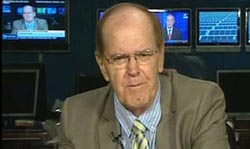
The Mujahedin-e Khalq Organization (MKO), which has often collaborated with the Israeli spy agency ‎Mossad against the interests of the Islamic Republic, has the blood of thousands of Kamel Wazne, political analyst from Beirutinnocent Iranians ‎on their hands, says an analyst.‎

The comment comes after Washington formally removed the MKO from its list of terrorist ‎organizations on September ‎‏28‏‎, one week after US Secretary of State Hillary Clinton sent the US ‎Congress a classified communication about the move.‎

The group had been formally described by the US State Department as a "foreign terrorist ‎organization” for the past ‎‏15‏‎ years.‎

The Bush administration had claimed that one of its reasons for attacking Iraq in ‎‏2003‏‎ was Saddam ‎Hussein’s support for "international terrorism," including Iraq’s "sheltering" of the MKO as a major ‎example. ‎

Iran’s Foreign Ministry said in a September ‎‏29‏‎ statement that Tehran strongly condemns Washington’s ‎irresponsible move, which is against the international and legal commitments of the US.‎

The Islamic Republic holds the US government responsible for the terrorist acts carried out by the ‎MKO in the past, present and the future, the statement added.‎

Press TV has conducted an interview with Kamel Wazne, political analyst from Beirut to further discuss ‎the development.‎

The following is a rough transcription of the interview.‎

Press TV: I wanted to get your reaction to the removal of the MKO from this terror black list.‎

Wazne: Well, this is the United States, at best, supporting a terrorist organization when it feels it is in ‎the interests of the United States and its agenda.‎

There is no mistake that the Mujahedin-e Khalq organization, their hands are filled with blood from ‎innocent people in Iran.‎

They were involved in bombing the headquarters of the Iranian parliament. They assassinated the ‎previous president of Iran. They actually bombed industrial facilities inside Iran.‎

They actually worked with intelligence, especially with the Israeli Mossad against the interests of ‎Iranians.‎

They have a hand in the latest assassination against Iranian scientists. And they fought with Saddam ‎Hussein against their own people, and they invaded a part of Iran at the end of the, you know, ‎cessation of war between Iran and Iraq.‎

So there is a lot of blood on their hands. Thousands of innocent Iranians were murdered at the hands ‎of this organization.‎

‎ In the end, the United States listed [them] as a terrorist organization because the fact and merit of ‎the evidence indicated they actually killed innocent people. But today, [with] politics, as we see from ‎the Obama administration and from the Secretary of State, it is removed from the terrorist ‎organization. ‎

But make no mistake, this organization, all the evidence, all the circumstances, the verdict rendered in ‎the court system whether in the United States or around the world, they know exactly these entities, ‎the blood on their hands. It is a shame on the United States.‎

Press TV: As you mentioned the MKO has a lot of blood on its hands, so what is the US plan with ‎aligning itself with such a group?‎

Wazne: The United States is actually aligning itself with al-Qaeda because it fights with the Syrians. I ‎think it allies itself with the Mujahedin-e Khalq because they are against the Iranians and the Iranian ‎people.‎

‎ For that reason, America goes with the devil for their own political purpose because they have no ‎integrity and no dignity, and they stand against everything that they proclaim they fight for.‎

When they say they fight terrorism, now they actually are in bed with the same terrorist organization ‎that they said they fought with al-Qaeda or the Mujahedin-e Khalq; it is because they are against the ‎Iranian people.‎

The crime that the Mujahedin-e Khalq is committing against the Iranian people, I think the Americans ‎are doing indirectly through economic sanctions because economic sanctions are a crime — as a ‎terrorist organization.‎

October 1, 2012 0 comments
FacebookTwitterPinterestWhatsappTelegramSkypeEmail
Mujahedin Khalq; A proxy force

MKO terrorists masked as freedom fighters to pressure Iran

The United States arrays “yesterday’s terrorist” anti-Iran Mujahedin-e Khalq Organization (MKO) and ‎honors them as “today’s freedom fighters” to use them against the Islamic Republic, says Franklin Lamban analyst.‎

‎On September ‎‏28‏‎, the terrorist group was taken off the US State Department’s blacklist a week after ‎US Secretary of State Hillary Clinton sent the US Congress a classified communication about the move.‎

The US claimed that the decision was made because the MKO has not carried out any acts of terror ‎over the past ‎‏10‏‎ years.‎

Meanwhile, a September ‎‏21‏‎ New York Times article reaffirms that the support of prominent US ‎politicians for the MKO organization has undoubtedly played a role in the de-listing of the MKO ‎organization as a terrorist group.‎

The article said the long list of high-ranking US politicians supporting the MKO includes: former CIA ‎Directors, R. James Woolsey and Porter J. Goss; former FBI director Louis J. Freeh; former US President ‎George W. Bush’s homeland security secretary, Tom Ridge; Attorney General, Michael B. Mukasey; ‎and President Barack Obama’s first national security adviser, Gen. James L. Jones.‎

Many of MKO’s American supporters, yet not all, are said to have received fees of up to ‎‏15‏‎,‎‏000‏‎ to ‎‏30,000‏‎ dollars to give speeches to the group, in addition to travel expenses to attend MKO rallies in ‎Paris. The former Democratic governor of Pennsylvania, Edward G. Rendell, admitted in March that he ‎had received a total of ‎‏150,000‏‎ to ‎‏160,000‏‎ dollars, the US daily article added.‎

Press TV has conducted an interview with Beirut-based international lawyer and director of the ‎Americans Concerned for Middle East Peace movement, Franklin Lamb, to further shed light on the ‎issue.‎

Press TV: Mr. Lamb thanks for being with us. Let’s just first look at the statement that’s being given ‎out by the US State Department on its decision. It says that in view of the group’s public renunciation ‎of violence, the absence of confirmed acts of terrorism for more than a decade and their cooperation ‎in the closure of their paramilitary base in Iraq we’ve decided to delist them.‎

Now legally speaking at least the question is where is the issue of accountability for the crimes and the ‎terrorist activities that the group has carried out before these years that they haven’t carried out ‎terrorist activities according to the US?‎

Lamb: Yes, well let me just say that the rationale that you just iterated from the American government ‎is frankly nonsense. These aren’t the issues.‎

‎ The issue is as we saw a recall in Afghanistan, in Iraq, in Libya and now in Syria, yesterday’s terrorists ‎can be today’s freedom fighters even if they are going to be tomorrow’s terrorists. This is a thinly, ‎thinly disguised effort to ratchet up the pressure on Iran. I think that’s clear.‎

Even acknowledged sources in the US Congress what we can say is that the MEK has been I think well-‎tutored politically on how the American system works. Look who they’ve had endorse them: former ‎FBI director [Louis J.] Freeh, former head of Homeland Security Tom Ridge, Howard Dean of the ‎Democratic National Committee and five or six important members, former members of Congress.‎

What do these people have in common? They are out of office. They missed the government perks ‎and they’re paid ‎‏100‏‎ thousand dollars each by the MEK to give speeches. So it’s not much for them to ‎endorse this initiative which is aimed at opening up the American system to the MEK now based in ‎Paris.‎

‎ Count the days before their headquarters is in Washington. Count the days before the Zionist lobby ‎joins them and funds them and the American intelligence agency supports them in order to do what?‎

‎ In order to create a hopeful, viable opposition to the government of the Islamic Republic in time for ‎next year’s election. These will be billed to the public and the world as the new Jeffersonian ‎Democrats of the Middle East. Whatever it takes to dress them up in respectability. So that’s what we ‎see here. Forget history. Forget terrorism. Forget who killed who on American soil that used to stand ‎for something. We have a political agenda. We want them. We need them.‎

We’re going to squeeze Iran in the coming months. I think we’ll bear this out.‎

Press TV: You say the issue of cooperation between the MKO and the US administration. We know for ‎one that following the fall of Saddam, there was cooperation between the US and the members of ‎this group when they were stationed in Camp Ashraf in Iraq. So what you’re concluding is that this is a ‎continuation of that cooperation but now legally acceptable at least for the United States.‎

Lamb: Absolutely, that was ‎‏30‏‎ years ago that we supported the MEK as part of our support of Saddam ‎against Iran. That’s three decades ago. We weren’t all that interested in this group until recently we ‎see an opportunity, another layer of sanction if you will, another way to pressure the regime, hoping ‎that it will implode in some way. I don’t know that we have a big future with the MEK but they’re very ‎useful instrument today.‎

October 1, 2012 0 comments
FacebookTwitterPinterestWhatsappTelegramSkypeEmail
Mujahedin Khalq Organization

The MEK Lobby: Chumming with Terrorists No More

People’s Mujahedin of Iran (MEK)
last updated: September 27, 2012

Please note: IPS Right Web neither represents nor endorses any of the individuals or groups profiled on this site.

The People’s Mujahedin of Iran (Mojahedin-e Khalq-e Iran, or MEK) is an Islamic- and Marxist-inspired militant organization that advocates the overthrow of the Islamic Republic of Iran. The group was founded in 1963 as an armed guerrilla group after the Shah Mohammad Reza Pahlavi violently suppressed opposition to his regime.
Over the years, the group developed a track record of violent opposition to the Iranian regime—both against the monarchy and the Islamic government that succeeded it—and countries deemed supportive of it, including the United States. For years, the group was considered a proscribed terrorist organization by the United States. But on the heels of an aggressive and well-funded lobbying campaign supported by a bipartisan cast of high-profile former public officials, Secretary of State Hillary Clinton announced in September 2012 that she was removing the group from the State Department’s list of foreign terrorist organizations, where the MEK had been listed since 1997.[1]

The group’s origins are eccentric and its history tumultuous. According to the U.S. State Department: “The group participated in the 1979 Islamic Revolution that replaced the Shah with a Shiite Islamist regime led by Ayatollah Khomeini. However, the MEK’s ideology—a blend of Marxism, feminism, and Islamism—was at odds with the post-revolutionary government, and its original leadership was soon executed by the New regime. In 1981, the group was driven from its bases on the Iran-Iraq border and resettled in Paris, where it began supporting Iraq in its eight-year war against [Ayatollah] Khomeini’s Iran. In 1986, after France recognized the Iranian regime, the MEK moved its headquarters to Iraq, which facilitated its terrorist activities in Iran. Since 2003, roughly 3,400 MEK members have been encamped at Camp Ashraf in Iraq.”[2]

As of late 2012, most of the residents of Camp Ashraf had been relocated to another facility in Iraq to await resettlement in third countries. The MEK’s cooperation in the relocation—which had previously sparked concerns of a planned mass suicide by group members resistant to the move [3]—was reportedly a key factor in Clinton’s decision to delist the group.[4]

Because of the MEK’s cult-like organization under leader Maryam Rajavi, its support for Iraq in the Iran-Iraq war, and its participation in Saddam Hussein’s crackdowns on Iraqi Shiites and Kurds, the group has been described by the New York Times as “a repressive cult despised by most Iranians and Iraqis.”[5]

U.S. officials have recognized this reputation. “While they present themselves as a legitimate democratic group worthy of support, there is universal belief in the administration that they are a cult," one official told CNN after the decision was made to delist the group. "A de-listing is a sign of support or amnesia on our part as to what they have done and it does not mean we have suddenly changed our mind about their current behavior. We don’t forget who they were and we don’t think they are now who they claim to be, which is alternative to the current regime."[6]

Despite its murky reputation, MEK has presented itself to western backers as a popular and democratic Iranian opposition group that could lead the Islamic Republic to democracy—often even referring to Rajavi, who lives in exile in Paris and has never run for office in Iran, as the country’s “president-elect.”[7] [..]

Other analysts warned that the decision could cause U.S.-Iranian relations to deteriorate even further. “The decision will no doubt make the Iranian leadership even more distrustful of U.S. intentions regarding the future of Iran, particularly given the congressional support for the MEK to spearhead regime change,” wrote Iran expert Farideh Farhi. “Less trust will make compromise less likely, presumably a preferred outcome for the high profile supporters of the MEK in Congress and elsewhere.”[9]

Divisive Impact on U.S. Politics

The MEK has had a divisive impact in the United States. While it has garnered supporters from across the U.S. political landscape, it has also spurred negative reactions from representatives of nearly all political factions. Neoconservatives are a case in point. For example, after news agencies reported in early 2012 that the MEK—with support from Israel—had allegedly been involved in the assassination of Iranian scientists, a number of neoconservative mouthpieces hailed the group. The Ruport Murdoch-owned New York Post ran an editorial stating: “Were the MEK to play the critical role in derailing an Iranian bomb, it would be far more deserving of a Nobel Peace Prize than a certain president of the United States we could mention.”[10]

Similarly minded ideologues like Raymond Tanter, a member of the Committee on the President Danger, have called the MEK “the best source for intelligence on Iran’s potential violations of the nonproliferation regime,” arguing that delisting the group “would allow regime change to be on the table in Tehran.”[11] At a rally for the group in Paris, former New York Mayor Rudy Giuliani proclaimed, "Appeasement of dictators leads to war, destruction and the loss of human lives. For your organization to be described as a terrorist organization is just really a disgrace."[12]

On the other hand, many neoconservatives view the group with antipathy, largely because they think that an alliance with it is short-sighted with respect to the goal of achieving regime change in Iran. An example is Michael Rubin, who has been sharply critical of MEK supporters. Responding to the news about the MEK’s alleged role in assassinating Iranian scientists, Rubin wrote: “By utilizing the MEK—a group which Iranians view in the same way Americans see John Walker Lindh, the American convicted of aiding the Taliban—the Israelis risk winning some short-term gain at the tremendous expense of rallying Iranians around the regime’s flag. A far better strategy would be to facilitate regime change. Not only would the MEK be incapable of that mission, but involving them even cursorily would set the goal back years.”[13]

Mojahedin Khalq (MKO, MEK, Rajavi cult) continued terror campaign

Lobbying Campaign

Organizations sympathetic to MEK garnered an impressive array of establishment supporters inside Washington to speak in favor of delisting the group. The effort, according to the New York Times, “won the support of two former C.I.A. directors, R. James Woolsey and Porter J. Goss; a former F.B.I. director, Louis J. Freeh; a former attorney general, Michael B. Mukasey; President George W. Bush’s first homeland security chief, Tom Ridge; President Obama’s first national security adviser, Gen. James L. Jones; big-name Republicans like the former New York mayor Rudolph W. Giuliani and Democrats like the former Vermont governor Howard Dean; and even the former top counterterrorism official of the State Department, Dell L. Dailey.”[14] Mitchell Reiss, a top foreign policy advisor to Mitt Romney/Paul Ryan presidential campaign, also spoke on behalf of the group.[15]

One potential explanation for this diverse list of supporters are the large speaking fees the MEK network has offered to big-name public figures. “Your speech agent calls, and says you get $20,000 to speak for 20 minutes,” said a State Department official quoted by the Christian Science Monitor. “They will send a private jet, you get $25,000 more when you are done, and they will send a team to brief you on what to say.”[16] Pro-MEK individuals and organizations also reportedly donated thousands of dollars to the campaigns of several sitting members of Congress, including Reps. Ileana Ros-Lehtinen, Bob Filner, Ted Poe, Mike Rogers, and Dana Rohrabacher.[17]

Underlying MEK’s more mainstream backing has been a bedrock of support from foreign policy hawks. In addition to Woolsey and other former Bush administration officials, the group has enjoyed the avid backing of Iran hawks like former ambassador John Bolton and groups like the Iran Policy Committee (IPC), a right-wing U.S.-based outfit whose putative goal is “empowering Iranians for regime change.”

In a 2005 Iran policy paper, IPC placed the delisting of MEK at the forefront of its proposals for U.S. policy toward Iran. The "continued designation since 1997 of the main Iranian opposition group, Mujahedeen e-Khalq (MEK), as a foreign terrorist organization by the State Department assures Tehran that regime change is off the table,” wrote the report’s authors. “Removing the MEK’s terrorist designation would be a tangible signal to Tehran and to the Iranian people that a new option is implicitly on the table—regime change.”[18]

MEK’s critics have likened the organization’s advocacy campaign to that of the Iraqi National Congress (INC), an Iraqi exile group led by Ahmed Chalabi that worked to drum up U.S. support for an invasion of Iraq in the 1990s and early 2000s. By presenting itself to Western supporters as an Iraqi government-in-waiting, INC enabled Iraq hawks in the United States to claim that there was Iraqi support for the U.S. action. For Iran hawks, write Ali Fatemi and Karim Pakravan of the National Iranian American Council, “Maryam Rajavi, the MEK leader and self-proclaimed president of Iran, is their new Chalabi.”[19]

IPC in particular has embodied the link between pro-MEK groups and pro-INC groups. A 2010 investigation by the U.S. foreign policy blog LobeLog found that “through 2006, IPC shared an address, accountants, and some staff with multiple organizations that either fronted for or had direct ties to the INC, even sharing staff members with those groups. Some of those ties have continued through today.”[20]

History

Founded in 1963, MEK was one of the many Iranian factions that supported the overthrow of the shah in 1979.[21] However, according to a report by the Christian Science Monitor, it was the only one that used violence against Americans in the run-up to the revolution, launching a string of assassinations and attacks against American military and diplomatic officers in Iran in the 1970s.

The group was expelled from Iran in 1981 when it fell out of favor with Ayatollah Khomeini in a post-revolutionary power struggle.[22] Since then, it has launched thousands of attacks against Iranians it has deemed “agents of the regime,” peaking at a rate of three assassinations per day in the 1980s, and staged high-profile raids on Iranian diplomatic offices all over the world—including an orchestrated set of attacks on 12 diplomatic facilities in 10 countries on a single day in 1992.[23]

In the mid-1980s, MEK settled in Iraq as a guest of Saddam Hussein, who offered the group use of Camp Ashraf, an encampment and army base north of Baghdad. There, not only did MEK fight on the Iraqi side of the Iran-Iraq war, but it also helped Saddam crush the CIA-instigated Iraqi Kurdish and Shiite uprisings that came on the tail of the 1991 Gulf War, leading to the precipitous erosion of its support in Iran and Iraq alike.[24]

MEK’s fighters at Ashraf were disarmed by the United States following the fall of Saddam’s government in 2003. In the following years, the camp was subject to occasionally violent raids by the new Iraqi government, which sparked concerns about further violence or a humanitarian crisis when it ordered the camp closed by the end of 2011. Although the Ashraf issue is separate from the issue of MEK’s status as a terrorist organization, MEK’s backers in the West used the conditions at the camp to garner sympathy for the group’s broader agenda in Washington and to argue that its continued listing as a terrorist group is the cause of its mistreatment.[25]

MEK’s lobbying efforts were foreshadowed in a 1994 report by the U.S. State Department, which concluded that the group was unlikely to be serious about its democratic overtures. According to the Christian Science Monitor: “Noting the MEK’s ‘dedication to armed struggle’; the ‘fact that they deny or distort sections of their history, such as the use of violence’; the ‘dictatorial methods’ of their leadership; and the ‘cult-like behavior of its members,’ the State Dept. concluded that the MEK’s ‘29-year record of behavior does not substantiate its capability or intention to be democratic.’ “That report describes tactics that foreshadow the MEK’s lobbying campaign today, 16 years later. It notes a ‘formidable Mojahidin outreach program,’ which ‘solicits the support of prominent public figures,’ and the ‘common practice … to collect statements issued by prominent individuals.’”[26]

The group formally renounced the use of violence in 2001, but an FBI investigation found MEK members to be “actively involved in planning and executing acts of terrorism” as recently as 2004. In February 2012, NBC News reported that the Israeli government had coordinated with MEK to launch a series of assassinations against Iranian nuclear scientists.[27] The group’s delisting may open the door to future cooperation with the United States as well.

People’s Mujahedin of Iran (MEK)

Founded

1963

Right Web is not responsible for the content of external internet sites.

Sources
[1] Elise Labott, “Clinton to remove Iranian exile group from terror list,” CNN.com, September 21, 2012,
http://security.blogs.cnn.com/2012/09/21/clinton-
to-de-list-iranian-exile-group-from-terror-list/.

[2] U.S. State Department, “Country Reports on Terrorsm 2010: Chapter Six: Foreign Terrorist Organizations,” August 2011,
http://www.state.gov/j/ct/rls/crt/2010/index.htm.

[3] Barbara Slavin, “Mass Tragedy Feared as Closure of MEK Camp Looms,” Right Web, December 19, 2011,
http://rightweb.irc-online.org/articles/display/mass_
tragedy_feared_as_closure_of_mek_camp_looms.

[4] Elise Labott, “Clinton to remove Iranian exile group from terror list,” CNN.com, September 21, 2012,
http://security.blogs.cnn.com/2012/09/21/clinton
-to-de-list-iranian-exile-group-from-terror-list/.

[5] Scott Shane, “For Obscure Iranian Exile Group, Broad Support in U.S.,” New York Times, November 26, 2011,
http://www.nytimes.com/2011/11/27/us/politics/lobbying-support
-for-iranian-exile-group-crosses-party-lines.html?pagewanted=all.

[6] Elise Labott, “Clinton to remove Iranian exile group from terror list,” CNN.com, September 21, 2012,
http://security.blogs.cnn.com/2012/09/21/clinton-
to-de-list-iranian-exile-group-from-terror-list/.

[7] See Matt Duss, “The MEK Are Not Iran’s ‘Democratic Opposition,” Middle East Progress, July 19, 2011,
http://middleeastprogress.org/2011/07/the-mek-a
re-not-irans-democratic-opposition/.

[8] Ali Gharib, “Enemy Of My Enemy: Delisting The MEK,” Daily Beast, September 25, 2012,
http://www.thedailybeast.com/articles/2012/0
9/25/enemy-of-my-enemy-delisting-the-mek.html.

[9] Quoted in Jasmin Ramsey, “Analysts Respond To Expected US Decision To Delist MEK From FTO List,” LobeLog, September 22, 2012,
http://www.lobelog.com/analysts-respond-to-e
xpected-us-decision-to-delist-mek-from-fto-list/.

[10] New York Post, “Loose Lips,” February 10, 2012,
http://www.nypost.com/p/news/opinion/e
ditorials/loose_lips_7xvSwHsWqSoIjyXIWl8nmI.

[11] See Right Web, Raymond Tanter profile,
http://www.rightweb.irc-online.org/profile
/Tanter_Raymond.

[12] Edward Cody, “GOP leaders criticize Obama’s Iran policy in rally for opposition group,” Washington Post, December 23, 2010,
http://www.washingtonpost.com/wp-dyn/
content/article/2010/12/22/AR2010122205180.html.

[13] Michael Rubin, “Re: Israel’s Iranian Allies of Convenience,” Commentary Magazine, Contentions blog, February 13, 2012,
http://www.commentarymagazine.com/2012
/02/13/israel-iran-allies/.

[14] Scott Shane, “For Obscure Iranian Exile Group, Broad Support in U.S.,” New York Times, November 26, 2011,
http://www.nytimes.com/2011/11/27/us/politics/lobbyin
g-support-for-iranian-exile-group-crosses-party-line
s.html?pagewanted=all.

[15] Eli Clifton, “Romney Adviser Advocating For Controversial Iranian Terrorist Group,” ThinkProgress, August 23, 2011,
http://thinkprogress.org/security/2011/08
/23/302480/romney-adviser-mek/.

[16] Scott Peterson, “Iranian group’s big-money push to get off US terrorist list,” Christian Science Monitor, August 8, 2011, p. 3,
http://www.csmonitor.com/World/Middle-East/20
11/0808/Iranian-group-s-big-money-push-to-get-
off-US-terrorist-list/%28page%29/3

[17] Chris McGreal, “MEK decision: multimillion-dollar campaign led to removal from terror list,” Guardian, September 21, 2012,
http://www.guardian.co.uk/world/2012/sep/
21/iran-mek-group-removed-us-terrorism-list.

[18] Iran Policy Committee, “U.S. Policy Options for Iran,” February 10, 2005,
http://www.iranpolicy.org/uploadedFiles/U
SPolicyOptions_for_Iran_Feb2005.pdf.

[19] Fatemi and Karim Pakravan, “War With Iran? US Neocons Aim to Repeat Chalabi-Style Swindle Ali,” Truthout, July 15, 2011.

[20] Ali Gharib and Eli Clifton, “Neocon Iran Policy Committee tied to disgraced Iraqi National Congress,” LobeLog, September 10, 2010,
http://www.lobelog.com/neocon-iran-policy-committe
e-tied-to-disgraced-iraqi-national-congress/.

[21] U.S. State Department, “Country Reports on Terrorsm 2010: Chapter Six: Foreign Terrorist Organizations,” August 2011,
http://www.state.gov/j/ct/rls/crt/2010/index.htm.

[22] U.S. State Department, “Country Reports on Terrorsm 2010: Chapter Six: Foreign Terrorist Organizations,” August 2011,
http://www.state.gov/j/ct/rls/crt/2010/index.htm.

[23] Scott Peterson, “Iranian group’s big-money push to get off US terrorist list,” Christian Science Monitor, August 8, 2011, p. 7,
http://www.csmonitor.com/World/Middle-East/2011/08
08/Iranian-group-s-big-money-push-to-get-off-US
-terrorist-list/%28page%29/7.

[24] Scott Peterson, “Iranian group’s big-money push to get off US terrorist list,” Christian Science Monitor, August 8, 2011, p. 8,
http://www.csmonitor.com/World/Middle-East/2011
/0808/Iranian-group-s-big-money-push-to-get-off
-US-terrorist-list/%28page%29/8

[25] See, for example, Eli Clifton, “Defending MEK, Mukasey, Ridge & Freeh Attack Obama For Hastily Exiting Iraq, While Admitting He’s Trying To Stay,” ThinkProgress, August 15, 2011, http://thinkprogress.org/security/2011/08/15
/296188/mukasey-ridge-freeh-obama-iraq-mek/.

[26] Scott Peterson, “Iranian group’s big-money push to get off US terrorist list,” Christian Science Monitor, August 8, 2011, p. 8,
http://www.csmonitor.com/World/Middle-East/2011
/0808/Iranian-group-s-big-money-push-to-get-off-
US-terrorist-list/%28page%29/8

[27] Richard Engel and Robert Windrem, “Israel teams with terror group to kill Iran’s nuclear scientists, U.S. officials tell NBC News,” NBCNews.com, February 9, 2012, http://rockcenter.nbcnews.com/_news/2012/02/08/10354
553-israel-teams-with-terror-group-to-kill-irans-nuclear
-scientists-us-officials-tell-nbc-news.

——–
Right Web

October 1, 2012 0 comments
FacebookTwitterPinterestWhatsappTelegramSkypeEmail
Iran

Iran: U.S. directly responsible for using MKO mercenaries to attack diplomats

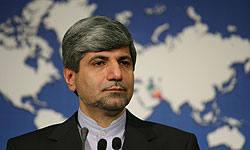
Iran’s Foreign Ministry Spokesman Ramin Mehman-Parast lambasted the US police and security forces for the Wednesday attack on him and other members of the Iranian delegation to the UN Iran: U.S. directly responsible for using MKO mercenaries to attack diplomatsGeneral Assembly meeting, saying that the hosting country must be accountable for the security of foreign diplomats.
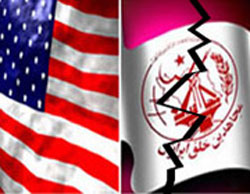
"Unfortunately we witnessed a form of US police’s indifference to the actions of the terrorist members of the Mojahedin-e Khalq Organization (MKO) and no matter how many times we gestured to the police that they need to stop the attacks of these individuals, they remained apathetic," Mehman-Parast told reporters on the sidelines of the 67th session of the United Nations General Assembly in New York.

Mehman-Parast added that the police only intervened when the attack intensified and later released a statement that the incident had taken place.

The Iranian diplomat pointed out that the host country is responsible for the safety of diplomats and permitting such an incident to occur is not befitting the US as a host.

"It is unfortunate to witness such behavior towards our country and to see the West permitting this terrorist cell continue its activities," Mehman-Parast added.

Mehman-Parast and several other Iranian officials were walking to their hotel when they were surrounded and assaulted by MKO terrorists on Wednesday.

New York City police and the US security forces made no arrests as the attackers physically abused members of the Iranian delegation accompanying Iran’s President Mahmoud Ahmadinejad in his visit to the United States to address the 67th session of the UN General Assembly.

The incident came days after US Secretary of State Hillary Clinton notified Congress that she plans to take MKO (also known as the MEK, PMOI and NCR) off a State Department terror list.

The MKO is blacklisted by much of the international community.

Before an overture by the EU, the MKO was on the European Union’s list of terrorist organizations subject to an EU-wide assets freeze. Yet, the MKO puppet leader, Maryam Rajavi, who has residency in France, regularly visited Brussels and despite the ban enjoyed full freedom in Europe.

The MKO is behind a slew of assassinations and bombings inside Iran, a number of EU parliamentarians said in a recent letter in which they slammed a British court decision to remove the MKO from the British terror list. The EU officials also added that the group has no public support within Iran because of their role in helping Saddam Hussein in the Iraqi imposed war on Iran (1980-1988).

Many of the MKO members abandoned the terrorist organization while most of those still remaining in the camp are said to be willing to quit but are under pressure and torture not to do so.

The group, founded in the 1960s, blended elements of Islamism and Stalinism and participated in the overthrow of the US-backed Shah of Iran in 1979. Ahead of the revolution, the MKO conducted attacks and assassinations against both Iranian and Western targets.

The group started assassination of the citizens and officials after the revolution in a bid to take control of the newly established Islamic Republic. It killed several of Iran’s new leaders in the early years after the revolution, including the then President, Mohammad Ali Rajayee, Prime Minister, Mohammad Javad Bahonar and the Judiciary Chief, Mohammad Hossein Beheshti who were killed in bomb attacks by MKO members in 1981.

The group fled to Iraq in 1986, where it was protected by Saddam Hussein and where it helped the Iraqi dictator suppress Shiite and Kurd uprisings in the country.

The terrorist group joined Saddam’s army during the Iraqi imposed war on Iran (1980-1988) and helped Saddam and killed thousands of Iranian civilians and soldiers during the US-backed Iraqi imposed war on Iran.

October 1, 2012 0 comments
FacebookTwitterPinterestWhatsappTelegramSkypeEmail
Iran

American overt use of MKO terror group clear sign of U.S. political bankruptcy

The U.S. today is facing political bankruptcy, Ali Akbar Velayati, the Foreign Policy adviser to Iran’s Supreme Leader Ayatollah Ali Khamenei said, ISNA reported.

The adviser was commenting on the US administration’s intention to exclude the MKO terrorist outfit from the enlisted terrorist groups.

"This is a sign of political failure," Velayati said.

The United States has removed the Iranian exile group Mujahedeen-e-Khalq (MKO or MEK) from its list of foreign terrorist organizations.

The State Department said Secretary of State Hillary Clinton took the decision, effective September 28, in view of the MKO’s public renunciation of violence, the absence of confirmed acts of terrorism by the group for more than a decade, and their cooperation in the closure of their paramilitary base in Iraq.

The move means Washington will no longer block the group’s property and interests in property in the United States and that U.S. entities may engage in transactions with the MKO without obtaining a license.

The adviser also underscored that any change in the Iran-U.S. relations must be announced by the Supreme Leader Ayatollah Khamenei himself.

"Islamic Republic’s general policy towards the U.S. remains as it was, and it will not change unless it is declared so by the Supreme Leader," Velayati said.

Nearly a week ago, Iran’s president Mahmoud Ahmadinejad while in NY, named the reasons how the relations between the U.S. and Iran can improve.

Ahmadinejad said that Iran’s nuclear issue will be solved if the U.S. withdraws from its position against Iran.

"The U.S. has chosen confrontation policy against Iran since Islamic Revolution occurred in 1979," Ahmadinejad said. "However, if American leaders pursued friendly policy towards Iran, then both sides would gain benefits from good relations."
Trend, Azerbaijan, September 29 2012
http://en.trend.az/regions/iran/2071067.html

Azerbaijan, Baku, Sept. 29 /Trend S.Isayev, T. Jafarov/

October 1, 2012 0 comments
FacebookTwitterPinterestWhatsappTelegramSkypeEmail
Iraqi Authorities' stance on the MEK

Al Hakim criticized American use of MKO terrorists

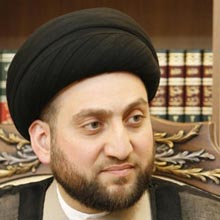
A senior Iraqi politician condemned the delisting of the terrorist Mojahedin-e Khalq Organization (MKO) from the US terror list, and complained that Washington is using terrorism as a tool to exert pressure on other parties.Head of the Islamic Supreme Council of Iraq Ammar al-Hakim

"Dangerous concepts such as terrorism have become a tool at the service of the US policies and a leverage to pressure different parties," Head of the Islamic Supreme Council of Iraq Ammar al-Hakim said on Saturday.

He criticized the United States’ "double standard attitude" towards the MKO (also known as the MEK, PMOI and NCR), and underlined the terrorist nature of the group.

"The grouplet is definitely a terrorist organization," Hakim underscored.

His remarks came after the US State Department on Friday removed the MKO from its list of foreign terrorist organizations.

The decision made by Secretary of State Hillary Clinton enabled the group to have its assets under US jurisdiction unfrozen and do business with American entities, the State Department said in a statement on Friday.

Earlier this month, the seventh and last group of the MKO terrorists left Camp Ashraf, their main training center in Iraq.

The last group of the evacuees included 88 terrorists. They have been transferred to Camp Liberty which lies Northeast of the Baghdad International Airport.

Camp Liberty is a transient settlement facility and a last station for the MKO in Iraq.

Earlier this year, the Iraqi government set a new deadline for the MKO to evacuate its members from Camp Ashraf by October this year.

The MKO cannot find a shelter outside Iraq as it is blacklisted by much of the international community, including the United States.

The MKO is blacklisted by much of the international community.

Before an overture by the EU, the MKO was on the European Union’s list of terrorist organizations subject to an EU-wide assets freeze. Yet, the MKO puppet leader, Maryam Rajavi, who has residency in France, regularly visited Brussels and despite the ban enjoyed full freedom in Europe.

The MKO is behind a slew of assassinations and bombings inside Iran, a number of EU parliamentarians said in a recent letter in which they slammed a British court decision to remove the MKO from the British terror list. The EU officials also added that the group has no public support within Iran because of their role in helping Saddam Hussein in the Iraqi imposed war on Iran (1980-1988).

Many of the MKO members abandoned the terrorist organization while most of those still remaining in the camp are said to be willing to quit but are under pressure and torture not to do so.

The group, founded in the 1960s, blended elements of Islamism and Stalinism and participated in the overthrow of the US-backed Shah of Iran in 1979. Ahead of the revolution, the MKO conducted attacks and assassinations against both Iranian and Western targets.

The group started assassination of the citizens and officials after the revolution in a bid to take control of the newly established Islamic Republic. It killed several of Iran’s new leaders in the early years after the revolution, including the then President, Mohammad Ali Rajayee, Prime Minister, Mohammad Javad Bahonar and the Judiciary Chief, Mohammad Hossein Beheshti who were killed in bomb attacks by MKO members in 1981.

The group fled to Iraq in 1986, where it was protected by Saddam Hussein and where it helped the Iraqi dictator suppress Shiite and Kurd uprisings in the country.

The terrorist group joined Saddam’s army during the Iraqi imposed war on Iran (1980-1988) and helped Saddam and killed thousands of Iranian civilians and soldiers during the US-backed Iraqi imposed war on Iran.

October 1, 2012 0 comments
FacebookTwitterPinterestWhatsappTelegramSkypeEmail
Mujahedin Khalq; A proxy force

Delisting the MKO. America: A State Sponsor of Terrorism against Iran

In an act of unequivocal and explicit hostility toward Iran, the United States took the name of Mujahedin-e-Khalq Organization (MKO) off its list of foreign terrorist organizations on Friday, Delisting the MKO. America: A State Sponsor of Terrorism against IranSeptember 28, showing its unconditional support to the sworn enemies of the Iranian nation straight from the shoulder.
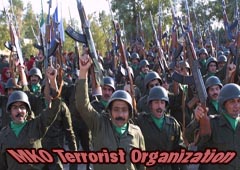
The U.S. government announced the decision a few days after the Secretary of State Hillary Clinton submitted a file of classified information about the terrorist cult to the Congress.

The decision was made under the pretext that MKO has not carried out any terrorist operation over the past 10 years. This controversial announcement which bespeaks of the United States’ undeniable animosity with the Iranian people comes while there are several reliable documents confirming that the MKO is responsible for the killing of more than 40,000 Iranians during the 1980s war between Iran and Iraq. This gang has also assassinated Iran’s former President Mohammad Ali Rajaei, Prime Minister Mohammad Javad Bahonar and judiciary chief Ayatollah Mohammad Beheshti in the first years of Iran’s Islamic Revolution in 1979. Since 2010, it has also assisted Israel’s Mossad to kill four high-ranking Iranian nuclear scientists in a bid to thwart Iran’s scientific progress.

Immediately after the announcement by the U.S. government, the Paris-based leader of the terrorist group Maryam Rajavi made a statement, hailing the decision: "this has been the correct decision, albeit long overdue, in order to remove a major obstacle in the path of the Iranian people’s efforts for democracy." Rajavi promised that her group will step up pressure on Iran, and one may easily visualize what devilish and malicious plans they have in mind for the people of Iran.

New York Times says that MKO bribed some of the influential U.S.politicians in the Department of State and some lawmakers in the Congress to convince them to uphold the anti-Iranian bid. Some of the high-ranking U.S. officials supporting MKO include former CIA Directors, R. James Woolsey and Porter J. Goss; former FBI director Louis J. Freeh; former U.S. President George W. Bush’s homeland security secretary, Tom Ridge; Attorney General, Michael B. Mukasey; and President Barack Obama’s first national security adviser, Gen. James L. Jones.

The MKO which receives underground funding from Israel and some of the Western governments had invested a lot in attracting the support of high-ranking American politicians and is said to have paid fees amounting from $15,000 to $30,000 to these people as an incentive to compel them to attend their rallies and give speeches in support of their anti-Iranian activities.

The former Democratic governor of Pennsylvania, Edward G. Rendell, admitted in March that he had received a total of $150,000 from the group to support their cause.

One day after the U.S. government de-listed MKO, Lord Ken Maginnis, a neo-conservative member of the House of Lords and a former UK parliamentarian called it a "landmark decision by U.S. State Department" and "a victory for justice."

"Now, the best way to ease the threat of a nuclear-armed Iran is to facilitate a regime change in Tehran. And that is on the horizon. The Iranian resistance doesn’t need troops or arms; it needs the support of freedom-loving people and of governments that eschew tyranny," he wrote in an article.

There are credible reports, indicating that MKO members have received considerable amounts of money, military training and equipments from the states which are hostile to Iran and fear of its growing influence in the Middle East, including the United States, Israel and Saudi Arabia.

In an article published in New Yorker on April 6, 2012, the renowned investigative journalist Seymour Hersh revealed that how the U.S. government has furtively supported the MKO terrorists. The article entitled "Our Men in Iran?" documented that members of the MKO were trained in communications, cryptography, small-unit tactics and weaponry by the Joint Special Operations Command (JSOC) at a base in Nevada starting in 2005.

"JSOC instructed MEK operatives on how to penetrate major Iranian communications systems, allowing the group to intercept telephone calls and text messages inside Iran for the purpose of sharing them with American intelligence," wrote Nile Bowie in a research article published on Global Research on April 16, 2012. The Joint Special Operations Command

(JSOC) is a component command of the United States Special Operations Command and is known to have carried out clandestine operations in Iran with the direct authorization of George W. Bush.

On July 7, 2008, Marsha Reid revealed in an article for Geopolitical Monitor that JSOC has been kidnapping members of Al-Quds force of Iran’s Revolutionary Guard and taking them to Iraq for torturing and interrogation. It’s said that MKO has been involved in these underground operations.

The prominent investigative journalist Glenn Greenwald wrote on February 10 on Salon.com that MKO has received "substantial fees" from some of the high-ranking U.S. officials to carry out terrorist operations on Iran’s

soil: "one of the most under-reported political stories of the last year is the devoted advocacy of numerous prominent American political figures on behalf of an Iranian group long formally designated as a Terrorist organization under U.S. law. A large bipartisan cast has received substantial fees from that group, the Mojahedin-e Khalq (MEK), and has then become their passionate defenders… As The Christian Science Monitor reported last August, those individuals have been paid tens of thousands of dollars to speak in support of the MEK."

According to an NBC News report by Richard Engel and Robert Windrem, the terrorist group "is financed, trained and armed by Israel’s secret service." Two unnamed senior officials in the U.S. government also admitted that "the Obama administration is aware of the assassination campaign" directed at Iran’s nuclear scientists. Iran has long insisted the Israel and the U.S. are using MKO to carry out terrorist attacks on its soil, including the murder of its scientists, and NBC notes that these acknowledgments "confirm charges leveled by Iran’s leaders." NBC has also pointed out that MKO has previously worked with the mastermind of the first attack on the World Trade Center in New York City.

Qorban Ali Husseini Nezhad, a former senior member of MKO who served the group for 30 years as a foreign affairs analyst and Arabic translator and declared his defection from MKO after he ran away from Temporary Transit Location (Camp Liberty) on Wednesday April 25, 2012, revealed terrible facts and figures regarding the complicity of Massoud and Maryam Rajavi with the former Iraqi dictator Saddam Hussein during the years of war with Iran. In a letter following his defection, he unveiled that Saddam Hussein had allocated a remarkable portion of Iraq’s oil revenues to MKO so as to strengthen this terrorist group in its anti-Iranian efforts.

According to Husseini Nezhad, in his last visit with Saddam Hussein in August 2000, Masoud Rajavi "asked Hussein to increase his oil share up to 100 thousand barrels a day (3 million barrels a month), according to the documents and letters I translated or reports composed by his closest comrades that I was able to read. Rajavi received his oil share in coupons which were then sent to Europe to be changed into dollars. Rajavi’s quota from Iraqi oil was 50 to 70 thousand barrels before the visit."

Another MKO defector Maryam Sanjabi also pointed out that the group has been receiving funds from Israel and Saudi Arabia. Speaking in an exclusive interview with Ashraf News website she said there is evidence about the relations and cooperation between the MKO and the Saudi kingdom.

She also revealed that when she joined MKO, she was told from beginning that leaving the organization would be impossible: "When I was appointed as a senior member of the MKO leadership council, I was told that I could never leave the organization. Otherwise, I had to kill myself by taking a cyanide pill."

All in all, there are bitter and painful truths behind the MKO and the life of its members. They are a group of misguided people who have intentionally or inadvertently betrayed their countrymen and should be held accountable over the atrocities they have committed and the bloods they have spilled.

The U.S. Department of State’s delisting of MKO will embolden the terrorist gang and make it able to carry out more terrorist operations under the umbrella of a civilian group which is simply opposed to the Iranian government, But their ultimate goal is disintegrating Iran and destroying the current establishment of the country. People of conscience from around the world should lend a hand and counter the threats which this dangerous group poses to the security of Iran, Middle East and the whole world.
–
Kourosh Ziabari is an award-winning Iranian journalist, peace activist and media correspondent. He has won Iran’s 18th Press Festival first award in the category of political articles. Kourosh is a member of World Student Community for Sustainable Development and also a member of the European Association for Teaching of Academic Writing.

By Kourosh Ziabari,

October 1, 2012 0 comments
FacebookTwitterPinterestWhatsappTelegramSkypeEmail
Mujahedin Khalq; A proxy force

US Formally Removes Rajavi cult from Foreign Terror List

The U.S. State Department said Friday it removed Mujahedin-e Khalq, an Iranian group, from its list of foreign terror organizations.S Formally Removes Rajavi cult from Foreign Terror List

Secretary of State Hillary Clinton came to the decision, which was reported last week, as a result of what she said was the group’s renunciation of violence, the absence of confirmed acts of terrorism for more than a decade and its cooperation in closing Camp Ashraf, its paramilitary base in Iraq.

“The [State] Department does not overlook or forget the MEK’s past acts of terrorism, including its involvement in the killing of U.S. citizens in Iran in the 1970s and an attack on U.S. soil in 1992,” it said in a statement. It “also has serious concerns about the MEK as an organization, particularly with regard to allegations of abuse committed against its own members.”

With the delisting effective Friday, the group’s property is no longer blocked and Americans can engage in transactions with it without a license to do so, the State Department said.

The MeK was placed on the list of foreign terror organizations in 1997 because of its alliance with Iraqi leader Saddam Hussein and an assassination campaign it launched against U.S.officials in Tehran prior to the Islamic revolution in Iran in 1979.

MeK engaged in an aggressive lobbying campaign in Washington over the past two years — enlisting officials from both major political parties – to win its removal from the State Department’s list.

An NBC News report from February said the group, working alongside Israel, is behind the assassination of Iranian nuclear scientists. The group flatly denied the allegation.

A U.S. appeals court ruled in June that the State Department had to decide by October whether to keep or remove MeK from the list, or it would be delisted by the ruling.

UPDATE: Maryam Rajavi, president-elect of the National Council of Resistance, a Paris-based group of which MeK is the principal member, said in a statement the group intends to better introduce itself and its goals to the American people now that it has been removed from the foreign terror list.[..]

Correction: The delisting decision came Friday, not Thursday. The National Council of Resistance is Paris-based, but not French.

Samuel Rubenfeld, Wall Street Journal

September 29, 2012 0 comments
FacebookTwitterPinterestWhatsappTelegramSkypeEmail
Mujahedin Khalq; A proxy force

Terrorists No More: MEK

An Iranian group’s lobbying campaign to get removed from the U.S. list of terror organizations looks to be a success. But what does that say about the state of politics in Washington?

It’s no secret how a group gets designated as terrorists in the eyes of the U.S. government. Section 219 of the Immigration and Nationality Act enumerates the authorities of the secretary of state in listing a group as a foreign terrorist organization (FTO). The act references the existing statutory definitions of terrorism, provides avenues for appeal of the classification, and otherwise lays out various processes for review.
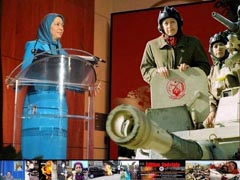
Nowhere, however, does the act lay out the options for buying your way out of a designation. Luckily, the Iranian expat group Mojahedin e-Khalq (MEK) soon to be "delisted" as an FTO, according to multiple reports, has provided us with a roadmap. But first, a little background.

The MEK, an anti-shah, Islamist, Marxist Iranian opposition group that fell afoul of the Islamic Revolution early on, was designated — put on the terrorist list — in 1997. It earned the designation fair and square, having been involved in numerous attacks, including the hostage-taking and Terrorists No More: MEKmurder of Americans, according to a State Department report. Indeed, it was at times more hardline than the Ayatollahs: The group reportedly condemned the new Iranian government’s decision to release the American hostages in 1980 as "surrender."
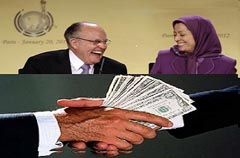
More recently, the MEK has restricted its attacks to Iranian nationals. Those curious can check out this lengthy FBI report for all the gory details. Suffice it to say that these erstwhile Marxists have proven themselves remarkably adaptable: The leadership moved with ease from the shah’s Iran, onward to France and, once ousted from Paris, to a congenial perch in Baghdad, where the MEK was reportedly involved in Saddam’s extermination campaign against the Kurds and repression of Iraq’s Shia.

But the world is now a different place — Saddam is gone and the MEK claims it has reformed. Certainly, the embassy takeovers and the anti-American, anti-Israel rhetoric are gone. Now it appears that the MEK is merely a cult-like organization — intensely devoted to its leaders Massoud and Maryam Rajavi and virulently opposed to the Islamic Republic. Reports from former members suggest that followers require permission from the Rajavis to marry, that parents are separated from children, that communication with outsiders is banned, and that more senior followers are required to divorce to commit themselves more fully to the fight.

The State Department has long resisted efforts to remove the MEK from the terrorist list. As of 2004, the FBI had evidence that the group was still planning attacks against Iranian targets around the world. In addition — and this is no small caveat — successive secretaries of state in both Republican and Democratic administrations have recognized that delisting the MEK could throw a monkey wrench into efforts toward rapprochement with Iran. …

Setting aside the fact that the MEK worked hand in glove with other masterminds of the Islamic Revolution, Iranians are rightly wary of the fact that the MEK sided with the hated Saddam in his war against Iran. Indeed, the MEK has never appeared as the voice of democratic hope for the Iranian people, but merely a dictatorship in waiting. Washington, however, has been more suggestible.

The recent history of the MEK — also known in other guises such as the National Council of Resistance, the National Liberation Army, and the People’s Mojahedin of Iran — has featured various front groups that have lobbied aggressively for the removal of the MEK’s terrorist designation. These lavishly resourced groups have pursued a sophisticated and multi-dimensional campaign that reached from the state-by-state field offices to the toniest K St. lobbying shops. And their efforts have gained substantial momentum in recent years, leaning on former senior government officials and journalists to make their case.

On Capitol Hill, the MEK emphasizes its credentials as an opponent of the Iranian regime, allowing wannabe masters of the "great game" to imagine that this enemy of our enemy is our friend. Among Republicans and Democrats alike, there is seemingly little curiosity as to the MEK’s nature or its plans for Iran should it ever should come to power.

A who’s who of former government officials have led the way in advocating for the MEK in Washington’s corridors of power. There’s former New York City mayor and presidential candidate Rudy Giuliani, former Vermont governor and Democratic presidential hopeful Howard Dean, President Barack Obama’s former National Security Advisor Gen. James Jones, and the former chairman of the House Foreign Affairs Committee, Democrat Lee Hamilton. There’s also Mitt Romney advisor Mitchell Reiss and former New Mexico Governor Bill Richardson. Who says bipartisanship is dead in Washington?

Is every one of these men and women a principled supporter of the MEK, dedicated to the liberation of Iran? Seems doubtful. As their own records in government will attest, most did nothing for the MEK when in a position to do so. The more likely explanation is that at least some of these folks have been persuaded with money, most of it coming in the form of speaking fees. And there is lots of it. Where does it come from? The FBI won’t tell those on Capitol Hill who have asked; the MEK insists the money is from its donors.

The ethics of accepting money for a speaking gig from a designated terrorist group is dubious — but if it’s happening through non-designated fronts, it’s likely to be legally kosher. On the other hand, the Washington Postreportedin July that some of these speakers are also taking part in regular briefings and negotiations regarding the fate of Camp Ashraf, the MEK camp inside Iraq that the government in Baghdad is disbanding.

According to State Department sources, participants in those calls were advocates on behalf of the MEK, and were being used to relay messages to and from the group. If so, these individuals were acting as unregistered foreign agents for the MEK. The law is specific on this question: Acting on behalf of a foreign organization without properly registering with the U.S. government is a crime. The Justice Department is reportedly investigating former Pennsylvania Governor Ed Rendell for his MEK ties, but few are sanguine the probe will go anywhere.

So what’s the lesson here? Pretty simple. Announce you’ve renounced terrorism. Buy a bunch of supporters. Lobby to get off the terrorism list. ET voila.

The tale of the MEK reflects poorly on all involved, from the State Department to Capitol Hill to undeclared lobbyists. Unfortunately, the designation of foreign terrorist organizations has become a highly politicized exercise in which some groups are designated for the right reasons (terrorism) and others are not labeled, despite clearly meeting the statute’s requirements. For example, the Haqqani network in Pakistan was only designated in September despite its long association with other terrorist groups and its own terrorist activities. At the very least, however, we will soon find out whether, freed of the opprobrium of its terrorist designation, the MEK will make any difference in our long-running battle with Iran. Somehow, I doubt it.

By Danielle Pletka, Foreign Policy

September 29, 2012 0 comments
FacebookTwitterPinterestWhatsappTelegramSkypeEmail
Mujahedin Khalq; A proxy force

Lobbying campaign takes Iranian dissident group off US terror list

A group with a history of bombings and murders, including the killing of US citizens, which also happens to oppose the current Iranian government, has paid its way off of a US blacklist, LajosLobbying campaign takes Iranian dissident group off US terror list Szasdi, an international affairs analyst told RT.

­The US Secretary of State announced the removal of the Mujahadeen-e-Khalq (MKO) from its list of terrorist organizations on Friday. Originally one of the main participants of Iran’s 1979 Islamic Revolution, it is now in opposition to the government in Tehran, and with the help of Israeli special forces carries out “assassinations of nuclear scientists in Iran and obtains information on the Iranian nuclear program,” Szasdi says.

RT: Why has Washington chosen now to remove Mujahadeen-e-Khalq from its list of terrorist organizations?

Lajos Szasdi: This group, the MKO, has been apparently very successful in gaining the support of both the Republican and Democratic parties, civilians, as well as retired members of the military, senior officers included. So apparently, there has been a very successful lobbying campaign before the government to overturn the government’s decision, made in 1997, to place the MKO on the terrorist list of the Treasury Department.

There is also another issue. Washington might find this group highly useful. It seems that they have made use of it since 2007, in trying to destabilize the internal situation in Iran, and apparently with the cooperation of the Israeli secret service, the Mossad. They have used this group to conduct, it is said by some authors, assassinations of nuclear scientists in Iran and obtain information on the Iranian nuclear program. And they’ve carried out some acts of sabotage – they caused the explosion of a missile factory as well. There is some strategic interest in terms of current and ongoing, bad relationships, to say the least, to put it mildly, between the United States on one side and Iran on the other.

And this group has also been carrying out a highly successful lobbying campaign, which is very interesting because according to some sectors in the press, if you spoke for ten minutes in favor of the group in a speech, you could have gotten twenty thousand dollars. And they have been paying for speeches defending their cause, so they would be removed from the list of being terrorists, between ten and fifty thousand dollars. So, it is quite interesting.
RT: Do you think this will influence the upcoming Iranian elections, is that the intention?
LS: The Iranian candidates will try to portray this event, the fact that the US government removed this group from the list of terrorists … it would be a further justification of any hardening of the position that the United States has no interest in finding a negotiated solution, but on the contrary – they are supporting its enemies.
It is going to, in any case, work to the detriment of the relationship between the West and Iran, and in particular the United States and Iran. It is going to favor taking hardening positions towards the West and the United States. I think it is quite inevitable in light of the rhetoric coming from Washington, alongside that coming from Tel Aviv regarding Iran and the Iranian nuclear program. It might not make much difference, but it certainly is going to be ammunition for those that would try to suppress the idea of any dialogue with Washington, because after all, Washington is not offering any olive branch for such a kind of dialogue.

September 29, 2012 0 comments
FacebookTwitterPinterestWhatsappTelegramSkypeEmail
Newer Posts
Older Posts

Recent Posts

  • Testimonies of Participants in the MEK’s Staged Propaganda Stunt in Karaj

    October 7, 2026
  • Giuliani’s MEK ties have dogged him for years

    October 6, 2026
  • The Tragic Impact of MEK Isolation on Yazdan Teimorian and His Family

    October 5, 2026
  • How the MEK tried to sell a stage stunt as grassroots support?

    October 4, 2026
  • Why Mike Pompeo’s Embrace of the MEK Ignores Its Lack of Popular Base

    October 3, 2026
  • Facebook
  • Twitter
  • Instagram
  • Youtube

© 2003 - 2025 NEJAT Society . All Rights Reserved. NejatNGO.org


Back To Top
Nejat Society
  • Home
  • Articles
  • Media
    • Cartoons
    • NewsPics
    • Photo Gallery
    • Videos
  • Publications
    • Books
    • Nejat NewsLetter
    • Pars Brief
  • About Us
  • Contact us
  • Editions
    • عربي
    • فارسی
    • Shqip