Nejat Society
  • Home
  • Articles
  • Media
    • Cartoons
    • NewsPics
    • Photo Gallery
    • Videos
  • Publications
    • Books
    • Nejat NewsLetter
    • Pars Brief
  • About Us
  • Contact us
  • Editions
    • عربي
    • فارسی
    • Shqip
Nejat Society
Nejat Society
  • Home
  • Articles
  • Media
    • Cartoons
    • NewsPics
    • Photo Gallery
    • Videos
  • Publications
    • Books
    • Nejat NewsLetter
    • Pars Brief
  • About Us
  • Contact us
  • Editions
    • عربي
    • فارسی
    • Shqip
© 2003 - 2024 NEJAT Society. nejatngo.org
Mujahedin Khalq; A proxy force

American-Killing Terror Cult: US Delists Mujahedeen e-Khalq

Continuity of Agenda: Neo-Cons and Obama administration sponsor global terror against Iran.

As the US government confirms that terrorists involved in the Benghazi, Libya US consulate attack

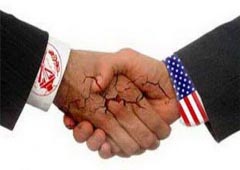
Image: MEK is just one of many terrorist organizations, that despite being listed by the US State Department as such, still receives weapons, training, cash, and political support from the US government. This is a pattern seen repeated in Libya and most recently in Syria – each case spun and excused with a myriad of lies wrapped in false, constantly shifting narratives.

were indeed the very militants funded, armed, and provided air support in last year’s bid to overthrow the government of Libya, yet another disturbing announcement has been made. Terror organization Mujahedeen e-Khalq (MEK) will be delisted by the US State Department in order to clear legal obstacles in the way of overtly arming and funding the terrorists in pursuit of a proxy war with Iran, the LA Times reported in their article, “U.S. to remove Iranian group Mujahedin Khalq from terrorist list.”
….
The LA Times states specifically:

Some current and former U.S. officials have called for arming the MEK to conduct attacks against Iran, which experts say could tip the United States and Iran closer to war.

The lobbying effort to delist MEK has been led by former New York City Mayor Rudy Giuliani, Howard Dean, first “Secretary of Homeland Security” Tom Ridge, John Lewis, Ed Rendell, former FBI Director Louis Freeh, retired General Wesley Clark, Lee Hamilton who farcically oversaw the 9/11 Commission, former US Marine Corps Commandant and former Obama National Security Adviser General James Jones, and Alan Dershowitz. There are also members of the British Parliament including David Amess of the Parliamentary Committee for Iran Freedom, speaking on MEK’s behalf.

The US Has Already Been Arming MEK For Years

The delisting of MEK is merely a technicality to make more overt arming and funding for the group possible. In reality, and despite being long recognized as a dangerous, extremist organization with both innocent Iranian and American blood on their hands, the US has been arming, training, and funding MEK for years, beginning under the Bush administration and continuing unabated under Obama.

Covert support for the US-listed terrorist group Mujahedeen e-Khalq (MEK) has been ongoing since at least 2008 under the Bush administration, when Seymour Hersh’s 2008 New Yorker article “Preparing the Battlefield,” reported that not only had MEK been considered for their role as a possible proxy, but that the US had already begun arming and financing them to wage war inside Iran:

“The M.E.K. has been on the State Department’s terrorist list for more than a decade, yet in recent years the group has received arms and intelligence, directly or indirectly, from the United States. Some of the newly authorized covert funds, the Pentagon consultant told me, may well end up in M.E.K. coffers. “The new task force will work with the M.E.K. The Administration is desperate for results.” He added, “The M.E.K. has no C.P.A. auditing the books, and its leaders are thought to have been lining their pockets for years. If people only knew what the M.E.K. is getting, and how much is going to its bank accounts—and yet it is almost useless for the purposes the Administration intends.”

Seymour Hersh in an NPR interview, also claims that select MEK members have already received training in the US.

More recently, the British Daily Mail published a stunning admission by “US officials” that Israel is currently funding, training, arming, and working directly with MEK. The Daily Mail article states, “U.S. officials confirmed today that Israel has been funding and training Iranian dissidents to assassinate nuclear scientists involved in Iran’s nuclear program.” The article continues by claiming, “Washington insiders confirmed there is a close relationship between Mossad and MEK.”

In 2009, an extensive conspiracy was formulated within US policy think-tank Brookings Institution’s 2009 “Which Path to Persia?” report, proposing to fully arm, train, and back MEK as it waged a campaign of armed terror against the Iranian people.

In their report, they openly conspire to use what is an admitted terrorist organization as a “US proxy” (emphasis added):

“Perhaps the most prominent (and certainly the most controversial) opposition group that has attracted attention as a potential U.S. proxy is the NCRI (National Council of Resistance of Iran), the political movement established by the MEK (Mujahedin-e Khalq). Critics believe the group to be undemocratic and unpopular, and indeed anti-American.

In contrast, the group’s champions contend that the movement’s long-standing opposition to the Iranian regime and record of successful attacks on and intelligence-gathering operations against the regime make it worthy of U.S. support. They also argue that the group is no longer anti-American and question the merit of earlier accusations. Raymond Tanter, one of the group’s supporters in the United States, contends that the MEK and the NCRI are allies for regime change in Tehran and also act as a useful proxy for gathering intelligence. The MEK’s greatest intelligence coup was the provision of intelligence in 2002 that led to the discovery of a secret site in Iran for enriching uranium.

Despite its defenders’ claims, the MEK remains on the U.S. government list of foreign terrorist organizations. In the 1970s, the group killed three U.S. officers and three civilian contractors in Iran. During the 1979-1980 hostage crisis, the group praised the decision to take America hostages and Elaine Sciolino reported that while group leaders publicly condemned the 9/11 attacks, within the group celebrations were widespread.
Undeniably, the group has conducted terrorist attacks—often excused by the MEK’s advocates because they are directed against the Iranian government. For example, in 1981, the group bombed the headquarters of the Islamic Republic Party, which was then the clerical leadership’s main political organization, killing an estimated 70 senior officials. More recently, the group has claimed credit for over a dozen mortar attacks, assassinations, and other assaults on Iranian civilian and military targets between 1998 and 2001. At the very least, to work more closely with the group (at least in an overt manner), Washington would need to remove it from the list of foreign terrorist organizations.”

– page 117-118 of “Which Path to Persia?” Brookings Institution, 2009

The latest lobbying effort to delist MEK, led by some of the most adamant proponents for the West’s “War on Terror” is simply the latest move in a long-ago decided conspiracy to build up an armed terrorist group with which to fight a proxy war against Iran. That the conspiracy has been dutifully carried out over the course of two presidencies indicates a continuity in agenda, divorced from the alleged agendas and ideologies of each respective presidency…..

MEK is a Listed Terror Organization for a Reason

The delisting, funding, arming, and training of MEK is an indefensible crime against humanity, standing in direct violation of both United States law, as well as international accords agreed upon to stem the state sponsorship of terrorism.

MEK has carried out decades of brutal terrorist attacks, assassinations, and espionage against the Iranian government and its people, as well as targeting Americans including the attempted kidnapping of US Ambassador Douglas MacArthur II, the attempted assassination of USAF Brigadier General Harold Price, the successful assassination of Lieutenant Colonel Louis Lee Hawkins, the double assassinations of Colonel Paul Shaffer and Lieutenant Colonel Jack Turner, and the successful ambush and killing of American Rockwell International employees William Cottrell, Donald Smith, and Robert Krongard.

Admissions to the deaths of the Rockwell International employees can be found within a report written by former US State Department and Department of Defense official Lincoln Bloomfield Jr. on behalf of the lobbying firm Akin Gump in an attempt to dismiss concerns over MEK’s violent past and how it connects to its current campaign of armed terror – a testament to the depths of depravity from which Washington and London lobbyists operate.

To this day MEK terrorists have been carrying out attacks inside of Iran killing political opponents, attacking civilian targets, as well as carrying out the US-Israeli program of targeting and assassinating Iranian scientists. MEK terrorists are also suspected of handling patsies in recent false flag operations carried out in India, Georgia, and Thailand, which have been ham-handedly blamed on the Iranian government.

MEK is described by Council on Foreign Relations Senior Fellow Ray Takeyh as a “cult-like organization” with “totalitarian tendencies.” While Takeyh fails to expand on what he meant by “cult-like” and “totalitarian,” an interview with US State Department-run Radio Free Europe-Radio Liberty reported that a MEK Camp Ashraf escapee claimed the terrorist organization bans marriage, using radios, the Internet, and holds many members against their will with the threat of death if ever they are caught attempting to escape.

Conclusion

Clearly, all involved, from the Bush administration to Obama’s, are complicit in an overarching agenda to willfully arm terrorists to deploy against Iran. MEK’s history and even its current state is one of couching militant terrorism within the tenuous trappings of political activism – and provides a transparent comparison with which to use against Libyan and Syrian terrorists also armed, trained, funded, and supported by the West in pursuit of long since planned regime change.

Whether it is the US funding and arming Libyan Islamic Fighting Group (LIFG) terrorists in Libya and in Syria, or delisting the already heavily US-armed and funded MEK in Iraq to carry out attacks across the border against Iran, the West itself is the premier purveyor of state sponsored global terror.

It is support that originates not within the alleged political ideologies of “Neo-Cons” or the current “liberal-Democrat” president, but from corporate-financier interests, articulated within their think-tanks, and merely rubber-stamped and sold to the public by troupes of proxy politicians using false paradigms to manipulate public perception. It is a singular, continuous agenda that will carry forth no matter who is elected into office in 2012, 2016 or beyond. Until the balance of power can be shifted from the corporate-financier interests on Wall Street and in the City of London, back into the hands of the people and their communities, such agendas will continue on.

Global Rresearch

September 23, 2012 0 comments
FacebookTwitterPinterestWhatsappTelegramSkypeEmail
Mujahedin Khalq; A proxy force

Americans to remove Mojahedin Khalq from terror list

Secretary of State Hillary Clinton is expected to notify Congress on Friday that she plans to take Iranian exile group Mujahedin-e-Khalq, or MEK, off a State Department terror list, three senior Americans to remove Mojahedin Khalq from terror listObama administration officials told CNN.

Notification will be followed by formal removal in coming days from the list of Foreign Terrorist Organizations, which includes more than 50 groups like al Qaeda and Hezbollah. Clinton recently designated the Pakistani-based Haqqani network a foreign terrorist organization.

Such a listing attaches a certain stigma and allows the United States to legally go after financing and take other steps against individuals associated with these groups.

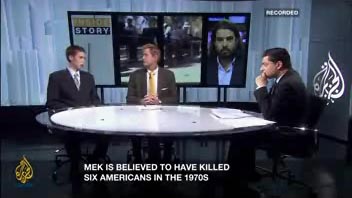
MEK was put on list in 1997 because of the killing of six Americans in Iran in the 1970s and an attempted attack against the Iranian mission to the United Nations in 1992.

However, the United States has since 2004 considered the group, living for more than 25 years at a refugee camp in Iraq, "noncombatants" and "protected persons" under the Geneva Conventions.

MEK’s move from Camp Ashraf is nearing completion under the auspices of the United Nations Assistance Mission for Iraq. The members are relocating to a temporary site there before being re-settled in third countries.

The United States has been working with the U.N. High Commissioner of Refugees to re-settle the group.

Clinton is under a court order to decide by October 1 whether to remove MEK from the terror list. She has said several times that her decision would be guided, in part, by whether it moves peacefully.

"We don’t love these people but the secretary’s decision is merited based on the record of facts that we have," one U.S. official said. "This was not done casually and it’s the right decision."

Officials acknowledge the decision was the subject of a contentious debate within the administration.

MEK is considered by many in the administration to be a bizarre cult-like organization, prompting concerns about its behavior. Officials say these concerns factored heavily in the debate.

"While they present themselves as a legitimate democratic group worthy of support, there is universal belief in the administration that they are a cult" one official said. "A de-listing is a sign of support or amnesia on our part as to what they have done and it does not mean we have suddenly changed our mind about their current behavior. We don’t forget who they were and we don’t think they are now who they claim to be, which is alternative to the current regime."

MEK denies that it supports terrorism and supporters rally daily in front of the State Department, demanding the United States remove it from the terrorism list.

Many members of Congress have pressured Clinton to do the same.

Moreover, MEK has paid well-known former U.S. politicians and former administration heavyweights to speak out on its behalf, including former Pennsylvania Gov. Ed Rendell, former U.S. Rep. Patrick Kennedy, former FBI Director Louis Freeh, and former National Security Advisor James Jones.

The last major convoy of 680 members of the MEK arrived on Sunday at the temporary relocation site at a former U.S. military base near Baghdad International Airport, the U.N. mission for Iraq said.

The State Department said at the time that the arrival marked "a significant milestone in efforts to achieve a sustainable humanitarian solution to this issue."

"The big test now is to start getting these people out of Iraq through the UNHCR and that is where we should return. Our ability to succeed on this is based on many factors, especially how the MEK behaves because countries will be determining whether they will take a large amount of refugees from this group," another official said.

"If they think the notion of de-listing means they can run wild, that isn’t true. If they want to leave Iraq, they have to behave," the official said.

MEK leaders have been reluctant to complete the move from Camp Ashraf to Camp Hurriya, formerly an American facility known as Camp Liberty. They complained about conditions at the new camp, calling it more a prison than a home after the first convoy arrived in February.

Camp Ashraf was established in 1986 after former Iraqi leader Saddam Hussein invited members of MEK to relocate to Iraq in an effort to undermine the Iranian government, which was then at war with Iraq. Iran also considers the group to be a terrorist organization.

By Elise Labott

September 22, 2012 0 comments
FacebookTwitterPinterestWhatsappTelegramSkypeEmail
Mujahedin Khalq; A proxy force

State Department set to take violent Iranian group off terror list

Secretary of State Clinton is set to announce that the Iranian group Mujahideen al-Khalq (MEK) State Department set to take violent Iranian group off terror listwill no longer be on the State Department’s Foreign Terrorist Organization list. The move comes after a high-profile, years-long lobbying campaign by a bipartisan cast of U.S. politicians and officials to delist MEK, despite a violent past that includes killing Americans.
State Department set to take violent Iranian group off terror list
CNN breaks the story:

Secretary of State Hillary Clinton is expected to notify Congress as early as Friday that she intends to take the Iranian exile group Mujahedin-e-Khalq, or MEK, off a State Department terror list, three senior administration officials told CNN.

The notification will be followed by a formal de-listing from the State Department’s list of Foreign Terrorist Organizations in the coming days.

The move to delist MEK comes just five days after the last remaining residents of Camp Ashraf in Iraq agreed to leave for a new camp in Iraq. MEK members had been staying in the camp, much to the displeasure of the Iraqi government and the U.S. government. Iraqi security forces’ attempts to enter the camp in the past have resulted in violent clashes. The continued presence of MEK members in Camp Ashraf had been a major headache for U.S. officials. CNN notes that Clinton "has said several times that her decision would be guided, in part, by whether the group moves peacefully from Camp Ashraf."

The decision by Clinton is sure to aggravate Iranian-U.S. tensions at a time of continued negotiations over the Iranian nuclear program.

MEK has been tied to the assassinations of Iranian nuclear scientists. In February, NBC News reported that "deadly attacks on Iranian nuclear scientists are being carried out by an Iranian dissident group [the MEK] that is financed, trained and armed by Israel’s secret service." While NBC quoted U.S. officials as saying the "U.S. has no direct involvement" in the assassinations, the New Yorker’s Seymour Hersh reported that the US military trained members of the group in Nevada in 2005. Hersh also reported that, according to an unnamed former official, intelligence continued to be passed on to the group from the U.S.

The delisting of MEK comes after a high-profile campaign waged by a host of Republicans, Democrats, U.S. officials and Israel advocates. Politicians like Newt Gingrich and Howard Dean and journalists like Clarence Page and Carl Bernstein have all given speeches, many of them paid, to advocate for the delisting of MEK.

The money being given to U.S. advocates was the subject of a Treasury Department investigation into whether people like former governor of Pennsylvania Ed Rendell violated U.S. law that prohibits doing business with terrorist groups.

In February, the Jewish Telegraphic Agency reported on the Israel angle of the lobbying campaign:

Famed attorney Alan Dershowitz, former Canadian Justice Minister Irwin Cotler, Nobel laureate Elie Wiesel — three prominent Jewish activists who have joined with other prominent people in a bid to remove a group with a blood-soaked history from the State Department’s list of foreign terrorist organizations.

The names on the growing list of influential American advocates to de-list the Mujahedin-e Khalq, or MEK — known in English as the National Council of Resistance of Iran — suggest an effort to give the bid a pro-Israel imprimatur.

UPDATE: The National Iranian American Council weighs in:

The National Iranian American Council (NIAC) deplores the decision to remove the Mujahedin-e Khalq (MEK) from the U.S. list of foreign terrorist organizations. The decision opens the door to Congressional funding of the MEK to conduct terrorist attacks in Iran, makes war with Iran far more likely, and will seriously damage Iran’s peaceful pro-democracy movement as well as America’s standing among ordinary Iranians.

"The biggest winner today is the Iranian regime, which has claimed for a long time that the U.S. is out to destroy Iran and is the enemy of the Iranian people. This decision will be portrayed as proof that the U.S. is cozying up with a reviled terrorist group and will create greater receptivity for that false argument,” said NIAC Policy Director Jamal Abdi.

by Alex Kane ,Mondoweiss.net

September 22, 2012 0 comments
FacebookTwitterPinterestWhatsappTelegramSkypeEmail
Mujahedin Khalq; A proxy force

State Dept to Remove Iranian Rebel Group From Terror List

Years of Pricy Lobbying Gets Inaugural Group Off Foreign Terrorist Organization List

Adding hope to every other group that had found itself labeled a terrorist organization after a Years of Pricy Lobbying Gets Inaugural Group Off Foreign Terrorist Organization Listdecade of bloody anti-US attacks and killing a number of US military officers, the Mujahedin-e Khalq (MeK), one of the inaugural members of the US State Department’s list of Foreign Terrorist Organizations, has been ordered removed by Secretary of State Hillary Clinton.

The MeK was founded in the 1960′s as a Marxist-Islamist sect, called a cult by many, with designs on ousting the Shah of Iran and replacing him. After the Shah was ousted, they allied with Saddam Hussein in his invasion of Iran, and remained in exile in Iraq for decades.

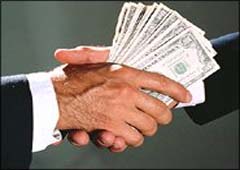
How did this group manage to turn around its fortunes and find a way off the US terror list? Money, and lots of it. The MeK has been soliciting top US officials for years to give them paid endorsements, and has been quite successful in buying praise, though former Pennsylvania Gov. Ed Rendell’s endorsement did get him investigated for terrorist ties.

In the end, with so many officials not only excusing the MeK’s past attacks but openly endorsing them as a replacement regime in the event of a war with Iran, officials said it was “politically difficult” for Clinton not to sign off on their removal.

Reflecting just how successful the “advertising” campaign has been for the group, Rep. Dana Rohrabacher (R – CA) praised the move, saying the group desires a “secular, peaceful, and democratic government.”

by Jason Ditz

September 22, 2012 0 comments
FacebookTwitterPinterestWhatsappTelegramSkypeEmail
Mujahedin Khalq; A proxy force

MEK decision: multimillion-dollar campaign led to removal from terror list

Revealed: the steady flow of funds to members of Congress, lobbying firms and former officials in support of Iranian group

Supporters of a designated Iranian terrorist organisation have won a long struggle to see it MEK decision: multimillion-dollar campaign led to removal from terror listunbanned in the US after pouring millions of dollars into an unprecedented campaign of political donations, hiring Washington lobby groups and payments to former top administration officials.

A Guardian investigation, drawing partly on data researched by the Centre for Responsive Politics, a group tracking the impact of money in US politics, has identified a steady flow of funds from key Iranian American organisations and their leaders into the campaign to have the People’s Mojahedin Organisation of Iran removed from the list of terrorist organisations.

The US secretary of state, Hillary Clinton, is expected to notify Congress that the MEK will be removed from the terrorism list in the coming days.

The campaign to bury the MEK’s bloody history of bombings and assassinations that killed American businessmen, Iranian politicians and thousands of civilians, and to portray it as a loyal US ally against the Islamic government in Tehran has seen large sums of money directed at three principal targets: members of Congress, Washington lobby groups and influential former officials.

Prominent among the members of Congress who have received fund is Ileana Ros-Lehtinen, the chair of the House of Representatives foreign affairs committee. She has accepted at least $20,000 in donations from Iranian American groups or their leaders to her political campaign fund.

Other recipients include Congressman Bob Filner, who was twice flown to address pro-MEK events in France and has pushed resolutions resolutions in the House of Representatives calling for the group to be unbanned. More than $14,000 in expenses for Filner’s Paris trips were met by the head of an Iranian American group who also paid close to $1m to a Washington lobby firm working to get the MEK unbanned.

A Texas Congressman, Ted Poe, received thousands of dollars in donations from the head of a pro-MEK group in his state at a time when he was a regular speaker on behalf of its unbanning at events across the US, describing the organisation as the ticket to regime change in Iran.

Mike Rogers, chairman of the House of Representatives intelligence committee, has also received the backing of individuals and groups that support the unbanning of the MEK. Rogers has been among the strongest supporters in Congress of delisting the group, sponsoring resolutions and pressing other members of Congress to support the cause.

A leading advocate of unbanning the MEK and chairman of the foreign affairs committee’s oversight subcommittee, congressman Dana Rohrabacher, has received thousands of dollars in donations from supporters of the banned group this year alone.

The Guardian sought comment from Ros-Lehtinen, Rogers, Filner, Poe and Rohrabacher. Only Rohrabacher responded.

He said he was comfortable accepting donations from MEK supporters but that the money has no influence on his position that it should be unbanned.

"I wouldn’t doubt that people would donate to my campaign if it’s something that they see as beneficial to them, to what they believe in, whether it’s the MEK or whether it’s anybody else," he said.

"The question is whether it’s the right position to take or not and whether it’s a benefit to the people of the United States as a whole. In this case I’ve no doubt that supporting the MEK under this brutal attack from the Mullah regime [in Tehran] is in the interests of what I believe in but also in the interests of the people of the United States."

Rohrabacher said the MEK’s past attacks on Americans, its bombing campaign in Iran that killed top politicians and civilians, and its support of Saddam Hussein were history and the group has turned its back on violence. He also denied that public support for a designated terrorist organisation might put him in conflict with the law.

"This isn’t a bad group. A long time ago, in their history, they certainly had a questionable time – 20, 30, 40 years ago. But I don’t know of any evidence they’ve engaged in terrorism for many, many years," he said. "They’re not a terrorist group simply because some bureaucrats in the state department say so."

Three top Washington lobby firms – DLA Piper; Akin Gump Strauss Hauer & Feld; and DiGenova & Toensing – have been paid a total of nearly $1.5 million over the past year to press the US administration and legislators to support the delisting of the MEK and protection for its members in camps in Iraq.

Two other lobby groups were hired for much smaller amounts. The firms employed former members of Congress to press their ex-colleagues on Capitol Hill to back the unbanning of the MEK.

Scores of former senior officials have been paid up to $40,000 to make speeches in support of the MEK’s delisting. Those who have received money include the former chairman of the US joint chiefs of staff, General Hugh Shelton; ex-FBI director Louis Freeh; and Michael Mukasey, who as attorney general oversaw the prosecution of terrorism cases.

The former Pennsylvania governor, Ed Rendell, has accepted more than $150,000 in speaking fees at events in support of the MEK’s unbanning. Clarence Page, a columnist for the Chicago Tribune, was paid $20,000 to speak at the rally. Part of the money has been paid through speakers bureaus on the US east coast.

Others accepted only travel costs, although in some cases that involved expensive trips to Europe.

In June, Newt Gingrich, the former speaker of the US House of Representatives and Republican presidential candidate, flew to Paris to address a pro-MEK rally and meet its co-leader, Maryam Rajavi. He was criticised for bowing to her.

Congressman Rohrabacher has described the lobbying campaign as one of the most effective he has seen on Capitol Hill. It has galvanised powerful support for delisting the MEK far beyond those receiving political contributions, lobbying fees or other payments.

Ros-Lehtinen has been a vigorous proponent of recognition of the MEK, flying around the country to speak in support of unbanning the group and pressing the issue among fellow members of Congress. She has accepted an award from one group funding the campaign to delist the MEK. Other recipients of political donations, including Rogers, Filner and Rohrabacher, have also lobbied other members of Congress to support the unbanning. As a result, nearly 100 members of Congress have co-sponsored a resolution demanding the Obama administration to delist the MEK.

Last month, 17 former senior officials and US generals called on the state department to remove the group’s terrorist designation. Among them were General James Jones, Barack Obama’s former national security adviser; Tom Ridge, the former homeland security director; as well as Mukasey, Freeh and Rendell.

Some of the same politicians and former officials have also targeted newspapers and online publications in a campaign of opinion articles and letters aimed at changing the image of the MEK as a terrorist group.

The campaign has in part been funded by substantial donations from Iranian Americans and a web of organisations they lead from Florida to Texas and California.

The most generous benefactors include:

• Saeid Ghaemi, head of Colorado’s Iranian American Community, who paid close to $900,000 of his own money to a Washington lobby firm for its work to get the MEK unbanned.

• Ali Soudjani, president of the Iranian American Society of Texas. He gave close to $100,000 over the past five years to congressional campaign funds. His organisation paid more than $110,000 in fees to lobbyists last year.

• Ahmad Moeinimanesh, leader of the Iranian American Community of Northern California. The group paid $400,000 to a lobby firm. Moeinimanesh made personal donations to Ros-Lehtinen’s campaign even though her constituency is several thousand miles from where he lives.

Some of the payments have prompted an investigation by the US treasury department. It is examining the fees paid to Shelton, Freeh, Mukasey and Rendell, and possibly others, to see if they breach laws against "material support for a terrorist group". In cases involving links to other banned organisations, such as Hamas and Hezbollah, individuals have received long jail sentences for indirect financial support.

The original source of the considerable sums involved is not always clear as groups making political donations or funding lobby firms are not required to declare their origin. Previously the MEK has relied in part on funding from Iraq under Saddam Hussein.

Soudjani told the Guardian that the moneys were raised from Iranian Americans in the US. "The Iranian community is wealthy. It has more than $600bn in the United States. This is pennies for supporting freedom," he said.

Asked if his own donations to members of Congress was specifically because of their positions on the MEK, he replied: "Yes, it is."

However, Soudjani was careful to say that the support is not for the MEK as an organisation, which could open donors to investigation under anti-terrorism laws.

"We are not giving material support to the MEK. We are supporting freedom of speech for justice and peace in Iran," he said.

Chris McGreal in Washington

September 22, 2012 0 comments
FacebookTwitterPinterestWhatsappTelegramSkypeEmail
Mujahedin Khalq; A proxy force

Iranian exiles, DC lobbyists and the campaign to delist the MEK

US policy change on banned Iranian group came after extraordinary fundraising operation to transform its Images

To the US government, the People’s Mojahedin Organisation of Iran (MEK) was a terrorist group US policy change on banned Iranian group came after extraordinary fundraising operation to transform its Imagesalongside al-Qaida, Hamas and the Farc in Colombia. The MEK landed on the list in 1997 with American blood on its hands and by allying itself with Saddam Hussein along with a long list of bombings inside Iran.

But the organisation is regarded very differently by a large number of members of Congress, former White House officials and army generals, and even one of the US’s most renowned reporters, Carl Bernstein. They see the MEK as a victim of US double dealings with the regime in Tehran and a legitimate alternative to the Iran’s Islamic government.

That difference is in no small part the result of a formidable fundraising operation and campaign to transform the MEK’s image led by more than 20 Iranian American organisations across the US. These groups and their leaders have spent millions of dollars on donations to members of Congress, paying Washington lobby groups and hiring influential politicians and officials, including two former CIA directors, as speakers.

In a highly sensitive political game, MEK supporters have succeeded in pressing the state department into removing the group from the list of terrorist organisations after winning a court order requiring a decision to be made on the issue before the end of this month. But its supporters were forced to tread a careful path so as not to cross anti-terrorism laws.

Only a few years ago, the US authorities were arresting pro-MEK activists and freezing the assets of front groups for "material support for a terrorist organisation". Now members of Congress openly praise the group in apparent contradiction of the anti-terrorism legislation many of them supported. Nearly 100 members of the House of Representatives backed a resolution calling on the US government to drop the MEK from the terrorist list.

At the forefront of the campaign are several Iranian American organisations across the US. They are:

• The Iranian American Society of Texas. It paid more than $110,000 in fees last year to a Washington lobby firm, DiGenova & Toensing, to campaign for the lifting of the ban on the MEK and the protection of its supporters still in camps in Iraq.

The Texas group’s president, Ali Soudjani, has personally donated close to $100,000 to members of Congress and their political campaigns over the past five years because, he told the Guardian, of their positions on the MEK and Iran. Among the beneficiaries were Ted Poe, a member of the House foreign affairs committee, and Sheila Jackson Lee, who have been vocal supporters of delisting the MEK. The pair appeared at a House event at Congress earlier this year also attended by Soudjani at which Poe gave support to the MEK in calling for "freedom-loving Americans [to] support a regime change in Iran". Jackson Lee described the group as the "voices of freedom". Soudjani also gave to John Boehner, speaker of the House of Representatives as well as the National Republican Congressional Committee and the Obama Victory Fund.

• Colorado’s Iranian American Community. One of its leaders, Saeid Ghaemi, paid close to $900,000 of his own money to a Washington lobby firm, DLA Piper, for its work to get the MEK unbanned, the protection of its members in Iraq and human rights issues. Ghaemi’s brother, Mehdi, who is president of the Colorado group, paid $14,000 to fly a member of Congress, Bob Filner, to meet MEK leaders in Paris and attend the group’s rallies. In the weeks before Filner spoke at an event in support of delisting the MEK last year he was the recipient of several thousand dollars in donations from Iranian Americans living outside his district.

• The Iranian American Community of Northern California. It paid $400,000 over the past year to a Washington lobby group, Akin Gump Strauss Hauer & Feld, to work on Capitol Hill to work for the removal of the MEK from the list of foreign terrorist organisations. The company assigned several former members of Congress to the account. The IACNC has also organised events in support of unbanning the MEK with appearances by Ros-Lehtinen and other prominent members of Congress as well as former White House officials.

Its director, Ahmad Moeinimanesh, has made personal financial donations to Ileana Ros-Lehtinen, the chair of the House of Representatives foreign affairs committee even though her congressional district is on the other side of the country in Florida, as well as to her reelection committee. She has accepted more than $20,000 in political contributions from activists who support the MEK’s delisting.

The IACNC’s registered address is at a photocopying shop in Albany, California, owned by Behnam Mirabdal who has made financial donations to Ros-Lehtinen and Dana Rohrabacher, a subcommittee chairman who is among the most vigorous proponents of unbanning the MEK.

• The Iranian Society of South Florida (ISSF). The group came to the notice of US authorities eight years ago as one of the sponsors of a fundraiser in Washington ostensibly to help victims of the Bam earthquake which killed 30,000 people. The FBI concluded it was a front for raising funds for the MEK.

The ISSF’s president and vice-president, Bahman Badiee and Akbar Nikooie, have for years made regular donations to Ros-Lehtinen. The Florida congresswoman boasts on her website of receiving an award from the ISSF.

Nikooie also spent at least $130,000 in 2009 to pay a lobby firm, DLA Piper, to promote "human rights" in Iran, including pressing for the unbanning of the MEK in the US. Badiee contributed $3,200 to Ros-Lehtinen. He gave $2,000 to congressman Mario Diaz-Balart in March the day after he made a speech in Congress in support of the MEK.

The principal lobbyist on the account was the former leader of the Republicans in the House of Representatives, Dick Armey, who a decade ago wielded considerable power and played a major role in the Republican takeover of Congress. He went on to head the Tea Party-supporting group, Freedom Works.

Armey used his relationship with sitting members of Congress five years ago to press them to urge the then secretary of state Condoleezza Rice to unban the MEK and to support legislation that would effectively have resulted in US sponsorship of the group. He also lobbied the Pentagon, the White House and the state department in support of unbanning the MEK.

• The California Society for Democracy in Iran. Its founder and president is Nasser Sharif who has called for the US government to "engage the Iranian people and their organized resistance". Sharif is listed as donating thousands of dollars to Rohrabacher and Filner.

Sharif called the MEK’s banning an "injustice" in an article in the Orange Country Register in which he quotes Rohrabacher in support of his cause. He has organised events at which the speakers include Ros-Lehtinen, Rohrabacher, Filner and Poe.

Several of the groups also poured money into persuading leading politicians and former administration officials to speak on behalf of unbanning the MEK. Among those who have addressed meetings arranged by the Iranian American Community of Northern California are the former Democratic presidential candidate, Howard Dean; the former FBI director, Louis Freeh; the ex-attorney general, Michael Mukasey; and Tom Ridge, the former homeland security secretary. They have been joined by members of Congress including Ros-Lehtinen, Poe and Jackson Lee.

Sharif’s California Society for Democracy in Iran has organised meetings at which John Bolton, the former US ambassador to the UN; Andrew Card, President George W Bush’s chief of staff; Mukasey, Ros-Lehtinen, Rohrabacher and other members of Congress have spoken. Several prominent former officials have acknowledged being paid significant amounts of money to speak about the MEK. The former Pennsylvania governor, Ed Rendell, has accepted more than $150,000 in speaking fees at events in support of unbanning the MEK.

Among others who have spoken in support of delisting the group are two former CIA directors, James Woolsey and Porter Goss. Some speakers have been flown to Paris and Brussels.

The US authorities have at times scrutinised efforts in support of unbanning the group, including launching investigations in to whether they breached laws against financial dealings with banned organisations or legislation barring material support for terrorism.

Three years ago, seven people in California pleaded guilty to "providing material support to a designated foreign terrorist organisation", and a parallel conspiracy charge, after fundraising for the MEK. Among other things the seven admitted to raising several hundred thousand dollars in collections at Los Angeles airport and other public locations in the name of a charity, the Committee for Human Rights.

Following an investigation by the FBI’s joint terrorism task force and the convictions, the US attorney’s office said "the CHR was simply a front organisation for MEK fund-raising operations in the United States" and that the money was going in part to support the group’s "terrorist activities".

"We cannot allow any terrorist organisation to fundraise on our shores or to steal money from our own citizens so that they can finance their own terrorism operations," said the prosecuting US attorney, Thomas O’Brien.

In 2004 Bush administration officials examined whether a fundraising event at a Washington DC convention centre, ostensibly on behalf of victims of the Bam earthquake, was in fact a cover for collecting money for the MEK. The organisers, the Iranian-American Community of Northern Virginia, described the $35 a head event as a "night of solidarity with Iran" and a "referendum for regime change in Iran".

Among those paid to speak at the event was Richard Perle, at the time a defence adviser to the Bush administration and a strong advocate of invading Iraq. Perle later said he was unaware of any connection to the MEK.

The organisers claimed the money was going to the Red Cross but even before the event was held the Red Cross said it did not want the proceeds because the fundraiser was political. The FBI concluded that the Iranian-American Community of Northern Virginia was a front for the MEK and the treasury department froze the funds raised by the event.

Those groups cosponsoring the fundraiser included several that the FBI described as MEK front organisations or as linked to prominent supporters. These included Iranian Society of South Florida, the Iranian-American Society of Texas and Colorado’s Iranian-American Community.

The Iranian-American Society of Northern Virginia is now defunct.

Soudjani pointedly said that the money was not intended to support the MEK but it’s unbanning "in the name of freedom and justice".

"The MEK is supporting a free Iran. That is what we are supporting," he said.

Sharif makes a similar argument.

"None of us are involved in illegal activities. All we’re doing is bringing the issue to the attention of members of Congress," he said.

Asked if his donation to Filner, who has a district about 2,500 miles from where Sharif lives, was because of his position on Iran and the MEK, Sharif said that it was.

"Yes. If you see members of Congress with a good position on Iran, you can support them. This is a voluntary thing. Members of the community do this. If they feel like members of Congress have a good position in supporting these issues they are willing to support those members of Congress".

Moeinimanesh and several other leaders of Iranian American organisations did not respond to questions. Neither did Ros-Lehtinen and other members of Congress did not respond to questions. But Rohrabacher did speak to the Guardian.

The California congressman said he is comfortable accepting donations from MEK supporters.

"If they want to contribute to me because I believe strongly in human rights and stand up in cases like this, that’s fine. I don’t check their credentials," he said.

Rohrabacher said he is not concerned at potentially being at odds with the law.

"When you have a person or an organisation that has been legally labelled something that is not just then you should take that label off. It doesn’t undermine efforts to label terrorists when they are indeed committing acts of terrorism," he said.

The congressman also denounced the treasury investigation of payments to speakers in support of the MEK.

"It seems to be me this is an example where somebody’s challenging a government policy and the government is trying to intimidate those who don’t believe in the policy into closing their mouths. Because someone is advocating a certain position, and it goes against government policy, it doesn’t mean the government should start focussing on them and try to find something they can hurt them with. That’s a damper on freedom of speech," he said.

Chris McGreal in Washington

September 22, 2012 0 comments
FacebookTwitterPinterestWhatsappTelegramSkypeEmail
Mujahedin Khalq; A proxy force

State Department Officially Removing MEK From US Terror List

After a few months of will-they-won’t-they tension, the US State Department decided on Friday to officially remove the Mujahideen-e-Khalq (MEK) from the Foreign Terrorist Organizations list, State Department Officially Removing MEK From US Terror Listwhich the Iranian exile group has been on for the past 15 years.

CNN broke the story:

Secretary of State Hillary Clinton is expected to notify Congress as early as Friday that she intends to take the [MEK]…off a State Department terror list, three senor administration officials told CNN…MEK was placed on the US terrorism list in 1997 because of the killing of six Americans in Iran in the 1970s and an attempted attack against the Iranian mission to the United Nations in 1992. However, since 2004, the United States has considered the residents of Camp Ashraf [in Iraq] "noncombatants" and "protected persons" under the Geneva Conventions. The group is in the final stages of moving from a refugee camp in Iraq where they’ve lived for more than 25 years is nearing completion under the auspices of the United Nations Assistance Mission for Iraq.

The Paris-based MEK—which enjoys a solidly low level of popular support among Iranians—is also called the The People’s Mujahideen of Iran, and was founded in Tehran in the mid-1960s as a synthesis of Islamic principle, left-wing populism, and violent resistance to the Shah. It has since been blasted by critics as a totalitarian, hero-worshipping cult with a history of engaging in indiscriminate mass murder (a particular sore spot is the allegation that MEK fighters acted as a death squad for Saddam Hussein during the 1991 Shiite and Kurdish uprisings in Iraq). Today, the group is reportedly on the frontlines of assassinating Iranian nuclear scientists, and has a long, bipartisan list of powerful friends in the US who pitch the group as the Western-friendly and pluralistic antidote to the Islamic republic.

The bizarro patchwork of high-profile advocates includes John Bolton, Gen. Wesley Clark (Ret.), at least two Romney campaign advisor, Rudy Giuliani, Howard Dean, Ed Rendell, Nobel Peace Prize laureate Elie Wiesel, and ex-FBI director Louis Freeh. Some of these top supporters received subpoenas from the Treasury department last March during an investigation of speaking fees for pro-MEK events—something that could potentially amount to providing material support to a designated terror organization.

As I reported last year, well-funded MEK backers also received a lobbying assist from high-powered international PR firm Brown Lloyd James—a company that has something of a reputation for sanitizing the records of dictators with names like Qaddafi and Assad. (Other clients have included AARP, the state of Qatar, the Washington embassy of Ecuador, Al Jazeera English, Russia Today, Forbes, and the famous composer Andrew Lloyd Webber.)

By Asawin Suebsaeng

September 22, 2012 0 comments
FacebookTwitterPinterestWhatsappTelegramSkypeEmail
Maryam Rajavi

Netanyahou and Rajavi: The Only Two People to Cheer Canada

The act of Canadian Foreign Ministry to cease diplomatic relations with Iran shocked most people. The Canadian mass media criticized the closure of the Iranian Embassy in Toronto. Netanyahou and Rajavi: The Only Two People to Cheer CanadaFormer director of National TV of Canada (CBC) is among those who strongly criticized the foreign minister.

Also, former Canadian politicians including its former ambassador in Tehran reacted negatively to his government’s action. John Mundy, who served in Canadian Embassy in Tehran, in 2007, suggested that cutting off Tehran looks like a mistake that removes Canada’s major role in international negotiations with Iran, on its nuclear program. Critics against Canadian decision include the implausibility of the reasons advocated by the Foreign Ministry. Political experts do not see the reasons such as lack of security for diplomats and human rights abuse in Iran, as justified.

They believe that the decision was made in the absence of diplomatic regulations and under the pressure of other countries.

The cult of Rajavi (Mujahedin Khalq Organization) which is always a part of anti-Iranian arguments, welcomed the decision of Canadian government.

According to the announcement of the so called National Council of Resistance, Mrs. Maryam Rajavi, president elect of the Iranian resistance (!) welcomed the “Courageous act” of Canadian foreign Minister who closed their embassy in Iran. The leader of the Cult of Rajavi expressed her pleasure about Canadian act despite the fact that half a million Iranians live in Canada and now they are prohibited from consular services. This has become a big problem for them and also for human rights bodies. Besides, Maryam Rajavi, Benjamin Netanyahou, the Israeli Prime Minister welcomed the act of Canadian government.

A few days after the decision was made just two people congratulated the Canadian state: Maryam Rajavi and Benjamin Netanyahou.

It is worth to know that Rajavi’s company with Netanyahou is not an accident. They have many other things in common when it comes to Iran. Both are strong supporters of military invasion to Iran. Maryam Rajavi who claims to be a supporter of Iranian people, complaints all the time why Western countries do not invade Iran. She is a strong supporter of imposing more sanctions against Iran. Like Netanyahou, she severely urges on the necessity of invasion to Iran.

Maryam Rajavi accuses the West of negligence towards Iran. This is exactly the same as accusations Netanyahu put on the West. Maryam Rajavi’s persistence about attacking Iran is not surprising. The cult has had a longstanding cooperation with Saddam Hussein in his war against Iran. The leader of the cult knows that there is no place for her and her cult in peaceful, diplomatic approach towards Iran, and they cannot survive unless they launch a bloody, military invasion.

The irony is that Maryam Rajavi shows off as a highly pro-democratic leader in all her speeches. However, the dark terrorist background of the cult declares that she never thinks of people. After the closure of Iranian Embassy in Canada, Rajavi in accord with Netanyahou never regarded numerous problems that may occur for the large number of Iranian immigrants in Canada.

Translated by Nejat Society

September 20, 2012 0 comments
FacebookTwitterPinterestWhatsappTelegramSkypeEmail
Mujahedin Khalq as an Opposition Group

MP Unveils Key Iraqi Political Party’s Link with Terrorist MKO

An Iraqi parliamentarian disclosed that the country’s al-Iraqiya alliance, headed by former Iraqi MP Unveils Key Iraqi Political Party's Link with Terrorist MKOPrime Minister Ayad Allawi, has tight cooperation with the anti-Iran terrorist group, Mojahedin-e Khalq Organization (MKO).

"The organization (the terrorist cult) has strong links with a number of al-Iraqiya leaders and is directly supported by these (political) leaders," Member of National Iraqi Alliance at the Iraqi parliament Qassem al-A’raji told FNA on Wednesday.

He also said the MKO (also known as MEK, NCR and PMOI) most likely has tight ties with fugitive Iraqi Vice-President Tareq al-Hashemi.

As regards the recent evacuation of MKO’s main training camp in Iraq, the Iraqi lawmaker called it "a victory for the Iraqi nation and government’s will and determination".

He added that the greater victory would be the trial of all criminals for their crimes against Iraqi people.

Earlier this year, the Iraqi government set a new deadline for the MKO to evacuate its members from Camp Ashraf by October this year.

The MKO cannot find a shelter outside Iraq as it is blacklisted by much of the international community, including the United States.

Earlier in July, Iraqi Prime Minister Nuri al-Maliki and the UN Secretary-General’s Representative in Iraq Martin Kobler agreed to put an end to the dossier of MKO’s presence in Iraq in accordance with the deadlines announced last year.

The MKO is blacklisted by much of the international community, including the United States.

Before an overture by the EU, the MKO was on the European Union’s list of terrorist organizations subject to an EU-wide assets freeze. Yet, the MKO puppet leader, Maryam Rajavi, who has residency in France, regularly visited Brussels and despite the ban enjoyed full freedom in Europe.

The MKO is behind a slew of assassinations and bombings inside Iran, a number of EU parliamentarians said in a recent letter in which they slammed a British court decision to remove the MKO from the British terror list. The EU officials also added that the group has no public support within Iran because of their role in helping Saddam Hussein in the Iraqi imposed war on Iran (1980-1988).

Many of the MKO members abandoned the terrorist organization while most of those still remaining in the camp are said to be willing to quit but are under pressure and torture not to do so.

The group, founded in the 1960s, blended elements of Islamism and Stalinism and participated in the overthrow of the US-backed Shah of Iran in 1979. Ahead of the revolution, the MKO conducted attacks and assassinations against both Iranian and Western targets.

The group started assassination of the citizens and officials after the revolution in a bid to take control of the newly established Islamic Republic. It killed several of Iran’s new leaders in the early years after the revolution, including the then President, Mohammad Ali Rajayee, Prime Minister, Mohammad Javad Bahonar and the Judiciary Chief, Mohammad Hossein Beheshti who were killed in bomb attacks by MKO members in 1981.

The group fled to Iraq in 1986, where it was protected by Saddam Hussein and where it helped the Iraqi dictator suppress Shiite and Kurd uprisings in the country.

The terrorist group joined Saddam’s army during the Iraqi imposed war on Iran (1980-1988) and helped Saddam and killed thousands of Iranian civilians and soldiers during the US-backed Iraqi imposed war on Iran.

September 20, 2012 0 comments
FacebookTwitterPinterestWhatsappTelegramSkypeEmail
Mujahedin Khalq as an Opposition Group

US narrative on Syria is crumbling

A U.S. journalist says the United States and its allies are taking serious steps to launch a military strike against Syria.

“We can expect to see the mechanisms at play in undermining, dividing, and destroying Syria next turned on Lebanon and Iran if and when critical mass can be reached to topple Syria’s government,” said Tony Cartalucci in a recent interview with the Tehran Times.

Cartalucci, who is based in Bangkok, Thailand, writes for different news websites including Global Research and Activist Post and is currently co-authoring a book with geopolitical analyst and photographer Nile Bowie, titled, “Subverting Syria” available through Progressive Press.

Following is the text of the interview:

Q: You’ve written on unrest in Syria extensively. The opponents of the government of President Assad claim that his government has resorted to violence and killed many protesters and civilians, while the Damascus says that certain Western countries are providing the insurgents with weapons and money. Please comment over this.

A: The violence began from the very beginning of the so-called demonstrations. There were undoubtedly well-intentioned demonstrators in the streets. Unfortunately, many of the organizations that gathered them had very sinister intentions.

Acts of vandalism, arson, and assault were being reported by even Western news agencies by March of 2011. This, by necessity, would bring armed security forces onto the streets in any country — as was the case in Los Angeles during the 1992 riots. In LA, the protesters were more lightly armed, and the overwhelming presence of thousands of National Guard soldiers and Marines quelled the violence in days. Still government forces killed several people, and in total 53 would die in the violence.

The difference in Syria is that the unrest was designed to be sustained and increasingly violent. To introduce this increasing cycle of violence, third party groups began targeting unsuspecting protesters as well as security forces charged with minding the protesters. These “mystery gunmen,” usually firing from rooftops, were reported not only by official Syrian government reports, but also by protesters and bystanders. The goal was to radicalize protesters and justify increasing violence and its subsequent support by Western backers.

We saw the same thing happen in Bangkok, Thailand in 2010 where these “mystery gunmen” targeted both protesters and security forces from the rooftops in an attempt to spike the violence and increase the stakes. In Bangkok, as in Syria, deadly crossfire would ensue, giving opposition groups and their foreign sponsors the propaganda they needed to demonize the government, while attempting to justify an increasingly militant opposition.

Now, without a doubt, this violence has escalated to the point where combat operations are being carried out by organized foreign-backed militant groups. The U.S., Qatar, Saudi Arabia, and Turkey have all made outright admissions of supporting the funding, logistics, and arming of these militants. What is evident is that the West and the Persian Gulf States have also illegally entered Syria with “journalists” serving as embedded propagandists. What is neither admitted, nor overtly evident, but most certain, is that special operations from NATO and the Persian Gulf are on the ground inside of Syria along with agents of their respective intelligence agencies.

This tactical environment was exactly what the West was seeking, and was the goal of covert violence in early 2011, and well as the gradual increase of arms and fighters sent into the crisis.

Q: Some political commentators say attack on Syria will be a prelude to an all-out military strike against Iran. Your views.

A: Commentators are saying this precisely because it is written in nearly 10 years of U.S. policy papers. Citing some examples, there is the 2007 Seymour Hersh piece in the New Yorker titled, “The Redirection.” Hersh’s conclusion that the U.S. was attempting to undermine Syria as a means of subsequently undermining and executing regime change in Iran wasn’t one he drew himself, it was an enumerated policy that members of the Bush administration had relayed to him; a policy that already at the time had been set in motion.

In 2009 in the Brookings Institution’s “Which Path to Persia?” report, Syria is again mentioned as a necessary factor that must be neutralized before proceeding on to Iran. The document details the use of violent, listed-terrorist organizations to undermine Iran, namely MKO, means of provoking a war with Iran it neither wants nor will benefit from, and mitigating perceived U.S. complicity if Israel were to strike Iran. While all of these strategies, in the 2009 report, are directed against Iran, we see many of them now playing out against Syria.

With this in mind, we can expect to see the mechanisms at play in undermining, dividing, and destroying Syria next turned on Lebanon and Iran if and when critical mass can be reached to topple Syria’s government. Also, an interesting reoccurring theme in Brookings’ “Which Path to Persia?” report is how the U.S. can lure Iran into an armed conflict. The destruction of Syria seems to be a potential means of doing this, though Iran has been very careful and adept at avoiding this pitfall.

The West lacks the political capital at home and abroad to launch an attack on Iran. An attack would unify the Iranian people further, is estimated to have little chance of destroying Iran’s civil nuclear program or setting back Iran’s armed forces, and leaves open the possibility that Iran may not even retaliate — this in order to accentuate the moral depravity of an unprovoked Western act of military aggression. Without the West committing to total war, something they can neither justify, nor politically afford, Iran will continue to exist as a growing and enduring countervailing force in the Middle East.

The West is undoubtedly seeking to undermine Iran politically, socially, morally, economically, as well as destroy it militarily. Doing this however, is becoming increasingly complicated. Even the prospect of justifying an “invasion” using a catastrophic false-flag event is waning as global public awareness of such a plot grows. The bus bombing in Bulgaria that was immediately blamed on Iran and Lebanon’s Hezbollah — even before the flames were extinguished — was met globally by doubt, even indignation at the U.S. and Israel’s rushed, dubious, and politically-motivated accusations.

As the conflict in Syria drags on, regional shareholders in Western hegemony, namely the (P)GCC and Turkey, may want to begin divesting in this losing strategy and preparing to co-exist with Iran. When that begins to happen, the prospect of a successful attack or invasion of Iran will become even more unlikely.

Q: Have you noted that the recent UN report on Syria published when Kofi Annan was the UN-Arab League envoy to Syria was produced by a number of people who have certain neoconservative attitudes and were allied with the reactionary monarchies of the Persian Gulf. Who has selected these people to provide reports on Syria?

A: Representatives of Western corporate-financier interests are pervasive throughout the United Nations. Kofi Annan himself is a trustee of the Fortune 500-funded International Crisis Group and a member of the JP Morgan International Council along with many of the very engineers of Syria’s current unrest. Likewise, a 2011 UN Human Rights Council report, and the most recent August 2012 “expert panel” report regarding Syria have been compiled by a commission headed by Karen Koning Abu Zayd, a director of the Washington-based Middle East Policy Council. Indeed, Exxon, the Saudi Bin Laden Group, former ambassadors to (P)GCC members, the CIA, the U.S. military, and combines representing the collective interests of Al Jazeera, Boeing, Chevron and many more all have representation on the board of directors next to Mrs. Abu Zayd.

These people are “selected” by the UN members that dominate its various councils — and of course the collection of corporate-financier interests that dominate each respective member. The largest corporations on Earth, emanating from Wall Street and London clearly stack initiatives with their own people, thus habitually undermining both the credibility and authority of the UN.

Clearly, not only does an immense conflict of interest exist with the appointments of Kofi Annan or Kraen Koning Abu Zayd, but immense improprieties arise with them. For the latest UN report on “war crimes” carried out by the Syrian government, we are once again treated to “interviews,” many of which were not even conducted inside of Syria, but in Geneva, Switzerland. And who was interviewed? Opponents of the government, alleged defectors, and so on.

It is not that interviews like this have no value. However, interviews alone do not make a case. They make a starting point for a real investigation, an investigation Abu Zayd’s commission failed to conduct. And because she failed to conduct a proper investigation, the result of her “interviews” is a report fit for propaganda value only; propaganda immediately capitalized on by the West for several news cycles and will be continue to be cited for dramatic effect until Abu Zayd’s next performance.

Q: What’s your viewpoint regarding the role of Iran in resolving the Syrian crisis? You have praised Iran’s initiative in hosting 30 countries in a consultative meeting over Syria. Is Iran capable of neutralizing the efforts made by the United States and its allies in isolating Syria?

A: As the conflict drags on and the West increases the cost its shareholders must pay for what appears to be a losing strategy, it will benefit these shareholders to consider divesting from Western hegemony and consider a multipolar co-existence with each other and with Iran.

Iran, by providing a forum for some 30 nations representing around half the world’s population, shows that it — contrary to Western propaganda — is not interested in unilaterally exerting its influence. By recognizing the need for reform in Syria, but recognizing the current violence is a manifestation of foreign terrorism, not rebellion, the 30-nation International Consultative Conference on Syria seeks to provide a sheltered forum for genuine parties in Syria to resolve the conflict.

In theory, this was the intention of the UN and Kofi Annan. Annan’s actions along with his affiliations attempted to undermine these efforts from the very beginning, however, and the UN has proven to be entirely compromised. Iran, by organizing this meeting, is attempting to create a true multipolar alternative to the UN in regards to Syria. Iran, Russia, and others, with true geopolitical acumen, seek non-invasive measures to solve Syria outside the UN, while the U.S. and its combine attempt to justify acts of military aggression beyond any semblance of international law.

As far as neutralizing efforts by the West to isolate Syria, it is working. The Non-Aligned Movement (NAM) intends to further undermine efforts to isolate Syria in the court of public opinion and give alternative options to shareholders currently entangled in the West’s unraveling assault.

Of course, this is a good first step, but ultimately to stop the foreign subversion of Syria, the weapons, cash, and foreign fighters flowing over Syria’s borders must be stopped. Hopefully, Iran’s efforts in breaking Syria’s isolation can lead to growing international condemnation of the West’s funding of foreign terrorists, a necessary first step in implementing further measures to politically and physically block foreign intrusion.

Q: The Non-Aligned Movement summit was just concluded in Tehran and high-ranking officials from 120 member states as well as UN chief Ban Ki-moon attended the event. What’s your view regarding the efforts made by Israel and United States to undermine the summit and dissuading the world leaders and Ban Ki-moon from attending?

A: It is clear that the entire Western narrative in regards to Syria is crumbling. The use of Israel to attempt to “shame” UN chief Ban Ki-moon from attending the 2012 NAM conference smacks of desperation. The idea is to undermine both NAM and its leading members, more specifically Iran, Russia, and China, who have consistently opposed efforts to divide and destroy Syria. This too, seems to be a losing strategy for the West.

For example, the last UN General Assembly vote on Syria came with some telling results. A growing number of nations are beginning to abstain or skip votes on resolutions proposed by the West and laundered through the (P)GCC. This included India who may now be realizing the U.S. has only interests, not friends, and the destabilization Syria suffers today can easily be on any one of India’s borders as well as deep within them. Sustainable economic prosperity and progress, not to mention viable self-preservation, comes only from stability at home and abroad. Stability does not preclude reform, but requires that it is done sensibly, peacefully, and incrementally.

I believe many nations are beginning to realize that by promoting violent subversion abroad, they are further enabling its use against them at home, and are now shying away from further enabling the West’s methodology. I think the Persian Gulf states in particular are really starting to understand this in recent months.

Q: In one of your articles, you had pointed out some self-censored facts and truths which the Western mainstream media hide about Saudi Arabia, including the fact that women are not allowed to drive, the world’s foremost terrorist organization Al-Qaeda is a furtive ally of the Saudi government, the political prisoners are brutally tortured, etc. However, the United States, which constantly preaches human rights and values of Western democracy to other nations, has never protested these flagrant violations of human rights in the Arab nation. Why?

A: Corporate-financier interests in the U.S. spend an inordinate amount of money and time investing in NGOs that promote “human rights.” This is not because they believe in human rights, but because it is a convenient point of political leverage when attempting to mobilize public opinion against its geopolitical adversaries. Amnesty International, Human Rights Watch, Freedom House, the National Endowment for Democracy, and many more are all funded and headed by some of the most notorious advocates for war and atrocities, and contrary to what one would expect, many of these characters are card-carrying Neo-Conservatives.

Consequently, this point of political leverage is only used when geopolitical interests are in play, while an otherwise “media black-hole” forms around notorious human rights violators like Saudi Arabia who currently serves and is entwined with U.S. interests. Another good example of this is how the U.S. is leveraging “human rights” against Syria while U.S.-backed, deposed Thai PM Thaksin Shinawatra is currently on tour of the U.S. People might remember his notorious 2003 “War on Drugs” which saw over 2,800 people killed extra-judicially over the course of 90 days.

However, this doesn’t mean extensive catalogs of atrocities aren’t being compiled against the Persian Gulf states. On the contrary, just as was the case with Saddam Hussein who committed his most egregious atrocities with both U.S. support and an arsenal made possible by U.S. arms dealers, the Persian Gulf States will be retroactively convicted when, not if, the time comes.

The “human rights” racket maintained by the U.S. State Department is not only a form of political extortion, it also undermines real human rights advocacy, leading many well-intentioned people toward a false sense of security, falsely believing “someone” is watching.

The eradication of Libya’s Africans, particularly the emptying out of the entire city of Tawarga, exemplifies this better than any other recent example. Here, Fortune 500-funded Refugees International, recorded the atrocities that took place in Tawarga, and instead of using its immense influence to make it headline news, it merely published a YouTube video that garnered a few hundred views. Why? Because the militants that committed the atrocities now form the NATO-backed government in Tripoli.

The same can be said of U.S. support for state sponsorship of terrorism. These are tools clearly at their disposal and moral objections to such tactics are for public consumption only.

Q: In another article, you wrote that BBC has just received a considerable amount of money from the U.S. Congress to launch media attacks on the independent, non-aligned countries such as Iran and Cuba. What’s your viewpoint toward BBC’s and other mainstream media outlets’ coverage of Iran affairs? Isn’t their attitude toward Iran some kind of a misinformation and propaganda campaign?

A: The BBC, along with a myriad of other news agencies and pseudo-news NGOs are all underwritten and representative of the West’s corporate-financier interests. Powerful interests buying up media to control public perception is a reoccurring theme throughout the history of the printed and now broadcast word.

These corporate-financier interests, many familiar Fortune 500 companies, fund the think-tanks that produce both national policy and daily talking points for the evening news. These are disseminated to politicians for approval and to the desks of large corporate news networks to then be presented to the public. What’s worse, is that many of these news organizations share representation amongst the very think-tanks producing policy and their corresponding talking points. At face value, there are already tremendous conflicts of interest at play.

So clearly, if corporate-financier interests seek to undermine and eliminate those opposing their global geopolitical-economic hegemony, they will use the media houses they own to spread propaganda. The BBC is guilty of many very high profile incidents of outright fraud and misrepresentation, but it is their daily, and very persistent dissembling that gradually poisons the perception of Western audiences against nations like Syria and Iran.

Iran, no matter what it does in reality, will be portrayed by the West as a belligerent, irrational, and backwards threat to humanity. Increasing public awareness and alternative media’s successful challenging of the corporate-media’s monopoly has eroded the effectiveness of this propaganda. Additionally, Iran’s own very persistent efforts to counter this propaganda, not only through the skillful use of its own media organizations, but through its own actions both at home and abroad, have also helped hobble the West’s perception management.

The biggest impetus for war is public ignorance. Organizations like the BBC work ceaselessly to maintain and compound that ignorance. Nonetheless, as ignorance fades in the information age, so do the prospects of habitual warmongers.

Q: What do you think about the assassination of Iran’s nuclear scientists? The families of the victims have just filed a lawsuit against Israel’s Mossad, UK’s MI6 and America’s CIA for their possible role in the killings. What’s your viewpoint?

A: The U.S. and Israel have tacitly admitted they were behind the assassinations. They openly admit they are training, funding, arming, and regularly deploying the Mujahedeen e-Khalq (MKO). U.S. politicians openly lobby for MKO in full-page columns bought in large U.S. papers. It would interest many Americans to know that many of these lobbyists include stalwart supporters of the so-called “War on Terror,” including Rudy Giuliani, Ed Rendell, Tom Ridge, and even former-USMC Commandant James Jones. Americans should note that their own U.S. State Department lists MKO as a foreign terrorist organization.

It would also interest Americans to know exactly why MKO is listed as a terrorist organization. It had carried out a series of terrorist attacks not only in Iran against Iranians, but there was also the attempted kidnapping of U.S. Ambassador Douglas MacArthur II, the attempted assassination of USAF Brigadier General Harold Price, the successful assassination of Lieutenant Colonel Louis Lee Hawkins, the double assassinations of Colonel Paul Shaffer and Lieutenant Colonel Jack Turner, and the successful ambush and killing of American Rockwell International employees William Cottrell, Donald Smith, and Robert Krongard.

The Brookings Institution in their 2009 report, “Which Path to Persia?” admits, “undeniably, the group has conducted terrorist attacks” including attacks on civilian targets. To this day, MKO is considered even by its own supporters in Washington, a “cult-like organization” with “totalitarian tendencies.”

And like the West’s double standards regarding human rights, its policy on state sponsorship of terrorism is determined by convenience and opportunism. In other words, the U.S. is using terrorists against its enemies while accusing its enemies, in many cases, of supporting the very militants it has armed and funded.

And indeed, had Iran assassinated U.S. citizens on U.S. soil, immediate war would break out. In fact, false-flag events running along this theme, most notably the alleged “assassination plot” against a Saudi diplomat allegedly masterminded by Iran which turned out to be yet another patsy led along by US federal agents, were tried but failed.

The MKO will continue its terrorist activities with or without a spot on the U.S. State Department’s Foreign Terrorist Organization list. It was reported in March 2012 that MKO was handed by the U.S. State Department, control a former U.S. military base in Iraq to operate out of, this being with MKO currently on the U.S. State Department’s own terror list.

It appears that laws in the U.S. and across Europe are vestiges of an age where rule-of-law, or at least a semblance of it, prevailed. Those days are over. Whether the West’s abandonment of its own rule-of-laws has created the current undermining of its global legitimacy, or its declining legitimacy allowed it to discard its own laws is debatable. What is certain is that the West’s current foreign policy and agenda is unhinged both from its own population’s approval and any sense of legitimacy.

September 19, 2012 0 comments
FacebookTwitterPinterestWhatsappTelegramSkypeEmail
Newer Posts
Older Posts

Recent Posts

  • Is Rudy Giuliani so naïve to support MEK terrorists?

    July 27, 2026
  • National Pride of Iranians: Reject the Rajavis and their Patrons

    July 22, 2026
  • Italian legislators fooled by MEK’s polished presentations

    July 18, 2026
  • The Rhetorical Style and Polemical Language of the MEK

    July 15, 2026
  • Death of Lindsey Graham, notorious hardliner against Iran

    July 13, 2026
  • Facebook
  • Twitter
  • Instagram
  • Youtube

© 2003 - 2025 NEJAT Society . All Rights Reserved. NejatNGO.org


Back To Top
Nejat Society
  • Home
  • Articles
  • Media
    • Cartoons
    • NewsPics
    • Photo Gallery
    • Videos
  • Publications
    • Books
    • Nejat NewsLetter
    • Pars Brief
  • About Us
  • Contact us
  • Editions
    • عربي
    • فارسی
    • Shqip