Nejat Society
  • Home
  • Articles
  • Media
    • Cartoons
    • NewsPics
    • Photo Gallery
    • Videos
  • Publications
    • Books
    • Nejat NewsLetter
    • Pars Brief
  • About Us
  • Contact us
  • Editions
    • عربي
    • فارسی
    • Shqip
Nejat Society
Nejat Society
  • Home
  • Articles
  • Media
    • Cartoons
    • NewsPics
    • Photo Gallery
    • Videos
  • Publications
    • Books
    • Nejat NewsLetter
    • Pars Brief
  • About Us
  • Contact us
  • Editions
    • عربي
    • فارسی
    • Shqip
© 2003 - 2024 NEJAT Society. nejatngo.org
Mujahedin Khalq as an Opposition Group

US narrative on Syria is crumbling

A U.S. journalist says the United States and its allies are taking serious steps to launch a military strike against Syria.

“We can expect to see the mechanisms at play in undermining, dividing, and destroying Syria next turned on Lebanon and Iran if and when critical mass can be reached to topple Syria’s government,” said Tony Cartalucci in a recent interview with the Tehran Times.

Cartalucci, who is based in Bangkok, Thailand, writes for different news websites including Global Research and Activist Post and is currently co-authoring a book with geopolitical analyst and photographer Nile Bowie, titled, “Subverting Syria” available through Progressive Press.

Following is the text of the interview:

Q: You’ve written on unrest in Syria extensively. The opponents of the government of President Assad claim that his government has resorted to violence and killed many protesters and civilians, while the Damascus says that certain Western countries are providing the insurgents with weapons and money. Please comment over this.

A: The violence began from the very beginning of the so-called demonstrations. There were undoubtedly well-intentioned demonstrators in the streets. Unfortunately, many of the organizations that gathered them had very sinister intentions.

Acts of vandalism, arson, and assault were being reported by even Western news agencies by March of 2011. This, by necessity, would bring armed security forces onto the streets in any country — as was the case in Los Angeles during the 1992 riots. In LA, the protesters were more lightly armed, and the overwhelming presence of thousands of National Guard soldiers and Marines quelled the violence in days. Still government forces killed several people, and in total 53 would die in the violence.

The difference in Syria is that the unrest was designed to be sustained and increasingly violent. To introduce this increasing cycle of violence, third party groups began targeting unsuspecting protesters as well as security forces charged with minding the protesters. These “mystery gunmen,” usually firing from rooftops, were reported not only by official Syrian government reports, but also by protesters and bystanders. The goal was to radicalize protesters and justify increasing violence and its subsequent support by Western backers.

We saw the same thing happen in Bangkok, Thailand in 2010 where these “mystery gunmen” targeted both protesters and security forces from the rooftops in an attempt to spike the violence and increase the stakes. In Bangkok, as in Syria, deadly crossfire would ensue, giving opposition groups and their foreign sponsors the propaganda they needed to demonize the government, while attempting to justify an increasingly militant opposition.

Now, without a doubt, this violence has escalated to the point where combat operations are being carried out by organized foreign-backed militant groups. The U.S., Qatar, Saudi Arabia, and Turkey have all made outright admissions of supporting the funding, logistics, and arming of these militants. What is evident is that the West and the Persian Gulf States have also illegally entered Syria with “journalists” serving as embedded propagandists. What is neither admitted, nor overtly evident, but most certain, is that special operations from NATO and the Persian Gulf are on the ground inside of Syria along with agents of their respective intelligence agencies.

This tactical environment was exactly what the West was seeking, and was the goal of covert violence in early 2011, and well as the gradual increase of arms and fighters sent into the crisis.

Q: Some political commentators say attack on Syria will be a prelude to an all-out military strike against Iran. Your views.

A: Commentators are saying this precisely because it is written in nearly 10 years of U.S. policy papers. Citing some examples, there is the 2007 Seymour Hersh piece in the New Yorker titled, “The Redirection.” Hersh’s conclusion that the U.S. was attempting to undermine Syria as a means of subsequently undermining and executing regime change in Iran wasn’t one he drew himself, it was an enumerated policy that members of the Bush administration had relayed to him; a policy that already at the time had been set in motion.

In 2009 in the Brookings Institution’s “Which Path to Persia?” report, Syria is again mentioned as a necessary factor that must be neutralized before proceeding on to Iran. The document details the use of violent, listed-terrorist organizations to undermine Iran, namely MKO, means of provoking a war with Iran it neither wants nor will benefit from, and mitigating perceived U.S. complicity if Israel were to strike Iran. While all of these strategies, in the 2009 report, are directed against Iran, we see many of them now playing out against Syria.

With this in mind, we can expect to see the mechanisms at play in undermining, dividing, and destroying Syria next turned on Lebanon and Iran if and when critical mass can be reached to topple Syria’s government. Also, an interesting reoccurring theme in Brookings’ “Which Path to Persia?” report is how the U.S. can lure Iran into an armed conflict. The destruction of Syria seems to be a potential means of doing this, though Iran has been very careful and adept at avoiding this pitfall.

The West lacks the political capital at home and abroad to launch an attack on Iran. An attack would unify the Iranian people further, is estimated to have little chance of destroying Iran’s civil nuclear program or setting back Iran’s armed forces, and leaves open the possibility that Iran may not even retaliate — this in order to accentuate the moral depravity of an unprovoked Western act of military aggression. Without the West committing to total war, something they can neither justify, nor politically afford, Iran will continue to exist as a growing and enduring countervailing force in the Middle East.

The West is undoubtedly seeking to undermine Iran politically, socially, morally, economically, as well as destroy it militarily. Doing this however, is becoming increasingly complicated. Even the prospect of justifying an “invasion” using a catastrophic false-flag event is waning as global public awareness of such a plot grows. The bus bombing in Bulgaria that was immediately blamed on Iran and Lebanon’s Hezbollah — even before the flames were extinguished — was met globally by doubt, even indignation at the U.S. and Israel’s rushed, dubious, and politically-motivated accusations.

As the conflict in Syria drags on, regional shareholders in Western hegemony, namely the (P)GCC and Turkey, may want to begin divesting in this losing strategy and preparing to co-exist with Iran. When that begins to happen, the prospect of a successful attack or invasion of Iran will become even more unlikely.

Q: Have you noted that the recent UN report on Syria published when Kofi Annan was the UN-Arab League envoy to Syria was produced by a number of people who have certain neoconservative attitudes and were allied with the reactionary monarchies of the Persian Gulf. Who has selected these people to provide reports on Syria?

A: Representatives of Western corporate-financier interests are pervasive throughout the United Nations. Kofi Annan himself is a trustee of the Fortune 500-funded International Crisis Group and a member of the JP Morgan International Council along with many of the very engineers of Syria’s current unrest. Likewise, a 2011 UN Human Rights Council report, and the most recent August 2012 “expert panel” report regarding Syria have been compiled by a commission headed by Karen Koning Abu Zayd, a director of the Washington-based Middle East Policy Council. Indeed, Exxon, the Saudi Bin Laden Group, former ambassadors to (P)GCC members, the CIA, the U.S. military, and combines representing the collective interests of Al Jazeera, Boeing, Chevron and many more all have representation on the board of directors next to Mrs. Abu Zayd.

These people are “selected” by the UN members that dominate its various councils — and of course the collection of corporate-financier interests that dominate each respective member. The largest corporations on Earth, emanating from Wall Street and London clearly stack initiatives with their own people, thus habitually undermining both the credibility and authority of the UN.

Clearly, not only does an immense conflict of interest exist with the appointments of Kofi Annan or Kraen Koning Abu Zayd, but immense improprieties arise with them. For the latest UN report on “war crimes” carried out by the Syrian government, we are once again treated to “interviews,” many of which were not even conducted inside of Syria, but in Geneva, Switzerland. And who was interviewed? Opponents of the government, alleged defectors, and so on.

It is not that interviews like this have no value. However, interviews alone do not make a case. They make a starting point for a real investigation, an investigation Abu Zayd’s commission failed to conduct. And because she failed to conduct a proper investigation, the result of her “interviews” is a report fit for propaganda value only; propaganda immediately capitalized on by the West for several news cycles and will be continue to be cited for dramatic effect until Abu Zayd’s next performance.

Q: What’s your viewpoint regarding the role of Iran in resolving the Syrian crisis? You have praised Iran’s initiative in hosting 30 countries in a consultative meeting over Syria. Is Iran capable of neutralizing the efforts made by the United States and its allies in isolating Syria?

A: As the conflict drags on and the West increases the cost its shareholders must pay for what appears to be a losing strategy, it will benefit these shareholders to consider divesting from Western hegemony and consider a multipolar co-existence with each other and with Iran.

Iran, by providing a forum for some 30 nations representing around half the world’s population, shows that it — contrary to Western propaganda — is not interested in unilaterally exerting its influence. By recognizing the need for reform in Syria, but recognizing the current violence is a manifestation of foreign terrorism, not rebellion, the 30-nation International Consultative Conference on Syria seeks to provide a sheltered forum for genuine parties in Syria to resolve the conflict.

In theory, this was the intention of the UN and Kofi Annan. Annan’s actions along with his affiliations attempted to undermine these efforts from the very beginning, however, and the UN has proven to be entirely compromised. Iran, by organizing this meeting, is attempting to create a true multipolar alternative to the UN in regards to Syria. Iran, Russia, and others, with true geopolitical acumen, seek non-invasive measures to solve Syria outside the UN, while the U.S. and its combine attempt to justify acts of military aggression beyond any semblance of international law.

As far as neutralizing efforts by the West to isolate Syria, it is working. The Non-Aligned Movement (NAM) intends to further undermine efforts to isolate Syria in the court of public opinion and give alternative options to shareholders currently entangled in the West’s unraveling assault.

Of course, this is a good first step, but ultimately to stop the foreign subversion of Syria, the weapons, cash, and foreign fighters flowing over Syria’s borders must be stopped. Hopefully, Iran’s efforts in breaking Syria’s isolation can lead to growing international condemnation of the West’s funding of foreign terrorists, a necessary first step in implementing further measures to politically and physically block foreign intrusion.

Q: The Non-Aligned Movement summit was just concluded in Tehran and high-ranking officials from 120 member states as well as UN chief Ban Ki-moon attended the event. What’s your view regarding the efforts made by Israel and United States to undermine the summit and dissuading the world leaders and Ban Ki-moon from attending?

A: It is clear that the entire Western narrative in regards to Syria is crumbling. The use of Israel to attempt to “shame” UN chief Ban Ki-moon from attending the 2012 NAM conference smacks of desperation. The idea is to undermine both NAM and its leading members, more specifically Iran, Russia, and China, who have consistently opposed efforts to divide and destroy Syria. This too, seems to be a losing strategy for the West.

For example, the last UN General Assembly vote on Syria came with some telling results. A growing number of nations are beginning to abstain or skip votes on resolutions proposed by the West and laundered through the (P)GCC. This included India who may now be realizing the U.S. has only interests, not friends, and the destabilization Syria suffers today can easily be on any one of India’s borders as well as deep within them. Sustainable economic prosperity and progress, not to mention viable self-preservation, comes only from stability at home and abroad. Stability does not preclude reform, but requires that it is done sensibly, peacefully, and incrementally.

I believe many nations are beginning to realize that by promoting violent subversion abroad, they are further enabling its use against them at home, and are now shying away from further enabling the West’s methodology. I think the Persian Gulf states in particular are really starting to understand this in recent months.

Q: In one of your articles, you had pointed out some self-censored facts and truths which the Western mainstream media hide about Saudi Arabia, including the fact that women are not allowed to drive, the world’s foremost terrorist organization Al-Qaeda is a furtive ally of the Saudi government, the political prisoners are brutally tortured, etc. However, the United States, which constantly preaches human rights and values of Western democracy to other nations, has never protested these flagrant violations of human rights in the Arab nation. Why?

A: Corporate-financier interests in the U.S. spend an inordinate amount of money and time investing in NGOs that promote “human rights.” This is not because they believe in human rights, but because it is a convenient point of political leverage when attempting to mobilize public opinion against its geopolitical adversaries. Amnesty International, Human Rights Watch, Freedom House, the National Endowment for Democracy, and many more are all funded and headed by some of the most notorious advocates for war and atrocities, and contrary to what one would expect, many of these characters are card-carrying Neo-Conservatives.

Consequently, this point of political leverage is only used when geopolitical interests are in play, while an otherwise “media black-hole” forms around notorious human rights violators like Saudi Arabia who currently serves and is entwined with U.S. interests. Another good example of this is how the U.S. is leveraging “human rights” against Syria while U.S.-backed, deposed Thai PM Thaksin Shinawatra is currently on tour of the U.S. People might remember his notorious 2003 “War on Drugs” which saw over 2,800 people killed extra-judicially over the course of 90 days.

However, this doesn’t mean extensive catalogs of atrocities aren’t being compiled against the Persian Gulf states. On the contrary, just as was the case with Saddam Hussein who committed his most egregious atrocities with both U.S. support and an arsenal made possible by U.S. arms dealers, the Persian Gulf States will be retroactively convicted when, not if, the time comes.

The “human rights” racket maintained by the U.S. State Department is not only a form of political extortion, it also undermines real human rights advocacy, leading many well-intentioned people toward a false sense of security, falsely believing “someone” is watching.

The eradication of Libya’s Africans, particularly the emptying out of the entire city of Tawarga, exemplifies this better than any other recent example. Here, Fortune 500-funded Refugees International, recorded the atrocities that took place in Tawarga, and instead of using its immense influence to make it headline news, it merely published a YouTube video that garnered a few hundred views. Why? Because the militants that committed the atrocities now form the NATO-backed government in Tripoli.

The same can be said of U.S. support for state sponsorship of terrorism. These are tools clearly at their disposal and moral objections to such tactics are for public consumption only.

Q: In another article, you wrote that BBC has just received a considerable amount of money from the U.S. Congress to launch media attacks on the independent, non-aligned countries such as Iran and Cuba. What’s your viewpoint toward BBC’s and other mainstream media outlets’ coverage of Iran affairs? Isn’t their attitude toward Iran some kind of a misinformation and propaganda campaign?

A: The BBC, along with a myriad of other news agencies and pseudo-news NGOs are all underwritten and representative of the West’s corporate-financier interests. Powerful interests buying up media to control public perception is a reoccurring theme throughout the history of the printed and now broadcast word.

These corporate-financier interests, many familiar Fortune 500 companies, fund the think-tanks that produce both national policy and daily talking points for the evening news. These are disseminated to politicians for approval and to the desks of large corporate news networks to then be presented to the public. What’s worse, is that many of these news organizations share representation amongst the very think-tanks producing policy and their corresponding talking points. At face value, there are already tremendous conflicts of interest at play.

So clearly, if corporate-financier interests seek to undermine and eliminate those opposing their global geopolitical-economic hegemony, they will use the media houses they own to spread propaganda. The BBC is guilty of many very high profile incidents of outright fraud and misrepresentation, but it is their daily, and very persistent dissembling that gradually poisons the perception of Western audiences against nations like Syria and Iran.

Iran, no matter what it does in reality, will be portrayed by the West as a belligerent, irrational, and backwards threat to humanity. Increasing public awareness and alternative media’s successful challenging of the corporate-media’s monopoly has eroded the effectiveness of this propaganda. Additionally, Iran’s own very persistent efforts to counter this propaganda, not only through the skillful use of its own media organizations, but through its own actions both at home and abroad, have also helped hobble the West’s perception management.

The biggest impetus for war is public ignorance. Organizations like the BBC work ceaselessly to maintain and compound that ignorance. Nonetheless, as ignorance fades in the information age, so do the prospects of habitual warmongers.

Q: What do you think about the assassination of Iran’s nuclear scientists? The families of the victims have just filed a lawsuit against Israel’s Mossad, UK’s MI6 and America’s CIA for their possible role in the killings. What’s your viewpoint?

A: The U.S. and Israel have tacitly admitted they were behind the assassinations. They openly admit they are training, funding, arming, and regularly deploying the Mujahedeen e-Khalq (MKO). U.S. politicians openly lobby for MKO in full-page columns bought in large U.S. papers. It would interest many Americans to know that many of these lobbyists include stalwart supporters of the so-called “War on Terror,” including Rudy Giuliani, Ed Rendell, Tom Ridge, and even former-USMC Commandant James Jones. Americans should note that their own U.S. State Department lists MKO as a foreign terrorist organization.

It would also interest Americans to know exactly why MKO is listed as a terrorist organization. It had carried out a series of terrorist attacks not only in Iran against Iranians, but there was also the attempted kidnapping of U.S. Ambassador Douglas MacArthur II, the attempted assassination of USAF Brigadier General Harold Price, the successful assassination of Lieutenant Colonel Louis Lee Hawkins, the double assassinations of Colonel Paul Shaffer and Lieutenant Colonel Jack Turner, and the successful ambush and killing of American Rockwell International employees William Cottrell, Donald Smith, and Robert Krongard.

The Brookings Institution in their 2009 report, “Which Path to Persia?” admits, “undeniably, the group has conducted terrorist attacks” including attacks on civilian targets. To this day, MKO is considered even by its own supporters in Washington, a “cult-like organization” with “totalitarian tendencies.”

And like the West’s double standards regarding human rights, its policy on state sponsorship of terrorism is determined by convenience and opportunism. In other words, the U.S. is using terrorists against its enemies while accusing its enemies, in many cases, of supporting the very militants it has armed and funded.

And indeed, had Iran assassinated U.S. citizens on U.S. soil, immediate war would break out. In fact, false-flag events running along this theme, most notably the alleged “assassination plot” against a Saudi diplomat allegedly masterminded by Iran which turned out to be yet another patsy led along by US federal agents, were tried but failed.

The MKO will continue its terrorist activities with or without a spot on the U.S. State Department’s Foreign Terrorist Organization list. It was reported in March 2012 that MKO was handed by the U.S. State Department, control a former U.S. military base in Iraq to operate out of, this being with MKO currently on the U.S. State Department’s own terror list.

It appears that laws in the U.S. and across Europe are vestiges of an age where rule-of-law, or at least a semblance of it, prevailed. Those days are over. Whether the West’s abandonment of its own rule-of-laws has created the current undermining of its global legitimacy, or its declining legitimacy allowed it to discard its own laws is debatable. What is certain is that the West’s current foreign policy and agenda is unhinged both from its own population’s approval and any sense of legitimacy.

September 19, 2012 0 comments
FacebookTwitterPinterestWhatsappTelegramSkypeEmail
Mujahedin Khalq; A proxy force

Inside Israel’s Secret Wars: Mossad’s Elite “Kidon Killers”

A new book reveals that a department known as Kidon within the Mossad has dispatched assassins into Iran in order to murder the nuclear scientists, thereby stunting the country’s nuclear energy program.

Authors Dan Raviv and Yossi Melman in their book Spies against Armageddon: Inside Israel’s Secret Wars state that the notorious spy agency has killed at least four Iranian nuclear scientists, including targeting them with operatives on motorcycles, an assassination technique used by the elite killers at Kidon.
Inside Israel’s Secret Wars: Mossad’s Elite “Kidon Killers”
The Kidon killers “excel at accurate shooting at any speed and staying steady to shoot and to place exquisitely shaped sticky bombs” and consider it their hallmark.

Kidon, known to be one of the world’s most efficient killing machines, is technically described as a little Mossad within Mossad.

Tasked with carrying out covert ops across the world, Kidon has embarked on a number of black ops and assassinations in different countries.

Those who kill for Kidon are selected either from within the Mossad spy agency or from among the natives of the countries where they plan to carry out assassinations.

For instance, in case of the nuclear assassinations conducted in Iran by Kidon, they basically hired people with Iranian or dual nationalities. One of the Mossad assassins was Majid Jamali Fashi who confessed he had cooperated with Mossad for financial reasons only.

Majid Jamali Fashi assassinated Massoud Ali-Mohammadi, a professor at Tehran University in January 2011 by blowing an explosive-laden motorbike via a remote-controlled device. He reportedly received training from Mossad inside Israel as well as $120,000 to assassinate the Iranian scientist. According to his confession, Jamali Fashi received forged documents in Azerbaijan’s Heydar Aliyev Airport to travel to Tel Aviv.

He confessed, “I woke up early in the morning and as we were trained I went to the warehouse. I had to prepare the box which contained the bomb. I took the motorbike out of the house and reached a location that I had to contact them. I went to the alley [where the professor resided]. It was vacant. No one was there. I brought the bike to the sidewalk and parked it in front of the house. They told me that the mission had been accomplished and that I had to discard my stuff.”

Jamali Fashi was executed under the Iranian judicial system on 15 May, 2012. Parenthetically, Azerbaijan has in recent years become an apparent haven for Mossad spies and assassins.

Another Mossad operative of Iranian nationality has been identified as Ja’far Khoshzaban, alias Javidan, who has been working under the auspices of Azeri security forces and who has been involved in nuclear assassinations. Iranian intelligence ministry has demanded the extradition of Mossad’s Iranian spy from Azerbaijan. Iran has reportedly obtained documents, suggesting that Azeri officials have aided and abetted Mossad and CIA agents in their targeted killings of Iranian nuclear scientists, namely Mostafa Ahmadi Roshan. As a matter of fact, CIA is constantly mentioned along with Mossad as the main elements in the nuclear assassinations.

Ahmadi Roshan was assassinated on January 11, 2012 when an unknown motorcyclist attached a magnetic bomb to his car near a college building of Allameh Tabatabaei University in northern Tehran.

Using the same ‘sticking bomb technique’, the Kidon assassins attached bombs to the vehicles of Iranian university professors Majid Shahriari and Fereydoun Abbasi and detonated the explosives on November 29, 2010. Professor Shahriari was killed immediately, but Dr. Abbasi and his wife only sustained minor injuries.

As a rule, the Kidon kill team is comprised of four highly seasoned men: 1. Tracer 2. Transporter 3. Helper 4. Killer. The tracer spots the target. The transporter guides the assassination team to the target. The helper basically serves as the motorcycle driver who helps the killer and the killer is tasked with shooting the target or attaching magnetic bomb to the car of the victim.

According to the book Spies against Armageddon, the Kidon agents are well-trained in shooting and placing “exquisitely shaped sticky bombs” and consider it their hallmark.

These facts aside, it rather seems sort of naïve to disregard the role of the CIA-backed MKO terrorists in the nuclear assassinations and give all the credit to the Kidon agents. There is solid evidence which evinces the MKO role in the assassination of the Iranian scientists.

American commentator Richard Silverstein believes that the primary source of income for the terrorist Mojahedin-e Khalq Organization (MKO) comes from the assassinations the group conducts within the Iranian soil at the behest of the Mossad. He argues that “If you’re a terrorist on behalf of Israel, as MKO is, then you’re kosher as far as (US-based Israeli publicist) Dershowitz is concerned. And your money is golden. Where does the money come from? Possibly from the Iran assassinations the MKO performs on Mossad’s behalf, which undoubtedly pay well. Then there’s the possibility that the USD 400-million Bush allocated for destabilizing Iran in 2007 has found its way either to the MKO or Mossad (or both)”

More to the point, the CIA works in the same satanic league with the Mossad and MKO. Time and again, the officials in Washington have encouraged and even confessed to the killings of the Iranian nuclear scientists.

Former US senator Rick Santorum callously described the assassination of Iranian scientists as “wonderful,” threatening that those who work for Iran’s nuclear program “are not safe.”

“On occasion, scientists working on the nuclear program in Iran turn up dead. I think that’s a wonderful thing, candidly.”

He also said, “I think we should send a very clear message that if you are a scientist from Russia, North Korea, or from Iran and you are going to work on a nuclear program to develop a bomb for Iran, you are not safe.”

Also, former Bush administration ambassador to the UN John Bolton said on Fox News that the killing of an Iranian scientist and sanctions against Iran constitute only “half-measures in the quest to stunt Iran’s nuclear ambitions”.

Former White House Speaker Newt Gingrich has called for covert action, including “taking out their scientists” and cyberwarfare.

Quotations of this nature are legion and all these facts reinforce the idea that Washington has been making clandestine efforts to sabotage Iran’s nuclear energy program in cahoots with Tel Aviv and their lackey, i.e the MKO.

By Dr. Ismail Salami

September 19, 2012 0 comments
FacebookTwitterPinterestWhatsappTelegramSkypeEmail
Mujahedin Khalq; A proxy force

Will the MKO Go to the Good-Terrorists Side?

Only a few weeks are left to the deadline a US Court assigned for the State Department to make decision on the terrorist designation of the Mujahedin Khalq Organization. Whether the State Will the MKO Go to the Good-Terrorists Side?Department will delist the group or not depends on the US government’s approach about terrorism. The US reaction towards terrorism has been propagandistic.

“The common American tendency to view the outside world in starkly divided Manichean terms between friends, allies and good guys on one side and adversaries and evil-doers on the other side arises in many circumstances but seems especially marked in discussions of terrorism, writes Paul Pillar of the National Interest.[1]

A few weeks ago the US black listed the Pakistan-based Haqqani network. Designation by the State department as a foreign terrorist organization would bring sanctions including criminal penalties for anyone providing support to the group and seizure of any assets in the US, reported Guardian. [2] Haqqani group is linked to al-Qaida .

Paul Pillar believes that listing or delisting of a particular group gets promised by those with an agenda that has nothing to do with enforcement of a criminal statute. “This has been seen most obviously with the well-financed campaign to delist the Iranian cult-cum-terrorist group the Mujahedin –e-Khalq,” he writes. He suggests that pushing for a particular group’s listing in this case the Haqqani group, is a way of making a statement. [3] Perhaps not because of the attacks it launched in Afghanistan but for the recent attacks on the US embassy in Kabul and on other US troops in the region. The listing might complicate the US-Pakistan relations.

On the other side of the issue of terrorism, we got the news of the removal of Nepal’s Maoist Party from the DOS’s blacklist. The Communist Party of Nepal (Maosit) was founded in 1994 and from 1996 through 2006 it waged a bloody insurgency against the government, during which about 16000 people dies, according to Moscow Time.[4]the group laid down their arms in 2006 and engaged in legal politics but the US government delisted it six years later. The Boris Volkhonsky writer of the Moscow Time article asserts that the first listing of the Maoists by the US was due to the murder of two US embassy security guards not for the 16000 people murdered by the group. He also notifies that as a China –leaning party, the Maoists will help the US to start its own game on the prospective battlefield of regional politics in which China’s influence is growing. [5]

About the MKO probable removal of the FTO list, Moscow Time reads: ”It was reported recently that the US is mulling over the possibility of lifting Iranian Mujahedin Khalq (People’s Mujahedin) not because they ceased to be terrorist, but for the simple reason that its main foe is the ruling regime in Iran, which suits Washington perfectly.”[6]

The writer also refers to Baloch separatists in Pakistan and Syrian opposition as real terrorist attackers who are supported by the US as levers to exert pressure on government of the region. [7]

Besides numerous acts of violence the MKO committed against the Iranian civilians, it killed 6 Americans in Iran in the 1970’s. After the Islamic Revolution, the group supported the takeover of the US embassy in Tehran and opposed the release of the hostages. They even called for a protest to ask for the execution of American diplomats as imperialist hands in Iran.

Years passed and the MKO turned out to be an ally for the US. Seymour Hersh’s investigative report on the New Yorker revealed that the Bush administration has offered the MKO elements with military and intelligence training in the US territory, Nevada desert. [8]

“Like so much of US foreign policy, the idea that the US would legitimize a crazed cult like the MEK sounds like the plot of a bad thriller,” writes Justin Raimondo, editor of the antiwar website. [9]

The difference between what we call “terrorism” and what the US government does is that terrorism for the US is the term you use when people not on your side do it. Seymour Hersh reports on long-standing ties between Mujahedin Khalq and the US Special Operation force. The MKO is now on the America’s side.

By Mazda Parsi

References:
[1]Pillar, Paul, Dividing the World into Terrorists and the Rest, The National Interest, September4, 2012
[2] Guardian, US set to blacklist Haqqani as terrorist organization, claims report, Septemeber7, 2012
[3] Pillar, Paul, Dividing the World into Terrorists and the Rest, The National Interest, September4, 2012
[4]Volhonsky, Boris, the US-Nepal: good terrorists and bad terrorists, Moscow Times, Septemeber7, 2012
[5]ibid
[6] ibid
[7] ibid
[8]Hersh, Seympour, Our men in Iran? The New Yorker, April6, 2012
[9]Raimondo, Justin, Hillary’s Terrorists, antiwar.com, May16, 2012

September 18, 2012 0 comments
FacebookTwitterPinterestWhatsappTelegramSkypeEmail
MEK Camp Ashraf

Last major group of Iran exiles relocates in Iraq

The last major group of Iranian exiles has relocated from their long-time base to a new site near Baghdad as part of a process that aims to see them resettled outside Iraq, the United Nations Last major group of Iran exiles relocates in Iraqsaid on Sunday.

"The Special Representative of the Secretary-General (SRSG) for Iraq, Mr Martin Kobler, today welcomed the news that the last major relocation convoy of residents from Camp Ashraf… has arrived in Camp Hurriyah (Liberty)," a statement from the UN mission in Iraq said.

"In total, 680 residents moved in the convoy today. Of the 3,280 residents originally in Camp Ashraf, only a small group now remains on a temporary basis to arrange the details pursuant to the closure of the camp," it said.

Camp Ashraf is the base Saddam Hussein permitted the People’s Mujahedeen Organisation of Iran (PMOI), a group opposed to the regime in Tehran, to establish in Diyala province in the 1980s, during the eight-year war with Iran.

PMOI spokesman Shahriar Kia previously told AFP that around 200 PMOI members would remain in Camp Ashraf in an attempt to sell the group’s property there.

The exiles are moving from Ashraf to Liberty, a former US military base, as part of a December 25 deal between the United Nations and the Iraqi government that aims to see them relocated outside the country.

Kobler called in the statement for "the international community to speed up its efforts to accept residents in third countries."

The leftwing PMOI was founded in the 1960s to oppose the shah of Iran, but took up arms against the country’s new clerical rulers after the 1979 Islamic revolution. It said in 2001 that it had renounced violence, and Ashraf was disarmed following the 2003 US-led invasion of Iraq.

The US State Department has blacklisted it as a terrorist organisation since 1997, and says PMOI members carried out a large number of attacks over several decades against Iranian targets, and also against Americans.

The United States has said that moving residents from Ashraf could facilitate the removal of the terrorist designation, as it has been in Europe.

September 18, 2012 0 comments
FacebookTwitterPinterestWhatsappTelegramSkypeEmail
UN

UN envoy welcomes last major transfer of Iranian exiles MEK

The United Nations envoy in Iraq on Sunday welcomed the last major relocation of Iranian exiles from a camp outside of the capital, Baghdad, and called for a renewed focus on resettling the UN envoy welcomes last major transfer of Iranian exiles MEKresidents in third countries.

“This is an important step as we near the end of the relocation process. I would like to thank the residents for their cooperation,” said Martin Kobler, the Secretary-General’s Special Representative and head of the UN Assistance Mission for Iraq (UNAMI).

“I would also like to thank the Government of Iraq for ensuring this last major relocation and paving the way for the peaceful closure of Camp Ashraf under the terms of the memorandum of understanding,” he added in a news release.

The issue of Camp Ashraf – located in eastern Iraq and made up of several thousand Iranian exiles, many of them members of a group known as the People’s Mojahedeen of Iran – has been one of the main issues dealt with by UNAMI for more than 18 months.

The last major relocation convoy, carrying 680 residents, has arrived in Camp Hurriya, where a process to determine refugee status is being carried out by the Office of the UN High Commissioner for Refugees (UNHCR).

Of the 3,280 residents originally in Camp Ashraf, only a small group now remains on a temporary basis to arrange the details pursuant to the closure of the camp, according to UNAMI.

UN monitors will continue to oversee the process, including the relocation of remaining residents to Camp Hurriya.

Now that the majority of the residents have been transferred, Mr. Kobler called for a renewed focus on resettlement. “I urge the international community to speed up its efforts to accept residents in third countries,” he said.

September 18, 2012 0 comments
FacebookTwitterPinterestWhatsappTelegramSkypeEmail
USA

U.S. welcomes safe transfer of the remaining residents of Ashraf

Camp Ashraf

Press Statement
Victoria Nuland
Department Spokesperson, Office of the Spokesperson
Washington, DC

Today, the seventh convoy of approximately 680 Camp Ashraf residents arrived safely at Camp Hurriya. This convoy represents the last major relocation of residents from former Camp Ashraf to Camp Hurriya and marks a significant milestone in efforts to achieve a sustainable humanitarian solution to this issue. Over the coming weeks, the small group temporarily remaining at former Camp Ashraf will address residual issues and then also move to Camp Hurriya.

The United States appreciates the efforts of the Government of Iraq to accommodate both security and humanitarian concerns throughout this process, including the peaceful and orderly closure of former Camp Ashraf and relocation of its residents to Camp Hurriya. We count on Iraq’s continued adherence to the December 25, 2011 Memorandum of Understanding (MOU) with the United Nations that provides a path for the safe relocation of former Ashraf residents out of Iraq.

We welcome the cooperation by the former Ashraf residents in this relocation and look forward to their continued participation in the process set forth in the MOU. Additionally, we are grateful for the work of the United Nations Assistance Mission in Iraq and United Nations High Commissioner for Refugees, whose personnel have achieved much under challenging circumstances.

The United States will continue to support those efforts and, working with the United Nations and our partners in the international community, turn our attention to supporting the permanent relocation of the residents from Iraq.

September 18, 2012 0 comments
FacebookTwitterPinterestWhatsappTelegramSkypeEmail
The MEK Expulsion from Iraq

Last group of MKO terrorists relocated

The Iraqi government has announced the relocation of MKO terrorist group members. The relocation comes according to an agreement signed between Iraq and the UN to evacuate the camp and hand it over to the Iraqi authorities.

The Iraqi government has announced that 680 members of the terrorist Mujahedin-e Khalq Organization (MKO) have been moved from their original residence in the eastern province of Diyala to a new camp near the Iraqi capital of Baghdad.

Diyala provincial officials said the seventh group of the MKO terrorists was transferred from Camp New Iraq, formerly known as Camp Ashraf situated about 120 kilometers west of the border with Iran.

The sixth convoy of about 400 residents of Camp Ashraf was moved to another camp on August 29.

Diyala’s Police Chief stated that the remaining 168 MKO members will be relocated very soon, he further added that the MKO members who are in Iraqi wanted list for committing Humanitarian crimes against civilians will be rechecked in their new camp in Baghdad.

The spokesperson of Diyala’s headquarter said that the relocation of the MKO members has been implemented according to an agreement between the Iraqi government and the UN and under the supervision of the UN representatives in Iraq.

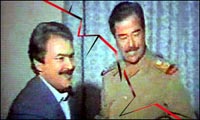
The MKO members fled to Iraq in 1986, where they enjoyed the support of Iraq’s executed dictator Saddam Hussein, and set up their camp near the Iranian border.

The group is also known to have cooperated with Saddam Hussein in suppressing the 1991 uprisings in southern Iraq and carrying out the massacre of Iraqi Kurds.

The MKO has carried out numerous acts of violence against Iranian civilians and government officials.
Download Last group of MKO terrorists relocated

September 17, 2012 0 comments
FacebookTwitterPinterestWhatsappTelegramSkypeEmail
Iran

Iran files complaints against MKO leaders

Iran’s Ambassador to Iraq Hassan Danaeifard says Tehran has filed lawsuits with Iraqi courts against the leaders of the terrorist Mujahedin-e Khalq Organization (MKO). Iran files complaints against MKO leaders in Iraq

More than 145 complaints have been filed in Iraq against the MKO terrorist group and they all must be dealt with in the courts, Danaeifard said on Saturday.

He added that the MKO had been residing in Camp Ashraf for 27 years and used the base to carry out terrorist attacks and kill nearly 12000 innocent Iranian people.

“Many legal complaints have been filed against the MKO within Iraq as well,” the Iranian ambassador added.

“The MKO members along with the forces of [former Iraqi dictator] Saddam [Hussein] massacred the Iraqi people and now the victims’ families want their complaints addressed,” Danaeifard said.

The MKO fled to Iraq in 1986, where it enjoyed the support of Iraq’s executed dictator Saddam Hussein, and set up its camp near the Iranian border.

In December 2011, the United Nations and Baghdad agreed to relocate some 3,000 MKO members from Camp New Iraq, formerly known as Camp Ashraf, in Diyala Province to Camp Liberty, a former US military base near Baghdad International Airport.

The group is also known to have cooperated with Saddam in suppressing the 1991 uprisings in southern Iraq and carrying out the massacre of Iraqi Kurds.

The MKO has carried out numerous acts of violence against Iranian civilians and government officials.

September 17, 2012 0 comments
FacebookTwitterPinterestWhatsappTelegramSkypeEmail
The MEK Expulsion from Iraq

Iraq to expel MKO members from its soil

Iraq to expel MKO member expell MKO members from Iraqi territory
Iraq to expel MKO members from its soil

September 17, 2012 0 comments
FacebookTwitterPinterestWhatsappTelegramSkypeEmail
Mujahedin Khalq; A proxy force

MEK using boldfaced names in bid to get off terror list

Among the foreign countries and overseas organizations that hire people to advocate for them in ‎Washington, D.C., one doesn’t expect to find a group that’s listed on the U.S. government’s ‎rosterMEK using boldfaced names in bid to get off terror list of foreign terrorists. But the Mujahedin e-Khalq — a cult-like Iranian group whose killing ‎of U.S. officials landed it on the terrorist list in ‎‏1997‏‎ — has been paying hundreds of thousands ‎of dollars to a high-profile team of former Members of Congress, political notables and ex-‎administration officials as part of its push to get itself removed from that very list.‎

Indeed, over the past two years, boldface names such as former New York Mayor Rudy Giuliani, ‎former Attorney General Michael Mukasey, former Democratic National Committee Chairman ‎Howard Dean and retired Gen. James Jones, who was President Barack Obama’s first national ‎security adviser, have been paid as much as ‎‏$30,000‏‎ a speech to praise the MEK as a democratic ‎opponent of the regime in Tehran. Convinced of the group’s current commitment to human ‎rights, these and other luminaries rarely mention its assassinations of U.S. military advisers before ‎the ‎‏1979‏‎ Islamic revolution in Iran and its alliance with Iraqi dictator Saddam Hussein against ‎Tehran afterward.‎

‎“There is one organization and one alone that stands for immediate democratic change in Iran, ‎and that is the MEK,” Mukasey told a Paris rally a year ago. Others who have spoken in support ‎of the group at events in Washington, Brussels, London and Berlin are Andrew Card, who was ‎President George W. Bush’s chief of staff for five years; Anita McBride, a chief of staff to first ‎lady Laura Bush; former State Department Director of Policy Planning Mitchell Reiss and former ‎Homeland Security Secretary Tom Ridge.‎

‎“We’re familiar with that passage ‘life, liberty and the pursuit of happiness,’” Ridge said at a ‎Washington event last July. “That is what the MEK stands for.”‎

It is illegal to provide direct assistance to terrorist groups. But those making speeches on behalf ‎of the MEK are booked and paid by speakers’ bureaus, which in turn are paid by MEK ‎supporters in the United States, who get their money from sources outside the United States.‎

The group enjoys support from Republicans and Democrats in the United States, and from Israel ‎and Saudi Arabia. Some critics of the MEK have compared the group’s lobbying effort to the ‎campaign for legitimacy by Ahmed Chalabi, an Iraqi Shiite who won the support of the Bush ‎administration and many in Congress as the leader of the democratic opposition to Hussein. ‎Chalabi helped spread what turned out to be false stories of the dictator’s nuclear weapons ‎program, which Bush used to justify the ‎‏2003‏‎ invasion of Iraq.‎

The MEK’s removal from the terrorist list would give the group greater legitimacy and permit its ‎members to raise funds openly in the United States after years of legally questionable fundraising ‎by supporters and front groups. And the two-year lobbying campaign may be bearing fruit. Last ‎month, the Obama administration took the first preliminary steps, behind the scenes, toward ‎delisting the MEK. The State Department is said to favor the move on the condition that the ‎group — which says it has renounced violence — evacuates a base in Iraq that it once used for ‎cross-border raids into Iran. Secretary of State Hillary Rodham Clinton is expected to make a ‎decision after the last of some ‎‏3,400‏‎ residents of the base, called Camp Ashraf, relocate to a new ‎transit camp at Baghdad’s main airport.‎

But experts on Iran warn that doing what the MEK wants could have serious repercussions. ‎Delisting the group would anger the FBI, which says the MEK was planning terrorist attacks ‎long after its stated renunciation of violence. Indeed, many Iran experts believe the recent spate ‎of assassinations of Iranian nuclear scientists was carried out by MEK operatives working for ‎Israel. Delisting would also complicate negotiations over Iran’s nuclear program among six major ‎powers and Tehran, which also regards the MEK as a terrorist organization. [..]

A History of Violence

The Mujahedin e-Khalq (in English, the People’s Holy Warriors) was founded in ‎‏1963‏‎ in Iran, ‎mixing Islam with communist ideology and calling for the violent overthrow of the country’s ‎pro-American leader, Shah Mohammed Reza Pahlavi. From ‎‏1973‏‎ to ‎‏1978‏‎, the group claimed ‎responsibility for the killings of six U.S. military advisers and an American oil executive in the ‎country. The group also played a major role in the infamous November ‎‏1979‏‎ seizure of the ‎American Embassy in Tehran, repeatedly calling for the execution of the hostages during the ‎subsequent ‎‏14‏‎-month ordeal.‎

But after the revolution, the group fell out with Iranian spiritual leader Ayatollah Ruhollah ‎Khomeini. In ‎‏1981‏‎, Khomeini banned the group, which fled to Iraq. The MEK then formed an ‎alliance with Hussein, who provided the group with weapons and a military base at Camp ‎Ashraf, north of Baghdad.‎

From there, the MEK staged deadly raids across the border during the ‎‏1980-1988‏‎ Iraq-Iran war, ‎claiming credit for killing hundreds of Iranians, as well as a series of violent attacks on Iranian ‎diplomats overseas. In one MEK bombing, Iran’s current supreme leader, Ayatollah Ali ‎Khamenei, permanently lost the use of his right arm. Hussein also used MEK forces to help crush ‎the Iraqi Kurdish uprising after the ‎‏1991‏‎ Persian Gulf War.‎

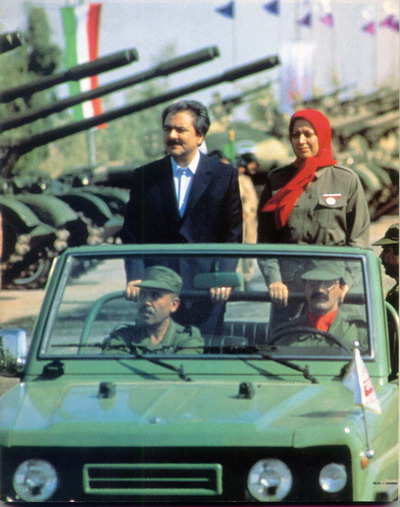
When U.S. forces invaded and occupied Iraq in ‎‏2003‏‎, Camp Ashraf came under their control. ‎The MEK’s Paris-based leaders, Massoud and Maryam Rajavi, who had renounced violence in ‎‏2001‏‎, ordered their followers in Iraq to surrender their weapons. But a ‎‏2004‏‎ FBI report said ‎wiretaps of MEK members in Los Angeles, Paris and Berlin determined that “the MEK is ‎currently actively involved in planning and executing acts of terrorism.”‎

Former MEK members have described the group as a cult that promotes unquestioning obedience ‎to the Rajavis. They say the group demands celibacy, takes away members’ children and ‎pressures couples to divorce so they can devote their lives to the MEK. In ‎‏2003‏‎, several members ‎of the group self-immolated to protest the arrest of the Rajavis, who were quickly released. A ‎‏2009‏‎ report prepared by the RAND Corp. for the Pentagon said “nearly ‎‏70‏‎ percent of the MEK ‎population at Camp Ashraf have been recruited through deception and kept there against their ‎will.”‎

The group earned some notoriety in ‎‏2005‏‎ when it claimed credit for tipping off the United States ‎about Iran’s uranium enrichment activities at Natanz. But Iran experts say Israel, which has close ‎ties with the MEK, was the source of that information and used the group to disclose it. The ‎group’s purported role in uncovering part of Iran’s nuclear program and its public embrace of ‎secular democracy have earned it friends in Washington, particularly among neoconservatives ‎and security figures.‎

Those who have given paid speeches calling for the delisting of the MEK include former CIA ‎chiefs James Woolsey, Porter Goss and Michael Hayden, former U.N. ambassador John Bolton, ‎former FBI Director Louis Freeh, former Marine Commandant James Conway, and two former ‎chairmen of the Joint Chiefs of Staff, Peter Pace and Hugh Shelton. “The current Iranian regime ‎does not need to be modified, does not need to be changed. It does not need to do anything but ‎be replaced. And it needs to be replaced by the resistance movement led by the MEK,” Shelton ‎told the Paris rally.‎

The MEK’s lobbying campaign has also attracted a growing number of senior Democratic ‎figures. In addition to Dean, paid speakers include Lee Hamilton, a former Democratic ‎Representative from Indiana and former co-chairman of the Sept. ‎‏11‏‎ commission, former ‎Pennsylvania Gov. Ed Rendell and former Energy Secretary Bill Richardson.‎

The campaign has already won bipartisan support in Congress. Backers of the MEK’s efforts ‎include both House Foreign Affairs Chairwoman Ileana Ros-Lehtinen (R-Fla.) and Bob Filner ‎‎(D-Calif.), the ranking member of the House Veterans’ Affairs Committee. “I know the MEK ‎supports a secular, democratic, non-nuclear Iran,” Filner told a BBC interviewer in April. “We ‎should be helping them in every way we can.”‎

Decision Looming

The State Department says any decision by Clinton on delisting the MEK now depends on the ‎willingness of Camp Ashraf’s remaining residents to depart. The United States is working with ‎the United Nations to resettle them in third countries. But around ‎‏1,200‏‎ MEK members at the ‎camp are resisting departure out of fear they’ll be returned to Iran.‎

‎Diplomats say a decision by Clinton to take the MEK off the list would not go down well in ‎Tehran. Iranian officials often accuse western governments of hypocrisy for sheltering MEK ‎members while condemning Iran’s support for Hezbollah and Hamas. A decision to delist might ‎cause Iran to harden its position on its nuclear program at the next round of negotiations with the ‎United States and five other world powers, which are pressing Iran to give up its stockpile of ‎‏20‏‎ ‎percent enriched uranium in return for lifting an embargo on civilian airline parts. Iran is ‎demanding a lifting of all sanctions in return for giving up the stockpile.‎

Karim Pakravan, an Iranian-born economist at DePaul University, notes that the MEK has ‎managed to portray itself to Congress as a legitimate Iranian opposition group “by an effective ‎campaign of propaganda and thinly disguised bribes to marquee political names on both sides of ‎the aisle.” Writing in an online forum on Iran, Pakravan says delisting would allow the MEK “to ‎use its massive foreign-financed war chest to try to crush all the other Iranian voices in the ‎United States and establish itself as THE democratic alternative to the Islamic Republic of Iran ‎in the eyes of a corrupt and naïve U.S. Congress. Such an outcome would be indeed a tragedy ‎for the democratic forces in Iran.” U.S. officials say Clinton will make her decision no more than ‎‏60‏‎ days after the last person is out of Camp Ashraf. But while a decision to keep the group on ‎the terrorist list is still possible, the secretary’s linking of her decision to the camp’s evacuation ‎makes it unlikely she will decide against delisting if the relocation is successful. The European ‎Union and Britain have delisted the MEK in recent years.‎

By Jonathan Broder ,CQ Roll Call Staff

September 16, 2012 0 comments
FacebookTwitterPinterestWhatsappTelegramSkypeEmail
Newer Posts
Older Posts

Recent Posts

  • Ideology Cannot Prevail over Human Dignity

    July 29, 2026
  • Is Rudy Giuliani so naïve to support MEK terrorists?

    July 27, 2026
  • National Pride of Iranians: Reject the Rajavis and their Patrons

    July 22, 2026
  • Italian legislators fooled by MEK’s polished presentations

    July 18, 2026
  • The Rhetorical Style and Polemical Language of the MEK

    July 15, 2026
  • Facebook
  • Twitter
  • Instagram
  • Youtube

© 2003 - 2025 NEJAT Society . All Rights Reserved. NejatNGO.org


Back To Top
Nejat Society
  • Home
  • Articles
  • Media
    • Cartoons
    • NewsPics
    • Photo Gallery
    • Videos
  • Publications
    • Books
    • Nejat NewsLetter
    • Pars Brief
  • About Us
  • Contact us
  • Editions
    • عربي
    • فارسی
    • Shqip