
A separate justice system for American Muslims, the US embrace of terrorism, and other key political facts are highlighted
The Mujahedin-e Khalq (MEK), or People’s Mojahedin Organization of Iran, is an Iranian dissident  group that has been formally designated for the last 15 years by the US State Department as a "foreign terrorist organization". When the Bush administration sought to justify its attack on Iraq in 2003 by accusing Saddam Hussein of being a sponsor of "international terrorism", one of its prime examples was Iraq’s "sheltering" of the MEK. Its inclusion on the terrorist list has meant that it is a felony to provide any "material support" to that group.
Nonetheless, a large group of prominent former US government officials from both political parties has spent the last several years receiving substantial sums of cash to give speeches to the MEK, and have then become vocal, relentless advocates for the group, specifically for removing them from the terrorist list. Last year, the Christian Science Monitor thoroughly described "these former high-ranking US officials – who represent the full political spectrum – [who] have been paid tens of thousands of dollars to speak in support of the MEK." They include Democrats Howard Dean, Ed Rendell, Wesley Clark, Bill Richardson, and Lee Hamilton, and Republicans Rudy Giuliani, Fran Townsend, Tom Ridge, Michael Mukasey, and Andrew Card. Other prominent voices outside government, such as Alan Dershowitz and Elie Wiesel, have been enlisted to the cause and are steadfast MEK advocates.
Money has also been paid to journalists such as The Washington Post’s Carl Bernstein and the Chicago Tribune’s Clarence Page. Townsend is a CNN contributor and Rendell is an MSNBC contributor, yet those MEK payments are rarely, if ever, disclosed by those media outlets when featuring those contributors (indeed, Townsend can go on CNN to opine on Iran, even urging that its alleged conduct be viewed as "an act for war", with no disclosure whatsoever during the segment of her MEK payments). Quoting a State Department official, CSM detailed how the scheme works:
"’Your speech agent calls, and says you get $20,000 to speak for 20 minutes. They will send a private jet, you get $25,000 more when you are done, and they will send a team to brief you on what to say.’ . . . The contracts can range up to $100,000 and include several appearances."
On Friday, the Guardian’s Washington reporter Chris McGreal added substantial information about the recipients of the funding and, especially, its sources. As he put it, the pro-MEK campaign "has seen large sums of money directed at three principal targets: members of Congress, Washington lobby groups and influential former officials", including the GOP Congressman who chairs the House Intelligence Committee, Mike Rogers.
What makes this effort all the more extraordinary are the reports that MEK has actually intensified its terrorist and other military activities over the last couple of years. In February, NBC News reported, citing US officials, that "deadly attacks on Iranian nuclear scientists are being carried out by [MEK]" as it is "financed, trained and armed by Israel’s secret service". While the MEK denies involvement, the Iranian government has echoed these US officials in insisting that the group was responsible for those assassinations. NBC also cited "unconfirmed reports in the Israeli press and elsewhere that Israel and the MEK were involved in a Nov. 12 explosion that destroyed the Iranian missile research and development site at Bin Kaneh, 30 miles outside Tehran".
In April, the New Yorker’s Seymour Hersh reported that the US itself has for years provided extensive training to MEK operatives, on US soil (in other words, the US government provided exactly the "material support" for a designated terror group which the law criminalizes). Hersh cited numerous officials for the claim that "some American-supported covert operations continue in Iran today." The MEK’s prime goal is the removal of Iran’s government.
Despite these reports that the MEK has been engaged in terrorism and other military aggression against Iran – or, more accurately: likely because of them – it was announced on Friday the US State Department will remove MEK from its list of terrorist organizations. This event is completely unsurprising. In May, I noted the emergence of reports that the State Department would do so imminently.
Because this MEK scam more vividly illustrates the rot and corruption at the heart of America’s DC-based political culture than almost any episode I can recall, I’ve written numerous times about it. But now that the de-listing is all but official, it is worthwhile to take note of the five clear lessons it teaches:
Lesson One: There is a separate justice system in the US for Muslim Americans.
The past decade has seen numerous "material support" prosecutions of US Muslims for the most trivial and incidental contacts with designated terror groups. It is hardly an exaggeration to say that any Muslim who gets with sneezing distance of such a group is subject to prosecution. Indeed, as I documented last week, many of them have been prosecuted even for core First Amendment activities: political advocacy deemed supportive of such groups.
When they’re convicted – and marginalized Muslims, usually poor and powerless, almost always are – they typically are not only consigned to prison for decades, but are placed in America’s most oppressive and restrictive prison units. As a result, many law-abiding Muslim Americans have become petrified of donating money to Muslim charities or even speaking out against perceived injustices out of fear – the well-grounded fear – that they will be accused of materially supporting a terror group. This is all part of the pervasive climate of fear in which many American Muslims live.
Yet here we have a glittering, bipartisan cast of former US officials and other prominent Americans who are swimming in cash as they advocate on behalf of a designated terrorist organization. After receiving their cash, Howard Dean and Rudy Giuliani met with MEK leaders, and Dean actually declared that the group’s leader should be recognized by the west as President of Iran. That is exactly the type of coordinated messaging with a terrorist group with the supreme court found, in its 2010 Humanitarian Law v. Holder ruling, could, consistent with the First Amendment, lead to prosecution for "material support of terrorism" (ironically, numerous MEK shills, including CNN’s Townsend, praised the supreme court for its broad reading of that statute when they thought, correctly, that it was being applied to Muslims).
Yet other than a reported Treasury Department investigation several months ago to determine the source of Ed Rendell’s MEK speaking fees – an investigation that seems to have gone nowhere – there has been no repercussions whatsoever from this extensive support given by these DC luminaries to this designated terror group. Now that MEK will be removed from the terror list, there almost certainly never will be any consequences (as a legal matter, the de-listing should have no impact on the possible criminality of this MEK support: the fact that a group is subsequently removed from the list does not retroactively legalize the providing of material support when it was on the list).
In sum, there are numerous American Muslims sitting in prison for years for far less substantial interactions with terror groups than this bipartisan group of former officials gave to MEK. This is what New York Times Editorial Page Editor Andrew Rosenthal meant when he wrote back in March that the 9/11 attacks have "led to what’s essentially a separate justice system for Muslims". The converse is equally true: America’s political elites can engage in the most egregious offenses – torture, illegal eavesdropping, money-driven material support for a terror group – with complete impunity.
Lesson Two: The US government is not opposed to terrorism; it favors it.
The history of the US list of designated terrorist organizations, and its close cousin list of state sponsors of terrorism, is simple: a country or group goes on the list when they use violence to impede US interests, and they are then taken off the list when they start to use exactly the same violence to advance US interests. The terrorist list is not a list of terrorists; it’s a list of states and groups which use their power to defy US dictates rather than adhere to them.
The NYU scholar Remi Brulin has exhaustively detailed the rank game-playing that has taken place with this list: Saddam was put on it when he allied with the Soviets in the early 1980s, then was taken off when the US wanted to arm and fund him against Iran in the mid-1980s, then he was put back on in the early 1990s when the US wanted to attack him.
And now, with the MEK, we have a group that, at least according to some reports, appears to have intensified its terrorism, and yet they are removed from the list. Why? Because now they are aligned against the prime enemy of the US and Israel – and working closely with those two nations – and are therefore, magically, no longer "terrorists". As the Iran experts Flynt and Hillary Mann Leverett wrote on Friday:
"Since when did murdering unarmed civilians (and, in some instances, members of their families as well) on public streets in the middle of a heavily populated urban area (Tehran) not meet even the US government’s own professed standard for terrorism?"
They answered their own question: "We have seen too many times over the years just how cynically American administrations have manipulated these designations, adding and removing organizations and countries for reasons that have little or nothing to do with designees’ actual involvement in terrorist activity." In other words, the best and most efficient way to be removed from the list is to start engaging in terrorism for and in conjunction with the US and its allies (i.e. Israel) rather than against them.
Lesson Three: "Terrorism" remains the most meaningless, and thus the most manipulated, term in political discourse.
The US government did not even pretend that terrorism had anything to do with its decision as to whether MEK should be de-listed. Instead, they used the carrot of de-listing, and the threat of remaining on the list, to pressure MEK leaders to adhere to US demands to abandon their camp in Iraq. But what does adhering to this US demand have to do with terrorism? Nothing. This list has nothing to do with terrorism. It is simply a way the US rewards those who comply with its dictates and punishes those who refuse.
Terrorism, at least in its applied sense, means little other than: violence used by enemies of the US and its allies. Violence used by the US and its allies (including stateless groups) can never be terrorism, no matter how heinous and criminal.
Lesson Four: Legalized influence-peddling within both parties is what drives DC.
MEK achieved its goal by doing more than merely changing the beneficiaries of its actions from Saddam to the US and Israel. It also found a way – how it did so remains a mystery – to funnel millions of dollars into the bank accounts of key ex-officials from both parties, a bipartisan list of DC lobbyist firms, and several key journalists. In other words, it achieved its policy aims the same way most groups in DC do: by buying influence within both parties, and paying influence-peddlers who parlay their political celebrity into personal riches.
So pervasive is this scam that most people have become utterly numb to it (that’s because people are willing to acquiesce to most evils when they become perceived as common; that acquiescence is often justified as worldly sophistication). As a result, there was no pretense here to hide these sleazy transactions. The very idea that Ed Rendell suddenly woke up one day and developed an overnight, never-before-seen passion for the MEK and Iran policy is just laughable. But the former Pennsylvania governor is a key advocate to enlist – he remains well connected within the Democratic Party and now has an important platform on MSNBC – so on the payroll he went.
Once the bipartisan list of DC officials receiving cash from MEK became known, it became almost impossible to imagine any outcome other than this one. As one person tweeted after reading this State Department decision: any American billionaire could easily have his birthday declared a national holiday by simply spreading the cash around enough to DC political and media figures on a bipartisan basis.
Lesson Five: there is aggression between the US and Iran, but it’s generally not from Iran.
Over the last decade, the US has had Iran almost entirely encircled, thanks in part – only in part – to large-scale ground invasions of the nations on its eastern and western borders. Some combination of Israel and the US have launched cyberwarfare at the Iranians, murdered their civilian scientists, and caused explosions on its soil. The American president and the Israeli government continuously and publicly threaten to use force against them.
And now, the US has taken a key step in ensuring that a group devoted to the overthrow of the regime, a group that sided with Saddam in his war against Iran, is able to receive funding and otherwise be fully admitted into the precincts of international respectability. Just imagine if Iran took steps to legitimize an American rebel group that has long been devoted to the overthrow of the US government and which has a long history of serious violence on US soil.
Not just the Iranian government, but also most of its citizens, are likely to perceive this de-listing as exactly what it is: yet another act of aggression toward their nation. As the Christian Science Monitor said of the group, it is "widely despised inside Iran". But the US has now officially offered a clear gesture of legitimization, if not support, for this group, one that only exacerbates the war-threatening tensions between the two nations.
UPDATE
Several commenters have raised questions about the motives of Dershowitz and Wiesel in supporting MEK. While motives can never be known with certainty – one can attempt only to make inferences based on conduct and circumstances – it was the JTA, the self-described "global news service of the Jewish people", which reported their involvement, and they suggested the motive was not any receipt of money but rather MEK’s alignment with Israel:
"The names on the growing list of influential American advocates to de-list the Mujahedin-e Khalq, or MEK — known in English as the National Council of Resistance of Iran — suggest an effort to give the bid a pro-Israel imprimatur. . . .
"On the record, the people involved insist there is no Israel element to what they say is a humanitarian endeavor to remove the movement’s followers from danger.
"’I don’t see any Israel issue at all,’ Dershowitz told JTA in an interview, instead casting it in terms of Hillel’s dictum, ‘If I am only for myself, who am I?’
"Off the record, however, figures close to the campaign use another ancient Middle Eastern dictum to describe the involvement of supporters of Israel: ‘The enemy of my enemy is my friend.’"
"A source close to the effort to bring pro-Israel voices into the initiative cited reports that Israel has allied with the MEK, which reportedly maintains agents in Iran and in the past has published details of Iran’s nuclear weapons program."
A separate JTA article reporting on the de-listing noted that "Iranian Americans sympathetic to the plight of MEK enlisted the support of a number of pro-Israel figures, including Nobel Peace laureate and Holocaust memoirist Elie Wiesel; Harvard law professor Alan Dershowitz; and Irwin Cotler, the former Canadian justice minister." The original sentence has been clarified to reflect this report.
By Glenn Greenwald
 new low today, by notifying Congress that the Obama administration intends to remove the mojahedin-e khalq (MEK) from the State Department’s list of foreign terrorist organizations (FTOs).
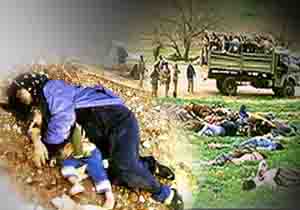 list. Most analysts we interviewed predicted that the removal would only worsen already abysmal relations with Iran and possibly make any effort to defuse the gathering crisis over its nuclear programme yet more difficult. Here’s a round-up of what they had to say beginning with statements that came in following the article’s publication:
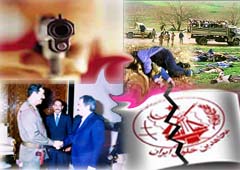 list, U.S. officials told reporters here Friday.
 administration that it intends to remove the Iranian dissident group Mujahadeen e-Khalq (MEK) from the treasury department’s terror list.
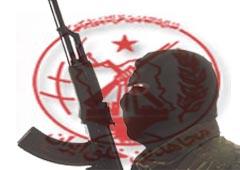 Obama administration officials told CNN.
 will no longer be on the State Department’s Foreign Terrorist Organization list. The move comes after a high-profile, years-long lobbying campaign by a bipartisan cast of U.S. politicians and officials to delist MEK, despite a violent past that includes killing Americans.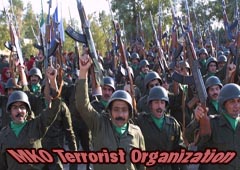
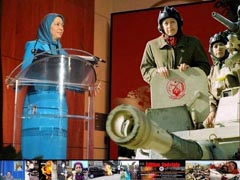 decade of bloody anti-US attacks and killing a number of US military officers, the Mujahedin-e Khalq (MeK), one of the inaugural members of the US State Department’s list of Foreign Terrorist Organizations, has been ordered removed by Secretary of State Hillary Clinton.
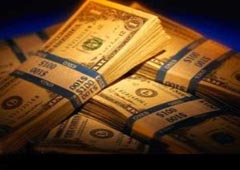 unbanned in the US after pouring millions of dollars into an unprecedented campaign of political donations, hiring Washington lobby groups and payments to former top administration officials.