Nejat Society
  • Home
  • Articles
  • Media
    • Cartoons
    • NewsPics
    • Photo Gallery
    • Videos
  • Publications
    • Books
    • Nejat NewsLetter
    • Pars Brief
  • About Us
  • Contact us
  • Editions
    • عربي
    • فارسی
    • Shqip
Nejat Society
Nejat Society
  • Home
  • Articles
  • Media
    • Cartoons
    • NewsPics
    • Photo Gallery
    • Videos
  • Publications
    • Books
    • Nejat NewsLetter
    • Pars Brief
  • About Us
  • Contact us
  • Editions
    • عربي
    • فارسی
    • Shqip
© 2003 - 2024 NEJAT Society. nejatngo.org
The MEK Expulsion from Iraq

U.S. bids to resettle MKO in Israel

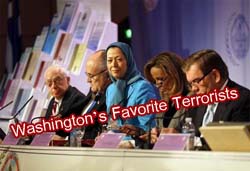
Sources say that terrorist MKO group’s leader, Maryam Rajavi, along with other high ranking members of the terrorist group had a meeting earlier last week to explore ways to convince the U.S. bids to resettle MKO in IsraelEuropean countries to accept the members of the terrorist group who are being held at Camp Ashraf and Liberty.

According to a report published by Habilian Foundation website, Arabic language Nahrain News Agency quoted informed sources as saying that the group leadership contacted the U.S. embassy staff (suspected CIA agents) to help them find a new place for their resettlement.

“The United States is trying to persuade some European countries, including Bulgaria and Romania to take in some of the elements of the terrorist MKO group,” the sources added.

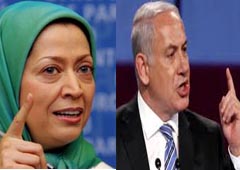
The sources disclosed that Maryam Rajavi has demanded the embassy of Zionist regime in Paris to accept a number of MKO elements in the Israeli-occupied territories; however, Tel Aviv has so far shown no reaction to it.

August 2, 2012 0 comments
FacebookTwitterPinterestWhatsappTelegramSkypeEmail
UN

UN chief tells Mojahedin Khalq in Iraq to move

UNITED NATIONS — The U.N. chief is urging some 1,200 Iranian exiles who are refusing to UN chief tells Mojahedin Khalq in Iraq to moveleave Camp Ashraf to cooperate with Iraqi authorities and resettle in a new refugee camp near Baghdad.

U.N. Secretary-General Ban Ki-moon on Wednesday also urged other countries to give asylum to the People’s Mujahedeen Organization of Iran, an exiled Iranian dissident group that had waged a campaign from foreign bases to overthrow Iran’s clerical government.

The exile group, also known by its Farsi name, Mujahedeen-e-Khalq, have already moved about 2,000 of its residents from Camp Asraf in northern Iraq to a Baghdad refugee camp, Camp Hurriya, which is a former U.S. military base. But they ignored a July 20 deadline to move the remaining 1,200 members, saying they will not go until they see proof of more water, increased electricity, better facilities for sick and disabled people and other improvements to the base. The U.N. says the services there are already far better than at most other refugee camps worldwide.

On Tuesday, Iraqi National Security Adviser Faleh al-Fayadh warned the group to move soon or his government will take matters into its own hands.

Ban expressed "appreciation" for Iraq’s government and urged the refugees to "earnestly prepare for their next transfer."

But he added that "violence should, at all costs, be avoided" and urged Iraq’s government to "exercise restraint."

The People’s Mujahedeen Organization of Iran has been labeled everything from a cult to a terrorist organization — although one that has provided the U.S. with intelligence on Iran. The group says it renounced violence in 2001, after carrying out bloody bombings and assassinations in Iran in the 1980s.

The Iraqi government considers them a terrorist group that is in the country illegally. Over the last six months, the U.N. has tried to mediate, and helped broker an agreement to close Ashraf and temporarily move the exiles into the refugee camp. Ultimately, Iraqi and U.N. officials want to give the Ashraf residents refugee status and resettle them outside of Iraq.

The distrust between the exiles and Iraq’s government has always been palatable, but it peaked after security forces led deadly raids in Ashraf twice in the last four years.

"The government of Iraq receives all of its orders on Ashraf from the Iranian regime, refrains from implementing this simple and practical plan, and it’s planning for the third massacre at Ashraf," the exiles said in a statement Tuesday.

CBS News

August 2, 2012 0 comments
FacebookTwitterPinterestWhatsappTelegramSkypeEmail
USA

U.S. concerned over Iraqi threats to force MEK from Ashraf

The United States expressed concern on Wednesday over Iraqi threats to force an Iranian U.S. concerned over Iraqi threats to force MEK from Ashrafdissident group out of a camp in Iraq, but also urged members of the group to relocate voluntarily to a large former U.S. military base in Baghdad.

Iraqi authorities have been locked in a protracted dispute with the Mujahadin-e Khalq (MEK) over plans to move 3,000 MEK members from Camp Ashraf, where they have lived for years, to a former U.S. base near Baghdad’s airport – a step toward their ultimate expulsion from Iraq.

The Iranian group, which calls for the overthrow of Iran’s clerical leaders and was supported by former Iraqi leader Saddam Hussein, is no longer welcome in Iraq under the Shiite-led government that came to power after Saddam’s downfall in 2003. Clashes between Ashraf residents and Iraqi security forces last year killed 34 people.

“The United States is concerned by the government of Iraq’s reference on July 31 to the possible closure of Camp Ashraf by involuntary relocation of its residents,” State Department spokesman Patrick Ventrell said.

“We urge the government of Iraq to remain patient and flexible in seeking a voluntary arrangement for continued relocations, as only a peaceful resolution to the situation at Camp Ashraf is acceptable,” he said in a statement.

“We also call on the Ashraf leadership to immediately resume cooperation with the relocation,” Ventrell added.

The MEK has complained of poor conditions at the former U.S. base, known as Camp Liberty. Only about two-thirds of the group have moved there. The others, around 1,200 people, are refusing to leave Camp Ashraf. None have moved since May, U.S. officials say.

Iraq on Tuesday told them they have to move or it would be free to transfer them “to where we find appropriate,” as Iraq’s National Security Advisor Falih al-Fayadh put it.

Ventrell said U.S. government officials who have recently visited Camp Liberty did not find the “dire humanitarian conditions” that MEK members had alleged. He noted that Iraq had delivered goods demanded by Liberty’s residents two weeks ago. These included air conditioners, generators, food and water tanks.

“It is clear that the quality of life (at Camp Liberty) exceeds accepted humanitarian standards,” Ventrell said.

“The continued intransigence of the residents’ leadership in placing preconditions and making demands prior to any agreement to relocate further Ashraf residents is unacceptable,” he said, adding that finally closing Ashraf would let the United Nations, the United States and others focus on a “durable solution for the residents’ relocation outside of Iraq.”

The United Nations has been interviewing members of the Iranian group and approaching foreign governments to ask that they accept them for resettlement.

The United States has warned the MEK that its cooperation in moving from Camp Ashraf would be a key factor as the United States weighs whether to remove it from the U.S. list of foreign terrorist organizations.

Also known as the People’s Mujahideen Organization of Iran, the group led a guerrilla campaign against the U.S.-backed Shah of Iran during the 1970s, including attacks on U.S. targets. Some Iranians vilify the group for allying itself with Iraq’s Saddam during the 1980-88 Iran-Iraq war.

(Reporting by Susan Cornwell; Editing by Will Dunham)
Reuters, August 01 2012
http://www.euronews.com/newswires/1605664-us-
concerned-over-iraqi-threats-to-force-iran-dissidents-from-camp/

August 2, 2012 0 comments
FacebookTwitterPinterestWhatsappTelegramSkypeEmail
USA

MKO remains on the list Foreign Terrorist Organizations in U.S.

Chapter 6. Foreign Terrorist Organizations
MKO remains on the list Foreign Terrorist Organizations in U.S.
Office of the Coordinator for Counterterrorism

Country Reports on Terrorism 2011

Report

July 31, 2012

————————-

Foreign Terrorist Organizations (FTOs) are designated by the Secretary of State in accordance with section 219 of the Immigration and Nationality Act (INA). FTO designations play a critical role in the fight against terrorism and are an effective means of curtailing support for terrorist activities.

Legal Criteria for Designation under Section 219 of the INA as amended:
1. It must be a foreign organization.
2. The organization must engage in terrorist activity, as defined in section 212 (a)(3)(B) of the INA (8 U.S.C. § 1182(a)(3)(B)), or terrorism, as defined in section 140(d)(2) of the Foreign Relations Authorization Act, Fiscal Years 1988 and 1989 (22 U.S.C. § 2656f(d)(2)), or retain the capability and intent to engage in terrorist activity or terrorism.
3. The organization’s terrorist activity or terrorism must threaten the security of U.S. nationals or the national security (national defense, foreign relations, or the economic interests) of the United States.

—————————————-

U.S. Government Designated Foreign Terrorist Organizations

Abu Nidal Organization (ANO)
Abu Sayyaf Group (ASG)
Al-Aqsa Martyrs Brigade (AAMB)
Ansar al-Islam (AAI)
Army of Islam (AOI)
Asbat al-Ansar (AAA)
Aum Shinrikyo (AUM)
Basque Fatherland and Liberty (ETA)
Communist Party of Philippines/New People’s Army (CPP/NPA)
Continuity Irish Republican Army (CIRA)
Gama’a al-Islamiyya (IG)
Hamas
Harakat ul-Jihad-i-Islami (HUJI)
Harakat ul-Jihad-i-Islami/Bangladesh (HUJI-B)
Harakat ul-Mujahideen (HUM)
Hizballah
Indian Mujahideen (IM)
Islamic Jihad Union (IJU)
Islamic Movement of Uzbekistan (IMU)
Jaish-e-Mohammed (JEM)
Jemaah Islamiya (JI)
Jundallah
Kahane Chai
Kata’ib Hizballah (KH)
Kurdistan Workers’ Party (PKK)
Lashkar e-Tayyiba (LT)
Lashkar i Jhangvi (LJ)
Liberation Tigers of Tamil Eelam (LTTE)
Libyan Islamic Fighting Group (LIFG)
Moroccan Islamic Combatant Group (GICM)
Mujahadin-e Khalq Organization (MEK)
National Liberation Army (ELN)
Palestine Islamic Jihad – Shaqaqi Faction (PIJ)
Palestine Liberation Front – Abu Abbas Faction (PLF)
Popular Front for the Liberation of Palestine (PFLP)
Popular Front for the Liberation of Palestine-General Command (PFLP-GC)
Al-Qa’ida (AQ)
Al-Qa’ida in the Arabian Peninsula (AQAP)
Al-Qa’ida in Iraq (AQI)
Al-Qa’ida in the Islamic Maghreb (AQIM)
Real IRA (RIRA)
Revolutionary Armed Forces of Colombia (FARC)
Revolutionary Organization 17 November (17N)
Revolutionary People’s Liberation Party/Front (DHKP/C)
Revolutionary Struggle (RS)
Al-Shabaab (AS)
Shining Path (SL)
Tehrik-e Taliban Pakistan (TTP)
United Self-Defense Forces of Colombia (AUC)

(…)

MUJAHADIN-E KHALQ ORGANIZATION (MEK)

aka MEK; MKO; Mujahadin-e Khalq; Muslim Iranian Students’ Society; National Council of Resistance; NCR; Organization of the People’s Holy Warriors of Iran; the National Liberation Army of Iran; NLA; People’s Mujahadin Organization of Iran; PMOI; National Council of Resistance of Iran; NCRI; Sazeman-e Mujahadin-e Khalq-e Iran

Description: Designated as a Foreign Terrorist Organization on October 8, 1997, the Mujahadin-E Khalq Organization ( MEK) is a Marxist-Islamic Organization that seeks the overthrow of the Iranian regime through its military wing, the National Liberation Army (NLA), and its political front, the National Council of Resistance of Iran (NCRI).

The MEK was founded in 1963 by a group of college-educated Iranian Marxists who opposed the country’s pro-western ruler, Shah Mohammad Reza Pahlavi. The group participated in the 1979 Islamic Revolution that replaced the Shah with a Shiite Islamist regime led by Ayatollah Khomeini. However, the MEK’s ideology – a blend of Marxism, feminism, and Islamism – was at odds with the post-revolutionary government, and its original leadership was soon executed by the Khomeini regime. In 1981, the group was driven from its bases on the Iran-Iraq border and resettled in Paris, where it began supporting Iraq in its eight-year war against Khomeini’s Iran. In 1986, after France recognized the Iranian regime, the MEK moved its headquarters to Iraq, which facilitated its terrorist activities in Iran. From 2003 through the end of 2011, roughly 3,400 MEK members were encamped at Ashraf in Iraq.

Activities: The group’s worldwide campaign against the Iranian government uses propaganda and terrorism to achieve its objectives. During the 1970s, the MEK staged terrorist attacks inside Iran and killed several U.S. military personnel and civilians working on defense projects in Tehran. In 1972, the MEK set off bombs in Tehran at the U.S. Information Service office (part of the U.S. Embassy), the Iran-American Society, and the offices of several U.S. companies to protest the visit of President Nixon to Iran. In 1973, the MEK assassinated the deputy chief of the U.S. Military Mission in Tehran and bombed several businesses, including Shell Oil. In 1974, the MEK set off bombs in Tehran at the offices of U.S. companies to protest the visit of then U.S. Secretary of State Kissinger. In 1975, the MEK assassinated two U.S. military officers who were members of the U.S. Military Assistance Advisory Group in Tehran. In 1976, the MEK assassinated two U.S. citizens who were employees of Rockwell International in Tehran. In 1979, the group claimed responsibility for the murder of an American Texaco executive. Alhough denied by the MEK, analysis based on eyewitness accounts and MEK documents demonstrates that MEK members participated in and supported the 1979 takeover of the U.S. Embassy in Tehran and that the MEK later argued against the early release of the American hostages. The MEK also provided personnel to guard and defend the site of the U.S. Embassy in Tehran, following the takeover of the Embassy.

In 1981, MEK leadership attempted to overthrow the newly installed Islamic regime; Iranian security forces subsequently initiated a crackdown on the group. The MEK instigated a bombing campaign, including an attack against the head office of the Islamic Republic Party and the Prime Minister’s office, which killed some 70 high-ranking Iranian officials, including Chief Justice Ayatollah Mohammad Beheshti, President Mohammad-Ali Rajaei, and Prime Minister Mohammad-Javad Bahonar. These attacks resulted in an expanded Iranian government crackdown that forced MEK leaders to flee to France. For five years, the MEK continued to wage its terrorist campaign from its Paris headquarters. Expelled by France in 1986, MEK leaders turned to Saddam Hussein’s regime for basing, financial support, and training. Near the end of the 1980-1988 Iran-Iraq War, Baghdad armed the MEK with heavy military equipment and deployed thousands of MEK fighters in suicidal, waves of attacks against Iranian forces.

The MEK’s relationship with the former Iraqi regime continued through the 1990s. In 1991, the group reportedly assisted the Iraqi Republican Guard’s bloody crackdown on Iraqi Shia and Kurds who rose up against Saddam Hussein’s regime. In April 1992, the MEK conducted near-simultaneous attacks on Iranian embassies and consular missions in 13 countries, including against the Iranian mission to the United Nations in New York, demonstrating the group’s ability to mount large-scale operations overseas. In June 1998, the MEK was implicated in a series of bombing and mortar attacks in Iran that killed at least 15 and injured several others. The MEK also assassinated the former Iranian Minister of Prisons in 1998. In April 1999, the MEK targeted key Iranian military officers and assassinated the deputy chief of the Iranian Armed Forces General Staff, Brigadier General Ali Sayyaad Shirazi.

In April 2000, the MEK attempted to assassinate the commander of the Nasr Headquarters, Tehran’s interagency board responsible for coordinating policies on Iraq. The pace of anti-Iranian operations increased during “Operation Great Bahman” in February 2000, when the group launched a dozen attacks against Iran. One attack included a mortar attack against a major Iranian leadership complex in Tehran that housed the offices of the Supreme Leader and the President. The attack killed one person and injured six other individuals. In March 2000, the MEK launched mortars into a residential district in Tehran, injuring four people and damaging property. In 2000 and 2001, the MEK was involved in regular mortar attacks and hit-and-run raids against Iranian military and law enforcement personnel, as well as government buildings near the Iran-Iraq border. Following an initial Coalition bombardment of the MEK’s facilities in Iraq at the outset of Operation Iraqi Freedom, MEK leadership negotiated a cease-fire with Coalition Forces and surrendered their heavy-arms to Coalition control. From 2003 through the end of 2011, roughly 3,400 MEK members were encamped at Ashraf in Iraq.

In 2003, French authorities arrested 160 MEK members at operational bases they believed the MEK was using to coordinate financing and planning for terrorist attacks. Upon the arrest of MEK leader Maryam Rajavi, MEK members took to Paris’ streets and engaged in self-immolation. French authorities eventually released Rajavi.

Strength: Estimates place MEK’s worldwide membership at between 5,000 and 10,000 members, with large pockets in Paris and other major European capitals. In Iraq, roughly 3,400 MEK members were gathered at Camp Ashraf, the MEK’s main compound north of Baghdad, at the end of 2011.

As a condition of the 2003 cease-fire agreement, the MEK relinquished more than 2,000 tanks, armored personnel carriers, and heavy artillery.

Location/Area of Operation: The MEK’s global support structure remains in place, with associates and supporters scattered throughout Europe and North America. Operations have targeted Iranian government elements across the globe, including in Europe and Iran. The MEK’s political arm, the National Council of Resistance of Iran (NCRI), has a global support network with active lobbying and propaganda efforts in major Western capitals. NCRI also has a well-developed media communications strategy.

External Aid: Before Operation Iraqi Freedom began in 2003, the MEK received all of its military assistance and most of its financial support from Saddam Hussein. The fall of Saddam Hussein’s regime has led the MEK increasingly to rely on front organizations to solicit contributions from expatriate Iranian communities.
(….)

August 2, 2012 0 comments
FacebookTwitterPinterestWhatsappTelegramSkypeEmail
MEK Camp Ashraf

Concern about Camp Ashraf

Press Statement
Concern about Camp Ashraf
Patrick Ventrell
Acting Deputy Spokesperson, Office of Press Relations

Washington, DC
August 1, 2012

The United States is concerned by the Government of Iraq’s reference on July 31 to the possible closure of Camp Ashraf by involuntary relocation of its residents. We urge the Government of Iraq to remain patient and flexible in seeking a voluntary arrangement for continued relocations, as only a peaceful resolution to the situation at Camp Ashraf is acceptable. This requires that continued dialogue be pursued in place of forcible measures and that all sides act in accordance with the December 25, 2011 Memorandum of Understanding (MOU) between the Iraqi Government and the United Nations.

We also call on the Ashraf leadership to immediately resume cooperation with the relocation of residents to Camp Hurriya, especially following the Iraqi Government’s delivery of a cargo convoy of goods as demanded by the residents on July 15. Allegations of dire humanitarian conditions at Hurriya are inconsistent with observations made by U.S. Government officials who have visited Hurriya, as well as reporting from UN monitors. Based on these reports, and other information, it is clear that the quality of life at Hurriya exceeds accepted humanitarian standards. The continued intransigence of the residents’ leadership in placing preconditions and making demands prior to any agreement to relocate further Ashraf residents is unacceptable and puts in danger protections established in the MOU.

The process established by the MOU has resulted in the safe relocation of nearly 2,000 residents from Camp Ashraf, almost two-thirds of its estimated population. The United Nations Assistance Mission for Iraq’s (UNAMI) “Roadmap” provides a peaceful way forward for Ashraf’s closure, and the United States urges adherence to this process to finally and peacefully close Camp Ashraf. Ashraf’s closure will allow UNAMI, the United States, and our partners to focus attention and efforts on a durable solution for the residents’ relocation outside of Iraq.

August 2, 2012 0 comments
FacebookTwitterPinterestWhatsappTelegramSkypeEmail
UN

Nejat Society supports UN roadmap on Camp Ashraf evacuation

Dear Mr. Kobler,Nejat Society supports UN roadmap on Camp Ashraf evacuation
We are family members of Mujahedin Khalq organization forces. We founded Nejat Society (Salvation Society) about a decade ago. We have worked here to help release our loved ones who are held as hostages in the MKO.

With greetings and respect to you and your colleagues at the United Nations Organization.

Your peaceful actions to avoid violence and bloody conflict between the MKO cult and the Iraqi government in relocating of the group captives to Camp Liberty and eventually to the free world have provoked the group leaders’ anger and wrath against you!

Appreciating you and your honorable colleagues we should mention that your effort for peaceful relocation of 3400 men and women –stranded in the MKO’s cultic thoughts– to Camp Liberty and from there to the free world, is a humanitarian and highly admirable deed. As the families and victims of the cult we know that the cult leadership who has always welcomed bloodshed and tension between cult members and the Iraqi government, do not like your suggested roadmap for camp Ashraf closure and instead of showing their gratitude to you and the United Nations for your endeavors, they have consecutively created spurious and baseless tensions, problems, excuses and obstructions in this peaceful relocation process.

Mr. Ambassador,
We would be pleased to cooperate with the United Nations in their humanitarian commitment to resolve Camp Ashraf issue. The followings are some suggestions to boost the plan:
-All the people at camp Ashraf and Liberty to be interviewed separately and freely with UN and ICRC.
-The residents of Camps Ashraf and Liberty to be allowed to meet their families and friends in a free atmosphere.
-The residents of the camps to be granted the right to choose for their own fate.

Sincerely,
Nejat Society

August 1, 2012 0 comments
FacebookTwitterPinterestWhatsappTelegramSkypeEmail
Mujahedin Khalq; A proxy force

An Attorney Serving as Advocate forTerrorists

Dr. Gerson questions impartiality and humanitarian intention of the UN to defend MKO

It is argued that material support laws could properly be used to prosecute lawyers who act and talk on behalf of groups designated foreign terrorist organizations. But the problem is that majority of attorneys who serve terrorists escape prosecution mainly because they are either too experienced in their job or hardly any of them acknowledges that he might indeed have found himself on the wrong side of the line. Oddly enough, some of these terrorist advocates are notable attorneys and professionals known to observe traditional, anti-terrorist ethical guidelines who have often won battles against terrorists.

Dr. Allan Gerson is recognized as the first attorney to have engineered a practical basis for suing foreign governments for acts of terrorism. After the 1988 bombing of Pan Am Flight 103 over Lockerbie, Scotland, he initiated the first civil suit against a foreign state (Libya) on behalf of families of the victims. In 1996, his efforts were instrumental in the passage of the Anti-terrorism and Effective Death Penalty Act. However, although an expert in his own profession, Dr. Gerson is walking in the same path with a designated terrorist group, Mojahedin Khalq Organization MKO/MEK/NCR, and repeating its very same baseless claims. At least nobody expected him to slam a humanitarian guideline set by the United Nations so hard in favor of a terrorist group that is waging a psychological war against international institutions.

The United Nations issued a press release on July 24 stating that its mission in Iraq, UNAMI, has presented a “roadmap” to the Government of Iraq in dealing with the temporary relocation of the Camp Ashraf residents, members of the terrorist MKO, to Camp Liberty, a temporary transit facility near Baghdad airport. Some two-thirds of the residents, or 2,000 people, were relocated to the transit camp but MKO refused to transfer the remaining residents, some 1300 people, on a variety of invented excuses some of which are natural to meet because of the regional and poor living conditions that have long impacted the local people’s lives.

It took only four days following the released roadmap to see a published article under the name of Dr. Gerson in which he slammed the UN for a pure humanitarian cause to end the stalemate in the relocation process. As MKO has repeatedly done, he questions impartiality and humanitarian intention of the UN concerning the issue. For two reasons, Dr. Gerson disputes that the UN effort is humanitarian because “effort comes at the point of a gun. It is aimed at the MEK residents of Camp Ashraf who have been understandably reluctant to move to Camp Liberty until the basic humanitarian needs of food, water, electricity, shelter and facilities for the disabled are met”.

Then, he claims that “If the UN commitment were ‘strictly humanitarian,’ it would never have supported the move of the residents from the Camp Ashraf to Camp Liberty. No purpose is served by such a move. For decades, the MEK lived peacefully at their home of Camp Ashraf, a small city that they built by themselves”.

Dr. Gerson seems to be uninformed of historically plain facts. MKO has never stated a willingness to leave Camp Ashraf known to be its ideological and military bastion allocated by Saddam. It is a legal demand by the Iraqi government and the local people, to whom the land belongs, to close the camp and return the lands to their real owners. For sure, occupiers are reluctant to return what they have seized. It is not a mere dispute over a simple matter of relocation from a camp to another; the problem is MKO’s reluctance to leave rather than the existing common shortages it claims. The ideal solution MKO appreciates is the one that disapproves any relocation from Ashraf.

The group is well aware of the fact that relocation from Ashraf means a permanent expulsion from Iraq sooner or later. But staying at the “small city that they built” even if seemingly in limbo means a permanent or decades long stay until they will be delisted from the State Department Foreign Terrorist Organization list since, as Dr. Gerson explicitly points out, “No country will be eager to take people who remain on that list. And indeed, no country has stepped forward despite the fact that some 300 residents have already been given refugee status by the UNHCR”. What is really bothering MKO is losing the lifelong opportunity of maintaining Camp Ashraf after a unanimous decisiveness for relocation of its members. And Dr. Gerson in his defense of a terrorist group has sold his principles; he tries to look sympathetic as well as promising because he is presently involved with other attorneys in representing MKO to be removed from the State Department List of FTO.

By N. Morgan

August 1, 2012 0 comments
FacebookTwitterPinterestWhatsappTelegramSkypeEmail
Mujahedin Khalq as an Opposition Group

MKO’s Role in Syrian Unrests Revealed

A Saudi colonel recently apprehended by the Syrian security forces disclosed that the terrorist Mojahedin-e Khalq Organization (MKO also known as the MEK, PMOI and NCR) has played a major role in the recent conflicts in Syria.

According to the colonel, a number of 20,000 terrorists, among them a number of MKO members, were due to attack Damascus from four directions and occupy the city after the explosion inside the Syrian national security headquarters in the capital on June 18.

Also, the MKO terrorist group announced last week that it had hosted a number of Syrian dissidents at the headquarters of its ringleader Massoud Rajavi in France.

The attack on Damascus was foiled by the Syrian troops, but the colonel did not have any further details as he had been arrested in the midst of the attack.

An explosion inside the Syrian national security headquarters in Damascus targeted ministers from President Bashar al-Assad’s government who were meeting with defense officials earlier this month, killing three of the most senior members of President Assad’s inner circle, including his brother-in-law.

Terrorists and rebels widely supported by the US, Saudi Arabia, Qatar and Turkey have disregarded the cease-fire that stood on top of the peace plan proposed by the UN-Arab League envoy to Syria, Kofi Annan.

Syria has been experiencing unrest since March 2011 with organized attacks by well-armed gangs against Syrian police forces and border guards being reported across the country.

Hundreds of people, including members of the security forces, have been killed, when some protest rallies turned into armed clashes.

The government blames outlaws, saboteurs, and armed terrorist groups for the deaths, stressing that the unrest is being orchestrated from abroad.

In October 2011, calm was eventually restored in the Arab state after President Assad started a reform initiative in the country, but Israel, the US and its Arab allies are seeking hard to bring the country into chaos through any possible means. Tel Aviv, Washington and some Arab capitals have been staging various plots in the hope of increasing unrests in Syria.

August 1, 2012 0 comments
FacebookTwitterPinterestWhatsappTelegramSkypeEmail
Iraq

Iraqi government requests for MKO evacuation

The Iraqi government has announced that the time table which was given to the Mojahidine Khalq Organization has ended.

In a meeting with the representatives of eight foreign counties the Iraqi national Security Advisor stated that the MKO members have never shown any cooperation with the Iraqi government and Iraqi has accepted the six months period in response to request of the UN.

the meeting which was organized and headed by the Iraqi national security advisor included the United States, UK, EU, China, Russia, Canada, Australia and the representative of the Arab League.

During the meeting the Iraqi national security advisor stated that the Iraqi government will deal with the MKO members as an Anit-Iraqi Sovereignty group.

On the other hand the Iraqi national security advisor stressed that Many MKO members are on the Iraqi wanted list for committing crimes against humanity in the country during the 1991 popular uprising, the list containing 38 MKO members including Masoud Rajavi and Mariam Rajavi.

He said that the Iraqi justice system will do its duty in bringing the wanted criminals to justice to be prosecuted according to the Iraqi law.
The representative of the UN’s Secretary General Martin Kobler
The representative of the UN’s Secretary General Mr. Martin Coupler stated that the time is up and urged the MKO members to pack up their properties and be prepared for the next move.

He further said that the United Nation is directly involved in the issue and called for finding a peaceful solution for the MKO issue in Iraq.
SB of the Representative

The MKO is listed as a terrorist organization by much of the international community, and is responsible for numerous terrorist acts against both Iranians and Iraqis.The group is especially notorious in Iran for siding with former Iraqi dictator Saddam Hussein during the 1980-1988 Iran-Iraq war

Wisam al-Bayati, Baghdad
Download Iraqi government requests for MKO evacuation

August 1, 2012 0 comments
FacebookTwitterPinterestWhatsappTelegramSkypeEmail
Iraq

Iraq says will force out Iran dissident group MEK

Iraq on Tuesday told an Iranian dissident group that was given a base in Iraq by Saddam Hussein but is now out of favor with a government that is close to Iran that it must move out of the camp immediately or be forced to leave.

Iraqi authorities have been locked in a protracted row with the Mujahadin-e Khalq (MEK) over their plan to move 3,000 MEK members from Camp Ashraf to a large former U.S. military base – a step toward expelling the group from Iraqi territory.
Iraq says will force out Iran dissident group MEK
The United States also said last month that the group should close the camp, saying it was "gravely mistaken" to think there was another option.

"We have reached a dead end (with them) and the extension ends today, they have to move," Falih al-Fayadh, Iraq’s National Security Advisor, told a conference attended by the U.N. mission in Iraq, aid groups and Western and Arab diplomats.

"Now we are free to implement the mechanisms required to transfer those who live in (Camp Ashraf) to where we find appropriate."

The MEK has complained of mistreatment and poor conditions at the new facility, known as Camp Liberty, and U.S. officials say they have urged the Iraqi government to address some of its concerns.

A spokesman for the National Council of Resistance of Iran in Paris (NCRI), an affiliated group, said the 1,200 members still living at the camp would leave only when specific demands, including the provision of clean water, were met.

About 1,800 to 1,900 people have already been moved to the new facility, according to officials.

PEACEFUL TRANSFER URGED

Also known as the People’s Mujahideen Organization of Iran, the group led a guerrilla campaign against the U.S.-backed Shah of Iran during the 1970s that also included attacks on U.S. targets. It took refuge at Camp Ashraf, 65 km (40 miles) from Baghdad, during the 1980-1988 Iran-Iraq war.

The MEK, which wants to overthrow Iran’s clerical leaders, is no longer welcome in Iraq under the country’s Shi’ite-led government, which is close to Iran.

The Special Representative of the United Nations Secretary-General in Iraq, Martin Kobler, urged Iraqi authorities to avoid violence in their efforts to remove the group.

Clashes between Ashraf residents and Iraqi security forces last year killed 34 people. The NCRI has also blamed rocket attacks on Ashraf on the Quds Force of Iran’s Revolutionary Guards Corps.

"The Iraqi government does not define involuntary transfer as being through violence or the use of weapons," Fayadh told the conference.

Iraq said it will observe a grace period of "a few days" to allow foreign governments to offer the group sanctuary or to suggest other solutions to the dispute.

The United States added the MEK to its blacklist of foreign terrorist organizations in 1997, but the group has since said that it has renounced violence and has mounted a legal and public relations campaign to have the designation dropped.

By Aseel Kami
Editing by Barry Malone and Tim Pearce

August 1, 2012 0 comments
FacebookTwitterPinterestWhatsappTelegramSkypeEmail
Newer Posts
Older Posts

Recent Posts

  • A Criterion for Proving the Violent Nature of the MEK

    December 31, 2025
  • Rebranding, too Difficult for the MEK

    December 27, 2025
  • The black box of the torture camps of the MEK

    December 24, 2025
  • Pregnancy was taboo in the MEK

    December 22, 2025
  • MEPs who lack awareness about the MEK’s nature

    December 20, 2025
  • Facebook
  • Twitter
  • Instagram
  • Youtube

© 2003 - 2025 NEJAT Society . All Rights Reserved. NejatNGO.org


Back To Top
Nejat Society
  • Home
  • Articles
  • Media
    • Cartoons
    • NewsPics
    • Photo Gallery
    • Videos
  • Publications
    • Books
    • Nejat NewsLetter
    • Pars Brief
  • About Us
  • Contact us
  • Editions
    • عربي
    • فارسی
    • Shqip