
By Khalaji
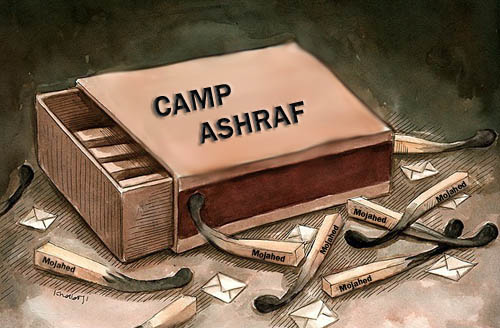
A senior official of the Islamic Revolution Guards Corps (IRGC) says the Israeli regime is involved in establishing terrorist training bases across the globe in collaboration with despotic rulers and by using the US sway.
“The Zionist regime (Israel) collaborates with despotic rulers in the world and uses the influence of arrogant powers such as the US to engage in establishing terror training camps across the globe,” said Director of the IRGC’s Public Affairs Office Brigadier General Ramazan Sharif on Wednesday.
He emphasized the Tel Aviv regime has an extensive record of planning all sorts of terror attacks and organizing terrorist training bases.
However, Brig. Gen. Sharif added, “There is no will on the part of the international community to condemn the Zionists’ crimes,” noting that for years Israel has resorted to terror means “to remove effective individuals for their respective nations.”
The IRGC official went on to refer to Israel’s “evident record” of terror acts committed in Lebanon, the occupied Palestinian territories and other nations in its attempts to inflict damages on Muslims.
Brig. Gen. Sharif pointed to the “evident destructive efforts by the Zionist regime to impede the progress of the Islamic Republic of Iran,” noting that the hostility of the regime against the Iranian nation becomes more obvious by the day.
He then referred to a documentary recently broadcasted on an Iranian TV network, detailing the extent of Israeli involvement in the terror assassination of the nation’s nuclear scientists, and said that it proved beyond any doubt the ill intentions of the global hegemony in identifying and targeting Iranian scientists.
The general concluded his remarks by stressing that the prime source of terror acts by terrorist groups such as the Mujahedin-e Khalq Organization (MKO) goes back to the Israeli regime and the “the global Zionism would not hesitate to commit any crime to reach its ominous aims.”
A senior Iraqi official disclosed that several Baath party leaders who have recently returned from Syria have had tight cooperation with the terrorist Mojahedin-e Khalq Organization (MKO also 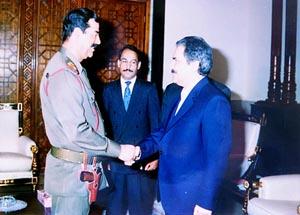 known as the MEK, PMOI and NCR).
"There is strenuous cooperation between the MKO members and certain ringleaders of the dissolved Baath party who have just returned from Syria," Governor of al-Khalis city in Diyali province Odai al-Khadran told the al-Istiqamah newspaper on Saturday.
He said that the Baath party ringleaders and the MKO members have held some meetings in the villages and outskirts of the al-Khalis city as well as al-Azim region in Diyali province.
Also, a Saudi colonel who has recently been apprehended by the Syrian security forces also disclosed that the MKO has played a major role in the recent conflicts in Syria.
According to the colonel, a number of 20,000 terrorists, among them a number of MKO members, were due to attack Damascus from four directions and occupy the city after the explosion inside the Syrian national security headquarters in the capital on June 18.
Also, the MKO terrorist group announced in July that it had hosted a number of Syrian dissidents at the headquarters of its ringleader Massoud Rajavi in France.
Terrorists and rebels widely supported by the US, Saudi Arabia, Qatar and Turkey have disregarded the cease-fire that stood on top of the peace plan proposed by the UN-Arab League envoy to Syria, Kofi Annan.
Syria has been experiencing unrest since March 2011 with organized attacks by well-armed gangs against Syrian police forces and border guards being reported across the country.
Hundreds of people, including members of the security forces, have been killed, when some protest rallies turned into armed clashes.
The government blames outlaws, saboteurs, and armed terrorist groups for the deaths, stressing that the unrest is being orchestrated from abroad.
In October 2011, calm was eventually restored in the Arab state after President Assad started a reform initiative in the country, but Israel, the US and its Arab allies are seeking hard to bring the country into chaos through any possible means. Tel Aviv, Washington and some Arab capitals have been staging various plots in the hope of increasing unrests in Syria.
2012-08-11
http://english.farsnews.com/newstext.php?nn=9104253769
A Letter to Martin Kobler: On MKO’s Defiance to RelocateThe problem is MKO is still under the utopian delusion that it can impose its stay in Ashraf
To Mr. Martin Kobler, 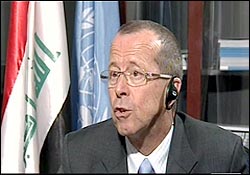
The Special Representative of the Secretary-General for Iraq
Dear Mr. Kobler,
As the families of the victims, members and the ex-members of Mujahedin Khalq Organization, MEK/MKO/PMOINCR, we appreciate your humanitarian efforts to put an end to the predicament of the group’s enslaved members both in Camp Ashraf and those relocated to the Temporary Transit Location TTL. We understand that you look at the issue from a humanitarian point of view and to put an end to the plights of men destined to suffer for the atrocities plotted by others, but MKO is buying time trying to politicize your humanitarian effort. From the very beginning of the reached agreement to relocate residents in Ashraf, MKO leaders were seeking for unjustified excuses to either hinder the process or bring it to an abrupt halt, and it seems they have succeeded. Furthermore, through all this six-month long extended period, the Iraqi government and the UN have tolerated MKO’s cavils and its raised objection to any presented solution.
MKO complains that facilities at TTL are far from meeting basic living necessities and calls it a prison and detention center, whereas reports from UN monitors indicate that the quality of life at TTL even exceeds accepted humanitarian standards. MKO’s leadership obstinately refuses cooperation and places preconditions and makes demands, whereas the Iraqi government has shown cooperation with the UN and even delivered a cargo convoy of goods as demanded by the group on July 15. The leaders turn down the UN presented “roadmap” on claims that it sidelines and ignores the residents’ rights and endangers the security of residents, whereas the roadmap has been designed to address the concerns of both the residents and the Iraqi government by suggesting a series of steps to complete the peaceful relocation of residents.
And MKO did not hesitate to wage a psychological war against the UN, UNAMI you just following the presented “roadmap”. A passing look into a variety of MKO-run and fed webpages discloses a blatant gesture of defiance against the international guideline which is blasted by numerous advocates who, by disregarding the ethics in words, act as the group’s mouthpiece. One after another they have questioned impartiality and humanitarian intention of the UN in an attempt to defend MKO; they openly condemned your remarks calling them sheer lies that have further complicated the problem instead of providing any solution.
As a result, you have been added to the list of MKO opponents acting as elements of pressure on behalf of the Iraqi government, claimed to be itself taking orders from Iran, and collaborating to set the stage for a human tragedy and massacre. So, it was not a sudden shock to read Alejo Vidal-Quadras, chairing the MKO’s alias International Committee of In Search of Justice (ISJ), strongly denouncing your reports and making suggestion for your replacement: “ISJ would like to reemphasize the need for appointment of an objective and competent personal envoy by the Secretary General to Ashraf and Liberty so that all issues could be addressed in a fair and unbiased manner.”
Although a strong antagonism towards the UN, you and other cooperating sides, all this ado MKO makes serve for a different purpose. Frankly speaking, the dispute is not merely over a simple matter of relocation from a camp to another; the problem is MKO is reluctance to leave Ashraf and is still under the utopian delusion that it can impose its stay in Ashraf. The ideal solution MKO appreciates is the one that disapproves any relocation from Ashraf. The group is well aware of the fact that relocation from Ashraf means a permanent expulsion from Iraq sooner or later. But staying at the small utopia they built, even if seemingly in limbo, means a permanent or decades long stay until they will be delisted from the State Department blacklist and be received by other countries.
The problem is that MKO is inherently pessimistic, and as Winston Churchill explicates, “the pessimist sees difficulty in every opportunity”. You have provided the group with many opportunities but the only received responses have been insurmountable difficulties and unjustifiable excuses that will never end. And the problem is that the UN’s policy of peaceful cooperation to stop a human tragedy has further emboldened MKO to wrongly misconstrue the attitude as the Iraqi government and the UN’s capitulation to its demands and that, they have no other choice but to submit to its wills. And the sole victims of this battle are the residents themselves whom Rajavi seems to be determined to preserve as human shields to construct a secure bulwark against a global decisiveness. Here are, as people well acquaintance with tactics of the group, a few suggestions that may help in your humanitarian mission:
– When you draw up guidelines or make decisions concerning MKO, be determined to put them into action before publicizing them. Inaction further hardens MKO’s attitude against any compromise and temporizing prompt it to bring unto scene a considerable capacity of its advocacy network to thwart efforts.
– A consensus is needed among the sides cooperating to end the crisis. The Iraqi government and people have also rights and demands that have to be respected and accounted. MKO, for instance, complain of water and electricity shortage and ask to be connected to Baghdad’s networks. The fact should be observed that such shortages are natural to meet because of the infrastructural deficits that fail to satisfy the demands of the people in the area. Furthermore, it should be noted that closure of Ashraf does not mean closing a military bastion but returning the seized lands to people they belong to.
– The right for the families of the residents to meet them has to be recognized. Both the families and residents are deprived of a free meeting that will grant them the opportunity of breaking the walls that your efforts have thinned.
– We appreciate your peaceful, humanitarian solution to the issue of relocation. But urging the Iraqi government publicly to “refrain from violence under any circumstances and to be generous when it comes to the humanitarian needs of the residents” further encourages MKO to be antagonistic without being questioned or criticized for its warlike attitude.
A senior Free Syrian Army (FSA) commander described terrorist Mujahedin-e Khalq Organization (MKO, a.k.a. MEK and PMOI) as a role model for him and other Syrian insurgents.
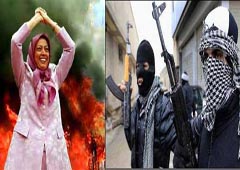
“Mujahedin-e Khalq is our role model, and we inform them that our doors are open to them,” Malek al-Kurdi, a deputy commander of the so-called Free Syrian Army, addressed a joint session of MEK and senior figures in the anti-Assad armed rebel groups.
His comments come just days after a highly placed security source told Arabic language Ur news agency that hundreds of terrorist Mujahedin-e Khalq members have entered the chaos-stricken Syria to back the so-called Free Syrian Army.
Another senior official with the insurgent group, calling itself the Free Syrian Army, thanked the terrorist MKO group for their support for and solidarity with the armed rebels in Syria.
Late last week, Habilian Association website reported that the elements of the terrorists Mujahedin-e Khalq Organization were working hand-in-hand with armed rebel groups in Syria.
“Jihadis of the world, unite; you have nothing to lose but your stage fright. After Bosnia, Chechnya and Afghanistan, the West has fallen in love with you all over again — big time.” – Pepe Escobar, “American (jihadi) Idol.”
The most shocking development to come out of the conflict in Syria is that Washington is openly  supporting Al-Qaeda, militarily, financially, and politically.
Washington is also providing propaganda cover for Al-Qaeda. An article was recently published on the website of the Council on Foreign Relations by an Al-Qaeda apologist which argues that Al-Qaeda’s trouble-making in Syria has benefited the opposition to Assad. The author shamelessly praises Al-Qaeda’s terrorism against Syrian civilians, perhaps not knowing, or, more accurately, not caring, that he is endorsing war crimes.
Although he is just one voice, he is espousing a view that is secretly accepted by America’s crazy foreign policy establishment that has lost touch with reality and lacks common decency.
What Al-Qaeda’s presence in Syria shows is that there is massive institutional support for Jihadist terrorism in Washington, Israel, and the West. It is a testament to the fact that U.S. foreign policy is a complete farce, based on absolute lies and fabrications. Washington’s anti-terror narrative is a sick joke.
Washington’s Blog illustrates why Washington’s War on Terror is a con game in an article called, “Ter•ror•ism (Noun): When OTHER People Do What We Do.” Also, read Tony Cartalucci’s newest article about how the UK government is going against its own anti-terrorism laws by paying a Libyan terrorist group to join the Syrian conflict.
Another terrorist group that has received funding and support from America and Israel is the Iranian group Mujahadeen-e-Khalq (MEK). To learn more about the history and evolution of the MEK read, “MEK and its material supporters in Washington,” by Jeremiah Goulka.
Back in May, Glenn Greenwald wrote about the growing political support for the MEK cult by former American high officials. Here is an excerpt from his article, “Likely victory for MeK shills”:
“A bipartisan band of former Washington officials and politicians has spent the last two years aggressively advocating on behalf of the Mujahedin-e Khalq (MeK), an Iranian dissident group that has been formally designated for the last 15 years by the U.S. State Department as a “foreign Terrorist organization.” Most of those former officials have been paid large sums of money to speak at MeK events and meet with its leaders, thus developing far more extensive relations with this Terror group than many marginalized Muslims who have been prosecuted and punished with lengthy prison terms for “materially supporting a Terrorist organization.” These bipartisan MeK advocates have been demanding the group’s removal from the Terror list, advocacy that has continued unabated despite (or, more accurately, because of ) reports that MeK is trained and funded by the Israelis and has been perpetrating acts of violence on Iranian soil aimed at that country’s civilian nuclear scientists and facilities (also known as: Terrorism).”
Washington’s support for MeK terrorism against Iran and Al-Qaeda terrorism against Syria cannot be legally, morally, or politically defended.
USrael, the largest state sponsor of terrorism in world history, tried to hide its support for terrorism in the past but today in Syria and elsewhere it is openly backing terrorist groups. Some of these groups are led by genocidal maniacs who want to exterminate religious and ethnic minorities. They said on video that, “We are men who drink blood.”
USrael’s support for “men who drink blood” is proof that it doesn’t care about its public image anymore. USraeli leaders know they can’t hide the criminal nature of their wars in the Middle East from the rest of the world, so it is going all out with the illusory hope that terror will win the day.
By Saman Mohammadi, Prison Planet
Saman Mohammadi is the writer and editor at The Excavator
Syrian Security forces arrested five terrorists of Mujahedin Khalq Organization together with 35 other armed individuals.
An informed intelligence source told Syrian news website “Aks al Ser” that the government’s 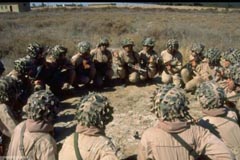 security forces detained 40 armed people who attempted to cross Syrian border.
“After being interrogated, we found out that 5 people of the arrested armed individuals are members of the MKO”, added the source.
The arrested MKO members confessed that they are giving military training to Syrian terrorists in Turkey territory enjoying the support of some Western and Arabic states. According to local information sources in Iraq and Syrian in recent days, a large number of MKO members have entered Syria and some are training terrorists in Turkey and Iraqi Kurdistan.
Translated by Nejat Soiety
Action is needed to forestall the real tragedy in the making at Camp Ashraf
In the face of a government’s travails occasioned by the need to uproot terrorism to restore order, peace and resolve conflicts, it has become necessary for the Iraqi government to caution the international community on the need to curb terrorism and to stop playing politics when dealing with such sensitive issues. This call becomes necessary against the backdrop of an extended dispute over the expulsion of the terrorist Mojahedin Khalq Organization (MKO/ MEK/ PMOI/ NCR) long hosted and nurtured by the ousted Saddam. Since the fall of the dictator, MKO has been a major source of friction between the Iraqi government, decisive to expel it on an arranged agenda, and other sides, the UN and the US, mediating to solve the predicament through a peaceful and humanitarian solution.
The outcome, however, has been an ever-increasing, blatant gesture of defiance by MKO to comply with either side; just in the middle of an agreed plan to relocate MKO’s members from its military bastion, Camp Ashraf, to a temporary Transit Location near Baghdad to undergo a UN observed refugee process, the group made an arbitrary decision and refused to let the remainders be transferred. No convoys have left Camp Ashraf since May 5 and between 1,200 to 1,400 MKO members are still there and during the three-month halt, MKO has turned a cold shoulder on all calls, urges and warnings in an effort to enforce group to resume the process. And how can a government decisive to uproot terrorism stop a terrorist group that threatens to put its preserved terrorist and cultist potentiality into practice or provoke violence?
MKO’s suicide operations are methods of application within the group and the best working option whenever it deems it necessary to impose its wills and demands. We have only to remember the most significant episodes of such operations perpetrated by MKO in the last decades just in the heart of the European countries when its members set themselves on fire and forced the French government to submit to its demand. And the US, as the part interested to peacefully end the critical issue of relocation, is more aware of the group’s potentiality to put the words into action. In its latest report on July 31 releasing the list of the designated FTO, the State Department’s Office of Coordinator for Counterterrorism once more reaffirms and stresses the preserved potentiality of suicidal self-immolation when the report makes a reference to an example of the actual activities.
In 2003, French authorities arrested 160 MEK members at operational bases they believed the MEK was using to coordinate financing and planning for terrorist attacks. Upon the arrest of MEK leader Maryam Rajavi, MEK members took to Paris’ streets and engaged in self-immolation. French authorities eventually released Rajavi.
But a question still remains that, despite these assertions about MKO’s high potentiality in resorting to violence, why the US and the UN criticized the Iraqi government for bloody clashes that MKO members provoked in Camp Ashraf in 2011, clashes that resulted in many casualties from the both sides, and are pressing the Iraqi government that “violence should, at all costs, be avoided”. They express concern over use of force by Iraqi, while the partiality to MKO has since encouraged it to resist any decision concerning the closure of Ashraf without being held accountable for defying any rule of law and agreement.
The circumstantial evidences indicate MKO is not reluctant to prepare the stage for a third round of violent confrontation. Again we are hearing words that another human tragedy is possibly unfolding in Ashraf or Liberty and that, no effort has to be spared to avert and prevent it. The Iraqi government has never stated that it intends to use force to close Ashraf although its patience is said to be “wearing thin” and has announced in an international conference that the additional time for the members of MKO to remain in Iraq has come to an end and will not be extended. MKO has nothing more to lose. The present makeup of the residents in Camp Ashraf, mostly the ranking and commanding cadres of the group, fuels the suspicion of preparedness for launching a serious or even bloody offensive in defiance of all plans, roadmaps and decisions. Words and warnings are enough; action is needed to forestall what is feared to be the real tragedy in the making at a place called Camp Ashraf.
While the anti-Assad rebels in Syria are suffering defeat, hundreds of terrorist Mujahedin-e Khalq (MEK, a.k.a. MKO and PMOI) members have entered the chaos-stricken country to back the 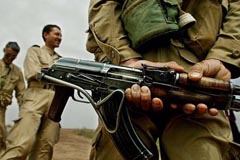 so-called Free Syrian Army.
According to the agreement signed between Mujahedin-e Khalq terrorist group, United States, Turkey, and Israel, some areas of the Iraqi Kurdistan have been converted to military bases for training armed groups fighting against the Syrian government, Arabic language Ur News agency quoted a highly placed security source as saying.
The source added that people from Yemen, Tunis, and Saudi Arabia are receiving military trainings at the bases, adding, “Mujahedin-e Khalq Organization is now conducting a series of special operations inside Syria through their trained elements.”
Independent Iraqi news agency Buratha released a similar report today saying that recent reports from Syria indicate that elements of the terrorists Mujahedin-e Khalq Organization are working hand-in-hand with armed rebel groups in Syria.
“Hundreds of Munafeqins (hypocrites, as Mujahedin-e Khalq terrorists are called in and Iraq) entered Syria and a number of them are training terrorists at (military) bases in Turkey and Iraqi Kurdistan.”
Earlier this week, an informed Iraqi security source revealed that some members of the terrorist MKO group “are going to leave Iraq to join the anti-Assad terrorists through Syria’s northern borders.”
Sources revealed that some members of the terrorist Mujahedin-e Khalq group (MEK, a.k.a. MKO and PMOI) are going to leave Iraq to join the anti-Assad terrorists through Syria’s northern borders.
“A number of U.S. and Turkish officers accompanied by several commanders of Kurdish Peshmerga forces had a meeting with some high ranking members of the terrorist Mujahedin-e Khalq Organization in Erbil, Iraq,” well-informed Iraqi security sources told the Arabic language Top News TV channel.
The sources added that the meeting decreed that Peshmerga forces transfer a number of MKO elements from Iraq to Turkey and then to the northern parts of Syria in order for these anti-Iran terrorists to join the so-called Free Syrian Army.
Directed by Nasser Qandil, Lebanese politician and former Member of Parliament, the news channel added that U.S. and Turkish officials have told the MKO that “Saudi Arabia and Qatar are committed to jointly pay the costs of relocation and resettlement, expected to be roughly $ 250 million,” as well as $ 100 million per month for the militias.
On the other hand, the Americans guaranteed to facilitate the MKO’s secret withdrawal from Iraq to Turkey.
A few days ago, the sources added, Nouri al-Maliki caught Americans off guard by telling them that Iran is aware of the plot of temporary relocation of MKO members to Erbil and they have warned against the move.
“Opposed by the Iraqi Prime Minister, the plan will be done gradually and secretly,” informed sources predicted.