Nejat Society
  • Home
  • Articles
  • Media
    • Cartoons
    • NewsPics
    • Photo Gallery
    • Videos
  • Publications
    • Books
    • Nejat NewsLetter
    • Pars Brief
  • About Us
  • Contact us
  • Editions
    • عربي
    • فارسی
    • Shqip
Nejat Society
Nejat Society
  • Home
  • Articles
  • Media
    • Cartoons
    • NewsPics
    • Photo Gallery
    • Videos
  • Publications
    • Books
    • Nejat NewsLetter
    • Pars Brief
  • About Us
  • Contact us
  • Editions
    • عربي
    • فارسی
    • Shqip
© 2003 - 2024 NEJAT Society. nejatngo.org
France

The recent actions of Rajavi’s gang in France

The recent actions of Rajavi’s gang in France;
Testing France

Fabricating a file for Mr. Sadegh Mohammad kazem, an Iraqi official, and assailing rally of Iranians opposed to the MeK, were among recent actions of Rajavi’s gang in France.

These measures have been applied by the MeK to test ways to strengthen and expand their organization and paving the way for greater mobility in France.

In the first try, the MeK presented a so- called incontrovertible file to the French Court and, hoping to lead to detention for months or even a verdict against Mr. Kazem.

The complaint against this Iraqi official was a test to examine whether they could hit their opponents by the French judicial tool, or not. If they were able to create such a situation, certainly the defectors and critics of the MeK would not been assailed by Rajavi’s hooligans; Instead, any of these protestors would have a record of participation in terrorist acts!

Although acting against Mr. Sadegh Mohammad kazem apparently was randomly and simultaneously with his passing through France, but, the fact is that the MeK’s leadership already has been informed of this trip through the Baathist Penetrating agents and she had planned for such action, in order to exploit the Iraqi government, also to strengthen the MeK’s organization and securing its members in France.

French judicial system, with releasing of Mr. Mohammad Kazem and apologizing to the Iraqi government, also by detaining several hooligans of Rajavi’s gang, demonstrated that it is not a plaything for the MeK.

However, it is a matter of fact that France for political reasons has ignored the anarchist nature of the terrorist group MeK. This is a serious threat to this country; The MeK’s day and night propaganda against former French authorities who were involved in the case June 17, reveals that if this terrorists were ever able, they would fabricate a file for French authorities, too.

On the Other hand, self-immolation of the MeK’s members, assailing the defectors, and other anti- law actions make clear that this terrorist group is a threat to social order and national security of this country.

France now is on the eve of an important exam. Its governors should know that with the closure of the MeK’s main camp in Iraq, their country will be the center of this terrorist group- whether its individuals could take asylum or not, and Auvers-sur-Oise will be the center of their terrorist acts. So, the best option for France is following the Iraqi government to expel the MeK.

June 27, 2012 0 comments
FacebookTwitterPinterestWhatsappTelegramSkypeEmail
Mujahedin Khalq Organization

The War of Words Against Iran’s MEK

For the last several months, articles about the Mujahedin-e-Khalq (MEK), an Iranian dissident Muftah.orggroup, have spread like wildfire through the mainstream U.S. press. The firestorm began in early February 2012 after anonymous White House officials accused the group of assassinating several Iranian nuclear scientists with the help of the Israeli government. Media coverage gained further traction after reports surfaced about alleged payments made by the MEK to former, high-ranking U.S. officials in exchange for their work in lobbying to remove the group from the The War of Words Against Iran’s MEKState Department’s list of terrorist organizations.

While focused mainly on these issues, the MEK media frenzy has also reflected several notable tendencies. First, the coverage has overwhelmingly depicted the group as a cultish, terrorist organization. Second, with its single-minded focus on the group’s “terrorist” pedigree, reporting on the MEK has made short shrift of the its long, complex, and controversial history. Little background has been provided on the group’s origins as a popular political organization and transformation into a resistance movement in exile, and even less insight has been given about its current status as a cult-like group.

In order to evaluate competing claims about the MEK’s terrorist credentials and its current position vis a vis the United States, Iran, and Israel, an understanding of this history is critical.

The Political Organization

The MEK was established in 1965 by three young university-educated professionals, Mohammed Hanifnejad, who would become the group’s first leader, Saied Mohsen, and Ali Asghar Badi’zadegan. From its inception, the organization dedicated itself to the overthrow of Iran’s then-ruler, Reza Shah Pahlavi. While committed to armed struggle, the MEK’s work remained largely non-violent and focused on spreading its anti-imperialist and anti-capitalist message to students and factory workers, among others.

The MEK espoused a political ideology described as “Eslame Vaghee” or “True Islam,” which combined Islamic concepts with principles of social justice. While religious practices, like daily prayer, fasting during the month of Ramadan, and zakat (alms giving to the poor), formed an important part of its political philosophy, the MEK was far from a militant Islamic organization. Eschewing regressive and reactionary forms of Islam, the MEK’s religious philosophy developed out of a commitment to the progressive, liberating power of Islam and reflected Iranian society’s strong Islamic identity.

Over time, the MEK gained substantial support, particularly among students, religious clerics, and “bazaaris,” Iran’s powerful merchant class. In response to this growing popularity, the MEK’s leadership and many of its supporters were arrested in 1971 by the SAVAK, Iran’s notorious secret police. While the organization’s founders along with most of its leadership were executed in April-May 1972, a handful of MEK leaders were spared execution and sentenced to life imprisonment. Among this small group was Massoud Rajavi, who would go on to become the MEK’s primary leader in the decades to come.

After the Iranian Revolution began and MEK leaders were released from prison, the group formally joined forces with various organizations, including the followers of Ayatollah Ruhollah Khomeini. Living as an exile in Paris during the lead up to the revolution, Khomeini had appreciated the value of working with the MEK, which enjoyed a strong support base inside the country.

This collaborative relationship substantially changed after the Ayatollah’s triumphant return to Iran in February 1979, following the ouster of Iran’s shah. Shortly after his arrival, the Ayatollah’s followers presented the MEK with an ultimatum – either unconditionally support Khomeini as Iran’s next ruler or face political isolation. Refusing to accept these terms, the group began publicly opposing Khomeini’s bid for power.

An outright war quickly developed between the two sides, with the new government arresting and killing countless MEK followers. The group responded with armed attacks against government installations and officials. By mid to late 1981, most MEK members who had not been arrested or killed fled the country, in what would become permanent exile for most.

Armed Resistance in Exile

Now focused on toppling the Islamic Republic, the MEK continued its work abroad. It established political headquarters in Paris and operated a series of “kanoons”, or community centers, around the world, including in several U.S. cities. A kanoon, which was typically an apartment or house owned or rented by a MEK supporter, served as a gathering place, center for grassroots organizing, and venue for community celebrations. In the early 1980s, most MEK members living outside of Iran were overwhelmingly young, recent émigrés. For these displaced individuals, the kanoons represented a safe haven, where they could live rent-free, speak Farsi, socialize, and meet other like-minded individuals.

Despite the civic and political work happening in these venues, armed resistance was at the heart of the MEK’s struggle against the Islamic Republic. In 1986, with the blessing of Saddam Hussein, the group established Camp Ashraf, a military base in Iraq near the Iran-Iraq border. Here, the MEK transformed its most committed supporters, both male and female, into a conventional fighting force. Periodically, this small but fervent group of soldiers would stage incursions into Iran [and only Iran], the most notable coming after the 1988 ceasefire ending the Iran-Iraq war.

While Saddam had provided the MEK with the vast majority of its arms, by the end of the 1991 Gulf War, this financial and logistical support had started to dwindle, an unintended victim of UN sanctions against Iraq. While the MEK continued to stage minor assaults into Iran, armed incursions became less and less feasible, and less and less frequent throughout the 1990s.

To add insult to injury, the MEK was also becoming increasingly irrelevant as an opposition group, having lost substantial support among the Iranian public. Many MEK supporters still inside Iran had been executed in 1988, in an infamous purge of the notorious Evin Prison. The decision to center MEK operations in Iraq was, however, the most damaging to the group’s reputation. Despite the clear practical and strategic reasons for this move, many Iranians saw the establishment of Camp Ashraf as an act of national betrayal, coming as it did during the height of the Iran-Iraq war.

The Cult

With prospects of toppling the Islamic Republic increasingly slim, the MEK focused on perpetuating its ideology and maintaining the devotion of its remaining members. Massoud Rajavi was presented as the organization’s god-like ideological father, while his wife, Maryam Rajavi, became the figurehead and public face of MEK leadership. Despite an avowed commitment to democratic ideals, the MEK intensified its already regimented system of internal governance, quashing dissent and rewarding only those blindly obedient to the group’s leadership.

Although these tendencies had existed before the post-Gulf War period, panic and desperation took these practices into overdrive. In the hopes of developing a devoted cadre of followers, the MEK divided families, separating husbands from wives and parents from children. Many of the organization’s most fervent members, who had willingly given up family and career, became wholly dependent upon the MEK. For these individuals, daily life was largely restricted to the confines of Camp Ashraf, the Paris headquarters, or the kanoons. These institutions functioned as echo chambers in which the organization’s philosophy was repeatedly emphasized. To feed this propaganda machine, the MEK, which already published its own books and newspaper, created a satellite television network, began producing its own music, and, eventually, had its own boy band to boot.

While this strategy helped forge a deeply committed, though small, group of MEK supporters, for many the intolerance and subjugation was unbearable. Unsurprisingly, throughout the 1990s, the group lost scores of supporters.

The United States, Israel, and Iran

With its armed activities curtailed, its support within Iran virtually non-existent, and its membership abroad dwindling, in the 1990s, the MEK increased efforts to build support among Western government officials. While the results were tepid at best, the Presidency of George W. Bush, September 11, 2011, and the 2003 Iraq invasion changed the rules of the game. Suddenly, prominent American politicians of the neo-conservative strain were ready to speak with the MEK. And the MEK was more willing than ever to join these conversations.

In 1997, the group had been placed on the State Department’s terrorism list, in response to pressure from Iranian President Mahmoud Khatami. In the hopes that Khatami, a reformer, would soften Iran’s stance towards the United States, the Clinton Administration acquiesced to the request. Although the State Department designation initially had little affect on the MEK, after September 11th, the group’s activities in the United States were significantly curtailed, coming to a near standstill.

Desperation makes strange bedfellows. Facing virtual annihilation, in 2002-2003, the MEK solidified its now notorious relationship with certain neo-conservative elements of the Bush Administration, as well as with the Israeli government. In the short-term, the MEK focused on removing its name from the State Department list and protecting its military base in Iraq, which was threatened by talks of an impending U.S. invasion of the country. In the long-term, the group saw its dreams of toppling the Iranian government align perfectly (for the first time) with the goals of a sitting U.S. President. Israeli support for the MEK was welcomed for similar reasons, although the assistance was deeper both ideologically and logistically. The MEK’s leadership threw itself head on into cultivating these relationships and the rest, as they say, is history.

Conclusion

As it stands today, the MEK is a broken and largely irrelevant group. Concerned only with generating support among a narrow segment of the U.S. political elite, it has engaged in a bitter rivalry with a number of Iranian-American leaders and groups, such as the National Iranian American Council. While this bad blood partly explains the recent negative publicity about the MEK, at base, the group remains very insular and secretive, with little interest in cultivating public opinion within Iran or the diaspora.

Given its past relationships and strategic-interests, rumors about the MEK’s role in assassinating Iranian nuclear scientists may be true, and, if so, raise serious concerns about removing the group from the State Department’s list. Putting these allegations aside, however, the MEK’s reach and impact, whether inside or outside Iran, has dwindled to a trickle. With its Iraqi military base virtually lost and its credibility with most Iranians permanently destroyed, the group has come far from its roots as a popular political organization. Regardless of the power and influence of its new friends, the MEK stands little chance of ever coming to power in Iran.

Muftah.org

June 27, 2012 0 comments
FacebookTwitterPinterestWhatsappTelegramSkypeEmail
Mujahedin Khalq 's Function

Ex-members rally in Paris and MKO members’ violence

French security forces have arrested 16 members of the terrorist Mujahedin-e Khalq Organization (MKO) following clashes with a number of defectors in Paris.

Several MKO defectors staged a rally in the Saint-Michel square in the southern suburbs of Paris on Friday 22, June2012 to voice their resentment at the terrorist activities of the anti-Iran group.

They were, however, confronted by a number of MKO members wielding knives, snap-off blade cutters, chains and baseball bats.

Police later intervened to contain the violence, detained all 16 MKO members and sent them to judicial custody.
Ex-members rally in Paris and MKO members violence

June 26, 2012 0 comments
FacebookTwitterPinterestWhatsappTelegramSkypeEmail
The MEK Expulsion from Iraq

Dealing with Terrorism Conundrum in Iraq

The only rights to have been violated seem to be those of the terrorist MKO

The blight of terrorism cast on a society is enough to upset people’s life even if they are not direct targets of terrorist perpetrations. But despite the real and direct impact of terrorism on human rights and its devastating consequences on societies, the struggle of terrorist groups to enforce recognition of some rights on legal communities is far greater than that of the victims of terrorism to call for the protection of their rights in any way if they ever have any.

The flagrant violation of regulations by Mojahedin Khalq Organization MKO/MEK being overlooked, the Iraqi government and other international concerned auxiliary sides to peacefully settle the conundrum in Iraq has encountered never-ending complaints, demands and even warnings by the ringleaders. Even if the members of MKO were terrorist suspects, the Iraqi government considered their expulsion a preventive measure to protect its territory from individuals considered a security risk to the country and the nation. MKO, however, is not a suspect terrorist group but a globally blacklisted one acting as Saddam’s mercenaries in the era of his despotic rule over Iraq.

Neither exiles nor refugees, MKO is the most unwelcome leftover of Saddam’s tyranny whose expulsion the Iraqi government deems to be tantamount to a strict counter terrorism measure in a violence afflicted country. Since the fall of Saddam, The Iraqi government has been busy hunting down the remnants of his regime, with whom MKO has been undeniably reported to have established close connection. If fact, Camp Asharaf, under the protection of the coalition forces that left the internal control of the camp in the hands of the terrorists themselves, became a safe haven for a number of discontent insurgents and opponents loyal to Saddam or fed by external hands to prevent the advance of order and freedom in the country.

However, there is a widespread speculation that despite being blacklisted a terrorist group; multitudes of its members have been deceived into joining the group advertised as a freedom fighter or the starting platform devoted to provide an easy, successful life in European countries. In reality, most of them are vulnerable individuals of a society and victims of a general naivety that terrorist groups and cults take advantage of them to recruit and enslave. Needless to say that a universal consensus confirms, according to undeniable evidences revealed by the defected members of MKO, the painful and bitter truth that MKO is absolutely a terrorist cult of personality run by the wife-husband Rajavies.

The Iraqi government is actually acting to accomplish two indispensable jobs simultaneously by its decision to expel MKO; to uproot the possible threat of a foreign terrorist group and to unshackle the enslaved insiders of a terrorist cult. It is a universal responsibility to help Iraqi government in the task to fulfill. Whilst the rights of the Iraqi government have to be recognized at the regional level, they have not so far been fully protected on the international plane, to provide for the nation an opportunity of enjoying an unprejudiced, peaceful and secure life, it offers an opportunity to the trammeled insiders of MKO to regain their freedom.

But, alas, the policy of appeasement has emboldened MKO to refuse accomplishment of a justified sine qua non. The only rights to have been violated seem to be those of the terrorist MKO; it freely holds rallies and gatherings in the heart of European countries, as held on June 23 in Villepinte, Paris, confidently accusing the US of shirking to remove its terrorist tag and calling for the protection of its bastion in Iraq. But hardly anything serious has been done yet to protect the violated rights of a nation calling to have their home free of violence and disorder. And hardly any ear has heard the desperate cries of help from within the cult that simply fad out in the propaganda ado of MKO.

By N. Morgan

June 26, 2012 0 comments
FacebookTwitterPinterestWhatsappTelegramSkypeEmail
Mujahedin Khalq; A proxy force

The Menacing Plots of the MKO against Iran

US Sponsored Terrorists: The Menacing Plots of the Mujahedin-e Khalq Organization (MKO) against Iran

The ill-omened, inauspicious plots of the terrorist gang Mujahedin-e Khalq Organization against US Sponsored Terrorists: The Menacing Plots of the Mujahedin-e Khalq Organization (MKO) against IranIran seem to have no end. The recent letter signed by 44 U.S. Senators addressed to President Obama in which it was implied that time for diplomacy with Iran is over and other options to deal with Iran’s nuclear program should be considered is said to be a magnum opus of MKO.

The website of Habilian, a non-governmental organization which represents the families of 17,000 terror victims of Iran, has recently published a news story, suggesting that the affiliates of MKO are behind the letter which near to half of the U.S. Senators signed and requested President Obama to end diplomatic efforts and dialogue with Iran and consider other options in dealing with the country’s nuclear standoff.

The pro-Zionist Senator Roy Blunt who has made fanatic statements in support of Israeli regime and enjoys strong ties to the Iranian-American Cultural Association of Missouri, an MKO affiliated organization, was the mastermind of the letter to President Obama.

Blunt’s website introduces the Senator as a staunch supporter of Israeli regime, saying that he "believes America’s strongest ally in the Middle East is the democracy in the state of Israel, an alliance that dates back to Harry S Truman."

In the introductory page of his website, it’s further mentioned that "Iran’s ongoing rush to become a nuclear power poses a terrible danger to the region and certainly to Israel… the United States must not allow Iran or any other dictatorship to develop nuclear weapons that can be used against us or our allies."

Now, having in mind Blunt’s unwavering sponsorship of Israel and his clandestine relations with MKO, one may seriously suspect that the hostile letter which the U.S. Senators blindly put their signatures on was spearheaded by MKO.

The website of UK Committee in Support of Ashraf which is a London-based organization that advocates regime change in Iran and has voiced its support for the members of MKO organization has published articles and interviews by Roy Blunt and proposed the idea of removing MKO from the State Department’s list of foreign terrorist organizations.

According to a report published on May 24 on the group’s website, Roy Blunt told a Senate briefing that the decision for delisting MKO should be made as soon as possible and that there’s no evidence confirming the "allegation" that residents of Camp Ashraf in Iraq possess weapons.

In his opening remarks, Roy Blunt said, "We’re talking about MEK and Camp Ashraf… we’re talking about people in Iran who have a tremendous desire for freedom and democracy." In a letter to the U.S. Secretary of State Hilary Clinton in March 2012, the Missouri Republican had formally requested "a detailed briefing regarding the State Department’s review of the Mujahedin-e-Khalq" (MEK) designation under section 219." He had noted that "if no satisfactory public or classified information exists to sustain our designation of the MEK as a foreign terrorist organization, it is my belief that the time has come to remove it from the list."

These MKO-associated groups are actively lobbying to convince the Iraqi government, through pressures by Obama administration, to relocate the members of MKO who are now residing in Camp Ashraf, a refugee camp in Iraq’s Diyala province, to another country and provide them with security and shelter. They are afraid that Iraq may hand in the members of the terrorist organization to Iran which unquestionably will be followed by their legal prosecution.

The UKCSA (the UK-based group which supports MKO) calls Iranian government extremist and talks of the members of MKO as freedom and peace warriors who want to bring democracy to their fellow citizens in Iran. The irony is the name of these very "peace warriors" was until recently on the European Union’s list of terrorist organizations. EU removed MKO’s name from that list in 2009 in an attempt to pressure Iran over its nuclear program and demoralize, undermine the Iranian government.

MKO is responsible for the killing of hundreds of innocent Iranian civilians and government officials including former judiciary chief, Ayatollah Beheshti.

It’s also said that MKO has played a role in the killing of Iran’s nuclear scientist, Dr. Mostafa Ahmadi Roshan. Referring to the January 11 assassination of Dr. Ahmadi Roshan, Richard Silverstein, a senior Jewish American journalist wrote in his blog , "my own confidential Israeli source confirms today’s murder was the work of the Mossad and MKO, as have been a number of previous operations I’ve reported here."

On February 10, the U.S. paper New York Post wrote that MKO leaders deserve a Nobel Peace Prize for their role in the assassination of Iran’s nuclear scientists: "were the MEK (MKO) to play the critical role in derailing an Iranian bomb, it would be far more deserving of a Nobel Peace Prize than a certain president of the United States we could mention."

The animosity and hostility of the MKO with the people of Iran needs no evidence or proof. They spare no effort to damage the security of Iran and realize their devilish planss. It’s time for the international community to mindfully confront MKO and stop them from furthering their dangerous plots in the future.

By Kourosh Ziabari

Kourosh Ziabari is a frequent contributor to Global Research

June 25, 2012 0 comments
FacebookTwitterPinterestWhatsappTelegramSkypeEmail
UN High Commissioner for Refugees

UNHCR: States consider MKO security threat

A senior UN official says the main reason behind the reluctance of certain countries to give refuge to members of the terrorist Mujahedin-e Khalq Organization (MKO) is that they considerthe UNHCR Assistant High Commissioner for Protection Erika Feller them a threat to their national security.

During a recent meeting with Iraqi Deputy Foreign Minister Labid Abawi at the UN High Commissioner for Refugees office in the Swiss city of Geneva, the UNHCR Assistant High Commissioner for Protection Erika Feller said the UNHCR will make utmost efforts to convince world states to shelter MKO members, the Habilian Association reported on Saturday.

The Habilian Association is an Iranian human rights NGO comprising a group of families that have lost their loved ones in terrorist acts during the early years following Iran’s 1979 Islamic Revolution.

Iraq’s deputy foreign minister, for his part, reiterated his country’s call for the immediate expulsion of terrorist MKO group from Iraqi soil.

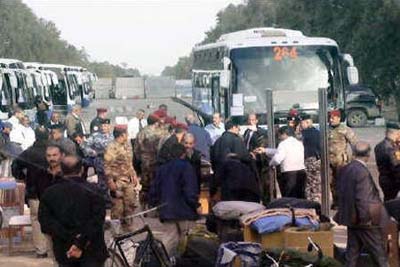
Abawi also pointed to Baghdad’s resolve to close down Camp New Iraq, formerly known as Camp Ashraf which is situated about 120 kilometers (74 miles) west of the border with Iran, stressing that MKO’s presence in Iraq violates the country’s constitution and poses a threat to Iraq’s national security.

The remaining MKO members at Camp Ashraf are refusing to leave the site on the account that no country has so far adhered to the obligations enshrined in the agreement signed in December 2011, the Iraqi diplomat pointed out.

The MKO fled to Iraq in 1986, where it enjoyed the support of Iraq’s executed dictator Saddam Hussein, and set up a camp near the Iranian border.

The group is also known to have cooperated with Saddam in suppressing the 1991 uprisings in southern Iraq and carrying out the massacre of Iraqi Kurds. The group has carried out numerous acts of violence against Iranian civilians and government officials.

June 25, 2012 0 comments
FacebookTwitterPinterestWhatsappTelegramSkypeEmail
France

French security forces arrest 16 MKO terrorists

French security forces have arrested 16 members of the terrorist Mujahedin-e Khalq Organization (MKO) following clashes with a number of defectors in Paris.

According to a Sunday report published by the Habilian Association, an Iranian human rights NGO comprising a group of families that have lost their beloved ones in terrorist acts during the early years following Iran’s 1979 Islamic Revolution, several MKO defectors staged a rally in the Saint-Michel square in the southern suburbs of Paris on Friday to voice their resentment at the terrorist activities of the anti-Iran group.


They were, however, confronted by a number of MKO members wielding knives, snap-off blade cutters, chains and baseball bats.


Police later intervened to contain the violence, detained all 16 MKO members and sent them to judicial custody.

On June 17, 2007, over 50 MKO members attacked a public meeting in Paris at which several people were injured. The attackers filmed their activities at the scene. It was later revealed that the assault had been orchestrated by top MKO leaders.

According to French police, the assailants had been transferred from other European countries to France. None had French documents and some even had false papers.

The MKO fled to Iraq in 1986, where it enjoyed the support of Iraq’s executed dictator Saddam Hussein, and set up a camp near the Iranian border.

The group is also known to have cooperated with Saddam in suppressing the 1991 uprisings in southern Iraq and carrying out the massacre of the Iraqi Kurds. It has carried out numerous acts of violence against Iranian civilians and government officials.


June 25, 2012 0 comments
FacebookTwitterPinterestWhatsappTelegramSkypeEmail
UN

UN Concerned about MKO’s Lack of Subordination

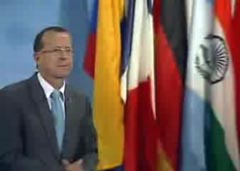
The Special Representative of the UN Secretary-General (SRSG) for Iraq, Martin Kobler, expressed concern about the terrorist Mojahedin-Khalq Organization (MKO)’s resistance against UN Concerned about MKO's Lack of Subordinationa relocation of its members from its main training base in Camp Ashraf to a transient settlement facility in Camp Liberty around Baghdad.

The relocation to Camp Liberty has been stalled since the arrival of the fifth group of MKO members on 5 May.

"I urge the remaining residents of Camp Ashraf to relocate to Camp Hurriya (Liberty) without delay," SRSG Kobler said. "The relocation process should not be stalled. I am concerned that there will be violence if the relocation doesn’t recommence."

"I also urgently call on States to include residents who are eligible for refugee status in their resettlement quotas and to offer them a path to a more hopeful future outside Iraq," he added.

The MKO is seeking to transfer its members to another country, but no world state, including the US and the European countries, accept to lodge the terrorist group.

The relocation process has come a long way since February 2012. Two thirds of the residents have already moved to Camp Liberty, a temporary transit location near Baghdad prior to resettlement in third countries.

Zionist lobbies are seeking to shelter members of the anti-Iran terrorist Mojahedin-e Khalq Organization (MKO) in Azerbaijan as the US administration is trying to station the terrorists in five neighboring countries of the Islamic Republic.

Authentic reports from sources privy to the MKO disclosed that the US administration is consulting with five of Iran’s neighboring states to persuade them into sheltering the MKO terrorists.

After nearly three decades, Iraq is now expelling the MKO from its soil, while no world country has accepted to shelter the terrorist group.

The US allies in the Middle-East, including Saudi Arabia, Jordan, Azerbaijan, Qatar and Pakistan, are likely to be the destination of the MKO terrorists, the sources added.

The sources also pointed out that Zionist lobbies are pressuring the US and Baku officials to station MKO terrorists in bases and desolated air fields, and added that the issue was a topic of recent discussions between Israeli Foreign Minister Avigdor Liberman and Azeri officials.

Zionist lobbies are seeking to create Camp Ashraf-like conditions in Azerbaijan to save MKO from complete dissolution.

The MKO’s main stronghold was a training center called Camp Ashraf in Iraq’s Northern Diyala province, but the post-Saddam Iraq decided to close the camp specially due to the MKO’s massacre of Iraqi Shiites during the Saddam era and its terrorist operations against Iran in the last 33 years. Iraq started expelling the group a few months ago.

The MKO cannot find a shelter outside Iraq, while it is blacklisted by much of the international community, including the United States.

Before an overture by the EU, the MKO was on the European Union’s list of terrorist organizations subject to an EU-wide assets freeze. Yet, the MKO puppet leader, Maryam Rajavi, who has residency in France, regularly visited Brussels and despite the ban enjoyed full freedom in Europe.

The MKO is behind a slew of assassinations and bombings inside Iran, a number of EU parliamentarians said in a recent letter in which they slammed a British court decision to remove the MKO from the British terror list. The EU officials also added that the group has no public support within Iran because of their role in helping Saddam Hussein in the Iraqi imposed war on Iran (1980-1988).

2012-06-24
http://english.farsnews.com/newstext.php?nn=9103083484

June 25, 2012 0 comments
FacebookTwitterPinterestWhatsappTelegramSkypeEmail
The MEK to launch Armed Struggle

Glorification of An Undemocratic Start

On the anniversary of starting armed warfare MKO celebrates the event under a democratic disguise

It is now three decades when the mass demonstrations of Mojahedin Khalq Organization Glorification of An Undemocratic StartMKO/MEK shook Tehran and many other Iranian provincial towns on 20 June 1981. The outcome was Mojahedin’s declaring a ruthless armed warfare against the newly born regime of Islamic Republic the day after. The day marks a turning point in group’s terrorist pedigree although many believe that it drafted the blueprint of waging an all-out war against the regime soon after the Islamic revolution and the initiation of Iran- Iraq war; it was only looking for a dear opportunity.

The frenzy firestorm on June 20 set MKO on the no return path of initiating an armed move that expanded a wave of terror by launching armed operations, carrying out daily attacks against civilians, assassinating officials and blasting bombs. The horrible nightmare of MKO’s blind operations haunted Iranian people day and night’s life and marks a post-revolution black spot in Iranian contemporary history. However, MKO hardly denounces actions deemed as terrorism in its own narrow vision and refers to them as “revolutionary resistance”.

It is for more than a decade that, for certain political causes and a change in tactics, MKO’s revolutionary resistance has undergone a dramatic shift in action and its propaganda machine and media mainly focuses on a pro-democratic coloring and reflecting democratic tendencies. In fact, any show of democracy orchestrated by MKO is tantamount to a demonstration of its innate potentiality of the revolutionary resistance.

It is now for a few years that just on the anniversary of June 20, MKO celebrates and glorifies the event under a democratic disguise and slogans; this year it is at VillePinte, Paris on 23 June. The advertising slogan is “Protection for Camp Ashraf and Camp Liberty”. MKO chants the slogan while it is the main cause of escalating tension in both camps. Those entrapped in the camps need no universally claimed protection, since the UN is decisive in refugee determination process and to convince other countries to accept members, but cooperation of the group to end their predicament. The process of relocation of members from Camp Ashraf to Camp Liberty has been ceased as MKO leaders are inventing unsound excuses.

MKO’s anti-social nature never changes however it replaces the masks and as English maxim says, the wolf may lose his teeth but never his nature. June 20 is breath of life into MKO’s armed and revolutionary resistance. It has to be commemorated and glorified but with Western favored tint of democracy. The host speaker of the event, Maryam Rajavi, has merely changed, if not wearing under, her military outfit for colorful, stylish ones. And the only ones she never cares for when she calls for their protections are the residents of the two camps living in limbo.

June 24, 2012 0 comments
FacebookTwitterPinterestWhatsappTelegramSkypeEmail
France

French authorities release Sadiq Kazem

French authorities release Sadiq Kazem after detention against accusation of exercising torture in Camp Ashraf .

PM, media adviser Ali al-Musawi said the French authorities released Iraqi official Sadiq Mohammad Kazem who is in charge of Camp Ashraf for Iranian refugees file, thanks to non sufficient evidences of exercising torture in the camp .

He said in a statement to NINA : "The process of detention of Kazim conducted without the knowledge of the French authorities. He said.

A number of media outlets reported that Kazem placed under custody in Paris in the light of a complaint made by an Iranian refugee who was one of Camp Ashraf inhabitant in Iraq , in which he confirmed that he was subjected to torture by Kazim adding that the Iraqi official exercised war crimes in the Camp in 2009.

June 24, 2012 0 comments
FacebookTwitterPinterestWhatsappTelegramSkypeEmail
Newer Posts
Older Posts

Recent Posts

  • A Criterion for Proving the Violent Nature of the MEK

    December 31, 2025
  • Rebranding, too Difficult for the MEK

    December 27, 2025
  • The black box of the torture camps of the MEK

    December 24, 2025
  • Pregnancy was taboo in the MEK

    December 22, 2025
  • MEPs who lack awareness about the MEK’s nature

    December 20, 2025
  • Facebook
  • Twitter
  • Instagram
  • Youtube

© 2003 - 2025 NEJAT Society . All Rights Reserved. NejatNGO.org


Back To Top
Nejat Society
  • Home
  • Articles
  • Media
    • Cartoons
    • NewsPics
    • Photo Gallery
    • Videos
  • Publications
    • Books
    • Nejat NewsLetter
    • Pars Brief
  • About Us
  • Contact us
  • Editions
    • عربي
    • فارسی
    • Shqip