Nejat Society
  • Home
  • Articles
  • Media
    • Cartoons
    • NewsPics
    • Photo Gallery
    • Videos
  • Publications
    • Books
    • Nejat NewsLetter
    • Pars Brief
  • About Us
  • Contact us
  • Editions
    • عربي
    • فارسی
    • Shqip
Nejat Society
Nejat Society
  • Home
  • Articles
  • Media
    • Cartoons
    • NewsPics
    • Photo Gallery
    • Videos
  • Publications
    • Books
    • Nejat NewsLetter
    • Pars Brief
  • About Us
  • Contact us
  • Editions
    • عربي
    • فارسی
    • Shqip
© 2003 - 2024 NEJAT Society. nejatngo.org
Mujahedin Khalq Organization's Propaganda System

The MEK’s Propaganda Machine

The National Interest will be running on Monday a response to Raymond Tanter’s missive on behalf of the Iranian cult/terrorist group Mujahedeen-e-Khalq. Given that Tanter goes out of his way to raise my name a couple of times, it would be appropriate for me as well to point out a couple of the more glaring misdirections in his piece.

Tanter’s premise, as reflected in his title, is that anything bad you ever heard about the MEK is a product of propaganda from the Iranian regime. Evidently this means that anyone, either inside or outside of Iran, who has ever been critical of the group must have been brainwashed by the propaganda. If that were true, those responsible for U.S. public diplomacy have a lot of valuable lessons to learn from the Iranians; their propagandists must be doing something right.

The Iranian regime flings propaganda as freely as any other regime. And it certainly has had a lot of unfavorable things to say about the MEK. Some of those things may be exaggerated or even outright lies. But one could erase completely everything the Iranian regime has ever said on this subject, and there would remain the large, long, sordid record of what the MEK has done, what it has stood for, and the abhorrent cult it still is. The record extends from the days it was killing Americans while opposing the shah, through when it was in league with the clerical regime and supporting further anti-American acts such as the hostage-taking at the U.S. embassy in Tehran, through the long period during which it was working for the Iraqi regime of Saddam Hussein. The record is not based just on what is said by the State Department or an intelligence agency or any governmental component with a policy to support, much less on anything the Iranian regime might say. If you want a recent independently reported portrait of the group, see, for example, this article by Elizabeth Rubin.

Tanter tries to smear critics and criticism of the MEK, including some of the contents of an open letter to which I was a signatory, by saying it “resembles regime propaganda against the MEK.” The MEK has conducted terrorism and other violent acts against U.S. interests and against the Islamic Republic of Iran. Is it any surprise that some of the critical things said about the group from the standpoint of U.S. interests resemble some of what the Iranian regime puts out? (And if it’s not brainwashing, then just what is Tanter suggesting is the reason for the resemblance?)

One of the respects in which Tanter’s piece diverges most widely from reality is his attempt to argue that the MEK has any support to speak of within Iran. He notes that the group was the source of some revelations about Iran’s nuclear program. True—and we ought to remember our reliance on the accident of this weird sourcing when we think about how much confidence we ought or ought not to have in our knowledge of this program—but what does that have to do with popular support? It only takes one person to serve as a source. The most telling indication of the MEK’s unpopularity in Iran, as pointed out in the aforementioned open letter, is that the Iranian regime uses that unpopularity as a way to discredit the democratic opposition in Iran, by trying to associate it with the MEK. For the same reason, the leaders of the Green Movement have emphatically said that they want nothing to do with the MEK. Tanter also mentions attendance at pro-MEK rallies in the United States as a measure of support, without mentioning that the MEK campaign has resorted to such measures—used in a rally outside the State Department this summer—as padding attendance by busing in homeless people who don’t know squat about the MEK or Iran but come for the free food.

Tanter precedes a reference to me with the odd statement that “Intelligence communities are targets of Iran’s disinformation.” Odd because I have been out of the intelligence business for more than six years, and anyone who views my thinking as having any connection with judgments that an intelligence agency would reach today will be disappointed and wasting their propaganda resources. Tanter later mentions me again as someone who ought to be concerned about the “political motivation” for having the MEK on the State Department’s list of Foreign Terrorist Organizations, or FTOs. It is true that the listing process is not immune to policy considerations, but that has been much more a matter of avoiding the listing of a group that really ought to be on the list (the Provisional Irish Republican Army of fifteen years ago is the example that comes to mind), than of including on the list a group that should not. Not listing someone means simply not initiating the listing process. Listing a group requires a lengthy process of review by the Departments of State, Justice, and Treasury and the intelligence community, according to the criteria specified by law.

Tanter seems to believe that a group has to have committed terrorist acts within the previous two years to be kept on the list. Not true. (Having been directly involved in the laborious process of compiling the required administrative records for the initial listings after enactment of the law in 1996 that created the FTO list, I know a thing or two about this subject.) Two years used to be the interval between recertifications of listed groups, and it is now the period after which a group can petition for delisting. But no terrorist acts have to have been committed during that period; retaining the capability and presumed intent to commit them is sufficient to stay on the list. If performing terrorist acts recently was a requirement to stay on the list, many of the 49 groups currently on the list would have to come off. Lebanese Hizballah, for example, probably would be one of them. I expect that many of the pro-MEK campaigners would be among the first to scream if that happened.

There is indeed a large amount of political influence that is being exerted in an effort to affect a decision about the FTO list, and it is almost all coming in the form of the large and well-funded campaign to delist the MEK. In fact, the campaign is extraordinary, and nothing remotely resembling it has ever been waged on behalf of any other group on the FTO list. Whatever is being said in the opposite direction is only a modest reaction to the pro-MEK campaign itself. Here is what I said on the subject two months ago, after that rally outside the State Department:

The secretary of state should pay no heed to what Melvin Santiago and the other hungry homeless outside her office window are saying, or to what the high-paid hired guns are saying, about the MEK. Nor does she need to pay any attention to what people like me are saying about the group. She should keep the windows closed and just pay attention to the terms of the law and to what officials in the departments and agencies involved say about whether the terms of the law still apply in this case.
If Raymond Tanter really wanted to inform us about political influence being exerted on what ought to be administrative and legal decisions, he could shed more light on the campaign of which he is a part. In particular, he could help us understand where all that funding is coming from. It evidently is coming from quarters who would like to stoke ever more tension and animosity between the Iran and the United States. I have a guess who that might be, but so far it is only a guess.

Paul R. Pillar, The National Interest

October 30, 2011 0 comments
FacebookTwitterPinterestWhatsappTelegramSkypeEmail
Iran

Saudi Envoy plotter a member of Paris based MKO

Iran’s Foreign Minister Ali Akbar Salehi said Interpol has requested information about a alleged suspect wanted over US allegations of an assassination plot, but suggested the name was too common to pinpoint the individual.

Salehi said there are 150 names similar to the one requested by Interpol for the alleged plot to kill the Saudi envoy to Washington.

"There are 150 Gholam Shakuris (in Iran). Interpol sent us a question about this name, and our investigation showed a certain Gholam Shakuri who lives in the United States and is a member of the Mojahedin-e Khalq Organization (MKO)," Salehi was quoted by Saudi newspaper Asharq al-Awsat as saying in Saudi Arabia.

The United States alleges Gholam Shakuri co-conspired with an Iranian-American car salesman, Manssor Arbabsiar, to kill the Saudi ambassador to Washington.

While Arbabsiar is in US custody, US officials say they believe Shakuri is in Iran and they have called on Tehran to turn him over to face charges.

Iran has strongly denied any involvement in the alleged plot.

It has also suggested that the Shakuri being sought is part of the terrorist MKO, a Paris-based Iranian exile group, that aims to overthrow the Islamic Republic and has so far staged hundreds of terrorist operations inside and outside Iran.

Both Iran and the United States consider the group to be a terrorist organization.
Salehi made the comments in an interview with Asharq al-Awsat during a visit to Riyadh for the Tuesday funeral of Saudi Arabia’s crown prince Sultan bin Abdul Aziz.

In the exchange, the Iranian foreign minister again denied that his country plotted to kill the Saudi ambassador to Washington, Adel al-Jubeir.

"We reject these accusations. There is no justification for Iran, which is a brotherly country to Saudi Arabia, to do such an act. It’s an American accusation – they want to create divisions between Muslim countries and specially the two most important countries in the Islamic world, Saudi Arabia and Iran," he said.

He also noted that Arbabsiar had pleaded not guilty in a New York court this week to the charges, and ridiculed the idea that Iran would engage such a character in the alleged plot.

Even before the plot claims, the ties between the two regional rivals were strained over Saudi Arabia’s military assistance to Bahrain to put down pro-democracy protests by peaceful demonstrators.

Iran and Saudi Arabia have had some differences during the last three decades after the establishment of the Islamic Republic in Iran as Riyadh is considered a main US ally and always tries to materialize the US interests in the region.

On the opposite, Tehran is an arch foe of the White House and represents independent nations who do not sway under the pressure of any superpower. It is seeking its own national interests and many world states have pinned hope on its success and progress as an independent, Muslim power.

October 30, 2011 0 comments
FacebookTwitterPinterestWhatsappTelegramSkypeEmail
Mujahedin Khalq; A proxy force

Iran Claims U.S.-Sponsored MKO Terrorists Conceived Saudi Ambassador

Since news broke that there was an alleged plot by Iran to assassinate the Saudi ambassador to the United States, Adel A. Al-Jubeir (left), and destroy a number of embassies, Iran has adamantly denied the accusations. Likewise, skeptics questioned whether the plot could have been staged by Iran, who would have had little to nothing to gain from such an endeavor, and claimed that the plot was uncharacteristic of Iranian terror. Others have asserted that the entire plot was in fact manufactured by American law enforcement agencies as an impetus for war against Iran. Adding yet another layer to this news story, Iran has come out and said that the plot was in fact planned by the French/Iraqi-based Mujahedin-e Khalq Organization (MEK), which is actually funded and supported by the United States.

Last week, the United States charged American-Iranian Mansour Arbabsiar, a used car salesman, for his role in an alleged plot to murder Ambassador Adel Al-Jubeir and attack Saudi installations in the U.S. in a plan reportedly plotted earlier this year. According to the Justice Department, Arbabsiar conspired with Gholam Shakuri, a member of Iran’s Qods Force — an arm of the Iranian Islamic Revolutionary Guard Corps.

Iran immediately denied the accusations, with the Iranian Foreign Ministry spokesman Ramin Mehmanparast declaring, “These attitudes, which are based on the age-old and hostile policies of the American-Zionist axis, are a ridiculous show in line with a scenario that aims to divide and that emanates from enemies of the region.”

A number of experts across the globe came forward and questioned the claims that the plot had been sponsored by the Iranian government. They argued that the Qods Force is far too methodical and effective in its choice of proxies to have chosen a used car salesman and member of a Mexican drug cartel. Others assert that it is unlikely that Iran would sponsor such an act of terror as it does not serve Iranian interests in any way.

Iran has now raised accusations against another party, which they claim to be responsible for hatching the plot. The British paper The Guardian reports, “Tehran has pointed the finger at a dissident group it considers a ‘sworn enemy’ in an attempt to distance itself from US accusations that the Islamic regime in Iran conspired to kill the Saudi ambassador to Washington.”

According to Iran’s news agency Mehr, one of the two suspects that the United States asserted was involved in the plot to assassinate the Saudi ambassador is a “key member” of MEK. "The person in question has been travelling to different countries under the names of Ali Shakuri/Gholam Shakuri/Gholam-Hossein Shakuri by using fake passports, including forged Iranian passports," said Mehr.

MEK has been declared a terrorist organization by the U.S. State Department. Listed as number 28 on the Department’s list of terrorist organizations, MEK has been responsible for terrorism against both the United States and Iran for years.

Yet MEK was considered by the Brookings Institution as a prime candidate for U.S. backing to remove the Iranian government. A 2009 report by the Brookings Institution, entitled “Which Path to Persia?” reads:

Perhaps the most prominent (and certainly the most controversial) opposition group that has attracted attention as a potential U.S. proxy is the NCRI (National Council of Resistance of Iran), the political movement established by the MEK (Mujahedin-e Khalq). Critics believe the group to be undemocratic and unpopular, and indeed anti-American.

In contrast, the group’s champions contend that the movement’s long-standing opposition to the Iranian regime and record of successful attacks on and intelligence-gathering operations against the regime make it worthy of U.S. support. They also argue that the group is no longer anti-American and question the merit of earlier accusations. Raymond Tanter, one of the group’s supporters in the United States, contends that the MEK and the NCRI are allies for regime change in Tehran and also act as a useful proxy for gathering intelligence. The MEK’s greatest intelligence coup was the provision of intelligence in 2002 that led to the discovery of a secret site in Iran for enriching uranium.

In the 1970s, however, MEK was responsible for the death of three American officers and three civilian contractors in Iran. The group also voiced significant support for Iran’s taking of hostages during the Iranian hostage crisis, and some reports indicate that members of the group celebrated the 9/11 attacks, though the organization publicly condemned the attacks.

MEK has conducted a number of other terrorist attacks as well, but most have been excused because they were directed against the Iranian government. In 1981, MEK bombed the headquarters of the Islamic Republic Party, killing approximately 70 officials. The organization has also taken credit for dozens of Iranian civilian and military attacks between the years 1998 and 2001.

Still, the United States has reportedly supported the organization. In a 2008 New Yorker article entitled “Preparing the Battlefield,” Seymour Hersh revealed,

“The M.E.K. has been on the State Department’s terrorist list for more than a decade, yet in recent years the group has received arms and intelligence, directly or indirectly, from the United States. Some of the newly authorized covert funds, the Pentagon consultant told me, may well end up in M.E.K. coffers. “The new task force will work with the M.E.K. The Administration is desperate for results.” He added, “The M.E.K. has no C.P.A. auditing the books, and its leaders are thought to have been lining their pockets for years. If people only knew what the M.E.K. is getting, and how much is going to its bank accounts — and yet it is almost useless for the purposes the Administration intends.”

Hersh also appeared on National Public Radio and indicated that the United States had trained a number of MEK members.

There has been an effort in the United States to remove MEK from the list of terrorist organizations, presumably so that the federal government could provide even more funding to the group.

For some, information such as this is enough to convince them that the entire war on terror is fraudulent and should be approached with skepticism. One popular blog wrote of the war on terror:

From the beginning, even for those wanting to believe the fairy tale that 9/11 was carried out by cave dwellers carrying box cutters directed by Osama Bin Laden, who by all accounts was dying or already dead from kidney failure in 2001 — "unfortunate blunders" in US foreign policy can still be blamed for the creation and perpetuation of the ubiquitous, unceasing terror organization known as Al Qaeda. However, in light of recent events in Libya, Syria, Iran, and Algeria, there is exposed a truth, many have known for over 10 years, and many more are catching onto now — that the "War on Terror" is an absolute fraud, started, fueled and simultaneously fought against by the same handful of corporate-financier interests for the sole purpose of spreading Wall Street and London’s hegemony across the globe.

According to Iran’s president Mahmoud Ahmadinejad, it is this type of fraud that has led the U.S. government to accuse Iran of the plot to assassinate the Saudi ambassador. Comparing it to assertions that Iraq maintained weapons of mass destruction, Ahmadinejad said that the U.S. simply “fabricated a bunch of papers” to support its claims at the time. “Is that a difficult thing to do?” he asked.

by Raven Clabough – The new American

October 30, 2011 0 comments
FacebookTwitterPinterestWhatsappTelegramSkypeEmail
Mujahedin Khalq 's Terrorism

How to Kill an Ambassador

|An increasing number of former intel officer that I network with are convinced that the alleged plot to kill the Saudi Arabian ambassador in Washington is not only completely implausible as How to Kill an Ambassadordescribed by the Justice Department and White House but also possibly the contrivance of an intelligence or security service other than that of Iran. There is a consensus that the Iranian government has no motive for carrying out the attack, as it would have only further isolated Tehran internationally and could easily have led to massive retaliation. The “rogue element” theory that Iran’s fractured politics might mean that someone in the Quds group was actually trying to embarrass someone else in the government has a certain plausibility, but no one who knows anything about Iran actually believes it to be true. Nor is it likely that Iran mounted the complicated operation to avenge the assassinations of several of its nuclear scientists. The scientists were killed by the Israelis, who would have been the target if that had been the case. So the only question becomes, who is doing what to whom and why?

The speculation by Gareth Porter that the whole affair might have been a drug deal that morphed or was manipulated by an FBI sting into yet another terrorism story is compelling. If that was the case, then the U.S. government is guilty yet again of taking a vulnerable individual and turning him to make him into what will pass muster as a genuine terrorist. Nearly every terrorism case since 9/11 has been precisely that — finding a disgruntled individual or group through communications intercepts, inserting an informant into the process, and developing the case to enhance its terrorism potential.

Another possibility that has been mentioned is that it might have been an operation planned by the Mujahedin-e Khalq, or MEK, the Iranian opposition group supported by a number of U.S. lawmakers. But the MEK would not have the resources or technical expertise to carry out such a deception, unless it were working in cooperation with the CIA or the Mossad, which raises the possibility that this has been from the start the work of an intelligence agency rather than law enforcement.

Law enforcement normally begins with some kind of case and then allows it to grow, whereas an intelligence operation would be phony from start to finish. If it is indeed an intelligence operation, there are three principal suspects: the United States, Israel, and Saudi Arabia. All three countries have highly sophisticated intelligence services capable of the technical measures required to carry out what is essentially a false-flag operation, in which they would be portraying themselves as representatives of the Iranian government in order to obtain the cooperation of an expat Iranian living in the United States. All three intelligence organizations are highly knowledgeable of Iranian intelligence service operations, and all three have easy access to Farsi speakers capable of role playing. The operation would be tricky to execute but far from impossible if the right resources were dedicated to the problem and the right spin were put on the narrative used to initiate contact with and then develop Mansour Arbabsiar or someone like him.

The United States would have the simplest task in mounting such a false-flag operation. As immigrants to the U.S. are required to identify close relatives in foreign governments as part of their visa process, it would be easy to come up with a candidate for the plot who has a relative in Iran’s security services through inspection of the immigration records. I am certain that the CIA and the FBI both have been exploiting such records since 9/11. Once you have your candidate, you set up a scenario for him in which he receives a phone call quite possibly innocuous in nature, money is dangled in front of him, and your plot to assassinate and bomb gradually takes shape. After you introduce your own informant into the operation, you then run it like the classic FBI sting operation, which we have seen so many times over the past 10 years. You monitor and guide your target, going step by step, getting him more involved and committed. You provide him with money that comes out of an overseas account that you have set up, which is no problem at all for a sophisticated intelligence agency. You can even redirect calls using a switch so that when your target thinks he is dialing Tehran he is actually connected to a listening post in Washington. When the operation is ready to go, you arrest him, claiming as Preet Bharara, the federal attorney for the southern district of Manhattan recently did, that “no one was ever actually in any danger.” You time the arrest and the revelation of the case to the media to obtain maximum possible advantage from it.

Israel would run the operation in precisely the same fashion, assuming that it has access to U.S. immigration records, which may or may not be true, either with the consent of the federal government or clandestinely through one of its many friends in the bureaucracy. The rest of the operation would proceed just as if the CIA were running it. Indeed, one should not rule out the possibility that Israel might have run the operation jointly with the CIA.

Saudi Arabia would likely not have any access to U.S. immigration records, but it is possible that it could come up with a candidate using other resources, including work and travel records from the nearby Emirates, which are much frequented by Iranian travelers.

Given the fact that all three countries’ intelligence services could have run the false-flag operation, who would have the strongest motive? Cui bono, who benefits? Undoubtedly Israel would. Tel Aviv has been demanding military action against Iran for many years. A terrorist plot to assassinate a friendly ambassador in Washington would be considered a godsend by the Benjamin Netanyahu government, which has stated repeatedly that Iran is a threat and Washington should be taking the lead against it.

The United States has much less motive to create a new crisis with Iran, even accepting that the president would like to appear to be strong against terrorism and what he chooses to call state sponsors of terror in the lead-up to elections. If an armed conflict were somehow to start and go wrong, there would be considerable downside, making this far too risky to contemplate. The White House has several times warned Israel against starting a war with Iran, most recently three weeks ago when Secretary of Defense Leon Panetta visited Tel Aviv. President Obama might be willing to push hard against the Iranians to satisfy demands from Congress, the media, and the Israel Lobby, but he appears unwilling to employ military force.

The Saudis have no love for Iran but would be fearful of the consequences of what could quickly become a major war escalating on their doorstep, so their motivation for heightening tension is also very questionable, even if they would welcome someone else dealing with what they see as the Iranian threat.

The final question: Was it a conspiracy that was designed to fail? It would be a mistake to assume that just because the plot appears idiotic it could not be the product of a sophisticated intelligence service. In my own experience in the CIA, many operations were poorly planned and executed, and often something that appears implausible might be driven by its own perverse logic. In this case, the involvement of an identifiable DEA informant in the plot, if that was done deliberately, suggests that exposure was desired, perhaps due to some laudable

squeamishness about blowing up a restaurant or killing an ambassador in cold blood. That might mean that whoever constructed the operation was willing to have it become public knowledge because the publicity itself would be nearly as damaging as success, which is frequently how covert intelligence operations are designed. Would Israel be bold enough to stage a major terror operation in the United States capital? The Lavon Affair, the USS Liberty, Jonathan Pollard, and the still unexplained actions of Israel before 9/11 suggest that it might. If an Iranian plotter had killed the Saudi ambassador in Washington while blowing up a restaurant full of people, it would have been an act of war, a Pearl Harbor moment. If Tehran had apparently plotted to do so and failed because the plot was discovered, it could still be construed as an act of war by those willing to see it that way (Sen. Carl Levin, for instance). Either way it is blamed on the Iranian government, not on the actual false-flag perpetrator.

I am not suggesting that the above scenario necessarily took place, just describing how it might have been accomplished. My account differs in several details from the information that the U.S. government has either revealed through its court filing, stated in press briefings, or leaked to the media to bolster its case. At least some of the leaked material, most notably the information provided to The Washington Post’s Peter Finn, might reasonably be described as disinformation. Above all, the Obama administration and the FBI have made no effort to explain the role of the informant, who might have been an instigator or enabler of the terrorist plot, if such a plot ever existed, nor will they be generous in releasing information when Arbabsiar is tried. Of course, if the entire affair was a broadly based conspiracy orchestrated by the White House for political reasons, it would have been easy to carry out, as all the evidence and corroboration could have been fabricated from start to finish. That is perhaps the scariest possibility of all, a “homegrown” answer to the question “Whodunit?”

By Philip Giraldi

October 27, 2011 0 comments
FacebookTwitterPinterestWhatsappTelegramSkypeEmail
MEK Camp Ashraf

Open Letter to Ashton on hostages in Camp Ashraf

Dear Mrs Ashton,
Anne Singleton, Middle East Strategy Consultants
It is interesting and entirely predictable that at the same time you replied to Iran that the six major powers – the United States, Britain, France, Germany, China and Russia – are willing to meet within weeks if Iran is prepared to "engage seriously in meaningful discussions" over concerns about its nuclear programme, we have seen a flurry of activity by the Mojahedin-e Khalq (MEK) to skew perceptions of the issue with misinformation and self-aggrandising propaganda.

Paid MEK activists held yet another demonstration in front of the White House on Saturday with the irrelevant demand that the US government remove the MEK from its terrorism list. In Brussels Maryam Rajavi, wife of the MEK’s leader, was given a platform to promote terrorism in the European Parliament. Conflating the totally irrelevant issue of Camp Ashraf in Iraq with the problems posed by Iran’s nuclear programme and the MEK’s terrorist listing in the US, she was given a platform to verbally attack and insult Iraqis and their elected government from a parliamentary building.

The MEK is certainly highly proficient in advertising itself as a tool for anti-Iran elements to use and it is unfortunate that Europe’s corridors of power are being so casually exploited to promote Washington’s favourite terrorists. The intended signal is that Europe will brandish a stick to open negotiations with Iran over the nuclear issue. Does the European Commission represent European interests in this respect or do you represent the agenda of only the extreme right wings of USA and Israeli politics?

But as much as we believe this is against your interests, these are political issues and we do not wish to take any position in this respect. Our first and foremost concern is that you do not allow the issue of Camp Ashraf and its sick and aging population to be used as a political football for everyone to kick around for their own game.

It has been reported that Mrs Rajavi conveyed her thanks to you for taking the side of the MEK against the government of Iraq. If this is true it is highly unfortunate that your office has been manipulated to look as though you are taking a position of backing the head of a terrorist cult instead of the victims.

Mrs Rajavi like her fugitive husband Massoud Rajavi does not represent the individuals trapped inside Camp Ashraf. The Rajavis do not represent anybody’s interests but their own.
The Government of Iraq has frequently advised representatives of the European Union not to use the MEK to push their agendas in Iraq, to the point of issuing written and verbal complaints against interference in the internal affairs of their country, including their elections, and have warned against using elements of terrorism to push their agendas. However, these political issues must be addressed in another arena by other parties. We are specifically interested that you have now taken responsibility for dealing with Camp Ashraf.

As you are aware, around 3400 Iranian individuals remain trapped in a dangerous, destructive mind control cult, the Mojahedin-e Khalq, by its leader Massoud Rajavi inside Camp Ashraf in Diayla province of Iraq.

Since the MEK was confined to and protected in the camp by the US military in 2003, Rajavi has resisted all efforts to allow any external agencies to free these individuals in a peaceful and humane manner. Rajavi is holding the residents as hostages to guarantee his safe future, to avoid prosecution for war crimes and crimes against humanity brought against him by the government of Iraq and the international community.

You are also aware that since February 2009, many of the families of these hostages have taken turns to stay just outside the camp in an effort to find and meet their loved ones and to prevent the MEK from further harming them. Now, as a new contingent of families from Gilan province in Iran have arrived at the camp, we are writing to you on behalf of the families of the captives of the MEK and its Western backers in Washington, London and Brussels. (Such ordinary Iranians find themselves voiceless in Western political and media circles due to the virulently anti-Iranian attitude which prevails in these circles.) They wish first and foremost to remind you that they are part of the solution, not the problem.

You have demonstrated your particular interest in this issue by appointing Mr Jean De Ruyt, a former Belgian ambassador to the EU, as your advisor on Camp Ashraf. He will no doubt be investigating and examining whatever approaches are available to resolve the situation. By situation I refer to the standoff between the constitutional and legal demand of the elected government of the sovereign nation of Iraq, and the illegal and irrational demands of a cult leader as the hostage taker who represents nobody but his own interests and who is prepared to kill others to this end.

The government of Iraq demands that the MEK leave Iraq before the end of the year, certainly before American troops are withdrawn. For this reason, there is an urgent need to find an effective solution. On two occasions, August 2009 and April 2011, when Iraqi security forces have attempted to enter the camp to impose the rule of law on the camp, Massoud Rajavi ordered his special forces, his fedayeen, to force the brainwashed residents to confront these efforts with a suicidal resistance which led to the deaths and injuries of many rank and file members as well as injuries to Iraqi security forces. Iraq is working hard to avoid a similar confrontation in future and is expecting cooperation from the international community in this respect. Soon after the second of these incidents I visited the camp and interviewed the responsible authorities and gathered enough evidence which is available for any party who would like to know. Since 2008 three reports have described the situation of the camp and two books have been written on the subject.

Mr Jean De Ruyt, who will liaise with EU states and organizations including the United Nations, says that a peaceful and realistic solution and the security and safety of residents are his priority. For this reason the families are very optimistic now that you have taken over responsibility from the Americans. With the appointment of this advisor the families now believe your office has a mandate to help Iraq, the UN and ICRC to resolve the situation as soon as possible.

The families are asking that you coordinate with the Iraqi authorities to help them to protect their relatives when the leaders are finally forced to open the gate of the camp and allow external agencies in. This is the first step before the UNHCR can take the residents out of the garrison and interview them individually without MEK minders present. It is at this time of maximum confrontation that they fear Massoud Rajavi will order the deaths of the residents.

Once the gates of the camp are finally opened safely, the residents will of course be able to access the facts and information which have been denied them for decades about their true situation and the possibilities for their future. Whatever their choices, their families are on hand to offer them protection and support. Of course, not all the families can be in Iraq at the same time, but all are willing to travel there to help their loved ones when their individual circumstances demand.

The MEK is designated as a terrorist organisation by Iraq based on its activities in their country against their citizens – the MEK has killed 25,000 Iraqi civilians over two decades. In contrast, the EU does not regard the MEK as a terrorist entity. This should make it possible for residents of Camp Ashraf – in addition to those who already have citizen or residency rights – to be brought to Europe as refugees under the auspices of the UNHCR. (Due to the peculiarities of American law, delisting the MEK in the USA would play no part whatsoever in helping the people in Camp Ashraf.)

Considering that the US military has deliberately helped the MEK to keep the gates closed and the residents trapped inside, the opportunity now exists for you to act as a go-between for the US and MEK and thus ensure that the camp is opened up at the earliest opportunity so that work can start to relocate the hostages. Certainly the government of Iraq is happy to help facilitate this outcome on the understanding that if this process is not begun by the end of the year, the international community has obliged them to take unilateral decisions regarding the camp and its residents.

Above all else, the families outside have travelled from far and wide to rescue their loved ones and are more than happy to ensure a swift and peaceful outcome. There can be no possible objection or obstacles to helping them.
Anne Singleton
(Author of Saddam’s Private Army, 2003 and co-author of The Life of Camp Ashraf, 2011)
Iran-Interlink
MESC Ltd
U.K.

October 26, 2011 0 comments
FacebookTwitterPinterestWhatsappTelegramSkypeEmail
Mujahedin Khalq; A proxy force

Withdrawal of US Troops From Iraq Highly Suspect

Think-tank designs for Iran leave only Israeli attack & coaxed provocation for total war on table.
For ten months the Obama administration has presided over the "Arab Spring," a geopolitical Withdrawal of US Troops From Iraq Highly Suspectgambit years in the making, and executed simultaneously in multiple nations throughout the Middle East and North Africa in the beginning of 2011. The regional conflagration was stoked by a steady stream of first, denial, even feigned surprise, with covert support for US-backed opposition groups, then more overt support, and finally NATO airstrikes, weapons, training, and special operations forces lent to the rebellion in Libya and weapons and support sent to Syria’s militants. These collective efforts stretching from Tunisia and leading up to Iran’s doorstep serve a singular agenda -that is, to contain and ultimately overturn the reemergence of Russia as well as containing the rise of China.

Toppling Iran

Integral to this stated agenda, is the toppling of Iran’s government and its integration into the Wall Street-London "international order." Efforts to topple Syria’s government by US-backed and now apparently armed opposition groups aim to isolate and even provoke the Islamic Republic into a suitable justification for US or Israeli (or both) retaliation. As reported on extensively, the literal playbook from which these stratagems are drawn is the Fortune 500-funded Brookings Institution’s "Which Path to Persia?" report. In it, it specifically states:

"…it would be far more preferable if the United States could cite an Iranian provocation as justification for the airstrikes before launching them. Clearly, the more outrageous, the more deadly, and the more unprovoked the Iranian action, the better off the United States would be. Of course, it would be very difficult for the United States to goad Iran into such a provocation without the rest of the world recognizing this game, which would then undermine it. (One method that would have some possibility of success would be to ratchet up covert regime change efforts in the hope that Tehran would retaliate overtly, or even semi-overtly, which could then be portrayed as an unprovoked act of Iranian aggression.) "

The 2009 "Green Revolution" was just such an attempt at "covert regime change" to "goad Iran into such a provocation" though it ignominiously failed. It appears that in addition to funding, arming, and harboring the terrorist Mujahedin-e Khalq Organization (MEK), the US has also taken to entirely fabricating "such provocations." The recent DEA-Saudi bomb plot announced by Attorney General Eric Holder stands on tenuous grounds, even more so now that Iran has counterclaimed that the supposed Quds Forces member the US implicated may in fact be a member of the above stated US-backed MEK terrorist organization. The US has done all in its power to coax Saudi Arabia into taking a harder line against Tehran. The Brookings report had this to say about that in 2009:

"For instance, Saudi Arabia is positively apoplectic about the Iranians’ nuclear program, as well as about their mischief making in Lebanon, Iraq, and the Palestinian territories. Yet, so far, Riyadh has made clear that it will not support military operations of any kind against Iran. Certainly that could change, but it is hard to imagine what it would take."

"…it is hard to imagine what it would take." Perhaps MEK terrorists posing as Quds Forces, entrapping a drug addicted used-car salesman to arrange a bomb plot against a Saudi ambassador and then blaming it on Iran.

With the fate of Libya hanging in the balance, with US troops still occupying both Iraq and Afghanistan, and with renewed vigor aimed toward Syria after the alleged fall of Libyan leader Muammar Qaddafi, it is incredibly unlikely that the US has abandoned its plans to ultimately topple the Iranian regime as the crescendo to this ongoing regional campaign. In fact, many amongst Obama’s own administration have been the most rabid supporters of executing the final leg of this long-term strategy started under the Bush administration. The 2008 presidential runner-up John McCain, and of course the same collection of unelected, corporate-funded policy makers from the halls of Brookings Institution, the Foreign Policy Initiative and the American Enterprise Institute (AEI) have also been more than eager in pushing this agenda along.

That these policy makers, who have helped engineer and support the current course Obama is on, are now sulking over Obama’s decision to pull troops out of Iraq when in fact Obama doesn’t, never has, and never will make such decisions, is highly suspect. Kenneth Pollack, one of the co-authors of the "Which Path to Persia?" report, recently expressed dismay in his article titled, "With a Whimper, Not a Bang." Frederick Kagan, the corporate-funded AEI architect behind the Iraq "troop surge" also lamented in a piece titled, "Obama abandons Iraq." Kagan explicitly claims that the withdrawal would be "giving Tehran the single most important demand it has pursued for years—the complete withdrawal of U.S. military forces from Iraq."

Possible Scenarios

The US is at least peddling the illusion it is clearing out its holdings in Iraq, leaving a symbolic force for a reason – a reason that has to do with a final gambit to be played against Iran, the last domino to fall in the US-contrived "Arab Spring." These are two possible scenarios:

1. Leave a small symbolic force for the Iranians to attack in Iraq after a "unilateral" Israeli airstrike. Whatever Iran decides to do, it may not be able to do sustainably, but will do viciously in the opening phases. By leaving a symbolic force in Iraq, the US can garner the necessary sympathy and anger politically at home to launch a wider operation against Iran in "retaliation."

2. Feign as if the US is disengaging from the Middle East so when a false flag terror attack or other provocation is perpetrated against the US, it will look like an egregious act of war by Iran. While a shrinking US presence in the Middle East would logically engender even more patience in Tehran, the script writers of the latest DEA-Saudi bomb plot took special care to ensure the "Iran has become bolder" talking-point made it repetitively on air and into the minds of unsuspecting Americans.

This is more than mere idle speculation. In the Brookings Institution report, "Which Path to Persia?" nearly all but the most extreme measures proposed in the report have been executed. The only options left on the table unused include a unilateral Israeli airstrike designed to provoke a significant retaliation thus bringing the US into war with Iran and a variety of options to provoke a full-scale invasion.

In a section of the report titled, "Leave it to Bibi: Allowing or Encouraging an Israeli Military Strike," (page 89, page 102 of the .pdf) it appears that Israeli intelligence is also working with the terrorist organization MEK:

"Israeli intelligence operations against Iran were stepped up even earlier and have included use of third parties to publicize the Iranian threat without revealing the Israeli hand. Iran’s secret enrichment and heavy-water reactor programs were publicly exposed in August 2002 by an Iranian dissident group (the Mujahedin-e Khalq), which reportedly was unwittingly fed the information by Israeli intelligence."

The report goes on to say of an American approved Israeli airstrike:

"However, as noted in the previous chapter, the airstrikes themselves are really just the start of this policy. Again, the Iranians would doubtless rebuild their nuclear sites. They would probably retaliate against Israel, and they might retaliate against the United States, too (which might create a pretext for American airstrikes or even an invasion.)"

Allowing the Israelis to attack by air, and sacrificing US troops on the ground in Iraq as a pretext for greater war is most certainly a possibility. The report continues on by stating the necessity of maintaining a certain level of plausible deniablity regarding the Israeli airstrikes. US troops in Iraq would by default implicate America in any Israeli airstrike that would need to pass over Iraqi airspace. US troops "in retreat" in Iraq could possibly mitigate such implications as well as make an Iranian retaliation seem all the more "outrageous, deadly, and unprovoked."

We can be sure that after years of carrying forth an agenda that proceeded his presidency, Obama has not all the sudden decided to unilaterally pull troops from Iraq. His administration’s duplicity and eagerness throughout the US-contrived "Arab Spring" all but assure us that the overarching agenda still includes encircling and toppling the government in Iran. It has not escaped the attention of the White House that a withdrawal from Iraq would give Iran its greatly desired breathing room and would greatly diminish America’s influence throughout the Middle East.

Just like the false rapprochement of the West with Libya’s Qaddafi before the US rearmed, reorganized, and let loose the Libyan Islamic Fighting Group (LIFG), when the West returns to torment Tehran, it will come back with a vengeance. Keep an eye on Israel for their attack and the complicit United States waiting to once again "lead from behind." And if you have someone you know in the US military stationed in Iraq staying behind, prepare for the absolute worse. As Henry Kissinger once so bluntly stated, "military men are dumb, stupid animals to be used as pawns for foreign policy." (Woodward and Bernstein The Final Days in chapter 14). Certainly, a few dead G.I.s in Iraq after an Iranian retaliation for an Israeli airstrike would be just the pawns needed for "foreign policy" to move forward.

One can only hope this pessimistic analysis is entirely wrong, and that the US has overreached and has simply decided to withdraw from the battlefield and ultimately from empire. However, if unrest continues to unfold in Syria, which is essentially a low-intensity US proxy war against Damascus, and in turn against Tehran, we can be sure any optimism will be quickly dashed against the rocks by the Wall Street-London corporate-financier oligarchs.

Landdestroyer

October 25, 2011 0 comments
FacebookTwitterPinterestWhatsappTelegramSkypeEmail
Mujahedin Khalq; A proxy force

Iran Links US-funded MKO Terrorists to Saudi-DEA Bomb Plot

Baseless US accusations countered with more likely Iranian allegations.

Gholam Shakuri, who the US has claimed is a member of Iran’s elite Quds Force, and behind a bungling plot involving a used-car salesman and undercover US DEA agents to assassinate a Saudi Ambassador in Washington DC, thus serving as an impetus for a war with Iran the US has been desperately pursing for the greater part of a decade, is now being accused by Iran of instead being a member of the French/Iraqi-based Mujahedin-e Khalq Organization (MEK), the Guardian reports.
MEK. Admittedly a terrorist organization, listed by the US State Department as being such, it is fully funded, armed, and backed by the United States, based in France and US-occupied Iraq, and allowed to conduct terrorist operations against the Iranian people. The”War on Terror”is a fraud.
….

Number 28 on the US State Department’s list of”foreign terrorist organizations,”MEK has conducted terrorist operations against both the United States and Iran for decades. Readers may be shocked then to realize that MEK has been considered by the Fortune 500-funded Brookings Institution as a prime candidate for US-backing in an effort to undermine and remove the Iranian government. In Brookings’ 2009 report,”Which Path to Perisa?”it is stated:

“Perhaps the most prominent (and certainly the most controversial) opposition group that has attracted attention as a potential U.S. proxy is the NCRI (National Council of Resistance of Iran), the political movement established by the MEK (Mujahedin-e Khalq). Critics believe the group to be undemocratic and unpopular, and indeed anti-American.

In contrast, the group’s champions contend that the movement’s long-standing opposition to the Iranian regime and record of successful attacks on and intelligence-gathering operations against the regime make it worthy of U.S. support. They also argue that the group is no longer anti-American and question the merit of earlier accusations. Raymond Tanter, one of the group’s supporters in the United States, contends that the MEK and the NCRI are allies for regime change in Tehran and also act as a useful proxy for gathering intelligence. The MEK’s greatest intelligence coup was the provision of intelligence in 2002 that led to the discovery of a secret site in Iran for enriching uranium.
Despite its defenders’ claims, the MEK remains on the U.S. government list of foreign terrorist organizations. In the 1970s, the group killed three U.S. officers and three civilian contractors in Iran. During the 1979-1980 hostage crisis, the group praised the decision to take America hostages and Elaine Sciolino reported that while group leaders publicly condemned the 9/11 attacks, within the group celebrations were widespread.

Undeniably, the group has conducted terrorist attacks—often excused by the MEK’s advocates because they are directed against the Iranian government. For example, in 1981, the group bombed the headquarters of the Islamic Republic Party, which was then the clerical leadership’s main political organization, killing an estimated 70 senior officials. More recently, the group has claimed credit for over a dozen mortar attacks, assassinations, and other assaults on Iranian civilian and military targets between 1998 and 2001. At the very least, to work more closely with the group (at least in an overt manner), Washington would need to remove it from the list of foreign terrorist organizations.”page 117-118 of”Which Path to Persia?”Brookings Institution, 2009

Readers may also be shocked to find out that not only has this been proposed, but long ago approved. This was revealed in Seymour Hersh’s 2008 New Yorker article”Preparing the Battlefield,”which stated:

“The M.E.K. has been on the State Department’s terrorist list for more than a decade, yet in recent years the group has received arms and intelligence, directly or indirectly, from the United States. Some of the newly authorized covert funds, the Pentagon consultant told me, may well end up in M.E.K. coffers. “The new task force will work with the M.E.K. The Administration is desperate for results.” He added, “The M.E.K. has no C.P.A. auditing the books, and its leaders are thought to have been lining their pockets for years. If people only knew what the M.E.K. is getting, and how much is going to its bank accounts—and yet it is almost useless for the purposes the Administration intends.”

Moves have also been made to get MEK de-listed as a terrorist organization by the US State Department so that even more aid can be rendered to this admitted terrorist organization. Seymore Hersh in an NPR interview, also claims that select MEK members have received training in the US.

Readers, in the absence of evidence provided by America’s gun-running Attorney General Eric Holder, must consider which is more plausible; that the DEA entrapped a patsy arranged by MEK who has been training literally inside the United States for years, or that Iran’s elite Quds Forces lapsed into insanity, contradicting years of Iranian foreign policy, noted even by America’s conspiring warmongers as wanting to avoid any justification for Western aggression against their nation.

By landdestroyer.blogspot.com

October 25, 2011 0 comments
FacebookTwitterPinterestWhatsappTelegramSkypeEmail
Mujahedin Khalq Organization's Propaganda System

Do not Trust MKO Fabrications

Following the allegations on the alleged Iranian plot to assassinate the Saudi Ambassador to American Intelligence agencies and media being confused by the MKOWashington, the prominent journalist, Michael Rubin wrote a commentary on the Commentary Magazine on October 18, titled ”Iran Says Plot was Mujahedin Put-Up Job”.

He points out the new Iranian government’s assertion that "Gholam Shakuri, the deputy to the cousin in the Qods Force who Mansour Arbabsiar allegedly telephoned, is actually a member of the Mujahedin al-Khalq.”

Notifying that he is neither a supporter of Islamic Republic nor a supporter of Mujahedin khalq, he asserts that US intelligence fails to have enough information on the MKO. As he calls it "an elaborate hoax", he criticizes the American Intelligence agencies and media for being confused by the MKO propaganda. He believes:
”It would be useful for the Islamic Republic to provide some proof to the allegation, but at the same time it would behoove the Department of Justice and Department of State to disprove the Iranian claim. Certainly, we can add a lack of information about Iranian MKO members to the list of our intelligence failures regarding Iran."

Regarding the MKO’s previous baseless forged claims on Iran Rubin concludes:
"It will be interesting to see how this plays out. It would not be the first time the Mujahedin al-Khalq has forced intelligence agencies and the press to scramble with an elaborate hoax. And, even if the evidence against the Islamic Republic is overwhelming, the fact that Iranian leaders can seize on past Mujahedin al-Khalq fabrications is ample reason not to trust anything the MKO says today either, no matter how many American and European officials are willing to embrace them.”

October 24, 2011 0 comments
FacebookTwitterPinterestWhatsappTelegramSkypeEmail
Mujahedin Khalq; A proxy force

Why is There such Widspread Support in DC for Mojahedin Khalq?

Glancing over the invitations to briefings and rallies from organizations with names like the Why is There such Widspread Support in DC for Mojahedin Khalq?Iranian-American Community of Kansas, and the Iranian-American Community of North Texas—which include broad references to the "Iranian opposition" and looming "humanitarian catastrophes"—it’s fair to assume that these organizations represent a broad set of issues that face Iranians living here in the United States and back in their native country.

However, attending these events reveals that all of these groups have one primary, and rather narrow, aim: removing an organization known as the as the Mujahedin el-Khalq (MEK) or People’s Mujahedin of Iran (PMOI) from the State Department’s foreign terrorist organization list, where it was placed in 1997. While advocacy groups that support the MEK assiduously cultivate an image as both the face of the Iranian émigré community in the United States and of the opposition to Supreme Leader Ali Khameini back in Iran, a range of Iran experts and members of the Iranian American community in the United States say they are neither. In fact, other Iranian Americans have felt compelled to launch a counter-campaign to oppose the MEK’s removal from the State Department’s list.

Thanks to an appeals court ruling, the State Department has been required to review the MEK’s inclusion on that list, and both sides anticipate a ruling by year’s end. But while the review has attracted a flurry of recent news coverage of the MEK and its alleged terrorist ties, what has been less examined is the impact this whole debate has had on American policy towards Iran and its people. MEK allies’ remarkably sophisticated and well-connected lobbying effort has sown confusion in Washington about the interests of the Iranian-American community as well as of the current generation of dissidents back in Iran. One expert on Iran—who declined to be quoted on the record given the heated nature of the current debate—told me that MEK lobbying efforts had managed only to produce “a distraction.”

Indeed, MEK supporters—including current and former U.S. government officials—often refer to the group as “the Iranian opposition,” or a symbol of “an uprising for the freedom of the Iranian people,” to quote recent statements by lawmakers, but that’s a very questionable assumption. And it prompts a set of policies that, however much they benefit the MEK, are at odds with what many experts say can best help the people of Iran.

THE MEK FORMED in the 1960s as one of a number of opposition groups that supported the overthrow of the Shah. Its early ideology was heavily influenced by Marxism, as well as the anti-colonial fervor then sweeping the globe. The MEK initially supported the Iranian Revolution in 1979 but soon had a falling out with the new regime under Ayatollah Khomeini, after which most of its supporters were either massacred or fled Iran in the 1980s. Many members of the group went to Iraq, and their cooperation with Saddam Hussein during the Iran-Iraq war has since alienated much of the population in their native country.

Like the dissidents in Iran and its many expatriates, MEK members oppose the current regime in Tehran led by Supreme Leader Ayatollah Ali Khameini. And the plight of MEK members since fleeing Iran in the 1980s certainly raises ongoing human rights concerns, particularly for the more than 3,000 members living as refugees in Iraq’s Camp Ashraf. Just this year, Amnesty International called on the Iraqi government to launch an investigation after violent clashes between Iraqi security forces and MEK members in Ashraf left more than 30 MEK exiles dead.

But according to a range of U.S. experts on Iran and Iranian Americans without personal ties to MEK members overseas, neither activists in Tehran nor the average Iranian American share MEK supporters’ top priorities. As Council on Foreign Relations Senior Fellow Ray Takeyh put it flatly to a House Foreign Affairs Subcommittee in July, “Despite its activism in Western capitals, the MEK commands very little support within Iran,” due, in particular, he said, to the past alliance with Saddam.

In justifying its foreign terrorist organization listing, the State Department cited terrorist attacks MEK members committed in the 1970s, which included the murder of Americans, as well as attacks within Iran in the 1990s. MEK supporters argue the listing was politically motivated and that the group’s members have since renounced violence. They also say the Islamic Republic and its allies are behind much of the negative portrayals of their movement.

Despite their designation, the backers of the MEK have long enjoyed an elevated status largely by virtue of being the best organized and, for a while, the sole Iranian-American group involved in national politics. While Iranian Americans have some of the highest rates of education and voting participation of any immigrant community, their fragmentation, as well as a general skepticism about government among first-generation Iranian Americans, allowed allies of the MEK to long have the run of Washington.

In the last decade, however, a second generation of Iranian Americans has begun to take a keen interest in the policy-making process, particularly on issues that affect their community and their relatives back in Iran. That was what generated the impetus for the National Iranian American Council (NIAC), an Iranian-American advocacy group that was founded nine years ago. The NIAC now boasts 4,000 dues-paying members and a mailing list of over 40,000. But Abdi and his colleagues have found that one of their challenges has been breaking through the monopoly MEK activists have enjoyed for so long, particularly on Capitol Hill. “The only interactions with the Iranian-American community” many in Congress had ever had before NIAC, Abdi recalled, “was with these MEK activists.” When it first began reaching out to congressional staffers, its members were surprised by how much confusion they encountered over their agenda and identity. Some staffers would cut them off mid-pitch, saying they had just spoken to their members in weeks prior, or they made assumptions about the sort of issues the group wanted to discuss.

Longevity alone does not fully explain the reach of the MEK’s allies—then and now. The group’s activists have also conducted what even their critics readily acknowledge has been a tremendously savvy and effective lobbying and grassroots campaign, driven in part by the sheer dedication of their members and in part by significant amounts of money from undisclosed sources. One Senate staffer recounted to me how, for a period of about five months, his office “heard from people in the state all the time, and I do mean all the time,” about the human rights abuses suffered by MEK members. “It was clear they were traveling the entire state trying to meet with every state leader trying to plead their case in order to get a meeting with the senator,” the aide recounted. Other congressional staffers have told me about similarly persistent outreach to their Washington and district offices.
Despite these anecdotes, it is very hard to measure the exact scope of grassroots and financial support the MEK and its de-listing campaign enjoy in the United States. The group’s supporters have had a presence on Capitol Hill for years, but it was only in 2010 that lobbying registration reports began to appear for groups advocating the removal of the MEK from the State Department’s terror list. The Iranian-American Community of Northern California, for example, paid the lobbying firm Akin Gump Strauss Hauer & Feld LLP $100,000 for that purpose through the first half of 2011. Various other groups, meanwhile—with monikers like the Iranian-American Community of Kansas, the California Society for Democracy and Human Rights, and Democracy International—have organized Capitol Hill briefings and other roundtables featuring high-profile paid speakers; rallied at the State Department and across the country; and taken out full page print ads in The Washington Post and banner ads on The New York Times website.
The press contact for a number of those organizations, however, could not provide any details on how the various groups are related, who their leadership is, or how many members they have, explaining he was just a summer intern. No one else at these organizations responded to my inquiries. Past conversations I’ve had with MEK activists have yielded similarly vague explanations of their membership and financing. But they consistently maintain, as the intern said in an e-mail, that “of the active Iranian Americans in this country, the largest number support the cause of Camp Ashraf.”
What is quantifiable is the impact their outreach has had. 51 Democrats and 45 Republicans have signed onto a House resolution introduced this year calling on the State Department to remove the MEK from its list of foreign terrorist organizations. As has been widely reported, the group has also attracted a long list of high-ranking former officials and politicians—including former FBI Director Louis Freeh, former Attorney General Michael Mukasey, former Homeland Security Secretary Tom Ridge, and former Democratic National Committee Chairman and Vermont Governor Howard Dean—to their cause. Many, like Dean, retired Gen. Wesley Clark, and former Pennsylvania Gov. Ed Rendell, have acknowledged being paid substantial speaker fees to appear at MEK events, but they maintain that their support for the de-listing campaign is independent of financial considerations.
Thus a large cadre of American public figures regularly takes to the floor of Congress, the airwaves, and the op-ed pages to draw attention to the human rights concerns at Camp Ashraf and the reasons for removing the MEK from the foreign terrorist organization’s list, as Freeh did just this week in The New York Times.

UPSTART GROUPS LIKE NIAC have sought to expand the number of Iranian Americans participating in national political advocacy, as well as the range of issues they bring before policymakers. But increasingly, they have spent their time pushing back against the MEK, rather than advocating for a more robust dialogue with Iran, for example, or opposing broad-based sanctions that hurt average Iranian citizens, which top their list of priorities.

In the past nine months, the group has launched its own full-on campaign to oppose lifting the MEK’s terrorist designation, including a series of briefings, grassroots outreach, and a media blitz. “We would love to sidestep it,” Abdi said of the issues raised by the MEK, “and for a long time we did.” But, he said, the group’s leaders became worried this year that the State Department would give into the pressure to remove the MEK from its terror list, which they believe would send the wrong signal to Iranian citizens.

Regardless of where they stand on the MEK’s terror listing, U.S. public officials across the political spectrum profess a desire to support the Iranian people and their democratic aspirations, even as relations with the Iranian government sink to a new low. They would be better able to pursue that agenda if they distinguish between different segments of Iranian Americans, recognize the limits of the MEK’s reach, and determine how best to promote dialogue with the Iranian people, accordingly.

Emily Cadei, The New Republican

Emily Cadei covers foreign policy for Congressional Quarterly.

October 23, 2011 0 comments
FacebookTwitterPinterestWhatsappTelegramSkypeEmail
MEK Camp Ashraf

Nejat Society Gilani Families at Ashraf Gates

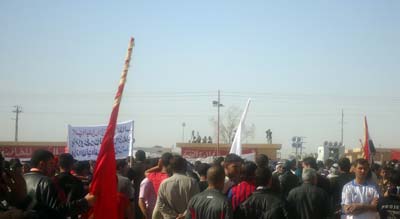
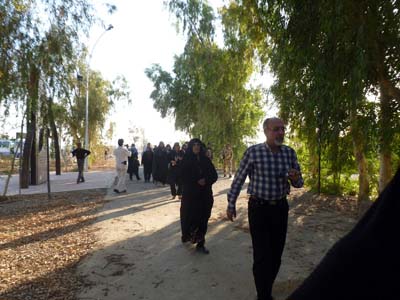
On Wednesday, October 19th, a number of family members of Ashraf residents from Gilan joined other families picketing in front of Camp Ashraf in the hope of visiting their loved ones kept by force in the camp, in a free atmosphere without the presence of the cult officials.
Nejat Society Gilan branch wishes good luck for these people who have long been waiting for such an opportunity, particularly on the threshold deadline to expel Mujahedin khalq from Iraqi territory.

October 23, 2011 0 comments
FacebookTwitterPinterestWhatsappTelegramSkypeEmail
Newer Posts
Older Posts

Recent Posts

  • A Criterion for Proving the Violent Nature of the MEK

    December 31, 2025
  • Rebranding, too Difficult for the MEK

    December 27, 2025
  • The black box of the torture camps of the MEK

    December 24, 2025
  • Pregnancy was taboo in the MEK

    December 22, 2025
  • MEPs who lack awareness about the MEK’s nature

    December 20, 2025
  • Facebook
  • Twitter
  • Instagram
  • Youtube

© 2003 - 2025 NEJAT Society . All Rights Reserved. NejatNGO.org


Back To Top
Nejat Society
  • Home
  • Articles
  • Media
    • Cartoons
    • NewsPics
    • Photo Gallery
    • Videos
  • Publications
    • Books
    • Nejat NewsLetter
    • Pars Brief
  • About Us
  • Contact us
  • Editions
    • عربي
    • فارسی
    • Shqip