Nejat Society
  • Home
  • Articles
  • Media
    • Cartoons
    • NewsPics
    • Photo Gallery
    • Videos
  • Publications
    • Books
    • Nejat NewsLetter
    • Pars Brief
  • About Us
  • Contact us
  • Editions
    • عربي
    • فارسی
    • Shqip
Nejat Society
Nejat Society
  • Home
  • Articles
  • Media
    • Cartoons
    • NewsPics
    • Photo Gallery
    • Videos
  • Publications
    • Books
    • Nejat NewsLetter
    • Pars Brief
  • About Us
  • Contact us
  • Editions
    • عربي
    • فارسی
    • Shqip
© 2003 - 2024 NEJAT Society. nejatngo.org
Iraq

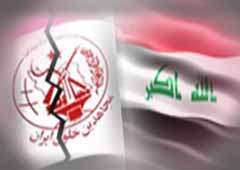
Iraq negotiates with Western countries to accommodate MKO

The Committee for Justice revealed that on Monday the government was in negotiations with some Western countries to accommodate the Mojahedin organization, and accused some Iraqi government negotiations with Western countries to accommodate MKOparties of trying to keep the organization as leverage against neighbouring countries.

The Iraqi government has promised in August last, to end the presence of the terrorist Mojahedin Organization of Iran which took part in killing Iraqis.

In an interview with Shafaaq News the MP Sadegh Al Leban of the Committee for Justice said, "The government rejects the existence of any organization on its territory which works against the neighbouring countries, including the People’s Mojahedin Organization of Iran, which stained its hands with the blood of the people," stressing that "the Government was exerting pressure such as to remove the organization from the country."

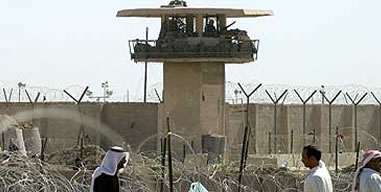
The Government of Iraq changed the name of Ashraf camp to Camp New Iraq after taking over responsibility from U.S. troops for the garrison which was established by the Mojahedin-e Khalq during the era of the former regime in the eighties and during the first Gulf War.

Al Leban said that "the government is negotiating with some Western countries to receive the organization in their own lands because it has become undesirable on Iraqi soil", pointing out that "some actors have a hidden agenda, trying to keep the Mojahedin organization and use it as leverage against the government and countries neighbouring Iraq.

Shafaaq News, Translated by Iran Interlink

October 6, 2011 0 comments
FacebookTwitterPinterestWhatsappTelegramSkypeEmail
Iraqi Authorities' stance on the MEK

Iraq to hold responsible all the supporters of MKO

The mayor of Khalis’s Diyala province revealed the names of those politicians and tribal leaders involved in supporting the terrorist Mojahedin-e Khalq based in Camp Ashraf garrison. The mayor of Khalis's Diyala province revealed the names of those politicians and tribal leaders involved in supporting the terrorist Mojahedin-e Khalq

The mayor of Khalis, Uday Alkhaddran said he would "send all the names of politicians and tribal leaders involved in supporting the PMOI to Iraqi Prime Minister Nuri al-Maliki, along with the smallest details about the organization and internal support for it".

Alkhaddran said that "some politicians in the central government following their personal interests are driven to support the PMOI at the expense of the Iraqi people". Alkhaddran pointed out that "support is still on-going by some politicians", but refused at the present time to name them.

Alforat TV, Translated by Iran Interlink

October 6, 2011 0 comments
FacebookTwitterPinterestWhatsappTelegramSkypeEmail
Former members of the MEK

Pictorial – Darius Balafkandeh, MKO defector joined his family

On Monday September19, Mr. Darius Balafkandeh joined his family  . Embraced by his mother, he said with watery eyes:

“The MKO is nothing but a liar. Since the moment I decided to flee the strictly controlled system of Rajavi, I tried to reach Iraqi forces protecting Camp Ashraf with great difficultly. I was welcomed by families picketing in front of camp Ashraf. I have to say bravely that when I faced Iranian officials at the Embassy in Iraq, I was surprised to see their humanly kind treatment toward me. I found out that I had been influenced by Rajavi’s indoctrination and forced presence in the group. I had only heard lies during those years. I am really embarrassed now.”
Darius Balafkandeh, MKO defector joined his family

October 5, 2011 0 comments
FacebookTwitterPinterestWhatsappTelegramSkypeEmail
Mujahedin Khalq; A proxy force

Iranian Exile Group;MEK Lobbies To Get Off Terrorist List

An Iranian exile group is ramping up its lobbying campaign to get off a U.S. terrorist list, and the issue has sparked a fierce debate among foreign policy experts about the wisdom of such a move.

Supporters of the Mujahedeen-e Khalq see it as a potentially useful group in countering Iran. It has provided the U.S. information about Iran’s nuclear program, for instance. Others see it as a dangerous cult and warn that taking it off the Foreign Terrorist Organization list would undercut peaceful Iranian dissidents, who want nothing to do with the MEK.

Despite sanctions against it, the MEK has managed to enlist members of Congress and some high-profile former U.S. officials to press its case.

The U.S. State Department is under court order to review the MEK’s status, and officials say that review is continuing.

Obligation To Protect?

The group’s supporters, meanwhile, often stand vigil outside the State Department. At one such event this week, MEK supporter Farah Salehi, a software engineer from Berkeley, Calif., said that the group should never have been on the terrorist list in the first place.

"The MEK designation was a wrong designation that was made in 1997 as a goodwill gesture to the Iranian government," Salehi says.

She calls this an urgent matter because thousands of MEK members live in Iraq in a place called Camp Ashraf. Iraqi Prime Minister Nouri al-Maliki wants them out, though Camp Ashraf residents fear there are few places they could safely go. If they returned to Iran, the MEK says its members would be jailed, or worse.

"Maliki is using this label as an excuse or justification that these are terrorist people and they don’t need to be protected and it’s OK to go ahead and massacre them," Salehi says.

Former Vermont Gov. Howard Dean agrees, saying the U.S. promised to protect residents of Camp Ashraf.

"They are unarmed. And 47 of them over a two-year period were mowed down by Maliki’s people. And I don’t think the United States should be permitting those kinds of human-rights abuses," Dean said in a recent interview with NPR’s Talk of the Nation.

Dean and other former officials have accepted large speaker fees from groups linked to the MEK.
But he insists, "This is not a scary group of people. And in the past, who knows what they did. But the fact of the matter is they’re not a terrorist group."

May Send Wrong Message To Iranian Activists

The U.S. government has linked the MEK to the killing of several American military officials and civilians who were in Iran in the 1970s. But the group says it renounced violence long ago.

Robert Hunter, a retired ambassador now with the National Defense University, says the residents of Camp Ashraf ought to be protected. But, he adds, "getting into bed with these people, I think, would be a profound mistake."

Hunter describes the MEK as a Marxist cult, whose members have learned the ways of Western public relations.

"This organization is not a friend of the United States and it never has been. Even though their tactics have changed, they now smile sweetly on us and others, their basic strategy and leadership has not changed at all," Hunter says.

If the U.S. takes the MEK off the terrorism list, Hunter worries that this would send the wrong message to Iranians seeking more democracy. He says the MEK is hated by many Iranians because it was once a tool of Iraqi leader Saddam Hussein during and after the Iran-Iraq war of the 1980s.

Others feel that taking the group off the list would put more pressure on the Iranian government.
Kenneth Katzman, an analyst with the Congressional Research Service, says Iran watchers have been debating the ramifications of such a move and there are two sides of the argument.

He points out, though, "the Foreign Terrorist Organization list is supposed to really be decided on the technical question of, is the group a terrorist group or not."

And that is the only question the State Department is supposed to decide.

by Michele Kelemen

October 5, 2011 0 comments
FacebookTwitterPinterestWhatsappTelegramSkypeEmail
Mujahedin Khalq; A proxy force

Lloyd James: Lobbying for Backers of MKO Terrorists

The international PR firm that repped Libya’s Moammar Qaddafi and Syria’s Bashar al-Assad takes on a new controversial client: supporters of the Iranian opposition outfit Mujahideen-e-Khalq.Lobbying for Backers of MKO Terrorist Group

Over the years, the Iranian opposition group and State Department-listed terrorist organization Mujahideen-e-Khalq (MEK) has won a bizarro patchwork of high-profile supporters. John Bolton, Gen. Wesley Clark (Ret.), big-time Republican lawyers Victoria Toensing and Joseph diGenova, Tom Ridge, Howard Dean, and Nobel Peace Prize laureate Elie Wiesel have all called on the US government to stop treating the MEK, also known as The People’s Mujahideen of Iran, as a terrorist group. This obscure Paris-based outfit—labeled a cult by its critics—that has assembled such an impressive roster of backers now also has the help of Brown Lloyd James, a major international PR firm with a track record of taking on controversial clients.

In late August, hundreds of MEK supporters descended on Washington, protesting the group’s foreign terrorist organizations (FTO) listing in front of the State Department with attendees yelling slogans like "We want justice, we want peace, we want MEK off the list!" Speakers including former Rep. Patrick Kennedy (D-R.I.) and ex-Pennsylvania Gov. Ed Rendell held forth on why they believe the group is the best hope for secular democracy and human rights in Iran. (The MEK’s FTO status is currently being considered by a court-mandated review.)

The well-organized event and high-profile speakers indicated the kind of large-scale, well-funded MEK lobbying enterprise that has been suggested by various media outlets. Jila Kazerounian, one of the rally’s press liaisons, was quick to quash that notion. "There is no MEK lobby, that you read about in these articles," she said. "The closest thing we have to a lobby is the money from grassroots supporters; these Iranian Americans—educated, doctors, businessmen, lawyers, young, old." Nevertheless, in the thick of the crowd was a Brown Lloyd James account executive who told me he was taking notes on the rally for his superiors in Manhattan.

In May 2011, the firm was hired by a Germany-based MEK backer named Ali Taslimi working on behalf of Camp Ashraf, a refugee camp in Iraq north of Baghdad that houses over 3,000 Iranian MEK members and supporters. For an initial fee of $40,000, Brown Lloyd James signed on to provide political consulting services and "a broad range of public relations services for the months of May and June 2011" to Camp Ashraf, which is officially listed as the client.

Brown Lloyd James, a US-British company that specializes in government relations (i.e., lobbying), advertising, and "reputation management," handles the accounts of Al Jazeera English, the government of Qatar, Forbes, and even the composer Andrew Lloyd Webber. But some of its clients are decidedly less savory. In fact, helping MEK supporters isn’t necessarily the most controversial thing Brown Lloyd James has done recently: This year, the firm made news for doing business with the Qaddafi regime in Libya and the Assad dictatorship in Syria—in the latter case, $5,000-per-month work that included landing a fawning Vogue profile of Syrian first lady Asma al-Assad. In an ironic twist, Brown Lloyd James was hired to publicize a September 23 New York bash held by the Logo for Human Rights project, a competition endorsed by Mikhail Gorbachev that aimed to crowdsource a fresh logo that would "become as iconic as the peace sign and serve to advance the global spread…of human rights." (After the news broke, which highlighted the firm’s work for clients with dubious human rights records, the project said that it would sever its ties with the firm.)

But while the company is obviously no stranger to controversy, lobbying for delisting the MEK presents uniquely tricky legal issues—particularly when it comes to the material support for terrorism statute, which prohibits providing aid or resources to designated terrorist organizations. Brown Lloyd James maintains that it works with supporters of the MEK, not the group itself. However, experts on counterterrorism law say the firm’s MEK advocacy may still be problematic.

"Whether the MEK should or should not be listed is one thing, but the law is very clear that third parties and intermediaries don’t insulate you," says David Cole, a professor of law at Georgetown University. "Think about how the United States would respond if [American] citizens were actively working with a PR organization to support the legitimacy of Hamas in Gaza? Here, the only thing protecting the people involved is that they include the former homeland security secretary, not the kind of people the government wants to prosecute…If circumstances were different, they would be scrambling for a good criminal defense…And the same goes for any public relations firm."
Brown Lloyd James maintains that it works with supporters of the MEK, not the group itself. However, legal experts say the firm’s advocacy may still be problematic.

The language of the material support statute is broad enough to encompass the activity of a PR firm, according to Robert Chesney, a professor and international security expert at the University of Texas School of Law. However, Chesney recognizes that a First Amendment defense might have some traction. "There is a free speech issue here, as we are talking about advocating changes to government policy and that is protected if you are doing it independent of the listed group, even if it aids the group indirectly," Chesney says. "At the end of the day, if I were a lawyer advising a PR firm, I would say you have to be very clear as to who you’re dealing with here. As a firm doing this kind of work, you have to know that how the facts appear to you might not be how they appear to those pursuing prosecution."

Brown Lloyd James denies that it’s in murky legal terrain. "Iranian-American communities are perfectly within their rights to work with anyone they want," Mike Holtzman, a partner in the firm’s New York office, said in an email. "They are exercising their First Amendment rights."

Though the MEK has built up a powerful base of political support in the West, there is still much debate surrounding the group’s true nature. The MEK and their supporters say the group is the oppressed, Western-friendly, and pluralistic antidote to President Mahmoud Ahmadinejad and the Islamic republic. But there’s more to the story. Since its founding in Tehran in the mid-1960s, the group, which began as a synthesis of Islamic principles, left-wing politics, and violent resistance to the Shah, has been accused of grave breaches of human rights, indiscriminate mass slaughter (including the deaths of three Americans in 1976), and a totalitarian, hero-worshipping culture.

Critics claim that the MEK’s zigzagging alliances—initially supporting the clerics in the 1979 revolution, then challenging their power, then fighting on the side of Iraq throughout the brutal Iran-Iraq War—have made the group unpopular among Iranians, even those who abhor the current regime. Many also allege that MEK fighters—including current leader Maryam Rajavi herself—were part of a death squad that did Saddam Hussein’s bidding during the 1991 Shiite and Kurdish uprisings.

The group’s supporters brush off the negative press as rooted in the propaganda machines of the Shah, and later the Ayatollah, and view the continuation of the MEK’s 1997 Foreign Terrorist Organizations listing as a cynical, naive sop by the Obama administration to the Iranian government. "Some members of the media have bought all that propaganda wholesale," Ali Safavi, president of Near East Policy Research and an organizer behind the well-publicized State Department rally, said. "The Iranian regime has taken a page right out of Joseph Goebbels’ book. [The regime has] spent millions upon millions of dollars in their campaign against the MEK."

Meanwhile, though, vast sums of money have reportedly been paid out to speakers at pro-MEK events. Among the recipients is Howard Dean, who has written in support of the organization and has been a paid speaker at MEK-related events since January 2011. He says that he was hired via the New York-based Harry Walker Agency to appear at events "sponsored by groups in the Iranian American community, not the MEK." MEK supporters and event organizers stress that their advocacy is bankrolled by the "Iranian American community." But what remains a mystery is exactly where the funding that fuels these costly MEK lobbying operations comes from, or what central entity, if any, coordinates the effort.

Brown Lloyd James declined to discuss its pro-MEK work or the firm’s relationship with supporters and activists, though Holtzman did offer to field questions on "the humanitarian outrages taking place against the people in Camp Ashraf." Just the same, Holtzman’s firm has a decidedly nuanced view when it comes to the MEK’s primary oppressor. Peter Brown, the president of Brown Lloyd James, told the Financial Times in late August that he would "love to take on Iran as a client" because "there are areas of commonality that ought to be exploited."

By Asawin Suebsaeng – Motherjones.com

October 5, 2011 0 comments
FacebookTwitterPinterestWhatsappTelegramSkypeEmail
Human Rights Abuse in the MEK

MKO’s first obstacle for the UNHCR

Rajavi: I will not let hostages out

MeK leadership is strongly opposed to any plan or program which depends on free decisions of people trapped in Camp Ashraf. Rajavi: I will not let hostages out

Masood Rajavi will disrupt any legal program, in which individual interests and future of members is a priority, and through it he fails to maintain the organization; so by suppressing and control of troops, he will force them to obedience and sacrifice for its own interests.

In order to disturb any plans and programs based on the law, MeK gang leader will resort to the tactic of threat, and he will display a bloody Image of the insubordination to the world, to the price of sacrificing all the people in the Camp.

As was expected, despite the propaganda by Rajavi’s terrorist gang about statement of the UN High Commissioner for Refugees, And despite the misuse of the term "refugee", Since UNHCR’s action is based on the recognition of individuals and depends on interviewing them, Propaganda maneuvering, Masood Rajavi has began disrupting it.

In this regard, in its last announcement, MeK has referred to the Maryam Rajavi’s warning on solo interviews:

Any sending out of residents from the camp, Under Any title, for registration, or interview, is unacceptable, except by helicopter and with full responsibility and protection of United Nations, like the personnel shuttle of United Nations and Western countries.

A simple and practical solution is to Separate a part of the camp and deliver it to the staff of UNHCR and UNAMI monitors, so that, under the flag of United Nations, they can perform their mission separately and independently, in order to Rapid confirmation of Ashraf residents’ refugee status, and to prevent creating another blood bath.

Opposition to the sending out of residents from the camp is the first step of MeK excuses against the United Nations’s actions. Obviously, Mujahedeen are seeking to create conditions in which they have Maximum control and effect over the actions of the United Nations.

Moreover, it is also clear that from now, through blackmail and putting pressure on UNHCR, MeK ring leaders are putting preconditions for interviews, with this pretext that Interviews must necessarily lead to the grant of asylum, only, in Iraq.

In this situation, once again the necessity to dissolution of the organizational hierarchy and remove the control of MeK leadership is emerged, which undoubtedly is the task of United Nations and Red Cross; Because If not, these institutions will never reach their humanitarian goals.

October 4, 2011 0 comments
FacebookTwitterPinterestWhatsappTelegramSkypeEmail
Iraqi Authorities' stance on the MEK

MKO receive $60 mln from Saddam each month

Head of Iraq National Congress Party Ahmad Chalabi underlined the close ties between the Mojahedin-e Khalq Organization (MKO) and Iraq’s brutal regime during Saddam Hussein’s era, and warned that the terrorist group’s continued presence in Iraq is posing a great danger to the country.

"This cult accompanied the executed Iraqi criminal (Saddam) in all his policies and did everything to put Saddam’s orders in action," Chalabi said in a meeting with Seyed Mohammad Javad Hasheminejad, the secretary-general of Iran’s Habilian Association – a human rights group formed by the families of 17,000 terror victims in Iran.

He said Saddam and his regime extended all-out support to the MKO. "For instance, they were bribed with $60mln payments that they received from Saddam each month."

He noted that he has already cautioned Iraq’s political and religious leaders against the continued presence of the MKO on Iraq’s soil, and stated, "The entire Iraqi leaders are fully aware of the dangers of the terrorist group’s (continued) presence in Iraq."

The MKO, whose main stronghold is in Iraq, is blacklisted by much of the international community, including the United States.

The MKO is behind a slew of assassinations and bombings inside Iran, a number of EU parliamentarians said in a recent letter in which they slammed a British court decision to remove the MKO from the British terror list. The EU officials also added that the group has no public support within Iran because of their role in helping Saddam Hussein in the Iraqi imposed war on Iran (1980-1988).

The group started assassination of the citizens and officials after the revolution in a bid to take control of the newly established Islamic Republic. It killed several of Iran’s new leaders in the early years after the revolution, including the then President, Mohammad Ali Rajayee, Prime Minister, Mohammad Javad Bahonar and the Judiciary Chief, Mohammad Hossein Beheshti who were killed in bomb attacks by MKO members in 1981.

The group fled to Iraq in 1986, where it was protected by Saddam Hussein and where it helped the Iraqi dictator suppress Shiite and Kurd uprisings in the country.

The terrorist group joined Saddam’s army during the Iraqi imposed war on Iran (1980-1988) and helped Saddam and killed thousands of Iranian civilians and soldiers during the US-backed Iraqi imposed war on Iran.

Since the 2003 US invasion of Iraq, the group, which now adheres to a pro-free-market philosophy, has been strongly backed by neo-conservatives in the United States, who also argue for the MKO to be taken off the US terror list.

Meantime, earlier media report said that the US is trying to convince Iraqi officials to relocate MKO members within Iraq.

Under the US plan, the approximately 3,400 residents of Camp Ashraf would be temporarily relocated within Iraq, farther from the border with Iran, a US State Department official announced.

The relocation would be temporary, the official said, with final settlement of the inhabitants in other countries.

That would not include the United States, the official said, "Since US law bars anyone associated with a terrorist organization from settling there".

Since the beginning of this year, the Baghdad government has repeatedly assured Iranian officials and people that it is determined to expel the MKO from Iraq by the end of 2011.

"Expulsion of the MKO from Iraq’s soil and termination of its presence which has lasted for several years is a definite decision," Iraqi Government Spokesman Ali Al-Dabbaq told FNA in April, adding, "The MKO will be expelled from Iraq by the end of the current year."

"The only option for the members of the MKO is leaving Iraq and they have no other choice," he reiterated.

Reminding to the black record of the terrorist group and its crimes against the Iraqi people, Dabbaq said, "Collaboration with the former Iraqi dictator and massacre of thousands of our people is just part of their crimes".

Dabbaq announced in early April that the cabinet is determined to shut down Camp Ashraf located North of the capital, Baghdad, and disband the terrorist group.

"The council of ministers is committed to implement the earlier decision about disbanding the terrorist group by the end of this year at the latest, and is well informed of the necessity of getting it out of Iraq," the official noted.

October 4, 2011 0 comments
FacebookTwitterPinterestWhatsappTelegramSkypeEmail
European Union

The real victims of Rajavi have no voice

Letter of the Sahar Family Foundation to the EU envoy for Ashraf Camp:

After Mr. Jean De Ruyt was appointed by Baroness Catherine Ashton to prepare a report about Mr. Jean De Ruyt was appointed by Baroness Catherine Ashton to prepare a report about Ashraf Camp in IraqAshraf Camp in Iraq for the European Union, the SFF wrote a letter to him which is as follows:

The captives inside Ashraf Camp and their suffering families have no representative and no voice internationally and no one is reflecting their concerns and demands.

Dear Mr. Jean De Ruyt
Brussels, EU

As we wrote in our letter to the UN General Secretary (a copy is attached), Massoud Rajavi, the cultic leader of the MKO, addressed his followers in Ashraf Camp via Skype during sessions from dusk till dawn during the month of Ramadan. Attending these boring sessions was compulsory for all Ashraf residents. Rajavi emphasized in these sessions that he is determined to keep his forces at any cost. He described giving asylum to Ashraf residents individually a conspiracy to dissolve the organization. He did not give a reason for that but it is obvious that he is aiming to establish another Ashraf Camp in another place (if it happens that he loses the present one), in order to continue keeping the inhabitants captive.
We remember in the past that by submitting his arms to the allied forces in 2003, Rajavi managed to keep Ashraf intact and kept his followers bonded. This time his major goal is to keep his forces too even though he might think that he cannot keep Ashraf any longer.

During these sessions, Rajavi demanded that his forces sign a commitment to be loyal to him to the end. Practically he obliged all his men and women to promise him they would not escape under any circumstances. It is worth mentioning that so far 7 individuals have escaped from Ashraf Camp despite these obligations.

After a few members of the MKO all-female leadership council managed to escape and revealed Rajavi’s immoral behavior, sensitivity over fleeing the leadership council has increased and a greater risk to their lives is concerned. Ms. Zahra Mirbagheri a member of the leadership council who managed to escape some time ago says that Rajavi had ordered all members of the leadership council to watch each other closely and if one attempted to flee others must stop her and it is quite accepted if ten of them are killed to stop one. Ms. Mirbagheri managed to escape miraculously and had she delayed a few moments before reaching the Iraqis she would have been dead since some of the high ranking members of the leadership council were chasing her.

News received from within the Ashraf Camp indicates that all members were armed with slings, catapults and cold weapons and they have loaded a lot of stones and metal pieces on the roofs. Eye witnesses say that when the Iraqi units approached the Camp last April to take back the confiscated lands of the farmers, some MKO committed self-immolation by the direct order of the leaders and at least one person was killed in this manner. Also some deliberately dropped themselves under the Iraqi vehicles and at least one person was killed like this. Some MKO dissidents were shot and killed by the MKO, misusing the situation to eliminate internal opponents. It is significant that those who were more discontented were those who apparently fought against the Iraqis and were killed.

During last April’s incidents, according to eye witnesses, the Iraqis were shooting either into the air or at the ground to stop the aggressors from advancing. In this situation the commanders were encouraging the members to go forward saying the bullets aren’t real and no one should be afraid. But later they claimed that the Iraqi firing killed the victims. It is also said that the MKO had manufactured a shelling device to fire stones using a motor and a tank. Many members of the MKO who were inside the Camp in that time and managed to escape are willing to give their testimony to anyone concerned.

One of those who were announced as dead by the MKO during that event was Morteza Beheshti. He left his wife and his infant child back in Tehran 10 years ago to go to Turkey to find a job to finance his family. But he was deceived into going to Iraq and Ashraf Camp and was kept captive there. His sisters Narges and Laila Beheshti were amongst the families picketing outside Ashraf Camp demanding visits with their loved ones, a request which was denied by the MKO leaders. The sisters investigated the matter with the help of the SFF. Some bodies including that of Morteza were moved to Ba’quba hospital near Ashraf. Morteza’s body was there for at least 40 days and the hospital officials refused to give it to the family. But later the MKO managed to get hold of the body illegally using its influence and spending a lot of money. The hospital report indicates that Morteza was shot in his forehead and his chest. But everyone knows that the Iraqis were shooting into the air or at the ground and according to the MKO leaders they were not using real bullets. The MKO announced Morteza’s death a few days after the incident. Many are willing to witness that Morteza was dissatisfied and wanted to leave. There are other similar cases which can be presented in detail.

Unfortunately the prime victims and inmates inside Ashraf have no representative and no voice and no one is reflecting their interests. They are threatened by Rajavi that if they only try to escape they will face court martial and execution. Some political interests demand that the residents should be held captive inside Ashraf and their families are those who suffer most. This situation will not last for long as Rajavi himself has realized. Rajavi and his supporters in the west cannot keep Ashraf and the forces there, and it is better that those who insist on keeping them there stop making the families suffer any longer.

We wonder why international organizations including the UN are silent about the case. The UNAMI team in Baghdad invites the Iraqi government to respect the principals of human rights in relation to Camp Ashraf, but no one is trying to learn what Rajavi is doing to his own people inside the Camp. The inside of the Camp has never been searched or inspected. As everyone is warning against a human catastrophe by the leaders, some international officials continue with Rajavi’s game and do not take the alerts seriously.

We urge you to meet representatives of Sahar Family Foundation whenever you come to Baghdad and visit in particular the dozens of individuals who escaped the Camp recently and listen to what they have to say first hand.

Sahar Family Foundation
Baghdad, 1 October 2011

List of attachments
List of recipients

October 4, 2011 0 comments
FacebookTwitterPinterestWhatsappTelegramSkypeEmail
MEK Camp Ashraf

MEK;Iranian dissidents in Iraq seek refugee status in ‘positive step’

More than 3,000 Iranian dissidents who’d been threatened with expulsion from Iraq on Dec. 31 have applied to the United Nations for refugee status, a move that could help clear up one of Rand study had concluded that most of the Camp Ashraf residents “were being held against their will”Iraq’s thorniest international problems from the era of dictator Saddam Hussein, U.N. and western diplomats said Sunday.

The U.N. High Commission for Refugees said it would review the 3,200 individual applications received in the last month from Iranian residents of Camp Ashraf, north of Baghdad, which has been run by the paramilitary People’s Mujahidin of Iran.

“It’s a very positive step forward,” said a western diplomat, who couldn’t be named as he wasn’t authorized to speak on the record.

Although UNHCR won’t require the dissidents to disassociate from the group, it said in a recent statement that refugee status could be granted only to individuals and not to the group as a whole. In effect, the MEK, as its known by its Farsi language initials, appears to be on the verge of accepting the demand by U.S. Ambassador James Jeffrey in July to disband as a military formation.

The U.N. refugee agency has appealed to the Iraqi government to delay closure of Camp Ashraf by as much as six months, according to the Western diplomat. The U.S. Embassy hasn’t yet endorsed the request and is waiting for the refugee agency to present its plan for reviewing applications, an official said Sunday. Iraqi government spokesmen had no immediate comment.

The MEK had fought as a mechanized division in alliance with Saddam Hussein during the 1980-1988 war with Iran. But it was left stranded by the U.S. invasion in 2003 that toppled the dictator. Prime Minister Nouri al Maliki has called MEK a terrorist group and demanded that Ashraf be dismantled and its members deported by the end of the year. Iraqi troops drove the point home in April in a military operation that cut the size of the camp by one-third and left at least 35 dead.

Until recently, the MEK had insisted on group refugee status, but it shifted its stance in late August following talks between Struan Stevenson, a Scottish conservative in the European parliament, and UNHCR High Commissioner Antonio Guterres in Geneva.

Stevenson said he hoped that individual requests for refugee status would lead to resettlement of Ashraf residents in the European Union and in third countries. “They have long since given up any pretense of being a military force and they have long abandoned any idea of remaining together,” he told McClatchy by email.

The U.S. government has characterized MEK as a cult and designated it a terrorist group in 1997, holding it responsible for the assassinations of three U.S. Army officers and three civilian contractors prior to the Iranian revolution. With funding from the Iranian diaspora, the MEK has mounted a major campaign in the U.S. and Europe and enlisted many top national security figures from mostly from Republican administrations as well as a number of prominent Democratic politicians to get its terrorist designation lifted.

Shahin Gobadi, the Paris-based MEK spokesman, told McClatchy that all residents of Ashraf, including the leadership, had applied for refugee status, with the exception those in hospital or holding travel documents from a third country.

Meanwhile, Iran has renewed its offer to repatriate the residents of Ashraf or provide documents so they can resettle in third countries.

“We are sure that 65 to 70 percent of the people who are living in Ashraf camp are captive of the other members,” Iran’s ambassador to Iraq, Hasan Daniaei-Far, told McClatchy in a recent interview. “Let them be free, let them choose their own destiny.”

“In case he or she wishes to go back to Iran … we will provide the necessary documents. Even if they wish to go to a third country, we will provide them the necessary documents,” he said. He said hundreds who had already returned to Iran “are conducting a normal life.”

The ambassador also reiterated that Iran had issued a mass pardon to the MEK members except for about 100 who have criminal charges pending against them.

Gobadi ridiculed the offer and called the assertion that MEK members were being held against their will “a big lie.”
“The claim that the clerical regime would provide documents to the individuals who wish to go to other countries is not a serious point worthy of a response,” he said.
He called the “claim” of a mass pardon “more of a joke” and said returning to Iran to live a normal life “means completely giving up the struggle, succumbing to the mullahs and absolute cooperation with the regime’s intelligence and suppressive organs.” He called it a “red line that Ashraf residents have rejected repeatedly.”

James Dobbins, a respected American diplomat now affiliated with the Rand Corp., a Pentagon-funded think tank, disputed the MEK spokesman. He said a recent Rand study had concluded that most of the Camp Ashraf residents “were being held against their will” and said there was no information that those who’d returned to Iran had been harassed by the authorities. “Are they enjoying a normal life? There’s no information available to the contrary,” he said.

By Roy Gutman

October 3, 2011 0 comments
FacebookTwitterPinterestWhatsappTelegramSkypeEmail
The MEK Expulsion from Iraq

Advisor to Iraqi PM: MKO presence illegal

A senior advisor to the Iraqi prime minister blasted the US and Europe’s staunch support for the anti-Iran terrorist Mojahedin-e Khalq Organization (MKO), and said the terrorist group should be expelled from Iraq.Abdulhalim al-Zahiri ;senior advisor to the Iraqi prime minister

"Legally speaking, the presence of the MKO in Iraq under any title is against the law and they should be expelled from the country," Abdulhalim al-Zahiri said in a meeting with Seyed Mohammad Javad Hasheminejad, the secretary-general of Iran’s Habilian Association – a human rights group formed by the families of 17,000 terror victims in Iran.

Stressing that the US and Europe consider the MKO as a terrorist group, he said that they support the group fervently in a bid to use it as a leverage to pressurize Iran.

He said the MKO have misused the status quo in Iraq to expand their illegal and terrorist activities despite the fact that their main camp in Diyala province is surrounded by the Iraqi troops.

The MKO, whose main stronghold is in Iraq, is blacklisted by much of the international community, including the United States.

Before an overture by the EU, the MKO was on the European Union’s list of terrorist organizations subject to an EU-wide assets freeze. Yet, the MKO puppet leader, Maryam Rajavi, who has residency in France, regularly visited Brussels and despite the ban enjoyed full freedom in Europe.

The MKO is behind a slew of assassinations and bombings inside Iran, a number of EU parliamentarians said in a recent letter in which they slammed a British court decision to remove the MKO from the British terror list. The EU officials also added that the group has no public support within Iran because of their role in helping Saddam Hussein in the Iraqi imposed war on Iran (1980-1988).

The group started assassination of the citizens and officials after the revolution in a bid to take control of the newly established Islamic Republic. It killed several of Iran’s new leaders in the early years after the revolution, including the then President, Mohammad Ali Rajayee, Prime Minister, Mohammad Javad Bahonar and the Judiciary Chief, Mohammad Hossein Beheshti who were killed in bomb attacks by MKO members in 1981.

The group fled to Iraq in 1986, where it was protected by Saddam Hussein and where it helped the Iraqi dictator suppress Shiite and Kurd uprisings in the country.

The terrorist group joined Saddam’s army during the Iraqi imposed war on Iran (1980-1988) and helped Saddam and killed thousands of Iranian civilians and soldiers during the US-backed Iraqi imposed war on Iran.

Since the 2003 US invasion of Iraq, the group, which now adheres to a pro-free-market philosophy, has been strongly backed by neo-conservatives in the United States, who also argue for the MKO to be taken off the US terror list.

Meantime, earlier media report said that the US is trying to convince Iraqi officials to relocate MKO members within Iraq.

Under the US plan, the approximately 3,400 residents of Camp Ashraf would be temporarily relocated within Iraq, farther from the border with Iran, a US State Department official announced.

The relocation would be temporary, the official said, with final settlement of the inhabitants in other countries.

That would not include the United States, the official said, "Since US law bars anyone associated with a terrorist organization from settling there".

Since the beginning of this year, the Baghdad government has repeatedly assured Iranian officials and people that it is determined to expel the MKO from Iraq by the end of 2011.

"Expulsion of the MKO from Iraq’s soil and termination of its presence which has lasted for several years is a definite decision," Iraqi Government Spokesman Ali Al-Dabbaq told FNA in April, adding, "The MKO will be expelled from Iraq by the end of the current year."

"The only option for the members of the MKO is leaving Iraq and they have no other choice," he reiterated.

Reminding to the black record of the terrorist group and its crimes against the Iraqi people, Dabbaq said, "Collaboration with the former Iraqi dictator and massacre of thousands of our people is just part of their crimes".

Dabbaq announced in early April that the cabinet is determined to shut down Camp Ashraf located North of the capital, Baghdad, and disband the terrorist group.

"The council of ministers is committed to the implementation of an earlier decision for disbanding the terrorist group by the end of this year at the latest, and is rigid about the necessity for getting it out of Iraq," the official noted.
Fars News, October 01 2011
http://english.farsnews.com/newstext.php?nn=9007090082

October 2, 2011 0 comments
FacebookTwitterPinterestWhatsappTelegramSkypeEmail
Newer Posts
Older Posts

Recent Posts

  • A Comparative Analysis of Psychological Control Mechanisms in Jeffrey Epstein’s Cult and the MEK

    August 3, 2026
  • Operation Mersad: How Iran foiled Saddam’s final gambit 37 years ago

    August 1, 2026
  • Ideology Cannot Prevail over Human Dignity

    July 29, 2026
  • Is Rudy Giuliani so naïve to support MEK terrorists?

    July 27, 2026
  • National Pride of Iranians: Reject the Rajavis and their Patrons

    July 22, 2026
  • Facebook
  • Twitter
  • Instagram
  • Youtube

© 2003 - 2025 NEJAT Society . All Rights Reserved. NejatNGO.org


Back To Top
Nejat Society
  • Home
  • Articles
  • Media
    • Cartoons
    • NewsPics
    • Photo Gallery
    • Videos
  • Publications
    • Books
    • Nejat NewsLetter
    • Pars Brief
  • About Us
  • Contact us
  • Editions
    • عربي
    • فارسی
    • Shqip