Nejat Society
  • Home
  • Articles
  • Media
    • Cartoons
    • NewsPics
    • Photo Gallery
    • Videos
  • Publications
    • Books
    • Nejat NewsLetter
    • Pars Brief
  • About Us
  • Contact us
  • Editions
    • عربي
    • فارسی
    • Shqip
Nejat Society
Nejat Society
  • Home
  • Articles
  • Media
    • Cartoons
    • NewsPics
    • Photo Gallery
    • Videos
  • Publications
    • Books
    • Nejat NewsLetter
    • Pars Brief
  • About Us
  • Contact us
  • Editions
    • عربي
    • فارسی
    • Shqip
© 2003 - 2024 NEJAT Society. nejatngo.org
MEK Camp Ashraf

A Reporter Shields His Identity and MEK’s Viewpoint Goes Missing

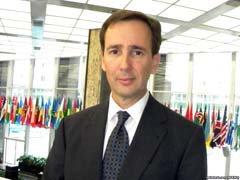
Reporting on the People’s Mujahedeen of Iran and their complicated plight at Camp Ashraf in Iraq has proved challenging for The New York Times. So when reporter Tim Arango had the opportunity to visit the camp with Ambassador Lawrence E. Butler, an American diplomat negotiating with the group, he took it.

Because the camp has been off-limits to journalists, Mr. Arango “embedded” with Mr. Butler’s contingent and did not identify himself to the group. The result of going incognito was, unfortunately, more problems and more complications.

A bit of background is helpful. The group of 3,000 at Camp Ashraf had once been, as Mr. Arango’s story reported, “a powerful paramilitary organization bent on overthrowing the government in Iran. In the 1970s, the group killed Americans in Tehran, and after being given refuge by Saddam Hussein its members were suspected of serving as a mercenary unit that took part in his violent suppression of the Kurds in the north of Iraq and the Shiites in the south.”

With such a history, the group has been precariously housed at Camp Ashraf, inside a hostile Iraq and not far from the border of a hostile Iran. With the American military’s departure from Iraq coming soon, Mr. Arango noted, “the situation at Camp Ashraf is among the most vexing of the unfinished chapters of the American war here.”

It has fallen to Ambassador Butler to negotiate with the People’s Mujahedeen of Iran (often referred to by the acronym MEK) to move them out of the camp – first to another camp farther from the Iranian border and ultimately to other countries for resettlement.

In his story, published July 22, Mr. Arango described an encounter between the ambassador and camp residents during one of the ambassador’s sessions there. The story provided background information and recorded Mr. Butler’s comments to the group and also some additional comments from him in interviews away from the negotiating session.

The story makes apparent that Mr. Butler is pretty frustrated with the MEK, takes a dim view of the group’s hiring of prominent Americans – including retired Gen. Wesley K. Clark – to speak on their behalf and feels strongly about the group’s activities in the 1970s when, according to the State Department, it killed U.S. personnel in Tehran and supported the takeover of the U.S. embassy there in 1979.

“These people have blood on their hands,” the ambassador is quoted as telling Mr. Arango during the negotiating session.

What’s unusual is that the story is so heavily weighted with the ambassador’s words and point of view. The only direct quote from someone with the MEK is five words from an unidentified person claiming General Clark and other American speakers were not “doing it for the money.”

After the story’s publication, I received a complaint from an MEK representative, detailing numerous points and capturing the essential problem of the story: that it read like a soliloquy by the ambassador.

“During that two-and-a-half hour negotiation session, was Mr. Butler talking to a wall?” wrote Shahin Gobadi, a spokesman for the group. “I mean throughout a two-and-a-half hour negotiation session, there was not any response by Ashraf residents to Mr. Butler’s amazing lies and bewildering insistence to relocate Ashraf residents in Iraq (that is tantamount to signing their death warrant), worthy of mention in a 1,200-word article? Could this be construed as providing a complete, fair and impartial picture of negotiations?”

As I sought to understand why the piece was so one-sided, I learned that the problem traced back to Mr. Arango’s decision to travel unidentified with the ambassador.

When he submitted his story draft to the foreign desk, he informed the foreign editor, Susan Chira, that he had not identified himself as a Times reporter because of restrictions on journalists’ access to Camp Ashraf, according to Ms. Chira, who has since been named assistant managing editor for news. Mr. Arango suggested to her that, as a result, he should not include any comments made by camp residents. MEK members’ comments were unpublishable, Ms. Chira told me, “since they were not knowingly in the presence of a reporter.”

She suggested, though, that he should solicit comment from the MEK after the fact. So Mr. Arango submitted questions by email, which elicited a lengthy response from the MEK.

The problem was not cured, however, because so little of the MEK response was incorporated in the story. One simply does not learn from this story why the group seems so intransigent about its unwillingness to relocate, disband or accept an end to American protection. The MEK’s point of view on this was an essential, but missing, element in a story that so thoroughly reported on the ambassador’s perspective.

(Certainly, it is true that the MEK remains a very controversial group, within the U.S. as well as Iraq and Iran. The group is still listed as a terrorist organization by the U.S., although a federal court has ordered the State Department to review the classification. In addition, the veracity of statements from the group cannot be relied upon in some instances – for example, the MEK denied it paid General Clark and yet he acknowledged to The Times that he had been paid by the group. These issues, however, don’t remove The Times’s obligations to get the MEK’s side.)

In sum, two problems stand out. Because the MEK’s comments at the meeting could not be included, The Times sought to obtain the group’s perspective after the fact and then did not do a thorough job of incorporating them. Second, there is the matter of Mr. Arango’s status as an unidentified member of Mr. Butler’s negotiating party.

Mr. Arango, in an email, provided more background on this aspect: “I was invited by Ambassador Butler to accompany him to the camp for one of his sessions, to embed with him like we do with the military (this mission was State Department, but Amb. Butler’s regular job here is with U.S. military and we were accompanied by U.S. military). The idea was I would sit in the back and observe – not be introduced as a reporter, but not be introduced as something I wasn’t (like a State Dept. employee, as the MEK claims).”

Indeed, among the claims in Mr. Gobadi’s complaint was that a State Department official at the negotiating session did identify Mr. Arango as a State Department representative. However, Mr. Arango said he did not hear this and the State Department told my assistant, Joseph Burgess, that this did not take place.

Ms. Chira, in an e-mail message, defended Mr. Arango’s decision to go unidentified. “While it is of course unusual for a reporter not to identify himself, I thought it defensible in very restricted and rare circumstances. We do enter countries without visas or publicly proclaiming ourselves as journalists when we believe there is something newsworthy and when other attempts to gain access have failed – the most recent example was Anthony Shadid’s trip to Syria,” she wrote. “We do attempt to gain access to places that seek to keep reporters out. Camp Ashraf has been a restricted area, despite requests to visit it. It is a point of great tension between the Iraqi and American governments, and there are clearly lives at risk. So it seemed to meet the newsworthy bar.”

I think Ms. Chira makes a reasonable case for Mr. Arango’s decision to accompany the ambassador without identifying himself. However, given that the resulting story detailed the pointed perspective of Mr. Butler, it was incumbent on The Times to present a much more thorough version of the MEK’s perspective. It could be argued that this would have been very hard to do in a story constructed like this one – one in which the reader is treated to numerous quotes captured during a live negotiating session.

With the American presence in Iraq possibly close to ending, it would be ideal if The Times made another attempt soon to report on Camp Ashraf, this time taking pains to detail the MEK’s point of view.

By ARTHUR S. BRISBANE  

The article by Mr. Arango that prompted a response from the MEK.

October 2, 2011 0 comments
FacebookTwitterPinterestWhatsappTelegramSkypeEmail
UN

The Iranian Pen Club Letter to the UNHCR

Fortunately we got informed that UNHCR finally accepted to review the refuge and asylum request of the stranded members of the most dangerous religious cult in the whole Middle East which carries the name of pmoi ,individually and not collectively which is based on the manifest published on 13 September 2011 , this organization, UNHCR, has begun the procedure and reviewing of their political refugee cases which they demanded .

We the human rights activists who have been pursuing and following the freedom and well being of those stranded members for years would like to inform you that those members have been deceived by the name of struggle and fight for the Iranian people by their leadership during past years . They had been sold to Saddam Hussein and his government for millions of dollars . They had been exploited horribly and they had been deprived of the their essential and fundamental rights as human being for years in captivity.

These stranded and hopeless members who are demanding and requesting a free life, have been utilized as toys by the international plots and their leader , Massoud Rajavi has exploited them with a modern brainwashing methods for years and he has exploited the women sexually inside his cult and there is no doubt that Massoud Rajavi is the main and number one official of pmoi who is responsible for all those atrocities toward the stranded members inside his cult.

According to our precise recognition of the real entity of this organization and as a result of the painful life of those stranded captives inside the Ashraf Garrison , we would like to draw your attention to the following facts:

1. First of all those stranded captives should be separated from their cultic container, new Iraq garrison, so they can think freely and make up their minds about their future without any interference of their leadership. It is impossible for them to continue their refuge and asylum seeking process freely inside Ashraf camp(new Iraq garrison) which is totally surrounded by the cultic regulations and atmosphere and is under direct supervision of the cult leadership. That is going to be a moral and juridical paradox.

2. When those stranded members submit their refuge and asylum seeking request applications to the UNHCR representatives , they should be transferred to the camps which are designated for refugees by the Iraqi government ,like the policy of the other countries in dealing with the asylum seekers ,and they should be protected by the host country , Iraq, and UNHCR as well in those designated camps. Their security and safety and their well being should be taken care of by the Iraqi government.

It is obvious that with staying in such terrorist container , New Iraq garrison (Ashraf camp) , the UNHCR and foreign countries can not follow their refugee cases conveniently while the asylum seeking applicants are staying in the terrorist garrison.

3. As you are well informed that Iraqi government has a rule of law which according to that the new Iraq garrison should be shut down and be closed completely for ever till the end of 2011, so we are urging you that in parallel with shutting down the new Iraq garrison at the end of 2011 , the stranded members of pmoi should be transferred to the refuge designated camps and in there their request for political asylum should be taken care of and they should be waiting for their result of their request while they are residing in those camps till UNHCR finds suitable countries to accept them as a refuge.

4. There should be a good connection as well as a very good behavior with those stranded members who are like sick people who need special cares while they come to those designated camps because they have been far away on purpose for many decades from the affection of their loved ones such as their parents , families , and worse of all they have been kept separated from their own family such as their children and their wives and husbands for many years forcibly .

5. In the UNHCR formal manifest like Iraq statements regarding the name of this garrison( the new Iraq garrison in stead of Ashraf) which was a gift to pmoi by the ex dictator of Iraq , Saddam Hussein, has been mentioned and emphasized precisely and exactly, the new Iraq garrison, but it has infuriated the pmoi leadership and they believe that the UNHCR has confirmed the new Iraq garrison as an imposition and gavel to the Iraq popular and elected prime minister , Mr. Nori Al Maleki who is a mercenary in pmoi point of view , and it worries us.

6. It is also worth mentioning that during last week and after the announcement of the statement by the UNHCR, many critics of the Mojahedin Khalq (MKO, MEK, PMOI) warned that the Mojahedin will resort to every possible means to throw a spanner in the works of the UNHCR. Now Maryam Rajavi the wife of the leader of the Mojahedin has issued the following clear statement from her HQ in France:

“ … we will not allow the line of the mercenaries Maliki and Barezani and the strategy of their masters, the Iranian regime, to prevail under the pretext of interviewing people one by one and …” and she continues “… all the Mojahedin members should only be taken for interviews using helicopters …” and this of course means that in order to interview the people trapped in the camp she expects over seven thousand sorties to take place and this is of course only a small part of the difficulties and barriers that the highest leading members of the organisation are creating in order to force all the efforts by UNHCR to end in failure.

7. The UNHCR manifest regarding asylum seeking policy precisely emphasizes that there is no way and it is impossible that those pmoi members can go through the asylum and refuge process collectively , but it seems that this UNHCR manifest in this regard infuriated the leadership of pmoi and as a result of that the leadership of pmoi has begun slandering and insulting the UNHCR.

Paragraph 5 and 6 and the pmoi leadership reaction to this subject worries the human rights activists because we think that the leadership of pmoi has begun its unwillingness to go through the asylum process according to the UNHCR manifest.

We the human rights activists and the family of those stranded members in the new Iraq garrison thank you for all your endeavors to help those members to conquer the dead end of their destiny.

Respectfully

October 1, 2011 0 comments
FacebookTwitterPinterestWhatsappTelegramSkypeEmail
MEK Camp Ashraf

MEK in Iraqi Camp to Seek Refugee Status

In a development that could help resolve an eight-year-old diplomatic and humanitarian standoff, the Mujaheddin-e Khalq (MEK), an Iranian opposition group that has several thousand adherents at a military camp in Iraq, has agreed to allow residents to apply for refugee status and be interviewed individually by U.N. officials.

Vincent Cochetel, Washington representative for the U.N. High Commissioner for Refugees (UNHCR), told IPS Wednesday that an agreement was reached about 10 days ago through the MEK’s legal counsel in London.
"They have agreed to individual screening," he said. "We have offered an alternative location near Ashraf," the camp north of Baghdad where the MEK members reside.

The decision by the MEK could help resolve a crisis that has weighed heavily on the United States as it prepares to withdraw most of its remaining troops from Iraq. Iraqi officials are considering allowing a few thousand U.S. troops to stay in the country but only to provide training and other military assistance.

Mark Toner, deputy State Department spokesman, told IPS, "We fully support the international community’s efforts to resolve the situation at Ashraf."

There are about 3,300 Iranians left in the camp.

In the past, the MEK leadership has refused to allow most residents of Camp Ashraf to apply for refugee status or to speak with UNHCR representatives without MEK officials present.

Former members of the group, who contend that the MEK is a cult that fosters blind obedience to its leaders, say that many Ashraf inhabitants have been held against their will and would eagerly leave the camp if they could. There have been fears that the leaders would order members to commit suicide en masse rather than let them go.

The agreement with UNHCR is a necessary first step to close the camp – something the Iraqi government has long sought – but does not resolve the problem of where the residents find refuge.

"The challenge for us is to find countries to receive them," Cochetel said. "The likelihood that they can remain in Iraq is very limited."

The current Iraqi government, dominated by Shiites and Kurds, has tolerated the MEK camp only under U.S. and international pressure. The Iraqi leadership blames the MEK for allying with Saddam Hussein and participating in brutal crackdowns against Iraqi Kurds and Shiites following the 1991 Gulf War.

The George W. Bush administration initially promised to declare residents of Ashraf enemy combatants following the 2003 U.S. invasion of Iraq that toppled Saddam’s regime. Instead, however, U.S. forces put the camp under their protection. Since 2008, when Iraq regained sovereignty over the camp, Iraqi troops have entered Ashraf several times in a futile effort to convince residents to leave. A few dozen people have been killed in skirmishes between the Iraqis and the Iranians.

Trita Parsi, head of the National Iranian American Council, told IPS the agreement with UNHCR "could potentially be a breakthrough", but that it remained unclear whether the MEK leadership would allow everyone in the camp to be interviewed.

"Hopefully, if given enough protection, camp residents will be able to be truthful about conditions in Ashraf and where they want to go," Parsi said.

Several hundred camp residents have managed to return to Iran since 2003 through the auspices of the International Red Cross. Many of those who remain would fear to go to Iran [..].
Originally a Marxist-Islamist group that helped overthrow the Shah of Iran, the MEK lost a power struggle with more Islamic-oriented factions following the 1979 revolution. The group has very little support within Iran because of its siding with Iraq in the 1980-88 Iran-Iraq war. During the following decade, while Saddam remained in power, the MEK carried out assassinations of prominent officials and other attacks within Iran.

The U.S. State Department put the MEK on its list of foreign terrorist organisations in 1997 because of the group’s bloody record, which includes the assassination of six U.S. citizens in Iran during the 1970s.

MEK leaders insist that they have renounced terrorism and now advocate a democratic government for Iran. But their literature continues to treat their leader, Mariam Rajavi, who lives outside Paris, as the object of a personality cult. The whereabouts of Mrs. Rajavi’s husband, Massoud, who led the group into exile, are unknown.

In recent months, wealthy supporters of the MEK have waged an aggressive lobbying campaign to be removed from the U.S. terrorist list, paying tens of thousands of dollars apiece to prominent former U.S. officials to speak on the group’s behalf.

One argument advanced by MEK adherents has been that removal from the list would allow Ashraf residents to come to the United States. However, a State Department official told IPS last month that U.S. law forbids immigration to anyone with ties to a foreign terrorist organisation. He said this includes "those who provided material support to, or received military-type training from the group, as many MEK members have".

Asked if UNHCR was looking to Europe – where many Ashraf residents have relatives – to give refuge to camp residents, Cochetel said, "I can’t say at this point that their response has been overwhelming."

IPS – By Barbara Slavin

September 29, 2011 0 comments
FacebookTwitterPinterestWhatsappTelegramSkypeEmail
Iraqi Authorities' stance on the MEK

Iraqi MP Urges Iran to Inform World Public Opinion of MKO Crimes

A senior Iraqi legislator underlined Baghdad’s firm decision on the expulsion of the anti-Iran terrorist Mojahedin-e Khalq Organization (MKO) from Iraq, and called on Tehran to release the documents of the crimes of the terrorist group to inform the world public opinion of the MKO’s terrorist nature. "We want to create a new Iraq and it is necessary that all terrorist groups, including the MKO, be expelled from Iraq to this end," Abdolhossein Abtan said in a meeting with Seyed Mohammad Javad Hasheminejad, the secretary-general of Iran’s Habilian Association – a human rights group formed by the families of 17,000 terror victims in Iran.

"You and we should sooner decide about the fate of the terrorist organization of the MKO and therefore it is necessary that efficient revelations be made about the crimes of the organization, specially about what they did during the (Iraqi Shiite’s) Intifada, to further inform the public opinion."

He pointed to the crimes committed by the MKO members in Kalar city in the Iraqi Kurdistan region, and said, "I myself witnessed their crimes."

The MKO, whose main stronghold is in Iraq, is blacklisted by much of the international community, including the United States.

Before an overture by the EU, the MKO was on the European Union’s list of terrorist organizations subject to an EU-wide assets freeze. Yet, the MKO puppet leader, Maryam Rajavi, who has residency in France, regularly visited Brussels and despite the ban enjoyed full freedom in Europe.

The MKO is behind a slew of assassinations and bombings inside Iran, a number of EU parliamentarians said in a recent letter in which they slammed a British court decision to remove the MKO from the British terror list. The EU officials also added that the group has no public support within Iran because of their role in helping Saddam Hussein in the Iraqi imposed war on Iran (1980-1988).

The group started assassination of the citizens and officials after the revolution in a bid to take control of the newly established Islamic Republic. It killed several of Iran’s new leaders in the early years after the revolution, including the then President, Mohammad Ali Rajayee, Prime Minister, Mohammad Javad Bahonar and the Judiciary Chief, Mohammad Hossein Beheshti who were killed in bomb attacks by MKO members in 1981.

The group fled to Iraq in 1986, where it was protected by Saddam Hussein and where it helped the Iraqi dictator suppress Shiite and Kurd uprisings in the country.

The terrorist group joined Saddam’s army during the Iraqi imposed war on Iran (1980-1988) and helped Saddam and killed thousands of Iranian civilians and soldiers during the US-backed Iraqi imposed war on Iran.

Since the 2003 US invasion of Iraq, the group, which now adheres to a pro-free-market philosophy, has been strongly backed by neo-conservatives in the United States, who also argue for the MKO to be taken off the US terror list.

Meantime, earlier media report said that the US is trying to convince Iraqi officials to relocate MKO members within Iraq.

Under the US plan, the approximately 3,400 residents of Camp Ashraf would be temporarily relocated within Iraq, farther from the border with Iran, a US State Department official announced.
The relocation would be temporary, the official said, with final settlement of the inhabitants in other countries.

That would not include the United States, the official said, "Since US law bars anyone associated with a terrorist organization from settling there".

Since the beginning of this year, the Baghdad government has repeatedly assured Iranian officials and people that it is determined to expel the MKO from Iraq by the end of 2011.
"Expulsion of the MKO from Iraq’s soil and termination of its presence which has lasted for several years is a definite decision," Iraqi Government Spokesman Ali Al-Dabbaq told FNA in April, adding, "The MKO will be expelled from Iraq by the end of the current year."

"The only option for the members of the MKO is leaving Iraq and they have no other choice," he reiterated.

Reminding to the black record of the terrorist group and its crimes against the Iraqi people, Dabbaq said, "Collaboration with the former Iraqi dictator and massacre of thousands of our people is just part of their crimes".

Dabbaq announced in early April that the cabinet is determined to shut down Camp Ashraf located North of the capital, Baghdad, and disband the terrorist group.

"The council of ministers has committed to implement an earlier decision about disbanding the terrorist group by the end of this year at the latest, and the necessity of getting it out of Iraq," the official noted.

September 28, 2011 0 comments
FacebookTwitterPinterestWhatsappTelegramSkypeEmail
Mujahedin Khalq; A proxy force

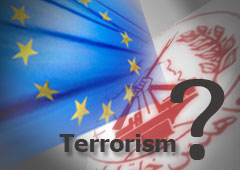
MKO: Homegrown Extremist terrorists in the US

Violent extremism on September 11th was the work of terrorists who have been hunted by the US since the disaster. Because of this extremist violence, the US has justified attacks on both Iraq MKO: Homegrown Extremist terrorists in the USand Afghanistan, and the attacks had, of course, merged into a full scale “War on Terrorism.”

When former president Bush launched this statement of propaganda, Middle Eastern countries immediately got a bad rap and politicians were in a frenzy to update the State Department’s Terrorist list. In his remarks at the United Nations, he used the Mujahedin Khalq Organization (MKO/MEK/PMOI) as a pretext for his so-called Iraqi Freedom Operation.[1] For decades, the MKO has been a terrorist cult group, occupying Camp Ashraf inside Iraq. They were Saddam Hussein’s private army and used to execute Kurds, and perform terrorist acts against Iran. Today they have been executing a large scale, massively-funded propaganda campaign of their own in an effort to clean up their image and gain support from the US.

In fact, this terrorist group has gained the support from a number of prominent American politicians in its massive well-funded campaign to get removed from US State Department’s list of Foreign Terrorist Organizations.

But why?

The US and the MKO would like to use the MKO as a US proxy against the Islamic Republic as a way to destabilize the Iranian government. Despite the group’s violent extremist background record, it was embraced by some in the US administration. What this means for Iran haters, is that the MKO are the new freedom fighters, and they deserve, and must be de-listed.

Since 2003, there have been numerous reports on the risk of US-Iran proxy war. In July 2008, Col. Sam Gardiner (Ret.) an expert on strategy and military organizations warned about the proxy war that “has created an atmosphere in which incidents that otherwise could be handled could now ignite a much larger conflict." [2] The proxy war now seriously contradicts the diplomatic approach—largely propagated by President Obama.

Kaveh L.Afrasiabi of *The Asia Times* believes that a “full-fledged tree of tension with Iran has been nurtured by Washington.” Why such a hypocrisy in the US government’s policy? Afrasiabi finds the answer in the words of a Tehran University political science professor, who spoke with him on the condition of anonymity, he said, “a select group of Jewish policy makers in the White House, State Department and Treasury have hijacked President Obama’s policy on Iran and Obama may wake up one day and find the web of conflict with Iran so tightly wrapped around him that he has no choice but to lock horns with us.”[3]

One of the advocates of the MKO in the United States, retired Air Force Lt. General McInerny praised the group and called for its delisting as a part of a campaign of “provocative actions” against the Iranian government. He explicitly declared the group a “credible overt political-military counter force to the Iranian regime” at a pro-MKO conference in Washington. [4] General McInerney promotes the MKO to “a political military counterforce”, rather than a proxy force. And now, he clearly refers to the group’s military nature that has conveniently been denied by the MKO for years. Such comments would seemingly go against the MEK’s repeated claims to have transitioned from an Islamo-Marxist cult into the non-violent champion-head of creating a “free” Iran. This contradictory blunder didn’t seem to faze anyone, including the conference organizer Raymond Tanter, who insisted the attacks the MEK has conducted inside Iran were simply “military activities” and didn’t count as terrorism, writes Jason Ditz of Antiwar.com.[5]

The American supporters of the MKO terrorist designated cult must understand that terrorism will always remain a substantial and consistent threat.

Extremism is harmful, and the MKO are extremists who rely on Iran-haters to support their cause. Hate and anger are merely traits that encourage predatory type recruitment by the MKO, with delicious financial perks for the particularly intelligent, famous or well-connected “sponsors” who shamelessly offer speeches promoting, softening, and trying to legitimize the group. Georgetown Law School professor, David Cole asserts that agreeing to the speaking offer –let alone receiving speaking fees – violates the law that bars material support for terrorism. Thus MKO advocates are overtly committing a crime. [6]

The Middle East with the Arab Spring is already an overheated region. US citizens can expect a great social stress by supporting the MKO as a proxy against Iran. US authorities, particularly the Secretary of State should know that supporting a terrorist extremist entity is a large step forward against peace.

By Mazda Parsi

References:

[1] PressTV, West, Saudi money keeps terrorism alive, July 19,2011.
[2] Murray, Julia, The Risk of a US-Iran Proxy War, NIAC,July31,2008.
[3] L.Afrasiabi, Kaveh, US grows a tree of tension with Iran, Asia
Times,Aug3,2011
[4] Ditz, Jason, Retired US General: Delist Terrorists a ‘Provocative ‘
Action Iran,Antiwar.com, August23, 2011
[5]ibid
[6]Elliot, Justin, Speakers Bureau worked for Iranian terror group,
Salon.com,September8,2011

September 28, 2011 0 comments
FacebookTwitterPinterestWhatsappTelegramSkypeEmail
Mujahedin Khalq Organization members' families

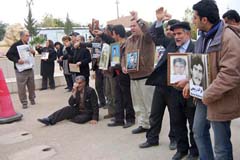
Families of MKO members meeting in Arak

On May 31, 2011 a meeting was held at the Nejat Society office in Arak, Markazi Province, Iran.

The meeting was held by the presence of families of present members trapped inside the MKO cult in Iraq. During the meeting the families whose children are kept captive at Ashraf Camp discussed the ways to release their beloved ones. The families affirmed their active role to release their children and family members.

families of MKO members meeting in Arak

September 27, 2011 0 comments
FacebookTwitterPinterestWhatsappTelegramSkypeEmail
Iraq

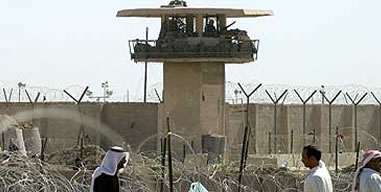
Illegal presence of MKO terror camp will end by December 2011

No excuse to extend military presence of Americans

Former Iraqi prime minister Ibrahim al-Jaafari has said that the security agreement signed by Former Iraqi prime minister Ibrahim al-JaafariIraq and the United States will never be extended.

Jaafari, who is the leader of the Iraqi Shiite coalition, made the remarks during an interview with the Mehr News Agency. His remarks were later translated into English.

The U.S. has been left with no excuse to extend its military presence in the country beyond December 2011, and the security agreement will never be extended, he stated.

“The Iraqi people want foreign forces to leave Iraq, and the members of the parliament who represent the nation will never approve the extension of the security agreement or a new security agreement with Washington,” Jaafari noted. “This is a national demand, and we no longer want foreign forces to stay in Iraq.”

Judicial rulings issued for a number of MKO members
Elsewhere in the interview, Jaafari announced that judicial rulings have been issued for a number of members of the terrorist Mojahedin Khalq Organization (MKO), who are based in Iraq.

“Lawsuits have been filed against a number of the members of the terrorist MKO group, and rulings have been issued for them. And it has been emphasized that their presence in Iraq is illegal,” he stated.

“In our view, a political refugee in Iraq, no matter what country he has come from, should not be armed. As a matter of fact, if this person lays down arms, he can live peacefully in Iraq, otherwise he should leave Iraqi soil,” Jaafari added.

The Iraqi government “will never allow MKO members to take up arms against any country, particularly the neighboring countries, including the Islamic Republic of Iran and Turkey,” he said.

On the number of the Camp Ashraf residents, the Iraqi officials stated, “No accurate estimate of the number of these people is available since the number of them, their names, and their ranks keep changing. A number of MKO members have no option left but to continue cooperation with the organization. Some of them have even been killed after they broke away from the organization and stopped cooperating with it.”

On September 20, Iraqi Finance Minister Baqir Jabr Alzubaidi said that Baghdad will put the criminal leaders of the terrorist group on trial before expelling them.
The Iraqi people will never overlook the atrocities that the members of this group have committed, Alzubaidi stated.

Iraq has expressed concern over Bahrain crackdown

Asked about the crackdown on the people of Bahraini, Jaafari said, Iraq has expressed concern over the situation in Bahrain and have called for a compromise to be made between the government and protesters.

September 27, 2011 0 comments
FacebookTwitterPinterestWhatsappTelegramSkypeEmail
Iraq

Iraq objects to EU interference in the issue of Camp Ashraf

The Minister of Foreign Affairs [Hoshyar Zebari] met with Ms. Catherine Ashton, EU foreign policy coordinator today 22/9/11, in New York.The Minister of Foreign Affairs Hoshyar Zebari

During the meeting they discussed the Partnership and Cooperation Agreement between the EU and Iraq and the importance of signing the agreement at the earliest opportunity, especially since the majority of European parliaments have ratified the Convention.

The Minister expressed the reservation and objection of the Iraqi government to the request of the European Commission to designate a special representative to Camp New Iraq (formerly Ashraf) but stressed that the government of Iraq has consistently appealed to and asked European countries and other countries to receive and resettle residents of the camp in their countries.

He also stressed that the government is committed to close the camp by the end of the year and it will take necessary measures to complete the plan while observing international humanitarian law in dealing with the inhabitants of the camp.

It was agreed to maintain dialogue and communication and mutual visits between the two sides in the coming period.

Iraq Foreign Ministry, translated by Iran Interlink

September 26, 2011 0 comments
FacebookTwitterPinterestWhatsappTelegramSkypeEmail
The MEK Expulsion from Iraq

Iraq will move forward in line with its goals

Senior Iraqi lawmaker Sheikh Humam Hammoudi says Baghdad is determined to expel Iranian terrorist group Mujahidin-e Khalq Organization (MKO) from the country despite pressures by the West to impede the move. Senior Iraqi lawmaker Sheikh Humam Hammoudi

“According to Iraqi law, the MKO is a terrorist group that has killed a large number of Iraqi people. They are groups that would receive financial aid from Iraq’s former regime and mount pressure against the people of the country,” the head of Iraq’s Parliament Foreign Relations Commission said in an interview with ISNA.

Hammoudi added that the EU has put pressure on Iraq’s government to prevent it from expelling the terrorist group, noting however that “we will move forward in line with our goals.”

Members of the MKO fled to Iraq in 1986, where they enjoyed the support of executed Iraqi dictator Saddam Hussein, and set up Camp Ashraf in Diyala Province, near the Iranian border.
The group has carried out numerous acts of terror and violence against Iranian civilians and government officials.

The terror organization is also known to have cooperated with Saddam in suppressing the 1991 uprisings in southern Iraq and the massacre of Iraqi Kurds in the north.

Tehran has repeatedly called on the Iraqi government to expel the group, but the US has been blocking the expulsion by pressuring the Iraqi government.

In April, Iraq’s government spokesman Ali al-Dabbagh said Baghdad is determined to shut down Camp Ashraf, located in north of the capital, and disband the MKO terrorist group.

September 26, 2011 0 comments
FacebookTwitterPinterestWhatsappTelegramSkypeEmail
Former members of the MEK

Mr. Eskardi and Mr. Shaabani escape camp Ashraf

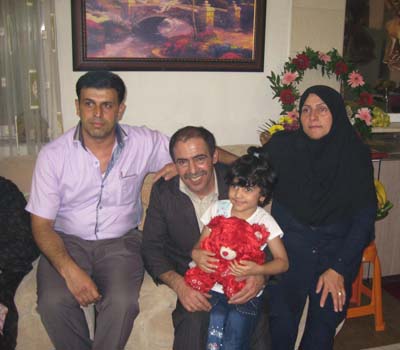
Two former members of the cult of Rajavi (Mujahedin Khalq Organization) who have recently escaped Camp Ashraf were welcomed at Nejat Society Mazandaran Branch on Tuesday, September 20th. Mr. Mohammad Reza Goli Eskardi and Mr. Ein allah shabani met their families at Nejat office where some other families of MKO captives were present, they wished the release of their loved ones held in the Camp under the rule of Rajavi’s dictatorship.

Families of the two MKO defectors were really moved by visiting their loved ones after years of separation. Mr. Shaabani and Mr. Eskardi also expressed their pleasure for their return to their families reminding others that their loved children in Camp Ashraf seriously need their support and help in order that they can release themselves from Ashraf “prison”.

They also briefly described the horrible situation and mental pressure their ex-comrades at Camp Ashraf were trapped in. The two defectors requested the families of Nejat to make efforts to help release their loved ones before the deadline Iraqi authorities have assigned for MKO departure.

Appreciating the cooperation of Nejat Society and families, they expressed their readiness to help with salvation of their former friends held as hostages in MKO.

Accompanied by their families, they went home at the end of the meeting.
Two MKO defectors join their families

September 25, 2011 0 comments
FacebookTwitterPinterestWhatsappTelegramSkypeEmail
Newer Posts
Older Posts

Recent Posts

  • A Comparative Analysis of Psychological Control Mechanisms in Jeffrey Epstein’s Cult and the MEK

    August 3, 2026
  • Operation Mersad: How Iran foiled Saddam’s final gambit 37 years ago

    August 1, 2026
  • Ideology Cannot Prevail over Human Dignity

    July 29, 2026
  • Is Rudy Giuliani so naïve to support MEK terrorists?

    July 27, 2026
  • National Pride of Iranians: Reject the Rajavis and their Patrons

    July 22, 2026
  • Facebook
  • Twitter
  • Instagram
  • Youtube

© 2003 - 2025 NEJAT Society . All Rights Reserved. NejatNGO.org


Back To Top
Nejat Society
  • Home
  • Articles
  • Media
    • Cartoons
    • NewsPics
    • Photo Gallery
    • Videos
  • Publications
    • Books
    • Nejat NewsLetter
    • Pars Brief
  • About Us
  • Contact us
  • Editions
    • عربي
    • فارسی
    • Shqip