Nejat Society
  • Home
  • Articles
  • Media
    • Cartoons
    • NewsPics
    • Photo Gallery
    • Videos
  • Publications
    • Books
    • Nejat NewsLetter
    • Pars Brief
  • About Us
  • Contact us
  • Editions
    • عربي
    • فارسی
    • Shqip
Nejat Society
Nejat Society
  • Home
  • Articles
  • Media
    • Cartoons
    • NewsPics
    • Photo Gallery
    • Videos
  • Publications
    • Books
    • Nejat NewsLetter
    • Pars Brief
  • About Us
  • Contact us
  • Editions
    • عربي
    • فارسی
    • Shqip
© 2003 - 2024 NEJAT Society. nejatngo.org
Former members of the MEK

Two MKO defectors join their families

Two former members of the cult of Rajavi (Mujahedin Khalq Organization) who have recently escaped Camp Ashraf were welcomed at Nejat Society Mazandaran Branch on Tuesday, September 20th. Mr. Mohammad Reza Goli Eskardi and Mr. Ein allah shabani met their families at Nejat office where some other families of MKO captives were present, they wished the release of their loved ones held in the Camp under the rule of Rajavi’s dictatorship.

https://www.nejatngo.org/en/posts/3914 Mr. Mohammad Reza Goli Eskardi and Mr. Ein allah shabani ,who have recently escaped Camp Ashraf were welcomed at Nejat Society Mazandaran Branch on Tuesday, September 20th.

Families of the two MKO defectors were really moved by visiting their loved ones after years of separation. Mr. Shaabani and Mr. Eskardi also expressed their pleasure for their return to their families reminding others that their loved children in Camp Ashraf seriously need their support and help in order that they can release themselves from Ashraf “prison”.
They also briefly described the horrible situation and mental pressure their ex-comrades at Camp Ashraf were trapped in. The two defectors requested the families of Nejat to make efforts to help release their loved ones before the deadline Iraqi authorities have assigned for MKO departure.

Appreciating the cooperation of Nejat Society and families, they expressed their readiness to help with salvation of their former friends held as hostages in MKO.

Accompanied by their families, they went home at the end of the meeting.

Nejat Society, Mazandaran Branch

To view more photos click here

September 25, 2011 0 comments
FacebookTwitterPinterestWhatsappTelegramSkypeEmail
Mujahedin Khalq Organization's Propaganda System

Iran exile group MEK seeks US terror de-listing

Despite the release from a Tehran prison of two jailed American hikers, there remain very few issues on which the US and Iran agree.

One is the decision to label the controversial Iranian exile group, Mujahideen-e Khalq (MEK), as a terrorist organisation.

  • Mujahideen-e-Khalq (MEK)
  • Also known as People’s Mujahideen Organisation of Iran
  • Founded in 1965, adopted armed struggle in 1971
  • Killed six US armed officers and civilian contractors in Iran and carried out attacks against the Iranian government
  • Allied with Saddam Hussein’s efforts to crush Kurdish and Shia uprisings in Iraq in the 1990s
  • 3,400 members now based at Camp Ashraf, Iraq
  • Placed on US terrorist list in 1997

Following a court order, US Secretary of State Hillary Clinton is now considering whether the group should be removed from the banned list.

Those backing the MEK are staging a very expensive campaign to call for the group to be removed – a move that would enable the MEK itself officially to lobby Congress.

The group’s long list of detractors – and many Iran experts – warn against removing them from the terrorist list.

In a 2009 report, Rand, a non-profit Washington think-tank, called the group a "cult" and "skilled manipulators of public opinion".

Based inside Iraq, at a camp called Ashraf, north of Baghdad, the MEK has been on the US list of banned foreign terrorist organisations (FTO) since 1997.

The group carried out many attacks inside Iran after the 1979 revolution, and allied itself with Saddam Hussein’s Iraq against Tehran’s clerical rulers during the 1980s.

In recent months, though, a series of heavyweight political and military figures in the US have spoken out in favour of the MEK, calling explicitly for the group to be taken off the list of banned organisations.

They include high-profile former US government officials, politicians and retired military officers, often hired to speak for fees beginning at $20,000 a time.

The sources of funding for the pro-MEK campaign remain unclear, although paying former officials for public advocacy is commonplace in the US.

However, one US government official told the BBC that the MEK "trawls the halls of Congress" for support, something he described as "highly unusual" for a banned organisation.

‘No terror evidence’
MEK supporters operate through dozens of groups, some of which have placed costly full-page advertisements in The New York Times and Washington Post, and hired powerful Washington DC lobbying firms.

A spokesman for one firm, Akin Gump Strauss Hauer & Feld, denied that the company represented the MEK, but said it does lobby on behalf of a group called the Iranian-American Community of Northern California.

The spokesman described the group as "an independent US citizen’s group that advocates for a democratic Iran."

But the group is the organiser of at least two events in support of the MEK and its website is focused on the de-listing campaign.

Ahmad Moein, a member of the group, recently told the Financial Times there was no justification for keeping the group on the banned list. He said the MEK was seeking a "democratic, secular, non-nuclear" Iran and "has halted all military activity since 2001".

"Everyone is free to debate whether MEK should or should not come off the list, but as we speak they are still on the terrorist list. So frankly, taking money from them to speak in support is worrying,"

Elliot Abrams, an adviser to the White House

Among those who have spoken out in favour of the MEK include former Attorney General Michael Mukasey, former UN ambassador John Bolton and former Homeland Security Secretary Tom Ridge.

Gen James Jones, President Obama’s first National Security Adviser and former New York Mayor Rudy Guliani have also called for the MEK to be de-listed.

Howard Dean, a former Democratic presidential hopeful, has gone further, calling on the US government to recognise Maryam Rajavi, the leader of the group, as the legitimate president of Iran.

Speaking to the BBC, Mr Mukasey defended his position, saying there was "no evidence of [the MEK] being involved in any terrorist activity in the last 10 years".

Mr Bolton took a similar line, describing the decision to keep the MEK on the banned list as "a political act" and saying that taking payment for speaking was absolutely normal in the US.
"They should come off the list because when I was in the government, I saw no information that showed they are a terrorist organisation."

‘Held against their will’
However, not everyone in Washington is as relaxed about the MEK’s lobbying.

Elliot Abrams, an adviser to the White House under former President George W Bush, was also invited to speak at an MEK event, but chose not to attend.

"Everyone is free to debate whether MEK should or should not come off the list, but as we speak they are still on the terrorist list. So frankly, taking money from them to speak in support is worrying," he told the BBC.

Reza Marashi, a former state department official, told the BBC he doubted that the group had any support within the US government.

"There is ample classified information that shows the group remains a terrorist organisation. De-listing them would signal that the US does not have a consistent policy towards terrorism," he said.

The Iraqi government wants the group out of Iraq and has recently clashed with the inhabitants of the camp. MEK supporters say the US troop withdrawal from Iraq is leaving the group defenceless in a hostile country.

But many blame the leadership of the MEK for the predicament facing the residents of Camp Ashraf.
In 2005 a Human Rights Watch Report found reported that 70% of Ashraf residents were held there against their will, and accused the MEK of torturing its own members.
Ali Safavi, a member of the political wing of the MEK, has told the BBC that the group’s leadership has ordered the members in the camp to end their marriages and stay celibate.
Opponents of the MEK warn of the possible fallout if the group is de-listed.[..]
But supporters of the MEK disagree entirely.
Ali Jafarzadeh, a key figure in the de-listing campaign, added: "Continuing the terrorist designation sends the signal that the outside world is prepared to preserve the regime."
Inside the US government, officials contend that the MEK does not have popular support and cannot bring democratic change to the country.

The European Union removed the MEK from its list of banned terrorist organisations in 2009.

Faced with a powerful lobbying force, state department officials will spend the coming weeks thinking about the ramifications of following in their footsteps.

By Bahman Kalbasi

September 25, 2011 0 comments
FacebookTwitterPinterestWhatsappTelegramSkypeEmail
Former members of the MEK

Darius Balafkandeh, MKO defector joined his family

On Monday September19, Mr. Darius Balafkandeh joined his family, Nejat Society, Gilan branch reported. Mr. Balafkandeh was warmly welcomed by his family who were awaiting his return for years.

Embraced by his mother, he said with watery eyes:

“The MKO is nothing but a liar. Since the moment I decided to flee the strictly controlled system of Rajavi, I tried to reach Iraqi forces protecting Camp Ashraf with great difficultly. I was welcomed by families picketing in front of camp Ashraf. I have to say bravely that when I faced Iranian officials at the Embassy in Iraq, I was surprised to see their humanly kind treatment toward me. I found out that I had been influenced by Rajavi’s indoctrination and forced presence in the group. I had only heard lies during those years. I am really embarrassed now.”

Darius’s mother was really moved by visiting her son after many years of waiting. She was crying kissing and hugging her son. She was thankful to the God for she could see her beloved son before her death. She hoped that other families could be able to see the return of their loved children to home and motherland.

Nejat Society also hopes the release of others held imprisoned at Camp Ashraf.

To view more photos click here

September 22, 2011 0 comments
FacebookTwitterPinterestWhatsappTelegramSkypeEmail
Mujahedin Khalq Organization members' families

Nejat Society,Tehran families in front of Ashraf

The families of residents held in camp Ashraf, Iraq, left Tehran to join the others picketing at the Camp gates. Facing the gloomy atmosphere of the camp they are determined to bring hope, loveNejat Society,Tehran families in front of Ashraf and emotions back to humiliated hearts of their loved ones held as hostages by the Cult of Rajavi. The Beheshtis have lost one of their sons, Morteza in the MKO. They urge to visit their other beloved son Mostafa who is kept in the Camp but the Cult leaders who consider themselves as the owners of the members’ lives, haven’t allowed Mostafa to visit his family and they have imposed sever psychological pressure on him.

The parents of Mr. Jaberifard who have come to Camp Ashraf for several times, say,”we just want to see our son Musa. Which law bars us from meeting our son?”

Mohammad Ali Maleki’s sister could manage to come to Ashraf after years. “Mohamamd Ali, don’t forget us! We have never forgotten you,” she says.

Families picketing at Ashraf gates are all hopeful to defeat the terrorist cult of Rajavi someday.

They are staunchly firm in their decision until they can witness the release of their children from Ashraf prison.

September 22, 2011 0 comments
FacebookTwitterPinterestWhatsappTelegramSkypeEmail
Former members of the MEK

Darius Balafkandeh defected the MEK and joined his family

On Monday September19, Mr. Darius Balafkandeh joined his family, Nejat Society, Gilan branch reported. Mr. Balafkandeh was warmly welcomed by his family who were awaiting his return for years.

Embraced by his mother, he said with watery eyes:

“The MKO is nothing but a liar. Since the moment I decided to flee the strictly controlled system of Rajavi, I tried to reach Iraqi forces protecting Camp Ashraf with great difficultly. I was welcomed by families picketing in front of camp Ashraf. I have to say bravely that when I faced Iranian officials at the Embassy in Iraq, I was surprised to see their humanly kind treatment toward me. I found out that I had been influenced by Rajavi’s indoctrination and forced presence in the group. I had only heard lies during those years. I am really embarrassed now.”

Darius’s mother was really moved by visiting her son after many years of waiting. She was crying kissing and hugging her son. She was thankful to the God for she could see her beloved son before her death. She hoped that other families could be able to see the return of their loved children to home and motherland.
Darius Balafkandeh, MKO defector joined his family

September 22, 2011 0 comments
FacebookTwitterPinterestWhatsappTelegramSkypeEmail
Iraqi Authorities' stance on the MEK

MKO leaders must be tried for crimes

Iraq’s Finance Minister Baqir al-Zubaidi says the ‘criminal leaders’ of the Mujahidin-e Khalq Organization (MKO) terrorist group must be put on trial before being expelled from the country.
Iraq's Finance Minister Baqir al-Zubaidi
Iraqi people would never forget “the bitter memory of the massacre of hundreds of thousands of Iraqis, especially a large number of Kurds from north, during the 1991 uprising (Intifada),” al-Zubaidi said on Tuesday.

The Iraqi minister added that MKO leaders would be put on trial as one of the main perpetrators of these crimes, IRNA reported.

Al-Zubaidi said the Iraqi nation is determined to wipe out terrorist groups from the country at any price.

Members of the MKO fled to Iraq in 1986, where they enjoyed the support of former Iraqi dictator Saddam Hussein, and set up Camp Ashraf in Diyala province, near the Iranian border.

The group has carried out numerous acts of terror and violence against Iranian civilians and government officials.

The terror organization is also known to have cooperated with Saddam in suppressing the 1991 uprisings in southern Iraq and the massacre of Iraqi Kurds in the north.

Tehran has repeatedly called on the Iraqi government to expel the group, but the US has been blocking the expulsion by pressuring the Iraqi government.

In April, Iraq’s government spokesman Ali al-Dabbagh said Baghdad is determined to shut down Camp Ashraf, located in north of the capital, and disband the terrorist group.

September 21, 2011 0 comments
FacebookTwitterPinterestWhatsappTelegramSkypeEmail
Iraq

Deputy Foreign Minister emphasizes Iraq’s decision to close Camp Ashraf

Iraq’s Deputy Foreign Minister, Labid Abawi met today with a delegation headed by UNHCR

Iraq Centre for Studies website
Iraq’s Deputy Foreign Minister, Labid Abawi

Claire Bourgeois, UNHCR representative in Iraq and her entourage to discuss Camp Ashraf.

A statement issued by the Ministry quotes him as saying, "Iraq’s position stems from its commitment to the rules of international law and humanitarian law. Iraq is ready to cooperate with the [UNHCR] Representative to find realistic and humanitarian solutions for the inhabitants of the camp".

Concerning Camp Ashraf, Abawi said, "The [Mojahedin] organization is a terrorist organization as classified by the United States and Europe, as it is here also because of its crimes against the Iraqi people through its cooperation with the former dictatorial regime," the statement said.
He continued: "Therefore, Iraq is determined to shut down Camp Ashraf at the end of this year and the residents will be resettled, and Iraq will collaborate with the WHO in order to facilitate their exit from Iraq.

Iraq Centre for Studies website, Translated by Iran Interlink

September 21, 2011 0 comments
FacebookTwitterPinterestWhatsappTelegramSkypeEmail
Terrorist groups and the MEK

Iraqi activist unveils MKO-Al-Qaeda military cooperation

Chairman of an Iraqi legal committee tasked with investigating the crimes committed by the terrorist Mojahedin-e Khalq Organization (MKO) said that the committee has obtained documents substantiating a close military link and cooperation between the MKO and the Al-Qaeda terrorist Iraqi Activist Unveils MKO-Al-Qaeda Military Cooperationgroup.

“Based on the very clear documents and evidence presented to our committee 800 Iraqis enter Camp Ashraf (now the camp of New Iraq) on different pretexts, like construction work, everyday, but a majority of them are al-Qaeda members and receive military and terrorist trainings in the camp,”Nafeh Eisa told FNA on Tuesday.

He added that the terrorist group has put pictures and portraits of al-Qaeda leader on the walls of the camp, respecting them as”heroes of Islam”.

Earlier in May, an Iran-based right group said that it has obtained authentic documents proving that the terrorist Mojahedin-e Khalq Organization has long had tight cooperation with Al-Qaeda’s terrorist cells in Iraq.

The document released by the Association for Defending the Victims of Terrorism (ADVT) belongs to the US-Iraq joint coordination force in Iraq’s Diyala province, where the MKO’s main training camp, Camp Ashraf is located.

The document reveals that the MKO has played an active role in insecurities and instabilities in Diyala.

The document further reveals that the terrorist group has helped the Al-Qaeda mount heavy canons and large-caliber machineguns onto their military vehicles.

The MKO has been in Iraq’s Diyala province since the 1980s.

Iraqi security forces took control of the training base of the MKO at Camp Ashraf – about 60km (37 miles) north of Baghdad – in 2009 and detained dozens of the members of the terrorist group.

The Iraqi authority also changed the name of the military center from Camp Ashraf to the Camp of New Iraq.

The MKO, whose main stronghold is in Iraq, is blacklisted by much of the international community, including the United States.

Before an overture by the EU, the MKO was on the European Union’s list of terrorist organizations subject to an EU-wide assets freeze. Yet, the MKO puppet leader, Maryam Rajavi, who has residency in France, regularly visited Brussels and despite the ban enjoyed full freedom in Europe.

The MKO is behind a slew of assassinations and bombings inside Iran, a number of EU parliamentarians said in a recent letter in which they slammed a British court decision to remove the MKO from the British terror list. The EU officials also added that the group has no public support within Iran because of their role in helping Saddam Hussein in the Iraqi imposed war on Iran (1980-1988).

Many of the MKO members abandoned the terrorist organization while most of those still remaining in the camp are said to be willing to quit but are under pressure and torture not to do so.

A May 2005 Human Rights Watch report accused the MKO of running prison camps in Iraq and committing human rights violations.

According to the Human Rights Watch report, the outlawed group puts defectors under torture and jail terms.

The group, founded in the 1960s, blended elements of Islamism and Stalinism and participated in the overthrow of the US-backed Shah of Iran in 1979. Ahead of the revolution, the MKO conducted attacks and assassinations against both Iranian and Western targets.

The group started assassination of the citizens and officials after the revolution in a bid to take control of the newly established Islamic Republic. It killed several of Iran’s new leaders in the early years after the revolution, including the then President, Mohammad Ali Rajayee, Prime Minister, Mohammad Javad Bahonar and the Judiciary Chief, Mohammad Hossein Beheshti who were killed in bomb attacks by MKO members in 1981.

The group fled to Iraq in 1986, where it was protected by Saddam Hussein and where it helped the Iraqi dictator suppress Shiite and Kurd uprisings in the country.

The terrorist group joined Saddam’s army during the Iraqi imposed war on Iran (1980-1988) and helped Saddam and killed thousands of Iranian civilians and soldiers during the US-backed Iraqi imposed war on Iran.

Since the 2003 US invasion of Iraq, the group, which now adheres to a pro-free-market philosophy, has been strongly backed by neo-conservatives in the United States, who also argue for the MKO to be taken off the US terror list.

September 21, 2011 0 comments
FacebookTwitterPinterestWhatsappTelegramSkypeEmail
The MEK Expulsion from Iraq

Committee to Launch Campaign to Expel MKO Members from Iraq

Chairman of a legal committee tasked with pursuing the crimes committed by the terrorist Mojahedin-e Khalq Organization (MKO) announced that the committee intends to launch a Chairman of a legal committee tasked with pursuing the crimes committed by the terrorist Mojahedin-e Khalq Organizationpetition campaign to expel MKO members from Iraq.

"Civil groups and human rights activists will launch the largest petition campaign in Iraq’s history to get two million signatures from Iraqi citizens for an immediate expulsion of MKO members from the country’s soil," Nafeh Eisa told FNA on Tuesday.

He added that the petition will then be submitted to the Iraqi government and the United Nations.

He further unveiled for the first time that the UN has already asked the Baghdad government to extend its deadline for the expulsion of the MKO from Iraq.

Eisa stated that the UN request has been rejected by the Iraqi government.

Meantime, earlier media report said that the US is trying to convince Iraqi officials to relocate MKO members within Iraq.

Under the US plan, the approximately 3,400 residents of Camp Ashraf would be temporarily relocated within Iraq, farther from the border with Iran, a US State Department official announced.

The relocation would be temporary, the official said, with final settlement of the inhabitants in other countries.

That would not include the United States, the official said, "since US law bars anyone associated with a terrorist organization from settling there".

Since the beginning of this year, the Baghdad government has repeatedly assured Iranian officials and people that it is determined to expel the MKO from Iraq by the end of 2011.

"Expulsion of the MKO from Iraq’s soil and termination of its presence which has lasted for several years is a definite decision," Iraqi Government Spokesman Ali Al-Dabbaq told FNA in April, adding, "The MKO will be expelled from Iraq by the end of the current year."

"The only option for the members of the MKO is leaving Iraq and they have no other choice," he reiterated.

Reminding to the black record of the terrorist group and its crimes against the Iraqi people, Dabbaq said, "Collaboration with the former Iraqi dictator and massacre of thousands of our people is just part of their crimes".

Dabbaq announced in early April that the cabinet is determined to shut down Camp Ashraf located North of the capital, Baghdad, and disband the terrorist group.

"The council of ministers has committed to implement an earlier decision about disbanding the terrorist group by the end of this year at the latest, and the necessity of getting it out of Iraq," the official noted.

The MKO, whose main stronghold is in Iraq, is blacklisted by much of the international community, including the United States.

Before an overture by the EU, the MKO was on the European Union’s list of terrorist organizations subject to an EU-wide assets freeze. Yet, the MKO puppet leader, Maryam Rajavi, who has residency in France, regularly visited Brussels and despite the ban enjoyed full freedom in Europe.

The MKO is behind a slew of assassinations and bombings inside Iran, a number of EU parliamentarians said in a recent letter in which they slammed a British court decision to remove the MKO from the British terror list. The EU officials also added that the group has no public support within Iran because of their role in helping Saddam Hussein in the Iraqi imposed war on Iran (1980-1988).

The group started assassination of the citizens and officials after the revolution in a bid to take control of the newly established Islamic Republic. It killed several of Iran’s new leaders in the early years after the revolution, including the then President, Mohammad Ali Rajayee, Prime Minister, Mohammad Javad Bahonar and the Judiciary Chief, Mohammad Hossein Beheshti who were killed in bomb attacks by MKO members in 1981.

The group fled to Iraq in 1986, where it was protected by Saddam Hussein and where it helped the Iraqi dictator suppress Shiite and Kurd uprisings in the country.

The terrorist group joined Saddam’s army during the Iraqi imposed war on Iran (1980-1988) and helped Saddam and killed thousands of Iranian civilians and soldiers during the US-backed Iraqi imposed war on Iran.

Since the 2003 US invasion of Iraq, the group, which now adheres to a pro-free-market philosophy, has been strongly backed by neo-conservatives in the United States, who also argue for the MKO to be taken off the US terror list.

September 21, 2011 0 comments
FacebookTwitterPinterestWhatsappTelegramSkypeEmail
Mujahedin Khalq Organization

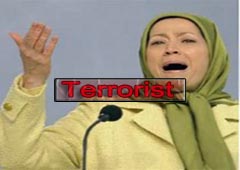
MEK: Facing a new era?

The U.S. State Department is preparing to announce its final decision on whether to remove the Mujahedin-e Khalq Organization (MEK) from its list of foreign terrorist organizations. The decision MEK: Facing a new era?is expected by the end of this month.

The United States added the MEK’s name to the list of its foreign terrorist organizations in 1997, but last year the MEK appealed the decision before a U.S court, which has yet to rule on the matter. Former President Bill Clinton was in office when the MEK was originally listed as a terrorist organization, and now Secretary of State Hillary Clinton is deciding whether to delist the organization.

The European Union and other European countries have already removed the MEK from their terrorist lists — a decision that has angered the Islamic Republic. There is a great level of animosity between the Islamic Republic and the MEK. Both sides will not be satisfied with anything less than the complete destruction of the other.

The MEK was founded in 1965 by Muslim youth who supported the Nehzat-e Azadi-e Iran, or Freedom Movement of Iran Party. These young individuals grew despondent of the non-violent policies of the liberal-Muslims of the Nehzat-e Azadi-e Iran, who formed the first government after the 1979 Revolution. The MEK, having been influenced by revolutionary movements in Latin America, established a secret organization, which aimed at using urban guerrilla warfare against the monarchy government of Mohammad Reza Pahlavi.

Since then, the MEK has been through many ups and downs and now, on the eve of its 50th anniversary, has mobilized all its efforts to be removed from the United State’s list of terrorist organizations. The MEK says it renounced violence in 2001, after claiming responsibility for 350 attacks in 2000 and 2001, according to a RAND Corporation tabulation. However, a 2004 FBI report found that the group was “currently actively involved in planning and executing acts of terrorism.”

The MEK, from its initial days until some time after the 1979 Revolution and the establishment of the Islamic Republic, appeared to be the biggest opponent of Western countries, particularly the United Staes and Israel. The group firmly supported the takeover of the American embassy in Tehran by the Muslim Students Followers of Imam’s Line. *The MEK even went as far as accusing the leaders of the Islamic Republic of compromising with the world’s imperialist powers.

However, the social-political developments in the years following the Islamic Revolution resulted in the total elimination of MEK from the Iranian political scene. This reality pushed the leaders of the organization to begin an armed struggle against the Islamic Republic and seek refuge in Iraq in order to cooperate with Saddam Hussein during the eight years of the Iran-Iraq war from 1980–1988. The MEK continued to fight with the Islamic regime, whose leaders, the MEK believed, hijacked the 1979 Revolution. The MEK viewed themselves as the true revolutionaries against Pahlavi rule.

The group’s departure from Iran put an end to its ability to be in direct contact with the public. This exodus, coupled with the Islamic Republic’s prolific and effective propaganda machine, completed the picture of MEK’s betrayal and turned it into a pariah within Iranian society.

One can still find small threads of support and influence for the MEK in Iranian society. However, the majority of its support is from the family members that in the past had organizational ties to the group.

We should keep in mind that today’s leaders of the MEK are not the original founders. Many members of the organization and cadres of the Mujahedin, who joined before 1979, accuse the current leadership of betraying the ideas of the founders. This accusation, which is taking place internally, is different from the accusations made by the Islamic government about the organization.

Without a doubt, the influence of the MEK outside of Iran and among American and European politicians is much greater than inside the country. The influential lobbies of this organization and its supporters were finally able to delist MEK from the European Union’s terrorist list. Now, they hope to do the same in America.

In recent years, the MEK’s members, its supporters, and the organization, have been able to openly and without many obstacles continue their advocacy and political activities in the West. The fact that their name is on the terrorist list has not proven to be a serious impediment for their activities.

Recently, the MEK improved the quality and quantity of its satellite TV stations, which are being used to connect in a more effective way with protesters and dissidents inside Iran. They broadcast their programs without any problem and with the physical and political support of European and American politicians. The American and British media recently have reported that the MEK pays politicians tens of thousands of dollars to speak at public events the organization holds.

The MEK’s leaders are hoping to be delisted in order to enter a new phase of activities against the Islamic Republic. Delisting the group would provide the opportunity for the organization to carry out legal financial and political activities and would increase its credibility within the international community. In the long term, this could greatly help the organization neutralize the heavy propaganda from the Iranian government, which has prevented Iranians from gravitating toward the MEK.

Furthermore, the issue of delisting will force the MEK to make its activities, whether political or financial, more transparent and legal. It is not clear to what extent such a change could influence an organization whose foundation and identity have been based on secrecy and underground activities. […]
These days, the social networks on the internet are full of comments from young users, who believe in a fundamental change in the ruling government in Iran. However, the same users clearly oppose the removal of MEK’s name from America’s terrorist list. Obviously, the United States will provoke anger and cynicism of this powerful demographic, if it delists MEK.

It does not appear that the majority of the Iranian opposition groups, including the Green Movement, loyalists to the former monarchy, and reformists differ much from the Islamic Republic in their view of the MEK. This shows that while the MEK has been able to build a great deal of political influence in the West, they have failed to do so outside Iran.

Currently, MEK has dedicated the main bulk of its activities abroad to spreading propaganda against the Islamic Republic and its political activities aim to destroy the regime in Iran.

The removal of MEK’s name from the terrorist list by the United States will certainly be a new phase in the tumultuous history between the MEK, Iran, and the United States.

Inside Iran – By Mohammad Reza Yazdanpanah

September 20, 2011 0 comments
FacebookTwitterPinterestWhatsappTelegramSkypeEmail
Newer Posts
Older Posts

Recent Posts

  • A Comparative Analysis of Psychological Control Mechanisms in Jeffrey Epstein’s Cult and the MEK

    August 3, 2026
  • Operation Mersad: How Iran foiled Saddam’s final gambit 37 years ago

    August 1, 2026
  • Ideology Cannot Prevail over Human Dignity

    July 29, 2026
  • Is Rudy Giuliani so naïve to support MEK terrorists?

    July 27, 2026
  • National Pride of Iranians: Reject the Rajavis and their Patrons

    July 22, 2026
  • Facebook
  • Twitter
  • Instagram
  • Youtube

© 2003 - 2025 NEJAT Society . All Rights Reserved. NejatNGO.org


Back To Top
Nejat Society
  • Home
  • Articles
  • Media
    • Cartoons
    • NewsPics
    • Photo Gallery
    • Videos
  • Publications
    • Books
    • Nejat NewsLetter
    • Pars Brief
  • About Us
  • Contact us
  • Editions
    • عربي
    • فارسی
    • Shqip