Nejat Society
  • Home
  • Articles
  • Media
    • Cartoons
    • NewsPics
    • Photo Gallery
    • Videos
  • Publications
    • Books
    • Nejat NewsLetter
    • Pars Brief
  • About Us
  • Contact us
  • Editions
    • عربي
    • فارسی
    • Shqip
Nejat Society
Nejat Society
  • Home
  • Articles
  • Media
    • Cartoons
    • NewsPics
    • Photo Gallery
    • Videos
  • Publications
    • Books
    • Nejat NewsLetter
    • Pars Brief
  • About Us
  • Contact us
  • Editions
    • عربي
    • فارسی
    • Shqip
© 2003 - 2024 NEJAT Society. nejatngo.org
Iraqi Authorities' stance on the MEK

Moqtada Sadr Reiterates Iraqis’ Demand for Expulsion of MKO Terrorists

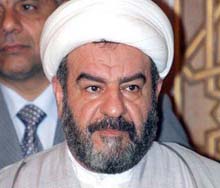
Prominent Iraqi Shiite cleric Moqtada Sadr strongly condemned the crimes committed by the anti-Iran terrorist Mojahedin-e Khalq Organization (MKO) against the Iranian and Iraqi nations, and underlined his country’s strong resolve to expel the terrorist group from Iraq.Iraqi Shiite cleric Moqtada Sadr

Speaking in a meeting with Secretary-General of Iran’s Habilian Association – a human rights group formed by the families of 17,000 terror victims in Iran – Sadr stressed that no one in Iraq likes to see MKO’s presence on Iraq’s soil.

"This terrorist group has committed more crimes and oppressions against us than the crimes it has committed against the Iranian nation since the number of martyrs in Iraq is twice the number in Iran.
"Therefore, we have a very deep motivation for expelling these criminals from our country," Sadr underscored.

The MKO, whose main stronghold is in Iraq, is blacklisted by much of the international community, including the United States.

The MKO is behind a slew of assassinations and bombings inside Iran, a number of EU parliamentarians said in a recent letter in which they slammed a British court decision to remove the MKO from the British terror list. The EU officials also added that the group has no public support within Iran because of their role in helping Saddam Hussein in the Iraqi imposed war on Iran (1980-1988).

Many of the MKO members abandoned the terrorist organization while most of those still remaining in the camp are said to be willing to quit but are under pressure and torture not to do so.

A May 2005 Human Rights Watch report accused the MKO of running prison camps in Iraq and committing human rights violations.
According to the Human Rights Watch report, the outlawed group puts defectors under torture and jail terms.
The group, founded in the 1960s, blended elements of Islamism and Stalinism and participated in the overthrow of the US-backed Shah of Iran in 1979. Ahead of the revolution, the MKO conducted attacks and assassinations against both Iranian and Western targets.

The group started assassination of the citizens and officials after the revolution in a bid to take control of the newly established Islamic Republic. It killed several of Iran’s new leaders in the early years after the revolution, including the then President, Mohammad Ali Rajayee, Prime Minister, Mohammad Javad Bahonar and the Judiciary Chief, Mohammad Hossein Beheshti who were killed in bomb attacks by MKO members in 1981.

The group fled to Iraq in 1986, where it was protected by Saddam Hussein and where it helped the Iraqi dictator suppress Shiite and Kurd uprisings in the country.
The terrorist group joined Saddam’s army during the Iraqi imposed war on Iran (1980-1988) and helped Saddam and killed thousands of Iranian civilians and soldiers during the US-backed Iraqi imposed war on Iran.

Since the 2003 US invasion of Iraq, the group, which now adheres to a pro-free-market philosophy, has been strongly backed by neo-conservatives in the United States, who also argue for the MKO to be taken off the US terror list.
The MKO has been in Iraq’s Diyala province since the 1980s.

Iraqi security forces took control of the training base of the MKO at Camp Ashraf – about 60km (37 miles) North of Baghdad – in 2009 and detained dozens of the members of the terrorist group.

The Iraqi authority also changed the name of the military center from Camp Ashraf to the Camp of New Iraq.

September 20, 2011 0 comments
FacebookTwitterPinterestWhatsappTelegramSkypeEmail
Former members of the MEK

7th Int’l Congress of Victims of Terrorism Condemns MKO

Participants in the 7th International Congress of the Victims of Terrorism in Paris strongly condemned the anti-Iran terrorist Mojahedin-e Khalq Organization (MKO) for its crimes against the Iranian people and the nationals of other countries.

Participants in the 7th International Congress of the Victims of Terrorism in Paris strongly condemned the anti-Iran terrorist Mojahedin-e Khalq Organization

An Iranian delegation from the Iran-based Association for Defending the Victims of Terrorism (ADVT) in the Middle-East attended the annual meeting and provided the participants with different documents on the crimes committed by the MKO.

Also the Iranian delegation inked a Memorandum of Understanding (MoU) with their Spanish, French, Italian, Moroccan, Algerian and US counterparts on the prohibition of any instrumental use of terrorism.

The Iranian participants also proposed that the 9th International Congress of the Victims of Terrorism be held in Tehran in 2013.

Iran is itself one of the main victims of terrorism in the world and a large number of the Iranian nationals have been killed by different terrorist groups, mainly the MKO.

The MKO, whose main stronghold is in Iraq, is blacklisted by much of the international community, including the United States.

The MKO is behind a slew of assassinations and bombings inside Iran, a number of EU parliamentarians said in a recent letter in which they slammed a British court decision to remove the MKO from the British terror list. The EU officials also added that the group has no public support within Iran because of their role in helping Saddam Hussein in the Iraqi imposed war on Iran (1980-1988).

Many of the MKO members abandoned the terrorist organization while most of those still remaining in the camp are said to be willing to quit but are under pressure and torture not to do so.

A May 2005 Human Rights Watch report accused the MKO of running prison camps in Iraq and committing human rights violations.

According to the Human Rights Watch report, the outlawed group puts defectors under torture and jail terms.

The group, founded in the 1960s, blended elements of Islamism and Stalinism and participated in the overthrow of the US-backed Shah of Iran in 1979. Ahead of the revolution, the MKO conducted attacks and assassinations against both Iranian and Western targets.

The group started assassination of the citizens and officials after the revolution in a bid to take control of the newly established Islamic Republic. It killed several of Iran’s new leaders in the early years after the revolution, including the then President, Mohammad Ali Rajayee, Prime Minister, Mohammad Javad Bahonar and the Judiciary Chief, Mohammad Hossein Beheshti who were killed in bomb attacks by MKO members in 1981.

The group fled to Iraq in 1986, where it was protected by Saddam Hussein and where it helped the Iraqi dictator suppress Shiite and Kurd uprisings in the country.

The terrorist group joined Saddam’s army during the Iraqi imposed war on Iran (1980-1988) and helped Saddam and killed thousands of Iranian civilians and soldiers during the US-backed Iraqi imposed war on Iran.

Since the 2003 US invasion of Iraq, the group, which now adheres to a pro-free-market philosophy, has been strongly backed by neo-conservatives in the United States, who also argue for the MKO to be taken off the US terror list.

The MKO has been in Iraq’s Diyala province since the 1980s.

Iraqi security forces took control of the training base of the MKO at Camp Ashraf – about 60km (37 miles) North of Baghdad – in 2009 and detained dozens of the members of the terrorist group.

The Iraqi authority also changed the name of the military center from Camp Ashraf to the Camp of New Iraq

September 20, 2011 0 comments
FacebookTwitterPinterestWhatsappTelegramSkypeEmail
MEK Camp Ashraf

Trapped in Camp Ashraf- Warning and an appeal

Trapped in Camp Ashraf- Warning and an appeal to the int’l community
 

We are approaching the end of year 2011; the deadline announced by the Iraqi government to evacuate Camp Ashraf. Over the past few months the USG’s diplomatic representative in Iraq Mr. Lawrence Butler has met seven times with the leaders of the Mojahedin-e Khalq Organisation in the garrison to talk about the future of the group. His efforts have failed due to the stubborn resistance and rejection on the part of the Mojahedin-e Khalq. Some European countries have also have attempted to start a dialogue with the leaders of the group to convince them to allow the people inside to be sent individually to other countries under the supervision of the United Nations. But their efforts have also faced absolute intransigence on the part of the leaders of the group.

In addition, we have witnessed UN Secretary General Ban Ki-moon appealing to the international community to help the Iraqi government in this case. But no meaningful action has been offered.

The Government of the United States of America also in a clear and transparent way has warned the leaders in the camp that if they do not respond positively to the suggestions put forward, then the USG will no longer be able to act as a negotiator and that the consequences of such action would be entirely attributable to the leaders of the Mojahedin-e Khalq .

The people inside the camp are described as “non status” and they are not accepted as refugees or even asylum seekers. The Iraqi government is adamant it will carry out the decision to close the camp – which is one of the last remains of the Saddam regime – and on the other hand the leaders of the Mojahedin inside the camp insist on keeping the status quo without any logical, legitimate, legal or other reasons.

And in this situation, as advocates of human rights and as ex-members of this organisation, we are deeply concerned about how this camp will be dismantled and especially about the misuse of the people inside the camp by the leaders of the group.

According to witnesses inside camp Ashraf it is said that Massoud and Maryam Rajavi have ordered all the leaders of the MEK to arrange meetings for everybody and give the order to them that “We will go along with the American army to the point that there is no physical interaction but when it comes to the Iraqi government we will become physical and we will make them pay the highest price.”

Considering what the Rajavis have said, although we believe that the imposition of Iraqi sovereignty over this illegally occupied territory at this time is an indisputable right of the government of Iraq, we urge the government and the committee in charge of dismantlement of the camp to try, as they have done over the last past 8 years, to only use non-violent solutions to solve this problem.

Although we know that the existence of this camp in this country of Iraq has no logical or legal basis but we are concerned that the heads of the MEK cult will use the 3400+ people stranded there as human shields to pursue their illogical and illegal demands.

We are deeply concerned that, according to much evidence and many documents, not least the report by the RAND Institute, about 70% of the people inside the camp are kept there against their will, and if we add to this their loss of hope due to the grim and uncertain future they face, the lack of access to media and information and the resulting ignorance this brings, and the existence of never ending barriers and security provisions across the camp, if we add all these then the reasons behind the existence of such an isolated island can become clear.

We are deeply concerned that in a situation where the dismantlement of the camp has begun, the leader of the group would force the low level members and the ordinary people trapped inside to fight the security and law enforcement agencies of Iraq.

On top of our concern over the human rights as an indisputable right for every individual inside the camp we remind you that many of the signatories of this letter have a family member, father, mother, spouse, sibling or friend inside the camp as a hostage. Therefore the primary aim of the MEK in keeping the members trapped inside is nothing except using them as a tool and human shield to save the neck of the leader Massoud Rajavi who remains in Iraq.

We warn that considering that the leaders of the group have already rejected the intervention of the Americans and insist on the relocation of the whole organisation as a group to another country, while it is clear that according to international law, asylum can only be given to individuals, the leaders are placing this kind of suggestion on the table only to further reject any non-violent solution and therefore exploit the members and endanger their lives.

We must warn the international community and humanitarian organisations across the globe, time is running out. And we are witnessing that the US proposal is the only feasible and realistic solution during the remaining time. Therefore while we condemn the leaders of the group for their lack of cooperation with the American and Iraqi officials, we warn that the responsibility for any resistance to the decision of the Iraqi government and endangering the lives of the people is primarily on the shoulders of Massoud Rajavi and Maryam Rajavi and the other high ranking leaders of the group.

We also believe that dialogue can be the solution to dismantle camp Ashraf and there should be no need for violence. We ask the leaders of the group to stop their ridiculous behaviour and obduracy and return to the dialogue and negotiation table

The government of Iraq has repeatedly announced that, respecting international humanitarian laws, these people will not be deported to countries where they may face problems and it has shown its commitment to this day. Accommodating and facilitating the voluntary exit from the camp of nearly 100 individuals who have given themselves up to the Iraqi forces from 2009 to the present is clear evidence of this commitment.

Therefore we ask the international community and humanitarian organisations and all the people who are worried about the future of these people to use whatever communication and/or other tools at their disposal to convince the leaders of the group that after the fall of Saddam Hussein Iraq is no longer a place for them to stay and it is their responsibility to seek assistance from international bodies such as the ICRC and UNHCR to get themselves out of there.

We the signatories of this letter would like to bring this issue to the attention of the following:

– The office of the Prime Minister of Iraq (Committee in charge of dismantlement of Camp Ashraf, Baghdad)
– Lady Catherine Ashton and relevant MEPs in European Parliament
– US State Department
– Human Rights Watch, New York
– Amnesty International, London
– United Nations Human Rights Commissioner Ms Navi Pilay, Geneva

The signatories:
Ariaee Milad (Germany)
Abbassloo Mohsen (Austria)
Abdollahi N (Netherlands)
Ahmadi Ali (Sweden)
Alishahi Behzad (Netherlands)
Behboodi Nasrin (Netherlands)
Barati Farideh (Netherlands)
Barati Mahboobeh (Netherlands)
Ebrahimi Jafar (France)
Fatahian Ghafoor (France)
Ghashghavi Ali (Germany)
Ghiabi Fatemeh (Germany)
Gholami Karim (Germany)
Haghi Karim (Netherlands)
Haji Mahrokh (Canada)
Hoseinin Kazem (Netherlands)
Jabani Massoud (Netherlands)
Jahani Ali (Germany)
Kalani Visha (France)
Karami Mohammad (France)
Kazemi Fereshteh (Netherlands)
Khodabandeh Massoud (United Kingdom)
Khoshal Mehdi (Germany)
Kohzadi Homayoon (France)
Kord Rostami Amirhossain (Canada)
Maleki Batool (Switzerland)
Mirasgari Alireza (Germay)
Mirzaee Zahra (Netherlands)
Mohammadi Mona (Denmark)
Mohammadi Mostafa (Canada)
Mohammadi Zahra (Netherlands)
Mohammadi Mahboobeh (Canada)
Movasaghi Amir (Germany)
Naderi Nader (France)
Naghashzadeh Alireza (Austria)
Nasrollahi Alireza (France)
Naseri Saeed (France)
Nazari Mansoor (France)
Noroozi Elham (Canada)
Noroozi Simin (Canada)
Noroozi Soheila (Canada)
Noroozi soosan (Canada)
Piransar Hassan (France)
Rastgoo Ali Akbar (Germany)
Razaghi Mohammad (France)
Rezvani Naser (Sweden)
Roodgar Khodabakhsh (Canada)
Roohi Majid (Denmark)
Sadeghi nejad Abbass (Germany)
Sagharchi Merhdad (Germany)
Sajoodi Mehdi (Germany)
Sarafpoor Hamed (France)
Sepahi Mahmood (France)
Sepher Minoo (Netherlands)
Shahrokhi Robabeh (Sweden)
Shams Hayeri Hadi (Netherlands)
Singleton Anne (United Kingdom)
Sobhani Mohammad Hussein (Germany)
Soltani Batool (Germany)
Termado Edward (Germany)
Thomasini Nelly (Netherlands)
Yousefi Mitra (Sweden)

September 19, 2011 0 comments
FacebookTwitterPinterestWhatsappTelegramSkypeEmail
UN

Warning against violation of human rights in Ashraf

Letter of Sahar Family Foundation to the UN General Secretary

Mr. Ban Ki-moon, the honorable UN general secretary

On the tenth anniversary of the grave terrorist catastrophe in the US, which was the act of a destructive mind control cult under the guise of Islam, we on behalf of the families of the captives in the Ashraf cult garrison and freed members of the Rajavi destructive mind control cult wish to acquaint you and all human rights activists and international organizations with the following:

According to the news received from within Ashraf garrison, Massoud Rajavi had arranged for a series of extremely boring sessions with all members in the holy month of Ramadan, between dusk till dawn, via internet. Participating in these sessions was compulsory for all members and those refusing to join were reprimanded and disciplined. Even hospitalized and imprisoned persons were taken to the meetings.

In these sessions, Massoud Rajavi clearly announced that leaving the organization and attempting to escape from Ashraf is a political offense and betrayal and the penalty for just trying is death. He admitted that discontentment is mounting in his cult and that the internal situation of Ashraf is explosive. Rajavi specified in these meetings that not only losing Ashraf garrison is passing a red line, but also escaping is also an un-crossable line and if one managed to flee, all the commanders and residents of Ashraf are responsible. In many cases when one succeeds in escaping, all commanders and members of the person’s unit are penalized.

As you know, the report of the American RAND Institute indicates that around 70% of Ashraf inhabitants are there against their own will and if they have the right to choose they would definitely leave the organization. Rajavi indicated in his meetings with the members to the problem of retaining and controlling the members. At the moment the commanders have detained the unhappy residents of Ashraf using all sorts of barriers and fences and adopting tight security and control techniques.

The information received shows that Rajavi has instructed his cult’s commanders to prevent any escape attempt no matter what the cost and they must stop them even if they have to shoot them. What is certain is that one of the most brutal and constant examples of violation of human rights is going on in Ashraf garrison and unfortunately for some delusional political interests, there is no reaction against it.

One can ask why Rajavi is so scared of the free access of his followers to their families and the outside world, why granting political refugee status to the individuals and the direct contact of international organizations such as the Red Cross is considered as dissolving the organization, and why the UN and personalities and organizations defending human rights are silent in the face of these crimes. The truth is that Ashraf is a notorious and dreadful prison unique in the whole world. In this prison, which is run using the most sophisticated and modern tools and equipment, no one has the right to be visited and the penalty for attempting to escape is death. The members inside the garrison are subject to systematic mind manipulation and psychological and physical torture which are imposed continuously. Unfortunately there is no observation of what is going on and what is happening inside there.

We are certain that one day with the will of God and help of the families picketing outside Ashraf, its doors will be opened and the captives would be freed. Then those who supported the Rajavi cult and international officials who stood silent against these crimes should be held responsible by the families since they have practically joined Rajavi in his misconduct and caused the continuation of the suffering of both the members and their families.

We urge you as the Secretary General of the UN to adopt means to firstly prevent external interference against the Iraqi government imposing its rule over its land and secondly arrange some sort of international observance of what is happening inside Ashraf garrison by the leaders of the Rajavi cult. There are many documents filed in the Iraqi judicial system showing what is exactly happening which is so unpleasant. Most of these documents are recorded by eye witnesses who managed to escape from Ashraf.

We are awaiting your answer.

Sahar Family Foundation
Baghdad, 11 September 2011

Attachments:
– The report of the American RAND institute
– The report of Amnesty International
– The report of Human Rights Watch

Copy to:
– The UN office in Iraq (UNAMI)
– The ICRC
– AI
– HRW
– Iraqi ministry of human rights
– The US embassy in Baghdad
– The commander in chief of the US forces in Iraq

September 19, 2011 0 comments
FacebookTwitterPinterestWhatsappTelegramSkypeEmail
Mujahedin Khalq 's Terrorism

IVTC to introduce Iran MKO as terrorist

Iranian family members of MKO victims were among the opening speakers at the 7th International Victims of Terrorism Conference (IVTC) held in Paris on September 15. The IVTC is a forum for nations to make others aware of the terrorist efforts made to subvert or overthrow their state.
And the conference generally draws a lot of disdain from the left because it focuses on states as victims of terrorism, not on groups as victims. That means you won’t find Palestinian victims of terrorism at this conference, instead there would be Israeli victims. You won’t find leftist groups like Irish, Basque or Kashmiri separatists, either. This is essentially a forum where recognized nations can plead their case for their (often equally violent) opposition against violent opposition groups.
The International Victims of Terrorism has previously been held in places like Medellin, Columbia, and Oklahoma City, USA – not exactly centers of left-wing support, but the meeting turned out to be a rare case where the interests of Iran and the interests of the right-wing have found a common ground. And that’s what makes the inclusion of the MKO a very hopeful event in Franco-Iranian relations. In a change, Iran is included as a victim of terrorism rather than a proponent.
The most respected Middle Eastern journalist in France, Alain Gresh of Le Monde Diplomatique wrote that while he was not a supporter of the conference, he was glad to see the inclusion of the victims of the MKO. He even called the inclusion of the MKO an “anomaly” among the participants, which included Jewish-American 9-11 victims, a Kenyan worker at the American Embassy who has blinded by the bombing there in 1998 and an Indian survivor of the Mumbai shooting spree.
Gresh wrote that he hoped that the MKO’s inclusion might be enough to entice some major Iranian leaders to come visit France. That was not the case, but he implied that the recognition of the MKO’s danger is something that the current French government and Iran can find common ground on.
Betraying those they would rule
The MKO are almost universally denounced by the Iranians around the world and are regarded as a terrorist group by many national governments, including Iran and the US, as well as international organizations. After aiding in the Islamic Revolution, bloody street battles took place against Iran’s eventual leadership.
As a result, the MKO literally waged war against Iranians: The group took refuge in Ashraf, Iraq, where they aided Saddam Hussein in the Iran-Iraq War. Saddam Hussein went on to employ this special brigade in his deadly operations against Kurds and in repressing the Iraqi Shia. The MKO has taken credit for releasing information on Iran’s nuclear program, they are suspected of aiding in the chemical attacks against Iran – it’s a long list. And it’s a longer list of their victims, which MKO claims are in the tens of thousands.

“My father was killed by the MKO in 1991 as he was Iran’s cultural host in Lahore, Pakistan and I’m here to share my knowledge and experiences,” said Nader Ganji of the Association for Defending Victims of Terrorism at the IVTC. “At that time I was three years old, so this bad phenomenon affected my life a lot and I never want other countries to have the same experiences.”
Still a student, Nader’s jovial, kind demeanor gives no hint of such a tragic upbringing. Clearly, the MKO did not stamp out his concern for humanity. He did not bristle when asked about Iran’s poor public perception among many of the conference’s attendees.
“We’ve got like 16,000 victims of terrorism and we have got a lot of experiences to be shared,” said Ganji. “Unfortunately most of the other countries don’t know anything about Iran and the terrorist activities in Iran. Unfortunately, opposition groups are trying to show themselves as freedom seekers in other countries, but this is not true.”
Iran’s delegation to Paris included seven people to the list of IVTC speakers, all with sad stories to tell.
“My brother was 28 and he was killed by the MKO just because he wore a beard, was a Muslim and worked as a French teacher,” said Mahmoud Navab, a journalist and conference participant. “In the cemetery where he is buried he is surrounded by four other people killed by the same MKO murderers.”
While the inclusion of Iranian MKO victims is a victory for Iran, it still has a long way to go to achieve proper recognition, and as one incident at the IVTC reveals, basic politeness: After the key Iranian speaker had finished her speech – relaying her shocking personal tragedy which involved the MKO breaking down her door and executing all her adult family members – the French master of ceremonies responded, “And do you find that discussing your experience in Iran makes Iranians more sensitive to the issue of terrorism?” The implication from the event’s host was clear. Fortunately neither Masoomeh Eskandari nor her translator took the bait, instead giving a thank you for their invitation, relaying their support for victims of terrorism worldwide.
What is the relationship between France and the MKO?
After the US invaded Iraq in 2003, the MKO made Paris its foreign headquarters. Generally each year they hold a rally – as well-organized as any National Front rally of xenophobic royalty Marine Le Pen. Mrs. Rajavi, who many assume is the MKO’s leader because her husband Massoud has not been seen in years, attended the MKO this year’s rally in June with an entrance worthy of a head of state, seemingly colossal in her delusion.
But while they do have their friends in France, the French government is not one of them. In 2003, when Nicolas Sarkozy was the Interior Minister, the French government led a high-profile raid of their compound about 75 kilometers outside of Paris. France was concerned that the MKO was trying to shift their base of operations from their camp in Ashraf, Iraq to France, which naturally caused them to worry a part of French soil was being transformed into an international terrorist base. Some 160 people were arrested in the raid, millions of euros were confiscated and the message was clear.

“There is no special relationship between France and MKO,” said Pierre Conesa, an international affairs analyst and author who attended the IVTC. “It’s not true to say that the French government is accepting MKO: We have a law protecting political asylum. But with their past one is able to ask if they are really democrats and have given up violence. But it’s not a support, it’s just an ambiguity, I would say.”
But the MKO’s response to the raid may have done more to damage their image: in several European capitals 10 MKO supporters actually lit themselves on fire, and this gave a great deal of credence to the wide perception that the MKO is some sort of cult. It also hurt the MKO’s efforts in France and Europe to whitewash their violent past and their efforts to portray themselves as some sort of human rights organization.
“Their main success is to remake themselves as a democratic party in spite of their history,” said Conesa.
Why did the EU take the MKO off their terrorist list in 2009?
The MKO are one of the very few groups to ever have their names removed from the EU terrorist list, once placed on it.
“What I discovered by looking at the MKO in France is that their know-how in lobbying is quite unbelievable,” said Conesa. “They are aiming, mainly, at the people who don’t know anything about Iran. In the European Parliament they were mainly aiming at MPs from eastern governments – former communist governments – and as soon as you present a communist with a petition they want to prove that they are democrats, so they sign! They approach them explaining that they are defending human rights, that they are victims of the regime, and they present a petition that says they contribute to the defense of civil rights in Iran, and then at the end it adds that Maryam Rajavi should be the president for life in Iran!”
Anyone who has seen the MKO’s yearly rally in Paris knows that they have extensive funding. It used to be Saddam Hussein playing financier, now it could just be the many groups that wish to see regime change in Iran, or at least those who like to provide a thorn in Iran’s side.
Wherever their funds come from, at last year’s rally in Paris they reportedly paid 2-300,000 dollars to have former NYC mayor Rudolph Giuliani to speak. They also paid people to attend the rallies – an undisputed fact – and they produced a tremendous amount of propaganda, for which they are legendary. You can find any number of reports that describe the MKO has skilled manipulators of their public image, of their use of front groups with harmless sounding names, of their efforts to re-craft themselves from an Islamist Marxist group to fascist personal army to a free-market group that champions women’s rights. The MKO has taken so many deviations since its inception that it’s hard to know what changes have stuck and in what intensity. Of course that all depends on never mentioning the Iranians, the Kurds, the Iraqi Shia they are known to have killed.
It’s key to remember that the EU acted when the Ashraf camp was finally returning to Iraqi jurisdiction after years of war with the US. A massacre was expected (but never materialized, as the Ashraf camp is still there – thousands of Iranians occupying Iraqi soil) and the Europe expected to receive 3,000 MKO members as refugees. Or you can believe the other explanation many accept: the EU wanted a pawn in their relations with Iran.
Regardless, the European governments made it clear that they did not believe in the full rehabilitation of the MKO and there are many nations that have said openly that they regard the MKO warily.
But their propaganda campaign continues to have success in the Europe: In late November 2010, the European Parliament made a declaration, urging the US to remove the MKO from its list of Foreign Terrorist Organizations.
Most observers say the removal of MKO from the US’s list of terrorist groups is unlikely because it would drive a major wedge in any rapprochement efforts with Iran. The MKO’s role in killing Americans during the Islamic Revolution probably makes it impossible as well. But the US may also be swayed by the fact that the condemnation of the MKO includes any true reform movement, such as the Green Party, who has totally disavowed the MKO.
Despite their wars against Iranians, Iraqis and Kurds, despite their constant depiction by observers of every political stripe as a “cult” and despite the fact that perhaps no one outside of Iran is waving a sign with Maryam Rajavi’s face on it, the MKO has done all they could to rebrand themselves as a human rights group. But nothing in this organization’s tactics, or in the testimonies of their few former members lucky enough to escape Camp Ashraf, makes observers believe that this is a group that would grant democracy to anyone if they should ever take control of Iran.
Ramin Mazaheri

September 18, 2011 0 comments
FacebookTwitterPinterestWhatsappTelegramSkypeEmail
Former members of the MEK

More Defectors escaped MKO’s Camp Ashraf

Three Aashraf residents who were held in the camp as hostages against their will could manage to escape the cult of Rajavi on Saturday September 17th, according to Nejat Society.
The three defectors joined Iraqi forces after their release from the camp.

Further information about the newly defected members will be published soon.

September 18, 2011 0 comments
FacebookTwitterPinterestWhatsappTelegramSkypeEmail
Mujahedin Khalq; A proxy force

The criminalization of speech since 9/11

Prosecution for "material support" has expanded under Obama. Where does it leave the First Amendment?
Last week, a 24-year-old Virginia man named Jubair Ahmad was arrested and charged with providing "material support" to an officially designated terrorist organization, the Pakistani group Lashkar-e-Taiba (LeT).

But Ahmad is not accused of sending money or weapons to LeT, or scouting out targets for the group. What had Ahmad allegedly done? Uploaded a "propaganda video to YouTube on behalf of LeT" that showed "so-called jihadi martyrs and armored trucks exploding after having been hit by improvised explosive devices," according to the Justice Department. Ahmad allegedly had spoken to the son of an LeT figure about making the video.

The case is an example of prosecutors’ aggressive use, in the decade after Sept. 11, of the preexisting law that bars providing "material support" to officially designated terrorist groups. In a landmark case last year, the Supreme Court endorsed the government’s broad interpretation of the material-support law in a way that critics say criminalizes speech.
The expanded use of the material-support law is an important part of the legacy of 9/11 and the legal regime erected in response to the attacks. To learn more about the history and use of the material-support statute, I spoke with Hina Shamsi, the director of the National Security Project at the American Civil Liberties Union.

What does the material-support law say, exactly?

It gives the government the power to designate non-U.S. groups as foreign terrorist organizations based on very broad criteria. That includes whether the group has used or threatened to use a weapon against personal property; whether the group’s activities undermine our national defense, foreign relations or economic interests. What is most problematic about the law, though, is "material support" has been interpreted so broadly. It is used regardless of whether the provider has the intent to support terrorism, or whether any specific act of terrorism has taken place or is being planned, and even to include pure speech and advocacy.

How and how much has this statute been used in the decade since Sept. 11?

The material-support law is the statute prosecutors most use in suspected terrorism cases, including not just in our federal courts but also in military commissions. It is now the most far-reaching statute prosecutors use in suspected terrorism cases. Its use, and its use specifically in this Lashkar-e-Taiba case, shows just how the grave the implications are for Americans’ free speech rights. That’s how it is that what appears to be purely First Amendment-protected activity here is being criminalized.The government has a legitimate and compelling interest in protecting the nation from terrorism and in stopping material support that actually furthers unlawful and violent acts.

Is this a post-9/11 law?

No, the law existed pre-9/11. But its broad interpretation both by the government and the courts has expanded dramatically. The Supreme Court held in a 1969 case called Brandenburg v. Ohio that even advocacy of violence can be criminalized only when it is intended to result in imminent criminal conduct and if it is likely to produce imminent criminal conduct. That reflects the importance of First Amendment protections to our democracy — that speech the government may disagree with is nevertheless part of the marketplace of ideas, the recognition that advocacy and speech itself can serve as a safety valve for the expression of dissent, and the fundamental fact that the government cannot and should not criminalize beliefs and ideology, although it can and should criminalize violent conduct.
But in a Supreme Court case last year which has emboldened prosecutors, the court held for the first time ever that the government can in fact criminalize speech, including speech that advocates only lawful activity, in part on the theory that speech might legitimize a terrorist group. This is the case of Holder v. Humanitarian Law Project. The broader implication of this ruling is that it thwarts the efforts of human rights and humanitarian groups to persuade violent actors to renounce violence or cease human rights abuses. As a result, a law that is aimed at putting an end to terrorism, actually threatens peaceful advocacy groups.

What were the facts of that Holder v. Humanitarian Law Project case?

A human rights organization and nonprofit groups wanted to assist the Kurdistan Workers’ Party in Turkey and the Liberation Tigers of Tamil Eelam in Sri Lanka by teaching them how to bring human rights claims in the United Nations. The plaintiffs wanted to teach international law and nonviolent means to promote peace. After the U.S. designated the Kurdistan Workers’ Party and the LTTE as foreign terrorist organizations, that kind of advocacy from human rights and other nonprofit groups became a crime, according to the government. What the plaintiffs went to court to say was, ‘We would like to help promote peaceful resolutions.’ The court came back and said, doing so in connection with a foreign terrorist organization would violate the material-support law.

I wrote earlier this week about a public relations campaign on behalf of the Iranian group the Mujahedin-e Khalq (MEK), also a designated foreign terrorist organization. Some of the people involved in that debate argue the material support is being applied in a selective, politicized way, depending on the type of supporters a given terrorist group has. What do you think?

That certainly appears to be happening now, and that’s part of the danger of criminalizing speech and advocacy in this way. It allows the government to pick and choose whose speech and whose advocacy it favors.

Is this all a settled matter of law at this point, or is anyone planning any challenges?

We’re gravely concerned about the consequences of the Humanitarian Law Project decision, and we are following what’s happening and looking to see what challenges might be brought when the government moves to criminalize pure speech. Especially I think when it seeks to do so with respect to domestic organizations.

Justin Elliott / War Room / Salon.com

September 18, 2011 0 comments
FacebookTwitterPinterestWhatsappTelegramSkypeEmail
Mujahedin Khalq 's Terrorism

Families of MKO targets at Int’l Victims of Terrorism Conference

The International Victims of Terrorism Conference in Paris is largely a forum for nations to make others aware of terrorist efforts to subvert their state.

This year family members of people killed by the People’s Mojaheddin Organization of Iran, known as the MKO, were invited to testify about the suffering wrought by a group that aims to overthrow the Islamic Republic of Iran.

The MKO are almost universally denounced by Iranians around the world and are regarded as a terrorist group by Iranian, American and other national and international governments.

The group’s headquarters are in Ashraf, Iraq, where they aided Saddam Hussein in the Iran-Iraq War and then went on to take part in his deadly operations against Kurds and as well as Iraqi Shia.

As a result of the US invasion of Iraq in 2003 the MKO tried to relocate their headquarters to France. But then-Interior Minister Nicolas Sarkozy approved a raid of the group’s compound outside Paris, saying that the MKO was trying to turn French soil into an international terrorist base. 10 MKO supporters then set themselves on fire in protest, shocking Europe.

In recent years, the MKO has undertaken a massive propaganda campaign to rebrand themselves as a human rights group. The tens of thousands of victims of the MKO and their families strongly disagree.

Speaking to heads of state, ambassadors, and other international leaders, the victims of the MKO were given a major platform to discuss their suffering. They urged listeners to continue to regard the MKO as a threat and to oppose their efforts to rewrite history.

Download Families of MKO targets at Int’l Victims of Terrorism Conference

September 17, 2011 0 comments
FacebookTwitterPinterestWhatsappTelegramSkypeEmail
Iraq

senior Iraqi cleric: MKO must leave Iraq by 2012

Leader of the Islamic Supreme Council of Iraq, Ammar Hakim, has said that the members of the terrorist Mojahedin Khalq Organization (MKO) based in Iraq must leave the country by the end of 2011.

Leader of the Islamic Supreme Council of Iraq, Ammar HakimHakim, who had travelled to Iran to attend the fifth meeting of the Ahl al-Bayt World Assembly, made the remarks during a meeting with Grand Ayatollah Abdul Karim Mousavi Ardebili in the holy city of Qom on Friday.

Hakim also said that Tehran has announced the names of 100 MKO members who must stand trial if they return to Iran.
Commenting on the formation of the government in Iraq, he stated that despite the pressure being exerted on the country, Baghdad could move through that crucial stage thanks to public support.
He also said that the enemies of Iraq are incessantly making efforts to create stumbling blocks to the country.
Elsewhere in his remarks, Hakim stated that the security situation in Iraq has improved and the Iraqi forces have become more equipped and are capable of identifying terrorists.
And the death toll from terrorist attacks in Iraq has decreased, he added.
He also said that efforts are underway to create understanding among various political groups in Iraq and to help them reach a consensus on internal and external issues.
On the developments occurring in certain regional countries, the ISC leader stated that Iraq is keeping a close eye on the events unfolding in the countries which have been experiencing pro-democracy uprisings and has made efforts to help stabilize the situation in Syria as well.
Hakim also held separate meetings with a number of other grand ayatollahs based in Qom, including Lotfollah Safi Golpayegani, Nasser Makarem Shirazi, Hossein Nouri Hamedani, Mahmoud Hashemi Shahroudi, Sadeq Hosseini Shirazi, Mohammad Javad Alavi Tabataba’i Boroujerdi, and Hossein Vahid Khorasani on Friday.
Ayatollah Safi Golpayegani, in his meeting with Hakim, said that various political groups in Iraq should put aside differences.
In his meeting with Ayatollah Makarem Shirazi, Hakim said it is necessary that all Iraqi officials stand by each other and make endeavors to serve the people.

September 17, 2011 0 comments
FacebookTwitterPinterestWhatsappTelegramSkypeEmail
The cult of Rajavi

MKO is a Cult and should remain in the list

VOA Interviews Dr. Rasool Nafisi , academic and Middle East expert
 

Siamak Dehqanpour: a group of political activists have recently written a letter to call for keeping MKO in the terrorist list. You were one of the signatories of the letter. Why do you believe that MKO should remain in the list of the State Department and what kind of organization is the MKO?

Rasoul Nafisi: firstly I’d say that the letter was not signed by political activists. None of them were political activists but all of those 38 people are well-educated experts on Middle East affairs. I had a personal reason to sign the letter.

In my opinion, delisting the MKO is harmful to the youth in the US. Why? Unleashing the group opens the way for them to deceive the Iranian youth– a lot of whom have no information on the history of Iran. The organization has had a awkward life .They have always been imprudent, they have never cared about people’s lives, and the example was the operation “Eternal Light”( Forough-e-Javidan)
Neither am I a member of an organization, nor a political activist.

I am a scholar. I don’t have political idea or goal. I’m not paid by anyone. And I don’t pay anyone either.

I am morally concerned about the MKO as a guilty, imprudent organization that simply plays with people’s lives. In the infamous case of “Forough-e Javidan”, 600 foreign passports were found. MKO was basically established on political –military basis. It has a military ideology although it claims to be democratic. Furthermore, the problem about the MKO is that it [has held] a large number of Iranian youth in a country which was Iran’s enemy. The MKO sided with Saddam Hossein in a very very sensitive time, when he wanted to occupy Iranian soil.

Now the MKO’s problem is that Saddam Hossein has been collapsed but the MKO’s trained army remained in Iraq. No one knows what to do with them. If you want to move them to another country , I don’t think any country accepts them. If you want to send them individually to other countries, the MKO doesn’t accept the option.

The research done by RAND Corporation in 2009 indicated that about 70 percent of Ashraf residents are kept there against their will. Besides, when the American forces wanted to enter the camp in order to disarm them completely, hey were threatened to mass suicide [by the MKO].
I’d like to mention that they are a “cult”. A cult has some criteria;

– It has religious background
– They adore a personality
– They don’t accept any opinion from outside the group
– All decisions are made inside the group
– Most cults recommend their members to commit suicide. For instance, the case of James Jones. He made the 500 followers under his control commit suicide when finally he was stuck in a cul-de-sack …

I’d like to view this group from sociological point of view. There are good books about it. I think one of the best ones is the book by Ervand Abrahamian, the prominent Iranian historians who investigates the MKO’s history really impartially and even he has some sympathy for the group. He describes how a socially-politically founded organization finally turns into a cult.

Siamak Dehqanpour: there is an important point, the MKO has declined to annihilation several times since 1965 but each time they could stand up again and restart their activities. What’s the secret of such a thing?

Dr. Rasoul Nafisi: first of all, we should admit that the MKO is really well-organized. We have recently witnessed examples of it. They paid hundreds of thousands dollars to American military and political personalities, brought them to public to speak in favor of them. Unfortunately most of them were from right-wing. Again and again the MKO reconstructs itself. In a cult-like organization, all problems are in the system and the main cause of the system is its survival and its power and nothing else, that’s why it can survive.

Siamak Dehqanpour; do you think, it will be a crushing defeat [for the MKO] if Ashraf is shutdown?

Rasoul Nafisi: I actually see Ashraf as a wealth in hand of the MKO’s leadership. They use it to raise funds from the countries in the region. Some of military supporters of the group in the US officially say that “We want to use the group to destabilize Iran”! It is much to be regretted that. I mean the history has shown that the MKO is ready to do [what the US wants] as they allied with Saddam Hussein. They will absolutely ally with anyone else. They claim that they are democratic and tolerant because they are now in a weak condition.

I always consider groups, people and their words when they are in power, when they have the upper hand. See what they did with their allies in the council [National Council of Resistance] and in other cases.

Translated by Nejat Society

September 15, 2011 0 comments
FacebookTwitterPinterestWhatsappTelegramSkypeEmail
Newer Posts
Older Posts

Recent Posts

  • A Comparative Analysis of Psychological Control Mechanisms in Jeffrey Epstein’s Cult and the MEK

    August 3, 2026
  • Operation Mersad: How Iran foiled Saddam’s final gambit 37 years ago

    August 1, 2026
  • Ideology Cannot Prevail over Human Dignity

    July 29, 2026
  • Is Rudy Giuliani so naïve to support MEK terrorists?

    July 27, 2026
  • National Pride of Iranians: Reject the Rajavis and their Patrons

    July 22, 2026
  • Facebook
  • Twitter
  • Instagram
  • Youtube

© 2003 - 2025 NEJAT Society . All Rights Reserved. NejatNGO.org


Back To Top
Nejat Society
  • Home
  • Articles
  • Media
    • Cartoons
    • NewsPics
    • Photo Gallery
    • Videos
  • Publications
    • Books
    • Nejat NewsLetter
    • Pars Brief
  • About Us
  • Contact us
  • Editions
    • عربي
    • فارسی
    • Shqip