Nejat Society
  • Home
  • Articles
  • Media
    • Cartoons
    • NewsPics
    • Photo Gallery
    • Videos
  • Publications
    • Books
    • Nejat NewsLetter
    • Pars Brief
  • About Us
  • Contact us
  • Editions
    • عربي
    • فارسی
    • Shqip
Nejat Society
Nejat Society
  • Home
  • Articles
  • Media
    • Cartoons
    • NewsPics
    • Photo Gallery
    • Videos
  • Publications
    • Books
    • Nejat NewsLetter
    • Pars Brief
  • About Us
  • Contact us
  • Editions
    • عربي
    • فارسی
    • Shqip
© 2003 - 2024 NEJAT Society. nejatngo.org
Iraq

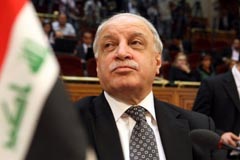
Deputy Foreign Minister emphasizes Iraq’s decision to close Camp Ashraf

Iraq’s Deputy Foreign Minister, Labid Abawi met today with a delegation headed by UNHCR
Iraq Centre for Studies website
Iraq’s Deputy Foreign Minister, Labid Abawi

Claire Bourgeois, UNHCR representative in Iraq and her entourage to discuss Camp Ashraf.

A statement issued by the Ministry quotes him as saying, "Iraq’s position stems from its commitment to the rules of international law and humanitarian law. Iraq is ready to cooperate with the [UNHCR] Representative to find realistic and humanitarian solutions for the inhabitants of the camp".

Concerning Camp Ashraf, Abawi said, "The [Mojahedin] organization is a terrorist organization as classified by the United States and Europe, as it is here also because of its crimes against the Iraqi people through its cooperation with the former dictatorial regime," the statement said.
He continued: "Therefore, Iraq is determined to shut down Camp Ashraf at the end of this year and the residents will be resettled, and Iraq will collaborate with the WHO in order to facilitate their exit from Iraq.

Iraq Centre for Studies website, Translated by Iran Interlink
September 21, 2011 0 comments
FacebookTwitterPinterestWhatsappTelegramSkypeEmail
Terrorist groups and the MEK

Iraqi activist unveils MKO-Al-Qaeda military cooperation

Chairman of an Iraqi legal committee tasked with investigating the crimes committed by the terrorist Mojahedin-e Khalq Organization (MKO) said that the committee has obtained documents substantiating a close military link and cooperation between the MKO and the Al-Qaeda terrorist Iraqi Activist Unveils MKO-Al-Qaeda Military Cooperationgroup.

“Based on the very clear documents and evidence presented to our committee 800 Iraqis enter Camp Ashraf (now the camp of New Iraq) on different pretexts, like construction work, everyday, but a majority of them are al-Qaeda members and receive military and terrorist trainings in the camp,”Nafeh Eisa told FNA on Tuesday.

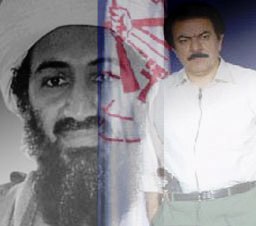
He added that the terrorist group has put pictures and portraits of al-Qaeda leader on the walls of the camp, respecting them as”heroes of Islam”.

Earlier in May, an Iran-based right group said that it has obtained authentic documents proving that the terrorist Mojahedin-e Khalq Organization has long had tight cooperation with Al-Qaeda’s terrorist cells in Iraq.

The document released by the Association for Defending the Victims of Terrorism (ADVT) belongs to the US-Iraq joint coordination force in Iraq’s Diyala province, where the MKO’s main training camp, Camp Ashraf is located.

The document reveals that the MKO has played an active role in insecurities and instabilities in Diyala.

The document further reveals that the terrorist group has helped the Al-Qaeda mount heavy canons and large-caliber machineguns onto their military vehicles.

The MKO has been in Iraq’s Diyala province since the 1980s.

Iraqi security forces took control of the training base of the MKO at Camp Ashraf – about 60km (37 miles) north of Baghdad – in 2009 and detained dozens of the members of the terrorist group.

The Iraqi authority also changed the name of the military center from Camp Ashraf to the Camp of New Iraq.

The MKO, whose main stronghold is in Iraq, is blacklisted by much of the international community, including the United States.

Before an overture by the EU, the MKO was on the European Union’s list of terrorist organizations subject to an EU-wide assets freeze. Yet, the MKO puppet leader, Maryam Rajavi, who has residency in France, regularly visited Brussels and despite the ban enjoyed full freedom in Europe.

The MKO is behind a slew of assassinations and bombings inside Iran, a number of EU parliamentarians said in a recent letter in which they slammed a British court decision to remove the MKO from the British terror list. The EU officials also added that the group has no public support within Iran because of their role in helping Saddam Hussein in the Iraqi imposed war on Iran (1980-1988).

Many of the MKO members abandoned the terrorist organization while most of those still remaining in the camp are said to be willing to quit but are under pressure and torture not to do so.

A May 2005 Human Rights Watch report accused the MKO of running prison camps in Iraq and committing human rights violations.

According to the Human Rights Watch report, the outlawed group puts defectors under torture and jail terms.

The group, founded in the 1960s, blended elements of Islamism and Stalinism and participated in the overthrow of the US-backed Shah of Iran in 1979. Ahead of the revolution, the MKO conducted attacks and assassinations against both Iranian and Western targets.

The group started assassination of the citizens and officials after the revolution in a bid to take control of the newly established Islamic Republic. It killed several of Iran’s new leaders in the early years after the revolution, including the then President, Mohammad Ali Rajayee, Prime Minister, Mohammad Javad Bahonar and the Judiciary Chief, Mohammad Hossein Beheshti who were killed in bomb attacks by MKO members in 1981.

The group fled to Iraq in 1986, where it was protected by Saddam Hussein and where it helped the Iraqi dictator suppress Shiite and Kurd uprisings in the country.

The terrorist group joined Saddam’s army during the Iraqi imposed war on Iran (1980-1988) and helped Saddam and killed thousands of Iranian civilians and soldiers during the US-backed Iraqi imposed war on Iran.

Since the 2003 US invasion of Iraq, the group, which now adheres to a pro-free-market philosophy, has been strongly backed by neo-conservatives in the United States, who also argue for the MKO to be taken off the US terror list.

September 21, 2011 0 comments
FacebookTwitterPinterestWhatsappTelegramSkypeEmail
The MEK Expulsion from Iraq

Committee to Launch Campaign to Expel MKO Members from Iraq

Chairman of a legal committee tasked with pursuing the crimes committed by the terrorist Mojahedin-e Khalq Organization (MKO) announced that the committee intends to launch a Chairman of a legal committee tasked with pursuing the crimes committed by the terrorist Mojahedin-e Khalq Organizationpetition campaign to expel MKO members from Iraq.

"Civil groups and human rights activists will launch the largest petition campaign in Iraq’s history to get two million signatures from Iraqi citizens for an immediate expulsion of MKO members from the country’s soil," Nafeh Eisa told FNA on Tuesday.

He added that the petition will then be submitted to the Iraqi government and the United Nations.

He further unveiled for the first time that the UN has already asked the Baghdad government to extend its deadline for the expulsion of the MKO from Iraq.

Eisa stated that the UN request has been rejected by the Iraqi government.

Meantime, earlier media report said that the US is trying to convince Iraqi officials to relocate MKO members within Iraq.

Under the US plan, the approximately 3,400 residents of Camp Ashraf would be temporarily relocated within Iraq, farther from the border with Iran, a US State Department official announced.

The relocation would be temporary, the official said, with final settlement of the inhabitants in other countries.

That would not include the United States, the official said, "since US law bars anyone associated with a terrorist organization from settling there".

Since the beginning of this year, the Baghdad government has repeatedly assured Iranian officials and people that it is determined to expel the MKO from Iraq by the end of 2011.

"Expulsion of the MKO from Iraq’s soil and termination of its presence which has lasted for several years is a definite decision," Iraqi Government Spokesman Ali Al-Dabbaq told FNA in April, adding, "The MKO will be expelled from Iraq by the end of the current year."

"The only option for the members of the MKO is leaving Iraq and they have no other choice," he reiterated.

Reminding to the black record of the terrorist group and its crimes against the Iraqi people, Dabbaq said, "Collaboration with the former Iraqi dictator and massacre of thousands of our people is just part of their crimes".

Dabbaq announced in early April that the cabinet is determined to shut down Camp Ashraf located North of the capital, Baghdad, and disband the terrorist group.

"The council of ministers has committed to implement an earlier decision about disbanding the terrorist group by the end of this year at the latest, and the necessity of getting it out of Iraq," the official noted.

The MKO, whose main stronghold is in Iraq, is blacklisted by much of the international community, including the United States.

Before an overture by the EU, the MKO was on the European Union’s list of terrorist organizations subject to an EU-wide assets freeze. Yet, the MKO puppet leader, Maryam Rajavi, who has residency in France, regularly visited Brussels and despite the ban enjoyed full freedom in Europe.

The MKO is behind a slew of assassinations and bombings inside Iran, a number of EU parliamentarians said in a recent letter in which they slammed a British court decision to remove the MKO from the British terror list. The EU officials also added that the group has no public support within Iran because of their role in helping Saddam Hussein in the Iraqi imposed war on Iran (1980-1988).

The group started assassination of the citizens and officials after the revolution in a bid to take control of the newly established Islamic Republic. It killed several of Iran’s new leaders in the early years after the revolution, including the then President, Mohammad Ali Rajayee, Prime Minister, Mohammad Javad Bahonar and the Judiciary Chief, Mohammad Hossein Beheshti who were killed in bomb attacks by MKO members in 1981.

The group fled to Iraq in 1986, where it was protected by Saddam Hussein and where it helped the Iraqi dictator suppress Shiite and Kurd uprisings in the country.

The terrorist group joined Saddam’s army during the Iraqi imposed war on Iran (1980-1988) and helped Saddam and killed thousands of Iranian civilians and soldiers during the US-backed Iraqi imposed war on Iran.

Since the 2003 US invasion of Iraq, the group, which now adheres to a pro-free-market philosophy, has been strongly backed by neo-conservatives in the United States, who also argue for the MKO to be taken off the US terror list.

September 21, 2011 0 comments
FacebookTwitterPinterestWhatsappTelegramSkypeEmail
Mujahedin Khalq Organization

MEK: Facing a new era?

The U.S. State Department is preparing to announce its final decision on whether to remove the Mujahedin-e Khalq Organization (MEK) from its list of foreign terrorist organizations. The decision MEK: Facing a new era?is expected by the end of this month.

The United States added the MEK’s name to the list of its foreign terrorist organizations in 1997, but last year the MEK appealed the decision before a U.S court, which has yet to rule on the matter. Former President Bill Clinton was in office when the MEK was originally listed as a terrorist organization, and now Secretary of State Hillary Clinton is deciding whether to delist the organization.

The European Union and other European countries have already removed the MEK from their terrorist lists — a decision that has angered the Islamic Republic. There is a great level of animosity between the Islamic Republic and the MEK. Both sides will not be satisfied with anything less than the complete destruction of the other.

The MEK was founded in 1965 by Muslim youth who supported the Nehzat-e Azadi-e Iran, or Freedom Movement of Iran Party. These young individuals grew despondent of the non-violent policies of the liberal-Muslims of the Nehzat-e Azadi-e Iran, who formed the first government after the 1979 Revolution. The MEK, having been influenced by revolutionary movements in Latin America, established a secret organization, which aimed at using urban guerrilla warfare against the monarchy government of Mohammad Reza Pahlavi.

Since then, the MEK has been through many ups and downs and now, on the eve of its 50th anniversary, has mobilized all its efforts to be removed from the United State’s list of terrorist organizations. The MEK says it renounced violence in 2001, after claiming responsibility for 350 attacks in 2000 and 2001, according to a RAND Corporation tabulation. However, a 2004 FBI report found that the group was “currently actively involved in planning and executing acts of terrorism.”

The MEK, from its initial days until some time after the 1979 Revolution and the establishment of the Islamic Republic, appeared to be the biggest opponent of Western countries, particularly the United Staes and Israel. The group firmly supported the takeover of the American embassy in Tehran by the Muslim Students Followers of Imam’s Line. *The MEK even went as far as accusing the leaders of the Islamic Republic of compromising with the world’s imperialist powers.

However, the social-political developments in the years following the Islamic Revolution resulted in the total elimination of MEK from the Iranian political scene. This reality pushed the leaders of the organization to begin an armed struggle against the Islamic Republic and seek refuge in Iraq in order to cooperate with Saddam Hussein during the eight years of the Iran-Iraq war from 1980–1988. The MEK continued to fight with the Islamic regime, whose leaders, the MEK believed, hijacked the 1979 Revolution. The MEK viewed themselves as the true revolutionaries against Pahlavi rule.

The group’s departure from Iran put an end to its ability to be in direct contact with the public. This exodus, coupled with the Islamic Republic’s prolific and effective propaganda machine, completed the picture of MEK’s betrayal and turned it into a pariah within Iranian society.

One can still find small threads of support and influence for the MEK in Iranian society. However, the majority of its support is from the family members that in the past had organizational ties to the group.

We should keep in mind that today’s leaders of the MEK are not the original founders. Many members of the organization and cadres of the Mujahedin, who joined before 1979, accuse the current leadership of betraying the ideas of the founders. This accusation, which is taking place internally, is different from the accusations made by the Islamic government about the organization.

Without a doubt, the influence of the MEK outside of Iran and among American and European politicians is much greater than inside the country. The influential lobbies of this organization and its supporters were finally able to delist MEK from the European Union’s terrorist list. Now, they hope to do the same in America.

In recent years, the MEK’s members, its supporters, and the organization, have been able to openly and without many obstacles continue their advocacy and political activities in the West. The fact that their name is on the terrorist list has not proven to be a serious impediment for their activities.

Recently, the MEK improved the quality and quantity of its satellite TV stations, which are being used to connect in a more effective way with protesters and dissidents inside Iran. They broadcast their programs without any problem and with the physical and political support of European and American politicians. The American and British media recently have reported that the MEK pays politicians tens of thousands of dollars to speak at public events the organization holds.

The MEK’s leaders are hoping to be delisted in order to enter a new phase of activities against the Islamic Republic. Delisting the group would provide the opportunity for the organization to carry out legal financial and political activities and would increase its credibility within the international community. In the long term, this could greatly help the organization neutralize the heavy propaganda from the Iranian government, which has prevented Iranians from gravitating toward the MEK.

Furthermore, the issue of delisting will force the MEK to make its activities, whether political or financial, more transparent and legal. It is not clear to what extent such a change could influence an organization whose foundation and identity have been based on secrecy and underground activities. […]
These days, the social networks on the internet are full of comments from young users, who believe in a fundamental change in the ruling government in Iran. However, the same users clearly oppose the removal of MEK’s name from America’s terrorist list. Obviously, the United States will provoke anger and cynicism of this powerful demographic, if it delists MEK.

It does not appear that the majority of the Iranian opposition groups, including the Green Movement, loyalists to the former monarchy, and reformists differ much from the Islamic Republic in their view of the MEK. This shows that while the MEK has been able to build a great deal of political influence in the West, they have failed to do so outside Iran.

Currently, MEK has dedicated the main bulk of its activities abroad to spreading propaganda against the Islamic Republic and its political activities aim to destroy the regime in Iran.

The removal of MEK’s name from the terrorist list by the United States will certainly be a new phase in the tumultuous history between the MEK, Iran, and the United States.

Inside Iran – By Mohammad Reza Yazdanpanah

September 20, 2011 0 comments
FacebookTwitterPinterestWhatsappTelegramSkypeEmail
Iraqi Authorities' stance on the MEK

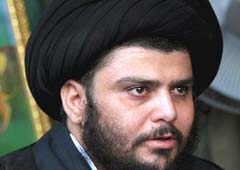
Moqtada Sadr Reiterates Iraqis’ Demand for Expulsion of MKO Terrorists

Prominent Iraqi Shiite cleric Moqtada Sadr strongly condemned the crimes committed by the anti-Iran terrorist Mojahedin-e Khalq Organization (MKO) against the Iranian and Iraqi nations, and underlined his country’s strong resolve to expel the terrorist group from Iraq.Iraqi Shiite cleric Moqtada Sadr

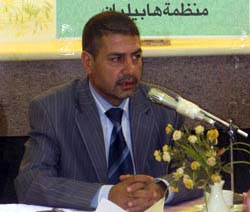
Speaking in a meeting with Secretary-General of Iran’s Habilian Association – a human rights group formed by the families of 17,000 terror victims in Iran – Sadr stressed that no one in Iraq likes to see MKO’s presence on Iraq’s soil.

"This terrorist group has committed more crimes and oppressions against us than the crimes it has committed against the Iranian nation since the number of martyrs in Iraq is twice the number in Iran.
"Therefore, we have a very deep motivation for expelling these criminals from our country," Sadr underscored.

The MKO, whose main stronghold is in Iraq, is blacklisted by much of the international community, including the United States.

The MKO is behind a slew of assassinations and bombings inside Iran, a number of EU parliamentarians said in a recent letter in which they slammed a British court decision to remove the MKO from the British terror list. The EU officials also added that the group has no public support within Iran because of their role in helping Saddam Hussein in the Iraqi imposed war on Iran (1980-1988).

Many of the MKO members abandoned the terrorist organization while most of those still remaining in the camp are said to be willing to quit but are under pressure and torture not to do so.

A May 2005 Human Rights Watch report accused the MKO of running prison camps in Iraq and committing human rights violations.
According to the Human Rights Watch report, the outlawed group puts defectors under torture and jail terms.
The group, founded in the 1960s, blended elements of Islamism and Stalinism and participated in the overthrow of the US-backed Shah of Iran in 1979. Ahead of the revolution, the MKO conducted attacks and assassinations against both Iranian and Western targets.

The group started assassination of the citizens and officials after the revolution in a bid to take control of the newly established Islamic Republic. It killed several of Iran’s new leaders in the early years after the revolution, including the then President, Mohammad Ali Rajayee, Prime Minister, Mohammad Javad Bahonar and the Judiciary Chief, Mohammad Hossein Beheshti who were killed in bomb attacks by MKO members in 1981.

The group fled to Iraq in 1986, where it was protected by Saddam Hussein and where it helped the Iraqi dictator suppress Shiite and Kurd uprisings in the country.
The terrorist group joined Saddam’s army during the Iraqi imposed war on Iran (1980-1988) and helped Saddam and killed thousands of Iranian civilians and soldiers during the US-backed Iraqi imposed war on Iran.

Since the 2003 US invasion of Iraq, the group, which now adheres to a pro-free-market philosophy, has been strongly backed by neo-conservatives in the United States, who also argue for the MKO to be taken off the US terror list.
The MKO has been in Iraq’s Diyala province since the 1980s.

Iraqi security forces took control of the training base of the MKO at Camp Ashraf – about 60km (37 miles) North of Baghdad – in 2009 and detained dozens of the members of the terrorist group.

The Iraqi authority also changed the name of the military center from Camp Ashraf to the Camp of New Iraq.

September 20, 2011 0 comments
FacebookTwitterPinterestWhatsappTelegramSkypeEmail
Former members of the MEK

7th Int’l Congress of Victims of Terrorism Condemns MKO

Participants in the 7th International Congress of the Victims of Terrorism in Paris strongly condemned the anti-Iran terrorist Mojahedin-e Khalq Organization (MKO) for its crimes against the Iranian people and the nationals of other countries.

Participants in the 7th International Congress of the Victims of Terrorism in Paris strongly condemned the anti-Iran terrorist Mojahedin-e Khalq Organization

An Iranian delegation from the Iran-based Association for Defending the Victims of Terrorism (ADVT) in the Middle-East attended the annual meeting and provided the participants with different documents on the crimes committed by the MKO.

Also the Iranian delegation inked a Memorandum of Understanding (MoU) with their Spanish, French, Italian, Moroccan, Algerian and US counterparts on the prohibition of any instrumental use of terrorism.

The Iranian participants also proposed that the 9th International Congress of the Victims of Terrorism be held in Tehran in 2013.

Iran is itself one of the main victims of terrorism in the world and a large number of the Iranian nationals have been killed by different terrorist groups, mainly the MKO.

The MKO, whose main stronghold is in Iraq, is blacklisted by much of the international community, including the United States.

The MKO is behind a slew of assassinations and bombings inside Iran, a number of EU parliamentarians said in a recent letter in which they slammed a British court decision to remove the MKO from the British terror list. The EU officials also added that the group has no public support within Iran because of their role in helping Saddam Hussein in the Iraqi imposed war on Iran (1980-1988).

Many of the MKO members abandoned the terrorist organization while most of those still remaining in the camp are said to be willing to quit but are under pressure and torture not to do so.

A May 2005 Human Rights Watch report accused the MKO of running prison camps in Iraq and committing human rights violations.

According to the Human Rights Watch report, the outlawed group puts defectors under torture and jail terms.

The group, founded in the 1960s, blended elements of Islamism and Stalinism and participated in the overthrow of the US-backed Shah of Iran in 1979. Ahead of the revolution, the MKO conducted attacks and assassinations against both Iranian and Western targets.

The group started assassination of the citizens and officials after the revolution in a bid to take control of the newly established Islamic Republic. It killed several of Iran’s new leaders in the early years after the revolution, including the then President, Mohammad Ali Rajayee, Prime Minister, Mohammad Javad Bahonar and the Judiciary Chief, Mohammad Hossein Beheshti who were killed in bomb attacks by MKO members in 1981.

The group fled to Iraq in 1986, where it was protected by Saddam Hussein and where it helped the Iraqi dictator suppress Shiite and Kurd uprisings in the country.

The terrorist group joined Saddam’s army during the Iraqi imposed war on Iran (1980-1988) and helped Saddam and killed thousands of Iranian civilians and soldiers during the US-backed Iraqi imposed war on Iran.

Since the 2003 US invasion of Iraq, the group, which now adheres to a pro-free-market philosophy, has been strongly backed by neo-conservatives in the United States, who also argue for the MKO to be taken off the US terror list.

The MKO has been in Iraq’s Diyala province since the 1980s.

Iraqi security forces took control of the training base of the MKO at Camp Ashraf – about 60km (37 miles) North of Baghdad – in 2009 and detained dozens of the members of the terrorist group.

The Iraqi authority also changed the name of the military center from Camp Ashraf to the Camp of New Iraq

September 20, 2011 0 comments
FacebookTwitterPinterestWhatsappTelegramSkypeEmail
MEK Camp Ashraf

Trapped in Camp Ashraf- Warning and an appeal

Trapped in Camp Ashraf- Warning and an appeal to the int’l community
 

We are approaching the end of year 2011; the deadline announced by the Iraqi government to evacuate Camp Ashraf. Over the past few months the USG’s diplomatic representative in Iraq Mr. Lawrence Butler has met seven times with the leaders of the Mojahedin-e Khalq Organisation in the garrison to talk about the future of the group. His efforts have failed due to the stubborn resistance and rejection on the part of the Mojahedin-e Khalq. Some European countries have also have attempted to start a dialogue with the leaders of the group to convince them to allow the people inside to be sent individually to other countries under the supervision of the United Nations. But their efforts have also faced absolute intransigence on the part of the leaders of the group.

In addition, we have witnessed UN Secretary General Ban Ki-moon appealing to the international community to help the Iraqi government in this case. But no meaningful action has been offered.

The Government of the United States of America also in a clear and transparent way has warned the leaders in the camp that if they do not respond positively to the suggestions put forward, then the USG will no longer be able to act as a negotiator and that the consequences of such action would be entirely attributable to the leaders of the Mojahedin-e Khalq .

The people inside the camp are described as “non status” and they are not accepted as refugees or even asylum seekers. The Iraqi government is adamant it will carry out the decision to close the camp – which is one of the last remains of the Saddam regime – and on the other hand the leaders of the Mojahedin inside the camp insist on keeping the status quo without any logical, legitimate, legal or other reasons.

And in this situation, as advocates of human rights and as ex-members of this organisation, we are deeply concerned about how this camp will be dismantled and especially about the misuse of the people inside the camp by the leaders of the group.

According to witnesses inside camp Ashraf it is said that Massoud and Maryam Rajavi have ordered all the leaders of the MEK to arrange meetings for everybody and give the order to them that “We will go along with the American army to the point that there is no physical interaction but when it comes to the Iraqi government we will become physical and we will make them pay the highest price.”

Considering what the Rajavis have said, although we believe that the imposition of Iraqi sovereignty over this illegally occupied territory at this time is an indisputable right of the government of Iraq, we urge the government and the committee in charge of dismantlement of the camp to try, as they have done over the last past 8 years, to only use non-violent solutions to solve this problem.

Although we know that the existence of this camp in this country of Iraq has no logical or legal basis but we are concerned that the heads of the MEK cult will use the 3400+ people stranded there as human shields to pursue their illogical and illegal demands.

We are deeply concerned that, according to much evidence and many documents, not least the report by the RAND Institute, about 70% of the people inside the camp are kept there against their will, and if we add to this their loss of hope due to the grim and uncertain future they face, the lack of access to media and information and the resulting ignorance this brings, and the existence of never ending barriers and security provisions across the camp, if we add all these then the reasons behind the existence of such an isolated island can become clear.

We are deeply concerned that in a situation where the dismantlement of the camp has begun, the leader of the group would force the low level members and the ordinary people trapped inside to fight the security and law enforcement agencies of Iraq.

On top of our concern over the human rights as an indisputable right for every individual inside the camp we remind you that many of the signatories of this letter have a family member, father, mother, spouse, sibling or friend inside the camp as a hostage. Therefore the primary aim of the MEK in keeping the members trapped inside is nothing except using them as a tool and human shield to save the neck of the leader Massoud Rajavi who remains in Iraq.

We warn that considering that the leaders of the group have already rejected the intervention of the Americans and insist on the relocation of the whole organisation as a group to another country, while it is clear that according to international law, asylum can only be given to individuals, the leaders are placing this kind of suggestion on the table only to further reject any non-violent solution and therefore exploit the members and endanger their lives.

We must warn the international community and humanitarian organisations across the globe, time is running out. And we are witnessing that the US proposal is the only feasible and realistic solution during the remaining time. Therefore while we condemn the leaders of the group for their lack of cooperation with the American and Iraqi officials, we warn that the responsibility for any resistance to the decision of the Iraqi government and endangering the lives of the people is primarily on the shoulders of Massoud Rajavi and Maryam Rajavi and the other high ranking leaders of the group.

We also believe that dialogue can be the solution to dismantle camp Ashraf and there should be no need for violence. We ask the leaders of the group to stop their ridiculous behaviour and obduracy and return to the dialogue and negotiation table

The government of Iraq has repeatedly announced that, respecting international humanitarian laws, these people will not be deported to countries where they may face problems and it has shown its commitment to this day. Accommodating and facilitating the voluntary exit from the camp of nearly 100 individuals who have given themselves up to the Iraqi forces from 2009 to the present is clear evidence of this commitment.

Therefore we ask the international community and humanitarian organisations and all the people who are worried about the future of these people to use whatever communication and/or other tools at their disposal to convince the leaders of the group that after the fall of Saddam Hussein Iraq is no longer a place for them to stay and it is their responsibility to seek assistance from international bodies such as the ICRC and UNHCR to get themselves out of there.

We the signatories of this letter would like to bring this issue to the attention of the following:

– The office of the Prime Minister of Iraq (Committee in charge of dismantlement of Camp Ashraf, Baghdad)
– Lady Catherine Ashton and relevant MEPs in European Parliament
– US State Department
– Human Rights Watch, New York
– Amnesty International, London
– United Nations Human Rights Commissioner Ms Navi Pilay, Geneva

The signatories:
Ariaee Milad (Germany)
Abbassloo Mohsen (Austria)
Abdollahi N (Netherlands)
Ahmadi Ali (Sweden)
Alishahi Behzad (Netherlands)
Behboodi Nasrin (Netherlands)
Barati Farideh (Netherlands)
Barati Mahboobeh (Netherlands)
Ebrahimi Jafar (France)
Fatahian Ghafoor (France)
Ghashghavi Ali (Germany)
Ghiabi Fatemeh (Germany)
Gholami Karim (Germany)
Haghi Karim (Netherlands)
Haji Mahrokh (Canada)
Hoseinin Kazem (Netherlands)
Jabani Massoud (Netherlands)
Jahani Ali (Germany)
Kalani Visha (France)
Karami Mohammad (France)
Kazemi Fereshteh (Netherlands)
Khodabandeh Massoud (United Kingdom)
Khoshal Mehdi (Germany)
Kohzadi Homayoon (France)
Kord Rostami Amirhossain (Canada)
Maleki Batool (Switzerland)
Mirasgari Alireza (Germay)
Mirzaee Zahra (Netherlands)
Mohammadi Mona (Denmark)
Mohammadi Mostafa (Canada)
Mohammadi Zahra (Netherlands)
Mohammadi Mahboobeh (Canada)
Movasaghi Amir (Germany)
Naderi Nader (France)
Naghashzadeh Alireza (Austria)
Nasrollahi Alireza (France)
Naseri Saeed (France)
Nazari Mansoor (France)
Noroozi Elham (Canada)
Noroozi Simin (Canada)
Noroozi Soheila (Canada)
Noroozi soosan (Canada)
Piransar Hassan (France)
Rastgoo Ali Akbar (Germany)
Razaghi Mohammad (France)
Rezvani Naser (Sweden)
Roodgar Khodabakhsh (Canada)
Roohi Majid (Denmark)
Sadeghi nejad Abbass (Germany)
Sagharchi Merhdad (Germany)
Sajoodi Mehdi (Germany)
Sarafpoor Hamed (France)
Sepahi Mahmood (France)
Sepher Minoo (Netherlands)
Shahrokhi Robabeh (Sweden)
Shams Hayeri Hadi (Netherlands)
Singleton Anne (United Kingdom)
Sobhani Mohammad Hussein (Germany)
Soltani Batool (Germany)
Termado Edward (Germany)
Thomasini Nelly (Netherlands)
Yousefi Mitra (Sweden)

September 19, 2011 0 comments
FacebookTwitterPinterestWhatsappTelegramSkypeEmail
UN

Warning against violation of human rights in Ashraf

Letter of Sahar Family Foundation to the UN General Secretary

Mr. Ban Ki-moon, the honorable UN general secretary

On the tenth anniversary of the grave terrorist catastrophe in the US, which was the act of a destructive mind control cult under the guise of Islam, we on behalf of the families of the captives in the Ashraf cult garrison and freed members of the Rajavi destructive mind control cult wish to acquaint you and all human rights activists and international organizations with the following:

According to the news received from within Ashraf garrison, Massoud Rajavi had arranged for a series of extremely boring sessions with all members in the holy month of Ramadan, between dusk till dawn, via internet. Participating in these sessions was compulsory for all members and those refusing to join were reprimanded and disciplined. Even hospitalized and imprisoned persons were taken to the meetings.

In these sessions, Massoud Rajavi clearly announced that leaving the organization and attempting to escape from Ashraf is a political offense and betrayal and the penalty for just trying is death. He admitted that discontentment is mounting in his cult and that the internal situation of Ashraf is explosive. Rajavi specified in these meetings that not only losing Ashraf garrison is passing a red line, but also escaping is also an un-crossable line and if one managed to flee, all the commanders and residents of Ashraf are responsible. In many cases when one succeeds in escaping, all commanders and members of the person’s unit are penalized.

As you know, the report of the American RAND Institute indicates that around 70% of Ashraf inhabitants are there against their own will and if they have the right to choose they would definitely leave the organization. Rajavi indicated in his meetings with the members to the problem of retaining and controlling the members. At the moment the commanders have detained the unhappy residents of Ashraf using all sorts of barriers and fences and adopting tight security and control techniques.

The information received shows that Rajavi has instructed his cult’s commanders to prevent any escape attempt no matter what the cost and they must stop them even if they have to shoot them. What is certain is that one of the most brutal and constant examples of violation of human rights is going on in Ashraf garrison and unfortunately for some delusional political interests, there is no reaction against it.

One can ask why Rajavi is so scared of the free access of his followers to their families and the outside world, why granting political refugee status to the individuals and the direct contact of international organizations such as the Red Cross is considered as dissolving the organization, and why the UN and personalities and organizations defending human rights are silent in the face of these crimes. The truth is that Ashraf is a notorious and dreadful prison unique in the whole world. In this prison, which is run using the most sophisticated and modern tools and equipment, no one has the right to be visited and the penalty for attempting to escape is death. The members inside the garrison are subject to systematic mind manipulation and psychological and physical torture which are imposed continuously. Unfortunately there is no observation of what is going on and what is happening inside there.

We are certain that one day with the will of God and help of the families picketing outside Ashraf, its doors will be opened and the captives would be freed. Then those who supported the Rajavi cult and international officials who stood silent against these crimes should be held responsible by the families since they have practically joined Rajavi in his misconduct and caused the continuation of the suffering of both the members and their families.

We urge you as the Secretary General of the UN to adopt means to firstly prevent external interference against the Iraqi government imposing its rule over its land and secondly arrange some sort of international observance of what is happening inside Ashraf garrison by the leaders of the Rajavi cult. There are many documents filed in the Iraqi judicial system showing what is exactly happening which is so unpleasant. Most of these documents are recorded by eye witnesses who managed to escape from Ashraf.

We are awaiting your answer.

Sahar Family Foundation
Baghdad, 11 September 2011

Attachments:
– The report of the American RAND institute
– The report of Amnesty International
– The report of Human Rights Watch

Copy to:
– The UN office in Iraq (UNAMI)
– The ICRC
– AI
– HRW
– Iraqi ministry of human rights
– The US embassy in Baghdad
– The commander in chief of the US forces in Iraq

September 19, 2011 0 comments
FacebookTwitterPinterestWhatsappTelegramSkypeEmail
Mujahedin Khalq 's Terrorism

IVTC to introduce Iran MKO as terrorist

Iranian family members of MKO victims were among the opening speakers at the 7th International Victims of Terrorism Conference (IVTC) held in Paris on September 15. The IVTC is a forum for nations to make others aware of the terrorist efforts made to subvert or overthrow their state.
And the conference generally draws a lot of disdain from the left because it focuses on states as victims of terrorism, not on groups as victims. That means you won’t find Palestinian victims of terrorism at this conference, instead there would be Israeli victims. You won’t find leftist groups like Irish, Basque or Kashmiri separatists, either. This is essentially a forum where recognized nations can plead their case for their (often equally violent) opposition against violent opposition groups.
The International Victims of Terrorism has previously been held in places like Medellin, Columbia, and Oklahoma City, USA – not exactly centers of left-wing support, but the meeting turned out to be a rare case where the interests of Iran and the interests of the right-wing have found a common ground. And that’s what makes the inclusion of the MKO a very hopeful event in Franco-Iranian relations. In a change, Iran is included as a victim of terrorism rather than a proponent.
The most respected Middle Eastern journalist in France, Alain Gresh of Le Monde Diplomatique wrote that while he was not a supporter of the conference, he was glad to see the inclusion of the victims of the MKO. He even called the inclusion of the MKO an “anomaly” among the participants, which included Jewish-American 9-11 victims, a Kenyan worker at the American Embassy who has blinded by the bombing there in 1998 and an Indian survivor of the Mumbai shooting spree.
Gresh wrote that he hoped that the MKO’s inclusion might be enough to entice some major Iranian leaders to come visit France. That was not the case, but he implied that the recognition of the MKO’s danger is something that the current French government and Iran can find common ground on.
Betraying those they would rule
The MKO are almost universally denounced by the Iranians around the world and are regarded as a terrorist group by many national governments, including Iran and the US, as well as international organizations. After aiding in the Islamic Revolution, bloody street battles took place against Iran’s eventual leadership.
As a result, the MKO literally waged war against Iranians: The group took refuge in Ashraf, Iraq, where they aided Saddam Hussein in the Iran-Iraq War. Saddam Hussein went on to employ this special brigade in his deadly operations against Kurds and in repressing the Iraqi Shia. The MKO has taken credit for releasing information on Iran’s nuclear program, they are suspected of aiding in the chemical attacks against Iran – it’s a long list. And it’s a longer list of their victims, which MKO claims are in the tens of thousands.

“My father was killed by the MKO in 1991 as he was Iran’s cultural host in Lahore, Pakistan and I’m here to share my knowledge and experiences,” said Nader Ganji of the Association for Defending Victims of Terrorism at the IVTC. “At that time I was three years old, so this bad phenomenon affected my life a lot and I never want other countries to have the same experiences.”
Still a student, Nader’s jovial, kind demeanor gives no hint of such a tragic upbringing. Clearly, the MKO did not stamp out his concern for humanity. He did not bristle when asked about Iran’s poor public perception among many of the conference’s attendees.
“We’ve got like 16,000 victims of terrorism and we have got a lot of experiences to be shared,” said Ganji. “Unfortunately most of the other countries don’t know anything about Iran and the terrorist activities in Iran. Unfortunately, opposition groups are trying to show themselves as freedom seekers in other countries, but this is not true.”
Iran’s delegation to Paris included seven people to the list of IVTC speakers, all with sad stories to tell.
“My brother was 28 and he was killed by the MKO just because he wore a beard, was a Muslim and worked as a French teacher,” said Mahmoud Navab, a journalist and conference participant. “In the cemetery where he is buried he is surrounded by four other people killed by the same MKO murderers.”
While the inclusion of Iranian MKO victims is a victory for Iran, it still has a long way to go to achieve proper recognition, and as one incident at the IVTC reveals, basic politeness: After the key Iranian speaker had finished her speech – relaying her shocking personal tragedy which involved the MKO breaking down her door and executing all her adult family members – the French master of ceremonies responded, “And do you find that discussing your experience in Iran makes Iranians more sensitive to the issue of terrorism?” The implication from the event’s host was clear. Fortunately neither Masoomeh Eskandari nor her translator took the bait, instead giving a thank you for their invitation, relaying their support for victims of terrorism worldwide.
What is the relationship between France and the MKO?
After the US invaded Iraq in 2003, the MKO made Paris its foreign headquarters. Generally each year they hold a rally – as well-organized as any National Front rally of xenophobic royalty Marine Le Pen. Mrs. Rajavi, who many assume is the MKO’s leader because her husband Massoud has not been seen in years, attended the MKO this year’s rally in June with an entrance worthy of a head of state, seemingly colossal in her delusion.
But while they do have their friends in France, the French government is not one of them. In 2003, when Nicolas Sarkozy was the Interior Minister, the French government led a high-profile raid of their compound about 75 kilometers outside of Paris. France was concerned that the MKO was trying to shift their base of operations from their camp in Ashraf, Iraq to France, which naturally caused them to worry a part of French soil was being transformed into an international terrorist base. Some 160 people were arrested in the raid, millions of euros were confiscated and the message was clear.

“There is no special relationship between France and MKO,” said Pierre Conesa, an international affairs analyst and author who attended the IVTC. “It’s not true to say that the French government is accepting MKO: We have a law protecting political asylum. But with their past one is able to ask if they are really democrats and have given up violence. But it’s not a support, it’s just an ambiguity, I would say.”
But the MKO’s response to the raid may have done more to damage their image: in several European capitals 10 MKO supporters actually lit themselves on fire, and this gave a great deal of credence to the wide perception that the MKO is some sort of cult. It also hurt the MKO’s efforts in France and Europe to whitewash their violent past and their efforts to portray themselves as some sort of human rights organization.
“Their main success is to remake themselves as a democratic party in spite of their history,” said Conesa.
Why did the EU take the MKO off their terrorist list in 2009?
The MKO are one of the very few groups to ever have their names removed from the EU terrorist list, once placed on it.
“What I discovered by looking at the MKO in France is that their know-how in lobbying is quite unbelievable,” said Conesa. “They are aiming, mainly, at the people who don’t know anything about Iran. In the European Parliament they were mainly aiming at MPs from eastern governments – former communist governments – and as soon as you present a communist with a petition they want to prove that they are democrats, so they sign! They approach them explaining that they are defending human rights, that they are victims of the regime, and they present a petition that says they contribute to the defense of civil rights in Iran, and then at the end it adds that Maryam Rajavi should be the president for life in Iran!”
Anyone who has seen the MKO’s yearly rally in Paris knows that they have extensive funding. It used to be Saddam Hussein playing financier, now it could just be the many groups that wish to see regime change in Iran, or at least those who like to provide a thorn in Iran’s side.
Wherever their funds come from, at last year’s rally in Paris they reportedly paid 2-300,000 dollars to have former NYC mayor Rudolph Giuliani to speak. They also paid people to attend the rallies – an undisputed fact – and they produced a tremendous amount of propaganda, for which they are legendary. You can find any number of reports that describe the MKO has skilled manipulators of their public image, of their use of front groups with harmless sounding names, of their efforts to re-craft themselves from an Islamist Marxist group to fascist personal army to a free-market group that champions women’s rights. The MKO has taken so many deviations since its inception that it’s hard to know what changes have stuck and in what intensity. Of course that all depends on never mentioning the Iranians, the Kurds, the Iraqi Shia they are known to have killed.
It’s key to remember that the EU acted when the Ashraf camp was finally returning to Iraqi jurisdiction after years of war with the US. A massacre was expected (but never materialized, as the Ashraf camp is still there – thousands of Iranians occupying Iraqi soil) and the Europe expected to receive 3,000 MKO members as refugees. Or you can believe the other explanation many accept: the EU wanted a pawn in their relations with Iran.
Regardless, the European governments made it clear that they did not believe in the full rehabilitation of the MKO and there are many nations that have said openly that they regard the MKO warily.
But their propaganda campaign continues to have success in the Europe: In late November 2010, the European Parliament made a declaration, urging the US to remove the MKO from its list of Foreign Terrorist Organizations.
Most observers say the removal of MKO from the US’s list of terrorist groups is unlikely because it would drive a major wedge in any rapprochement efforts with Iran. The MKO’s role in killing Americans during the Islamic Revolution probably makes it impossible as well. But the US may also be swayed by the fact that the condemnation of the MKO includes any true reform movement, such as the Green Party, who has totally disavowed the MKO.
Despite their wars against Iranians, Iraqis and Kurds, despite their constant depiction by observers of every political stripe as a “cult” and despite the fact that perhaps no one outside of Iran is waving a sign with Maryam Rajavi’s face on it, the MKO has done all they could to rebrand themselves as a human rights group. But nothing in this organization’s tactics, or in the testimonies of their few former members lucky enough to escape Camp Ashraf, makes observers believe that this is a group that would grant democracy to anyone if they should ever take control of Iran.
Ramin Mazaheri

September 18, 2011 0 comments
FacebookTwitterPinterestWhatsappTelegramSkypeEmail
Former members of the MEK

More Defectors escaped MKO’s Camp Ashraf

Three Aashraf residents who were held in the camp as hostages against their will could manage to escape the cult of Rajavi on Saturday September 17th, according to Nejat Society.
The three defectors joined Iraqi forces after their release from the camp.

Further information about the newly defected members will be published soon.

September 18, 2011 0 comments
FacebookTwitterPinterestWhatsappTelegramSkypeEmail
Newer Posts
Older Posts

Recent Posts

  • Expectations of human rights bodies regarding censorship within the MEK

    October 13, 2026
  • The Jamalis’ Plea for Help: Save Our Brother from the MEK!

    October 11, 2026
  • Testimonies of Participants in the MEK’s Staged Propaganda Stunt in Karaj

    October 7, 2026
  • Giuliani’s MEK ties have dogged him for years

    October 6, 2026
  • The Tragic Impact of MEK Isolation on Yazdan Teimorian and His Family

    October 5, 2026
  • Facebook
  • Twitter
  • Instagram
  • Youtube

© 2003 - 2025 NEJAT Society . All Rights Reserved. NejatNGO.org


Back To Top
Nejat Society
  • Home
  • Articles
  • Media
    • Cartoons
    • NewsPics
    • Photo Gallery
    • Videos
  • Publications
    • Books
    • Nejat NewsLetter
    • Pars Brief
  • About Us
  • Contact us
  • Editions
    • عربي
    • فارسی
    • Shqip