Nejat Society
  • Home
  • Articles
  • Media
    • Cartoons
    • NewsPics
    • Photo Gallery
    • Videos
  • Publications
    • Books
    • Nejat NewsLetter
    • Pars Brief
  • About Us
  • Contact us
  • Editions
    • عربي
    • فارسی
    • Shqip
Nejat Society
Nejat Society
  • Home
  • Articles
  • Media
    • Cartoons
    • NewsPics
    • Photo Gallery
    • Videos
  • Publications
    • Books
    • Nejat NewsLetter
    • Pars Brief
  • About Us
  • Contact us
  • Editions
    • عربي
    • فارسی
    • Shqip
© 2003 - 2024 NEJAT Society. nejatngo.org
MEK Camp Ashraf

Iranian dissidents in Iraq want refuge in 3rd country

Warning that the U.S. military soon will stop its regular visits, the U.S. ambassador to Iraq this weekend urged a group of Iranian dissidents stranded in this country since 2003 to dissolve their "paramilitary organization" and become refugees someplace else in Iraq.

Ambassador James Jeffrey said Saturday that the U.S. was working with the United Nations to move the 3,000-plus Iranians "to a place that is a bit safer, a bit further from Iran," but they would have to disband and allow themselves to be registered as refugees by the U.N. High Commission for Refugees.

But the Paris-based leadership of the People’s Mujahedeen of Iran rejected the idea as a "non-starter" and said the Iranians would prefer to die where they now live, a location known as Camp Ashraf, than to relocate within Iraq.

Mohammad Mohaddessin, the official representative abroad of Ashraf, called Jeffrey’s proposal for relocation "shocking and questionable."

The situation of the dissidents has attracted international attention in part because of the group’s ability to rally leading former figures in the U.S. national security establishment and members of Congress and the European parliament to their cause. It says more than 4,000 parliamentarians, including the majorities of parliaments in 30 nations, support its preferred solution – relocation to a third country.

The U.S. Embassy said Sunday night that moving the Ashraf residents was the first step toward resettlement in third countries.

"There are ongoing talks with Ashraf residents aimed at engaging them on a voluntary internal relocation plan that sets the stage for eventual resettlement outside of Iraq," said spokesman David Ranz. "This would both provide for a formal status current lacking for the residents within Iraq pending resettlement as well as resolve UNHCR and Iraqi government’s concerns over the current nature of the group."" But no country, starting with the U.S. and the European Union members, is willing to take in members of the MEK – the Farsi language initials of the People’s Mujahedeen – beyond those who have citizenship or residence already, U.S. and European diplomats said.

For one thing, the State Department has listed the MEK as a terrorist organization since 1997, citing a series of attacks in Tehran.

Last month, a delegation from the U.S. House of Representatives clashed with Iraqi Prime Minister Nouri al Maliki over an Iraqi army operation in May at Camp Ashraf, which led to the deaths of 35 civilians at the location in Diyala province, north of Baghdad.

(EDITORS: BEGIN OPTIOINAL TRIM)

Rep. Dana Rohrabacher, R-Calif., chairman of the House Foreign Affairs subcommittee on investigations, told Maliki that his panel was examining whether Iraqi forces under Maliki’s command had committed "a crime against humanity" in the killings. Maliki subsequently asked the delegation to leave the country.

Rohrabacher said he wasn’t going to urge the U.S. government to take in the MEK members. "I don’t think the U.S. should take in everyone who’s in a bad situation," he said. "We take in more people than every other country combined. I don’t think we need to expand that much more."

Other members of the Rohrabacher delegation included Rep. Russ Carnahan, D-Mo., the ranking minority member; Republican Reps. Ted Poe of Texas, Jeff Duncan of South Carolina and Louie Gohmert of Texas, and Democratic Rep. Jim Costa of California.

The Ashraf residents came to Iraq under Saddam Hussein and fought as a paramilitary formation against Iran during the Iran-Iraq war, but were stranded after the U.S. invasion of 2003. American forces had provided protection but gave up that role as Iraq moved to regain full sovereignty over its territory. Maliki has announced that Camp Ashraf will close at year-end, and the U.S. says Iraq has every right to take control over its entire territory.

Jeffrey said he understood that the MEK was "chewing over the possibilities" of disbanding and taking refugee status, but he said the group "really believe that the U.N. and the United States will protect them forever."

He said U.S. troops based in Diyala visit Ashraf "fairly often," either on their own or while providing protection for U.N. officials going to the camp, but they are not able even now to provide protection. Furthermore, U.S. forces "pretty soon" will no longer be based in that part of Diyala province, he said.

Mohaddessin did not respond when asked what alternatives the MEK has if no third country is willing to receive the Camp Ashraf residents. ..

By ROY GUTMAN

July 4, 2011 0 comments
FacebookTwitterPinterestWhatsappTelegramSkypeEmail
FBI to investigate the case of MEK lobbyists
USA

Mujahedin-E Khalq criminal investigation by FBI

FBI recently disclosed report reveals MKO continued terror campaign years after they claimed to renounce terrorism

A recently disclosed FBI report from 2004 reveals Mojahedin Khalq (MKO, MEK, Rajavi cult) continued to plan terrorist acts years after they claimed to renounce terrorism. The State Department has documented the MEK’s disturbing record: killing Americans and Iranians in terrorist attacks; fighting for Saddam Hussein against Iran and assisting Saddam’s brutal campaign against Iraq’s Kurds and Shia; its”cult-like”behavior; the abuses and even torture it commits against its own members; and its support for the U.S. embassy takeover and calls for executing the hostages …

* * * * * * * * * * * * *

Mujahedin-E Khalq (MEK) criminal investigation by FBI

The following is a detailed summary of information learned during criminal investigations of the Mujahedin-E Khalq (MEK), aka Mojahedin Khalq Organization(MKO), aka Peoples Mujahedin Organization of Iran (PMOI) aka National Council of Resistance (NCR), a designated foreign terrorist organization (FTO). … to View the Report click here
Download Mujahedin-E Khalq criminal investigation by FBI

July 3, 2011 0 comments
FacebookTwitterPinterestWhatsappTelegramSkypeEmail
The MEK Expulsion from Iraq

Iraq to Evacuate MKO Members from Camp Ashraf

Iraq’s Defense Ministry Spokesman General Mohammed al-Askari reiterated that the Iraqi government is determined to evacuate the members of the anti-Iran terrorist Mojahedin-e Khalq Organization (MKO) from their stronghold in the Northern Diyala province in the near future.
"The Iraqi government has announced on many occasions that the remaining the camp inside the country is not an option, and we will do our best to evacuate the camp in the near future," al-Askari said.

He also said in a press conference on Thursday that four more members of the MKO have fled Camp Ashraf and defected to the Iraqi forces.
Askari reiterated that the MKO defectors have escaped from the camp in Diyala province 60km north of Baghdad.

The defected MKO members said that since the US-led invasion of Iraq in 2003, the leaders of the terrorist organization have turned the camp into a prison and the residents of the camp are completely cut off from the outside world.

"The residents are not allowed to use the phones, internet and satellite receivers. We don’t know anything about the world; we feel like we are in a prison," said Zahra Baqeri, a defected MKO member.

They also said that the leaders of the camp have ordered the members to encounter the Iraqi forces if they tried to enter the camp.

Last week, Iraq’s Foreign Minister Hoshyar Zebari said his country is in talks with Tehran to decide a future for the MKO terrorist group.

"We have proposed the formation of a joint committee between Iran, Iraq and the (International Committee of the) Red Cross to resolve the issue (of the MKO) at Camp Ashraf," Zebari said at a joint press conference with his Iranian counterpart Ali Akbar Salehi.

The committee "will discuss the requests of the members of this group who live in Camp Ashraf, particularly those who seek to return to Iran without any pressure or difficulty," Zebari said.

Iraqi security forces took control of the training base of the MKO at Camp Ashraf – about 60km (37 miles) north of Baghdad – in 2009 and detained dozens of the members of the terrorist group.

The Iraqi authority also changed the name of the military center from Camp Ashraf to the Camp of New Iraq.
The MKO has been in Iraq’s Diyala province since the 1980s.

The Baghdad government has assured the Iraqi people that it is determined to expel the MKO from Iraq by the end of 2011.
Meantime, media reports said that the US is trying to convince Iraqi officials to relocate the MKO members within Iraq.

Under the US plan, the approximately 3,400 residents of Camp Ashraf would be temporarily relocated within Iraq, farther from the border with Iran, a US State Department official announced.

Since the 2003 US invasion of Iraq, the group has been strongly backed by neo-conservatives in the United States, who argue for the MKO to be taken off the US terror list.

July 3, 2011 0 comments
FacebookTwitterPinterestWhatsappTelegramSkypeEmail
Mujahedin Khalq Organization's Propaganda System

MEK Terrorist Group Lobbies Congress for De-Listing

Maryam Rajavi, leader of the MEK The Mujahedin-e Khalq (MEK), an Iranian Marxist-Islamist group opposed to the government there, is lobbying the Obama administration to have its name removed from a list of foreign terrorist organizations.MEK Terrorist Group Lobbies Congress for De-Listing

MEK has been on the State Department’s terrorist list since 1997, although even prior to that it was accused of killing Americans in Iran in the 1970s and supporting the regime of former Iraqi dictator Saddam Hussein.

One of Washington’s top lobbying firms, Akin Gump Strauss Hauer & Feld, has been hired by MEK supporters (the Iranian American Community of Northern California) to remove the organization from the Foreign Terrorist Organizations list. Lobbyists working on behalf of MEK include former congressman Vic Fazio (D-California) and Hal Shapiro, a former senior adviser to President Bill Clinton, whose State Department originally put MEK on the list.

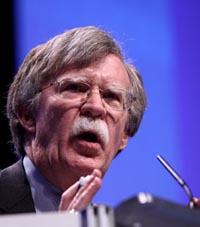
MEK has also garnered support from the political odd couple of Howard Dean and John Bolton, along with former Republican Attorney General Michael Mukasey and Democratic ex-Energy Secretary Bill Richardson.

Supporters claim MEK should no longer be designated a terrorist group because it renounced the use of violence in 2001. The European Union did remove the MEK from its terrorism list in 2009.

Opponents of the de-listing point out that an FBI report from 2004 showed the group continued to plan terrorist acts at least three years after it renounced terrorism.

allgov.com

July 3, 2011 0 comments
FacebookTwitterPinterestWhatsappTelegramSkypeEmail
Former members of the MEK

More MKO members defected

Four other members of the notorious Mujahidin-e Khalq Organization (MKO) have defected from the group and surrendered themselves to the Iraqi forces.

The spokesperson of the Iraqi Defense Ministry said that four members MKO have escaped Camp Ashraf in Diyala province 60 Km north of Baghdad.

In a press conference organized by the Iraqi Defense Ministry, the defected MKO members said since the US led invasion of Iraq in 2003, the leaders of the organization have turned the camp into a prison and the residents of the camp are completely cut off from the outside world. They also said that the leaders of the camp have ordered the members to encounter the Iraqi forces if they tried to enter the camp.

In April the MKO members clashed with the Iraqi security forces. The MKO claimed that the Iraqi forces killed 34 of its members in the clashes. But Iraqi forces rejecting the claim said that these people have been killed by the organization itself. The former MKO members said many residents of Camp Ashraf , who are under immense pressure, want to escape but are afraid and unsure of the future. The said scores of MKO members have been killed by the organization recently.

The MKO has carried out many acts of terror against Iranians and cooperated with Saddam in suppressing the 1991 uprisings in southern Iraq . Iran has repeatedly called on the Iraqi government to expel the group, but the US has been blocking the expulsion by pressuring the Iraqi government.

Three months ago another four MKO members defected the camp and according to the Iraqi Defence ministry the number of the defected MKO members has risen to 58 members. The group is listed as a terrorist organization by much of the International community.

July 2, 2011 0 comments
FacebookTwitterPinterestWhatsappTelegramSkypeEmail
Iran

Coordination Underway between Iran, Iraq over MKO Camp

Iranian Intelligence Minister Heidar Moslehi stressed Tehran’s repeated and strong call for the expulsion of the terrorist Mojahedin-e Khalq Organization (MKO) from Iraq during the recent meetings between the two countries’ officials, and said Tehran and Baghdad have worked out good coordination over this issue.

"We insist the Iraqis to decide the fate of Camp Ashraf (MKO’s main training camp in Iraq) and to pledge to take action very soon," Moslehi told reporters on the sidelines of a cabinet meeting here in Tehran on Wednesday.

"Of course, they have taken good measures that deserve to be praised."

Yet, Moslehi said Iraqi officials have also taken good measures to boost cooperation with Iran in this regard. "There has been some coordination which we hope to yield its results as soon as possible," he said.

The minister further reiterated that the MKO terrorists in Camp Ashraf are supported by the US, and added that the recent clash between the Iraqi forces and the MKO members clearly demonstrated the US support for the terrorist group since a number of the wounded MKO members were treated by the US forces.

Last week, Iraq’s Foreign Minister Hoshyar Zebari said his country is in talks with Tehran to decide a future for the MKO terrorist group.

"We have proposed the formation of a joint committee between Iran, Iraq and the (International Committee of the) Red Cross to resolve the issue (of the MKO) at Camp Ashraf," Zebari said at a joint press conference with his Iranian counterpart Ali Akbar Salehi.

The committee "will discuss the requests of the members of this group who live in Camp Ashraf, particularly those who seek to return to Iran without any pressure or difficulty," Zebari said.
Iraqi security forces took control of the training base of the MKO at Camp Ashraf – about 60km (37 miles) north of Baghdad – in 2009 and detained dozens of the members of the terrorist group.

The Iraqi authority also changed the name of the military center from Camp Ashraf to the Camp of New Iraq.

The MKO has been in Iraq’s Diyala province since the 1980s. The Baghdad government has assured the Iraqi people that it is determined to expel the MKO from Iraq by the end of 2011.

Meantime, media reports said that the US is trying to convince Iraqi officials to relocate the MKO members within Iraq. Under the US plan, the approximately 3,400 residents of Camp Ashraf would be temporarily relocated within Iraq, farther from the border with Iran, a US State Department official announced.

Since the 2003 US invasion of Iraq, the group has been strongly backed by neo-conservatives in the United States, who argue for the MKO to be taken off the US terror list.

July 2, 2011 0 comments
FacebookTwitterPinterestWhatsappTelegramSkypeEmail
MEK Camp Ashraf

Four more hostages have escaped from Camp Ashraf

Iraq to help Iranians who fled from exiles’ camp

An Iraqi official claimed Thursday that 58 people have fled from an Iranian exiles’ camp northeast of Baghdad and promised the government would help them immigrate into another country.

The claim by Defense Ministry spokesman Gen. Mohammed al-Askari is the latest in the saga of several thousand Iranian exiles living in Camp Ashraf, where an April 8 raid by the Iraqi army killed dozens or residents.

The camp is run by the People’s Mujahedeen Organization of Iran, a resistance group to Tehran’s regime that has been a harsh critic of Iraqi Prime Minister Nouri al-Maliki. The group is considered a terrorist organization by the United States.

The Ashraf residents were allowed to settle in Iraq by former dictator Saddam Hussein to spite his Iranian foes. But they have since been a political thorn for al-Maliki, who is trying to ease relations with Tehran, the only other Shiite-dominated government in the Middle East. The residents have lived in Ashraf for more than 30 years.

But after the April raid, the Iraqi government insisted it would close Ashraf within a year. The camp’s residents are refusing to leave, raising concerns of another violent showdown.

Al-Askari, flanked by four Iranians who he said had escaped from Camp Ashraf, told reporters at a press conference in Baghdad that they had been held hostage inside the camp. He said Iraq would give them necessary documents to leave the country.

"We have information from inside the camp that many residents do not want to stay, but remain there under coercion and threats from leaders of the group," said al-Askari.

The desert camp, located 60 miles (95 kilometers) northeast of Baghdad, was overrun by Iraqi soldiers in an April 8 assault that left up to 35 residents dead. Iraq’s government denies it killed the residents, but U.N. observers during a tour of the camp after the raid witnessed bodies of 28 shooting victims and three who had been run over.

Since the raid, reporters have not been allowed inside the camp, and a U.S. congressman also was blocked from entering by Iraqi authorities in June.

In response to al-Askari’s claims, Ashraf leaders issued a statement deriding the four escapees as agents working for Tehran’s ministry of intelligence. They have said camp residents are there by their own volition.

The statement said the four were "brought to a press show to slander Ashraf and pin the blame" for the April attack on the camp.
BUSHRA JUHI, Associated Press

July 2, 2011 0 comments
FacebookTwitterPinterestWhatsappTelegramSkypeEmail
Mujahedin Khalq; A proxy force

MEK, Washington’s Favorite Terrorists

In the 10 years that I have lived in Washington, I have never seen lobbyists for al-Qaeda parade through the halls of Congress. I have not seen any events on Capitol Hill organized by Hamas. And I have not seen any American politicians take campaign contributions from the Islamic Jihad.

But the Mujahedin-e Khalq (MEK), an organization with the blood of Americans and Iranians alike on its hands, freely does all of these things, despite being a designated foreign terrorist organization by the U.S. government.

And in a matter of weeks, this terrorist group may succeed in getting removed from the terrorist list — not as a result of any change of heart — but as a result of an unprecedented mutli-million dollar media and lobbying blitz.

If al-Qaeda or any other terrorist organization were holding fundraisers in DC, lobbying Congress, or holding press conferences at the National Press Club, the FBI, Homeland Security, and local law enforcement would be all over it.

Not so with the MEK. There, law enforcement seems nowhere to be found. In fact, a prominent spokesperson for the MEK terrorist group was hired by Fox News in the mid-2000s to serve as their on-air terrorist analyst. Go figure.

Since early January 2011, the MEK has spent millions of dollars on lobbyists, PR agents and communications firms to build up pressure on Secretary Hillary Clinton to take the group off of the terrorist list. Their argument is that the MEK rejected violence and terrorism in 2001 and as a result should be de-listed.

But this is not true, according to the FBI. A recently disclosed FBI report from 2004 reveals that the group continued to plan terrorist acts at least three years after they claimed to renounce terrorism.

No one should be surprised — not even DC’s "unwitting members of Congress" — as the FBI calls the group’s supporters on Capitol Hill. The State Department has documented the MEK’s disturbing record: killing Americans and Iranians in terrorist attacks; fighting for Saddam Hussein against Iran and assisting Saddam’s brutal campaign against Iraq’s Kurds and Shia; its "cult-like" behavior; the abuses and even torture it commits against its own members; and its support for the U.S. embassy takeover and calls for executing the hostages.

And let’s not forget, the MEK suppresses and holds captive its own members – more than 70 percent of the MEK members in Camp Ashraf in Iraq are held there against their own wishes, according to a RAND Corporation study.

But even if the MEK could be believed, the reality is that they are currently on the terrorist list and, as a result, they must be subject to U.S. terrorism laws. Simply put, the laws must be enforced — without exception.

The State Department’s review of their terrorism status, which is due to be completed by August of this year, must be conducted without the essentially illegal pressure tactics the MEK currently is employing through lobbyists, lawmakers and hired former officials.

If the group is taken off the list, not as a result of an objective review, but by virtue of their lobbying prowess, several repercussions can be envisioned.

First, the desire to de-list them in Washington seems partially driven by gravitation towards covert military action against Iran. Neither sanctions nor diplomacy have yielded the desired results on the nuclear issue, and some in Washington are advocating using the MEK to conduct assassination and sabotage campaigns inside Iran.

As one former State Department official put it, the "paradox is that we may take them off the terror list in order for them to do more terror."

Much like Ahmad Chalabi of the Iraqi National Congress, the permanent leader of the MEK, Maryam Rajavi, seeks to return from decades of exile as the anointed President of Iran. And freed of the terrorist designation, there is little reason to believe the MEK won’t turn its lobbying apparatus — which puts Chalabi’s to shame — to obtain U.S. funding and to promote war with Iran. In fact, some members of Congress already refer to the MEK as the "real Green movement." Even more shocking is that top former U.S. officials have called on the U.S. to recognize Rajavi as the rightful President of Iran.

Second, de-listing the MEK would spell disaster for the Iranian pro-democracy movement. ..

Third, de-listing will put the rising Iranian-American community in a state of shock. In the last decade, an impressive civic awakening has occurred in this successful but previously politically silent community, with dozens of new groups being formed with the aim of contributing to the American democracy and providing the Iranian Americans in the U.S. with a voice. A U.S. funded and supported MEK will ensure a return to the pre-1997 era. Back then, in the eyes of most U.S. lawmakers, the voice of Maryam Rajavi was the voice of the entire Iranian-American community.

Now, by buying off officials to pry open the floodgates of U.S. financial and political support, Rajavi and her small but vocal minority threaten to simultaneously drown out the voices of the rest of the Iranian-American community, and carry the U.S. down the path of war yet again.

Trita Parsi

July 2, 2011 0 comments
FacebookTwitterPinterestWhatsappTelegramSkypeEmail
Iraq

Iraq Readying to Take More Actions against MKO

The governor-general of Iraq’s Northern Diyala province announced on Monday that the country plans to intensify security measures over the main stronghold of the terrorist Mojahedin-e Khalq Organization (MKO) in Iraq.

"The security operations which were due to be carried out are in the preliminary stages and the security groups formed by the Army and Police are now readying for new operations under the supervision of the Iraqi prime minister," Ra’d Javad al-Tamimi said.

He said that the operations will be carried out to stop the MKO’s interference in Iraq’s internal affairs, mostly in Diyala province. Iraqi security forces took control of the training base of the MKO at Camp Ashraf – about 60km (37 miles) north of Baghdad – in 2009 and detained dozens of the members of the terrorist group.

The Iraqi authority also changed the name of the military center from Camp Ashraf to the Camp of New Iraq. The MKO has been in Iraq’s Diyala province since the 1980s. Iraq’s legislative officials announced earlier this month that the country’s parliament and government agreed to set up a committee to pursue expulsion of the MKO from Iraq.

Member of Iraqi Parliament’s Security and Defense Commission Hassan al-Sanid said that the issue was raised in a meeting between the commission and the country’s Prime Minister, Nouri al-Maliki. "The commission and Nour al-Maliki have agreed to form a committee to pursue the MKO’s dossier and their rapid expulsion," Sanid told the Kurdistan News Agency.

Iraqi people have long staged protest rallies in front of the MKO’s training camp in Diyala to condemn the US-backed presence of the terrorist group in their country. In a most recent case, a group of Iraqi people gathered outside Camp Ashraf in May, and called for the expulsion of the terrorist group from the country’s soil.

The demonstrators gathered outside the Camp of New Iraq (formerly known as Camp Ashraf) and demanded that the terrorist group be removed from their country. The Baghdad government has assured the Iraqi people that it is determined to expel the MKO from Iraq by the end of 2011. Meantime, media reports said that the US is trying to convince Iraqi officials to relocate the MKO members within Iraq.

Under the US plan, the approximately 3,400 residents of Camp Ashraf would be temporarily relocated within Iraq, farther from the border with Iran, a US State Department official announced. Since the beginning of this year, the Baghdad government has repeatedly assured Iranian officials and people that it is determined to expel the MKO from Iraq by the end of 2011.

"Expulsion of the MKO from Iraq’s soil and termination of its presence which has lasted for several years is a definite decision," Iraqi Government Spokesman Ali Al-Dabbaq told FNA in April, adding, "The MKO will be expelled from Iraq by the end of the current year."

"The only option for the members of the MKO is leaving Iraq and they have no other choice," he reiterated.

The MKO, whose main stronghold is in Iraq, is blacklisted by much of the international community, including the United States. Before an overture by the EU, the MKO was on the European Union’s list of terrorist organizations subject to an EU-wide assets freeze. Yet, the MKO puppet leader, Maryam Rajavi, who has residency in France, regularly visited Brussels and despite the ban enjoyed full freedom in Europe.

The MKO is behind a slew of assassinations and bombings inside Iran, a number of EU parliamentarians said in a recent letter in which they slammed a British court decision to remove the MKO from the British terror list. The EU officials also added that the group has no public support within Iran because of their role in helping Saddam Hussein in the Iraqi imposed war on Iran (1980-1988).

Many of the MKO members abandoned the terrorist organization while most of those still remaining in the camp are said to be willing to quit but are under pressure and torture not to do so. A May 2005 Human Rights Watch report accused the MKO of running prison camps in Iraq and committing human rights violations. According to the Human Rights Watch report, the outlawed group puts defectors under torture and jail terms.

The group, founded in the 1960s, blended elements of Islamism and Stalinism and participated in the overthrow of the US-backed Shah of Iran in 1979. Ahead of the revolution, the MKO conducted attacks and assassinations against both Iranian and Western targets. Leaders of the group have been fighting to shed its terrorist tag after a series of bloody anti-Western attacks in the 1970s, and nearly 30 years of violent struggle against the Islamic Republic of Iran.

In recent months, high-ranking MKO members have been lobbying governments around the world in the hope of acknowledgement as a legitimate opposition group. The UK initiative, however, prompted the European Union to establish relations with the exiled organization now based in Paris. The European Court of First Instance threw its weight behind the MKO in December and annulled its previous decision to freeze its funds.

The group started assassination of the citizens and officials after the revolution in a bid to take control of the newly established Islamic Republic. It killed several of Iran’s new leaders in the early years after the revolution, including the then President, Mohammad Ali Rajayee, Prime Minister, Mohammad Javad Bahonar and the Judiciary Chief, Mohammad Hossein Beheshti who were killed in bomb attacks by MKO members in 1981.

The group fled to Iraq in 1986, where it was protected by Saddam Hussein and where it helped the Iraqi dictator suppress Shiite and Kurd uprisings in the country. The terrorist group joined Saddam’s army during the Iraqi imposed war on Iran (1980-1988) and helped Saddam and killed thousands of Iranian civilians and soldiers during the US-backed Iraqi imposed war on Iran.

Since the 2003 US invasion of Iraq, the group, which now adheres to a pro-free-market philosophy, has been strongly backed by neo-conservatives in the United States, who also argue for the MKO to be taken off the US terror list.

June 28, 2011 0 comments
FacebookTwitterPinterestWhatsappTelegramSkypeEmail
Iraq

Talibani: Iraqi government’s patience with the MeK worn thin

Iraqi President Jalal Talabani, while in Tehran, voiced his support for Iran’s call to shut a military camp in central Iraq that has served as a base for an Iranian insurgent group, the Mujahedin e-Khalq, or MeK.Talibani: Iraqi government's patience with the MeK had worn thin

Washington, while designating the MeK as an international terrorist organization, has pressured Iraq to continue to provide sanctuary to some 3,400 MeK fighters over fears they would be persecuted if they returned to Iran.

The MeK was aligned with the late Iraqi dictator Saddam Hussein and carried out a string of terrorist attacks inside Iran over the past three decades, including one that seriously injured Iran’s Supreme Leader Ayatollah Ali Khamenei.

Mr. Talabani said in a speech to the terrorism conference Saturday that his government’s patience with the MeK had worn thin. The MeK camp "will be shut down by the end of the year," Mr. Talabani said. "We intend to prevent any kind of invasion to be launched against any of our neighboring countries."

Read the full article :

Iran Woos U.S. Allies as Troops Withdraw
TEHRAN—Iran is moving to cement ties with the leaders of three key American allies—Afghanistan, Pakistan and Iraq—highlighting Tehran’s efforts to take a greater role in the region as the U.S. military pulls out troops.
The Afghan and Pakistani presidents, visiting Tehran, discussed with Iranian President Mahmoud Ahmadinejad "many issues…that might come up after the NATO military force goes out of Afghanistan," Iranian Foreign Minister Ali Akbar Salehi said in an interview here Sunday.
Afghan President Hamid Karzai met with Supreme Leader Ayatollah Ali Khamenei in Tehran on Saturday.
."The three presidents were very forthcoming in carrying out the cooperation and contacts so as to make sure things will go as smoothly as it could," he said.
That was a jab at Washington, which is increasingly in competition with Tehran for influence in the region, particularly as popular rebellions have surged across the Middle East and North Africa since January.
The overtures by U.S. nemesis Iran come amid tensions between Washington and three governments that have each received billions of dollars in U.S. aid. Afghan President Hamid Karzai, before traveling to Tehran, welcomed President Barack Obama’s announcement on Wednesday that the U.S. would withdraw 33,000 U.S. troops from Afghanistan over 15 months.
The U.S. is also committed to withdrawing all of its remaining 45,000 troops from Iraq by year-end; some U.S. military officials want some troops to stay to serve as a check on Iran, but Iraqi hostility to the U.S. presence has been an obstacle.
In Pakistan, military and civilian leaders are under domestic pressure to curb U.S. ties, in a wave of anti-Americanism fueled by the U.S. raid in May that killed Osama bin Laden at his home in Pakistan.
Tehran has been pressing Afghanistan—Iran’s neighbor to the east—and Pakistan to end their military alliances with Washington.
Officials at the White House and State Department declined to comment on Sunday on the Tehran meetings.
U.S. and European officials have said they believe Iran’s regional ambitions are hampered by a stagnant economy and growing political infighting in Tehran that could cost Mr. Ahmadinejad his job.
There are also historical tensions between neighbors—and in some cases, current conflicts. Afghan President Hamid Karzai told Pakistan President Asif Ali Zardari that Pakistan must stop lobbing rockets into his country, according to a statement from Mr. Karzai’s office. Mr. Zardari denied Pakistan’s military was firing the rockets.
But Iran’s government took every opportunity to play up its international ties during a weekend that also included a conference in Tehran attended by representatives from around 60 countries.
The Obama administration and European nations had lobbied countries against attending what Iran called an "International Conference on the Global Fight against Terrorism." The U.S. characterizes Tehran as the world’s largest state sponsor of terrorism.
The event was also attended by diplomats from U.S.-friendly countries such as Mongolia, Oman and Indonesia. The United Nations and Organization of the Islamic Conference both sent representatives.
"Pakistan and Iran share an historic bond," Mr. Zardari told the conference on Saturday, when his late wife, former Prime Minister Benazir Bhutto, was honored by Iran’s government.
For its part, the U.S. charges Tehran with fomenting instability by providing arms and training to insurgent groups, including the Taliban in Afghanistan and the Kata’ib Hezbollah militia in Iraq, that battle American forces. Tehran denies the charge.
For the most part, the conference followed a pattern many U.S. and European officials anticipated. Iranian, Cuban and Palestinian representatives—mixing with North Korean, Zimbabwean and Myanmar diplomats—branded Israel the world’s largest terrorism threat.
Sudanese President Omar al-Bashir, who is wanted by the International Criminal Court for alleged war crimes, addressed the conference and said the definition of terrorism is abused internationally. "We should prevent the use of terrorism for political reasons," he said.
On the grounds of the conference hall, the Iranian hosts assembled displays documenting what they alleged were Israeli and American-backed plots against the Islamic Republic.
On Friday, after a three-way meeting between the Iranian, Afghan and Pakistani presidents, the three leaders pledged to intensify their joint efforts to fight militant groups and combat narcotics trafficking, while "rejecting foreign interference" in their countries, according to a statement. The three also agreed to meet next year in Islamabad.
Iraqi President Jalal Talabani, while in Tehran, voiced his support for Iran’s call to shut a military camp in central Iraq that has served as a base for an Iranian insurgent group, the Mujahedin e-Khalq, or MeK.
Washington, while designating the MeK as an international terrorist organization, has pressured Iraq to continue to provide sanctuary to some 3,400 MeK fighters over fears they would be persecuted if they returned to Iran.
The MeK was aligned with the late Iraqi dictator Saddam Hussein and carried out a string of terrorist attacks inside Iran over the past three decades, including one that seriously injured Iran’s Supreme Leader Ayatollah Ali Khamenei.
Mr. Talabani said in a speech to the terrorism conference Saturday that his government’s patience with the MeK had worn thin. The MeK camp "will be shut down by the end of the year," Mr. Talabani said. "We intend to prevent any kind of invasion to be launched against any of our neighboring countries."

—Maria Abi-Habib in Kabul and Maya Jackson Randall in Washington contributed to this article.
By JAY SOLOMON

June 28, 2011 0 comments
FacebookTwitterPinterestWhatsappTelegramSkypeEmail
Newer Posts
Older Posts

Recent Posts

  • A Child behind the Ideological Bars of Massoud and Maryam Rajavi

    August 8, 2026
  • A Comparative Analysis of Psychological Control Mechanisms in Jeffrey Epstein’s Cult and the MEK

    August 3, 2026
  • Operation Mersad: How Iran foiled Saddam’s final gambit 37 years ago

    August 1, 2026
  • Ideology Cannot Prevail over Human Dignity

    July 29, 2026
  • Is Rudy Giuliani so naïve to support MEK terrorists?

    July 27, 2026
  • Facebook
  • Twitter
  • Instagram
  • Youtube

© 2003 - 2025 NEJAT Society . All Rights Reserved. NejatNGO.org


Back To Top
Nejat Society
  • Home
  • Articles
  • Media
    • Cartoons
    • NewsPics
    • Photo Gallery
    • Videos
  • Publications
    • Books
    • Nejat NewsLetter
    • Pars Brief
  • About Us
  • Contact us
  • Editions
    • عربي
    • فارسی
    • Shqip