Nejat Society
  • Home
  • Articles
  • Media
    • Cartoons
    • NewsPics
    • Photo Gallery
    • Videos
  • Publications
    • Books
    • Nejat NewsLetter
    • Pars Brief
  • About Us
  • Contact us
  • Editions
    • عربي
    • فارسی
    • Shqip
Nejat Society
Nejat Society
  • Home
  • Articles
  • Media
    • Cartoons
    • NewsPics
    • Photo Gallery
    • Videos
  • Publications
    • Books
    • Nejat NewsLetter
    • Pars Brief
  • About Us
  • Contact us
  • Editions
    • عربي
    • فارسی
    • Shqip
© 2003 - 2024 NEJAT Society. nejatngo.org
The MEK Expulsion from Iraq

SIIC rep: MKO members should leave Iraq end of 2011

Members of Mujahedin Khalq Organization (MKO) should completely leave Iraq by the end of 2011, said Supreme Iraqi Islamic Council (SIIC) representative in Tehran, Majed Ghamas.
"MKO members should leave Iraq and Ashraf Camp based on Iraqi government’s official stance and there should be no trace of them inside Iraq by the end of 2011. There are minority of people who are against withdrawal of the group from Iraq, but Kurds, Shiites and overwhelming majority of Sunnis are against presence of MKO members inside Iraq," he told ISNA.

Ghamas then added, "the US forces took control of Ashraf Camp after Saddam’s collapse and prevented Iraqi forces to become close to the camp. This was not only a military but a political support as well."

Regarding failure in evacuation of the terrorist group from the camp, he said, "Iraq forces tried to take control of the camp after withdrawal of the US forces from Iraqi cities, but they faced MKO heads’ swift reaction which led to killing and injury of 60 Iraqi forces."

He added the US pressures to block the move currently as well as third countries’ refusal to host the MKO members are other reasons behind the issue.

As to formation of a trilateral committee of Iran, Iraq and the International Committee of the Red Cross (ICRC) for expulsion of the group, he said, "the basis of formation of the committee is a positive measure and assists Iraq for expulsion of the group from its soil."

Regarding ways through which MKO members are supplied with military equipment, he said, "the organization has lacked military entity after occupation of Iraq by the US forces since Americans have taken large amount of their weapons. But MKO members are working closely with al-Qaeda and Baathist terrorists and they have particular bilateral intelligence cooperation."
July 19, 2011 0 comments
FacebookTwitterPinterestWhatsappTelegramSkypeEmail
Mujahedin Khalq Organization's Propaganda System

Journalism versus Terrorism – Part 2

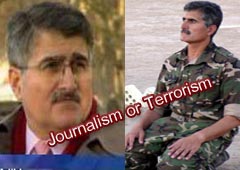
He was wearing a military uniform, sitting on his knees. This was the first picture I saw of Ali Safavi after I was keenly aroused to know him and his agenda. I had noticed his name as the author of an article in favor of Mujahedin Khalq Organization (MKO/MEK/PMOI) some years ago. After a quick Google search, I came across with his photograph in military uniform. Another photo portrayed him in a visit between Maryam Rajavi and the Israeli Rabbi Daniel Zucker.
Shockingly, on the Huffington Post, Safavi is introduced as a member of Iran’s parliament in Exile which is the elegant, polished title for NCR. According to the US State Department NCR is an alias for the MKO, thereby it is a terrorist organization –the State Department added NCR to the list in 1999. [1] Only the fact that Safavi is a member of a terrorist designated organization, writing on a professional media leads to the idea of shady journalism which is manipulating the ignorant audience.

How Safavi uses shady journalism to meaningfully distract public opinion? What are his rhetorical strategies to thrust his poorly stated ideas on the readers?
His sophistical arguments help Safavi convince people to think in unethical ways or draw false conclusion. The NCR member uses quibbling arguments to deceive his intended audience as what the first teachers of the history, the Sophists did.

As it was analytically described in the first part of these articles, “Repetition” is the very tool Safavi exploits to promote his cause – let’s say the cause of terrorist designated Mujahedin Khalq Organization. This major rhetorical strategy is used to produce emphasis, magnification and sometime moving effect.

The use of several synonymous or parallel words together and in various intervals helps him amplify his argument. For instance, the company of Iranian “regime” with “execution” in more than 50 cases implies what Safavi is strongly determined to do: demonizing Islamic Republic.

Repeating the name of MKO and its aliases for over 340 times, Safavi dwells on or returns to his strongest argument which is to promote MKO in Washington and its removal from the list of FTOs of the State Department. He gives excessive coverage to the group, its leaders and its activities. He exaggerates about their achievements. For instance, as I mentioned before, he describes MKO as the main Iranian opposition for over twenty times – although the group has no significant popular support inside Iran according to the recent unclassified report ” IRANIAN POPULAR ATTITUDES TOWARDS THE MEK" published in May 2011. The cable was based on input from State Department Iran-watchers and consular interviewing officers in the main posts that interact with Iranians on a regular basis. [2]

By going over a word or phrase like “democracy “or “democratic change” for about 40 times, in different parts of his writings, he pushes the audience to recognize fake importance of the MKO agenda. He portrays the Rajavis as heroes to bring "democratic change" by giving them extraordinary attention. However, the Rajavis are hardly ever known by the Iranian majority. "In speaking to hundreds of Iranians both in the preceding two months and before, ordinary Iranians were almost uniformly dismissive of the MEK, reacting with either disdain or apathy", according to the report.[3]

Ali Safavi vigorously pushes for on his partial allegation that his organization was blacklisted as a terrorist entity by Clinton administration as ”a good will gesture" to IRI, in almost all of his articles, although MKO was listed as a terror group at least three years prior to 1997. The DOS’s fourteen-page report on the group was published in 1994. [4]

Calling MKO opponents as “Tehran apologists” or “Intelligence agents” in a variety of cases, suggests that Safavi‘s unethical journalism is never free from bias. According to him, anyone who disagrees with the MKO deserves to be called Iranian “lobbyist” or “ agent “ but his own biased journalism to boost a terrorist designated group is professional! His most recent reaction[5] against Michael Rubin’s Commentary[6] is a significant evidence for my assertion.

The few mentioned examples of Safavi’s subtle and often unsound reasoning and his irresponsible coverage of a terrorist designated group poses a question in our mind: How can a journalist promote, encourage and endorse the cause of terrorists? His malpractices in support of a terrorist destructive cult prove his shady_ if not dirty_ journalism. That’s when journalism becomes a tool to advocate terrorism.

By Mazda Parsi

References:
[1]US Department of State, Country Report on Terrorism 2006
http://www.state.gov/s/ct/rls/crt/2006/82738.htm
[2] U.S. State Department document released in May 2011 under the U.S. Freedom of Information Act http://iran.org/news/2010_05_25-10MEKdocs-DOC10.pdf
[3]ibid
[4]U.S. Department of State, Patterns on Global Terrorism. The 1994 report http://www.fas.org/irp/threat/terror_94/append.html
[5] Nejat bloggers are either former MKO members or have a family member who is currently held in Camp Ashraf. They have suffered deeply because of Massoud Rajavi’s crimes. While the Nejat Bloggers recognize that citing sources of information is essential ,we, as a society feel so strongly against the MKO that we have agreed to not include the group’s websites or links in our articles because we consider it as kind of publicity for the cult.
[6] Rubin, Michael, Bachmann and the Mujahideen–e-khalq, Commentary Magazine, July 3,2011
http://www.commentarymagazine.com/2011/07/03/michele-bachmann-and-the-mujahideen-e-khalq/

July 19, 2011 0 comments
FacebookTwitterPinterestWhatsappTelegramSkypeEmail
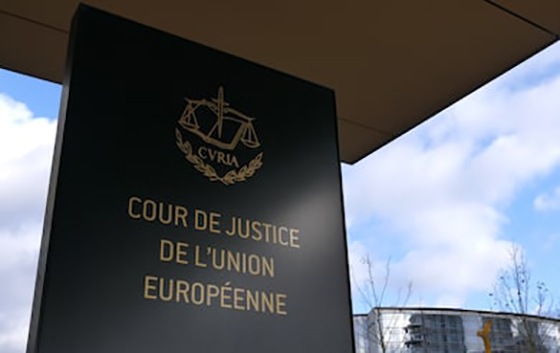
France step nearer to putting MKO back on EU list
France

France step nearer to putting MKO back on EU list

PRESS RELEASE No 73/11
Luxembourg, 14 July 2011
Press and Information
Advocate General’s Opinion in Case C-27/09 P

France v People’s Mojahedin Organization of Iran
Advocate General Sharpston suggests that the Court reject France’s appeal against the General Court’s judgment removing PMOI from the EU terrorist list

France step nearer to putting MKO back on EU list

In so doing she suggests a number of improvements that could be made to procedures so as to ensure an appropriate balance between the need to combat terrorism and the respect of fundamental rights

In December 2008, the Court of First Instance (now called the General Court), annulled a Council Decision including the People’s Mojahedin Organisation of Iran on the European list of terrorist organisations whose funds and other financial assets were to be frozen1. This was the third occasion on which that Court had annulled a decision of this kind.
The previous decisions that had been annulled by the General Court2 had been based on the existence of a UK decision proscribing PMOI, the existence of such a decision by a competent authority at national level being a prerequisite for including an organisation on the EU list. However, PMOI was removed from the list of proscribed organisations in the UK on 24 June 2008, following a ruling of a national court in November 2007 which described that listing as “perverse” and “unreasonable”.

When, on 15 July 2008, the Council adopted a new decision3 updating the EU list, it nevertheless maintained PMOI on the list. The inclusion of PMOI was based on information provided by the French Government as to (i) the opening of a judicial inquiry by the anti-terrorist prosecutor’s office of the Tribunal de grande instance de Paris (Regional Court, Paris) in 2001 and (ii) two supplementary charges brought in 2007 against persons presumed to be members of PMOI. Information to this effect was communicated by the Council to PMOI on the day the decision was adopted.

Annulling this decision, the General Court found that the Council had violated the rights of defence of PMOI by not communicating this new information before adopting the decision.
Whilst this in itself was sufficient to annul the decision, the General Court, for the sake of completeness, also examined the other arguments put forward by PMOI. In particular it found that the opening of a judicial inquiry and the two supplementary charges did not constitute a decision by a competent authority, in respect of PMOI itself, noting that no reasons were advanced as to why the acts ascribed to the alleged members of PMOI should be attributed to that organisation itself. Furthermore, the Court found that by failing to communicate to the Court certain information about the case which the French authorities refused to declassify, the Council had equally infringed the fundamental right of PMOI to effective judicial protection.

France appealed against this judgment to the Court of Justice.
1 Case T-284/08 People’s Mojahedin Organization of Iran II (see also Press Release 84/08)
2 Case T-228/02 Organisation des Modjahedines du peuple d’Iran (see also Press Release 97/06) and Case T-256/07 People’s Mojahedin Organization of Iran (see also Press Release 79/08)
3 Council Decision 2008/583/EC of 15 July 2008 implementing Article 2(3) of Regulation (EC) No 2580/2001 on specific restrictive measures directed against certain persons and entities with a view to combating terrorism and repealing Decision 2007/868/EC (OJ 2008 L 188, p. 21).

www.curia.europa.eu

In her Opinion issued today, Advocate General Eleanor Sharpston suggests that the Court dismiss France’s appeal.

As regards the failure by the Council to communicate, prior to the adoption of its decision, the new information to PMOI which resulted in that organisation being maintained on the list, Advocate General Sharpston disagrees with the General Court that the Council had ample time between receiving the information from the French Government on 9 June and adopting its decision on 15 July to communicate that information to PMOI, taking into account the internal procedures of the Council.

However, in her view, this should not have prevented the Council from providing the information to PMOI before adopting a decision maintaining it on the list, as required by the Court’s case law. Whether or not issues of urgency arise, it is simply not open to the Council to ride roughshod over a party’s rights of defence.
So as to balance the interests of the Council, PMOI and the other persons on the list who have a right to have that list reviewed every six months, Miss Sharpston suggests that the Council should have adopted a decision as regards the other persons on the list within the timescale required but deferred adopting a decision in relation to PMOI until such time as it had had the opportunity to notify PMOI and consider that organisation’s response. The error made by the Council was in assuming that it had to adopt a single decision dealing simultaneously with all the persons and organisations on the list. This was not the case.

Consequently, Advocate General Sharpston concurs with the conclusion of the General Court that the Council’s decision had been adopted in violation of PMOI’s rights of defence. As this was the sole reason for the annulment of the decision by the General Court, the Advocate General suggests that the Court dismiss the appeal.
Mindful of the fact that the remaining arguments ought to have no bearing on the outcome of the case, Advocate General Sharpston nevertheless considers it important that they be addressed. Failing to do so would, in her opinion, leave France faced with precisely the same uncertainty that led it to appeal in the first place, an uncertainty which may well be shared by other Member States.

As to whether the opening of a judicial inquiry in 2001 and the supplementary charges brought against individuals suspected of being members of PMOI in 2007 constituted a decision by a competent authority, Miss Sharpston first considers that, given that terrorists are unlikely to assist the authorities by establishing themselves in an easily identifiable manner, the requirement that a national decision be taken “in respect of the persons, groups or entities concerned” must be interpreted broadly. As such it is, in her view, not necessary that the national decision name precisely the same persons or organisations as the EU decision. It is sufficient that there exist serious and credible evidence and clues that the persons named are essentially the same.

As to the nature of the national decision, the Advocate General takes the view that a simple decision to initiate investigations is not, of its own, enough. On the other hand, requiring the national decision to be taken by a court would be too strict a requirement. In her opinion there needs to be serious and credible evidence or clues which are strongly suggestive of a terrorist act and significantly more than mere suspicion or hypothesis.

Taking this into account, Advocate General Sharpston considers that the opening of a judicial inquiry in 2001, which led to further proceedings in 2003 (under French law known as a mise en examen) would meet this test but that the supplementary charges brought in 2007, which were not subject to a mise en examen, would not. As the two were taken together as a whole by the Council, this leads to the conclusion that the French decisions could not form the basis of the Council’s decision.
Furthermore, the Advocate General agrees with the General Court that no proof was provided that the investigations launched in 2007 against alleged members of PMOI could be said to be directed against PMOI itself.

Finally, as regards the withholding of confidential information from the General Court, Advocate General Sharpston takes no issue with that Court’s finding that the Council’s refusal to communicate the information in question resulted in the General Court being unable to review the lawfulness of the decision. However, given the absence of any specific provisions in that Court’s Rules of Procedure for dealing with information that needs to be communicated to the Court but not to the other party to the case, the Advocate General, nevertheless, does not find France’s position unreasonable. In strict accordance with the General Court’s Rules of Procedure it was not possible for that Court to offer the Council any assurance that the confidential information would not, at some point, have to be communicated to PMOI. As a result Advocate General Sharpston suggests that changes be made to the Rules of Procedure and principles be outlined so as to allow the use of such confidential information where necessary to combat terrorism whilst simultaneously ensuring respect of the rights of defence and the right to effective judicial protection.

NOTE: The Advocate General’s Opinion is not binding on the Court of Justice. It is the role of the Advocates General to propose to the Court, in complete independence, a legal solution to the cases for which they are responsible. The Judges of the Court are now beginning their deliberations in this case. Judgment will be given at a later date.
NOTE: An action for annulment seeks the annulment of acts of the institutions of the European Union that are contrary to European Union law. The Member States, the European institutions and individuals may, under certain conditions, bring an action for annulment before the Court of Justice or the General Court. If the action is well founded, the act is annulled. The institution concerned must fill any legal vacuum created by the annulment of the act.

Court of Justice of the European Union

July 18, 2011 0 comments
FacebookTwitterPinterestWhatsappTelegramSkypeEmail
Mujahedin Khalq; A proxy force

RT: Lobbyist in Capital Hill with pockets stuffed with MEK’s money

Royals V. MEK
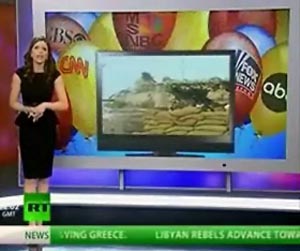
The Alyona Show on RT – Russian English –Language news Channel suggests the US media focus on the “Lobbyist in Capital Hill with pockets stuffed with MEK’s money”, on July 9th. The show criticizes US officials’ hypocrisy and double-standard to sell the cause of terrorists. Comparing MEK with Al-Qaida the show poses the question that how a terrorist designated organization can be debated in a hearing held in the US congress.

RT: Lobbyist in Capital Hill with pockets stuffed with MEK’s money

Download RT: Lobbyist in Capital Hill with pockets stuffed with MEK’s money

July 16, 2011 0 comments
FacebookTwitterPinterestWhatsappTelegramSkypeEmail
Mujahedin Khalq; A proxy force

War With Iran? US Neocons Aim to Repeat Chalabi-Style Swindle

In 1991, Iraqi exiles set up the Iraq National Congress (INC) with funding from the CIA. Under the leadership of Ahmad Chalabi, and flush with tens of millions dollars in US government funding, the INC allied itself with the neoconservatives in Washington and unceasingly beat the drums of war, presenting itself as the popular democratic alternative to Saddam Hussein and feeding

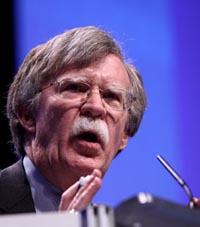
Former United States Ambassador to the United Nations John Bolton speaking at CPAC 2011 in Washington, DC. Appearing before the House Foreign Affairs Committee on June 24, Bolton reiterated his calls for military action against Iran and openly expressed his support for the MEK, a radical Islamic terrorist group. (Photo: Gage Skidmore)

faulty intelligence to an eager media and Bush administration. Eventually, they succeeded in dragging the United States into disastrous war that cost Americans and Iraqis their lives and caused incalculable damage to American prestige and power.

Now, history may be repeating itself.

A segment of our political establishment that is chafing at the bit for a military attack on Iran has found their INC, in the form of the Mujahedin-e-Khalq Organization (also known as the MEK, or MKO), a radical Islamic terrorist group with Iranian roots that has been designated a terrorist organization since the State Department created the Foreign Terrorist Organization list in 1997.

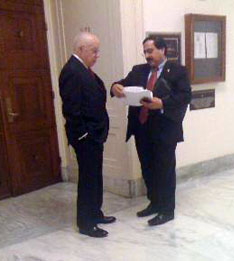
Appearing before the House Foreign Affairs Committee on June 24, John Bolton, the former ambassador to the UN under President Bush, reiterated his calls for military action against Iran and openly expressed his support for the MEK. Weeks later, former Bush attorney general Michael Mukasey appeared before the Oversight and Investigation Subcommittee and called for the US to delist the MEK. Mukasey was even photographed prior to the hearing receiving counsel from the leadership of the National Council of Resistance of Iran, the MEK’s political wing, which is also designated as a terrorist organization.

Bolton and Mukasey are not alone in their avowed public support for this known terrorist group. They have been joined by a number of former senior Bush administration officials, other hawks and advocates of the whatever-it-takes war on terror – luminaries such as Rudy Giuliani, former CIA director James Woolsey, and former head of Homeland Security Tom Ridge, as well as a number of Republican and Democratic legislators.

Why would some of the most vocal advocates for prosecuting the war on terror now take an Islamic terrorist group under its wing and persistently lobby the State Department and the US Congress to have the group removed from terrorist list? Simply put, they say the enemy of the enemy is our friend. Maryam Rajavi, the MEK leader and self-proclaimed president of Iran, is their new Chalabi.

The MEK is an Islamic radical organization that was formed in the 1960’s as an urban guerilla movement against the shah of Iran. During the 1970’s, the group targeted and successfully killed US military personnel and American civilians based in Iran. It played a major role in the overthrow of the shah in 1979, eventually fell out with the Ayatollah Khomeini and fled to Iraq. There, they regrouped under the patronage of Hussein, and fought alongside him against Iran in the Iran-Iraq war. As documented by the CIA, the MEK was later used by a beleaguered Hussein to crush the Kurdish rebellion that came immediately after Iraq’s defeat in the Persian Gulf War. Following Hussein’s ouster, the Iraqi government has been working to try to expel the reviled group from Iraq.

Over the course of the last two decades, a well-funded MEK has developed a powerful propaganda machine that has sought to depict the group as a formidable military force, as well as the genuine democratic representative of the Iranian people. These claims have been proven to be groundless. The naked reality is that the MEK are neither a force nor a democratic representative of Iranians, but simply a well-funded militaristic cult with shadowy leaders. They are widely despised by Iranians for having betrayed Iran by siding with Hussein. These facts have been extensively documented, as can be seen in a recently released FBI report that presents evidence of ongoing terrorist activities by the MEK.[..]

Pressure to remove the MEK from the State Department’s Foreign Terrorist Organizations list is a cynical ploy by the neocons that can have only negative consequences for both the United States and Iran. It would allow an Islamic radical terrorist group to operate freely in the United States and eventually get funded by the US taxpayer, courtesy of a clueless Congress. The proponents of war with Iran simply want another INC, and another Chalabi, to promote and start a military conflict with Iran. This country does not need another war, and we need not make that mistake once again.

Instead of legitimizing the MEK, we call on the law-enforcement agencies to investigate the illegal activities of this group, their funding and their allies. After all, they are still on the US State Department terrorist list. So, why are they allowed to lobby our lawmakers in the Senate and the House? The FBI should treat the MEK like all others terror-listed groups, and help protect the American people from these terrorists in our midst – and from another attempt to hijack the country and steer us into a disastrous war of choice.
by: Ali Fatemi and Karim Pakravan, Truthout

July 16, 2011 0 comments
FacebookTwitterPinterestWhatsappTelegramSkypeEmail
The cult of Rajavi

Prayer is unacceptable without pictures of MKO gang leader!

According to an inter-sectarian directive, which has been executed in the Rajavi’s cult for 25 years, the cult members should pray in a place where several pictures of the cult leader are mounted.

As reported by Habilian Association (families of Iranian victims of terror) database, according to Hussein Robubi, a member of the Executive Board of MKO, after he was appointed as an official for a terrorist base of MKO in Pakistan, immediately he was assigned to mount pictures of MKO leader (Masoud Rajavi) wherein the cult members say prayers.

According to news received, Hussein Robubi explains his action to implement the order of Rajavi in such states: “When I came to Pakistan, I saw only two or three pictures of Rajavi was mounted in the database. This showed that how Mahmood was preventing from shining of the light of leadership. So, I demanded to send us the pictures, as much as possible.”

Reported by Habilian Association database, also two former members of the cult say: “Robubi recommended personnel to mount Rajavi’s photo in every room; also he rose at the meetings that, According to Rajavi, if a Mujahed say prayer in a room, where there are not leadership’s photos, so his prayer would be unacceptable.”

July 16, 2011 0 comments
FacebookTwitterPinterestWhatsappTelegramSkypeEmail
The MEK Expulsion from Iraq

Iraqi ambassador: Iraq to expel terrorist Mojahedin Khalq soon

Iraqi Ambassador to Tehran Mohammad Majid al-Sheikh said on Wednesday that terrorist Mujahedeen Khalq Organization refugees stationed in Iraq camp will be expelled by the end of this year.

In a meeting with Managing Director of the Islamic Republic News Agency Ali Akbar Javanfekr at Iran Press and Cultural Instititue, the ambassador said that the Iraqi government has acknowledged its decision to expel the refugees to the international organizations responsible for settlement of the refugees.

The ambassador said that the Iraqi government has also raised the issue with the European Union.

Al-Sheikh said that the terrorist MKO refugees were given a camp under the Iraqi dictator Saddam Hussein when they were serving under the then Iraqi army command to crack down Iraqi opposition in southern Iraq. ‘So, the new Iraqi government set a deadline for them to leave Iraq.

“The Iraqi leaders have consulted with EU over the MKO refugees and maintained that Iraq can not tolerate presence of the terrorists in the Iraqi territory,” the ambassador said.

“We also discussed the subject with Iran and the Red Crescent Society to help get rid of the terrorists who have been involved in violent crackdown of the opposition in 1990s under Saddam Hussein. So, the Iraqi government can not control its citizens’ revenge for collaboration with the former dictator in killing the Iraqi people,” he said.

The Iraqi ambassador added that Iraqi government and nation will not allow any terrorist group such as MKO or terrorist PEJAK group to use Iraqi soil to attack the neighboring and friendly country as Islamic Republic of Iran.

July 14, 2011 0 comments
FacebookTwitterPinterestWhatsappTelegramSkypeEmail
Mujahedin Khalq; A proxy force

Congressional Leaders Voice Support for MEK Violence

Supporters of removing the Mujahedin-e Khalq (MEK) from the U.S. terrorism list convened a hearing on Capitol Hill last week in which they justified the MEK’s use of violence and even cult-like behavior in support of toppling the Iranian regime.

Ali Safavi, a senior member of the MEK’s political wing, the National Council of Resistance in Iran (NCRI), coached witnesses before and during the hearing. The NCRI is designated as a terrorist affiliate of the MEK.

Washington, DC – Congressional supporters of the drive to remove the Mujahedin-e Khalq (MEK) from the U.S. terrorism list defended the organization’s use of violence at a hearing on Capitol Hill last week. The hearing was also remarkable in that senior leaders of the designated foreign terrorist organization were caught counseling some of the witnesses before the hearing. It is illegal to coordinate with a foreign terrorist organization to advocate on behalf of the terrorist group.

Dana Rohrabacher (R-CA), Chairman of the House Foreign Affairs Subcommittee on Oversight and Investigations, compared the use of terrorism by MEK to violence employed during the American Revolutionary War. He justified the “cult-like” behavior of the MEK, saying American revolutionaries included "religious fanatics and Christian cults.”

Rohrabacher called for the MEK to be removed from the Foreign Terrorist Organization list, which

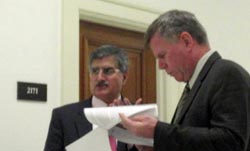
Alireza Jafarzadeh, who has served as NCRI spokesman, counseled former Bush Attorney General Michael Mukasey prior to his testimony.

prevents the group from receiving government funding and makes it illegal for MEK to operate in the U.S. "Any group that chooses to use violence to resist doesn’t make them right or wrong,” Rohrabacher stated. “Backing people who fight against tyranny is also something the U.S. should be doing.”

Despite the terrorist listing, Ali Safavi, a senior member of the National Council of Resistance of Iran, was at the hearing, where he openly counseled witnesses before and during their testimony. The NCRI is the MEK’s political wing and is considered a terrorist organization by the U.S. government.

The hearing’s witnesses included three former U.S. officials who have actively participated in pro-MEK conferences, including former Bush Administration Attorney General Michael Mukasey.

All three witnesses who previously appeared at MEK conferences unanimously called for the MEK to be removed from the terror list, though none were asked to disclose whether they had received money to support the organization, as have other officials who have advocated for delisting the group.

The lone dissenting voice among the witnesses, former Obama Administration advisor Ray Takeyh, was subjected to an intense back and forth with Representatives on the panel.

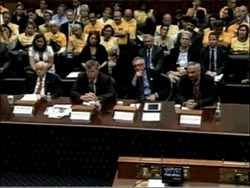
Individuals wearing yellow jerseys featuring pro-MEK slogans filled the hearing room to capacity.

Takeyh warned panelists who viewed MEK as a viable alternative to the Iranian regime that the organization has no support in Iran.

“I don’t agree," responded Representative Bob Filner (D-CA). "Even if you’re right, so what?”

Filner laughed off evidence that MEK President Maryam Rajavi is a cult leader, despite reports from the State Department and FBI of “cult-like” practices by MEK that include indoctrination rituals and torture. "She is as intelligent, humorous, humane and humble as anyone I’ve ever met," Filner observed, recounting what he said have been numerous meetings he has held in Paris with Rajavi.

Filner accused Takeyh of justifying violence against the MEK by highlighting the group’s history of terrorism, and said the U.S. should be supporting the organization as a “third way” alternative in Iran because it opposes the Iranian regime.

“These are our friends! We should be getting out of their way and de-list them,” Filner exclaimed. “Let them do what they can! Why are we helping Iran by not helping the MEK?”

Rohrabacher defended the MEK’s history of violence, saying, “This is a territory that’s filled with violence—I would be surprised if there wasn’t any organization that wasn’t in some way involved with using force to protect themselves.”

"Oh I would disagree with that," responded Takeyh. "Within Iran there are many opposition movements, such as the Green Movement, that explicitly reject violence.”

But Rohrabacher was adamant in his support for MEK. “I will have to admit the thing that attracts me to this movement is that it is willing to fight," he responded. “It won’t just be pacifists," Rohrabacher said, referring dismissively to the Green Movement, "it will be people with courage and people who stand up.”

Mukasey, in addition to calling for the MEK to be removed from the terrorism list, urged that MEK members be allowed to resettle in the United States. Mukasey acknowledged that members of terrorist organizations are legally barred from entering the U.S., and suggested legislation be introduced to change the law for MEK members.

Prior to the hearing, Mukasey was witnessed receiving coaching from Alireza Jafarzadeh, who served as the official spokesman for the NCRI before it was declared a terrorist group and its offices raided by the FBI in 2003.

Meanwhile, many were turned away from the hearing or sent to the overflow room to watch the proceedings because the hearing room was at capacity. It was filled with individuals in yellow jerseys emblazoned with the slogans, “De-list the MEK,” “Protect Ashraf,” and “Ramp up sanctions.”

July 14, 2011 0 comments
FacebookTwitterPinterestWhatsappTelegramSkypeEmail
Mujahedin Khalq Organization as a terrorist group

Austrian FM: Austria opposes all sorts of terrorism

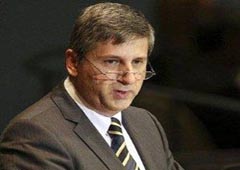
Austrian Foreign Minister and Deputy Chancellor Michael Spindelegger told a joint press conference on Tuesday with his Iranian counterpart Ali Akbar Salehi in Vienna that his country opposes all sorts of terrorism. Austrian Foreign Minister and Deputy Chancellor Michael Spindelegger

Answering a question about the European bid to drop terrorist Mujahedeen Khalq Organization (MKO) from the list of terrorist groups, Spindelegger said that Austria is opposing all terrorist activities.

He described his closed- door meeting with Iranian foreign minister as fruitful and said: ‘We discussed openly and transparently different issues such as Iran’s nuclear program, human rights, the Middle East developments and other concerns about mutual relations.

Spindelegger gave a proposal to proceed with nuclear talks on 3+3 formula and said that all parties must come to the negotiating table.

Salehi started his European tour from Slovenia Monday and arrived in Vienna on Tuesday at the invitation of Austrian foreign minister.

In the meantime, Salehi conferred with Director-General of the International Atomic Energy Agency Yukiya Amano Tuesday.

A number of Iranian officials are accompanying Salehi.

July 13, 2011 0 comments
FacebookTwitterPinterestWhatsappTelegramSkypeEmail
Iran

Iran criticizes US support for MKO

A senior Iranian military figure has lashed out at the United States for its support for the presence of the terrorist group Mujahedin-e Khalq Organization (MKO) on Iraqi soil.

Head of Iran’s Sacred Defense Foundation General Mohammad Baqerzadeh on Sunday criticized Washington for its support for the presence of MKO terrorists in Camp Ashraf in Iraq’s eastern province of Diyala.

“Continuing to support MKO presence in Iraq after this group has been recognized as a terrorist cell in the world shows US support for the existence of terrorist movements,” Mehr News Agency quoted him as saying.

General Baqerzadeh said US support for the MKO comes despite the fact that terrorism and terrorist acts are condemned around the world, adding, “This is an example of the West’s double standards with regards to human rights and this issue must be broached in the international community.”

“This terrorist cell has committed crimes not only against the people of Iran but also Iraqis … therefore the people of both countries can reserve the right to pursue efforts to bring the MKO to justice.”

The MKO fled to Iraq in 1986, where it enjoyed the support of former Iraqi dictator Saddam Hussein, and set up Camp Ashraf near the Iranian border. The group has been actively involved in the assassination of Iranian officials and civilians and also helped the massacre of Iraqi Kurds in 1991.

The European Parliament, which removed the MKO from its blacklist in 2009, issued a declaration in November 2010 and urged the US to take the group off its list of Foreign Terrorist Organizations.

The MKO, which has been on the US terror list since 1997, filed a petition against the blacklisting in 2008.

The administration of former US president George W. Bush rejected the request in its final days in 2009, after examining material submitted by the group and US intelligence agencies, including classified information.

In February 2011, a group of former high-ranking American politicians and officials renewed calls to remove the MKO from the State Department’s official list of Foreign Terrorist Organizations.

They argued that the MKO is critical to any chance of overthrowing the Islamic establishment of Iran.

July 12, 2011 0 comments
FacebookTwitterPinterestWhatsappTelegramSkypeEmail
Newer Posts
Older Posts

Recent Posts

  • Expectations of human rights bodies regarding censorship within the MEK

    October 13, 2026
  • The Jamalis’ Plea for Help: Save Our Brother from the MEK!

    October 11, 2026
  • Testimonies of Participants in the MEK’s Staged Propaganda Stunt in Karaj

    October 7, 2026
  • Giuliani’s MEK ties have dogged him for years

    October 6, 2026
  • The Tragic Impact of MEK Isolation on Yazdan Teimorian and His Family

    October 5, 2026
  • Facebook
  • Twitter
  • Instagram
  • Youtube

© 2003 - 2025 NEJAT Society . All Rights Reserved. NejatNGO.org


Back To Top
Nejat Society
  • Home
  • Articles
  • Media
    • Cartoons
    • NewsPics
    • Photo Gallery
    • Videos
  • Publications
    • Books
    • Nejat NewsLetter
    • Pars Brief
  • About Us
  • Contact us
  • Editions
    • عربي
    • فارسی
    • Shqip