Nejat Society
  • Home
  • Articles
  • Media
    • Cartoons
    • NewsPics
    • Photo Gallery
    • Videos
  • Publications
    • Books
    • Nejat NewsLetter
    • Pars Brief
  • About Us
  • Contact us
  • Editions
    • عربي
    • فارسی
    • Shqip
Nejat Society
Nejat Society
  • Home
  • Articles
  • Media
    • Cartoons
    • NewsPics
    • Photo Gallery
    • Videos
  • Publications
    • Books
    • Nejat NewsLetter
    • Pars Brief
  • About Us
  • Contact us
  • Editions
    • عربي
    • فارسی
    • Shqip
© 2003 - 2024 NEJAT Society. nejatngo.org
Mujahedin Khalq Organization as a terrorist group

Tell the U.S. Government to Say NO to Mujahedin Khalq

Sometime in August, Secretary Clinton will decide whether to keep the Mujahedin-e Khalq on the US’s terrorist list. This is a decision that will have significant implications for the Iranian-American community, the United States and the people of Iran.

Members of NIAC have urged us to speak out, because delisting the Mujahedin would undermine the peaceful Iranian pro-democracy movement . It would threaten the free voices of the Iranian-American community in the US. And it would allow the Mujahedin to receive US funding and become a powerful force in support of war with Iran, just like the Iraqi exiles who deceived us into war with Iraq did.

Supporting terrorists and replacing Iranian regime with an undemocratic cult that tortures its own members is a recipe for disaster.

Former senior U.S. officials have called Mujahedin “Iran’s hope.” They have said Mujahedin leader Maryam Rajavi “should be recognized as the President of Iran.” Some have already acknowledged received cash to support the organization.

In Congress, massive lobbying efforts have convinced many that Mujahedin is the “main opposition in Iran” and that the Mujahedin speaks for the Iranian people and the Iranian-American community.

It’s time to set the record straight.
Tell Congress, the State Department, and the Justice Department: the Mujahedin does NOT speak for the Iranian-American community and does NOT represent Iran’s peaceful democratic movement.

July 9, 2011 0 comments
FacebookTwitterPinterestWhatsappTelegramSkypeEmail
Mujahedin Khalq Organization

Mojahedin Khalq rejects US relocation proposal

The Mujahedin-e Khalq Organization (MKO) has rejected a US proposal to leave northern Iraq despite Baghdad’s stepped-up efforts to expel the terrorist entity. Maryam Rajavi, the head of the terrorist Mujahedin-e Khalq Organization (MKO)

Maryam Rajavi, who heads the terrorist group, rejected a relocation proposal put forward by Washington, saying the plan would pave the way for attacks by Iraqi security forces against the MKO, Reuters reported on Wednesday.

The MKO terrorists are currently based in a military settlement known as Camp Ashraf, located nearly 65 kilometers (40 miles) from the Iraqi capital of Baghdad in Diyala province.

Rajavi said the US was responsible to protect MKO members in Camp Ashraf and called for the formation of a permanent monitoring team backed by the United States and the European Union to ensure the safety of the terrorist group.

She made the remarks in the Italian capital of Rome, where she was to meet Italian parliamentarians.

In April, the MKO members clashed with the Iraqi security forces who were involved in an operation to reclaim land from the camp and return it to local farmers.

The MKO claimed that the Iraqi forces killed 34 of its members in the clashes. But Iraqi officials refuted the allegation, saying the camp residents were killed by the MKO organization itself.

Testimonies made by former MKO members reveal an immense pressure on many residents of Camp Ashraf who want to escape but are afraid and unsure of the future. They say scores of members have recently been killed by the organization and that MKO guards open fire on defectors before they can exit the camp.

The outlawed MKO fled to Iraq in 1986, where it enjoyed the support of former Iraqi dictator Saddam Hussein’s Ba’athist regime and set up Camp Ashraf, about 120 kilometers (74.5 miles) west of the Iranian border.

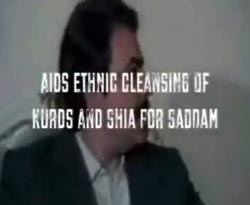
The MKO is notorious for carrying out numerous acts of terror against Iranian civilians and officials, and collaborating with Saddam in the bloody repression of the 1991 Shia Muslims in southern Iraq and the massacre of Iraqi Kurds in the country’s north.

Iran has repeatedly called on the Iraqi government to expel the group, listed as a terrorist organization by much of the international community, but the US has been blocking the expulsion by pressuring the Iraqi government.

In April, Iranian Justice Minister Morteza Bakhtiari said 12,000 Iranians have fallen victim to MKO’s acts of terror. He also condemned the US and Europe for their continued support for the terrorist group, referring to the EU’s decision to remove the group from its list of terrorist organizations in 2009.

During his visit to Iran in June, Iraqi Foreign Minister Hoshyar Zebari reiterated Baghdad’s stance on the terror cell.

“Camp Ashraf is to be shut down, and members of the [MKO] group have been given until the end of the current year (2011) to leave Iraqi soil,” he insisted.

July 9, 2011 0 comments
FacebookTwitterPinterestWhatsappTelegramSkypeEmail
Mujahedin Khalq Organization's Propaganda System

Mujahedin Khalq are not democrats or freedom fighters

Trita Parsi (an MEI adjunct scholar by the way) has a good post up at The Huffington Post about the People’s Mojahedin of Iran/Mohahedin-e-Khalq (PMOI or MEK) efforts to get themselves off the US terrorism supporters list. His lead says it all succinctly:

In the 10 years that I have lived in Washington, I have never seen lobbyists for al-Qaeda parade through the halls of Congress. I have not seen any events on Capitol Hill organized by Hamas. And I have not seen any American politicians take campaign contributions from the Islamic Jihad.
But the Mujahedin-e Khalq (MEK), an organization with the blood of Americans and Iranians alike on its hands, freely does all of these things, despite being a designated foreign terrorist organization by the U.S. government.

I’ve been here a lot longer than ten years, but I share his view. The MEK have been lobbying hard in Washington since the 80s at least, despite being on the terrorist list for killing American diplomats and military personnel in the days of the Shah. They’re slick, they’re well funded (how?) and they seem able to persuade Congressmen who would never respond to an Arab group in the same way. Yet besides their track record of killing US personnel in the Shah’s day, they are based in Iraq, fought on the side of Saddam Hussein during the Iran-Iraq war, maintain to this day a cultlike "Camp Ashraf" in Iraq that the Iraqi government is pressuring to leave and threatening to deport to Iran, have a true cult of personality about their leadership, and are uniformly hated by every Iranian I know who isn’t one of them, from Pahlavi restorationists to leftists to liberal democrats to people who support the current system. After all, they fought for Saddam against Iranians, and are traitors in the eyes even of those who hate the clerical regime.

Their PR skills are good. In my journalism days they used to drop by regularly to try to cultivate me, and while I listened politely, I had too many US military friends who’d served in pre-revolutionary Iran and knew them as their primary nemesis. (The MEK claim that was because their current leadership was in jail under the Shah, and all the bad stuff was done by somebody else.)

True story: I’ve only been in Iraq once, for about five days in 1989 in between the Iran-Iraq war and the Kuwait war. I was getting in an elevator in the Sheraton Hotel when a smallish man in an impeccable suit stepped in and asked if I was an American. My first thought was, gosh, he looks and carries himself just like the MEK guys in DC. Guess what? That’s exactly who he was. With exactly the same missionary spiel.

These are not democrats or freedom fighters. The more you get to know them the more they seem closer to some kind of odd, almost Manson-like cult. Maryam Rajavi is their leader and she (her husband yielded to her years ago since a woman leader impresses Westerners) will be President of Iran when they somehow sweep away the clerical regime. Not through election, through acclamation. She’s the Evita Peron of Iran, or at least a wannabe.

I have no brief for the Iranian regime, but these guys worry me, especially for their strange, Svengali-like power over members of Congress from both sides of the aisle. I applaud Trita’s warning here. Let the Buyer Beware.

by Michael Collins Dunn – mideasti.blogspot

July 7, 2011 0 comments
FacebookTwitterPinterestWhatsappTelegramSkypeEmail
Mujahedin Khalq; A proxy force

More on “Washington’s Favorite Terrorists,” the MEK

Trita Parsi has a good piece out about how the Mujahedin-e Khalq (MEK), an Iranian exile group officially declared a terrorist entity both in the United States and Iran, may soon be removed from the US terror list.
More on “Washington’s Favorite Terrorists,” the MEK
Through its front group, the National Council of Resistance of Iran (NCRI), the MEK has been publicizing Israeli intelligence on Iran’s nuclear program, as well as courting US and European government officials who are, shall we say, misguided enough to think that Iranian government could be replaced by them. Other front groups and names for the MEK include the People’s Mujahedin of Iran (PMOI), the National Liberation Army of Iran and the Muslim Iranian Student’s Society.

Iranian politics are complex and can be as confusing as US foreign policy is on Iran, but of this you can be certain: the MEK and it’s “parliament in-waiting” is considered illegitimate at best by the vast majority of Iranians living inside and outside of Iran. It can’t serve the interests of the US government or normal Iranians either.

But that doesn’t seem to matter to the likes of Rudy Giuliani, Tom Ridge, John Bolton and other neoconservatives, far right-wingers and their European counterparts (ever heard of Lord Corbett of Castle Vale?).

As Parsi points out:

…in a matter of weeks, this terrorist group may succeed in getting removed from the terrorist list — not as a result of any change of heart — but as a result of an unprecedented multi-million dollar media and lobbying blitz.

Beginning as an anti-Shah movement in the 1950s, the cult-like group conducted attacks on US officials and civilians in Iran during the 1970s. Its actions resulted in a government crackdown on all opposition movements in Iran at the time.. Afterwards surviving MEK members fled to Paris and Iraq where the group turned into a reactionary movement, embracing the main goal of overthrowing the Islamic government in Iran through any means.

In Iraq the MEK assisted Saddam Hussein’s government in suppressing Shias and Kurds and performed “security services” for the Iraqi government until Hussein’s government was overthrown by the US. The MEK did not resist the US invasion of Iraq in 2003. At present the MEK is mainly supported by pro-Israel advocates and/or those who support destructive forms of regime change in Iran, including US neoconservatives. For some reason the word “opportunism” keeps repeating in my head.

Just some background notes on the MEK for those who are interested in learning more.

According to investigative journalist Connie Bruck, the MEK’s “intelligence” on Iran (cited by some US officials in the past) was likely provided to the MEK by Israel. (Scott Ritter has also argued this):

An Iranian-American political activist told me, however, that the N.C.R.I.’s intelligence had actually come from Israel. This person said that Israel had earlier offered it to a monarchist group, but that that group’s leaders had decided that “outing” the regime’s nuclear program would be viewed negatively by Iranians, so they declined the offer. Shahriar Ahy, Reza Pahlavi’s adviser, confirmed that account-up to a point. “That information came not from the M.E.K. but from a friendly government, and it had come to more than one opposition group, not only the mujahideen,” he said. When I asked him if the “friendly government” was Israel, he smiled. “The friendly government did not want to be the source of it, publicly. If the friendly government gives it to the U.S. publicly, then it would be received differently. Better to come from an opposition group.” Israel is said to have had a relationship with the M.E.K. at least since the late nineties, and to have supplied a satellite signal for N.C.R.I. broadcasts from Paris into Iran. When I asked an Israeli diplomat about Israel’s relationship with the M.E.K., he said, “The M.E.K. is useful,” but declined to elaborate.

While documenting years of similar instances in an investigative report written for IPS News, Gareth Porter argues that the “laptop documents” provided by the MEK as evidence that the Iranian government planned to build a nuclear weapon may have originated from Israel’s Mossad:

Since 2002, new information has emerged indicating that the MEK did not obtain the 2002 data on Natanz itself but received it from the Israeli intelligence agency Mossad. Yossi Melman and Meier Javadanfar, who co-authored a book on the Iranian nuclear programme last year, write that they were told by “very senior Israeli Intelligence officials” in late 2006 that Israeli intelligence had known about Natanz for a full year before the Iranian group’s press conference. They explained that they had chosen not to reveal it to the public “because of safety concerns for the sources that provided the information”.

Furthermore, as Porter noted in 2008, the MEK was a favorite of neoconservatives in the Pentagon who were proposing in 2003-2004 to use it as part of a policy to destabilize Iran. Just months after the US invasion of Iraq in 2003, neoconservative commentator Daniel Pipes declared the MEK a US ally for its potential to provide intelligence on Iran. While Pipes stated that the MEK does not stand a chance of militarily overthrowing the Iranian government, he still recommended that the US government arm them:

Can the MeK be useful? Yes. Western spy agencies are short on “human intelligence” – meaning spies on the ground in Iran, as distinct from eyes in the sky. Coalition military commanders should seek out the MeK for information on Iranian agents in Iraq…

Instead, as the U.S. Army recommends, MEK members should (after giving assurances not to attack Iranian territory) be permitted enough arms to protect themselves from their Iranian opponents. And in November, when the secretary of state next decides whether or not to re-certify the MEK as a terrorist group, he should come to the sensible conclusion that it poses no threat to the security of the United States or its citizens, and remove it from the list of Foreign Terrorist Organizations.

There’s a lot more to be said about the MEK’s shady past and present, as well as its front groups and those that are pouring millions into lobbying for them, but for now, read Parsi’s piece.

One last thought: is it naive to hope that the mainstream media which failed so badly in the run up to the Iraq war with figures like Ahmed Chalabi will give this group better investigative coverage?

Jasmin Ramsey –  Lobelog

July 7, 2011 0 comments
FacebookTwitterPinterestWhatsappTelegramSkypeEmail
Mujahedin Khalq Organization's Propaganda System

Don’t Remove the MEK From the Terrorist List

Since 1997, the Mujahedin-e Khalq Organization (MEK), an Iranian opposition group, has been listed by the State Department as a terrorist organization. The European Union followed suit and also listed the MEK as such, but as a result of intense lobbying and a deceptive campaign by the supporters of the MEK, the EU recently removed the organization from its list of terrorist entities.

The same tactics are being used by the MEK in the United States. It has been spending millions of dollars on lobbyists, public relations agents, and communications firms in an attempt to pressure the State Department to remove the organization from the terrorist list. The MEK’s argument is that it renounced violence and terrorism in 2001. This is a lie. FBI documents indicate that as late as 2004 the MEK was involved in planning terrorist operations. Removing the MEK from the terrorist list as a result of its lobbying is akin to allowing al-Qaeda, the Taliban, and the Pakistani terrorist organization Lashkar-e Taiba to hire lobbyists, spend millions, and make campaign contributions to members of Congress (as MEK supporters have done) in order to gain “legitimacy” as an organizations.

The MEK was founded in 1965 by three Islamic leftists with the goal of toppling the U.S.-supported regime of Shah Mohammad Reza Pahlavi. In the 1970s it undertook a campaign of assassinating U.S. advisers and bombing U.S. corporations in Iran. It supported the 1979 Revolution in Iran, but in 1981 it turned its guns against the Tehran government and began a campaign of assassinations and terrorist operations that resulted in the death of thousands of Iranians, including the executions of its own supporters by government officials, soldiers, police officers, and ordinary people. It then moved its headquarters to Iraq, made a pact with the regime of Saddam Hussein, which was fighting a ferocious war with Iran. The MEK spied on Iranian troops for Iraq, attacked Iran at the end of Iran-Iraq war with Hussein’s support, and helped Hussein put down the uprisings by the Iraqi Kurds in the north and Shi’ites in the south after the Persian Gulf War of 1990-91. The MEK is despised by the vast majority of Iranians for what they consider to be treason committed against their homeland.

Since the 1980s, Masoud Rajavi, the MEK’s ideological leader, and his wife, Maryam Rajavi, the “president-elect of the resistance,” have turned the MEK into a Stalinist-style cult. The MEK has its own calendar filled with special occasions in its history, dress codes for its members, and a censorship index. All orders to the members come from the top. Maryam Rajavi has never won any election; she was handpicked by her husband. A simple search on the Internet turns up horror stories told by former members who wanted to leave the organization before the U.S. invasion of Iraq in 2003 but were arrested by MEK guards and jailed. They were tortured, beaten, kept in solitary confinement, “reeducated ideologically,” and, if nothing else worked, turned over to Saddam Hussein’s Special Security Organization as Iranian “spies.” For more information, see this report by Human Rights Watch.

In its campaign in the United States, the MEK has made an alliance with the neoconservatives and the Israel lobby.. The neoconservatives and their allies have sponsored six conferences over the past several months in Europe and the U.S. to prop up the MEK as the leading alternative to the Islamic Republic of Iran. Such infamous figures as John Bolton and former CIA director R. James Woolsey support the MEK. Bolton has said repeatedly that the U.S. must bomb Iran and support the MEK. The neocons also channel their support for MEK through conservative groups such as the Iran Policy Committee (IPC). An investigation published by Jim Lobe’s Lobelog in September 2010 revealed that the IPC has shared an address, accountants, and some staff with multiple organizations that either fronted for or had direct ties to Iraqi con man Ahmed Chalabi‘s Iraqi National Congress — the same organization that fabricated much of the bogus intelligence that neocons used to garner support for the invasion of Iraq in 2003.

The MEK has also set up several front organizations. The National Council of Resistance (NCR), its political arm, is not listed as a terrorist organization. Near East Policy Research and Strategic Policy Consulting, two “consulting companies” headed by longtime MEK members and spokesmen, lobby for the MEK. The Council for Democratic Change in Iran provides cover for political figures to support the MEK without being directly associated with it. It invites politicians to speak at its gatherings without telling them that they are an MEK front group, and it pays the speakers honoraria so large that it’s difficult for them to resist. Conservative academic Raymond Tanter, who founded the IPC, is an example. [..] Former CIA operative and IPC staff member Clare M. Lopez is another MEK supporter.

The MEK lobbying campaign has also made inroads among mainstream figures who probably know nothing about its past. Howard Dean, former chairman of the Democratic National Committee, is one. President Obama’s former National Security Adviser Gen. James L. Jones is another. Others include Bill Richardson, former energy secretary and U.S. ambassador to the United Nations; Michael Mukasey, attorney general under President George W. Bush; Tom Ridge, former governor of Pennsylvania and homeland security secretary under Bush; Gens. Peter Pace and Hugh Shelton, former vice chair and chairman, respectively, of the Joint Chiefs of Staff; Louis Freeh, former FBI director; Lee Hamilton, former Democratic congressman; Michael Hayden, former director of the CIA; Gen. Anthony Zinni, former commander of the Central Command; Frances Townsend, homeland security adviser in the Bush White House; and Brad Sherman and Dana Rohrabacher of the House of Representatives.

Such people are not approached by the MEK directly, but by the NCR, the CDCI, or another affiliated group. The lobbyists introduce themselves as representatives of Iran’s Green Movement, as “members of Iran’s parliament in exile“(there is no such parliament), or as Fox News analysts, claiming that they have vast support among the Iranian people who will rise up in support of the MEK if only the U.S. supports the group. But the claims are bogus, and if the MEK ever comes to power, the resulting bloodbath will dwarf anything that has happened in Iran .

If the MEK is removed from the terrorist list, there is no reason to believe it will not use its lobbying apparatus to obtain U.S. funding and to promote war with Iran. If it succeeds, the MEK cult will try to silent the voices of the Iranian-American community, represent itself as the voice of Iran’s true opposition, and take the U.S. down the path of another illegal war, all in the name of Iran’s nonviolent Green Movement. It will be Ahmed Chalabi all over again.[..]

by Muhammad Sahimi

July 7, 2011 0 comments
FacebookTwitterPinterestWhatsappTelegramSkypeEmail
Mujahedin Khalq; A proxy force

The Foolish Embrace of the MEK

The bizarre enthusiasm for the Mujahideen-e Khalq keeps growing in Washington. Trita Parsi describes the terrorist group’s intense lobbying efforts to have the group removed from the government’s list of terrorist organizations (via Chris Bodenner):

Since early January 2011, the MEK has spent millions of dollars on lobbyists, PR agents and communications firms to build up pressure on Secretary Hillary Clinton to take the group off of the terrorist list. Their argument is that the MEK rejected violence and terrorism in 2001 and as a result should be de-listed.

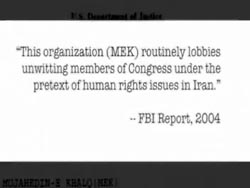
But this is not true, according to the FBI. A recently disclosed FBI report from 2004 reveals that the group continued to plan terrorist acts at least three years after they claimed to renounce terrorism.

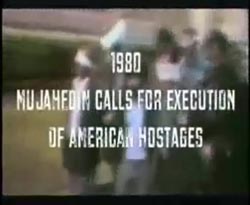
No one should be surprised — not even DC’s “unwitting members of Congress” — as the FBI calls the group’s supporters on Capitol Hill. The State Department has documented the MEK’s disturbing record: killing Americans and Iranians in terrorist attacks; fighting for Saddam Hussein against Iran and assisting Saddam’s brutal campaign against Iraq’s Kurds and Shia; its “cult-like” behavior; the abuses and even torture it commits against its own members; and its support for the U.S. embassy takeover and calls for executing the hostages.

And let’s not forget, the MEK suppresses and holds captive its own members – more than 70 percent of the MEK members in Camp Ashraf in Iraq are held there against their own wishes, according to a RAND Corporation study.

I have marveled at the willingness of numerous former government officials, retired military officers, and elected representatives to embrace the MEK. There’s no question that they are motivated by their loathing of the Iranian government, but their hostility to the regime had led them to endorse a group that most Iranians loathe. Michael Rubin has been sharply critical of MEK boosters here in the U.S. for some time now, and he most recently called out Michele Bachmann for her foolish support for the group, which she refers to as “one of the bravest Iranian dissident groups” and “freedom-seeking.” Bachmann is hardly alone in her folly. She has quite a lot of company, as Muhammad Sahimi tells us:

Howard Dean, former chairman of the Democratic National Committee, is one. President Obama’s former National Security Adviser Gen. James L. Jones is another. Others include Bill Richardson, former energy secretary and U.S. ambassador to the United Nations; Michael Mukasey, attorney general under President George W. Bush; Tom Ridge, former governor of Pennsylvania and homeland security secretary under Bush; Gens. Peter Pace and Hugh Shelton, former vice chair and chairman, respectively, of the Joint Chiefs of Staff; Louis Freeh, former FBI director; Lee Hamilton, former Democratic congressman; Michael Hayden, former director of the CIA; Gen. Anthony Zinni, former commander of the Central Command; Frances Townsend, homeland security adviser in the Bush White House; and Brad Sherman and Dana Rohrabacher of the House of Representatives.

In the past, the U.S. has supported ethnic separatist groups inside Iran in their armed opposition to Tehran, and some of these groups have resorted to attacks on civilian targets. When Jundullah was added to the list of terrorist organizations, it seemed as if that policy of subversion through sponsoring terrorism might have been abandoned. If the effort to de-list the MEK is successful, it seems more than likely that the group will be used as a proxy to launch attacks against Iranian interests. As Parsi explains:

First, the desire to de-list them in Washington seems partially driven by gravitation towards covert military action against Iran. Neither sanctions nor diplomacy have yielded the desired results on the nuclear issue, and some in Washington are advocating using the MEK to conduct assassination and sabotage campaigns inside Iran.

As one former State Department official put it, the “paradox is that we may take them off the terror list in order for them to do more terror.”

This will not only help the regime to consolidate power, but it will be an unexpected propaganda boost for the regime by convincing most Iranians that the U.S. has sided with a group they understandably regard as an enemy of their country.

amconmag – by Daniel Larison

July 7, 2011 0 comments
FacebookTwitterPinterestWhatsappTelegramSkypeEmail
USA

New U.S. approach to MKO overlooks the victims’ human rights

New U.S. approach to Mojahedin-e Khalq (MKO, MEK) in Camp Ashraf overlooks the victims’ human rights

Attitudes are slowly crystallising and shifting over what should be done about the MEK, with the New U.S. approach to Mojahedin-e Khalq (MKO, MEK) in Camp Ashraf overlooks the victims’ human rightsU.S. Ambassador to Iraq James Jeffrey introducing a new and positive approach in U.S. dealings with the group in Iraq. But the July 4 Miami Herald article ‘Iranian dissidents in Iraq want refuge in 3rd country’ , also highlights the danger that various elements are still trying to derive their own benefits from the MEK even though the demise of Camp Ashraf has become inevitable. Of course you would need to ask those involved what they each hope to get out of such a defunct group.

Ambassador James Jeffrey, addressing only MEK leaders, has urged them to “‘dissolve’ their paramilitary organization and become refugees someplace else in Iraq”. In its turn the MEK itself has already threatened to massacre its own members if any external body interferes in the camp. Jeffrey added that the group "really believe that the U.N. and the United States will protect them forever." Well, they have good reason to believe that to be so.

Trita Parsi’s timely article Washington’s Favorite Terrorists exposed U.S. hypocrisy in dealing with the MEK in Washington. But we may very well see a similar level of support continuing in Iraq. The obvious way this would manifest would be for the MEK to be taken (en masse) inside a U.S. military base and held there until further notice. This would protect the group from Iraqi attempts to expel them from the country, and also obviate the need for the U.N. to enter Camp Ashraf and rescue the individual residents from their enforced imprisonment by the MEK leadership.

The wholesale transfer of the residents of Camp Ashraf would truly be a human rights disaster. The sooner it is acknowledged that Rajavi is nobody’s representative but his own, the sooner the victims of the MEK will be helped.

From the hardliners in Iran who want to keep their dangerous foreign backed enemy, to the neoconservatives in the U.S. who want to keep the hatred between Iran and the west (as the neocon version of Holocaust denial, the fact that the MEK has killed so many Iranians is what feeds this hatred), to Iraqi internal factions which want to use the MEK for attacking other factions, to Europeans who still believe the MEK are a useful bargaining chip with Iran or can be used to influence the internal affairs of Iraq. All these have an interest in keeping the MEK intact. None wants the dissolution of the camp or the organisation. They all want to stop the camp being disbanded because they are using the MEK for their own various agendas.

The problem is that without taking the necessary action to access the individual residents of the camp they are essentially being left in the ownership of the Rajavis and their backers. In this respect where are the human rights organisations which should be directly involved in helping these victims? What attempts have the U.N. made to actually get inside the camp and have free access to the residents? Human Rights Watch published its ‘No Exit’ report in 2005 which was laudable, but what have they done since then? Amnesty International still prefers to think of the MEK as an entity and ignore the existence of the individuals in the camp. What has AI said about the internal problems of the residents; the daily violations and abuses of their basic human rights?

The problem is not the name of Camp Ashraf or the name MEK. The Rajavi’s cannot simply re-name, re-brand or even relocate their group for political expediency and expect the ‘members’ to continue as their slaves. To solve this problem (before the question of whether they want to work for or against anyone) the residents must be given access to the outside world, to their families, to media, communications, get paid for their work and have access to the post office, cinema, marriage registry, birth registry, police station, legal aid, courts and legal bodies of the country they are living in etc.

Nine years after the fall of Saddam and the disappearance of the cult leader it is not acceptable for a U.S. official to simply try to move the group from one part of the world to the other part without the slightest concern about the human rights of the captives there.

July 6, 2011 0 comments
FacebookTwitterPinterestWhatsappTelegramSkypeEmail
Mujahedin Khalq; A proxy force

Bachmann and the Mujahideen e-Khalq

Once again Michael Rubin ,prominent American Journalist criticizes Western politicians for their notoriously accelerated support for Mujahedin Khalq (MEK) , in this case particularly Ms. Bachmann; US presidential Candidate:
Michael Rubin
While I welcome Rep. Michele Bachmann’s presence in the presidential debate, I am agnostic on her candidacy. Certainly, she has a compelling personal story. Because I believe in small government, prioritize individual liberty and freedom, and am libertarian on most social issues, I also sympathize with the Tea Party movement, and I certainly also value a strong national defense. That said, I also believe the science supporting the theory of evolution is compelling and that science, rather than religion, should form the basis of science classes, and so I am somewhat put off by Bachmann’s apparent support of intelligent design. When push comes to shove, however, national security is my key issue.

I was disappointed, therefore, to see Bachmann’s uncritical support for the Mujahideen e-Khalq Organization (MKO), which the State Department defines as a terror group. While I agree the human rights abuses perpetrated by the Islamic Republic against MKO members and I also welcome the debate on whether the MKO is a terrorist group or not (I believe it is), there are certain incontrovertible facts: (1) the MKO has targeted Americans in past terrorist attacks; (2) they have embraced Saddam; (3) they operate as a cult which remains hostile to freedom, liberty, and democracy; and (4), they have very little if any support among Iranians in Iran.

He Warns Rep. Michele Bachmann about the danger of sponsoring an “undemocratic Cult” :

Embrace of Masoud and Maryam Rajavi’s cult would be analogous to embrace of Pol Pot’s Khmer Rouge. ..
Having lived and traveled in Iran, the best analogy to understand how Iranians feel about the MKO is to imagine how Americans would react if, in a misguided attempt to show solidarity with Americans, some outside force promoted John Walker Lindh as a force for freedom. The logic of “the enemy of my enemy is my friend” does not always hold true. If Bachmann wants to be serious on Iran, she should repudiate Obama’s naive outreach, but she shouldn’t accept the propaganda of an equally undemocratic cult.

Michael Rubin – Commentary Magazine

July 6, 2011 0 comments
FacebookTwitterPinterestWhatsappTelegramSkypeEmail
Iraqi Authorities' stance on the MEK

Iraqi politicians reach consensus on evacuating Camp Ashraf

Top political leaders in Iraq have reached consensus on evacuating New Iraq camp formerly known as Camp Ashraf by the end of this year. This is what Iraq lawmakers say.

The New Iraq Camp(formerly Ashraf), home to more than 3,000 people affiliated with the Mujahedeen Khalgh Organization (MKO) is described by Iraqi politicians as the main source of terrorism in Diyala and the neighboring provinces.

Iraqi president Jalal Talabani announced that the Iraqi government will expel the MKO members from Iraq by the end of this year.

Observers say, MKO members have tried on many occasion to provoke int’l community into putting pressure on Iraqi government by claiming that the Iraqi forces have attacked or mistreating them. The claims have been denied by Iraqi officials.

The MKO is listed as a terrorist organization by much of the international community and is responsible for numerous acts of terror and violence against Iranian civilians and government officials. The group fled to Iraq in 1986, where it enjoyed the support of Iraq’s executed dictator Saddam Hussein and set up their camp near the Iranian border.

Iraqi security forces took control of their camp located about 60km north of Baghdad earlier this year.

Wisam al-Bayati

July 5, 2011 0 comments
FacebookTwitterPinterestWhatsappTelegramSkypeEmail
Former members of the MEK

On the anniversary of terrorist attack against the Iranian civilian airliner

The statement of the families of terror victims on the anniversary of terrorist attack against the Iranian civilian airliner by the American cruiser Vincennes

Justice supporters Association (families of terror martyrs of Iran) condemning the terrorist attack against the Iranian civilian jet airliner by the American cruiser Vincennes, considers this criminal act a sign of western countries’, especially US leaders’ negligence of the lives of innocent people.

In this statement we read: on 3 July 1988, Iran Air Flight 655, a civilian jet airliner, shot down by U.S. missiles over the Strait of Hormuz. U.S. Navy’s guided missile cruiser Vincennes, killed all 290 passengers and crew aboard, including 66 children, 53 women and 46 nationals of the United Arab Emirates, India, Pakistan, Yugoslavia and Italy.

The statement adds: the US government, as the agent of this inhuman act, should claim the responsibility of various terrorist acts against civilians throughout the world. US headmen must know that there are many questions regarding with the sincere support of this country from terrorist groups.

In this statement, the enormous terrorist acts of Mojahedin-e Khalq terrorist organization and murder of 12000 Iranians and also the crimes of Jundullah against Iranian people were reminded. According to the Jundullah ringleader’s confessions and the MKO-related documents, US has supported these terrorist groups; now the question is that what is the relation between fighting against terrorism and at the same time, taking the side of terrorist groups? How can the US leaders respond the families who have lost their dearest ones by these terrorist groups?
Commemorating all the martyrs of terrorism and especially the victims of Iran Air Flight 655 who were victimized by the brutality of the US leaders, we condemn any double political approach by western countries towards terrorism phenomenon and believe that it is an important element in the expansion of terrorism.

At the end, we read: we, the families of more than 17000 victims of terrorism in Iran believe that global fight against terrorism demands an international determination, under whose light we can attain the slogan of “A World without Terrorism”. Western countries should abandon their support from terrorist groups and provide the required ground for trying the leaders of terrorist groups and cults.

July 4, 2011 0 comments
FacebookTwitterPinterestWhatsappTelegramSkypeEmail
Newer Posts
Older Posts

Recent Posts

  • A Child behind the Ideological Bars of Massoud and Maryam Rajavi

    August 8, 2026
  • A Comparative Analysis of Psychological Control Mechanisms in Jeffrey Epstein’s Cult and the MEK

    August 3, 2026
  • Operation Mersad: How Iran foiled Saddam’s final gambit 37 years ago

    August 1, 2026
  • Ideology Cannot Prevail over Human Dignity

    July 29, 2026
  • Is Rudy Giuliani so naïve to support MEK terrorists?

    July 27, 2026
  • Facebook
  • Twitter
  • Instagram
  • Youtube

© 2003 - 2025 NEJAT Society . All Rights Reserved. NejatNGO.org


Back To Top
Nejat Society
  • Home
  • Articles
  • Media
    • Cartoons
    • NewsPics
    • Photo Gallery
    • Videos
  • Publications
    • Books
    • Nejat NewsLetter
    • Pars Brief
  • About Us
  • Contact us
  • Editions
    • عربي
    • فارسی
    • Shqip