Nejat Society
  • Home
  • Articles
  • Media
    • Cartoons
    • NewsPics
    • Photo Gallery
    • Videos
  • Publications
    • Books
    • Nejat NewsLetter
    • Pars Brief
  • About Us
  • Contact us
  • Editions
    • عربي
    • فارسی
    • Shqip
Nejat Society
Nejat Society
  • Home
  • Articles
  • Media
    • Cartoons
    • NewsPics
    • Photo Gallery
    • Videos
  • Publications
    • Books
    • Nejat NewsLetter
    • Pars Brief
  • About Us
  • Contact us
  • Editions
    • عربي
    • فارسی
    • Shqip
© 2003 - 2024 NEJAT Society. nejatngo.org
USA

US State Department: No popular support for MKO among Iranians

A U.S. State Department document released in May 2011 under the U.S. Freedom of Information Act says the MEK has no popular support inside Iran and “to the extent Iranians know about this group they are far more likely to oppose it than support it.” It added, “Any U.S. support for MEK would extremely damage its reputation amongst Iranians and would increase anti-American sentiments in Iran.” The State Department cables quoted defectors as describing MEK as a cult that punishes former members. The cables said the MEK leadership ordered the execution of all attempted defectors.
—
UNCLASSIFIED
IRANIAN POPULAR ATTITUDES TOWARDS THE MEK

Summary
Showing a unanimity rare among Iranians, anecdotal information gleaned from both ordinary Iranians living inside Iran and abroad and from Iran analysts strongly indicates that the ‘Mujahedin-e Khalq’ (MEK) opposition group has not significant popular support inside Iran. To the extent that Iranian respondents are familiar with the MEK they express severe dislike for this group, primarily due to its alliance with Saddam Hussein during the eight-year Iran-Iraq war. All Iranians queried tended to disbelieve the MEK’s expressed allegiance to the ideals of human rights and democracy, with even hardened Iranian oppositionists and persecuted religious minorities such as the Iranian Baha’i saying they would prefer the current Iranian government to an MEK-affiliated one. Many Iranian respondents believe that any indication of USG support for the MEK would seriously harm USG popularity among ordinary Iranians, even among those Iranians who oppose the current Iranian government, would fuel anti-American sentiment, and would likely empower Iranian hardliners. END

SUMMARY
Body
UNCLAS RPO DUBAI 000048
SENSITIVE
SIPDIS
SIPDIS
E.O. 13526; N/A
TAGS; PREL, PGOV, IR, PTER

******* THIS IS A COMBINED MESSAGE ******
SUBJECT: IRANIAN POPULAR ATTITUDES TOWARDS THE MEK
1. (SBU) NOTE: The following cable is based on input from State Department Iran-watchers and consular interviewing officers in the main posts that interact with Iranians on a regular basis, i.e. ANKARA, BAKU, BERLIN, DUBAI AND ISTANBUL. END NOTE.
2. (SBU)
SUMMARY: Showing a unanimity rare among Iranians, anecdotal information gleaned from both ordinary Iranians living inside Iran and abroad and from Iran analysts strongly indicates that the ‘Mujahedin-e Khalq’ (MEK) opposition group has no significant popular support inside Iran. To the extent that Iranian respondents are familiar with the MEK they express severe dislike for the group, primarily due to its alliance with Saddam Hussein during the eight-year Iran-Iraq war. All Iranians queried tended to disbelieve the MEK’s expressed allegiance to the ideals of human rights and democracy, with even hardened Iranian oppositionists and persecuted religious minorities such as the Iranian Baha’i saying they would prefer the current Iranian government to an MEK-affiliated one. Many Iranian respondents believe that any indication of USG support for the MEK would seriously harm USG popularity among ordinary Iranians, even among those Iranians who oppose the current Iranian government, would fuel anti-American sentiment, and would likely empower Iranian hardliners.
END SUMMARY.
3. (SBU) MEK – BACKGROUND (see Appendix): Originally a 1960s Islamic-Marxist group dedicated to violent overthrow of the Pahlavi regime, the ‘Mujahedin-e Khalq’ (MEK- a.k.a. ‘The People’s Warriors’) was one of the main popular organizations to emerge in the early days of the 1979 Revolution. The increasing ascendancy by clerical elements supporting Ayatollah Khomeini after the revolution let to this group’s gradual elimination from the ruling coalition and its eventual flight from Iran in the early 1980s. Using Iraq as its base, the MEK mounted attacks against Iranian military during the latter stages of the 1980-1988 Iran-Iraq war, then after the 1988 Iran-Iraq cease-fire it continued attacks against Iranian leadership until it was forced to stand down its Iraq-based operations as a result of ‘Operation Iraqi Freedom’ in 2003. Currently, MEK supporters claim the group has renounced violence as a tool and seeks a secular, democratic Iran, while its detractors claim it is more a cult of personality centred on a leadership unchanged since 1979 than a popular-based political movement. Its membership in its ‘Camp Ashraf’ base in Iraq consists of a few thousand rank-and-file members, mostly either older original ‘first generation’ members from the 1970s or younger Iranians from poorer ethnic minorities such as Iranian Baluch.
Since deprived of Iraq government funding since 2003 the MEK has increasingly relied on fundraising in Europe under various front organizations that use popular antipathy towards the Islamic Republic to solicit money. END BACKGROUND.
4. (SBU) In January and February 2011 State Department Iran-watchers and consular offices in the main posts that interact with Iranians on a regular basis (Ankara, Baku, Berlin, Dubai and Istanbul) asked Iranian contacts and visa applicants their opinions on the MEK.
POPULAR FEEDBACK
5. (SBU) In speaking to hundreds of Iranians both in the preceding two months and before, ordinary Iranians were almost uniformly dismissive of the MEK, reacting with either disdain or apathy, their responses strongly indicating a lack of any significant popular support for the MEK among Iranians living in Iran. Among older Iranians this lack of support was largely due to MEK support of Saddam Hussein’s Iraq in the Iran-Iraq war. Among younger Iranians (i.e. most of the population) this lack of support was derived from both the MEK’s ‘treasonous acts’ in supporting Iraq during the war and also from a near–total lack of information due to the absence of any MEK influence inside Iran.
6. (SBU) The following direct quotes reflect what was heard from ordinary Iranians both inside Iran and abroad:
— “The MEK are detested among the young and old in Iran, although many young Iranians don’t know much about them, and to the extent they do it is in relation to their pro-Iraqi activities during the Iran-Iraq war. Many young Iranians familiar with the MEK’s lack of any support inside Iran wonder why this group is so well-supported abroad and in international organizations.”
— “They are hated among Iranians, since their hands are stained with the blood of their fellow countrymen.”
— “I’m an Iranian Bahai (i.e. the most persecuted religious minority in Iran) and I can tell you that even Bahais in Iran would much prefer the current Iranian government to any MEK government.”
— “We are scared of them because we think they want power. They are like Fidel Castro in Cuba. They will turn Iran into a North Korea or Cuba. It’s not correct to call them a terrorist group THOUGH: THEY JUST WANT POWER. THEY DO NOT HAve the support of the majority of people. They are not democratic just because they appointed a lady as ‘President of Iran’.”
—“They were supported and loved during the Revolution, especially among young people. We loved them. They were beautiful people. But their Marxist-Islamic ideology has passed away. The group’s ideology is far away from the people now.”
—“Aside from their cooperation with Saddam against Iran, their leadership is immoral – Massoud Rajavi has forced himself on many women, with Maryam’s awareness, and in their camp in Iraq they separate children from their parents. I had a distant relative who joined the MEK and once he did so the rest of the family disowned him.”
—“Nobody likes them.”

—“They have no support in Iran.”
—“The group is not popular. People hate them, and they are terrorists. They killed many people.”
—“Once they fought for what they believed in and they had some support but now we don’t really know who they are and what they do.”
—“They are a terrorist organization.”
—“The MEK is a joke.”
—“They are a bunch of #@$*!” [From a young Iranian male]
—“They MEK under the leadership of Massoud Rajavi and President Maryam Rajavi are meaningless in the domestic Iranian political spectrum and totally marginalized. They try however, with great effort, to create the impression that they are the most significant Iranian exiled opposition group.”
ANALYSTS ON MEK
7. (SBU) The above-cited characterization of the MEK by ordinary Iranians was replicated in feedback from political analysts focused on contemporary Iran, all of whom were Iranian by birth. Without exception these analysts said that the MEK lacked any significant popular support inside Iran, with Iranian popular reactions to the MEK varying from rank ignorance (mostly among the young) to extreme aversion (to those more familiar with their history).
8. (SBU) The following direct quotes from prominent analysts of contemporary Iran, all of whom are Iranian by birth, reflect the feedback received:
—“Right after the 1979 revolution the MEK had considerable support in Iran, especially among the youth. Even after the MEK began its campaign of assassination of official figures in June 1981 and the regime responded by executing MEK supporters, there was still sympathy. But then MEK leadership left Iran and went first to France and then Iraq, began collaborating with Saddam Hussein’s regime, and acting as its spies. This turned the tide against the MEK, and the Iranian people began despising MEK for its support of Saddam, for its revealing information about Iran, and for still continuing its campaign of assassination while the nation was involved in a long war.
That has not changed, and in fact it has become stronger, since all sorts of horror stories have been told to the public by former MEK members who had become disillusioned with the leadership and wanted to leave Iraq and Camp Ashraf but were tortured and then delivered to Saddams intelligence as Iranian spies. It was also revealed that the MEK had a direct role in putting down the Shiites uprising in southern Iraq and the Kurdish uprising in northern Iraq right after the first Persian Gulf War. The fact that MEK revealed some information about Iran’s nuclear program also angered a lot of people, because they consider it treason.
The net result is that, with losing thousands of its members to executions and consistent opposition to the IRIG, the MEK has no significant base of support in Iran. Given that 70 percent of the population is under 35, they do not even know who the MEK are.
Iranians who know about the MEK consider it nothing but a religio-political cult. …
—“The trick used by MEK is to approach the “simple man on the street” or politicians with little expertise on Iran and convince them that they are collecting signatures or money to protest human rights violations in Iran. These signatures are then used by the organization as proof of support for the organization’s broader political agenda. The organization works under a number of PSEUDONYMS. THE RECENT PROTEST MOVEMent in Iran that followed the 2009 elections showed quite clearly that the MEK has no noticeable support inside Iran and is isolated amongst exiled Iranians as well.”
—“Generally speaking I encountered two things concerning the MEK from living in Iran. The older generations’ has a disdain for the MEK because of their belief that MEK contributed mightily to the radicalism and violence of the early years of the revolution and for its siding with Saddam in the Iran-Iraq war. This disdain was not merely based on the fact that the government held MEK responsible for the bombings of the early revolutionary years. The younger generation’s views on the MEK are characterized by apathy and lack of basic knowledge about the group, its leadership, and its political positions. I have not found any evidence that MEK has been able to fire the imagination of a single university or high school student in Iran. Believe it or not, the few students who express interest in radical politics, instead of reform, were much more interested in Marxism than MEK”.
— “The MEK is a dead political group in Iran, even if its specter is not anymore haunting the Iranian people. The MEK has no considerable support in the country, either among the elites or among the ordinary people, whether in the capital Tehran or in the PROVINCES. WHILE IRANIANS FOLLOW ON A DAILY BASIS different opposition websites, the MEK website is one of the poorest regarding the amount of its viewers (this fact is easily provable by checking the traffic the website has comparing to others). The truth is the MEK is one of the most hated political groups in Iran. If Iranians would be asked to choose between MEK and IRGC – Islamic Revolutionary Guard Corps – they would definitely go for the latter. The MEK is mostly known as a terrorist group in Iran; people are afraid of the group’s obsolete ideology, its aggressive and vengeful rhetoric and its authoritarian leadership.
The Iranian regime is aware how notorious the MEK is and takes advantage of this in certain political situations. ….
Any U.S. support for MEK would extremely damage its reputation amongst Iranians and would increase anti-American sentiments in Iran. People would regard such an act not as animosity towards the regime but towards the nation. They would assume that the U.S. intentions are not to promote freedom and democracy in Iran, but simply to spoil the country. The Iranian regime would definitely take advantage of such a situation, showing it as a proof of its claims of calling Americans as the enemy of the nation.”
—“The MEK are an Islamist-Socialist cult whose membership numbers in the thousands. Their popular support in Iran is negligible. Over a four year period living in and travelling to Iran I never met anyone who expressed any affinity for them. On the contrary they are widely perceived as brainwashed traitors who fought alongside Saddam Hussein during the Iran-Iraq war. The U.S. government should stay as far away from them as possible. Even (former NSC head) general Jones recent interactions with them have spurred concerned rumors among Iranian democracy activists that Washington may be flirting with the MEK.”
9. (SBU) COMMENT: The results of this admittedly unscientific polling of contacts and ordinary Iranians concerning the MEK confirms what those familiar with Iran already assumed to be the case: regardless of whether the USG deems it a terrorist organization, the MEK lacks any significant popular support in Iran, and to the extent Iranians know about this group they are far more likely to oppose it than support it. The pro-human rights and democratic ideals which the MEK now claims to espouse are ones which the USG also emphasizes in our own Iran policy. But one does not need to support the MEK to promote these goals, and indeed it seems to be the case that any increased show of USG support for this group will not help the cause of freedom and democracy in Iran, but will only adversely impact popular perceptions of the USG among ordinary Iranians, and could also strengthen support for Ahmadinejad and other hardliners.
END COMMENT

APPENDIX: MEK HISTORY
1965: MEK Founded on Islamic-Marxist ideology by former members of Iran’s nationalist “Freedom Movement of Iran”.
1970s: MEK engaged in ideological work combined with armed struggle against the Pahlavi regime, to include terrorist killings of US military and civilian personnel in Iran.
1975: MEK splits in to two groups, Marxist and Islamist, with the Marxist group changing its name to “Paykar”.
1979: Massoud Rajavi assumes MEK leadership, and MEK becomes one of the main political groups active during the 1979 Islamic Revolution. MEK supports US Embassy takeover in November 1979.
1979-81: Like Iranian nationalists and leftists elements, MEK influence in government slowly eliminated by the clerical elements supporting Ayatollah Khomeini.
Early 1980: As IRIG moves against MEK, MEK elements inside Iran mount massive assassination campaigns against the IRIG leadership, killing approximately 70 high-ranking IRIG officials in one June 1981 bombing, with another MEK bombing two months later killing the IRIG President and Prime Minister. Hundreds of MEK supporters and members either arrested or killed. Massoud Rajavi forced to flee Iran in 1981, and majority of MEK relocates in France.
1981-1986: Using France as base of operations, MEK continues campaign of violence against Iranian government figures.
1986-1988: In 1986 due to improved Iran-France relations MEK relocates headquarters to Iraq, relaying on Iraq for basing, financial support, and training. During Iran-Iraq war its “NATIONAL LIBERATION ARMY” UNDER CONTROL OF THE IRAQI MILITary mounts attacks against the Iranian military, causing it to lose massive support among the Iranian people.

1988: Execution of MEK prisoners inside Iran by IRIG.
1989-2003: MEK continues assassination attacks against IRIG officials, receiving major financial support from Saddam Hussein, to include:
–1992 (April): MEK conducts near-simultaneous attacks on Iranian embassies and installations in 13 countries.
— 1999 (April): MEK assassinates key Iranian military officers, to include deputy chief of the Iranian Armed Forces General Staff, Brigadier General Ali Sayyaad Shirazi.
— 2000 (February): MEK launches series of attacks against Iran, to include a mortar attack against a major Iranian leadership complex in Tehran.
–2000-01: MEK conducts regular mortar attacks and hit-and-run raids against Iranian military and law enforcement personnel, as well as government buildings near the Iran-Iraq border.
1991: MEK assists Iraqi Republican Guards in crackdown on anti-Saddam Iraqi Shia and Kurds.
2001: FBI arrested seven Iranians in the United States who funneled $400,000 to an MEK-affiliated organization in the UAE which used the funds to purchase weapons.
2003: At start of Operation Iraqi Freedom MEK leadership negotiated a cease-fire with Coalition Forces and voluntarily surrenders their heavy-arms to Coalition control.
2003: French authorities arrest 160 MEK members at operational bases they believed the MEK was using to coordinate financing and planning for terrorist attacks.
Post -2003: High level MEK leave MEK’s “Camp Ashraf” in Iraq, relocating in various European capitals.

BT
#4594
7002
UNCLASIFIED

June 25, 2011 0 comments
FacebookTwitterPinterestWhatsappTelegramSkypeEmail
MEK Camp Ashraf

Iraq, Iran, ICRI joint committee to facilitate the dismantlement of Camp Ashraf

Zebari: Iraq in Talks with Iran over Future of MKO
Iraq’s Foreign Minister Hoshyar Zebari said his country is in talks with Tehran to decide a future for the terrorist Mojahedin-e Khalq Organization (MKO).

"We have proposed the formation of a joint committee between Iran, Iraq and the (International Committee of the) Red Cross to resolve the issue (of the MKO) at Camp Ashraf," Zebari said at a joint press conference with his Iranian counterpart Ali Akbar Salehi.
The committee "will discuss the requests of the members of this group who live in Camp Ashraf, particularly those who seek to return to Iran without any pressure or difficulty," Zebari said.

Iraqi security forces took control of the training base of the MKO at Camp Ashraf – about 60km (37 miles) north of Baghdad – in 2009 and detained dozens of the members of the terrorist group.

The Iraqi authority also changed the name of the military center from Camp Ashraf to the Camp of New Iraq.
"We have asked international organizations and European parliaments to encourage the (group’s) members to leave Iraq, and to facilitate (the movement of) those members who seek to go to those countries," Zebari said.

He insisted the Iraqi government is adamant that the base be shut down by the end of the year.
The MKO has been in Iraq’s Diyala province since the 1980s.

Iraq’s legislative officials announced earlier this month that the country’s parliament and government agreed to set up a committee to pursue expulsion of the anti-Iran terrorist Mojahedin-e Khalq Organization (MKO) from Iraq.

Member of Iraqi Parliament’s Security and Defense Commission Hassan al-Sanid said that the issue was raised in a meeting between the commission and the country’s Prime Minister, Nouri al-Maliki.

"The commission and Nour al-Maliki have agreed to form a committee to pursue the MKO’s dossier and their rapid expulsion," Sanid told the Kurdistan News Agency.
The lawmaker added that the committee will go on with the mission in coordination with the Iranian and Iraqi governments.
Iraqi people have long staged protest rallies in front of the MKO’s main training camp in the Northern Diyala province to condemn the US-backed presence of the terrorist group in their country.

In a most recent case, a group of Iraqi people gathered outside Camp Ashraf in May, and called for the expulsion of the terrorist group from the country’s soil.
The demonstrators gather outside the Camp of New Iraq (formerly known as Camp Ashraf) in Iraq’s northern province of Diyala and demanded that the terrorist group be removed from their country.

The Baghdad government has assured the Iraqi people that it is determined to expel the MKO from Iraq by the end of 2011.
Meantime, media reports said that the US is trying to convince Iraqi officials to relocate the MKO members within Iraq.
Under the US plan, the approximately 3,400 residents of Camp Ashraf would be temporarily relocated within Iraq, farther from the border with Iran, a US State Department official announced.

Since the beginning of this year, the Baghdad government has repeatedly assured Iranian officials and people that it is determined to expel the MKO from Iraq by the end of 2011.
"Expulsion of the MKO from Iraq’s soil and termination of its presence which has lasted for several years is a definite decision," Iraqi Government Spokesman Ali Al-Dabbaq told FNA in April, adding, "The MKO will be expelled from Iraq by the end of the current year."

"The only option for the members of the MKO is leaving Iraq and they have no other choice," he reiterated.
The MKO, whose main stronghold is in Iraq, is blacklisted by much of the international community, including the United States.

Before an overture by the EU, the MKO was on the European Union’s list of terrorist organizations subject to an EU-wide assets freeze. Yet, the MKO puppet leader, Maryam Rajavi, who has residency in France, regularly visited Brussels and despite the ban enjoyed full freedom in Europe.

The MKO is behind a slew of assassinations and bombings inside Iran, a number of EU parliamentarians said in a recent letter in which they slammed a British court decision to remove the MKO from the British terror list. The EU officials also added that the group has no public support within Iran because of their role in helping Saddam Hussein in the Iraqi imposed war on Iran (1980-1988).

Many of the MKO members abandoned the terrorist organization while most of those still remaining in the camp are said to be willing to quit but are under pressure and torture not to do so.
A May 2005 Human Rights Watch report accused the MKO of running prison camps in Iraq and committing human rights violations.
According to the Human Rights Watch report, the outlawed group puts defectors under torture and jail terms.

The group, founded in the 1960s, blended elements of Islamism and Stalinism and participated in the overthrow of the US-backed Shah of Iran in 1979. Ahead of the revolution, the MKO conducted attacks and assassinations against both Iranian and Western targets.
Leaders of the group have been fighting to shed its terrorist tag after a series of bloody anti-Western attacks in the 1970s, and nearly 30 years of violent struggle against the Islamic Republic of Iran.

In recent months, high-ranking MKO members have been lobbying governments around the world in the hope of acknowledgement as a legitimate opposition group.
The UK initiative, however, prompted the European Union to establish relations with the exiled organization now based in Paris. The European Court of First Instance threw its weight behind the MKO in December and annulled its previous decision to freeze its funds.

The group started assassination of the citizens and officials after the revolution in a bid to take control of the newly established Islamic Republic. It killed several of Iran’s new leaders in the early years after the revolution, including the then President, Mohammad Ali Rajayee, Prime Minister, Mohammad Javad Bahonar and the Judiciary Chief, Mohammad Hossein Beheshti who were killed in bomb attacks by MKO members in 1981.

The group fled to Iraq in 1986, where it was protected by Saddam Hussein and where it helped the Iraqi dictator suppress Shiite and Kurd uprisings in the country.
The terrorist group joined Saddam’s army during the Iraqi imposed war on Iran (1980-1988) and helped Saddam and killed thousands of Iranian civilians and soldiers during the US-backed Iraqi imposed war on Iran.

Since the 2003 US invasion of Iraq, the group, which now adheres to a pro-free-market philosophy, has been strongly backed by neo-conservatives in the United States, who also argue for the MKO to be taken off the US terror list.

June 23, 2011 0 comments
FacebookTwitterPinterestWhatsappTelegramSkypeEmail
Mujahedin Khalq; A proxy force

A British MP who presumes to know better than most Iranians what is best for Iran

Sheda Vasseghi of World Tribune criticizes an MKO supporter, British MP for Northampton South


Brian Binley and Mojahedin Khalq

for his passionate support for the Terrorist destructive cult of Mujahedin Khalq and his impudence to choose for Iranians’ future:

It is curious when non-Iranian politicians such as a British Member of Parliament, who are naturally working for the interests of their own country, suggest that those of Iranian descent and experts in Iranian history are wrong about Iran’s affairs.
It is unclear whether Mr. Brian Binley is actually ignorant of the facts, in denial, or simply trapped in the British colonial mentality in rejecting that times have changed!

Recently, Mr. Binley wrote an article entitled “Binley: Obama must support Iranian democracy movement,” published in the Washington Times in support of the Islamo-Marxist cult the People’s Mojahedin (PMOI) as a viable alternative for the Iranian people.
The PMOI is a cult that is still listed as a terrorist group by the U.S. State Department. It has been enjoying the millions of dollars that Saddam Hussein poured into their bank accounts during the 1980’s as he planned his bloody invasion of Iran. My recent article entitled “The People’s Mojahedin of Iran is not who the Iranian people have been waiting for” included documentation for the assessment PMOI is a terrorist organization and reasons why the majority of Iranians reject PMOI’s attempts to portray itself as a legitimate opposition to the Islamic Republic.

In response to my subsequent objections to Mr. Binley’s Washington Times article sent by email to his office, Mr. Binley stated that the PMOI has “vowed to work for a democratic and free Iran.” Mr. Binley rejects the “claim that the group is anti-democratic,” and further does not think that my exposing the PMOI as terrorists is “helping the situation in Iran by perpetuating lies.”

Here, I will offer an official response to Mr. Binley and thereby attempt to further awaken my fellow Iranians and Americans as to the very dangerous situation to which some of the Western politicians are subjecting the global community:
The 21st century Iran is no longer the backwards country of the early 1900’s under the incompetent and ignorant Qajar dynasty readily influenced by the British and Russian powers.

Vasseghi asserts that as a terrorist designated cult-like group, MKO is never considered democratic:
Further, in the Age of Information and Internet, regular folks from around the world have access to facts, information, and documents, and are very well-versed in technology and literacy. They are perfectly capable of identifying a rotten egg as a rotten egg!

In your email response in defense of the terrorist PMOI group, you wrote: “First of all, I recognise that the PMOI does have a history of terrorist activity, but I equally recognise that the British High Court has stated that they ceased to be a terrorist organisation in 2002 when they vowed to work for a democratic and free Iran.”

As fully discussed in my earlier article regarding PMOI mentioned above, the U.S. still lists PMOI as a terrorist group based on its militant culture, past terrorist activities and political mission statement. Further, a cult based on theocracy (Islamic, in this case) is the complete opposite of a “democracy” as they categorically and by name exclude those who do not believe in their core values. A cult that has already elected from among its members a future ”president” for the Iranian people has clearly excluded the concept of democracy and freedom.

The author also disputes Binely’s comparing MKO with Irish Republican army that could reach a peaceful agreement with Britain.  Ms. Vasseghi asserts:

In your second point in defense of promoting a terrorist group, you wrote: “I would point out that we in this country have a record of terrorism in Northern Ireland but we actually talk to those people and came to a more peaceful conclusion than what would otherwise have been the case had we not done so.”

Mr. Binley, please, you are comparing apples and oranges. Your comment only proves that some British politicians are willing to work with terrorists at the expense of the general public to further short-term political agenda and interests.
…..
To respond Binely’s claim based on Vasseghi’s being “a liar and a danger to Iran’s struggle for freedom and democracy”, she writes:

Iranians are not concerned with terrorist activities of other governments in other countries. It is irrelevant to their current struggle and national interest. Overall, in response to my objection to your Washington Times article which included documentation on my part, you provided no evidence for calling me a liar and a danger to Iran’s struggle for freedom and democracy.

Mr. Binley, your baseless and ridiculous comments for standing by the PMOI as a democratic-loving group only proves that either you do not know the definition of a democracy and the conditions needed for providing it, or assume that the general public is ignorant of such matters. ..

In your concluding remarks, Mr. Binley, you state, “I personally don’t think you are helping the situation in Iran by perpetuating lies, many of which have been promoted by the [Islamic Republic] regime themselves.”

Given that your response contains no evidence countering my objections to PMOI’s terrorist status, it only highlights the terrifying situation the people of the Free World are facing. Either politicians such as you are ignorant of the facts…

Your attempts to legitimize PMOI and your personal reasons for doing so are irrelevant to Iranians at this time. … Regardless of some non-Iranian politicians’ unwillingness to accept reality or believing they could continue their misguided and manipulative ways, times have changed!

June 23, 2011 0 comments
FacebookTwitterPinterestWhatsappTelegramSkypeEmail
Iraqi Authorities' stance on the MEK

Zebari: Iraqi committee will decide for Mojahedin

The Camp Ashraf , home to more than 3,000 members of the Mujahedeen Khalgh Organization (MKO) has been under spotlight once more.

An Iraqi committee is to specify ways for terrorist MKO exit, said Iraqi Foreign Minister Hoshyar Zabari on Tuesday.

Zebari: Iraqi committee will decide for Mojahedin Khalq / US troops have to leave by end of the year

He made the remarks in a press briefing with Iranian counterpart Ali Akbar Salehi and said, "Iraqi regime’s stance for future of the group is clear. We have agreed that members of the group, now residing in Camp Ashraf, go to other countries. We have called for European parliaments and organizations to assist us and host some members of the group."

Zabari also said a committee is to be formed in Baghdad soon to determine ways for MKO members’ exit.

As to Iraq-US Security Pact, Zebari said, "the US troops need to leave Iraqi soil by the end of 2011."
Also Iranian Foreign Minister Ali Akbar Salehi said

First Vice President Mohammad Reza Rahimi is to visit Iraq on June 6 to join economic commission meeting.

The two sides also stressed expansion of mutual economic and political cooperation as well.
The MKO is listed as a terrorist group by much of the international community.

Founded in the 1960s, the group has masterminded many terrorist operations in Iran and Iraq.
The group is especially notorious in Iran for having sided with former Iraqi dictator Saddam Hussein during the 1980-1988 Iran-Iraq war.

The MKO has been in Iraq’s Diyala province since the 1980s.

June 22, 2011 0 comments
FacebookTwitterPinterestWhatsappTelegramSkypeEmail
Iraq

MKO must leave Iraq by end of 2011

The Iraqi foreign minister says members of the terrorist Mujahedin Khalq Organization (MKO) must leave Iraq, stressing that Baghdad’s stance on the issue is crystal clear.
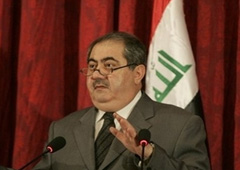
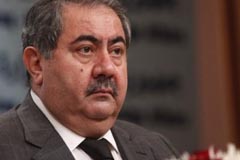
The Iraqi foreign minister
“Camp Ashraf is to be shut down, and members of the [MKO] group have been given until the end of the current year (2011) to leave Iraqi soil,” Hoshyar Zebari said during a joint press conference with his Iranian counterpart Ali Akbar Salehi in Tehran on Tuesday, the Fars news agency reported.

He went on to say that Baghdad has proposed that a trilateral committee be established to discuss the situation of the terrorist organization.

Tehran and Baghdad also plan to hold talks with the Red Cross to discuss the future of the MKO members residing at the camp, he added.

Zebari also said the Iraqi government has suggested on several occasions that arrangements be made to facilitate the repatriation of the MKO members who want to return to Iran.

Elsewhere in his remarks, the visiting Iraqi official underscored that the US military’s presence in Iraq will not be extended unless Baghdad deems it necessary.

He stressed that the Iraqi people do not approve of the US military presence in their country, touching upon a security pact between Baghdad and Washington which requires that the withdrawal of American forces from Iraq by the end of 2011.

“The extension of US troops’ presence in Iraq is not an issue, unless the Iraqi government wants them to stay,” he said.

June 22, 2011 0 comments
FacebookTwitterPinterestWhatsappTelegramSkypeEmail
The MEK Expulsion from Iraq

Iraqis call for MKO expulsion

The Camp Ashraf , home to more than 3,000 members of the Mujahedeen Khalgh Organization (MKO) has been under spotlight once more.

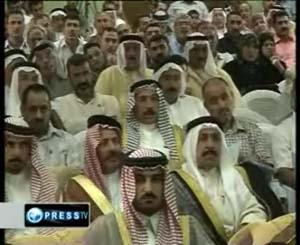
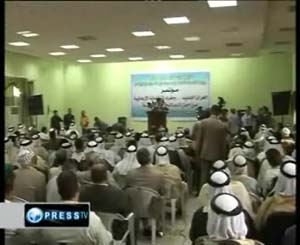
In a conference in Tikrit in northwest of Baghdad, attended by a number of local officials, tribal leaders, the Iraqis called on the government to put pressure on the organization to leave the country as early as possible.

The participants called the presence of the MKO camp on Iraq soil unconstitutional stressing that the crimes against the Iraqi people by the MKO members are unforgettable.

Many here in this conference are of the opinion that Iraq will never see stability as long as MKO members are in the country.

The MKO is listed as a terrorist group by much of the international community.

Founded in the 1960s, the group has masterminded many terrorist operations in Iran and Iraq .

The group is especially notorious in Iran for having sided with former Iraqi dictator Saddam Hussein during the 1980-1988 Iran-Iraq war.

The MKO has been in Iraq’s Diyala province since the 1980s.

Erlier this year the MKO members attacked the Iraqi security forces who were attempted to enter the camp to open a new police station.

Tens of Iraqi security elements were injured in these clashes.

Wisam al-Bayati, Press TV, Tikrit

Download Iraqis call for MKO expulsion

June 21, 2011 0 comments
FacebookTwitterPinterestWhatsappTelegramSkypeEmail
Mujahedin Khalq Organization as a terrorist group

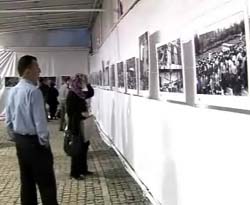
Exhibition to honor victims of MKO terrorists

Iran remembers the victims of terrorism.
Tehran is hosting a photo and poster exhibition to commemorate those killed in terrorist operations launched by the Iraq-based MKO.
The exhibition showcases the photos of a group of 12000 Iranians who have fallen victim to the terrorist nature of this group since the victory of the Islamic Revolution back in 1979.

This exhibition has been set up to show the true nature of the MKO and its supporters. In this exhibition we have also unveiled the links between the MKO and several other terrorist groups like Jondullah.
The Iraq-based MKO is listed as a terrorist group by much of the international community, but the US and a number of its European allies still throw weight behind the group.

Founded in the 1960s, the MKO has masterminded a slew of terrorist operations in Iran and Iraq, killing thousands of people and wounding many more.
The group is especially notorious in Iran because they took sides with former Iraqi dictator Saddam Hussein during the 1980-1988 Iraqi-imposed war on Iran.
Aside from ordinary people, the MKO has assassinated almost 200 revolutionary and important figures of the Islamic Republic of Iran including former Iranian President Mohammad-Ali Rajaei, Prime Minister Mohammad-Javad Bahonar, and Judiciary Chief Mohammad Husseini Beheshti. All were assassinated in 1981.

Saman Kojouri, Press TV, Tehran

Download Exhibition to honor victims of MKO terrorists

June 21, 2011 0 comments
FacebookTwitterPinterestWhatsappTelegramSkypeEmail
Iraq

Iraq – France relations strained over MKO terrorists event in Paris

The Iraqi government summoned the French ambassador to Baghdad to protest at Paris for hosting a conference of the Mojahedin-e Khalq Organization (MKO) where the terrorist group raised unfounded allegations against Baghdad.

Iraqi Gov’t Summons French Envoy over MKO Accusations

"To affect the international community and attract international support, the MKO has claimed that the Iraqi government has killed 35 members of the group and injured 350 others," the Iraqi government said on Monday.

"But, this is a sheer lie and Baghdad has not carried out such an action," the statement added.

The Iraqi people have announced their opposition to the presence of the MKO members in their country and have long staged protest rallies in front of the MKO’s main training camp in the Northern Diyala province to condemn the US-backed presence of the terrorist group in their country.

In a most recent case, a group of Iraqi people gathered outside Camp Ashraf in May, and called for the expulsion of the terrorist group from the country’s soil.

The Baghdad government has assured the Iraqi people that it is determined to expel the MKO from Iraq by the end of 2011.

The family members and relatives of the members of the MKO have also gathered outside the terrorist group’s main training camp in Iraq for more than a year now.

The MKO ringleaders have already adopted numerous measures to confront those relatives who have camped outside the Camp of New Iraq (formerly known as Camp Ashraf) in Iraq’s Northern province of Diyala.

The MKO ringleaders have not allowed a visit between the group’s members and their families.

After MKO ringleaders saw the number of defectors were increasing, they resorted to harsher measures and tried to haunt down fugitives in violation of their agreement with the Baghdad government which bans any activity or trafficking of the group members beyond the camp boundaries.

And after the Baghdad government failed to persuade the terrorist group to respect the agreement terms, it ordered the Iraqi Army to tighten control on the camp to prevent any illegal trafficking or infiltration, but the MKO attacked the Iraqi guards and killed and wounded many of them.

An Iraqi commander who was present on the scene of clashes in early April revealed later that the MKO sparked the armed conflict with the Iraqi security forces responsible for guarding the camp in a move to kill its dissident members during the clashes.

According to a report published by the website of the Habilian association in mid April – a human rights group formed of the family members and relatives of the Iranian victims of terrorism – the Iraqi commander, who was speaking on the condition of anonymity, said that the move by the MKO was not unprecedented since the group had previously forced its dissident members to start armed clashes with the Iraqi forces.

"The MKO’s foremost front was formed of the dissident members of the group during the recent clash. They were forced to be there and be killed," the Iraqi commander reiterated.

But, in an astonishing move which substantiated the West’s double-standard policies on human rights and terrorism, EU foreign policy chief Catherine Ashton called on Iraq to ignore the illegal activities of the MKO, including its armed clashes with the Iraqi soldiers.

The European Union has lately changed approach towards the terrorist MKO in a move to pressurize Iran to stop its progress in the civilian nuclear technology.

Some ranking members of the MKO who have had a role in the assassination of a large number of Iranian citizens and officials are currently living in France.

Before an overture by the EU, the MKO was on the European Union’s list of terrorist organizations subject to an EU-wide assets freeze. Yet, the MKO puppet leader, Maryam Rajavi, who has residency in France, regularly visited Brussels and despite the ban enjoyed full freedom in Europe.

The MKO is behind a slew of assassinations and bombings inside Iran, a number of EU parliamentarians said in a recent letter in which they slammed a British court decision to remove the MKO from the British terror list. The EU officials also added that the group has no public support within Iran because of their role in helping Saddam Hussein in the Iraqi imposed war on Iran (1980-1988).

Many of the MKO members abandoned the terrorist organization while most of those still remaining in the camp are said to be willing to quit but are under pressure and torture not to do so.

June 21, 2011 0 comments
FacebookTwitterPinterestWhatsappTelegramSkypeEmail
Iran

Iran holds an exhibition to honor victims of MKO terrorists

Iran remembers the victims of terrorism.
Tehran is hosting a photo and poster exhibition to commemorate those killed in terrorist operations launched by the Iraq-based MKO.

VIEW THE VIDEO FILE

The exhibition showcases the photos of a group of 12000 Iranians who have fallen victim to the terrorist nature of this group since the victory of the Islamic Revolution back in 1979.

This exhibition has been set up to show the true nature of the MKO and its supporters. In this exhibition we have also unveiled the links between the MKO and several other terrorist groups like Jondullah.

The Iraq-based MKO is listed as a terrorist group by much of the international community, but the US and a number of its European allies still throw weight behind the group.

Founded in the 1960s, the MKO has masterminded a slew of terrorist operations in Iran and Iraq, killing thousands of people and wounding many more.

The group is especially notorious in Iran because they took sides with former Iraqi dictator Saddam Hussein during the 1980-1988 Iraqi-imposed war on Iran.

Aside from ordinary people, the MKO has assassinated almost 200 revolutionary and important figures of the Islamic Republic of Iran including former Iranian President Mohammad-Ali Rajaei, Prime Minister Mohammad-Javad Bahonar, and Judiciary Chief Mohammad Husseini Beheshti. All were assassinated in 1981.

Saman Kojouri, Tehran

June 20, 2011 0 comments
FacebookTwitterPinterestWhatsappTelegramSkypeEmail
The MEK Expulsion from Iraq

MKO crimes against the Iraqi people unforgettable

The Camp Ashraf , home to more than 3,000 members of the Mujahedeen Khalgh Organization (MKO) has been under spotlight once more.

Iraqis call for MKO expulsion
 

In a conference in Tikrit in northwest of Baghdad, attended by a number of local officials, tribal leaders, the Iraqis called on the government to put pressure on the organization to leave the country as early as possible.

 
VIEW THE VIDEO FILE

The participants called the presence of the MKO camp on Iraq soil unconstitutional stressing that the crimes against the Iraqi people by the MKO members are unforgettable.

Many here in this conference are of the opinion that Iraq will never see stability as long as MKO members are in the country.

The MKO is listed as a terrorist group by much of the international community.

Founded in the 1960s, the group has masterminded many terrorist operations in Iran and Iraq .
The group is especially notorious in Iran for having sided with former Iraqi dictator Saddam Hussein during the 1980-1988 Iran-Iraq war.

The MKO has been in Iraq’s Diyala province since the 1980s.

Erlier this year the MKO members attacked the Iraqi security forces who were attempted to enter the camp to open a new police station.

Tens of Iraqi security elements were injured in these clashes.

Wisam al-Bayati, Tikrit

June 20, 2011 0 comments
FacebookTwitterPinterestWhatsappTelegramSkypeEmail
Newer Posts
Older Posts

Recent Posts

  • Expectations of human rights bodies regarding censorship within the MEK

    October 13, 2026
  • The Jamalis’ Plea for Help: Save Our Brother from the MEK!

    October 11, 2026
  • Testimonies of Participants in the MEK’s Staged Propaganda Stunt in Karaj

    October 7, 2026
  • Giuliani’s MEK ties have dogged him for years

    October 6, 2026
  • The Tragic Impact of MEK Isolation on Yazdan Teimorian and His Family

    October 5, 2026
  • Facebook
  • Twitter
  • Instagram
  • Youtube

© 2003 - 2025 NEJAT Society . All Rights Reserved. NejatNGO.org


Back To Top
Nejat Society
  • Home
  • Articles
  • Media
    • Cartoons
    • NewsPics
    • Photo Gallery
    • Videos
  • Publications
    • Books
    • Nejat NewsLetter
    • Pars Brief
  • About Us
  • Contact us
  • Editions
    • عربي
    • فارسی
    • Shqip