Nejat Society
  • Home
  • Articles
  • Media
    • Cartoons
    • NewsPics
    • Photo Gallery
    • Videos
  • Publications
    • Books
    • Nejat NewsLetter
    • Pars Brief
  • About Us
  • Contact us
  • Editions
    • عربي
    • فارسی
    • Shqip
Nejat Society
Nejat Society
  • Home
  • Articles
  • Media
    • Cartoons
    • NewsPics
    • Photo Gallery
    • Videos
  • Publications
    • Books
    • Nejat NewsLetter
    • Pars Brief
  • About Us
  • Contact us
  • Editions
    • عربي
    • فارسی
    • Shqip
© 2003 - 2024 NEJAT Society. nejatngo.org
The MEK Expulsion from Iraq

Iraq to deport Mujahideen Khalq by year end

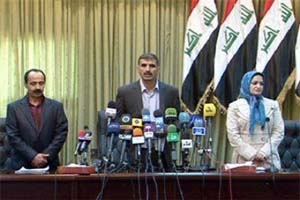
The Iraqi government has decided to deport the Mujahideen Khalq Organization (MKO) by end of this year, government spokesman Ali Dabbagh said Monday.

The government reaffirms a previous commitment to deport MKO members, who are based on the New Iraq Camp, by end of this year, he said in a statement.

The government "underscores importance of getting MKO out of the Iraqi territories by all means, including political and diplomatic, and in cooperation with the UN and international organizations, while taking into consideration wishes of MKO members to select the country they wish to live in, " said Dabbagh.

Dabbagh made the remarks after security forces guarding Ashraf Camp, which houses MKO, were exposed to stones’ attack from inside the camp injuring five of them.

The Iraqi government warned MKO against illegal actions.

Meanwhile, President Jalal Talabani briefed ambassadors of the European Union, Russia and Turkey Iraq’s position vis-a-vis MKO.

April 13, 2011 0 comments
FacebookTwitterPinterestWhatsappTelegramSkypeEmail
Iran

Iran calls for EU to reform its approach towards terrorist MKO

Iran called for the European Union (EU) to reform its approach towards terrorist Mojahedin Khalq Organization (MKO).

"We expect all international organizations and countries, which claim they back human rights, to condemn terrorist acts without resorting to any dual-track political behavior," said Iranian Foreign Ministry Spokesman Ramin Mehmanparast on Tuesday in his weekly briefing session with reporters.

His remarks came after the EU Foreign Policy Chief Catherine Ashton released a statement on Ashraf Camp events in Iraq and in favor of the members of MKO terrorist group.

Mehmanparast called for the EU to avoid providing shelter for terrorists.

Meanwhile, he referred to Iranian diplomats in Ivory Coast and said, "Iranian diplomats and nationals were all evacuated from Ivory Coast and we hope that stability and security returns to the African country soon."

"We will do our utmost to evacuate Lebanese nationals from Ivory Coast to transfer them to a safe place," Iranian Foreign Ministry Spokesman added.

As to launch of Bushehr nuclear power plant, he said, "all measures for launch of Bushehr nuclear facility have been completed, experts are carrying out their activities and their work is going well. We are only waiting for the power plant to generate power and join national grid."
He then assured that there is no problem for operation of the nuclear installation in near future.
Mehmanparast then moved to France’s more limits on Muslim women as well as crack down and arrest of protestors and said, "any measure to prevent hijab means lack of freedom and human rights."

"Women’s right in European countries is one of the instances revealing double-standards on human rights. Women have the right to have hijab. We advise Western countries to consider human rights in its real form and give up instrumental use of human rights."

April 13, 2011 0 comments
FacebookTwitterPinterestWhatsappTelegramSkypeEmail
Iraq

Deadline Set For Iranian Dissidents To Leave Iraq

The Iraqi government has set the deadline for members of Iranian dissident group being housed at Camp Ashraf in Diyala province to leave the country, stressing that they will be removed from the country by the deadline using "all means" available.

"The council of ministers has committed to implement an earlier decision about disbanding the terrorist group People’s Mujahedin of Iran (PMOI), by the end of this year at the latest, and the necessity of getting it out of Iraq," Iraqi government spokesman Ali al-Dabbagh said late Monday. "They need to leave Iraq by the end of the year. Iraq is not the choice for them,"

Indicating that the Iraqi government was "taking into consideration the wish of the PMOI members to choose the country in which they wish to reside," Dabbagh added: "We have to find a nation where they can go, and we will look to the U.N. to help."

Dabbagh also declared that the Iranian dissidents would be expelled from the country "by using all means, including political, diplomatic, and co-operation with the United Nations and international organizations."

The development comes days after violent clashes erupted at Camp Ashraf last Friday after Iraqi security forces raided the camp after its occupants allegedly threw rocks at the security forces during a "riot."

Iraqi government said later that three people were killed in the raid and denied allegations that its troops had opened fire at the occupants of the camp during the raid. But the PMOI alleges that Friday’s military operation at the camp killed at least 34 people and left more than 300 others injured.[..]

The Iraqi government has since announced that it has launched an investigation "to look into the real details of the operation, to know how many people exactly were killed, the reasons for the deaths and the date of the deaths".

Camp Ashraf, located in Diyala province to the north of Baghdad, has served as a refugee base for members of the People’s Mujahedin Organization of Iran (PMOI), an exiled Iranian opposition group, for almost two decades.

The PMOI was founded in 1965 to oppose the Shah of Iran, but the group later turned against Iran’s regime that ousted the Shah in the 1979 Islamic revolution.

Camp Ashraf was opened in the 1980s after then-President Saddam Hussein allowed the PMOI to set up bases in Iraq. Saddam also armed the group’s military wing, the National Liberation Army of Iran, to fight along side Iraq troops in the 1980-88 war against Iran.

The U.S. troops disarmed the PMOI fighters in 2003 and confined the nearly 3100 residents to the camp. The U.S. military placed the camp’s residents under its protection, before Iraqi forces took over its security from the U.S. earlier this year.

RTTNews

April 13, 2011 0 comments
FacebookTwitterPinterestWhatsappTelegramSkypeEmail
Iraq

Iraq to probe Camp Ashraf deaths

Iraq’s defence ministry said on Tuesday it would probe claims that 34 residents of an Iranian dissident camp died during an Iraqi military operation last week and suggested some may have been killed before troops moved in.
raq’s defence ministry said on Tuesday it would probe claims that 34 residents of an Iranian dissident camp
Iraqi authorities have said three people were killed at Camp Ashraf on Friday when security forces responded to rock-throwing and threats by residents during an operation to reclaim land from the camp and return it to farmers.

Ashraf advocates say 34 were killed when Iraqi forces launched a “criminal attack” and shot residents.

The controversial camp northeast of Baghdad, which houses a guerrilla group that opposes the Shi’ite cleric leaders of neighbouring Iran, has been a thorn in the side of Washington, Baghdad and Tehran for years.

Defence Ministry spokesman Mohammed al-Askari said the disparity in the death tolls prompted the government to open an investigation “to look into the real details of the operation, to know how many people exactly were killed, the reasons for the deaths and the date of the deaths”.

“We, at this time, can’t give sufficient answers to these questions,” he told reporters in Baghdad.

Ashraf is the base of the People’s Mujahideen Organisation of Iran (PMOI), which the United States, Iraq and Iran consider a terrorist group.

Sunni dictator Saddam Hussein gave it refuge in Iraq in the 1980s and some of its fighters joined him in the battle against Iran. The group surrendered its weapons to US forces after the 2003 invasion that ousted Saddam.

QUESTIONS
Askari said the government had evidence that some residents had wanted to leave Ashraf but were prevented from doing so by camp leaders, and that some of the alleged victims were shot “in a professional way, in the head, chest and heart”.

“This makes us believe that it was a pre-orchestrated operation,” he said. “Are these killings done by some elements from inside the camp? Are these previous deaths or even deaths that happened after the event?” “All these questions will be answered by the investigation.” In an emailed statement, Mohammed Mohaddessin of the National Council of Resistance of Iran, the PMOI’s political wing, called Askari’s comments “worthless lies … the final episode of a ridiculous scenario by the Iraqi government that initially claimed that in the attack no violence was used.” Iraqi officials have said the three residents who died were run over by military vehicles.

The council said many victims were shot. A source at the hospital where victims were taken said many had bullet wounds.

Askari said soldiers had been ordered not to use live ammunition during the operation at the camp, which is located in restive Diyala province about 65 km (40 miles) northeast of Baghdad in an area largely inaccessible to journalists.

The camp’s fate has been in question since the US military turned it over to Baghdad in 2009 under a bilateral security agreement. An Iraqi government spokesman said on Monday Ashraf residents would be given until year-end to leave the country.

Washington blamed Baghdad for the violence at Ashraf and the United Nations has sought access to monitor the camp.

April 13, 2011 0 comments
FacebookTwitterPinterestWhatsappTelegramSkypeEmail
Iraq

Talabani informs European ambassadors with the Iraqi stance toward Mujahideen Khalq

President jalal Talabani informed the European Union, Russian, and Turkish ambassadors in Iraq with the Iraqi stance toward the Mujahideen Khalq Organization and its presence in Iraq now.
A presidential statement mentioned that political developments, regionally and internationally, were discussed during the meeting.

Also, the preparations for the Baghdad Arab Summit were all affirmed ready to hold the Summit on time.

For their part, the ambassadors expressed happiness for holding such meetings in Iraq which contribute in showing the image of understanding between Iraq and the EU.

Present at the meeting were, Iraqi Foreign Minister, Hoshiar Zibari, Head of the Presidency Office, Nasir Al Ani, and a number of officials.

NINA – National Iraqi News Agency

April 13, 2011 0 comments
FacebookTwitterPinterestWhatsappTelegramSkypeEmail
USA

US moots ‘negotiated’ plan for Iranian camp (Ashraf) in Iraq

WASHINGTON — The United States said Tuesday it is ready to help Iraq find a negotiated plan for an Iranian opposition camp in which the dissidents there could "conceivably" end up in a third country.

Iraq has ordered the exiled Iranian opposition group People’s Mujahedeen of Iran to leave the country by the end of this year after a deadly weekend assault at its Camp Ashraf base.
"We’re prepared to help the government of Iraq develop and execute a negotiated plan — and the emphasis on ‘negotiated’ — that addresses the future of Camp Ashraf," State Department spokesman Mark Toner said.

When asked whether the plan could include having the camp’s members transferred to a third country where they would not be tortured or abused, Toner replied: "Conceivably, yeah."
Toner also said Washington is urging the authorities in Baghdad to allow UN officials to visit Camp Ashraf to determine what happened during the assault and how many people were killed.]

An Iraqi security official said at least three people were killed Friday when Iraqi forces clashed with the Iranian opposition group, but the dissidents claimed 31 of their members died in a full military assault.

During a visit to American troops in northern Iraq, US Defense Secretary Robert Gates expressed concern at the reports of casualties. He urged Iraqi authorities to show restraint.

The People’s Mujahedeen of Iran set up Camp Ashraf in the 1980s — when the regime of late Iraqi dictator Saddam Hussein was at war with the Islamic republic — as a base to operate against Tehran.

It was disarmed following the US-led invasion of Iraq in 2003.

April 13, 2011 0 comments
FacebookTwitterPinterestWhatsappTelegramSkypeEmail
Iran

MP Sees Iraq’s Resistance against MKO as Another US Failure in Region

A senior Iranian legislator hailed the Iraqi Army for its tough reaction to the armed assault and terrorist activities of the Mojahedin-e Khalq Organization (MKO), and said Baghdad’s attitude towards the MKO should be viewed as yet another failure of the US policies in the region.
"The Iraqi government’s confrontation against the Monafeqin (i.e. Hypocrites, as MKO members are called in Iran) was another failure for the US policies in the region," Ali Borouqani told FNA on Monday.

He reminded the United States’ dissatisfaction with the Iraqi government’s stance and policy on the MKO, and said, "No surprise the US voiced opposition to the attacks because the White House supports any terrorist group which runs activities against Iran."

Noting the terrorist nature of the MKO, Borouqani pointed to the group’s black record and long-time hostilities towards the Iranian nation, and reminded that the members of the terrorist group have assassinated a large number of Iranian elites and officials as well as the ordinary citizens.

The MKO has been in Iraq’s Diyala province since the 1980s.

Iraqi security forces took control of the training base of the MKO at Camp Ashraf – about 60km (37 miles) north of Baghdad – in 2009 and detained dozens of the members of the terrorist group.
The Iraqi authority also changed the name of the military center from Camp Ashraf to the Camp of New Iraq.

The terrorist group alleged that the Iraqi army entered its premises in the Camp of New Iraq on April 2, but the Iraqi army strongly denied the claim.

The Iraqi army denied the MKO’s accusation, underlining that no invasion or military advancement has occurred.

"It’s a replacement of forces, not a new deployment," Brigadier Tarek Azzawi, chief of military operations in Diyala province, North of Baghdad, told AFP.

"The Fifth Division in Diyala has replaced the Ninth Division that protects Ashraf, and we have not advanced even one meter (yard)," he said. "There were no clashes," he added.

The Iraqi government and parliament have repeatedly vowed to expel the group from the country in the near future. A senior Iraqi MP stressed on Sunday that the Iraqi people, legislators and government are all resolved to expel the MKO from their country’s soil immediately.

"The Iraqi people and parliament seek expulsion of MKO from their country’s soil and they want to end its presence in Iraq, which has lasted for several years," Hossein Ali told FNA yesterday.
Reminding the crimes committed by the MKO members against the Iraqi people, specially Iraq’s Kurd population, in collaboration with the former Baath regime in previous years, Ali reiterated that the Iraqi government is determined to expel the terrorist group as well.

The MKO, whose main stronghold is in Iraq, is blacklisted by much of the international community, including the United States.

The MKO is behind a slew of assassinations and bombings inside Iran, a number of EU parliamentarians said in a recent letter in which they slammed a British court decision to remove the MKO from the British terror list. The EU officials also added that the group has no public support within Iran because of their role in helping Saddam Hussein in the Iraqi imposed war on Iran (1980-1988).

The group started assassination of the citizens and officials after the revolution in a bid to take control of the newly established Islamic Republic. It killed several of Iran’s new leaders in the early years after the revolution, including the then President, Mohammad Ali Rajayee, Prime Minister, Mohammad Javad Bahonar and the Judiciary Chief, Mohammad Hossein Beheshti who were killed in bomb attacks by MKO members in 1981.

The group fled to Iraq in 1986, where it was protected by Saddam Hussein and where it helped the Iraqi dictator suppress Shiite and Kurd uprisings in the country.

The terrorist group joined Saddam’s army during the Iraqi imposed war on Iran (1980-1988) and helped Saddam and killed thousands of Iranian civilians and soldiers during the US-backed Iraqi imposed war on Iran.

Since the 2003 US invasion of Iraq, the group, which now adheres to a pro-free-market philosophy, has been strongly backed by neo-conservatives in the United States, who also argue for the MKO to be taken off the US terror list.

April 12, 2011 0 comments
FacebookTwitterPinterestWhatsappTelegramSkypeEmail
Iraq

Iraq: MKO should leave by end of 2011

Iraq says members of the terrorist group Mujahedin-e Khalq Organization (MKO) holed up in the country must leave by the end of the current year.
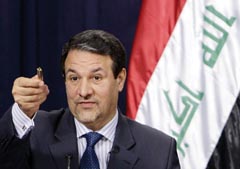
Iraqi government spokesman Ali al-Dabbagh
Iraqi government spokesman Ali al-Dabbagh said on Monday that the cabinet is determined to shut down Camp Ashraf located north of the capital, Baghdad, and disband the terrorist group, AFP reported.

"The council of ministers has committed to implement an earlier decision about disbanding the terrorist group by the end of this year at the latest, and the necessity of getting it out of Iraq," said the official.

Dabbagh further underlined that the ministers had decided that the MKO members would be forced to leave Iraq "through all means, including political, diplomatic, and cooperation with the United Nations and international organizations."

According to AFP, 10 people were reportedly killed in clashes between Iraqi security forces and MKO terrorists at Camp Ashraf last Friday.

The MKO has carried out numerous acts of terror and violence against Iranian civilians and government officials.

The group fled to Iraq in 1986, where it enjoyed the support of Iraq’s executed dictator Saddam Hussein, and set up Camp Ashraf in Diyala province, near the Iranian border.

The organization is also known to have cooperated with Saddam in suppressing the 1991 uprisings in southern Iraq and the massacre of Iraqi Kurds.

Iran has repeatedly called on the Iraqi government to expel the group, but the US has been blocking the expulsion by pressuring the Iraqi government.

April 12, 2011 0 comments
FacebookTwitterPinterestWhatsappTelegramSkypeEmail
Iraqi Authorities' stance on the MEK

Iraqi Commander: MKO Attack on Iraqi Forces Aimed at Killing Dissidents

The terrorist Mojahedin-e Khalq Organization sparked the armed conflict with the Iraqi security forces responsible for guarding the camp in a move to kill its dissident members during the clashes, said an Iraqi commander who was present on the scene of clashes last week.

According to a report published by the website of the Habilian association – a human rights group formed of the family members and relatives of the Iranian victims of terrorism – the Iraqi commander, who was speaking on the condition of anonymity, said that the move by the MKO was not unprecedented since the group had previously forced its dissident members to start armed clashes with the Iraqi forces.

"The MKO’s foremost front was formed of the dissident members of the group during the recent clash. They were forced to be there and be killed," the Iraqi commander reiterated.

Iran on Saturday praised the Iraqi Army for taking prompt action and standing against the terrorist group.

"The presence of any terrorist organization on Iraqi soil, to use it as a launch pad and to conduct operations against Iraq’s neighbors, is not accepted by Iraq’s own constitution," Foreign Minister Ali Akbar Salehi told reporters on Saturday.

"Iraqis must not allow activities of such groups and not shelter such terrorist groups. We appreciate the move by the Iraqi government," Salehi said.

Also earlier today, the Iranian Supreme Leader’s Advisor for Military Affairs, Major General Yahya Rahim Safavi, praised the Iraqi Army for its recent attack on the strongholds of the anti-Iran terrorist Mojahedin-e Khalq Organization (MKO), and asked Baghdad to continue attacking the terrorist base until its destruction.

Speaking to FNA here on Monday, Safavi praised Iraqi Prime Minister Nouri Al-Maliki for having ordered the attack on the criminal Monafeqin (i.e. Hypocrites, as MKO members are called in Iran) "and we hope that such measures will continue until the Monafeqin are fully purged from the country".

He reminded the 1991 massacre of the Iraqi people by the Baath regime in collaboration with the MKO, and expressed the hope that the Iraqi government would continue its attacks against the terrorist group and expel all its members from the country.

Pointing to the crimes committed by the terrorist group against the Iranian nation, Safavi reminded that the MKO has martyred 12,000 Iranian people since the 1979 Islamic Revolution in Iran.

On Sunday, a senior Iraqi MP said that the Iraqi people, legislators and government are all resolved to expel the MKO from their country’s soil immediately.

"The Iraqi people and parliament seek expulsion of MKO from their country’s soil and they want to end its presence in Iraq, which has lasted for several years," Hossein Ali told FNA yesterday.
The MKO has been in Iraq’s Diyala province since the 1980s.

Iraqi security forces took control of the training base of the MKO at Camp Ashraf – about 60km (37 miles) north of Baghdad – in 2009 and detained dozens of the members of the terrorist group.
The Iraqi authority also changed the name of the military center from Camp Ashraf to the Camp of New Iraq.

The MKO, whose main stronghold is in Iraq, is blacklisted by much of the international community, including the United States.

Before an overture by the EU, the MKO was on the European Union’s list of terrorist organizations subject to an EU-wide assets freeze. Yet, the MKO puppet leader, Maryam Rajavi, who has residency in France, regularly visited Brussels and despite the ban enjoyed full freedom in Europe.

The MKO is behind a slew of assassinations and bombings inside Iran, a number of EU parliamentarians said in a recent letter in which they slammed a British court decision to remove the MKO from the British terror list. The EU officials also added that the group has no public support within Iran because of their role in helping Saddam Hussein in the Iraqi imposed war on Iran (1980-1988).

The group started assassination of the citizens and officials after the revolution in a bid to take control of the newly established Islamic Republic. It killed several of Iran’s new leaders in the early years after the revolution, including the then President, Mohammad Ali Rajayee, Prime Minister, Mohammad Javad Bahonar and the Judiciary Chief, Mohammad Hossein Beheshti who were killed in bomb attacks by MKO members in 1981.

The group fled to Iraq in 1986, where it was protected by Saddam Hussein and where it helped the Iraqi dictator suppress Shiite and Kurd uprisings in the country.

The terrorist group joined Saddam’s army during the Iraqi imposed war on Iran (1980-1988) and helped Saddam and killed thousands of Iranian civilians and soldiers during the US-backed Iraqi imposed war on Iran.

Since the 2003 US invasion of Iraq, the group, which now adheres to a pro-free-market philosophy, has been strongly backed by neo-conservatives in the United States, who also argue for the MKO to be taken off the US terror list.

April 12, 2011 0 comments
FacebookTwitterPinterestWhatsappTelegramSkypeEmail
The MEK Expulsion from Iraq

Diyala calls on Government to expel Washington backed MKO terrorists

The administrators of Diyala province called on Sunday for the Federal Government to remove the MKO of Iran from the country in line with the Iraqi constitution, and confirmed that it will offer to invest in Camp Ashraf, where they are now, in the event of their exit. One economist described the camp as a "Pearl of the Desert", which he estimated would become the most beautiful tourist area in the country, if invested in correctly.

The first deputy governor of Diyala province, Furat al-Tamimi, in an interview for Alsumaria News, said the role of the Mojahedin-e Khalq "was and remains negative in the security landscape through its support for acts of violence and abuse of Iraqis over three consecutive decades”, adding that a clause in the Iraqi constitution, which was voted for by the millions, "indicates that to clearly ensure the state does not allow the presence of any terrorist organization inside Iraqi territory, it is necessary for federal government to expel the Iranian MKO known as terrorists at the regional and global level."

Tamimi said that Camp Ashraf, which is the headquarters of the Iranian Mojahedin-e Khalq Organization, (55 km north of Baquba), "has the great advantage of being a strategic location, it is important because it is located on the road between Baghdad and the governorates of the Kurdistan region of Iraq, not to mention the fertility of the land in that area".

He continued by saying that the administration of the province "would move with a view to investing in the land occupied by the camp the moment the MEK leave it as it represents an opportunity to support a successful local economy."

For his part, Zayed Humairi, the economic expert in Baquba, described Camp Ashraf as "the pearl of the desert, due to the beauty of nature there", adding that the camp "contains airports, major roads and integrated services such as water, electricity and other basic pillars required for any tourism project."

Humairi added that the strategic location of the camp "will reward major international tourist investment companies which work with it". His region expected it to become "a destination for millions of Iraqis in the event of directing this project after the departure of the MEK".

The Mujahedeen-e Khalq (MEK) was founded in 1965 to overthrow the Shah of Iran. After the Islamic revolution in 1979 it opposed the Islamic regime, and many of its members sought refuge in Iraq in the eighties during the war between Iran and Iraq from 1980 to 1988. The organization is considered as the armed wing of the National Council of Resistance in Iran, based in France, but announced it renounced violence in June 2001.

The MEK increased the area of Camp Ashraf to about 50 square kilometres which is now home to more than 3400 Iranian opponents of the government of their country.
The Government of Iraq changed the name of the camp to Camp New Iraq after it assumed responsibility for its security from American troops. The residents were subjected to strict security measures.

The relationship between the Iraqi government and residents of the camp were marred as tensions and clashes continued. The most recent occurring last Friday, 8th April, between the forces of the Iraqi army and the population of the camp in which one MEK member was killed and 12 injured. In addition, 13 members of the Iraqi army were wounded including five officers and one lieutenant-colonel, and provoked both local and global reactions.
Alsumaria News, Diyala

April 12, 2011 0 comments
FacebookTwitterPinterestWhatsappTelegramSkypeEmail
Newer Posts
Older Posts

Recent Posts

  • A Child behind the Ideological Bars of Massoud and Maryam Rajavi

    August 8, 2026
  • A Comparative Analysis of Psychological Control Mechanisms in Jeffrey Epstein’s Cult and the MEK

    August 3, 2026
  • Operation Mersad: How Iran foiled Saddam’s final gambit 37 years ago

    August 1, 2026
  • Ideology Cannot Prevail over Human Dignity

    July 29, 2026
  • Is Rudy Giuliani so naïve to support MEK terrorists?

    July 27, 2026
  • Facebook
  • Twitter
  • Instagram
  • Youtube

© 2003 - 2025 NEJAT Society . All Rights Reserved. NejatNGO.org


Back To Top
Nejat Society
  • Home
  • Articles
  • Media
    • Cartoons
    • NewsPics
    • Photo Gallery
    • Videos
  • Publications
    • Books
    • Nejat NewsLetter
    • Pars Brief
  • About Us
  • Contact us
  • Editions
    • عربي
    • فارسی
    • Shqip