Nejat Society
  • Home
  • Articles
  • Media
    • Cartoons
    • NewsPics
    • Photo Gallery
    • Videos
  • Publications
    • Books
    • Nejat NewsLetter
    • Pars Brief
  • About Us
  • Contact us
  • Editions
    • عربي
    • فارسی
    • Shqip
Nejat Society
Nejat Society
  • Home
  • Articles
  • Media
    • Cartoons
    • NewsPics
    • Photo Gallery
    • Videos
  • Publications
    • Books
    • Nejat NewsLetter
    • Pars Brief
  • About Us
  • Contact us
  • Editions
    • عربي
    • فارسی
    • Shqip
© 2003 - 2024 NEJAT Society. nejatngo.org
Mujahedin Khalq; A proxy force

US/EU use terrorism, misuse human rights;Supporting MKO

Iran: Overt EU support for Iraqi based Mojahedin Khalq terrorists once again proved our point that "US, EU use terrorism, misuse human rights"

Western Tendency for Terrorism Proved by EU Support for MKO
The European parliament’s statement in support of the anti-Iran terrorist Mojahedin-e Khalq Organization (MKO) corroborated Iran’s disclosures of the West-sponsored terrorism in the region, Iran’s High Council of Human Rights said in a statement on Sunday.

In his last week disclosures of the western countries’ key role in post-election frenzies in Tehran and their support for terrorist attacks on the Islamic Republic, Secretary-General of Iran’s High Council of Human Rights Mohammad Javad Larijani stated that the US and its major European allies have proved as the main supporters of armed opposition against the Islamic Republic, including the MKO and the notorious Jundollah terrorist group, the statement reminded.

Larijani in his remarks had said that the EU and the US are misusing the human rights to attain their goals in Iran and the region, mentioning that while western statesmen object to the human rights conditions in Iran, their parliamentarians in Britain, France and Germany have regular meetings with the most devilish and notorious terrorists in the region, who have killed hundreds and thousands of innocent people in their numerous terrorist operations, specially against Iran.
"How can the EU leaders label themselves as human rights supporters while they do not spare any effort to extend arms, financial and political backup and support to the most notorious anti-Iranian terrorists," Larijani had asked, according to the statement.

The statement further reminded that a few days after Larijani’s last week remarks, the European Parliament issued a declaration on Thursday, urging the removal of the MKO and Jundollah from Washington’s list of Foreign Terrorist Organizations. The European Union took the MKO off its blacklist in 2009.

Also efforts in the House of Representatives to press the Obama Administration to remove the group from the United States list of Foreign Terrorist Organizations have accelerated in the past week.

However, the anti-Iran terrorist group, the Mojahedin-e Khalq Organization (MKO), remained in the US list of terrorist groups and organizations despite intense efforts by Zionist lobbies and a number of the Congressmen to delist the group.

The US State Department announced in its recent annual report on terrorism that no change has been made in the MKO’s status.
The MKO insists that the US should delist it as a terrorist organization, a demand which has been rejected so far by Washington.

An appeals court in the US had earlier ruled that the State Department should review the terror status of the MKO.

The MKO had filed a petition against the US blacklisting in 2008.

The Bush administration, however, rejected the request in its final days in 2009, after examining the material submitted by the group and the US intelligence community, including classified information.
In July 2010, a three-judge panel of the US Court of Appeals in Washington said in a 22-page decision that the US government failed to give the group a fair chance to rebut unclassified information that claimed the group supported terrorist activities.

The government was obligated under a 1996 antiterrorism law and 2004 revisions to give the group the chance to rebut unclassified information, the appeals court said, adding that the group was "permitted access to the unclassified portion of the record only after the decision was final."

In a statement, the State Department said it would study the decision, but added that the US government continues to view the group as a terrorist organization.
The MKO, whose main stronghold is in Iraq, is blacklisted by much of the international community.

Before an overture by the EU, the MKO was on the European Union’s list of terrorist organizations subject to an EU-wide assets freeze. Yet, the MKO puppet leader, Maryam Rajavi, who has residency in France, regularly visited Brussels and despite the ban enjoyed full freedom in Europe.

The MKO is behind a slew of assassinations and bombings inside Iran, a number of EU parliamentarians said in a recent letter in which they slammed a British court decision to remove the MKO from the British terror list. The EU officials also added that the group has no public support within Iran because of their role in helping Saddam Hussein in the Iraqi imposed war on Iran (1980-1988).

Many of the MKO members abandoned the terrorist organization while most of those still remaining in the camp are said to be willing to quit but are under pressure and torture not to do so.

A May 2005 Human Rights Watch report accused the MKO of running prison camps in Iraq and committing human rights violations.

According to the Human Rights Watch report, the outlawed group puts defectors under torture and jail terms.

The group, founded in the 1960s, blended elements of Islamism and Stalinism and participated in the overthrow of the US-backed Shah of Iran in 1979. Ahead of the revolution, the MKO conducted attacks and assassinations against both Iranian and Western targets.
Leaders of the group have been fighting to shed its terrorist tag after a series of bloody anti-Western attacks in the 1970s, and nearly 30 years of violent struggle against the Islamic Republic of Iran.

In recent months, high-ranking MKO members have been lobbying governments around the world in the hope of acknowledgement as a legitimate opposition group.

The UK initiative, however, prompted the European Union to establish relations with the exiled organization now based in Paris. The European Court of First Instance threw its weight behind the MKO in December and annulled its previous decision to freeze its funds.

The group started assassination of the citizens and officials after the revolution in a bid to take control of the newly established Islamic Republic. It killed several of Iran’s new leaders in the early years after the revolution, including the then President, Mohammad Ali Rajayee, Prime Minister, Mohammad Javad Bahonar and the Judiciary Chief, Mohammad Hossein Beheshti who were killed in bomb attacks by MKO members in 1981.

The group fled to Iraq in 1986, where it was protected by Saddam Hussein and where it helped the Iraqi dictator suppress Shiite and Kurd uprisings in the country.
The terrorist group joined Saddam’s army during the Iraqi imposed war on Iran (1980-1988) and helped Saddam and killed thousands of Iranian civilians and soldiers during the US-backed Iraqi imposed war on Iran.

Since the 2003 US invasion of Iraq, the group, which now adheres to a pro-free-market philosophy, has been strongly backed by neo-conservatives in the United States, who also argue for the MKO to be taken off the US terror list.

The MKO has been in Iraq’s Diyala province since the 1980s.

The European Parliament’s recent statement also called on the US to delist another notorious armed opposition group, the anti-Iran Jundollah, from its list of Foreign Terrorist Organizations.
The Jundollah group has claimed responsibility for numerous terrorist attacks in Iran. The group has carried out mass murder, armed robbery, kidnapping, acts of sabotage and bombings. They have targeted civilians and government officials as well as all ranks of Iran’s military.

In one of the worst cases, the group killed 22 citizens and abducted 7 more in Tasouki region on a road linking the Southeastern city of Zahedan to another provincial town.
In 2007, Jundollah kidnapped 30 people in the Southeastern Sistan and Balouchestan province. They were freed during a Pakistani police operation after abductors took them to the country.

Jundollah claimed responsibility the same year for an attack on an Islamic Revolution Guards Corps (IRGC) bus in which 11 IRGC personnel were killed.

In its latest crime in October, the Pakistan-based terrorist Jundollah group, closely affiliated with the notorious al-Qaeda organization, claimed responsibility for a deadly attack in the Sistan and Balouchestan province which killed 42 people among them a group of senior military commanders, including Lieutenant Commander of the Islamic Revolution Guards Corps (IRGC) Ground Force Brigadier General Nourali Shoushtari.

November 29, 2010 0 comments
FacebookTwitterPinterestWhatsappTelegramSkypeEmail
Mujahedin Khalq Organization as a terrorist group

MKO attempted hijacking aimed to overshadow Hariri visit failed

Thwart attempted hijack of Iranian aircraft -diplomat

Iranian security personnel have thwarted today an attempt for hijacking an aircraft that was heading from Tehran to Damascus and was carried out by one of the elements of Mujahideen Khalq Organization (MKO), a diplomatic Iranian source said here Saturday. The same source said in a statement to Syrian news station (SNS) that the perpetrator of such attack was an Iranian citizen belonging to the Iranian opposition MKO, noting that the attacker was mentally unstable and was currently under investigations. Syrian security authorities in Damascus International Airport were handed over the Iranian citizen — who was equipped with a knife — from the security personnel on the Iranian aircraft following its safe landing without the falling of any incident. Syrian authorities started to cross-examine the suspect to know his motives after he claimed that he planted a bomb in the aircraft and that he intends to hijack it.

However, the guards on the aircraft managed to detain the man after it became clear that is lying and following their accurate search of the aircraft. The Iranian source refused to say whether the purported attacker was returned back or he is still on Syrian territories, asserting that the aircraft — which is operated by the Iranian Airways (Iran Air) — was searched by concerned bodies, then return to Tehran without detecting any explosives on it.MKO is engaged in a conflict with the Iranian government since the former was established in 1965 when it targeted first to topple Shah’s regime, then aimed its sight at the Islamic government which took the helm later, though the outfit was ousted from Iran at the beginning of 1980s, but the defunct regime of Saddam Hussein allowed it to stay in Iraq, provided support for it, and so its elements established a base in Ashraf camp near to Iraqi-Iranian borders.

Kuwait News Agency (Kuna), 27 November 2010

IRGC Official: Attempted Hijack of Iranian Flight Carried out to Overshadow Hariri’s Visit

Fars News, November 28,2010
 A senior official of the Islamic Revolution Guards Corps (IRGC) said that enemies’ failed attempt to hijack the Friday night flight from Tehran to Damascus was aimed at overshadowing the landmark visit to Iran by Lebanese Prime Minister Saad Hariri.
Pointing to President Ahmadinejad’s visit to Lebanon last month and Hariri’s reciprocal visit to Tehran, head of the IRGC public relations office General Ramazan Sharif said, "The US and Zionist regime of Israel’s officials were seeking to initiate a media campaign (against Iran and Lebanon) through the MKO (anti-Iran terrorist Mojahedin-e Khalq Organization) in a bid to overshadow the two visits."
"Since this is a blatant act of terrorism, few people may accept the risk to carry out such an action unless it yields huge interest," the official noted.
The act by MKO members came at a time when the European Union has asked the US to take the MKO off its terror list.
On Saturday, the IRGC announced that the individual who tried to hijack an Iranian plane en route to Damascus on Friday night was an affiliate of anti-revolutionary groups.
Earlier, FNA reported that Iranian security forces had foiled an attempted hijack of a plane bound for the Syrian capital, Damascus.
The plane en route from Tehran to Damascus landed safely at the Syrian capital’s airport after the man threatening to hijack the airliner was arrested by the security personnel on board.
Meanwhile, the European Parliament issued a declaration on Thursday, urging the removal of the MKO from Washington’s list of Foreign Terrorist Organizations. The European Union took the MKO off its black list in 2009.
Also efforts in the House of Representatives to press the Obama Administration to remove the group from the United States list of Foreign Terrorist Organizations have accelerated in the past week.
The group started assassination of Iranian citizens and officials after the Islamic Revolution in a bid to take control of the newly established Islamic Republic. It killed several of Iran’s new leaders in the early years after the revolution, including the then President, Mohammad Ali Rajayee, Prime Minister, Mohammad Javad Bahonar and the Judiciary Chief, Mohammad Hossein Beheshti who were killed in bomb attacks by MKO members in 1981.
The group fled to Iraq in 1986, where it was protected by Saddam Hussein and where it helped the Iraqi dictator suppress Shiite and Kurd uprisings in the country.
The terrorist group joined Saddam’s army during the Iraqi imposed war on Iran (1980-1988) and helped Saddam and killed thousands of Iranian civilians and soldiers during the US-backed Iraqi imposed war on Iran.
Many of the MKO members have abandoned the terrorist organization while most of those still remaining in the camp are said to be willing to quit but are under pressure and torture not to do so.
A May 2005 Human Rights Watch report accused the MKO of running prison camps in Iraq and committing human rights violations.
According to the Human Rights Watch report, the outlawed group puts defectors under torture and jail terms.
Numerous articles and letters posted on the Internet by family members of MKO recruits confirm reports of the horrific abuse that the group inflicts on its own members and the alluring recruitment methods it uses.
The most shocking of such stories includes accounts given by former British MKO member Ann Singleton and Mustafa Mohammadi — the father of an Iranian-Canadian girl who was drawn into the group during an MKO recruitment campaign in Canada.
Mohammadi recounts his desperate efforts to contact his daughter, who disappeared several years ago – a result of what the MKO called a ‘two-month tour’ of Camp Ashraf for teenagers.
He also explains how the group forces the families of its recruits to take part in pro-MKO demonstrations in the western countries by threatening to kill their loved ones.
Lacking a foothold in Iran, the terrorist group recruits ill-informed teens from Iranian immigrant communities in western states and blocks their departure afterwards.

November 29, 2010 0 comments
FacebookTwitterPinterestWhatsappTelegramSkypeEmail
Mujahedin Khalq; A proxy force

EU only providing excuse for US and Zionists support for MKO terrorists

A top commander of Iran’s Islamic Revolution Guards Corps says the European Union is only providing an excuse for the US to remove the "Rajavi Cult" from its terror list.

Brigadier General Yadollah Javani made the remarks on Saturday after the European Parliament issued a declaration on Thursday urging the removal of the Mujahedeen Khalq Organization (MKO) from Washington’s list of Foreign Terrorist Organizations.

The European Union removed the MKO from its similar list of terrorist organizations in 2009.
Brigadier General Javani said that despite placing the MKO on its list of terrorist organizations Washington has not refrained from providing all out-support for the group over the past 30 years.
"The group has conducted a terror campaign from the safe haven provided by the West, the US and the Zionists," he was quoted by Mehr News Agency as saying.

"In order to escape from the glaring inconsistency between the words and actions of the US, Washington needs an excuse and justification such as the request made by the European Union," he added.

The "Rajavi cult", as the MKO came to be known, was founded in Iran in the 1960s, but its top leadership and members fled the country some twenty years later, after carrying out numerous acts of terror inside the country.

In the 1970s the group targeted American citizens in Iran, killing William C. Cottrell, Colonel Lewis L. Hawkins, Donald G. Smith, and Colonel Jack Turner in the country.
They also masterminded the 1981 bombing of the offices of the Islamic Republic Party, in which more than 72 senior Iranian officials were killed, including the then Judiciary chief Ayatollah Mohammad Beheshti.

After fleeing to neighboring Iraq, the terror cell provided security services to Saddam Hussein, fighting on his behalf during the eight-year Iraqi-imposed war on Iran.

In 1991, Maryam Rajavi as then leader of the group’s military forces directly ordered the massacre of Kurdish Iraqis in the north and the Shia population in the south.

November 28, 2010 0 comments
FacebookTwitterPinterestWhatsappTelegramSkypeEmail
Iran

Iranian MPs criticize EU’s call for US to remove MKO from terrorist list

A number of Iranian MPs have criticized the European Union’s request that the United States remove the Mojahedin Khalq Organization from its list of terrorist groups.

On Thursday, the European Parliament issued a declaration urging Washington to remove the MKO from its list of foreign terrorist organizations.

The European Union took the MKO off its black list in 2009.

The MKO is a terrorist group
Talking to reporters on Saturday, MP Kazem Jalali said, “The MKO is a terrorist organization and the Europeans themselves acknowledge this.”

“The MKO itself has admitted that it has killed 4800 people, including ordinary people as well as officials of the Islamic Republic. This organization has planted bombs in several areas. If this group is not a terrorist one, what else can it be labeled as?”

“The West is facing a paradox about the issue of terrorism and the reason is that certain Western countries define everything according to their national interests,” stated Jalali, who is also the rapporteur of the Majlis National Security and Foreign Policy Committee.

West using MKO as a tool
Majlis Foreign Policy Committee Chairman Heshmatollah Falahatpisheh told the Mehr News Agency on Saturday that Europe and the U.S. are using the MKO as a tool.

But such measures will improve Iran’s ability to negotiate in the international arena since they illustrate the double standards the United States and Europe apply toward terrorism, he added.

West is main source of terrorism
MP Karim Quddusi told MNA that the EU’s move shows that the West is the main source of terrorism.

MP Hamid-Reza Taraqqi of the Islamic Coalition Party called on the Iranian government to make serious efforts to convince the Iraqi government to extradite the MKO members before the group is delisted, MNA reported on Saturday.

The MKO, listed as a terrorist organization by much of the international community, began a campaign of assassinations and bombings in Iran shortly after the victory of the Islamic Revolution in 1979.

The group moved to Iraq in the early 1980s and fought Iran from there until the United States invaded the country in March 2003

November 28, 2010 0 comments
FacebookTwitterPinterestWhatsappTelegramSkypeEmail
Iran

EU support for MKO terrorists backfires across the world

Following the EU call for the US to remove the MKO from its terror list, an Iranian lawmaker says the West is taking political advantage of the terrorist group.

The European Parliament issued a declaration on Thursday, urging Washington to remove the Mujahedin-e Khalq Organization from its list of Foreign Terrorist Organizations.

The European Union took the MKO off its blacklist in 2009.

"The people of the world have been once again faced with Europe’s double standards on terrorism and have realized the reality of the West’s approach towards terrorism," member of the Majlis National Security and Foreign Policy Commission Heshmatollah Falahatpisheh said on Saturday.

The MKO has no place among the Iranian people, who will never forget the terrorist group’s cooperation with former Iraqi dictator Saddam Hussein, the Iranian lawmaker added.

"The US and the European Union seek to use the tools that increase pressure on the Islamic Republic… but they do not know that such pressure has a reverse effect and the country’s establishment will become more united," Mehr News Agency quoted Falahatpisheh as saying.

Falahatpisheh said such actions increased Iran’s bargaining capability in the international arena, adding that removing the MKO from the list of global terrorist organizations reveals the double standards adopted by the US and EU to the world.

The MKO terrorist group, which has been on the US terror list since 1997, filed a petition against the blacklisting in 2008.

The administration of former US president George W. Bush rejected the request in its final days in 2009, after examining material submitted by the group and US intelligence agencies, including classified information.

In July, a US federal appeals court ordered the US State Department to reconsider its decision.
The State Department said it would study the decision but added that the US government continues to view the group as a terrorist organization.

The MKO is listed as a terrorist organization by much of the international community and is responsible for numerous acts of terror and violence against Iranian civilians and government officials.

The organization is also known to have cooperated with Iraq’s former dictator Saddam Hussein in suppressing the 1991 uprisings in southern Iraq and the massacre of Iraqi Kurds.

November 28, 2010 0 comments
FacebookTwitterPinterestWhatsappTelegramSkypeEmail
Mujahedin Khalq; A proxy force

Pressure on Administration to Take MKO terror Group off Terrorist List

Washington, DC – Efforts in the House of Representatives to press the Obama Administration to remove the Mujahadeen-e-Khalq (MEK) from the United States list of Foreign Terrorist Organizations have accelerated in the past week.

The State Department describes the MEK as a “cult-like” terrorist organization that “uses propaganda and terrorism to achieve its objectives.” Human Rights Watch has reported that MEK leadership has engaged in human rights violations against its membership at Camp Ashraf in Iraq.

But last Tuesday, six Members of Congress signed a letter to Secretary of State Hillary Clinton urging that the State Department remove the Marxist Islamist group from the US list of Foreign Terrorist Organizations.

The letter highlights a House resolution, H.Res. 1431, calling for the group’s removal from the terrorist list, introduced by California Democratic Representative Bob Filner, one of the MEK’s staunchest supporters in Congress. The MEK, which is known by numerous aliases, including MKO, the People’s Mojahadeen of Iran (PMOI) and the National Council of Resistance in Iran (NCRI), has an active presence on Capitol Hill, and the Filner resolution has garnered over 100 cosponsors.

“Removing the MEK from the FTO [Foreign Terrorist Organizations] list is not only the right thing to do, but it also sends the right message to Tehran,” reads the letter, which was signed by Representatives Filner, Dana Rohrabacher (R-CA), Ted Poe (R-TX), Judy Chu (D-CA), Edolphus Towns (D-NY), and Mike Coffman (R-CO).

According to the State Department, the MEK has “staged terrorist attacks inside Iran and killed several US military personnel and civilians,” and until 2003 received Oil-for-Food program subsidies from Saddam Hussein to plan and execute future terrorist attacks. The MEK’s “leadership and members across the world maintain the capacity and will to commit terrorist acts in Europe, the Middle East, the United State, Canada, and beyond,” reads the State Department terrorist designation of the group. Additionally, the State Department says the MEK has “cult-like characteristics”:

"Upon entry into the group, new members are indoctrinated in MEK ideology and revisionist Iranian history. Members are also required to undertake a vow of "eternal divorce" and participate in weekly "ideological cleansings." Additionally, children are reportedly separated from parents at a young age. MEK leader Maryam Rajavi has established a "cult of personality." She claims to emulate the Prophet Muhammad and is viewed by members as the "Iranian President in exile."

The MEK asserts that it no longer engages in terror tactics. But a 2007 Rand report (pdf) describes the MEK as “skilled manipulators of public opinion.” The report, commissioned on behalf of the US Department of Defense, says, “During the more than four decades since its founding, the MEK has become increasingly adept at crafting and promoting its image as a democratic organization that seeks to bring down Iranian tyrants, both secular and religious.”

The group’s supporters in Congress call the MEK the “main opposition in Iran,” although top Green Movement leaders have denounced the group. […]Iranians widely oppose the MEK because of the terrorist attacks carried out by the group in Iran, as well as its allegiance with Saddam Hussein, who utilized the group to carry out attacks during the Iran-Iraq war and to suppress the Kurdish population in Iraq.[…]

Representative Brad Sherman, Democrat from California, said last week that his Subcommittee on Terrorism “should take that bill seriously,” and blamed the State Department for not providing necessary briefings on the matter. Sherman, who has previously stated that sanctions should punish the Iranian people, said that he has a briefing request from intelligence officials pending on the MEK designation. Sherman has argued that the US should not designate groups like MEK as terrorists because they are “not enemies of the United States but are enemies of the enemies of the United States.”

That formulation was repeated last week at the House Foreign Affairs Committee by Rep. Rohrabacher, who told Administration officials that the MEK, “are currently allied with us in the war against radical Islam, especially against the regime in Iran,” and “should not be taken for granted.” The hearing, on the topic of the US transition to a civilian role in Iraq, provided a platform for Congressional MEK supporters, including the Committee’s incoming chairwoman, Rep. Ileana Ros Lehtinen, to press Administration officials about Camp Ashraf in Iraq.

MEK supporters in Congress have frequently cited the human rights conditions at Camp Ashraf, which is now under jurisdiction of an Iraqi government that is viewed as hostile towards the group, as a justification for removing the group’s terrorist designation. However, Human Rights Watch filed a report on behalf of the UN Refugee Agency asserting that MEK leadership committed human rights abuses against its own members. The 2005 report (No Exit: Human Rights Abuses Inside the Mojahedin Khalq Camp) notes that abuses “ranged from prolonged incommunicado and solitary confinement to beatings, verbal and psychological abuse, coerced confessions, threats of execution, and torture that in two cases led to death.” 

November 27, 2010 0 comments
FacebookTwitterPinterestWhatsappTelegramSkypeEmail
Mujahedin Khalq; A proxy force

EU asks US to use MKO terror group overtly But Future Iraq strong

The European Parliament has urged the United States to remove the terrorist group Mujahedin-e Khalq Organization (MKO) from its terror list.

The European Parliament issued a declaration on Thursday urging the removal of the MKO from Washington’s list of Foreign Terrorist Organizations, the Wall Street Journal reported.

The European Union removed the MKO from its similar list of terrorist organizations in 2009.
The MKO, which has been on the US terror list since 1997, filed a petition against the blacklisting in 2008.

The administration of former US president George W. Bush rejected the request in its final days in 2009, after examining material submitted by the group and US intelligence agencies, including classified information.

In July, a US federal appeals court ordered the US State Department to reconsider its decision.
The State Department said it would study the decision, but added that the US government continues to view the group as a terrorist organization.

The Iraq-based group is listed as a terrorist organization by much of the international community and is responsible for numerous acts of terror and violence against Iranian civilians and government officials.

The MKO is also known to have cooperated with former Iraqi dictator Saddam Hussein in suppressing the 1991 uprisings in southern Iraq and the massacre of Iraqi Kurds.

—————-
Future Iraqi government ‘strong’

Iraqi Prime Minister Nouri al-MalikiIraqi Prime Minister Nouri al-Maliki will be able to form a strong government with the participation of all political blocs, says an expert on Middle East affairs.

During a ceremony at Baghdad’s presidential palace on Thursday, Iraqi President Jalal Talabani officially named Maliki as the country’s prime minister, giving him thirty days to form his new cabinet and present it to parliament for approval.
"The political will of the [Iraqi] National Alliance, who are heavily backed by the Kurds — I do believe — is going to prevail, and a government will be formed within those thirty days," London-based expert on Middle East Zayd al-Isa told Press TV on Thursday.

"There are still obstacles. There are still noises here and there, particularly from the leader of the Iraqiya List [Iyad Allawi] who basically did not attend the ceremony in which the formal request by Jalal Talabani has been made to Maliki," Isa added. After the March 7 parliamentary elections that failed to hand a clear-cut victory to either Maliki’s State of Law coalition or former premier Allawi’s al-Iraqiya, the Iraqi political rivals have been struggling to decide about who will lead the country.

In November, the political blocs reached an agreement that reinstated Maliki as premier, but gave the right to choose the parliament speaker to the Iraqiya Alliance.
"The Iraqiya List won’t be successful because it is already witnessing huge divisions and huge fragmentations, and it has already accepted the position of the parliament speaker which [was] given to al-Nujaifi … So, I do believe that Maliki’s efforts will actually work out, and a strong government will be formed," al-Isa concluded.

November 27, 2010 0 comments
FacebookTwitterPinterestWhatsappTelegramSkypeEmail
MEK Camp Ashraf

MKO Ringleaders Cut Medical Supplies to Dissidents in Iraqi Camp Ashraf

Leaders of the anti-Iran terrorist Mojahedin-e Khalq Organization (MKO) have resorted to various types of torture and pressure, including a cut of medical supplies to ailing members, to suppress growing dissidence in their main training camp in Northern Iraq.

A report by the Habilian Association, an Iran-based humaMKO Ringleaders Cut Medical Supplies to Dissidents in Iraqi Camp Ashrafn rights group said that under the direct order of MKO’s Ringleader Maryam Rajavi, leaders of the terrorist group in the Camp of New Iraq (formerly known as Camp Ashraf) have made any kind medical, health and other services to the members dependant on the level of their cooperation.

Based on the order, dissident members are deprived of medicine and other medical services or, at least, face much hardship and difficulty in procuring their necessary medicines.

The right group added that the new measure came after protest remarkably increased inside the group, especially in the camp. Right groups are gravely concerned that a large number of MKO members may lose their lives soon if UN, human rights and Iraqi officials do not force the group leaders to end their tortures and pressures against the dissident members.

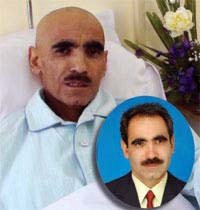
In relevant development, a report revealed on Saturday that Ahmad Razzani, a veteran member of the MKO, had been killed inside the Camp.

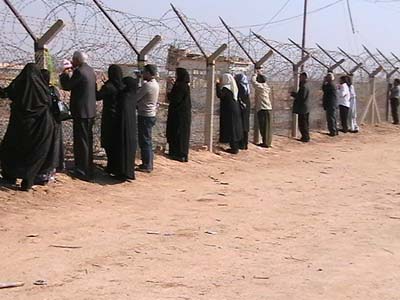
The report said that the move by the MKO ringleaders came after they failed to brainwash their inferiors to convince them to distant themselves from their family members who have been residing and waiting outside the camp for the last 10 months demanding freedom of their relatives.

The right group said after the brainwash policy and efforts of the MKO leaders failed, discontent and protest has both widened and deepened among MKO members.

Earlier reports coming out the camp had said that a large number of MKO’s deprecating members started riots and angry protests to end their forced presence in Camp Ashraf.
According to an August report by the Habilian Association, the MKO leaders have increased their pressures and control over the members of the terrorist group to prevent possible defection and escape by unsatisfied members.

Reports also said that all exit and entry doors have been locked and none of the members, even those suffering from acute diseases and illnesses, are allowed to leave the camp.

MKO ringleaders have ordered the camp guards to stage snap inspections of the group’s members and their personal belongings under the pretext of finding the lost weapons.

Such behaviors have sparked discontent among a number of MKO members and made them escape the camp and return to their anguished families.

According to international human rights bodies, the MKO has a completely black record in human rights. Many of the MKO members have abandoned the terrorist organization while most of those still remaining in the camp are said to be willing to quit but are under pressure and torture not to do so.
A May 2005 Human Rights Watch report accused the MKO of running prison camps in Iraq and committing human rights violations.

According to the Human Rights Watch report, the outlawed group puts defectors under torture and jail terms.

The MKO is behind a slew of assassinations and bombings inside Iran, a number of EU parliamentarians said in a letter last year in which they slammed a British court decision to remove the MKO from the British terror list. The EU officials also added that the group has no public support within Iran because of their role in helping Saddam Hussein in the Iraqi imposed war on Iran (1980-1988).

The group, founded in the 1960s, blended elements of Islamism and Stalinism and participated in the overthrow of the US-backed Shah of Iran in 1979. Ahead of the revolution, the MKO conducted attacks and assassinations against both Iranian and Western targets.

The group started assassination of the citizens and officials after the revolution in a bid to take control of the newly established Islamic Republic. It killed several of Iran’s new leaders in the early years after the revolution, including the then President, Mohammad Ali Rajayee, Prime Minister, Mohammad Javad Bahonar and the Judiciary Chief, Mohammad Hossein Beheshti who was killed in bomb attacks by MKO members in 1981.

The group fled to Iraq in 1986, where it was protected by Saddam Hussein and where it helped the Iraqi dictator suppress Shiite and Kurd uprisings in the country.

The MKO has been in Iraq’s Diyala province since the 1980s.

Iraqi security forces took control of the training base of the MKO at Camp Ashraf – about 60km (37 miles) north of Baghdad – last year and detained dozens of the members of the terrorist group.
The Iraqi authority also changed the name of the military center from Camp Ashraf to the Camp of New Iraq.

November 24, 2010 0 comments
FacebookTwitterPinterestWhatsappTelegramSkypeEmail
The MEK; Baath Party Accomplice

MKO’s Response to Tariq Aziz’s Death Sentence out of Character

The former Iraqi foreign minister, Tariq Aziz, who was also a close ally and personal advisor of Saddam Hussein, has recently been sentenced to death. A CNN report of the news states that he was “one of the best-known faces of the Iraqi government for more than two decades.” [1] But this well-known face was not known for his good deeds. The Iraqi tribunal had decided on a MKO’s Response to Tariq Aziz’s Death Sentence out of Characterdeath sentence because of his crimes which include his role in eradicating rival political-religious parties while holding power during the Ba’athist regime. Aziz had been on trial in a long-running case in which he was accused of being part of a campaign of persecuting, killing and torturing members of the Shiite opposition and other banned parties. [2]

For the Shiite population especially, Aziz’s death sentence means a step toward justice, and the majority of Iranians would agree. But for the Mujahedin-e Khalq Organization (MKO), a bizarre Iranian opposition group led by self-appointed husband and wife, Massoud and Maryam Rajavi, news of Aziz’s sentence prompted a statement of condemnation. Tariq Aziz was both their friend and ally. Before Saddam Hussein bankrolled the MKO, Iranians remember clearly in 1983 when Massoud Rajavi signed a treasonous pact with Aziz—a pact which enabled the MKO to become heavily armed and shortly thereafter violently turn against their own countrymen. A detailed report on the People’s Mujahedin Organization of Iran (PMOI/MKO) published by the US Department of State in 1994 points out how Massoud Rajavi’s alliance with Saddam Hussein’s Ba’athist Regime was formed while Iran was being invaded by Iraq during the 1980’s:

*In Paris; the non-Mojahedin members of the NCR encountered the autocratic style of Rajavi. In particular, Rajavi’s unilateral decision to tie the Council to Iraq alienated the others, who viewed the alliance as a traitor’s deed. The Council’s most important participant, former president Bani Sadr [sic], formally split in 1984, castigating Rajavi as "a pawning [sic] the settlement of the Iran-Iraq conflict." (Bani Sadr [sic] asserts that the first formal pact between the Mojahedin and Iraq was negotiated during a January 1983 meeting between Rajavi and Iraqi foreign minister Tariq Aziz in Fragce [sic]. Mojahedin publications also confirm this meeting.)* [3]

Rajavi’s seditious meeting with Tariq Aziz was the starting point of a long-lasting alliance with the former Iraqi dictatorship. The State Department report concludes that "government-controlled Iraqi media accounts of recent Saddam-Rajavi contacts provide further insight into the MKO’s current relationship with Baghdad. Meeting [sic] between the two are announced to buttress Saddam’s isolated position or to send a message to the government of Iran. For example: On July 31, 1994, Rajavi sent Saddam a ‘message of congratulations.’ On January 26, 1994, Rajavi met with Saddam and Tariq Aziz, Iraq’s deputy prime minister."[4]

The State Department’s conclusion regarding the association is confirmed by another source, the former Iranian president, Dr. Abulhassan Banisadr. Banisadr refers to Massoud Rajavi as a "power addict" in his interview with Pen Club’s representative, Muhammad Hussein Sobhani. During the interview, which took place in Farsi, Banisadr recalls the time Rajavi was planning to meet with Tariq Aziz:

*I told him [Rajavi] now that you accepted to visit him [Aziz], you should treat him the way our Iranian Emperor Shahpour the First treated the Roman Valerian. Our Emperor humiliated the invader to our country. He [Aziz] should’ve understood that he has invaded a country which has national pride.
I advised him [Rajavi]: You shouldn’t let the visit last more than half an hour.*

*He said, Ok, I will but instead of behaving like what he was supposed to, the meeting lasted five hours so that the following day Le Monde newspaper wrote that Mr. Tariq Aziz bought Mr. Rajavi or something like that […]. **After that visit, Rajavi’s behavior changed and changed. **[5]*

*Aziz, the MKO, and France*

Tariq Aziz has been under a microscope for a number of years by justice seeking-Iranians, and accordingly the official report of his death sentence comes as a small victory. Many French citizens would agree. Aziz’s relationship with the MKO—whose European headquarters is located in Paris—has always been a political thorn for the French where the MKO is heavily scrutinized because of their cult mindset and their violent terrorist activities. Geoff Hutchison interviewed Amir Taheri, a French–Iranian affairs analyst, in June 2003 following the arrest of Maryam Rajavi and 160 other MKO members, who were located at the MKO compound in Ouver Sur d’Oise, Paris. After the arrest by French police, Taheri suggested two reasons for France’s decision on taking MKO terrorists into custody.

Taheri said that interior minister at the time, Nicolas Sarkozy, "is trying to appear very tough, especially against illegal immigrants and the Mujahedin have been running a racket of political asylum and so-on for many years. The second reason is that the presence of the Mujahedin in France was negotiated by Tariq Aziz, number two of Saddam Hussein in 1981, and now with the fall of the Iraqi regime there is no reason for the presence of the Mujahedin on French soil."[6]

The accounts of MKO activities are agreeably and accurately documented by the governments of France, the United States, and Iran. All have the same opinion that the noteworthy initial visit with the MKO’s Masoud Rajavi and Tariq Aziz signifies a precise turning point in the history of MKO endeavors. That meeting was the start of a long-term strategy in which Rajavi lassoed power and led the group into a bizarre existence as he became an autocratic ideological leader with a cult of personality. For Banisadr, who was one of the main founders of the National Council of Resistance, the meeting was fundamentally immoral. Banisadr points out in his interview that three basic principles, “independence, freedom and non-existence of hegemony” [7] were needed in order to generate positive results in the cause. Massoud Rajavi’s treasonous pact was a contradictory element for Banisadr and others because it violated the most important principles of the NCR. In taking part in this act of treason Rajavi dedicated the NCR’s capacity to act, and his warped vision led the MKO to become a mercenary force for Saddam Hussein. As Rajavi proceeded he rejected the integrity of the NCR, but more importantly, in doing so, he rejected the people of Iran. Rajavi cultivated and broadened hegemony over all the members of the NCR. Many groups did not agree with him and they were excluded. Eventually the NCR consisted only of MKO supporters. Other opposition groups simply left the organization, feeling tainted by the MKO.

Although it has been three decades since the MKO hijacked the National Council of Resistance, it still exists, and still the MKO assumes total control. The MKO is very tight-lipped about synonymy with the NCR and they would rather not disclose that the two are essentially under the same management. This is an important and little known reality for the masses in the West. What is surprising is that the Rajavis decided that the NCR needed to publicly lament the news of the Tariq Aziz’s death sentence. Their website states “the Iranian resistance strongly condemns the death sentence against Tariq Aziz." [8] The statement is a puzzling response from a group who, since the Iraq war started, has been trying to sanitize their image in the West. It’s highly conceivable that the statement is a part of a new strategy to justify the fact that they turned against Iran. Perhaps they are just taking advantage of the fact that the West is still largely unaware of the murderous atrocities the MKO committed against not only their own Iranian countrymen, but against Americans.

Mostly likely the MKO is seeking publicity and they want to make a statement in order to prepare for hitchhiking on the much-anticipated execution of Tariq Aziz. Whatever the case, the MKO knows the world will be watching. The power hungry MKO-controlled NCR has a plan up its sleeve, and it is not in the best interest of the people of Iran; it is for themselves. That much is for sure.

References:
[1] CNN Wire Staff. "Iraqi court sentences Tariq Aziz to death." *CNN* 26
Oct 2010: Web. 17 Nov 2010. <
http://articles.cnn.com/2010-10-26/world/
iraq.aziz.sentence_1_iraqi-high-tribunal-death
-sentence-malcolm-smart?_s=PM:WORLD>.
[2] AP. *CTV News* 26 Oct 2010: Web. 17 Nov 2010. <
http://www.ctv.ca/CTVNews/World/20101026/
tariq-aziz-death-sentence-101026/>.
[3] Note: In 1981, the Mojahedin leadership fled to France and with other
Iranian opposition movements formed the National Council of Resistance
(NCR).
Katzman, Kenneth. US State Department Report, Library of Congress.
Congressional Research Service. The People’s Mojahedin Organization of Iran.
Washington, Nov 1992. Doc. call no.: M-U 42953-1 no.92-824F as posted on the
Iran-interlink.org website:
http://www.iran-interlink.org/files/child%20pages/USstatedept.htm
See also: Office of the United Nations High Commissioner for Refugees
website: http://www.unhcr.org/refworld/pdfid/4ac9c2c52.pdf.
See also: CORI (Country of Origin Research and Information) website:
http://www.unhcr.org/refworld/pdfid/4ac9c2c52.pdf
[4] Ibid
[5] Iranian Pen Club. "The outset of Rajavi’s longtime treason." *NEJAT
Society* 06 Nov 2010: Web. 17 Nov 2010. <
https://www.nejatngo.org/en/posts/3339>.
See also original interview in Farsi: Banisadr, Abulhassan interviewed by
Mohammad Hossein Sobhani
http://www.iran-interlink.org/fa/index.php?mod=view&id=8888
[6] “France targets Mujahedin e-Khalq." (transcript) *Current Affairs*.
Geoff Hutchinson Amir Taheri in Brussels. Australian Broadcasting Company:
702 ABC, Sydney, AM – Wednesday, 18 June, 2003 08:11:05 Radio. 17 Nov 2010.
<http://www.abc.net.au/am/content/2003/s882312.htm
[7] Iranian Pen Club. "The outset of Rajavi’s longtime treason." *NEJAT
Society* 06 Nov 2010: Web. 17 Nov 2010. <
https://www.nejatngo.org/en/posts/3339>.
See also original interview in Farsi: Banisadr, Abulhassan interviewed by
Mohammad Hossein Sobhani
http://www.iran-interlink.org/fa/index.php?mod=view&id=8888
[8] NCR Website

By Mazda Parsi

November 23, 2010 0 comments
FacebookTwitterPinterestWhatsappTelegramSkypeEmail
MEK Camp Ashraf

Mujahedin terrorist group Kills Dissident Member

MKO terrorist group Kills Dissident Member to Suppress Protests Inside Ashraf

Leaders of the anti-Iran terrorist Mojahedin-e Khalq Organization (MKO) killed a dissident member of the group in a bid to suppress growing discontent among MKO members in its main training camp in Northern Iraq.

According to a report by the Habilian Association, an Iran-based human rights group, Ahmad Razzani, a veteran member of the MKO, was killed inside the Camp of New Iraq (formerly known as Camp Ashraf), about 60 km North of Baghdad.

The report said that the move by the MKO ringleaders came after they failed to brainwash their inferiors to convince them to distant themselves from their family members who have been waiting outside the camp for the last 10 months demanding freedom of their relatives.

The right group said after the brainwash policy and efforts of the MKO leaders failed, discontent and protest has both widened and deepened among MKO members.

The report further refuted the claim raised by the MKO leaders that Razzani had hanged himself in the camp’s kitchen in an act of suicide, and stressed that Razzani’s murder on Thursday was the result of this growing discontent and protests among members of the terrorist group.

The report also pointed out that the Iraqi physician and coroner of the camp has refused to confirm the victim’s death as an act of suicide and that Razzani’s body has been sent to Baghdad for post-mortem studies and forensic tests.

Earlier reports coming out from the main training camp of MKO in Northern Iraq had said that a large number of MKO’s deprecating members started riots and angry protests to end their forced presence in Camp Ashraf.

According to an August report by the Habilian Association, the MKO leaders have increased their pressures and control over the members of the terrorist group to prevent possible defection and escape by unsatisfied members.

Reports also said that all exit and entry doors have been locked and none of the members, even those suffering from acute diseases and illnesses, are allowed to leave the camp.

MKO ringleaders have ordered the camp guards to stage snap inspections of the group’s members and their personal belongings under the pretext of finding the lost weapons.

Such behaviors have sparked discontent among a number of MKO members and made them escape the camp and return to their anguished families.

The MKO is behind a slew of assassinations and bombings inside Iran, a number of EU parliamentarians said in a letter last year in which they slammed a British court decision to remove the MKO from the British terror list. The EU officials also added that the group has no public support within Iran because of their role in helping Saddam Hussein in the Iraqi imposed war on Iran (1980-1988).

The group, founded in the 1960s, blended elements of Islamism and Stalinism and participated in the overthrow of the US-backed Shah of Iran in 1979. Ahead of the revolution, the MKO conducted attacks and assassinations against both Iranian and Western targets.

The group started assassination of the citizens and officials after the revolution in a bid to take control of the newly established Islamic Republic. It killed several of Iran’s new leaders in the early years after the revolution, including the then President, Mohammad Ali Rajayee, Prime Minister, Mohammad Javad Bahonar and the Judiciary Chief, Mohammad Hossein Beheshti who were killed in bomb attacks by MKO members in 1981.


The group fled to Iraq in 1986, where it was protected by Saddam Hussein and where it helped the Iraqi dictator suppress Shiite and Kurd uprisings in the country.

The MKO has been in Iraq’s Diyala province since the 1980s.

Iraqi security forces took control of the training base of the MKO at Camp Ashraf – about 60km (37 miles) north of Baghdad – last year and detained dozens of the members of the terrorist group.

The Iraqi authority also changed the name of the military center from Camp Ashraf to the Camp of New Iraq.

Many of the MKO members have abandoned the terrorist organization while most of those still remaining in the camp are said to be willing to quit but are under pressure and torture not to do so.

A May 2005 Human Rights Watch report accused the MKO of running prison camps in Iraq and committing human rights violations.

November 22, 2010 0 comments
FacebookTwitterPinterestWhatsappTelegramSkypeEmail
Newer Posts
Older Posts

Recent Posts

  • A Child behind the Ideological Bars of Massoud and Maryam Rajavi

    August 8, 2026
  • A Comparative Analysis of Psychological Control Mechanisms in Jeffrey Epstein’s Cult and the MEK

    August 3, 2026
  • Operation Mersad: How Iran foiled Saddam’s final gambit 37 years ago

    August 1, 2026
  • Ideology Cannot Prevail over Human Dignity

    July 29, 2026
  • Is Rudy Giuliani so naïve to support MEK terrorists?

    July 27, 2026
  • Facebook
  • Twitter
  • Instagram
  • Youtube

© 2003 - 2025 NEJAT Society . All Rights Reserved. NejatNGO.org


Back To Top
Nejat Society
  • Home
  • Articles
  • Media
    • Cartoons
    • NewsPics
    • Photo Gallery
    • Videos
  • Publications
    • Books
    • Nejat NewsLetter
    • Pars Brief
  • About Us
  • Contact us
  • Editions
    • عربي
    • فارسی
    • Shqip