Nejat Society
  • Home
  • Articles
  • Media
    • Cartoons
    • NewsPics
    • Photo Gallery
    • Videos
  • Publications
    • Books
    • Nejat NewsLetter
    • Pars Brief
  • About Us
  • Contact us
  • Editions
    • عربي
    • فارسی
    • Shqip
Nejat Society
Nejat Society
  • Home
  • Articles
  • Media
    • Cartoons
    • NewsPics
    • Photo Gallery
    • Videos
  • Publications
    • Books
    • Nejat NewsLetter
    • Pars Brief
  • About Us
  • Contact us
  • Editions
    • عربي
    • فارسی
    • Shqip
© 2003 - 2024 NEJAT Society. nejatngo.org
Mujahedin Khalq Organization's Propaganda System

Whose rights is MKO concerned about?

According to reports from Tehran’s Public Prosecutor Office, five terrorist convicts have been executed over their involvement in bomb attacks and links to terrorist groups known as PJAK and PKK. The convicts were hanged in Tehran’s Evin prison early Sunday. Three of them were arrested in 2006, and convicted for their involvement in a failed bomb plot in the capital Tehran, one for planting a bomb near a military base in Tehran and the last for complicity in a deadly bombing in the city of Shiraz in 2008.

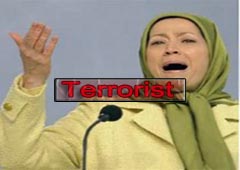
Among all similar anti-Iranian terrorist groups, at least MKO should have been the last to have any reason to protest execution of these terrorist as it is claiming to have denounced terrorism. But it has taken the lead and in a statement Maryam Rajavi condemned the executions and expressed her sympathy with the families of the executed. Although the organization succeeded to bamboozle the EU into believing that it has denunciated terrorism to be removed from the list of terror, its maintenance on the US FTO and its open protest against the terrorist convicts explains its eagerness for the glorification of terror acts committed by parallel organizations now that it cannot openly get entangled in terrorist activities.

While Maryam Rajavi is seriously concerned about the violation of the rights of the executed terrorists, the question raised in the minds of the advocates of human rights is that why she prefers to be blind to the evident violations of human rights in Camp Ashraf and deterring the families of the members, who are camping outside Camp Ashraf, to meet their children and relatives. It seems that, as Maryam Rajavi demands, it falls within the responsibility of the international humanitarian organizations and bodies to protest execution of terrorists rather than to come to the aid of the members of a terrorist cult held enslaved against their own will.

May 12, 2010 0 comments
FacebookTwitterPinterestWhatsappTelegramSkypeEmail
Human Rights Abuse in the MEK

Letter to the Honorable Director of the ICRC

Honorable Director of The International Committee of the Red Cross(ICRC) based in Iraq

Ancient Iran , Glorious Future consists of former members and political critics who had been captivated for many years by the cultic thoughts and ideology existing in this organization (PMOI).Finally, we could retrieve our freedom after the downfall of Saddam Hussein , Dictator of Iraq, and enjoy living free. Ancient Iran , Glorious Future consists of former members and political critics who had been captivated for many years by the cultic thoughts

As you are well informed , it is almost three months that some of the victim’s families have gathered behind the closed gates of new Iraq garrison(former Ashraf), despite of Iraq bad weather and the lack of accommodation and facilities , requesting to meet their loved ones who have been in cult’s captivity for many years , the cult’s operatives and officials have rejected their request and instead they have slandered and accused those elderly families of being Iranian intelligence service agents !!!! Meeting loved ones and relatives is a` common and routine right in every prison throughout the world , but in this prison is totally forbidden and even is counted as a deadly sin.

As we mentioned above , we had been captivated in this cult for many years and it is very understandable and tangible for each one of us the way this cult behaves specially vis a vis victims’ families . We are not strangers because we separated from Rajavi’s cult so we are completely aware and familiar with their cultic rules and behaviors, and we know why they do not want their victims to meet their families.

We are talking about a cult which any correspondence ,letters ,exchanging photo ,phone calls ,meeting loved ones,……………. And etc had been forbidden and even they were counted as deadly sin inside their cultic relations .Thinking about life , love, wife , kids and,….. etc have been forbidden in this cult and the person who entered to these subjects was utterly suppressed in collective gatherings and meetings.

We are talking about a cult which watching television and listening to the radio and having access to internet or satellite and even having a simple cell phone has been completely forbidden, for that reason those stranded and stuck victims are forcibly kept separated from the free world and instead they are continually under heavy cultic indoctrination and brain washing methods by the cultic thoughts and ideology , and they are asked to worship the cult’s leaders in stead of having any sentiment , love, towards their family and even their own private life.

Honorable officials of ICRC , we are urging and entreating you to step forward and intervene to help those families to find a way to meet their loved ones. Meeting loved ones in any prison throughout the world is considered as a right. We believe the cult’s leaders and operatives will retreat because of intervention of ICRC and all humanitarian organizations and the families will be united with their loved ones at last despite of the cultic rules.

All The Best
Ancient Iran, Glorious Future

CC:
Human Rights Watch
Amnesty International
American Embassy In Iraq
UNHCR branch in Iraq
Ancient Iran Association, Paris

May 12, 2010 0 comments
FacebookTwitterPinterestWhatsappTelegramSkypeEmail
Iraqi Authorities' stance on the MEK

Support for Terrorist PMOI damaging EU/Iraq relations

Meeting of 17, March 2010, European Parliament

H.E Ambassador Mohammed Jawad Al-Doreky

Delegation for relations with Iraq

D-IQ_PV(2010)0317_1

MINUTES
of the meeting of 17 March 2010, from 15.00 to 16.00

Brussels
http://www.europarl.europa.eu/meetdocs/2009_2014/documents/d-iq/pv/812/812535/812535en.pdf

The meeting opened at 15.00 on Wednesday, 17 March 2010, with Struan Stevenson (Chair)
in the chair.

(…)

4. Exchange of views on the Iraqi national elections of 7 March 2010, in the presence of: – H.E. Mr Mohammed Jawad AL-DOREKY, Ambassador of Iraq, and – Ms. Patricia LLOMBART CUSSAC, Head of Unit for relations with the Gulf countries, Iran, Iraq and Yemen at the European Commission

HE Ambassador Mohammed Jawad Al-Doreky stressed the importance of these elections, as second cycle after the dictatorship, especially that the government to be formed will be the first one to rule the country after the withdrawal of the foreign military forces. He thanked Members who commended the large participation of Iraqis to vote. He stressed the efforts made for a good organisation of the elections, mentioning that IHEC members were chosen by the parliament and that United Nations Assistance Mission for Iraq (UNAMI) supported them continuously. He stressed that the elections were under the scrutiny of a large number of monitors and observers, national and international. He acknowledged that frauds might exist, but stressed that if there are accusations of fraud they should be brought to the attention of the IHEC (further step, to Court). He underlined that accepting allegations from people nonidentifiable or writing articles on that matter will not help solving the problem but could bring a lot of damage to the Iraqi – EU relation. In context, he stressed that in Iraq the People’s Mujahedin of Iran (PMOI) is considered a terrorist organization. For clarifying the position of the Members of the Delegation, he asked for a statement to be issued in which to be specified that the Delegation is not taking sides and is waiting for the results of the elections and for the report of EU monitors.

Mr Stevenson replied stressing that his aspirations are to support all Iraqis in seeking free, democratic, open society, including the end of insurgency. He underlined that he has not been hijacked by any political party or entity in Iraq, that he is not supporting a particular party; he is not biast in any way and looks forward to work with any new government in Iraq. He stressed also the importance for an emerging democracy to handle the allegations of fraud in elections, and that that could be handled by the IHEC.

Link to the full report (pdf)

May 11, 2010 0 comments
FacebookTwitterPinterestWhatsappTelegramSkypeEmail
Massoud Rajavi

On Mojahedin Khalq cultic and deterrent measures

The repeated airplay of a series of inter-organizational sessions discussing MKO’s July’s violent reaction against the entrance of Iraqi forces that left many casualties from the both sides well illustrates the organization’s bias toward cultic and non-democratic practices. The sessions, held in absence of Rajavi and under the title of ‘in defense of camp Ashraf’, mainly focused on the procedures that resulted in the withdrawal of Iraqi police forces. Emboldened by theThough Rajavi's physical absence may have some negative consequences, even his indirect presence may double the mental and psychological upshots therein consequences, the organization is preparing for and seriously considering further systematically organized defensive measures to defend its bastion against any similar move by the Iraqi government. There are some significant points in this regard to be considered.

1. As mentioned before, the survival of Camp Ashraf is dependent upon these never-ceasing sessions and it is impossible to alter or modify the relation between the organization’s high rankings and rank-and-files as long as the form and structure of Mojahedin organization and discipline remains as such. Likewise, Rajavi refers to Camp Ashraf and his ideological revolution as the main factor in the survival of MKO. He believes that his opponents have failed to understand his internal ideological revolution.

2. The main point is the indirect presence of Rajavi in the sessions. Though his physical absence may have some negative consequences, even his indirect presence may double the mental and psychological upshots therein. Another point is how Rajavi develops his relationship with MKO members. Before, he deemed it necessary to have a direct and close control over the members and to motivate them to put all faith in mechanisms imposed on them. Although living in hideout, the members are persuaded to feel his presence.

3. These sessions are highly significant to the point that Rajavi has repeatedly focused on the necessity of their holding. He considers it as one of the main achievements of the struggles in the contemporary history and also one of the main inter-organizational principles of Marxism.

The significance of the sessions can be reviewed from different aspects yet the main issue is how to nullify the negative and destructive consequences of this inter- organizational mechanism of Rajavi. Iraqi officials have to get a deep understanding of MKO’s systematized programming and procedures to force them desist from relocation of Camp Ashraf. It has been pointed out over and over again that determination of the destiny of Ashraf residents depends on communicating and sympathy with MKO separated members. According to the statements made by MKO former members as well as international reports, findings and studies on cultic relations, the sole solution for meeting the challenge of Mojahedin in Iraq is separating the body (the members) from the head (the leaders) of the organization.

However, the evidences disclose that the direct and hierarchical relationship between the head and body within MKO is as before and it is unlikely to undergo any changed or be altered. Mojahedin cannot be neither relocated nor expelled from Iraqi soil unless a heavy strike splits MKO leadership from the members. The airplay of the sessions may imply that there would be no change in the organizational relations of MKO as long as these sessions are held. As shown in Mojahedin TV, Rajavi is still brainwashing Ashraf residents to celebrate triumph over the adversaries after they have been coerced to resort to violence and self-destruction.

May 11, 2010 0 comments
FacebookTwitterPinterestWhatsappTelegramSkypeEmail
Mujahedin Khalq Organization

Misled Martyrs

Synopsis                         

How Iranian terrorists became America’s best friends

Prologue

A burning sacrifice for the leader

An Iranian woman sets herself alight outside of the French embassy in London. She sacrifices her life for the freedom of her leader, Maryam Rajavi, after her arrest by the French police on terrorism and fraud charges. She is one of at least ten members of Rajavi’s Iranian resistance group, the Mujahedin Khalq, who set themselves on fire in protest at the treatment of their adored leader.

These events made me wonder how people reach the point where they believe that giving up their lives will benefit their leader. How did the political organization of God’s Fighters of the People become a sect? What happened to the members for them to allow this to happen? Since there has not been much independently published on the group, I spoke to former members, visited their meetings and tried to find out how a political organization changes into a cult.

Chapter 1

Those who are not with us are against us
Yasser Ezati was born into the Mujahedin Khalq. He lived through most of the history of the organization. Taken away from his parents during the Gulf War in 1991, he lived with foster parents and in children’s homes. He returned to become part of the Mujahedin Army in Iraq, and was imprisoned by the organization when he refused to conform to their rules – with his father as his jailer.

His father must have been attracted to the Mujahedin Khalq when it was a resistance group of young Iranians against the Shah. The Mujahedin combined a Marxist vision with an Islamic one and had great followers amongst the young. The Shah arrested most of its leaders and executed many of them, except for Massoud Rajavi, who became the main, and eventually its sole leader. When the revolution came in 1979, the organization was well disposed towards Khomeini. But soon there was a struggle between Ayatollah Khomeini and Rajavi. The leadership of the Mujahedin fled to France, establishing the new MKO headquarters in Paris. Members who stayed behind in Iran returned to their original role in a resistance group.

Massoud Rajavi then joined forces with Saddam Hussein – who was fighting Iran in a bloody war – and eventually moved his group to a military camp in Iraq.

Chapter 2

Saddam Hussein’s private army

Yasser Ezati draws a map of the Ashraf Camp, the main camp of the Mujahedin Khalq in Iraq, and recalls daily life there. In the first few years in Iraq Rajavi wanted to train his people for attacks in Iran which were meant to persuade the Iranians to rise up against Ayatollah Khomeini. But from 1986 onwards the policy changed, and the Mujahedin army increasingly became Saddam’s Special Forces. They were of great importance in the Iraqi war against Iran, and were later essential in ending the Kurdish uprising in 1991.
And meanwhile, Rajavi planned his invasion to Iran, to get the support of the people to start a revolution. In 1988, when the war between Iran and Iraq ended, this operation led to the deaths of thousands of its members.

Rajavi had to survive and manage to keep his group together. He demanded total loyalty to the organization from members. Married couples were forced to divorce, brothers and sisters were separated into different camps or units, and later the children were sent away to Europe. Those who resisted were subject to group meetings and intimidation, and were often sent to jail.

Rajavi then took his friend’s wife, Maryam, as his own wife, and made her a member of the leadership. The political organization was changing into a sect.

Chapter 3

The Rajavi Doctrine-divide and conquer
Yasser Ezati could not really draw a complete map of the Ashraf Camp, as no one really had an overall picture of it. In the Mujahedin information was power, an important part of the Rajavi Doctrine. Rajavi placed himself above his members as a religious leader. He convinced them in the course of long, tiring meetings to conform to his wishes, to go through ‘revolutions’, losing more and more of their own identity. Massoud Khodabandeh was his former security man, and after leaving the organization he did extensive research into the methods Rajavi used for his indoctrination of members, his use of their hatred against the regime in Iran to keep them together, and their sentiments about the hardship there to force them to accept their own situation. And even to accept Rajavi’s adaptation of Islam to serve his own needs.

Chapter 4

Torturing for Rajavi
Yasser Ezati knew her well, as he had lived with her family in Canada for a year – Neda Hassani, the young woman who turned herself into a torch outside the French embassy in London. She was sweet, clever, but also very fundamentalist, he says. Neda went to the Mujahedin in Iraq to fight in their army, to fight for the freedom of her people, and in the end, gave her own life for the cause.

Marjan Malek was recruited as an asylum seeker in the Netherlands, and changed from a non-political person into a soldier for Rajavi. She went to Tehran for an attack on an army barracks. Marjan was caught, as was Arash Sameti Pour. Recruited as a teenager in the United States, he was trained in the Ashraf Camp for an attack in Iran. He too was ready to die for the organization, and lost his arm when he tried to kill himself with a grenade after being caught. ‘I almost died, because Rajavi needs martyrs,’ he says, ‘he needs martyrs to prove his case and to attract new members. My life was not important to him.’

Chapter 5

The great theft of the children
Yasser Ezati was ten-years-old when he was taken away from his parents – together with hundreds of other Mujahedin children. Some went to live with members in the West, and some in children’s homes. Yasser went to both: he spent three years with three different families in Canada, and afterwards stayed in three different children’s homes in Germany.

Subsequently he, like many other Mujahedin teenagers, was persuaded to join the Mujahedin army in Iraq.

For many people the theft of their children was the last straw and led them to leave the organization. Sometimes they spent years relocating their children. Like Habib Khorami, who eventually found his son Bahador in Canada. But after they were reunited, the judge accused Habib of kidnapping his own son. Bahador now lives in Iran with his grandparents to keep him safe from the Mujahedin recruiters, but he longs to live with his father. Marjan Malek’s daughters grew up in the Netherlands, with a female member of the organization. One day they were told that their mother had been killed, and now was a martyr. Then Marjan phoned them from Iran, and visited them. She then asked them to come and live with her again. The girls were torn between two mothers, and their conflicting ideologies.

Chapter 6

Europe as a trap and escape route
As a child Yasser Ezati often stood in the shopping center of Cologne with the pictures of victims in Iran, collecting money for the Mujahedin Khalq. Many members in Europe worked like this, until the governments discovered that the funds did not go to aid organizations, but to buy weapons.

The Mujahedin helped Marjan Malek in 1994, after her application for asylum in the Netherlands was refused. The organization found her a new lawyer, and a new life story for the asylum procedure. They took her to live in one of their group accommodations. She felt she had no choice after she was filmed at a mass meeting of the Mujahedin in The Hague. Europe is important for recruitment, but also serves as an escape route. Massoud Khodabandeh came to Paris with Maryam Rajavi, to help put the organization on the political map in Europe. But the indoctrination was less strict, and his eyes were opened: he was not at all working for Iran, but only for the good of Massoud Rajavi. Like Khodabandeh, many people left the organization after being sent to Europe.

Chapter 7

Chocolate or bruises
The Mujahedin jailed Yasser Ezati when he protested against the life in Ashraf Camp, and the treatment from the sexually starved men in his group. His father was his jailer, and would not talk to him because he was angry about his son’s behavior.

For a long time the organization kept the jails a secret from its members, but many people who could not agree with the ‘revolutions’ and the changes were jailed. They could hardly believe their own comrades did this to them. They were beaten into false confessions, and were then treated to chocolates after signed the false documents.

And many who would not back down were given to Saddam Hussein and jailed in prisons like Abu Ghoraib, and were eventually sent to Iran as part of a prisoner-of-war exchange for captured Iraqis.

Chapter 8

From robot back to human being
Yasser Ezati has only just left the Mujahedin Khalq and still has a long way to go. He does not understand it yet, but it will take many years to get the organization out of his system.

‘The hardest thing is to regain your own identity,’ says Massoud Khodabandeh. But former members must also learn how to handle money, how to make even the simplest of decisions, like which shirt to buy. Stepping out of the Mujahedin Khalq is like quitting a heroin habit – it is a complete change of lifestyle. They have lost part of their past, and their comrades are no longer their friends, while new friends are hard to come by when you do not trust people easily.

On the other hand the organization does not leave them in peace, as they are now considered to be enemies. They are called spies by the organization, and sometimes they fall victim to revenge. The most active former members are threatened with violence.
Some turn around completely and now use the emotion they once felt for the Mujahedin against them. Women in Iran, among them Marjan Malek, have formed their own organization, Nejat, that uses more or less the same propaganda methods as the Mujahedin Khalq. They organize bus trips for family members to the last Mujahedin camp in Iraq, to show the members they are still alive and their information is not correct. But for many Nejat is an Iranian government organization, and the members are spies.

Chapter 9

Young and easy to recruit
He does not understand how it happened, but it took only a few hours for Yasser Ezati to be talked into joining the Mujahedin army in Iraq, even though he was one of the most critical of the boys in his home in Cologne. Recruitment for the Mujahedin Khalq is carried out in a clever and aggressive way – much like the radical Muslims recruit their new members. This chapter looks at the methods used in groups like the Al-Qaida network, and compares them with the way the Mujahedin Khalq recruits their members.

Teenagers are easy prey. Like Arash Sameti Pour, who at his American computer course fell in love with an Iranian girl who wanted to join the Mujahedin army in Iraq. He went with her, believing he would be fighting to help his people. Even though he knew the situation in Iran was much different from what the Mujahedin told him, it took just six months to indoctrinate him onto wanting to save the Iranian people.

Chapter 10

The terror of good and evil
The day after September 11, 2001 the Mujahedin Khalq was celebrating, says Yasser Ezati. ‘I have seen the planes fly into those towers a thousand times.’ That day Massoud Rajavi showed his real face. ‘Look what a conservative man from the mountains can do against the United States,’ he said to his army, ‘and we, with all of our equipment cannot do anything against Iran!’ This chapter looks at terrorism; are the Mujahedin Khalq a terrorist group, how do they compare with the groups in the Al-Qaida network, why do people think they need violence and terror to assist their case, how can believers, obsessed with good and evil, become murderers? And also: how can Rajavi, after showing his joy at the attack on the United States, still agree to work with the Americans after they conquered Iraq and the Mujahedin camps? Was he working with them, while he served Saddam? How can the American neo-conservatives believe they can use the blatantly anti-American Mujahedin towards a regime change in Iran?

Final

The enemy of my enemy is my friend
Yasser Ezati remembers how months before the American invasion in Iraq Massoud Rajavi spoke to his people. When the American conquer Iraq, most of the region will be under their command, except for Iran, he said. Ezati understood from this meeting that the Americans would help the Mujahedin to free the Iranian people.

Looking at what happened after the invasion, it seems the Americans went easy on the Mujahedin Khalq. They controlled the entrance to Ashraf Camp, protecting hundreds of members who wanted to leave, but left Rajavi’s command in place. Mujahedin could still travel, and the contact between Europe and the camp was close. American journalists report about CIA-plans for missions inside Iran to find nuclear sites and destroy them-and so it will became clear the Mujahedin were meant to be involved in this.

Rajavi, who has been silent in Ashraf Camp since the invasion, seems to have found a new friend – or to be more precise: an enemy of Iran whom he found to be a useful friend.

By Judith NeurinkDownload Misled Martyrs
Download Misled Martyrs

May 9, 2010 0 comments
FacebookTwitterPinterestWhatsappTelegramSkypeEmail
Mujahedin Khalq Organization

A book on MEK”Misled Martyrs”

A book on Mujahedin-e- khalq; from fighters of resistance movement to "Misled Martyrs".
The writer starts the book by the above mentioned statement where she describes the heart-rending scene of an MEK sympathizer committing self-immolation to protest the arrest of Maryam Rajavi in Paris. The suicide lost her life. The reader now keeps on reading because questions do not leave his curious mind. What motivation; what kind of hatred makes Neda commit such an act of protest? Why doesn’t Mujahedin khalq Organization prohibit such acts? How come that a Canadian educated woman turns into such a "misled martyr"?
There are a few books published on this very topic: Mujahedin Khalq. Ms. Jurith Nourink as an expert on middle East who is correspondent of a famous Dutch newspaper "Trouw", explores MEK’s cult-like attitudes in her book ,"Misled Martyrs".

The author follows the experiences of a defector of MEK named "Yaser Ezzati", describing his bitter life, she goes over the forty-year history of Mujahedin as an armed organization that blends its revolutionary version of Shiites with parts of Marxism ideology such as classless society. Ms. Nourink believes that the organization has gradually turned into a cult since Massoud and Maryam Rajavi got married. The influential leader of the cult, Massoud Rajavi seeks absolute power which, according to British historian Dalberg Acton, is the origin of absolute corruption. Any mean to achieve power, finds a saint nature which justifies MEK’s collaboration with the enemy of Iran’s national interests and territory, Saddam Hussein, and suppression of Kurdish uprising against Saddam during the Gulf War 1991. The quotes made by former members of MEK, confirms the fact that members of the cult obey Massoud Rajavi so blindly and worship him as an idol. Haydiger says:"asking question is the sign of piety of thought" but in MEK, questioning and criticizing are considered as taboos.

Nourink explains that thinking and asking is exclusive concession for a few high ranking members of the organization. Following the ideological revolution in the organization, the members were forced to divorce their spouses and then they were unwillingly separated from their children since Rajavi does not tolerate any obstacle between himself and his devotees. The only central idea and joining point in the group is their animosity towards Iranian regime and their sense of revenge.

The book describes the feeling of those who once thought they were fighting for the benefit of a free cultivated Iran but when they faced the cult-like tendencies of the organization, its close relations with Saddam Hussein and torture and imprisonment in the camps, they felt suppressed and disappointed so they left the group. Nourink portrays the grieves and pains of their suffering sole. These misled individuals thought that criticizing their leader signifies their disloyalty toward "saint ideals" of the organization, although they were quarrelling with their conscience and knew that their part was fake or destructive, they kept silent for years. They paid a high price for those years of being manipulated, isolated, extremist and depressed slaves of Rajavi.

A defector of the cult says:" they injected hatred and rancor in our sole all the time. We were not able to make a decision." Another defector sees himself so misled that calls "Eternal Light" operation as "Eternal Lie". The organization might have been damaged mostly by the side of these very people rather than Islamic Republic.

The author of the book refers to various books on psychological pathology and the origins of the cults. She finds all fundamental elements of a cult in MKO. Rajavi had all the time been studying psychological books in order to spread his absolute rule on the members’ minds, according to one of her sources. If Rajavi did not succeed to master a member’s mind, then he/she would be labeled as the regime’s spy who would consequently go under threat, torture, pressure and imprisonment.

Nourink uses her artistic talent to develop the characters of her book, describing their true emotions so tactfully, although she is not always neutral as a journalist should be.

Sometimes she looks like a human rights activist but sometimes she doesn’t offer a persuasive analysis. For instance, she believes that in 1991 when Saddam was threatened by Kurdish uprisings, MKO guaranteed his survival otherwise he would have fallen on the same year.

Nourink assumes the memoirs and experiences of defectors as historical facts, she is not able to take an impartial position of a journalist. She does not enter the organization to talk with MKO’s central committee and its present loyal members so that her sources would not be restricted to a few defectors.

Nourink might have authored one of the most comprehensive books on MKO, after Irvand Abrahamian’s book " The Iranian Mojahedin ". At the end of the book she wonders why American neo-cons who are aware of MKO’s hostility towards America and know that MKO assassinated several American military forces and citizens at Shah’s era and had a supportive part in hostage taking of American embassy in Tehran and also it is labeled as a Foreign Terrorist Organization by DOS, do not try to remove the group from Iraqi territory. Why do they still view MKO as an option to pressure or to overthrow the Iranian regime? Can really such a terrorist cultist organization be the messenger of democracy or the defendant of human rights in Iran?

By: Payam Rahaee , Translated by Nejat Society

May 9, 2010 0 comments
FacebookTwitterPinterestWhatsappTelegramSkypeEmail
Mujahedin Khalq Organization members' families

Freedom of prisoners in Camp Ashraf is our ultimate goal

Families of victims of Mojahedin Khalq(MKO, MEK, Rajavi cult) Announcement No. 4

In the name of God

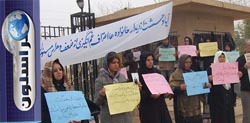
We would like to bring to the attention of all the relevant authorities that the Mojahedin Khalq cult has once again brought some of our relatives by force to repeat the leaders’ propaganda andFamilies of victims of Mojahedin Khalq picketing in front of Camp Ashraf lies in front of cameras. The victims chosen from among our captive families by the Rajavi cult this time are, Mr. Khoram Ramezani, Mr. Iraj Ramezani, and Mr. Mohammad Reza Araki, who have been brought in front of the cult leaders’ cameras.

The ridiculous scenarios and interviews prepared and dictated by the Rajavi cult leaders to our captive children and the unnatural behaviour of the captives in front of the cameras is obvious to everyone. The question which comes to anyone’s mind is; why has the leadership of the Mojahedin Khalq cult decided to resort to such a nasty reaction after 3 months of total silence toward the picketing of families in front of Asharf garrison?

According to the information given by Mr. Alamdar Shaygan (who recently managed to run away from the garrison and who has joined with the families), who has been living in this place until a short while ago, Iraj and Khoram Ramezani did not have a good relationship with one another, but in this film we see them having a very close relationship with each other, even though the disoriented condition of Mr. Iraj Ramezani was obvious for the viewers. It was also obvious from the looks on the faces of all 3 captives that they were merely repeating a dictated scenario given to them (and we must say was very badly acted).

We, the families of the captives of Mojahedin Khalq (Rajavi cult) terrorist group, believe that this badly acted, forced theatre shows the desperation of the cult leaders who are facing the resistance, patience and vigilance of the families toward rescuing their loved ones from the clutches of this terrorist cult.

We remember when they started sending some agents to try to confront the families and send them back, which did not succeed. Then they started swearing at us using powerful loud speakers in a bid to stop the families’ voices reaching the people inside the garrison.

The 3rd ploy by the cult leaders was to make the captives sign the terrorist cult leaders’ lies and curses against their own family members. All this has been continuously broadcasted through the terrorists’ satellite channel.

The Mojahedin Khalq (Rajavi cult) has increased its suppression of the captives by increasing the number of patrols, increasing the thickness of barbed-wire fences and many other desperate measures. The last part of this scenario has of course been the forced TV interviews, clearly made under severe threat and physical and psychological pressure.

We, the families of victims and captives of the Mojahedin Khalq terrorist Organisation (Rajavi cult) condemn this barbaric and inhumane act and insist once again on our legitimate demand to meet our captive loved ones in the presence of representatives of the Red Cross and other human rights organisation outside the garrison. We will not give in, or be fooled by these ridiculous, repeated scenarios and theatre acts carried out by the cult’s leaders.

Families of victims of Mojahedin Khalq picketing in front of Camp Ashraf, May 07, 2010

May 6, 2010 0 comments
FacebookTwitterPinterestWhatsappTelegramSkypeEmail
Human Rights Abuse in the MEK

Turkish Official Deplores MKO’s Crimes against Humanity

A senior Turkish foreign ministry official underlined his country’s resolve to fight terrorism, and strongly condemned the crimes committed by the anti-Iran terrorist group, the Mojahedin-e Khalq Organization (MKO), against humanity. Turkey has seriously confronted the MKO terrorists during the last few years and does not allow them to make any move

"Turkey has seriously confronted the MKO terrorists during the last few years and does not allow them to make any move, and it also condemns their crimes which should be viewed as crimes against humanity," Turkish Deputy Foreign Minster Hakki Akil said in a meeting with the members of the Iranian Edalat (Justice) Society (families of the victims of terrorism).

Akil also called for the establishment of direct ties and joint exhibitions as well as cooperation between the two countries’ NGOs as part of a joint campaign against terrorism and terrorist groups.

He highlighted Ankara’s sensitivity to the issue of terrorism, and added, "The Turkish nation and government believe that no rationale can justify terrorism, and terrorism in any place of the world and by any group is condemned (by Turkey)."

The official further underscored that his country would spare no effort to fight terrorism and terrorist groups.

The MKO targeted Iranian government officials and civilians in Iran and abroad in the early 1980s. The group also attempted an unsuccessful invasion of Iran in the last days of the Iraq-Iran war in 1988.

The MKO is behind a slew of assassinations and bombings inside Iran, a number of EU parliamentarians said in a letter in which they slammed a British court decision to remove the MKO from the British terror list. The EU officials also added that the group has no public support within Iran because of their role in helping Saddam Hussein in the Iraqi imposed war on Iran (1980-1988).

Many of the MKO members abandoned the terrorist organization while most of those still remaining in the camp are said to be willing to quit but are under pressure and torture not to do so.

A May 2005 Human Rights Watch report accused the MKO of running prison camps in Iraq and committing human rights violations.
According to the Human Rights Watch report, the outlawed group puts defectors under torture and jail terms.

The group started assassination of the citizens and officials after the Islamic Revolution in Iran in a bid to take control of the newly established Islamic Republic. It killed several of Iran’s new leaders in the early years after the Revolution, including the then President Mohammad Ali Rajayee, Prime Minister Mohammad Javad Bahonar and Judiciary Chief Mohammad Hossein Beheshti who were killed in bomb attacks by MKO members in 1981.

The group fled to Iraq in 1986, where it was protected by Saddam Hussein and where it helped the Iraqi dictator suppress Shiite and Kurd uprisings in the country.
The terrorist group joined Saddam’s army during the Iraqi imposed war on Iran (1980-1988) and helped Saddam and killed thousands of Iranian civilians and soldiers during the US-backed Iraqi imposed war on Iran.

The MKO was put on the US terror list in 1997 by the then President, Bill Clinton, but since the 2003 US invasion of Iraq, the group has been strongly backed by the Washington Neocons, who also argue for the MKO to be taken off the US terror list.

May 6, 2010 0 comments
FacebookTwitterPinterestWhatsappTelegramSkypeEmail
Mujahedin Khalq Organization

Letter to The Director of HRW for the Middle East

The Honorable Director of Human Rights Watch for the Middle East

Mr joe Stork

Respectfully, I have been captivated more than twenty years in Ashraf Fort in Iraq and i have rescued myself from the cultic Mojahedin’s clutch since two years ago and i succeeded to reach to the free world at last.

Your Excellency , I as a person who has been the victim of this cult and being captivated in this cult for many years , had been deprived of having any direct contact or getting in touch with my family by mail and phone during my captivity in there. I have been deprived of my primary rights to listen to the news on radio.

All the members of this organization (PMOI) were forced and imposed to divorce their wife or husband and as a result of that 800 hundred member’s children had been separated from their parents and they have not seen each other for a long time. Can you believe that my friends and i who are almost fifty years old , have been deprived of getting married and having our own family ?This organization by brain washing methods declared to its members that getting married and marriage was an unlawful act but the leaders of this cult were excluded from this law.

I have heard that a number of the victim’s family have gathered behind the closed gates of this fort but they have not been allowed to meet their loved ones yet because the leadership of this cult has declared that any visitation and meeting with relatives and families are unlawful and illegitimate and also the leaders of this cult , Massoud and Maryam Rajavi , have prepared a formal list which includes names of some members of this cult whom has forcibly declared that they do not want to see their relatives and families by no means. Obviously no common sense believe such a thing and by these kind of methods we find out more about their profound Stalinist thoughts.

I urge you to provide an opportunity for those families awaiting behind closed gates to meet their loved ones whom they have not seen them for 20 years in some cases. The leadership of this cult (PMOI) have deprived those victims of having any communication with their loved ones by labeling those desperate families as Iranian intelligence service agent whereas this leadership lyingly pretend that they are supporting human rights and Iranian people’s rights, but we should ask the leaders of this cult that are not those families part of Iranian people? at the end , i appreciate all your efforts towards helping those desperate families to see their relatives and i am entreating you again to provide an opportunity for those families to meet their loved ones , who are living in a very bad and harsh situation inside Ashraf camp.

Respectfully
Ali Jahani
03.05.2010

Cc:
– United Nations Assistance Mission for Iraq
– Embassies of Iraq in Germany , France and swiss
-Human rights watch
– Relevant MEPs
– Office of Iraqi Prime Minister Nouri al-Maleki
– US State Department

Ali Jahani

May 5, 2010 0 comments
FacebookTwitterPinterestWhatsappTelegramSkypeEmail
Massoud Rajavi

Rajavi, the narcissist leader

According to the psychologists, narcissism is the basis of many adversities including totalitarianism and despotism. The atmosphere and conditions make no difference for the narcissist one yet the satisfaction of his desires is of utmost significance. Evaluating Rajavi from this point of view and based on the visage he depicts of himself through his messages may clarify the hidden aspects of his personality. Of course, his narcissism is the result of a long process starting from his adolescence up to his recent so-called educational serial messages for the present Iranian generation. Years ago, Lotfollah Meisami presented an analysis of Rajavi’s personal behaviors in team-houses in an article titled “Moral decadence of a Mojahed” when hardly anyone cared this aspect of Rajavi’s personality. There, he has investigated Rajavi from various dimensions based on the quoted evidences of the eye witnesses.

The picture depicted by Meisami of Rajavi is an amalgam of narcissism, despotism, absolutism, vaingloriousness, jealousy, totalitarianism, welfare-seeker and other negative features proving the incompetence of an individual for assuming the leadership of an organization like MKO. Yet, Rajavi had no care for this matter. According to Meisami, Hanifnejad and Bakeri, of the early founders of the organization, reacted severely to his egotism and affluence and warned about these potential threats in Rajavi. The same traits and inclinations can be traced in Rajavi in higher echelons particularly when he initiated the ideological revolution of Mojahedin to make the ground for the appeasement of his egoistic lusts one of which was to appoint himself an omniscient sacred leader free from any error and mistake. All those criticizing him in this phase, including his foreign critics like Abrahamian and Gessler, are unanimous that he is a real narcissist and totalitarian psychopath. The statements made by Batool Soltani, a separated MKO member of the Leadership Council, may clarify this aspect of his personality more clearly.

Moreover, his narcissism is evident in his lectures and written messages just by paying attention to his tone and style in making a relationship with his audience. He looks at others from a top position legitimizing no one but himself and bearing the existence of no dissident. He is in the centre of all memoirs stated in his messages. All events depend upon him. He sets up every thing and finally puts and end to them through a determining and historical conclusion. In this regard, Saeed Shahsavandi refers to a key point illustrating this aspect of Rajavi’s personality more clearly. As he puts into words, Rajavi considered all his actions as a step forward and a victory disregarding their real negative political and organizational consequences in the world outside.

There are interesting points focusing on Rajavi’s narcissism by his own words. In his message, he attempts to promote himself to the highest possible point where he makes a relation of any kind between himself and the contemporary historical events of Iran. Surprisingly enough, he makes an astonishing claim in the 14th part of the massage by raving about his education and understanding of Islam beyond those much older than him at a time in 1973 when they were in Pahlavi’s prison:

In 1972, we had a ceremony of commemorating the event of Ashura in Qasr prison in which all prisoners attended. I was one of the lecturers and re-examined the history of Islam from the departure of the Prophet up to the uprising of Ashura. Later, Mr. Anvari asserted that his viewpoint on Islam and Mojahedin had been altered totally and he had never had such an understanding from Islam…

Or he refers to his acquaintance with Qur’an and Arabic language, saying:

Another instance was Ayatollah Rabbani Shirazi. Once in Qasr prison I told him that the Holy Qur’an is to be translated into Persian again to be understood by all. He pursued it repeatedly and asked me to start the translation of the Qur’an along with him yet I fudged.
Moreover, he expounds on his mastery of Islamic economy:

In 1973, he asked me insistently to hold a class of economy from the Islamic viewpoint and finally I consented to discuss economy with him in ten sessions while walking in the section 6 of Qasr prison. Rabbani had no doubt or ambiguity at the end of the sessions.

Of course, Rajavi makes other claims of these kinds while he passed the days in prison and how some distinguished political figures came to become interested in him. These statements can be judged upon by those who were in the same prison at that time like Meisami. He writes that Rajavi failed in inter-prison election held by the imprisoned members to choose a leader for the organization inside prison and he embarrassed and disappointed to the point that he began to cry. In this regard, the memoirs of Mohammad Ali Mamouei, of leftist prisoners, can be reviewed too. Taking a brief look at the baseless claims of a frail and narcissist individual on his mastery of Arabic language and history, economy and the more to be appreciated by elites, many of whom were considered ayatollahs, three times older than him as well as his adamant persistence to identify himself with historical figures like Weber, Marx, Feuerbach, Smith, Oparin, and Hegel may help us to unearth the truth about an egotist and narcissist man enforcing his will and power on an organization that has been turned into a personal cult. Also, the reason why he tries as well as other sacred and holy personalities can be identifies. He is highly suffering from narcissism and is under such delusions of grandeur that he claims to be the most talented in all fields of philosophy, sociology, history, economy, biology, ecology, anthropology, psychology, and the more. Not only that but he is the genius to solve all questions and ambiguities concerning the aforementioned fields. What can really one expect of an organization run under the leadership of such a self-conceit psychopath or comic character as some may call.

May 5, 2010 0 comments
FacebookTwitterPinterestWhatsappTelegramSkypeEmail
Newer Posts
Older Posts

Recent Posts

  • Rebranding, too Difficult for the MEK

    December 27, 2025
  • The black box of the torture camps of the MEK

    December 24, 2025
  • Pregnancy was taboo in the MEK

    December 22, 2025
  • MEPs who lack awareness about the MEK’s nature

    December 20, 2025
  • Why did Massoud Rajavi enforce divorces in the MEK?

    December 15, 2025
  • Facebook
  • Twitter
  • Instagram
  • Youtube

© 2003 - 2025 NEJAT Society . All Rights Reserved. NejatNGO.org


Back To Top
Nejat Society
  • Home
  • Articles
  • Media
    • Cartoons
    • NewsPics
    • Photo Gallery
    • Videos
  • Publications
    • Books
    • Nejat NewsLetter
    • Pars Brief
  • About Us
  • Contact us
  • Editions
    • عربي
    • فارسی
    • Shqip