Nejat Society
  • Home
  • Articles
  • Media
    • Cartoons
    • NewsPics
    • Photo Gallery
    • Videos
  • Publications
    • Books
    • Nejat NewsLetter
    • Pars Brief
  • About Us
  • Contact us
  • Editions
    • عربي
    • فارسی
    • Shqip
Nejat Society
Nejat Society
  • Home
  • Articles
  • Media
    • Cartoons
    • NewsPics
    • Photo Gallery
    • Videos
  • Publications
    • Books
    • Nejat NewsLetter
    • Pars Brief
  • About Us
  • Contact us
  • Editions
    • عربي
    • فارسی
    • Shqip
© 2003 - 2024 NEJAT Society. nejatngo.org
Iraq

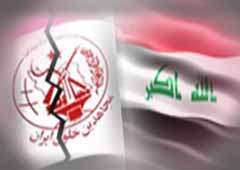
Iraq Minister : MKO will be removed shortly

Minister for Human Rights: Mojahedin Khalq will be removed shortly – MKO rights covered by Universal Declaration

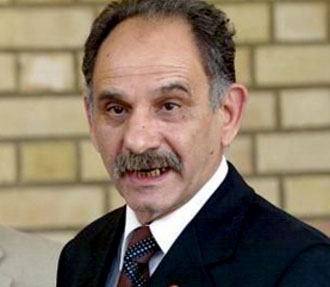
BAGHDAD: Iraq’s Minister of Human Rights Ms. Widjan M. Salim, said on Sunday that the entry into the camp under the supervision of the Iraqi forces was a move "first" to inform them of the determination of the Iraqi government to move them to a camp in Baghdad. Minister for Human Rights: Mojahedin Khalq will be removed shortly - MKO rights covered by Universal Declaration

Salim told Aswat al-Iraq that the Iraqi government "carried out the first steps towards moving the residents of Ashraf camp to another camp inside the capital Baghdad under the supervision of UN representation in Iraq, as well as the Red Cross and American forces."

Salim indicated that "the members of the MKO do not qualify as refugees, and are not covered by the Geneva Conventions, but the Universal Declaration of Human Rights protects them," noting that the Universal Declaration "stresses the need for humane treatment covered by it, in addition to providing some of the items to them and ways to live without being forced to return to their home countries."

She denied the Human Rights Ministry, which is responsible for a file on Ashraf camp, "has an intention [as part] of the Iraqi government to return them forcibly to their country of Iran, if they are unwilling. [The Ministry is] taking into account their transfer to a place where all available medical and social conditions of humanity exist, while ensuring their safe transportation and to not expose them to lack of these where they are. "

In the same vein, Salim revealed, "the government approached the European countries to host them on their territory as refugees."

Iraqi forces entered Camp Ashraf on the 15 December, where the members of the Iranian MKO live, to inform them of government’s intention to transfer them to another camp in Baghdad in the coming days, and inviting elements of the Organization who wish to leave the camp to approach the Iraqi security forces stationed around the camp to take action on their behalf.

December 23, 2009 0 comments
FacebookTwitterPinterestWhatsappTelegramSkypeEmail
Iraq

Iraq: Geneva Conventions ‘not applicable’ to Mojahedin Khalq

Iraqi Human Rights Minister says the terms of Geneva Conventions do not apply to the terrorist anti-Iran Mujahedin Khalq Organization (MKO). Salim said that the Iraqi government has taken the very first step to relocate the members of the group from their headquarters, Camp Ashraf, to a camp inside Baghdad

Wijdan Mikhail Salim said conditions for asylum seeking as well as the terms of Geneva Conventions do not apply to the members of the group, Mehr news agency reported.

She said "only the Universal Declaration of Human Rights applies to them," under which,she added, the members shall be humanely treated, are entitled to necessary services and should not be subjected to forcible return to their country.

Salim said that the Iraqi government has taken the very first step to relocate the members of the group from their headquarters, Camp Ashraf, to a camp inside Baghdad under the supervision of the United Nations, the International Committee of the Red Cross (ICRC) as well as US forces.

Prime Minister Nouri al-Maliki said earlier that Baghdad was seeking to relocate the terrorist organization to a remote detention facility in the southern parts of Iraq as a prelude to expelling them.

After the announcement of the plan, some 120 US lawmakers, in a resolution, warned Iraqi leaders about relocating the members of the group and called on US President Barack Obama to stop the relocation of members of the MKO.

"We are here to call on whoever will listen, the Iraqi government the US government, to halt the forcible relocation of the residents of Camp Ashraf," Democrat Bob Filner told reporters.

On December 15, Iraqi police called on the nearly 3,500 residents of the camp to leave their base as a first stage towards leaving Iraq. Members of the group, however, defied the order.

Iraqi army Colonel Bassel Hamad told reporters that camp residents were aware since October 19 that "they are to be cleared out today and moved elsewhere while respecting international human rights standards."

The MKO, which has been residing in a camp to the northeast of Baghdad for two decades, was exiled from Iran and resettled in Iraq in 1986, where it enjoyed the support of former Iraqi dictator Saddam Hussein and US-led forces after the invasion of the country in March 2003.

The group is responsible for numerous acts of violence against Iranian civilians and government officials as well as Iraqis during the reign of Saddam.

Baghdad has vowed to expel the group as it holds it responsible for destabilizing Iraq through terror attacks.

December 23, 2009 0 comments
FacebookTwitterPinterestWhatsappTelegramSkypeEmail
The cult of Rajavi

Predictable cultic-terrorist reaction of MKO

The most demonstrative and horrifying about a dangerous terrorist cult is the unexpected. As it never feels any responsibility, respects no regulation and adheres to no ethics concerning its insiders and outsiders it can be an instant blast of catastrophe. The July arrest of 36 MKO members by the Iraqi police that faced it with violent and threatening reactions of the organization has been the latest psychological-media project of Mojahedin in latest few months. The consequent general showy hunger strike of sympathizers and members as well as some advocators in the European cities and camp Ashraf are an indication of uncivil and aggressive actions of MKO to engage in to counteract the constraints imposed on the organization.

The world never forgets the horrible cultic self-immolations in June 003 following the arrest of Maryam Azdanlu by the French police . The main question put to the organization is that how long is the organization to solve its legal and political problems by is means of cultic and uncivil solutions and procedures.

Referring to the Iraqi President’s latest remarks concerning the relocation of the organization to a camp near Baghdad, the organization made no hesitation to state that “Maliki’s repeated fallacious claims against the residents of Asharaf are merely a justification for further criminal actions against them”. Was really the release of those arrested culprits who had violated the rules of their host country a criminal act? Or requiring them peacefully and under the auspices of the world’s protective organizations and media presence a justification for further criminal actions against the group?

Based on any country’s laws and regulations, it has the right to counteract any threats to ensure the security of its nationals especially when a country like Iraq is facing a rife internal chaos. The same incidents and violations may happen in any country and the rules of that particular country are the criteria for convicting wrongdoers. However, Mojahedin insist to turn the same case into a major crisis since they are not hew to any civil law and regulation but their own cultic and reactionary doctrine. According to the history of the organization, Mojahedin have never submitted to any law in such occasions and rather they have broken national and international rules using uncivil and aggressive procedures. Furthermore, it always attempts to accuses its opponents and put the blame on them.

In this regard they resort to some levers and instruments as was seen in the process of arrest and freedom of 36 MKO members. In the events of June 2003 and arrest of Maryam Azdanlu, the victims of self-immolations were the levers of organization. Likewise, in recent events the hunger strikers in camp Ashraf and European countries have formed the main lever of the organization in facing the challenges. It seems that it is not significant how many members are to be victimized this time since it is willed by the organization leadership, this process may lead to the death of some members. What is of importance is that Iraqi officials are recommended not to submit to illegal demands of Mojahedin as did Americans and other human rights organizations and are to find a political solution inside Iraqi soil that is undoubtedly time-consuming.

December 22, 2009 0 comments
FacebookTwitterPinterestWhatsappTelegramSkypeEmail
Maryam Rajavi

Maryam Rajavi and her so-called human rights

One of the most basic human rights ,according to all international human rights conventions and statements, is freedom of speech and expression that the self-assigned president of National Council of Resistence, Maryam Rajavi always claims to believe in, condemning IRI “for restrictions on freedom of peaceful assembly and association and freedom of opinion and expression.” (Maryam Rajavi,Nov.20th,2009 addressed committee of UN General Assembly)
Maryam Rajavi and her so-called human rights
When in November 2009, along with her propaganda campaign she goes to Norway Parliament, again she repeats her pro-democratic slogans using gestures of a human right defender; what kind of freedom does she believe in?!

Exactly on the same month, on Nov.28th,2009 while a group of former members of MKO are holding a protest demonstration in Cergy, France, to protest against the presence of Maryam Rajavi in that country, the agents of the destructive cult of Rajavi attack the protesters, hitting them on the face and eyes. The physical clashes end when the police intervene.

The reaction of MKO towards such a small normal and political action is not fat from their long history of violence, terror and suppression. The only approach of MKO to respond its dissidents and critics have always been the physical removal of them at any price.

Today MKO leaders who are going on a declining situation and have never accepted the reality and instead have always gone on the wrong way, have to resort on violence and suppression against their dissidents in or out of the cult. This is exactly what is called terrorism; using illegal behaviors and violent acts to suppress dissidents and to terrify or threaten them.

It is silly to believe that MKO leaders can stop their critics from criticizing them since their dissidents including their former members never stopped criticizing them even when they were captured in the organizational bars of the cult, now that they are residing democratic countries, they use any opportunity to denounce the terrorist cult that destroyed a long period of their life.

Such violent acts committed by MKO brainwashed members, before the eyes of European citizens like those of Cergy Val d’Oise, cause a huge question on the claims of Maryam Rajavi who introduces herself as a pro-democratic ,human activist. Also the public opinion and supporters of human rights will take into consideration the risk of presence of a violent political cult in Europe.

By Mazda Parsi

December 22, 2009 0 comments
FacebookTwitterPinterestWhatsappTelegramSkypeEmail
Iraq

Europe urged to take the cult members as Muthana rejects Mojahedin khalq

 Europe urged to take the cult members as Muthana rejects Mojahedin khalq
 

Muthana // If Nouri al Maliki did not have sufficient problems managing his impoverished and war-torn country, the Iraqi prime minister continues to be plagued by an apparently impossible question involving an Iranian opposition group.

The group, the People’s Mujahadin Organisation of Iran, also known as the MEK, is unpopular inside Iraq and considered a terrorist organisation in both Washington and Tehran.
Yet Mr al Maliki finds himself in the awkward position of having no choice but to host 3,500 MEK members, currently living on a base north of Baghdad.

Saddam Hussein originally granted the Iranian fighters sanctuary when their organisation sided with him to make war on Tehran in the 1980s. After the dictator was deposed in 2003, the MEK members, by then effectively refugees but classified as terrorists by the US military, were disarmed and detained at Camp Ashraf.

In reality it was a measure taken largely for their own protection. In the new Iraq, allies of Saddam had few friends and the MEK is seen by many here – including some of those in the new ruling parties – as a tool used by Saddam for violent repression of Shiites.

The MEK, which has renounced violence, denies such allegations, but the fact remains that with Saddam Hussein no longer in power they are officially unwelcome in Iraq.
Iran has made it clear it would like to take custody of the MEK exiles, but the West has pressured Baghdad not to return them, fearing they would be arrested and persecuted by the Iranian authorities.

That has left Mr. al Maliki’s government facing irreconcilable facts.

In essence, he is now providing a safe haven for a group considered terrorists by his two closest allies, Iran and the United States, with one ally, Tehran, wanting them extradited and the other, Washington, insisting they must not be extradited.

When the Iraqi army took over lead responsibility for security this year, it was also put in charge of Camp Ashraf, to the dismay of Ashraf’s inhabitants.
In July, Iraqi units forcibly entered the camp, reneging on promises given to US commanders that they would continue to protect those living there. At least 10 MEK members were reported killed in the raids.

Under the glare of critical international publicity, and with Washington now embarrassed that the people it had been guarding were so quickly and openly abused, the attack on the MEK petered out.

A new strategy was devised and last week the Iraqi government indicated it would shut Camp Ashraf – which has over the years developed into a well-resourced small town – and move the occupants to Muthana, a sparsely populated desert province in southern Iraq.

Such a prospect was, however, resoundingly rejected by local officials in Muthana, who warned it could spark violence in what has long been one of Iraq’s most peaceful areas.
Ibrahim Salman al Mayali, the provincial governor, said he would do all he could to oppose a relocation.

“Our people will not welcome a terrorist organisation,” he said. “Saddam sent members of the MEK to stop our revolution against him in 1991 so there is that bad history between us.”

Mr al Mayali said various government officials from Baghdad had proposed setting up a site for the MEK in Muthana, and that locals had consistently refused to accept it.
“I cannot stop my people’s anger against this terrorist group,” he said. “Maybe they will want to take revenge for 1991 and attack them. I certainly could not guarantee security for the MEK here.”

A leading local tribal leader, Sheikh Resan al Myasar, also cautioned there would be violence if MEK members were sent south.

“We have not forgotten how they showed us no mercy when they crushed the uprising and so now the sons of our tribe would show them no mercy. There is malice here; the people of Muthana want to bury them with their hands.”

Amnesty International demanded a halt to any eviction from Ashraf, warning it would put MEK members at risk of arbitrary arrest, torture or murder.

“Whatever measures the Iraqi authorities decide to take with regard to the future of Camp Ashraf, the rights of all its residents must be protected and guaranteed at all times,” said

Hassiba Hadj Sahraoui, deputy director of the Middle East and North Africa programme at Amnesty International.

A spokesman for the MEK said any attempt to evict members from Camp Ashraf would be a violation of international humanitarian laws.

In a written statement, the MEK called “on the United Nations and the American government to guarantee the protection of Ashraf residents and ensure prevention of forcible relocation and a repeat of use of force and violence against them”.

The failure of the Muthana relocation attempt means the issue of the MEK remains stuck in a stalemate. No new proposals for solving the problem have yet been made.

In January the MEK was taken off of Europe’s list of terrorist organisation, raising hopes the Ashraf matter might be dealt with by granting residents asylum in the European Union.

Member states have so far refused to let that happen, however.

Staff Reporter, Plus News Pakistan, December 21, 2009

December 22, 2009 0 comments
FacebookTwitterPinterestWhatsappTelegramSkypeEmail
Human Rights Abuse in the MEK

Human Rights in MKO’s Ideology – Part 1

On the occasion of the International Day for the Elimination of Violence against Women, Maryam Rajavi published a message that included a lot of slogans on what she wants to do in the future Iran but her claims are exactly the opposite of what she really believes in and how she really acts.
Although she uses such slogans in Europe as her ideals, Camp Ashraf represents a pattern of The cult-like fascism ruling Ashraf has long been denounced by defected members of the organization to the world including international human right bodiesthe society Rajavi wants to establish in Iran. The study of Rajavi’s treatments towards her members reveals that her slogans are her deceitful, political tools to deceive public opinion in the West.

In the first part of her message she introduces herself as a savior who has practiced human rights in Camp Ashraf and now is ready to ascertain human rights in Iran. She asks for freedom and equality for men and women while she manages the worst and the most inhumane relationship in her organization.

The cult-like fascism ruling Ashraf has long been denounced by defected members of the organization to the world including international human right bodies like Red Cross and Human Rights Watch that published a report on human right abuses committed in Camp Ashraf, in 2005. This 36-page report titled “No Exit” reveals the abuses in MKO Camps based on testimonies of former members.

The page 14 of the report reads:”Human Rights Abuses carried out by MKO leaders against dissident members ranged from prolonged incommunicado and solitary confinement to beatings, verbal and psychological abuse, coerced confessions, threat of execution and torture that in two cases led to death.”

How one can believe Maryam Rajavi’s claims while the most basic human rights of Ashraf residents are violated by the cult leaders. Unfortunately while we are in the 21st century Rajavi has deprived a large number of men and women from their basic rights to live a normal life.

In a paragraph of her message Maryam Rajavi says:” the experience of fundamentalists’ rule in Iran shows they have used systematic violence and suppression against women to suppress the society as a whole. General crack down rests on misogyny and this is the source of regime’s survival.”

However, the organizational relationship in MKO is full of such injustice and inequalities.

When her so-called ideological revolution defeated during the last decades, she had to multiply injustice trying to dominate the excessive hegemony of women over the cult. Thus, the moral and social relations went on declining in Ashraf.

The women who (due to any reason) soon submitted to divorce from their husbands were considered as the criterion of the revolution (revolution of divorce!) so they were assigned as the high ranking responsibles of the ideology. Actually they are given a false personality which is far from social, political and even organizational positions. They are used as a controllable lever to suppress the dissidents and to achieve the dirty goals of cult leaders.

Maryam Rajavi declares a greater contradiction when she speaks of sexual apartheid, claiming that “hostility against women and destruction of their lives, identity and freedom … are components of a sexual apartheid system ruling Iran”.

The system of sexual apartheid has its exactly obvious example in Mujahedin Khalq Organization. Particularly since 1988, revolution of divorce, MKO leaders ruled the organization with the most sexist ideas.

Maryam tries to show off as a defender of women’s rights, while the Middle-Aged relationships ruling her cult, are destroying any equality and justice. There is numerous a crucial question to ask Mrs. Maryam Rajavi:

Isn’t it the destruction of their lives to force women to divorce and to separate them from their children?

According to various documents and testimonies of former members there are a lot of young girls who are depressed because they are deprived of visiting their parents. The depression led a girl named Alan Mohammadi to shoot herself. This is the significant example of destruction of woman’s life and freedom in MKO.

The heavy organizational pressure and peer pressure on members, especially female members of the cult of Rajavi have led many other people to death so far. They committed suicide because they couldn’t bear the cult atmosphere any more.

There have been also some others who set themselves on fire after Maryam was arrested by French Police since they were ordered to sacrifice themselves.

These are just some small examples of huge injustice in the cult of Rajavi.

To be continued

December 21, 2009 0 comments
FacebookTwitterPinterestWhatsappTelegramSkypeEmail
MEK Camp Ashraf

New wave of dissatisfaction and disarray in Camp Ashraf

According to credible reports received by SFF from inside Camp Ashraf (where over 3500 victims of Mojahedin Khalq terrorist cult are kept as bargaining chips by the leader Massoud Rajavi), after the arrest and the subsequent release of 36 of the members by the Iraqi security forces last summer, Massoud Rajavi and his deputy Mojgan Parsai have been forcing everyone to attend brainwashing meetings with the aim of getting some control over the forces there. According to the news now coming out, these new sessions have not been effective anymore and the unrest and demonstrations are increasing rapidly.

In some instances, the forces of Mojahedin Khalq Organisation (MKO) inside sections 13 and 15 of this camp have been distributing written leaflets entitled “death to Rajavi” and “Rajavi lies”.

The leaders of the Rajavi cult have reacted with panic and have confiscated all computers, printers, copy machines etc from these sections.

News suggests that given an alternative place to go, 70 to 80 percent of the stranded people will leave the camp and distance themselves from Rajavi. The leaders of the cult are desperately trying to keep the people isolated and away from any outside contact in a bid to stop the news coming out.

Sahar Family Foundation warns about yet another attempt by the leaders of the MKO to divert attention by creating yet another massacre similar to that which they created last summer.

Sahar Family Foundation asks all relevant Iraqi and international bodies, in particular those in a position of influence in western countries, to intervene to stop yet another disaster committed against the people who are trapped by the MKO leaders in this camp, by opening the doors and letting them have free access to the outside world.

We will be giving more news about this as soon as possible.

December 20, 2009 0 comments
FacebookTwitterPinterestWhatsappTelegramSkypeEmail
France

The Iranian Pen Club letter to the France Minister

Honorable Dr. Bernard Kouchner, Minister of Foreign Affairs of the Republic of France

Initially we wish to express the sincere gratitude of the Iranian Pen Club for your enlightening response to Written Question of Mr. Jean-Pierre Chevènement. ( published in the OJ Senate 10/09/2009 – page 2110 ) Human rights activists and researches that presently cooperate with the Iranian Pen Club would like to announce, this is a duty and task for whoever is devoted and committed to democracy and freedom to reveal and enlighten the real evil essence and nature of such a Rajavi’s Cult, as you wrote it very well and properly in your response about the MKO.

As you are aware, after downfall of Saddam Hussein’s regime in 2003, coalition forces detained and provided security for members of the Mujahedin-e Khalq an exiled Iranian dissident cult group living in Iraq. At the outset of Operation Iraqi Freedom, the MKO was designated terrorist organization, largely because of its history of cooperation with Saddam Hussein’s military in the Iran-Iraq War and its alleged involvement in his suppression of the Shia and Kurdish uprisings that followed the Persian Gulf War in 1991. Also there is one undeniable fact that MKO and its National Liberation Army (NLA) have been an inseparable part of Saddam Hussein’s Regime and have even participated along the forces of the Deposed Despot to suppress the People of Iraq’s freedom movement in 1991.

Dr.Nuri al-Maliki Prime Minister of Iraq vowed many times that Al Qaeda and Mujahedin-e Khalq Organization and Baath party have always sought to make Iraq unstable and draw attention away from the fact that they are responsible for terrorist activities and killings in Iraq.

Since summer 2003, the Iraq’s government has tried through negotiations with all interested parties, including the leaders of the MKO terrorist cult, to find a humanitarian outcome to the problem of closing Camp Ashraf and expelling its residents from Iraq. Also On June 17, 2008, the Iraqi Council of Ministers adopted a directive stipulating that members of this organization would be expelled from Iraq.

It is in this context that in January 2009, the Iraqi authorities informed the heads of diplomatic missions in Baghdad and Camp Ashraf that it could not benefit from any privilege of extraterritoriality and that it was intended to be closed through a process overseen by international law.As you have answered to Mr. Jean-Pierre Chevènement , "The restoration of the sovereignty of Iraq of course includes Camp Ashraf."

We strongly believe despites of MKO had been using the French soiled for their terrorist activities .but because of vast knowledge and experience of French authority of the MKO terrorist organization for past two decade, that made them the most series elements to prevent expansion of violence and terrorism in France. And they will resist any attempt to bribe and propaganda.

Again, we wish to extend our deepest gratitude and best wishes to you all.

With many thanks and regards

The Iranian Pen Club

Cc:
ــMinisters of Affairs of the EU
– Embassy of France in Germany
– Relevant MEPs
– Office of Iraqi Prime Minister Nouri al-Maleki
– US State Department

Postfach 90 06 63
51116 Köln

Germany
00491756391365
info@iran-ghalam.de
iran-ghalam@hotmail.de

December 19, 2009 0 comments
FacebookTwitterPinterestWhatsappTelegramSkypeEmail
Iraq

Nuri al-Maliki: Iraq no conduit for Mojahedin Khalq Terrorists

MKO (Rajavi cult) presence temporary

Prime Minister Nuri al-Maliki stressed that the first and last goal of the terrorism aimed at Iraq and the Iraqis is to disrupt the political process underway in the country… Al-Maliki reiterated that MKO (Rajavi cult) presence temporarythe U.S. withdrawal from the country has nothing to do with security, and developments in the field will not affect the withdrawal already scheduled by the U.S. and Iraqi governments.

Maliki has hinted that the country is still the scene of foreign military and political interventions, noting in this context that the evidence provided by Iraq to the United Nations about Syria’s involvement in the bombings is compelling…

Maliki stressed that Iraq is not a conduit for any terrorist organization and that the presence of the MKO in Iraq is temporary. According to the history of this organization and its acts of terrorism, of course, they have no place in Iraq. Maliki stressed that the elections will certainly go ahead whatever the terrorists do…

Report: Mira Ashkar – Alsumaria TV

December 19, 2009 0 comments
FacebookTwitterPinterestWhatsappTelegramSkypeEmail
Iraq

Iraq: Camp closure a preliminary measure to end MKO existence

Any other state is welcome to host the MKO

Baghdad Al-Iraqiyah Television in Arabic at 1158 gmt on 16 December carries a 52-minute live or recorded news conference by Iraqi Prime Minister Nuri al-Maliki at the Council of Ministers’ Press Centre in Baghdad;news conference by Iraqi Prime Minister Nuri al-Maliki at the Council of Ministers' Press Centre in Baghdad

… Answering a question to the effect that some news agencies and space channels carried "conflicting" statements by the prime minister and the government’s official spokesman on the Mojahedin-e Khalq Organization, whether this organization will "be moved to the outskirts of Baghdad or to outside Baghdad, and whether this is a prelude to moving it outside the country," Al-Maliki says: "This organization has a bad history in Iraq. It has committed crimes against the Iraqis. The former regime has used it as a security agency. It has committed massacres during Friday prayers in Kifri and Kalar against the Kurds. In the records of many of the world states, it is accused as a terrorist organization. Based on our constitution, policy, and approach, we will never turn Iraq into a headquarters or a passageway for any terrorist organization."

He adds: "Our policy and constitution do not allow us to host any side that causes a crisis with any state in the world. Therefore, we have prevented many sides, which sought to use Iraq as a springboard against Arab states, and we told them that we would never allow this. Based on these introductions, background, and history, and out of protecting Iraq’s unity, security, and sovereignty, this organization has no place in Iraq. These are only preliminary measures to end their existence. We spoke with the world states and told them that we welcome anyone who wants to host them. We will not force this organization to return to Iran or to extradite it to it, but we will not allow an organization, which is accused of terrorism, to stay in Iraq. I do not think there was any contradiction in statements. Moving them from this camp is a prelude to moving them to outside Iraq and to any state that would accept them, or perhaps if they benefit from any pardon, which the Iranian Government would offer them." …
———-

Full interview:
Iraqi prime minister holds news conference on security situation, elections
At the outset of the news conference, Al-Maliki makes a statement, in which he says: "Iraq is witnessing intensive action these days. [Words missing because of interruption in the link] the criminal acts, which the elements of Al-Qa’idah and the Ba’th Party have carried out. The goals, which these sides want to achieve in Iraq, are clear. They want to obstruct the elections, disrupt the political and democratic process, and make the Iraqis feel that the experience has failed, and therefore, they have to search for an alternative. Their proposed alternative is the Ba’thist alternative or the extremist sectarian alternative by Al-Qa’idah. They also want to take Iraq backward. These plans and schemes are not conceived on the spur of the moment, but they have existed from the very beginning. They have promised their supporters time and again that they will achieve their goals through the return of the buried regime and by foiling the democratic experience. The will of the Iraqi people and the good political forces, however, was firm and strong. It has faced huge challenges and has overcome them."

Al-Maliki then reviews the security situation over the past years, and explains how Baghdad "was isolated" from the other governorates and the neighbouring states. He adds: "The result, however, providing you are witnesses to this and the whole world can see how Iraq switched from missing security to a security situation in which the citizens move freely. The people now go out during festivals and occasions and for visits. The streets are now crowded with cars and movement. This indicates a healthy situation. This also shows that Iraq has restored its normal situation on the political, regional, and international levels, and has quickly taken advanced positions. This is represented in the international companies’ arrival in Iraq. These companies would not have come to Iraq had there not been security, which helps the investment process. Definitely, this was not achieved spontaneously or by luck, but it was achieved based on planning and a drawn security strategy and not as some sides regrettably say. I hope that the security process will be viewed in a realistic way to the effect that what was achieved was the outcome of a policy, a carefully planned policy, which moved in steps.

"These steps began with the Law Enforcement Plan in Baghdad. They then extended to the other areas. Baghdad then was divided into sectors to deploy military units in these sectors. This was also accompanied by the national reconciliation process in order to create an incubator for the security agencies to help them accomplish their big tasks and face the serious challenges. Thus, this strategy included a host of measures. I regret to hear or read that some sides say that there is no security strategy or a security philosophy in Iraq. I ask these sides how security was achieved in a way, which allowed you to move freely in the street?"

Al-Maliki says: "When the enemy is immoral, trained, and supported, such robberies take place and some security agencies might be inattentive. However, when we compare this to the size of challenge that Iraq has faced and to the unlimited support and the capabilities, which the terrorists inherited from the buried regime, we will realize that it is only natural that such incidents, which we do not accept, take place. We are pained by the shedding of any drop of the blood of any innocent Iraqi citizen in any area in Iraq. However, this is a battle with sides, which have no morals or values. These sides are indulged in the hope of returning through gates of blood or by creating such atmospheres. To stick a bomb to a citizen’s car or park a boobytrapped car in a public square has nothing to do with manhood. This is our enemy. When it is so fierce and immoral, such acts take place. This is what they call a breached security."

He adds: "Thanks to the zeal of the men and fighters of the sons of the Armed Forces, police, security forces, and citizens, Al-Fadl area was reopened, the Haifa Street is restored, Al-Ghazaliyah has returned, and the situation in all Baghdad areas has returned to normal. The displaced people have also returned home. This is the main element and the main axis in the security strategy, which has been achieved."

He says: "After terrorism and the terrorists have become unable to occupy one inch of the land of Iraq to establish camps, prisons, training centres on it, and education and cultural centres, which advocate rancour, sectarianism, and hatred, we have become in front of a new development. The previous course will continue. The strategy does not change completely, as those who are ignorant of the security process, say. The strategy will remain there; the military, police, and army forces will continue to be there; the checkpoints will remain there; and pursuits and storming campaigns will continue. However, there is a constant part in the strategy and the plan and there is a moving part. We began to reactivate the moving part of the strategic military plan, which is based on the security and intelligence effort, by forming a joint coordination committee for the security and intelligence agencies, by reactivating the citizens’ role, and by reactivating the security directorates and institutions at the security ministries. This is because terrorism has now remained as hidden elements and cells, which require information to arrest them and fill prisons of them same as the streets were full of them when they used to resist the police and the army. Therefore, this is the moving part of the strategic theory, which all sides should understand."

Al-Maliki adds: "There have been painful blows to the Al-Qa’idah and Ba’th Party organizations. However, their internal instructions prevented their supporters from talking about these blows and arrests, which are continuing, and which will continue until we exhaust all their efforts. Regrettably, however, breaches will continue here and there. We hope that the relationship between the citizens and the security agencies will be promoted significantly in order to achieve the required goals. The Council of Ministers yesterday made decisions, which include giving a grant and a gift to anyone who guides to a boobytrapped car. The value of the grant and the gift totals 100 million dinars.

"These are some of the measures, and there are other measures. Here, however, I would like to speak clearly and frankly and say that the security work, plans, strategies, and any piece of information related to security are not allowed to anyone who wants to speak about this issue. The thing, which the states care for more than anything else, is their military and security secrets."

He says: "Battles erupt among states when someone attempts to breach the military establishment to obtain some information. However, very regrettably, at this stage, and frankly, for some reasons and political and election propaganda purposes, the security information was seized. Thus, this has rendered a great service to the enemy to the effect that it now has information about numbers, plans, funds, problems, weakness, and strength. It exploits the weakness and knows how to evade strength. This has happened. It is regrettable and painful. The whole world is now astonished at how the Iraqis talk about their security and security institutions in this way, which is open to the media."

Al-Maliki says that the Council of Representatives "has the right to summon and interrogate" others. However, he adds, the objective is to "reach results and not to divulge secrets." He says: "Regarding the security aspect in particular, the Security and Defence Committee [of the Council of Representative] should be the side that assumes this responsibility. It should meet with the security officials to discuss with them plans and methods and reach agreements with them away from the media. This is because the media should not talk about security. Regrettable, this has become one of the main issues in the news media and the space channels, even the Iraqi media. They now host this and that, and the politicians, both those who have something to do and those have not anything to do with the process. They speak, defame, divulge what they know, and confuse the Iraqi citizen. I call on the Iraqi citizen to trust the security and military agencies. This effort is continuing and escalating. Despite the fact that the challenge is big and serious, there will be no retreat. We will never reach a situation in which we have a missing security, as some sides say, but what we talk about here are terrorist cells and about how we should eliminate them through cooperation and openness between the security agencies and citizens.
"I also tell all partners in the political process, as I have previously said, that they should not be indifferent to this issue. You can talk about any issue, economy, agriculture, industry, and education. However, you should be cautious when you talk about security activity. You should recall how Iraq was, and how we used to reap the effects of the hateful sectarianism, which some state institutions used to feed, and how people were beheaded in the streets. Do not belittle this issue. This is because, it will return, and if it returns, it will not benefit those who believe that through confusion, they can achieve victory or obtain a vote here and another there. Let us put the higher interests and the blood of Iraqi citizens above one-upmanship and elections. Compete with each other, providing competition is legitimate, but competition should not take place at the expense of the Iraqi blood and security, which, if was lost again, may God forbid, no one would benefit from this. What was achieved for the citizens, in terms of relaxation, joy, happiness, communication, and openness, would also be lost. Thus, all the political forces will be responsible for this if they do not live up to their responsibilities."

Al-Maliki calls on the citizens and the political forces to appreciate the "great achievements" of the police, security, and army forces. He adds that these "segments, which offered tens of thousands of martyrs to provide us with this security and life, should not be targeted."

He says: "I also address states and call on all of them to support Iraq, and not Iraq only, but all the states, which experience such crisis of fighting terrorism. These states should adopt a responsible position, just as all sides confront the dangers of epidemics, Swine Flu and other diseases. Terrorism is more dangerous than Swine Flu. All sides should do this. Some sides should not stand idly watching and other sides should not provide facilities to these [terrorist]."

He adds: "This is in order to pursue our path, strategy, and course. I insist on the carefully planned policy, which the world has admitted. To those who say that there is no strategy, I say that an institute for military academic studies has put the Iraqi experience on fighting terrorism with all its dimensions as one of its studies on the qualitative experience of confronting the fiercest form of terrorism in a new state, which emerged from dictatorship and entered into the presence of international forces, terrorist invasion, and elements affiliated with the buried regime."

Al-Maliki says: "Once again, brothers, I say, compete with each other and we will compete with you, but put security aside and put the Iraqis’ blood aside. Let the country achieve stability in order to arrive at the stage of reconstruction, building, services, stability, and relaxation, which the citizens should get. The Iraqis have become tired. Since 1980, they have been experiencing wars, adventures, occupation, terrorism, oppression, killing, Al-Anfal, chemical weapons, and mass graves. Let the Iraqis relax. Brothers, you should all live up to your responsibilities, media men and politicians. You should take this fact into consideration. This is because the result will not affect one party without the other, but it will affect the entire temple, which will collapse on those under it once again, as I have previously said. However, I stress that with the zeal of the sons of the Armed Forces, police, and the security forces, we will not allow this temple to collapse, and we will not allow anyone to destroy the temple once again, through which Iraq and the Iraqis have restored their honour. We will take measures to protect the achievements that have been made on the political, security, and economic levels and in all fields."

Concluding his statement, Al-Maliki adds: "I address my messages to all those who are concerned about Iraq, of the sons of the Armed Forces, citizens, political forces, and state institutions, and tell them to cooperate with us within this framework because it is a red line and tampering with it means tampering with the issues that are directly related to public interests and to the citizens’ life."

Al-Maliki then begins to take press questions.

Answering a question to the effect that some sides "confuse" the deteriorating security situation with the "breached security," and whether the security incidents "affect the withdrawal of the US forces based on the agreement" between the two sides, Al-Maliki says: "Breached security exists in the whole world, but on different levels. America, with all its superiority, means, and capabilities, its security was breached. It was breached in the Trade Centre towers and in other incidents. With all its powers, Russia’s security was breached a few days ago and more than 100 persons were killed. The security of all the region’s states was also breached. This includes all the neighbouring states without exception. I do not want to mention names so that it will not be said this is defamation against their security. All the neighbouring states’ security was breached. However, breaches have various dimensions and vary from one country to another. In Iraq, the citizen used to live in the quagmire of terrorism, and you are witnesses to what Iraq was. Therefore, the security breaches could be more than in other states in the region and the world. We work on this through intelligence activity and cooperation with the citizens to arrest these [terrorists] and to put them in prisons."

He adds: "As whether such incident would affect the [US forces’] withdrawal, I say no, not at all. Final arrangements have been made on withdrawal and based on clear timetables. You always hear us emphasize commitment to all clauses and timetables. The US side has always announced on the highest level that it is committed to the agreement and to withdrawal from Iraq."

Answering another question on the "moving part" of the security strategy, Al-Maliki says: "Regarding the moving part of the security strategy, I do not mean that we will begin to implement it, but we have begun to implement it since we received the security file on 30 June and the beginning of the implementation of the agreement on 1 January 2009. We have moved in this direction, and I do not want to mention the number of the terrorist cells, which have been arrested, thanks to the reactivation of the intelligence activity. Big cells and dangerous persons have been arrested. Furthermore, big crimes, which were committed in the past and whose perpetrators were not revealed, have now been revealed and the perpetrators were arrested."
Answering an indistinct question on "interference" by the neighbouring states, "specifically Syria," Al-Maliki says: "Yes, there is still interference. This is despite the fact that it should retreat, and it has retreated from many states, but it is still there by some states. We hope [it will retreat]. We play a role and hold contacts to convince the others and to tell them that you have no interest in sending weapons or giving a chance to killers and terrorists, who, if they can, they will turn against you once again."

Answering a question to the effect that some news agencies and space channels carried "conflicting" statements by the prime minister and the government’s official spokesman on the Mojahedin-e Khalq Organization, whether this organization will "be moved to the outskirts of Baghdad or to outside Baghdad, and whether this is a prelude to moving it outside the country," Al-Maliki says: "This organization has a bad history in Iraq. It has committed crimes against the Iraqis. The former regime has used it as a security agency. It has committed massacres during Friday prayers in Kifri and Kalar against the Kurds. In the records of many of the world states, it is accused as a terrorist organization. Based on our constitution, policy, and approach, we will never turn Iraq into a headquarters or a passageway for any terrorist organization."

He adds: "Our policy and constitution do not allow us to host any side that causes a crisis with any state in the world. Therefore, we have prevented many sides, which sought to use Iraq as a springboard against Arab states, and we told them that we would never allow this. Based on these introductions, background, and history, and out of protecting Iraq’s unity, security, and sovereignty, this organization has no place in Iraq. These are only preliminary measures to end their existence. We spoke with the world states and told them that we welcome anyone who wants to host them. We will not force this organization to return to Iran or to extradite it to it, but we will not allow an organization, which is accused of terrorism, to stay in Iraq. I do not think there was any contradiction in statements. Moving them from this camp is a prelude to moving them to outside Iraq and to any state that would accept them, or perhaps if they benefit from any pardon, which the Iranian Government would offer them."

Answering a question on his coming visit to Egypt, and whether "this time around" he will go to "persuade Egypt to play a role in persuading some neighbouring states to stop financing some terrorist sides and entering boobytrapped cars," and whether "you will give an olive branch and receive boobytrapped cars," Al-Maliki says: "I do not think Egypt is a party to this operation."
The reporter says: "I do not mean Egypt specifically."

Al-Maliki says: "As for the visit, you are aware of Egypt’s weight, role, and status among Arab states. Relations between Egypt and Iraq and the Egyptian and Iraqi peoples are good and deep-rooted. These relations have made great steps after the arrival a delegation of business and companies, led by the Egyptian investment minister. Some 80 companies have come to Iraq, held conferences, and acquainted themselves of the situation." He then speaks about his previous visits and those of Iraqi officials to Egypt and the joint committee that was formed between the two countries to develop relations in various fields.

Al-Maliki adds: "My visit is to entrench and promote these relations and to reactivate the agreements, which were signed between Egypt and Iraq. This is because we very much want to have strong and developed relations that could serve as an example of relations among Arab states."

On whether there are "differences" between the prime minister and Interior Minister Jawad al-Bulani, and on Al-Maliki’s opinion about the "performance" of the interior minister, Al-Maliki says that under a democratic and national unity government, dialogue or different viewpoints between two persons should not be interpreted as "confrontation." He says: "The relationship between me and the interior minister is a good and brotherly relationship. The man listens and cooperates." He adds: "I can assure you that the prime minister’s relationship with all other ministers is good."
A reporter asks the following question: "Syrian Foreign Minister Walid al-Mu’allim made a statement, through which he sounded triumphant because Iraq does not have evidence on Syria’s interference in Iraq. Does this mean that the US envoy has not obtained concrete evidence from the Iraqi side on the Syrian interference?"

Answering this question, Al-Maliki says that Iraq has provided "concrete evidence." He adds: "However, this is a natural policy. Everyone defends himself through denial. To complete my answer to your question, I say that we do not want bad relations with Syria. We do not want to make lies against Syria because we have no interest in this. We do not pursue the policy of blaming other states. We talk about facts and we pursued a policy of improving our relations with Syria, Jordan, Iran, Turkey, and all other states in order to eliminate any differences or disagreement that this issue could create. Any statement we make is not because we like to strain any relations with any other state, but this is in defence of the Iraqi blood and right. The other side should understand this. I hope that the other side will put himself in the place of the Iraqis. If what is happening in Iraq happens in a neighbouring state, in terms of killing, bombings, and terrorism, providing that they knew that a certain person has passed through Iraq and that we did not cooperate with this person, establish a camp for him, train him, or arm him, but he has just passed from here and gone to them, what would they say? Definitely, they will hold us responsible. This is the norm among states. Therefore, how would it be if this involves camps, training, and media, which speak openly, and statements on all levels? It is only natural that we have the right to defend our people’s interests."

Answering a question that after every bombing, some Iraqi politicians "hasten" to blame the security forces and the government, Al-Maliki says that "tragedies" should unite all sides. He adds: "The problem today, however, is that we are heading to the elections. Therefore, they believe that they would be supporting the government’s electoral position if they unite with it. Very regrettably, the elections constitute a part of the relationship among the political forces. Therefore, this is a strange thing. I have addressed my message to all brothers in all political entities to unite to face the challenge."

He says: "If some sides, which are still playing a role, in any way, in supporting terrorism, we will not stop talking about this then. In fact, we will take the necessary measures and not talking only. We do not talk about issues only, but we take the appropriate measures to deter all those who tamper with the security of Iraq and its citizens."

Lina Abd-al-Jabbar, from the Jordanian newspaper Al-Dustur asks: "We know that Saudi Arabia is the only state, which you have not visited continuously. There is a talk about political barriers. When will Prime Minister Nuri al-Maliki break this barrier?" Answering this question, Al-Maliki says: "When Saudi Arabia welcomes good relations with Iraq we will break the [barrier] once again. I have broken it at the beginning and I will break it again if Saudi Arabia wants so."

Answering a question on whether the "security breaches are aimed at preventing the current government from assuming power in Iraq once again," Al-Maliki says: "Democracy is the target, the political process is the target, and everyone in this political process is targeted. Preventing this government [from assuming power once again] is the goal, foiling democracy is a goal, and foiling media and political freedoms is a goal. The entire political process is targeted." He adds: "The elections will inevitably take place on the set date no matter how much efforts the terrorists will make to obstruct them." He says that we will spare no effort to prevent anything that would obstruct the elections, "taking into consideration that the real battle between us and the [terrorists] is the holding of the elections, and therefore, I hope that the citizens, political forces, and security agencies will pool their efforts to hold the elections because this will deal a blow to the heart of all those who reject democracy and the political process in the country."

Answering a question on whether any of the "political sides or parties that participate in the political process are involved in supporting the terrorist groups during the recent bombings," Al-Maliki says: "No, not in the recent bombings. However, you know that when sectarianism was at its peak, and when everyone used to call for supporting his sect and group, many sides were involved. They should have not spoken about sectarianism in the first place. As for the recent incidents, we do not have any information about the involvement of any political entity or side. This is the positive thing here; namely, that such operations are only carried out by the terrorists and the Ba’thists. We are talking about what happened in the past. God willing, this will not return because this was one of the prerequisites of sectarianism and tension. All sides believed that some sides can twist the arm of the other side, but all sides realized that no one can twist the other side’s arm because Iraq is the loser, and that Iraq and all Iraqis will succeed when all sides unite."

Al-Iraqiyah TV, Arabic, Baghdad – Translated by: BBC Monitoring Middle East

December 19, 2009 0 comments
FacebookTwitterPinterestWhatsappTelegramSkypeEmail
Newer Posts
Older Posts

Recent Posts

  • Rebranding, too Difficult for the MEK

    December 27, 2025
  • The black box of the torture camps of the MEK

    December 24, 2025
  • Pregnancy was taboo in the MEK

    December 22, 2025
  • MEPs who lack awareness about the MEK’s nature

    December 20, 2025
  • Why did Massoud Rajavi enforce divorces in the MEK?

    December 15, 2025
  • Facebook
  • Twitter
  • Instagram
  • Youtube

© 2003 - 2025 NEJAT Society . All Rights Reserved. NejatNGO.org


Back To Top
Nejat Society
  • Home
  • Articles
  • Media
    • Cartoons
    • NewsPics
    • Photo Gallery
    • Videos
  • Publications
    • Books
    • Nejat NewsLetter
    • Pars Brief
  • About Us
  • Contact us
  • Editions
    • عربي
    • فارسی
    • Shqip