Nejat Society
  • Home
  • Articles
  • Media
    • Cartoons
    • NewsPics
    • Photo Gallery
    • Videos
  • Publications
    • Books
    • Nejat NewsLetter
    • Pars Brief
  • About Us
  • Contact us
  • Editions
    • عربي
    • فارسی
    • Shqip
Nejat Society
Nejat Society
  • Home
  • Articles
  • Media
    • Cartoons
    • NewsPics
    • Photo Gallery
    • Videos
  • Publications
    • Books
    • Nejat NewsLetter
    • Pars Brief
  • About Us
  • Contact us
  • Editions
    • عربي
    • فارسی
    • Shqip
© 2003 - 2024 NEJAT Society. nejatngo.org
Mujahedin Khalq Organization

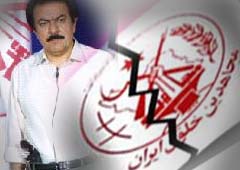
MKO’s Stalinist Power Structure

The failure of Russian Bolshevik revolution is an evidence of the fact that misusing power will not :”Power Corrupts; absolute power corrupts absolutely.” This is the fact that Massoud and Maryam should definitely considered .bring justice and freedom to the society. As a revolutionist figure, Stalin couldn’t maintain his promises and so-called ideas for a classless society. He based a dictatorship where the people were deprived from their basic human rights but similar to many other totalitarian systems his tyranny didn’t last so long.

In 1980’s ,after Islamic revolution in Iran, Mujahedin Khalq who were seeking a position in IRI’s power structure lost their support among Iranians, they fled to France and Iraq. Massoud Rajavi, as the main leader of MKO, who did not succeeded in Iranian Presidential Election was still ambitious to achieve power in Iranian political scene so he founded his cult of personality. He launched his serial ideological revolutions, forced his cult members to divorce, to leave their children and family life and to leave any kind of private life.

He formed a world where truth and love are forbidden. Rajavi succeeded in making the individuals empty of their human characteristics. The individuals are devoid of “Joy of life”, so they are always anxious and agitated about their future. They can never trust others even their family members or friends. These manipulated individuals can no more be critical about their leaders’ acts. The individuality is totally denied in MKO and this is a disastrous danger that risks the humanity and lives and future of at least 3500 people who are victims of MKO cult in Camp Ashraf, Iraq or Camp Maryam France.

As George Orwell describes the cult-like society in his book “1984”, the party slogan says “He, who controls the past, controls the future”. MKO is today’s parallel to the society George Orwell shows in his book. The slogan of the party represents exactly what’s going on in Rajavi’s cult. The manipulation techniques of MKO cult are the best tools to control members’ past, present and future, by forcing them to deny their individuality.

The most recent evidence of their practices is the hysterectomy surgeries they force women to bear. In the isolated atmosphere of Rajavi’s Cult, where sexual relations are forbidden, hysterectomy is a way to control members’ future. But George Orwell concludes his novel, when he sees the true dangers of historian Lord Acton’s (1834 – 1902) statement:”Power Corrupts; absolute power corrupts absolutely.” This is the fact that Massoud and Maryam should definitely considered  .

By Mazda Parsi

[Nineteen Eighty-Four (often abbreviated to 1984) is a classic dystopian novel by English author George Orwell. Published in 1949, it is set in the eponymous year and focuses on a repressive, totalitarian regime. Orwell elaborates on how a massive oligarchical collectivist society such as the one described in Nineteen Eighty-Four would be able to repress any long-lived dissent. The story follows the life of one seemingly insignificant man, Winston Smith, a civil servant assigned the task of perpetuating the regime’s propaganda by falsifying records and political literature so that it appears that the government is always correct in what it says. Smith grows disillusioned with his meager existence and so begins a rebellion against the system that leads to his arrest and torture.]

October 1, 2009 0 comments
FacebookTwitterPinterestWhatsappTelegramSkypeEmail
UK
UK

British Anti-Terrorism Policy and the MEK

Report by the Islamic Human Rights Commission

Introduction

As the stranglehold of increasingly draconian anti-terrorism laws takes hold in the UK, this briefing focuses on British policy regarding the Mujahedin-e-Khalq Oragnsiation also known as the MKO or MEK and under various other pseudonyms and acronyms [1] .

Whilst most groups on the list of proscribed organisations under the Terrorism Act 2000 have some sort of perceived Muslim or Islamic affiliation, the MEK – whilst claiming to have some Islamic affiliation –openly target a form of political Islam i.e. the Iranian government.

The organisation boost prominent supporters from amongst the British establishment including a number of MPs and Lords, and calls for its unproscription have been made. This briefing discusses the treatment of the MEK and its supporters and their actions, in light of the terrorism laws enacted in the UK and highlights not only the abuse of these laws with the complicity of government but also the duplicity of the government’s stance on terrorism.

To view the full report click here

September 30, 2009 0 comments
FacebookTwitterPinterestWhatsappTelegramSkypeEmail
Former members of the MEK

17 June immolations, orchestrated or willful acts

An interview with Batool Soltani on MKO self-immolations – Part 22

Sahar Family Foundation: Ms. Soltani, significantly noticed in the course of the self-burnings was the TV coverage of the incidents; I mean the footages shot by the organization itself. It can be analyzed from different aspects especially when the organization claims immolations as willful and self-initiated acts. The very originally filmed scenes of the immolations prove that anything had been orchestrated beforehand. Will you give a further explanation of the outlook?

Batool Soltani: First I have to point out that I was not in the Europe at the time and saw noting directly. Whatever I impart is personal inferences. Concerning your question, it is explicit that the footages of the immolations were all filmed by the agents of the organization itself. The fact was accentuated in the internal meetings held in Camp Ashraf that it had been all filmed by the organization and distributed to a variety of foreign TV networks. Even they displayed the footages of Marzieh Babakhani and Mohsen Sharifi’s self-burnings and underlined it had all been filmed by the equipped agents of the organization. But they never said a word about it for the outsiders and claimed the footages were random TV reports filmed by other networks. Although they had done their best not to err, you could clearly identify the members in the frame of the camera.

Besides, there are other evidences to prove the footages were the work of the organization itself. Footages are usually licensed for a certain network and any second coverage carries the original licensed logo attached to it. It is natural since there exists a competition among the Western networks and agencies to have the leading role in an incident and to own the copyright on the footage; the footages of the self-burnings all lacked the licensed logo which proves the leading role of the organization in recording all scenes.

As soon as a member sets himself/herself on fire, the camera starts recording and it is exactly positioned where it had to. The big mistake made by the organization is that the scenes are all filmed by professional hand recorders rather than ordinary cameras or mobiles, which reduces the possibility of any random record.

The used sophisticated equipments proved that it was also a simultaneously orchestrated operation. It is strange to see someone walk to gas station to procure gasoline and then march to a certain location where he sets himself on fire; nobody ever think of it as a random shot, it is a film making. How people may come to believe the claims of the organization that the immolations were unplanned but self-initiated is too amazing. No doubt, they were exactly pre-planned and followed a written scenario. Another point to notice is the reflection of these operations outside of the organization.

After her release, Maryam Rajavi claimed the French police had prevented distribution of a prepared videotaped message in which she had asked members to cease self-burnings. The claim seems to be true since termination of an action is possible when you have issued orders for its commence. No member dared to engage in any act unless authorized and approved by the leader but no outsider had a clear image of internal affairs; they had to be kept in dark about the plans to prevent further negative costs and consequences. As you saw, in the course of some held trials in European courts, they could convince the court about the voluntariness of decisions.

There are other evidences that support the idea of organizationally schemed operations. To enumerate them, the first is the widespread TV coverage of the incidents; the authentic record of events is clear and widely distributed while each is filmed in a certain part of the Europe. The second is the vast propaganda blitz they staged following the operations, and second, and the most important, is Rajavi’s message mainly focusing on the operations and referring to the victims by names. Last but not the least, there are evidences of the organization’s past threats.
 
I remember Massoud and Maryam once threatened the French government of staging self-burning operations which was endorsed by many members who volunteered in the letters of the ideological revolution. They would read these letters to us in the course of training classes. As Rajavi stated in one of his speeches, the identical aspect in all these letters was volunteering for self-immolation. Thus, there remains no doubt that the operations were all organizationally orchestrated and aimed to achieve certain goals.

SFF: A question to ask, had all these self-burnings been planned to kill or the priority was laid on the propaganda and political aspects of the operations? Is it possibly justifiable that the organization had already promised members that it would interrupt to survive them immediately as soon as they had staged the operations?

BS: I know nothing of these details in particular. If they had resolved on such a policy, it would have been worked out in councils out of Auvers-sur-Oise. I cannot exactly impart anything.

SFF: Well. In your opinion, is it of any significance for the organization to focus on the political aspects and convince the members that it never lets anybody get harmed but betrays them in practice and sends them to their death?

BS: I do not think it is a proper angle to look from since there is actually no need for the organization to make such preparations. When members volunteer to risk their life, it means they have given their final acquiescence to die. There is no need to trick them and nobody hesitates to set himself on fire when the command is issued. It is possible that the organization decides to limit the killings to one or two but there might come times when the span of propagation borders no limitation and the circumstances require further continuation of the operations. The momentous approach the organization utilizes to overcome its crises is directly risking the life of the members.

As a result, it has the upper hand in having a particular situation in its own control by sending multitudes of victims to their death. If ever it discriminates in favor of a ranking member and makes an attempt to save him/her, that is because of his/her organizational status and has nothing to do ever with caring for the humane attitudes and the victim’s individual values. Still, the organization regretted the attempts made for the survived. Marzieh Babakhani was badly burned when they smothered the fire and she was a pitiful creature to look at with all those burns that had damaged her face and hands. She was badly deformed and suffered a lot and it was disputed why she had been allowed to live and they openly wished she had died.

SFF: Have you seen the photos of these operations’ victims?

BS: Neither themselves nor their photos. They said the doctors had failed to treat them well and from the bulk of their propaganda it could be discerned that the victims had made a great impression. Once Mozhgan (Parsai) applauded Marzieh saying she was a living martyr of the organization. She would say Neda and Sediqeh had passed away once for ever but Marzieh was suffering and dying in any moment. It is easy to picture how emotionally they impressed the members and alleviate the psychological and physical agonies of the victims.

To be continued

September 29, 2009 0 comments
FacebookTwitterPinterestWhatsappTelegramSkypeEmail
Iraq

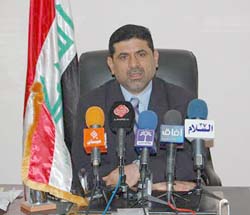
Iraqi MP: Baghdad won’t let U.S. return to Camp Ashraf

Muhammad al-Hamidawi from the Fadila Islamic Party approved a pressure from US to resettle US military forces at Mujahedin headquarters in Al-Khalis. He emphasized that most political and parliamentary groups and fractions will prevent such act and the Iraqi government will not surrender to Washington’s illegal demands.Baghdad won’t let U.S. return to Camp Ashraf

TEHRAN – Iraq will not succumb to the U.S. pressure to redeploy its military personnel in Camp Ashraf, an Iraqi MP has said.

The Iraqi parliamentarian confirmed that the U.S. is pressuring the Iraqi officials to allow it to return its military troops to Camp Ashraf which houses the terrorist Mojahedin Khalq Organization members.

The majority of Iraqi political and parliamentary groups will oppose the U.S. demand, the MP told the Mehr News Agency.

He said the U.S. presence in Camp Ashraf is not in conformity with the security pact signed between Bagdad and Washington and the Iraqi constitution.

According to the Iraqi constitution it is illegal to host terrorist groups who threaten the national security of neighboring countries, he said

And according to the security pact, the Iraqi government itself must take control of the country’s security and military affairs, he added.

He also said that MKO cannot stay in Iraq and the only thing that delays their expulsion is ‘time’

September 29, 2009 0 comments
FacebookTwitterPinterestWhatsappTelegramSkypeEmail
The cult of Rajavi

Requisite interaction between Iraq and quitters of MKO

The recent events in camp Ashraf shows that the Iraqi government has to use parallel levers beside the legal ones in order to control Mojahedin and set its members free from the cultic relations of a closed group.

The reason maybe the cultic nature of this group and its unpredictable aspects like unconventional suicide operations carried out by the members who have been persuaded through convincing procedures and brainwashing techniques that entirely neutralize external influences.
 
The interviews with MKO former members and their eyewitnesses have convinced Iraqi officials that MKO like other cultic groups welcomes any violent reaction as a strategic issue. The question of violence is a broad one to be elaborated on from different aspects. There are numerous articles and studies in this regard but it has to be investigated more extensively.

Almost all cult experts are unanimous that coming to a clear understanding of cults, their motivations and nature is inevitable for averting their potential dangers. There are some levers for achieving this objective like covering communicative activities, studying historical models, and continuous interaction with former cult members to arrive at a realistic relation with them. In this regard, Singer writes:

My warmest thanks and deepest appreciation go to the more than three thousand cult victims who shared their stories, their pain, and their healing with me, helping me to learn about cults and the harm they have brought upon so many. 1

She also refers to the necessity of using clinical consultants beside cult ex-members and writes:

Exit counselors typically charge between $500 and $1,000 a day, plus expenses-a fee schedule similar to that of many other consultants. Exit counselors have to study and keep abreast of the ever, changing cult scene and collect data, films, and documents from and about the various groups. Many exit counselors do not charge for the extensive phone time that is involved. Most offer free clinics for ex-members and donate hundreds of free hours lecturing to schools, churches, and other organizations. 2

Although making use of consultants seems impossible regarding Mojahedin, it seems that MKO’s quitters, many of whom are active in different organs and NGOs, can achieve this objective. They may offer some information on camp Ashraf, classification of members, and their mental inclinations. Even these limited pieces of information may pave the way for minimizing the costs imposed on Iraq.

The Iraqi officials have to notice that MKO quitters are from different organizational layers based on which they can offer solutions for the current challenges from different aspects. For instance, those quitters from the Leadership Council have valuable information on the aspects of human tragedy focused on by Masoud Rajavi.

The information provided by these separated members helps Iraqi officials to recognize the objectives pursued by MKO leaders at the time being. The fact is that they are not aware of the true nature of MKO and its potential dangers for Iraq in this phase.
 
Despite camp Ashraf is a part of Iraqi soil, Iraqi officials are unaware of the transitions and changes made there and also its facilities. Even some MKO members are unfamiliar with the structure of this camp where they have lived for years. Undoubtedly, the lack of information may present Iraqi officials with serious problems. It seems that the only option before Iraqi officials is turning to MKO’s separated members for advice to get acquainted with camp Ashraf and its structure. In this regard, Iraqi officials can interact with MKO former members on following issues:

1. General information on the headquarters, buildings, media and telecommunication facilities, possible hideouts and prisons in camp Ashraf.
2. Advice on developing relation with Ashraf residents.

If Iraqi officials manage to take full control of MKO relations, they can use information of separated members and classify Ashraf residents accordingly. Undoubtedly, there are many MKO members in camp Ashraf that are willing to leave the organization and MKO former members can help Iraqi officials in identifying these individuals. It may lead to the interaction of Iraq with MKO members according to their characteristics and organizational order.

3. The possibility of giving information to Ashraf residents by separated members.

The relation of separated members with Ashraf residents at least leads to the weakening of mental and political bounds imposed on Ashraf residents. The quitters can draw a clear and real picture of the present and future conditions for the remnant Ashraf residents. The role of face to face dialogue is of utmost importance in this regard.

4. The possibility of identifying leaders and key members of organization for separating them from rank and files. Although Iraqi officials have managed so far to identify some MKO leaders, but due to the organizational complexity of MKO it is believed that there are many more unknown leaders and no one but MKO members can identify them. The separated members can help Iraqi officials in revealing the identity of MKO’s leaders to be isolated from the rank and files.

5. Receiving primary information on the degree of human tragedy and violent reactions of Mojahedin.

The issue of human tragedy is now the most serious threat posed by Masoud Rajavi and the presence of some key members like Mrs. Batool Soltani of the Leadership Council may help Iraqi officials to get information on the quality and quality of this threat. There are also some other aspects in which MKO former members can help Iraqi official to attain a better understanding of the true nature of Mojahedin.

References
1. Singer, M. Thaler, Cults in Our Midst, JOSSEY-BASS ,A Wiley Imprint, 2003, XV.
2. ibid, 289

September 28, 2009 0 comments
FacebookTwitterPinterestWhatsappTelegramSkypeEmail
Mujahedin Khalq Organization

Mojahedin Khalq in increasing desperation

Members of Mujahedin-e Khalq Organization (MKO) in Iraq suffer increasing desperation, an Iraqi newspaper commented.

"Scores of MKO members in Iraq’s Camp Ashraf are suffering from depression", an informed source in the camp told the Iraqi newspaper Sawt Al-Fayli.

MKO members are in a state of desperation since France haven’t let them to enter the country though four hundred of the camp’s residents have French passports, the newspaper added.

"MKO supposed they will be welcomed by France thanks to their role in Iran’s post-election events, but Paris left them hopeless in Camp Ashraf," said the source who spoke on condition of anonymity.

Scores of Ashraf residents believe that they have no role to play following the fall of Saddam Hussein and they are willing to return to Iran following the camp’s siege by Iraqi forces, but they are prevented by MKO hardliners, the Iraqi newspaper reported.

The despair in Camp Ashraf is so high that some second generation Ashraf residents committed suicide due to the limitations, while others grapple with each other for no good reasons due to mental illnesses they are recently suffering from, Sawt Al-Fayli reported.

Alfeyli, Baghdad

September 28, 2009 0 comments
FacebookTwitterPinterestWhatsappTelegramSkypeEmail
Former members of the MEK

Pride and joy among MKO defectors

Three more defectors of Rajavi’s Cult who were banned behind the bars of Mujahedin at Camp Ashraf returned home and joined their families.

Three more defectors of Rajavi’s Cult who were banned behind the bars of Mujahedin at Camp Ashraf returned home and joined their families.
 

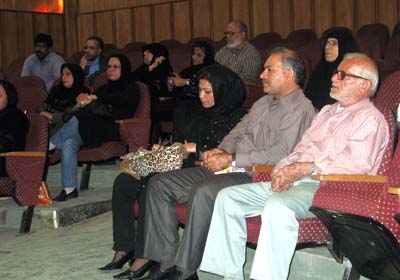
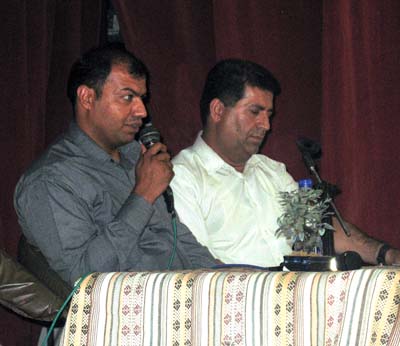
Within a friendly atmosphere at Nejat Society Gorgan Office, Mr.Ahmad Sarayee, Mr.Jamshid Sarayee and Mr. Yunos Yanpey gathered together and shared their bitter memoirs of the days of their being captives of MKO and that their new life in their motherland is filled with joy and peace.

Nejat Society Golestan Branch

September 27, 2009 0 comments
FacebookTwitterPinterestWhatsappTelegramSkypeEmail
Iran

Jalili Accuses Germany of Backing MKO

Secretary of Iran’s Supreme National Security Council Saeed Jalili accused Germany of supporting anti-Iran terrorist group, the Mojahedin-e Khalq Organization (MKO), by allowing the Jalili Accuses Germany of Backing MKOgroup to have "bases" in that country.

Talking to the online site of the Hamburg-based weekly news magazine Der Spiegel, Jalili said, "The Berlin government is promoting (MKO) terror" … by permitting it to have "bases in Germany."
The top Iranian official held the MKO responsible for attacks in his country, the Islamic republic news agency reported…
________

Jalili Accuses Germany of Backing MKO

Secretary of Iran’s Supreme National Security Council Saeed Jalili accused Germany of supporting anti-Iran terrorist group, the Mojahedin-e Khalq Organization (MKO), by allowing the group to have "bases" in that country.

Talking to the online site of the Hamburg-based weekly news magazine Der Spiegel, Jalili said, "The Berlin government is promoting (MKO) terror" … by permitting it to have "bases in Germany."
The top Iranian official held the MKO responsible for attacks in his country, the Islamic republic news agency reported.

Meanwhile, Iran’s chief nuclear negotiator said he was cautiously upbeat on prospects for progress at next week’s nuclear talks in Geneva, Switzerland, featuring Iranian officials and diplomatic representatives of the five UN veto powers plus Germany.

"I am traveling "with optimism to the negotiations but we are also realists," added Jalili.
He stressed although Iranian officials would discuss the nuclear question at Thursday’s meeting in Switzerland, it would not include the issue of uranium enrichment.

He vowed Iran would "never surrender its right" of having a nuclear enrichment program.
Jalili made clear Tehran did not fear western threats of tightening sanctions.

The Iranian official said it was up to the US and Europe to make concessions in the stalemate over Tehran’s nuclear program.

"It’s up to the West now to make a move," Jalili added.

September 27, 2009 0 comments
FacebookTwitterPinterestWhatsappTelegramSkypeEmail
Former members of the MEK

17 June immolations and the test of commitment

An interview with Batool Soltani on MKO self-immolations – Part 21

Sahar Family Foundation: What impact did immolations have on the relations within Camp Ashraf, and what objectives did the organization aim to achieve in particular?

Batool Soltani: The impact was widespread and it can be studied from a variety of angles. One was to promulgate and propagate the incident through a variety of means like video-clips, music, plays and TV programs. To impress the members, they had collected many old, impressive and devotionally themed music and songs and made new compositions that were then mixed with self-burning clips that were repeatedly displayed in dining halls and canteens.

To be a volunteer of suicide operations motivated in any form defined a high parameter for organizational promotion

The ends they strived for were to provoke and encourage members to identify with the models, to eulogize victims as heroes and heroines, to create a sense of self-criticism for failing to fully fulfill obligations, to coerce them to increase their frequent attendances of weekly hold sessions of ablution and confession to outpour what passed inside them, and above all, to frustrate formation of and doubt and question concerning the operations themselves.

In such an emotively moving atmosphere nobody dared to propound any question or utter any raised doubt; any logic and challenge had to be stifled and critics had no choice but to act in accordance with the whole climate. One interesting point to mention, the members were indirectly encouraged to register as volunteers for suicide operations and apply to burn themselves to death. They also arranged especial sessions to carry out a survey of opinions to have an assessment of the percentage of the volunteers for the operations at the time of Maryam’s arrest.

It was important for the organization to have an exact assessment of members’ allegiance whether to the organization or other external factors. The sessions were organized so cleverly that the attendants unconsciously uttered their internal reflections. To be a volunteer of suicide operations motivated in any form defined a high parameter for organizational promotion, but of further importance was the degree of organizational loyalty and commitment.

As the prerequisite for membership following the so-called ideological revolution was preparedness for death and suicide; to volunteer for operations worked only as a gauge of ideological, political and organizational commitment. The decrees of organization were the laws everybody was obliged to obey with no question; it was the first organizational principle. In the case of the June 17, it was a test of members’ loyalty and commitment.
 
I remember members who insisted to set themselves on fire at the time but the organization somehow convinced them that their deed was of no use. However, some were displeased of the antagonistic attitude and sought to execute their willingness. If they succeeded, it would question the organizational principle. Of the greater priority was obedience and the one who set himself on fire when unauthorized by the organization would be assessed a defiant.

Regardless of the nature of the defiance, the organization was concerned about its generalization which could cost it irreparable damage. In fact, all was a test of a critical article of the ideological revolution to assess its degree of reliability in the face of any similar crisis. We have already talked about the articles of the ideological revolution and Rajavi’s stabilized status as an ideological leader whose commands had to be consciously and unquestionably obeyed.

The volunteers of self-burning first had to request permission of Massoud and Maryam for the act, a signification of absolute submission to leadership. Any form of disobedience, even unauthorized suicide and sacrifice, was condemned since it could be a possible challenge against organizational principle and had to be strongly confronted.

A practical, regular and invisible assessment of members’ obedience, chiefly at such critical junctures, well identified the potentiality of overcoming a crisis in the future. In fact, it was not the multitudes of volunteers for sacrifice or the passive but the level and amount of obedience. Of course, nobody was aware of the real intention behind all these, otherwise the plan failed altogether.

SFF: What was the main source to break the news of immolations? I mean, was it important for them to be the sole breakers of the news or quote it from other news agencies?

BS: The first channel of information was the Resistance TV but the organization did not mind if other known news agencies covered the news. But the problem was that all information channeled to Ashraf were biased and direct access to original sources of information was prohibited and was highly controlled. It was mostly because the organization behaved in anomalous way with some media and believed they were the mouthpiece of imperialism and the enemies in shadow.

However, some of these agencies were known to be the sole reliable source of information and the organization could not neglect their role in global information exchange. Wherever there were concordance between its own news and that of the agencies, the organization did not hesitate to blow them up to get desired results. However, they received the least attention if their information failed to side with the organization. BBC, for instance, was and is one of those news agencies the organization has despised above all, and that is why you hardly encounter any of the agency’s news and information quoted and reflected by the organization.

Its open hostility towards BBC is based mainly on a once description of the agency by Shamloo that has continued so far, and the organization is really desperate what to do when the agency releases news when it is preciously to its advantage. Suppose, BBC covers one of Maryam’s political visits and meeting while taking an impartial stand and no further analysis. It is an ample opportunity to grab at and to exert the propaganda impact, but the organization shows no direct excitement and quotes the news along with vituperative attacks directed at BBC.
 
In many cases, the organization applied a clever propaganda technique and aired its own distributed information quoted from well-known news agencies and TV networks for greater impact and desired propaganda advantages. On the one hand, the organization could convince the insiders of Ashraf that it was the center of global political and media attention and on the other hand, it took advantage of exposing its capacity as an alternative. In fact, apart from its attempts to repel the French government, the organization had entirely aimed to be the focus of the global media and to influence the news headlines for some time.

It appeared that domination of the mass media was more serious than Maryam’s release, it is a fact that can be well understood by the amount of the reports and news reflected by the media throughout the world. A look at the organization’s own media at that time and later reveals that it had designated a big bulk of its propaganda space, both cyber and non-cyber, for the reflection of the relevant issues and news and did not spare to stick even at the trifles. The origin of these news was often the organization itself and most often used them quoted from other news agencies; as it benefitted the effect of media coverage on the incidents of 17 June immolations.

To be continued

September 27, 2009 0 comments
FacebookTwitterPinterestWhatsappTelegramSkypeEmail
Mujahedin Khalq; A proxy force

The global lack of interest in MKO

Iraqi officials assert that despite conferring with 25 countries, they have failed to convince any country to offer political refuge to MKO. Although the US has shown eager in adopting a policy of supporting Mojahedin in recent years, it refuses to let them in and also describes MKO as a terrorist and unreliable group. To worsen the conditions of Mojahedin, the US has placed the responsibility for making the final decision for MKO on the Iraqi Government.

Furthermore, France has recognized the terrorist nature of Mojahedin and refuses to provide them with refuge. However, it has to bear the settlement of a number of MKO members in Auver-sur-Oise. It is investigating the terrorist charges of Mojahedin regarding the dossier of 17 June, 2003 and has objected to the removal of the name of the organization from the terrorist list of the EU and hopes to convince its European counterparts to review the exoneration MKO from terrorist charges.

In spite of the fact that the UK has removed the bans of political activities for the organization, it refuses to give refuge to its members. The general and official position taking of other European countries is based on labeling MKO as an unreliable organization. Iran’s neighboring countries have a dual policy toward MKO, yet whenever the issue of giving refuge to its members comes out, they absolve responsibility from themselves and give priority to their national interests.
 
Iraqi people insist on expelling Mojahedin after three decades of their interfering presence in their soil. The false claims of the organization on enjoying a great social support is no more taken seriously since at the time being only Saleh Mutlaq, leader of the Arabic Front for Iraqi National Dialogue, is their strong advocate. Before, it was deemed that Mojahedin were favored by many Iranians due to their anti-monarchy fighting, yet the course of events after the fall of Pahlavi’s regime led them to be the first political group to flee Iran due to their lack of social support. Though Mojahedin have resorted to violence and suicide attacks to keep their residence in Iraq, the evidences indicate that their efforts are futile and they have no position therein.

These positions are taken while it seems that Europe and the US are wiling to fish in troubled water due to the position of Iran in international scene and their own pragmatist and instrumental diplomacy. In other words, they tend to use Mojahedin as a lever of pressure against Iran. The approach cannot be dismissed since the type of relations of the west toward Mojahedin indicates that they can neither abandon MKO as an instrument in their political relations nor brook the costs of the presence of Mojahedin in their soil. Consequently, they refuse to qualify MKO members as political refugees yet watch for an opportunity to make an instrumental use of MKO against Iran. The significant point is that none of these countries recognizes Mojahedin neither an alternative for Iran nor a trend parallel to other oppositions.

Despite Mojahedin’s attempt to exaggerate their status in international scene, the European countries even fail to recognize the legitimacy of Mojahedin as an opposition. This paradoxical policy taken by the West has its roots in political considerations and can be discussed in depth. The unstable and hopeless situation of MKO in the past three decades proves that no country consents to support Mojahedin and even its host governments are after a way to get rid of them.

What is of considerable importance to be discussed here is the unspoken consensus of above countries on the least probability of referring to MKO as an alternative for Iranian government and futility of instrumental use of the organization against Iran. The reasons and evidences of this consensus have been focused on for many years and they have to be investigated and traced more deeply. For instance, it remains a question that the European countries, despite their fundamental fraction with Iran on issues like nuclear issues and the propagation of Islam in the world, still avoid close approach to MKO.

They just try to impose Mojahedin on others like Iraqi government and then benefit from the organization whenever necessary. Anyway, the reason why no country consents to legitimize Mojahedin is to be elaborated on. The reason may be the notorious history of organization full of hostile reactions against their host countries and also misusing the facilities provided by these countries for them against national interests of governments and nations.

The problems Mojahedin have created for European countries in last three decades and the considerable costs paid for their expelling from Iraq can be one of the reasons of that has aggravated the situation. As the European countries witness the costs imposed on Iraqi government and the violent reactions of MKO in Iraq, they can understand that they would be faced with the very same problems if Mojahedin were allowed as refuges on their soil.

They are well aware that the presence of Mojahedin in their soil has many negative consequences like damaging their foreign relations as well as being lambasted for adopting an aberrant political and social policy. Although Mojahedin pretend to follow international law and norms, the evidences shows that after achieving their objectives they are no longer hew to their obligations. In fact, Mojahedin are not so concerned with humanity yet aim at developing an organizational strength and stability. As soon as they meet their objective, their true terrorist and violent nature shows up.

September 26, 2009 0 comments
FacebookTwitterPinterestWhatsappTelegramSkypeEmail
Newer Posts
Older Posts

Recent Posts

  • Rebranding, too Difficult for the MEK

    December 27, 2025
  • The black box of the torture camps of the MEK

    December 24, 2025
  • Pregnancy was taboo in the MEK

    December 22, 2025
  • MEPs who lack awareness about the MEK’s nature

    December 20, 2025
  • Why did Massoud Rajavi enforce divorces in the MEK?

    December 15, 2025
  • Facebook
  • Twitter
  • Instagram
  • Youtube

© 2003 - 2025 NEJAT Society . All Rights Reserved. NejatNGO.org


Back To Top
Nejat Society
  • Home
  • Articles
  • Media
    • Cartoons
    • NewsPics
    • Photo Gallery
    • Videos
  • Publications
    • Books
    • Nejat NewsLetter
    • Pars Brief
  • About Us
  • Contact us
  • Editions
    • عربي
    • فارسی
    • Shqip