Nejat Society
  • Home
  • Articles
  • Media
    • Cartoons
    • NewsPics
    • Photo Gallery
    • Videos
  • Publications
    • Books
    • Nejat NewsLetter
    • Pars Brief
  • About Us
  • Contact us
  • Editions
    • عربي
    • فارسی
    • Shqip
Nejat Society
Nejat Society
  • Home
  • Articles
  • Media
    • Cartoons
    • NewsPics
    • Photo Gallery
    • Videos
  • Publications
    • Books
    • Nejat NewsLetter
    • Pars Brief
  • About Us
  • Contact us
  • Editions
    • عربي
    • فارسی
    • Shqip
© 2003 - 2024 NEJAT Society. nejatngo.org
Mujahedin Khalq as an Opposition Group

MKO Members among Arrestees in Tehran

Iranian Intelligence Ministry announced that some of the rioters that have been arrested among street agitators in Tehran in recent days are members of anti-Iran terrorist group the Mojahedin-e Khalq Organization (MKO).

The arrestees confessed that they have been guided by some of the ringleaders of MKO in Britain and were ordered to destruct public amenities, including gas stations, buses and Basij barracks.
These rioters also confessed that they were trained in Iraq and infiltrated into Iran to make riots.
The MKO, whose main stronghold is in Iraq, is blacklisted by much of the international community, including the United States.

Before an overture by the EU, the MKO was on the European Union’s list of terrorist organizations subject to an EU-wide assets freeze. Yet, the MKO puppet leader, Maryam Rajavi, who has residency in France, regularly visited Brussels and despite the ban enjoyed full freedom in Europe.

The MKO is behind a slew of assassinations and bombings inside Iran, a number of EU parliamentarians said in a recent letter in which they slammed a British court decision to remove the MKO from the British terror list. The EU officials also added that the group has no public support within Iran because of their role in helping Saddam Hussein in the Iraqi imposed war on Iran (1980-1988).

The group, founded in the 1960s, blended elements of Islamism and Stalinism and participated in the overthrow of the US-backed Shah of Iran in 1979. Ahead of the revolution, the MKO conducted attacks and assassinations against both Iranian and Western targets.

The group started assassination of the citizens and officials after the revolution in a bid to take control of the newly established Islamic Republic. It killed several of Iran’s new leaders in the early years after the revolution, including the then President, Mohammad Ali Rajayee, Prime Minister, Mohammad Javad Bahonar and the Judiciary Chief, Mohammad Hossein Beheshti who were killed in bomb attacks by MKO members in 1981.

The group fled to Iraq in 1986, where it was protected by Saddam Hussein and where it helped the Iraqi dictator suppress Shiite and Kurd uprisings in the country.
The terrorist group joined Saddam’s army during the Iraqi imposed war on Iran (1980-1988) and helped Saddam and killed thousands of Iranian civilians and soldiers during the US-backed Iraqi imposed war on Iran.

Since the 2003 US invasion of Iraq, the group, which now adheres to a pro-free-market philosophy, has been strongly backed by neo-conservatives in the United States, who also argue for the MKO to be taken off the US terror list.

The MKO has been in Iraq’s Diyala province since the 1980s.

June 25, 2009 0 comments
FacebookTwitterPinterestWhatsappTelegramSkypeEmail
Former members of the MEK

MKO member reveals group’s criminal record

Batul Soltani, former member of the leadership council of the Mojahedin-e-Khalq group revealed some of the group’s crimes in Iraq, IRIB reported from Iraq on Saturday.
Batul Soltani, 42, from Isfahan province said," I was a member of MKO group and then became a member of the leadership council of the group. I escaped from Ashraf Camp and exited Iraq in January 2008 because of the devil and inhumane behaviors of the group leaders."

She said that the MKO forced its members to divorce from their wives and leave their children adding," I have no news about my children —- Miad, 6 months and Hajar Moradi, 5 —- who are far from me."

The MKO member said she set a complaint against the group to the Iraqi courts adding," I return to Iraq to obtain news about my husband and children. I will choose an attorney to free them."

"I am ready to testify in Iraqi Judiciary court against the cooperation of MKO and former Iraqi troops on massacring the Iraqi people in 1991 Intifada," she underlined.
She said that former Iraqi dictator Saddam Hossein granted a lot of money to the group adding," MKO invested the money for its companies in and out of Iraq and used it for its activities."

Soltani said the shareholders of MKO companies are some certain Iraqi people but they deposit the money to the accounts of the group.
She underlined that MKO had much influence in Iraqi electoral offices and helped its supporters.
Soltani called for Iraqi government and the International Community to pressure the group and close Ashraf Camp in Iraq.

June 25, 2009 0 comments
FacebookTwitterPinterestWhatsappTelegramSkypeEmail
Iraqi Authorities' stance on the MEK

Judge Underlines Iraq’s Resolution to Expel MKO

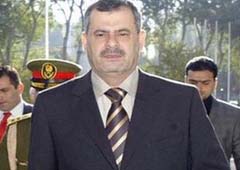
Head of Iraq’s Court of Appeal judge Munir Haddad said that Iraq’s people and government are resolved to expel the anti-Iran terrorist group, the Mojahedin-e Khalq Organization (MKO) from the country.

“The great powers, the US in particular, are seeking to reach many of their goals through terrorists, specially the Mujahedin-e Khalq Organization,”Haddad said in a meeting with Secretary-General of Habilian Association Seyed Javad Hasheminejad.

Habilian Association is an Iranian non-governmental entity formed of the bereaved families of terror victims.

Haddad further condemned the US support for terrorists in Iraq, and underlined that the MKO has played an active role in sowing discord and violating peace in the country.
“Wherever the US sought to create sabotage and terror, the MKO has played an active role,”Habilian website quoted Haddad as saying.
Haddad further pointed out that the MKO has long sought to stir political feud between Iranian and Iraqi brothers, but its efforts have backfired and caused closer ties between the two Muslim neighboring nations.

Hasheminejad, for his part, noted that the presence of the MKO in Iraq is a violation of the international law, reiterating that the hues and cries by a limited number of pro-MKO media and supporters in Europe can in no way sway the law in this regard.
He further expressed hope that terrorism in Iraq would disappear in the near future.

The MKO, whose main stronghold is in Iraq’s Diyala province, is blacklisted by much of the international community, including the United States.
The MKO is behind a slew of assassinations and bombings inside Iran, a number of EU parliamentarians said in a recent letter in which they slammed a British court decision to remove the MKO from the British terror list. The EU officials also added that the group has no public support within Iran because of their role in helping Saddam Hussein in the Iraqi imposed war on Iran (1980-1988).

Many of the MKO members abandoned the terrorist organization while most of those still remaining in the camp are said to be willing to quit but are under pressure and torture not to do so.

A May 2005 Human Rights Watch report accused the MKO of running prison camps in Iraq and committing human rights violations.
According to the Human Rights Watch report, the outlawed group puts defectors under torture and jail terms.

Numerous articles and letters posted on the Internet by family members of MKO recruits confirm reports of the horrific abuse that the group inflicts on its own members and the alluring recruitment methods it uses.

The most shocking of such stories includes accounts given by former British MKO member Ann Singleton and Mustafa Mohammadi – the father of an Iranian-Canadian girl who was drawn into the group during an MKO recruitment campaign in Canada.
Mohammadi recounts his desperate efforts to contact his daughter, who disappeared several years ago – a result of what the MKO called a”two-month tour”of Camp Ashraf for teenagers.

He also explains how the group forces the families of its recruits to take part in pro-MKO demonstrations in Western countries by threatening to kill their loved ones.
Lacking a foothold in Iran, the terrorist group recruits ill-informed teens from Iranian immigrant communities in western states and blocks their departure afterwards.
The group, founded in the 1960s, blended elements of Islamism and Stalinism and participated in the overthrow of the US-backed Shah of Iran in 1979. Ahead of the revolution, the MKO conducted attacks and assassinations against both Iranian and western targets.

Leaders of the group have been fighting to shed its terrorist tag after a series of bloody anti-western attacks in the 1970s, and nearly 30 years of violent struggle against the Islamic Republic of Iran.

The group started assassination of citizens and officials after the revolution in a bid to take control of the newly established Islamic Republic. It killed several of Iran’s new leaders in the early years after the revolution, including the then President Mohammad Ali Rajayee, Prime Minister Mohammad Javad Bahonar and the Judiciary Chief Mohammad Hossein Beheshti, who were killed in bomb attacks by MKO members in 1981.

The group fled to Iraq in 1986, where it was protected by Saddam Hussein and where it helped the Iraqi dictator suppress Shiite and Kurd uprisings in the country.
The terrorist group joined Saddam’s army during the Iraqi imposed war on Iran (1980-1988) and helped Saddam and killed thousands of Iranian civilians and soldiers during the US-backed Iraqi imposed war on Iran.

Since the 2003 US invasion of Iraq, the group, which now adheres to a pro-free-market philosophy, has been strongly backed by the neo-conservatives in the United States, who argue for the MKO to be taken off the US terror list.

June 25, 2009 0 comments
FacebookTwitterPinterestWhatsappTelegramSkypeEmail
Missions of Nejat Society

Family’s of Nejat Society meeting in Khuzestan

On Friday June, 2009, a delegation of members of Nejat Society, Khuzestan Branch including Mr. Hassani and Mr. Ekrami visited some families of Nejat Society in cities of Ahwaz, Andimeshk and Dezful.

During the warm atmosphere of the visit, Nejat members were welcomed by Sajedy family whose son Gholam Ali is a captive in Rajavi’s cult. Gholam Ali’s father is now sick and he wishes to visit his son as his last desire in his life. Nejat Society affirmed on their mission to bring about Mr. Sajedi’s desire.

Sajedi stated that it is time for Iraqi government and Red Cross to answer humanitarian desire of a suffered father who may be passing last days of his life.

June 24, 2009 0 comments
FacebookTwitterPinterestWhatsappTelegramSkypeEmail
Mujahedin Khalq as an Opposition Group

In Iran Crisis, Paris Exile Group Plays Disputed Role

As millions of Iranians took to the streets of Tehran over the past week to protest the presidential-election results, exiled opposition group the National Council of Resistance of Iran (NCRI) saw its moment. "This uprising is the result of 30 years of murder, oppression and corruption by an Iranian regime we’ve dedicated our entire lives to fighting," Mohammad Mohaddessin, chairman of foreign affairs for the Paris-based group told TIME. "Even if protesters aren’t calling for [the NCRI] to take power, it’s only natural that, given our organization’s experience, our clandestine networks are playing an important role informing and assisting the Iranian people to achieve its desire of regime change."

Iranian police accused the NCRI and its "terrorist" supporters of fomenting the violence. As evidence, Iran said several NCRI-linked operatives had been arrested after smuggling guns and explosives into the country and carrying out "terrorist acts." On Sunday, the NCRI dismissed the story and mocked what it called the "preposterous and threadbare claims to justify the suppression and killings inside Iran.

Dramatic as all that sounds, it doesn’t square with the reality described by Iran experts. Diplomats, academics and intelligence officials say most people inside Iran want nothing to do with the NCRI or its primary member organization, Mujehadine-e-Khalq (MEK) — whose bloody attacks on the Iranian regime in the 1980s and ’90s landed it on the U.S.’s terrorism list. Experts say the NCRI’s support in Iran is now tiny and its international base is shrinking. The NCRI and MEK, say Iran watchers, have become little more than an excuse — or handy alibi — for Tehran’s crackdown.

"The Iranian population is generally frightened of or repelled by [the NCRI], and the supporters in [Iran] … have all mostly vanished," says Olivier Roy, one of France’s leading experts on Middle East politics and Islam. "It now basically operates abroad as a sect with international branches whose membership is dwindling as its base grows older and young people shun it."

The group’s officials disagree. They claim the NCRI has thousands of members in Europe and North America. As evidence, they point to a rally outside Paris on Saturday that drew as many as 90,000 people to protest the situation in Iran. NCRI leaders are also quick to point out that the organization supplied information from inside Iran that was pivotal in documenting Tehran’s military nuclear ambitions — a fact acknowledged by Western diplomats.

While conceding that the NCRI’s clandestine networks in Iran have been hit by the execution of what he says has been thousands of members and sympathizers over the past two decades, foreign-affairs chairman Mohaddessin says a recent burst of recruiting and activity has restored some of the group’s ability to operate inside the country. Operatives there, he says, are busy gathering intelligence and organizing to undermine the regime. According to Mohaddessin, sympathizers secretly monitored more than half the polling stations during the presidential election, providing the NCRI with enough information to claim that scarcely 15% of Iranian voters bothered casting ballots at all, a number at odds with the reportedly massive turnout seen by foreign media and other observers and the government figure that put participation at 85%.

The NCRI was founded in 1981 to serve as an umbrella organization to Iranian opposition groups, and its dominant force has always been the MEK, which espouses a curious mix of Marxism and Islamist militancy. MEK originally worked with radical Islamist organizations to topple the Shah and rid Iran of what it described as Western imperialism. In the wake of the 1979 revolution, though, the group found itself under attack by its former allies in the new Islamic regime and took up arms. Its military wing was based in Saddam Hussein’s Iraq. From there, MEK carried out assassination and terrorist strikes inside Iran and fought alongside Saddam’s army in the 1980-1988 Iran-Iraq war.

"Many Iranians know victims of MEK violence or still feel the fear and fury its name provokes," says a French counterterrorism official who has followed the NCRI and MEK. "Because MEK remains widely hated in Iran, the mere threat by Iranian leaders that it and NCRI are waiting to take over in the event of crisis tends to chill musings of regime change in Iranian streets."

The U.S., Canada and European Union put the MEK on terrorism blacklists nearly a decade ago. Those governments also alleged that the NCRI was essentially the political arm of the MEK, a claim the NCRI says misrepresents the relationship between the two groups. Though the resulting blacklisting has withstood legal challenge in the U.S. and Canada, a European court this year struck down the MEK’s terrorist listing in the E.U. The new ruling was based on an earlier British court decision that ordered the terrorist designation be lifted because of a lack of evidence that the MEK had been involved in terrorist activity since it renounced violence in 2001. (In Iraq, the U.S. Army disarmed MEK’s Ashraf compound in the country’s east in 2003, calling it a security threat. The Iraqi government has indicated it will close the camp completely.)

Middle East expert Roy says the claims and counterclaims miss the bigger point. While Iranian leaders obsessively hate the NCRI for historical reasons, he says, the NCRI is largely an irrelevancy these days..
TIME – By BRUCE CRUMLEY – Jun. 22, 2009
http://www.time.com/time/world/article/
0,8599,1906172,00.html?xid=rss-world-cnn

June 24, 2009 0 comments
FacebookTwitterPinterestWhatsappTelegramSkypeEmail
The cult of Rajavi

Life from a cultic perspective

Cultic relations depend highly on some exclusive and specific factors like disregarding social life as well as social, ideological, religious and ethical values of members. Cult leaders aiming at transmuting recruits in cultic relations, resort to a number of techniques and mechanisms to draw a boundary between within and without and to pave the way for the achievement of their objective. Almost all cultic features act systematically and interactively, however, those mentioned above may be considered the most determining ones common in most cults. They are of a more distinctive nature in political cults and ideological groups in particular due to their mechanism and have managed to take a persuasive and meretricious role.

Cultic relations in nature are opposed to social norms and values due to the anti-democratic structure of cults as well as the opposition of cults to individual and social freedom. In other words, cultic relation is an antithesis to social relations that provides for the evolution of man. Social relations have a determining role in the manifestation of human evolution; in contrast, cultic leaders are opposed to it and make their efforts to instill cultic principles into members by means of brainwashing and thought-reform techniques to replace the dominant faith in members with the heretically innovated cultic ones. Many believe that the promise of enlightenment is one of the main levers at the hands of cult leaders in inculcating recruits with a set of anti-social beliefs:

A total commitment is required to reach some state such as "enlightenment." The form of that commitment will vary from group to group: more courses, more meditation, more quotas, more cult-related activities, more donations. Cults are known to dictate what members wear and eat and when and where they work, sleep, and bathe as well as what they should believe, think, and say. 1

These demands are based on the point that cult leaders divide the world outside and inside into black and white poles and promote the belief that cultic relations end in the evolution and salvation of man and the relations of outside world result in his fatality and deviation. This viewpoint leads to the negation and violation of all social norms and values and ultimately to monopolism and dogmatism. This is a common feature of almost all cults and as Singer puts into words:
On most matters, cults promote what we usually call black-and-white thinking, an all-or-nothing point of view. 2

It is evident that isolation of recruits is necessary for promoting cultic doctrines. Cult leaders have to make members isolated far from any relationship with the outside world before negating social values. One of the basic rights that cult members are banned from is their separation from family, friends, and occupational relations. These constraints are justified under the pretext of the necessity of making a big change in life style:

Cults tend to require members to undergo a major disruption or change in lifestyle. Many cults put great pressure on new members to leave their families, mends, and jobs to become immersed in the group’s major purpose. This isolation tactic is one of the cults’ most common mechanisms of control and enforced dependency. 3
In fact, cult leaders make wide gaps between cultic values and social values like education, progress, success, hope in a better future and natural desires to the point that they consider any inclination to natural desires as an unforgivable sin. From the viewpoint of cult leaders, factors like education, learning, marriage, emotional relations to family members and friends, commitment to outsiders, etc are defined as red lines and taboos. Surprisingly enough, most cults refer to their anti-social approach as a step toward developing a utopian society. According to Singer:

Modern-day cults and thought-reform groups tend to offer apparent utopias, places where all humankind’s ills will be cured. The cults’ lure is, if you just come along, all will be fine, and everyone will live happily ever after. 4

It is evident that members have to ignore all their emotional, ideological, and social attachments to outside world and accept a new set of values and norms that is opposed to the fundamentals of values outside cults; this is a trend spreading in other forms of social movements as well as cult-like groups.
References:

1. Thaler Singer, Margaret, Cults in Our Midst, 1995, p.10.
2. ibid.
3. ibid.
4. ibid, xxv.

June 24, 2009 0 comments
FacebookTwitterPinterestWhatsappTelegramSkypeEmail
Mujahedin Khalq 's Function

Failed Tactics – Part 2

Failed Tactics (part 2: Saddam Private Army)

A documentary about Washington backed Mojahedin Khalq terrorists


Failed Tactics focuses on the foundation of MKO, and its political abuse of the first Iranian president Abolhassan Banisadr as well as its terrorist operations inside Iran, the Mersad operation and its removal from the EU blacklist of terror organizations.

Mujahdin Khalq Organization or Saddam Private Army

The organization’s armed confrontations and its collaboration with former Iraqi dictator Saddam Hussein during the Iraq-Iran war are also among the topics discussed in the documentary.

“The international society’s anti-terrorism claims have become a tool in the hands of certain countries to achieve their goals,” said Press TV production manager Mehdi Homayounfar.

Referring to Iran as the foremost victim of terrorism, Homayounfar added, “it was impossible for the MKO to survive without the financial and moral support of Western countries during all these years.”

Failed Tactics includes interviews with renowned Iranian political figures such as Mohsen Rezaei, Abolhassan Banisadr, Rouhollah Hosseinian, Hossein Shariatmadari, Hadi Shams-Haeri and a number of former high-ranking MKO members.

Produced by Amir Tajik, the documentary has been filmed in Iran, the UK, France and Switzerland. It will be aired on June 21, 2009, the 28th anniversary of MKO’s declaration of armed conflict against the Islamic Republic of Iran.
The MKO, which identifies itself as a Marxist-Islamist guerilla army, was founded in Iran in the 1960s, but was exiled some twenty years later for carrying out acts of terrorism in the country.

Download Saddam’s Private Army

June 23, 2009 0 comments
FacebookTwitterPinterestWhatsappTelegramSkypeEmail
Former members of the MEK

Masud Rajavi’s Marriages

Memoirs of Ms. Batoul Soltani – Part 16
Before my involvement with MKO I had no indication of Masud’s marriages. I just knew that Rajavi had fled from Iran but I didn’t have any idea of what had happened after he left Iran along with Masud Rajavi got married with Firouzeh BanisadrBanisadr. I had no idea about the "ideological marriage"! In 1981, when the office of MKO in Iran was shutdown, I was studying at school and I was completely unaware of activities of the organization. At high school I expressed some sort of opposition. For Example I complained about inspecting students’ bags at schools or why they forced the students to take part in group prayers. These were my challenges against the regime. In fact, I didn’t have enough knowledge about MKO in the way that I could arrange my activities along with their goals. Basically, all the information I could get about MKO, Masud and Maryam Rajavi, and the Ideological Revolution was in 1985 and 1986 when I arrived into the organization. When I entered into the group, I started knowing about the elevations in their movements.

During the training process that I passed after I entered into MKO, they never dealt with Masud’s marriage with Firouzeh Banisadr in open organizational arguments. Later on, it was discussed in the higher levels of the Leadership Council. In 1994, we had a meeting in which the arguments about the MKO’s second founders were presented and Masud pointed out his marriage with Firouzeh. I don’t think the issue was transmitted to the meetings in lower levels of the group. Masud said that he was forced to marry her due to political affairs and this was the cost he had to pay to maintain the existence of the National Council of Resistance and Abul Hassan Banisadr as an ally in NCRI. Actually he claimed that he was not willing to marry her but he did it for political interests only. As he said, he wanted to make a family relationship with Banisadr in order to prevent him getting close to the Islamic Republic. He claimed that Banisadr’s position against the Islamic Republic was not clear and he was likely to return back to it. In fact, Rajavi wanted to say that his marriage was supposed to be an obstacle to stop Banisadr tending towards the Iranian Regime. He only spoke of such an issue in private meetings of the Leadership Council and never presented it in lower ranks.

When I entered into the organization, the members were not able to think of these questions at all, since the superiors assigned so many duties for the members that they never found time to think about such questions. They even were sensitive about what members were reading or were thinking about. I don’t remember that I made any questions on this issue during broader meetings. But since I left the organization, I have thought on it and I believe that they didn’t talk about it because they wanted to hide Rajavi’s immoral or sensual desires.

When I got to knew it for the first time, it was long after my involvement with MKO; I asked myself why they avoided talking about it while they discussed a lot of other unimportant cases for a long time. Deep in my mind, I guessed that it was to cover Rajavi’s sensuality. They had nothing to say about that marriage. On the other hand, they always voiced Masud’s marriage with Maryam Qajar Azdanlu discussing its outcome. ”This marriage is the path that leads you to be dissolved in the leadership. Members should abandon their spouses " they asserted. So how could they justify or theorize the marriage of Masud Rajavi with Firouzeh Banisadr. I suppose that they didn’t mention it because of the sensual motives behind that marriage.

Until four years after my involvement with MKO I had no idea of that marriage at all. Nothing could be found in the archive or media of the organization. You should find no news or analysis on this second marriage in MKO’s resources.

I even think that a large number of forces have no idea about it.

When I was aware of such a marriage, I wanted to learn more about her but I never asked a question. I remember a meeting where a woman stood up and asked: ”what was Firouzeh’s case?” Maryam immediately replied but she didn’t make it clear, she just said: ”Firouzeh is still in love with Masud and she’s not married since her divorce from Masud”. Actually, Maryam wanted to promote Masud’s personality. Also she noted that their marriage was in result of a public suggestion and due to an organizational decision so she explained that the marriage, as well as the divorce, was imposed to Masud Rajavi. She meant that Masud didn’t want to divorce Firouzeh because he didn’t find it moral but the public opinion forced him to do so.

It is worth knowing that she used the same justification for her own marriage with Masud. She clearly said:”I imposed myself to Masud and caused him to go under accusations but I wanted to put away all obstacles and to belong to the leader, not to any other man. I just wanted to walk along the leader.’ She said the fact that she didn’t want to be owned by another man is opposed to leadership’s ideal. She discussed it for both men and women inside the group.

Translated by Nejat Society

June 23, 2009 0 comments
FacebookTwitterPinterestWhatsappTelegramSkypeEmail
Former members of the MEK

Suicide operation; a solution or sidestepping it

An interview with Batool Soltani on MKO self-immolations – Part two

Sahar Family Foundation: Our greetings Mrs. Soltani. We are ready to continue the issue of suicide operation if you will. I will pose the first question unless you have some preliminary remarks to add.

Batool Soltani: before we continue with your question, I deem it necessary to add explanations on the previous session’s discourse. First, what motivates an operator to commit suicide when he happens to come face to face with the security forces and the police? Does it mean that there is absolutely no other way? Is it not really possible for a militiaman to strengthen himself physically and psychologically to bear pressures of probable tortures, prison and investigations instead of committing suicide as the last solution? It might be the easiest way to protect some information but for sure it fails to be equal to the value of a man’s life. Another point is that it may be regarded an act of bravery in itself, but can it not be considered an act of the ultimate weakness and a sense of inferiority? These questions may seem illogical in an obsessive atmosphere where anything is routinely scrutinized from a security point of view that may threaten the existence of the organization. But it does not mean that in no condition there is a logical and rational solution to any issue. Although a conjecture, I think it can be confirmed if discussed in detail with the wise and elite.

But how the organization justifies the suicide operation as the first and the last solution? What are its good reasons for exchanging such an easiest and simple way for a man’s life? Within the organization they say the capacity of enduring interrogational torture varies from person to person. I think I have read things in the organization’s sources about the applied inconceivable measures to assess the members’ resistance and response to the tortures by exposing them to a diversity of physical pressures like flogging, depriving them of sleeping, suspending them handcuffed from the ceiling in a variety of conditions and the like. Then they would conclude that in spite of varying degrees of resistance, it could be measured but the exact degree would always remain a matter of obscurity. In fact, nobody could stand the tortures that could continue to no definite degree. Of course, they knew that not all members would be put under the same tortures; it depended on the ranks and the extent of the information they held. Thus, an arrested key element and cadre to whom the survival of the organization depended would break in some point under the tortures, so suicide would be much more guaranteed than making a risk. It is instilled into him that suffering and torture are inevitably awaiting him and nothing is known to what degree he can hold out the arbitrary tortures that warrant the agents’ access to the concealed information. This is the angle of the organization’s look at the issue that needs to be studied in depth in itself.

As I pointed out earlier, the organization’s standards are absolutely different. The organization unrelentingly persisted that the ultimate solution to any problem was to offer a sacrifice. Somebody had to be sacrificed for the cause of the organization, which has been regarded more precious than the life of a militiaman, through suicide, self-harming operations or other similar acts. In one instance, as I remember, Rajavi in justification of the failure of the Operation Eternal Light stated that he had known from the very beginning that it was a futile operation from a military viewpoint, but he did it as it was tied to the survival of the organization that required so many lives. So worthless are evaluated the lives of the members that he sends them to their death in swarms to prove that the organization and the Rajavis are still breathing.

In a message he stated that if anybody set himself on fire in Camp Ashraf, it would be a cost paid to minimize the limitations imposed on the camp by the US forces. I mean the suicide case by Yaser Askari who was said to have committed suicide because of the imposed pressures on Camp Ashraf. The act is no more a countermeasure to protect the organization against any threat of annihilation but rather a means to further certain organizational, and even personal, ambitious objectives. Here the intention is no more measuring a member’s resistance degree in case of undergoing torture, rather suicide turns to be an imposed means to serve the survival of the organization, a purpose he, the member, has been destined from the very beginning to sacrifice himself for. I mean to say that the organization’s innovated self-burnings like that of 17 June and that of Yaser Askari in Camp Ashraf have been the easiest chosen solutions to overcome the crises. Even beyond that, the act is sanctified and glorified as a model for others to follow fervently instead of criticizing its exploitation for vague and hollow purposes. And as an alternative, the organization looks for belligerently innovated means that devour more sacrifices; crushed, scorched, crumbled bodies with no identity.

To be continued
Translated by Mojahedin.ws

June 22, 2009 0 comments
FacebookTwitterPinterestWhatsappTelegramSkypeEmail
Mujahedin Khalq as an Opposition Group

MKO footsteps in the recent chaos

Recent information obtained from Paris, London and the UAE reveal that MKO has come under the full mercenary of CIA by providing mental and human resources as well as intelligence help to America’s Central Intelligence Agency so as to play a major joint role in the production of chaos and insecurity inside Iran.
According to the database of Habilian Association (terror victims’ family) quoting from Nahrainnet, CIA began the formation of especial operations rooms at its offices in Washington and in Los Angeles, California, and outside the United States to deal with the aftermath of the election campaign for the presidency in Iran to develop practical programs to influence the course of elections events and destabilize the Islamic Republic.
In this regard CIA established crisis rooms in its Iran Chambers in the capitals of several countries, including some Persian Gulf countries like the UAE three months ago. A variety of suggestions about Iran’s presidential elections were sent to these rooms which were in charge of the implementation of the choices made by the specialists about how to deal with the elections in Iran.
One task of these rooms was to investigate the guidelines of Mr. Ahmadinejad’s rivals in order to discover the one whose ideas are most close to the U.S. ideas.
These rooms also worked to bring the theories of the overthrow of Iranian President Ahmadinejad to the reality in Iran.
The next stage in this process was to find the best ways of exploiting the results of the elections and to make the public believe that the organized chaos by the external factors was actually ordered by the losers of the elections and that the losers had organized attacking the facilities and security, economic and media centers and the intensification of sit-ins at universities, plazas and squares and mosques.
The slogan of these special operations rooms was "More gasoline on the firewood" and it was agreed between the experts of the American Central Intelligence Agency and elements of the People’s Mujahedeen Organization to create chaos in the streets and mosques and universities and prepare for a velvet revolution by using a specific color and to lay grounds for the collapse of the Islamic Republic or cause its weakness so as to accept the conditions of America and the West.
This procedure was set up the way if Mr. Ahmadinejad wins the elections, his victory would seem abnormal and a huge propaganda and extensive media hue and cry would show an incredible fraud in the election.

June 22, 2009 0 comments
FacebookTwitterPinterestWhatsappTelegramSkypeEmail
Newer Posts
Older Posts

Recent Posts

  • The black box of the torture camps of the MEK

    December 24, 2025
  • Pregnancy was taboo in the MEK

    December 22, 2025
  • MEPs who lack awareness about the MEK’s nature

    December 20, 2025
  • Why did Massoud Rajavi enforce divorces in the MEK?

    December 15, 2025
  • Massoud Rajavi and widespread sexual abuse of female members

    December 10, 2025
  • Facebook
  • Twitter
  • Instagram
  • Youtube

© 2003 - 2025 NEJAT Society . All Rights Reserved. NejatNGO.org


Back To Top
Nejat Society
  • Home
  • Articles
  • Media
    • Cartoons
    • NewsPics
    • Photo Gallery
    • Videos
  • Publications
    • Books
    • Nejat NewsLetter
    • Pars Brief
  • About Us
  • Contact us
  • Editions
    • عربي
    • فارسی
    • Shqip