Nejat Society
  • Home
  • Articles
  • Media
    • Cartoons
    • NewsPics
    • Photo Gallery
    • Videos
  • Publications
    • Books
    • Nejat NewsLetter
    • Pars Brief
  • About Us
  • Contact us
  • Editions
    • عربي
    • فارسی
    • Shqip
Nejat Society
Nejat Society
  • Home
  • Articles
  • Media
    • Cartoons
    • NewsPics
    • Photo Gallery
    • Videos
  • Publications
    • Books
    • Nejat NewsLetter
    • Pars Brief
  • About Us
  • Contact us
  • Editions
    • عربي
    • فارسی
    • Shqip
© 2003 - 2024 NEJAT Society. nejatngo.org
Former members of the MEK

Mr. Fallah joined his family

Coming Back to Life
Mr. Afshin Qare Tappe from Golestan Province joined his family.

Mr. Afshin Qare Tappe from Golestan Province joined his family.

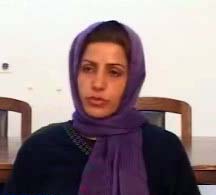
After years of sufferings and being captive behind the bars of Rajavis’ Cult, Mr. Fallah could manage to release himself from that infernal organization and returned to his homeland and family.

Mr. Afshin Fallah went to Turkey to find a job in 1999.
In Turkey the MKO elements tricked Mr. Fallah into recruiting him. Then he was sent to Camp Ashraf, Iraq by a person called Ali Ankara.

Nejat Society – Golestan Branch

July 2, 2009 0 comments
FacebookTwitterPinterestWhatsappTelegramSkypeEmail
Mujahedin Khalq; A proxy force

MKO role in a Color Revolution

In his new book, "Full Spectrum Dominance: Totalitarian Democracy in the New World Order," F. William Engdahl explained a new form of US covert warfare – first played out in Belgrade, Serbia in 2000. What appeared to be "a spontaneous and genuine political ‘movement,’ (in fact) was the product of techniques" developed in America over decades. With respect to Iran’s post-election crises, there is a discourse underlined “Iran’s Made-in-the-USA "Green Revolution" that offers reasons for a new attempted American backed color revolution in Iran.

After Iran’s June 12 election, days of street protests and clashes with Iranian security forces followed. Given Washington’s history of stoking tensions and instability in the region, its role in more recent color revolutions, and its years of wanting regime change in Iran, analysts have strong reasons to suspect America is behind post-election turbulence and one-sided Western media reports claiming electoral fraud and calling for a new vote, much like what happened in Georgia and Ukraine.

The same elements active earlier are likely involved now with a May 22, 2007 Brian Ross and Richard Esposito ABC News report stating:

"The CIA has received secret presidential approval to mount a ‘black’ operation to destabilize the Iranian government, current and former officials in the intelligence community tell the Blotter on ABCNews.com. The sources who spoke on the condition of anonymity….say President Bush has signed a ‘nonlethal presidential finding’ that puts into motion a CIA plan that reportedly includes a coordinated campaign of propaganda, disinformation and manipulation of Iran’s currency and international financial transactions."

Perhaps disruptions as well after the June 12 election to capitalize on a divided ruling elite – specifically political differences between Mahmoud Ahmadinejad and Supreme Leader/Grand Ayatollah Ali Khamenei on one side and Mir Hossein Mousavi, former president Hashemi Rafsanjani, and Grand Ayatollah Hossein Ali Montazeri on the other with Iran’s Revolutionary Guard so far backing the ruling government. It’s too early to know conclusively but evidence suggests US meddling, and none of it should surprise.

Kenneth Timmerman provides some. He co-founded the right wing Foundation for Democracy in Iran (FDI) and serves as its executive director. He’s also a member of the hawkish Committee on the Present Danger (CPD) and has close ties to the equally hard line American Enterprise Institute, the same organization that spawned the Project for the New American Century (PNAC), renamed the Foreign Policy Initiative (FPI) for much the same purpose.

On the right wing newsmax.com web site, Timmerman wrote that the NED "spent millions of dollars during the past decade promoting color revolutions in places such as Ukraine and Serbia, training political workers in modern communications and organizational techniques." He explained that money also appears to have gone to pro-Mousavi groups, "who have ties to non-governmental organizations outside Iran that (NED) funds."

Pre-election, he elaborated about a "green revolution in Tehran" with organized protests ready to be unleashed as soon as results were announced because tracking polls and other evidence suggested Ahmadinejad would win. Yet suspiciously, Mousavi declared victory even before the polls closed.

It gets worse. Henry Kissinger told BBC news that if Iran’s color revolution fails, hard line "regime change (must be) worked for from the outside" – implying the military option if all else fails. In a June 12 Wall Street Journal editorial, John Bolton called for Israeli air strikes whatever the outcome – to "put an end to (Iran’s) nuclear threat," despite no evidence one exists.

Iran’s rulers know the danger and need only cite Iraq, Afghanistan, and numerous other examples of US aggression, meddling, and destabilization schemes for proof – including in 1953 and 1979 against its own governments.

On June 17, AP reported that Iran "directly accused the United States of meddling in the deepening crisis." On June 21 on Press TV, an official said "The terrorist Mujahedin Khalq Organization (MKO) has reportedly played a major role in intensifying the recent wave of street violence in Iran. Iranian security officials reported (the previous day) that they have identified and arrested a large number of MKO members who were involved" in the nation’s capital.

They admitted to having been trained in Iraq’s camp Ashraf and got directions from MKO’s UK command post "to create post-election mayhem in the country." On June 20 in Paris, MKO leader Maryam Rajavi addressed supporters and expressed solidarity with Iranian protesters.

In 2007, German intelligence called MKO a "repressive, sect-like and Stalinist authoritarian organization which centers around the personality cult of Maryam and Masoud Rajavi." MKO expert Anne Singleton explained that the West intends to use the organization to achieve regime change in Iran. She said its backers "put together a coalition of small irritant groups, the known minority and separatist groups, along with the MKO. (They’ll) be garrisoned around the border with Iran and their task is to launch terrorist attacks into Iran over the next few years to keep the fire hot." They’re perhaps also enlisted to stoke violence and conduct targeted killings on Iranian streets post-election as a way to blame them on the government.

July 1, 2009 0 comments
FacebookTwitterPinterestWhatsappTelegramSkypeEmail
Iraqi Authorities' stance on the MEK

Elements of Mojahedin organization in Tehran Riots

Rubaie told “Al Hayat”: the stability of Iran and Iraq is in the regional interest

LONDON – Raed Jaafar – The national security adviser Mowaffak al-Rubaie said the security and political stability in Iran is in the interest of the region in general and Iraq in particular, and warned that any political or security flaw in Iran would have a negative impact in the region in general and Iraq in particular, explaining that “Our intelligence confirms that during the manifestations of opposition, elements of the Mujahideen infiltrated among the demonstrators, giving rise to riots”.

Rubaie told “Al Hayat” that “the differences between the so-called Reformists and Conservatives in Iran focus on domestic issues more than specific foreign policy”. Referring to “the absence of major differences in the foreign policies of Iran”, he added “Whoever wins in Iran will not change the policy with Iraq since Tehran’s policy toward Iraq will not be much affected by the victory of any of the parties”, explaining that “foreign policy is almost uniform with the same constants”.

Rubaie said that the “Iraqi leaders governing the country now, and since the days of the late opposition to the regime of President Saddam Hussein, have strong historical ties with the ruling power in Iran now, the conservatives, from the top of the pyramid below them”. He continued: “They have been in power for a long time, such as the Republic’s Supreme Leader Ali Khamenei and the others, and have close ties with the Iraqis, and that gives Iraq a particular role for the Iranian regime”.

He added: “But we do not know many Reformists, and we had no relations with them in Iraq despite their 8 years under Khatami. We were not in power (in the first two years after the occupation of Iraq) and there is no strong relationship with the Reformists, without that meaning any diminution of them”. He added that “the Conservatives understand Iraq more than the Reformists, as they have a clear record in support of the Iraqi opposition (during Saddam’s rule), and support for the political process after the fall [of Saddam]”.

Rubaie confirmed “we do not interfere in the internal affairs of Iran in any way, in a trend to prefer any party, but limit ourselves to respect the choices of and support the Iranian people and respect the existing system of the Constitution and laws, institutions and others in Iran”.

He added: “But from our point of view from outside and our knowledge of Iranian affairs, and our long experience, we believe that the vast majority of Reformers are part of the very essence of the Islamic system».

He added that “Our intelligence confirms the presence of very small groups, few in number, including elements of the Mojahedin organization in opposition to the regime, which infiltrated demonstrations in protest against the results of the presidential election, which escalated the protests and demonstrations into riots”.

Rubaie denied the possibility of infiltration of the «Mujahideen» from Camp Ashraf in Diyala province, into Iran to participate in the protests or the riots there, explaining that the Iraqi authorities overseeing the camp do not allow its members to get out, and added that “elements of the Mujahideen entered from several countries into Iran, not from Iraq, some of whom were already present, too, to stir up trouble”. He warned that the “high probability of migration is the opposite for these elements, therefore, we have enhanced our intelligence level of preparedness and readiness on the border with Iran, for fear of infiltration of the elements of the Mujahideen Khalq, and crossing the border into Iraq and their attempt to enter the Camp Ashraf”.

In addition, some criticized the Arab media, dealing with the repercussions of the Iranian presidential elections, as “short-sighted, as I believe that support for the Reformists can win the Reformists and weaken Iran”. This was seen as a “kind of revenge or wishful thinking”, stressing that “any instability in Iran, meaning the lack of stability in the region, especially the Gulf States and Iraq”. He said that “some of this is media-driven, non-political, professional”, referring to the “ethnic and racial factors which play a role in this area, such as Arabs and Shi’ites, and this demonstrates the short-sightedness of the media … considering that the stability of a large country like Iran in the region is a stabilizing factor for the entire region”.

Al Hayat (Arabic), London,

July 1, 2009 0 comments
FacebookTwitterPinterestWhatsappTelegramSkypeEmail
Former members of the MEK

No suicide operation unless commanded by the organization

Sahar Family Foundation: Will you explain when for the first time you came to know about the suicide operation in the organization and how did they justify it and give trainings?

Batool Soltani: The first time I was notified about the sacrosanct suicide operation was when I was under political-ideological trainings to be accepted within, to be exact, when I was a trainee member studying the history of the organization. In the course of the discourses it happened to talk about Reza Rezai, as the first martyr of the organization and the first reverent suicide. The organization highly termed it the sacrosanct suicide operation and tried to inspire us with it.

They explained that when Reza was ringed by police, he detonated a hand grenade killing himself along with a number of SAVAK agents. Then they began to give reasons for his daring act saying not only he eluded being arrested alive but also destroyed his arms, information and his body to frustrate the agents’ attempt to have access to them. He was presented as an organizational archetype for the members to follow, a hero whose adherents could never be hindered to accomplish organizational ends. In fact, by the story they intended to mark some points. First, the aspiring members had to bear in mind that a devoted Mojahed disappointed the enemy even in obtaining access to his body.

Second, it was a daring act that needed ultimate bravery one could ever achieve; in the course of trainings, recruits thought it was the last stage a combatant could make it through the stages of the struggle and thus, the trainings seemed much valuable and we tried to comprehend and learn them as fully as we could. In many occasion, for instance, Massoud Rajavi reiterated that Reza deprived the enemy of accessing his information and even his arms and body. Of course, his words were much influential to create a sacramental atmosphere to halo the act and Reza, in this particular phase of trainings, became the sole archetype that could well inspire the trainees with courage, and he did indeed.

SFF: what was specific in Rezai that they made an archetype out of him?

BS: As I pointed out, he was displayed a paragon in some manners especially in his confrontation with police and an example of one with many potentialities that could be followed as a model. Maybe they had anticipated that they could successfully meet organizational ends through these suicide operations and the forces had to be prepared psychologically to carry out the mission. Besides, any training requires a certain model and there was no better match in the organization than Rezai to exemplify for others. Another point about him was his mental potentiality as well as his physical. He was illustrated to be much active in his clashes but he was also mentally competent in analytical and theoretical issues. Perhaps they meant that a combatant had to attain a high versatility but easily sacrifice himself. That is to say, even the mental potentialities of a formidably intellect member hat to in no way interfere with the commitment to the suicide act. These were all aspects of the illustrated archetype that could practically influence the trainees.

SFF: In what level of background did they arrange for this discourse?

BS: Everyone in the organization has to necessarily undergo these instructions, even if some had already passed them. It made no difference; any recruit had to pass through these discourses which the suicide operation was an inseparable part. Even I, a ranking member of the leadership Council, was constantly exposed to these discourses. It was an issue of high priority on the agenda before the leadership when the organization reached a critical stalemate. In the process of dispatching operation teams across the Iranian borders to carry out operations inside Iran, the prerequisite was a proclaimed preparedness for committing suicide. They were thoroughly checked and approved by higher ranks before they were assigned for the mission. The responsible ranks tested them to make sure they would break and swallow their cyanide capsules or did other self-annihilation actions when sensing danger. The interesting point in all these was that a second fellow had to give a pledge that his comrade committed self-annihilation and promised that his comrade would certainly destroy himself in face of danger and in any possible way.

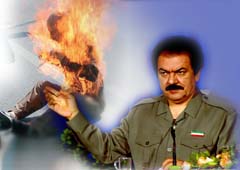
In general, it is a responsibility all have to assume in the organization. Before the invasion of the US against Iraq, for instance, all members took the responsibility of committing suicide by chewing their cyanide capsules if Camp Ashraf would be invaded by the US forces or any threat of arrest, security inspection or else would foreshadow the camp. We had also preplanned arrangements for committing suicide by Cyanide and spilling petrol or ethanol over bodies. We were told to kill or set ourselves on fire if the US forces ventured to enter the camp to start a house by house inspection. Even later and in course of the US’s deployment of forces in the region, we were routinely checked to make sure we were in the state of readiness. Even among the cadres of the Leadership Council they were making a firm stand on self-annihilation if any threat would be posed against the camp by any forces being them Iraqis, Americans, Iranians and Kurds. It was discussed in details how to perpetrate the deed when the right time came: the members had taken the responsibility of reciprocally setting each other on fire by the means of petrol, ethanol and other flammable substances.

In the Leadership Council we were frequently notified that anybody had to be prepared for being killed or suicide. It has always been a key point in varying phases of the organization. In the phase of venture operations, the operatives’ priority was to commit suicide by chewing the carried cyanides, a commitment that the members had to be again checked for its performance in the phase of the US invasion. It was exactly what happened in the case of the 17 June self-immolations; everything was already provided for the operations and the volunteers were only ready for the signal to begin.

SFF: How they assessed and discussed the suicide operations in the Leadership Council? In how many possible ways could they be committed and under what literature they could be justified?

BS: There was a certain book in which an article especially focused on the suicide operation and definitely on the issue of arbitrary suicides. It mainly argued that an act of suicide could be appraised worthwhile and valuable only if committed under some organizational instruction and command; otherwise it was worthless and liable to criticism and belittled by the organization. It was even worse if it was a suicide done in objection to the organization; the perished body was then nothing but a corpse on the hands of the organization.

Even the bodies of these opponent suicides were buried in a different graveyard outside far from Camp Ashraf. The suicides had to be justified according to organizational line of ideology and principles as stated earlier and the cadres of the Leadership Council were not exceptional but on the front-line with the priority of using guns and cyanides. Soon after guns and cyanides were collected and confiscated, petrol and ethanol were replaced as the alternate means. None of the self-burnings done in France were arbitrary but justified organizationally; otherwise they failed to be glorified as they did. In one case, inside Camp Ashraf, a member called Rasoul, blinded in one of military operations, set himself on fire in protest against one of the articles of the ideological revolution called ”article D” (it was about superiority of women over men in all levels of organizational relations and activities). His commission infuriated Rajavi who stated that his act done in opposition to such an issue was denigrated and did not qualify a devoted member to be buried in Ashraf graveyard where the martyrs had been buried. The news of his suicide was heavily censored and they belittled it as a contemptuous act in the organization.

SFF: When they began to collect cyanides?

BS: Once Marjan Akbari snitched the cyanide belonging to her responsible rank and killed herself. Her suicide was masqueraded and reported to be a heart attack but all cadres of the Leadership Council knew the truth about her death and from then on they collected all cyanides. In one occasion, the American forces got suspicious of existing cyanides in Camp Ashraf and began to search for them but they had all been already collected and hidden in a secure place. Of course, at the same time all cadres of the Leadership Council carried capsules.

SFF: Did not Americans know that the organization had cyanides?

BS: It seems that at first they did not, but later on they began to suspect and search for them. As a result, all cyanides were collected and delivered to Zohreh Akhyani and the members were told to seek for alternative working means of suicide. However, it was resolved that in case of any threat against Camp Ashraf, the cyanides had to be distributed among the cadres of the Leadership Council.

SFF: What was the substitute for the cyanides?

BS: Both petrol and ethanol. There were even some places where they distributed the flammable liquids for the purpose of suicide.

To be continued

Translated by Mojahedin.ws – July 1, 2009

July 1, 2009 0 comments
FacebookTwitterPinterestWhatsappTelegramSkypeEmail
Auver-sur-Oise

Waves; Invisible fighters of the cult of Mojahedin

The June 17th dossier of MKO is already 6 years old. Despite the emphasis of French officials on the significance of this legal case on terrorism, it has not been given a verdict yet. However, this is not the end of the story. Mojahedin consider this delay as a subterfuge for calling its accusations baseless and asking to be acquitted on all charges. The silence of France on the issue intensifies its complexity and ambiguity. Whatever the vote of the court, it is evident that the DST operation in 17 June 2003 has been very significant for French authorities. The future will demonstrate whether France government and Nicolas Sarkozy take a realistic stance not to endanger the interests of France for the sake of expediency and negligence or not. He once as the Minister of the Interior emphasized that the materials seized at Auvers-sur-Oise justified the operation (1).

However, what is of more significance is reviewing hidden aspects of this operation and the evidences by which French police and judiciary have managed to prove its legitimacy. Now, this question arises: What are the precautionary measures taken by France in recent years for controlling the illegal activities of Mojahedin in its soil after finding a huge amount of facilities used for terrorist and espionage activities? The activities of MKO in recent years in France indicate that not only no measure has been taken for controlling Mojahedin but also France has acted passively paving the way for extending the activities and facilities of the organization.

The basic question is that while according to the police, this raid was "one of the biggest undertaken by the DST (French Counter-intelligence) in the last 30 years" and international press agencies reported that it was the result of more than three years of investigation (2), what have been the practical, judicial, and controlling measures of French officials in this regard? The discovery of more than eight million dollars in cash and 150,000 Euros as well as computer equipment and dozens of satellite dishes (3) is just a part of the illegal activities of MKO in France. According to the following report by French resources, Mojahedin planned to use these facilities for furthering their cultic objectives:

The Associated Press underlined the significant means deployed by the French police authorities. This shows that the French security services did not take this raid lightly: even bringing in aerial surveillance helicopters. The operation was aimed according to the Ministry, above all, "at the leaders of an organization which threatens public order and is planning or preparing to finance terrorist acts". During the raid, it was necessary to use explosive charges to break open "blocked doors", the police stated. "The People’s Mojahedin are the military wing of Massoud Rajavi’s National Resistance Council, based in the Paris suburbs… The raid, carried out under a search warrant issued by the Paris-based anti-terrorism investigative magistrate, Jean-Louis Bruguiere, mobilised more than 1200 officials, including 80 members of the elite GIGN: France’s SWAT team. It was carried out by the Directorate for National Internal Security (DST or French counter-intelligence) with the support of the Central Command of the Judiciary Police and under the technical direction of the RAID (France’s specialised unit for hostage and terrorist incidents). Thirteen targets were surrounded in the Val d’Oise and Yvelines departments, with a particular focus on the Auvers-sur-Oise camp which was suspected to be a refuge for many active PMOI members… ‘Its bases in the Paris region are considered to be used for questionable organisational, logistical and financial purposes’, added the Ministry…". 4

Undoubtedly, the consequences of 17 June operation were far beyond the discovery of some facilities. In fact, it attracted the attention and aroused the sensitivity of French officials to MKO camp in Auver-sur-Oise as their main headquarter. This is the reason why Mojahedin took a hostile position toward our warnings on the strategic nature of Auver and initiated a propaganda war to distract the attention of international organs from the dangers of this strategic and ideological bastion. France is to identify the real objectives pursued by Mojahedin in Val d’Oise to foil their illegal and terrorist plans. There is no doubt that Auver has turned to the main headquarter of MKO and Mojahedin are after connecting it to their remnant members in Camp Ashraf. After their disarmament and the fall of Saddam leading to the end of his alliance with Masoud Rajavi, Rajavi realized that he no more could use Camp Ashraf as an operational unit. Therefore, his base was transferred to another safe haven, Auver-sur-Oise. French officials found out his objective and performed the operation 17 June. According to an Interior Ministry source:

Auvers-sur-Oise had been turned into the Mojahedin’s "International HQ". Up until March-April [2003], their command structure was in Iraq and only moved with the outbreak of war. 5
This transfer was far from a mere physical one. Mojahedin made use of technology for reorganizing their members and activities all over the world. Despite the necessity of human control of their camp in France by police forces, it hardly suffices since they carry out the greatest portion of their operations through electronic waves that are intangible far from the eyes of inspectors. They no more grab at historical and reactionary means of communication used by cults like Batinis and Al-Qaeda. On the contrary, they have access to the latest scientific achievements and further their objectives through lines and waves. According to French officials:

In 2001, the PMOI had claimed responsibility for more than 195 terrorist attacks on Iran from its base in Auvers-sur-Oise. 6

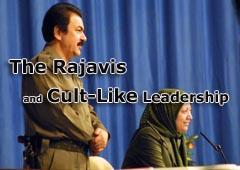
The same resource refers to the cultic structure of the organization based on Masoud Rajavi and Maryam Azdanlu, the cultic leaders of MKO:
It was more like a sect, a cult of personality for Massoud Rajavi and his wife. 7

In a nutshell, Mojahedin open their way easily for the achievement of their predetermined objectives wherever they settle or even have least physical presence by manipulating means of the modern media and communicational techniques to run its propaganda machine.

References:

1. Gessler, Antonie, Autopsy of an Ideological Drift, Chapter 1: The end of tolerance
2. "Coup de filet centre les Moudjahidin du peuple iranien" – dispatches of Agence France Presse (AFP) and Reuters, 17 June 2003.
3. Associated Press, Operation de grande envergure contre les Moudjahidin du people en region parisienne, 17 June 2003.
4. France News, Coup de filet contre les Moudjahidin du people iranien, 17 June 2003.
5. ibid
6. Associated Press, Les Moudjahidin du peoples’appretaient a commettre des attentats selon la DST, 10 June 2003.
7. ibid.

June 30, 2009 0 comments
FacebookTwitterPinterestWhatsappTelegramSkypeEmail
MEK Camp Ashraf

Tension Grows Over Plans to Close Camp Ashraf

The Camp Is the Last Place Belonging to the MEK Iranian Opposition Group
Fifty miles from the Iranian border, a tense drama is quietly unfolding asthe Iraqi government grapples with the fate of several thousand Iranian opposition members who refuse to fade into history.
The Camp Is the Last Place Belonging to the MEK Iranian Opposition Group
The opposition Mujahideen al-Khalq (MEK) has been closely watching the protests next door in Iran over reelection of President Mahmoud Ahmadinejad. But their interest isn’t in whether the Iranian leader gives in to calls for a recount. It’s their belief that the protests could somehow topple the entire system of Iran’s religious leadership.

The prospect of a change in Iran’s government is viewed by many to be as unlikely as the MEK’s hope that Iraq will change its mind about shutting down a camp that has been a major irritant in Iranian-Iraqi relations.

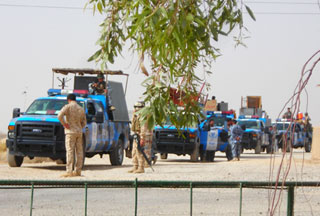
In recent weeks, the leadership of Camp Ashraf, the former main military base of the MEK, has accused Iraqi riot police of entering the camp north of Baghdad and threatening some of its 3,400 residents.

Western officials familiar with the case say Interior Ministry rapid deployment forces stopped outside the main gate in what appeared to be a show of force, without going into the camp.
They say, though, that the standoff could very easily turn violent, given the combination of Iraqi troops not known for their restraint and an extremely disciplined organization intent on creating an international incident.

In 2003, several MEK protesters in Paris set fire to themselves to protest the arrest of the organization’s leader.
The stakes are so high, say Western officials, because Camp Ashraf, which before the war had its own tanks and mortars, has been central to the wider organization.
“Camp Ashraf is the last place they have,”says one Western official.”You have to ask – what is the MEK without it?”

Funded and Armed Under Saddam Hussein
The sprawling camp, with its manicured gardens and tree-lined streets, is a holdover from Iraq’s bitter conflict with neighboring Iran, including eight years of war. Under Saddam Hussein, the MEK was funded and armed – launching extensive attacks on Iran from Iraqi soil.
With the fall of the Iraqi regime in 2003, the MEK was disarmed by US forces. The Iraqi government, which along with the United States considers the MEK a terrorist organization, says its members have no legal right to be here and has asked them to voluntary return to Iran or to third countries that might take them.

“Without legal status here, they don’t exist,”says one Western official.”It is an impossible situation.”
In a measure of the persistence of the MEK’s lobbying efforts targeting government officials, as well as the sensitivity of the issue, all of the officials who spoke about the subject asked to remain anonymous. The Iraqi committee in charge of the issue declined all requests for comment.

The MEK itself, which routinely issues statements accusing Iraqi authorities of trying to kill its members, did not respond to specific questions about plans to relocate the residents.
About 100 of the camp’s 3,400 residents are believed to have dual nationality. Another 1,000 have been residents of other countries. Despite the MEK’s listing as a terror group by the US and Iraq, the residents of Camp Ashraf are not individually considered terrorists.

Relocation Offers Are Hard to Come by
But in line with comments by the previous head of Iraq’s National Security Council describing MEK members here as”brainwashed”and potentially dangerous, persuading other countries to accept more than a few of them has been a very tough sell.

The United Nations High Commissioner for Refugees has given about 250 former camp residents refugee status, but so far only a handful of them have been accepted by any country for resettlement, officials say.

About 600 of the camp residents have left voluntarily since 2003. The Iraqi government has said it plans to move the remaining individuals to another region of Iraq, farther from the Iranian border, but has not yet told camp leaders where it intends to relocate them.
“The closer we get to that eventuality, the more tense it will become,”says one official, saying whether or not violence broke out would depend on the instructions residents received from the MEK leadership.

In interviews at Camp Ashraf in April, camp residents, under very tight control by the organization and with their contact with family outside restricted, said they would never leave the camp, the only home many of them have known for more than a decade.

One Former Resident’s Legal Limbo

Camp leaders provided reams of documents listing the residents under Geneva Conventions as protected persons during the fighting in 2003. But that does not address the current issue of the residents’ lack of legal status in a country that is no longer at war with Iran or under attack by the US.
Some of those who have made the difficult decision to leave Camp Ashraf have found themselves in limbo.
In a hotel in Baghdad’s Green Zone in May, an MEK member who had left was waiting for travel documents to be reunited with her daughter whom she had given up 17 years ago at the age of 2.
The woman, who said she did not want to give her real name for fear of Iranian retribution, asked us to call her Zahra. She had been at MEK camps in Iraq for 21 years and had sent her Baghdad-born daughter to be raised by other MEK members abroad after the organization decided to break up families, believing that such attachments hampered their members’ commitment to the cause.

“It is difficult for other people to understand. All of us in the camp are political people”dedicated to the overthrow of the Iranian regime, she said.
Zahra was given refugee status in Sweden after being imprisoned in Shiraz as a teenage protester in the 1980s. She said she left Camp Ashraf because it had been difficult in the past year to get physical therapy or pain medication for an injury sustained during a military operation shortly after she arrived in Iraq.
“They [the camp leadership] said to me, ‘You can go if you want to,'”she said.

Officials privately said that after Zahra began lobbying on behalf of the MEK with Iraqi members of parliament opposed to the government’s decision to close the camp, she was moved across town to a much smaller hotel where several other MEK members are being held while they await documents to leave the country.
In a phone call from her new hotel room, she said she was prevented from leaving the hotel and had gone on a hunger strike. The German Embassy said it was following her case, and other officials said her health did not appear to be in danger.

Iraqi government guards posted in the lobby of the hotel prevented access to her and would not allow the hotel phone to be used to call her room, saying she needed permission from more senior Iraqi officials to talk to anyone.

“It’s part of the problem…. The Iraqi government has not decided how it wants to deal with individuals,”says one Western official, noting that resettlement to a third country often took months or years.”They have to give them an incentive to want to leave the camp.”

By JANE ARRAF- Baghdad

June 30, 2009 0 comments
FacebookTwitterPinterestWhatsappTelegramSkypeEmail
Mujahedin Khalq Organization as a terrorist group

MKO behind Iran embassy attack in Sweden

Iranian authorities say anti-Iran terrorist group MKO has been involved in the recent attack on the Iranian embassy near Stockholm in Sweden. terrorist group MKO has been involved in the recent attack on the Iranian embassy near Stockholm

The Iranian Embassy in Sweden came under attack on Friday when more than 150 people gathered outside its main building to protest the outcome of the June 12 presidential election.

One of the embassy personnel was seriously injured in the attack, police said.

Rasoul Emami, Iranian Ambassador to Sweden, said members of the terrorist Mujahedin Khalq Organization (MKO) were found to be among the assailants.

According to Emami, the terrorists have been caught on camera smashing the windows, breaking through the building, attacking embassy staff and tearing down the fence.

The remarks come only a week after Iranian security officials discovered that the terrorist Mujahedin Khalq Organization (MKO) had helped intensify the post-election violence in Iran.

According to the security officials, the arrested members had confessed that they were
extensively trained at their bases in Iraq’s camp Ashraf to create post-election mayhem in the country.

Founded in the 1960s, MKO is a guerilla group, which masterminded a slew of terrorist operations in Iran.

The terrorists are especially notorious for taking sides with former dictator Saddam Hussein during the war Iraq imposed on Iran (1980-1988).
The group masterminded a slew of terrorist operations in Iran and Iraq — one of which was the 1981 bombing of the offices of the Islamic Republic Party, in which more than 72 Iranian officials were killed.

A 2007 German intelligence report from the Federal Office for the Protection of the Constitution has identified the MKO as a "repressive, sect-like and Stalinist authoritarian organization which centers around the personality cult of [MKO leaders] Maryam and Masoud Rajavi".

June 29, 2009 0 comments
FacebookTwitterPinterestWhatsappTelegramSkypeEmail
Mujahedin Khalq 's Function

Democracy As Usual in Iran

This observer in Tehran can inform you that the (English-language) media frenzy and its sensationalism has breached the limits of reality and has hijacked the essence of debate in Iran.
It is used as a diversion to eclipse a rejuvenation of a democratic process. The hyped protests, all within a square mile in west of Tehran, are simply a storm in a teacup and all of it must be framed in perspective. A civil war, a revolution or regime change, it is not.

Let us first remember that Iran is a country of about 72 million people, a third of whom are under 25 years old. A turnout of some 50,000 angry mobs (or even one million people, something that has not happened) is not exemplary of the rest. The other 71+ million people also have rights, lives and a desire for quiet pursuit of happiness and peace. Isn’t democracy about the will and rule of the majority, as well as the rule of law and civil order? Or should it be narrowly interpreted (by foreign media) as the right of a select tech-savvy few with computers, email and foreign language skills to project a distorted scuffle and civil disorder? Are elections not about discipline and order, after all? Or should the rules be overturned at random by crying foul and burning down banks and shops, simply because losers dislike the results of the very same system in which they signed up and ran campaigns?

Secondly, the blatant sudden turn of events after the election has not been properly explained to most Iranian youngsters and foreigners with a cursory knowledge of Iranian affairs. In fact, it has nothing to do with the election itself. The violence of June 20th marked the 28th anniversary and a rerun of a major street battle in Tehran between the Mujahedeen-e-Khalq (MKO-MEK) and their rivals during the early days of the Revolution. The rivals won 28 years ago and the MKO-MEK (a Stalinist, violent group that has no mind for the democratic process or even internal elections) was forced into exile. Many of their members were arrested and jailed when Mr. Mousavi was prime minister.

The MKO-MEK can be best described as the Persian speaking wing of the degenerated Iraqi Baath Party and an earlier species of Al Qaeda back in early 1970s– a contemporary of the Red Brigades and the Baadermeinhof terror organizations in Europe. For decades, it has been designated as a terrorist group by most countries. They murdered American military advisers in Iran prior to the 1979 Revolution. MKO was on Saddam’s payroll to kill Iraqi Shiites, in exchange for having a base in Iraq. The source of their budgets remains murky, but MKO maintains an underground system in most European and North American cities, with lobby networks and a few chameleon fronts and disguised names that mask the organization.

MKO’s Camp Ashraf base was under protection of American forces and, despite the terrorist designation, they did “business” with Mr. Rumsfeld’s secret Task Force 20 for a few terror jabs at Iran in a hostile, ill-conceived regime change dream concocted by Mr. Cheney & Co. After the pullback of American forces in Iraq, the Iranian and Iraqi government have negotiated to close Camp Ashraf north of Iraq and extradite the key figures, the final round of which has been postponed until after elections in Iran. Hence the tsunami of one-way, ill-informed pressure on mostly English-speaking media by the MKO-MEK lobbies machine, an attempt to derail recent events beyond reality and divert attention away from formation of democracy. In other words, modern politics is snuffed out by a wave of violence, using uninformed young protesters as a shield—many of whom were not even born 28 years ago and are clueless about it all.

Otherwise, why would a legitimate Iranian “protester” hold up a sign in English, a foreign language, and pose for cameras if the idea is to protest against the Iranian state in Persian?
Recent developments in Iran are two distinct different matters, albeit foreign media have stitched it all up into one big bubble of insane hype. Somehow, all have forgotten about the purpose of an election. Simply put, the foreign mass media has been duped by a terrorist organization with modern (terror?) techniques of vilification in an abusive manipulation. Polluted prejudice and a lazy default on absurd vocabulary and zingers such as “regime change”, talk of “rogue behavior” or relapse to the perception of the 1953 coup has hijacked reality.

It is time for the world to realize that the Iranian political system is maturing. It is futile and silly for foreigners to insist upon their perceived views of Iran, even if media outlets turn to full time bullhorns of hostile policies of their governments. In the real world, in a territory about the size of Western Europe, Iran conducted a peaceful and historical election without peer in the region and Iranians have embarked on a new course of democracy, not a violent revolution or a coup or a crackdown plan to serve divide-and-dominate games of hostile foreign governments.

It is sad to see civil disorder in any place. But it must be framed in perspective and it is nothing short of a travesty to see the essence of a democratic process is summarily trampled in favor of sensationalist views of the relative few troublemakers with a questionable past and foul intentions.

Democracy is a process, not a project. It must be encouraged with cool heads and it must even-handedly left to the indigenous people to find their own way over time. Within living memory, meddling by foreigners in Iranian politics bluntly delayed and damaged the century-old desire of Iranians for a democratic system.

Iranians have not forgotten that and chances are that an absolute majority of Iranians are not going to let such meddling happen again.
Dr. Ali Ettefagh,

(Dr. Ali Ettefagh serves as a director of Highmore Global Corporation, an investment company in emerging markets of Eastern Europe, CIS, and the Middle East.)
http://newsweek.washingtonpost.com/postglobal
/ali_ettefagh/2009/06/democracy_as_usual_in_iran.html

June 27, 2009 0 comments
FacebookTwitterPinterestWhatsappTelegramSkypeEmail
Mujahedin Khalq as an Opposition Group

The curious case of Iran’s Mujahedin

David Shariatmadari: A group of senior British politicians claims the Iranian Mujahedin are Iran’s best hope of reform. Are they right?

They’ve been described by British politicians as "brave patriots" and "the main democratic Iranian opposition group". Writing in the Sunday Telegraph, Christopher Booker said the organisation they set up, the National Council of Resistance of Iran, was "real opposition to the dictatorship" and "the best hope of transforming Iran into a secular, democratic, non-terrorist country". On Wednesday, another Telegraph group journalist, Con Couglin, called them "the leading Iranian dissident group". Their devoted fans include Lord Corbett of Castle Vale, Lady Turner of Camden, and Andrew Mackinlay, a member of the House of Commons foreign affairs committee.

So who are they? And how come you’ve never heard of them?

Well, the People’s Mujahedin, otherwise known as the Mujahedin-e Khalq, called monafeqin (hypocrites) by their detractors and either PMOI, MKO or MeK for short, have been around for nearly half a century. Their origins can be traced to the radical politics of the years before 1979, and their early history is one of ideological twists and turns, schisms and betrayals. To cut a very long story short, they lost out to supporters of Ayatollah Khomeini in the early days of the revolution and in response to a bloody crackdown began a paramilitary campaign against the fledgling republic. During the Iran-Iraq war they were given refuge by Saddam Hussein and allowed to mount attacks on Iran from within Iraqi territory, where they still maintain a settlement, now known as Ashraf City. Reports suggest they were involved in the suppression of the Kurdish uprising after the 1991 war. In 2001, they renounced all military activity. Despite this, they were put on the EU’s terror blacklist in 2002, a decision which was reversed in 2008.

Since their exile from Iran, they’ve spent a great deal of time trying to win westerners over to their cause, and the single-mindedness of some of their supporters has proved remarkably effective. The British Parliamentary Committee for Iran Freedom, which lobbies on the group’s behalf, counts among its members a surprisingly large number of peers and MPs, many of whom, judging by their parliamentary interventions and speeches, seem to have an understanding of Iran’s history based entirely on the standard PMOI line.

Others have been more difficult to convince. The UK government, for example, which tried hard to prevent their removal from the list of proscribed organisations. In 2005 Human Rights Watch (HRW) produced a report into abuses at Ashraf City (then called "Camp Ashraf"). The PMOI’s supporters in Europe and America were quick to brand HRW’s informants "suspicious individuals". The PMOI denied the claims and the National Council of Resistance of Iran said the "accusations only serve as a license to the mullahs’ regime to continue the execution and suppression of PMOI members and supporters in Iran". Last summer, I interviewed Joe Stork, director of HRW’s Middle East and North Africa and asked him about the reaction to the report. "The Mujahedin organisation has, it seems to me, done a pretty good job of cultivating fans, in various countries in Europe," he said. "The reaction on the part of those people was quite vociferous. Denouncing the report, attempting to delegitimise it, putting what seemed to me an awful lot of effort and resources into discrediting the report. Unsuccessfully, in my view."

The picture of the PMOI you get if you do a bit of research – talking to disinterested parliamentarians, former members and journalists who’ve investigated them – is of an organisation that relies heavily of the cult of personality, subjects its members to intense psychological pressures, and massively inflates its level of support inside Iran. It was the subject of an investigation by the German government agency charged with monitoring "foreign extremism", has been accused by HRW of perpetrating serious human rights abuses within the last decade and by others of being complicit in Saddam Hussein’s crimes against his own people.

More relevant, perhaps, is the fact that Iranians who live in Iran regard the PMOI as totally marginal to contemporary politics. At best it’s seen an embittered faction whose main constituency is gullible western politicians. At worst, its members are regarded as lunatics who sided with the enemy during a war in which hundreds of thousands of ordinary Iranians died.

Why is any of this important? Well, the PMOI provides the current Iranian government with an easy scapegoat. The more senior parliamentarians collude with PMOI, put their names to their turgid press releases and organise debates on their behalf, the more the Iranian government’s accusations of can be made to carry water. Tehran claimed this week that PMOI activists, and the group’s London command centre, were behind some of the recent protests.

June 27, 2009 0 comments
FacebookTwitterPinterestWhatsappTelegramSkypeEmail
Missions of Nejat Society

True facts behind June 17th events

On Friday June, Nejat Society, Khuzestan branch held a meeting together with a number of families of Nejat NGO and a few defectors who have just returned home. During the 4 hour meeting, different aspects of June 17 events were discussed.

First of all, Mr. Dehdar Hassani revealed some facts on the arrest of Maryam Rajavi by French Police and warned about the way MKO abuses such an event in its propaganda.

Then, Mr. Ali Ekrami noticed the active role of the cult’s leaders in intriguing and persuading the member to commit self-immolation, he described his observations of what he witnessed in Camp Ashraf at that time. Revealing the real goals of MKO in holding ceremonies for the anniversary of June 17th, 2003, he asked the families to make a more active relation with Nejat Society in order to pursue the situation of their children in Camp Ashraf, Iraq and to stop MKO vicious leaders prolonging the stay of their beloveds in the notorious Ashraf Base.

During the meeting, there were also some defectors of the cult who told their memoirs on June 17th in Ashraf Base, they especially emphasized on the motivating role of MKO leaders to make members commit suicide.
At the end they issued a statement.

June 25, 2009 0 comments
FacebookTwitterPinterestWhatsappTelegramSkypeEmail
Newer Posts
Older Posts

Recent Posts

  • The black box of the torture camps of the MEK

    December 24, 2025
  • Pregnancy was taboo in the MEK

    December 22, 2025
  • MEPs who lack awareness about the MEK’s nature

    December 20, 2025
  • Why did Massoud Rajavi enforce divorces in the MEK?

    December 15, 2025
  • Massoud Rajavi and widespread sexual abuse of female members

    December 10, 2025
  • Facebook
  • Twitter
  • Instagram
  • Youtube

© 2003 - 2025 NEJAT Society . All Rights Reserved. NejatNGO.org


Back To Top
Nejat Society
  • Home
  • Articles
  • Media
    • Cartoons
    • NewsPics
    • Photo Gallery
    • Videos
  • Publications
    • Books
    • Nejat NewsLetter
    • Pars Brief
  • About Us
  • Contact us
  • Editions
    • عربي
    • فارسی
    • Shqip