Nejat Society
  • Home
  • Articles
  • Media
    • Cartoons
    • NewsPics
    • Photo Gallery
    • Videos
  • Publications
    • Books
    • Nejat NewsLetter
    • Pars Brief
  • About Us
  • Contact us
  • Editions
    • عربي
    • فارسی
    • Shqip
Nejat Society
Nejat Society
  • Home
  • Articles
  • Media
    • Cartoons
    • NewsPics
    • Photo Gallery
    • Videos
  • Publications
    • Books
    • Nejat NewsLetter
    • Pars Brief
  • About Us
  • Contact us
  • Editions
    • عربي
    • فارسی
    • Shqip
© 2003 - 2024 NEJAT Society. nejatngo.org
Mujahedin Khalq as an Opposition Group

MKO Funds Attacks on Iranians in Iraq

The recent terrorist attacks against Iranian nationals and pilgrims in Iraq have been funded by the anti-Iran terrorist group, Mojahedin-e Khalq Organization (MKO), Iraqi media reported.

"A hireling Iraqi group paid by the MKO is responsible for the recent attacks on Iranian pilgrims," Alla al-Khatib, a prominent Iraqi writer and journalist said, Habilian website reported.

The journalist underlined that available documents and evidence display that the crime had been committed by MKO affiliates.

Khatib reiterated that the attacks are aimed at creating distrust among Iranian pilgrims and Iraqi officials.

The Iraqi writer, however, noted that such actions by the MKO cannot create a rift in Tehran-Baghdad friendly ties.

Elsewhere, Khatib described the vote by the Iraqi security forces to seize MKO’s main base and training camp as "completely legal", and added, "Existence of Camp Ashraf in this crisis-stricken region was a great problem."

Iraqi security forces took control of MKO’s Camp Ashraf about 60km (37 miles) north of Baghdad late July and detained dozens of the members of the terrorist group.

Following the operation, the Iraqi authority also changed the name of the military center from Camp Ashraf to the Camp of New Iraq.
August 9, 2009 0 comments
FacebookTwitterPinterestWhatsappTelegramSkypeEmail
Mujahedin Khalq Organization

A report of purges within Mojahedin Khaq

Massoud and Maryam Rajavi the cult leaders

Once in a letter addressed to Christopher George of Human Rights Watch/Middle East entitled Human Rights Abuse in Rajavi’s cult, Nowrooz Ali Rezvani, a disaffected and former member of MKO, presented documented reports of many physical and psychological mistreatments of the members by the leaders within the organization. The following is a detailed and proven list of engineering operations plotted in years 1981 to 1994 in an attempt to liquidate some members for certain organizational reasons.

The confessions by Mr. Rezvani well indicates the potentiality of the organization in subjecting the life of those in Camp Ashraf to severe jeopardy through a preplanned scenario and under the cover of defending the camp against the lawful interference of the Iraqi police to take the control in its hands.

Aggressive reaction of Camp Ashraf residents to confront the Iraqi police, that in the first look may seem to be inevitable in such occasions, demonstrates covert plots that were suspended until a golden opportunity could frame all together. The warning bells had been already rang and the least the Iraqi government can do is to decrease the costs which requires considerable and deliberate prudence when dealing with such a conundrum and odious organization. Now soon after the attacks the organization has started a new round of propaganda blitz mainly focusing on the killed members; a probe into the past thirty years clarifies that it has been typical of the organization and the Rajavis to advance cultic causes by moving over the victims whose death remains a matter of obscurity. The members who are claimed to have died in clashes between Iraqi police and Ashraf residents follow the same craftily plotted scenario that grants the opportunity of helping the organization to get rid of its dissidents.

Facts revealed by former members indicate that a number of MKO members committed suicide because they were prevented from leaving the organization and that suicide was also claimed as the cause of death for recalcitrant members who had to be erased. Once more, we forewarn the international organizations and bodies of the repetition of past incidents that can be best judged by the members themselves; does it sound believable that the members’ death in any form has merely been accidents? Mr. Rezvani’s references to some of these deaths within MKO can provide some answer to some degree.

The first floor in Camp Shafaee located in Kirkuk
A woman called Nahid dropped to her death falling out of the first floor of a building of Camp Shafaee located in Kirkuk, Iraq. She was announced to have committed suicide. According to MKO, she was psychologically ill and her suicide was identified the result of her nurse’s negligence.

Baghdad, Iraq, 1976
A woman named Zahra was designated to work as a kitchen porter in Camp Saadati after she was demoted of her organizational rank. Later, her frozen body was found in the refrigerator.

Sardasht, Kurdistan, 1986
In Sardasht zone, a man from southern Iranian province named Abbas was shot deliberately by his commander as reported by eye-witnesses. He was an old member of the organization and opposed to inter-organizational relations. He had long been watched and sent to the military section as a punishment where he was then liquidated through a plot.

Kirkuk, Iraq, Debs Prison
Mohammad Gamoush imprisoned in section 200 of Debs Prison was found hanged. The organization buried his body behind the walls of the section 200 of Debs Prison.

Kurdistan, Iran-Iraq borderline, 1987
Hassan Muhammadi, a member of MKO, is suspiciously drawn in the border river Zab. He had been condemned to death by the inter-organizational court located in Iraqi soil. Suffering long days in a prison located in Kurdistan, Iraq, he was transferred to Mesbah Prison in Suleymanieh where he managed to escape in an attempt to make contacts with the organization’s rankings and even the leader himself in Baghdad to inquire why he had been condemned to death and imprisoned.

For the second time in Camp Saadati in Baghdad he stood trial and again Abbas Davari and Muhammad Hayati condemned him to death and imprisonment. On Rajavi’s order his death verdict was commuted and he was employed in a transportation stock as a simple worker where he had to stay day and night. Two times he was violently attacked and beaten by Mojahedin thugs, two of whom can be named as Hassan Tahmasebi and Mashaallah from Tehran. Muhammadi was then dispatched to the organization’s military section where he was ostensibly drawn in the River Zab overnight. He was an old member of MKO and imprisoned in the Pahlavi’s regime. His brother was a ranking member and had detached from the organization in 1978 after being released from the prison.

Khalis Province, Iraq, Camp Ashraf 1991
A man was found smothered with a handkerchief in his mouth in a resident prison in Camp Ashraf. His body was found while they were checking and inspecting residential.
Two other women died in suspicious and the organization announced they had committed suicide by taking cyanides while access to such toxic substances was impossible in Camp Ashraf. The two were dissidents who intended to leave and had refused the ideologically enforced divorces.
A recalcitrant member had announced his separation; his head was crushed between two military IFA trucks in regiment 96. The organization announced his death an accident as a result of cloud and the darkness.

In 1991, nearly 1000 dissident members ran a hard life in the camps’ jails as well as Saddam’s notorious prisons where they spent weeks and months in solitary confinements. At the end it was the awful camp in Romadi that awaited the dissident, a fearsome place where Rajavi had sworn to banish the dissident, where they would pray one thousand or one million times a day to die and would see and touch death in any moment.

And so it was that a dissident named Javad failed to tolerate the rough condition dominating the camp and hanged himself before the Office of the Refugees’ Affairs just before the eyes of his comrades. Many reports have been so far directed to you concerning the act and I deem it necessary to unveil some facts about a number of murders committed by MKO.
In May 1984 in Paris, a woman named zhale commits suicide by jumping before a train to show her opposition to MKO’s internal ideological revolution and Masoud Rajavi’s leadership. She had been under psychological pressure by her organizational supervisors.

In 1984 in Kurdistan, Iraq, a MKO’s military commander, called Abbas, shots a dissident back in the head causing his immediate death. The murderer is still in the organization.

In 1984 in Kurdish zone of Iranian Sardasht-Baneh, for three times the injured, captive forces of Iranian army were machine-gunned on the command of a MKO’s commander named Nasser Gestapo.

In 1983 in Kurdish zone of Iranian Sardasht, Zamziran Village, a wounded POW was machine-gunned by a commander of MKO named Yahya from Zanjan.

In 1983 in Kurdish zone of Iranian Sardasht, Kavalan Village, two wounded POWs were machine-gunned by a commander of MKO’s operation team named Hadi Gestapo.

In 1984 in Kurdish zone of Iranian Bukan, two wounded POWs were machine-gunned by a commander of MKO named Reza Sanandaji.

In 1986, Baghdad, Iraq, Mojtaba Mirmiran, a member known to be poet working in the propaganda section of the Voice of Mojahed, was found hanged in Camp Mirzai located in Baghdad, Al-Saadun St. He was one of those recalcitrant members strongly opposed to Rajavi’s leadership. The organization announced his death another case of suicide.

August 9, 2009 0 comments
FacebookTwitterPinterestWhatsappTelegramSkypeEmail
MEK Camp Ashraf

Iraq denies blocking food to MKO camp

Iraq on Thursday denied it was preventing food, water or medical supplies from entering an Iranian exile camp it wants to shut down north of Baghdad. Government spokesman Ali al-Dabbagh denied reports by the camp's residents,MKO that its forces had blocked entry of food and water into the camp

Government spokesman Ali al-Dabbagh denied reports by the camp’s residents, the People’s Mujahideen Organization of Iran (PMOI) dissident group, that its forces had blocked entry of food and water into the camp for at least 10 days.

"That is incorrect … We do not block food or medical supplies, but we do block building supplies such as cement and metal," Dabbagh said.

Swiss-based human rights activists, including senior U.N. expert Jean Ziegler, said on Wednesday Iraqi authorities were blocking food and water.

Iraqi forces last week took control of the camp on the Iranian border, home to the PMOI for about two decades, sparking clashes with residents in which at least seven exiles were killed. Camp residents said 13 were killed.

Iraqi police arrested 36 Iranian exiles on rioting charges after the clashes.

Iraq has said it wants to close the camp and send residents to Iran or a third country, a proposal they bitterly oppose. The government has not said when it might evict them.

Iraq’s Shi’ite-led government, which includes many former opponents of Saddam Hussein who were exiled in Iran, has close ties to Tehran and is unsympathetic to the PMOI.

The group began as Islamist leftists against Iran’s Shah but fell out with Shi’ite clerics who took power in the 1979 revolution.

Iraq, like Iran and the United States, sees the PMOI as a terrorist organization. On Tuesday, Iraq’s state security minister said none of the camp’s 3,500 residents would be granted asylum in Iraq.
Reuters, Baghdad –  Reporting by Mohammed Abbas

August 8, 2009 0 comments
FacebookTwitterPinterestWhatsappTelegramSkypeEmail
MEK Camp Ashraf

Police general, analyst discuss Iraqi takeover of camp Ashraf

Iraqi government-controlled Al-Iraqiyah TV, at 1910 gmt on 29 July carries a new episode of its "Al-Iraqiyah and the Event" talk show featuring a live 41-minute discussion, moderated by Nusayr Lazim and hosting, in the studio, Major General Abd-al-Husayn al-Shammari, chief of police in the Diyala Governorate; and Dr Adnan al-Sarraj, director of the Iraqi Centre for Media Development, on the legitimacy or otherwise of the presence of the Mojahedin-e Khalq Organization (MKO) on Iraqi territory and the Iraqi military operation at Camp Ashraf, home to the MKO followers, to impose Iraqi forces control over the camp.

Introducing the discussion, Lazim gives a brief history of the MKO, saying that the Iraqi government had discovered that the existence of this organization on Iraqi territory is illegal "because this presence contravenes article 7 of the Iraqi constitution, which stipulates that the state shall be committed to fighting all forms of terrorism and preventing the Iraqi territory from being a launch pad, a passageway, or an arena for terrorist activities." He says "the government had decided not to use force to evict them but to encourage them to leave Iraq for any other country that grants them asylum or to return to Iran voluntarily."

Lazim begins the discussion by asking General al-Shammari "when negotiations began to enter Camp Ashraf and impose Iraqi control," he replies: "After the Cabinet’s decision No 216 of 16 June 2008, a committee was formed under Dr Muwaffaq al-Rubay’i and a number of representatives of the security ministries and it decided to establish contacts with the residents of Camp Ashraf." General al-Shammari notes that a number of meetings and conferences have been held since then, and they continue to be held. He notes that given the fact that the organization is considered a terrorist organization, it was decided that it would be considered a political organization and must leave Iraq, "but not by force or by violating human rights but by understanding and dialogue and based on human rights, even though the MKO members are not considered political refugees." He adds: "International organizations, such as the UN High Commission for Refugees, declined to visit the camp because it is of a military nature."

Asked if there were "direct negotiations" with the leaders in the camp, he says the negotiations were direct and were held at Camp Ashraf, noting that the talks took normal course, adding that the camp was searched for weapons and the camp’s population was counted. He adds that the Human Rights Ministry was involved and special forms were distributed to the inmates to fill, indicating whether they wanted to return to Iran or to go to a European state. They were asked who wanted to leave the camp, "which is considered a prison." Asked about the "third option," allowing them to stay on Iraqi territory, General al-Shammari replies that this option was "introduced later on."

He says that many meetings were held with them "but they presented impossible demands, as though this land belongs to them, subjecting it to haggling." He adds: "They claimed that the government wanted to force them out of the camp, that it did not treat them as human beings." He says the US forces representatives attended all meetings with the representatives of the camp. Asked if the US forces were active participants in the talks or only observers, he says: "At the beginning they supported, sponsored, and defended them based on the principles of human rights and freedom, telling us: You are a new state and should behave in different way. They forgot that they themselves considered this organization a terrorist organization in 1997."

General al-Shammari says: "Thus, after 30 June, a decision was made that they must leave or they have to be moved to another place," and adds: "There was a proposal to send them to other places in Iraq, because this place is really unsafe to them. If they come under Iranian aerial bombardment or missiles we will not be able to protect them."

He says the Iraqis considered that this is an Iraqi territory and the facilities on the camp are Iraqi property and must be managed by the Iraqis. He says that state employees started to send water into the camp and a healthcare centre was opened.

Turning to Dr al-Sarraj, Lazim asks him if he agrees that they should leave Iraq based on international law, he says: "The MKO is a terrorist organization, and this was reaffirmed by the Iraqi Governing Council, which obligated the MKO to leave Iraq and hand over their weapons and all their facilities that are on Iraqi territory, and this decision was binding on all successive Iraqi governments. However, the national unity government under Mr Nuri al-Maliki, who is the supreme commander of the Armed Forces, wanted to resolve the Camp Ashraf issue as soon as possible. It issued a number of decisions demanding that the organization either leave or find refugee in other countries and outside the Iraqi borders." He says the organization has a "long history" of deplorable and "heinous" deeds. He says that MKO has been described as a "terrorist organization since the 1980s." He says it supported Saddam and helped him quell the Sha’ban uprising in 1991.

He says that the Iraqi government cannot tolerate the existence of such an organization on its soil, adding that MKO members are trained on most modern weapons, combat operations, guerrilla warfare, and the use of explosives, and they can act as human bombs, noting that there are 3,500 of them in this camp.

Lazim then asks General al-Shammari to give a briefing on the negotiations that were held on this issue from 30 June to 28 July. General al-Shammari says that the area of the camp is about 48 square kilometres, of which 180 donums [ 0.18 square kilometres] is arable land, which they have been "usurping for the past 23 years." He says the Army was responsible for the area around the camp and the police was responsible for the internal area. He adds: "When negotiations began, they agreed to let the Army be deployed outside but they prevented the police from entering the camp. We were negotiating with them and we, the police, wanted to protect and serve them and provide security for them because the US forces left all the towns." He says "it took three meetings of negotiations to allow us to enter a building inside the camp, which is on Iraqi territory." He says a decision was made ordering "the police to enter the camp and establish a police station."

General al-Shammari says that the inmates of the camp prevented the establishment of the station and the raising of the Iraqi flag. He adds: "Then we held further negotiations and a decision was made that the police force must go inside, basically to protect them." He says after two hours of talks, they rejected the demand of the police forces to enter and open a police station. He adds: "Thus, our command told us to open the gates. We drew up a plan and wanted to go in peacefully but we found thousands – there are 3,428 inside – confronting us." He says they placed obstacles on the gates from which we might enter, noting that some were armed with sticks, some with knives, and some even with swords.

General al-Shammari says: "The police force was composed of two squads of a mechanized regiment – there were only nine Hummers," adding that about 325 entered the camp and "we faced stiff and sustained resistance, and you know they are experienced in terrorist operations." Al-Shammari says: "We were forced to enter the camp, occupy our target, raise the Iraqi flag, and open the police station. We sustained losses, including the injury of six of our best officers and 66 other personnel. We had been instructed to adhere to human rights principles and to avoid any friction or clashes with them. However, they staged a stiff attack and they wanted to jump over the wall, and indeed some of them crossed the wall and arrived at us, and we were positioned 200 meters from the wall. Some of them wanted to do something to us but we arrested them. We now have 33 detainees."

Lazim says that the media blew what happened out of proportion and described the operation as a "grinding battle." He asks Al-Sarraj to comment on media reports. Al-Sarraj says the MKO is known for its cunning in using the media and exploiting its international relations, and has always exploited the media to achieve its purposes. He says that the International Committee of the Red Cross (ICRC) has failed to provide a full report on Camp Ashraf, noting that not a single international organization has reported that the camp had been exposed to Iraqi violations, noting that "the MKO has tried time and again to give the impression that the Iraqis are oppressing them," and adds: "They are continuing to do that. Look at these dramatic actions that they have taken, such as confronting the police and carrying sticks." He says "they give the impression to the world that an annihilation campaign has been launched, even though the security forces did not fire a single bullet."

He says Iraq is always wronged and adds: "There are agendas against the political process in Iraq and there are states that have not yet made a decision to recognize the political process in Iraq."

Lazim asks General al-Shammari if it is true that some of the inmates of the camp were killed and that 350 were injured, he replies: "We have no information on how many were injured. We heard this on the media. We informed our men to avoid any friction." He says: "Our police and army personnel responded only in self-defence because the occupants of the camp were reckless and terrorists, prepared to burn themselves or throw themselves into our vehicles." He says the Iraqi police and army were surprised by their resistance, "because we had wanted to open a police centre on Iraqi territory and raise the Iraqi flag, in order to protect them, and apparently they were not convinced." He adds that the security forces received instructions from the prime minister and Dr Ali al-Yasir, to remove the magazines of our weapons to avoid any possible impulsive action by any policeman or soldier in case there were provocations."

General al-Shammari says that the police had not been certain about the existence of weapons inside the camp, and adds that "when we entered they put up an excellent military plan to prevent us," adding that they expected us from a certain gate but we move in from another direction. There have been no human rights violations. He adds: "We heard on the media yesterday that two of them died. Our own physician in the health centre inside the camp, Dr Ammar I believe, said that no dead bodies were brought to him. We told him to ask them to give us the names of the dead so we can prepare death certificates for them." He adds: "They refused to give names and we are not certain that there were fatalities among them." Al-Shammari says: "If there were fatalities, I would expect that it was one of their ploys. I remember that in the past they planned to kill a woman in order to tell the media that the Iraqi forces killed her. They are adept at such ploys. We did not use weapons and the Army did not use weapons."

He says the inmates of the camp used "stun grenades, smoke bombs, and burned tires and threw them in front of the police." And adds: "They used chlorine and we had three casualties and they are in hospital, cases of poisoning."

Asked if he thinks that a solution to this problem exists, Al-Sarraj say that some of the inmates, 22 of them, returned to Iran through the ICRC and were pardoned and the Iraqi government received a report that they were living a normal life without any harassment." He says MKO leader Rajavi’s "terms to Iran" prove that "she has lost the battle." Asked if they are going to leave, he says: "They will not leave easily because there are international measures to be taken. They want guarantees and Rajavi’s letter mentioned guarantees from the United Nations, the ICRC, the Iraqi government, and the US government."

Al-Sarraj is asked if Iraq will wait until Iran accepts Rajavi’s terms, he replies: "No, I think the problem will be resolved over the next few months. I believe that the Iranians are serious in receiving them but they themselves are not serious. This is one of their ploys. They want world nations to accept them as political refugees." He says not all of these people support the MKO, adding that "half of them are under the influence of the other half." He says: "For Iraq, this is neither a military nor a political problem. This is a terrorist organization and it is over politically. Militarily, the Iraqi army is capable of overcoming them."

In conclusion, General al-Shammari is asked who he thinks is controlling the Camp Ashraf now. He asserts that "Camp Ashraf is under the supervision of the Iraqi security forces." He denies that the inmates are oppressed by the Iraqi forces, and adds: "They have no other option except to ask for asylum or leave for Iran, benefiting from the amnesty decision, and we are resolved to solve this problem because it causes trouble to the Iraqis and has political and economic consequences." General al-Shammari adds: "At 1500 today, the Diyala Operations Commander and his delegation started another round of negotiations with them – they refused to negotiate at the beginning – and the negotiations continued until 1700 and they are still recalcitrant and refusing to yield." He says "God willing, this will eventually prove to be a very simple problem." 
Al-Iraqiyah TV, Baghdad, in Arabic – Translated by: BBC Monitoring Middle East

August 8, 2009 0 comments
FacebookTwitterPinterestWhatsappTelegramSkypeEmail
Former members of the MEK

Masud Rajavi Married every woman of the Leadership Council

Memoirs of Batoul Soltani – Part 20

As I explained previously about Masud and Maryam’s Marriage, it was a solution to remove the last obstacle between the leader and Maryam since no obstacle is accepted in this relationship. In the case of the leadership Council of which the members are all women, there was also the same legal, moral and religious contradiction that has to be removed.

Any woman who wants to enter the Leadership Council should obey the article B of the Ideological Revolution, which was actually related to “Joining the leader”. In this article the women are told to marry Masud Rajavi as soon as they are accepted in the Leadership Council.

As a matter of fact this article is mentioned just after the person has become a member of the Leadership Council. I remember Maryam discussing the argument for us saying: ”Now you are exclusively considered as Msaud’s wives”. Therefore the contradiction was removed. And only Masud could hold meetings for women of the Leadership Council since in his opinion when a woman is a member of the Leadership Council her relationship with the leader is totally different from the other members.

Thus, through a series of long-term meetings, the members of the Leadership council are convinced that the extent of their relation with the leader has changed due to their presence in the Leadership Council. Distinctively after that Masud is their husband. Then, he introduced a marriage certificate for each member of the Council.

It is worth informing that there were official ceremonies specifically held for the above mentioned marriages and I was present in one of them. Before the start of the ceremony, Maryam explained the article B again discussing its differences for a man and for a woman.

They presented some arguments on the issue but unfortunately I don’t remember them in details since they are related back to 1999. In fact the bottom line of those arguments was as Maryam said: ”you are not a divorced or abandoned woman any more … You are Msaud’s ideological wives”. She meant that this type of marriage is not ordinary but it is spiritual.

About the formation of the ceremony, Maryam herself was the one who hold the meeting. The scenario was like this “At the beginning Maryam asked Masud to enter the meeting and Masud refused at first and pretended that he was forced to come in. Apparently, Masud wasn’t willing to attend the meeting and Maryam insisted him to do so.

Even Maryam told the members of the Leadership Council that she was doing so to remove their contradictions. She said: ”Your minds are still bounded with legal and traditional restrictions and this might cause problems in the future”. She emphasized that marrying Masud would close their minds to any other man. Finally Masud got into the meeting and he himself announced the marriage agreement and each member said “I do”.

For the ceremony, after Masud went into the meeting, he gave a break. Then everyone made wudhu (ablution) and came back, Masud himself announced the agreement and the women said “I do” one by one. Apparently, they were not forced to say so.

It was a routine ceremony which was held for each group of the leadership Council members who were replaced. I myself attended the forth ceremony.

Before the ceremony, the meetings were completely different; members didn’t talk about anything; but after the marriage ceremony, the atmosphere was so different that the women could talk about their most personal and sexual problems.

Once, I remember a woman who didn’t say “I do” in the marriage ceremony. Then I saw that she was automatically excluded from our meetings. We never saw her in the meetings in that level anymore.

SFF – Translated by Nejat Society

August 8, 2009 0 comments
FacebookTwitterPinterestWhatsappTelegramSkypeEmail
Massoud Rajavi

Outcome of Rajavi’s Ambitions

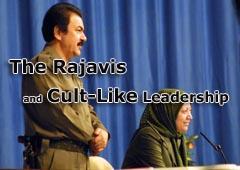
In any cult-like culture, cult leaders generally seek their own ambitions by enslaving a group of individuals who have left their ordinary life behind to achieve the goals of the cult leader. These members are prepared by the cult leader to run his ambitions. That’s why today the world is very crucial about groups that represent cult culture, as what the world saw in September 11th The leaders of Rajavi’s cult always consider the list of their victims as their honor.disastrous act that was committed by cult ( Al Qaida ) members who were able to perform the most unthinkable act of suicide.
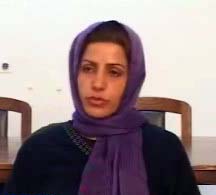
In the cult of Rajavi, Massoud Rajavi’s extreme ambition for power has already taken the lives of a large number of people including the organization’s members, Iraqi and Iranian civilians and authorities. The shameful part is that the leaders of Rajavi’s cult always consider the list of their victims as their honor.

More important is the danger linked with MKO which endangers today’s international community.
 
As an ambitious cult leader, Massoud Rajavi and his co-leader Maryam “make the members believe that Massoud is the only one who is always ready for change and revolution; the only one who sacrifices himself to solve other people’s problems; the only one who assumes every responsibility. Therefore he is not an ordinary man! This is what the organization makes us believe” according to Batoul Soltani, former member of MEK’s Leadership Council. The figure that the cult draws of Massoud presents him as the master and owner of members, so they just obey the internal dynamic that dominates the cult.

The position Massoud considers for himself is the one of a person who is “the bridge between people and God. Now from that position he can more or less order his followers to do anything” , says Ann Singleton an MKO ex-member. And this position is the one that convinces the members to set themselves on fire following the arrest of Maryam Rajavi in June 2003.

Marjan Malek, another defector of MKO who was arrested by Iranian Police when she was supposed to carry out a mortar attack in Tehran, says that “the MEK tells members that Massoud Rajavi is not only your leader, but also your husband, father and brother. He is the only one who should matter in your life and you shouldn’t think about any one else.”

Marjan Malek left her children, and husband after she joined MKO .she was trained in Camp Ashraf, sent to Iran where she launched mortar attacks against her own compatriots. She defected from the cult after her arrest and as one of the founders of Nejat Society, she could join her children in Sweden where they were kept by MKO supporters after they were separated from their mother. See how the ambitions of a cult leader change a mother to an assassin who leaves her family to kill the civilians of her own nation. And Massoud Rajavi is personally accountable for everything his cult members do.

Nowadays, while Camp Ashraf is completely going under the control of Iraqi Police, Massoud Rajavi is the only responsible for lives of those six members who were killed during riots at Ashraf gates. Those members are only some brainwashed manipulated individuals who were ordered by their leader to defend their Camp by rocks or knives.
By Mazda Parsi

August 6, 2009 0 comments
FacebookTwitterPinterestWhatsappTelegramSkypeEmail
Mujahedin Khalq Organization

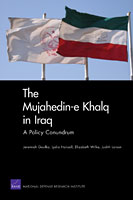
Rand: The Mujahedin-e Khalq in Iraq – A policy conundrum

… A RAND study examined the evolution of this controversial decision, which has left the United States open to charges of hypocrisy in the war on terrorism. An examination of MeK activities establishes its cultic practices and its deceptive recruitment and public relations strategies. A series of coalition decisions served to facilitate the MeK leadership’s control over its members. The government of Iraq wants to expel the group, but no country other than Iran will accept it. Thus, the RAND study concludes that the best course of action would be …

___________________

Rand report on MEK

Link to the PDF File

The Mujahedin-e Khalq in Iraq

A Policy Conundrum

by Jeremiah Goulka, Lydia Hansell, Elizabeth Wilke, Judith Larson

During Operation Iraqi Freedom, coalition forces classified the Mujahedin-e Khalq (MeK), an Iranian dissident group dedicated to the violent overthrow of the Iranian government, as an enemy force. The MeK had provided security services to Saddam Hussein from its camps in Iraq and had been listed as a foreign terrorist organization by the Secretary of State. After a cease-fire was signed, the U.S. Secretary of Defense designated this group’s members as civilian “protected persons” rather than combatant prisoners of war under the Geneva Conventions. A RAND study examined the evolution of this controversial decision, which has left the United States open to charges of hypocrisy in the war on terrorism. An examination of MeK activities establishes its cultic practices and its deceptive recruitment and public relations strategies. A series of coalition decisions served to facilitate the MeK leadership’s control over its members. The government of Iraq wants to expel the group, but no country other than Iran will accept it. Thus, the RAND study concludes that the best course of action would be to repatriate the majority of its members to Iran, which in 2003 granted amnesty to the MeK rank and file and appears to have upheld its commitment. The coalition’s experience with the MeK also offers lessons for dealing with unusual militias in future military actions and for providing better training for field commanders and enlisted personnel.

Table of Contents

Chapter One

The Mujahedin-e Khalq: A U.S. Policy Conundrum

Chapter Two

The MeK During Operation Iraqi Freedom

Chapter Three

Options for Relocating the MeK

Chapter Four

Unexpected Challenges, Unintended Consequences, and Lessons Learned

Appendix A

A Brief History of the MeK Prior to Operation Iraqi Freedom

Appendix B

Cultic Characteristics of the MeK

Appendix C

Timeline of MeK Activities

Appendix D

What Is a Foreign Terrorist Organization?

Research conducted by

RAND National Security Research Division

To View The Full Document Click Here

Link to the source

August 6, 2009 0 comments
FacebookTwitterPinterestWhatsappTelegramSkypeEmail
Former members of the MEK

Rajavi; set your body on fire to defend Ashraf

An interview with Batool Soltani on MKO self-immolations – Part nine

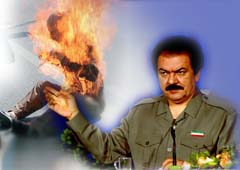
Sahar Family Foundation: In our last talk you pointed out that the prerequisite for membership in Rajavi; set your body on fire to defend Ashrafthe organization is to volunteer for self-immolation. Does it mean that the organization reacts against the reluctant and how does it deal with such instances?

Batool Soltani: The organization takes no clear position to directly confront in such instances. To answer the question, we need to conduct a deep analysis of a whole organizational reaction against already confronted cases. There was a female colleague who had refused to volunteer for self-immolation but the organization showed no antagonistic attitude towards her before others. It was not the end of the story and the organization commanded me to watch her closely since they believed that she was in trouble with herself and cared not the least for the organization. They would justify that now even ten days after the detention of Maryam in France, she had refrained to be an abstentious volunteer. In fact, the organization avoided to tackle with these members just before the eyes of others and pretended to overlook them. In this way, many others would be impressed to join the side of majority since the impartiality proved to be a working propaganda to attract more than to repel. Furthermore, nobody could accuse the organization of coercing members into acts of suicide and the acts would be propagated as personal outbursts of passion and consequent of strong devotion to the ideology, Maryam and Massoud. The process of indirect control of the disobedient would continue until through an excuse they would be seriously censured. There were some among the rankings of the Leadership Council who refused to volunteer for suicide operations but after a while were suddenly evanesced from the council. In my opinion, the use of clever mechanisms of control to undermine the dissidents functioned much better than exploiting levers of pressure and coercion. And so far it has succeeded to expand glorification of suicide operation as a token of devotion among the insiders.

SFF: You have already stated that self-immolation as a kind of suicide operation has been innovated by the organization. Can you say exactly when the organization selected it as a working lever, and who was the first to suggest it and for what reason?

BS: Well, I have already explained that the suicide operation is not new but was innate in An interview with Batool Soltani on MKO self-immolationsorganization from its very formation.

SFF: I mean in its novel form of self-immolation.

BS: Well, it was first conducted to be committed in 17 June operations. We have never witnessed it before.
SFF: To make it more clear, when it was first suggested as a solution and by whom?

BS: It returns to Massoud Rajavi’s last meeting in Camp Ahraf before the fall of Saddam. It was a well known meeting called ‘the meeting of flag’. Of course, the issue was not explicitly mentioned there but it was later discussed in a meeting of the Leadership Council that what should have to be done to defend if Saddam collapsed and Camp Ashraf came under unexpected threat from the outside. For the first time Massoud suggested self-burning as a defensive advantage to safeguard Ashraf. He frankly stated that to repel any threat intended to dismantle Camp Ashraf all had to sacrifice and set themselves on fire. Of course, at the time the organization was not suffering the deteriorating condition of being disarmed and it was still equipped with a variety of heavy and light weapons that could defend itself to some extent. But it seemed that Rajavi was anticipating a near future of invasion that could seriously challenge the organization before it could use its arms. So the best defensive measure was resolved by Rajavi to be suicide through self-immolation. We never saw Massoud again till the manifestation of his novel suggestion in the incidents of 17 June.

SFF: To remind you, I have to point out that the issue of self-immolation emerged for the first time in the letters of the members who wrote them to Massoud Rajavi following his ideological revolution as an indication of devotion to him and his revolution. I remember a letter in Jafarzadeh’s handwriting published by a website in which he had volunteered to commit self-immolation to show his loyalty. These letters date back to 1985 and I mean to say that the issue was first proposed at that time as the letters indicate. Furthermore, even when France was expelling some members to Gabon, Maryam Rajavi is quoted to have said Massoud Rajavi had stopped remonstrant self-immolations as a raised objection against the decision taken by France. Your reference to the meeting dates back to 2002, then, can you remember any earlier occasion when the issue came under notice?

BS: To correct, I was not in the organization at the time you are referring to. I joined in mid 1980s and I have seen none of the things you say in the sources published by the organization.

SFF: All of the instances I stated you can find in the publications of the organization if you have access to them.

BS: It seems that my information as a member of the organization fails to surpass that of yours. I would be grateful if you could give me the address to these sources.

August 6, 2009 0 comments
FacebookTwitterPinterestWhatsappTelegramSkypeEmail
Italy

The Iranian Pen Club letter to Italy’s Minister of Foreign Affairs

Mr. Franco Frattini Minister of Foreign Affairs of the Italy

We were disappointed to hear about Mrs. Maryam Rajavi’s visit with many of members of Parliament in Rome, July 29, 2009. As you are well aware, Mrs. Maryam Rajavi is the leader of a cult terrorist organization called Mojahedin-e-Khalq Organization (MEK, MKO). National Council of Resistance of Iran (NCRI) is a cover name for this organization.
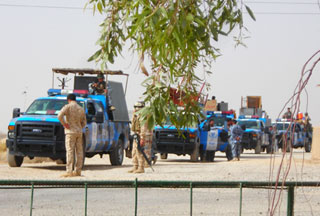
We think, Italian Government must not permit the wastage of its diplomatic credit through gestures which do not serve the cause of democracy and undermines the coherence of Italy’s policy. Because Maryam Rajavi is a leader of sect and terrorist Organization.

Respectfully, we would like to acknowledge that the Iranian Pen Club is consisted of those ex-members of the MKO who managed to free themselves from the mental and even physical barriers of the Organisation. The main object of the Association is of course to try to help the previous comrades in such way that they be able to free themselves too and start a decent normal life again along with their families and beloved ones.

we are sure that Mrs. Rajavi try to appear as leader of a peaceful movement but her movement , is a cover up for the MKO, a Cult which practiced forced marriage and now practices forced divorce, separation of children from parents, gender apartheid, imprisonment for criticizing leaders or even the leaders’ strategy. Victims inside the MEK have been sent to Abu Ghraib prison. Extrajudicial punishments include torture, death under torture, long term imprisonment in solitary confinement and sentencing to execution – not carried out by express order of Massoud Rajavi. The Human Rights Watch report of May 2005 ‘No Exit’, details only a small sample of such human rights abuses carried out systematically inside the Mojahedin. Former members will bear witness that none of the articles of the Universal Declaration of Human Rights are practiced inside the MEK organization.

We think the MKO in Iraq is finished, especially after the fall of Saddam Hussein and his government. The Iraqi Government wants to assert its sovereignty, regain its property, the garrison, and they do not want to keep those people on their soil who cooperated fully with Saddam Hussein against their people. So now we should ask ‘why do the leaders of a cult terrorist organization want to keep the Ashraf,s garrison?

We have enclosed a small sample of the evidence which has already been made public concerning the MKO. The charges against the MKO and in particular its leaders include but are not limited to: crimes against humanity and war crimes inside and outside Iran.

With many thanks and regards

The Iranian Pen Club

04.08.2009
Postfach 90 06 63
51116 Köln
Germany
00491756391365
info@iran-ghalam.de
kanoon-ghalam@hotmail.de

Cc:
Ministers of Affairs of the EU-
Relevant MEPs –
-Office of Iraqi Prime Minister Nouri al-Maleki
The Iranian Pen Club, August 05, 2009

August 6, 2009 0 comments
FacebookTwitterPinterestWhatsappTelegramSkypeEmail
Iraq

Iraq rejects MKO leaders call for talks

Iraqi security forces last week stormed Camp Ashraf that housed MKO members and seized control of the base.

The Iraqi government has rejected a request by the heads of the Mujahedin Khalq Organization (MKO), for negotiations, an Iraqi official says.

The official was quoted by IRNA as saying that MKO heads Maryam and Masoud Rajavi have made a request, through the intelligence organization of an Arab country, to meet with Iraqi executives.

"The Iraqi government rejects any contact and dialogue with the MKO heads, considering the terrorist nature of the organization," the Iraqi official said on condition of anonymity.

He did not name the Arab country but said that such a request, made following the Iraqi security forces’ takeover of a MKO camp north of Baghdad, shows how interwoven the terrorist group is with the intelligence agency of the unnamed Arab country.

Press TV has learned that Masoud Rajavi, known as the leader of the MKO, is now based in Jordan, and that Iraqi officials have actually refused a request transferred by the Jordanian intelligence agency to negotiate with MKO leaders.

The Iraqi official went on to criticize the request by the Arab intelligence agency and its relation with the MKO, terming it interference in Iraq’s internal affairs.

The MKO is listed as a terrorist organization by Iran, Iraq, Canada, and the US. It was recently removed from the category by the European Union.

Last week, Iraqi security forces stormed Camp Ashraf that housed MKO members and seized control of it.

Iraqi Minister of State for National Security, Shirwan al-Waeli, says Baghdad will not grant asylum to any Iranian living at Camp Ashraf.

The Iraqi government plans to close the camp and send its residents to Iran or a third country.

"Iraq will not give asylum (to them) as refugees in its territory and we cannot tolerate groups that cause problems in their countries of origin," Reuters quoted Waeli as saying. “We don’t want problems with our neighbors.”

In Iran, MKO members are regarded as traitors, especially for siding with the Ba’ath regime during the Iran-Iraq war (1980-1988).

August 6, 2009 0 comments
FacebookTwitterPinterestWhatsappTelegramSkypeEmail
Newer Posts
Older Posts

Recent Posts

  • Various Aspects of Massoud Rajavi’s Disappearance

    October 20, 2026
  • MEK agents near schools in Tirana, Albania

    October 17, 2026
  • Expectations of human rights bodies regarding censorship within the MEK

    October 13, 2026
  • The Jamalis’ Plea for Help: Save Our Brother from the MEK!

    October 11, 2026
  • Testimonies of Participants in the MEK’s Staged Propaganda Stunt in Karaj

    October 7, 2026
  • Facebook
  • Twitter
  • Instagram
  • Youtube

© 2003 - 2025 NEJAT Society . All Rights Reserved. NejatNGO.org


Back To Top
Nejat Society
  • Home
  • Articles
  • Media
    • Cartoons
    • NewsPics
    • Photo Gallery
    • Videos
  • Publications
    • Books
    • Nejat NewsLetter
    • Pars Brief
  • About Us
  • Contact us
  • Editions
    • عربي
    • فارسی
    • Shqip